

The DOI matches its Crossref record; 71 of the 71 references it cites were found in a registry or an index.
Impact of 100 LRRK2 variants linked to Parkinson's disease on kinase activity and microtubule binding
Open accessPublished version of a preprint
Abstract
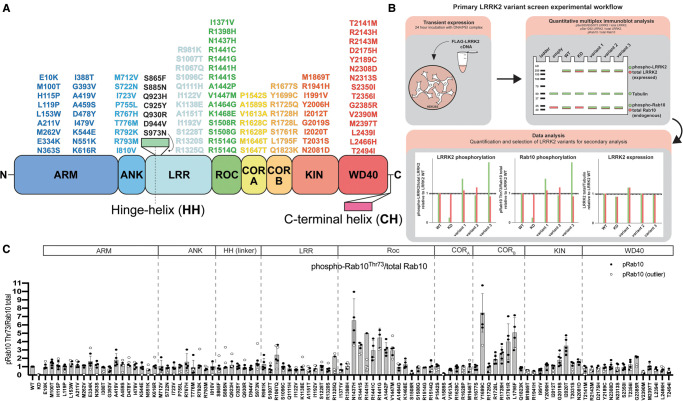
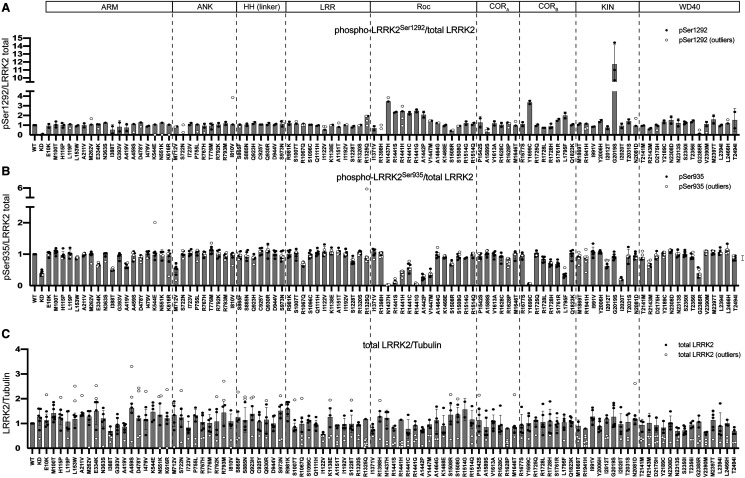
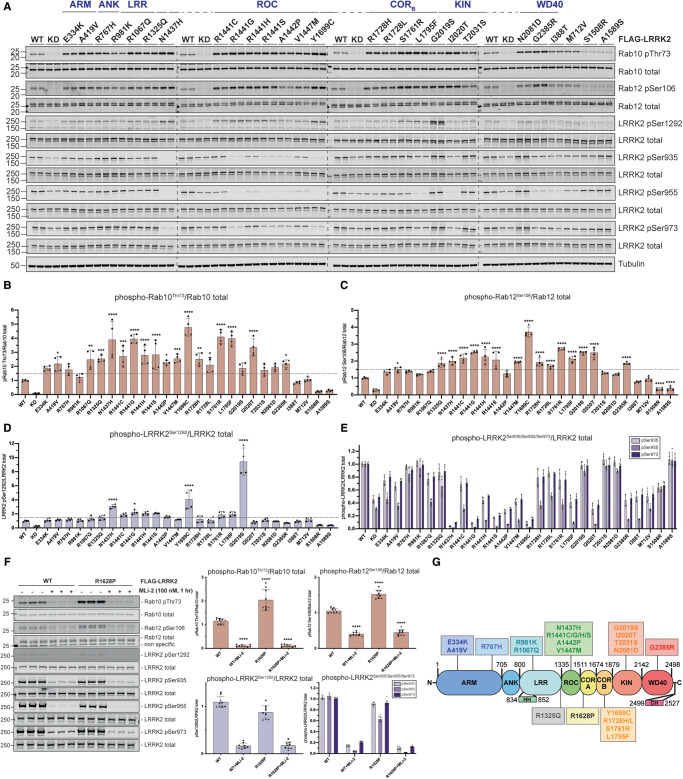
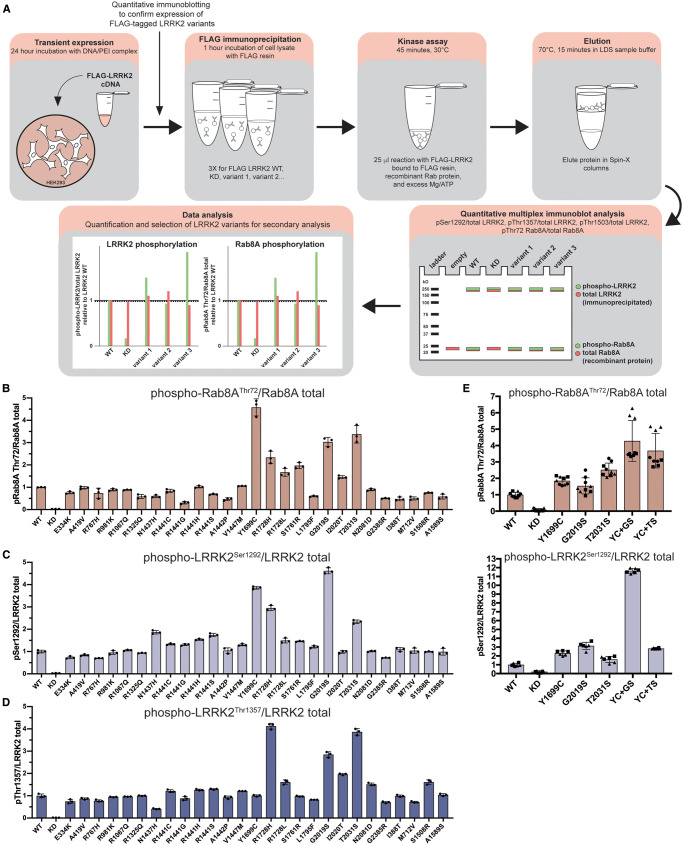
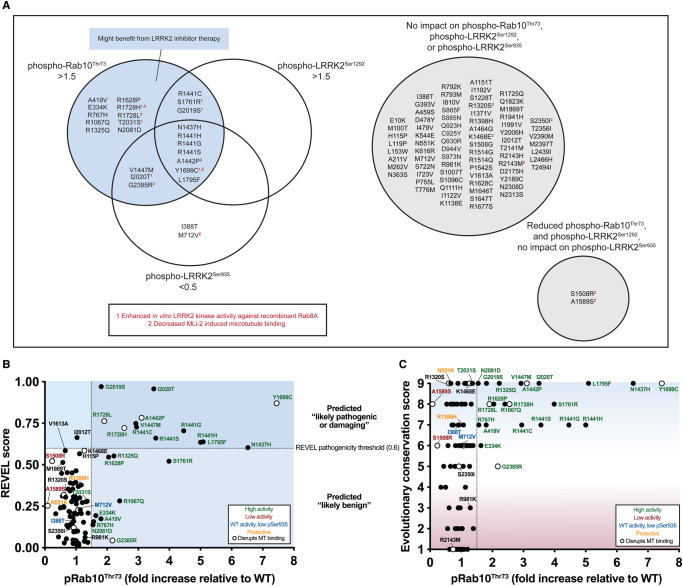
Mutations enhancing the kinase activity of leucine-rich repeat kinase-2 (LRRK2) cause Parkinson's disease (PD) and therapies that reduce LRRK2 kinase activity are being tested in clinical trials. Numerous rare variants of unknown clinical significance have been reported, but how the vast majority impact on LRRK2 function is unknown. Here, we investigate 100 LRRK2 variants linked to PD, including previously described pathogenic mutations. We identify 23 LRRK2 variants that robustly stimulate kinase activity, including variants within the N-terminal non-catalytic regions (ARM (E334K, A419V), ANK (R767H), LRR (R1067Q, R1325Q)), as well as variants predicted to destabilize the ROC:CORB interface (ROC (A1442P, V1447M), CORA (R1628P) CORB (S1761R, L1795F)) and COR:COR dimer interface (CORB (R1728H/L)). Most activating variants decrease LRRK2 biomarker site phosphorylation (pSer935/pSer955/pSer973), consistent with the notion that the active kinase conformation blocks their phosphorylation. We conclude that the impact of variants on kinase activity is best evaluated by deploying a cellular assay of LRRK2-dependent Rab10 substrate phosphorylation, compared with a biochemical kinase assay, as only a minority of activating variants (CORB (Y1699C, R1728H/L, S1761R) and kinase (G2019S, I2020T, T2031S)), enhance in vitro kinase activity of immunoprecipitated LRRK2. Twelve variants including several that activate LRRK2 and have been linked to PD, suppress microtubule association in the presence of a Type I kinase inhibitor (ARM (M712V), LRR (R1320S), ROC (A1442P, K1468E, S1508R), CORA (A1589S), CORB (Y1699C, R1728H/L) and WD40 (R2143M, S2350I, G2385R)). Our findings will stimulate work to better understand the mechanisms by which variants impact biology and provide rationale for variant carrier inclusion or exclusion in ongoing and future LRRK2 inhibitor clinical trials.
Overview
The claims and statistics of this paper haven’t been checked yet.
Run the check — free, no account needed. It reads the open-access text and checks the sources it cites.
Integrity signals
Registry
Cites
Statistics
Figures
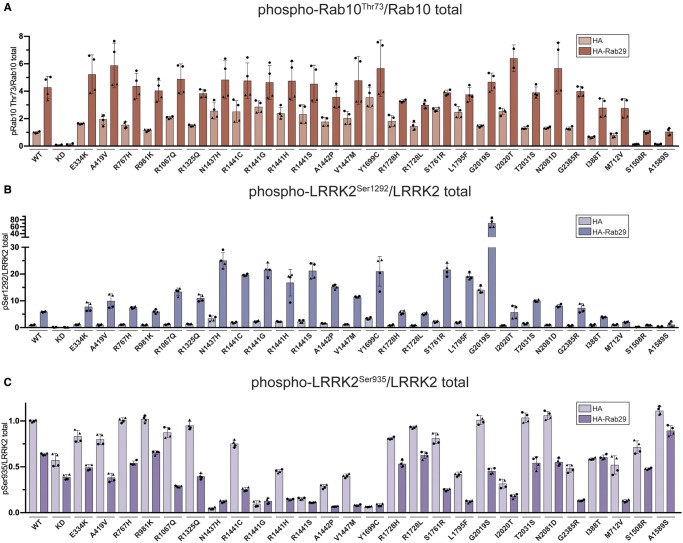
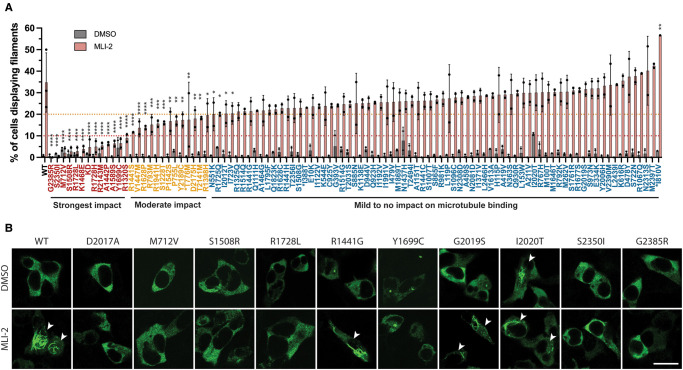
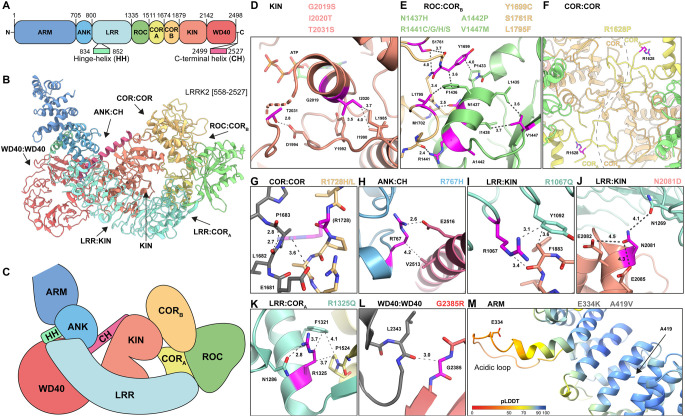
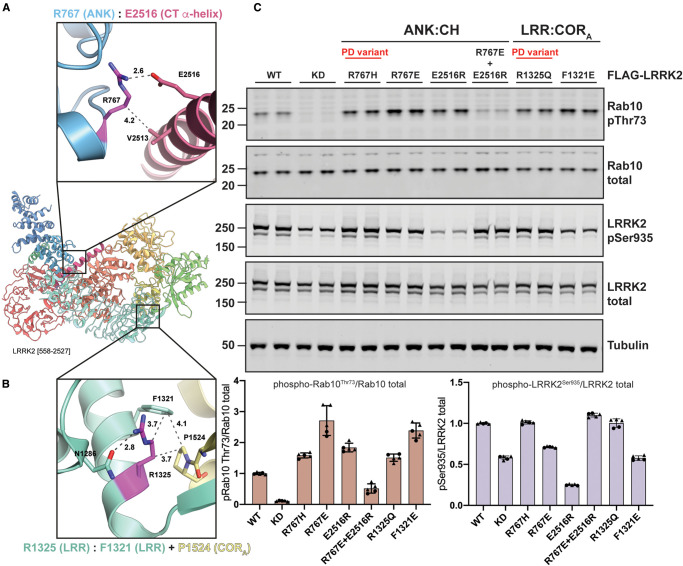
Verification
Claims the paper makes
The claims and statistics of this paper haven’t been checked yet.
Run the check — free, no account needed. It reads the open-access text and checks the sources it cites.
Self-check
Percentages, sums and reported differences re-computed from the paper’s own numbers.
The self-check needs the paper’s full text.
Citations
Cites
Highly accurate protein structure prediction with AlphaFold
Jumper, J., Evans, R., Pritzel, A., Green, T., Figurnov, M., Ronneberger, O., Tunyasuvunakool, K., Bates, R., Žídek, A., Potapenko, A., et al. (2021) · Nature · doi:10.1038/s41586-021-03819-2 · Cited by 43,764
Richards, S., Aziz, N., Bale, S., Bick, D., Das, S., Gastier-Foster, J., Grody, W. W., Hegde, M., Lyon, E., Spector, E., et al. (2015) · Genetics in Medicine · doi:10.1038/gim.2015.30 · Cited by 32,594
The mutational constraint spectrum quantified from variation in 141,456 humans
Karczewski, K. J., Francioli, L. C., Tiao, G., Cummings, B. B., Alföldi, J., Wang, Q., Collins, R. L., Laricchia, K. M., Ganna, A., Birnbaum, D. P., et al. (2020) · Nature · doi:10.1038/s41586-020-2308-7 · Cited by 9,434
Tsien, R. Y. (1998) · Annual Review of Biochemistry · doi:10.1146/annurev.biochem.67.1.509 · Cited by 6,178
Yang (2021) · doi:10.1038/s41598-020-79139-8 · Cited by 5,035
Ashkenazy, H., Abadi, S., Martz, E., Chay, O., Mayrose, I., Pupko, T., & Ben-Tal, N. (2016) · Nucleic Acids Research · doi:10.1093/nar/gkw408 · Cited by 3,163
Mutations in LRRK2 Cause Autosomal-Dominant Parkinsonism with Pleomorphic Pathology
Zimprich, A. A., Biskup, S., Leitner, P., Lichtner, P., Farrer, M. J., Lincoln, S., Kachergus, J. M., Hulihan, M., Uitti, R. J., Calne, D. B., et al. (2004) · Neuron · doi:10.1016/j.neuron.2004.11.005 · Cited by 3,087
REVEL: An Ensemble Method for Predicting the Pathogenicity of Rare Missense Variants
Ioannidis, N. M., Rothstein, J. H., Pejaver, V., Middha, S., McDonnell, S. K., Baheti, S., Musolf, A., Li, Q., Holzinger, E., Karyadi, D., et al. (2016) · The American Journal of Human Genetics · doi:10.1016/j.ajhg.2016.08.016 · Cited by 2,908
Cloning of the Gene Containing Mutations that Cause PARK8-Linked Parkinson's Disease
Paisán‐Ruiz, C., Jain, S., Evans, E. W., Gilks, W. P., Simón, J., van der Brug, M., de Munaín, A. L., Aparicio, S. F., Gil, A. M., Khan, N. L., et al. (2004) · Neuron · doi:10.1016/j.neuron.2004.10.023 · Cited by 2,453
Phosphoproteomics reveals that Parkinson's disease kinase LRRK2 regulates a subset of Rab GTPases
Steger, M., Tonelli, F., Ito, G., Davies, P., Trost, M., Vetter, M., Wachter, S., Lorentzen, E., Duddy, G., Wilson, S., et al. (2016) · eLife · doi:10.7554/elife.12813 · Cited by 1,042
Self-citationRoss, O. A., Soto‐Ortolaza, A. I., Heckman, M. G., Aasly, J. O., Abahuni, N., Annesi, G., Bacon, J. A., Bardien, S., Bozi, M., Brice, A., et al. (2011) · The Lancet Neurology · doi:10.1016/s1474-4422(11)70175-2 · Cited by 1,026
A common LRRK2 mutation in idiopathic Parkinson's disease
Gilks, W. P., Abou-Sleiman, P. M., Gandhi, S., Jain, S., Singleton, A., Lees, A. J., Shaw, K., Bhatia, K. P., Bonifati, V., Quinn, N. P., et al. (2005) · The Lancet · doi:10.1016/s0140-6736(05)17830-1 · Cited by 774
Liu, X., Jian, X., & Boerwinkle, E. (2013) · Human Mutation · doi:10.1002/humu.22376 · Cited by 595
A frequent LRRK2 gene mutation associated with autosomal dominant Parkinson's disease
Di Fonzo, A., Rohé, C. F., Ferreira, J., Chien, H. F., Vacca, L., Stocchi, F., Guedes, L., Fabrizio, E., Manfredi, M., Vanacore, N., et al. (2005) · The Lancet · doi:10.1016/s0140-6736(05)17829-5 · Cited by 531
Steger, M., Diez, F., Dhekne, H. S., Lis, P., Nirujogi, R. S., Karayel, O., Tonelli, F., Martinez, T. N., Lorentzen, E., Pfeffer, S. R., et al. (2017) · eLife · doi:10.7554/elife.31012 · Cited by 482
Self-citationJaleel, M., Nichols, R. J., Deak, M., Campbell, D. G., Gillardon, F., Knebel, A., & Alessi, D. R. (2007) · Biochemical Journal · doi:10.1042/bj20070209 · Cited by 472
Self-citationLRRK2 in Parkinson disease: challenges of clinical trials
TOLOSA, E. S., Vila, M., Klein, C., & Rascol, O. (2020) · Nature Reviews Neurology · doi:10.1038/s41582-019-0301-2 · Cited by 443
Nichols, R. J., Dzamko, N. L., Morrice, N. A., Campbell, D. G., Deák, M., Ordureau, A., Macartney, T., Tong, Y., Shen, J., Prescott, A. R., et al. (2010) · Biochemical Journal · doi:10.1042/bj20100483 · Cited by 390
Self-citationHui, K. Y., Fernandez-Hernandez, H., Hu, J., Schaffner, A., Pankratz, N., Hsu, N.-Y., Chuang, L.-S., Carmi, S., Villaverde, N., Li, X., et al. (2018) · Science Translational Medicine · doi:10.1126/scitranslmed.aai7795 · Cited by 384
Dzamko, N. L., Deák, M., Hentati, F., Reith, A. D., Prescott, A. R., Alessi, D. R., & Nichols, R. J. (2010) · Biochemical Journal · doi:10.1042/bj20100784 · Cited by 377
Self-citationSheng, Z., Zhang, S., Bustos, D. J., Kleinheinz, T., Pichon, C. E. L., Domínguez, S. L., Solanoy, H. O., Drummond, J., Zhang, X., Ding, X., et al. (2012) · Science Translational Medicine · doi:10.1126/scitranslmed.3004485 · Cited by 358
LRRK2 kinase in Parkinson's disease
Alessi, D. R., & Sammler, E. (2018) · Science · doi:10.1126/science.aar5683 · Cited by 345
Self-citationRab29 activation of the Parkinson's disease‐associated LRRK2 kinase
Purlyte, E., Dhekne, H. S., Sarhan, A. R., Gomez, R., Lis, P., Wightman, M., Martinez, T. N., Tonelli, F., Pfeffer, S. R., & Alessi, D. R. (2018) · The EMBO Journal · doi:10.15252/embj.201798099 · Cited by 336
Self-citationFell, M. J., Mirescu, C., Basu, K., Cheewatrakoolpong, B., DeMong, D. E., Ellis, J. M., Hyde, L. A., Lin, Y., Markgraf, C. G., Mei, H., et al. (2015) · Journal of Pharmacology and Experimental Therapeutics · doi:10.1124/jpet.115.227587 · Cited by 324
Deficiency of TRPM2 leads to embryonic neurogenesis defects in hyperthermia
Li, Y., & Jiao, J. (2020) · Science Advances · doi:10.1126/sciadv.aay6350 · Cited by 290
Liu, Z., Bryant, N., Kumaran, R., Beilina, A., Abeliovich, A., Cookson, M. R., & West, A. B. (2018) · Human Molecular Genetics · doi:10.1093/hmg/ddx410 · Cited by 278
GBA, Gaucher Disease, and Parkinson’s Disease: From Genetic to Clinic to New Therapeutic Approaches
Riboldi, G. M., & Di Fonzo, A. B. (2019) · Cells · doi:10.3390/cells8040364 · Cited by 274
Structure of LRRK2 in Parkinson’s disease and model for microtubule interaction
Deniston, C. K., Salogiannis, J., Mathea, S., Snead, D., Lahiri, I., Matyszewski, M., Donosa, O., Watanabe, R., Böhning, J., Shiau, A. K., et al. (2020) · Nature · doi:10.1038/s41586-020-2673-2 · Cited by 253
LRRK2 mediates tubulation and vesicle sorting from lysosomes
Bonet‐Ponce, L., Beilina, A. G., Williamson, C. D., Lindberg, E., Kluss, J. H., Sáez-Atiénzar, S., Landeck, N., Kumaran, R., Mamais, A., Bleck, C. K. E., et al. (2020) · Science Advances · doi:10.1126/sciadv.abb2454 · Cited by 252
Dhekne, H. S., Yanatori, I., Gomez, R. C., Tonelli, F., Diez, F., Schüle, B., Steger, M., Alessi, D. R., & Pfeffer, S. R. (2018) · eLife · doi:10.7554/elife.40202 · Cited by 240
Self-citationFonzo, A. D., Chou, Y. W., Lu, C.-S., van Doeselaar, M., Simons, E. J., Rohé, C. F., Chang, H., Chen, R., Weng, Y.-H., Vanacore, N., et al. (2006) · Neurogenetics · doi:10.1007/s10048-006-0041-5 · Cited by 229
The In Situ Structure of Parkinson’s Disease-Linked LRRK2
Watanabe, R., Buschauer, R., Böhning, J., Audagnotto, M., Lasker, K., Lu, T., Boassa, D., Taylor, S. S., & Villa, E. (2020) · Cell · doi:10.1016/j.cell.2020.08.004 · Cited by 208
Lrrk2 G2385R is an ancestral risk factor for Parkinson's disease in Asia
Farrer, M. J., Stone, J. T., Lin, C., Dächsel, J. C., Hulihan, M., Haugarvoll, K., Ross, O. A., & Wu, R. (2007) · Parkinsonism & Related Disorders · doi:10.1016/j.parkreldis.2006.12.001 · Cited by 205
LRRK2 Parkinson disease mutations enhance its microtubule association
Kett, L. R., Boassa, D., Ho, C. C., Rideout, H. J., Hu, J., Terada, M., Ellisman, M. H., & Dauer, W. T. (2011) · Human Molecular Genetics · doi:10.1093/hmg/ddr526 · Cited by 200
Structural analysis of the full-length human LRRK2
Myasnikov, A. G., Zhu, H., Hixson, P. M., Xie, B., Yu, K., Pitre, A., Peng, J., & Sun, J. (2021) · Cell · doi:10.1016/j.cell.2021.05.004 · Cited by 195
Lis, P., Burel, S., Steger, M., Mann, M., Brown, F., Diez, F., Tonelli, F., Holton, J. L., Ho, P. W., Ho, S.-L., et al. (2018) · Biochemical Journal · doi:10.1042/bcj20170802 · Cited by 151
Self-citationTaylor, M., & Alessi, D. R. (2020) · Current Opinion in Cell Biology · doi:10.1016/j.ceb.2020.01.001 · Cited by 141
Self-citationPPM1H phosphatase counteracts LRRK2 signaling by selectively dephosphorylating Rab proteins
Berndsen, K., Lis, P., Yeshaw, W. M., Wawro, P. S., Nirujogi, R. S., Wightman, M., Macartney, T., Dorward, M., Knebel, A., Tonelli, F., et al. (2019) · eLife · doi:10.7554/elife.50416 · Cited by 139
Self-citationGenetic characteristics of leucine-rich repeat kinase 2 (LRRK2) associated Parkinson’s disease
Bardien, S., Lesage, S., Brice, A., & Carr, J. A. (2011) · Parkinsonism & Related Disorders · doi:10.1016/j.parkreldis.2010.11.008 · Cited by 111
Rab29-dependent asymmetrical activation of leucine-rich repeat kinase 2
(2023) · doi:10.1126/science.adi9926 · Cited by 108
Self-citationThe Cell Biology of LRRK2 in Parkinson's Disease
Usmani, A., Shavarebi, F., & Hiniker, A. (2021) · Molecular and Cellular Biology · doi:10.1128/mcb.00660-20 · Cited by 107
Doggett, E. A., Zhao, J., Mork, C. N., Hu, D., & Nichols, R. J. (2011) · Journal of Neurochemistry · doi:10.1111/j.1471-4159.2011.07537.x · Cited by 95
Crystal structure of the WD40 domain dimer of LRRK2
Zhang, P., Fan, Y., Ru, H., Wang, L., Magupalli, V. G., Taylor, S. S., Alessi, D. R., & Wu, H. (2019) · Proceedings of the National Academy of Sciences · doi:10.1073/pnas.1817889116 · Cited by 94
Self-citationStructural Basis for Rab8a Recruitment of RILPL2 via LRRK2 Phosphorylation of Switch 2
Waschbüsch, D., Purlyte, E., Pal, P., McGrath, E., Alessi, D. R., & Khan, A. R. (2020) · Structure · doi:10.1016/j.str.2020.01.005 · Cited by 87
Self-citationBring It to an End: Does Telomeres Size Matter?
Laberthonnìère, C., Magdinier, F., & Robin, J. D. (2019) · Cells · doi:10.3390/cells8010030 · Cited by 83
GTP binding regulates cellular localization of Parkinson's disease-associated LRRK2
Ramírez, M. B., Ordóñez, A. J. L., Fdez, E., Madero‐Pérez, J., Gonnelli, A., Drouyer, M., Chartier‐Harlin, M., Taymans, J., Bubacco, L., Greggio, E., et al. (2017) · Human Molecular Genetics · doi:10.1093/hmg/ddx161 · Cited by 80
Impact of Type II LRRK2 inhibitors on signaling and mitophagy
Tasegian, A., Singh, F., Ganley, I. G., Reith, A. D., & Alessi, D. R. (2021) · Biochemical Journal · doi:10.1042/bcj20210375 · Cited by 79
Self-citationFujimoto, T., Kuwahara, T., Eguchi, T., Sakurai, M., Komori, T., & Iwatsubo, T. (2017) · Biochemical and Biophysical Research Communications · doi:10.1016/j.bbrc.2017.12.024 · Cited by 79
Schmidt, S. H., Knape, M. J., Boassa, D., Mumdey, N., Kornev, A. P., Ellisman, M. H., Taylor, S. S., & Herberg, F. W. (2019) · Proceedings of the National Academy of Sciences · doi:10.1073/pnas.1900289116 · Cited by 77
Laminin and Integrin in LAMA2-Related Congenital Muscular Dystrophy: From Disease to Therapeutics
Barraza‐Flores, P., Bates, C. R., Oliveira‐Santos, A., & Burkin, D. J. (2020) · Frontiers in Molecular Neuroscience · doi:10.3389/fnmol.2020.00001 · Cited by 75
Conformation and dynamics of the kinase domain drive subcellular location and activation of LRRK2
Schmidt, S. H., Weng, J., Aoto, P. C., Boassa, D., Mathea, S., Silletti, S., Torres-Paris, C., Hu, J., Wallbott, M., Komives, E. A., et al. (2021) · Proceedings of the National Academy of Sciences · doi:10.1073/pnas.2100844118 · Cited by 72
Protective LRRK2 R1398H Variant Enhances GTPase and Wnt Signaling Activity
Nixon‐Abell, J., Berwick, D. C., Grannò, S., Spain, V. A., Blackstone, C. D., & Harvey, K. (2016) · Frontiers in Molecular Neuroscience · doi:10.3389/fnmol.2016.00018 · Cited by 67
LRRK2 binds to the Rab32 subfamily in a GTP-dependent manner via its armadillo domain
McGrath, E., Waschbüsch, D., Baker, B. M., & Khan, A. R. (2019) · Small GTPases · doi:10.1080/21541248.2019.1666623 · Cited by 67
A feed-forward pathway drives LRRK2 kinase membrane recruitment and activation
Vides, E. G., Adhikari, A., Chiang, C. Y., Lis, P., Purlyte, E., Limouse, C., Shumate, J. L., Spínola-Lasso, E., Dhekne, H. S., Alessi, D. R., et al. (2022) · eLife · doi:10.7554/elife.79771 · Cited by 63
Self-citationNirujogi, R. S., Tonelli, F., Taylor, M., Lis, P., Zimprich, A. A., Sammler, E. M., & Alessi, D. R. (2020) · Biochemical Journal · doi:10.1042/bcj20200930 · Cited by 54
Self-citationStructural basis for Parkinson’s disease-linked LRRK2’s binding to microtubules
Snead, D. M., Matyszewski, M., Dickey, A. M., Lin, Y. X., Leschziner, A. E., & Reck-Peterson, S. L. (2022) · Nature Structural & Molecular Biology · doi:10.1038/s41594-022-00863-y · Cited by 54
Fine-Mapping, Gene Expression and Splicing Analysis of the Disease Associated LRRK2 Locus
Trabzuni, D., Ryten, M., Emmett, W., Ramasamy, A., Lackner, K. J., Zeller, T., WALKER, R. E., Smith, C., Lewis, P. A., Mamais, A., et al. (2013) · PLoS ONE · doi:10.1371/journal.pone.0070724 · Cited by 50
Wang, X., Negrou, E., Maloney, M. T., Bondar, V. V., Andrews, S. V., Montalban, M., Llapashtica, C., Maciuca, R. D., Nguyen, H. N., Solanoy, H. O., et al. (2021) · Scientific Reports · doi:10.1038/s41598-021-91943-4 · Cited by 50
Analysis of Expression Pattern and Genetic Deletion of Netrin5 in the Developing Mouse
Garrett, A. M., Jucius, T. J., Sigaud, L. P. R., Tang, F.-L., Xiong, W., Ackerman, S. L., & Burgess, R. W. (2016) · Frontiers in Molecular Neuroscience · doi:10.3389/fnmol.2016.00003 · Cited by 50
Pfeffer, S. R. (2018) · Biochemical Society Transactions · doi:10.1042/bst20180470 · Cited by 47
LRRK2-phosphorylated Rab10 sequesters Myosin Va with RILPL2 during ciliogenesis blockade
Dhekne, H. S., Yanatori, I., Vides, E. G., Sobu, Y., Diez, F., Tonelli, F., & Pfeffer, S. R. (2021) · Life Science Alliance · doi:10.26508/lsa.202101050 · Cited by 47
Self-citationBryant, N., Malpeli, N., Ziaee, J., Blauwendraat, C., Liu, Z., & West, A. B. (2021) · Human Molecular Genetics · doi:10.1093/hmg/ddab058 · Cited by 32
Ito, G., Fujimoto, T., Kamikawaji, S., Kuwahara, T., & Iwatsubo, T. (2014) · PLoS ONE · doi:10.1371/journal.pone.0097988 · Cited by 30
LRRK2 dynamics analysis identifies allosteric control of the crosstalk between its catalytic domains
Weng, J., Aoto, P. C., Lorenz, R., Wu, J., Schmidt, S. H., Manschwetus, J. T., Sharma, P. K., Silletti, S., Mathea, S., Chatterjee, D., et al. (2022) · PLoS Biology · doi:10.1371/journal.pbio.3001427 · Cited by 25
Kinase Domain Is a Dynamic Hub for Driving LRRK2 Allostery
Taylor, S. S., Sharma, P. K., Weng, J., Aoto, P. C., Schmidt, S. H., Knapp, S., Mathea, S., & Herberg, F. W. (2020) · Frontiers in Molecular Neuroscience · doi:10.3389/fnmol.2020.538219 · Cited by 23
Kamikawaji, S., Ito, G., Sano, T., & Iwatsubo, T. (2013) · Biochemistry · doi:10.1021/bi400596m · Cited by 21
The Parkinson's Disease DNA Variant Browser
Kim, J. J., Makarious, M. B., Bandrés‐Ciga, S., Gibbs, J. R., Ding, J., Hernandez, D. G., Brooks, J. A., Grenn, F. P., Iwaki, H., Singleton, A., et al. (2021) · Movement Disorders · doi:10.1002/mds.28488 · Cited by 21
Confirmation of LRRK2 S1647T variant as a risk factor for Parkinson’s disease in Southern China
Zheng, Y., Liu, Y., Wu, Q., Hong, H., Zhou, H., Chen, J., Wang, H., Xian, W., Li, J., Liu, Z., et al. (2010) · European Journal of Neurology · doi:10.1111/j.1468-1331.2010.03164.x · Cited by 20
The In situ Structure of Parkinson's Disease-Linked LRRK2
Watanabe, R., Buschauer, R., Böhning, J., Audagnotto, M., Lasker, K., Lu, T. W., Boassa, D., Taylor, S. S., & Villa, E. (2020) · Biophysical Journal · doi:10.1016/j.bpj.2019.11.2690 · Cited by 19
Structural Biology of LRRK2 and its Interaction with Microtubules
Leschziner, A. E., & Reck‐Peterson, S. L. (2021) · Movement Disorders · doi:10.1002/mds.28755 · Cited by 11
Pillay, N. S., Ross, O. A., Christoffels, A. G., & Bardien, S. (2022) · Frontiers in Genetics · doi:10.3389/fgene.2022.781816 · Cited by 9
Research works printed but not linked: 1
- 2022, Structural basis of human LRRK2 membrane recruitment and activation, bioRxiv
Cited by
Sorted by citations
Rab29-dependent asymmetrical activation of leucine-rich repeat kinase 2
(2023) · doi:10.1126/science.adi9926 · Cited by 108
Self-citationRelevance of genetic testing in the gene-targeted trial era: the Rostock Parkinson’s disease study
Westenberger, A., Skrahina, V., Usnich, T., Beetz, C., Vollstedt, E., Laabs, B., Paul, J. J., Curado, F., Skobalj, S., Gaber, H., et al. (2024) · Brain · doi:10.1093/brain/awae188 · Cited by 104
Uncovering the genetic basis of Parkinson's disease globally: from discoveries to the clinic
Lim, S., Tan, A. H., Ahmad‐Annuar, A., Okubadejo, N. U., Lohmann, K., Morris, H. R., Toh, T. S., Tay, Y. W., Lange, L. M., Bandrés‐Ciga, S., et al. (2024) · The Lancet Neurology · doi:10.1016/s1474-4422(24)00378-8 · Cited by 96
Self-citationAlessi, D. R., & Pfeffer, S. R. (2024) · Annual Review of Biochemistry · doi:10.1146/annurev-biochem-030122-051144 · Cited by 80
Self-citationParkinson’s Disease is Predominantly a Genetic Disease
Lim, S., & Klein, C. (2024) · Journal of Parkinson s Disease · doi:10.3233/jpd-230376 · Cited by 75
Metadata
- Authors
- Kalogeropulou, A. F., Purlyte, E., Tonelli, F., Lange, S. M., Wightman, M., Prescott, A. R., Padmanabhan, S., Sammler, E., & Alessi, D. R.
- Affiliations
- University of Dundee (GB)
- Michael J. Fox Foundation (US)
- Corresponding author
- Alessi, Dario R.
- ORCID
- Venue
- Biochemical Journal
- Publisher
- Portland Press Ltd.
- Published
- 2022-09-06
- Volume
- 479
- Issue
- 17
- Pages
- 1759-1783
- ISSN
- 0264-6021 (ISSN-L)
- 1470-8728
- PMC
- PMC9472821
- OpenAlex
- W4290803974
- Cited by
- 129
- References
- 71
- Citations by year
- 2026: 32 · 2025: 33 · 2024: 35 · 2023: 25 · 2022: 4
- FWCI
- 12.89
- Type
- journal article
- Language
- en
- Open access
- hybrid
- doi.org
- Licence
- Locations
- Biochemical Journal (publishedVersion, cc-by)
- bioRxiv (Cold Spring Harbor Laboratory) (acceptedVersion, cc-by)
- PubMed Central (publishedVersion, cc-by)
- PubMed (publishedVersion)
- Discovery Research Portal (University of Dundee) (acceptedVersion, cc-by)
- Funders
- Michael J. Fox Foundation for Parkinson's Research (ASAP‐000463)
- GlaxoSmithKline
- Merck KGaA
- Parkinson's UK (H-1701)
- Medical Research Council (MC_UU_00018/1)
- Topics
- Health Sciences › Medicine › Clinical Neurology › Parkinson's Disease Mechanisms and Treatments
- Life Sciences › Biochemistry, Genetics and Molecular Biology › Molecular Biology › Protein Kinase Regulation and GTPase Signaling
- Life Sciences › Biochemistry, Genetics and Molecular Biology › Molecular Biology › Nuclear Receptors and Signaling
- Keywords
- LRRK2, Parkinson's disease, kinase activity, microtubule binding, variants of uncertain significance, kinase activation, Rab10 phosphorylation, LRRK2 inhibitors, protein stability, rare variants
- MeSH terms
- Leucine-Rich Repeat Serine-Threonine Protein Kinase-2, Humans, Microtubules, Mutation, Parkinson Disease, Phosphorylation, Protein Binding
About these checks
Registry, retraction, Cites and statistics results are computed, not judged, with one exception: a printed reference that no index lists is read once by a model before it counts as a citation error. Claims are extracted by a model and kept only when their quote appears verbatim in the text; each cited source is then checked, with a model’s help, for whether it says what the claim relies on. Those verdicts can be wrong — read the claim’s quote and the cited source before relying on one.
Statistics and arithmetic are recomputed, not judged.
Confidence bands are shown only for fields calibrated on our annotated test set. None is calibrated yet, so no band is shown.
What counts as a claim ›How we measure confidence ›How we check this ›
Are you an author, or do you see a problem with this page? Request a review
