

Speaker gaze increases information coupling between infant and adult brains
Open accessPublished version of a preprint
The DOI matches its Crossref record; 45 of the 45 references it cites were found in a registry or an index.
Abstract
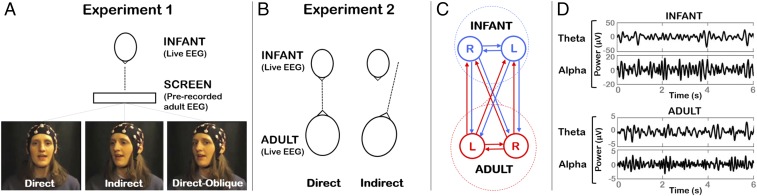
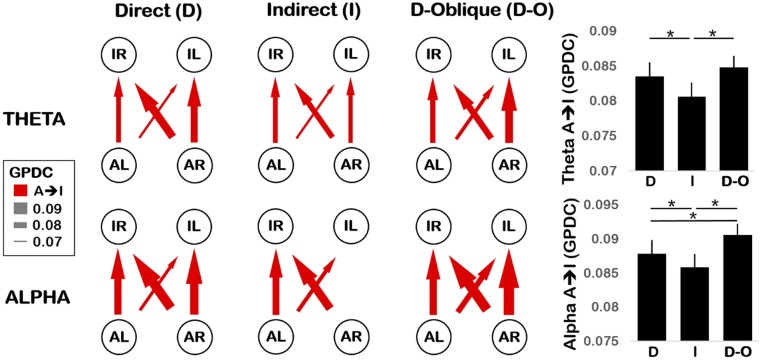
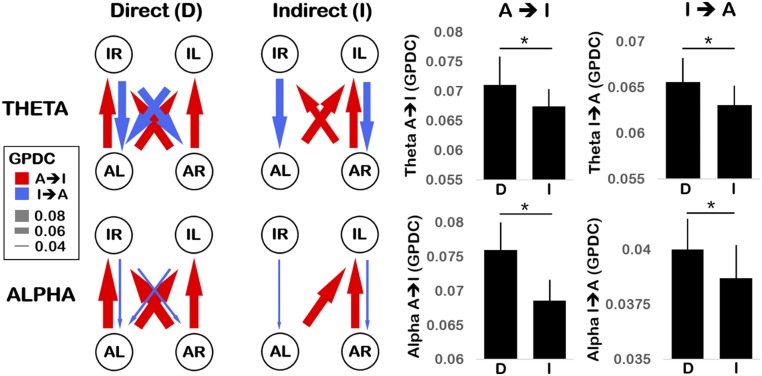
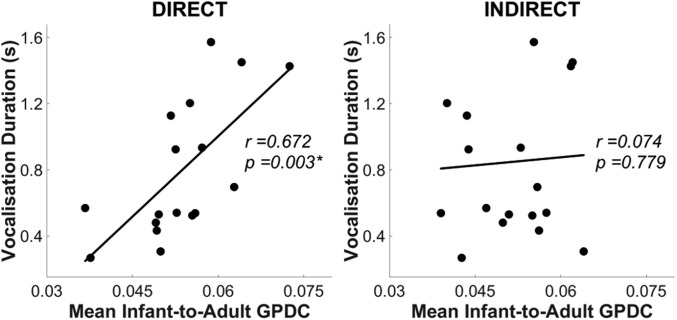
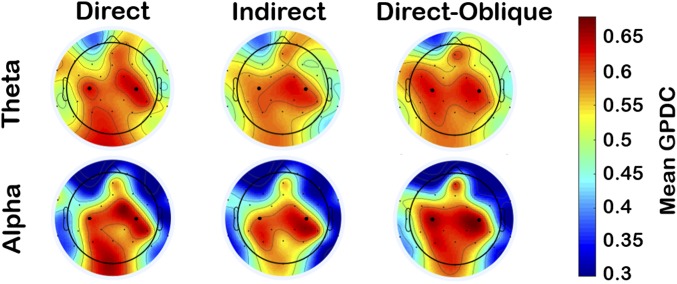
Significance: During communication, social ostensive signals (like gaze) are exchanged in a temporally contingent manner. Synchronized behavior creates social connectedness within human dyads, and even infants synchronize behaviorally with adults. However, the neural mechanisms that support infant–adult synchronization are unknown. Here, we provide evidence that infants up-regulate neural synchronization with adult partners when offered direct ostensive gaze, as compared with gaze aversion. Gaze therefore brings infant–adult neural activity into mutual alignment, creating a joint-networked state that may facilitate communicative success. Further, infants’ own communicative attempts were positively associated with adults’ neural synchronization to them, indicating mutual regulation of synchronization within infant–adult dyads. Thus, interpersonal neural synchronization may provide a mechanism by which infants construct their own earliest social networks.
Overview
The claims and statistics of this paper haven’t been checked yet.
Free: it reads the open-access text and checks the first 5 claims that cite a source we can check. Create a free account to check every claim.
Integrity signals
Registry
Cites
Statistics
Figures
Verification
Claims the paper makes
The claims and statistics of this paper haven’t been checked yet.
Free: it reads the open-access text and checks the first 5 claims that cite a source we can check. Create a free account to check every claim.
Claims other papers make about this one
Each is checked against this paper’s own text: does it say what the citing paper says it does?
The source backs part of the claim, not all of it — or backs it for a different population, condition or comparison.
In the citing paper
“In contrast, functional near-infrared spectroscopy (fNIRS) [8] and electroencephalography (EEG) [9] are wearable technologies that can be deployed in real-life settings [10,11,12], enabling more naturalistic hyperscanning.”
From Naturalistic Hyperscanning with Wearable Magnetoencephalography (2023) · cites this paper as [10]
Experimental — accuracy not yet measured
Self-check
Percentages, sums and reported differences re-computed from the paper’s own numbers.
The self-check needs the paper’s full text.
Citations
Cites
Controlling the False Discovery Rate: A Practical and Powerful Approach to Multiple Testing
Benjamini, Y., & Hochberg, Y. (1995) · Journal of the Royal Statistical Society Series B: Statistical Methodology · doi:10.1111/j.2517-6161.1995.tb02031.x · Cited by 109,482 · cited 2×
“05, Benjamini–Hochberg false discovery rate (FDR) corrected] (32) (see Fig.”
MethodInvestigating causal relations by econometric models and cross-spectral methods
Granger, C. W. J. (1969) · Econometrica · doi:10.2307/1912791 · Cited by 22,989
Adjusting batch effects in microarray expression data using empirical Bayes methods
Johnson, W. E., Li, C., & Rabinovic, A. (2007) · Biostatistics · doi:10.1093/biostatistics/kxj037 · Cited by 8,658
A Multiple Comparison Procedure for Comparing Several Treatments with a Control
Dunnett, C. W. (1955) · Journal of the American Statistical Association · doi:10.1080/01621459.1955.10501294 · Cited by 6,094 · cited 1×
“To assess the specific gaze effects at each frequency, we conducted planned pairwise comparisons using Dunnett’s multiple range t-test [29], which independently controls for familywise error rate without a prior F-test.”
MethodApprenticeship in thinking: cognitive development in social context
(1990) · Choice Reviews Online · doi:10.5860/choice.28-0612 · Cited by 5,464 · cited 2×
“Temporally contingent social interactions between adults and infants play a vital role in supporting early learning across multiple domains of language, cognition and socio-emotional development [1,2].”
BackgroundMethodApprenticeship in Thinking: Cognitive Development in Social Context
Rogoff, B. (1990) · doi:10.1093/oso/9780195059731.001.0001 · Cited by 4,709
Controlling the false discovery rate in behavior genetics research
Benjamini, Y., Drai, D., Elmer, G., Kafkafi, N., & Golani, I. (2001) · Behavioural Brain Research · doi:10.1016/s0166-4328(01)00297-2 · Cited by 4,146
Cortical oscillations and speech processing: emerging computational principles and operations
Giraud, A.-L., & Poeppel, D. (2012) · Nature Neuroscience · doi:10.1038/nn.3063 · Cited by 1,917 · cited 2×
“Previous research has also suggested that infants, like adults (20), show neural synchronization (or phase-locking) of cortical oscillatory activity to temporal structures in auditory signals (21).”
BackgroundPartial directed coherence: a new concept in neural structure determination
Baccalá, L. A., & Sameshima, K. (2001) · Biological Cybernetics · doi:10.1007/pl00007990 · Cited by 1,779 · cited 1×
“Partial Directed Coherence (PDC) is a directional causal measure of direct flows between channels [11-13].”
BackgroundCsibra, G., & Gergely, G. (2009) · Trends in Cognitive Sciences · doi:10.1016/j.tics.2009.01.005 · Cited by 1,648
Cited by
Items 101–200 of 324
Zivan, M., Gashri, C., Habuba, N., & Horowitz‐Kraus, T. (2022) · Child Neuropsychology · doi:10.1080/09297049.2022.2034774 · Cited by 40
“…synchrony among adults and infants reported increased neural synchrony in the alpha band during a direct gaze condition with an experimenter (Leong et al., 2017) as well as in a positive emotion condition with the mother (Santamaria et al., 2020), and predicted social learning (Leong et…”
BackgroundMoving developmental social neuroscience toward a second-person approach
Hoehl, S., & Marková, G. (2018) · PLoS Biology · doi:10.1371/journal.pbio.3000055 · Cited by 36
“Though some recent studies measured infants’ electrophysiological brain activities during live social interactions [6,27–29], exchanges in these studies were highly controlled, thus lacking natural timing, and (with one exception [29]) did not include neurobehavioral assessments of the adult interaction partner.”
ResultDynamics of frontal alpha asymmetry in mother-infant dyads: Insights from the Still Face Paradigm
Perone, S., Gartstein, M. A., & Anderson, A. J. (2020) · Infant Behavior and Development · doi:10.1016/j.infbeh.2020.101500 · Cited by 37
Konrad, K., Gerloff, C., Kohl, S. H., Mehler, D. M. A., Mehlem, L., Volbert, E. L., Komorek, M., Henn, A. T., Boecker, M., Weiß, E. O., et al. (2024) · Frontiers in Neuroscience · doi:10.3389/fnins.2024.1286130 · Cited by 37
Forms and Functions of Affective Synchrony
Wood, A., Lipson, J., Zhao, O., & Niedenthal, P. M. (2021) · Springer eBooks · doi:10.1007/978-3-030-78471-3_17 · Cited by 39
Deng, X., Chen, X., Zhang, L., Gao, Q., Li, X., & An, S. (2022) · International Journal of Clinical and Health Psychology · doi:10.1016/j.ijchp.2022.100329 · Cited by 37
“In addition, hyperscanning is also widely used in the study of verbal and non-verbal interactions (Leong et al., 2017).”
BackgroundCommunicative signals during joint attention promote neural processes of infants and caregivers
Bánki, A., Köster, M., Cichy, R. M., & Hoehl, S. (2023) · Developmental Cognitive Neuroscience · doi:10.1016/j.dcn.2023.101321 · Cited by 34
“While former studies reported increased neural synchrony associated with mutual eye contact between infants and adults (Leong et al., 2017, 2019), in a recent study with 12-month-old infants engaging in free play with a caregiver, mutual gaze onsets did not seem to be associated with changes in…”
Distinct social behavior and inter-brain connectivity in Dyads with autistic individuals
Moreau, Q., Brun, F., Ayrolles, A., Nadel, J., & Dumas, G. (2024) · Social Neuroscience · doi:10.1080/17470919.2024.2379917 · Cited by 32
“…to this method, inter-cerebral correlation (IBC) and inter-brain synchrony (IBS) have been observed in various social contexts such as mutual gaze (Leong et al., 2017), shared attention (Hirsch et al., 2017), face-to-face deception (Zhang et al., 2017), social connected-ness among interacting…”
Zimmermann, M., Schultz-Nielsen, K., Dumas, G., & Konvalinka, I. (2024) · Imaging Neuroscience · doi:10.1162/imag_a_00350 · Cited by 34
Two-Person Approaches to Studying Social Interaction in Psychiatry: Uses and Clinical Relevance
Pan, Y., & Cheng, X. (2020) · Frontiers in Psychiatry · doi:10.3389/fpsyt.2020.00301 · Cited by 31
“Apart from this account of shared attention, other studies also posited that social signals (such as gaze, gestures, or vocalizations) could promote mutual temporal alignment of the brains involved, leading to a joint networked state to facilitate information transfer (5, 49).”
BackgroundWang, X., Lu, K., He, Y., Gao, Z., & Hao, N. (2022) · NeuroImage · doi:10.1016/j.neuroimage.2022.119515 · Cited by 29
“Direct gaze indicates that communicators look at each other’s eyes, while oblique gaze indicates the head and eyes of communicators are averted by a certain angle (Adams & Kleck, 2005; Leong et al., 2017).”
Face detection in 2‐ to 6‐month‐old infants is influenced by gaze direction and species
Simpson, E. A., Maylott, S. E., Mitsven, S. G., Zeng, G., & Jakobsen, K. V. (2019) · Developmental Science · doi:10.1111/desc.12902 · Cited by 29
“…imitation (Heimann, 1989; Paukner, Simpson, Ferrari, Mrozek, & Suomi, 2014), facial mimicry (de Klerk, Hamilton, & Southgate, 2018), attentional control (Niedźwiecka, Ramotowska, & Tomalski, 2018), emotion regulation (MacLean et al., 2014), and infant–adult neural synchrony (Leong et al., 2017).”
BackgroundLi, Z., Li, J., Hong, B., Nolte, G., Engel, A. K., & Zhang, D. (2021) · Cerebral Cortex · doi:10.1093/cercor/bhab118 · Cited by 27
Chabin, T., Gabriel, D., Comte, A., & Pazart, L. (2022) · Frontiers in Human Neuroscience · doi:10.3389/fnhum.2022.855778 · Cited by 28
Mobile fNIRS for exploring inter-brain synchrony across generations and time
Moffat, R., Casale, C. E., & Cross, E. S. (2024) · Frontiers in Neuroergonomics · doi:10.3389/fnrgo.2023.1260738 · Cited by 28
Minagawa‐Kawai, Y., Hata, M., Yamamoto, E., Tsuzuki, D., & Morimoto, S. (2023) · Cerebral Cortex · doi:10.1093/cercor/bhad395 · Cited by 27
“These synchronizations are associated with social signals, such as eye gaze and touch (Leong et al. 2017; Piazza et al. 2020; Nguyen et al. 2021).”
Maternal and infant characteristics connected to shared pleasure in dyadic interaction
Puura, K., Leppänen, J., Salmelin, R. K., Mäntymaa, M., Luoma, I., Latva, R., Peltola, M. J., Lehtimäki, T. J., & Tamminen, T. (2019) · Infant Mental Health Journal · doi:10.1002/imhj.21786 · Cited by 27
Villar, J., Ochieng, R., Staines-Urias, E., Fernandes, M., Ratcliff, M. J., Purwar, M., Barros, F. C., Horta, B. L., Ismail, L. C., Albernaz, E., et al. (2020) · Scientific Reports · doi:10.1038/s41598-020-61917-z · Cited by 25
Chen, Y., Liu, S., Hao, Y., Zhao, Q., Ren, J., Piao, Y., Wang, L., Yang, Y., Jin, C., Wang, H., et al. (2024) · NeuroImage · doi:10.1016/j.neuroimage.2024.120733 · Cited by 24
“Additionally, significant alpha synchronizations were found during turn-taking verbal interaction (Ahn et al., 2018) and in the direct gaze between infants and adults (Leong et al., 2017).”
BackgroundNeale, D., Clackson, K., Georgieva, S., Dedetaş, H., Scarpate, M., Wass, S. V., & Leong, V. (2018) · Frontiers in Psychology · doi:10.3389/fpsyg.2018.00273 · Cited by 26
“This is a timely challenge to address as advanced brain imaging techniques now permit the concurrent capture of neural activity from adult– infant dyads during naturalistic social interactions, such as joint play (Wass and Leong, 2016; Leong et al., 2017).”
BackgroundSelf-citationHyperscanning Studies on Interbrain Synchrony and Child Development: A Narrative Review
Bi, X. Y., Cui, H., & Ma, Y. (2023) · Neuroscience · doi:10.1016/j.neuroscience.2023.08.035 · Cited by 23
Narrative as co-regulation: A review of embodied narrative in infant development
McGowan, T., & Delafield‐Butt, J. T. (2022) · Infant Behavior and Development · doi:10.1016/j.infbeh.2022.101747 · Cited by 23
Multimodal interpersonal synchrony: Systematic review and meta-analysis
Ohayon, S., & Gordon, I. (2024) · Behavioural Brain Research · doi:10.1016/j.bbr.2024.115369 · Cited by 29
The Self–Other Distinction in Psychopathology: Recent Developments from a Mentalizing Perspective
Luyten, P., Meulemeester, C. D., & Fonagy, P. (2021) · Springer eBooks · doi:10.1007/978-3-030-51890-5_34 · Cited by 26
An interactionist perspective on the development of coordinated social attention
Hoehl, S., & Bertenthal, B. I. (2021) · Advances in child development and behavior · doi:10.1016/bs.acdb.2021.05.001 · Cited by 25
Neurobiology of peripartum mental illness
Pawluski, J. L., Swain, J. E., & Lonstein, J. S. (2021) · Handbook of clinical neurology · doi:10.1016/b978-0-12-819973-2.00005-8 · Cited by 24
Wass, S. V., Amadó, M. P., & Ives, J. (2022) · Developmental Cognitive Neuroscience · doi:10.1016/j.dcn.2022.101102 · Cited by 23
“…at multiple time-scales, from fluctuations over the second scale using fNIRS (Nguyen, Banki et al., 2020; Nguyen et al., 2021; Nguyen, Schleihauf et al., 2020; Piazza et al., 2020) through to fluctuations over the sub-second scale using EEG (Leong, Byrne et al., 2017; Santamaria et al., 2020).”
BackgroundMethodInfluentialSelf-citationA developmental framework of interpersonal neural synchrony
Hoehl, S., Bánki, A., Brzozowska, A., Carollo, A., Kostorz, K., Nguyen, T., Pletti, C., Reisner, S., Schäfer, V. T., Schaetz, C., et al. (2025) · Developmental Review · doi:10.1016/j.dr.2025.101234 · Cited by 22
“Studies employing EEG hyperscanning have applied measures of coherence (Leong et al., 2017), power correlations (Marriott Haresign et al., 2022), phase-locking value (Kayhan et al., 2022), or weighted phase lag index (Endevelt-Shapira et al., 2021) to quantify INS between two (or more) brain…”
Zhang, J., Huang, Y., & Gao, M. (2022) · Journal of Learning Analytics · doi:10.18608/jla.2022.7421 · Cited by 24
“…2014; Kizilcec et al., 2015; Wang et al., 2017; Wang et al., 2020) found that the inclusion of the instructor, eye contact, or body language in the videos created a sense of social presence (Gunawardena, 1995), thus helping to increase learning performance (Beege et al., 2017; Leong et al., 2017).”
BackgroundMother brain is wired for social moments
Shimon-Raz, O., Salomon, R., Bloch, M., Romano, G. A., Hendler, T., Yeshurun, Y., Ulmer-Yaniv, A., Zagoory‐Sharon, O., & Feldman, R. (2021) · eLife · doi:10.7554/elife.59436 · Cited by 22
“Moments of mother-infant behavioral synchrony provide a template for the coordination of physiological processes, allowing the mature brain to externally-regulate the immature brain and tune it to social living (Hofer, 1994; Leong et al., 2017).”
BackgroundTowards an informational account of interpersonal coordination
Chidichimo, E., Luppi, A. I., Mediano, P. A. M., Leong, V., Dumas, G., Canales‐Johnson, A., & Bethlehem, R. A. I. (2025) · Nature reviews. Neuroscience · doi:10.1038/s41583-025-00989-0 · Cited by 24
Self-citationLorenzo, M. D., Bucsea, O., Rumeo, C., Waxman, J. A., Flora, D. B., Schmidt, L. A., & Riddell, R. P. (2021) · Neuroscience & Biobehavioral Reviews · doi:10.1016/j.neubiorev.2021.10.045 · Cited by 20
Nazneen, T., Islam, I. B., Sajal, M. S. R., Jamal, W., Amin, M. A., Vaidyanathan, R., Chau, T. T., & Mamun, K. A. (2022) · Frontiers in Computational Neuroscience · doi:10.3389/fncom.2022.875282 · Cited by 20
“To determine the directionality of information flow, the Granger Causality measure was used in 5 studies.”
MethodInfluentialDataset of parent-child hyperscanning functional near-infrared spectroscopy recordings
Bizzego, A., Gabrieli, G., Azhari, A., Lim, M., & Esposito, G. (2022) · Scientific Data · doi:10.1038/s41597-022-01751-2 · Cited by 23
“Inclusion criteria were (1) for the parent, being aged 21 or above with a biological child aged between 34 and 60 months, (2) residing in Singapore, (3) with no known cognitive, visual, or hearing impairments, and (4) dyads must be staying in the same household.”
BackgroundInfluentialLi, X., Liu, Q., Xie, K., Chang, Y., Shi, Y., & Ma, J. (2023) · Asia Pacific Journal of Education · doi:10.1080/02188791.2023.2206550 · Cited by 19
“…teacher’s gaze can have social interaction functions, such as enhancing emotional relationships, information transmission, organization, and management (Leong et al., 2017) and stimulate students’ social responses, active information processing, and learning (Beege, Schneider, Nebel, & Rey, 2017).”
Thorsson, M., Galazka, M. A., Johnels, J. Å., & Hadjikhani, N. K. (2024) · Scientific Reports · doi:10.1038/s41598-024-58701-8 · Cited by 21
Natural Pedagogy in Second Language Learning and Teaching
Atkinson, D., & Shvidko, E. (2019) · TESOL Quarterly · doi:10.1002/tesq.538 · Cited by 19
Correlates of interpersonal physiological synchrony and sources of empirical heterogeneity
Gordon, I., & Bartsch, R. P. (2026) · Nature Reviews Psychology · doi:10.1038/s44159-026-00535-4 · Cited by 20
Social signalling as a framework for second-person neuroscience
Cañigueral, R., Krishnan-Barman, S., & Hamilton, A. F. D. C. (2022) · Psychonomic Bulletin & Review · doi:10.3758/s13423-022-02103-2 · Cited by 19
Wass, S. V., Phillips, E., Haresign, I. M., Amadó, M. P., & Goupil, L. (2024) · Annual Review of Developmental Psychology · doi:10.1146/annurev-devpsych-010923-110459 · Cited by 19
“…or Granger-predictive relationships) develops during a free-flowing infant–caregiver interaction is actually relatively weak, and early findings that Granger-predictive relationships are increased during mutual gaze (Leong et al. 2017) have failed to replicate (Marriott Haresign et al. 2023).”
Self-citationTransacting brains: testing an actor–partner model of frontal EEG activity in mother–infant dyads
Krzeczkowski, J. E., Lieshout, R. J. V., & Schmidt, L. A. (2020) · Development and Psychopathology · doi:10.1017/s0954579420001558 · Cited by 18
“While studies have examined the dynamics of simultaneously assessed EEG patterns in mother–infant dyads as well as infants and other adults (Leong et al., 2017; Wass, 2018), relatively few studies have examined the relation between simultaneously assessed FA patterns in mother–child dyads…”
BackgroundTrendafilov, D., Schmitz, G. H., Hwang, T., Effenberg, A. O., & Polani, D. (2020) · Frontiers in Human Neuroscience · doi:10.3389/fnhum.2020.00185 · Cited by 21
A Brain‐To‐Brain Mechanism for Social Transmission of Threat Learning
Pan, Y., Vinding, M. C., Zhang, L., Lundqvist, D., & Olsson, A. (2023) · Advanced Science · doi:10.1002/advs.202304037 · Cited by 19
Çetinçelik, M., Rowland, C. F., & Snijders, T. M. (2023) · Developmental Cognitive Neuroscience · doi:10.1016/j.dcn.2023.101297 · Cited by 18
“This means that neural tracking was not facilitated by the speaker ’ s use of eye gaze to convey ostensive communication, consistent with the results by Leong, Byrne et al. (2017).”
BackgroundResultInfluentialGrootjans, Y., Harrewijn, A., Fornari, L., Janssen, T. W. P., de Bruijn, E. R. A., van Atteveldt, N., & Franken, I. H. A. (2024) · Developmental Cognitive Neuroscience · doi:10.1016/j.dcn.2024.101391 · Cited by 17
“They reported that direct eye-contact enhances adult-infant connectivity in both conditions (Leong et al., 2017).”
BackgroundAdvances in microanalysis: Magnifying the social microscope on mother-infant interactions
Lourenço, V., Coutinho, J. F. P., & Pereira, A. F. (2021) · Infant Behavior and Development · doi:10.1016/j.infbeh.2021.101571 · Cited by 17
Horowitz‐Kraus, T., & Gashri, C. (2023) · Biology · doi:10.3390/biology12020241 · Cited by 18
Sharman, K. M., Meissel, K., Tait, J. E., Rudd, G., & Henderson, A. M. E. (2023) · Infant Behavior and Development · doi:10.1016/j.infbeh.2023.101859 · Cited by 15
Boukarras, S., Ferri, D., Borgogni, L., & Aglioti, S. M. (2024) · Frontiers in Integrative Neuroscience · doi:10.3389/fnint.2024.1321130 · Cited by 13
“Leong and colleagues (Leong et al., 2017) applied dual EEG to parent–child dyads and found that alpha and theta frequency activity of adults singing a song granger caused (see Table 1) the alpha and theta activity of children observing their parents either live or in a video recording.”
BackgroundCaregiver-child neural synchrony: Magic, mirage, or developmental mechanism?
Roche, E. C., Redcay, E., & Romeo, R. R. (2024) · Developmental Cognitive Neuroscience · doi:10.1016/j.dcn.2024.101482 · Cited by 17
“…(see review: Wass et al., 2020) explore the possibility that behavioral cues like vocalization (e.g., (Nguyen et al., 2023) and gaze (e.g., Leong et al., 2017; Marriott Haresign et al., 2023; Wass et al., 2018) function as acoustical “ edges, ” guiding children into attentional and neural…”
Computational Methods for the Assessment of Empathic Synchrony
Bizzego, A., Gabrieli, G., Azhari, A., Setoh, P., & Esposito, G. (2020) · Smart innovation, systems and technologies · doi:10.1007/978-981-15-5093-5_47 · Cited by 15
Socializing Sensorimotor Contingencies
Lübbert, A., Göschl, F., Krause, H., Schneider, T. R., Maÿe, A., & Engel, A. K. (2021) · Frontiers in Human Neuroscience · doi:10.3389/fnhum.2021.624610 · Cited by 16
Exploring age-related changes in inter-brain synchrony during verbal communication
Dikker, S., Mech, E. N., Gwilliams, L., West, T. V., Dumas, G., & Federmeier, K. D. (2022) · The Psychology of learning and motivation/The psychology of learning and motivation · doi:10.1016/bs.plm.2022.08.003 · Cited by 18
Gui, A., Perelli, D., Rizzo, G., Ferruzza, E., & Mercuriali, E. (2023) · Frontiers in Psychology · doi:10.3389/fpsyg.2023.1175675 · Cited by 15
“Research in typically developing children indicates that mutual gaze increases neural synchronization between the infant and their mother (Leong et al., 2017).”
BackgroundLi, J., Hong, B., Nolte, G., Engel, A. K., & Zhang, D. (2023) · Cerebral Cortex · doi:10.1093/cercor/bhad347 · Cited by 14
Papoutselou, E., Harrison, S. C., Mai, G., Buck, B., Patil, N. P., Wiggins, I. M., & Hartley, D. E. H. (2023) · European Journal of Neuroscience · doi:10.1111/ejn.16233 · Cited by 15
“Neural synchrony, in this context, has the potential to promote parent – child interactions, foster behavioural coordination and boost performance in collaborative tasks (Atzil & Gendron, 2017; Leong et al., 2017; Miller et al., 2019).”
BackgroundZhou, X., Hong, X., & Wong, P. C. M. (2024) · Psychological Science · doi:10.1177/09567976241237699 · Cited by 15
“Consistent with our results, cortical activity and IBC in the FC have also been reported to support the execution and observation of nonverbal communicative gestures and emotion regulations (Reindl et al., 2018) and eye gaze (Leong et al., 2017), which are impaired in individuals with ASD.”
Envisioning translational hyperscanning: how applied neuroscience might improve family-centered care
Provenzi, L., Roberti, E., & Capelli, E. (2022) · Social Cognitive and Affective Neuroscience · doi:10.1093/scan/nsac061 · Cited by 14
“…of 8-month-old infants and an adult show changes in neural network connectivity depending on the adults’ changes in gaze orienting: both the adults and the infants had a greater influence on the interactive partner’s neural activity during direct rather than indirect gaze (Leong et al., 2017).”
BackgroundMother-infant social gaze dynamics relate to infant brain activity and word segmentation
Vanoncini, M., Hoehl, S., Elsner, B., Wallot, S., Boll‐Avetisyan, N., & Kayhan, E. (2023) · Developmental Cognitive Neuroscience · doi:10.1016/j.dcn.2023.101331 · Cited by 13
“Social gaze provides an important cue for interpersonal coordination in adult-infant interactions (Leong et al., 2017) and could therefore play a role in infants ’ language learning.”
Interbrain substrates of role switching during mother–child interaction
Li, Y., Wu, S., Xu, J., Wang, H., Zhu, Q., Shi, W., Fang, Y., Jiang, F., Tong, S., Zhang, Y., et al. (2024) · Human Brain Mapping · doi:10.1002/hbm.26672 · Cited by 18
“Leong et al. found that direct gaze increased bidirectional interbrain connectivity between the female experimenter and infants in both theta and alpha bands (Leong et al., 2017).”
BackgroundMethodResultInfluentialSensitive infant care tunes a frontotemporal interbrain network in adolescence
Schwartz, L., Hayut, O., Lévy, J., Gordon, I., & Feldman, R. (2024) · Scientific Reports · doi:10.1038/s41598-024-73630-2 · Cited by 13
“Consistent with the model, studies have shown that episodes of brain coupling during infancy and early childhood are aligned with the mother’s or female stranger’s social behavior, including touch, gaze, or vocalizations 67,85 .”
ResultLearning with others: teacher–learner brain synchrony depends on mutual gaze and joint attention
Felice, S. D., Ciò, F. D., Tompkins, D., Hakim, U., Pinti, P., Vigliocco, G., & Hamilton, A. F. D. C. (2025) · Cerebral Cortex · doi:10.1093/cercor/bhaf323 · Cited by 13
“Interpersonal behavioral dynamics, including shared attention and eye-gaze coordination, ha ve been linked to both INS (Leong et al. 2017; Piazza et al. 2021; Wohltjen and Wheatley 2021; Rosen et al. 2025) and learning (Mundy and Newell 2007; Ishikawa and Yoshioka 2025).”
Brain-to-brain communication during musical improvisation: a performance case study
Ramírez-Moreno, M. A., Cruz-Garza, J. G., Acharya, A., Chatufale, G., Witt, W., Gelok, D., Reza, G., & Contreras-Vidal, J. L. (2022) · F1000Research · doi:10.12688/f1000research.123515.1 · Cited by 14
An evaluation of inter-brain EEG coupling methods in hyperscanning studies
Xu, X., Kong, Q., Zhang, D., & Zhang, Y. (2022) · Cognitive Neurodynamics · doi:10.1007/s11571-022-09911-1 · Cited by 14
“In addition to the approaches mentioned above that focus on undirected coupling, there exists a series of methods describing directed inter-brain coupling, such as cross-correlation, Granger causality, and partial directed coherence (Babiloni et al. 2006; Pan et al. 2017, 2018; Leong et al. 2017).”
Empathy aligns brains in synchrony
Schwartz, L., Lévy, J., Shapira, Y., Salomonski, C., Hayut, O., Zagoory‐Sharon, O., & Feldman, R. (2025) · iScience · doi:10.1016/j.isci.2025.112642 · Cited by 15
Embodied metaphors and interpersonal synchrony in the digital age: the case of remote working
Magni, G., Genovese, L. A., Riva, G., & Repetto, C. (2025) · Frontiers in Psychology · doi:10.3389/fpsyg.2025.1648733 · Cited by 13
“Interpersonal synchronization plays a critical role in fostering affiliative bonds, enhancing cooperation, and cultivating empathy (Hu et al., 2017; Leong et al., 2017).”
Gratch, J. S. (2023) · Philosophical Transactions of the Royal Society B Biological Sciences · doi:10.1098/rstb.2021.0475 · Cited by 19
“B 378 : 2021047 5 exhibit more neural synchrony when they can engage in mutual gaze, compared with a separate group of dyads that can not [37].”
BackgroundBrain-to-brain communication during musical improvisation: a performance case study
Ramírez-Moreno, M. A., Cruz-Garza, J. G., Acharya, A., Chatufale, G., Witt, W., Gelok, D., Reza, G., & Contreras-Vidal, J. L. (2023) · F1000Research · doi:10.12688/f1000research.123515.4 · Cited by 14
“Adifferent amountofsamples was used for each frequency band, due to bandwidth difference; 16 for delta and theta, 20 for alpha, 68 for beta and 82 for gamma.”
From Micro to Macro: The Combination of Consciousness
Young, A., Robbins, I., & Shelat, S. (2022) · Frontiers in Psychology · doi:10.3389/fpsyg.2022.755465 · Cited by 15
Clackson, K., Wass, S. V., Georgieva, S., Brightman, L., Nutbrown, R., Almond, H., Bieluczyk, J., Carro, G., Dames, B. A. R., & Leong, V. (2019) · Frontiers in Psychology · doi:10.3389/fpsyg.2019.02661 · Cited by 12
Self-citationHam, G. X., Lim, K. E., Augustine, G. J., & Leong, V. (2023) · Journal of Neuroendocrinology · doi:10.1111/jne.13241 · Cited by 12
Self-citationHuangfu, Q., Li, H., Ban, Y., & He, J. (2024) · Journal of Chemical Education · doi:10.1021/acs.jchemed.3c00498 · Cited by 11
Why behaviour matters: Studying inter-brain coordination during child-caregiver interaction
Haresign, I. M., Phillips, E., & Wass, S. V. (2024) · Developmental Cognitive Neuroscience · doi:10.1016/j.dcn.2024.101384 · Cited by 12
“Because of this, many developmental scientists typically concentrate on lower-frequency neural dynamics (Marshall et al., 2011; Leong et al., 2017; Xie et al., 2018; van der Velde et al., 2019; Jones et al., 2020) and apply low pass filters during artifact rejection (e.g., at ~30 Hz in adults…”
InfluentialSelf-citationPan, Y., Dikker, S., Goldstein, P., Zhu, Y., Yang, C., & Hu, Y. (2019) · bioRxiv (Cold Spring Harbor Laboratory) · doi:10.1101/704239 · Cited by 11
“It has been proposed that such neural alignment facilitates the matching of the temporal structure of inputs and optimizes the learning process (Leong et al., 2017).”
Clair, V. S., Contini, L., Re, R., Pinti, P., & Mareschal, D. (2025) · Imaging Neuroscience · doi:10.1162/imag_a_00509 · Cited by 10
“Evidence from EEG with 9- month-old infants interacting with their parents suggests direct eye contact increases inter-brain coupling ( Leong et al., 2017), though Haresign et al. (2023) did not replicate this result.”
Atilla, F., Alimardani, M., Kawamoto, T., & Hiraki, K. (2023) · Social Neuroscience · doi:10.1080/17470919.2023.2228545 · Cited by 10
Azhari, A., Bizzego, A., Balagtas, J. P. M., Leng, K. S. H., & Esposito, G. (2022) · Symmetry · doi:10.3390/sym14050998 · Cited by 10
Li, Z., & Zhang, D. (2023) · Cognitive Neurodynamics · doi:10.1007/s11571-022-09924-w · Cited by 12
“Also, these extralinguistic-related speaker-listener neural coupling was sensitive to interpersonal interaction, e.g., visual gaze (Jiang et al. 2012; Leong et al. 2017), interactive style (Pan et al. 2018; Zheng et al. 2018), etc., instead of (solely) the linguistic content.”
Feng, Y., Hemmeryckx, B., Frederix, L., Lox, M., Wu, J., Heggermont, W., Lu, H. R., Gallacher, D. J., Oyen, R., LIJNEN, H. R., et al. (2018) · Quantitative Imaging in Medicine and Surgery · doi:10.21037/qims.2018.09.05 · Cited by 10
Marzoratti, A., Liu, M. E., Krol, K. M., Sjobeck, G. R., Lipscomb, D., Hofkens, T. L., Boker, S. M., Pelphrey, K. A., Connelly, J. J., & Evans, T. M. (2023) · Developmental Cognitive Neuroscience · doi:10.1016/j.dcn.2023.101302 · Cited by 8
Utilizing functional neuroimaging to study early language development
Olson, H. A., Day, T. K. M., Hiersche, K. J., Manning, B. L., Bradley, H., Choi, S. J., Abdurokhmonova, G., McCormick, S. A., Conrad, A. L., Scheinost, D., et al. (2025) · Developmental Cognitive Neuroscience · doi:10.1016/j.dcn.2025.101641 · Cited by 8
“…“ hyperscanning, ” in which neural recordings are collected from multiple people simultaneously (such as an infant and a caregiver) (Alonso et al., 2024; Hoyniak et al., 2021; Leong et al., 2017; Nguyen et al., 2020, 2021; Piazza et al., 2020; Qui ˜ nones-Camacho et al., 2020; Rosen et al., 2025).”
Maternal technoference decreases brain-to-brain synchrony during mother-infant interaction
van den Heuvel, M. I., Mosińska, A., Turk, E., & Alimardani, M. (2026) · Scientific Reports · doi:10.1038/s41598-026-37037-5 · Cited by 9
Rosen, M. L., Li, A., Mikkelsen, C. A., & Aslin, R. Ν. (2024) · Developmental Review · doi:10.1016/j.dr.2024.101170 · Cited by 9
Active Viewing Facilitates Gaze to the Eye Region in Young Children with Autism Spectrum Disorder
Wang, Y., Peng, S., Shao, Z., & Feng, T. (2022) · Journal of Autism and Developmental Disorders · doi:10.1007/s10803-022-05462-w · Cited by 8
Neural Correlates of Transmitted Light Experience during Meditation: A Pilot Hyperscanning Study
Fenwick, P. B. C., Luft, C. D. B., Ioannides, A. A., & Bhattacharya, J. (2019) · NeuroQuantology · doi:10.14704/nq.2019.17.1.1318 · Cited by 11
Computational methods of brain-to-brain coupling during human interaction
Wang, Y., Yang, X., Yao, X., & Fu, C. (2020) · Chinese Science Bulletin (Chinese Version) · doi:10.1360/tb-2020-0642 · Cited by 8
Towards a multi-brain framework for hypnosis: a review of quantitative methods
Farahzadi, Y., & Kekecs, Z. (2021) · American Journal of Clinical Hypnosis · doi:10.1080/00029157.2020.1865129 · Cited by 8
“Leong et al. (2017) applied PDC to measure the brain coupling between infants and a female adult experimenter when she was reciting nursery rhymes.”
MethodBrain-to-brain communication during musical improvisation: a performance case study
Ramírez-Moreno, M. A., Cruz-Garza, J. G., Acharya, A., Chatufale, G., Witt, W., Gelok, D., Reza, G., & Contreras-Vidal, J. L. (2023) · F1000Research · doi:10.12688/f1000research.123515.3 · Cited by 11
Using dual-EEG to explore therapistclient interpersonal neural synchronyPreprint
Lecchi, T., da Silva, K., Giommi, F., & Leong, V. (2019) · PsyArXiv (OSF Preprints) · doi:10.31234/osf.io/ebkpv · Cited by 8
Self-citationUsing dual EEG to analyse event-locked changes in child-adult neural connectivityPreprint
Haresign, I. M., Phillips, E., Whitehorn, M., Goupil, L., & Wass, S. V. (2021) · bioRxiv (Cold Spring Harbor Laboratory) · doi:10.1101/2021.06.15.448573 · Cited by 8
“Although it is not a focus of this paper to compare methods of measuring connectivity, we mention PDC here as it has been used to investigate IBC between adult and infant pairings (e.g., Leong et al 2017; Santamaria, et al 2020).”
BackgroundMethodResultInfluentialSelf-citationTakeuchi, N. (2024) · Mathematical Biosciences & Engineering · doi:10.3934/mbe.2024226 · Cited by 9
Speech Neurophysiology in Realistic Contexts: Big Hype or Big Leap?
Liberto, G. M. D., & Ip, E. Y. J. (2026) · European Journal of Neuroscience · doi:10.1111/ejn.70496 · Cited by 7
“Eye-gaze, for example, plays a major role in human communication and was suggested to be instrumental even in infants for bringing brains into mutual temporal alignment, facilitating information transfer and learning (Leong et al. 2017).”
Sela, Y., Santamaria, L., Amichai‐Hamburger, Y., & Leong, V. (2020) · Sensors · doi:10.3390/s20205781 · Cited by 7
Self-citationPili, M. P., Provenzi, L., Billeci, L., Riva, V., Cassa, M. I., Siri, E., Procissi, G., Roberti, E., & Capelli, E. (2025) · Journal of Neuroscience Methods · doi:10.1016/j.jneumeth.2025.110400 · Cited by 7
“…is employing other and more robust measures of INS such as the Circular Correlation (CCorr; Burgess, 2013), the Partial Directed Coherence (PDC; Leong et al., 2017; Santamaria et al., 2020) and the Amplitude-Amplitude Coupling using the envelope (AAC; Koul et al., 2023; Palva and Palva, 2018).”
InfluentialLachman, A., Burger, M., Jordaan, E., Leppanen, J., Puura, K., & Niehaus, D. J. H. (2021) · Frontiers in Psychiatry · doi:10.3389/fpsyt.2021.668009 · Cited by 7
Alviar, C., JONES, W. R., & Lense, M. (2025) · Annals of the New York Academy of Sciences · doi:10.1111/nyas.70147 · Cited by 8
“Ostensive cues increase the infant’s attention to and cortical visual processing of objects [101], and enhance parent–child neural coupling during social interaction, which may facilitate language and social development [102].”
Russo, C., & Senese, V. P. (2023) · European Journal of Neuroscience · doi:10.1111/ejn.15890 · Cited by 6
“…et al., 2012; Tognoli et al., 2007; Yun et al., 2012), the interencephalic activity of shared attention (Dikker et al., 2017; Lachat et al., 2012; Leong et al., 2017), intercerebral activity during interactive decision-making (Balconi & Vanutelli, 2016; Hu et al., 2018) and intercerebral…”
BackgroundWang, Z., Chen, Z., Gong, B., & Feng, Z. (2023) · Education and Information Technologies · doi:10.1007/s10639-023-12148-y · Cited by 8
“Gaze has strong social implications, which can strengthen learners’ social responses and enhance their learning effects through neural synchronization (Leong et al., 2017; Mayer, 2005).”
Inter-brain synchronization is weakened by the introduction of external punishment
Li, J., Pan, J., Zhu, C., & Wang, Y. (2021) · Social Cognitive and Affective Neuroscience · doi:10.1093/scan/nsab124 · Cited by 6
Takeuchi, N. (2022) · Frontiers in Psychology · doi:10.3389/fpsyg.2021.789637 · Cited by 7
Metadata
- Authors
- Leong, V., Byrne, E., Clackson, K., Georgieva, S., Lam, S., & Wass, S.
- Affiliations
- Nanyang Technological University (SG)
- MRC Cognition and Brain Sciences Unit (GB)
- University of Cambridge (GB)
- University of East London (GB)
- Corresponding author
- Leong, Victoria
- Venue
- Proceedings of the National Academy of Sciences
- Publisher
- National Academy of Sciences
- Published
- 2017-11-28
- Volume
- 114
- Issue
- 50
- Pages
- 13290-13295
- ISSN
- 0027-8424 (ISSN-L)
- 1091-6490
- PMC
- PMC5740679
- OpenAlex
- W2951647174
- Cited by
- 299
- References
- 45
- Citations by year
- 2026: 31 · 2025: 31 · 2024: 31 · 2023: 39 · 2022: 41 · 2021: 42 · 2020: 39 · 2019: 32 · 2018: 13
- FWCI
- 32.91
- Type
- journal article
- Language
- en
- Open access
- hybrid
- doi.org
- Licence
- Locations
- Proceedings of the National Academy of Sciences (publishedVersion, cc-by-nc-nd)
- bioRxiv (Cold Spring Harbor Laboratory) (acceptedVersion, cc-by-nc-nd)
- Europe PMC (PubMed Central) (publishedVersion, cc-by-nc-nd)
- PubMed Central (publishedVersion, cc-by-nc-nd)
- PubMed (publishedVersion)
- UEL Research Repository (University of East London) (acceptedVersion)
- DR-NTU (Nanyang Technological University) (submittedVersion)
- UEL Research Repository (University of East London) (submittedVersion, cc-by-nc-nd)
- UEA Digital Repository (University of East Anglia) (submittedVersion)
- Apollo (University of Cambridge) (submittedVersion)
- Apollo
- Funders
- RCUK | Economic and Social Research Council (ES/N006461/1, ES/N017560/1)
- Lucy Cavendish College, Cambridge University (Junior Research Fellowship)
- Topics
- Social Sciences › Psychology › Social Psychology › Action Observation and Synchronization
- Social Sciences › Psychology › Developmental and Educational Psychology › Child and Animal Learning Development
- Life Sciences › Neuroscience › Cognitive Neuroscience › Neural dynamics and brain function
- Keywords
- infant gaze, direct gaze, adult-infant interaction, neuronal synchronization, information coupling, infant vocalizations, early communication, partial directed coherence, Granger causality
- MeSH terms
- Adult, Brain, Female, Fixation, Ocular, Humans, Infant, Language, Male, Nonverbal Communication, Speech Perception
About these checks
Registry, retraction, Cites and statistics results are computed, not judged, with one exception: a printed reference that no index lists is read once by a model before it counts as a citation error. Claims are extracted by a model and kept only when their quote appears verbatim in the text; each cited source is then checked, with a model’s help, for whether it says what the claim relies on. Those verdicts can be wrong — read the claim’s quote and the cited source before relying on one.
Statistics and arithmetic are recomputed, not judged.
Confidence bands are shown only for fields calibrated on our annotated test set. None is calibrated yet, so no band is shown.
What counts as a claim ›How we measure confidence ›How we check this ›
Are you an author, or do you see a problem with this page? Request a review
Data sources
Bibliographic data: Semantic Scholar, OpenAlex, Crossref.
Contains information from the Semantic Scholar Academic Graph Datasets, made available under the ODC Attribution License (ODC-BY 1.0).
Semantic Scholar’s data is described in: Kinney, R., et al. (2023). The Semantic Scholar Open Data Platform. arXiv:2301.10140.
