

Speaker gaze increases information coupling between infant and adult brains
Open accessPublished version of a preprint
The DOI matches its Crossref record; 45 of the 45 references it cites were found in a registry or an index.
Abstract
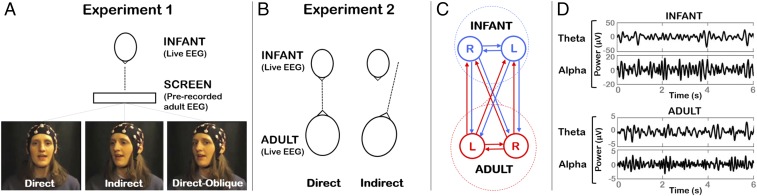
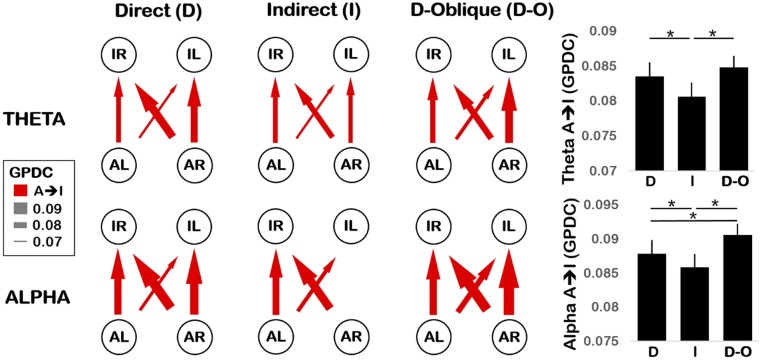
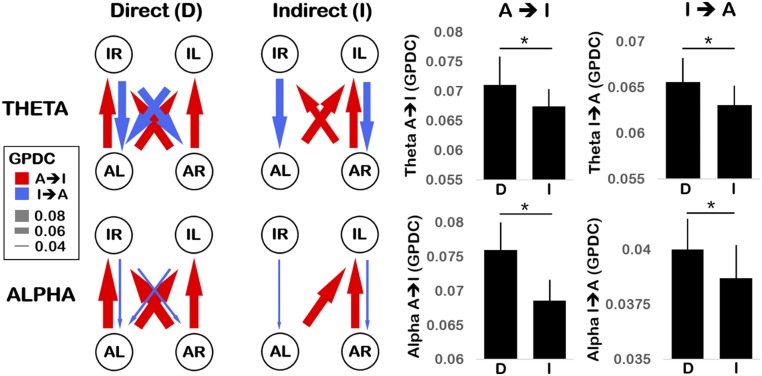
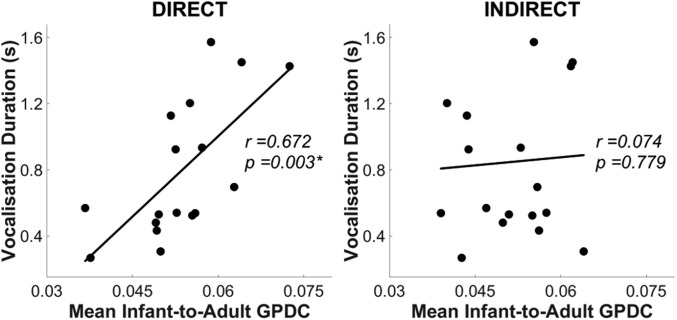
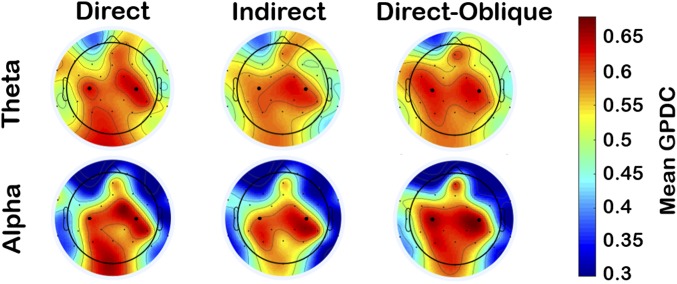
Significance: During communication, social ostensive signals (like gaze) are exchanged in a temporally contingent manner. Synchronized behavior creates social connectedness within human dyads, and even infants synchronize behaviorally with adults. However, the neural mechanisms that support infant–adult synchronization are unknown. Here, we provide evidence that infants up-regulate neural synchronization with adult partners when offered direct ostensive gaze, as compared with gaze aversion. Gaze therefore brings infant–adult neural activity into mutual alignment, creating a joint-networked state that may facilitate communicative success. Further, infants’ own communicative attempts were positively associated with adults’ neural synchronization to them, indicating mutual regulation of synchronization within infant–adult dyads. Thus, interpersonal neural synchronization may provide a mechanism by which infants construct their own earliest social networks.
Overview
The claims and statistics of this paper haven’t been checked yet.
Free: it reads the open-access text and checks the first 5 claims that cite a source we can check. Create a free account to check every claim.
Integrity signals
Registry
Cites
Statistics
Figures
Verification
Claims the paper makes
The claims and statistics of this paper haven’t been checked yet.
Free: it reads the open-access text and checks the first 5 claims that cite a source we can check. Create a free account to check every claim.
Claims other papers make about this one
Each is checked against this paper’s own text: does it say what the citing paper says it does?
The source backs part of the claim, not all of it — or backs it for a different population, condition or comparison.
In the citing paper
“In contrast, functional near-infrared spectroscopy (fNIRS) [8] and electroencephalography (EEG) [9] are wearable technologies that can be deployed in real-life settings [10,11,12], enabling more naturalistic hyperscanning.”
From Naturalistic Hyperscanning with Wearable Magnetoencephalography (2023) · cites this paper as [10]
Experimental — accuracy not yet measured
Self-check
Percentages, sums and reported differences re-computed from the paper’s own numbers.
The self-check needs the paper’s full text.
Citations
Cites
Controlling the False Discovery Rate: A Practical and Powerful Approach to Multiple Testing
Benjamini, Y., & Hochberg, Y. (1995) · Journal of the Royal Statistical Society Series B: Statistical Methodology · doi:10.1111/j.2517-6161.1995.tb02031.x · Cited by 109,482 · cited 2×
“05, Benjamini–Hochberg false discovery rate (FDR) corrected] (32) (see Fig.”
MethodInvestigating causal relations by econometric models and cross-spectral methods
Granger, C. W. J. (1969) · Econometrica · doi:10.2307/1912791 · Cited by 22,989
Adjusting batch effects in microarray expression data using empirical Bayes methods
Johnson, W. E., Li, C., & Rabinovic, A. (2007) · Biostatistics · doi:10.1093/biostatistics/kxj037 · Cited by 8,658
A Multiple Comparison Procedure for Comparing Several Treatments with a Control
Dunnett, C. W. (1955) · Journal of the American Statistical Association · doi:10.1080/01621459.1955.10501294 · Cited by 6,094 · cited 1×
“To assess the specific gaze effects at each frequency, we conducted planned pairwise comparisons using Dunnett’s multiple range t-test [29], which independently controls for familywise error rate without a prior F-test.”
MethodApprenticeship in thinking: cognitive development in social context
(1990) · Choice Reviews Online · doi:10.5860/choice.28-0612 · Cited by 5,464 · cited 2×
“Temporally contingent social interactions between adults and infants play a vital role in supporting early learning across multiple domains of language, cognition and socio-emotional development [1,2].”
BackgroundMethodApprenticeship in Thinking: Cognitive Development in Social Context
Rogoff, B. (1990) · doi:10.1093/oso/9780195059731.001.0001 · Cited by 4,709
Controlling the false discovery rate in behavior genetics research
Benjamini, Y., Drai, D., Elmer, G., Kafkafi, N., & Golani, I. (2001) · Behavioural Brain Research · doi:10.1016/s0166-4328(01)00297-2 · Cited by 4,146
Cortical oscillations and speech processing: emerging computational principles and operations
Giraud, A.-L., & Poeppel, D. (2012) · Nature Neuroscience · doi:10.1038/nn.3063 · Cited by 1,917 · cited 2×
“Previous research has also suggested that infants, like adults (20), show neural synchronization (or phase-locking) of cortical oscillatory activity to temporal structures in auditory signals (21).”
BackgroundPartial directed coherence: a new concept in neural structure determination
Baccalá, L. A., & Sameshima, K. (2001) · Biological Cybernetics · doi:10.1007/pl00007990 · Cited by 1,779 · cited 1×
“Partial Directed Coherence (PDC) is a directional causal measure of direct flows between channels [11-13].”
BackgroundCsibra, G., & Gergely, G. (2009) · Trends in Cognitive Sciences · doi:10.1016/j.tics.2009.01.005 · Cited by 1,648
Cited by
Items 201–300 of 324
Directedness and engagement in chimpanzee vocal ontogeny
Taylor, D., Gustafsson, E., Dezecache, G., & Davila‐Ross, M. (2022) · Developmental Science · doi:10.1111/desc.13334 · Cited by 7
Rhythm in dyadic interactionsPreprint
de Reus, K., Soma, M., Anichini, M., Gamba, M., Kloots, M. D. H., Lense, M., Bruno, J. H., Trainor, L. J., & Ravignani, A. (2020) · PsyArXiv (OSF Preprints) · doi:10.31234/osf.io/9yrkv · Cited by 6
Bothe, R., Isbaner, S., Chen, X., Kagan, I., Gail, A., & Mani, N. (2024) · PsyArXiv (OSF Preprints) · doi:10.31234/osf.io/fx2bg · Cited by 8
Electromagnetic Field Theories of Consciousness: Opportunities and Obstacles
Hunt, T., Schooler, J., McFadden, J., Delorme, A., Hales, C. G., Jones, M., & Ericson, M. (2024) · Frontiers research topics · doi:10.3389/978-2-8325-4596-6 · Cited by 5
From behavioral synchrony to language and beyond
Eulau, K., & Hirsh‐Pasek, K. (2024) · Frontiers in Integrative Neuroscience · doi:10.3389/fnint.2024.1488977 · Cited by 6
Social interactions between attachment partners increase inter-brain plasticity
Schwartz, L., Lévy, J., Salomonski, C., Peleg, I., Hayut, O., Zagoory‐Sharon, O., & Feldman, R. (2025) · Brain Research · doi:10.1016/j.brainres.2025.149856 · Cited by 6
“…during adult-infant and parent-infant social engagement (Leong et al., 2017; Nguyen et al., 2020; Piazza et al., 2020; Santamaria et al., 2020), with specific patterns of frontal-to-frontal synchrony facilitating information transfer between mature and developing brains (Leong et al., 2017).”
InfluentialListening to development: How electroencephalography informs infant language and music research
Bradley, H., der Nederlanden, C. M. V. B., & Cirelli, L. K. (2025) · Infant Behavior and Development · doi:10.1016/j.infbeh.2025.102125 · Cited by 5
Current view on the dyadic synchrony mechanism
Vakhrushev, D., & Zhukova, M. (2021) · Journal of Modern Foreign Psychology · doi:10.17759/jmfp.2021100209 · Cited by 5
Relationship Factors in the Theater of the Imagination: Hypnosis With Children and Adolescents
Linden, J. H. (2019) · American Journal of Clinical Hypnosis · doi:10.1080/00029157.2019.1568961 · Cited by 5
“For example, Porges’s (2011) polyvagal theory and explanation of the human wiring for social engagement may explain the intensity of rapport, while hormones (Varga & Kekecs, 2014) and brain waves (Leong et al., 2017) may express rapport’s rhythm and synchronicity.”
BackgroundInfants Oscillatory Frequencies change during Free-Play
Smith, E. S., Elliott, D., Killick, R., Crawford, T. J., Kidby, S., & Reid, V. M. (2021) · Infant Behavior and Development · doi:10.1016/j.infbeh.2021.101612 · Cited by 8
“…(interpersonal neural synchronisation; for example, Leong et al., 2017) who previously predominantly focused on two EEG channels in central locations (for example, C3 and C4 in Leong et al., 2017), whereby it is difficult to make inferences about the topographical generalisability of effects.”
Chen, Y., Li, J., Liu, Y., Jiang, F., Zhou, A., & Li, Y. (2025) · Journal of Educational Computing Research · doi:10.1177/07356331251361806 · Cited by 4
“Orientation can in fl uence information delivery in face-to-face communication and eye contact will enhance audience response (Leong et al., 2017; Mayer, 2005).”
Beyond the Dyad: Infant Vocal Cues Organize Conversational‐Turn Taking in Infant‐Toddler Classrooms
Albert, R. R., Sweller, N., & Degotardi, S. (2025) · Infancy · doi:10.1111/infa.70042 · Cited by 4
Hu, S., Zhang, P., Fang, Y., Gong, X., Fu, L., Ma, E. C., Zhou, D., Lv, Z., & Valdes-Sosa, P. A. (2025) · Human Brain Mapping · doi:10.1002/hbm.70436 · Cited by 5
“Furthermore, a study found that direct eye contact results in a higher phase synchronization between the brains of parents and infants (Leong et al. 2017).”
Romeo, V. M. (2025) · Children · doi:10.3390/children12121703 · Cited by 4
“Second-person studies show that modulating adult gaze increases information coupling between infant and adult brains, illustrating a micro-mechanism by which attuned signaling may foster engagement [35].”
Testing the causal relationship between interpersonal closeness and inter-brain synchrony
Fornari, L., Janssen, T. W. P., Davidesco, I., Krabbendam, L., & van Atteveldt, N. (2026) · Scientific Reports · doi:10.1038/s41598-026-36958-5 · Cited by 4
Zhang, H., Zhang, M., Ding, R., Li, S., & Luo, W. (2019) · Advances in Psychological Science · doi:10.3724/sp.j.1042.2019.01072 · Cited by 4
Michel, C., & Thiele, M. (2025) · Infancy · doi:10.1111/infa.70007 · Cited by 4
“It has been suggested that social signals like mutual gaze may reset the oscillatory phase in the infant and adult brain and thereby provide an optimal alignment of phase and stimulus (Leong et al. 2017; Wass et al. 2020).”
Infant and Parent Mental Health: developmental trajectory as a communal concern
Itskovich, G. (2019) · Mental Health Global Challenges Journal · doi:10.32437/mhgcj.v1i1.14 · Cited by 4
Child‐parent cardiac transference is decreased following disrupted/absent early care
Callaghan, B. L., Pini, N., Silvers, J. A., Tieghem, M. V., Choy, T., O’Sullivan, K., Fifer, W. P., & Tottenham, N. (2021) · Developmental Psychobiology · doi:10.1002/dev.22102 · Cited by 4
Inter-Brain Synchrony and Innovation in a Zoom World Using Analog and Digital Manipulatives
Balters, S., Baker, J. M., Hawthorne, G., & Reiss, A. L. (2021) · Understanding innovation · doi:10.1007/978-3-030-76324-4_2 · Cited by 4
Leong, V., Ham, G. X., & Augustine, G. J. (2021) · Frontiers in Neural Circuits · doi:10.3389/fncir.2021.731691 · Cited by 4
Self-citationA Computational Approach for Analysing Autistic Behaviour During Dyadic Interactions
Çeliktutan, O., Wu, W., Vogeley, K. T., & Georgescu, A. L. (2023) · Lecture notes in computer science · doi:10.1007/978-3-031-37660-3_12 · Cited by 4
“In particular, it has been shown that mutual gaze brings infant-adult neural activity into alignment [19] and that it can regulate turn taking during interactions [16].”
BackgroundAjodan, E. L., Clark-Whitney, E., Silver, B., Silverman, M. R., Southerland, A., Barnes, E., Dikker, S., Lord, C., Rehg, J. M., Rozga, A., et al. (2019) · PsyArXiv (OSF Preprints) · doi:10.31234/osf.io/8c2dm · Cited by 4
Parental frontal brain activity tracks infants’ attention during shared playPreprint
Wass, S. V., Haresign, I. M., Whitehorn, M., Clackson, K., Georgieva, S., Noreika, V., & Leong, V. (2020) · PsyArXiv (OSF Preprints) · doi:10.31234/osf.io/u84dj · Cited by 4
Self-citationMicheletti, S., Romagnoli, L., Loi, E., Cusano, N., & Fazzi, E. (2025) · Neuroscience & Biobehavioral Reviews · doi:10.1016/j.neubiorev.2025.106220 · Cited by 3
“In line with these results, Leong et al. (2017) assessed whether the synchronization between adult and infant neural signals differed between direct and indirect gaze during live interactions during which a female experimenter sang nursery rhymes.”
InfluentialTowards Multi-Brain Decoding in Autism: A Self-Supervised Learning Approach
Ranjbaran, G., Moreau, Q., Dubois, A. E. E., & Dumas, G. (2026) · Neuroinformatics · doi:10.1007/s12021-025-09755-0 · Cited by 3
“…correlation (IBC) and inter-brain synchrony (IBS) in a wide range of social scenarios, including imitation (Dumas et al., 2010), mutual gaze (Leong et al., 2017), shared attention (Hirsch et al., 2017), deceptive interactions (Zhang et al., 2017a, b), verbal communication (Hirsch et al.,…”
Luotola, A., Korja, R., Leppänen, J., Yada, A., Eskola, E., Häikiö, T., Lahtela, H., Holmberg, E., Nordenswan, E., Nolvi, S., et al. (2025) · Developmental Psychology · doi:10.1037/dev0001831 · Cited by 4
Dispositional empathy as a driver of inter-individual neural phase synchrony
Falcon, M., Martikainen, S., Wikström, V., Makkonen, T., & Saarikivi, K. (2025) · Scientific Reports · doi:10.1038/s41598-025-01485-2 · Cited by 5
“Alpha synchrony over the central regions has also been found to increase during eye contact 11 .”
A neurodevelopmental disorders perspective into music, social attention, and social bonding
Kasdan, A. V., Gordon, R. L., & Lense, M. (2021) · Behavioral and Brain Sciences · doi:10.1017/s0140525x20001302 · Cited by 3
Enhanced inter-brain connectivity between children and adults during cooperation: a dual EEG study
Li, Y., Wu, S., Shi, W., Tong, S., Zhang, Y., & Guo, X. (2021) · Annual International Conference of the IEEE Engineering in Medicine and Biology Society (EMBC) · doi:10.1109/embc46164.2021.9630330 · Cited by 3
“Since the same experimental environment and similar visual stimuli could also cause synchrony between participants in each dyad [8], [9], [17], a threshold method based on surrogating was implemented to reduce the spurious connectivity that was uncorrelated to the task.”
BackgroundMethodDynamic Theta-Alpha Inter-Brain Model during Mother-Preschooler Cooperation
Xu, J., Li, Y., Su, R., Wu, S., Wu, C., Wang, H., Zhu, Q., Fang, Y., Jiang, F., Tong, S., et al. (2025) · IEEE Journal of Biomedical and Health Informatics · doi:10.1109/jbhi.2025.3603544 · Cited by 3
“Leong et al. found that direct gaze at infants increased bidirectional inter-brain connectivity in both θ and α bands [25].”
InfluentialNelson, C. M., Wilson, S. C., McFadden, J., Almor, A., & Hudac, C. M. (2025) · Frontiers in Developmental Psychology · doi:10.3389/fdpys.2025.1644956 · Cited by 2
New Approaches to Assessing Behavioral and Brain Synchrony in Infant-Parent Dyads
Wilcox, T., Hammack, J. S., Riera-Gomez, L., Sharma, M., & Gvirts, H. Z. (2025) · Cambridge University Press eBooks · doi:10.1017/9781009631174 · Cited by 2
Neural correlates of joint attention in infants aged 8–24 months: A systematic review
Mateus, V., Santos, A. C., Ganho-Ávila, A., Sobral, M., Osório, A., & Cruz, S. (2026) · Developmental Cognitive Neuroscience · doi:10.1016/j.dcn.2026.101678 · Cited by 2
“Research suggests that parental interactive behaviors, such as mutual gaze, turn-taking, and contingent responsiveness, play a crucial role in scaffolding joint attention in infants, thereby fostering cognitive and socio-emotional development (Leong et al., 2017; Wass et al., 2020).”
Inter-neural co-regulation before and after an interactive perturbation in mother-infant dyads
Capelli, E. S., Provenzi, L., Pili, M. P., Riva, V., Billeci, L., Cremaschi, G., D'Alfonso, S., Günay, Y., Roberti, E., & Borgatti, R. (2026) · Scientific Reports · doi:10.1038/s41598-026-36750-5 · Cited by 2
“Previous literature has reported evidence of an association between higher levels of INS and direct gaze 49,50 during parent-child interactions.”
Global Tales: Exploring Cultural Variances in Parent–Child Interactions Within Narrative Settings
Makazhu, I., Kapitány, R., Locke, A., & Monroy, C. (2026) · Developmental Science · doi:10.1111/desc.70136 · Cited by 2
Veneziani, G., Luciani, F., Giraldi, E., Campedelli, V., & Lai, C. (2026) · Annals of the New York Academy of Sciences · doi:10.1111/nyas.70217 · Cited by 3
“Subsequently, the EEG data for each experimental phase (First Direct Gaze, Interview, and Second Direct Gaze) related to a dyad were exported to Python for further preprocessing using the open-source library Hyperscanning Python Pipeline (HyPyP) [ 75 ].”
Li, Y., Li, S., Li, Y., Pang, X., Yi, C., Jiang, L., Yao, D., Wu, W., Li, F., & Xu, P. (2026) · Communications Biology · doi:10.1038/s42003-026-09854-x · Cited by 2
Li, Y., Si, Y., Pang, X., Li, S., Jiang, L., Yi, C., Yao, D., Li, F., & Xu, P. (2026) · Communications Biology · doi:10.1038/s42003-026-09852-z · Cited by 2
“Notably, consistent with previous research 44,53,54 , greater prosociality and cooperation were associated with stronger IBS.”
Schwartz, L., Shilo, C., Hayut, O., Brandet, J., Lévy, J., Peleg, I., & Feldman, R. (2026) · Communications Psychology · doi:10.1038/s44271-026-00468-x · Cited by 2
Gildon, W. F. (2021) · Digital Commons (Liberty University) · Cited by 3
Leong, V. (2022) · Policy Insights from the Behavioral and Brain Sciences · doi:10.1177/23727322211068020 · Cited by 2
“For example, when a parent and child interact, certain social cues (like eye contact or using a child’s name) generate temporary increases in their brain-to-brain synchrony (Leong et al., 2017; Wass et al., 2020), which creates an optimal “learning ready” neural state.”
BackgroundSelf-citationHietanen, J. K. (2024) · Annales Academiae Scientiarum Fennicae · doi:10.57048/aasf.141174 · Cited by 2
Billeci, L., Riva, V., Capelli, E., Grumi, S., Pili, M. P., Cassa, M. I., Siri, E., Roberti, E., Borgatti, R., & Provenzi, L. (2025) · Frontiers in Psychology · doi:10.3389/fpsyg.2024.1516616 · Cited by 3
Chen, Y., Zhao, Y., & Deng, X. (2025) · Applied Psychology Health and Well-Being · doi:10.1111/aphw.70002 · Cited by 2
Brain‐Behavior Associations During Interactions Between Caregivers and Infants
Theyer, A., & Wijeakumar, S. (2025) · Infancy · doi:10.1111/infa.70044 · Cited by 2
“Existing work investigating brain function in both caregivers and infants during interactions mostly focuses on examining interbrain synchrony (Leong et al. 2017; Papoutselou et al. 2024; Marriott Haresign et al. 2023; Nguyen et al. 2020).”
The role of caregiver touch in early neurodevelopment and parent-infant interactional synchronyPreprint
Carozza, S., & Leong, V. (2020) · PsyArXiv (OSF Preprints) · doi:10.31234/osf.io/5jc78 · Cited by 2
Self-citationBehavioral, Cognitive, and Neural Mechanisms of Human Social Interaction
Hamilton, A. F. D. C. (2024) · Oxford University Press eBooks · doi:10.1093/acrefore/9780190264086.013.441 · Cited by 2
In Sync With Sound: Interpersonal synchronization as an objective measure of listening engagementPreprint
Lambrechts, L., Accou, B., Vanthornhout, J., Boets, B., & Francart, T. (2025) · bioRxiv (Cold Spring Harbor Laboratory) · doi:10.1101/2025.02.26.639799 · Cited by 3
A Developmental Framework of Interpersonal Neural SynchronyPreprint
Hoehl, S., Bánki, A., Brzozowska, A., Carollo, A., Kostorz, K., Nguyen, T., Pletti, C., Reisner, S., Schäfer, V. T., Schaetz, C., et al. (2025) · PsyArXiv (OSF Preprints) · doi:10.31234/osf.io/m7uyq_v1 · Cited by 2
Santamaria, L., Georgieva, S., Noreika, V., Canales‐Johnson, A., & Leong, V. (2025) · bioRxiv (Cold Spring Harbor Laboratory) · doi:10.1101/2025.08.18.670844 · Cited by 2
“…several electroencephalography (EEG) studies have emphasized the relevance of alpha and theta (3-9 Hz) neural synchronization during infant-adult social interactions (Endevelt-Shapira and Feldman, 2023; Leong et al., 2017; Perone and Gartstein, 2019; Santa-maria et al., 2020; Wass et al., 2018).”
Self-citationInvestigating the effect of synchronized movement on toddlers’ word learning
Bazhydai, M., Ke, H., Thomas, H., Wong, M. K. Y., & Westermann, G. (2022) · Frontiers in Psychology · doi:10.3389/fpsyg.2022.1008404 · Cited by 2
“Early childhood studies using dual EEG and fNIRS approaches have reported that adults’ brains predictively synchronize to infants’ neural responses during social interaction (Leong et al., 2017; Wass et al., 2018) and support the conclusions that synchronized movements effect a range of interpersonal prosocial outcome…”
BackgroundLi, Y., Genon, S., Chen, C., Jiang, L., Chen, B., Li, R., Liang, Z., Yu, J., Dong, D., Wan, F., et al. (2025) · NeuroImage · doi:10.1016/j.neuroimage.2025.121541 · Cited by 1
Wang, Q., Bie, Y., Xia, X., Liu, Y., Blank, I., Shi, Y. H., Wang, Q., Chen, Y. P., & Men, H. (2025) · Journal of Future Foods · doi:10.1016/j.jfutfo.2025.08.023 · Cited by 1
Key, A. P. F., Inman, A. J., Chambers, K., Ford, A., Kjeldsen, C. P., & Neel, M. L. (2025) · Psychophysiology · doi:10.1111/psyp.70188 · Cited by 1
“…attributed to differences in the sensory experiences during the interactions; for example, highly rhythmic auditory stimulation from nursery rhymes (Leong et al. 2017) Other explanations for the variable results include differences in the task demand on the adult (more versus less natural ways of…”
InfluentialLuchkina, E., Elmlinger, S. L., & Goldstein, M. H. (2026) · Philosophical Transactions of the Royal Society B Biological Sciences · doi:10.1098/rstb.2024.0358 · Cited by 1
Trust Emerges From Shared Attention: Behavioural and Neural Evidence From Dual EEG Hyperscanning
Hang, Y., Wu, W., Li, R., Huang, L., Shioiri, S., & He, X. (2026) · Human Brain Mapping · doi:10.1002/hbm.70504 · Cited by 1
“…communication, teaching–learning interactions, and parent–child engagement—in-dicating that neural coupling reflects a general mechanism through which individuals coordinate cognitive states during social interaction (Leong et al. 2017; Reindl et al. 2018; Zhang et al. 2022; Alonso et al. 2024).”
A two-person neuroscience perspective on parent-infant dyadic expansion of consciousness
Procissi, G., Capelli, E., Riva, B., Collura, M., Billeci, L., Riva, V., Tronick, E., & Provenzi, L. (2026) · Frontiers in Human Neuroscience · doi:10.3389/fnhum.2026.1727030 · Cited by 1
“PDC estimates causal relationships between signals using multivariate autoregressive (MVAR) modeling, thus extending traditional coherence by identifying the direction and strength of information flow (Ayrolles et al., 2021; Baccalá and Sameshima, 2001; Burgess, 2013; Leong et al., 2017).”
Liu, C., Liang, X., Meng, X., Cheng, N., Lu, S., Bai, L., Song, B., Lu, C., & Wang, Z. (2026) · Brain and Behavior · doi:10.1002/brb3.71414 · Cited by 1
“This neural synchrony likely reflects shared social cognitive and attentional processes, such as mutual correlation and adaptation (Hamilton 2021 ), as well as the communication of social signals (Leong et al. 2017 ; Wass et al. 2018 ).”
Inter-Brain Correlates of Coparenting During the Lausanne Trilogue Play
Montecinos, M., Valenzuela, L., Soto, V., Muñoz, L., & Cortés, F. P. (2026) · The Journal of Genetic Psychology · doi:10.1080/00221325.2026.2680987 · Cited by 1
Zhang, W., Clackson, K., Georgieva, S., Santamaria, L., Reindl, V., Noreika, V., Darby, N., Valsdóttir, V., Santhanakrishnan, P., & Leong, V. (2026) · Nature Communications · doi:10.1038/s41467-026-75831-x · Cited by 1
“Evidence that adult-infant neural synchrony occurs within overlapping alphafrequenciesduringsocialinteraction 12,74 .”
InfluentialSelf-citationFrom the view of game theory: A new model for hyperscanning multi-subject interaction paradigm
Bei, L., Jiang, K., Li, X., & XIONG, Z. (2019) · Advances in Psychological Science · doi:10.3724/sp.j.1042.2019.01284 · Cited by 1
“…双方脑活动的变化(Konvalinka et al., 2014; Naeem, Prasad, Watson, & Kelso, 2012; Tognoli, Lagarde, DeGuzman, & Kelso, 2007)。与联合按键任务相似, 手势与节奏同步范式下的研究也得到了动作越同 步, 脑间活动同步越高的结论(Dumas et al., 2010; Filho et al., 2016; Yun, Watanabe, & Shimojo, 2012; Zhdanov et al., 2015; Zhou, Bourguignon, Parkkonen, & Hari,…”
Infant’s gaze in a teasing task with an experimenter or parent: A naturalistic approach
Girbau, D., & Striano, T. (2020) · Scandinavian Journal of Psychology · doi:10.1111/sjop.12630 · Cited by 1
Brain imaging technologies to study infant behavior and development
Esposito, G., Rigo, P., & Bornstein, M. H. (2020) · Infant Behavior and Development · doi:10.1016/j.infbeh.2020.101461 · Cited by 1
Sela, Y., Santamaria, L., Amichai‐Hamburger, Y., & Leong, V. (2020) · PsyArXiv (OSF Preprints) · doi:10.31234/osf.io/x9wpc · Cited by 1
Self-citationEarly Family Interaction – How to Practise It?
Le, A. T. (2020) · Theseus (Ammattikorkeakoulujen)
Interpersonal influences in human visual attention: from behaviour to EEG.
Diaz, J. A. (2020) · Bournemouth University Research Online (Bournemouth University)
Albelda, N., Simkins, C., Tal-Shir, D., & Levit‐Binnun, N. (2018) · PsyArXiv (OSF Preprints) · doi:10.31234/osf.io/6mysa
Brain mechanisms of parenting in co-parenting spouses and parent-child dyads
Azhari, N. A. (2021) · DR-NTU (Nanyang Technological University) · doi:10.32657/10356/152297
Clackson, K., Wass, S. V., Georgieva, S., Brightman, L., Nutbrown, R., Almond, H., Bieluczyk, J., Carro, G., Dames, B. A. R., & Leong, V. (2018) · PsyArXiv (OSF Preprints) · doi:10.31234/osf.io/3cvab
Self-citationAt Which Low Amplitude Modulated Frequency Do Infants Best Entrain? A Frequency Tagging StudyPreprint
Ives, J., Labendzki, P., Amadó, M. P., Greenwood, E., Viswanathan, N. K., Northrop, T., & Wass, S. V. (2022) · bioRxiv (Cold Spring Harbor Laboratory) · doi:10.1101/2022.12.08.519576
Self-citationLearning Analytics to Unveil Design and Learning Strategies in Video Lectures
Pi, Z., Yang, J., & Zhang, X. (2022) · Springer eBooks · doi:10.1007/978-981-19-5135-0_9
Reshe, J. (2023) · Springer eBooks · doi:10.1007/978-3-031-31201-4_4
Bothe, R. (2023) · eDiss (Georg-August-Universität Göttingen) · doi:10.53846/goediss-10034
Early social experience: Impact on early and later social-cognitive development
(2023) · Frontiers research topics · doi:10.3389/978-2-8325-3331-4
The Impact of Different Forms of Verbal Interaction on Neural Synchronization in Romantic CouplesPreprint
Hu, S., Zhang, P., Gong, X., Liu, C., Lv, Z., & Hou, J. (2023) · PsyArXiv (OSF Preprints) · doi:10.31234/osf.io/dmquj · Cited by 1
Cognitive Properties of Behavioural Synchronization
Lamontagne, A., & Gaunet, F. (2023) · Springer eBooks · doi:10.1007/978-3-031-48449-0_4
Mother-infant social gaze dynamics relate to infant brain activity and word segmentationPreprint
Vanoncini, M., Hoehl, S., Elsner, B., Wallot, S., Boll‐Avetisyan, N., & Kayhan, E. (2023) · PsyArXiv (OSF Preprints) · doi:10.31234/osf.io/y5msw
Das Kleinkind in (synchroner) InteraktionPreprint
Daum, M. M. (2024) · PsyArXiv (OSF Preprints) · doi:10.31234/osf.io/vrbpc
Madhavan, R. (2024) · eDiss (Georg-August-Universität Göttingen) · doi:10.53846/goediss-10749
Joint Attention and Gaze Coupling
Salvadori, E., Page, K., Crawford, M., Meibohm, S. A., & Messinger, D. S. (2024) · Elsevier eBooks · doi:10.1016/b978-0-323-95504-1.00227-1
Psychological Implications of Preterm Birth
(2025) · Frontiers research topics · doi:10.3389/978-2-8325-6127-0
Maternal singing synchronizes the preterm infants’ brainPreprint
Benis, D., Margaria, J., Munoz, F. B., Miehlbradt, J., Lavezzo, L., Grandjean, D., Vollenweider, A., Henriot, S., Hüppi, P. S., & Filippa, M. (2025) · bioRxiv (Cold Spring Harbor Laboratory) · doi:10.1101/2025.06.24.660986
Robledo, J.-P., Cross, I. R. M., Phillips, M., Kearney, J., & Taylor, J. R. (2026) · Neuroscience & Biobehavioral Reviews · doi:10.1016/j.neubiorev.2026.106826 · Cited by 1
Nagy, P., Béres, L., Tóth, B., Winkler, I., Barthel, B., & Háden, G. P. (2025) · NeuroImage · doi:10.1016/j.neuroimage.2025.121661 · Cited by 1
Infants’ Social Communication from a Predictive Processing Perspective
43rd Annual Meeting of the Cognitive Science Society 2021, Abney, D. H., Bertenthal, B. I., Hoehl, S., & Nguyen, T. (2021) · Proceedings of the Annual Meeting of the Cognitive Science Society · doi:10.48448/0sqc-f804 · Cited by 1
English, T. (2020) · UNSWorks (University of New South Wales, Sydney, Australia) · doi:10.26190/unsworks/22184
From athlete's head impacts to toddler-parent interactions : novel applications of EEG
Sattari, S. (2023) · cIRcle (University of British Columbia) · doi:10.14288/1.0435581
The rhythms of mother-infant interactions and language
Vanoncini, M. (2025) · publish.UP (University of Potsdam) · doi:10.25932/publishup-67409
The influence of behavioural inhibition and parental expression on childhood anxiety.
Webster, R. M. (2023) · ePrints Soton (University of Southampton)
Cheong, Y. J. (2019) · OhioLink ETD Center (Ohio Library and Information Network)
Cues For Synchrony: Exploring Social Drivers of Synchronous Interactions Across Neurodevelopment
Carnevali, L. (n.d.) · Padua Research Archive (University of Padova)
Veneziani, G. (2025) · IRIS Research product catalog (Sapienza University of Rome)
Towards naturalistic scanning environments for wearable magnetoencephalography
Rea, M. (2023) · Nottingham ePrints (University of Nottingham)
Theyer, A. (2025) · Nottingham ePrints (University of Nottingham)
Procissi, G., Capelli, E. S., Pili, M. P., Bachi, L., Riva, V., Billeci, L., & Provenzi, L. (2025) · IEEE International Conference on Metrology for eXtended Reality, Artificial Intelligence and Neural Engineering (MetroXRAINE) · doi:10.1109/metroxraine66377.2025.11340147
“…was conducted considering 14 homologous channels over frontal (Fz, F3, F4, FC1, FC2, FC5, FC6) and central (Cz, C3, C4, CP1, CP2, CP5, CP6) regions, averaged in the theta (4-7 Hz) and alpha (6-9 Hz) frequency bands [13], which are implicated in attention and social coordination [11], [36].”
Zhao, H., Zhai, Y., He, X., Wang, Z., & Lu, C. (2026) · Developmental Cognitive Neuroscience · doi:10.1016/j.dcn.2026.101695
“…with EEG studies, theta (4 – 7 Hz) and alpha (8 – 12 Hz) frequency bands were associated with cognitive processing including attention and social cognition (Leong et al., 2017; Ulmer Yaniv et al., 2021; Wass et al., 2018), which correspond to much higher frequencies than fNIRS mentioned above.”
The impact of language context on inter-brain synchrony in bilingual families
Papoutselou, E., Saravanan, N., Mai, G., Harrison, S. C., Sezer, H. D., & Hartley, D. E. H. (2026) · Frontiers in Cognition · doi:10.3389/fcogn.2025.1695132
Zhai, M. (2025) · Tampere University Institutional Repository (Tampere University)
Metadata
- Authors
- Leong, V., Byrne, E., Clackson, K., Georgieva, S., Lam, S., & Wass, S.
- Affiliations
- Nanyang Technological University (SG)
- MRC Cognition and Brain Sciences Unit (GB)
- University of Cambridge (GB)
- University of East London (GB)
- Corresponding author
- Leong, Victoria
- Venue
- Proceedings of the National Academy of Sciences
- Publisher
- National Academy of Sciences
- Published
- 2017-11-28
- Volume
- 114
- Issue
- 50
- Pages
- 13290-13295
- ISSN
- 0027-8424 (ISSN-L)
- 1091-6490
- PMC
- PMC5740679
- OpenAlex
- W2951647174
- Cited by
- 299
- References
- 45
- Citations by year
- 2026: 31 · 2025: 31 · 2024: 31 · 2023: 39 · 2022: 41 · 2021: 42 · 2020: 39 · 2019: 32 · 2018: 13
- FWCI
- 32.91
- Type
- journal article
- Language
- en
- Open access
- hybrid
- doi.org
- Licence
- Locations
- Proceedings of the National Academy of Sciences (publishedVersion, cc-by-nc-nd)
- bioRxiv (Cold Spring Harbor Laboratory) (acceptedVersion, cc-by-nc-nd)
- Europe PMC (PubMed Central) (publishedVersion, cc-by-nc-nd)
- PubMed Central (publishedVersion, cc-by-nc-nd)
- PubMed (publishedVersion)
- UEL Research Repository (University of East London) (acceptedVersion)
- DR-NTU (Nanyang Technological University) (submittedVersion)
- UEL Research Repository (University of East London) (submittedVersion, cc-by-nc-nd)
- UEA Digital Repository (University of East Anglia) (submittedVersion)
- Apollo (University of Cambridge) (submittedVersion)
- Apollo
- Funders
- RCUK | Economic and Social Research Council (ES/N006461/1, ES/N017560/1)
- Lucy Cavendish College, Cambridge University (Junior Research Fellowship)
- Topics
- Social Sciences › Psychology › Social Psychology › Action Observation and Synchronization
- Social Sciences › Psychology › Developmental and Educational Psychology › Child and Animal Learning Development
- Life Sciences › Neuroscience › Cognitive Neuroscience › Neural dynamics and brain function
- Keywords
- infant gaze, direct gaze, adult-infant interaction, neuronal synchronization, information coupling, infant vocalizations, early communication, partial directed coherence, Granger causality
- MeSH terms
- Adult, Brain, Female, Fixation, Ocular, Humans, Infant, Language, Male, Nonverbal Communication, Speech Perception
About these checks
Registry, retraction, Cites and statistics results are computed, not judged, with one exception: a printed reference that no index lists is read once by a model before it counts as a citation error. Claims are extracted by a model and kept only when their quote appears verbatim in the text; each cited source is then checked, with a model’s help, for whether it says what the claim relies on. Those verdicts can be wrong — read the claim’s quote and the cited source before relying on one.
Statistics and arithmetic are recomputed, not judged.
Confidence bands are shown only for fields calibrated on our annotated test set. None is calibrated yet, so no band is shown.
What counts as a claim ›How we measure confidence ›How we check this ›
Are you an author, or do you see a problem with this page? Request a review
Data sources
Bibliographic data: Semantic Scholar, OpenAlex, Crossref.
Contains information from the Semantic Scholar Academic Graph Datasets, made available under the ODC Attribution License (ODC-BY 1.0).
Semantic Scholar’s data is described in: Kinney, R., et al. (2023). The Semantic Scholar Open Data Platform. arXiv:2301.10140.
