

Speaker gaze increases information coupling between infant and adult brains
Open accessPublished version of a preprint
The DOI matches its Crossref record; 45 of the 45 references it cites were found in a registry or an index.
Abstract
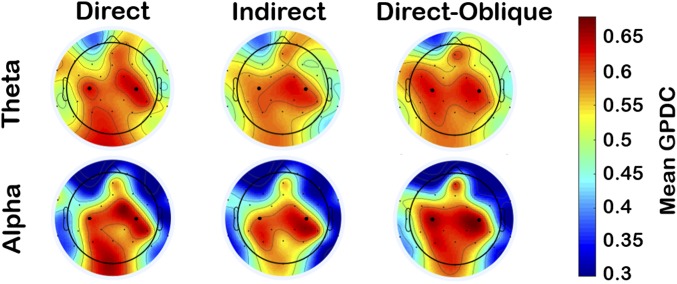
Significance: During communication, social ostensive signals (like gaze) are exchanged in a temporally contingent manner. Synchronized behavior creates social connectedness within human dyads, and even infants synchronize behaviorally with adults. However, the neural mechanisms that support infant–adult synchronization are unknown. Here, we provide evidence that infants up-regulate neural synchronization with adult partners when offered direct ostensive gaze, as compared with gaze aversion. Gaze therefore brings infant–adult neural activity into mutual alignment, creating a joint-networked state that may facilitate communicative success. Further, infants’ own communicative attempts were positively associated with adults’ neural synchronization to them, indicating mutual regulation of synchronization within infant–adult dyads. Thus, interpersonal neural synchronization may provide a mechanism by which infants construct their own earliest social networks.
Overview
The claims and statistics of this paper haven’t been checked yet.
Free: it reads the open-access text and checks the first 5 claims that cite a source we can check. Create a free account to check every claim.
Integrity signals
Registry
Cites
Statistics
Figures
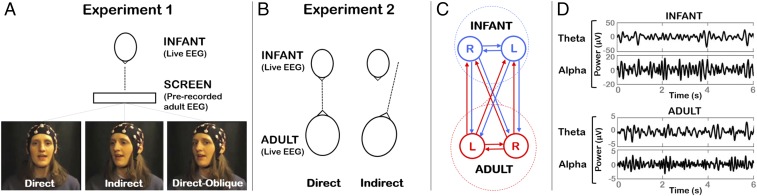
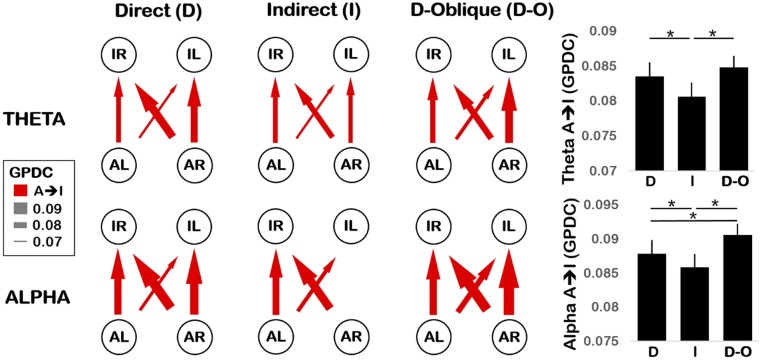
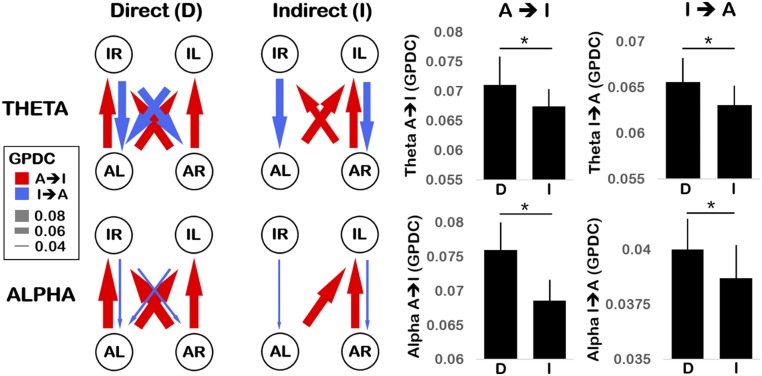
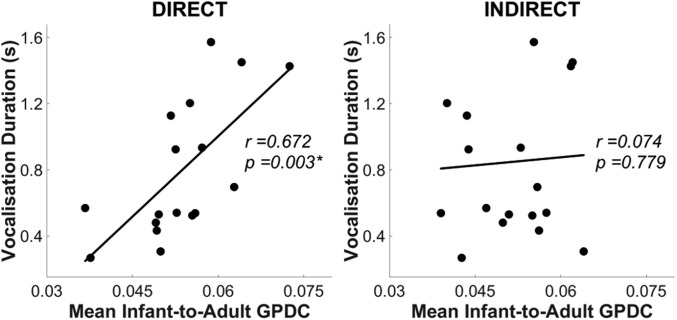
Verification
Claims the paper makes
The claims and statistics of this paper haven’t been checked yet.
Free: it reads the open-access text and checks the first 5 claims that cite a source we can check. Create a free account to check every claim.
Claims other papers make about this one
Each is checked against this paper’s own text: does it say what the citing paper says it does?
The source backs part of the claim, not all of it — or backs it for a different population, condition or comparison.
In the citing paper
“In contrast, functional near-infrared spectroscopy (fNIRS) [8] and electroencephalography (EEG) [9] are wearable technologies that can be deployed in real-life settings [10,11,12], enabling more naturalistic hyperscanning.”
From Naturalistic Hyperscanning with Wearable Magnetoencephalography (2023) · cites this paper as [10]
Experimental — accuracy not yet measured
Self-check
Percentages, sums and reported differences re-computed from the paper’s own numbers.
The self-check needs the paper’s full text.
Citations
Cites
Controlling the False Discovery Rate: A Practical and Powerful Approach to Multiple Testing
Benjamini, Y., & Hochberg, Y. (1995) · Journal of the Royal Statistical Society Series B: Statistical Methodology · doi:10.1111/j.2517-6161.1995.tb02031.x · Cited by 109,482 · cited 2×
“05, Benjamini–Hochberg false discovery rate (FDR) corrected] (32) (see Fig.”
MethodInvestigating causal relations by econometric models and cross-spectral methods
Granger, C. W. J. (1969) · Econometrica · doi:10.2307/1912791 · Cited by 22,989
Adjusting batch effects in microarray expression data using empirical Bayes methods
Johnson, W. E., Li, C., & Rabinovic, A. (2007) · Biostatistics · doi:10.1093/biostatistics/kxj037 · Cited by 8,658
A Multiple Comparison Procedure for Comparing Several Treatments with a Control
Dunnett, C. W. (1955) · Journal of the American Statistical Association · doi:10.1080/01621459.1955.10501294 · Cited by 6,094 · cited 1×
“To assess the specific gaze effects at each frequency, we conducted planned pairwise comparisons using Dunnett’s multiple range t-test [29], which independently controls for familywise error rate without a prior F-test.”
MethodApprenticeship in thinking: cognitive development in social context
(1990) · Choice Reviews Online · doi:10.5860/choice.28-0612 · Cited by 5,464 · cited 2×
“Temporally contingent social interactions between adults and infants play a vital role in supporting early learning across multiple domains of language, cognition and socio-emotional development [1,2].”
BackgroundMethodApprenticeship in Thinking: Cognitive Development in Social Context
Rogoff, B. (1990) · doi:10.1093/oso/9780195059731.001.0001 · Cited by 4,709
Controlling the false discovery rate in behavior genetics research
Benjamini, Y., Drai, D., Elmer, G., Kafkafi, N., & Golani, I. (2001) · Behavioural Brain Research · doi:10.1016/s0166-4328(01)00297-2 · Cited by 4,146
Cortical oscillations and speech processing: emerging computational principles and operations
Giraud, A.-L., & Poeppel, D. (2012) · Nature Neuroscience · doi:10.1038/nn.3063 · Cited by 1,917 · cited 2×
“Previous research has also suggested that infants, like adults (20), show neural synchronization (or phase-locking) of cortical oscillatory activity to temporal structures in auditory signals (21).”
BackgroundPartial directed coherence: a new concept in neural structure determination
Baccalá, L. A., & Sameshima, K. (2001) · Biological Cybernetics · doi:10.1007/pl00007990 · Cited by 1,779 · cited 1×
“Partial Directed Coherence (PDC) is a directional causal measure of direct flows between channels [11-13].”
BackgroundCsibra, G., & Gergely, G. (2009) · Trends in Cognitive Sciences · doi:10.1016/j.tics.2009.01.005 · Cited by 1,648
Cited by
Items 301–324 of 324
Li, Y., Li, S., Xie, J. X. J., Yao, D., Li, F., Xu, P., Wu, J., & Jiang, L. (2026) · NeuroImage · doi:10.1016/j.neuroimage.2026.121865 · Cited by 1
Realising the potential of wearable magnetoencephalography
Rivero, G. R. (2025) · Nottingham ePrints (University of Nottingham) · doi:10.17639/11303
Kennedy, A., Shields, N., Farrell, S., & Valdés, A. L. (2026) · Frontiers in Neuroergonomics · doi:10.3389/fnrgo.2026.1774423
“Eye gaze between pairs has been observed to enhance neural synchrony between brains, as discovered during an adult-infant study (Leong et al., 2017).”
Grygorieva, S. (2025) · Psychology and Personality · doi:10.33989/2226-4078.2025.2.22
“…studies emphasise that the thalamus plays not only the role of a relay of sensory signals, but also actively participates in their integration and regulation, thereby establishing the prerequisites for the control and higher cognitive functions (Likhitska & Starovoyt, 2024; Kantarova, 2025).”
Engage: Principles to Motivate Learners to Exert Effort to Learn
Mayer, R. E. (2026) · Cambridge University Press eBooks · doi:10.1017/9781009776660.007
Eye Contact Principle: On-Screen Instructor Makes Eye Contact with the Audience while Lecturing
Mayer, R. E. (2026) · Cambridge University Press eBooks · doi:10.1017/9781009776660.013
Shared book reading promotes experience-dependent autonomic synchrony in parent–preterm infant dyadsPreprint
Lavezzo, L., Meuleman, B., Grandjean, D., Gentaz, É., Delplanque, S., Ceravolo, L., Scilingo, E. P., Hüppi, P. S., Munoz, F. B., Borradori-Tolsa, C., et al. (2026) · bioRxiv (Cold Spring Harbor Laboratory) · doi:10.64898/2026.05.19.726001
Longitudinal tracking of dyadic body temperature synchrony in social pairs across species
Yazaki‐Sugiyama, Y., Makino, Y., Isogai, R., Imano, Y., Nie, M., Kuroda, M., Maki, K., Takeuchi, S., Yoshida, Y., & Hensch, T. K. (2026) · Scientific Reports · doi:10.1038/s41598-026-54063-5
Mallas, B. (2026) · DSpace repository (University of Tartu)
Perception et interactions pré- et postnatales
Leclercq, S., Denis, T., Winant, M., Schoemaker, C., Picard, A., & Jardri, R. (2026) · Encyclopédie médico-chirurgicale. Psychiatrie · doi:10.1016/s0246-1072(25)43163-0
Dynamics of Connection of Electroencephalograms Patterns in a Computer Game
Zhukova, O. V., & Dick, O. E. (2026) · BIOPHYSICS · doi:10.1134/s0006350926700107
“For example, direct gaze has been shown to enhance the synchrony of brain activity between adults and infants during interaction, leading to facilitated information transfer during early communication and learning [3].”
Terry, R., Clair, V. S., Pinti, P., & Mareschal, D. (2026) · Developmental Science · doi:10.1111/desc.70245
“While the sample size of the current study was comparable to previous developmental hyperscanning studies (Leong et al. 2017 ; Piazza et al. 2020 ), future studies with larger samples can establish whether the patterns reported here are robust and replicable.”
Scent of a father: Paternal body odors boost interbrain synchrony
Endevelt–Shapira, Y., Schwartz, L., & Feldman, R. (2026) · Science Advances · doi:10.1126/sciadv.aed6110
“In contrast, when infants avert their gaze and mothers engage in intrusive, uncoordinated behavior, the coupling between their brain is decreased ( 22 , 23 ).”
Horowitz‐Kraus, T., Ghanima, G. A., Fischer, A. G., Ágoston, D., Badarna, A., Talmon, R., & Farah, R. (2026) · Cognitive Development · doi:10.1016/j.cogdev.2026.101754
Akinwumi, P. O., Qian, M., Babatope, O. A., & Olorunsogbon, T. A. (2026) · SSRN Electronic Journal · doi:10.2139/ssrn.7304319
Amplitude without phase: interpersonal movement coordination grades inter-brain couplingPreprint
Tasnim, N., Delauder, R. M., Aychman, M. M., Moore, Z., Gahagan, M., Purevtugs, J., Newpol, J., Frank, R., Grizzell, G., Nobriga, G., et al. (2026) · bioRxiv (Cold Spring Harbor Laboratory) · doi:10.64898/2026.09.09.750441
“Such coupling is often strongest when partners can see and respond to one another(Hirsch et al., 2017; Leong et al., 2017), and studies that measure behavior alongside brain activity have linked spontaneously coordinated movement to the degree of inter-brain synchronization(Dumas et al., 2010).”
Park, J., Emery, L. F., & Leong, Y. C. (2026) · bioRxiv (Cold Spring Harbor Laboratory) · doi:10.64898/2026.09.11.751017
“Consistent with this interpretation, interbrain synchrony has been previously shown to be associated with joint attention (56, 57), affective alignment (58–61), and arriving at a shared interpretation (62, 63).”
Una nuova idea di “impronta vocale” come strumento identificativo e riabilitativo
Farinella, M., Carnaroglio, M., & Cian, F. (2021) · Book series Studi AISV
Positive interactions and active mentalizing facilitate inter-brain synchronization in couples
Schneider, I., Moreau, Q., Neudecker, D., Herpertz, S. C., & Dumas, G. (2026) · Social Cognitive and Affective Neuroscience · doi:10.1093/scan/nsag083
“2017, Leong et al .”
Trauma and Attachment in the Perinatal Period: A Developmental Model of Dissociation
D'Hooghe, D., & Brack, L. (2026) · Routledge eBooks · doi:10.4324/9781032724768
Manning, B. L., Roberts, M. Y., Wakschlag, L. S., & Norton, E. S. (2026) · Brain and Language · doi:10.1016/j.bandl.2026.105848
Leener, M. D., Sfeir, M., Galdiolo, S., & Rossignol, M. (2026) · Neuroscience & Biobehavioral Reviews · doi:10.1016/j.neubiorev.2026.107056
The future of social neuroscience
Votinov, M. (2026) · Elsevier eBooks · doi:10.1016/b978-0-443-34080-2.00014-7
Metadata
- Authors
- Leong, V., Byrne, E., Clackson, K., Georgieva, S., Lam, S., & Wass, S.
- Affiliations
- Nanyang Technological University (SG)
- MRC Cognition and Brain Sciences Unit (GB)
- University of Cambridge (GB)
- University of East London (GB)
- Corresponding author
- Leong, Victoria
- Venue
- Proceedings of the National Academy of Sciences
- Publisher
- National Academy of Sciences
- Published
- 2017-11-28
- Volume
- 114
- Issue
- 50
- Pages
- 13290-13295
- ISSN
- 0027-8424 (ISSN-L)
- 1091-6490
- PMC
- PMC5740679
- OpenAlex
- W2951647174
- Cited by
- 299
- References
- 45
- Citations by year
- 2026: 31 · 2025: 31 · 2024: 31 · 2023: 39 · 2022: 41 · 2021: 42 · 2020: 39 · 2019: 32 · 2018: 13
- FWCI
- 32.91
- Type
- journal article
- Language
- en
- Open access
- hybrid
- doi.org
- Licence
- Locations
- Proceedings of the National Academy of Sciences (publishedVersion, cc-by-nc-nd)
- bioRxiv (Cold Spring Harbor Laboratory) (acceptedVersion, cc-by-nc-nd)
- Europe PMC (PubMed Central) (publishedVersion, cc-by-nc-nd)
- PubMed Central (publishedVersion, cc-by-nc-nd)
- PubMed (publishedVersion)
- UEL Research Repository (University of East London) (acceptedVersion)
- DR-NTU (Nanyang Technological University) (submittedVersion)
- UEL Research Repository (University of East London) (submittedVersion, cc-by-nc-nd)
- UEA Digital Repository (University of East Anglia) (submittedVersion)
- Apollo (University of Cambridge) (submittedVersion)
- Apollo
- Funders
- RCUK | Economic and Social Research Council (ES/N006461/1, ES/N017560/1)
- Lucy Cavendish College, Cambridge University (Junior Research Fellowship)
- Topics
- Social Sciences › Psychology › Social Psychology › Action Observation and Synchronization
- Social Sciences › Psychology › Developmental and Educational Psychology › Child and Animal Learning Development
- Life Sciences › Neuroscience › Cognitive Neuroscience › Neural dynamics and brain function
- Keywords
- infant gaze, direct gaze, adult-infant interaction, neuronal synchronization, information coupling, infant vocalizations, early communication, partial directed coherence, Granger causality
- MeSH terms
- Adult, Brain, Female, Fixation, Ocular, Humans, Infant, Language, Male, Nonverbal Communication, Speech Perception
About these checks
Registry, retraction, Cites and statistics results are computed, not judged, with one exception: a printed reference that no index lists is read once by a model before it counts as a citation error. Claims are extracted by a model and kept only when their quote appears verbatim in the text; each cited source is then checked, with a model’s help, for whether it says what the claim relies on. Those verdicts can be wrong — read the claim’s quote and the cited source before relying on one.
Statistics and arithmetic are recomputed, not judged.
Confidence bands are shown only for fields calibrated on our annotated test set. None is calibrated yet, so no band is shown.
What counts as a claim ›How we measure confidence ›How we check this ›
Are you an author, or do you see a problem with this page? Request a review
Data sources
Bibliographic data: Semantic Scholar, OpenAlex, Crossref.
Contains information from the Semantic Scholar Academic Graph Datasets, made available under the ODC Attribution License (ODC-BY 1.0).
Semantic Scholar’s data is described in: Kinney, R., et al. (2023). The Semantic Scholar Open Data Platform. arXiv:2301.10140.
