

An inclusive Research Education Community (iREC): Impact of the SEA-PHAGES program on research outcomes and student learning
Open accessThe DOI matches its Crossref record; 33 of the 33 references it cites were found in a registry or an index.
Abstract
Significance: The Science Education Alliance–Phage Hunters Advancing Genomics and Evolutionary Science program is an inclusive Research Education Community with centralized programmatic and scientific support, in which broad student engagement in authentic science is linked to increased accessibility to research experiences for students; increased persistence of these students in science, technology, engineering, and mathematics; and increased scientific productivity for students and faculty alike.
Overview
The claims and statistics of this paper haven’t been checked yet.
Free: it reads the open-access text and checks the first 5 claims that cite a source we can check. Create a free account to check every claim.
Integrity signals
Registry
Cites
Statistics
Figures
Verification
Claims the paper makes
The claims and statistics of this paper haven’t been checked yet.
Free: it reads the open-access text and checks the first 5 claims that cite a source we can check. Create a free account to check every claim.
Claims other papers make about this one
Each is checked against this paper’s own text: does it say what the citing paper says it does?
The source backs part of the claim, not all of it — or backs it for a different population, condition or comparison.
In the citing paper
“It is an inclusive, community-oriented, course-based research experience that has served the education of thousands of students worldwide, while also providing the research community with a cornucopia of novel genes and functions.”
From Mycobacterium smegmatis: The Vanguard of Mycobacterial Research (2023) · cites this paper as [180]
Experimental — accuracy not yet measuredThe source backs part of the claim, not all of it — or backs it for a different population, condition or comparison.
In the citing paper
“while also providing the research community with a cornucopia of novel genes and functions”
From Mycobacterium smegmatis: The Vanguard of Mycobacterial Research (2023) · cites this paper as [180]
Experimental — accuracy not yet measured
Self-check
Percentages, sums and reported differences re-computed from the paper’s own numbers.
The self-check needs the paper’s full text.
Citations
Cites
Austin, P. C. (2011) · Multivariate Behavioral Research · doi:10.1080/00273171.2011.568786 · Cited by 12,242 · cited 3×
“SEA-PHAGES or traditional laboratories, we used propensity score matching (32) (Fig.”
MethodEvolutionary relationships among diverse bacteriophages and prophages: All the world’s a phage
Hendrix, R. W., Smith, M. C. M., Burns, R. N., Ford, M. E., & Hatfull, G. F. (1999) · Proceedings of the National Academy of Sciences · doi:10.1073/pnas.96.5.2192 · Cited by 1,107 · cited 3×
“This study was approved and supervised by the Institutional Review Board of the Indiana University of Pennsylvania (14-302) and the University of Pittsburgh Institutional Review Board (PRO14100567 and PRO15030412).”
BackgroundMethodSelf-citationUndergraduate research experiences support science career decisions and active learning
Lopatto, D. (2007) · CBE—Life Sciences Education · doi:10.1187/cbe.07-06-0039 · Cited by 1,009
Survey of undergraduate research experiences (SURE): First findings
Lopatto, D. (2004) · Cell Biology Education · doi:10.1187/cbe.04-07-0045 · Cited by 969
Undergraduate research experiences: Impacts and opportunities
Linn, M. C., Palmer, E., Baranger, A., Gerard, E., & Stone, E. (2015) · Science · doi:10.1126/science.1261757 · Cited by 821 · cited 1×
“In comparison with AREs, well-designed CREs can engage more students earlier in the curriculum (6), which is expected to have higher impact (7, 8).”
BackgroundIncreasing Persistence of College Students in STEM
Graham, M. J., Frederick, J., Byars-Winston, A., Hunter, A.-B., & Handelsman, J. (2013) · Science · doi:10.1126/science.1240487 · Cited by 786
Self-citationCourse-Based Undergraduate Research Experiences Can Make Scientific Research More Inclusive
Bangera, G., & Brownell, S. E. (2014) · CBE—Life Sciences Education · doi:10.1187/cbe.14-06-0099 · Cited by 722 · cited 1×
“In comparison with AREs, well-designed CREs can engage more students earlier in the curriculum (6), which is expected to have higher impact (7, 8).”
BackgroundEstrada, M., Woodcock, A., Hernandez, P. R., & Schultz, P. W. (2011) · Journal of Educational Psychology · doi:10.1037/a0020743 · Cited by 546 · cited 2×
“This study was approved and supervised by the Institutional Review Board of the Indiana University of Pennsylvania (14-302) and the University of Pittsburgh Institutional Review Board (PRO14100567 and PRO15030412).”
MethodThe impact of research grant funding on scientific productivity
Jacob, B. A., & Lefgren, L. (2011) · Journal of Public Economics · doi:10.1016/j.jpubeco.2011.05.005 · Cited by 532 · cited 3×
“This study was approved and supervised by the Institutional Review Board of the Indiana University of Pennsylvania (14-302) and the University of Pittsburgh Institutional Review Board (PRO14100567 and PRO15030412).”
MethodResultJordan, T. C., Burnett, S. H., Carson, S., Caruso, S. M., Clase, K., DeJong, R. J., Dennehy, J. J., Denver, D. R., Dunbar, D., Elgin, S. C. R., et al. (2014) · mBio · doi:10.1128/mbio.01051-13 · Cited by 509
Self-citation
Research works printed but not linked: 2
- Brewer C Smith D 2011 Vision and Change in Undergraduate Biology Education: A Call to Action American Association for the Advancement of Science Washington, DC
- Rohwer F Youle M Maughan H Hisakawa N 2014 Life in Our Phage World: A Centenial Field Guide to the Earth’s Most Diverse Inhiabitants Wholon San Diego
Cited by
Items 101–200 of 216
Transcriptional dynamics during Rhodococcus erythropolis infection with phage WC1
Willner, D. L., Paudel, S., Halleran, A. D., Solini, G. E., Gray, V., & Saha, M. S. (2024) · BMC Microbiology · doi:10.1186/s12866-024-03241-4 · Cited by 7
“The most numerous of these are phage that infect Rhodo-coccus erythropolis RIA-643, many of which have been characterized in conjunction with the Science Education Alliance Phage Hunters Advancing Genomics and Evolutionary Science (SEA-PHAGES) program [19, 20].”
BackgroundMethodSelf-citationBennie, J., Zhang, K., Yeh, P., Gill, J. C., Crowley, L., Bauer, M., & Graham, M. J. (2025) · Frontiers in Education · doi:10.3389/feduc.2025.1562677 · Cited by 9
Self-citationHigh school science fair: School location trends in student participation and experience
Grinnell, F., Dalley, S., & REISCH, J. S. (2023) · PLoS ONE · doi:10.1371/journal.pone.0291049 · Cited by 8
“The idea that SEF participation can have a positive impact on high school students is consistent with research showing that science project-based learning advances students’ STEM understanding and interests at both the high school [7-9] and undergraduate levels [10-12].”
ResultJensen-Ryan, D., Murren, C. J., Rutter, M. T., & Thompson, J. J. (2020) · CBE—Life Sciences Education · doi:10.1187/cbe.20-05-0090 · Cited by 9
“For example, the Howard Hughes Medical Institute–funded Science Education Alliance—Phage Hunters Advancing Genomics and Evolutionary Science (SEA-PHAGES) program incorporates early-career undergraduate students to aid them in understanding viral diversity and evolution (Hanauer et al., 2017).”
BackgroundScogin, S. C., Marks, M., Mader, C. M., & Phillips, K. (2023) · Higher Education Pedagogies · doi:10.1080/23752696.2023.2165528 · Cited by 11
“…of ownership and identity in science (Cooper, Knope, Munstermann, & Brownell, 2020; Staub et al., 2016), promote continued engagement in science (Hanauer et al., 2017; National Academies of Sciences, Engineering, and Medicine, 2015), and improve achievement for historically underrepresented…”
Communicating Complex STEM Program Evaluation to Diverse Stakeholders
Reeves, P. M., Bobrownicki, A., Bauer, M., & Graham, M. J. (2020) · CBE—Life Sciences Education · doi:10.1187/cbe.19-06-0108 · Cited by 7
Self-citationLee, J. S., Lowell, J., Whitewater, K., Roane, T. M., Miller, C. S., Chan, A. P.-Y., Sylvester, A. W., Jackson, D. P., & Hunter, L. (2023) · Molecular Ecology Resources · doi:10.1111/1755-0998.13867 · Cited by 7
Self-citationManzanares, M., Peña, C., Kobak, K. C., & Stratton, M. B. (2023) · PLoS Computational Biology · doi:10.1371/journal.pcbi.1011573 · Cited by 8
Burmeister, A. R., Bauer, M., & Graham, M. J. (2023) · Journal of Microbiology and Biology Education · doi:10.1128/jmbe.00033-23 · Cited by 10
Self-citationIsolation of Bacteriophages on Actinobacteria Hosts
Zorawik, M., Jacobs‐Sera, D., Freise, A. C., SEA-PHAGES, & Reddi, K. (2024) · Methods in molecular biology · doi:10.1007/978-1-0716-3798-2_17 · Cited by 13
Self-citationVora, N., Vatcheva, K. P., Saldivar, M. G., Nair, S., Lehker, M. W., & Chew, S. A. (2020) · Journal of Latinos and Education · doi:10.1080/15348431.2020.1763352 · Cited by 6
“Another model is inclusive Research Education Communities (iREC) such as the SEAPHAGES program (Hanauer et al., 2017).”
BackgroundFrom classroom to clinic: Biochemistry lab for pre‐health majors
Bolduc, K. C., McCollough, S. L., & Stoeckman, A. K. (2022) · Biochemistry and Molecular Biology Education · doi:10.1002/bmb.21675 · Cited by 5
“2023;51:10–14.wileyonlinelibrary.com/journal/bmb they will encounter in their future careers.3–5 One approach to create a more engaging laboratory experience for students is through the use of discovery-based undergraduate research programs, such as SEAPHAGES.6,7 This program is a two-semester undergraduate course exp…”
BackgroundBuilding Back More Equitable STEM Education: Teach Science by Engaging Students in Doing SciencePreprint
Elgin, S. C. R., Hays, S., Mingo, V., Shaffer, C. D., & Williams, J. (2021) · bioRxiv (Cold Spring Harbor Laboratory) · doi:10.1101/2021.06.01.446616 · Cited by 9
Self-citationKleinschmit, A. J., Genné-Bacon, E. A., Drace, K., Govindan, B., Larson, J. R., Qureshi, A. A., & Bascom‐Slack, C. (2024) · Journal of Microbiology and Biology Education · doi:10.1128/jmbe.00149-23 · Cited by 11
“Network CUREs have been documented for providing a centralized support system to bring together diverse intellectual capital across institutional types to drive scientific and curriculum structure [e.g., references (21, 22, 45, 46, 50, 52, 68–73)].”
BackgroundModels of classroom assessment for course-based research experiences
Hanauer, D. I., Zhang, T., Graham, M. J., Adams, S. D., Ahumada‐Santos, Y. P., Alvey, R. M., Antunes, M. S., Ayuk, M. A., Báez‐Flores, M. E., Bancroft, C. T., et al. (2023) · Frontiers in Education · doi:10.3389/feduc.2023.1279921 · Cited by 8
“Recent educational initiatives in STEM are facilitating wide-spread implementation of course-based research experiences (CRE) because they increase persistence for students across many demographics (Russell et al., 2007; Jordan et al., 2014; Hanauer et al., 2017; Hernandez et al., 2018).”
BackgroundSelf-citationFreeman, S., Mukerji, J., Sievers, M., Beltran, I. B., Dickinson, K., Dy, G. E. C., Gardiner, A., Glenski, E. H., Hill, M. J., Kerr, B., et al. (2023) · CBE—Life Sciences Education · doi:10.1187/cbe.21-12-0331 · Cited by 8
“Propensity-score matching and other regression-based approaches use data on demographics and past performance to control for potential differences between comparison groups (e.g., Rodenbusch et al., 2016; Hanauer et al., 2017, 2022; Indorf et al., 2019).”
BackgroundMethodCasper, A. M., & Laporte, M. M. (2024) · CBE—Life Sciences Education · doi:10.1187/cbe.23-06-0122 · Cited by 5
“(Hanauer et al. , 2017; Cooper et al. , 2019, 2020; Lo and Le, 2021; Killpack and Popolizio, 2023).”
McPhillips, L., O’Callaghan, J., Shortiss, C., Jackson, S. A., & O’Leary, N. D. (2024) · Antibiotics · doi:10.3390/antibiotics13100956 · Cited by 4
Liu, J., & Benning, C. (2024) · Biochemistry and Molecular Biology Education · doi:10.1002/bmb.21865 · Cited by 5
Mashintonio, A. F., & Heineman, R. H. (2025) · Journal of Microbiology and Biology Education · doi:10.1128/jmbe.00212-24 · Cited by 6
“For example, the Science Education Alliance-Phage Hunters Advancing Genomics and Evolutionary Science (SEA-PHAGES) program has students investigate viral diversity and evolution, providing them with a high probability of isolating a bacteriophage with a new genome or unidentified genes (37).”
Kleinschmit, A. J., Govindan, B., Larson, J. R., Qureshi, A. A., & Bascom‐Slack, C. (2023) · Frontiers in Education · doi:10.3389/feduc.2023.1291071 · Cited by 4
High school science fair: What students say—mastery, performance, and self-determination theory
Grinnell, F., Dalley, S., & REISCH, J. S. (2025) · PLoS ONE · doi:10.1371/journal.pone.0325283 · Cited by 8
Liu, J., Cook, R., Danhof, L., Lopatto, D. E., Stoltzfus, J. R., & Benning, C. (2021) · Biochemistry and Molecular Biology Education · doi:10.1002/bmb.21579 · Cited by 4
Course-Based Undergraduate Research Experiences for Laboratory Learning in the Life Sciences
Fluhler-Thornburg, G., & McKillip, J. L. (2024) · The journal of college science teaching · doi:10.1080/0047231x.2023.2292411 · Cited by 10
Crowdsourcing biocuration: the Community Assessment of Community Annotation with Ontologies (CACAO)Preprint
Ramsey, J., McIntosh, B. K., Renfro, D. P., Aleksander, S., LaBonte, S. A., Ross, C., Zweifel, A. E., Liles, N. M., Farrar, S., Gill, J. J., et al. (2021) · bioRxiv (Cold Spring Harbor Laboratory) · doi:10.1101/2021.04.30.440339 · Cited by 4
Self-citationMeuler, M., & Casimo, K. (2024) · Journal of Undergraduate Neuroscience Education · doi:10.59390/ykou9984 · Cited by 4
“For example, students who engage in classroom-based research experiences have shown increased persistence within STEM fields relative to their peers who do not participate in classroom-based research (Hanauer et al., 2017).”
Dierker, L., Rose, J. S., Nazzaro, V., Kabacoff, R., Gooyabadi, M., & Kaparakis, E. (2024) · Journal for Research in Mathematics Education · doi:10.5951/jresematheduc-2023-0109 · Cited by 5
High-Performance Genome Annotation for a Safer and Faster-Developing Phage Therapy
Culot, A., Abriat, G., & Furlong, K. P. (2025) · Viruses · doi:10.3390/v17030314 · Cited by 5
“High-level training is also available, for instance to students who take part in the SEA-PHAGES (Science Education Alliance-Phage Hunters Advancing Genomics and Evolutionary Science) program [29].”
Zajic, C. J., Subramanian, K., Adulla, A., Allen, Z. A., Blitchington, M. B., Brotzman, A., Carrillo, E., Dhruv, J., Evans, T., Haider, S., et al. (2026) · CBE—Life Sciences Education · doi:10.1187/cbe.24-09-0241 · Cited by 3
“We were interested in exploring instructor talk from a motivational perspective, given previous research showing CURE instruction influences students’ persistence in science (Rodenbusch et al. , 2016; Hanauer et al. , 2017).”
Tightening Bonds in Latin America Through Phage Discovery
Payaslián, F., Gradaschi, V., Rondón, L., Dieterle, M. E., Urdániz, E., Paola, M. D., Zon, F., Allievi, M. C., Sánchez-Rivas, C., Raya, R. R., et al. (2021) · PHAGE · doi:10.1089/phage.2020.0028 · Cited by 3
An undergraduate genome research course using “big data”
Bennett, E. N., & Page, S. T. (2022) · Biochemistry and Molecular Biology Education · doi:10.1002/bmb.21647 · Cited by 3
Self-citationDenton, N. L., & Kulesza, A. E. (2024) · Medical Science Educator · doi:10.1007/s40670-024-02014-y · Cited by 3
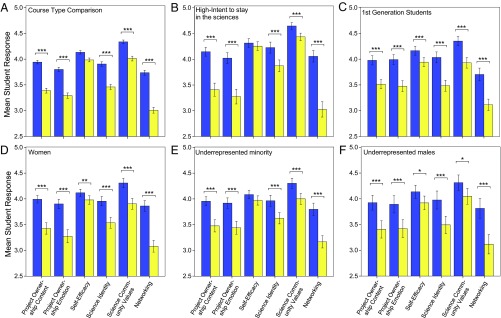
“Surprisingly, this ITBL lab offering did not observe higher student scores on the Self-Efficacy, Scientific Community Values, nor Networking that other inquiry-based learning pedagogies have demonstrated [20, 21, 26].”
BackgroundResultDeChenne‐Peters, S. E., Scheuermann, N. L., Parente, A., & Zhang, J. (2024) · Essays in Biochemistry · doi:10.1042/ebc20230074 · Cited by 3
Something old, something new: Teaching the BMB lab
Craig, P. (2020) · Biochemistry and Molecular Biology Education · doi:10.1002/bmb.21359 · Cited by 5
Tiny Earth CURE improves student persistence in sciencePreprint
Miller, S., Aldana, C. C., Du, W., Lee, H., Maldonado, N., Sandoval, P. J., Vong, J., Young, G. R., Handelsman, J., Broderick, N. A., et al. (2023) · bioRxiv (Cold Spring Harbor Laboratory) · doi:10.1101/2023.06.21.543782 · Cited by 3
“They also provide students an opportunity to take project ownership and develop identities as scientists in a community of peers (Hanauer et al., 2017).”
BackgroundInvestigating dimensions of instructor trust using the words of undergraduate STEM students
Zhang, K., Gill, J. C., Zhang, T., Crowley, L., Bennie, J., Wagner, H., Bauer, M., Hanauer, D. I., Chen, X., & Graham, M. J. (2025) · Frontiers in Education · doi:10.3389/feduc.2025.1617067 · Cited by 3
Self-citationMéndez, Y. C. M., Listyg, B. S., Mardones-Segovia, C., Bowers, B., Cotto, K. M. C., Hilton, L., Koscik, I., Outlaw, B., Portner, S., Barekzi, N. A., et al. (2025) · CBE—Life Sciences Education · doi:10.1187/cbe.24-11-0271 · Cited by 3
“In addition, many studies have asked students to provide an overall rating of their experiences after the experience has concluded (Laursen et al. , 2010; Corwin et al. , 2015a; Gentile et al. , 2017; Hanauer et al. , 2017; Cooper et al. , 2019a; Beck et al. , 2023).”
Self-citationQuantitative digital course-based undergraduate research experience in plant biology
Murren, C. J., Jensen-Ryan, D., Bisner, A. M., Chang, C. C., Callahan, H. S., Disbrow, C. M., Enders, T. A., Geary, M., López, L., Lowe, L. L., et al. (2026) · Journal of Microbiology and Biology Education · doi:10.1128/jmbe.00141-25 · Cited by 2
“While genome and sequence annotation is easily amenable to digital learning (e.g., 20, 21), opportunities do exist for digital CUREs (DCUREs) in other topical areas of biology.”
Self-citationZhang, Q., Hernandez, P. R., Listyg, B. S., & Dolan, E. L. (2026) · CBE—Life Sciences Education · doi:10.1187/cbe.25-08-0171 · Cited by 3
“Research on both CUREs and UREs indicates that these educational environments support students’ pursuit of and persistence in science-related paths (Rodenbusch et al. , 2016; Hanauer et al. , 2017; Hernandez et al. , 2018).”
Integrating Research-Based Learning into the Undergraduate Curriculum: Challenges and Solutions
Eaton, T. M., Richardson, N. D., & Schmidt, R. (2022) · African Journal of Inter/Multidisciplinary Studies · doi:10.51415/ajims.v4i1.1016 · Cited by 2
Audette, D. S., Bennett, S. M., Chan, M. C., Chapman, D., Elmendorf, H. G., & Floyd, J. (2023) · Frontiers in Education · doi:10.3389/feduc.2023.1167879 · Cited by 7
Vallejo-Schmidt, T. E., Palm, C., Obiorah, T. E., Koudjra, A. R., Schmidt, K., Scudder, A. H., Guzman-Cruz, E., Ingram, L. P., Erickson, B. C., Akingbehin, V., et al. (2024) · ImmunoHorizons · doi:10.4049/immunohorizons.2300062 · Cited by 3
“…as opposed to the traditional apprenticeship independent research model, have the potential to reach a broader range of students and have been identified as a strategic practice for increasing the diversity of undergraduate Science, Technology, Engineering and Mathematics (STEM) disciplines (5, 6).”
BackgroundCourse-based Undergraduate Research Experiences (CUREs) for Computer Science?
Bekkering, T. J. (2025) · Information Systems Education Journal · doi:10.62273/cnpl4638 · Cited by 5
Thornton, B. P., Laughlin, A. M., Swartz, D. J., & Durham, B. W. (2020) · Fisheries · doi:10.1002/fsh.10490 · Cited by 2
Characterization and Genome Sequence of the Mycobacteriophage Donny
Colston, L. E., Segura‐Totten, M., & Shanks, R. A. (2020) · Microbiology Resource Announcements · doi:10.1128/mra.00373-20 · Cited by 2
“The increasing discovery of mycobacteriophages provides further information on viral diversity, viral conservation, and the possible benefits of bacteriophage therapy (1, 2).”
BackgroundSelf-citationHatfull, G. F. (2019) · ASM Press eBooks · doi:10.1128/9781683670131.ch63 · Cited by 2
Self-citationGenome Sequence of Mycobacterium Phage LilHazelnut
Shanks, R. A., Hazel, A. N., Jones, W. H., & Segura‐Totten, M. (2019) · Microbiology Resource Announcements · doi:10.1128/mra.00431-19 · Cited by 2
“Here, we describe a new mycobacteriophage, LilHazelnut, isolated as part of the Science Education Alliance Phage Hunters Advancing Genomics and Evolutionary Science (SEA-PHAGES) program (2) from a single plaque in an enrichment of a 0.”
MethodSelf-citationLucas, B., Nichols, G. J., & Boeck, M. E. (2021) · The American Biology Teacher · doi:10.1525/abt.2021.83.7.474 · Cited by 1
“To date, there has been a small number of larger, collaborative genomic projects at the undergraduate level (Jordan et al., 2014; Hanauer et al., 2017), but our project aims to demonstrate the ability to integrate genomics at a smaller, modular level.”
BackgroundImsande, K. G., McGuire, L., & Wheeler, L. (2023) · The American Biology Teacher · doi:10.1525/abt.2023.85.9.488 · Cited by 1
“Learning outcomes of autonomy, creativity/adaptivity, and confidence in research from our experience are similarly supported by Hanauer et al. (2017) and Forrester (2021).”
ResultWray, C. G. (2024) · Elsevier eBooks · doi:10.1016/b978-0-12-817218-6.00003-6 · Cited by 2
Quantitative Methods in the Assessment of Undergraduate Research, Scholarship, and Creative Inquiry
Lopatto, D. E. (2023) · Scholarship and Practice of Undergraduate Research · doi:10.18833/spur/7/2/3 · Cited by 2
Monti, D. L., Gill, J. C., Adair, T. L., Adams, S. D., Ahumada‐Santos, Y. P., Amaya, I., Anders, K. R., Anderson, J. R., Antunes, M. S., Ayuk, M. A., et al. (2024) · Frontiers in Education · doi:10.3389/feduc.2024.1442318 · Cited by 4
“One model that has shown success in facilitating reform at scale is the inclusive Research and Education Community, or iREC (Hanauer et al., 2017).”
InfluentialSelf-citationHanauer, D. I., Zhang, T., Graham, M., & Hatfull, G. F. (2025) · CBE—Life Sciences Education · doi:10.1187/cbe.24-02-0078 · Cited by 3
“This core survey has been used extensively for research purposes in relation to the evaluation of the effectiveness of course-based research experiences (Hanauer et al. , 2017).”
Self-citationMehaffy, C., Simpson, E., Phan, K., Nelson, N. A., Birmingham, D., & Borlee, G. I. (2025) · Journal of Microbiology and Biology Education · doi:10.1128/jmbe.00215-25 · Cited by 1
Cooper, A. C., Delcy, M. D., & Dolan, E. L. (2026) · CBE—Life Sciences Education · doi:10.1187/cbe.25-06-0130 · Cited by 1
“Research on CUREs indicates that these experiences can increase student persistence and success in college and STEM fields (Rodenbusch et al. , 2016; Hanauer et al. , 2017; Indorf et al. , 2019).”
Laporte, M., & Casper, A. M. (2026) · CBE—Life Sciences Education · doi:10.1187/cbe.25-09-0213 · Cited by 2
“…CUREs (Drew and Triplett, 2008; Shaffer et al. , 2010, 2014; Harrison et al. , 2011; Bascom-Slack et al. , 2012; Jordan et al. , 2014; Rodenbusch et al. , 2016; Hanauer et al. , 2017; Indorf et al. , 2019; Martin et al. , 2021; Lopatto et al. , 2022; Newell and Ulrich, 2022; Meyer et al. , 2023).”
InfluentialA Framework for Effective Dissemination of Innovative STEM Curricula
Alter, S. E., & Gafney, L. (2020) · The journal of college science teaching · doi:10.1080/0047231x.2020.12290646 · Cited by 1
Forging Aspirant Undergraduate Scientists and Engineers into Stellar Researchers
Tao, Y. (2020) · Matter · doi:10.1016/j.matt.2020.10.010 · Cited by 1
Genome Sequence of Arthrobacter globiformis Phage KeAlii from Hawaiʻi
Chong, R. A., Donachie, S. P., Reed, F. A., & Porter, M. L. (2022) · Microbiology Resource Announcements · doi:10.1128/mra.00439-22 · Cited by 1
“) B-2979T, providing one of the first sequenced actinobacteriophage genomes from Hawai i through the SEA-PHAGES program (1, 2).”
BackgroundCharacterization and Genome Sequence of Arthrobacter Phage Iter
Daly, K. A., Nesbit, A. E., Buchholz, J. D., & Kanak, A. E. (2022) · Microbiology Resource Announcements · doi:10.1128/mra.00538-22 · Cited by 1
“Actinobacteriophages that share over 50% nucleotide identity are sorted into clusters and then further into subclusters where appropriate (2, 3).”
BackgroundPaoletti, M. M., Fournier, G. P., Dolan, E. L., & Saito, M. A. (2023) · Journal of Proteome Research · doi:10.1021/acs.jproteome.3c00152 · Cited by 1
Ars Poetica in a World of Change: A First Editorial Commentary on Our New Platform
Hanauer, D. I. (2024) · Scientific Study of Literature · doi:10.61645/ssol.185 · Cited by 1
Self-citationGoodwin, E. C., Cooper, K. M., Gin, L. E., & Brownell, S. E. (2024) · Journal of Microbiology and Biology Education · doi:10.1128/jmbe.00090-24 · Cited by 4
“Some CUREs have been developed at community colleges, which help address the disparity of research experiences for community college students (2, 43).”
Baker, S. S., Carmona-Galindo, V. D., Hoque, M., Edriss, F. A., Alrayyashi, A., Al-Shaghdari, A., Al-wakeel, A., Ali, N., Alkuhali, A., Allen, A., et al. (2025) · Integrative and Comparative Biology · doi:10.1093/icb/icaf145 · Cited by 1
Characterization and Genome Sequence of Mycobacterium Phage XianYue
Rhinehart, W., Laidlaw, A. J., O’Neal, A. M., Toller, J. A., Segura‐Totten, M., Shanks, R. A., & Kanak, A. E. (2020) · Microbiology Resource Announcements · doi:10.1128/mra.00459-20 · Cited by 1
“Advancing Genomics and Evolutionary Science (SEA-PHAGES) protocol (3).”
BackgroundSelf-citationData Analysis Recitation Activities Support Better Understanding in SEA-PHAGES CURE
Newman-Griffis, A. H., Sypolt, E., Sagatelova, M., Čuboňová, L., Danhart, E., & Kulesza, A. E. (2020) · CourseSource · doi:10.24918/cs.2020.48 · Cited by 1
“…research in the classroom, students demonstrate gains in understanding of science process skills, report more confidence in their ability to do research and greater ownership of their projects, and persist longer in the sciences than their counterparts in traditional “cookbook” labs (5,7,8).”
BackgroundCryosphere Sciences Perspectives on Integrated, Coordinated, Open, Networked (ICON) Science
Brugger, S. O., Jimenez, A. A., Ponsoni, L., & Todd, C. E. (2022) · Earth and Space Science · doi:10.1029/2021ea002111 · Cited by 3
“Resources for creating inclusive professional development experiences for students could be compiled; many resources for creating inclusive UREs already exist, including scholarly articles (e.g., Ahmad et al., 2019; Hanauer et al., 2017).”
BackgroundCharacterization of Genomic Diversity In Bacteriophages Infecting RhodococcusPreprint
Garza, D. R., Blasi, D. D., Bruns, J. A., Empson, B., Light, I., Ghannam, M., Castillo, S., Quijada, B., Zorawik, M., Garcia‐Vedrenne, A. E., et al. (2022) · bioRxiv (Cold Spring Harbor Laboratory) · doi:10.1101/2022.11.23.517428 · Cited by 1
“…inclusive Research Education Communities (iRECs) such as the Science Education Alliance-Phage Hunters Advancing Genomics and Evolutionary Science (SEA-PHAGES) program and the Phage Hunting Integrating Research and Education (PHIRE) program (Hanauer et al., 2017; Russell & Hatfull, 2017).”
InfluentialVargas, M. M., Peña, C., Kobak, K. C., & Stratton, M. B. (2023) · doi:10.35542/osf.io/udhbc · Cited by 1
Hanauer, D. I. (2017) · Scientific Study of Literature · doi:10.1075/ssol.00003.han
Self-citationSocial Media as a Tool for Teaching Large Enrollment Science Classes
Pai, A. (2020) · Springer eBooks · doi:10.1007/978-3-030-33600-4_40
Lipman, R. M., Freise, A. C., Kapinos, A., Torres, C., Reddi, K., & Parker, J. M. (2020) · bioRxiv (Cold Spring Harbor Laboratory) · doi:10.1101/2020.11.29.402826
“to isolate, sequence, and characterize actinobacteriophages across the world for potential real-world applications [1].”
BackgroundSelf-citationEffect of Three Classroom Research Experiences on Science Attitudes
Lucas, L. K., Hunter, F. K., & Gompert, Z. (2020) · Digital Commons - USU (Utah State University) · doi:10.26077/f5d3-9317 · Cited by 2
“Nationwide, there are: 1) multisite CUREs in which data collected by students across institutions feed into a national database, such as the SEAPHAGES program (Hanauer et al., 2017), and 2) projects led by individual instructors.”
BackgroundResequencing of Microbial Isolates: A Lab Module to Introduce Novices to Command-Line Bioinformatics
Petrie, K. L., & Xie, R. (2021) · Frontiers in Microbiology · doi:10.3389/fmicb.2021.578859
ACTIVE AND AUTHENTIC LEARNING IN DIETITIANJR@UKMTM: PREPARING DIETETIC STUDENTS FOR THE FUTURE JOBS
Hamzaid, N. H. (2021) · Asean Journal of Teaching and Learning in Higher Education · doi:10.17576/ajtlhe.1301.2021.04
Genome Characterization of Gordonia Phage Amore2
Lantis, C. M., Mattison, E. C., Miller, S. E., Williams, A. J., & Kanak, A. E. (2022) · Microbiology Resource Announcements · doi:10.1128/mra.00537-22
“This work describes the Gordonia phage Amore2, which was isolated using the Science Education Alliance-Phage Hunters Advancing Genomics and Evolutionary Science (SEA-PHAGES) protocol (2).”
MethodUndergraduate Research in Biology
Reinmuth, E., Blum, M., & Fietz, J. (2022) · Cambridge University Press eBooks · doi:10.1017/9781108869508.028
Mieg, H. A. (2022) · Cambridge University Press eBooks · doi:10.1017/9781108869508.024
Genome Sequence of Arthrobacter Phage NathanVaag
Chong, R. A., Cosse, C. M., Gaytan, V., Green, D. S., Kane, C. J., Kasal, K. A., Kon, Z. K., Maxwell, R. E., Olaru, V., Pham, T. D., et al. (2022) · Microbiology Resource Announcements · doi:10.1128/mra.00940-22
“Hawai`i at M anoa (Honolulu, Hawai`i) (1, 2).”
Redesigning Undergraduate Laboratories: From Recipes to Research
Rulfs, J., Roberts, L. A., Buckholt, M. A., & Whitefleet-Smith, J. (2022) · African Journal of Inter/Multidisciplinary Studies · doi:10.51415/ajims.v4i1.1015 · Cited by 1
Self-citationIn Vitro Evolution to Increase the Titers of Difficult Bacteriophages: Rapid Appelmans ProtocolPreprint
Kok, D. N., Turnbull, J., Takeuchi, N., Tsourkas, P. K., & Hendrickson, H. L. (2023) · bioRxiv (Cold Spring Harbor Laboratory) · doi:10.1101/2023.03.02.530847
“…the Howard Hughes Medical Institute-sponsored SEA-PHAGES (Science Education Alliance Phage Hunters Advancing Genomics and Evolutionary Science) programme has brought personal empowerment through discovery to undergraduate classrooms around the globe (Hanauer et al., 2017; Russell & Hatfull, 2017).”
BackgroundSelf-citationThe potential of phage model systems as therapeutic agentsPreprint
Dherbey, J. R., & Bertels, F. (2023) · doi:10.32942/x2989k
Genomic sequence identification of Arthrobacter phage Ascela
Nesbit, A. E., & Kanak, A. E. (2023) · Microbiology Resource Announcements · doi:10.1128/mra.00776-23
Fisher, G. R., Floyd, K. W., & Olimpo, J. T. (2024) · The journal of college science teaching · doi:10.1080/0047231x.2024.2339175
Introducing Casbah, Kronus, and MmasiCarm, Members of the Mycobacteriophage Subcluster B3
Delesalle, V. A., ANKERIASNIEMI, R., Lewis, C. M., Mody, J. M., Roy, A. M., Sarvis, W. A., Vo, D. D., Walsh, A. E., & Zappia, R. J. (2024) · PHAGE · doi:10.1089/phage.2024.0004
Self-citationWallace, R., Fox‐Harding, C., Kendall, K. L., Porter, T., Fleay, B., & BEATTY, S. E. (2024) · International Conference on Higher Education Advances (HEAd) · doi:10.4995/head24.2024.17153
Processo de ensino-aprendizagem sobre investigação científica na graduação médica
de Souza, P. N., Matocanovic, L. M. D. M., Leite, L. H., Vargas, F. R., Mendes, J. O., & Ribeiro, E. R. (2024) · Caderno Pedagógico · doi:10.54033/cadpedv21n10-217
Expanding the Diversity of Actinobacterial Tectiviridae: A Novel Genus from Microbacterium
Washington, J. M., Basta, H. A., Jesus, A. B. D., Bendele, M. G., Cresawn, S. G., & Ginser, E. K. (2025) · Viruses · doi:10.3390/v17010113
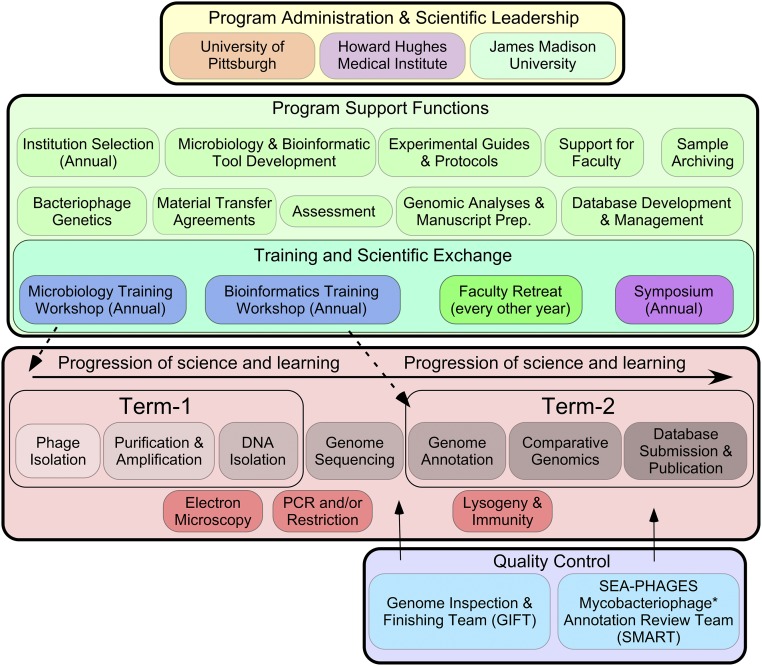
“…Education Alliance—Phage Hunters Advancing Genomics and Evolutionary Science (SEA-PHAGES) program, an inclusive research community (iREC) with programmatic and scientific support provided by Howard Hughes Medical Institute (HHMI), the University of Pittsburgh, and James Madison University [19].”
Self-citationAlberts, A. D. (2022) · University of North Texas Digital Library (University of North Texas) · doi:10.12794/metadc1985376
Comparative genomic analysis of Cluster AZ Arthrobacter phagesPreprint
Freise, A. C., Furlong, K. P., Klyczek, K. K., Beyer, A. R., Chong, R. A., Edgington, N. P., Gibb, B., Swerdlow, S., Bendele, M. G., Cobb, I. D., et al. (2025) · bioRxiv (Cold Spring Harbor Laboratory) · doi:10.1101/2025.05.26.655371
Self-citationZhang, Q., Hernandez, P. R., Listyg, B. S., & Dolan, E. L. (2025) · bioRxiv (Cold Spring Harbor Laboratory) · doi:10.1101/2025.08.18.670917
“Many studies have shown that students in both CUREs and UREs increase in their scientific self-efficacy from pre to post experience (e.g., Dolan, 2016; Frantz et al., 2017; Hanauer et al., 2016, 2017; Hess et al., 2023; Martin et al., 2021; Newell & Ulrich, 2022; Wilczek et al., 2022).”
Survey of Thirteen Novel Pseudomonas putida Bacteriophages
Anderson, S., Persinger, R. D., Patel, A., Rupe, E., Osu, J., Cooper, K. I., Lehman, S. M., Kongari, R. R., Jaryenneh, J. D., Mageeney, C. M., et al. (2025) · Applied Microbiology · doi:10.3390/applmicrobiol5040108 · Cited by 1
“The extraordinary educational benefits of this combined educational and discovery-based model have been well characterized; see work by Hanauer et al. [105,106].”
Self-citationAlam, I., Bilinski, T. M., Bernot, K. M., Cotter, R. L., Ortiz-Zuazaga, E., Vance‐Chalcraft, H. D., & Corwin, L. A. (2025) · CBE—Life Sciences Education · doi:10.1187/cbe.24-06-0165 · Cited by 2
“…data and conducting authentic research, as opposed to using data gathered by professionals or performing cookbook-style laboratory exercises, they report significantly greater gains in their perception of themselves as scientists (Hanauer et al. , 2017; Cooper et al. , 2020; Esparza et al. , 2020).”
Willner, D. L., Paudel, S., Halleran, A. D., Solini, G. E., Gray, V., & Saha, M. S. (2024) · Figshare · doi:10.6084/m9.figshare.25522686
Self-citationLevesque, A. A., Congdon, S. T., Koob, A. O., Larsen, J., & Thomas-Charles, C. A. (2025) · Journal of College Science Teaching · doi:10.1080/0047231x.2025.2601151
Harnessing the power of community to navigate biology education careers
Hughes, L. E. (2026) · Journal of Microbiology and Biology Education · doi:10.1128/jmbe.00039-26
“SEA-PHAGES is an example of an inclusive Research Education Community (iREC) (7).”
Self-citationAdair, T. L., Agrawal, S., Ahumada‐Santos, Y. P., Alvarez, R. V., Anders, K. R., Antunes, M. S., Ayuk, M. M. A., Báez‐Flores, M. E., Bailey, D. S., Baliraine, F. N., et al. (2026) · Journal of Microbiology and Biology Education · doi:10.1128/jmbe.00313-25
“…SEA faculty and reflect the instructional and assess ment practices in SEA course-based research, where assessments of student outcomes have demonstrated significant gains in science identity, self-efficacy, and project ownership, all of which are linked to increased persistence in STEM (3, 4, 7).”
Self-citation
Metadata
- Authors
- Hanauer, D. I., Graham, M. J., SEA-PHAGES, Betancur, L., Bobrownicki, A., Cresawn, S. G., Garlena, R. A., Jacobs-Sera, D., Kaufmann, N., Pope, W. H., Russell, D. A., Jacobs, W. R., Sivanathan, V., Asai, D. J., Hatfull, G. F., Actis, L., Adair, T., Adams, S., Alvey, R., Anders, K., Anderson, W. A., Antoniacci, L., Ayuk, M., Baliraine, F., Balish, M., Ball, S., Barbazuk, B., Barekzi, N., Barrera, A., Berkes, C., Best, A., Bhalla, S., Blumer, L., Bollivar, D., Bonilla, J. A., Borges, K., Bortz, B., Breakwell, D., Breitenberger, C., Breton, T., Brey, C., Bricker, J. S., Briggs, L., Broderick, E., Brooks, T. D., Brown-Kennerly, V., Buckholt, M., Butela, K., Byrum, C., Cain, D., Carson, S., Caruso, S., Caslake, L., Chia, C., Chung, H.-M., Clase, K., Clement, B., Conant, S., Connors, B., Coomans, R., D'Angelo, W., D'Elia, T., Daniels, C. J., Daniels, L., Davis, B., DeCourcy, K., DeJong, R., Delaney-Nguyen, K., Delesalle, V., Diaz, A., Dickson, L., Doty, J., Doyle, E., Dunbar, D., Easterwood, J., Eckardt, M., Edgington, N., Elgin, S., Erb, M., Erill, I., Fast, K., Fillman, C., Findley, A., Fisher, E., Fleischacker, C., Fogarty, M., Frederick, G., Frost, V., Furbee, E., Gainey, M., Gallegos, I., Gissendanner, C., Golebiewska, U., Grose, J., Grubb, S., Guild, N., Gurney, S., Hartzog, G., Hatherill, J. R., Hauser, C., Hendrickson, H., Herren, C., Hinz, J., Ho, E., Hope, S., Hughes, L., Hull, A., Hutchison, K., Isern, S., Janssen, G., Jarvik, J., Johnson, A., Jones, N., Kagey, J., Kart, M., Katsanos, J., Keener, T., Kenna, M., King, R., King-Smith, C., Kirkpatrick, B., Klyczek, K., Koch, H., Koga, A., Korey, C., Krukonis, G., Kurt, B., Leadon, S., LeBlanc-Straceski, J., Lee, J., Lee-Soety, J., Lewis, L., Limeri, L., Little, J., Llano, M., Lopez, J., MacLaren, C., Makemson, J., Martin, S., Mavrodi, D., McGuier, N., McKinney, A., McLean, J., Merkhofer, E., Michael, S., Miller, E., Mohan, S., Molloy, S., Monsen-Collar, K., Monti, D., Moyer, A., Neitzel, J., Nelson, P., Newman, R., Noordewier, B., Olapade, O., Ospina-Giraldo, M., Page, S., Paige-Anderson, C., Pape-Zambito, D., Park, P., Parker, J., Pedulla, M., Peister, A., Pfaffle, P., Pirino, G., Pizzorno, M., Plymale, R., Pogliano, J., Pogliano, K., Powell, A., Poxleitner, M., Preuss, M., Reyna, N., Rickus, J., Rinehart, C., Robinson, C., Rodriguez-Lanetty, M., Rosas-Acosta, G., Ross, J., Rowland, N., Royer, D., Rubin, M., Sadana, R., Saha, M., Saha, S., Sandel, M., Sasek, T., Saunders, L., Saville, K., Scherer, A., Schildbach, J., Schroeder, S., Schwebach, J. R., Seegulam, M., Segura-Totten, M., Shaffer, C., Shanks, R., Sipprell, A., Slowan-Pomeroy, T., Smith, K., Smith, M. A., Smith-Caldas, M., Stamm, J., Stockwell, S., Stowe, E., Stukey, J., Sunnen, C. N., Tarbox, B., Taylor, S., Temple, L., Timmerman, M., Tobiason, D., Tolsma, S., Torres, M., Twichell, C., Valle-Rivera, A. M., Vazquez, E., Villagomez, J., Voshell, S., Wallen, J., Ward, R., Ware, V., Warner, M., Washington, J., Weir, S., Wertz, J., Westholm, D., Weston-Hafer, K., Westover, K., Whitefleet-Smith, J., Wiedemeier, A., Wolyniak, M., Yan, W., Zegers, G. P., Zhang, D., & Zimmerman, A.
- Affiliations
- Indiana University of Pennsylvania (US)
- Yale University (US)
- University of Pittsburgh (US)
- James Madison University (US)
- Department of Biological Sciences, University of Pittsburgh, Pittsburgh, PA 15260;
- Albert Einstein College of Medicine (US)
- Howard Hughes Medical Institute (US)
- Corresponding author
- Jacobs, William R.
- Asai, David J.
- Hatfull, Graham F.
- ORCID
- Hanauer, David I.
- Betancur, Laura
- Cresawn, Steven G.
- Garlena, Rebecca A.
- Kaufmann, Nancy
- Pope, Welkin H.
- Russell, Daniel A.
- Jacobs, William R.
- Sivanathan, Viknesh
- Asai, David J.
- Hatfull, Graham F.
- Actis, Luis
- Adams, Sandra
- Alvey, Richard
- Anders, Kirk
- Baliraine, Frederick
- Balish, Mitchell
- Ball, Sarah
- Barekzi, Nazir
- Best, Aaron
- Breitenberger, Caroline
- Briggs, Laura
- Brooks, Tessa Durham
- Brown-Kennerly, Victoria
- Butela, Kristen
- Byrum, Christine
- Carson, Susan
- Caslake, Laurie
- Chia, Catherine
- Clase, Kari
- Connors, Bernadette
- Davis, Bill
- Diaz, Arturo
- Dunbar, David
- Edgington, Nicholas
- Elgin, Sarah
- Erill, Ivan
- Fast, Kayla
- Fillman, Christy
- Fleischacker, Christine
- Fogarty, Marie
- Frost, Victoria
- Gainey, Maria
- Grose, Julianne
- Gurney, Susan
- Hartzog, Grant
- Hauser, Charles
- Hendrickson, Heather
- Hinz, John
- Ho, Eric
- Hope, Sandra
- Hughes, Lee
- Hutchison, Keith
- Jarvik, Jonathan
- Johnson, Allison
- Kagey, Jacob
- King, Rodney
- Klyczek, Karen
- Krukonis, Greg
- Lewis, Lynn
- Limeri, Lisa
- Little, Joy
- Mavrodi, Dmitri
- McLean, Jeffrey
- Miller, Eric
- Molloy, Sally
- Monti, Denise
- Moyer, Alison
- Olapade, Ola
- Page, Shallee
- Parker, Jordan
- Pizzorno, Marie
- Plymale, Ruth
- Pogliano, Joe
- Pogliano, Kit
- Poxleitner, Marianne
- Reyna, Nathan
- Rickus, Jenna
- Rinehart, Claire
- Robinson, Courtney
- Rosas-Acosta, Germán
- Sadana, Rachna
- Saha, Margaret
- Saha, Sanghamitra
- Schildbach, Joel
- Schroeder, Stephanie
- Shanks, Ryan
- Stamm, Joyce
- Stowe, Emily
- Sunnen, C. Nicole
- Taylor, Sarah
- Temple, Louise
- Tolsma, Sara
- Voshell, Stephanie
- Wallen, Jamie
- Ware, Vassie
- Warner, Marcie
- Wertz, John
- Weston-Hafer, Kathleen
- Westover, Kristi
- Yan, Wenbo
- Venue
- Proceedings of the National Academy of Sciences
- Publisher
- National Academy of Sciences
- Published
- 2017-12-05
- Volume
- 114
- Issue
- 51
- Pages
- 13531-13536
- ISSN
- 0027-8424 (ISSN-L)
- 1091-6490
- PMC
- PMC5754813
- OpenAlex
- W2772342814
- Cited by
- 217
- References
- 33
- Citations by year
- 2026: 24 · 2025: 20 · 2024: 30 · 2023: 34 · 2022: 32 · 2021: 21 · 2020: 36 · 2019: 13 · 2018: 6 · 2017: 1
- FWCI
- 54.24
- Type
- journal article
- Language
- en
- Open access
- hybrid
- doi.org
- Licence
- Locations
- Proceedings of the National Academy of Sciences (publishedVersion, cc-by-nc-nd)
- PubMed Central (publishedVersion, cc-by-nc-nd)
- PubMed (publishedVersion)
- eScholarship (California Digital Library) (submittedVersion)
- eScholarship (California Digital Library) (submittedVersion, cc-by-nc-nd)
- Maryland Shared Open Access Repository (USMAI Consortium) (submittedVersion, cc-by-nc-nd)
- Massey Research Online (Massey University) (submittedVersion)
- Digital Repository at the University of Maryland (University of Maryland College Park)
- Funders
- National Science Foundation (DUE-1524575)
- Howard Hughes Medical Institute (54308198 and 52008197)
- Topics
- Social Sciences › Education › Science Education and Pedagogy
- Social Sciences › Psychology › Applied Psychology › Career Development and Diversity
- Social Sciences › Education › Higher Education Research Studies
- Keywords
- undergraduate research, science identity, scientific networking, project ownership, diversity in science, phage genomics
- MeSH terms
- Education, Medical, Undergraduate, Female, Humans, Learning, Male, Teaching, Universities, Program Evaluation, Biomedical Research, Young Adult
About these checks
Registry, retraction, Cites and statistics results are computed, not judged, with one exception: a printed reference that no index lists is read once by a model before it counts as a citation error. Claims are extracted by a model and kept only when their quote appears verbatim in the text; each cited source is then checked, with a model’s help, for whether it says what the claim relies on. Those verdicts can be wrong — read the claim’s quote and the cited source before relying on one.
Statistics and arithmetic are recomputed, not judged.
Confidence bands are shown only for fields calibrated on our annotated test set. None is calibrated yet, so no band is shown.
What counts as a claim ›How we measure confidence ›How we check this ›
Are you an author, or do you see a problem with this page? Request a review
Data sources
Bibliographic data: Semantic Scholar, OpenAlex, Crossref.
Contains information from the Semantic Scholar Academic Graph Datasets, made available under the ODC Attribution License (ODC-BY 1.0).
Semantic Scholar’s data is described in: Kinney, R., et al. (2023). The Semantic Scholar Open Data Platform. arXiv:2301.10140.
