

An inclusive Research Education Community (iREC): Impact of the SEA-PHAGES program on research outcomes and student learning
Open accessThe DOI matches its Crossref record; 33 of the 33 references it cites were found in a registry or an index.
Abstract
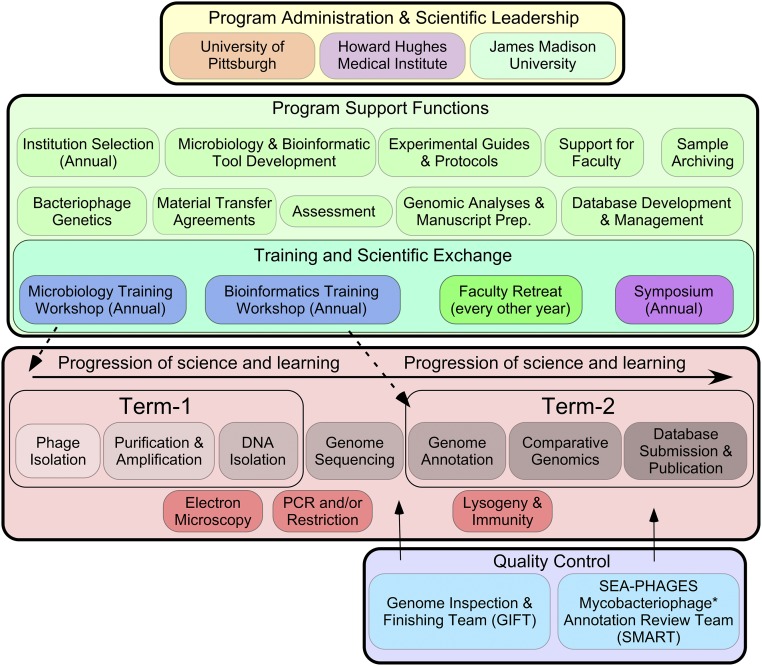
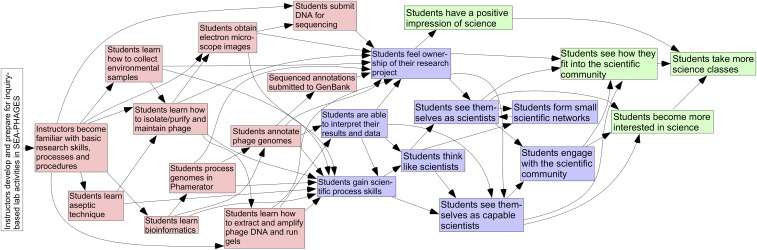
Significance: The Science Education Alliance–Phage Hunters Advancing Genomics and Evolutionary Science program is an inclusive Research Education Community with centralized programmatic and scientific support, in which broad student engagement in authentic science is linked to increased accessibility to research experiences for students; increased persistence of these students in science, technology, engineering, and mathematics; and increased scientific productivity for students and faculty alike.
Overview
The claims and statistics of this paper haven’t been checked yet.
Free: it reads the open-access text and checks the first 5 claims that cite a source we can check. Create a free account to check every claim.
Integrity signals
Registry
Cites
Statistics
Figures
Verification
Claims the paper makes
The claims and statistics of this paper haven’t been checked yet.
Free: it reads the open-access text and checks the first 5 claims that cite a source we can check. Create a free account to check every claim.
Claims other papers make about this one
Each is checked against this paper’s own text: does it say what the citing paper says it does?
The source backs part of the claim, not all of it — or backs it for a different population, condition or comparison.
In the citing paper
“It is an inclusive, community-oriented, course-based research experience that has served the education of thousands of students worldwide, while also providing the research community with a cornucopia of novel genes and functions.”
From Mycobacterium smegmatis: The Vanguard of Mycobacterial Research (2023) · cites this paper as [180]
Experimental — accuracy not yet measuredThe source backs part of the claim, not all of it — or backs it for a different population, condition or comparison.
In the citing paper
“while also providing the research community with a cornucopia of novel genes and functions”
From Mycobacterium smegmatis: The Vanguard of Mycobacterial Research (2023) · cites this paper as [180]
Experimental — accuracy not yet measured
Self-check
Percentages, sums and reported differences re-computed from the paper’s own numbers.
The self-check needs the paper’s full text.
Citations
Cites
Austin, P. C. (2011) · Multivariate Behavioral Research · doi:10.1080/00273171.2011.568786 · Cited by 12,242 · cited 3×
“SEA-PHAGES or traditional laboratories, we used propensity score matching (32) (Fig.”
MethodEvolutionary relationships among diverse bacteriophages and prophages: All the world’s a phage
Hendrix, R. W., Smith, M. C. M., Burns, R. N., Ford, M. E., & Hatfull, G. F. (1999) · Proceedings of the National Academy of Sciences · doi:10.1073/pnas.96.5.2192 · Cited by 1,107 · cited 3×
“This study was approved and supervised by the Institutional Review Board of the Indiana University of Pennsylvania (14-302) and the University of Pittsburgh Institutional Review Board (PRO14100567 and PRO15030412).”
BackgroundMethodSelf-citationUndergraduate research experiences support science career decisions and active learning
Lopatto, D. (2007) · CBE—Life Sciences Education · doi:10.1187/cbe.07-06-0039 · Cited by 1,009
Survey of undergraduate research experiences (SURE): First findings
Lopatto, D. (2004) · Cell Biology Education · doi:10.1187/cbe.04-07-0045 · Cited by 969
Undergraduate research experiences: Impacts and opportunities
Linn, M. C., Palmer, E., Baranger, A., Gerard, E., & Stone, E. (2015) · Science · doi:10.1126/science.1261757 · Cited by 821 · cited 1×
“In comparison with AREs, well-designed CREs can engage more students earlier in the curriculum (6), which is expected to have higher impact (7, 8).”
BackgroundIncreasing Persistence of College Students in STEM
Graham, M. J., Frederick, J., Byars-Winston, A., Hunter, A.-B., & Handelsman, J. (2013) · Science · doi:10.1126/science.1240487 · Cited by 786
Self-citationCourse-Based Undergraduate Research Experiences Can Make Scientific Research More Inclusive
Bangera, G., & Brownell, S. E. (2014) · CBE—Life Sciences Education · doi:10.1187/cbe.14-06-0099 · Cited by 722 · cited 1×
“In comparison with AREs, well-designed CREs can engage more students earlier in the curriculum (6), which is expected to have higher impact (7, 8).”
BackgroundEstrada, M., Woodcock, A., Hernandez, P. R., & Schultz, P. W. (2011) · Journal of Educational Psychology · doi:10.1037/a0020743 · Cited by 546 · cited 2×
“This study was approved and supervised by the Institutional Review Board of the Indiana University of Pennsylvania (14-302) and the University of Pittsburgh Institutional Review Board (PRO14100567 and PRO15030412).”
MethodThe impact of research grant funding on scientific productivity
Jacob, B. A., & Lefgren, L. (2011) · Journal of Public Economics · doi:10.1016/j.jpubeco.2011.05.005 · Cited by 532 · cited 3×
“This study was approved and supervised by the Institutional Review Board of the Indiana University of Pennsylvania (14-302) and the University of Pittsburgh Institutional Review Board (PRO14100567 and PRO15030412).”
MethodResultJordan, T. C., Burnett, S. H., Carson, S., Caruso, S. M., Clase, K., DeJong, R. J., Dennehy, J. J., Denver, D. R., Dunbar, D., Elgin, S. C. R., et al. (2014) · mBio · doi:10.1128/mbio.01051-13 · Cited by 509
Self-citation
Research works printed but not linked: 2
- Brewer C Smith D 2011 Vision and Change in Undergraduate Biology Education: A Call to Action American Association for the Advancement of Science Washington, DC
- Rohwer F Youle M Maughan H Hisakawa N 2014 Life in Our Phage World: A Centenial Field Guide to the Earth’s Most Diverse Inhiabitants Wholon San Diego
Cited by
Cook, R., Brown, N., Redgwell, T., Rihtman, B., Barnes, M., Clokie, M., Stekel, D. J., Hobman, J., Jones, M. A., & Millard, A. (2021) · PHAGE · doi:10.1089/phage.2021.0007 · Cited by 334
Mycobacterium smegmatis: The Vanguard of Mycobacterial Research
Sparks, I. L., Derbyshire, K. M., Jacobs, W. R., & Morita, Y. S. (2023) · Journal of Bacteriology · doi:10.1128/jb.00337-22 · Cited by 149
“characterizing the phage, and sequencing and annotating its genome (180, 181).”
BackgroundSelf-citationActinobacteriophages: Genomics, Dynamics, and Applications
Hatfull, G. F. (2020) · Annual Review of Virology · doi:10.1146/annurev-virology-122019-070009 · Cited by 135
Self-citationTranslating phage therapy into the clinic: Recent accomplishments but continuing challenges
Fabijan, A. P., Iredell, J. R., Danis-Wlodarczyk, K. M., Kebriaei, R., & Abedon, S. T. (2023) · PLoS Biology · doi:10.1371/journal.pbio.3002119 · Cited by 147
Hatfull, G. F. (2018) · Microbiology Spectrum · doi:10.1128/microbiolspec.gpp3-0026-2018 · Cited by 112
Self-citationKrim, J. S., Coté, L. E., Schwartz, R., Stone, E. M., Cleeves, J. J., Barry, K. J., Burgess, W., Buxner, S. R., Gerton, J. M., Horvath, L., et al. (2019) · CBE—Life Sciences Education · doi:10.1187/cbe.19-03-0069 · Cited by 127
Buchanan, A. J., & Fisher, G. R. (2022) · CBE—Life Sciences Education · doi:10.1187/cbe.22-04-0069 · Cited by 146
“, 2020), and can increase project ownership (Hanauer et al., 2017; Corwin et al., 2018b; Cooper et al., 2019).”
BackgroundEsparza, D., Wagler, A. E., & Olimpo, J. T. (2020) · CBE—Life Sciences Education · doi:10.1187/cbe.19-04-0082 · Cited by 87
Trubl, G., Hyman, P., Roux, S., & Abedon, S. T. (2020) · Soil Systems · doi:10.3390/soilsystems4020023 · Cited by 92
“The Science Education Alliance-Phage Hunters Advancing Genomics and Evolutionary Science (SEA-PHAGES) [107,108] and the Phage Hunters Integrating Research and Education (PHIRE) programs [109,110] successfully integrated phage isolation into mentoring young scientists and providing large collections of phages that infe…”
BackgroundHryckowian, A. J., Merrill, B. D., Porter, N. T., Treuren, W. V., Nelson, E. J., Garlena, R. A., Russell, D. A., Martens, E. C., & Sonnenburg, J. L. (2020) · Cell Host & Microbe · doi:10.1016/j.chom.2020.06.011 · Cited by 91
Self-citationAchieving STEM diversity: Fix the classrooms
Handelsman, J., Elgin, S., Estrada, M., Hays, S., Johnson, T., Miller, S., Mingo, V., Shaffer, C., & Williams, J. (2022) · Science · doi:10.1126/science.abn9515 · Cited by 82
Self-citationWhitley, K. V., Tueller, J. A., & Weber, K. S. (2020) · International Journal of Molecular Sciences · doi:10.3390/ijms21030768 · Cited by 104
“Seventy-three universities have implemented beginning courses of Phage Hunters and have demonstrated that Phage Hunters increases student learning, interest, and pursuit of academic education in STEM majors [49,69,70].”
BackgroundMycobacteriophages: From Petri dish to patient
Hatfull, G. F. (2022) · PLOS Pathogens · doi:10.1371/journal.ppat.1010602 · Cited by 74
“SEA-PHAGES is an example of an Inclusive Research Education Community (iREC) that encompasses institutions ranging from community colleges to Research I universities and involves all students without pre-selection based on generally irrelevant criteria [29,30].”
BackgroundMethodSelf-citationTiny Earth: A Big Idea for STEM Education and Antibiotic Discovery
Hurley, A. I., Chevrette, M. G., Acharya, D. D., Lozano, G. L., Garavito, M. F., Heinritz, J., Balderrama, L., Beebe, M., DenHartog, M. L., Corinaldi, K., et al. (2021) · mBio · doi:10.1128/mbio.03432-20 · Cited by 83
10 Guiding principles for learning in the laboratory
Seery, M. K., Agustian, H. Y., Christiansen, F. V., Gammelgaard, B., & Malm, R. H. (2024) · Chemistry Education Research and Practice · doi:10.1039/d3rp00245d · Cited by 110
“Such activities have been shown to foster increased interest, engagement, and persistence of study in other disciplines (Jordan et al. , 2014; Hanauer et al. , 2017) (Table 8).”
BackgroundPhage Annotation Guide: Guidelines for Assembly and High-Quality Annotation
Turner, D., Adriaenssens, E. M., Tolstoy, I., & Kropinski, A. M. (2021) · PHAGE · doi:10.1089/phage.2021.0013 · Cited by 92
“Although simple alphanumerically names such as P22 and T4 used to be the norm, today most people are following the lead of the SEA-PHAGES program 79,80 and opt for a common name such as Abrogate, Adjutor, and Adonis.”
Genomic diversity of bacteriophages infecting Microbacterium spp
Jacobs‐Sera, D., Abad, L., Alvey, R. M., Anders, K. R., Aull, H. G., Bhalla, S. S., Blumer, L. S., Bollivar, D. W., Bonilla, J. A., Butela, K. A., et al. (2020) · PLoS ONE · doi:10.1371/journal.pone.0234636 · Cited by 69
“The Phamerator database ‘Actinobacteriophage_2422’ contains 2,422 phages that infect hosts in the phylum Actinobacteria, derived from the SEA-PHAGES program [67] and from GenBank, and includes Min1 [29].”
BackgroundSelf-citationGovindan, B., Pickett, S. B., & Riggs, B. (2020) · Journal of Microbiology and Biology Education · doi:10.1128/jmbe.v21i2.2109 · Cited by 79
“There are many examples of these national network projects, including SEA-PHAGES (22), the Great Sunflower project (23), and the Small World Initiative (24), that can be adapted for use in the undergraduate classroom laboratory.”
BackgroundAssessing Science Training Programs: Structured Undergraduate Research Programs Make a Difference
Wilson, A. E., Pollock, J., Billick, I., Domingo, C. R., Fernández-Figueroa, E. G., Nagy, E. S., Steury, T. D., & Summers, A. P. (2018) · BioScience · doi:10.1093/biosci/biy052 · Cited by 62
Hernandez, P. R., Hopkins, P. D., Masters, K., Holland, L., Mei, B. M., Richards‐Babb, M., Quedado, K., & Shook, N. J. (2018) · CBE—Life Sciences Education · doi:10.1187/cbe.18-02-0022 · Cited by 68
“That is, enacting policies and procedures that support students’ project ownership may improve short-term outcomes (such as avoiding a decline in persistence intentions) and long-term persistence in scientific research careers (Hanauer et al., 2017).”
BackgroundPhage Therapy for Nontuberculous Mycobacteria: Challenges and Opportunities
Hatfull, G. F. (2022) · Pulmonary Therapy · doi:10.1007/s41030-022-00210-y · Cited by 62
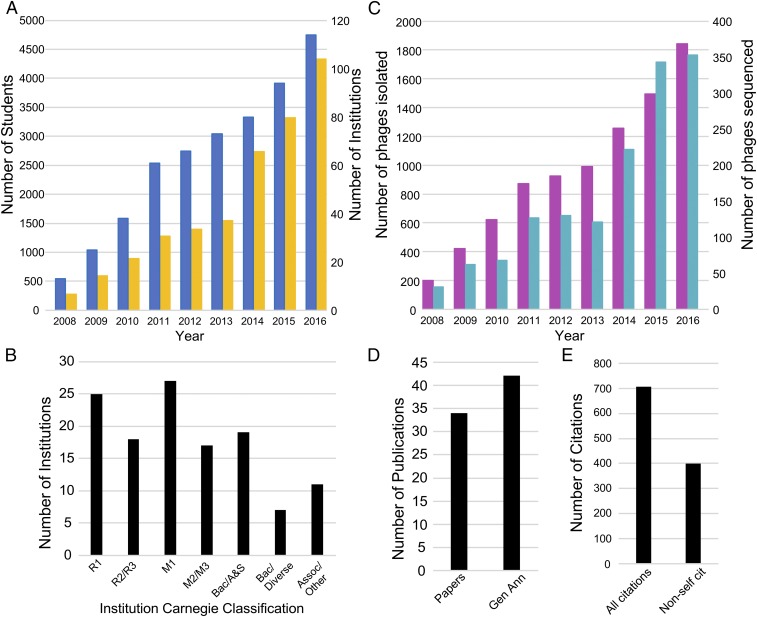
“By using a common programmatic infrastructure, phage discovery and genomics could be implemented at very large scale, with over 40,000 students through the program to-date, and over 20,000 phages isolated; over 4000 have been sequenced and fully annotated [31].”
BackgroundSelf-citationDoore, S. M., Schrad, J. R., Dean, W. F., Dover, J. A., & Parent, K. N. (2018) · Journal of Virology · doi:10.1128/jvi.02117-17 · Cited by 51
How Field Courses Propel Inclusion and Collective Excellence
Zavaleta, E. S., Beltran, R. S., & Borker, A. L. (2020) · Trends in Ecology & Evolution · doi:10.1016/j.tree.2020.08.005 · Cited by 54
“Laboratoryand classroom-based research experiences can boost self-efficacy and belonging [11,12], but these approaches cannot level disparities in outdoor experience and typically allow less mentor and peer community formation [6,13].”
How to introduce a new bacteriophage on the block: a short guide to phage classification
Valencia-Toxqui, G., & Ramsey, J. (2024) · Journal of Virology · doi:10.1128/jvi.01821-23 · Cited by 58
Adding Authenticity to Inquiry in a First-Year, Research-Based, Biology Laboratory Course
Indorf, J. L., Weremijewicz, J., Janos, D. P., & Gaines, M. S. (2019) · CBE—Life Sciences Education · doi:10.1187/cbe.18-07-0126 · Cited by 56
“…Hunters Advancing CBE—Life Sciences Education • 18:ar38, Fall 2019 18:ar38, 3 Genomics and Evolutionary Science (SEA-PHAGES) program engages undergraduates in authentic research (Hanauer et al., 2017) through discovery of novel bacteriophages from environmental samples (Jordan et al., 2014).”
BackgroundDeveloping Course Undergraduate Research Experiences (CUREs) in Chemistry
Provost, J. J. (2022) · Journal of Chemical Education · doi:10.1021/acs.jchemed.2c00390 · Cited by 56
A Method for Improving the Accuracy and Efficiency of Bacteriophage Genome Annotation
Salisbury, A., & Tsourkas, P. K. (2019) · International Journal of Molecular Sciences · doi:10.3390/ijms20143391 · Cited by 40
“Sci. 2019 , 20 , 3391 2 of 17 Students that complete the course show higher interest and persistence in science, especially if they belong to groups traditionally underrepresented in the sciences [12–14].”
BackgroundMethodInfluentialGreenberg, M. B., London, R. A., & McKay, S. C. (2019) · Teaching Sociology · doi:10.1177/0092055x19875794 · Cited by 56
“…is to facilitate closer student–educator relationships by involving students in hands-on research together with faculty, which is well documented in science, technology, engineering, and mathematics (STEM) fields (Estrada et al. 2018; Hanauer et al. 2017; Russell, Hancock, and McCullough 2007).”
BackgroundInfluentialPhaMMseqs: a new pipeline for constructing phage gene phamilies using MMseqs2
Gauthier, C. H., Cresawn, S. G., & Hatfull, G. F. (2022) · G3 Genes Genomes Genetics · doi:10.1093/g3journal/jkac233 · Cited by 48
“Pham assembly is broadly useful for phage comparative genomics, and central to phage database resources used in integrated research-education programs such as PHIRE and SEA-PHAGES (Jordan et al. 2014; Hanauer et al. 2017; Hatfull 2021).”
BackgroundSelf-citationDevelopment and Use of CUREs in Biochemistry
Provost, J. J., Bell, J. K., & Bell, J. E. (2019) · ACS symposium series · doi:10.1021/bk-2019-1337.ch007 · Cited by 35
Hernandez, P. R., Agocha, V. B., Carney, L. M., Estrada, M., Lee, S. Y., Loomis, D., Williams, M., & Park, C. L. (2020) · PLoS ONE · doi:10.1371/journal.pone.0238250 · Cited by 39
Mycobacteriophages to Treat Tuberculosis: Dream or Delusion?
Diacon, A. H., Guerrero-Bustamante, C. A., Rosenkranz, B., Pomar, F. J. R., Vanker, N., & Hatfull, G. F. (2021) · Respiration · doi:10.1159/000519870 · Cited by 37
Self-citationA quick guide for student-driven community genome annotation
Hosmani, P. S., Shippy, T. D., Miller, S., Benoit, J. B., Muñoz-Torres, M. C., Flores-Gonzalez, M., Mueller, L. A., Wiersma-Koch, H. I., D’Elia, T., Brown, S. J., et al. (2019) · PLoS Computational Biology · doi:10.1371/journal.pcbi.1006682 · Cited by 35
“There are many benefits for students who participate in these programs, including the development of a better understanding of genomics [3,5], retention and persistence in the sciences [4,6], and inclusion on peer-reviewed publications[7].”
BackgroundSelf-citationKuchynka, S. L., Nostrand, D. F.-V., & Pollenz, R. S. (2019) · CBE—Life Sciences Education · doi:10.1187/cbe.19-01-0028 · Cited by 35
Bolger, M. S., Osness, J. B., Gouvea, J. S., & Cooper, A. C. (2021) · CBE—Life Sciences Education · doi:10.1187/cbe.21-05-0128 · Cited by 45
“Based on previous research, outcomes like these are important determinants in students’ decisions to persist in STEM (Estrada et al. , 2011; Graham et al. , 2013; Hernandez et al. , 2013; Hanauer et al. , 2017).”
Corwin, L. A., Ramsey, M. E., Vance, E. A., Woolner, E., Maiden, S., Gustafson, N., & Harsh, J. A. (2022) · CBE—Life Sciences Education · doi:10.1187/cbe.21-05-0131 · Cited by 40
“, 2018), increased positive affect and motivation toward science (e.g., Olimpo et al., 2016; Hanauer et al., 2017; Greenman et al., 2021), and persisting in the sciences (e.”
BackgroundMethodInfluentialConnected While Distant: Networking CUREs Across Classrooms to Create Community and Empower Students
Connors, P. K., Lanier, H. C., Erb, L. P., Varner, J., Dizney, L. J., Flaherty, E. A., Duggan, J., Yahnke, C. J., & Hanson, J. D. (2021) · Integrative and Comparative Biology · doi:10.1093/icb/icab146 · Cited by 33
Hanauer, D. I., Nicholes, J., Liao, F., Beasley, A., & Henter, H. J. (2018) · CBE—Life Sciences Education · doi:10.1187/cbe.18-03-0046 · Cited by 31
Self-citationDeChenne‐Peters, S. E., Rakus, J. F., Parente, A., Mans, T. L., Eddy, R. M., Galport, N., Koletar, C., Provost, J. J., Bell, J. E., & Bell, J. K. (2023) · PLoS ONE · doi:10.1371/journal.pone.0282170 · Cited by 35
SEA-PHAGES and SEA-GENES: Advancing Virology and Science Education
Heller, D. M., Sivanathan, V., Asai, D. J., & Hatfull, G. F. (2024) · Annual Review of Virology · doi:10.1146/annurev-virology-113023-110757 · Cited by 39
“The SEA advances equity and inclusion by intentionally investing in a centralized infrastructure and practices that enable early undergraduate students from all backgrounds and at all institution types to engage in phage discovery and genomic exploration (12, 15) ( Figure 1 ).”
BackgroundMethodInfluentialSelf-citationLaungani, R., Tanner, C. J., Brooks, T. D., Clement, B., Clouse, M. A., Doyle, E., Dworak, S., Elder, B., Marley, K., & Schofield, B. J. (2018) · Journal of Microbiology and Biology Education · doi:10.1128/jmbe.v19i2.1517 · Cited by 27
Self-citationYu, W., Sun, Y., Miao, M., Li, L., Zhang, Y., Zhang, L., & Lu, E. (2021) · European Journal of Dental Education · doi:10.1111/eje.12598 · Cited by 23
The Bean Beetle Microbiome Project: A Course-Based Undergraduate Research Experience in Microbiology
Zelaya, A. J., Gerardo, N. M., Blumer, L. S., & Beck, C. W. (2020) · Frontiers in Microbiology · doi:10.3389/fmicb.2020.577621 · Cited by 32
Self-citationInstructional Models for Course-Based Research Experience (CRE) Teaching
Hanauer, D. I., Graham, M. J., Arnold, R. J., Ayuk, M. A., Balish, M. F., Beyer, A. R., Butela, K. A., Byrum, C. A., Chia, C. P., Chung, H.-M., et al. (2022) · CBE—Life Sciences Education · doi:10.1187/cbe.21-03-0057 · Cited by 29
“…exemplification of science, including avoidance of the failures and uncertainties of scientific work (Bencze and Hodson, 1999; Rahm et al., 2003; NRC, 2005) and because it may not promote persistence in the sciences (PCAST, 2012; Graham et al., 2013; Hanauer et al., 2017; Hernandez et al., 2018).”
BackgroundMethodInfluentialSelf-citationAylward, F. O., & Moniruzzaman, M. (2022) · Biomolecules · doi:10.3390/biom12081061 · Cited by 33
“Numerous jumbo phages have been isolated in recent years, likely due to the upsurge in phage isolation that has occurred because of the success of the popular Sea-Phages course that integrates phage isolation into undergraduate education [22], as well as the renewed interest in phage therapy to combat antibiotic resis…”
BackgroundA Novel Genus of Actinobacterial Tectiviridae
Caruso, S. M., deCarvalho, T., Huynh, A., Morcos, G. S., Kuo, N., Parsa, S., & Erill, I. (2019) · Viruses · doi:10.3390/v11121134 · Cited by 26
Self-citationNicholes, J. (2020) · Scientific Study of Literature · doi:10.1075/ssol.20002.nic · Cited by 24
Hanauer, D. I., Graham, M. J., Jacobs‐Sera, D., Garlena, R. A., Russell, D. A., Sivanathan, V., Asai, D. J., & Hatfull, G. F. (2022) · CBE—Life Sciences Education · doi:10.1187/cbe.21-08-0203 · Cited by 31
“Broadening Access to STEM (Hanauer et al. , 2017).”
InfluentialSelf-citationBeck, C. W., & Blumer, L. S. (2021) · CBE—Life Sciences Education · doi:10.1187/cbe.20-04-0076 · Cited by 31
“Mentored research experiences, CUREs, and inquiry-based laboratory courses influence student self-efficacy (e.g., Beck and Blumer, 2012; Adedokun et al., 2013; Dohn et al., 2016; Olimpo et al., 2016; Hanauer et al., 2017, 2018).”
BackgroundSelf-citationGoodwin, E. C., Cary, J. R., Phan, V. D., Therrien, H., & Shortlidge, E. E. (2023) · Journal of Research in Science Teaching · doi:10.1002/tea.21848 · Cited by 36
Dahlberg, C. L., Wiggins, B. L., Lee, S. R., Leaf, D. S., Lily, L. S., Jordt, H., & Johnson, T. J. (2019) · The journal of college science teaching · doi:10.2505/4/jcst19_048_04_22 · Cited by 23
Hanson, P. K., & Stultz, L. K. (2021) · Journal of Chemical Education · doi:10.1021/acs.jchemed.1c00575 · Cited by 23
DeChenne-Peters, S. E., & Scheuermann, N. L. (2022) · CBE—Life Sciences Education · doi:10.1187/cbe.21-06-0154 · Cited by 20
“CUREs result in student benefits similar to those observed with participation in faculty-mentored research: increased self-confidence and self-efficacy, development of a science identity, increased academic performance, science process skills, and STEM persistence (Corwin et al., 2015; Shapiro et al., 2015; Olimpo et…”
BackgroundSharma, V., Hünnefeld, M., Luthe, T., & Frunzke, J. (2023) · Scientific Reports · doi:10.1038/s41598-023-30829-z · Cited by 29
Bacteriophage Taxonomy: A Continually Evolving Discipline
Turner, D., Adriaenssens, E. M., Lehman, S. M., Moraru, C., & Kropinski, A. M. (2023) · Methods in molecular biology · doi:10.1007/978-1-0716-3523-0_3 · Cited by 22
Fletcher, J., Manley, R., Fitch, C., Bugert, C., Moore, K., Farbos, A., Michelsen, M. L., Alathari, S., Senior, N. J., Mills, A., et al. (2024) · Microorganisms · doi:10.3390/microorganisms12020253 · Cited by 27
“The SEA-PHAGES (Science Education Alliance–Phage Hunters Advancing Genomics and Evolutionary Science) program [31] has to date enrolled 1400 students and has banked 4471 fully sequenced Actinobacteriophages (https://phagesdb.org (accessed on 1 August 2023)).”
BackgroundPhylogenetic Distribution of WhiB- and Lsr2-Type Regulators in Actinobacteriophage Genomes
Sharma, V., Hardy, A., Luthe, T., & Frunzke, J. (2021) · Microbiology Spectrum · doi:10.1128/spectrum.00727-21 · Cited by 21
“the discovery and sequencing of a variety of actinobacteriophage-infecting species of different actinobacterial genera (3, 4).”
BackgroundStructures of Three Actinobacteriophage Capsids: Roles of Symmetry and Accessory Proteins
Podgorski, J. M., Calabrese, J., Alexandrescu, L., Jacobs‐Sera, D., Pope, W. H., Hatfull, G. F., & White, S. J. (2020) · Viruses · doi:10.3390/v12030294 · Cited by 17
“Currently, there are 145 participating institutions, and the program collectively has isolated over 17,000 bacteriophages of Actinobacteria hosts [2,3], of which over 3000 have been sequenced and annotated.”
BackgroundSelf-citationDunbar‐Wallis, A. K., Katcher, J., Moore, W., & Corwin, L. A. (2024) · CBE—Life Sciences Education · doi:10.1187/cbe.24-01-0015 · Cited by 21
“…outcomes such as science self-efficacy, project ownership, sense of belonging to science, science identity, and intentions to persist in STEM (e.g., Hanauer et al. , 2012, 2017; Hanauer and Dolan, 2014; Olimpo et al. , 2016; Corwin et al. , 2018; Gin et al. , 2018; Cooper et al. , 2019; Esparza…”
pdm_utils: a SEA-PHAGES MySQL phage database management toolkit
Mavrich, T. N., Gauthier, C. H., Abad, L., Bowman, C. A., Cresawn, S. G., & Hatfull, G. F. (2020) · Bioinformatics · doi:10.1093/bioinformatics/btaa983 · Cited by 19
Self-citationExploring Host-Binding Machineries of Mycobacteriophages with AlphaFold2
Cambillau, C., & Goulet, A. (2023) · Journal of Virology · doi:10.1128/jvi.01793-22 · Cited by 19
Diverse Durham collection phages demonstrate complex BREX defense responses
Kelly, A., Went, S. C., Mariano, G., Shaw, L. P., Picton, D. M., Duffner, S. J., Coates, I., Herdman-Grant, R., Gordeeva, J., Drobiazko, A., et al. (2023) · Applied and Environmental Microbiology · doi:10.1128/aem.00623-23 · Cited by 17
“Here, we characterize a collection of Escherichia coli phages isolated during a final year undergraduate practical workshop module that was inspired by a range of similar taught courses, such as the SEA-PHAGES program (39).”
BackgroundMethodPUMAA: A Platform for Accessible Microbiome Analysis in the Undergraduate Classroom
Mitchell, K., Ronas, J. R., Dao, C., Freise, A. C., Mangul, S., Shapiro, C. A., & Parker, J. M. (2020) · Frontiers in Microbiology · doi:10.3389/fmicb.2020.584699 · Cited by 19
“…course-based undergraduate research experiences (CUREs) have been touted as an inclusive and scalable model to bring these benefits to a diverse set of student populations (Harrison et al., 2011; Bangera and Brownell, 2014; Corwin et al., 2015; Shapiro et al., 2015; Hanauer et al., 2017).”
BackgroundSelf-citationKushner, D. B., & Pekosz, A. S. (2021) · Annual Review of Virology · doi:10.1146/annurev-virology-091919-080047 · Cited by 18
Goodwin, E. C., Cary, J. R., & Shortlidge, E. E. (2022) · PLOS ONE · doi:10.1371/journal.pone.0275313 · Cited by 16
“Though the SEA-PHAGES curriculum provides many academic and affective benefits for students [34, 36, 37], we are unaware of other studies that measure SEA-PHAGE student perceptions of experiencing the CURE constructs, including Broader Relevance and Novel Discovery.”
BackgroundStudent Attitudes Contribute to the Effectiveness of a Genomics CURE
Lopatto, D. E., Rosenwald, A., Burgess, R. C., Key, C. S., Stry, M. V., Wawersik, M. J., DiAngelo, J. R., Hark, A. T., Skerritt, M. P., Allen, A. K., et al. (2022) · Journal of Microbiology and Biology Education · doi:10.1128/jmbe.00208-21 · Cited by 18
“(6) examined the impacts of the SEA-PHAGES program (a CURE offered to first-year students) across a variety of subject variables, including prior academic success (i.”
BackgroundSelf-citationiCURE (iterative course‐based undergraduate research experience): A case‐study
Stoeckman, A. K., Cai, Y., & Chapman, K. D. (2019) · Biochemistry and Molecular Biology Education · doi:10.1002/bmb.21279 · Cited by 16
“Because significant centralized information is required, limited topics exist for upper-level classes [3].”
BackgroundBasalla, J. L., Harris, R., Burgess, E., Zeedyk, N., & Wildschutte, H. (2020) · FEMS Microbiology Letters · doi:10.1093/femsle/fnaa018 · Cited by 15
Hatfull, G. F. (2025) · Proceedings of the National Academy of Sciences · doi:10.1073/pnas.2523344122 · Cited by 20
“The iREC structure is a powerful one ( 11 ).”
InfluentialSelf-citationLeonetti, C. T., Lindberg, H. M., Schwake, D. O., & Cotter, R. L. (2023) · CBE—Life Sciences Education · doi:10.1187/cbe.21-11-0318 · Cited by 19
“, 2016) was originally used with an undergraduate student population that identified as 52% Caucasian/White and only 2% Black or African American, and just 1% Hispanic or Latino, this survey is now used at a variety of institutional types ranging from CCs to bachelor’s degree–granting institutions (Hanauer et al., 201…”
BackgroundMethodDiversifying the genomic data science research community
The Genomic Data Science Community Network (2022) · Genome Research · doi:10.1101/gr.276496.121 · Cited by 13
“…and Evolutionary Science (SEA-PHAGES; https://seaphages.org/) network is both an inclusive research education community and the developer of the two-term laboratory CURE studying viral diversity, evolution, genome annotation, and bioinformatic analyses (Jordan et al. 2014; Hanauer et al. 2017).”
BackgroundEngaging Students with Flipped Classrooms and Course-Based Undergraduate Research Experiences
Stry, M. V., Gaber, F., Farrakhan-Gooch, A., Jones, C., Sklensky, D. E., & Ude, M. (2019) · ACS symposium series · doi:10.1021/bk-2019-1328.ch003 · Cited by 13
Merkle, J. A., Devergne, O., Kelly, S. M., Croonquist, P. A., Evans, C. J., Hwalek, M. A., Straub, V. L., Hamill, D. R., Peister, A., Puthoff, D. P., et al. (2023) · Journal of Microbiology and Biology Education · doi:10.1128/jmbe.00245-22 · Cited by 21
Self-citationRevisiting barriers to implementation of bioinformatics into life sciences education
Drew, J. C., Morgan, W. R., Galindo, S., Kleinschmit, A. J., McWilliams, M., Pauley, M., Triplett, E. W., Williams, J., Murdoch, B., & Rosenwald, A. (2023) · Frontiers in Education · doi:10.3389/feduc.2023.1317191 · Cited by 18
The professional identity of STEM faculty as instructors of course-based research experiences
Hanauer, D. I., Alvey, R. M., An, P., Bancroft, C. T., Butela, K. A., Coleman, S. T., Clase, K. L., Collins, P., Conant, S. B., Connerly, P. L., et al. (2024) · Frontiers in Education · doi:10.3389/feduc.2024.1442306 · Cited by 17
Self-citationCrowdsourcing biocuration: The Community Assessment of Community Annotation with Ontologies (CACAO)
Ramsey, J., McIntosh, B. K., Renfro, D. P., Aleksander, S., LaBonte, S. A., Ross, C., Zweifel, A. E., Liles, N. M., Farrar, S., Gill, J. J., et al. (2021) · PLoS Computational Biology · doi:10.1371/journal.pcbi.1009463 · Cited by 16
Self-citationIn Vitro Evolution to Increase the Titers of Difficult Bacteriophages: RAMP-UP Protocol
Kok, D. N., Turnbull, J., Takeuchi, N., Tsourkas, P. K., & Hendrickson, H. L. (2023) · PHAGE · doi:10.1089/phage.2023.0005 · Cited by 16
Self-citationUnusual prophages in Mycobacterium abscessus genomes and strain variations in phage susceptibilities
Amarh, E. D., Dedrick, R. M., Garlena, R. A., Russell, D. A., Gauthier, C. H., Aull, H. G., Abad, L., Jacobs‐Sera, D., Akusobi, C., Rubin, E. J., et al. (2023) · PLoS ONE · doi:10.1371/journal.pone.0281769 · Cited by 14
Self-citationOliver, K. A., Werth, A., & Lewandowski, H. J. (2023) · Physical Review Physics Education Research · doi:10.1103/physrevphyseducres.19.010124 · Cited by 20
“Some CUREs are part of national programs sharing a common research goal where faculty join the program through an application process and receive support from the national leader to prepare them to run the CURE at their institution [10,14,15].”
BackgroundThe untapped potential of phage model systems as therapeutic agents
Dherbey, J. R., & Bertels, F. (2024) · Virus Evolution · doi:10.1093/ve/veae007 · Cited by 14
“Phage model systems represent a convenient tool for this endeavour as we can capitalise on our profound insight into their biology and evolution (Luciano, Young, and Patterson 2002; Hanauer et al. 2017).”
BackgroundMethodExternal Collaboration Results in Student Learning Gains and Positive STEM Attitudes in CUREs
Callahan, K. P., Peterson, C. N., Martínez-Vaz, B. M., Huisinga, K. L., Galport, N., Koletar, C., Eddy, R. M., Provost, J. J., Bell, J. K., & Bell, E. (2022) · CBE—Life Sciences Education · doi:10.1187/cbe.21-06-0167 · Cited by 28
“These research education communities—SEA-PHAGES, Genomics Education Partnership, and Small World Initiative—have been successful in promoting undergraduates from many different schools to work on similar projects, and sometimes even include interactive symposia for the students (Shaffer et al., 2010; Caruso et al., 20…”
BackgroundHecatomb: An End-to-End Research Platform for Viral MetagenomicsPreprint
Roach, M. J., Beecroft, S. J., Mihindukulasuriya, K. A., Wang, L., Paredes, A. M., Henry-Cocks, K., Lima, L. F. O., Dinsdale, E. A., Edwards, R. A., & Handley, S. A. (2022) · bioRxiv (Cold Spring Harbor Laboratory) · doi:10.1101/2022.05.15.492003 · Cited by 12
Byrne, L. B., Rauschert, E. S. J., Rodgers, V. L., Bowser, G., Casper, A. M., Dewsbury, B. M., Morales, N. A., Vance‐Chalcraft, H. D., & Weber, L. M. (2025) · Bulletin of the Ecological Society of America · doi:10.1002/bes2.2233 · Cited by 17
Greenman, N., Jurgensen, S. K., Holmes, C. P., Kapsak, C. J., Davis, R., Maza, W. M., Edemba, D., Esser, B. A., Hise, S. M., Keen, T. N., et al. (2021) · Frontiers in Microbiology · doi:10.3389/fmicb.2021.592422 · Cited by 10
Catalyzing rapid discovery of gold-precipitating bacterial lineages with university students
Riley, N. G., Goller, C., Leggett, Z. H., Lewis, D. M., Ciccone, K., & Dunn, R. R. (2020) · PeerJ · doi:10.7717/peerj.8925 · Cited by 11
“Additionally, projects like the Science Education Alliance—Phage Hunters Advancing Genomics and Evolutionary Science (SEA—PHAGES) and Tiny Earth engage students in large research projects as part of course-based undergraduate research experiences (CUREs) (Hanauer et al., 2017; Handelsman et al., 2018).”
Mycobacteriophages: therapeutic approach for mycobacterial infections
Raman, S. K., Reddy, D. V. S., Jain, V. P., Bajpai, U., Misra, A., & Singh, A. K. (2024) · Drug Discovery Today · doi:10.1016/j.drudis.2024.104049 · Cited by 13
Gauthier, C. H., & Hatfull, G. F. (2024) · Viruses · doi:10.3390/v16081278 · Cited by 13
“SEA–PHAGES is an example of an inclusive Research Education Community (iREC) in which programmatic functionality is provided centrally, facilitating participation at a large scale and being fully inclusive of students, faculty, and institutions [11].”
BackgroundSelf-citationZhang, J., DeChenne‐Peters, S. E., Hecht, D., Wolyniak, M. J., Kuhn, M. L., Koletar, C., Galport, N., Eddy, R. M., Provost, J. J., Bell, J. K., et al. (2025) · Biochemistry and Molecular Biology Education · doi:10.1002/bmb.21889 · Cited by 15
“Despite the significant barriers for CC students to participate in undergraduate research at the student, faculty, and institutional levels, CUREs have been successfully implemented at CCs in recent years through involvement with community partners, 14 developing relationships with four-year institutions, 29,62 and pa…”
InfluentialSelf-citationOtt, L. E., LaCourse, W. R., Matón, K. I., Kowalewski, C., Stolle-McAllister, K., & Godsay, S. (2020) · PubMed · doi:10.13016/m2d9h7-zx8x · Cited by 12
The Genomics Education Partnership: First Findings on Genomics Research in Community Colleges
Croonquist, P. A., Falkenberg, V. P., Minkovsky, N., Sawa, A., Skerritt, M., Sustacek, M. K., Diotti, R., Aragon, A. D., Mans, T. L., Sherr, G. L., et al. (2023) · Scholarship and Practice of Undergraduate Research · doi:10.18833/spur/6/3/1 · Cited by 10
Wang, C., Bauer, M., Burmeister, A. R., Hanauer, D. I., & Graham, M. J. (2020) · Frontiers in Education · doi:10.3389/feduc.2020.590738 · Cited by 12
Self-citationFrom genetics to biotechnology: Synthetic biology as a flexible course‐embedded research experience
Johnson, K. C., Sabel, J. L., Cole, J. A., Pruett, C. L., Plymale, R. C., & Reyna, N. S. (2022) · Biochemistry and Molecular Biology Education · doi:10.1002/bmb.21662 · Cited by 16
“Additionally, Hanauer et al.24 indicated the percentage of students that score below or above a threshold in any one section may be indicative of the overall perception of the lab.”
BackgroundResultInfluentialSelf-citationSargent, L., Liu, Y., Leung, W., Mortimer, N. T., Lopatto, D. E., Goecks, J., & Elgin, S. C. R. (2020) · PLoS Computational Biology · doi:10.1371/journal.pcbi.1007863 · Cited by 10
Self-citationPublishing student-led discoveries in genetics
Heller, D. M., & Sivanathan, V. (2022) · G3 Genes Genomes Genetics · doi:10.1093/g3journal/jkac141 · Cited by 9
Self-citationZhu, Y., Wang, C., Hanauer, D. I., & Graham, M. J. (2024) · Studies in Higher Education · doi:10.1080/03075079.2024.2361328 · Cited by 11
“Although some CUREs like SEA-PHAGES and the Freshman Research Initiative (FRI) at the University of Texas at Austin tend to focus on early research experiences for freshmen (Graham et al. 2013; Hanauer et al. 2017; Rodenbusch et al. 2016), the CUREs we sampled skewed towards sophomores and juniors.”
Self-citationTiny Earth CURE Demonstrates Equitable Benefits for U.S. College Science Students
Miller, S., Hernandez, P. R., Du, W., Lee, H., Maldonado, N., Maldonado, N., Sandoval, P. J., Young, G. R., Handelsman, J., Handelsman, J., et al. (2025) · CBE—Life Sciences Education · doi:10.1187/cbe.23-06-0117 · Cited by 14
“…reinforce diverse talents, diminish the stigma of failure, foster community, and teach principles of equity and inclusion in science (Lopatto et al. , 2008; Jordan et al. , 2014; Shaffer et al. , 2014; Hanauer et al. , 2017; Olson et al. , 2019; Evans et al. , 2021; Waddell et al. , 2021).”
Using CREATE and Scientific Literature to Teach Chemistry
Perla, A. A., Hollar, S. M., Muzikar, K. A., & Liu, J. M. (2023) · Journal of Chemical Education · doi:10.1021/acs.jchemed.2c00781 · Cited by 11
Wildy Prize Lecture, 2020–2021: Who wouldn’t want to discover a new virus?
Hatfull, G. F. (2021) · Microbiology · doi:10.1099/mic.0.001094 · Cited by 8
Self-citationAssessment of Course-Based Research Modules Based on Faculty Research in Introductory Biology
Cole, M. F., Hickman, M. A., Morran, L. T., & Beck, C. W. (2021) · Journal of Microbiology and Biology Education · doi:10.1128/jmbe.00148-21 · Cited by 9
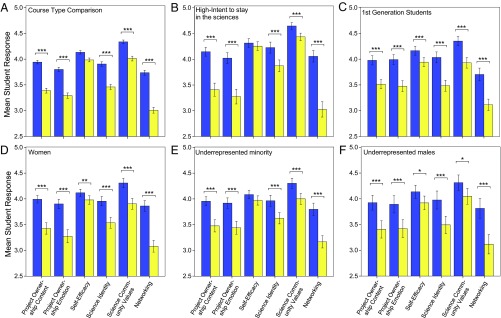
“We used the PITS survey to measure changes in students’ self-efficacy, science identity, and science community values as well as their perceptions of ownership and networking and compared the outcomes for our modular CRE model to outcomes for the SEA-PHAGES project (20), which is a semester-long, national CRE.”
BackgroundMethodResultInfluentialDeChenne‐Peters, S. E., Sargent, E., Mateer, S. C., Machingura, M. C., Zettler, J. A., Ness, T. L., DeMars, G., Cannon, S., & BrofttBailey, J. (2022) · International Journal for the Scholarship of Teaching and Learning · doi:10.20429/ijsotl.2022.160105 · Cited by 11
“These studies generally show similar or better gains for PEER students compared to their White/Asian classmates (Hanauer et al., 2017; Ing, Burnette, Azzam, and Wessler, 2020; Kirkpatrick, Schuchardt, Baltz, and Cotner, 2019; Rodenbusch et al., 2016).”
BackgroundMethodResultInfluential
Metadata
- Authors
- Hanauer, D. I., Graham, M. J., SEA-PHAGES, Betancur, L., Bobrownicki, A., Cresawn, S. G., Garlena, R. A., Jacobs-Sera, D., Kaufmann, N., Pope, W. H., Russell, D. A., Jacobs, W. R., Sivanathan, V., Asai, D. J., Hatfull, G. F., Actis, L., Adair, T., Adams, S., Alvey, R., Anders, K., Anderson, W. A., Antoniacci, L., Ayuk, M., Baliraine, F., Balish, M., Ball, S., Barbazuk, B., Barekzi, N., Barrera, A., Berkes, C., Best, A., Bhalla, S., Blumer, L., Bollivar, D., Bonilla, J. A., Borges, K., Bortz, B., Breakwell, D., Breitenberger, C., Breton, T., Brey, C., Bricker, J. S., Briggs, L., Broderick, E., Brooks, T. D., Brown-Kennerly, V., Buckholt, M., Butela, K., Byrum, C., Cain, D., Carson, S., Caruso, S., Caslake, L., Chia, C., Chung, H.-M., Clase, K., Clement, B., Conant, S., Connors, B., Coomans, R., D'Angelo, W., D'Elia, T., Daniels, C. J., Daniels, L., Davis, B., DeCourcy, K., DeJong, R., Delaney-Nguyen, K., Delesalle, V., Diaz, A., Dickson, L., Doty, J., Doyle, E., Dunbar, D., Easterwood, J., Eckardt, M., Edgington, N., Elgin, S., Erb, M., Erill, I., Fast, K., Fillman, C., Findley, A., Fisher, E., Fleischacker, C., Fogarty, M., Frederick, G., Frost, V., Furbee, E., Gainey, M., Gallegos, I., Gissendanner, C., Golebiewska, U., Grose, J., Grubb, S., Guild, N., Gurney, S., Hartzog, G., Hatherill, J. R., Hauser, C., Hendrickson, H., Herren, C., Hinz, J., Ho, E., Hope, S., Hughes, L., Hull, A., Hutchison, K., Isern, S., Janssen, G., Jarvik, J., Johnson, A., Jones, N., Kagey, J., Kart, M., Katsanos, J., Keener, T., Kenna, M., King, R., King-Smith, C., Kirkpatrick, B., Klyczek, K., Koch, H., Koga, A., Korey, C., Krukonis, G., Kurt, B., Leadon, S., LeBlanc-Straceski, J., Lee, J., Lee-Soety, J., Lewis, L., Limeri, L., Little, J., Llano, M., Lopez, J., MacLaren, C., Makemson, J., Martin, S., Mavrodi, D., McGuier, N., McKinney, A., McLean, J., Merkhofer, E., Michael, S., Miller, E., Mohan, S., Molloy, S., Monsen-Collar, K., Monti, D., Moyer, A., Neitzel, J., Nelson, P., Newman, R., Noordewier, B., Olapade, O., Ospina-Giraldo, M., Page, S., Paige-Anderson, C., Pape-Zambito, D., Park, P., Parker, J., Pedulla, M., Peister, A., Pfaffle, P., Pirino, G., Pizzorno, M., Plymale, R., Pogliano, J., Pogliano, K., Powell, A., Poxleitner, M., Preuss, M., Reyna, N., Rickus, J., Rinehart, C., Robinson, C., Rodriguez-Lanetty, M., Rosas-Acosta, G., Ross, J., Rowland, N., Royer, D., Rubin, M., Sadana, R., Saha, M., Saha, S., Sandel, M., Sasek, T., Saunders, L., Saville, K., Scherer, A., Schildbach, J., Schroeder, S., Schwebach, J. R., Seegulam, M., Segura-Totten, M., Shaffer, C., Shanks, R., Sipprell, A., Slowan-Pomeroy, T., Smith, K., Smith, M. A., Smith-Caldas, M., Stamm, J., Stockwell, S., Stowe, E., Stukey, J., Sunnen, C. N., Tarbox, B., Taylor, S., Temple, L., Timmerman, M., Tobiason, D., Tolsma, S., Torres, M., Twichell, C., Valle-Rivera, A. M., Vazquez, E., Villagomez, J., Voshell, S., Wallen, J., Ward, R., Ware, V., Warner, M., Washington, J., Weir, S., Wertz, J., Westholm, D., Weston-Hafer, K., Westover, K., Whitefleet-Smith, J., Wiedemeier, A., Wolyniak, M., Yan, W., Zegers, G. P., Zhang, D., & Zimmerman, A.
- Affiliations
- Indiana University of Pennsylvania (US)
- Yale University (US)
- University of Pittsburgh (US)
- James Madison University (US)
- Department of Biological Sciences, University of Pittsburgh, Pittsburgh, PA 15260;
- Albert Einstein College of Medicine (US)
- Howard Hughes Medical Institute (US)
- Corresponding author
- Jacobs, William R.
- Asai, David J.
- Hatfull, Graham F.
- ORCID
- Hanauer, David I.
- Betancur, Laura
- Cresawn, Steven G.
- Garlena, Rebecca A.
- Kaufmann, Nancy
- Pope, Welkin H.
- Russell, Daniel A.
- Jacobs, William R.
- Sivanathan, Viknesh
- Asai, David J.
- Hatfull, Graham F.
- Actis, Luis
- Adams, Sandra
- Alvey, Richard
- Anders, Kirk
- Baliraine, Frederick
- Balish, Mitchell
- Ball, Sarah
- Barekzi, Nazir
- Best, Aaron
- Breitenberger, Caroline
- Briggs, Laura
- Brooks, Tessa Durham
- Brown-Kennerly, Victoria
- Butela, Kristen
- Byrum, Christine
- Carson, Susan
- Caslake, Laurie
- Chia, Catherine
- Clase, Kari
- Connors, Bernadette
- Davis, Bill
- Diaz, Arturo
- Dunbar, David
- Edgington, Nicholas
- Elgin, Sarah
- Erill, Ivan
- Fast, Kayla
- Fillman, Christy
- Fleischacker, Christine
- Fogarty, Marie
- Frost, Victoria
- Gainey, Maria
- Grose, Julianne
- Gurney, Susan
- Hartzog, Grant
- Hauser, Charles
- Hendrickson, Heather
- Hinz, John
- Ho, Eric
- Hope, Sandra
- Hughes, Lee
- Hutchison, Keith
- Jarvik, Jonathan
- Johnson, Allison
- Kagey, Jacob
- King, Rodney
- Klyczek, Karen
- Krukonis, Greg
- Lewis, Lynn
- Limeri, Lisa
- Little, Joy
- Mavrodi, Dmitri
- McLean, Jeffrey
- Miller, Eric
- Molloy, Sally
- Monti, Denise
- Moyer, Alison
- Olapade, Ola
- Page, Shallee
- Parker, Jordan
- Pizzorno, Marie
- Plymale, Ruth
- Pogliano, Joe
- Pogliano, Kit
- Poxleitner, Marianne
- Reyna, Nathan
- Rickus, Jenna
- Rinehart, Claire
- Robinson, Courtney
- Rosas-Acosta, Germán
- Sadana, Rachna
- Saha, Margaret
- Saha, Sanghamitra
- Schildbach, Joel
- Schroeder, Stephanie
- Shanks, Ryan
- Stamm, Joyce
- Stowe, Emily
- Sunnen, C. Nicole
- Taylor, Sarah
- Temple, Louise
- Tolsma, Sara
- Voshell, Stephanie
- Wallen, Jamie
- Ware, Vassie
- Warner, Marcie
- Wertz, John
- Weston-Hafer, Kathleen
- Westover, Kristi
- Yan, Wenbo
- Venue
- Proceedings of the National Academy of Sciences
- Publisher
- National Academy of Sciences
- Published
- 2017-12-05
- Volume
- 114
- Issue
- 51
- Pages
- 13531-13536
- ISSN
- 0027-8424 (ISSN-L)
- 1091-6490
- PMC
- PMC5754813
- OpenAlex
- W2772342814
- Cited by
- 217
- References
- 33
- Citations by year
- 2026: 24 · 2025: 20 · 2024: 30 · 2023: 34 · 2022: 32 · 2021: 21 · 2020: 36 · 2019: 13 · 2018: 6 · 2017: 1
- FWCI
- 54.24
- Type
- journal article
- Language
- en
- Open access
- hybrid
- doi.org
- Licence
- Locations
- Proceedings of the National Academy of Sciences (publishedVersion, cc-by-nc-nd)
- PubMed Central (publishedVersion, cc-by-nc-nd)
- PubMed (publishedVersion)
- eScholarship (California Digital Library) (submittedVersion)
- eScholarship (California Digital Library) (submittedVersion, cc-by-nc-nd)
- Maryland Shared Open Access Repository (USMAI Consortium) (submittedVersion, cc-by-nc-nd)
- Massey Research Online (Massey University) (submittedVersion)
- Digital Repository at the University of Maryland (University of Maryland College Park)
- Funders
- National Science Foundation (DUE-1524575)
- Howard Hughes Medical Institute (54308198 and 52008197)
- Topics
- Social Sciences › Education › Science Education and Pedagogy
- Social Sciences › Psychology › Applied Psychology › Career Development and Diversity
- Social Sciences › Education › Higher Education Research Studies
- Keywords
- undergraduate research, science identity, scientific networking, project ownership, diversity in science, phage genomics
- MeSH terms
- Education, Medical, Undergraduate, Female, Humans, Learning, Male, Teaching, Universities, Program Evaluation, Biomedical Research, Young Adult
About these checks
Registry, retraction, Cites and statistics results are computed, not judged, with one exception: a printed reference that no index lists is read once by a model before it counts as a citation error. Claims are extracted by a model and kept only when their quote appears verbatim in the text; each cited source is then checked, with a model’s help, for whether it says what the claim relies on. Those verdicts can be wrong — read the claim’s quote and the cited source before relying on one.
Statistics and arithmetic are recomputed, not judged.
Confidence bands are shown only for fields calibrated on our annotated test set. None is calibrated yet, so no band is shown.
What counts as a claim ›How we measure confidence ›How we check this ›
Are you an author, or do you see a problem with this page? Request a review
Data sources
Bibliographic data: Semantic Scholar, OpenAlex, Crossref.
Contains information from the Semantic Scholar Academic Graph Datasets, made available under the ODC Attribution License (ODC-BY 1.0).
Semantic Scholar’s data is described in: Kinney, R., et al. (2023). The Semantic Scholar Open Data Platform. arXiv:2301.10140.
