

Gut microbiota regulates maturation of the adult enteric nervous system via enteric serotonin networks
Open accessThe DOI matches its Crossref record; 42 of the 42 references it cites were found in a registry or an index.
Abstract
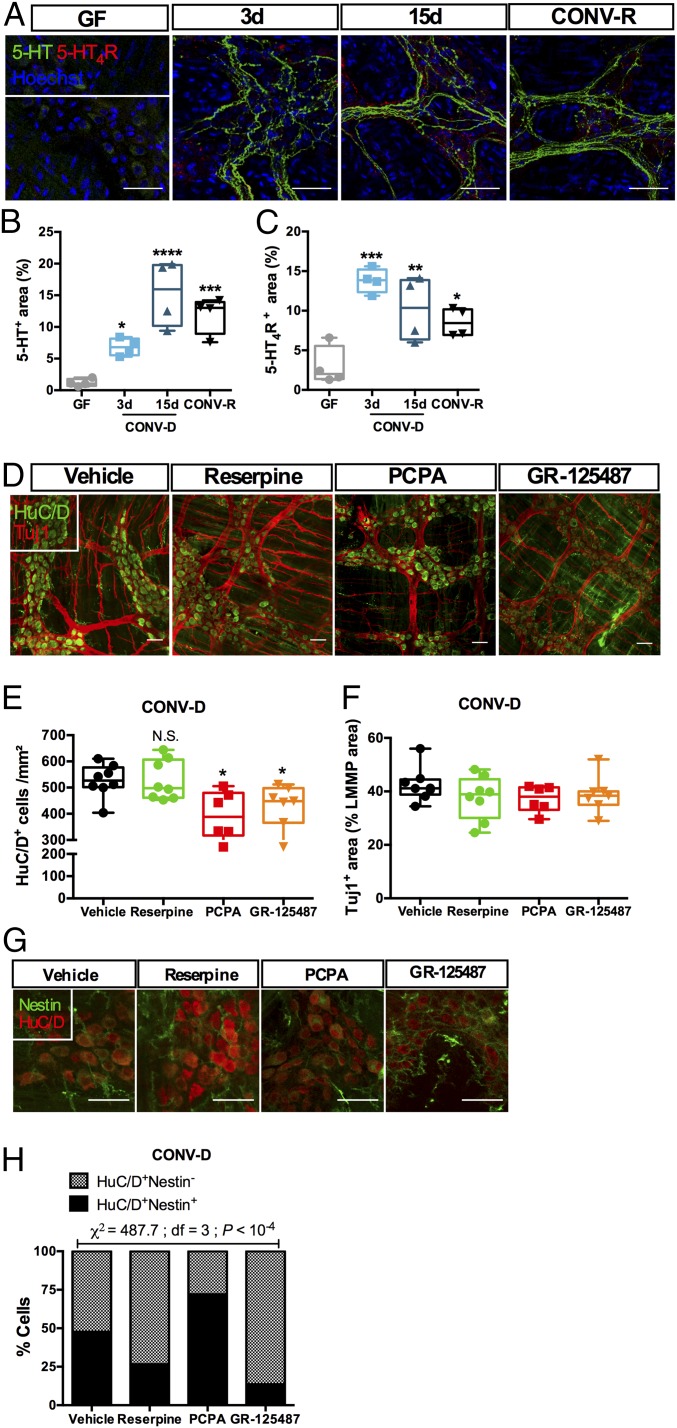
Significance: The gut microbiota affects several physiological processes, including gut motility. Here we observed that germ-free mice have an immature enteric nervous system (ENS) that is normalized upon colonization with a normal microbiota. We identified the mechanism of communication between the microbiota and enteric neurons as the initiation of serotonin release and subsequent activation of the 5-HT 4 receptor. This demonstrates a strong interaction between the microbiota and the ENS and indicates potential mechanisms linking microbial dysbiosis to gastrointestinal disorders. The ability to modulate the microbiota, e.g., by diet, will open new perspectives of research in neurogastroenterology.
Overview
The claims and statistics of this paper haven’t been checked yet.
Free: it reads the open-access text and checks the first 5 claims that cite a source we can check. Create a free account to check every claim.
Integrity signals
Registry
Cites
Statistics
Figures
Verification
Claims the paper makes
The claims and statistics of this paper haven’t been checked yet.
Free: it reads the open-access text and checks the first 5 claims that cite a source we can check. Create a free account to check every claim.
Claims other papers make about this one
Each is checked against this paper’s own text: does it say what the citing paper says it does?
The cited source says what the claim attributes to it.
In the citing paper
“Colonization of GF mice increased enteric neural 5-HT and expression of 5-HT 4 receptors while colonization of GF mice lacking tryptophan hydroxylase 1 (TPH1) failed to restore enteric neuron numbers to those observed in GF and conventional Tph1 transgenic mice and decreased Nestin+ neural precursors indicating reduced levels of neurogenesis (De Vadder et al., 2018).”
From The Microbiota-Gut-Brain Axis (2019) · cites this paper as De Vadder et al., 2018
The cited source says what the claim attributes to it.
In the citing paper
“The gut microbiota plays a key role in promoting serotonin secretion, inducing enteric nervous system maturation by releasing 5-HT and activating the 5-HT4 receptor.222”
From The role of gut dysbiosis in Parkinson’s disease: mechanistic insights and therapeutic options (2021) · cites this paper as [222]
Self-check
Percentages, sums and reported differences re-computed from the paper’s own numbers.
The self-check needs the paper’s full text.
Citations
Cites
Indigenous bacteria from the gut microbiota regulate host serotonin biosynthesis
Yano, J. M., Yu, K., Donaldson, G. P., Shastri, G. G., Ann, P., Ma, L., Nagler, C. R., Ismagilov, R. F., Mazmanian, S. K., & Hsiao, E. Y. (2015) · Cell · doi:10.1016/j.cell.2015.02.047 · Cited by 3,614 · cited 3×
“The gastrointestinal tract is the site where most 5-HT is synthesized, and recently two studies have shown that the gut microbiota plays a key role in promoting 5-HT secretion (18, 19).”
BackgroundDynamics and Stabilization of the Human Gut Microbiome during the First Year of Life
Bäckhed, F., Roswall, J., Peng, Y., Feng, Q., Jia, H., Kovatcheva-Datchary, P., Li, Y., Xia, Y., Xie, H., Zhong, H., et al. (2015) · Cell Host & Microbe · doi:10.1016/j.chom.2015.04.004 · Cited by 3,315
Self-citationNormal gut microbiota modulates brain development and behavior
Heijtz, R. D., Wang, S., Anuar, F., Qian, Y., Björkholm, B., Samuelsson, A., Hibberd, M. L., Forssberg, H., & Pettersson, S. (2011) · Proceedings of the National Academy of Sciences · doi:10.1073/pnas.1010529108 · Cited by 3,228 · cited 1×
“Recent work has shown that the gut microbiota is essential for normal brain development and function in mice (24), but much less is known about the implications of the gut microbiota in the development of the ENS.”
BackgroundMetabolomics analysis reveals large effects of gut microflora on mammalian blood metabolites
Wikoff, W. R., Anfora, A. T., Liu, J., Schultz, P. G., Lesley, S. A., Peters, E. C., & Siuzdak, G. (2009) · Proceedings of the National Academy of Sciences · doi:10.1073/pnas.0812874106 · Cited by 2,677 · cited 1×
“S4A) (18, 19, 31), likely by inducing de novo 5-HT synthesis by increasing the expression of the rate-limiting enzyme for 5-HT synthesis, Tph1, in the mucosa (SI Appendix, Fig.”
BackgroundThe enteric nervous system and neurogastroenterology
Furness, J. B. (2012) · Nature Reviews Gastroenterology & Hepatology · doi:10.1038/nrgastro.2012.32 · Cited by 1,619 · cited 1×
“The ENS has several essential physiologic functions, such as regulation of gastrointestinal motility, fluid secretion and absorption, and blood flow (1).”
BackgroundReigstad, C. S., Salmonson, C. E., III, J. F. R., Szurszewski, J. H., Linden, D. R., Sonnenburg, J. L., Farrugia, G., & Kashyap, P. C. (2015) · The FASEB Journal · doi:10.1096/fj.14-259598 · Cited by 1,335 · cited 3×
“The gastrointestinal tract is the site where most 5-HT is synthesized, and recently two studies have shown that the gut microbiota plays a key role in promoting 5-HT secretion (18, 19).”
BackgroundSerotonin signalling in the gut: functions, dysfunctions and therapeutic targets
Mawe, G. M., & Hoffman, J. M. (2013) · Nature Reviews Gastroenterology & Hepatology · doi:10.1038/nrgastro.2013.105 · Cited by 1,165 · cited 1×
“About 90% of the body’s serotonin (5-hydroxytryptamine, 5-HT) is produced by enterochromaffin (EC) cells, a type of enteroendocrine cells which are present in the epithelium of the gut (17).”
BackgroundLrp5 Controls Bone Formation by Inhibiting Serotonin Synthesis in the Duodenum
Yadav, V. K., Ryu, J.-H., Suda, N., Tanaka, K. F., Gingrich, J. A., Schütz, G., Glorieux, F. H., Chiang, C. Y., Zajac, J. D., Insogna, K. L., et al. (2008) · Cell · doi:10.1016/j.cell.2008.09.059 · Cited by 834 · cited 1×
“Tph1 mice were described previously (42).”
Self-citationIn vivo clonal analysis reveals self-renewing and multipotent adult neural stem cell characteristics
Bonaguidi, M. A., Wheeler, M. A., Shapiro, J. S., Stadel, R. P., Sun, G. J., Ming, G.-L., & Song, H. (2011) · Cell · doi:10.1016/j.cell.2011.05.024 · Cited by 831 · cited 1×
“Nestin is a cytoskeletal protein that is expressed by a variety of neural stem cells (10, 12, 29, 30).”
BackgroundCrosstalk between Muscularis Macrophages and Enteric Neurons Regulates Gastrointestinal Motility
Muller, P. A., Koscsó, B., Rajani, G. M., Stevanovic, K., Berres, M.-L., Hashimoto, D., Mortha, A., Leboeuf, M., Li, X.-M., Mucida, D., et al. (2014) · Cell · doi:10.1016/j.cell.2014.04.050 · Cited by 727
Cited by
Items 201–300 of 570
Moretti, C. H., Grasset, E., Zhu, J., Yang, G., Olofsson, L. E., Khan, M. T., Bergh, P., Oh, J., Lundqvist, A., Gils, T. V., et al. (2025) · Cell Reports · doi:10.1016/j.celrep.2025.116434 · Cited by 35
Self-citationGut microbiota and type 2 diabetes mellitus: a focus on the gut-brain axis
Pan, Y., Bu, T., Deng, X., Jia, J., & Yuan, G. (2024) · Endocrine · doi:10.1007/s12020-023-03640-z · Cited by 32
“A recent study has shown that GM plays a key role in regulating neuronal 5-HT production, which promotes the maturation of the ENS [53].”
Serotonergic Control of Gastrointestinal Development, Motility, and Inflammation
Najjar, S. A., Hung, L. Y., & Margolis, K. G. (2023) · Comprehensive physiology · doi:10.1002/cphy.c220024 · Cited by 59
Wang, L., Yang, S., Mei, C., Tang, N., Wang, J., Yu, Q., Wang, G., Wu, G., Zhao, J., & Chen, W. (2023) · Foods · doi:10.3390/foods12224176 · Cited by 27
“…in mice and establishing correlations between these indicators and apparent indicators of constipation (water content of feces, small intestinal transit rate, and time to the first black defecation), it was discovered that L. paracasei changed the relative abundance of bacteria related to the…”
BackgroundCescon, M., Gambarotta, G., Calabrò, S., Cicconetti, C., Anselmi, F., Kankowski, S., Lang, L., Basic, M., Bleich, A., Bolsega, S., et al. (2024) · Gut Microbes · doi:10.1080/19490976.2024.2363015 · Cited by 25
“18 Our morpho-quantitative analysis revealed significantly reduced myelinated and unmyelinated axonal diameters in young adult GF mice, indicating abnormal peripheral nerve fiber development.”
BackgroundXu, Z., Wu, X. M., Luo, Y., Li, H., Zhou, Y. Q., Liu, Z. Q., & Li, Z. Y. (2024) · International Journal of Biological Macromolecules · doi:10.1016/j.ijbiomac.2024.137436 · Cited by 30
Zhang, Y., Cheng, L., Liu, Y., Zhan, S., Wu, Z., Luo, S., & Zhang, X. (2022) · Journal of the Science of Food and Agriculture · doi:10.1002/jsfa.12151 · Cited by 25
Gut Dysbiosis and Blood-Brain Barrier Alteration in Hepatic Encephalopathy: From Gut to Brain
Shahbazi, A., Sepehrinezhad, A., Vahdani, E., Jamali, R., Ghasempour, M., Massoudian, S., Negah, S. S., & Larsen, F. S. (2023) · Biomedicines · doi:10.3390/biomedicines11051272 · Cited by 28
Liu, Y., Li, J.-C., Gu, Y.-F., Qiu, R.-H., Huang, J., Xue, R., Li, S., Zhang, Y., Zhang, Y., & Zhang, Y. (2024) · Neurochemical Research · doi:10.1007/s11064-024-04102-2 · Cited by 26
“The brain secretes only 5% of the body’s total 5-HT, while 95% is synthesized in the gut [55].”
Diet-microbiome interactions promote enteric nervous system resilience following spinal cord injury
Hamilton, A. M., Blackmer‐Raynolds, L., Li, Y., Kelly, S. D., Kebede, N., Williams, A. E., Chang, J., Garraway, S. M., Srinivasan, S., & Sampson, T. R. (2024) · npj Biofilms and Microbiomes · doi:10.1038/s41522-024-00556-y · Cited by 24
“Intestinal signaling pathways, including serotonergic signaling from enterochromaf fi n cells, microbial stimulation of neuronal TLR2, and SCFAs have each been shown independently to modulate enteric neurogenesis 21 – 23 .”
InfluentialConcise Review: Cellular and Molecular Mechanisms of Postnatal Injury-Induced Enteric Neurogenesis
Jonscher, R. L., & Belkind‐Gerson, J. (2019) · Stem Cells · doi:10.1002/stem.3045 · Cited by 23
Microbial influences on gut development and gut-brain communication
Ye, L., & Rawls, J. F. (2021) · Development · doi:10.1242/dev.194936 · Cited by 26
Chronic Intestinal Pseudo-Obstruction: Is There a Connection with Gut Microbiota?
Radocchia, G., Neroni, B., Marazzato, M., Capuzzo, E., Zuccari, S., Pantanella, F., Zenzeri, L., Evangelisti, M., Vassallo, F., Parisi, P., et al. (2021) · Microorganisms · doi:10.3390/microorganisms9122549 · Cited by 25
Lee, A., Lee, J. Y., Jung, S.-W., Shin, S. Y., Ryu, H. S., Jang, S.-H., Kwon, J. G., & Kim, Y. S. (2023) · Korean Journal of Gastroenterology · doi:10.4166/kjg.2023.028 · Cited by 30
Ke, S., Wang, X., Ratanatharathorn, A. D., Huang, T., Roberts, A. L., Grodstein, F., Kubzansky, L. D., Koenen, K. C., & Liu, Y. (2023) · Nature Mental Health · doi:10.1038/s44220-023-00145-6 · Cited by 24
“Most of the microbiome is linked to the development and function of the central nervous system 14–16 .”
BackgroundGut flora in multiple sclerosis: implications for pathogenesis and treatment
Zhang, W., Wang, Y., Zhu, M., Liu, K., & Zhang, H. (2023) · Neural Regeneration Research · doi:10.4103/1673-5374.387974 · Cited by 26
Lei, S., Twitchell, E. L., Ramesh, A. K., Bui, T., Majette, E., Tin, C. M., Avery, R. J., Arango-Argoty, G., Zhang, L., Becker‐Dreps, S., et al. (2019) · Journal of General Virology · doi:10.1099/jgv.0.001336 · Cited by 30
Xu, L., Wang, S., Wu, L., Cao, H., Fan, Y., Wang, X., Yu, Z., Zhou, M., Gao, R., & Wang, J. (2024) · Journal of Affective Disorders · doi:10.1016/j.jad.2024.04.050 · Cited by 24
Balakrishnan, R., Kang, S.-I., Lee, J. Y., Rho, Y., Kim, B.-K., & Choi, D. (2024) · Aging and Disease · doi:10.14336/ad.2024.1362 · Cited by 39
“De Vadder et al. [34] revealed this interaction through pharmacological manipulation of 5-HT receptors alongside the depletion of endogenous 5-HT.”
Qin, N., Xie, X., Deng, R., Gao, S., & Zhu, T. (2025) · Frontiers in Pharmacology · doi:10.3389/fphar.2025.1578018 · Cited by 29
Tryptophan metabolism and the gut-brain axis: focus on specific gut microbial genera
Xia, Y., Zhang, C., Yu, L., Zhang, Q., Narbad, A., Chen, W., Zhai, Q., & Tian, F. (2025) · Journal of Future Foods · doi:10.1016/j.jfutfo.2024.09.006 · Cited by 25
Greig, C. J., Zhang, L., & Cowles, R. A. (2019) · Physiological Reports · doi:10.14814/phy2.14278 · Cited by 22
“As previously mentioned, neuronal serotonin has been implicated as a regulator of intestinal mucosal growth (Gross et al. 2012), and more recent evidence suggests a link between the microbiome and serotonergic neural pathways (De Vadder et al. 2018).”
BackgroundGetting closer to modeling the gut-brain axis using induced pluripotent stem cells
Hall, V. J., & Bendtsen, K. M. (2023) · Frontiers in Cell and Developmental Biology · doi:10.3389/fcell.2023.1146062 · Cited by 23
“…influence of the gut microbiome on the brain is largely supported, particularly from pre-clinical studies, such as colonization-driven maturing of the ENS in germ-free mice (Heijtz et al., 2011; De Vadder et al., 2018; Needham et al., 2020), as well as contributions in aging (Boehme et al., 2023).”
BackgroundLandgraaf, R. G., Bloem, M. N., Fumagalli, M., Benninga, M. A., de Lorijn, F., & Nieuwdorp, M. (2023) · Frontiers in Endocrinology · doi:10.3389/fendo.2023.1236370 · Cited by 31
Jiang, L., Yu, Z., Zhao, Y., & Yin, D. (2024) · The Science of The Total Environment · doi:10.1016/j.scitotenv.2024.170755 · Cited by 23
Qiu, H., Kan, C., Han, F., Luo, Y., Qu, N., Zhang, K., Ma, Y., Hou, N., Wu, D., Sun, X., et al. (2024) · Lipids in Health and Disease · doi:10.1186/s12944-024-02198-7 · Cited by 23
“Accumulated evidence suggests that ketogenic diets impact metabolism and metabolic disorders through the gut microbiota, which serves as a regulatory factor of various aspects of host metabolism [22].”
BackgroundNeuronal lineages derived from the nerve-associated Schwann cell precursors
Kameneva, P., Kastriti, M. E., & Adameyko, I. I. (2020) · Cellular and Molecular Life Sciences · doi:10.1007/s00018-020-03609-5 · Cited by 27
Cui, C., Shi, Y. W., Hong, H., Zhou, Y., Qiao, C.-M., Zhao, L., Jia, X.-B., Zhao, W., & Shen, Y. (2023) · Journal of Neuroimmune Pharmacology · doi:10.1007/s11481-023-10085-8 · Cited by 25
“5-HT4R also exerts neuroprotection on human enteric neurons (Liu et al. 2009; Bianco et al. 2016 ; Wang et al. 2022), which can be regulated by the gut microbiota (De Vadder et al. 2018).”
Brain-Gut and Microbiota-Gut-Brain Communication in Type-2 Diabetes Linked Alzheimer’s Disease
Momen, Y. S., Mishra, J., & Kumar, N. (2024) · Nutrients · doi:10.3390/nu16152558 · Cited by 29
“In addition, as one of the major serotonin producers in humans, the gut microbiome can regulate the neuronal innervation of the colonic epithelium, the development of enteric glial cells via the release of serotonin, and the activation of its receptor in the ENS [120].”
BackgroundFood, microbes, sex and old age: on the plasticity of gastrointestinal innervation
Ameku, T., Beckwith, H., Blackie, L., & Miguel‐Aliaga, I. (2020) · Current Opinion in Neurobiology · doi:10.1016/j.conb.2019.12.004 · Cited by 20
“Until recently, there was little evidence for ongoing neurogenesis in the healthy adult intestine, but the regenerative capacity of the mammalian ENS is now beginning to be recognised and described [16,47,48].”
InfluentialLai, Y., Liu, C., Chi, L., Ru, H., & Lü, K. (2021) · ACS Omega · doi:10.1021/acsomega.0c05789 · Cited by 25
Role of the gut microbiome in Alzheimer’s disease
Chok, K. C., Ng, K. Y., Koh, R. Y., & Chye, S. M. (2021) · Reviews in the Neurosciences · doi:10.1515/revneuro-2020-0122 · Cited by 23
Parkinson’s Disease and the Metal–Microbiome–Gut–Brain Axis: A Systems Toxicology Approach
Forero-Rodríguez, L. J., Josephs‐Spaulding, J., Flor, S., Pinzón, A. M., & Kaleta, C. (2021) · Antioxidants · doi:10.3390/antiox11010071 · Cited by 26
Metabolomics: The Key to Unraveling the Role of the Microbiome in Visceral Pain Neurotransmission
Shute, A., Bihan, D. G., Lewis, I. A., & Nasser, Y. (2022) · Frontiers in Neuroscience · doi:10.3389/fnins.2022.917197 · Cited by 23
Toward understanding links between the microbiome and neurotransmitters
Lynch, J. B., & Hsiao, E. Y. (2023) · Annals of the New York Academy of Sciences · doi:10.1111/nyas.14993 · Cited by 22
Gut dysbiosis mediates the association between antibiotic exposure and chronic disease
Guarner, F., Fernández, L. B., Cruchet, S., Damião, A. O. M. C., Saito, A. M., Lopez, J. P. R., Silva, L. R., & Díaz, M. Á. (2024) · Frontiers in Medicine · doi:10.3389/fmed.2024.1477882 · Cited by 29
Passaglia, P., Kanashiro, A., Silva, H. B., Navegantes, L. C. C., Lacchini, R., Cárnio, E. C., & Branco, L. G. S. (2024) · Brain Behavior and Immunity · doi:10.1016/j.bbi.2024.03.037 · Cited by 20
The Gut Microbiota: A Clinically Impactful Factor in Patient Health and Disease
Rodriguez, D. A., Peña-Vélez, R., Monjaráz, E. M. T., Mayans, J. R., & Ryan, P. M. (2018) · SN Comprehensive Clinical Medicine · doi:10.1007/s42399-018-0036-1 · Cited by 24
Evidence-Based Analysis of Neurotransmitter Modulation by Gut Microbiota
Liu, T., & Huang, Z. (2019) · Lecture notes in computer science · doi:10.1007/978-3-030-32962-4_22 · Cited by 20
Llorente, C. (2024) · Cells · doi:10.3390/cells13100820 · Cited by 24
“As an illustration, the gut’s colonization by bacteria influences the production of mucosal serotonin and impacts the maturation of the adult ENS [198].”
BackgroundHIV-associated neurocognitive disorder: key implications of the microbiota-gut-brain axis
Hu, A., Zaongo, S. D., Harypursat, V., Wang, X., Ouyang, J., & Chen, Y. (2024) · Frontiers in Microbiology · doi:10.3389/fmicb.2024.1428239 · Cited by 19
Bernabé, G., Shalata, M. E. M., Zatta, V., Bellato, M., Porzionato, A., Castagliuolo, I., & Brun, P. (2023) · Antibiotics · doi:10.3390/antibiotics12061000 · Cited by 22
Shen, X., & Mu, X. (2024) · Metabolites · doi:10.3390/metabo14080399 · Cited by 20
Impact of Enteric Nervous Cells on Irritable Bowel Syndrome: Potential Treatment Options
Pastras, P., Aggeletopoulou, I., & Triantos, C. K. (2024) · Microorganisms · doi:10.3390/microorganisms12102036 · Cited by 20
Luo, Z., Yu, Z., & Yin, D. (2021) · Environmental Pollution · doi:10.1016/j.envpol.2021.118615 · Cited by 20
Exploring tryptophan metabolism in cardiometabolic diseases
Mouttoulingam, N., & Taleb, S. (2024) · Trends in Endocrinology and Metabolism · doi:10.1016/j.tem.2024.11.009 · Cited by 21
Interaction between the Gut Microbiota and Intestinal Motility
Liu, Q., Luo, Y., & Ke, X. (2022) · Evidence-based Complementary and Alternative Medicine · doi:10.1155/2022/3240573 · Cited by 22
“Some studies have found that the network density of EGCs of GF mice is restored and the intestinal motility is improved after administration of normal fora [32, 33].”
BackgroundMichaelis, L., Berg, L., & Maier, L. (2023) · Biological Psychiatry · doi:10.1016/j.biopsych.2023.06.004 · Cited by 22
Gilbert, S. F. (2022) · Natural Sciences · doi:10.1002/ntls.20220041 · Cited by 19
“Although experiments cannot be done in humans, bacteria in mice are essential for maturing the gut neurons necessary for peristalsis, 99 forming the auditory neurons necessary for hearing, 100 generating the blood vessels that surround the small intestine, 101,102 inducing the gut-associated…”
BackgroundRatiometric SERS-based assay with “sandwich” structure for detection of serotonin
Fan, M., Han, S., Huang, Q., Chen, J., Feng, S., Lu, Y., & You, R. (2023) · Microchimica Acta · doi:10.1007/s00604-023-05634-0 · Cited by 18
The Involvement of Immune Cells Between Ischemic Stroke and Gut Microbiota
Pu, B., Zhu, H., Wei, L., Gu, L., Zhang, S., Jian, Z., & Xiong, X. (2023) · Translational Stroke Research · doi:10.1007/s12975-023-01151-7 · Cited by 16
“…temperature-appropriate, and ideal environment for gut microbiota; in return, the microbiome maintains normal physiological functions [44–46], nutrient absorption [47, 48], energy metabolism [49–51], immune barrier [52, 53], and development and maturation of the nervous system [54, 55].”
A microfluidic chip for sustained oxygen gradient formation in the intestine ex vivo
Delong, L. M., Witt, C. E., Pennell, M., & Ross, A. E. (2024) · Lab on a Chip · doi:10.1039/d3lc00793f · Cited by 20
Choi, E. L., Taheri, N., Zhang, Y., Matsumoto, K., & Hayashi, Y. (2024) · Journal of Smooth Muscle Research · doi:10.1540/jsmr.60.1 · Cited by 16
“Blockade of serotonin signaling has been linked to impaired de - velopment of myenteric neurons in germ-free mice, even after microbiota colonization (31).”
BackgroundIsoprenaline protects intestinal stem cells from chemotherapy‐induced damage
Zeng, H., Li, H., Yue, M., Fan, Y., Cheng, J., Wu, X., Xu, R., Yang, W., Li, M., Tang, J., et al. (2019) · British Journal of Pharmacology · doi:10.1111/bph.14883 · Cited by 17
“Enteric neurons can regulate gut absorption, movements, secretion, epithelial barrier function, and the activity of the microvasculature (De Vadder et al., 2018; Schneider, Wright, & Heuckeroth, 2018).”
BackgroundLai, Y., Dhingra, R., Zhang, Z., Ball, L. M., Zylka, M. J., & Lü, K. (2021) · Biochemistry · doi:10.1021/acs.biochem.1c00656 · Cited by 23
Enteric Neurogenesis During Life Span Under Physiological and Pathophysiological Conditions
Grundmann, D., Loris, E., Maas‐Omlor, S., & Schäfer, K. (2019) · The Anatomical Record · doi:10.1002/ar.24124 · Cited by 18
The enteric nervous system: the hub in a star network
Bon‐Frauches, A. C., & Boesmans, W. (2020) · Nature Reviews Gastroenterology & Hepatology · doi:10.1038/s41575-020-00377-2 · Cited by 17
Factors Affecting Gut Microbiota of Puppies from Birth to Weaning
Balouei, F., Stefanon, B., Sgorlon, S., & Sandri, M. (2023) · Animals · doi:10.3390/ani13040578 · Cited by 19
The Influence of the Gut Microbiota on Alzheimer's Disease: A Narrative Review
Yin, J.-T., Xu, X., Jin, C.-Y., Yuan, X., & Wang, X. (2023) · Journal of Integrative Neuroscience · doi:10.31083/j.jin2202038 · Cited by 15
“5-HT can affect dopaminergic neurons in several ways, which is vital to the ENS [149].”
BackgroundInfluentialKamble, S. R., & Dandekar, M. P. (2023) · European Journal of Pharmacology · doi:10.1016/j.ejphar.2023.176014 · Cited by 16
Yin, Z., Wang, K., Liu, Y., Li, Y., He, F., Yin, J., & Tang, W. (2024) · Animals · doi:10.3390/ani14030493 · Cited by 20
Agmatine modulation of gut-brain axis alleviates dysbiosis-induced depression-like behavior in rats
Rahangdale, S. R., Deshmukh, P. V., Sammeta, S. S., Aglawe, M. M., Kale, M. B., Umekar, M. J., Kotagale, N. R., & Taksande, B. G. (2024) · European Journal of Pharmacology · doi:10.1016/j.ejphar.2024.176884 · Cited by 15
Liu, S., Dai, H., Wang, R., & Zhang, X. (2024) · Food Bioscience · doi:10.1016/j.fbio.2024.104965 · Cited by 16
Maeda, T., Zai, H., Fukui, Y., Kato, Y., Kumade, E., Watanabe, T., Furusyo, N., Nakajima, H., Arai, K., Ishii, Y., et al. (2022) · BMC Microbiology · doi:10.1186/s12866-022-02437-w · Cited by 19
Importance of crosstalk between the microbiota and the neuroimmune system for tissue homeostasis
Li, K., Ly, K., Mehta, S. Y., & Braithwaite, A. W. (2022) · Clinical & Translational Immunology · doi:10.1002/cti2.1394 · Cited by 17
Innate Lymphoid Cells: A Link between the Nervous System and Microbiota in Intestinal Networks
Han, L., Wang, X., Di, S., Gao, Z., Li, Q., Wu, H., Wang, Q., Zhao, L., & Tong, X. (2019) · Mediators of Inflammation · doi:10.1155/2019/1978094 · Cited by 16
Acera, M. G., Bubeck, M., Mascia, F., Diemand, L., Sturm, G., Kühl, A. A., Atreya, R. N., Lie, D. C., Neurath, M. F., Schümann, M., et al. (2021) · Cells · doi:10.3390/cells10092253 · Cited by 15
“Key experiments from germ-free mice have revealed that commensal queues are critical in the differentiation of a normal ENS [5].”
BackgroundThe Pivotal Role of Microbiota in Modulating the Neuronal–Glial–Epithelial Unit
Luo, S., Zhu, H., Zhang, J., & Wan, D. (2021) · Infection and Drug Resistance · doi:10.2147/idr.s342782 · Cited by 14
“GF mice showed a lower level of 5-HT and Yano et al demonstrated that spore-forming microbes were the key mediators.(98,100) It’s”
BackgroundInfluentialCrosstalk between adipose tissue and the microbiota-gut-brain axis in metabolic diseases
Yu, Z.-W., Wang, Y., Yu, Z. H., Lu, M., & Xu, B. (2022) · International Journal of Biological Sciences · doi:10.7150/ijbs.68786 · Cited by 21
“with metabolic-related encephalic regions through the "enteroendocrine cells-enteric nervous system-vagus nerve" pathway [55,56].”
BackgroundMagalhães, J. D., Candeias, E., Melo-Marques, I., Silva, D. F., Esteves, A. R., Empadinhas, N., & Cardoso, S. M. (2023) · Cellular and Molecular Life Sciences · doi:10.1007/s00018-023-04819-3 · Cited by 15
“Indeed, the gut microbiota is essential for the homeostatic physiological function of the nervous system, it contributes to modulate the maturation and development of the enteric neurons for example by stimulating the production of serotonin [3], which improves motility and fecal output [4].”
BackgroundAlmeida, P. P., Gomes, A. L. T., & Stockler‐Pinto, M. B. (2022) · Nutrition Reviews · doi:10.1093/nutrit/nuac030 · Cited by 13
Diet–microbial cross–talk underlying increased visceral perception
Palma, G. D., Reed, D. E., & Berčík, P. (2023) · Gut Microbes · doi:10.1080/19490976.2023.2166780 · Cited by 21
Zhao, F., Wang, K., Wen, Y., Chen, X., Liu, H., Qi, F., Fu, Y., Zhu, J., Guan, S., & Liu, Z. (2021) · PeerJ · doi:10.7717/peerj.13605 · Cited by 13
Vicentini, F., Fahlman, T., Raptis, S. G., Wallace, L. E., Hirota, S. A., & Sharkey, K. A. (2022) · Advances in experimental medicine and biology · doi:10.1007/978-3-031-05843-1_6 · Cited by 14
The role of the gut microbiota in the pathophysiology of mental and neurological disorders
Pusceddu, M. M., & Bas-Prior, J. M. D. (2020) · Psychiatric Genetics · doi:10.1097/ypg.0000000000000255 · Cited by 15
Overall Rebalancing of Gut Microbiota Is Key to Autism Intervention
Lu, C. F., Rong, J., Fu, C., Wang, W., Xu, J. B., & Ju, X. (2022) · Frontiers in Psychology · doi:10.3389/fpsyg.2022.862719 · Cited by 18
Devavarapu, P. K. V., Uppaluri, K. R., Nikhade, V. A., Palasamudram, K., & Manjari, K. S. (2024) · Clinical Journal of Gastroenterology · doi:10.1007/s12328-024-01934-x · Cited by 13
Sancho‐Alonso, M., Sarriés-Serrano, U., Miquel-Rio, L., Yanes-Castilla, C., Paz, V., Meana, J. J., Perelló, M., & Bortolozzi, A. A. (2024) · Revista de Psiquiatría y Salud Mental · doi:10.1016/j.sjpmh.2024.07.002 · Cited by 19
T cells regulate intestinal motility and shape enteric neuronal responses to intestinal microbiota
Souza, P., Keenan, C. M., Wallace, L. E., Habibyan, Y. B., Davoli-Ferreira, M., Ohland, C., Vicentini, F., McCoy, K. D., & Sharkey, K. A. (2024) · Gut Microbes · doi:10.1080/19490976.2024.2442528 · Cited by 14
“15,20 However, Yan et al ., showed that microbial signals from commensal microbiota reduce neuronal density that they found was increased in germ-free mice.”
The Serotonergic System and Amyotrophic Lateral Sclerosis: A Review of Current Evidence
Lu, Y., Cheng, Y., Zhu, Y., Cui, L., & Li, X. (2023) · Cellular and Molecular Neurobiology · doi:10.1007/s10571-023-01320-0 · Cited by 13
Tracking a dysregulated gut-brain axis with biomarkers of the microbiome
Severance, E. G., & Yolken, R. H. (2019) · Biomarkers in Neuropsychiatry · doi:10.1016/j.bionps.2019.100009 · Cited by 12
Passos, F. C., Góis, M. B., Sousa, A. D., de Marinho, A. I. L., Corvo, L., Soto, M., Barral‐Netto, M., Barral, A. M. P., & Baccan, G. C. (2020) · Memórias do Instituto Oswaldo Cruz · doi:10.1590/0074-02760200377 · Cited by 14
Qi, Q., Chen, Y., Li, Y., Wei, J., Zhou, X., Le, F., Hu, H., & Chen, T. (2021) · Frontiers in Cellular and Infection Microbiology · doi:10.3389/fcimb.2021.719542 · Cited by 12
Central and peripheral neural circuits regulating glucose homeostasis
Espinoza, D., Seibold, F., & Stanley, S. A. (2025) · npj Biomedical Innovations. · doi:10.1038/s44385-025-00036-8 · Cited by 17
“The ENS plays a key role in detecting changes in the gut microbiota.”
InfluentialZhang, L., Chen, K., Li, S., Liu, S. K., & Wang, Z. (2025) · Current Issues in Molecular Biology · doi:10.3390/cimb47121061 · Cited by 13
Nutrition and the gut-brain axis in neonatal brain injury and development
Perez, K., Strobel, K. M., Hendrixson, D. T., Brandon, O. C., Hair, A. B., Workneh, R., Abayneh, M., Nangia, S., Hoban, R. A., Kolnik, S. E., et al. (2024) · Seminars in Perinatology · doi:10.1016/j.semperi.2024.151927 · Cited by 14
Kato, R., Yamamoto, T., Ogata, H., Miyata, K., Hayashi, S., Gershon, M. D., & Kadowaki, M. (2024) · Frontiers in Immunology · doi:10.3389/fimmu.2024.1372670 · Cited by 12
Wang, L., Qin, N., Shi, L., Liu, R., & Zhu, T. (2024) · Molecular Nutrition & Food Research · doi:10.1002/mnfr.202400639 · Cited by 12
Wang, L., Cao, L., Yu, Q., Liang, M., Yang, Z.-C., Wang, G., Zhao, J., & Chen, W. (2024) · Food & Function · doi:10.1039/d4fo03710c · Cited by 11
Nervous system in colorectal cancer
Xu, C., Jiang, C., Tian, Y., Liu, Y., Zhang, H., Xiang, Z., Xue, H., Gu, L., & Xu, Q. R. (2024) · Cancer Letters · doi:10.1016/j.canlet.2024.217431 · Cited by 16
Short-Chain Fatty Acids as Bacterial Enterocytes and Therapeutic Target in Diabetes Mellitus Type 2
Neag, M. A., Craciun, A. E., Inceu, A.-I., Burlacu, D.-E., Crăciun, C.-I., & Buzoianu, A. D. (2022) · Biomedicines · doi:10.3390/biomedicines11010072 · Cited by 12
Yin, Z., Liu, X., Guo, L., Ren, M., Kang, W., Ma, C., Waterhouse, G. I. N., & Sun‐Waterhouse, D. (2023) · Critical Reviews in Food Science and Nutrition · doi:10.1080/10408398.2023.2266462 · Cited by 13
“SCFAs produced through fermentation of DFs by the gut microbiota were found able to promote the production of serotonin by host cells (Reigstad et al. 2015), which supports the maintenance of the neuroanatomy and ENS maturation (De Vadder et al. 2018).”
Tryptophan metabolites at the service of neuroimmune sensing of microbes
Wang, Y., Li, J., Lian, Z., Hao, H., & Zheng, X. (2025) · Trends in Molecular Medicine · doi:10.1016/j.molmed.2025.10.009 · Cited by 13
Leung, E. L., Huang, J., Zhang, J., Zhang, J., Wang, M., Zhu, Y., Meng, Z., Yu, H., Neher, E., Ma, L., et al. (2023) · Antioxidants and Redox Signaling · doi:10.1089/ars.2021.0243 · Cited by 14
Yao, H., Shi, H., Jiang, C., Fan, M., Zhang, Y., Qian, W., & Lin, R. (2023) · Cell Communication and Signaling · doi:10.1186/s12964-023-01311-0 · Cited by 12
“by affecting ENPCs-derived neurogenesis [10, 28].”
Microbiota-dependent early-life programming of gastrointestinal motility
Frith, M. E., Kashyap, P., Linden, D. R., Theriault, B. R., & Chang, E. B. (2024) · iScience · doi:10.1016/j.isci.2024.110895 · Cited by 14
Neuroglia and the microbiota-gut-brain axis
Blair, H., Morales, L., Cryan, J. F., & Aburto, M. R. (2025) · Handbook of clinical neurology · doi:10.1016/b978-0-443-19104-6.00001-2 · Cited by 12
Gao, F., Su, J., Li, J., Gan, C., Jin, X., Zhou, H., Liu, X., Yu, J., Yan, M., Chen, S., et al. (2025) · Phytomedicine · doi:10.1016/j.phymed.2025.156977 · Cited by 16
Pan, J., Lin, S. J., Qian, Q., Fu, S., & Liu, X. (2025) · Frontiers in Pharmacology · doi:10.3389/fphar.2025.1621678 · Cited by 13
Investigating bidirectional causal relationships between gut microbiota and insomnia
Shi, S., Liu, D., Baranova, A. V., Cao, H., & Zhang, F. (2025) · General Psychiatry · doi:10.1136/gpsych-2024-101855 · Cited by 15
Metadata
- Authors
- De Vadder, F., Grasset, E., Mannerås Holm, L., Karsenty, G., Macpherson, A. J., Olofsson, L. E., & Bäckhed, F.
- Affiliations
- Wallenberg Laboratory, Department of Molecular and Clinical Medicine, University of Gothenburg, 41345 Gothenburg, Sweden;
- University of Gothenburg (SE)
- Columbia University Irving Medical Center (US)
- University of Bern (CH)
- University of Copenhagen (DK)
- Corresponding author
- Bäckhed, Fredrik
- Venue
- Proceedings of the National Academy of Sciences
- Publisher
- National Academy of Sciences
- Published
- 2018-06-04
- Volume
- 115
- Issue
- 25
- Pages
- 6458-6463
- ISSN
- 0027-8424 (ISSN-L)
- 1091-6490
- PMC
- PMC6016808
- OpenAlex
- W2806531878
- Semantic Scholar
- 9faca9e0b8d99fcbda6c40931a1a92d1d6cca7a1
- Cited by
- 566
- References
- 42
- Citations by year
- 2026: 57 · 2025: 60 · 2024: 107 · 2023: 69 · 2022: 90 · 2021: 76 · 2020: 60 · 2019: 37 · 2018: 10
- FWCI
- 43.58
- Type
- journal article
- Language
- en
- Open access
- hybrid
- doi.org
- Licence
- Locations
- Proceedings of the National Academy of Sciences (publishedVersion, cc-by-nc-nd)
- Europe PMC (PubMed Central) (publishedVersion, cc-by-nc-nd)
- PubMed Central (publishedVersion, cc-by-nc-nd)
- Research at the University of Copenhagen (University of Copenhagen) (publishedVersion, other-oa)
- PubMed (publishedVersion)
- HAL (submittedVersion)
- Bern Open Repository and Information System (University of Bern) (submittedVersion, cc-by-nc-nd)
- Columbia Academic Commons (Columbia University)
- Funders
- Torsten Söderbergs Stiftelse
- Wenner-Gren Stiftelserna
- Göran Gustafssons Stiftelser
- European Commission (609409)
- Knut och Alice Wallenbergs Stiftelse
- Ligue Contre le Cancer
- Novo Nordisk
- Vetenskapsrådet
- Göteborgs Universitet
- Novo Nordisk Fonden
- National Institutes of Health (AG032959)
- National Institute on Aging (P01AG032959)
- FP7 Ideas: European Research Council (615362)
- Topics
- Health Sciences › Medicine › Gastroenterology › Gastrointestinal motility and disorders
- Life Sciences › Biochemistry, Genetics and Molecular Biology › Molecular Biology › Gut microbiota and health
- Health Sciences › Medicine › Surgery › Congenital gastrointestinal and neural anomalies
- Keywords
- gut microbiota, enteric nervous system, enteric neurons, serotonin, 5-HT4 receptor, germ-free mice, microbiota colonization, neurogastroenterology, dysbiosis, gastrointestinal diseases, intestinal motility
- MeSH terms
- Gastrointestinal Microbiome, Animals, Female, Gastrointestinal Motility, Intestine, Small, Mice, Inbred C57BL, Neurons, Serotonin, Enteric Nervous System, Receptors, Serotonin, 5-HT4, Mice, Neurogenesis, Microbiota
About these checks
Registry, retraction, Cites and statistics results are computed, not judged, with one exception: a printed reference that no index lists is read once by a model before it counts as a citation error. Claims are extracted by a model and kept only when their quote appears verbatim in the text; each cited source is then checked, with a model’s help, for whether it says what the claim relies on. Those verdicts can be wrong — read the claim’s quote and the cited source before relying on one.
Statistics and arithmetic are recomputed, not judged.
Confidence bands are shown only for fields calibrated on our annotated test set. None is calibrated yet, so no band is shown.
What counts as a claim ›How we measure confidence ›How we check this ›
Are you an author, or do you see a problem with this page? Request a review
Data sources
Bibliographic data: Semantic Scholar, OpenAlex, Crossref.
Contains information from the Semantic Scholar Academic Graph Datasets, made available under the ODC Attribution License (ODC-BY 1.0).
Semantic Scholar’s data is described in: Kinney, R., et al. (2023). The Semantic Scholar Open Data Platform. arXiv:2301.10140.
