

Gut microbiota regulates maturation of the adult enteric nervous system via enteric serotonin networks
Open accessThe DOI matches its Crossref record; 42 of the 42 references it cites were found in a registry or an index.
Abstract
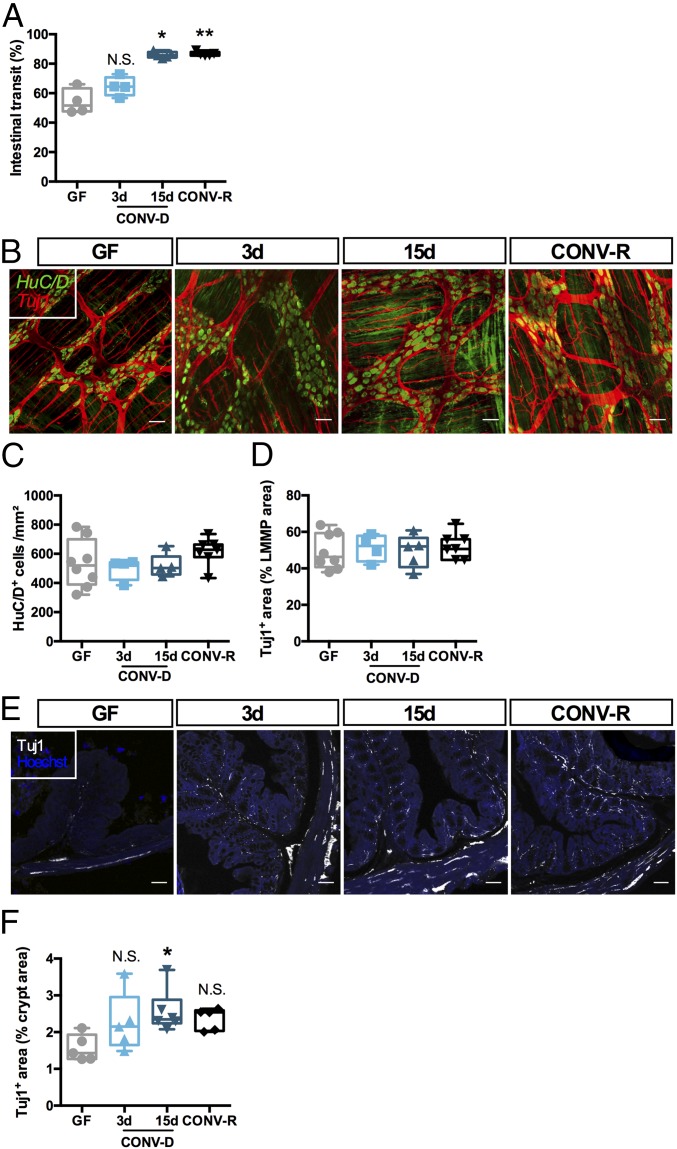
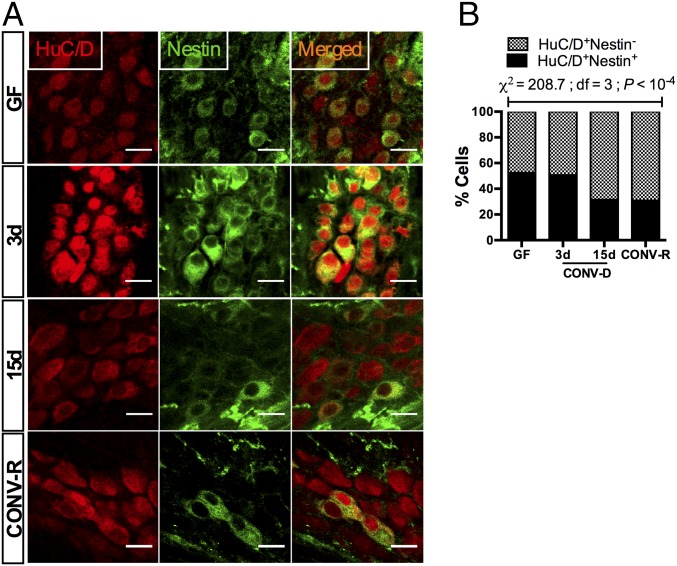
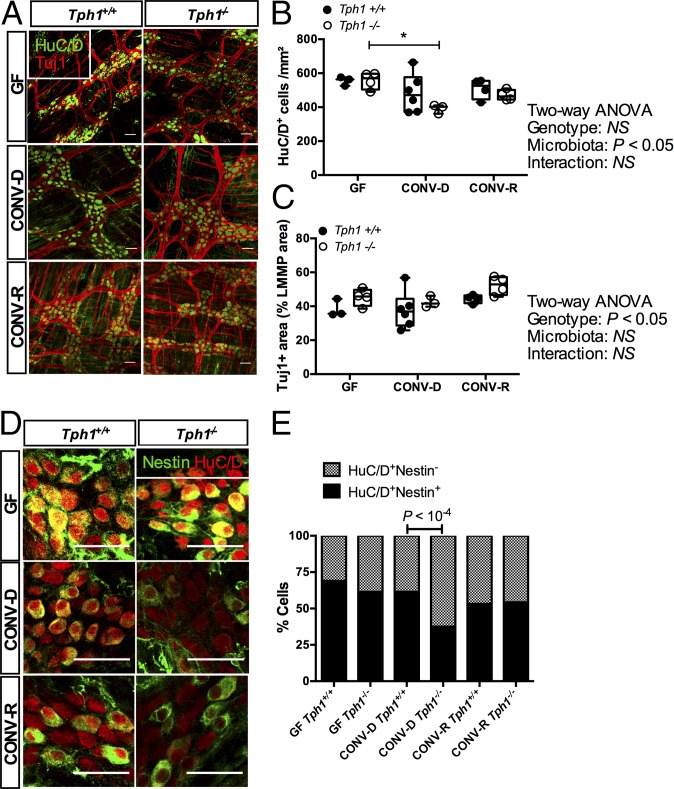
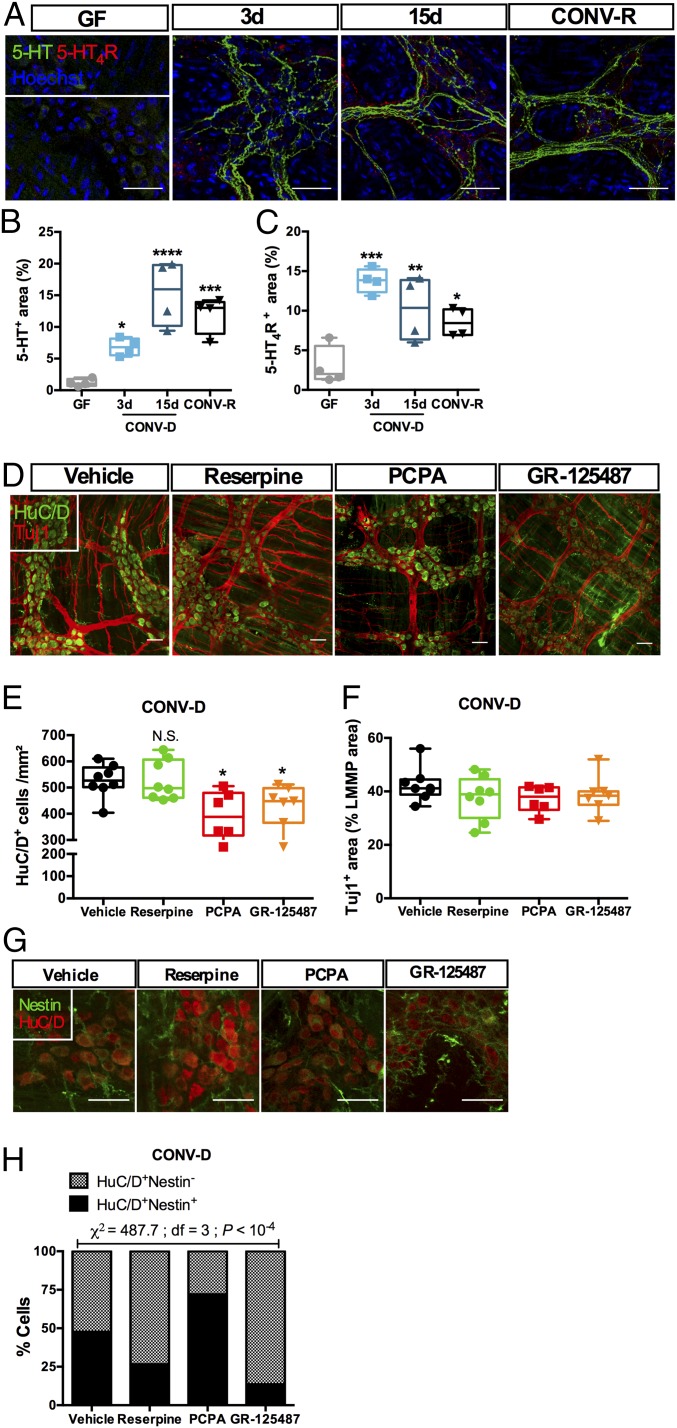
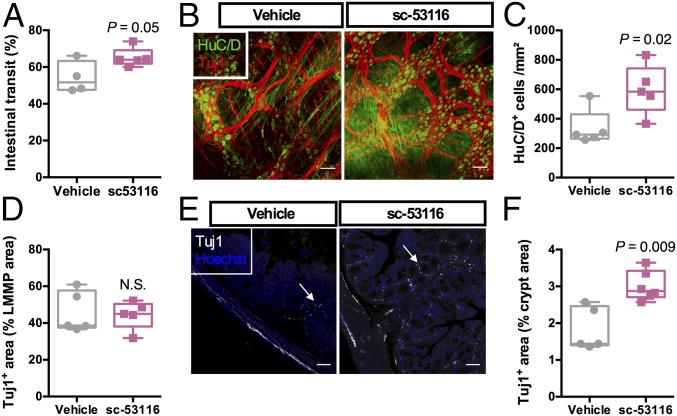
Significance: The gut microbiota affects several physiological processes, including gut motility. Here we observed that germ-free mice have an immature enteric nervous system (ENS) that is normalized upon colonization with a normal microbiota. We identified the mechanism of communication between the microbiota and enteric neurons as the initiation of serotonin release and subsequent activation of the 5-HT 4 receptor. This demonstrates a strong interaction between the microbiota and the ENS and indicates potential mechanisms linking microbial dysbiosis to gastrointestinal disorders. The ability to modulate the microbiota, e.g., by diet, will open new perspectives of research in neurogastroenterology.
Overview
The claims and statistics of this paper haven’t been checked yet.
Free: it reads the open-access text and checks the first 5 claims that cite a source we can check. Create a free account to check every claim.
Integrity signals
Registry
Cites
Statistics
Figures
Verification
Claims the paper makes
The claims and statistics of this paper haven’t been checked yet.
Free: it reads the open-access text and checks the first 5 claims that cite a source we can check. Create a free account to check every claim.
Claims other papers make about this one
Each is checked against this paper’s own text: does it say what the citing paper says it does?
The cited source says what the claim attributes to it.
In the citing paper
“Colonization of GF mice increased enteric neural 5-HT and expression of 5-HT 4 receptors while colonization of GF mice lacking tryptophan hydroxylase 1 (TPH1) failed to restore enteric neuron numbers to those observed in GF and conventional Tph1 transgenic mice and decreased Nestin+ neural precursors indicating reduced levels of neurogenesis (De Vadder et al., 2018).”
From The Microbiota-Gut-Brain Axis (2019) · cites this paper as De Vadder et al., 2018
The cited source says what the claim attributes to it.
In the citing paper
“The gut microbiota plays a key role in promoting serotonin secretion, inducing enteric nervous system maturation by releasing 5-HT and activating the 5-HT4 receptor.222”
From The role of gut dysbiosis in Parkinson’s disease: mechanistic insights and therapeutic options (2021) · cites this paper as [222]
Self-check
Percentages, sums and reported differences re-computed from the paper’s own numbers.
The self-check needs the paper’s full text.
Citations
Cites
Indigenous bacteria from the gut microbiota regulate host serotonin biosynthesis
Yano, J. M., Yu, K., Donaldson, G. P., Shastri, G. G., Ann, P., Ma, L., Nagler, C. R., Ismagilov, R. F., Mazmanian, S. K., & Hsiao, E. Y. (2015) · Cell · doi:10.1016/j.cell.2015.02.047 · Cited by 3,614 · cited 3×
“The gastrointestinal tract is the site where most 5-HT is synthesized, and recently two studies have shown that the gut microbiota plays a key role in promoting 5-HT secretion (18, 19).”
BackgroundDynamics and Stabilization of the Human Gut Microbiome during the First Year of Life
Bäckhed, F., Roswall, J., Peng, Y., Feng, Q., Jia, H., Kovatcheva-Datchary, P., Li, Y., Xia, Y., Xie, H., Zhong, H., et al. (2015) · Cell Host & Microbe · doi:10.1016/j.chom.2015.04.004 · Cited by 3,315
Self-citationNormal gut microbiota modulates brain development and behavior
Heijtz, R. D., Wang, S., Anuar, F., Qian, Y., Björkholm, B., Samuelsson, A., Hibberd, M. L., Forssberg, H., & Pettersson, S. (2011) · Proceedings of the National Academy of Sciences · doi:10.1073/pnas.1010529108 · Cited by 3,228 · cited 1×
“Recent work has shown that the gut microbiota is essential for normal brain development and function in mice (24), but much less is known about the implications of the gut microbiota in the development of the ENS.”
BackgroundMetabolomics analysis reveals large effects of gut microflora on mammalian blood metabolites
Wikoff, W. R., Anfora, A. T., Liu, J., Schultz, P. G., Lesley, S. A., Peters, E. C., & Siuzdak, G. (2009) · Proceedings of the National Academy of Sciences · doi:10.1073/pnas.0812874106 · Cited by 2,677 · cited 1×
“S4A) (18, 19, 31), likely by inducing de novo 5-HT synthesis by increasing the expression of the rate-limiting enzyme for 5-HT synthesis, Tph1, in the mucosa (SI Appendix, Fig.”
BackgroundThe enteric nervous system and neurogastroenterology
Furness, J. B. (2012) · Nature Reviews Gastroenterology & Hepatology · doi:10.1038/nrgastro.2012.32 · Cited by 1,619 · cited 1×
“The ENS has several essential physiologic functions, such as regulation of gastrointestinal motility, fluid secretion and absorption, and blood flow (1).”
BackgroundReigstad, C. S., Salmonson, C. E., III, J. F. R., Szurszewski, J. H., Linden, D. R., Sonnenburg, J. L., Farrugia, G., & Kashyap, P. C. (2015) · The FASEB Journal · doi:10.1096/fj.14-259598 · Cited by 1,335 · cited 3×
“The gastrointestinal tract is the site where most 5-HT is synthesized, and recently two studies have shown that the gut microbiota plays a key role in promoting 5-HT secretion (18, 19).”
BackgroundSerotonin signalling in the gut: functions, dysfunctions and therapeutic targets
Mawe, G. M., & Hoffman, J. M. (2013) · Nature Reviews Gastroenterology & Hepatology · doi:10.1038/nrgastro.2013.105 · Cited by 1,165 · cited 1×
“About 90% of the body’s serotonin (5-hydroxytryptamine, 5-HT) is produced by enterochromaffin (EC) cells, a type of enteroendocrine cells which are present in the epithelium of the gut (17).”
BackgroundLrp5 Controls Bone Formation by Inhibiting Serotonin Synthesis in the Duodenum
Yadav, V. K., Ryu, J.-H., Suda, N., Tanaka, K. F., Gingrich, J. A., Schütz, G., Glorieux, F. H., Chiang, C. Y., Zajac, J. D., Insogna, K. L., et al. (2008) · Cell · doi:10.1016/j.cell.2008.09.059 · Cited by 834 · cited 1×
“Tph1 mice were described previously (42).”
Self-citationIn vivo clonal analysis reveals self-renewing and multipotent adult neural stem cell characteristics
Bonaguidi, M. A., Wheeler, M. A., Shapiro, J. S., Stadel, R. P., Sun, G. J., Ming, G.-L., & Song, H. (2011) · Cell · doi:10.1016/j.cell.2011.05.024 · Cited by 831 · cited 1×
“Nestin is a cytoskeletal protein that is expressed by a variety of neural stem cells (10, 12, 29, 30).”
BackgroundCrosstalk between Muscularis Macrophages and Enteric Neurons Regulates Gastrointestinal Motility
Muller, P. A., Koscsó, B., Rajani, G. M., Stevanovic, K., Berres, M.-L., Hashimoto, D., Mortha, A., Leboeuf, M., Li, X.-M., Mucida, D., et al. (2014) · Cell · doi:10.1016/j.cell.2014.04.050 · Cited by 727
Cited by
Items 301–400 of 570
Császár-Nagy, N., Bob, P., & Bókkon, I. (2022) · Journal of Integrative Neuroscience · doi:10.31083/j.jin2105148 · Cited by 13
Casagrande, L., Pastre, M. J., Trevizan, A. R., Cuman, R. K. N., Bersani‐Amado, C. A., Garcia, J. L., Góis, M. B., Sant’Ana, D. D. M. G., & de Melo, G. D. A. N. (2022) · Life Sciences · doi:10.1016/j.lfs.2022.120985 · Cited by 12
Posttraumatic Stress Disorder and the Gut Microbiome
Loupy, K. M., & Lowry, C. A. (2020) · Oxford University Press eBooks · doi:10.1093/oxfordhb/9780190931544.013.10 · Cited by 13
Xenoestrogen effects on the gut microbiome
Rosenfeld, C. S. (2021) · Current Opinion in Endocrine and Metabolic Research · doi:10.1016/j.coemr.2021.05.006 · Cited by 11
SIGNALLING THROUGH THE MICROBIOTA-GUT-BRAIN TRIADE
AMZĂR, A. I. (2022) · FARMACIA · doi:10.31925/farmacia.2022.3.4 · Cited by 14
Tao, W., Yu, Y., Tan, D., Huang, X., Huang, J., Lin, C., & Yu, R. (2025) · Frontiers in Cellular and Infection Microbiology · doi:10.3389/fcimb.2025.1603442 · Cited by 9
Neuro-immune cell interactions in the regulation of intestinal immune homeostasis
Hou, X., & Artis, D. (2024) · Current Opinion in Gastroenterology · doi:10.1097/mog.0000000000001065 · Cited by 11
Lynch, C. M. K., Nagpal, J. K., Luczynski, P., Neufeld, K. M., Dinan, T. G., Clarke, G. A., & Cryan, J. F. (2024) · Elsevier eBooks · doi:10.1016/b978-0-323-99971-7.00012-6 · Cited by 10
Iruzubieta, P., Cantarero, I., Monzón, M., Lahoz, M., & Junquera, C. (2020) · Cellular and Molecular Neurobiology · doi:10.1007/s10571-020-01017-8 · Cited by 9
Zhu, C.-H., Gong, H., Luo, P., Li, D., Zhang, G., Shi, X., & Rong, W. (2020) · Frontiers in Physiology · doi:10.3389/fphys.2020.605982 · Cited by 9
Diet, Microbiota and the Gut-Brain Axis
García-Gutiérrez, E., & Sayavedra, L. (2021) · Elsevier eBooks · doi:10.1016/b978-0-12-819265-8.00089-9 · Cited by 13
Astrocyte Bioenergetics and Major Psychiatric Disorders
Maly, I. V., Morales, M. J., & Pletnikov, M. V. (2021) · Advances in neurobiology · doi:10.1007/978-3-030-77375-5_9 · Cited by 11
Dharshika, C., Gonzales, J. A., Chow, A. K., Morales‐Soto, W., & Gulbransen, B. D. (2023) · Neurogastroenterology & Motility · doi:10.1111/nmo.14553 · Cited by 9
Holobiont Development: Embryology and Ecological Succession
Gilbert, S. F. (2023) · Human Development · doi:10.1159/000534203 · Cited by 13
“The serotonin is able to induce the maturation of the immature neurons that have migrated there from the neural crest (De Vadder et al., 2018).”
BackgroundHong, M., Cheng, L., Liu, Y., Wu, Z., Zhang, P., & Zhang, X. (2022) · Frontiers in Microbiology · doi:10.3389/fmicb.2022.823902 · Cited by 9
Inter-kingdom communication and the sympoietic way of life
Gilbert, S. F. (2024) · Frontiers in Cell and Developmental Biology · doi:10.3389/fcell.2024.1427798 · Cited by 15
Microbiome: A Key Regulator of Body-Brain Interactions
O’Riordan, K. J., Aburto, M. R., Nagpal, J. K., Clarke, G. A., & Cryan, J. F. (2025) · Advances in experimental medicine and biology · doi:10.1007/978-3-031-89525-8_6 · Cited by 10
The Enteric Nervous System as a Mediator of Microbiota‐Gut‐Brain Interactions in Parkinson's Disease
Valdetaro, L., Ricciardi, M. C., Almeida, P. G., Stockler‐Pinto, M. B., & Gomes, A. L. T. (2026) · Journal of Neurochemistry · doi:10.1111/jnc.70339 · Cited by 9
“Abnormalities observed in the ENS of GF mice can be reversed by colonization with conventional microbiota (de Vadder et al. 2018; Heiss and Olofsson 2019).”
Veteriner Sahada Güncel Mikrobiyota Kavramı
Küllük, E., & Dalğın, D. (2021) · Etlik Veteriner Mikrobiyoloji Dergisi · doi:10.35864/evmd.674349 · Cited by 11
Multi-omic analysis of host-microbial interactions central to the gut-brain axis
Simpson, J. B., & Redinbo, M. R. (2022) · Molecular Omics · doi:10.1039/d2mo00205a · Cited by 9
Schill, E. M., Joyce, E. L., Floyd, A. N., Udayan, S., Rusconi, B. A., Gaddipati, S., Barrios, B. E., John, V., Kaye, M. E., Kulkarni, D. H., et al. (2023) · Frontiers in Immunology · doi:10.3389/fimmu.2023.1268909 · Cited by 10
Elhag, M. R. A., Abu-Median, A.-B., Boit, M. D., Haris, P. I., Madkour, M. I., Alkawamleh, D. H., & Faris, M. E. (2025) · Clinical Nutrition ESPEN · doi:10.1016/j.clnesp.2025.06.051 · Cited by 9
Neurons interact with the microbiome: an evolutionary-informed perspective
Giez, C., Klimovich, A. V., & Bosch, T. C. G. (2021) · e-Neuroforum · doi:10.1515/nf-2021-0003 · Cited by 11
Heterochronic Fecal Microbiota Transfer Reverses Hallmarks of the Aging Murine Gut, Eye and BrainPreprint
Parker, A., Romano, S., Ansorge, R., Aboelnoer, A., Gall, G. L., Savva, G. M., Telatin, A., Jones, E. J., Baker, D., Rudder, S. J., et al. (2021) · SSRN Electronic Journal · doi:10.2139/ssrn.3811833 · Cited by 8
Bellitto, V., Tomassoni, D., Martinelli, I., Nittari, G., & Tayebati, S. K. (2026) · Antioxidants · doi:10.3390/antiox15010083 · Cited by 10
Shen, H., Wang, S. Y., Zhao, Y., Zhou, J. L., Zhao, J., & Zhu, W. K. (2026) · Frontiers in Microbiology · doi:10.3389/fmicb.2026.1768891 · Cited by 13
Gilbert, S. F., & Hadfield, M. G. (2022) · Development · doi:10.1242/dev.199960 · Cited by 9
Thomas, S., Mercogliano, G., & Prendergast, G. C. (2022) · PLoS ONE · doi:10.1371/journal.pone.0276910 · Cited by 8
“The interaction between the dysbiotic microbiota and ENS may lead to gastrointestinal disorders [19].”
BackgroundWu, L., Zhang, S., Zhang, M., Wang, X., Li, S., Rausch‐Fan, X., & Chen, J. (2022) · Journal of Oral Rehabilitation · doi:10.1111/joor.13398 · Cited by 7
Exposure to nonanoic acid alters small intestinal neuroendocrine tumor phenotype
Almobarak, B., Amlani, V., Inge, L., Hofving, T., Muth, A., Nilsson, O., Johansson, M., Arvidsson, Y., & Elias, E. (2023) · BMC Cancer · doi:10.1186/s12885-023-10722-8 · Cited by 8
Serotonin receptor 4 agonism prevents high fat diet induced reduction in GLP-1 in mice
Vanslette, A. M., Toft, P. B., Lund, M. L., Möritz, T., & Arora, T. (2023) · European Journal of Pharmacology · doi:10.1016/j.ejphar.2023.176181 · Cited by 9
Deciphering the microbial map and its implications in the therapeutics of neurodegenerative disorder
Vashishth, S., Ambasta, R. K., & Kumar, P. (2024) · Ageing Research Reviews · doi:10.1016/j.arr.2024.102466 · Cited by 9
Białoń, N., Górka, H. N. O. Z. D., & Górka, M. (2024) · AIMS neuroscience · doi:10.3934/neuroscience.2024019 · Cited by 10
“In sterile mice, a lower number of neurons in the enteric nervous system and a deficit in sensory signaling were observed, whereas restoration of the gut microbiota in mice restored normal gut physiology [1,51,52].”
BackgroundThe role of gut-derived short-chain fatty acids in Parkinson's disease
Saadh, M. J., Mustafa, A. N., Mustafa, M. A., Renuka Jyothi, S., Dabis, H. K., Prasad, G. V. S., Mohammad, I. J., Adnan, A., & Idan, A. H. (2024) · Neurogenetics · doi:10.1007/s10048-024-00779-3 · Cited by 9
“Activation of 5 ‐ HT4 receptors led to the maturation of the ENS and influenced its functioning in adulthood [92].”
Tryptophan Metabolism and the Microbiome-Gut-Brain Axis
Clarke, G. A., Villalobos-Manríquez, F., & Marin, D. C. (2021) · Oxford University Press eBooks · doi:10.1093/oxfordhb/9780190931544.013.13 · Cited by 14
The role of serotonin and its pathways in gastrointestinal disorders
Bellini, M., Fornai, M., Usai–Satta, P., Bronzini, F., Bassotti, G., Blandizzi, C., & Colucci, R. (2021) · Elsevier eBooks · doi:10.1016/b978-0-12-821927-0.00009-7 · Cited by 8
Geuna, S., Herrera‐Rincon, C., & Murciano-Brea, J. (2022) · Neural Regeneration Research · doi:10.4103/1673-5374.335149 · Cited by 7
Aminian-Dehkordi, J., Valiei, A., & Mofrad, M. R. K. (2022) · Frontiers in Cardiovascular Medicine · doi:10.3389/fcvm.2022.987104 · Cited by 6
“This diverse microbial habitat is demonstrated to strongly contribute to food metabolism, particularly the digestion of compounds that are hardly degradable by human cells, such as vitamins and amino acids (2–4), as well as non-digestible molecules such as complex carbohydrates (5, 6).”
BackgroundHuang, F., Marungruang, N., Martinsson, I., Camprubí-Ferrer, L., Nguyen, T. D., Gondo, T. F., Karlsson, E. N., Deierborg, T., Öste, R., & Heyman‐Lindén, L. (2023) · Frontiers in Nutrition · doi:10.3389/fnut.2023.1257472 · Cited by 9
Intestinal Microbiota Shapes Gut Physiology and Regulates Enteric Neurons and GliaPreprint
Vicentini, F., Keenan, C. M., Wallace, L. E., Woods, C., Cavin, J., Flockton, A. R., Macklin, W. B., Belkind‐Gerson, J., Hirota, S. A., & Sharkey, K. A. (2020) · Research Square · doi:10.21203/rs.3.rs-117423/v1 · Cited by 8
Liu, W., Yan, H., Jia, W., Huang, J., Fu, Z., Xu, W., Yu, H., Yang, W., Pan, W., Zheng, B., et al. (2024) · Frontiers in Microbiology · doi:10.3389/fmicb.2024.1366181 · Cited by 9
Chen, Y., Zeng, X., Gong, X., Chen, Y., Zhang, X., & Luo, S. (2025) · International Journal of Biological Macromolecules · doi:10.1016/j.ijbiomac.2025.149519 · Cited by 11
The Shaggy Dog Story of Enteric Signaling: Serotonin, a Molecular Megillah
Gershon, M. D. (2022) · Advances in experimental medicine and biology · doi:10.1007/978-3-031-05843-1_28 · Cited by 8
Can essential fatty acids (EFAs) prevent and ameliorate post-COVID-19 long haul manifestations?
Das, U. N. (2024) · Lipids in Health and Disease · doi:10.1186/s12944-024-02090-4 · Cited by 6
The role of the enteric nervous system in the pathogenesis of Clostridioides difficile infection
Costa, D. V. D. S., Thomasi, B. B. D. M., Brito, G. A. D. C., Gulbransen, B. D., & Warren, C. A. (2025) · Nature Reviews Gastroenterology & Hepatology · doi:10.1038/s41575-025-01071-x · Cited by 10
“Besides being crucially affected by the intestinal microbiota 75–77 , enteric neurons and glial cells interact with immune 80,108–110, 129, 181– 183 The ENS can respond directly to bacterial products by expressing TLR 191–193 and C. difficile toxin receptors 16 , being an important component of CDI…”
Neuroimmune axis in gastrointestinal cancers: From mechanisms to therapeutic breakthrough
Zhang, Y., Chen, J., Zhou, Y., Jiang, Y., Hu, J., Liu, X., & Zhou, J. (2025) · Cell Reports · doi:10.1016/j.celrep.2025.116059 · Cited by 9
Zubareva, O. E., & Melik-Kasumov, T. B. (2021) · Journal of Evolutionary Biochemistry and Physiology · doi:10.1134/s0022093021040013 · Cited by 7
Indoor Air Pollution and Decision-Making Behavior: An Interdisciplinary Review
Torres, G., Mourad, M., & Leheste, J. R. (2022) · Cureus · doi:10.7759/cureus.26247 · Cited by 9
The Potential Role of Microorganisms on Enteric Nervous System Development and Disease
Chanpong, A., Borrelli, O., & Thapar, N. (2023) · Biomolecules · doi:10.3390/biom13030447 · Cited by 8
Innervation and nerve-immune cell contacts in mouse Peyer's patches.
Al-Shalan, H. A. M., Hu, D., Nicholls, P. K., Greene, W. K., & Ma, B. (2020) · Histology and histopathology · doi:10.14670/hh-18-158 · Cited by 11
Traumatic spinal cord injury and the contributions of the post-injury microbiome
Hamilton, A. M., & Sampson, T. R. (2022) · International review of neurobiology · doi:10.1016/bs.irn.2022.06.003 · Cited by 8
The possible effects of chili peppers on ADHD in relation to the gut microbiota
Li, Y., Feng, J. B., Ding, G., Deng, L., He, Y., Zhang, Q., Wang, J., & Chen, X. (2025) · Frontiers in Nutrition · doi:10.3389/fnut.2025.1551650 · Cited by 6
Wan, M., Liu, W., Liu, Y., Jiang, X., Jiang, S., & Duan, J. (2025) · Pathology - Research and Practice · doi:10.1016/j.prp.2025.156236 · Cited by 7
The Gut Microbiota in Perimenopausal Anxiety: A Novel Therapeutic Pathway Through Diet
Marano, G., d’Abate, C., Ianes, I., Sorrenti, G., Traversi, G., Esposito, R., Pavese, F., D’Angelo, T., Fuso, P., Franceschini, G., et al. (2026) · Nutrients · doi:10.3390/nu18050743 · Cited by 7
Gut microbiota metabolites in inflammatory bowel disease: advances in mechanistic insights
Liang, Y., Zhou, Y., Luo, P., & Lin, J. (2026) · Frontiers in Immunology · doi:10.3389/fimmu.2026.1827426 · Cited by 11
Gut flora reflects potential risk factors for cognitive dysfunction in patients with epilepsy
Hong, B. (2024) · Journal of Health Population and Nutrition · doi:10.1186/s41043-024-00639-8 · Cited by 8
da Fonseca, S. T. O., Alves, C. C., Dias, C. T., & Mendes‐da‐Silva, C. (2024) · Nutrition · doi:10.1016/j.nut.2024.112680 · Cited by 7
Intestinal-region-specific functions of AHR in intrinsic enteric neurons during infections
Sun, Z., Wang, Y., Liu, S., Li, H., He, D., & Xu, H. (2025) · Cell Reports · doi:10.1016/j.celrep.2025.115524 · Cited by 5
Dai, Y., Zhang, X., Chen, X., Sun, C., Lan, R., Fan, H., Liu, Z., Liu, X., Yue, T., & Zhao, J. L. (2025) · Environmental Pollution · doi:10.1016/j.envpol.2025.126578 · Cited by 9
Metabolomics and Microbiomics: New Potential Strategies in Chronic Pain Syndrome
Piras, C., Pintus, B. M., Noto, A., Evangelista, M., Fanos, V., Musu, M., Mussap, M., Atzori, L., Sardo, S., & Finco, G. (2022) · Journal of Pain Research · doi:10.2147/jpr.s354516 · Cited by 6
Radocchia, G., Marazzato, M., Harbi, K. B., Capuzzo, E., Pantanella, F., GIORGIO, R. D., Guarino, M., Costanzini, A., Zenzeri, L., Parisi, P., et al. (2024) · BMC Microbiology · doi:10.1186/s12866-024-03200-z · Cited by 6
“The microbiota is able to interact with the 5-HT pathway [24, 32, 33] by stimulating its synthesis through shorty chain fatty acids (SCAFs) or bile acids [24, 34].”
BackgroundLinking neurons to immunity: Lessons from Hydra
Obata, Y., & Pachnis, V. (2020) · Proceedings of the National Academy of Sciences · doi:10.1073/pnas.2011637117 · Cited by 5
Aoki, A., Aoki, R., Yatagai, M., & Kawasumi, T. (2021) · Bioscience Biotechnology and Biochemistry · doi:10.1093/bbb/zbab112 · Cited by 5
Enteric Nervous System in Neonatal Necrotizing Enterocolitis
Chandramowlishwaran, P., Raja, S. M., Maheshwari, A., & Srinivasan, S. (2021) · Current Pediatric Reviews · doi:10.2174/1573396317666210908162745 · Cited by 5
Vilca-Melendez, S., Uthaug, M. V., & Griffin, J. L. (2021) · Frontiers in Psychiatry · doi:10.3389/fpsyt.2021.742856 · Cited by 5
“Clearly the molecule is engaging differently with the digestive tract when the speed of the oral administration is elongated, and this hints to a potential meaningful interaction between psychedelic substances and the ENS.”
BackgroundInfluentialRao, S. C., & Patole, S. (2018) · Microbial Biotechnology · doi:10.1111/1751-7915.13358 · Cited by 6
Intestinal Microbiota Shapes Gut Physiology and Regulates Enteric Neurons and GliaPreprint
Vicentini, F., Keenan, C. M., Wallace, L. E., Woods, C., Cavin, J., Flockton, A. R., Macklin, W. B., Belkind‐Gerson, J., Hirota, S. A., & Sharkey, K. A. (2021) · Research Square · doi:10.21203/rs.3.rs-117423/v2 · Cited by 6
Microbial dysbiosis alters serotonin signaling in a postinflammatory murine model of visceral pain
Roth, T. D., Russo-Savage, L., Habibyan, Y. B., Keenan, C. M., Wallace, L. E., Nasser, Y., Mawe, G. M., Lavoie, B. A., & Sharkey, K. A. (2025) · American Journal of Physiology-Gastrointestinal and Liver Physiology · doi:10.1152/ajpgi.00240.2025 · Cited by 4
Enteric nervous system in microbiota-associated gut inflammation
Yang, C., Lan, X., Zhong, H., Geng, J., & Wang, W. (2026) · Frontiers in Immunology · doi:10.3389/fimmu.2026.1735727 · Cited by 7
Gut microbiota orchestrates bone homeostasis: a multi-pathway network from intestine to skeleton
Gong, Y., Ma, X., Wang, L., Zhang, P., Liu, T., Li, Y. D., & Dong, W. (2026) · Frontiers in Endocrinology · doi:10.3389/fendo.2026.1767726 · Cited by 5
“The GM communicates extensively with the brain through the vagus nerve (VN) and the autonomic nervous system (ANS) (268, 269).”
InfluentialSbai, O., Chaure, A., Perrone, L., & Poucheret, P. (2026) · Nutrients · doi:10.3390/nu18111697 · Cited by 7
Zhou, K., Zhou, Y., Yang, D. J., Chen, T., Liu, X., Li, S., & Wang, Z. (2021) · Neurogastroenterology & Motility · doi:10.1111/nmo.14140 · Cited by 5
Interplay of alpha-synuclein pathology and gut microbiome in Parkinson’s disease
Srivastava, A., Kataria, A., Yadav, D. K., Han, I., & Choi, E. H. (2022) · Elsevier eBooks · doi:10.1016/b978-0-323-91313-3.00003-9 · Cited by 4
Microbial influences on severity and sex bias of systemic autoimmunity
Lee, J. Y. H., Reiman, D. J., Singh, S. P., Chang, A., Morel, L. M., & Chervonsky, A. V. (2024) · Immunological Reviews · doi:10.1111/imr.13341 · Cited by 5
Aatsinki, A., Kråkström, M., Salonen, K., Isokääntä, H., Paul, A., Bastiaanssen, T. F. S., Lahti, L., Lukkarinen, M. M., Munukka, E., Paunio, T., et al. (2026) · Gut Microbiology · doi:10.1016/j.gutmic.2026.100013 · Cited by 5
Impact of Human Microbiome on Health
Das, S., Khanna, C., Singh, S., Nandi, S., & Verma, R. (2020) · Springer eBooks · doi:10.1007/978-981-15-4099-8_20 · Cited by 7
“…that nearly 90% of serotonin (5-HT), a neurotransmitter, is produced in the intestine under the influence of gut microbiota, and the activation of its receptors in the enteric nervous system is responsible for the neuroprotection and adult neurogenesis in the mouse model (De Vadder et al. 2018).”
BackgroundMiddelhoff, M. A., Valenti, G., Tomassoni, L., Ochiai, Y., Belin, B. R., Takahashi, R., Malagola, E., Nienhüser, H., Finlayson, M. O., Hayakawa, Y., et al. (2022) · American Journal of Physiology-Gastrointestinal and Liver Physiology · doi:10.1152/ajpgi.00244.2021 · Cited by 6
Gut Microbiota and Aging: Targets and Anti-aging Interventions
Singh, B., Catanzaro, R., Mal, G., Gautam, S., Mohania, He, F., Yadav, H., Bissi, L., & Marotta, F. (2019) · Elsevier eBooks · doi:10.1016/b978-0-12-801238-3.62181-5 · Cited by 4
The Human Microbiome—A Physiologic Perspective
Yang, X. J., Louwies, T., Mars, R. A. T., & Kashyap, P. (2024) · Comprehensive physiology · doi:10.1002/cphy.c230013 · Cited by 15
The gut microbiome promotes locomotion of Drosophila larvae via octopamine signaling
Hu, J., Bi, R., Luo, Y., Wu, K., Jin, S., Liu, Z., Jia, Y., & Mao, C. (2024) · Insect Science · doi:10.1111/1744-7917.13370 · Cited by 3
Influence of the Microbiota Through the Gut-Brain Axis in Neurological Diseases
Guarnotta, V., Mandarino, F. V., Fasulo, E., Maida, M. F., Laterza, L., Sferrazza, S., Raimondo, D., & Sinagra, E. (2024) · Integrated science · doi:10.1007/978-3-031-73061-0_20 · Cited by 3
Cui, Y., Okyere, S. K., Guan, H., Hua, Z., Deng, Y., Deng, H., & Deng, J. (2025) · Toxins · doi:10.3390/toxins17030144 · Cited by 5
Wang, P., Zhang, S., Li, S., Guo, W., & Wu, H. (2025) · Journal of Functional Foods · doi:10.1016/j.jff.2025.106796 · Cited by 4
Unleashing multi-omic approaches to address environmental microplastic hazards in marine polychaetes
Missawi, O., Vaccari, F., Zhang, L., Miras‐Moreno, B., Boughattas, I., Bandini, F., Lucini, L., Puglisi, E., & Bannı, M. (2025) · Marine Pollution Bulletin · doi:10.1016/j.marpolbul.2025.118345 · Cited by 4
Microbiota regulation of gut-brain neuroimmune crosstalk in early life
Ravisankar, P., Wong, D. S. H., & Zeng, M. Y. (2025) · International Immunology · doi:10.1093/intimm/dxaf076 · Cited by 4
Wang, Y., Xiao, X., Zheng, B., Bai, D., Zhang, Y., Zhen, W., Zhang, B., & Ma, Y. (2026) · Animals · doi:10.3390/ani16060954 · Cited by 6
“This ultimately enables precise and rapid regulation of feeding behavior and energy homeostasis in poultry [69].”
Zhang, Z., Yang, R., Gong, L., & Wang, J. (2026) · Journal of Functional Foods · doi:10.1016/j.jff.2026.107287 · Cited by 4
Mosaddeghi-Heris, R., Forghani, N., Dehnavi, N. S., Saberivand, M., tahavvori, A., Azin, S., Taheri, N., & Martelletti, P. (2026) · Biology · doi:10.3390/biology15100756 · Cited by 5
Current Landscape and Overview of Gastrointestinal Health in Indonesian Children: A Scoping Review
Kadim, M., Karyana, I. P. G., Darma, A., Yosia, M., Basrowi, R. W., Dilantika, C., Sundjaya, T., & Wasito, E. (2024) · The Open Public Health Journal · doi:10.2174/0118749445339403240916105656 · Cited by 9
Wpływ mikrobiomu jelitowego na mózg i psychikę
Żakowicz, J., Bramorska, A., Zarzycka, W., Kovbasiuk, A., Kuć, K., & Brzezicka, A. (2020) · Kosmos · doi:10.36921/kos.2020_2634 · Cited by 6
Duodenal Microbiome and Its Clinical Implications in Functional Dyspepsia
Kim, S. H. (2022) · Korean Journal of Gastroenterology · doi:10.4166/kjg.2022.027 · Cited by 3
Wu, Z., Wang, Q., Yang, F., Wang, J., Zhao, Y., Perrino, B. A., & Chen, J. (2023) · Biomolecules · doi:10.3390/biom13121688 · Cited by 4
Gilbert, S. F. (2024) · Developmental Biology · doi:10.1016/j.ydbio.2024.07.003 · Cited by 9
The Function of Tryptophan Metabolism in the Gut
Tang, X., Wan, L., Gao, J., Jiang, Q., Hu, S., Xiao, H., Wang, J., Qi, M., Wang, L., Huang, L., et al. (2024) · Springer eBooks · doi:10.1007/978-981-97-4719-1_2 · Cited by 3
Miyata, K., Yamamoto, T., Kato, R., Hayashi, S., & Kadowaki, M. (2024) · American Journal of Physiology-Gastrointestinal and Liver Physiology · doi:10.1152/ajpgi.00219.2023 · Cited by 3
Voss, U., Malipatlolla, D. K., Patel, P., Devarakonda, S., Sjöberg, F., Grandér, R., Rascón, A., NYMAN, M. E., Steineck, G., & Bull, C. (2022) · Gastroenterology Insights · doi:10.3390/gastroent13010010 · Cited by 3
Microbiota modulate ENS maturation
Dickson, I. (2018) · Nature Reviews Gastroenterology & Hepatology · doi:10.1038/s41575-018-0040-7 · Cited by 3
Gershon, M. D. (2019) · Acta Physiologica · doi:10.1111/apha.13331 · Cited by 2
5-HT4R Modulators: A Patent Landscape
Dallemagne, P., & Rochais, C. (2021) · Pharmaceutical Patent Analyst · doi:10.4155/ppa-2021-0017 · Cited by 3
Detecting Adult Enteric Neurogenesis in the Context of Adult ENS Homeostasis
Kulkarni, S., & Pasricha, P. J. (2022) · Cellular and Molecular Gastroenterology and Hepatology · doi:10.1016/j.jcmgh.2022.07.003 · Cited by 3
Metadata
- Authors
- De Vadder, F., Grasset, E., Mannerås Holm, L., Karsenty, G., Macpherson, A. J., Olofsson, L. E., & Bäckhed, F.
- Affiliations
- Wallenberg Laboratory, Department of Molecular and Clinical Medicine, University of Gothenburg, 41345 Gothenburg, Sweden;
- University of Gothenburg (SE)
- Columbia University Irving Medical Center (US)
- University of Bern (CH)
- University of Copenhagen (DK)
- Corresponding author
- Bäckhed, Fredrik
- Venue
- Proceedings of the National Academy of Sciences
- Publisher
- National Academy of Sciences
- Published
- 2018-06-04
- Volume
- 115
- Issue
- 25
- Pages
- 6458-6463
- ISSN
- 0027-8424 (ISSN-L)
- 1091-6490
- PMC
- PMC6016808
- OpenAlex
- W2806531878
- Semantic Scholar
- 9faca9e0b8d99fcbda6c40931a1a92d1d6cca7a1
- Cited by
- 566
- References
- 42
- Citations by year
- 2026: 57 · 2025: 60 · 2024: 107 · 2023: 69 · 2022: 90 · 2021: 76 · 2020: 60 · 2019: 37 · 2018: 10
- FWCI
- 43.58
- Type
- journal article
- Language
- en
- Open access
- hybrid
- doi.org
- Licence
- Locations
- Proceedings of the National Academy of Sciences (publishedVersion, cc-by-nc-nd)
- Europe PMC (PubMed Central) (publishedVersion, cc-by-nc-nd)
- PubMed Central (publishedVersion, cc-by-nc-nd)
- Research at the University of Copenhagen (University of Copenhagen) (publishedVersion, other-oa)
- PubMed (publishedVersion)
- HAL (submittedVersion)
- Bern Open Repository and Information System (University of Bern) (submittedVersion, cc-by-nc-nd)
- Columbia Academic Commons (Columbia University)
- Funders
- Torsten Söderbergs Stiftelse
- Wenner-Gren Stiftelserna
- Göran Gustafssons Stiftelser
- European Commission (609409)
- Knut och Alice Wallenbergs Stiftelse
- Ligue Contre le Cancer
- Novo Nordisk
- Vetenskapsrådet
- Göteborgs Universitet
- Novo Nordisk Fonden
- National Institutes of Health (AG032959)
- National Institute on Aging (P01AG032959)
- FP7 Ideas: European Research Council (615362)
- Topics
- Health Sciences › Medicine › Gastroenterology › Gastrointestinal motility and disorders
- Life Sciences › Biochemistry, Genetics and Molecular Biology › Molecular Biology › Gut microbiota and health
- Health Sciences › Medicine › Surgery › Congenital gastrointestinal and neural anomalies
- Keywords
- gut microbiota, enteric nervous system, enteric neurons, serotonin, 5-HT4 receptor, germ-free mice, microbiota colonization, neurogastroenterology, dysbiosis, gastrointestinal diseases, intestinal motility
- MeSH terms
- Gastrointestinal Microbiome, Animals, Female, Gastrointestinal Motility, Intestine, Small, Mice, Inbred C57BL, Neurons, Serotonin, Enteric Nervous System, Receptors, Serotonin, 5-HT4, Mice, Neurogenesis, Microbiota
About these checks
Registry, retraction, Cites and statistics results are computed, not judged, with one exception: a printed reference that no index lists is read once by a model before it counts as a citation error. Claims are extracted by a model and kept only when their quote appears verbatim in the text; each cited source is then checked, with a model’s help, for whether it says what the claim relies on. Those verdicts can be wrong — read the claim’s quote and the cited source before relying on one.
Statistics and arithmetic are recomputed, not judged.
Confidence bands are shown only for fields calibrated on our annotated test set. None is calibrated yet, so no band is shown.
What counts as a claim ›How we measure confidence ›How we check this ›
Are you an author, or do you see a problem with this page? Request a review
Data sources
Bibliographic data: Semantic Scholar, OpenAlex, Crossref.
Contains information from the Semantic Scholar Academic Graph Datasets, made available under the ODC Attribution License (ODC-BY 1.0).
Semantic Scholar’s data is described in: Kinney, R., et al. (2023). The Semantic Scholar Open Data Platform. arXiv:2301.10140.
