

Gut microbiota regulates maturation of the adult enteric nervous system via enteric serotonin networks
Open accessThe DOI matches its Crossref record; 42 of the 42 references it cites were found in a registry or an index.
Abstract
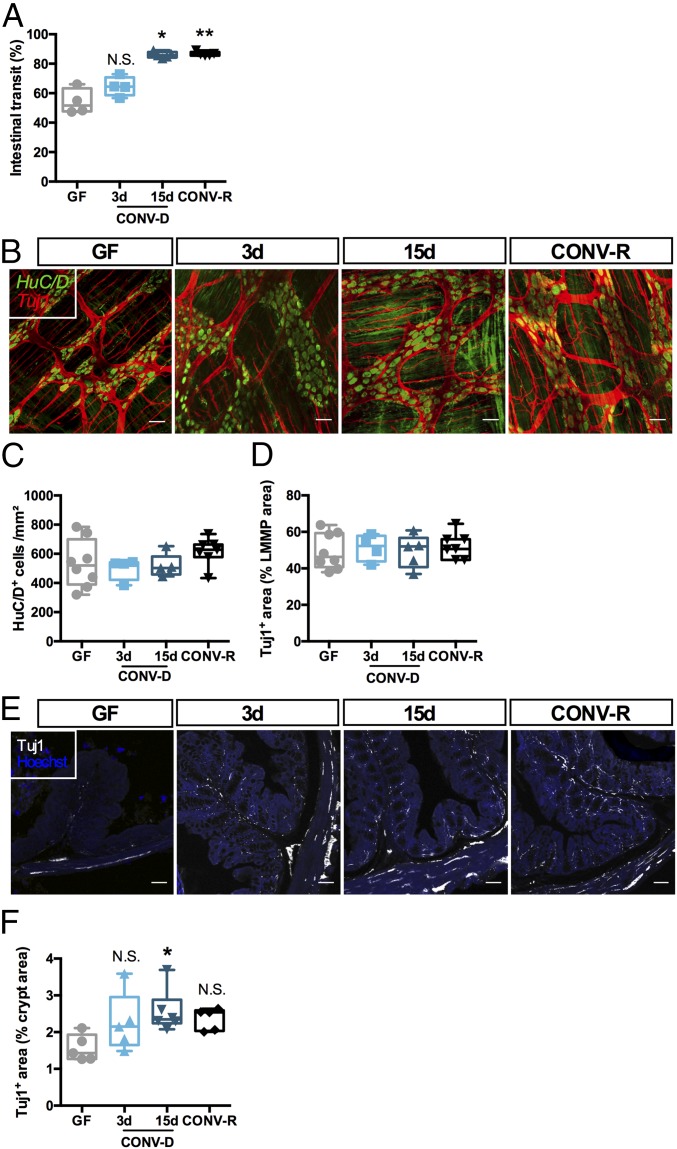
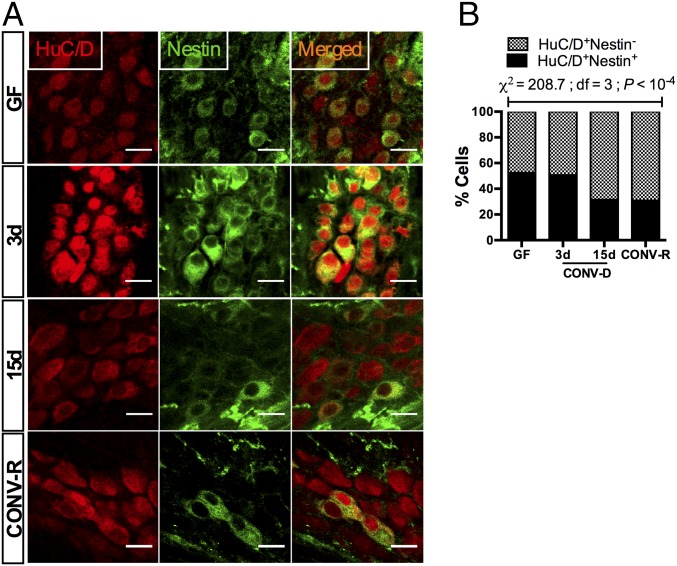
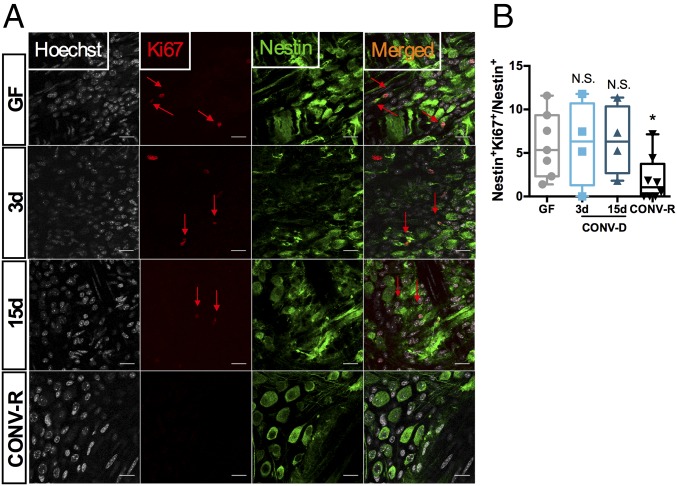
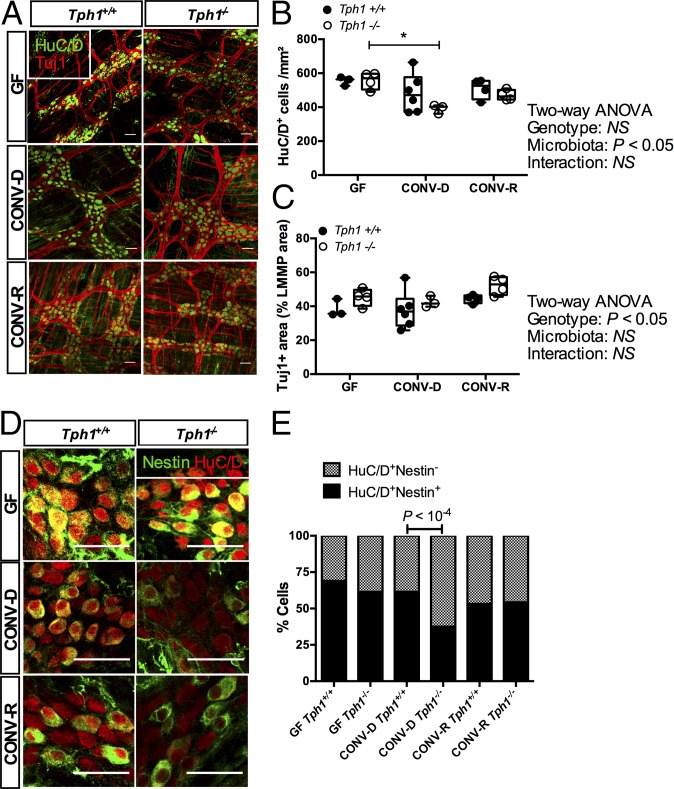
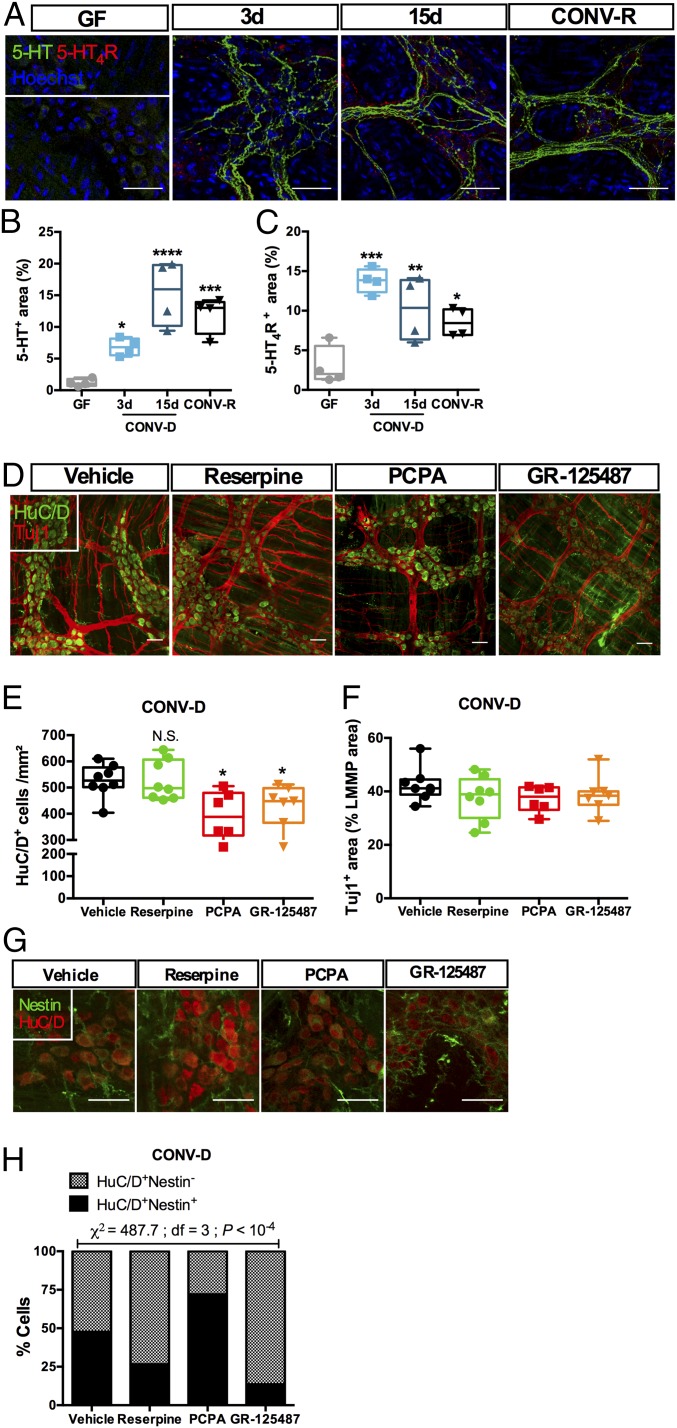
Significance: The gut microbiota affects several physiological processes, including gut motility. Here we observed that germ-free mice have an immature enteric nervous system (ENS) that is normalized upon colonization with a normal microbiota. We identified the mechanism of communication between the microbiota and enteric neurons as the initiation of serotonin release and subsequent activation of the 5-HT 4 receptor. This demonstrates a strong interaction between the microbiota and the ENS and indicates potential mechanisms linking microbial dysbiosis to gastrointestinal disorders. The ability to modulate the microbiota, e.g., by diet, will open new perspectives of research in neurogastroenterology.
Overview
The claims and statistics of this paper haven’t been checked yet.
Free: it reads the open-access text and checks the first 5 claims that cite a source we can check. Create a free account to check every claim.
Integrity signals
Registry
Cites
Statistics
Figures
Verification
Claims the paper makes
The claims and statistics of this paper haven’t been checked yet.
Free: it reads the open-access text and checks the first 5 claims that cite a source we can check. Create a free account to check every claim.
Claims other papers make about this one
Each is checked against this paper’s own text: does it say what the citing paper says it does?
The cited source says what the claim attributes to it.
In the citing paper
“Colonization of GF mice increased enteric neural 5-HT and expression of 5-HT 4 receptors while colonization of GF mice lacking tryptophan hydroxylase 1 (TPH1) failed to restore enteric neuron numbers to those observed in GF and conventional Tph1 transgenic mice and decreased Nestin+ neural precursors indicating reduced levels of neurogenesis (De Vadder et al., 2018).”
From The Microbiota-Gut-Brain Axis (2019) · cites this paper as De Vadder et al., 2018
The cited source says what the claim attributes to it.
In the citing paper
“The gut microbiota plays a key role in promoting serotonin secretion, inducing enteric nervous system maturation by releasing 5-HT and activating the 5-HT4 receptor.222”
From The role of gut dysbiosis in Parkinson’s disease: mechanistic insights and therapeutic options (2021) · cites this paper as [222]
Self-check
Percentages, sums and reported differences re-computed from the paper’s own numbers.
The self-check needs the paper’s full text.
Citations
Cites
Indigenous bacteria from the gut microbiota regulate host serotonin biosynthesis
Yano, J. M., Yu, K., Donaldson, G. P., Shastri, G. G., Ann, P., Ma, L., Nagler, C. R., Ismagilov, R. F., Mazmanian, S. K., & Hsiao, E. Y. (2015) · Cell · doi:10.1016/j.cell.2015.02.047 · Cited by 3,614 · cited 3×
“The gastrointestinal tract is the site where most 5-HT is synthesized, and recently two studies have shown that the gut microbiota plays a key role in promoting 5-HT secretion (18, 19).”
BackgroundDynamics and Stabilization of the Human Gut Microbiome during the First Year of Life
Bäckhed, F., Roswall, J., Peng, Y., Feng, Q., Jia, H., Kovatcheva-Datchary, P., Li, Y., Xia, Y., Xie, H., Zhong, H., et al. (2015) · Cell Host & Microbe · doi:10.1016/j.chom.2015.04.004 · Cited by 3,315
Self-citationNormal gut microbiota modulates brain development and behavior
Heijtz, R. D., Wang, S., Anuar, F., Qian, Y., Björkholm, B., Samuelsson, A., Hibberd, M. L., Forssberg, H., & Pettersson, S. (2011) · Proceedings of the National Academy of Sciences · doi:10.1073/pnas.1010529108 · Cited by 3,228 · cited 1×
“Recent work has shown that the gut microbiota is essential for normal brain development and function in mice (24), but much less is known about the implications of the gut microbiota in the development of the ENS.”
BackgroundMetabolomics analysis reveals large effects of gut microflora on mammalian blood metabolites
Wikoff, W. R., Anfora, A. T., Liu, J., Schultz, P. G., Lesley, S. A., Peters, E. C., & Siuzdak, G. (2009) · Proceedings of the National Academy of Sciences · doi:10.1073/pnas.0812874106 · Cited by 2,677 · cited 1×
“S4A) (18, 19, 31), likely by inducing de novo 5-HT synthesis by increasing the expression of the rate-limiting enzyme for 5-HT synthesis, Tph1, in the mucosa (SI Appendix, Fig.”
BackgroundThe enteric nervous system and neurogastroenterology
Furness, J. B. (2012) · Nature Reviews Gastroenterology & Hepatology · doi:10.1038/nrgastro.2012.32 · Cited by 1,619 · cited 1×
“The ENS has several essential physiologic functions, such as regulation of gastrointestinal motility, fluid secretion and absorption, and blood flow (1).”
BackgroundReigstad, C. S., Salmonson, C. E., III, J. F. R., Szurszewski, J. H., Linden, D. R., Sonnenburg, J. L., Farrugia, G., & Kashyap, P. C. (2015) · The FASEB Journal · doi:10.1096/fj.14-259598 · Cited by 1,335 · cited 3×
“The gastrointestinal tract is the site where most 5-HT is synthesized, and recently two studies have shown that the gut microbiota plays a key role in promoting 5-HT secretion (18, 19).”
BackgroundSerotonin signalling in the gut: functions, dysfunctions and therapeutic targets
Mawe, G. M., & Hoffman, J. M. (2013) · Nature Reviews Gastroenterology & Hepatology · doi:10.1038/nrgastro.2013.105 · Cited by 1,165 · cited 1×
“About 90% of the body’s serotonin (5-hydroxytryptamine, 5-HT) is produced by enterochromaffin (EC) cells, a type of enteroendocrine cells which are present in the epithelium of the gut (17).”
BackgroundLrp5 Controls Bone Formation by Inhibiting Serotonin Synthesis in the Duodenum
Yadav, V. K., Ryu, J.-H., Suda, N., Tanaka, K. F., Gingrich, J. A., Schütz, G., Glorieux, F. H., Chiang, C. Y., Zajac, J. D., Insogna, K. L., et al. (2008) · Cell · doi:10.1016/j.cell.2008.09.059 · Cited by 834 · cited 1×
“Tph1 mice were described previously (42).”
Self-citationIn vivo clonal analysis reveals self-renewing and multipotent adult neural stem cell characteristics
Bonaguidi, M. A., Wheeler, M. A., Shapiro, J. S., Stadel, R. P., Sun, G. J., Ming, G.-L., & Song, H. (2011) · Cell · doi:10.1016/j.cell.2011.05.024 · Cited by 831 · cited 1×
“Nestin is a cytoskeletal protein that is expressed by a variety of neural stem cells (10, 12, 29, 30).”
BackgroundCrosstalk between Muscularis Macrophages and Enteric Neurons Regulates Gastrointestinal Motility
Muller, P. A., Koscsó, B., Rajani, G. M., Stevanovic, K., Berres, M.-L., Hashimoto, D., Mortha, A., Leboeuf, M., Li, X.-M., Mucida, D., et al. (2014) · Cell · doi:10.1016/j.cell.2014.04.050 · Cited by 727
Cited by
Items 401–500 of 570
Gut Microbiome and Its Role in the Pathophysiology of Irritable Bowel Syndrome
Palma, G. D., & Berčík, P. (2021) · Acta gastroenteorológica latinoamericana/Acta gastroenterológica latinoamericana · doi:10.52787/dxfc9250 · Cited by 4
Zhang, S., Chen, W., Ma, C., Luo, Y., Dong, L., Hu, X., Chen, F., & Li, D. (2024) · Food Science and Human Wellness · doi:10.26599/fshw.2024.9250215 · Cited by 2
Zhou, J., Xiong, H., Zhang, Z., Chen, D., Wang, W. J., Zhou, C., & Wu, B. (2024) · Frontiers in Surgery · doi:10.3389/fsurg.2024.1387246 · Cited by 2
Ma, W., Sui, D., Sun, W., Yu, P., Li, Y., Guo, M., Wang, H., Zhang, X., Yu, X., Fu, W., et al. (2024) · Phytotherapy Research · doi:10.1002/ptr.8327 · Cited by 4
“The gut microbiota influence the production and release of neurotransmitters, including GABA, norepinephrine, dopamine, and 5-HT, through various mechanisms (De Vadder et al. 2018; O'Mahony et al. 2015; Strandwitz 2018).”
Ling, Y., Liu, Z., Han, S., Wu, H., Mu, C., & Zhu, W. (2024) · iMetaOmics. · doi:10.1002/imo2.34 · Cited by 4
“Moreover, the terminal differentiation of the enteric nervous system in the gut is influenced by the enteric microenvironment [16], which is also regulated by 5 ‐ HT. Additionally, the gut microbiota could regulate the maturation of the enteric nervous system via enteric 5 ‐ HT networks [17].”
Dréan, M. E. L., Ganachaud, B., Rebion, M., Marchix, J., Berre‐Scoul, C. L., Hulin, P., Feyeux, M., Talon, S., Neunlist, M., Caillaud, M., et al. (2026) · Journal of Neurochemistry · doi:10.1111/jnc.70351 · Cited by 3
“Studies using mouse models depleted in microbiota or treated with microbiota-derived metabolites, such as short chain fatty acids, have shown the influence of microbiota on neurogenesis and neuronal activity (De Vadder et al. 2018; Hung et al. 2019; Fung et al. 2021; Vicentini et al. 2021).”
Relationship Between Gut Microbiota and Cancer Neuro‐Immunity
Wang, D., Cui, R., You, C., Zheng, W., Wang, L., Yang, Y., Yu, H., & Cui, B. (2026) · Microbial Biotechnology · doi:10.1111/1751-7915.70336 · Cited by 3
Nakhal, M. M., Nafees, F., Mydeen, A. B., Ali, A. A., Baloch, S., Alkhalaf, R., Albalas, H. M., Albalas, G. M., Alharbi, G., Statsenko, Y. A., et al. (2026) · Frontiers in Neuroanatomy · doi:10.3389/fnana.2026.1801873 · Cited by 3
“Similar trophic deprivation has been reported in antibiotic-treated neonates, where SCFA supplementation restores enteric neuronal density (De Vadder et al., 2018).”
Hou, T., Peng, Z., Chen, Y., Feng, Y., Hou, X., & Mao, Y.-H. (2026) · Food & Function · doi:10.1039/d5fo02826d · Cited by 2
Host genetic regulation of gut mycobiome offers insights into the gut–brain interaction
Shuai, M., Xu, F., Pan, X., Zhang, Z., Zhou, D., Zhang, K., Wang, L., Pu, Y., Lin, C., Wang, X., et al. (2026) · Vita · doi:10.15302/vita.2026.04.0024 · Cited by 4
Dutta, S., Dutta, T. K., Nanda, P. K., Dhar, P., Das, A. K., & Bhunia, A. K. (2026) · Probiotics and Antimicrobial Proteins · doi:10.1007/s12602-026-11136-1 · Cited by 3
What we have learned to date from the omics approach to non-Alzheimer's dementias
Demırci, M., & Kadırhan, Ö. A. (2022) · Journal of Integrative Neuroscience · doi:10.31083/j.jin2103076 · Cited by 2
“It is known that 5-HT plays a neuronal progenitor role especially in the development of the enteric nervous system (ENS) [62].”
BackgroundThe Microbiota and the Relationship with Colorectal Cancer: Surgical Complications—A Review
Michire, A., Anghel, R. M., Draghia, P. M., Burlacu, M. G., Georgescu, T. F., Georgescu, D. E., Balcangiu‐Stroescu, A.-E., Văcăroiu, I. A., Barbu, M. A., & Gaube, A. (2022) · Gastrointestinal Disorders · doi:10.3390/gidisord4020008 · Cited by 3
“This relation is due to the stimulation of the colonic enterochromaffin cells by local flora, which in turn leads to the activation of 5-hydroxytryptamine (5-HT) biosynthesis; some bacteria might even directly produce 5-HT [66,67].”
BackgroundGreslehner, G. P., Boem, F., Chiu, L., & Konsman, J. P. (2023) · Masterclass in neuroendocrinology · doi:10.1007/978-3-031-21358-8_2 · Cited by 4
Wang, T., Xu, X., Sun, S., Liu, Z., Xi, H., Feng, R., Han, N., & Yin, J. (2024) · Journal of Ethnopharmacology · doi:10.1016/j.jep.2024.118288 · Cited by 2
Association of Gut Microbiota with Ischemic Stroke: A Review
Kaur, M. J., Gupta, S., Hema, K., Kaushalendra, K., & Gaurav, K. (2021) · International Journal of Current Research and Review · doi:10.31782/ijcrr.2021.131607 · Cited by 2
Desselberge, U. (2020) · Journal of Cellular Immunology · doi:10.33696/immunology.2.058 · Cited by 2
“The gut microbiota regulate the maturation of the enteric nervous system (ENS) in mice via serotonin (5-hydroxy tryptamine, 5-HT) signalling as shown by blockage of the 5-HT receptor and depletion of endogenous 5/HT [37].”
BackgroundKharchenko, Y., TITOV, H., Kryzhanovskyi, D. H., Fedchenko, M. P., Chernenko, H. P., Filipenko, V. V., & Myakushko, V. A. (2022) · Ukraïnsʹkij žurnal medicini bìologìï ta sportu · doi:10.26693/jmbs07.04.137 · Cited by 3
Tryptophan metabolites and the microbiome-gut-brain axis in major gut disorders
Gașpar, B. S., Profir, M., & Creţoiu, S. M. (2024) · IntechOpen eBooks · doi:10.5772/intechopen.1004564 · Cited by 3
The Role of the Gut-Brain Axis in Alzheimer's Disease: A Narrative Review
Karout, L. (2022) · PDXScholar (Portland State University) · doi:10.15760/honors.1271 · Cited by 2
Arbab, M. H. (2023) · Wiley eBooks · doi:10.1002/9781119904786.ch15 · Cited by 3
Gonzales, J. A., Dharshika, C., Mazhar, K., Morales‐Soto, W., McClain, J. L., Moeser, A. J., Nault, R., Price, T. J., & Gulbransen, B. D. (2024) · bioRxiv (Cold Spring Harbor Laboratory) · doi:10.1101/2024.05.31.596805 · Cited by 3
The Intestinal Neuro-immune Axis
Ibrahim, I., Krishnan, S. S., & Ayariga, J. A. (2024) · Springer eBooks · doi:10.1007/978-3-031-24297-7_28-1 · Cited by 1
Toraldo, D. M., Modoni, A. P., Scoditti, E., & Nuccio, F. D. (2025) · Frontiers in Cellular Neuroscience · doi:10.3389/fncel.2024.1429570 · Cited by 2
The Microbial and Metabolic Link Between Gut and Brain
Salamalek, R., Shareef, Y., Abdulridha, F., & Soliman, S. S. M. (2025) · Springer eBooks · doi:10.1007/978-981-96-1305-2_17 · Cited by 1
The role of microbiome in gut-brain-axis dysbiosis causing depression: From mechanisms to treatment
Mi, J., Morys, J., Nowacka-Chmielewska, M. M., & Burek, M. (2025) · International review of neurobiology · doi:10.1016/bs.irn.2025.03.006 · Cited by 1
Progression of Risk Factors for Adult Epilepsy with Cognitive Dysfunction
张, 又. (2025) · Advances in Clinical Medicine · doi:10.12677/acm.2025.1592450 · Cited by 1
In Vitro Study of Microbiota Influence on Enteric Glial Cell Physiology
Lucarini, E., & Toti, A. (2025) · Methods in molecular biology · doi:10.1007/978-1-0716-4795-0_14 · Cited by 1
The ketogenic diet alters microbiome‐metabolome profiles to improve West syndrome therapy
Xie, G., Zhou, Q., Liao, J., Zheng, Y., Wang, W., & Shen, K. (2025) · Pediatric Investigation · doi:10.1002/ped4.70027 · Cited by 2
“48,49 Increased levels of curcumin III, capric acid, jaceidin, pyridoxine, and (3R)-3,4-dihydroxy-3-(hydroxymethyl)butanenitrile 4-glucoside, pyridoxine are linked to anticonvulsant effects.”
Marques, L. S., Jung, J. T., Carlin, M., de Albuquerque, M. C. B. F., & Nogueira, C. W. (2025) · Progress in Neuro-Psychopharmacology and Biological Psychiatry · doi:10.1016/j.pnpbp.2025.111590 · Cited by 2
Advancement on the Association between Gut Microbiota and Autism Spectrum Disorder in Children
Abulaiti, A., Yu, H., Ma, J., Wuji, A., & Chi, H. (2025) · Annals of Nutrition and Metabolism · doi:10.1159/000549716 · Cited by 3
“Notably, mechanistic studies have demonstrated that trans-planting a normal GM into germ-free mice can restore neural excitability by altering enteric neural coding, thereby normalizing abnormal gut motility and GI physiology [59].”
Neuroimmune Crosstalk and Gut Dysbiosis in Neurodegenerative Diseases
Kaur, J., Thakran, A., & Naqvi, S. (2026) · Springer eBooks · doi:10.1007/978-981-95-5088-3_1 · Cited by 1
Kou, R.-W., ZHANG, R.-J., Xia, B., Bai, G., Liu, G., He, Y.-Q., Tang, J., & Gao, J. (2026) · Journal of Agricultural and Food Chemistry · doi:10.1021/acs.jafc.5c15628 · Cited by 1
do Nascimento, A. C., de Albuquerque, T. M. R., de Oliveira, D. G., de Oliveira, A. P., da Costa, P. C. T., de Sales, L. C. S., da Silva, J. Y. P., Lins, J. D. S., Silva, A. L. E., da Silva, E. F., et al. (2026) · The Journal of Nutritional Biochemistry · doi:10.1016/j.jnutbio.2026.110316 · Cited by 1
Enteric nervous system in exercise physiology: a microbiota-neural interface
Chen, H.-L., Huang, J.-T., Guo, J.-J., & Wang, L.-S. (2026) · npj Metabolic Health and Disease · doi:10.1038/s44324-026-00106-4 · Cited by 1
“Observations are consistent with this framework 71,85 .”
Regulation of appetite via gut microbiota-modulated calcium ion channels: focus on tea polyphenols
Gao, J., Ho, C., & ZHANG, X. Y. (2026) · Food Research International · doi:10.1016/j.foodres.2026.119188 · Cited by 1
Intestinal transit time phenotype is not transferred through gut microbiota transplantation
Hjørne, A. P., Moretti, C. H., Greiner, T. U., Procházková, N., Roager, H. M., Mortensen, M. S., Bäckhed, F., Licht, T. R., & Laursen, M. F. (2026) · PeerJ · doi:10.7717/peerj.21064 · Cited by 1
“Serotonin is another important neurotransmitter in the gut that increases intestinal motility, and it has been demonstrated that gut microbiota-dependent serotonin signaling is essential for the maturation of the enteric nervous system (ENS) ( De Vadder et al., 2018 ).”
Self-citationMicrobial reactivation of host androgens directs enteric neuronal regulation of gut motility
Lagomarsino, V. N., Robinson, A. F., Mitchell, P. E., Jiang, M., Hutchinson, L., Sekela, J. J., Caron, P., Gehris, M. K., Navas, K. I., Duarte-Silva, M., et al. (2026) · Nature Neuroscience · doi:10.1038/s41593-026-02321-0 · Cited by 4
“Various microbial metabolites have been reported to regulate host GI motility including aryl hydrocarbon receptor ligands and short-chain fatty acids 1,2,4,7,30 .”
Using gut neuron health as a predictive indicator of neurodegenerative disease
Langerová, T., & Gregory, J. M. (2026) · Future Neurology · doi:10.1080/14796708.2026.2684938 · Cited by 1
Intestinal muscularis in health and disease
Yang, W., Yang, J., Zou, Q., & Tu, H. (2026) · Communications Biology · doi:10.1038/s42003-026-10594-1 · Cited by 2
“Colonization of germ-free mice restores ENS structure and function, enhancing intestinal transit through microbiota-induced serotonin release and activation of 5-HT4 receptors, which promote neurogenesis and neuronal survival 149 .”
Wang, Y., & Xu, H. (2026) · Molecular Immunology · doi:10.1016/j.molimm.2026.07.004 · Cited by 1
Age features of topography and number of intestinal endocrinocytes in domestic duck
Makhotina, D. S., Kushch, М. М., Zhygalova, O. I., & Fesenko, I. A. (2020) · Theoretical and Applied Veterinary Medicine · doi:10.32819/2020.84036 · Cited by 2
Doghaither, H. A. A., & Khalifa, F. K. (2023) · Medical Science · doi:10.54905/disssi/v27i135/e218ms3018 · Cited by 2
“By acting on the intestinal mucosa, both norepinephrine and dopamine have modified the mucosal adhesion of bacterial pathogens, such as Escherichia coli (De-Vadder et al., 2018).”
The role of the gut microbiota in understanding functional gastrointestinal disorders
Zardzewiały, W., Bernacki, R., Bernacki, P., Zaremskyi, O., Dutka, M., SZAWICA, D., Kuźniar, A., Oleszko, M., & WĄSIEWICZ, E. (2023) · Journal of Education Health and Sport · doi:10.12775/jehs.2023.30.01.009 · Cited by 2
Li, Y., Mo, T., & Yao, Y. (2023) · Chinese Science Bulletin (Chinese Version) · doi:10.1360/tb-2023-0601 · Cited by 3
Novel therapeutic strategy for obesity through the gut microbiota-brain axis: A review article.
Kardan, R., Hemmati, J., Nazari, M., Ahmadi, A., Asghari, B., Azizi, M., Khaledi, M., & Arabestani, M. R. (2024) · PubMed Central · doi:10.22088/cjim.15.2.215 · Cited by 5
“Researches in germ-free mice found the role of gut microbiota in the maturation and function of the ENS (44, 45).”
BackgroundUpdate Review of the Relationship Between Gut Microbiota and Neurodegenerative Diseases
Wang, Y., Jing, G., Fu, Y., Li, Y., & Wu, C. (2024) · Diseases & Research · doi:10.54457/dr.202401007 · Cited by 1
Novel Insights into Pathophysiology and Treatment of Functional Dyspepsia Management
Kim, S. H. (2025) · Korean Journal of Gastroenterology · doi:10.4166/kjg.2025.024 · Cited by 2
The Gut-Bone Axis: Role of Gut Microbiota in Osteoporosis
Ilesanmi-Oyelere, B. L. (2021) · Elsevier eBooks · doi:10.1016/b978-0-12-819265-8.00071-1 · Cited by 2
唐, 瑞. (2022) · Advances in Clinical Medicine · doi:10.12677/acm.2022.123225 · Cited by 1
Schubert, S. (2021) · UEF eRepo (University of Eastern Finland) · Cited by 3
Hu, B., Das, P., Lv, X., Shi, M., Aa, J., Wang, K., Duan, L., Gilbert, J. A., Nie, Y., & Wu, X. (2021) · Research Square · doi:10.21203/rs.3.rs-917357/v1 · Cited by 1
The Microbiota Conducts the Vasoactive Intestinal Polypeptide Orchestra in the Small Intestine
Gonzales, J. A., & Gulbransen, B. D. (2023) · Cellular and Molecular Gastroenterology and Hepatology · doi:10.1016/j.jcmgh.2023.11.013 · Cited by 1
“2 – 5 In addition, the microbiota shapes the structure and the development ofthe enteric nervous system (ENS), 6 the primary regulator of intestinal functions, and regulates enteric neuron survival and neurogenesis, 7 leading to subsequent risk of intestinal dysfunctions during dysbiosis.”
BackgroundEditorial: Enteric glia in intestinal homeostasis
Patankar, J. V., Hao, M. M., Schneider, R., & Progatzky, F. (2025) · Frontiers in Immunology · doi:10.3389/fimmu.2025.1576963 · Cited by 1
Microbial modulation of metabolic diseases
Molinaro, A. (2018) · Gothenburg University Publications Electronic Archive (Gothenburg University)
Die Rolle des Darm-Mikrobioms bei Adipositas und Typ-2-Diabetes
Siegel, E. G. (2019) · CardioVasc · doi:10.1007/s15027-019-1565-6
“In der Folge kommt es zu einer Verbesserung des Glukosemetabolismus und verminderten Nahrungsaufnahme [3].”
BackgroundDietary Modulation of the Gut Microbiome—Probing the Role of Small RNAs
Yang, J., Hirschi, K. D., Karri, V., & Spinler, J. K. (2020) · Elsevier eBooks · doi:10.1016/b978-0-08-100596-5.22722-4
Dysbiosis Of The Gut Microbiome Associated With Parkinson’s Disease Pathophysiology
Mierau, P. C. (2019) · UA Campus Repository (The University of Arizona)
Maeda, T., Zai, H., Fukui, Y., Kato, Y., Kumade, E., Watanabe, T., Furusyo, N., Nakajima, H., Arai, K., Ishii, Y., et al. (2021) · Research Square · doi:10.21203/rs.3.rs-166718/v1
Interaction between Intestinal Microbiota and Serotonin Metabolism
Yaghobfar, R., Vaziri, F., Nojomi, S. A., Fateh, A., Khatami, S., & Siadat, S. D. (2021) · DOAJ (DOAJ: Directory of Open Access Journals)
Mezei, D., Bódi, N., Szalai, Z., Márton, Z., Balázs, J., & Bagyánszki, M. (2021) · Applied Sciences · doi:10.3390/app11135949 · Cited by 1
Using prophylactics to improve resistance against Enterobacteriaceae in chickens
Redweik, G. A. J. (2021) · Iowa State University Digital Repository (Iowa State University) · doi:10.31274/etd-20210609-158
COVID-19 Pandemic and Mental Illness: Impact of Gut Microbiota
Rishi, P., Kaur, A., & Kaur, H. (2021) · Springer eBooks · doi:10.1007/978-981-16-5105-2_20
Hu, B., Das, P., Lv, X., Shi, M., Aa, J., Wang, K., Duan, L., Gilbert, J. A., Nie, Y., & Wu, X. (2021) · Research Square · doi:10.21203/rs.3.rs-917357/v2
Advances in Microbiota-Gut-Brain Axis and Alcohol Dependence Syndrome
魏, 巍. (2022) · Open Journal of Natural Science · doi:10.12677/ojns.2022.101009
Villa, T. G., & de Miguel, T. (2021) · Springer eBooks · doi:10.1007/978-3-030-77595-7_1
Saunders, P. T. K. (2021) · Faculty Opinions – Post-Publication Peer Review of the Biomedical Literature · doi:10.3410/f.737511517.793584333
Maeda, T., Zai, H., Fukui, Y., Kato, Y., Kumade, E., Watanabe, T., Furusyo, N., Nakajima, H., Arai, K., Ishii, Y., et al. (2021) · Research Square · doi:10.21203/rs.3.rs-166718/v2
Faculty Opinions recommendation of The Gut and Parkinson's Disease-A Bidirectional Pathway.
Manto, M. U. (2019) · Faculty Opinions – Post-Publication Peer Review of the Biomedical Literature · doi:10.3410/f.736018211.793562032
Díaz, C. M. C. (2022) · RiuNet (Universitat Politècnica de València) · doi:10.4995/thesis/10251/183832
Virtanen, H. T., Garton, D. R., & Andressoo, J. (2022) · Cellular and Molecular Gastroenterology and Hepatology · doi:10.1016/j.jcmgh.2022.07.004
Mezei, D. (2022) · SZTE Repository of Dissertations (University of Szeged) · doi:10.14232/phd.11114
Interação da Serotonina (5-hidroxitriptamina - 5-HT) na Doença Diverticulite
Fernandes, I. D. C., Leite, D. R. B., Dias, J. D. F. G., Montrucchio, D. P., de Oliveira, V. B., Dalarmi, L., de Oliveira, V. D. G. S. B., Miguel, M. D., & Miguel, O. G. (2022) · Revista JRG de Estudos Acadêmicos · doi:10.55892/jrg.v5i11.458 · Cited by 1
Interaction of the Microbiota and the Enteric Nervous System During Development
Foong, J. P. P. (2022) · Advances in experimental medicine and biology · doi:10.1007/978-3-031-05843-1_15
Lai, H., & Shen, T. (2023) · Healthy ageing and longevity · doi:10.1007/978-3-031-14023-5_14 · Cited by 1
Progress on the Role of “Gutbacteria-Gut-Liver Axis” in Non-Alcoholic Fatty Liver Disease
陈, 孟. (2023) · Medical Diagnosis · doi:10.12677/md.2023.132038 · Cited by 1
Microbiota – gut – brain communication system: the role of neurotransmitters and neuropeptides
Самотруева, М. А., Башкина, О. А., & Цибизова, А. А. (2023) · Medical news of the North Caucasus · doi:10.14300/mnnc.2023.18079
Differences in enteric neuronal density in the NSE-Noggin mouse model across institutes
Schonkeren, S. L., Thijssen, M. S., Idris, M., Wouters, K., de Vaan, J., Teubner, A., Gijbels, M. J., Boesmans, W., & Melotte, V. (2024) · Scientific Reports · doi:10.1038/s41598-024-54337-w · Cited by 1
“While another study reported that the number of myenteric neurons was unchanged in germ-free mice, they observed a decrease in mucosal innervation 37 .”
Microbiota to brain communication
Foster, J. A., & Clarke, G. A. (2024) · Elsevier eBooks · doi:10.1016/b978-0-12-814800-6.00007-8
Introduction to gut microbiome and epigenetics
Oshinjo, A. M., Michael, O. S., Adedayo, L. D., Adetunji, C. O., Bamidele, O., Adetunji, J. B., Morakinyo, A., Akinwale, E. O., Ajayi, O. O., Awobajo, F. O., et al. (2024) · Elsevier eBooks · doi:10.1016/b978-0-323-91190-0.00009-6
Microbiome variations induced by delta9-tetrahydrocannabinol predict weight reduction in obese mice
Kaye, A. G., Rusling, M., Dhopeshwarkar, A., Kumar, P., Wagment-Points, L., Mackie, K., & Yuan, L. (2024) · Frontiers in Microbiomes · doi:10.3389/frmbi.2024.1412468
Gut–brain communication through microbes
Green, M., & Foster, J. A. (2024) · Elsevier eBooks · doi:10.1016/b978-0-323-90144-4.00002-1
Microbiome and Circadian Rhythms: Implications for Sleep, Aging, and Therapeutic Strategies
Najumuddin, Ullah, I., Taqveem, A., & Khurshid, M. (2024) · Springer eBooks · doi:10.1007/978-981-97-3790-1_10
Wang, Q., Shen, F., He, G., Du, J., Cai, H., Zhao, M., Wang, J., Zhao, H., Wang, L., & Feng, F. (2024) · Research Square · doi:10.21203/rs.3.rs-4767421/v1
The Intestinal Neuro-immune Axis
Ibrahim, I., Krishnan, S. S., & Ayariga, J. A. (2024) · Springer eBooks · doi:10.1007/978-3-031-60006-7_28
Tryptophan metabolism: role in modulating the function of the "brain–gut axis"
Sliusar, N. A., & Салтанова, С. Д. (2024) · Medicine Today and Tomorrow · doi:10.35339/msz.2024.93.3.sls
The Relationship of Dysbiosis of Duodenal Microbiome and Functional Dyspepsia
Kim, N. (2024) · The Korean Journal of Helicobacter and Upper Gastrointestinal Research · doi:10.7704/kjhugr.2024.0053
Eckermann, H. A. (2025) · Radboud University Press eBooks · doi:10.54195/9789465150147
Meta-analysis of postbiotics on evaluating health benefits and mechanisms
Barathikannan, K., Chelliah, R., David, H. A., Kulandairaj, E. P., Vijayalakshmi, S., Rubab, M., & Oh, D.-H. (2025) · Elsevier eBooks · doi:10.1016/b978-0-443-22188-0.00019-x · Cited by 2
Role of microbiota-gut-brain axis in obesity on cognitive functions
Gandhi, H., Arora, S., & Sarwat, M. (2025) · Elsevier eBooks · doi:10.1016/b978-0-443-21680-0.00015-8
Future prospective of microbiome-gut brain axis for treatment of CNS disorders
Mane, R., Kashid, S., Mazahir, F., & Yadav, A. K. (2025) · Elsevier eBooks · doi:10.1016/b978-0-443-21680-0.00019-5
Guo, J.-Y., Gao, F., Mao, J., Wu, J., Jin, X., Zhou, H., Gan, C., Sun, S., Yu, J., Yan, M., et al. (2025) · SSRN Electronic Journal · doi:10.2139/ssrn.5143335
The Role of Microbiome in Nervous and Immune System Development
Wang, H., Lim, J. J., & Tang, Q. (2025) · Elsevier eBooks · doi:10.1016/b978-0-323-95488-4.00244-8
Neurological Disorders and the Gut-Brain Axis
Chattopadhyay, M., Laskar, A., Rahaman, S. S., & Chanda, A. (2025) · BENTHAM SCIENCE PUBLISHERS eBooks · doi:10.2174/9789815324549125010010
Charton, E., Fraser, K., Moughan, P. J., Montoya, C. A., Francis, M., Bellanger, A., Roy, N. C., Dupont, D., Deglaire, A., & Huërou‐Luron, I. L. (2025) · The Journal of Nutritional Biochemistry · doi:10.1016/j.jnutbio.2025.110015 · Cited by 1
Metadata
- Authors
- De Vadder, F., Grasset, E., Mannerås Holm, L., Karsenty, G., Macpherson, A. J., Olofsson, L. E., & Bäckhed, F.
- Affiliations
- Wallenberg Laboratory, Department of Molecular and Clinical Medicine, University of Gothenburg, 41345 Gothenburg, Sweden;
- University of Gothenburg (SE)
- Columbia University Irving Medical Center (US)
- University of Bern (CH)
- University of Copenhagen (DK)
- Corresponding author
- Bäckhed, Fredrik
- Venue
- Proceedings of the National Academy of Sciences
- Publisher
- National Academy of Sciences
- Published
- 2018-06-04
- Volume
- 115
- Issue
- 25
- Pages
- 6458-6463
- ISSN
- 0027-8424 (ISSN-L)
- 1091-6490
- PMC
- PMC6016808
- OpenAlex
- W2806531878
- Semantic Scholar
- 9faca9e0b8d99fcbda6c40931a1a92d1d6cca7a1
- Cited by
- 566
- References
- 42
- Citations by year
- 2026: 57 · 2025: 60 · 2024: 107 · 2023: 69 · 2022: 90 · 2021: 76 · 2020: 60 · 2019: 37 · 2018: 10
- FWCI
- 43.58
- Type
- journal article
- Language
- en
- Open access
- hybrid
- doi.org
- Licence
- Locations
- Proceedings of the National Academy of Sciences (publishedVersion, cc-by-nc-nd)
- Europe PMC (PubMed Central) (publishedVersion, cc-by-nc-nd)
- PubMed Central (publishedVersion, cc-by-nc-nd)
- Research at the University of Copenhagen (University of Copenhagen) (publishedVersion, other-oa)
- PubMed (publishedVersion)
- HAL (submittedVersion)
- Bern Open Repository and Information System (University of Bern) (submittedVersion, cc-by-nc-nd)
- Columbia Academic Commons (Columbia University)
- Funders
- Torsten Söderbergs Stiftelse
- Wenner-Gren Stiftelserna
- Göran Gustafssons Stiftelser
- European Commission (609409)
- Knut och Alice Wallenbergs Stiftelse
- Ligue Contre le Cancer
- Novo Nordisk
- Vetenskapsrådet
- Göteborgs Universitet
- Novo Nordisk Fonden
- National Institutes of Health (AG032959)
- National Institute on Aging (P01AG032959)
- FP7 Ideas: European Research Council (615362)
- Topics
- Health Sciences › Medicine › Gastroenterology › Gastrointestinal motility and disorders
- Life Sciences › Biochemistry, Genetics and Molecular Biology › Molecular Biology › Gut microbiota and health
- Health Sciences › Medicine › Surgery › Congenital gastrointestinal and neural anomalies
- Keywords
- gut microbiota, enteric nervous system, enteric neurons, serotonin, 5-HT4 receptor, germ-free mice, microbiota colonization, neurogastroenterology, dysbiosis, gastrointestinal diseases, intestinal motility
- MeSH terms
- Gastrointestinal Microbiome, Animals, Female, Gastrointestinal Motility, Intestine, Small, Mice, Inbred C57BL, Neurons, Serotonin, Enteric Nervous System, Receptors, Serotonin, 5-HT4, Mice, Neurogenesis, Microbiota
About these checks
Registry, retraction, Cites and statistics results are computed, not judged, with one exception: a printed reference that no index lists is read once by a model before it counts as a citation error. Claims are extracted by a model and kept only when their quote appears verbatim in the text; each cited source is then checked, with a model’s help, for whether it says what the claim relies on. Those verdicts can be wrong — read the claim’s quote and the cited source before relying on one.
Statistics and arithmetic are recomputed, not judged.
Confidence bands are shown only for fields calibrated on our annotated test set. None is calibrated yet, so no band is shown.
What counts as a claim ›How we measure confidence ›How we check this ›
Are you an author, or do you see a problem with this page? Request a review
Data sources
Bibliographic data: Semantic Scholar, OpenAlex, Crossref.
Contains information from the Semantic Scholar Academic Graph Datasets, made available under the ODC Attribution License (ODC-BY 1.0).
Semantic Scholar’s data is described in: Kinney, R., et al. (2023). The Semantic Scholar Open Data Platform. arXiv:2301.10140.
