

Circadian clock protein BMAL1 regulates IL-1β in macrophages via NRF2
Open accessThe DOI matches its Crossref record; 34 of the 34 references it cites were found in a registry or an index.
Abstract
Significance: The molecular clock provides an anticipatory mechanism, allowing organisms to prepare and respond to daily changes in the external environment. The response of the innate immune system to pathogenic threats is dependent on time of day; however, the molecular mechanisms underlying this have yet to be fully uncovered. We observe that the core molecular clock component, BMAL1, is crucial in promoting an antioxidant response in myeloid cells. Deletion of Bmal1 in macrophages disrupts NRF2 activity, facilitating accumulation of reactive oxygen species and the proinflammatory cytokine, IL-1β. Thus the molecular clock directly controls NRF2 transcriptional activity and antioxidant capacity to regulate IL-1β in myeloid cells.
Overview
The claims and statistics of this paper haven’t been checked yet.
Free: it reads the open-access text and checks the first 5 claims that cite a source we can check. Create a free account to check every claim.
Integrity signals
Registry
Cites
Statistics
Figures
Verification
Claims the paper makes
The claims and statistics of this paper haven’t been checked yet.
Free: it reads the open-access text and checks the first 5 claims that cite a source we can check. Create a free account to check every claim.
Claims other papers make about this one
Each is checked against this paper’s own text: does it say what the citing paper says it does?
The source backs part of the claim, not all of it — or backs it for a different population, condition or comparison.
In the citing paper
“Inflammasomes in microglia can be activated by ROS, which causes inflammatory cytokines, including TNF-α, IL-1β, and IFN-γ, to be produced. 138”
From Major depressive disorder: hypothesis, mechanism, prevention and treatment (2024) · cites this paper as [138]
Experimental — accuracy not yet measuredThe check wasn’t confident either way, so it gives no verdict — never disputed.
In the citing paper
“Higher levels of inflammation increase the chance of developing new-onset depression. 138 , 139”
From Major depressive disorder: hypothesis, mechanism, prevention and treatment (2024) · cites this paper as [138]
Experimental — accuracy not yet measured
Self-check
Percentages, sums and reported differences re-computed from the paper’s own numbers.
The self-check needs the paper’s full text.
Citations
Cites
Role of nrf2 in oxidative stress and toxicity
Ma, Q. (2013) · Annual Review of Pharmacology and Toxicology · doi:10.1146/annurev-pharmtox-011112-140320 · Cited by 4,903
Reactive Oxygen Species in Inflammation and Tissue Injury
Mittal, M., Siddiqui, M. R., Tran, K., Reddy, S. P., & Malik, A. B. (2014) · Antioxidants & Redox Signaling · doi:10.1089/ars.2012.5149 · Cited by 4,897 · cited 2×
“Reactive oxygen species (ROS) are signaling molecules that are critical for the progression of an immune response (11).”
BackgroundSuccinate is an inflammatory signal that induces IL-1β through HIF-1α
Tannahill, G. M., Curtis, A. M., Adamik, J., Palsson-McDermott, E. M., McGettrick, A. F., Goel, G., Frezza, C., Bernard, N. J., Kelly, B., Foley, N. H., et al. (2013) · Nature · doi:10.1038/nature11986 · Cited by 4,176 · cited 2×
“However, in later stages of macrophage activation with LPS, ROS levels accumulate, stabilizing HIF-1α to drive IL-1β production (16, 28).”
BackgroundSelf-citationTargeting the KEAP1-NRF2 system to prevent kidney disease progression
Nezu, M., Suzuki, N., & Yamamoto, M. (2017) · American Journal of Nephrology · doi:10.1159/000475890 · Cited by 3,447
Mills, E. L., Kelly, B., Logan, A., Costa, A. S. H., Varma, M., Bryant, C. E., Tourlomousis, P., Däbritz, J. H. M., Gottlieb, E., Latorre, I., et al. (2016) · Cell · doi:10.1016/j.cell.2016.08.064 · Cited by 2,291 · cited 5×
“Circadian gating of NRF2 in macrophages would provide a mechanism by which BMAL1 may temporally regulate inflammation via modulation of ROS levels (16) and direct binding of NRF2 to the IL-1β promoter (23).”
BackgroundInfluentialSelf-citationA Serum Shock Induces Circadian Gene Expression in Mammalian Tissue Culture Cells
Balsalobre, A., Damiola, F., & Schibler, U. (1998) · Cell · doi:10.1016/s0092-8674(00)81199-x · Cited by 2,001
Itaconate is an anti-inflammatory metabolite that activates Nrf2 via alkylation of KEAP1
Mills, E. L., Ryan, D. G., Prag, H. A., Dikovskaya, D., Menon, D., Zaslona, Z., Jedrychowski, M. P., Costa, A. S. H., Higgins, M., Hams, E., et al. (2018) · Nature · doi:10.1038/nature25986 · Cited by 1,885 · cited 5×
“NRF2 has been demonstrated to limit IL-1β through this mechanism (22).”
BackgroundInfluentialSelf-citationNrf2 suppresses macrophage inflammatory response by blocking proinflammatory cytokine transcription
Kobayashi, E. H., Suzuki, T., Funayama, R., Nagashima, T., Hayashi, M., Sekine, H., Tanaka, N., Moriguchi, T., Motohashi, H., Nakayama, K., et al. (2016) · Nature Communications · doi:10.1038/ncomms11624 · Cited by 1,878 · cited 5×
“activating NRF2, but would also increase levels of NRF2 binding directly to the IL-1β promoter (23).”
BackgroundInfluentialLinker, R. A., Lee, D.-H., Ryan, S., van Dam, A. M., Conrad, R., Bista, P., Zeng, W., Hronowsky, X., Buko, A., Chollate, S., et al. (2011) · Brain · doi:10.1093/brain/awq386 · Cited by 1,155 · cited 2×
“For example, mice have a heightened response to Listeria monocytogenes, lipopolysaccharide (LPS), and induction of experimental autoimmune encephalomyelitis (EAE), a model of multiple sclerosis, ahead of their active phase, which is exacerbated with Bmal1 deletion (5, 7–9).”
Nrf2 is a critical regulator of the innate immune response and survival during experimental sepsis
Thimmulappa, R. K. (2006) · Journal of Clinical Investigation · doi:10.1172/jci25790 · Cited by 1,028 · cited 1×
“Intriguingly, suppression of NRF2 activity has previously been linked with pathogenesis of inflammatory conditions that are at least partly mediated by both myeloid cells and the circadian clock, such as EAE (29), sepsis (30), and asthma (31).”
BackgroundNovel Markers to Delineate Murine M1 and M2 Macrophages
Jablonski, K. A., Amici, S. A., Webb, L. M., Ruiz-Rosado, J. D. D., Popovich, P. G., Partida-Sanchez, S., & Guerau-de-Arellano, M. (2015) · PLOS ONE · doi:10.1371/journal.pone.0145342 · Cited by 978 · cited 1×
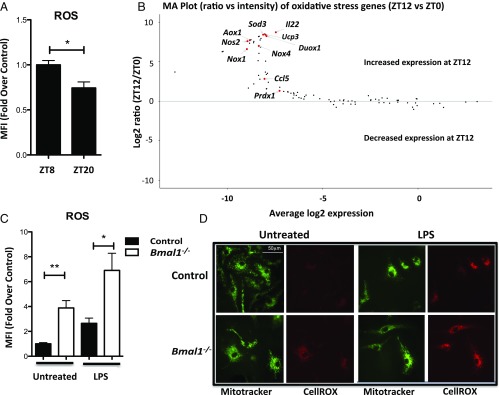
“Similarly, Nos2, an initiator of nitric oxide production and a marker of proinflammatory macrophage differentiation (33), was also increased.”
Gibbs, J. E., Blaikley, J., Beesley, S., Matthews, L., Simpson, K. D., Boyce, S. H., Farrow, S. N., Else, K. J., Singh, D., Ray, D. W., et al. (2012) · Proceedings of the National Academy of Sciences · doi:10.1073/pnas.1106750109 · Cited by 666 · cited 1×
“These endogenous clocks impose temporal gating across a range of functions, including phagocytosis (3), cytokine production (4), and antibacterial (5) and antiviral activity (6).”
Circadian Gene Bmal1 Regulates Diurnal Oscillations of Ly6C hi Inflammatory Monocytes
Nguyen, K. D., Fentress, S. J., Qiu, Y., Yun, K., Cox, J. S., & Chawla, A. (2013) · Science · doi:10.1126/science.1240636 · Cited by 641 · cited 11×
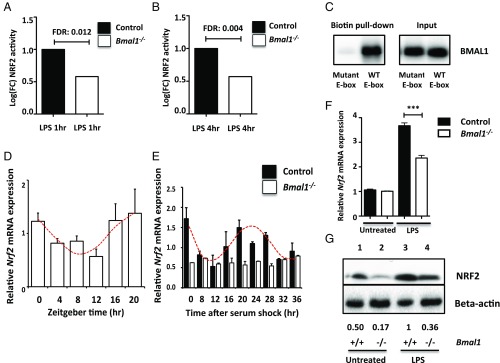
“Given the approximate trough of Bmal1 and Nrf2 at ZT8 and peak at ZT20, we extracted peritoneal cells from mice injected with PBS or LPS at these times and measured BMAL1 and NRF2 protein.”
InfluentialCircadian clock proteins regulate neuronal redox homeostasis and neurodegeneration
Musiek, E. S., Lim, M. M., Yang, G., Bauer, A. Q., Qi, L., Lee, Y., Roh, J. H., Ortiz-Gonzalez, X., Dearborn, J. T., Culver, J. P., et al. (2013) · Journal of Clinical Investigation · doi:10.1172/jci70317 · Cited by 524 · cited 2×
“The BMAL1:CLOCK heterodimer was found to directly induce Nqo1 and Aldh2 in the cerebral cortex, and not through the intermediate of NRF2 (14).”
BackgroundLymphocyte Circadian Clocks Control Lymph Node Trafficking and Adaptive Immune Responses
Druzd, D., Matveeva, O., Ince, L., Harrison, U., He, W., Schmal, C., Herzel, H., Tsang, A. H., Kawakami, N., Leliavski, A., et al. (2017) · Immunity · doi:10.1016/j.immuni.2016.12.011 · Cited by 489 · cited 1×
“Severity of circadian inflammatory conditions involving oxidative stress and IL-1β, such as asthma (25), sepsis (7), rheumatoid arthritis (19), osteoarthritis (24), and multiple sclerosis (8, 9), could very well be mediated at the molecular level by this BMAL1:NRF2: IL-1β axis.”
BackgroundCircadian clocks: regulators of endocrine and metabolic rhythms
Hastings, M., O’Neill, J. S., & Maywood, E. S. (2007) · Journal of Endocrinology · doi:10.1677/joe-07-0378 · Cited by 426 · cited 1×
“This system provides circadian rhythms across a range of biological processes, including hormone secretion (2), metabolism (1), and immune function (1).”
BackgroundPekovic-Vaughan, V., Gibbs, J., Yoshitane, H., Yang, N., Pathiranage, D., Guo, B., Sagami, A., Taguchi, K., Bechtold, D., Loudon, A., et al. (2014) · Genes & Development · doi:10.1101/gad.237081.113 · Cited by 323 · cited 4×
“The BMAL1: CLOCK heterodimer was demonstrated to bind directly to E-box sites within the Nrf2 promoter, inducing its expression (21).”
BackgroundInfluentialCircadian control of innate immunity in macrophages by miR-155 targeting Bmal1
Curtis, A. M., Fagundes, C. T., Yang, G., Palsson-McDermott, E. M., Wochal, P., McGettrick, A. F., Foley, N. H., Early, J. O., Chen, L., Zhang, H., et al. (2015) · Proceedings of the National Academy of Sciences · doi:10.1073/pnas.1501327112 · Cited by 311 · cited 13×
“Here we discovered greater basal expression in genes involved in ROS regulation at ZT12 relative to ZT0.”
InfluentialSelf-citationLee, J., Moulik, M., Fang, Z., Saha, P., Zou, F., Xu, Y., Nelson, D. L., Ma, K., Moore, D. D., & Yechoor, V. K. (2013) · Molecular and Cellular Biology · doi:10.1128/mcb.01421-12 · Cited by 221 · cited 4×
“Specific deletion of Bmal1 in the pancreas generates a diabetic phenotype due to oxidative stress-induced death of β-cells (13).”
BackgroundInfluentialNADPH Oxidases Are Essential for Macrophage Differentiation
Xu, Q., Choksi, S., Qu, J., Jang, J., Choe, M., Banfi, B., Engelhardt, J. F., & Liu, Z.-G. (2016) · Journal of Biological Chemistry · doi:10.1074/jbc.m116.731216 · Cited by 184 · cited 1×
“For example, Nox1, which forms a catalytic subunit of NADPH oxidase, a major producer of ROS that is crucial to macrophage differentiation (32), was significantly up-regulated at ZT12.”
BackgroundKondratov, R. V., Vykhovanets, O., Kondratova, A. A., & Antoch, M. P. (2009) · Aging · doi:10.18632/aging.100113 · Cited by 159 · cited 2×
“Complete Bmal1 deletion has been shown to induce an advanced aging phenotype via ROSinduced tissue atrophy (12).”
Loss of the molecular clock in myeloid cells exacerbates T cell-mediated CNS autoimmune disease
Sutton, C. E., Finlay, C. M., Raverdeau, M., Early, J. O., DeCourcey, J., Zaslona, Z., O’Neill, L. A. J., Mills, K. H. G., & Curtis, A. M. (2017) · Nature Communications · doi:10.1038/s41467-017-02111-0 · Cited by 128 · cited 2×
“This provides a mechanism by which the molecular clock may regulate aspects of innate immunity, thus providing a potential mechanism for the rhythmicity in pathology observed in inflammatory conditions, including rheumatoid arthritis (19), osteoarthritis (24), asthma (25), multiple sclerosis (8), and sepsis (7).”
Self-citationBmal1 regulates inflammatory responses in macrophages by modulating enhancer RNA transcription
Oishi, Y., Hayashi, S., Isagawa, T., Oshima, M., Iwama, A., Shimba, S., Okamura, H., & Manabe, I. (2017) · Scientific Reports · doi:10.1038/s41598-017-07100-3 · Cited by 111 · cited 4×
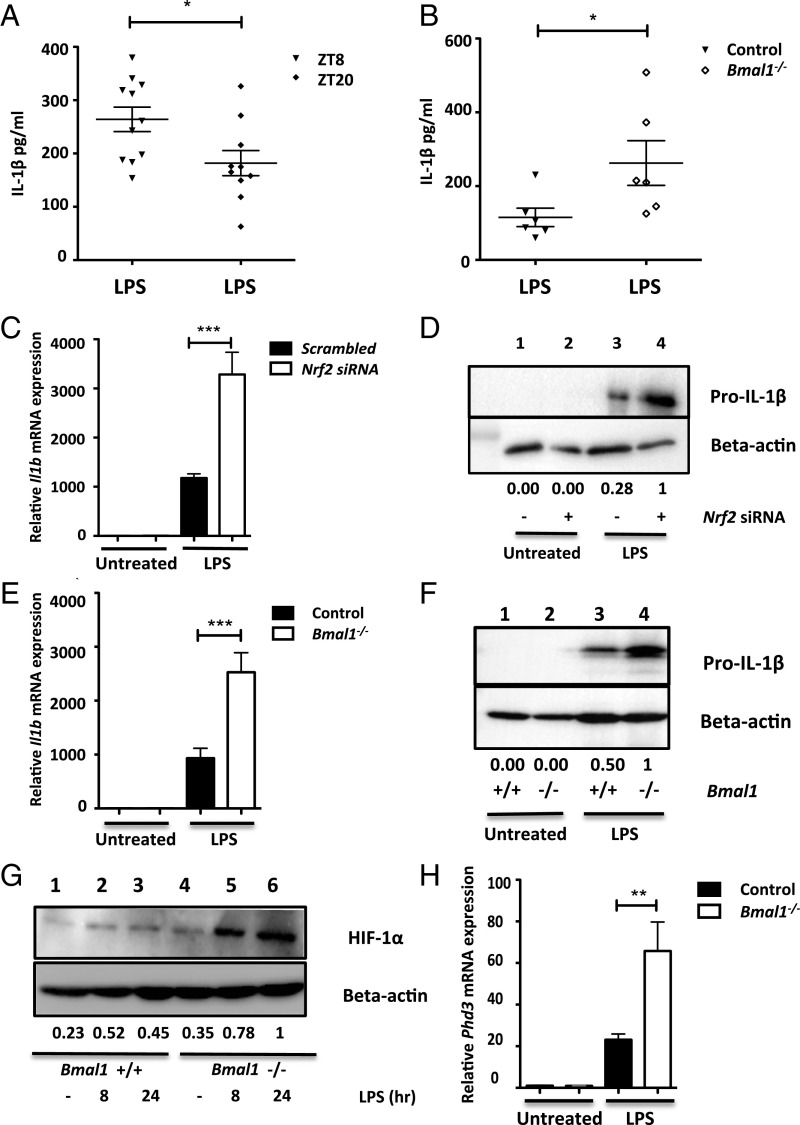
“Deletion of Bmal1 has previously been demonstrated to lead to increased Hif1a mRNA in macrophages, and ChIP-Seq revealed BMAL1 binding to the regulatory regions of the Hif1α promoter (10).”
BackgroundMethodInfluentialThe circadian clock regulates inflammatory arthritis
Hand, L. E., Hopwood, T. W., Dickson, S. H., Walker, A. L., Loudon, A. S. I., Ray, D. W., Bechtold, D. A., & Gibbs, J. E. (2016) · The FASEB Journal · doi:10.1096/fj.201600353r · Cited by 107 · cited 3×
“monocytogenes infection (5) and in the serum and joints of mice subjected to a model of rheumatoid arthritis (19).”
BackgroundNrf2 reduces allergic asthma in mice through enhanced airway epithelial cytoprotective function
Sussan, T. E., Gajghate, S., Chatterjee, S., Mandke, P., McCormick, S., Sudini, K., Kumar, S., Breysse, P. N., Diette, G. B., Sidhaye, V. K., et al. (2015) · American Journal of Physiology-Lung Cellular and Molecular Physiology · doi:10.1152/ajplung.00398.2014 · Cited by 95
Crosstalk between circadian rhythmicity, mitochondrial dynamics and macrophage bactericidal activity
Oliva‐Ramírez, J., Moreno‐Altamirano, M. M. B., Pineda‐Olvera, B., Cauich‐Sánchez, P., & Sánchez‐García, F. J. (2014) · Immunology · doi:10.1111/imm.12329 · Cited by 81 · cited 1×
“These endogenous clocks impose temporal gating across a range of functions, including phagocytosis (3), cytokine production (4), and antibacterial (5) and antiviral activity (6).”
BackgroundThe history of fever, leukocytic pyrogen and interleukin-1
Dinarello, C. A. (2015) · Temperature · doi:10.1080/23328940.2015.1017086 · Cited by 79
Zhao, Y., Liu, M., Chan, X. Y., Tan, S. Y., Subramaniam, S., Fan, Y., Loh, E., Chang, K. T. E., Tan, T. C., & Chen, Q. (2017) · Blood · doi:10.1182/blood-2017-04-778779 · Cited by 79 · cited 2×
“Circadian rhythms in CD45 leukocyte trafficking and migration are dictated by endogenous rhythms in ROS levels, which stabilize HIF-1α (15).”
BackgroundGagnidze, K., Hajdarovic, K. H., Москаленко, М., Karatsoreos, I. N., McEwen, B. S., & Bulloch, K. (2016) · Proceedings of the National Academy of Sciences · doi:10.1073/pnas.1520489113 · Cited by 72 · cited 1×
“These endogenous clocks impose temporal gating across a range of functions, including phagocytosis (3), cytokine production (4), and antibacterial (5) and antiviral activity (6).”
BackgroundThe circadian protein BMAL1 in myeloid cells is a negative regulator of allergic asthma
Zasłona, Z., Case, S., Early, J. O., Lalor, S. J., McLoughlin, R. M., Curtis, A. M., & O'Neill, L. A. J. (2017) · American Journal of Physiology-Lung Cellular and Molecular Physiology · doi:10.1152/ajplung.00072.2017 · Cited by 71
Self-citationAgeing and osteoarthritis: a circadian rhythm connection
Gossan, N., Boot-Handford, R., & Meng, Q. (2014) · Biogerontology · doi:10.1007/s10522-014-9522-3 · Cited by 67 · cited 2×
“This provides a mechanism by which the molecular clock may regulate aspects of innate immunity, thus providing a potential mechanism for the rhythmicity in pathology observed in inflammatory conditions, including rheumatoid arthritis (19), osteoarthritis (24), asthma (25), multiple sclerosis (8), and sepsis (7).”
BackgroundImmunometabolism: Is it under the eye of the clock?
Early, J. O., & Curtis, A. M. (2016) · Seminars in Immunology · doi:10.1016/j.smim.2016.10.006 · Cited by 63 · cited 5×
“This system provides circadian rhythms across a range of biological processes, including hormone secretion (2), metabolism (1), and immune function (1).”
BackgroundInfluentialSelf-citationSimultaneous Pathway Activity Inference and Gene Expression Analysis Using RNA Sequencing
O’Connell, D. J., Kolde, R., Sooknah, M., Graham, D. B., Sundberg, T. B., Latorre, I. J., Mikkelsen, T. S., & Xavier, R. J. (2016) · Cell Systems · doi:10.1016/j.cels.2016.04.011 · Cited by 44 · cited 1×
“To understand the impact of Bmal1 deletion on the LPS response in macrophages, we performed an unbiased screening approach of transcription factor activity, termed transcription factor sequencing (TF-Seq) (27).”
MethodSelf-citationBurger, D., Molnarfi, N., Gruaz, L., & Dayer, J. (2004) · The Journal of Immunology · doi:10.4049/jimmunol.173.2.1292 · Cited by 33 · cited 1×
“IL-1β is a wellestablished pyrogen, critical in producing symptoms of fever and driving inflammation by inducing the expression of downstream proinflammatory molecules, such as COX2 and nitric oxide (17), and promoting cellular proliferation and differentiation of immune cells (18).”
Cited by
Major depressive disorder: hypothesis, mechanism, prevention and treatment
Cui, L., Li, S., Wang, S., Wu, X., Liu, Y., Yu, W., Wang, Y., Tang, Y., Xia, M., & Li, B. (2024) · Signal Transduction and Targeted Therapy · doi:10.1038/s41392-024-01738-y · Cited by 1,244
“138 Neuroendocrine-immune activities can be compromised by in fl ammation, which can also result in numerous disorders, such as MDD. Proin fl ammatory cytokines have become pathological indicators of MDD, and using the right antioxidants to combat ROS may be a useful method for treating MDD. Proin fl…”
BackgroundMethodGenomics of circadian rhythms in health and disease
Rijo-Ferreira, F., & Takahashi, J. S. (2019) · Genome Medicine · doi:10.1186/s13073-019-0704-0 · Cited by 534
Interplay between Circadian Clock and Cancer: New Frontiers for Cancer Treatment
Sulli, G., Lam, M. T. Y., & Panda, S. (2019) · Trends in Cancer · doi:10.1016/j.trecan.2019.07.002 · Cited by 480
“For example, Bmal1 impose rhythmic oscillation in NRF2 which controls IL-1β expression, and Bmal1 deletion results in IL-1 β increased production (108).”
BackgroundMolecular regulations of circadian rhythm and implications for physiology and diseases
Fagiani, F., Di Marino, D., Romagnoli, A., Travelli, C., Voltan, D., Di Cesare Mannelli, L., Racchi, M., Govoni, S., & Lanni, C. (2022) · Signal Transduction and Targeted Therapy · doi:10.1038/s41392-022-00899-y · Cited by 467
Hypoxia, oxidative stress, and the interplay of HIFs and NRF2 signaling in cancer
Bae, T., Hallis, S. P., & Kwak, M.-K. (2024) · Experimental & Molecular Medicine · doi:10.1038/s12276-024-01180-8 · Cited by 354
“Therefore, BMAL1 -de fi cient cells exhibit increased HIF-1 α expression levels due to ROS accumulation, which results from a reduction in NRF2 expression levels 68 .”
Background
Metadata
- Authors
- Early, J. O., Menon, D., Wyse, C. A., Cervantes-Silva, M. P., Zaslona, Z., Carroll, R. G., Palsson-McDermott, E. M., Angiari, S., Ryan, D. G., Corcoran, S. E., Timmons, G., Geiger, S. S., Fitzpatrick, D. J., O’Connell, D., Xavier, R. J., Hokamp, K., O’Neill, L. A. J., & Curtis, A. M.
- Affiliations
- Royal College of Surgeons in Ireland (IE)
- Trinity College Dublin (IE)
- Department of Molecular and Cellular Therapeutics, Tissue Engineering Regenerative Group, Royal College of Surgeons in Ireland, Dublin 2, Ireland;
- School of Biochemistry and Immunology, Trinity Biomedical Sciences Institute, Trinity College Dublin, Dublin 2, Ireland;
- Broad Institute (US)
- Corresponding author
- Curtis, Annie M.
- ORCID
- Venue
- Proceedings of the National Academy of Sciences
- Publisher
- National Academy of Sciences
- Published
- 2018-08-20
- Volume
- 115
- Issue
- 36
- Pages
- E8460-E8468
- ISSN
- 0027-8424 (ISSN-L)
- 1091-6490
- PMC
- PMC6130388
- OpenAlex
- W2888547429
- Cited by
- 389
- References
- 34
- Citations by year
- 2026: 61 · 2025: 54 · 2024: 51 · 2023: 59 · 2022: 57 · 2021: 51 · 2020: 38 · 2019: 15 · 2018: 3
- FWCI
- 15.02
- Type
- journal article
- Language
- en
- Open access
- hybrid
- doi.org
- Licence
- Locations
- Proceedings of the National Academy of Sciences (publishedVersion, cc-by-nc-nd)
- Europe PMC (PubMed Central) (publishedVersion, cc-by-nc-nd)
- PubMed Central (publishedVersion, cc-by-nc-nd)
- PubMed (publishedVersion)
- Arrow@dit (Dublin Institute of Technology) (submittedVersion, cc-by-nc-sa)
- Figshare (submittedVersion, cc-by-nc-sa)
- Edinburgh Research Explorer (University of Edinburgh) (submittedVersion, cc-by-nc-nd)
- Funders
- Science Foundation Ireland (13/SIRG/2130, 17/CDA/4688)
- Wellcome (205455)
- Topics
- Life Sciences › Neuroscience › Endocrine and Autonomic Systems › Circadian rhythm and melatonin
- Life Sciences › Biochemistry, Genetics and Molecular Biology › Molecular Biology › Genomics, phytochemicals, and oxidative stress
- Life Sciences › Neuroscience › Cognitive Neuroscience › Sleep and Wakefulness Research
- Keywords
- Bmal1, circadian clock, Nrf2, IL-1β, macrophages, reactive oxygen species, antioxidant response, innate immunity, myeloid cells, inflammatory cytokines
- MeSH terms
- Animals, Humans, Inflammation, Lipopolysaccharides, Macrophages, Reactive Oxygen Species, Mice, Knockout, Oxidative Stress, NF-E2-Related Factor 2, Mice, Hypoxia-Inducible Factor 1, alpha Subunit, Interleukin-1beta, ARNTL Transcription Factors, HEK293 Cells
About these checks
Registry, retraction, Cites and statistics results are computed, not judged, with one exception: a printed reference that no index lists is read once by a model before it counts as a citation error. Claims are extracted by a model and kept only when their quote appears verbatim in the text; each cited source is then checked, with a model’s help, for whether it says what the claim relies on. Those verdicts can be wrong — read the claim’s quote and the cited source before relying on one.
Statistics and arithmetic are recomputed, not judged.
Confidence bands are shown only for fields calibrated on our annotated test set. None is calibrated yet, so no band is shown.
What counts as a claim ›How we measure confidence ›How we check this ›
Are you an author, or do you see a problem with this page? Request a review
Data sources
Bibliographic data: Semantic Scholar, OpenAlex, Crossref.
Contains information from the Semantic Scholar Academic Graph Datasets, made available under the ODC Attribution License (ODC-BY 1.0).
Semantic Scholar’s data is described in: Kinney, R., et al. (2023). The Semantic Scholar Open Data Platform. arXiv:2301.10140.
