

Glyphosate perturbs the gut microbiota of honey bees
Open accessThe DOI matches its Crossref record; 47 of the 47 references it cites were found in a registry or an index.
Abstract
Significance: Increased mortality of honey bee colonies has been attributed to several factors but is not fully understood. The herbicide glyphosate is expected to be innocuous to animals, including bees, because it targets an enzyme only found in plants and microorganisms. However, bees rely on a specialized gut microbiota that benefits growth and provides defense against pathogens. Most bee gut bacteria contain the enzyme targeted by glyphosate, but vary in whether they possess susceptible versions and, correspondingly, in tolerance to glyphosate. Exposing bees to glyphosate alters the bee gut community and increases susceptibility to infection by opportunistic pathogens. Understanding how glyphosate impacts bee gut symbionts and bee health will help elucidate a possible role of this chemical in colony decline.
Overview
The claims and statistics of this paper haven’t been checked yet.
Free: it reads the open-access text and checks the first 5 claims that cite a source we can check. Create a free account to check every claim.
Integrity signals
Registry
Cites
Statistics
Figures
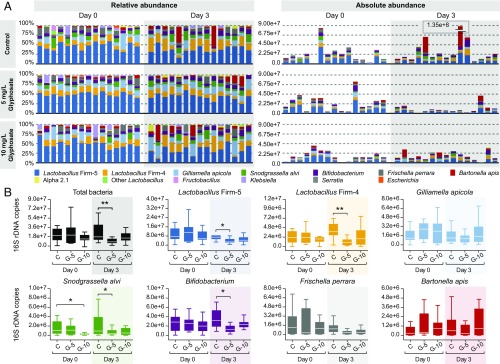
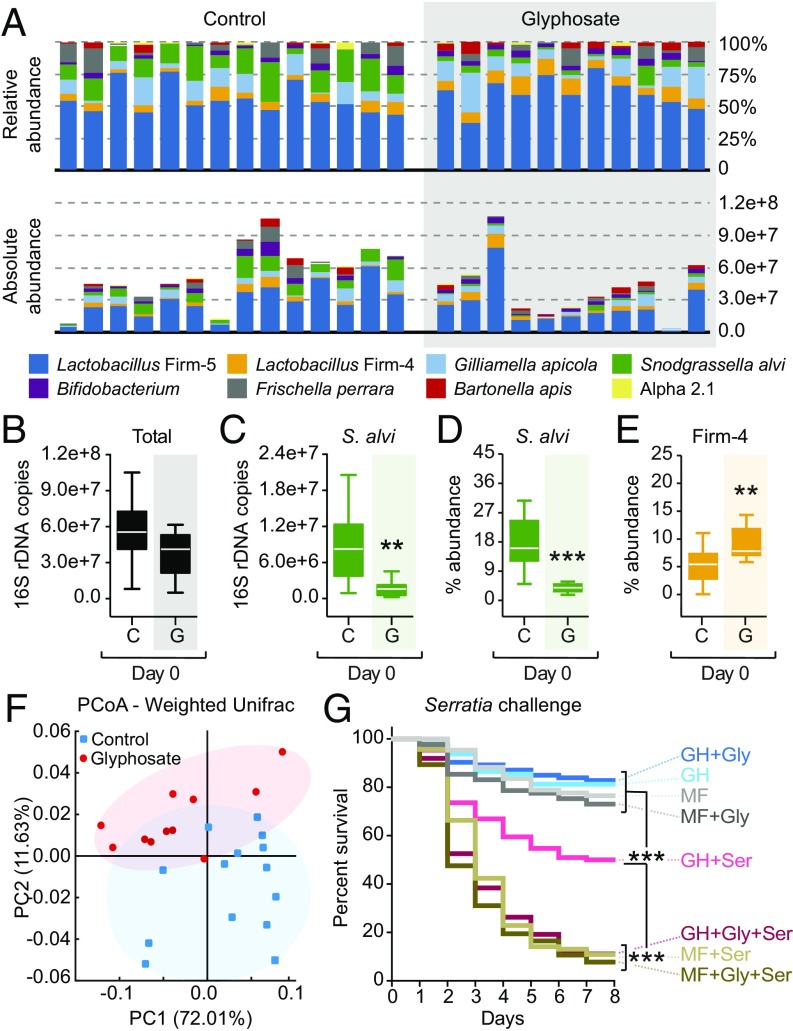
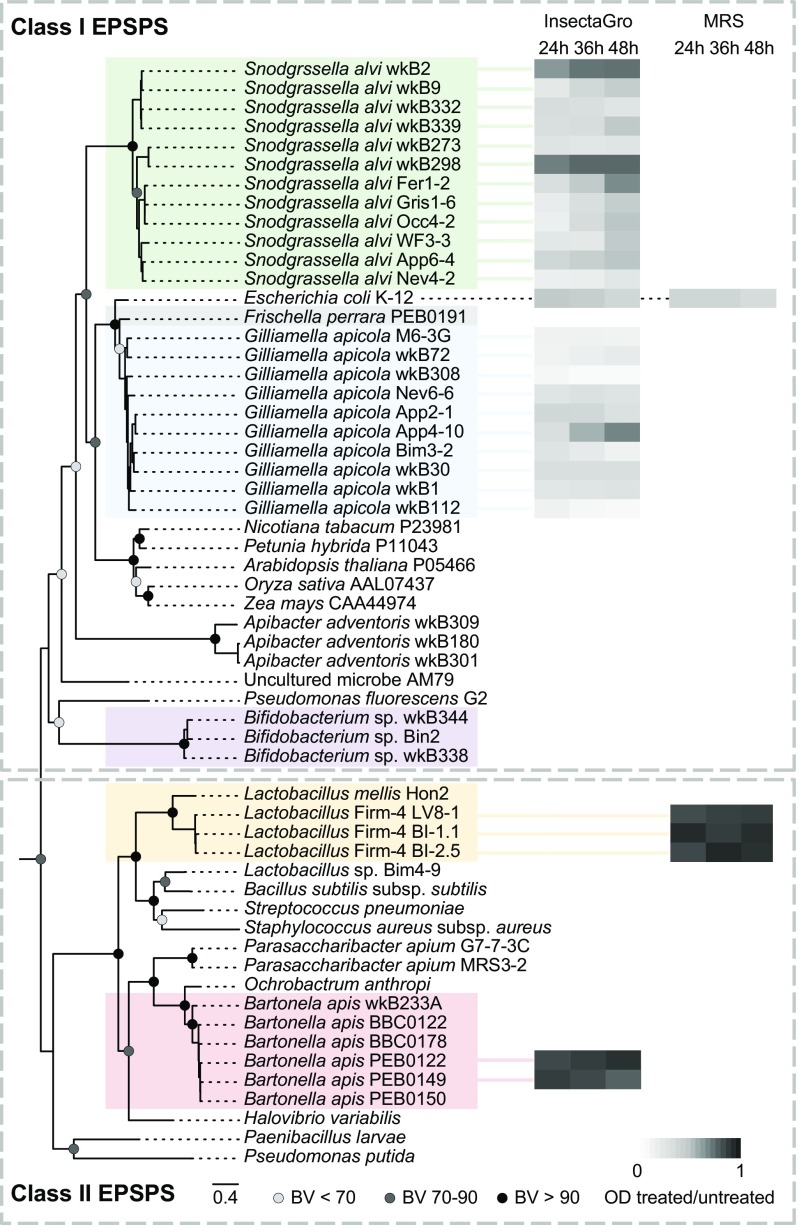
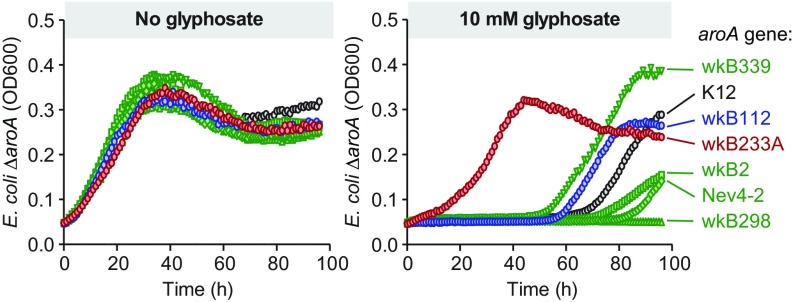
Verification
Claims the paper makes
The claims and statistics of this paper haven’t been checked yet.
Free: it reads the open-access text and checks the first 5 claims that cite a source we can check. Create a free account to check every claim.
Claims other papers make about this one
Each is checked against this paper’s own text: does it say what the citing paper says it does?
The check wasn’t confident either way, so it gives no verdict — never disputed.
In the citing paper
“Agricultural expansion, when it occurs at the expense of natural and semi-natural habitats, is the single largest cause of biodiversity loss through wildlife habitat loss and degradation ( 119 , 120 )”
From Environmental impacts of genetically modified crops (2024) · cites this paper as [120]
Experimental — accuracy not yet measured
Self-check
Percentages, sums and reported differences re-computed from the paper’s own numbers.
The self-check needs the paper’s full text.
Citations
Cites
QIIME allows analysis of high-throughput community sequencing data
Caporaso, J. G., Kuczynski, J., Stombaugh, J., Bittinger, K., Bushman, F. D., Costello, E. K., Fierer, N., Peña, A. G., Goodrich, J. K., Gordon, J. I., et al. (2010) · Nature Methods · doi:10.1038/nmeth.f.303 · Cited by 34,887
Enzymatic assembly of DNA molecules up to several hundred kilobases
Gibson, D. G., Young, L., Chuang, R.-Y., Venter, J. C., Hutchison, C. A., & Smith, H. O. (2009) · Nature Methods · doi:10.1038/nmeth.1318 · Cited by 9,996
UniFrac: a New Phylogenetic Method for Comparing Microbial Communities
Lozupone, C., & Knight, R. (2005) · Applied and Environmental Microbiology · doi:10.1128/aem.71.12.8228-8235.2005 · Cited by 8,227
Guzman, L. M., Belin, D., Carson, M. J., & Beckwith, J. (1995) · Journal of Bacteriology · doi:10.1128/jb.177.14.4121-4130.1995 · Cited by 4,935
Glyphosate: a once‐in‐a‐century herbicide
Duke, S. O., & Powles, S. B. (2008) · Pest Management Science · doi:10.1002/ps.1518 · Cited by 1,749 · cited 1×
“Animals lack the shikimate pathway, which is why glyphosate is considered one of the least toxic pesticides used in agriculture (9).”
Environmental and health effects of the herbicide glyphosate
Van Bruggen, A. H. C., He, M. M., Shin, K., Mai, V., Jeong, K. C., Finckh, M. R., & Morris, J. G. (2018) · Science of The Total Environment · doi:10.1016/j.scitotenv.2017.10.309 · Cited by 992 · cited 2×
“Glyphosate is also associated with changes in plant endophytic and rhizosphere microbiomes (2) and with disturbances of gut microbiota of animals living near agricultural sites (13).”
Gut microbial communities of social bees
Kwong, W. K., & Moran, N. A. (2016) · Nature Reviews Microbiology · doi:10.1038/nrmicro.2016.43 · Cited by 971 · cited 2×
“This may be explained by the fact that these strains lack the aromatic amino acid biosynthetic pathway (18), relying on uptake of aromatic amino acids released by other bacterial species, such as S.”
Self-citationFunctional diversity within the simple gut microbiota of the honey bee
Engel, P., Martinson, V. G., & Moran, N. A. (2012) · Proceedings of the National Academy of Sciences · doi:10.1073/pnas.1202970109 · Cited by 874 · cited 1×
“Each of these species exhibits strain diversity corresponding to differences in metabolic capabilities and tolerances to xenobiotics (19, 20).”
Self-citationSocially transmitted gut microbiota protect bumble bees against an intestinal parasite
Koch, H., & Schmid-Hempel, P. (2011) · Proceedings of the National Academy of Sciences · doi:10.1073/pnas.1110474108 · Cited by 824 · cited 3×
“Bees deprived of their normal microbiota show reduced weight gain and altered metabolism (22), increased pathogen susceptibility (17), and increased mortality within hives (23).”
Honeybee gut microbiota promotes host weight gain via bacterial metabolism and hormonal signaling
Zheng, H., Powell, J. E., Steele, M. I., Dietrich, C., & Moran, N. A. (2017) · Proceedings of the National Academy of Sciences · doi:10.1073/pnas.1701819114 · Cited by 664 · cited 1×
“Bees deprived of their normal microbiota show reduced weight gain and altered metabolism (22), increased pathogen susceptibility (17), and increased mortality within hives (23).”
Self-citationTsui, M. T. K., & Chu, L. M. (2003) · Chemosphere · doi:10.1016/s0045-6535(03)00306-0 · Cited by 606 · cited 1×
“However, some evidence suggests that glyphosate affects nontarget organisms, for example, changing the behavior of honey bees (10), reducing reproduction of soil-dwelling earthworms (11), and affecting the growth of microalgae and aquatic bacteria (12).”
Establishment of Characteristic Gut Bacteria during Development of the Honeybee Worker
Martinson, V. G., Moy, J., & Moran, N. A. (2012) · Applied and Environmental Microbiology · doi:10.1128/aem.07810-11 · Cited by 587
Self-citationAntibiotic exposure perturbs the gut microbiota and elevates mortality in honeybees
Raymann, K., Shaffer, Z., & Moran, N. A. (2017) · PLOS Biology · doi:10.1371/journal.pbio.2001861 · Cited by 544
Self-citationRoutes of Acquisition of the Gut Microbiota of the Honey Bee Apis mellifera
Powell, J. E., Martinson, V. G., Urban-Mead, K., & Moran, N. A. (2014) · Applied and Environmental Microbiology · doi:10.1128/aem.01861-14 · Cited by 543
Self-citationDistinctive Gut Microbiota of Honey Bees Assessed Using Deep Sampling from Individual Worker Bees
Moran, N. A., Hansen, A. K., Powell, J. E., & Sabree, Z. L. (2012) · PLoS ONE · doi:10.1371/journal.pone.0036393 · Cited by 429 · cited 1×
“After 5 d of treatment, bees were challenged with Serratia marcescens kz19, an opportunistic pathogen commonly detected at very low frequencies in the bee gut (28, 29).”
Self-citationImmune system stimulation by the native gut microbiota of honey bees
Kwong, W. K., Mancenido, A. L., & Moran, N. A. (2017) · Royal Society Open Science · doi:10.1098/rsos.170003 · Cited by 425 · cited 1×
“alvi colonization (32), which could increase resistance to infection by pathogens.”
Self-citationGenomics and host specialization of honey bee and bumble bee gut symbionts
Kwong, W. K., Engel, P., Koch, H., & Moran, N. A. (2014) · Proceedings of the National Academy of Sciences · doi:10.1073/pnas.1405838111 · Cited by 424 · cited 1×
“alvi can colonize guts of monoinoculated bees (30, 40).”
Self-citationDisentangling metabolic functions of bacteria in the honey bee gut
Kešnerová, L., Mars, R. A. T., Ellegaard, K. M., Troilo, M., Sauer, U., & Engel, P. (2017) · PLOS Biology · doi:10.1371/journal.pbio.2003467 · Cited by 408 · cited 1×
“alvi to live in the bee hindgut showed that the aromatic amino acid biosynthetic pathway is required for growth in this niche (30), which is consistent with low aromatic amino acid concentrations in the hindgut (37).”
Molecular basis for the herbicide resistance of Roundup Ready crops
Funke, T., Han, H., Healy-Fried, M. L., Fischer, M., & Schönbrunn, E. (2006) · Proceedings of the National Academy of Sciences · doi:10.1073/pnas.0603638103 · Cited by 383 · cited 1×
“EPSPS catalyzes the reaction between phosphoenolpyruvate (PEP) and shikimate 3-phosphate (S3P) (4), and glyphosate is a competitive inhibitor that blocks the PEP-binding site (5).”
Metabolism of Toxic Sugars by Strains of the Bee Gut Symbiont Gilliamella apicola
Zheng, H., Nishida, A., Kwong, W. K., Koch, H., Engel, P., Steele, M. I., & Moran, N. A. (2016) · mBio · doi:10.1128/mbio.01326-16 · Cited by 294
Self-citationEffects of sublethal doses of glyphosate on honeybee navigation
Balbuena, M. S., Tison, L., Hahn, M.-L., Greggers, U., Menzel, R., & Farina, W. M. (2015) · Journal of Experimental Biology · doi:10.1242/jeb.117291 · Cited by 271 · cited 3×
“Since bees exposed to glyphosate may exhibit impaired spatial processing, compromising their return to hives (10, 24), bees in the G-10 group that consumed more glyphosate-laced sugar syrup before reintroduction to the hive may have been less likely to return to the hive after foraging.”
Shehata, A. A., Schrödl, W., Aldin, A. A., Hafez, H. M., & Krüger, M. (2013) · Current Microbiology · doi:10.1007/s00284-012-0277-2 · Cited by 269 · cited 1×
“Glyphosate is also associated with changes in plant endophytic and rhizosphere microbiomes (2) and with disturbances of gut microbiota of animals living near agricultural sites (13).”
Experimental and Computational Assessment of Conditionally Essential Genes in Escherichia coli
Joyce, A. R., Reed, J. L., White, A., Edwards, R., Osterman, A., Baba, T., Mori, H., Lesely, S. A., Palsson, B. Ø., & Agarwalla, S. (2006) · Journal of Bacteriology · doi:10.1128/jb.00740-06 · Cited by 265
Tian, B., Fadhil, N. H., Powell, J. E., Kwong, W. K., & Moran, N. A. (2012) · mBio · doi:10.1128/mbio.00377-12 · Cited by 235 · cited 1×
“Potentially, some bee gut microbes may have evolved alternative glyphosate resistance mechanisms due to a history of exposure, similar to the resistance observed for the antibiotic tetracycline used in beekeeping (38).”
Self-citationCariveau, D. P., Elijah Powell, J., Koch, H., Winfree, R., & Moran, N. A. (2014) · The ISME Journal · doi:10.1038/ismej.2014.68 · Cited by 232 · cited 1×
“This herbicide is known to affect the growth of microorganisms (13– 15), and the health of bees is intrinsically related to their distinct gut microbial community (16, 17).”
Self-citationGlyphosate effects on soil rhizosphere-associated bacterial communities
Newman, M. M., Hoilett, N., Lorenz, N., Dick, R. P., Liles, M. R., Ramsier, C., & Kloepper, J. W. (2016) · Science of The Total Environment · doi:10.1016/j.scitotenv.2015.11.008 · Cited by 224
Early gut colonizers shape parasite susceptibility and microbiota composition in honey bee workers
Schwarz, R. S., Moran, N. A., & Evans, J. D. (2016) · Proceedings of the National Academy of Sciences · doi:10.1073/pnas.1606631113 · Cited by 200 · cited 1×
“Recent experimental and observational studies have provided evidence that dysbiosis affecting the bee gut can increase susceptibility to pathogen invasion (23, 41, 42).”
Self-citationGaupp-Berghausen, M., Hofer, M., Rewald, B., & Zaller, J. G. (2015) · Scientific Reports · doi:10.1038/srep12886 · Cited by 197 · cited 1×
“However, some evidence suggests that glyphosate affects nontarget organisms, for example, changing the behavior of honey bees (10), reducing reproduction of soil-dwelling earthworms (11), and affecting the growth of microalgae and aquatic bacteria (12).”
Effects of field-realistic doses of glyphosate on honeybee appetitive behaviour
Herbert, L. H., Vazquez, D. E., Arenas, A., & Farina, W. M. (2014) · Journal of Experimental Biology · doi:10.1242/jeb.109520 · Cited by 177
Genome-wide screen identifies host colonization determinants in a bacterial gut symbiont
Powell, J. E., Leonard, S. P., Kwong, W. K., Engel, P., & Moran, N. A. (2016) · Proceedings of the National Academy of Sciences · doi:10.1073/pnas.1610856113 · Cited by 174
Self-citationCorby‐Harris, V., Snyder, L. A., Schwan, M. R., Maes, P. W., McFrederick, Q. S., & Anderson, K. E. (2014) · Applied and Environmental Microbiology · doi:10.1128/aem.02043-14 · Cited by 165 · cited 2×
“2), a bacterium commonly detected in honey bee larvae and hives, but rare in the guts of workers (34), and Paenibacillus larvae, the agent of American foulbrood in honey bee larvae (35); these bacteria are predicted to be unaffected by glyphosate exposure.”
The rise and future of glyphosate and glyphosate‐resistant crops
Green, J. M. (2016) · Pest Management Science · doi:10.1002/ps.4462 · Cited by 157 · cited 1×
“T broad-spectrum herbicide glyphosate [N-(phosphonomethyl)glycine] has long been the primary weed management system, and its use is growing in connection with crops genetically engineered to be resistant to glyphosate (1, 2).”
STEINRÜCKEN, H. C., & Amrhein, N. (1984) · European Journal of Biochemistry · doi:10.1111/j.1432-1033.1984.tb08379.x · Cited by 150
Mir, R., Jallu, S. S., & Singh, T. P. (2013) · Critical Reviews in Microbiology · doi:10.3109/1040841x.2013.813901 · Cited by 148 · cited 1×
“EPSPS enzymes from different organisms vary in molecular weight (46–178 kDa) and sequence homology (6) and form two phylogenetic clusters that differ in tolerance to glyphosate.”
Funke, T., Yang, Y., Han, H., Healy-Fried, M. L., Olesen, S. H., Becker, A., & Schönbrunn, E. (2009) · Journal of Biological Chemistry · doi:10.1074/jbc.m809771200 · Cited by 143 · cited 2×
“EPSPS catalyzes the reaction between phosphoenolpyruvate (PEP) and shikimate 3-phosphate (S3P) (4), and glyphosate is a competitive inhibitor that blocks the PEP-binding site (5).”
Diversification of Type VI Secretion System Toxins Reveals Ancient Antagonism among Bee Gut Microbes
Steele, M. I., Kwong, W. K., Whiteley, M., & Moran, N. A. (2017) · mBio · doi:10.1128/mbio.01630-17 · Cited by 140
Self-citationAntibiotics reduce genetic diversity of core species in the honeybee gut microbiome
Raymann, K., Bobay, L., & Moran, N. A. (2017) · Molecular Ecology · doi:10.1111/mec.14434 · Cited by 122
Self-citationEschenburg, S., Healy-Fried, M. L., Priestman, M. A., Lushington, G. H., & Schönbrunn, E. (2002) · Planta · doi:10.1007/s00425-002-0908-0 · Cited by 120 · cited 1×
“We looked for potential single-site mutations in the EPSPS active site of these strains, which is known to confer tolerance to glyphosate (36), but no mutations were observed, indicating that the resistance in these S.”
Biology of Paenibacillus larvae, a deadly pathogen of honey bee larvae
Ebeling, J., Knispel, H., Hertlein, G., Fünfhaus, A., & Genersch, E. (2016) · Applied Microbiology and Biotechnology · doi:10.1007/s00253-016-7716-0 · Cited by 112 · cited 1×
“2), a bacterium commonly detected in honey bee larvae and hives, but rare in the guts of workers (34), and Paenibacillus larvae, the agent of American foulbrood in honey bee larvae (35); these bacteria are predicted to be unaffected by glyphosate exposure.”
Thompson, H., Levine, S. L., Doering, J., Norman, S., Manson, P., Sutton, P., & von Mérey, G. E. (2014) · Integrated Environmental Assessment and Management · doi:10.1002/ieam.1529 · Cited by 107 · cited 2×
“This simultaneous exposure is relevant to field situations, since glyphosate has been detected in hives and honey samples (25, 26), indicating that honey bee foragers can transport residues of this herbicide to the colony and contaminate other bees, including NEWs, and food resources.”
Two gut community enterotypes recur in diverse bumblebee species
Li, J., Powell, J. E., Guo, J., Evans, J. D., Wu, J., Williams, P. H., Lin, Q., Moran, N. A., & Zhang, Z. (2015) · Current Biology · doi:10.1016/j.cub.2015.06.031 · Cited by 87 · cited 1×
“After 5 d of treatment, bees were challenged with Serratia marcescens kz19, an opportunistic pathogen commonly detected at very low frequencies in the bee gut (28, 29).”
Self-citation5‐Enolpyruvylshikimate‐3‐phosphate synthase from Staphylococcus aureus is insensitive to glyphosate
Priestman, M. A., Funke, T., Singh, I. M., Crupper, S. S., & Schönbrunn, E. (2005) · FEBS Letters · doi:10.1016/j.febslet.2004.12.057 · Cited by 76 · cited 1×
“Class I enzymes are sensitive to glyphosate and are present in all plants and in some bacteria, such as Escherichia coli (4); class II enzymes are only found in some bacteria, such as Staphylococcus aureus, and can tolerate high concentrations of glyphosate (7, 8).”
BackgroundCao, G., Liu, Y., Zhang, S., Yang, X., Chen, R., Zhang, Y., Lü, W., Liú, Y., Wang, J., Lin, M., et al. (2012) · PLoS ONE · doi:10.1371/journal.pone.0038718 · Cited by 74 · cited 2×
“Class I enzymes are sensitive to glyphosate and are present in all plants and in some bacteria, such as Escherichia coli (4); class II enzymes are only found in some bacteria, such as Staphylococcus aureus, and can tolerate high concentrations of glyphosate (7, 8).”
Staub, J. M., Brand, L., Tran, M., Kong, Y., & Rogers, S. G. (2011) · Journal of Industrial Microbiology & Biotechnology · doi:10.1007/s10295-011-1057-x · Cited by 58 · cited 1×
“coli (39), and tetC, which encodes an efflux pump that provides tetracycline resistance to S.”
Kwong, W. K., & Moran, N. A. (2016) · INTERNATIONAL JOURNAL OF SYSTEMATIC AND EVOLUTIONARY MICROBIOLOGY · doi:10.1099/ijsem.0.000882 · Cited by 52 · cited 3×
“Conclusion As in many animals, honey bees rely on their gut microbial community for a variety of functions, including food processing (25, 26), regulation of immune system (33, 34), and defense against pathogens (17, 27).”
Self-citationDetermination of Pesticide Residues in Honey Samples
Mukherjee, I. (2009) · Bulletin of Environmental Contamination and Toxicology · doi:10.1007/s00128-009-9772-y · Cited by 48 · cited 2×
“This simultaneous exposure is relevant to field situations, since glyphosate has been detected in hives and honey samples (25, 26), indicating that honey bee foragers can transport residues of this herbicide to the colony and contaminate other bees, including NEWs, and food resources.”
Mechanism of glyphosate control of Phelipanche aegyptiaca
Shilo, T., Zygier, L., Rubin, B., Wolf, S., & Eizenberg, H. (2016) · Planta · doi:10.1007/s00425-016-2565-8 · Cited by 33 · cited 1×
“Its mechanism of action, inhibition of 5-enolpyruvylshikimate-3-phosphate synthase (EPSPS), an enzyme in the shikimate pathway, prevents the biosynthesis of aromatic amino acids and other secondary metabolites in plants and some microorganisms (3).”
Cited by
Pesticides: formulants, distribution pathways and effects on human health – a review
Kalyabina, V. P., Esimbekova, E. N., Kopylova, K. V., & Kratasyuk, V. A. (2021) · Toxicology Reports · doi:10.1016/j.toxrep.2021.06.004 · Cited by 488
Gut microbiota structure differs between honeybees in winter and summer
Kešnerová, L., Emery, O., Troilo, M., Liberti, J., Erkosar, B., & Engel, P. (2020) · The ISME Journal · doi:10.1038/s41396-019-0568-8 · Cited by 318
Not all animals need a microbiome
Hammer, T. J., Sanders, J. G., & Fierer, N. (2019) · FEMS Microbiology Letters · doi:10.1093/femsle/fnz117 · Cited by 307
The honeybee microbiota and its impact on health and disease
Motta, E. V. S., & Moran, N. A. (2024) · Nature Reviews Microbiology · doi:10.1038/s41579-023-00990-3 · Cited by 239
“• Perturbation of the normal microbiota using antibiotics or other stressors, followed by phenotype examination 59,123,133,135,138,139,143 ; for example, honeybees exposed to tetracycline or streptomycin exhibit perturbed gut communities and increased susceptibility to bacterial and fungal…”
Self-citationSimple animal models for microbiome research
Douglas, A. E. (2019) · Nature Reviews Microbiology · doi:10.1038/s41579-019-0242-1 · Cited by 258
Metadata
- Authors
- Motta, E. V. S., Raymann, K., & Moran, N. A.
- Affiliations
- The University of Texas at Austin (US)
- Corresponding author
- Motta, Erick V. S.
- Moran, Nancy A.
- Venue
- Proceedings of the National Academy of Sciences
- Publisher
- National Academy of Sciences
- Published
- 2018-09-24
- Volume
- 115
- Issue
- 41
- Pages
- 10305-10310
- ISSN
- 0027-8424 (ISSN-L)
- 1091-6490
- PMC
- PMC6187125
- OpenAlex
- W2889736642
- Cited by
- 702
- References
- 47
- Citations by year
- 2026: 68 · 2025: 69 · 2024: 79 · 2023: 128 · 2022: 94 · 2021: 111 · 2020: 84 · 2019: 65 · 2018: 4
- FWCI
- 61.56
- Type
- journal article
- Language
- en
- Open access
- hybrid
- doi.org
- Licence
- Locations
- Proceedings of the National Academy of Sciences (publishedVersion, cc-by-nc-nd)
- Europe PMC (PubMed Central) (publishedVersion, cc-by-nc-nd)
- PubMed Central (publishedVersion, cc-by-nc-nd)
- PubMed (publishedVersion)
- Funders
- Coordenação de Aperfeiçoamento de Pessoal de Nível Superior (13578-13-8)
- USDA | National Institute of Food and Agriculture (2017-67012-26088, 2018-67013-27540)
- HHS | National Institutes of Health (RO1GM108477-02)
- Topics
- Life Sciences › Agricultural and Biological Sciences › Insect Science › Insect and Pesticide Research
- Life Sciences › Agricultural and Biological Sciences › Insect Science › Insect and Arachnid Ecology and Behavior
- Life Sciences › Agricultural and Biological Sciences › Insect Science › Insect symbiosis and bacterial influences
- Keywords
- glyphosate, Apis mellifera, gut microbiota, herbicide toxicity, gut symbionts, opportunistic pathogens, pathogen susceptibility, colony decline, pesticide exposure, glyphosate tolerance
- MeSH terms
- Gastrointestinal Microbiome, Glyphosate, Animals, Bees, Enzyme Inhibitors, Escherichia coli, Glycine, Neisseriaceae, Phylogeny, RNA, Ribosomal, 16S, Serratia, 3-Phosphoshikimate 1-Carboxyvinyltransferase
About these checks
Registry, retraction, Cites and statistics results are computed, not judged, with one exception: a printed reference that no index lists is read once by a model before it counts as a citation error. Claims are extracted by a model and kept only when their quote appears verbatim in the text; each cited source is then checked, with a model’s help, for whether it says what the claim relies on. Those verdicts can be wrong — read the claim’s quote and the cited source before relying on one.
Statistics and arithmetic are recomputed, not judged.
Confidence bands are shown only for fields calibrated on our annotated test set. None is calibrated yet, so no band is shown.
What counts as a claim ›How we measure confidence ›How we check this ›
Are you an author, or do you see a problem with this page? Request a review
Data sources
Bibliographic data: Semantic Scholar, OpenAlex, Crossref.
Contains information from the Semantic Scholar Academic Graph Datasets, made available under the ODC Attribution License (ODC-BY 1.0).
Semantic Scholar’s data is described in: Kinney, R., et al. (2023). The Semantic Scholar Open Data Platform. arXiv:2301.10140.
