

Social media’s enduring effect on adolescent life satisfaction
Open accessThe DOI matches its Crossref record; 10 of the 10 references it cites were found in a registry or an index.
Abstract
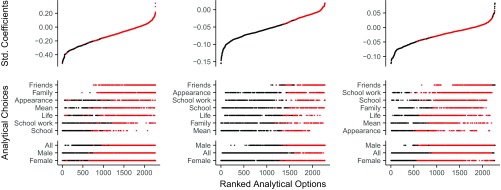
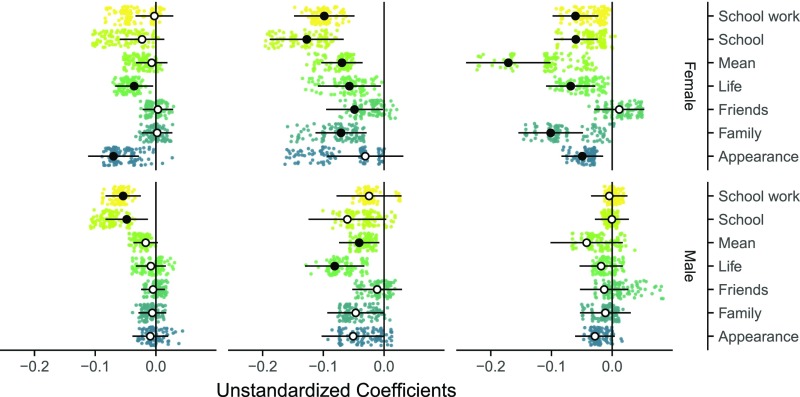
In this study, we used large-scale representative panel data to disentangle the between-person and within-person relations linking adolescent social media use and well-being. We found that social media use is not, in and of itself, a strong predictor of life satisfaction across the adolescent population. Instead, social media effects are nuanced, small at best, reciprocal over time, gender specific, and contingent on analytic methods.
Overview
The claims and statistics of this paper haven’t been checked yet.
Free: it reads the open-access text and checks the first 5 claims that cite a source we can check. Create a free account to check every claim.
Integrity signals
Registry
Cites
Statistics
Figures
Verification
Claims the paper makes
The claims and statistics of this paper haven’t been checked yet.
Free: it reads the open-access text and checks the first 5 claims that cite a source we can check. Create a free account to check every claim.
Claims other papers make about this one
Each is checked against this paper’s own text: does it say what the citing paper says it does?
The source backs part of the claim, not all of it — or backs it for a different population, condition or comparison.
In the citing paper
“Orben and colleagues6 found a small negative reciprocal within-person association between the time spent using social media and life satisfaction.”
From The effect of social media on well-being differs from adolescent to adolescent (2020) · cites this paper as [6]
Experimental — accuracy not yet measuredThe source backs part of the claim, not all of it — or backs it for a different population, condition or comparison.
In the citing paper
“a growing consensus has emerged suggesting that the associations observed between screen time and psychological or health outcomes are very small in size”
From The Conceptual and Methodological Mayhem of “Screen Time” (2020) · cites this paper as [6]
Experimental — accuracy not yet measuredThe source backs part of the claim, not all of it — or backs it for a different population, condition or comparison.
In the citing paper
“while some research has shown no effect of social media on well-being (Orben et al. 2019)”
From The future of social media in marketing (2020) · cites this paper as Orben et al. 2019
Experimental — accuracy not yet measuredThe source backs part of the claim, not all of it — or backs it for a different population, condition or comparison.
In the citing paper
“So far, only a few studies have applied this method and found only minimal within-person associations between social media use and mental health, primarily measured as depressive symptoms [7,20,21].”
From Social Media and Mental Health Among Early Adolescents in Sweden: A Longitudinal Study With 2-Year Follow-Up (KUPOL Study). (2021) · cites this paper as [21]
Experimental — accuracy not yet measuredThe source backs part of the claim, not all of it — or backs it for a different population, condition or comparison.
In the citing paper
“Recent publications that applied more sophisticated statistical methods to study the longitudinal association between social media use and mental health found similar minimal effect sizes [19,20,22], possibly contingent on gender [20,21] or mediated by sleep or physical activity [22,41].”
From Social Media and Mental Health Among Early Adolescents in Sweden: A Longitudinal Study With 2-Year Follow-Up (KUPOL Study). (2021) · cites this paper as [21]
Experimental — accuracy not yet measured
14 more claims about this paper
Create a free account to see every claim other papers make about this one.
Self-check
Percentages, sums and reported differences re-computed from the paper’s own numbers.
The self-check needs the paper’s full text.
Citations
Cites
Cohen, J. (1992) · Psychological Bulletin · doi:10.1037//0033-2909.112.1.155 · Cited by 8,771
A critique of the cross-lagged panel model
Hamaker, E. L., Kuiper, R. M., & Grasman, R. P. P. P. (2015) · Psychological Methods · doi:10.1037/a0038889 · Cited by 4,005
The association between adolescent well-being and digital technology use
Orben, A., & Przybylski, A. K. (2019) · Nature Human Behaviour · doi:10.1038/s41562-018-0506-1 · Cited by 1,500 · cited 4×
“We adopted a specification curve analysis framework (3, 5)—a computational method which minimizes the risk that a specific profile of analytical decisions yields false-positive results.”
BackgroundMethodInfluentialSelf-citationThe Difference Between “Significant” and “Not Significant” is not Itself Statistically Significant
Gelman, A., & Stern, H. (2006) · The American Statistician · doi:10.1198/000313006x152649 · Cited by 1,407
Missing-Data Adjustments in Large Surveys
Little, R. J. A. (1988) · Journal of Business & Economic Statistics · doi:10.1080/07350015.1988.10509663 · Cited by 1,101 · cited 1×
“Each model (i) considered female and male participants separately, (ii) included all relevant covariates, (iii) used weighted least squares mean and variance adjusted estimators to account for ordinal scales, (iv) implemented predictive mean matching to impute missing data (9), and (v) used data from participants who…”
MethodThe Accuracy of Self-Reported Internet Use—A Validation Study Using Client Log Data
Scharkow, M. (2016) · Communication Methods and Measures · doi:10.1080/19312458.2015.1118446 · Cited by 408 · cited 1×
“We also highlight that self-report measures only partially reflect the objective time adolescents spend engaging with social media (11), yet they form the foundation of technological assessments included in the bestquality datasets informing vital research in this area today.”
BackgroundSpecification Curve: Descriptive and Inferential Statistics on All Reasonable Specifications
Simonsohn, U., Simmons, J. P., & Nelson, L. D. (2015) · SSRN Electronic Journal · doi:10.2139/ssrn.2694998 · Cited by 248
The debate over digital technology and young people
Bell, V., Bishop, D. V. M., & Przybylski, A. K. (2015) · BMJ · doi:10.1136/bmj.h3064 · Cited by 143 · cited 1×
“Research, however, has not kept pace (1).”
Self-citationUnderstanding Society: Waves 1-8, 2009-2017 and Harmonised BHPS: Waves 1-18, 1991-2009
University Of Essex, I. F. S. (2019) · UK Data Service · doi:10.5255/ukda-sn-6614-12 · Cited by 26
Social Media’s Enduring Effect on Adolescent Life Satisfaction: CodePreprint
Przybylski, A. K., Orben, A., & Dienlin, T. (2019) · OSF Preprints (OSF Preprints) · doi:10.17605/osf.io/4xp3v
Self-citation
Cited by
Items 201–300 of 486
Zhang, W., Yu, G., & Fu, W. (2022) · Sustainability · doi:10.3390/su14159734 · Cited by 17
Lau, E. N. S., Cheung, R. Y. M., Lai, C. K. S., Lau, A. Y. T., & Fung, M. C. (2023) · Frontiers in Psychology · doi:10.3389/fpsyg.2023.1118288 · Cited by 14
“, 2012; Wong and Siu, 2017; Bozzato, 2020), whereas adolescents’ life satisfaction also influenced by the use of social media and peer relationships (Geraee et al., 2019; Orben et al., 2019).”
BackgroundChanging or stable? The effects of adolescents' social media use on psychosocial functioning
Pouwels, J. L., Beyens, I., Keijsers, L., & Valkenburg, P. M. (2025) · Child Development · doi:10.1111/cdev.14207 · Cited by 24
“More recently, researchers have started to study longitudinal relations and to separate between-person from within-person variances in random-intercept cross-lagged panel designs (Coyne et al., 2020; Orben et al., 2019).”
Mayen, S., Reinhardt, A., & Wilhelm, C. (2025) · Journal of Children and Media · doi:10.1080/17482798.2024.2443662 · Cited by 21
“Overall, the findings remain modest and predominantly negative (Orben & Przybylski, 2019).”
InfluentialWatching Videos on a Smartphone: Do Small Screens Impair Narrative Transportation?
Appel, M., & Mengelkamp, C. (2022) · Media Psychology · doi:10.1080/15213269.2021.2025109 · Cited by 20
Gordon, M. S., & Ohannessian, C. M. (2023) · Youth & Society · doi:10.1177/0044118x231180317 · Cited by 32
“Similarly, Orben et al. (2019) found a significant link between social media use and life satisfaction across an adolescent sample.”
Backgroundde Casteele, M. V., Soenens, B., Ponnet, K. S., Perneel, S., Flamant, N., & Vansteenkiste, M. (2024) · Interacting with Computers · doi:10.1093/iwc/iwad055 · Cited by 28
Social Media Use May Not Be As Bad As Some Suggest: Implication for Older Adults
Cotten, S., Anaraky, R. G., & Schuster, A. (2023) · Innovation in aging · doi:10.1093/geroni/igad022 · Cited by 12
Klinger, D., Plener, P. L., Marboe, G., Karwautz, A. F. K., Kothgassner, O. D., & Dienlin, T. (2024) · Child and Adolescent Psychiatry and Mental Health · doi:10.1186/s13034-024-00797-x · Cited by 24
Self-citationSocial Support, Coping, Life Satisfaction, and Academic Success Among College Students
McNaughton-Cassill, M. E., Lopez, S. G., Knight, C. F., Perrotte, J. K., Mireles, N., Cassill, C. K., Silva, S., & Cassill, A. (2021) · Psi Chi Journal of Psychological Research · doi:10.24839/2325-7342.jn26.2.150 · Cited by 22
Singh, A., Chaudhury, S., & Chaudhari, B. (2024) · Cureus · doi:10.7759/cureus.70526 · Cited by 19
“This discrepancy may be explained by the focus of our study on addictive behaviors, which represent the end of social media usage, while Orben et al. analyze more moderate usage that may not necessarily lead to mental health issues [25].”
BackgroundDorrestein, M., Nutley, S. B., & Thorell, L. B. (2025) · International Journal of Mental Health and Addiction · doi:10.1007/s11469-025-01491-5 · Cited by 21
“Some previous studies have demonstrated that the associations between social media use and internalizing problems are stronger among females than males (Booker et al., 2018; Orben et al., 2019 Svensson et al., 2022; Thorisdottir et al., 2020; Twenge & Farley., 2021).”
Shao, X., & Ni, X. (2021) · SAGE Open · doi:10.1177/21582440211005453 · Cited by 12
“Social media predicted tenuous decreases in life satisfaction and in mean satisfaction in males; while for females, social media was a predictor of slightly decreased life satisfaction across all domains (school work, school, mean, life, friends, family), except satisfaction with appearance (Orben et al., 2019).”
BackgroundResultInfluentialLarson, L. (2021) · Psi Chi Journal of Psychological Research · doi:10.24839/2325-7342.jn26.2.228 · Cited by 13
Cultivating Digital Well-Being and the Rise of Self-Care Apps
Dennis, M. (2020) · Philosophical studies series · doi:10.1007/978-3-030-50585-1_6 · Cited by 13
Modecki, K. L., Low‐Choy, S., Vasco, D., Vernon, L., & Uink, B. N. (2021) · Journal of Child Psychology and Psychiatry · doi:10.1111/jcpp.13433 · Cited by 13
Lohmann, S., & Zagheni, E. (2023) · PLOS Digital Health · doi:10.1371/journal.pdig.0000292 · Cited by 15
The Complementary Nature of Perceived and Actual Time Spent Online in Measuring Digital Well-being
Mok, L., & Anderson, A. (2021) · Proceedings of the ACM on Human-Computer Interaction · doi:10.1145/3449160 · Cited by 12
“Recently, SCA has also been used to study the impact of screen-time on youth well-being and life satisfaction [44, 45].”
BackgroundBeattie, A. (2021) · Science Technology & Human Values · doi:10.1177/01622439211042667 · Cited by 14
Smith, C. H. (2020) · Philosophical studies series · doi:10.1007/978-3-030-50585-1_3 · Cited by 16
Griffioen, N., Scholten, H., Lichtwarck‐Aschoff, A., Maciejewski, D. F., & Granic, I. (2022) · Current Psychology · doi:10.1007/s12144-022-04035-5 · Cited by 13
“However, there have been a number of studies suggesting that social media use may affect female users more than male users (e.g., Orben et al., 2019; Abi-Jaoude et al., 2020; The Hill, n.d.). perhaps because women are more attuned to social comparisons based on curated timelines (Choukas-Bradley et…”
BackgroundFox, K. A., Nick, E. A., Nesi, J. L., Telzer, E. H., & Prinstein, M. J. (2023) · Journal of Clinical Child & Adolescent Psychology · doi:10.1080/15374416.2023.2261543 · Cited by 14
“Aligning with calls from other scholars (Beyens et al., 2020; Orben et al., 2019; Whitlock & Masur, 2019), future research will benefit from using person-specific approaches to identify risk factors.”
Deprivation's role in adolescent social media use and its links to life satisfaction
Kurten, S., Ghai, S., Odgers, C. L., Kievit, R., & Orben, A. C. (2024) · Computers in Human Behavior · doi:10.1016/j.chb.2024.108541 · Cited by 15
Self-citationВозможности и ограничения цифровых следов и методов машинного обучения в социологии
Богданов, М. Б., & Smirnov, I. (2021) · Monitoring obŝestvennogo mneniâ: èkonomičeskie i socialʹnye peremeny · doi:10.14515/monitoring.2021.1.1760 · Cited by 15
Demidenko, M. I., Kelly, D. P., Hardi, F. A., Ip, K. I., Lee, S., Becker, H. C., Hong, S. H., Thijssen, S., Luciana, M. M., & Keating, D. P. (2022) · Neuroimage Reports · doi:10.1016/j.ynirp.2022.100133 · Cited by 9
Measurement confounds in study on social media usage and adolescent life satisfaction
Foster, J. D., & Jackson, M. H. (2019) · Proceedings of the National Academy of Sciences · doi:10.1073/pnas.1908385116 · Cited by 9
Zolkepli, I. A., Tariq, R., Isawasan, P., Shamugam, L., & Mustafa, H. (2024) · PLoS ONE · doi:10.1371/journal.pone.0296973 · Cited by 9
Smartphones undermine social connectedness more in men than women: A mini mega-analysis.
Leitao, M., Proulx, J. D. E., & Kushlev, K. (2024) · Technology Mind and Behavior · doi:10.1037/tmb0000125 · Cited by 9
Social platform use and psychological well‐being
Crolic, C., Zubcsek, P. P., Stephen, A. T., & Brooks, G. (2024) · Journal of Consumer Psychology · doi:10.1002/jcpy.1437 · Cited by 14
Gopakumar, G., Surathkumaar, H., Ramkumar, T., Aljin, V., Viswanath, S., & Joseph, J. (2025) · Cureus · doi:10.7759/cureus.84625 · Cited by 18
Pérez-Wiesner, M., Bühler, K., López‐Moreno, J. A., & López‐Salmerón, M. D. (2025) · International Journal of Environmental Research and Public Health · doi:10.3390/ijerph22101598 · Cited by 21
“Consistent with the digital wellbeing perspective proposed by Orben et al. (2019, PNAS ) [72], the results support the need for collaborative frameworks integrating psychological research, educational policies, and technological regulation.”
Gumport, N. B., Gasperetti, C. E., Silk, J. S., & Harvey, A. G. (2021) · Journal of Youth and Adolescence · doi:10.1007/s10964-021-01429-9 · Cited by 16
Cary, K. M., Maas, M. K., Greer, K. M., & Meshi, D. (2024) · PLoS ONE · doi:10.1371/journal.pone.0297392 · Cited by 18
“Additionally, an eight-wave study of adolescents revealed small, negative between-and within-person associations of social media use and life satisfaction [20].”
BackgroundLu, H., & Kandilov, I. T. (2022) · The Social Science Journal · doi:10.1080/03623319.2022.2087452 · Cited by 8
“The work by Orben et al. (2019), however, suggests that social media use does not necessarily lead to a decline in adolescents’ psychological wellbeing.”
Semken, C., & Rossell, D. (2022) · Journal of the Royal Statistical Society Series C (Applied Statistics) · doi:10.1111/rssc.12578 · Cited by 11
“Such an ATE likely misled Orben et al. (2019) to their conclusion that technology has no relevant association with well-being, whereas we argue that 1.88 higher odds of thinking about suicide are definitely practically relevant.”
BackgroundInfluentialTwenge, J. M., & Hamilton, J. L. (2022) · Acta Psychologica · doi:10.1016/j.actpsy.2022.103696 · Cited by 14
Li, Y., Wang, L., Ni, J., & Gu, J. (2023) · Iranian Journal of Public Health · doi:10.18502/ijph.v52i2.11876 · Cited by 12
de Vaate, N. A. J. D. B., Veldhuis, J., & Konijn, E. A. (2023) · Computers in Human Behavior · doi:10.1016/j.chb.2023.107906 · Cited by 16
Maza, M. T., Kwon, S., Jorgensen, N. A., Capella, J., Prinstein, M. J., Lindquist, K. A., & Telzer, E. H. (2023) · Developmental Cognitive Neuroscience · doi:10.1016/j.dcn.2023.101335 · Cited by 12
General and Alcohol-Related Social Media Use and Mental Health: a Large-Sample Longitudinal Study
Erevik, E. K., Pallesen, S., Vedaa, Ø., Andreassen, C. S., Dhir, A., & Torsheim, T. (2020) · International Journal of Mental Health and Addiction · doi:10.1007/s11469-020-00296-y · Cited by 12
“However, several large sample studies with robust methodological designs have found use of digital technology (including social media) to be practically unrelated to mental health (Orben et al. 2019; Orben and Przybylski 2019a; Orben and Przybylski 2019b).”
BackgroundResultBear, H. A., Fazel, M. S., the OxWell Study Team, & Skripkauskaitė, S. (2025) · Current Psychology · doi:10.1007/s12144-025-07643-z · Cited by 10
“Furthermore, in contrast to between-person differences in social media use observed in the current study, within-person variations may be more likely to increase depression and anxiety or decrease life satisfaction (Coyne et al., 2020; Orben et al., 2019; Steins-bekk et al., 2023).”
Tracing Change in Social Media Use: A Qualitative Longitudinal Study
Jungselius, B., & Weilenmann, A. H. (2025) · CHI Conference on Human Factors in Computing Systems · doi:10.1145/3706598.3713813 · Cited by 16
“While cross-sectional studies still dominate research on social media use, longitudinal studies are gaining traction, particularly in examining the relationship between social media use, life satisfaction, and mental well-being, and how these evolve over time (e.g. [56, 57, 62, 74]).”
Clayborne, Z. M., Capaldi, C. A., & Mehra, V. M. (2025) · BMC Public Health · doi:10.1186/s12889-025-22874-2 · Cited by 11
Wolfers, L. N., Neumann, D., Klein, S. H., Gaiser, F., Anderl, C., & Utz, S. (2025) · Annals of the International Communication Association · doi:10.1093/anncom/wlaf009 · Cited by 22
(2026) · doi:10.1038/s41598-026-39206-y · Cited by 7
The Public and Their Platforms: Public Sociology in an Era of Social Media
Carrigan, M., & Fatsis, L. (2021) · Policy Press eBooks · doi:10.1332/policypress/9781529201055.001.0001 · Cited by 9
Metrics of News Audience Polarization: Same or Different?
Mangold, F., & Scharkow, M. (2022) · Communication Methods and Measures · doi:10.1080/19312458.2022.2085249 · Cited by 8
“…we used this model as a statistical means to separate different sources of the variance in the news audience polarization scores for the 29 media environments (Orben et al., 2019; Scharkow, 2019; Simonsohn et al., 2019; see, Masur & Scharkow, 2020, for statistical and technical backgrounds).”
MethodLayte, R., Brannigan, R., & Stanistreet, D. (2023) · Computers in Human Behavior Reports · doi:10.1016/j.chbr.2023.100293 · Cited by 11
Digital Being: social media and the predictive mind
White, B., Clark, A., & Miller, M. (2024) · Neuroscience of Consciousness · doi:10.1093/nc/niae008 · Cited by 12
“A recent study by Orben et al. (2019), for example, found that the relationship between social media use and reduced well-being was highly questionable, wherein the observed effects were small, nuanced, specific to gender, and highly contingent on the different analytic approaches applied (Orben et…”
BackgroundMethodDoes social media really pose a threat to young people’s well-being?
Brikjær, M., & Kaats, M. (2019) · Nordic Council of Ministers eBooks · doi:10.6027/nord2019-030 · Cited by 8
Chopik, W. J., & Francis, J. (2021) · Computers in Human Behavior · doi:10.1016/j.chb.2021.107028 · Cited by 9
“…members for older adults (Cotten et al., 2013; McMellon & Schiffman, 2002), although ICT-well-being associations are not always found or straightforward despite the large interest in how ICTs affect health and well-being (Orben et al., 2019; Orben & Przy-bylski, 2019; Schwaba & Bleidorn, 2021).”
Motivation for Instagram Use, Passive Instagram Use and Fear of Missing Out (FoMO)
Dewi, F. I. R., & Sari, M. P. (2022) · Jurnal Komunikasi · doi:10.24912/jk.v14i1.18592 · Cited by 21
Virtue, well-being, and mentalized affectivity
Jurist, E. L., Greenberg, D. M., Pizziferro, M., Alaluf, R., & Sosa, M. P. (2024) · Research in Psychotherapy Psychopathology Process and Outcome · doi:10.4081/ripppo.2023.710 · Cited by 7
“To measure general well-being, participants were administered the 5-item Satisfaction with Life Scale (SWLS) (Diener et al .,1985; Orben et al ., 2019).”
MethodMartinez, A., Browne, L., & Knee, C. R. (2024) · Cyberpsychology Journal of Psychosocial Research on Cyberspace · doi:10.5817/cp2024-3-2 · Cited by 12
US State Policies Regarding Social Media: Do Policies Match the Evidence?
Thimm-Kaiser, M., & Keyes, K. M. (2025) · Milbank Quarterly · doi:10.1111/1468-0009.70021 · Cited by 7
Navigating youth, smartphones, and policy: a balanced perspective on digital wellbeing
McCoy, S., & Marcus-Quinn, A. (2025) · Pediatric Research · doi:10.1038/s41390-025-04288-3 · Cited by 6
“7,8 Overall, there is a notable absence of studies which successfully disentangle the effects of different types of smartphone/social media usage — separating learning/educational from recreational uses.”
Digital generation: the association between daily smartphone app use and well-being
Schenkel, K., Nußbeck, F. W., Kerkhoff, D., Scholz, U., Keller, J., & Radtke, T. (2024) · Behaviour and Information Technology · doi:10.1080/0144929x.2024.2406255 · Cited by 7
“…and therefore do not satisfactorily consider that smartphone app use not only varies between individuals (henceforth: between-person app use) but also on a day-by-day basis for each individual (henceforth: within-person app use; Andone et al. 2016; Orben, Dienlin, and Przybylski 2019; Twenge 2019).”
Laiti, J., Donnelly, J. C., Byrne, E., & Dunne, P. J. (2025) · Frontiers in Digital Health · doi:10.3389/fdgth.2025.1560541 · Cited by 10
Brandtzæg, P. B., & Lüders, M. H. (2021) · First Monday · doi:10.5210/fm.v26i12.11755 · Cited by 14
Trajectories of Perceived Technological Impairment and Psychological Distress in Adolescents
Burnell, K., & Odgers, C. L. (2022) · Journal of Youth and Adolescence · doi:10.1007/s10964-022-01679-1 · Cited by 11
“This suggests caution is needed regarding the cause-and-effect narrative surrounding adolescents ’ digital technology use and their well-being (Orben et al., 2019).”
BackgroundHegazi, O. E., Alalalmeh, S. O., Alfaresi, A., Dashtinezhad, S., Bahada, A., Shahwan, M. J., Jairoun, A. A., Babalola, T. K., & Yasin, H. K. A. (2022) · International Journal of Environmental Research and Public Health · doi:10.3390/ijerph192316063 · Cited by 8
Moon, J., Hwang, J., & Lee, W. S. (2022) · Behavioral Sciences · doi:10.3390/bs13010022 · Cited by 6
“[22] performed research on adolescents, employing life satisfaction as a dependent variable.”
BackgroundMarciano, L., Albanese, E., Viswanath, K., & Camerini, A.-L. (2023) · European Journal of Health Communication · doi:10.47368/ejhc.2023.101 · Cited by 7
Vranken, I., Devos, S., & Vandenbosch, L. (2023) · Sex Roles · doi:10.1007/s11199-023-01391-9 · Cited by 7
Multi-platform social media use: little evidence of impacts on adult well-being
Lohmann, S., & Zagheni, E. (2020) · doi:10.4054/mpidr-wp-2020-023 · Cited by 8
“This account is supported by a number of studies and reviews that find null effects or only small effect sizes (M. Appel et al., 2019; Coyne et al., 2020; e.g., meta-analytic r = -.07, Huang, 2017; Jensen et al., 2019; Orben et al., 2019; Orben & Przybylski, 2019) of social media use on well-being, as well as by multi…”
BackgroundResultKelly, Y. J., Xue, B., Booker, C. L., Sacker, A., Lacey, R. E., Ploubidis, G. B., & Patalay, P. (2022) · medRxiv · doi:10.1101/2022.03.31.22273198 · Cited by 12
“Overall, findings point to, at most, modest associations between the amount of time spent on social media platforms and mental ill-health,(5-9) and where gender differences have been examined findings suggest associations are more apparent for girls, especially in early adolescence.(5,6,10,11)”
BackgroundWorse Weather Amplifies Social Media Activity
Minor, K., Moro, E., & Obradovich, N. (2025) · Psychological Science · doi:10.1177/09567976241306099 · Cited by 13
“Though numerous studies (Orben et al., 2019; Panayiotou et al., 2023; Sewall et al., 2022) and multiple reviews of the psychological literature have questioned the strength and generality of this relationship (Dienlin & Johannes, 2020; Meier & Reinecke, 2021; Orben, 2020; Valkenburg et al., 2022),…”
The role of personality type in overcoming workplace distractions
Zulfiqar, S., Khawar, M. R., Sarwar, B., & Huo, C. (2023) · Journal of Innovation & Knowledge · doi:10.1016/j.jik.2023.100381 · Cited by 8
Vidal, C., Philippe, F. L., Geoffroy, M., & Paquin, V. (2024) · International Journal of Mental Health and Addiction · doi:10.1007/s11469-024-01313-0 · Cited by 13
“Other studies, however, have found minimal or no association at the within-person level, leading to uncertainty about the true magnitude of effects of digital media use on youth mental health (Houghton et al., 2018; Orben et al., 2019; Steinsbekk et al., 2023).”
Social media mirage-the two actual selves of an individual: Conceptualization and scale development
Sharma, R. K., Sharma, M., & Joshi, S. (2024) · Technological Forecasting and Social Change · doi:10.1016/j.techfore.2024.123502 · Cited by 5
Risks in Adolescent Adjustment by Internet Exposure: Evidence From PISA
Ortega-Ruipérez, B., Sánchez, A. C., & Marcano, B. (2021) · Frontiers in Psychology · doi:10.3389/fpsyg.2021.763759 · Cited by 7
“…such as cultural (Castellacci and Tveito, 2018) or intrapersonal variables (Servidio et al., 2019), variables not related to technology (Orben and Przybylski, 2019), contrary to the results of other authors who do certify the relationship between time of Internet use and wellbeing (Lifshitz et …”
BackgroundResultAlonso-Sainz, T. (2021) · Springer eBooks · doi:10.1007/978-3-030-85788-2_4 · Cited by 8
Fighting cyberbullying with past: The buffering effect of nostalgia
Wang, T., Li, H., & Jiang, T. (2022) · Computers in Human Behavior · doi:10.1016/j.chb.2022.107518 · Cited by 7
Cook, S., Hamilton, H. A., Montazer, S., Sloan, L., Wickens, C. M., Cheung, A., Boak, A., Turner, N. E., & Mann, R. E. (2021) · The Canadian Journal of Psychiatry · doi:10.1177/0706743720987902 · Cited by 10
“Thus, the nature of the causal pathway between social media use and mental health problems is unclear and it is possible that the relationship is a reciprocal one.(79,80) Given the importance of temporal sequencing and the complexity of factors that may be responsible for the upward trend in psychological distress, mo…”
Anxiety talking: Does anxiety predict sharing information about COVID-19?
Cantwell, O., & Kushlev, K. (2021) · Technology Mind and Behavior · doi:10.1037/tmb0000057 · Cited by 7
Kang, Y., Ahn, J., Cosme, D., Mwilambwe-Tshilobo, L., McGowan, A. L., Zhou, D., Boyd, Z. M., Jovanova, M., Stanoi, O. A., Mucha, P. J., et al. (2023) · Scientific Reports · doi:10.1038/s41598-023-46040-z · Cited by 8
“The past decade of research suggests that the effects of social media engagement likely vary by individual differences that shape the user experience 5 .”
Johnstone, A., Brander, F., Kelly, K., Bestmann, S., & Ward, N. (2022) · International Journal of Stroke · doi:10.1177/17474930211006287 · Cited by 5
Pacheco, E., & Melhuish, N. (2020) · SocArXiv (OSF Preprints) · doi:10.31235/osf.io/qrhgv · Cited by 6
Verbeij, T., Beyens, I., Keijsers, L., & Valkenburg, P. M. (2023) · PsyArXiv (OSF Preprints) · doi:10.31234/osf.io/a9ksb · Cited by 6
Davies, J., Cadwallader, S., Black, L., Dunne, J. H., & Panayiotou, M. (2025) · BMC Public Health · doi:10.1186/s12889-025-23897-5 · Cited by 10
“This is despite evidence suggesting that social media use shows only weak, if any, correlations with self-reported mental health and wellbeing among adolescents [90, 124].”
Grund, T., Krüger, H., & Pascu, I. (2025) · International Journal of Mental Health and Addiction · doi:10.1007/s11469-025-01566-3 · Cited by 19
Fu, Y., Jiawen, L., Chen, R., Zafar, A. U., & Elgammal, I. (2026) · Acta Psychologica · doi:10.1016/j.actpsy.2025.106196 · Cited by 11
Sustainable Humanistic Medicine in a World of Climate Change and Digital Transformation
Hategan, A., Chaudhari, S., & Nassif, J. (2020) · Springer eBooks · doi:10.1007/978-3-030-45627-6_3 · Cited by 4
Social Networking Sites and Empathy Among Adolescents in Indonesia
Meuthia, C. T., Nila, S., Suryobroto, B., & Widayati, K. A. (2023) · HAYATI Journal of Biosciences · doi:10.4308/hjb.30.6.1092-1099 · Cited by 10
“Moreover, a small association may exist between increased life satisfaction and lower social media use (Orben et al. 2019).”
BackgroundCritically appraising the pitfalls of screen time effects research
Pontes, H. M. (2020) · Australian & New Zealand Journal of Psychiatry · doi:10.1177/0004867420963736 · Cited by 4
“…depending on which digital activity is engaged, researchers are still conducting large-scale studies assessing screen time in methodologically flawed ways due to poor operationalization and assessment through problematic single-item questions (e.g. Orben et al., 2019; Przybylski et al., 2019).”
BackgroundBirgisson, O., Hysing, M., Eriksen, H. R., Jóhannsson, E., & Gestsdóttir, S. (2023) · Scandinavian Journal of Public Health · doi:10.1177/14034948231161382 · Cited by 12
“…general, online communication has been shown to be related to mental health problems in adolescents [10–12], while other studies show little to no relationship with online communication [1,13]. studies on the relationship between online communication and anxiety symptoms, in particular, are scarce.”
BackgroundCOVID-19 Preventive Behavior and Digital Media: A Bibliometric Study
Afifi, S., Yaman, A., Bakti, I., & Sumaedi, S. (2023) · Studies in Media and Communication · doi:10.11114/smc.v12i1.6407 · Cited by 6
“Before the COVID-19 pandemic, there are many studies that identified the significant role of social media in changing human life and activities (e.g. Lau, 2017; Kahne & Bowyer, 2018; Yu et al., 2018; Orben et al., 2019).”
BackgroundAssessing the evidentiary value of secondary data analyses: A commentary on
Jones, B. C., Marcinkowska, U. M., & DeBruine, L. M. (2019) · Evolution and Human Behavior · doi:10.1016/j.evolhumbehav.2019.08.004 · Cited by 4
Online Networks and Subjective Well‐Being: The Effect of “Big Five Personality Traits”
Santos, F. R., & Ayuso, L. (2021) · Social Inclusion · doi:10.17645/si.v9i4.4507 · Cited by 7
“Nonetheless, the relationship between these two variables is not always positive, so there is an important debate regarding the relationships maintained on the internet and well‐being (Orben et al., 2019; Orben & Przybylski, 2019).”
BackgroundHjetland, G. J., Finserås, T. R., Sivertsen, B., Colman, I., Hella, R. T., & Skogen, J. C. (2022) · Research Square · doi:10.21203/rs.3.rs-1583111/v1 · Cited by 4
Depression is associated with higher sensitivity to social media rewardsPreprint
Mirea, D.-M., Mildner, J. N., Kelley, S., Gillan, C. M., Nook, E. C., & Niv, Y. (2024) · PsyArXiv (OSF Preprints) · doi:10.31234/osf.io/4ynbc · Cited by 7
Hui, B. P. H., Au, A. K. Y., Ng, J. C. K., & Song, X. (2022) · International Journal of Environmental Research and Public Health · doi:10.3390/ijerph20010100 · Cited by 5
“In particular, positive associations of SNS use with adolescent life satisfaction have only been found in a limited number of studies [31,32], while its overall negative associations across the adolescent population have been observed in a large-scale nationally representative panel data analysis—though the associatio…”
BackgroundWeisskirch, R. S. (2026) · Social Science Computer Review · doi:10.1177/08944393251337016 · Cited by 3
“Recent research has found that frequent social media use among adolescents is associated with poor life satisfaction (Orben et al., 2019), increased self-harm and depression (Barthorpe et al., 2020; Ivie et al., 2020), and cybervictimization (Kim et al., 2022) among other negative outcomes.”
Vijayakumar, N., Dashti, S. G., Canterford, L. D., Ellul, S., Parissi, A. J. A., Goddings, A., Viner, R., Moran, P., Borschmann, R., Mundy, L. K., et al. (2026) · The Medical Journal of Australia · doi:10.5694/mja2.70220 · Cited by 3
“…results broadly align with several reviews concluding that the negative effects of social media on mental health problems are small across all adolescents [5, 6], but also with many studies suggesting that effects for well-being are greater for female relative to male adolescents [22, 24, 37, 38].”
Fang, X., & Mo, Z. (2026) · Frontiers in Psychology · doi:10.3389/fpsyg.2026.1740535 · Cited by 3
Adolescent and parental views on weight and weight management: a qualitative study
Little, M., Jebb, S. A., & Aveyard, P. N. (2025) · Archives of Disease in Childhood · doi:10.1136/archdischild-2024-327306 · Cited by 6
Barns bruk av sosiale medier: Om ensomhet, samvær med venner og livskvalitet blant jenter og gutter
Løvgren, M., & Hyggen, C. (2023) · Norsk sosiologisk tidsskrift · doi:10.18261/nost.7.6.4 · Cited by 5
Liu, Y., & Marciano, L. (2024) · Scientific Reports · doi:10.1038/s41598-024-81665-8 · Cited by 13
“…towards within-person variations offers deeper insights into the underlying mechanisms of social media’s impact on adolescent well-being 15,16,39 , the small size of the effects showed that these features are still insufficient to fully capture the social media behaviors or activities that…”
InfluentialThe impact of social media on mental health
Ndindeng, A. (2025) · Mental Health and Digital Technologies · doi:10.1108/mhdt-12-2024-0038 · Cited by 8
The Public and Their Platforms: Public Sociology in an Era of Social Media
Carrigan, M., & Fatsis, L. (2021) · Bristol University Press eBooks · doi:10.56687/9781529201062 · Cited by 4
Metadata
- Authors
- Orben, A., Dienlin, T., & Przybylski, A. K.
- Affiliations
- University of Oxford (GB)
- University of Hohenheim (DE)
- Corresponding author
- Orben, Amy
- Venue
- Proceedings of the National Academy of Sciences
- Publisher
- National Academy of Sciences
- Published
- 2019-05-06
- Volume
- 116
- Issue
- 21
- Pages
- 10226-10228
- ISSN
- 0027-8424 (ISSN-L)
- 1091-6490
- PMC
- PMC6534991
- OpenAlex
- W2944221730
- Cited by
- 485
- References
- 9
- Citations by year
- 2026: 42 · 2025: 46 · 2024: 47 · 2023: 54 · 2022: 62 · 2021: 84 · 2020: 125 · 2019: 24
- FWCI
- 148.41
- Type
- journal article
- Language
- en
- Open access
- hybrid
- doi.org
- Licence
- Locations
- Proceedings of the National Academy of Sciences (publishedVersion, cc-by)
- Europe PMC (PubMed Central) (publishedVersion, cc-by)
- PubMed Central (publishedVersion, cc-by)
- PubMed (publishedVersion)
- Funders
- Barnardo's (Research Grant)
- Volkswagen Foundation (Transformations of privacy)
- RCUK | Economic and Social Research Council (Understanding Society Policy Fellowship)
- Topics
- Social Sciences › Sociology and Political Science › Impact of Technology on Adolescents
- Social Sciences › Psychology › Social Psychology › Psychological Well-being and Life Satisfaction
- Social Sciences › Education › Child Development and Digital Technology
- Keywords
- social media use, adolescent life satisfaction, youth welfare, reciprocal effects, gender differences, within-person effects, between-person effects, longitudinal panel data
- MeSH terms
- Adolescent, Adolescent Behavior, Child, Female, Humans, Male, Personal Satisfaction, Surveys and Questionnaires, Social Media
About these checks
Registry, retraction, Cites and statistics results are computed, not judged, with one exception: a printed reference that no index lists is read once by a model before it counts as a citation error. Claims are extracted by a model and kept only when their quote appears verbatim in the text; each cited source is then checked, with a model’s help, for whether it says what the claim relies on. Those verdicts can be wrong — read the claim’s quote and the cited source before relying on one.
Statistics and arithmetic are recomputed, not judged.
Confidence bands are shown only for fields calibrated on our annotated test set. None is calibrated yet, so no band is shown.
What counts as a claim ›How we measure confidence ›How we check this ›
Are you an author, or do you see a problem with this page? Request a review
Data sources
Bibliographic data: Semantic Scholar, OpenAlex, Crossref.
Contains information from the Semantic Scholar Academic Graph Datasets, made available under the ODC Attribution License (ODC-BY 1.0).
Semantic Scholar’s data is described in: Kinney, R., et al. (2023). The Semantic Scholar Open Data Platform. arXiv:2301.10140.
