

Social media’s enduring effect on adolescent life satisfaction
Open accessThe DOI matches its Crossref record; 10 of the 10 references it cites were found in a registry or an index.
Abstract
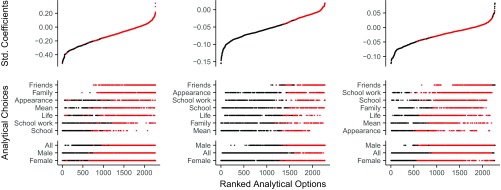
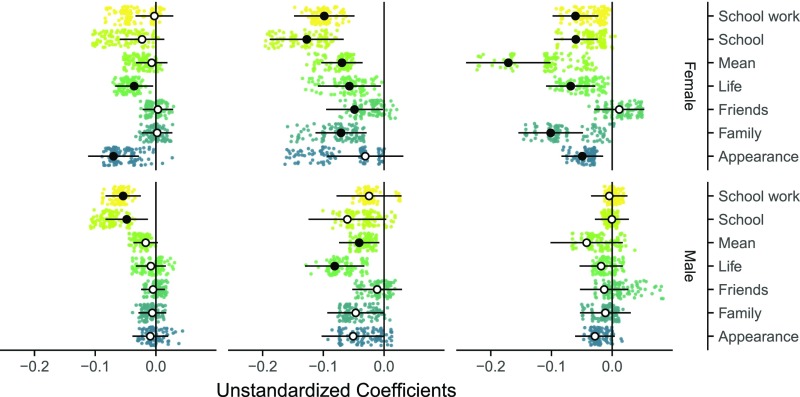
In this study, we used large-scale representative panel data to disentangle the between-person and within-person relations linking adolescent social media use and well-being. We found that social media use is not, in and of itself, a strong predictor of life satisfaction across the adolescent population. Instead, social media effects are nuanced, small at best, reciprocal over time, gender specific, and contingent on analytic methods.
Overview
The claims and statistics of this paper haven’t been checked yet.
Free: it reads the open-access text and checks the first 5 claims that cite a source we can check. Create a free account to check every claim.
Integrity signals
Registry
Cites
Statistics
Figures
Verification
Claims the paper makes
The claims and statistics of this paper haven’t been checked yet.
Free: it reads the open-access text and checks the first 5 claims that cite a source we can check. Create a free account to check every claim.
Claims other papers make about this one
Each is checked against this paper’s own text: does it say what the citing paper says it does?
The source backs part of the claim, not all of it — or backs it for a different population, condition or comparison.
In the citing paper
“Orben and colleagues6 found a small negative reciprocal within-person association between the time spent using social media and life satisfaction.”
From The effect of social media on well-being differs from adolescent to adolescent (2020) · cites this paper as [6]
Experimental — accuracy not yet measuredThe source backs part of the claim, not all of it — or backs it for a different population, condition or comparison.
In the citing paper
“a growing consensus has emerged suggesting that the associations observed between screen time and psychological or health outcomes are very small in size”
From The Conceptual and Methodological Mayhem of “Screen Time” (2020) · cites this paper as [6]
Experimental — accuracy not yet measuredThe source backs part of the claim, not all of it — or backs it for a different population, condition or comparison.
In the citing paper
“while some research has shown no effect of social media on well-being (Orben et al. 2019)”
From The future of social media in marketing (2020) · cites this paper as Orben et al. 2019
Experimental — accuracy not yet measuredThe source backs part of the claim, not all of it — or backs it for a different population, condition or comparison.
In the citing paper
“So far, only a few studies have applied this method and found only minimal within-person associations between social media use and mental health, primarily measured as depressive symptoms [7,20,21].”
From Social Media and Mental Health Among Early Adolescents in Sweden: A Longitudinal Study With 2-Year Follow-Up (KUPOL Study). (2021) · cites this paper as [21]
Experimental — accuracy not yet measuredThe source backs part of the claim, not all of it — or backs it for a different population, condition or comparison.
In the citing paper
“Recent publications that applied more sophisticated statistical methods to study the longitudinal association between social media use and mental health found similar minimal effect sizes [19,20,22], possibly contingent on gender [20,21] or mediated by sleep or physical activity [22,41].”
From Social Media and Mental Health Among Early Adolescents in Sweden: A Longitudinal Study With 2-Year Follow-Up (KUPOL Study). (2021) · cites this paper as [21]
Experimental — accuracy not yet measured
14 more claims about this paper
Create a free account to see every claim other papers make about this one.
Self-check
Percentages, sums and reported differences re-computed from the paper’s own numbers.
The self-check needs the paper’s full text.
Citations
Cites
Cohen, J. (1992) · Psychological Bulletin · doi:10.1037//0033-2909.112.1.155 · Cited by 8,771
A critique of the cross-lagged panel model
Hamaker, E. L., Kuiper, R. M., & Grasman, R. P. P. P. (2015) · Psychological Methods · doi:10.1037/a0038889 · Cited by 4,005
The association between adolescent well-being and digital technology use
Orben, A., & Przybylski, A. K. (2019) · Nature Human Behaviour · doi:10.1038/s41562-018-0506-1 · Cited by 1,500 · cited 4×
“We adopted a specification curve analysis framework (3, 5)—a computational method which minimizes the risk that a specific profile of analytical decisions yields false-positive results.”
BackgroundMethodInfluentialSelf-citationThe Difference Between “Significant” and “Not Significant” is not Itself Statistically Significant
Gelman, A., & Stern, H. (2006) · The American Statistician · doi:10.1198/000313006x152649 · Cited by 1,407
Missing-Data Adjustments in Large Surveys
Little, R. J. A. (1988) · Journal of Business & Economic Statistics · doi:10.1080/07350015.1988.10509663 · Cited by 1,101 · cited 1×
“Each model (i) considered female and male participants separately, (ii) included all relevant covariates, (iii) used weighted least squares mean and variance adjusted estimators to account for ordinal scales, (iv) implemented predictive mean matching to impute missing data (9), and (v) used data from participants who…”
MethodThe Accuracy of Self-Reported Internet Use—A Validation Study Using Client Log Data
Scharkow, M. (2016) · Communication Methods and Measures · doi:10.1080/19312458.2015.1118446 · Cited by 408 · cited 1×
“We also highlight that self-report measures only partially reflect the objective time adolescents spend engaging with social media (11), yet they form the foundation of technological assessments included in the bestquality datasets informing vital research in this area today.”
BackgroundSpecification Curve: Descriptive and Inferential Statistics on All Reasonable Specifications
Simonsohn, U., Simmons, J. P., & Nelson, L. D. (2015) · SSRN Electronic Journal · doi:10.2139/ssrn.2694998 · Cited by 248
The debate over digital technology and young people
Bell, V., Bishop, D. V. M., & Przybylski, A. K. (2015) · BMJ · doi:10.1136/bmj.h3064 · Cited by 143 · cited 1×
“Research, however, has not kept pace (1).”
Self-citationUnderstanding Society: Waves 1-8, 2009-2017 and Harmonised BHPS: Waves 1-18, 1991-2009
University Of Essex, I. F. S. (2019) · UK Data Service · doi:10.5255/ukda-sn-6614-12 · Cited by 26
Social Media’s Enduring Effect on Adolescent Life Satisfaction: CodePreprint
Przybylski, A. K., Orben, A., & Dienlin, T. (2019) · OSF Preprints (OSF Preprints) · doi:10.17605/osf.io/4xp3v
Self-citation
Cited by
The future of social media in marketing
Appel, G., Grewal, L., Hadi, R., & Stephen, A. T. (2020) · Journal of the Academy of Marketing Science · doi:10.1007/s11747-019-00695-1 · Cited by 1,893
“In fact, while some research has shown no effect of social media on wellbeing (Orben et al. 2019), other research has shown that social media can benefit individuals through a number of different avenues such as teaching and developing socialization skills, allowing greater communication and access…”
BackgroundOdgers, C. L., & Jensen, M. R. (2020) · Journal of Child Psychology and Psychiatry · doi:10.1111/jcpp.13190 · Cited by 1,189
Teenagers, screens and social media: a narrative review of reviews and key studies
Orben, A. (2020) · Social Psychiatry and Psychiatric Epidemiology · doi:10.1007/s00127-019-01825-4 · Cited by 706
Self-citationThe effect of social media on well-being differs from adolescent to adolescent
Beyens, I., Pouwels, J. L., van Driel, I. I., Keijsers, L., & Valkenburg, P. M. (2020) · Scientific Reports · doi:10.1038/s41598-020-67727-7 · Cited by 497
Social Media and Well-Being: Pitfalls, Progress, and Next Steps
Kross, E., Verduyn, P., Sheppes, G., Costello, C. K., Jonides, J., & Ybarra, O. (2021) · Trends in Cognitive Sciences · doi:10.1016/j.tics.2020.10.005 · Cited by 474
Bernacki, M. L., Greene, J. A., & Crompton, H. (2020) · Contemporary Educational Psychology · doi:10.1016/j.cedpsych.2019.101827 · Cited by 484
“Mobile technology is increasingly being used to achieve social, interactive, and collaborative educational goals, with subsequent e ff ects upon how people collaborate and the quality of their work (Orben, Dienlin, & Przybylski, 2019).”
MethodThe impact of digital technology use on adolescent well-being
Dienlin, T., & Johannes, N. (2020) · Dialogues in Clinical Neuroscience · doi:10.31887/dcns.2020.22.2/tdienlin · Cited by 393
Self-citationWindows of developmental sensitivity to social media
Orben, A., Przybylski, A. K., Blakemore, S.-J., & Kievit, R. A. (2022) · Nature Communications · doi:10.1038/s41467-022-29296-3 · Cited by 387
Self-citationSocial media use and well-being: What we know and what we need to know
Valkenburg, P. M. (2022) · Current Opinion in Psychology · doi:10.1016/j.copsyc.2021.12.006 · Cited by 373
Boer, M., Stevens, G. W. J. M., Finkenauer, C., de Looze, M. E., & van den Eijnden, R. J. J. M. (2021) · Computers in Human Behavior · doi:10.1016/j.chb.2020.106645 · Cited by 335
Video game play is positively correlated with well-being
Johannes, N., Vuorre, M., & Przybylski, A. K. (2021) · Royal Society Open Science · doi:10.1098/rsos.202049 · Cited by 330
Self-citationThe Conceptual and Methodological Mayhem of “Screen Time”
K. Kaye, L., Orben, A., A. Ellis, D., C. Hunter, S., & Houghton, S. (2020) · International Journal of Environmental Research and Public Health · doi:10.3390/ijerph17103661 · Cited by 304
Self-citationSocial media use and mental health and well-being among adolescents: a scoping review
Schønning, V., Hjetland, G. J., Aarø, L. E., & Skogen, J. C. (2020) · Frontiers in Psychology · doi:10.3389/fpsyg.2020.01949 · Cited by 288
“For instance, Twenge and Campbell (2019) stated that use of digital technology and social media have a negative impact on well-being, while Orben and Przybylski (2019) argued that the association between digital technology use and adolescent well-being is so small that it is more or less…”
BackgroundAcute social isolation evokes midbrain craving responses similar to hunger
Tomova, L., Wang, K. L., Thompson, T., Matthews, G. A., Takahashi, A., Tye, K. M., & Saxe, R. (2020) · Nature Neuroscience · doi:10.1038/s41593-020-00742-z · Cited by 283
“Yet, some have argued that using social medial only exacerbates subjective feelings of isolation(118, for review) but see (119, 120) .”
Digital well-being theory and research
Büchi, M. (2024) · New Media & Society · doi:10.1177/14614448211056851 · Cited by 277
“The (isolated) effects of digital practices among the myriad factors that impact well-being are presumably small (Kardefelt-Winther et al., 2020; Orben et al., 2019; Orben and Przybylski, 2019), making theoretical precision ex ante data collection all the more critical.”
BackgroundBeyond Screen Time: Identity Development in the Digital Age
Granic, I., Morita, H., & Scholten, H. (2020) · Psychological Inquiry · doi:10.1080/1047840x.2020.1820214 · Cited by 237
“…health and screen use and that these effects are often bidirectional (Berryman et al., 2018; Elhai et al., 2018; Ferguson & Wang, 2019; Heffer et al., 2019; Hilgard, Engelhardt, & Rouder, 2017; Jensen et al., 2019; Markey & Ferguson, 2017; Orben & Przybylski, 2019a, 2019b; Orben et al., 2019).”
BackgroundMechanisms linking social media use to adolescent mental health vulnerability
Orben, A., Meier, A., Dalgleish, T., & Blakemore, S.-J. (2024) · Nature Reviews Psychology · doi:10.1038/s44159-024-00307-y · Cited by 220
“Further, longitudinal data have shown bidirectional negative links between social media use and satisfaction with domains of the self (such as satisfaction with family, friends or schoolwork) 47 .”
InfluentialSelf-citationJarman, H. K., Marques, M. D., McLean, S. A., Slater, A., & Paxton, S. J. (2021) · Body Image · doi:10.1016/j.bodyim.2020.11.005 · Cited by 214
Hop to it! The impact of organization type on innovation response time to the COVID-19 crisis
Ebersberger, B., & Kuckertz, A. (2021) · Journal of Business Research · doi:10.1016/j.jbusres.2020.11.051 · Cited by 190
Social Drivers and Algorithmic Mechanisms on Digital Media.
Metzler, H., & Garcia, D. (2024) · Perspectives on Psychological Science · doi:10.1177/17456916231185057 · Cited by 204
“For instance, teen-age girls or already socially disadvantaged individuals may be particularly vulnerable (Allcott et al., 2020; Heffer et al., 2019; Midgley, 2019; Orben et al., 2019, 2022).”
BackgroundThe relationship between Instagram use and indicators of mental health: a systematic review
Faelens, L., Hoorelbeke, K., Cambier, R., van Put, J., Van de Putte, E., De Raedt, R., & Koster, E. H. W. (2021) · Computers in Human Behavior Reports · doi:10.1016/j.chbr.2021.100121 · Cited by 182
“This is not surprising since females seem to be more intensive Instagram users (e.g., Mackson et al., 2019) and seem to be more prone to negative effects of social media (e.g., Marino et al., 2018; Orben et al., 2019; Yurdagü;l et al., 2019).”
BackgroundHow social network sites and other online intermediaries increase exposure to news
Scharkow, M., Mangold, F., Stier, S., & Breuer, J. (2020) · Proceedings of the National Academy of Sciences · doi:10.1073/pnas.1918279117 · Cited by 176
“This problem concerns almost all studies on the use and effects of online media, and has received considerable attention in recent communication research (11).”
BackgroundTrends in Adverse Childhood Experiences (ACEs) in the United States
Finkelhor, D. (2020) · Child Abuse & Neglect · doi:10.1016/j.chiabu.2020.104641 · Cited by 170
“Fatal and nonfatal 1979−2000 2005−2016 Paulozzi et al. (2006);”
Schemer, C., Masur, P. K., Geiß, S., Müller, P., & Schäfer, S. (2021) · Journal of Computer-Mediated Communication · doi:10.1093/jcmc/zmaa014 · Cited by 166
Sela, Y., Zach, M., Amichay-Hamburger, Y., Mishali, M., & Omer, H. (2020) · Computers in Human Behavior · doi:10.1016/j.chb.2019.106226 · Cited by 166
Vuorre, M., Orben, A., & Przybylski, A. K. (2021) · Clinical Psychological Science · doi:10.1177/2167702621994549 · Cited by 158
“In fact, some longitudinal studies have found the opposite, whereby mental health problems predict smartphone use rather than phone use predicting mental health problems (Bado et al., 2020), or found bidirectional relationships (Orben et al., 2019).”
BackgroundSelf-citationBarthorpe, A., Winstone, L., Mars, B., & Moran, P. (2020) · Journal of Affective Disorders · doi:10.1016/j.jad.2020.05.106 · Cited by 158
The accuracy and validity of self-reported social media use measures among adolescents
Verbeij, T., Pouwels, J. L., Beyens, I., & Valkenburg, P. M. (2021) · Computers in Human Behavior Reports · doi:10.1016/j.chbr.2021.100090 · Cited by 163
Del Giudice, M., & Gangestad, S. W. (2021) · Advances in Methods and Practices in Psychological Science · doi:10.1177/2515245920954925 · Cited by 143
Screen time, social media use, and adolescent development
Odgers, C. L., Schueller, S. M., & Ito, M. (2020) · Annual Review of Developmental Psychology · doi:10.1146/annurev-devpsych-121318-084815 · Cited by 137
Shensa, A., Sidani, J. E., Escobar-Viera, C. G., Switzer, G. E., Primack, B. A., & Choukas-Bradley, S. (2020) · Journal of Affective Disorders · doi:10.1016/j.jad.2019.08.092 · Cited by 129
“Conversely, other research has found either mixed results or no evidence linking SM use to well-being among adolescents (Anderson and Jiang, 2018; Orben et al., 2019).”
Educational Research and Innovation
OECD, & Centre for Educational Research and Innovation (2009) · Educational research and innovation · doi:10.1787/20769679 · Cited by 131
Experimentally manipulating social media abstinence: results of a four-week diary study
Hall, J. A., Xing, C., Ross, E. M., & Johnson, R. M. (2021) · Media Psychology · doi:10.1080/15213269.2019.1688171 · Cited by 120
“psychosocial outcomes is so small as to be trivial (Orben et al., 2019; Orben & Przybylski, 2019a).”
BackgroundResultValkenburg, P. M., Beyens, I., Pouwels, J. L., van Driel, I. I., & Keijsers, L. (2021) · Journal of Computer-Mediated Communication · doi:10.1093/jcmc/zmab015 · Cited by 123
Jarman, H. K., Marques, M. D., McLean, S. A., Slater, A., & Paxton, S. J. (2021) · Journal of Youth and Adolescence · doi:10.1007/s10964-020-01390-z · Cited by 121
Johannes, N., Meier, A., Reinecke, L., Ehlert, S., Setiawan, D. N., Walasek, N., Dienlin, T., Buijzen, M., & Veling, H. (2021) · Media Psychology · doi:10.1080/15213269.2020.1768122 · Cited by 114
“These small effect sizes are in line with recent work on the relation between screen time and well-being (Heffer et al., 2019; Orben et al., 2019; Orben & Przybylski, 2019a, 2019b; Przybylski & Weinstein, 2017) and with small effect sizes in the field in general (Rains, Levine, & Weber, 2018).”
ResultSelf-citationDigital Overuse and Subjective Well-Being in a Digitized Society
Büchi, M., Festic, N., & Latzer, M. (2019) · Social Media + Society · doi:10.1177/2056305119886031 · Cited by 109
“Existing studies have shown positive, negative, or zero effects, depending on the specific operationalizations of Internet use and happiness (Huang, 2017; Leung, 2010; Orben, Dienlin, & Przybylski, 2019).”
BackgroundLo Coco, G., Salerno, L., Franchina, V., La Tona, A., Di Blasi, M., & Giordano, C. (2020) · Addictive Behaviors · doi:10.1016/j.addbeh.2020.106360 · Cited by 100
Social Media Use and Depressive Symptoms-A Longitudinal Study from Early to Late Adolescence
Puukko, K., Hietajärvi, L., Maksniemi, E., Alho, K., & Salmela-Aro, K. (2020) · International Journal of Environmental Research and Public Health · doi:10.3390/ijerph17165921 · Cited by 99
“Although social media scholars have begun to voice concern over using between-person analyses to make assumptions about social media effects on adolescents’ well-being [37], the direction or the stability of the associations between social media use and depressive symptoms is rarely examined at the within-person level.”
BackgroundNaslund, J. A., Gonsalves, P. P., Gruebner, O., Pendse, S. R., Smith, S. L., Sharma, A., & Raviola, G. (2019) · Current Treatment Options in Psychiatry · doi:10.1007/s40501-019-00186-8 · Cited by 99
Possible Effects of Social Media Use on Adolescent Health Behaviors and Perceptions
Buda, G., Lukoševičiūtė, J., Šalčiūnaitė, L., & Šmigelskas, K. (2021) · Psychological Reports · doi:10.1177/0033294120922481 · Cited by 89
“Overall, PSMU has been shown to have a negative effect on well-being and life satisfaction (N. S. Hawi & Samaha, 2017b; Frunzaru & Botan, 2015; Orben et al., 2019; Satici, 2019), though van der Velden et al. (2019) found that once pre-existing mental health problems are taken into consideration,…”
BackgroundResultLongitudinal association between social media use and psychological distress among adolescents
Thorisdottir, I. E., Sigurvinsdottir, R., Kristjansson, A. L., Allegrante, J. P., Lilly, C. L., & Sigfusdottir, I. D. (2020) · Preventive Medicine · doi:10.1016/j.ypmed.2020.106270 · Cited by 90
“On the other hand, others have argued that the impact of social media is generally limited and other factors may play a larger role in the development of mental health among youth (Orben et al., 2019; Orben and Przybylski, 2019).”
BackgroundMethodBeeres, D. T., Andersson, F., Vossen, H. G. M., & Galanti, M. R. (2021) · Journal of Adolescent Health · doi:10.1016/j.jadohealth.2020.07.042 · Cited by 102
Social Media Use and Deliberate Self-Harm Among Youth: A Systematized Narrative Review
Biernesser, C., Sewall, C. J. R., Brent, D., Bear, T., Mair, C., & Trauth, J. (2020) · Children and Youth Services Review · doi:10.1016/j.childyouth.2020.105054 · Cited by 86
Svensson, R., Johnson, B., & Olsson, A. (2022) · BMC Public Health · doi:10.1186/s12889-022-12670-7 · Cited by 79
“For example, adolescents have been asked to define social media themselves [32], and self-report how active they have been on different platforms [20, 33], whether they chat or interact with their friends on different platforms [17, 34], and use a combined measure of instant messaging, photo-sharing or other social me…”
BackgroundKroencke, L., Harari, G. M., Back, M. D., & Wagner, J. (2023) · Journal of Personality and Social Psychology · doi:10.1037/pspp0000422 · Cited by 105
Like this meta-analysis: Screen media and mental health.
Ferguson, C. J., Kaye, L. K., Branley-Bell, D., Markey, P., Ivory, J. D., Klisanin, D., Elson, M., Smyth, M., Hogg, J. L., McDonnell, D., et al. (2022) · Professional Psychology: Research and Practice · doi:10.1037/pro0000426 · Cited by 78
“This remarkable claim has touched off several years of intense debate (e.g., Orben et al., 2019; Twenge et al., 2020), with opposed groups often reanalyzing and debating over the same large data sets.”
BackgroundAdolescent development and growing divides in the digital age
Odgers, C. L., & Jensen, M. R. (2020) · Dialogues in Clinical Neuroscience · doi:10.31887/dcns.2020.22.2/codgers · Cited by 74
Merchant, R., Torous, J., Rodriguez-Villa, E., & Naslund, J. A. (2020) · Current Opinion in Psychiatry · doi:10.1097/yco.0000000000000626 · Cited by 70
Dynamics of adolescents’ smartphone use and well-being are positive but ephemeral
Marciano, L., Driver, C. C., Schulz, P. J., & Camerini, A.-L. (2022) · Scientific Reports · doi:10.1038/s41598-022-05291-y · Cited by 70
Relating Through Technology: Everyday Social Interaction
Hall, J. A. (2020) · Cambridge University Press eBooks · doi:10.1017/9781108629935 · Cited by 94
Digital Technology and Media Use by Adolescents: Latent Class Analysis
Moreno, M. A., Binger, K., Zhao, Q., Eickhoff, J., Minich, M., & Uhls, Y. T. (2022) · JMIR Pediatrics and Parenting · doi:10.2196/35540 · Cited by 66
“However, other studies have found that social media use does not affect life satisfaction [45,46] nor depression [47].”
BackgroundSuicide in Northern Ireland: epidemiology, risk factors, and prevention
O'Neill, S., & O'Connor, R. C. (2020) · The Lancet Psychiatry · doi:10.1016/s2215-0366(19)30525-5 · Cited by 67
Directing smartphone use through the self-nudge app one sec
Grüning, D. J., Riedel, F., & Lorenz-Spreen, P. (2023) · Proceedings of the National Academy of Sciences · doi:10.1073/pnas.2213114120 · Cited by 88
Hilty, D. M., Stubbe, D., McKean, A. J., Hoffman, P. E., Zalpuri, I., Myint, M. T., Joshi, S. V., Pakyurek, M., & Li, S.-T. T. (2023) · BJPsych Open · doi:10.1192/bjo.2023.523 · Cited by 64
Digital Technology and Media Use by Adolescents: Latent Class Analysis (Preprint)
(2022) · doi:10.2196/preprints.35540 · Cited by 66
Boer, M., Stevens, G. W. J. M., Finkenauer, C., & van den Eijnden, R. J. J. M. (2022) · Computers in Human Behavior · doi:10.1016/j.chb.2021.107084 · Cited by 65
Kardefelt‐Winther, D., Rees, G., & Livingstone, S. (2020) · Journal of Child Psychology and Psychiatry · doi:10.1111/jcpp.13280 · Cited by 65
McNamee, P., Mendolia, S., & Yerokhin, O. (2021) · Economics & Human Biology · doi:10.1016/j.ehb.2021.100992 · Cited by 62
Sewall, C. J. R., Goldstein, T. R., Wright, A. G. C., & Rosen, D. (2022) · Clinical Psychological Science · doi:10.1177/21677026221078309 · Cited by 64
“…distress (e.g., see Tang et al., 2021), only a handful of studies (Coyne et al., 2020; George et al., 2018; Houghton et al., 2018; Kross et al., 2013; Orben et al., 2019; Puukko et al., 2020; Schemer et al., 2021) have employed analyses that satisfy both of the objectives described above.”
ResultJones, R., Mougouei, D., & Evans, S. L. (2021) · Human Behavior and Emerging Technologies · doi:10.1002/hbe2.304 · Cited by 62
Panayiotou, M., Black, L., Carmichael-Murphy, P., Qualter, P., & Humphrey, N. (2023) · Nature Mental Health · doi:10.1038/s44220-023-00063-7 · Cited by 62
Analysis of Social Media Use, Mental Health, and Gender Identity Among US Youths
Coyne, S. M., Weinstein, E., Sheppard, J. A., James, S. L., Gale, M., Alfen, M. V., Ririe, N., Monson, C., Ashby, S., Weston, A., et al. (2023) · JAMA Network Open · doi:10.1001/jamanetworkopen.2023.24389 · Cited by 83
Plackett, R., Sheringham, J., & Dykxhoorn, J. (2023) · Journal of Medical Internet Research · doi:10.2196/43213 · Cited by 57
“Other studies have also explored the direction of the effect and found some evidence of a reciprocal relationship, in which poor mental health may encourage greater social media use and social media use itself may also lead to poorer mental health [17].”
BackgroundMethodResultInfluentialTeenage sleep and technology engagement across the week
Orben, A., & Przybylski, A. K. (2020) · PeerJ · doi:10.7717/peerj.8427 · Cited by 58
Self-citationSaragosa‐Harris, N. M., Cohen, A. O., Reneau, T. R., Villano, W. J., Heller, A. S., & Hartley, C. A. (2022) · Psychological Science · doi:10.1177/09567976221102070 · Cited by 66
“This result lends support to a growing literature suggesting that, despite popular belief, digital technology does not necessarily hinder real-world engagement during adolescence (Orben et al., 2019; Orben & Przybylski, 2019).”
ResultGaming and social media use among adolescents in the midst of the COVID-19 pandemic
Nilsson, A., Rosendahl, I. K., & Jayaram‐Lindström, N. (2022) · Nordic Studies on Alcohol and Drugs · doi:10.1177/14550725221074997 · Cited by 76
“Other studies, however, point to no or small such effects (Berryman et al., 2018; Orben et al., 2019; Orben & Przybylski, 2019), or to the possibility of an inverted U-curve where screen use is beneficial for health and psychosocial functioning up to a certain point, where it starts to have mostly…”
ResultRosen, A. O., Holmes, A. L., Balluerka, N., Montesinos, M. D. H., Gorostiaga, A., Gómez‐Benito, J., & Huedo-Medina, T. B. (2022) · International Journal of Environmental Research and Public Health · doi:10.3390/ijerph19073952 · Cited by 84
Marques, M. D., Paxton, S. J., McLean, S. A., Jarman, H. K., & Sibley, C. G. (2021) · Body Image · doi:10.1016/j.bodyim.2021.10.008 · Cited by 65
Schreurs, L., Meier, A., & Vandenbosch, L. (2023) · Current Psychology · doi:10.1007/s12144-022-03893-3 · Cited by 55
Adolescent Social Media Use through a Self-Determination Theory Lens: A Systematic Scoping Review
West, M., Rice, S., & Vella‐Brodrick, D. (2024) · International Journal of Environmental Research and Public Health · doi:10.3390/ijerph21070862 · Cited by 117
Twigg, L., Duncan, C., & Weich, S. (2020) · Journal of Adolescence · doi:10.1016/j.adolescence.2020.02.002 · Cited by 55
Du, J., Kerkhof, P., & van Koningsbruggen, G. M. (2021) · PLOS ONE · doi:10.1371/journal.pone.0255648 · Cited by 54
“For instance, research based on a large-scale panel dataset showed that social media use was negatively and reciprocally related over time to teenagers’ wellbeing, although the effect sizes were trivial [48].”
BackgroundResultEveryone Does It—Differently: A Window into Emerging Adults’ Smartphone Use
Griffioen, N., Scholten, H., Lichtwarck-Aschoff, A., van Rooij, M., & Granic, I. (2021) · Humanities and Social Sciences Communications · doi:10.1057/s41599-021-00863-1 · Cited by 51
Keresteš, G., & Štulhofer, A. (2020) · Computers in Human Behavior · doi:10.1016/j.chb.2019.106187 · Cited by 54
Digital Media Use in Children: Clinical vs Scientific Responsibilities
Browne, D. T., Thompson, D. A., & Madigan, S. L. (2019) · Archives of Pediatrics and Adolescent Medicine · doi:10.1001/jamapediatrics.2019.4559 · Cited by 59
Social Media Use and Its Link to Physical Health Indicators
Lee, D. S., Jiang, T., Crocker, J., & Way, B. M. (2022) · Cyberpsychology, Behavior, and Social Networking · doi:10.1089/cyber.2021.0188 · Cited by 53
A Need for Considering Digital Inequality When Studying Social Media Use and Well-Being
Büchi, M., & Hargittai, E. (2022) · Social Media + Society · doi:10.1177/20563051211069125 · Cited by 77
“However, those longitudinal investigations that include a distal subjective well-being measure (and we only found studies measuring the emotional well-being dimension, for example, Orben et al., 2019; Schemer et al., 2021) have not addressed dimensions of socio-digital inequality to date.”
BackgroundJohannes, N., Nguyen, T.-V., Weinstein, N., & Przybylski, A. K. (2021) · Technology, Mind, and Behavior · doi:10.1037/tmb0000035 · Cited by 53
Self-citationStavrova, O., & Denissen, J. (2021) · Social Psychological and Personality Science · doi:10.1177/1948550620944304 · Cited by 49
“Finally, existing longitudinal research has predominantly relied on methods that conflate within- and between-person effects (Hamaker et al., 2015), and the few studies that took this issue into account (Aalbers et al., 2018; Houghton et al., 2018; Orben et al., 2019) produced mixed findings.”
BackgroundMethodThe Ethics of Digital Well-Being: A Multidisciplinary Perspective
Burr, C., & Floridi, L. (2020) · Philosophical studies series · doi:10.1007/978-3-030-50585-1_1 · Cited by 73
“…ultimately allow researchers to come closer to understanding whether the increased use of digital technologies causally decreases population well-being by triangulating different types of evidence, diverse study designs and various measurement methodologies (Munafò and Smith 2018; Orben 2019).”
BackgroundHjetland, G., Finserås, T., Sivertsen, B., Colman, I., Hella, R. T., & Skogen, J. (2022) · International Journal of Environmental Research and Public Health · doi:10.3390/ijerph191711133 · Cited by 48
“Some studies suggest that the association between social media use and negative mental health outcomes is stronger among females [20,89].”
BackgroundAcute social isolation evokes midbrain craving responses similar to hungerPreprint
Tomova, L., Wang, K. L., Thompson, T. W., Matthews, G. A., Takahashi, A., Tye, K. M., & Saxe, R. R. (2020) · bioRxiv (Cold Spring Harbor Laboratory) · doi:10.1101/2020.03.25.006643 · Cited by 67
Kuper, N., Kroencke, L., Harari, G. M., & Denissen, J. J. A. (2023) · Journal of Personality and Social Psychology · doi:10.1037/pspp0000438 · Cited by 56
Collis, A., & Eggers, F. (2022) · PLoS ONE · doi:10.1371/journal.pone.0272416 · Cited by 70
“[6] use a large-scale longitudinal dataset and conduct a specification curve analysis to rigorously analyze the relationship between adolescent social media use and well-being.”
Youths’ sensitivity to social media feedback: A computational account
Pinho, A. D. S., Izquierdo, V. C., Lindström, B., & van den Bos, W. (2024) · Science Advances · doi:10.1126/sciadv.adp8775 · Cited by 81
“Moreover, previous research has indicated sex differences in the relationship between social media use and well-being during adolescence ( 53 , 54 ).”
Screen media activity in youth: A critical review of mental health and neuroscience findings
Paulus, M. P., Zhao, Y., Potenza, M. N., Aupperle, R. L., Bagot, K. S., & Tapert, S. F. (2023) · Journal of Mood and Anxiety Disorders · doi:10.1016/j.xjmad.2023.100018 · Cited by 68
“What is emerging is a nuanced picture, with some evidence suggesting relatively trivial effects of SMA on well-being [19] or life satisfaction [20] and other results indicating stronger associations with mental health problems such as depression or anxiety [17].”
Social Factors in the Personality Disorders: Finding a Niche
Paris, J. (2020) · Cambridge University Press eBooks · doi:10.1017/9781108867542 · Cited by 43
The Impact of Social Media & Technology on Child and Adolescent Mental Health
Masri-zada, T., Martirosyan, S., Abdou, A., Barbar, R., Kades, S., Makki, H., Haley, G., & K Agrawal, D. (2025) · Journal of Psychiatry and Psychiatric Disorders · doi:10.26502/jppd.2572-519x0242 · Cited by 45
“Developing evidence-informed policies, educational initiatives, and accessible support systems will be essential in creating online environments that foster mental well-being in adolescents [127].”
Karsay, K., Matthes, J., Schmuck, D., & Ecklebe, S. (2022) · Social Science Computer Review · doi:10.1177/08944393211058308 · Cited by 70
“First, given that the research field is shaped by cross-sectional survey designs, most studies have not disentangled within- from between-person associations of social media use and wellbeing (Beyens et al., 2020; Orben et al., 2019; Schemer et al., 2021).”
BackgroundRethinking Screen Time during COVID-19: Impact on Psychological Well-Being in Physiotherapy Students
Akulwar-Tajane, I., Parmar, K. K., Naik, P. H., & Shah, A. V. (2020) · International Journal of Clinical and Experimental Medicine Research · doi:10.26855/ijcemr.2020.10.014 · Cited by 59
“In recent years, a growing consensus has emerged suggesting that the associations observed between screen time and psychological or health outcomes are very small in size and that there lacks clear longitudinal evidence that they represent a pure causal effect driven by screen media [12] [13] [14].”
No effect of different types of media on well-being
Johannes, N., Dienlin, T., Bakhshi, H., & Przybylski, A. K. (2022) · Scientific Reports · doi:10.1038/s41598-021-03218-7 · Cited by 59
Self-citationSocial media use, psychological well-being and physical health during lockdown
Yue, Z., Lee, D. S., Xiao, J., & Zhang, R. (2021) · Information Communication & Society · doi:10.1080/1369118x.2021.2013917 · Cited by 51
“It has been measured with various indicators including affect (Verduyn et al., 2015), life satisfaction (Orben et al., 2019), stress (Chen et al., 2020a), depression (Huang, 2017) and body image (Fardouly & Vartanian, 2016).”
BackgroundSocial networking and symptoms of depression and anxiety in early adolescence
Mundy, L. K., Canterford, L., Moreno‐Betancur, M., Hoq, M., Sawyer, S. M., Allen, N. B., & Patton, G. C. (2021) · Depression and Anxiety · doi:10.1002/da.23117 · Cited by 38
“, 2015), with many studies showing significant associations but often with small effect sizes that suggest weak effects and the likelihood of significant moderating factors (Orben et al., 2019; Orben & Przybylski, 2019).”
BackgroundInfluentialBjerre-Nielsen, A., Andersen, A., Minor, K., & Lassen, D. D. (2020) · Psychological Science · doi:10.1177/0956797620956613 · Cited by 40
“An advantage of the panel models relative to cross-sectional models is that they allow for estimation of within-student effects instead of only between-student effects (Orben et al., 2019).”
BackgroundMaheux, A. J., Nesi, J., Galla, B. M., Roberts, S. R., & Choukas‐Bradley, S. (2021) · Journal of Research on Adolescence · doi:10.1111/jora.12650 · Cited by 40
Valkenburg, P. M., Beyens, I., Pouwels, J. L., van Driel, I. I., & Keijsers, L. (2021) · doi:10.31234/osf.io/gzu3y · Cited by 40
“…studies have indeed found small over-all negative effects of browsing on well-being at the aggregate level (e.g., Escobar-Viera et al., 2018; Orben & Przybylski, 2019), two recent studies adopting a person-specific within-person ( N ¼ 1) approach suggest that the Passive Social Media Use…”
BackgroundResultGlobal Well-Being and Mental Health in the Internet Age
Vuorre, M., & Przybylski, A. K. (2023) · Clinical Psychological Science · doi:10.1177/21677026231207791 · Cited by 60
Self-citationThe Relationship Between Problematic Social Media Use and Depression: A Meta-Analysis Study
YİĞİTER, M. S., Demir, S., & Doğan, N. (2023) · Current Psychology · doi:10.1007/s12144-023-04972-9 · Cited by 59
“Many studies indicate that the relationship between PSMU and depression may be weak, or there may be no relationship between them (e.g., Heffer et al., 2019; Jensen et al., 2019; Orben et al., 2019).”
Digital Strategies for Screen Time Reduction: A Randomized Field Experiment
Zimmermann, L., & Sobolev, M. (2023) · Cyberpsychology, Behavior, and Social Networking · doi:10.1089/cyber.2022.0027 · Cited by 37
“36 41 Thus, another goal of this study was to investigate whether reducing mobile usage benefits well-being and performance.”
Metadata
- Authors
- Orben, A., Dienlin, T., & Przybylski, A. K.
- Affiliations
- University of Oxford (GB)
- University of Hohenheim (DE)
- Corresponding author
- Orben, Amy
- Venue
- Proceedings of the National Academy of Sciences
- Publisher
- National Academy of Sciences
- Published
- 2019-05-06
- Volume
- 116
- Issue
- 21
- Pages
- 10226-10228
- ISSN
- 0027-8424 (ISSN-L)
- 1091-6490
- PMC
- PMC6534991
- OpenAlex
- W2944221730
- Cited by
- 485
- References
- 9
- Citations by year
- 2026: 42 · 2025: 46 · 2024: 47 · 2023: 54 · 2022: 62 · 2021: 84 · 2020: 125 · 2019: 24
- FWCI
- 148.41
- Type
- journal article
- Language
- en
- Open access
- hybrid
- doi.org
- Licence
- Locations
- Proceedings of the National Academy of Sciences (publishedVersion, cc-by)
- Europe PMC (PubMed Central) (publishedVersion, cc-by)
- PubMed Central (publishedVersion, cc-by)
- PubMed (publishedVersion)
- Funders
- Barnardo's (Research Grant)
- Volkswagen Foundation (Transformations of privacy)
- RCUK | Economic and Social Research Council (Understanding Society Policy Fellowship)
- Topics
- Social Sciences › Sociology and Political Science › Impact of Technology on Adolescents
- Social Sciences › Psychology › Social Psychology › Psychological Well-being and Life Satisfaction
- Social Sciences › Education › Child Development and Digital Technology
- Keywords
- social media use, adolescent life satisfaction, youth welfare, reciprocal effects, gender differences, within-person effects, between-person effects, longitudinal panel data
- MeSH terms
- Adolescent, Adolescent Behavior, Child, Female, Humans, Male, Personal Satisfaction, Surveys and Questionnaires, Social Media
About these checks
Registry, retraction, Cites and statistics results are computed, not judged, with one exception: a printed reference that no index lists is read once by a model before it counts as a citation error. Claims are extracted by a model and kept only when their quote appears verbatim in the text; each cited source is then checked, with a model’s help, for whether it says what the claim relies on. Those verdicts can be wrong — read the claim’s quote and the cited source before relying on one.
Statistics and arithmetic are recomputed, not judged.
Confidence bands are shown only for fields calibrated on our annotated test set. None is calibrated yet, so no band is shown.
What counts as a claim ›How we measure confidence ›How we check this ›
Are you an author, or do you see a problem with this page? Request a review
Data sources
Bibliographic data: Semantic Scholar, OpenAlex, Crossref.
Contains information from the Semantic Scholar Academic Graph Datasets, made available under the ODC Attribution License (ODC-BY 1.0).
Semantic Scholar’s data is described in: Kinney, R., et al. (2023). The Semantic Scholar Open Data Platform. arXiv:2301.10140.
