

Social media’s enduring effect on adolescent life satisfaction
Open accessThe DOI matches its Crossref record; 10 of the 10 references it cites were found in a registry or an index.
Abstract
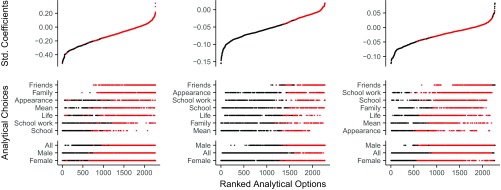
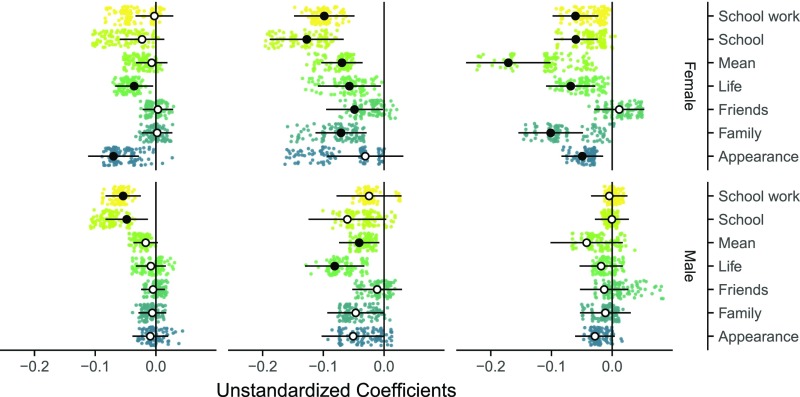
In this study, we used large-scale representative panel data to disentangle the between-person and within-person relations linking adolescent social media use and well-being. We found that social media use is not, in and of itself, a strong predictor of life satisfaction across the adolescent population. Instead, social media effects are nuanced, small at best, reciprocal over time, gender specific, and contingent on analytic methods.
Overview
The claims and statistics of this paper haven’t been checked yet.
Free: it reads the open-access text and checks the first 5 claims that cite a source we can check. Create a free account to check every claim.
Integrity signals
Registry
Cites
Statistics
Figures
Verification
Claims the paper makes
The claims and statistics of this paper haven’t been checked yet.
Free: it reads the open-access text and checks the first 5 claims that cite a source we can check. Create a free account to check every claim.
Claims other papers make about this one
Each is checked against this paper’s own text: does it say what the citing paper says it does?
The source backs part of the claim, not all of it — or backs it for a different population, condition or comparison.
In the citing paper
“Orben and colleagues6 found a small negative reciprocal within-person association between the time spent using social media and life satisfaction.”
From The effect of social media on well-being differs from adolescent to adolescent (2020) · cites this paper as [6]
Experimental — accuracy not yet measuredThe source backs part of the claim, not all of it — or backs it for a different population, condition or comparison.
In the citing paper
“a growing consensus has emerged suggesting that the associations observed between screen time and psychological or health outcomes are very small in size”
From The Conceptual and Methodological Mayhem of “Screen Time” (2020) · cites this paper as [6]
Experimental — accuracy not yet measuredThe source backs part of the claim, not all of it — or backs it for a different population, condition or comparison.
In the citing paper
“while some research has shown no effect of social media on well-being (Orben et al. 2019)”
From The future of social media in marketing (2020) · cites this paper as Orben et al. 2019
Experimental — accuracy not yet measuredThe source backs part of the claim, not all of it — or backs it for a different population, condition or comparison.
In the citing paper
“So far, only a few studies have applied this method and found only minimal within-person associations between social media use and mental health, primarily measured as depressive symptoms [7,20,21].”
From Social Media and Mental Health Among Early Adolescents in Sweden: A Longitudinal Study With 2-Year Follow-Up (KUPOL Study). (2021) · cites this paper as [21]
Experimental — accuracy not yet measuredThe source backs part of the claim, not all of it — or backs it for a different population, condition or comparison.
In the citing paper
“Recent publications that applied more sophisticated statistical methods to study the longitudinal association between social media use and mental health found similar minimal effect sizes [19,20,22], possibly contingent on gender [20,21] or mediated by sleep or physical activity [22,41].”
From Social Media and Mental Health Among Early Adolescents in Sweden: A Longitudinal Study With 2-Year Follow-Up (KUPOL Study). (2021) · cites this paper as [21]
Experimental — accuracy not yet measured
14 more claims about this paper
Create a free account to see every claim other papers make about this one.
Self-check
Percentages, sums and reported differences re-computed from the paper’s own numbers.
The self-check needs the paper’s full text.
Citations
Cites
Cohen, J. (1992) · Psychological Bulletin · doi:10.1037//0033-2909.112.1.155 · Cited by 8,771
A critique of the cross-lagged panel model
Hamaker, E. L., Kuiper, R. M., & Grasman, R. P. P. P. (2015) · Psychological Methods · doi:10.1037/a0038889 · Cited by 4,005
The association between adolescent well-being and digital technology use
Orben, A., & Przybylski, A. K. (2019) · Nature Human Behaviour · doi:10.1038/s41562-018-0506-1 · Cited by 1,500 · cited 4×
“We adopted a specification curve analysis framework (3, 5)—a computational method which minimizes the risk that a specific profile of analytical decisions yields false-positive results.”
BackgroundMethodInfluentialSelf-citationThe Difference Between “Significant” and “Not Significant” is not Itself Statistically Significant
Gelman, A., & Stern, H. (2006) · The American Statistician · doi:10.1198/000313006x152649 · Cited by 1,407
Missing-Data Adjustments in Large Surveys
Little, R. J. A. (1988) · Journal of Business & Economic Statistics · doi:10.1080/07350015.1988.10509663 · Cited by 1,101 · cited 1×
“Each model (i) considered female and male participants separately, (ii) included all relevant covariates, (iii) used weighted least squares mean and variance adjusted estimators to account for ordinal scales, (iv) implemented predictive mean matching to impute missing data (9), and (v) used data from participants who…”
MethodThe Accuracy of Self-Reported Internet Use—A Validation Study Using Client Log Data
Scharkow, M. (2016) · Communication Methods and Measures · doi:10.1080/19312458.2015.1118446 · Cited by 408 · cited 1×
“We also highlight that self-report measures only partially reflect the objective time adolescents spend engaging with social media (11), yet they form the foundation of technological assessments included in the bestquality datasets informing vital research in this area today.”
BackgroundSpecification Curve: Descriptive and Inferential Statistics on All Reasonable Specifications
Simonsohn, U., Simmons, J. P., & Nelson, L. D. (2015) · SSRN Electronic Journal · doi:10.2139/ssrn.2694998 · Cited by 248
The debate over digital technology and young people
Bell, V., Bishop, D. V. M., & Przybylski, A. K. (2015) · BMJ · doi:10.1136/bmj.h3064 · Cited by 143 · cited 1×
“Research, however, has not kept pace (1).”
Self-citationUnderstanding Society: Waves 1-8, 2009-2017 and Harmonised BHPS: Waves 1-18, 1991-2009
University Of Essex, I. F. S. (2019) · UK Data Service · doi:10.5255/ukda-sn-6614-12 · Cited by 26
Social Media’s Enduring Effect on Adolescent Life Satisfaction: CodePreprint
Przybylski, A. K., Orben, A., & Dienlin, T. (2019) · OSF Preprints (OSF Preprints) · doi:10.17605/osf.io/4xp3v
Self-citation
Cited by
Items 101–200 of 486
Digital Strategies for Screen Time Reduction: A Randomized Field Experiment
Zimmermann, L., & Sobolev, M. (2023) · Cyberpsychology, Behavior, and Social Networking · doi:10.1089/cyber.2022.0027 · Cited by 37
“36 41 Thus, another goal of this study was to investigate whether reducing mobile usage benefits well-being and performance.”
Internet use, depression, and cognitive outcomes among Chinese adolescents
Zhou, M., & Ding, X. (2021) · Journal of Community Psychology · doi:10.1002/jcop.22779 · Cited by 40
Camerini, A.-L., Gerosa, T., & Marciano, L. (2020) · New Media & Society · doi:10.1177/1461444820948809 · Cited by 49
“In the context of social media use, for example, effects are likely to be small and related to personal and contextual factors, as well as anchored to different methodologies implied by the researchers (Orben et al., 2019).”
BackgroundInfluentialReply to: Underestimating digital media harm
Orben, A., & Przybylski, A. K. (2020) · Nature Human Behaviour · doi:10.1038/s41562-020-0840-y · Cited by 36
Self-citationTibber, M. S., Zhao, J., & Butler, S. (2020) · Computers in Human Behavior · doi:10.1016/j.chb.2020.106371 · Cited by 51
Whitlock, J., & Masur, P. K. (2019) · JAMA Pediatrics · doi:10.1001/jamapediatrics.2019.3191 · Cited by 35
Stieger, S., & Wunderl, S. (2022) · Computers in Human Behavior · doi:10.1016/j.chb.2022.107358 · Cited by 35
Estimating the association between Facebook adoption and well-being in 72 countries
Vuorre, M., & Przybylski, A. K. (2023) · Royal Society Open Science · doi:10.1098/rsos.221451 · Cited by 47
Self-citationBetween Instagram browsing and subjective well-being: Social comparison or emotional contagion?
Choi, S., & Kim, E. (2020) · Media Psychology · doi:10.1080/15213269.2020.1824120 · Cited by 50
Digital well-being under pandemic conditions: catalysing a theory of online flourishing
Dennis, M. (2021) · Ethics and Information Technology · doi:10.1007/s10676-021-09584-0 · Cited by 49
“Instead, it is one that requires us to ask more broadly what role online technologies should play in a flourishing human life (Goodyear et al. 2018; Orben et al. 2019b).”
BackgroundProblematic Social Media Use in Sexual and Gender Minority Young Adults: Observational Study
Vogel, E. A., Ramo, D. E., Prochaska, J. J., Meacham, M. C., Layton, J. F., & Humfleet, G. L. (2021) · JMIR Mental Health · doi:10.2196/23688 · Cited by 46
Ernala, S. K., Burke, M., Leavitt, A., & Ellison, N. B. (2022) · CHI Conference on Human Factors in Computing Systems · doi:10.1145/3491102.3517569 · Cited by 52
“Meta-analyses generally find very small average effects [29, 39, 40], and individual empirical studies have found both positive and negative outcomes associated with social media use [4, 13, 41, 45, 50].”
BackgroundAhmed, C., ElKorany, A., & Elsayed, E. (2022) · Journal of Intelligent Information Systems · doi:10.1007/s10844-022-00756-y · Cited by 42
“According to Orben et al. (2019), Libai et al. (2010), social media helped companies in engaging and recognizing their customers and supported them to connect with loyal customers.”
BackgroundThe Usage of Artificial Intelligence in Digital Marketing: A Review
Hassan, A. (2021) · Studies in computational intelligence · doi:10.1007/978-3-030-72080-3_20 · Cited by 51
Ferguson, C. J. (2021) · Bulletin of Science, Technology & Society · doi:10.1177/02704676211064567 · Cited by 33
“Other evidence (Orben et al., 2019) suggests that some positive fi ndings in past literature may have been spurious due to methodological choices.”
BackgroundSchreurs, L., & Vandenbosch, L. (2022) · Computers in Human Behavior · doi:10.1016/j.chb.2022.107364 · Cited by 32
Predicting life satisfaction using machine learning and explainable AI
Khan, A. E., Hasan, M. J., Anjum, H., Mohammed, N., & Momen, S. (2024) · Heliyon · doi:10.1016/j.heliyon.2024.e31158 · Cited by 30
Johannes, N., Buijzen, M., & Veling, H. (2021) · Journal of Experimental Psychology General · doi:10.1037/xge0000888 · Cited by 34
“Second, whereas smartphone use does not appear detrimental to well-being (Ellis, 2019; Orben, Dienlin, & Przybylski, 2019; Orben & Przybylski, 2019), many users voice concerns about decreased productivity because of smartphone distractions (Jo-hannes, Dora, & Rusz, 2019).”
BackgroundPeters, S., Van der Cruijsen, R., van der Aar, L. P. E., Spaans, J. P., Becht, A. I., & Crone, E. A. (2021) · Developmental Cognitive Neuroscience · doi:10.1016/j.dcn.2021.100921 · Cited by 32
“Previous work on the relation between SMU and wellbeing in general indicated that, although effects of social media on wellbeing were very small, they might be slightly stronger in female participants (Orben et al., 2019).”
Measuring online and offline social rejection sensitivity in the digital age.
Andrews, J. L., Khin, A. C., Crayn, T., Humphreys, K., & Schweizer, S. (2022) · Psychological Assessment · doi:10.1037/pas0001136 · Cited by 46
Marciano, L., Schulz, P. J., & Camerini, A.-L. (2022) · Computers in Human Behavior · doi:10.1016/j.chb.2022.107390 · Cited by 43
Gingras, M.-P., Brendgen, M. R., Beauchamp, M. H., Séguin, J. R., Tremblay, R. E., Côté, S. M., & Herba, C. M. (2023) · Research on Child and Adolescent Psychopathology · doi:10.1007/s10802-023-01084-7 · Cited by 46
“However, a growing body of recent longitudi - nal research has reported small or no associations between social media use and internalizing symptoms or life satis - faction (e.g., Beyens et al., 2020 ; Orben et al., 2019 ).”
BackgroundTibber, M. S., & Silver, E. (2022) · The Cognitive Behaviour Therapist · doi:10.1017/s1754470x22000034 · Cited by 53
“…evidence base suggests a complex pattern of associations between SM use and wellbeing in children and adolescents, including effects that are relatively small in size, mediated/moderated by other factors, and of unclear direction of causality (Orben et al ., Theory (Walther, 1992; Walther, 2015).”
Is adolescent internet use a risk factor for the development of depression symptoms or vice-versa?
Fitzpatrick, C., Lemieux, A., Smith, J., West, G. L., Bohbot, V. D., & Asbridge, M. (2023) · Psychological Medicine · doi:10.1017/s0033291723000284 · Cited by 37
“For instance, the present study examined depression symptoms as an outcome, whereas others have examined mental wellbeing or life satisfaction (Orben & Przybylski, 2019; Orben, Dienlin, & Przybylski, 2019).”
BackgroundResultWang, X., & Shang, Q. (2024) · Acta Psychologica · doi:10.1016/j.actpsy.2024.104369 · Cited by 64
Hospitality innovation strategies: Robustness analysis of paths to firm performance
Ebersberger, B., Herstad, S. J., & Nordli, A. J. (2021) · Tourism Management · doi:10.1016/j.tourman.2021.104310 · Cited by 40
A Survey of Tasks and Visualizations in Multiverse Analysis Reports
Hall, B. D., Liu, Y., Jansen, Y., Dragicevic, P., Chevalier, F., & Kay, M. (2022) · Computer Graphics Forum · doi:10.1111/cgf.14443 · Cited by 46
Social Media and Mental Health: Reviewing Effects on Eudaimonic Well-Being
Meier, A., & Reinecke, L. (2023) · Oxford University Press eBooks · doi:10.1093/oso/9780197520536.003.0012 · Cited by 38
Variation in social media sensitivity across people and contexts
Vaid, S. S., Kroencke, L., Roshanaei, M., Talaifar, S., Hancock, J. T., Back, M. D., Gosling, S. D., Ram, N., & Harari, G. M. (2024) · Scientific Reports · doi:10.1038/s41598-024-55064-y · Cited by 50
“First, some of this past research focused on time domains that do not capture everyday social media sensitivity [e.g., instead studying trends aggregated over months and years: 3,25 ].”
Norbury, A., Liu, S. H., Campaña-Montes, J. J., Romero-Medrano, L., Barrigón, M. L., Smith, E. C., MEmind Study Group, Aroca, F., Artés-Rodríguez, A., Baca‐García, E., et al. (2020) · Molecular Psychiatry · doi:10.1038/s41380-020-00963-5 · Cited by 37
Reflective smartphone disengagement: Conceptualization, measurement, and validation
Matthes, J., Karsay, K., Hirsch, M., Stević, A., & Schmuck, D. (2021) · Computers in Human Behavior · doi:10.1016/j.chb.2021.107078 · Cited by 37
Nature Exposure is Associated With Reduced Smartphone Use
Minor, K., Glavind, K. L., Schwartz, A. J., Danforth, C. M., Lehmann, S., & Bjerre-Nielsen, A. (2023) · Environment and Behavior · doi:10.1177/00139165231167165 · Cited by 35
“However, deriving directional inferences from this literature is made difficult by likely confounding and measurement error due to omitted variables and recall biases (BjerreNielsen, Andersen et al., 2020; Braghieri et al., 2022; Orben, 2020; Orben et al., 2019; Parry et al., 2021; Shaw et al., 2020a, 2020b), with sch…”
BackgroundSocial media use and well-being: a systematic review and meta-analysis
Ansari, S., Iqbal, N., Asif, R., Hashim, M., Farooqi, S. R., & Alimoradi, Z. (2024) · Cyberpsychology, Behavior, and Social Networking · doi:10.1089/cyber.2024.0001 · Cited by 32
Jenkins, R. H., Shen, C., Dumontheil, I., Thomas, M. S. C., Elliott, P., Röösli, M., & Toledano, M. B. (2020) · Computers in Human Behavior · doi:10.1016/j.chb.2020.106320 · Cited by 35
“This is in line with other studies which have seen a stronger magnitude of association between SNS use and depressive symptoms and poorer wellbeing for females compared to males (Booker et al., 2018; Kelly et al., 2018; Orben et al., 2019).”
Beattie, A., & Cassidy, E. (2020) · Convergence The International Journal of Research into New Media Technologies · doi:10.1177/1354856520956854 · Cited by 36
“…screen time as harmful, given the potential of using phones for educational purposes (Selwyn, 2019), especially as there are studies that dispute that screens and social media negatively impact well-being (Orben et al., 2019; Reer et al., 2019) or student learning (Chen and Yan, 2016).”
BackgroundPaquin, V., Philippe, F. L., Shannon, H., Guimond, S., Ouellet‐Morin, I., & Geoffroy, M. (2023) · Social Psychiatry and Psychiatric Epidemiology · doi:10.1007/s00127-023-02537-6 · Cited by 29
Active instagram use and its association with self-esteem and well-being.
Trifiro, B. M., & Prena, K. (2021) · Technology Mind and Behavior · doi:10.1037/tmb0000043 · Cited by 48
“Thus, while there are mixed conclusions regarding the impact of social media on users (Lin et al., 2016; Orben et al., 2019; Orben & Przybylski, 2019; Rasmussen et al., 2020; Verduyn et al., 2017; Zhao & Zhou, 2020), we have chosen to focus on its impact speci fi cally on self-esteem and well-being.”
BackgroundQuality of Life of Adults with an Intellectual Disability
Cummins, R. (2020) · Current Developmental Disorders Reports · doi:10.1007/s40474-020-00205-x · Cited by 29
Valentine, L., McEnery, C., D’Alfonso, S., Phillips, J., Bailey, E., & Alvarez-Jimenez, M. (2019) · Current Treatment Options in Psychiatry · doi:10.1007/s40501-019-00184-w · Cited by 26
A Model of Technology Incidental Learning Effects
Greene, J. A., Copeland, D. Z., & Deekens, V. M. (2020) · Educational Psychology Review · doi:10.1007/s10648-020-09575-5 · Cited by 39
“…technology and the mixed findings regarding its effects necessitate more research regarding how and why technology influences people ’ s well-being (Orben et al. 2019), learning (Greenhow et al. 2019; Lee and Xenos 2019), and behavior (e.g., political participation; Gil de Zúñiga et al. 2012).”
BackgroundMüller, F. K., Teckentrup, V., Kühnel, A., Ferstl, M., & Kroemer, N. B. (2021) · Appetite · doi:10.1016/j.appet.2021.105813 · Cited by 27
Are social media users more satisfied with their life than non-users? A study on older Italians
Sala, E., Cerati, G., & Gaia, A. (2021) · Ageing and Society · doi:10.1017/s0144686x21000416 · Cited by 31
“This is in stark contrast with studies that have explored the impact of SM use in other age groups, documenting the relevance of this topic (e.g. Ferguson et al., 2014; Zhan et al., 2016; Hawi and Samaha, 2017; Sahin, 2017; Orben et al., 2019).”
ResultPetalas, D. P., Konijn, E. A., Johnson, B. K., Veldhuis, J., de Vaate, N. A. J. D. B., Burgers, C. F., Droog, E., Międzobrodzka, E., Bálint, K., & van de Schoot, R. (2021) · Social Media + Society · doi:10.1177/20563051211035353 · Cited by 34
“Despite the plethora of studies on how children, adolescents, and young adults use social media, results do not always align, triggering a debate about the existence and nature of social media effects (Chang et al., 2015; Foster & Jackson, 2019; Orben et al., 2019; Twenge & Campbell, 2018).”
Who benefits most from using social media, the socially rich or the socially poor?
Pouwels, J. L., Keijsers, L., & Odgers, C. L. (2022) · Current Opinion in Psychology · doi:10.1016/j.copsyc.2022.101351 · Cited by 48
How Migration Status Shapes Susceptibility of Individuals’ Loneliness to Social Isolation
Löbel, L.-M., Kröger, H., & Tibubos, A. N. (2022) · International Journal of Public Health · doi:10.3389/ijph.2022.1604576 · Cited by 36
“This reduces the probability of reporting findings specific to certain idiosyncratic decisions in the process of the data analysis [38].”
Huang, S., Lai, X., Li, Y., Wang, W., Zhao, X., Dai, X., Wang, H., & Wang, Y. (2023) · Heliyon · doi:10.1016/j.heliyon.2023.e14897 · Cited by 42
Facebook Usage and Life Satisfaction
Stieger, S. (2019) · Frontiers in Psychology · doi:10.3389/fpsyg.2019.02711 · Cited by 34
How should we investigate variation in the relation between social media and well-being?Preprint
Johannes, N., Masur, P. K., Vuorre, M., & Przybylski, A. (2021) · Meta-Psychology · doi:10.31234/osf.io/xahbg · Cited by 24
Self-citationMilošević, T., Kuldas, S., Sargioti, A., Laffan, D. A., & Norman, J. O. (2022) · Frontiers in Psychology · doi:10.3389/fpsyg.2021.698176 · Cited by 32
A Stimulated Recall Method for the Improved Assessment of Quantity and Quality of Social Media Use
Griffioen, N., van Rooij, M. M. J. W., Lichtwarck‐Aschoff, A., & Granic, I. (2020) · Journal of Medical Internet Research · doi:10.2196/15529 · Cited by 41
“More attention should be paid to the qualitative side of digital technology use, since frequency and duration metrics can only tell us so much and that seems not to be enough [54].”
BackgroundMiędzobrodzka, E., Du, J., & van Koningsbruggen, G. M. (2024) · Acta Psychologica · doi:10.1016/j.actpsy.2024.104565 · Cited by 51
The Kids Are / Not / Sort of All Right*
Pitt, C. R., Hock, A., Zelnick, L. R., & Davis, K. S. (2021) · CHI Conference on Human Factors in Computing Systems · doi:10.1145/3411764.3445541 · Cited by 32
“The current study answers growing calls to apply methods that uncover rather than gloss over individual variation in young people’s technology use and its impact on their wellbeing [2,35,64,92].”
BackgroundChoi, J. (2022) · Cyberpsychology Journal of Psychosocial Research on Cyberspace · doi:10.5817/cp2022-1-2 · Cited by 38
“Although some longitudinal studies support the relationship between SNS use and well-being indicators (Mundy et al., 2021; Riehm et al., 2019), some are not (Aalbers et al., 2019; Coyne et al., 2020; Orben et al., 2019).”
BackgroundResultInstagram Use and Mental Well-Being: The Mediating Role of Social Comparison
Stefana, A., Dakanalis, A., Mura, M., Colmegna, F., & Clerici, M. (2022) · The Journal of Nervous and Mental Disease · doi:10.1097/nmd.0000000000001577 · Cited by 31
Social Media and Adolescent Mental Health
Yue, Z., & Rich, M. (2023) · Current Pediatrics Reports · doi:10.1007/s40124-023-00298-z · Cited by 37
“For instance, Orben et al. (2019) [43] analyzed a nationally representative dataset over eight waves, suggesting that the influence of social media use on life satisfaction might not always be significant.”
Household chaos: a risk factor for adverse child outcomes gains attention in public health
Emond, J. A. (2020) · BMC Public Health · doi:10.1186/s12889-020-08680-y · Cited by 24
“It is also possible that excessive social media use in adolescence may relate to internalizing behaviors including depression and anxiety [19, 20] and risky sexual behaviors [18, 21, 22], although findings are mixed [23].”
BackgroundExtraversion moderates the relationship between social media use and depression
Weiss, M. H., Baumeister, H., Cohrdes, C., Deckert, J., Gründahl, M., Pryss, R. C., & Hein, G. (2022) · Journal of Affective Disorders Reports · doi:10.1016/j.jadr.2022.100343 · Cited by 31
Digital and computational demography
Kashyap, R., Rinderknecht, R. G., Akbaritabar, A., Alburez‐Gutierrez, D., Gil‐Clavel, S., Grow, A., Kim, J., Leasure, D. R., Lohmann, S., Negraia, D. V., et al. (2023) · Edward Elgar Publishing eBooks · doi:10.4337/9781789906769.00010 · Cited by 39
Social media use and systemic inflammation: The moderating role of self-esteem
Lee, D. S., & Way, B. M. (2021) · Brain, Behavior, & Immunity - Health · doi:10.1016/j.bbih.2021.100300 · Cited by 21
“Given recent perspectives suggesting that social media use itself may not be a strong predictor of well-being outcomes (Coyne et al., 2020; Heffer et al., 2019; Orben et al., 2019) and that the link between social media use and well-being may be moderated by an individual's personality characteristics (Sheldon et al.”
BackgroundInfluentialRodway, C., Tham, S.-G., Richards, N., Ibrahim, S., Turnbull, P., Kapur, N., & Appleby, L. (2022) · Psychological Medicine · doi:10.1017/s0033291722001258 · Cited by 31
Zhao, Y., Paulus, M. P., Tapert, S. F., Bagot, K. S., Constable, R. T., Yaggi, H. K., Redeker, N. S., & Potenza, M. N. (2024) · Journal of Behavioral Addictions · doi:10.1556/2006.2024.00016 · Cited by 33
“Findings across studies remain inconclusive, with some showing no association (Odgers & Jensen, 2020) or intricate nonlinear relationships (Orben, Dienlin, & Przybylski, 2019).”
MethodRoberts, J. A., Young, P. D., & David, M. E. (2024) · Personality and Social Psychology Bulletin · doi:10.1177/01461672241295870 · Cited by 42
“A variety of calls have been made to investigate the relationship between the two variables (O’Day & Heimberg, 2021; Orben et al., 2019; Shrum et al., 2022; van Breen et al., 2022; L. Zhang et al., 2022).”
Fortunato, L., Lo Coco, G., Teti, A., Bonfanti, R. C., & Salerno, L. (2023) · International Journal of Environmental Research and Public Health · doi:10.3390/ijerph20156439 · Cited by 20
“However, this study of differences between problematic smartphone use and problematic use of specific apps available on smartphones is still in its initial phases [13,17].”
BackgroundSocial Networking Site Use: Implications for Health and Wellness
Wright, R. R., Evans, A. M., Schaeffer, C., Mullins, R., & Cast, L. (2021) · Psi Chi Journal of Psychological Research · doi:10.24839/2325-7342.jn26.2.165 · Cited by 28
Nainee, S., Tan, S. A., Tan, C., Gan, S.-W., & Tan, J. (2021) · Frontiers in Psychology · doi:10.3389/fpsyg.2021.746540 · Cited by 24
Orben, A., Dienlin, T., & Przybylski, A. K. (2019) · Proceedings of the National Academy of Sciences · doi:10.1073/pnas.1909553116 · Cited by 20
Self-citationTen Myths About the Effect of Social Media Use on Well-Being
Hall, J. A. (2024) · Journal of Medical Internet Research · doi:10.2196/59585 · Cited by 26
“An 8-wave longitudinal study (2009-2016) of thousands of adolescents in the United Kingdom measured social media use during the school day and found that between-year associations between social media use and well-being were trivial [39].”
Riordan, B. C., Winter, T. J., Flett, J. A. M., Mason, A., Scarf, D., Jose, P. E., & Conner, T. S. (2021) · Psychological Reports · doi:10.1177/00332941211040441 · Cited by 23
“longitudinal panel study used random intercept cross-lagged panel models and Specification Curve Analyses to run over 2,000 variations of the models and found that the link between SNS and life satisfaction was weak, nuanced, and gender-specific (Orben et al., 2019).”
BackgroundMethodMilošević, T., Bhroin, N. N., Ólafsson, K., Staksrud, E., & Wachs, S. (2022) · New Media & Society · doi:10.1177/14614448221082651 · Cited by 23
“These include demo-graphics (e.g. age and gender) (Keresteš and Štulhofer, 2020; Lachmann et al., 2018; Orben et al., 2019; Twenge and Farley, 2020), relational (e.g. peer relations) (Kardefelt-Winther et al., 2020), individual (e.g. psychosomatic health) (Biolcati et al., 2018), and contextual…”
BackgroundAyorech, Z., Baldwin, J. R., Pingault, J., Rimfeld, K., & Plomin, R. J. (2023) · Scientific Reports · doi:10.1038/s41598-022-25374-0 · Cited by 24
Zhang, H., Zhou, X., & Huang, Y. (2020) · ISPRS International Journal of Geo-Information · doi:10.3390/ijgi9020068 · Cited by 19
Brailovskaia, J., Margraf, J., & Schneider, S. (2021) · European Psychologist · doi:10.1027/1016-9040/a000452 · Cited by 22
“They explain their concern by, for example, the often weak evidence for the relationships of online activity that is often gained from cross-sectional studies which do not allow true conclusions on causality (Orben et al., 2019; Orben & Przybylski, 2019).”
BackgroundShensa, A. S., Sidani, J. E., Hoffman, B. L., Escobar-Viera, C. G., Melcher, E. M., Primack, B. A., Myers, S. P., & Burke, J. G. (2020) · Journal of Technology in Behavioral Science · doi:10.1007/s41347-020-00175-2 · Cited by 21
“2016; Shakya and Christakis 2017), other studies have questioned the association between social media use and depressive symptoms (Berryman et al. 2018; Heffer et al. 2019; Orben et al. 2019).”
BackgroundMasur, P. K., Veldhuis, J., & de Vaate, N. A. J. D. B. (2022) · Routledge eBooks · doi:10.4324/9781003171270-12 · Cited by 21
Ejaz, W., Altay, S., & Naeem, G. (2023) · Digital Health · doi:10.1177/20552076231186075 · Cited by 29
Parent-Perceived Benefits and Harms Associated With Internet Use by Adolescent Offspring
Kimball, H. G., Fernandez, F., Moskowitz, K., Kang, M., Alexander, L. M., Conway, K. P., Merikangas, K. R., Salum, G. A., & Milham, M. P. (2023) · JAMA Network Open · doi:10.1001/jamanetworkopen.2023.39851 · Cited by 23
Kirtley, O. J., Hussey, I., & Marzano, L. (2020) · Psychiatry Research · doi:10.1016/j.psychres.2020.113572 · Cited by 21
Avoiding Irrelevance: The manifestation and impacts of technophobia in psychological sciencePreprint
Davidson, B. I., Ellis, D. A., Bowman, N. D., Liveley, G., Shaw, H., Przybylski, A. K., & Levine, M. (2019) · PsyArXiv (OSF Preprints) · doi:10.31234/osf.io/b9f4p · Cited by 18
Self-citationSchreurs, L., Lee, A. Y., Liu, X. “., & Hancock, J. T. (2024) · Communication Research · doi:10.1177/00936502241233787 · Cited by 16
“This pattern of results aligns with several recent studies that advanced the social media and well-being field by separating within-from between-person dynamics among adolescents when looking at time spent specifically (e.g., Coyne et al., 2020; Orben et al., 2019).”
Risk and Protective Factors for Frequent Electronic Device Use of Online Technologies
Morgan, P. L., Wang, Y., & Woods, A. D. (2021) · Child Development · doi:10.1111/cdev.13532 · Cited by 19
“Other studies observe null-to-positive associations with children’s development (Orben et al., 2019; Orben & Przybylski, 2019b), possibly as a result of individual differences (Twigg et al.”
BackgroundA Mindfulness-Based Intervention for Adolescent Social Media Users: A Quasi-Experimental Study
Weaver, J. L., & Swank, J. M. (2023) · Journal of Child and Adolescent Counseling · doi:10.1080/23727810.2023.2266895 · Cited by 21
“Orben et al. (2019) found social media was not a strong predictor of adolescents’ life satisfaction ( n = 5,492).”
BackgroundThe Gender Achievement Gap: Do Teacher–Student Relationships Matter?
Goldie, P. D., & O’Connor, E. E. (2021) · Psi Chi Journal of Psychological Research · doi:10.24839/2325-7342.jn26.2.139 · Cited by 21
Mäder, S., Costantini, D., Fahr, A., & Jordan, M. D. (2024) · Social Science & Medicine · doi:10.1016/j.socscimed.2024.117595 · Cited by 29
Blackwell, C. K., Mansolf, M. A., Rose, T., Pila, S., Cella, D. F., Cohen, A., Leve, L. D., McGrath, M., Neiderhiser, J. M., Urquhart, A., et al. (2025) · Journal of Adolescent Health · doi:10.1016/j.jadohealth.2024.12.003 · Cited by 19
Connected but at Risk: Social Media Exposure and Psychiatric and Psychological Outcomes in Youth
Marano, G., Lisci, F. M., Rossi, S., Marzo, E. M., Boggio, G., Brisi, C., Traversi, G., Mazza, O., Pola, R., Gaetani, E., et al. (2025) · Children · doi:10.3390/children12101322 · Cited by 39
Griffioen, N., Lichtwarck‐Aschoff, A., van Rooij, M. M. J. W., & Granic, I. (2021) · Frontiers in Psychology · doi:10.3389/fpsyg.2021.789302 · Cited by 20
Jarman, H. K., McLean, S. A., Paxton, S. J., Sibley, C. G., & Marques, M. D. (2022) · Social Psychiatry and Psychiatric Epidemiology · doi:10.1007/s00127-022-02363-2 · Cited by 25
“While some research has found that higher time spent on social media predicts poor well-being, particularly among girls [18], others have either described the effect as negligible or found no such effect [19, 20].”
BackgroundFinserås, T. R., Hjetland, G. J., Sivertsen, B., Colman, I., Hella, R. T., Andersen, A. I. O., & Skogen, J. C. (2023) · Psychology Research and Behavior Management · doi:10.2147/prbm.s435578 · Cited by 23
“5,9 It has also been suggested that it is possible to get addicted to social media 10 and that addiction is what constitutes problematic use.”
BackgroundDigital visions: the experience of self and others in the age of the digital revolution
Gallese, V. (2024) · International Review of Psychiatry · doi:10.1080/09540261.2024.2355281 · Cited by 28
Danielsen, H. E., Finserås, T. R., Andersen, A. I. O., Hjetland, G. J., Woodfin, V. I., & Skogen, J. C. (2024) · BMC Public Health · doi:10.1186/s12889-024-19317-9 · Cited by 39
“However, not all research confirms these associations [7, 8], and recent studies have indicated that the observed link between time spent on social media and mental health is too small to be of practical importance [9].”
BackgroundMcBee, M. T., Brand, R. J., & Dixon, W. E. (2021) · Psychological Science · doi:10.1177/0956797620971650 · Cited by 20
“Our goal in the current study was to examine the robustness of the original claim through use of a multiverse analysis (Silberzahn et al., 2018; Steegen et al., 2016; see also Orben et al., 2019).”
Smartphones within Psychological Science
Ellis, D. A. (2020) · Cambridge University Press eBooks · doi:10.1017/9781108671408 · Cited by 15
Liu, J. H.-F., Zhang, R. J., Vilar, R., Milojev, P., Hakim, M. A., de Zúñiga, H. G., Schumann, S., & Páez, D. (2020) · New Media & Society · doi:10.1177/1461444820932556 · Cited by 23
“These researchers concluded that “social media effects are nuanced, small at best, reciprocal over time, gender specific, and contingent on analytic methods” (Orben et al., 2019: 10226).”
BackgroundFerguson, C. J. (2021) · Developmental Science · doi:10.1111/desc.13008 · Cited by 13
“However, previous analyses (e.g. Orben et al., 2019) identified one error with this dataset.”
MethodBellis, M. A., Sharp, C., Hughes, K. E., & Davies, A. R. (2021) · Frontiers in Public Health · doi:10.3389/fpubh.2021.585715 · Cited by 18
Kim, E. S., James, P., Zevon, E. S., Trudel‐Fitzgerald, C., Kubzansky, L. D., & Grodstein, F. (2019) · American Journal of Epidemiology · doi:10.1093/aje/kwz224 · Cited by 20
Youth Social Media Use and Well‐Being
Toma, C. L., Chen, Y. A., Olson, C., Fan, T., & Brown, B. B. (2020) · Wiley eBooks · doi:10.1002/9781119011071.iemp0210 · Cited by 14
Social media and mental health: Reviewing effects on eudaimonic well-beingPreprint
Meier, A., & Reinecke, L. (2021) · PsyArXiv (OSF Preprints) · doi:10.31234/osf.io/xvts8 · Cited by 24
The Manufacture of Disconnection
Beattie, A. (2020) · Open Access Victoria University of Wellington | Te Herenga Waka (Figshare) · doi:10.26686/wgtn.17151578 · Cited by 40
Social Media Use and Well-Being: What we Know and What We Need to KnowPreprint
Valkenburg, P. M. (2021) · PsyArXiv (OSF Preprints) · doi:10.31234/osf.io/nxq8j · Cited by 15
Metadata
- Authors
- Orben, A., Dienlin, T., & Przybylski, A. K.
- Affiliations
- University of Oxford (GB)
- University of Hohenheim (DE)
- Corresponding author
- Orben, Amy
- Venue
- Proceedings of the National Academy of Sciences
- Publisher
- National Academy of Sciences
- Published
- 2019-05-06
- Volume
- 116
- Issue
- 21
- Pages
- 10226-10228
- ISSN
- 0027-8424 (ISSN-L)
- 1091-6490
- PMC
- PMC6534991
- OpenAlex
- W2944221730
- Cited by
- 485
- References
- 9
- Citations by year
- 2026: 42 · 2025: 46 · 2024: 47 · 2023: 54 · 2022: 62 · 2021: 84 · 2020: 125 · 2019: 24
- FWCI
- 148.41
- Type
- journal article
- Language
- en
- Open access
- hybrid
- doi.org
- Licence
- Locations
- Proceedings of the National Academy of Sciences (publishedVersion, cc-by)
- Europe PMC (PubMed Central) (publishedVersion, cc-by)
- PubMed Central (publishedVersion, cc-by)
- PubMed (publishedVersion)
- Funders
- Barnardo's (Research Grant)
- Volkswagen Foundation (Transformations of privacy)
- RCUK | Economic and Social Research Council (Understanding Society Policy Fellowship)
- Topics
- Social Sciences › Sociology and Political Science › Impact of Technology on Adolescents
- Social Sciences › Psychology › Social Psychology › Psychological Well-being and Life Satisfaction
- Social Sciences › Education › Child Development and Digital Technology
- Keywords
- social media use, adolescent life satisfaction, youth welfare, reciprocal effects, gender differences, within-person effects, between-person effects, longitudinal panel data
- MeSH terms
- Adolescent, Adolescent Behavior, Child, Female, Humans, Male, Personal Satisfaction, Surveys and Questionnaires, Social Media
About these checks
Registry, retraction, Cites and statistics results are computed, not judged, with one exception: a printed reference that no index lists is read once by a model before it counts as a citation error. Claims are extracted by a model and kept only when their quote appears verbatim in the text; each cited source is then checked, with a model’s help, for whether it says what the claim relies on. Those verdicts can be wrong — read the claim’s quote and the cited source before relying on one.
Statistics and arithmetic are recomputed, not judged.
Confidence bands are shown only for fields calibrated on our annotated test set. None is calibrated yet, so no band is shown.
What counts as a claim ›How we measure confidence ›How we check this ›
Are you an author, or do you see a problem with this page? Request a review
Data sources
Bibliographic data: Semantic Scholar, OpenAlex, Crossref.
Contains information from the Semantic Scholar Academic Graph Datasets, made available under the ODC Attribution License (ODC-BY 1.0).
Semantic Scholar’s data is described in: Kinney, R., et al. (2023). The Semantic Scholar Open Data Platform. arXiv:2301.10140.
