

The DOI matches its Crossref record; 51 of the 51 references it cites were found in a registry or an index.
Drugging an undruggable pocket on KRAS
Open accessAbstract
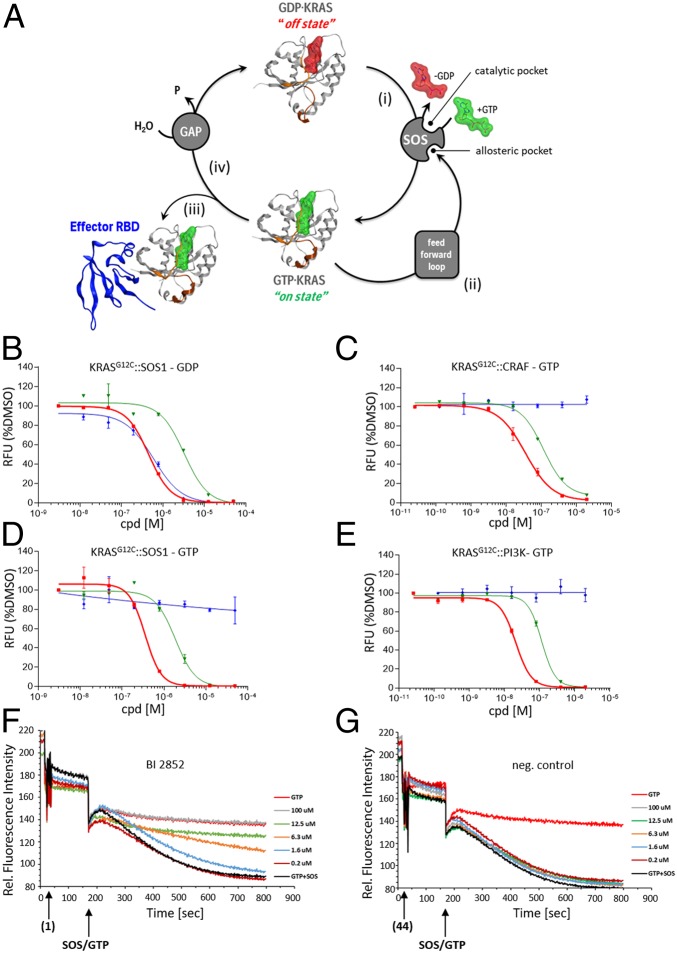
The 3 human RAS genes, KRAS, NRAS, and HRAS, encode 4 different RAS proteins which belong to the protein family of small GTPases that function as binary molecular switches involved in cell signaling. Activating mutations in RAS are among the most common oncogenic drivers in human cancers, with KRAS being the most frequently mutated oncogene. Although KRAS is an excellent drug discovery target for many cancers, and despite decades of research, no therapeutic agent directly targeting RAS has been clinically approved. Using structure-based drug design, we have discovered BI-2852 (1), a KRAS inhibitor that binds with nanomolar affinity to a pocket, thus far perceived to be “undruggable,” between switch I and II on RAS; 1 is mechanistically distinct from covalent KRAS G12C inhibitors because it binds to a different pocket present in both the active and inactive forms of KRAS. In doing so, it blocks all GEF, GAP, and effector interactions with KRAS, leading to inhibition of downstream signaling and an antiproliferative effect in the low micromolar range in KRAS mutant cells. These findings clearly demonstrate that this so-called switch I/II pocket is indeed druggable and provide the scientific community with a chemical probe that simultaneously targets the active and inactive forms of KRAS.
Overview
The claims and statistics of this paper haven’t been checked yet.
Run the check — free, no account needed. It reads the open-access text and checks the sources it cites.
Integrity signals
Registry
Cites
Statistics
Figures
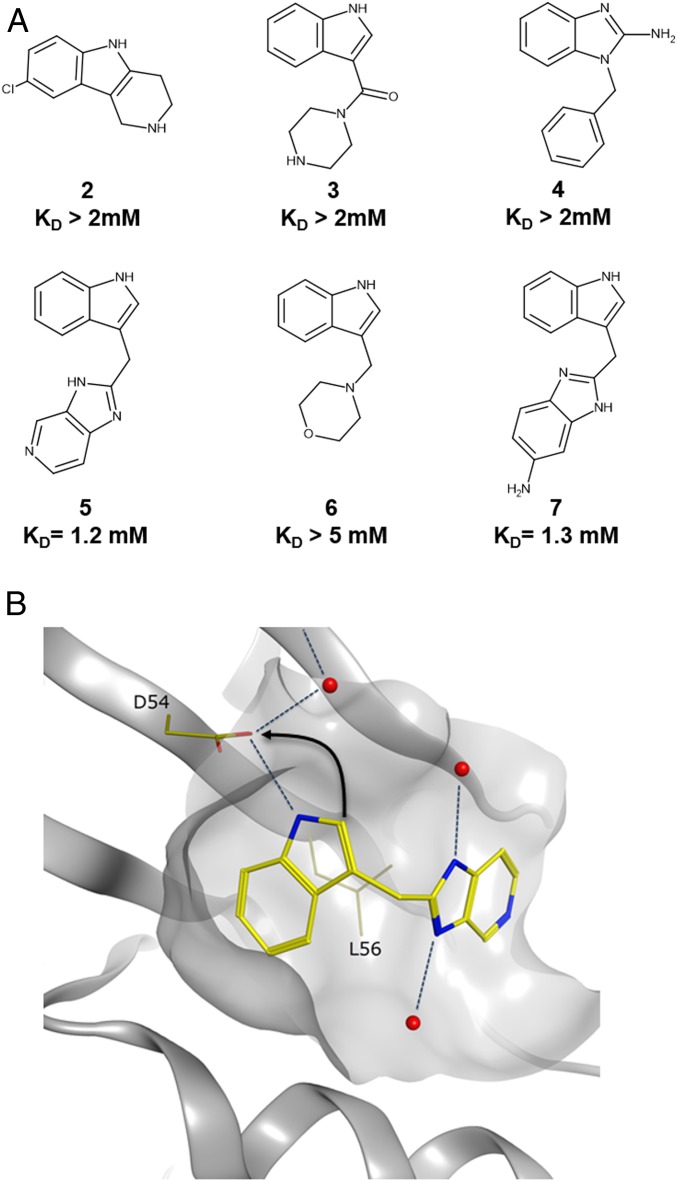
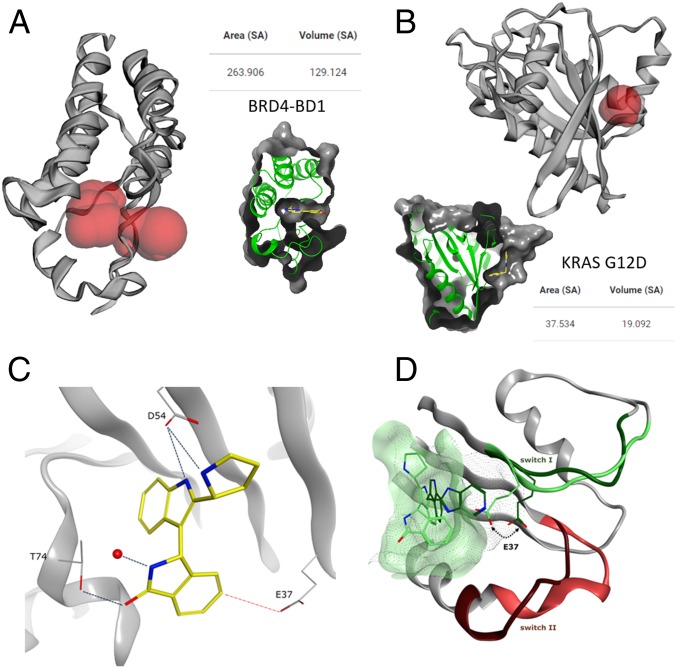
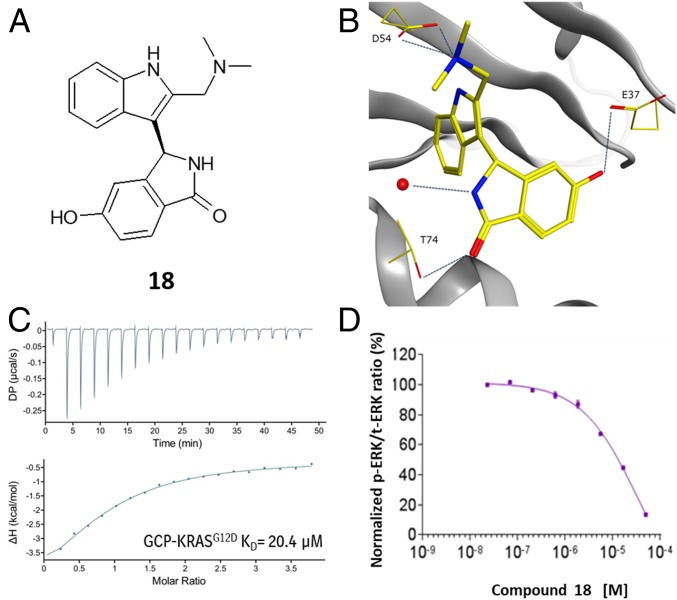
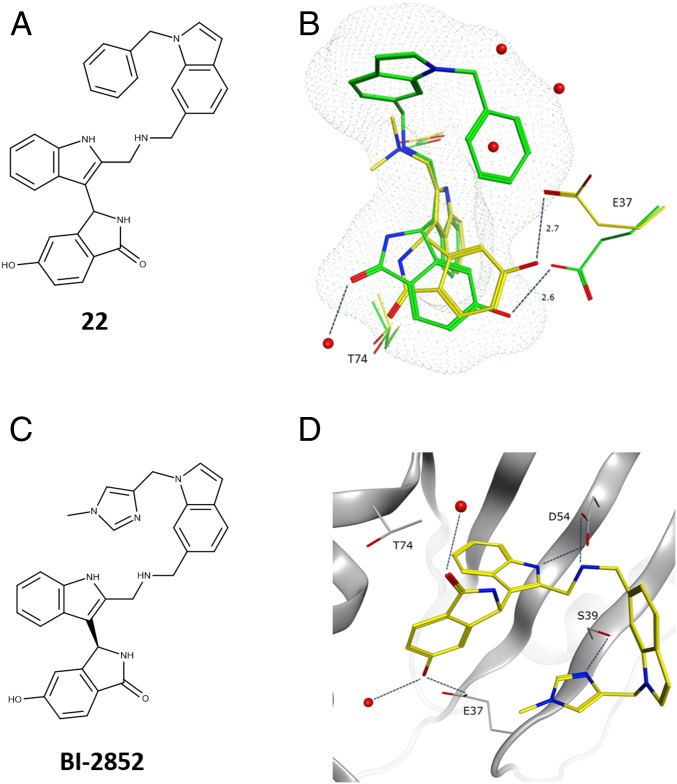
Verification
Claims the paper makes
The claims and statistics of this paper haven’t been checked yet.
Run the check — free, no account needed. It reads the open-access text and checks the sources it cites.
Claims other papers make about this one
Each is checked against this paper’s own text: does it say what the citing paper says it does?
The source backs part of the claim, not all of it — or backs it for a different population, condition or comparison.
In the citing paper
“Other inhibitors, including RMC-9805, 6 TH-Z835, 7 and BI2852, 8 have also been identified.”
From Anti-tumor efficacy of HRS-4642 and its potential combination with proteasome inhibition in KRAS G12D-mutant cancer (2024) · cites this paper as [8]
Experimental — accuracy not yet measuredIn the citing paper
“This approach offers the advantage, shared by MRTX1133, of targeting both the GTP-bound and GDP-bound states of KRAS178,179.”
From The current state of the art and future trends in RAS-targeted cancer therapies (2022) · cites this paper as [178]
In the citing paper
“This pocket was initially described by Kessler et al.178,179 during the development of BI-2852, a small molecule that induces nonfunctional dimerization of KRAS.”
From The current state of the art and future trends in RAS-targeted cancer therapies (2022) · cites this paper as [178]
In the citing paper
“However, an alternative and unique approach of targeting a switch 1/2 pocket is currently being evaluated.”
From The current state of the art and future trends in RAS-targeted cancer therapies (2022) · cites this paper as [178]
In the citing paper
“This non-covalent inhibitor preferentially binds to and with high affinity to the inactive state of KRAS while preserving NRAS and HRAS HRAS [52]. It blocks nucleotide exchange to prevent the activation of wild-type KRAS as well as a wide range of KRAS mutations, including G12A/C/D/F/V/S, G13C/D, V14I, L19F, Q22K, D33E, Q61H, K117N, and A146V/T.”
From KRAS, a New Target for Precision Medicine in Colorectal Cancer? (2024) · cites this paper as [51]
In the citing paper
“Currently, Food and Drug Administration (FDA) has approved an allele-specific covalent inhibitor of KRAS (G12C), AMG510 (sotorasib) having marked clinical responses across multiple tumor types [21–24].”
From Targeting KRAS mutant cancers: from druggable therapy to drug resistance (2022) · cites this paper as [24]
Self-check
Percentages, sums and reported differences re-computed from the paper’s own numbers.
The self-check needs the paper’s full text.
Citations
Cites
Comprehensive molecular profiling of lung adenocarcinoma
The Cancer Genome Atlas Research Network (2014) · Nature · doi:10.1038/nature13385 · Cited by 5,732
CASTp 3.0: computed atlas of surface topography of proteins
Tian, W., Chen, C., Lei, X., Zhao, J., & Liang, J. (2018) · Nucleic Acids Research · doi:10.1093/nar/gky473 · Cited by 2,389
A Comprehensive Survey of Ras Mutations in Cancer
Prior, I. A., Lewis, P. D., & Mattos, C. (2012) · Cancer Research · doi:10.1158/0008-5472.can-11-2612 · Cited by 2,063 · cited 1×
“The most common mutations occur as single-point mutations at codons 12, 13, and 61 (13).”
Pancreatic cancer genomes reveal aberrations in axon guidance pathway genes
Initiative, A. P. C. G., Biankin, A. V., Waddell, N., Kassahn, K. S., Gingras, M.-C., Muthuswamy, L. B., Johns, A. L., Miller, D. K., Wilson, P. J., Patch, A.-M., et al. (2012) · Nature · doi:10.1038/nature11547 · Cited by 2,058
Discovering High-Affinity Ligands for Proteins: SAR by NMR
Shuker, S. B., Hajduk, P. J., Meadows, R. P., & Fesik, S. W. (1996) · Science · doi:10.1126/science.274.5292.1531 · Cited by 2,045
Self-citationThe Guanine Nucleotide-Binding Switch in Three Dimensions
Vetter, I. R., & Wittinghofer, A. (2001) · Science · doi:10.1126/science.1062023 · Cited by 1,875
CASTp: Computed Atlas of Surface Topography of proteins
Binkowski, T. A. (2003) · Nucleic Acids Research · doi:10.1093/nar/gkg512 · Cited by 1,693
The Ras-RasGAP Complex: Structural Basis for GTPase Activation and Its Loss in Oncogenic Ras Mutants
Scheffzek, K., Ahmadian, M. R., Kabsch, W., Wiesmüller, L., Lautwein, A., Schmitz, F., & Wittinghofer, A. (1997) · Science · doi:10.1126/science.277.5324.333 · Cited by 1,543
Mayer, M., & Meyer, B. (2001) · Journal of the American Chemical Society · doi:10.1021/ja0100120 · Cited by 1,201
Self-citationTargeting KRAS mutant cancers with a covalent G12C-specific inhibitor
Janes, M. R., Zhang, J., Li, L.-S., Hansen, R., Peters, U., Guo, X., Chen, Y., Babbar, A., Firdaus, S. J., Darjania, L., et al. (2018) · Cell · doi:10.1016/j.cell.2018.01.006 · Cited by 1,172 · cited 13×
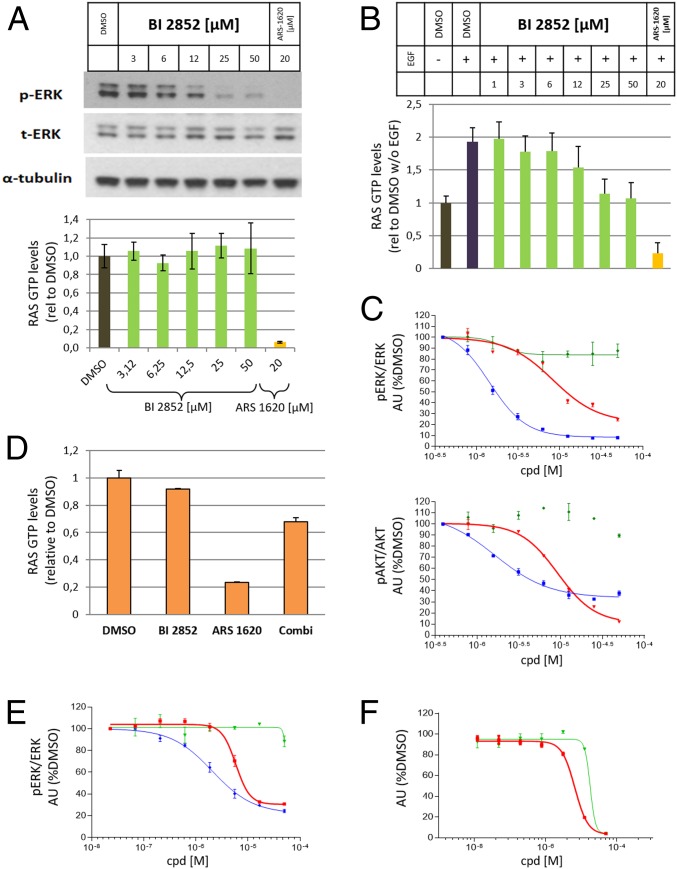
“NCI-H358 cells cultured under high growth factor conditions were treated with increasing concentrations of 1 and ARS-1620 for 2 h.”
Influential
Cited by
Sorted by citations
Items 201–300 of 459
Samad, A., Khurshid, B., Mahmood, A., Rehman, A. U., Khalid, A., Abdalla, A. N., Algarni, A. S., & Wadood, A. (2023) · Journal of Biomolecular Structure and Dynamics · doi:10.1080/07391102.2023.2192298 · Cited by 15
Specific inhibition of oncogenic RAS using cell-permeable RAS-binding domains
Nomura, T. K., Heishima, K., Sugito, N., Sugawara, R., Ueda, H., Akao, Y., & Honda, R. P. (2021) · Cell chemical biology · doi:10.1016/j.chembiol.2021.04.013 · Cited by 14
Recent Developments in Targeting RAS Downstream Effectors for RAS-Driven Cancer Therapy
Tatlı, Ö., & Doğanay, G. D. (2021) · Molecules · doi:10.3390/molecules26247561 · Cited by 14
Ismail, M., Martin, S. R., George, R., Houghton, F., Kelly, G. P., Chaleil, R. A. G., Anastasiou, P., Wang, X., O’Reilly, N., Federico, S., et al. (2023) · Scientific Reports · doi:10.1038/s41598-023-28756-0 · Cited by 15
Analysis of KRAS–Ligand Interaction Modes and Flexibilities Reveals the Binding Characteristics
Zhao, Z., Bohidar, N., & Bourne, P. E. (2023) · Journal of Chemical Information and Modeling · doi:10.1021/acs.jcim.3c00097 · Cited by 13
Targeting Ras with protein engineering
Tomazini, A., & Shifman, J. M. (2023) · Oncotarget · doi:10.18632/oncotarget.28469 · Cited by 14
Chasing Red Herrings: Palladium Metal Salt Impurities Feigning KRAS Activity in Biochemical Assays
Gerstberger, T., Berger, H., Büttner, F. H., Gmachl, M., Kessler, D., Koegl, M., Lucas, S., Martin, L. J., Mayer, M., McConnell, D. B., et al. (2024) · Journal of Medicinal Chemistry · doi:10.1021/acs.jmedchem.3c02381 · Cited by 13
Self-citationDecoding KRAS dynamics: Exploring the impact of mutations and inhibitor binding
Pandey, D., & Roy, K. K. (2024) · Archives of Biochemistry and Biophysics · doi:10.1016/j.abb.2024.110279 · Cited by 12
Parry, C., Pellicano, F., Schüttelkopf, A. W., Beyer, K. S., Bower, J. F., Bryson, A., Cameron, K., Cerutti, N. M., Clark, J. P., Davidson, S. C., et al. (2025) · Journal of Medicinal Chemistry · doi:10.1021/acs.jmedchem.4c02929 · Cited by 12
AIMP2-DX2 provides therapeutic interface to control KRAS-driven tumorigenesis
Kim, D. G., Choi, Y., Lee, Y., Lim, S., Kong, J., Song, J., Roh, Y., Harmalkar, D. S., Lee, K., Goo, J.-I., et al. (2022) · Nature Communications · doi:10.1038/s41467-022-30149-2 · Cited by 13
Robust Strategy for Hit-to-Lead Discovery: NMR for SAR
Larda, S. T., Ayotte, Y., Denk, M. M., Coote, P. W., Heffron, G. J., Bendahan, D., Shahout, F., Girard, N., Iddir, M., Bouchard, P., et al. (2023) · Journal of Medicinal Chemistry · doi:10.1021/acs.jmedchem.3c00656 · Cited by 13
Liang, F., Kang, Z., Sun, X., Chen, J., Duan, X., He, H., & Cheng, J. (2023) · Journal of Computer-Aided Molecular Design · doi:10.1007/s10822-023-00498-1 · Cited by 12
Canning, P., Birchall, K., Kettleborough, C. A., Merritt, A. T., & Coombs, P. J. (2020) · Drug Discovery Today · doi:10.1016/j.drudis.2020.09.003 · Cited by 12
Yang, G., Xu, Q., Wan, Y., Zhang, L., Wang, Z., & Meng, F. (2021) · Cancer Biotherapy and Radiopharmaceuticals · doi:10.1089/cbr.2021.0016 · Cited by 11
KRAS, a New Target for Precision Medicine in Colorectal Cancer?
Boilève, A., Smolenschi, C., Lambert, A., Boige, V., Delaye, M., Camilleri, G. M., Tarabay, A., Valéry, M., Fuerea, A., Pudlarz, T., et al. (2024) · Cancers · doi:10.3390/cancers16203455 · Cited by 11
Targeting KRAS G12D : Advances in Inhibitor Design
Shi, K., & Li, A. (2025) · Thoracic Cancer · doi:10.1111/1759-7714.70203 · Cited by 12
Wang, Y., Zhang, H., Li, J., Niu, M., Zhou, Y., & Qu, Y. (2022) · Frontiers in Pharmacology · doi:10.3389/fphar.2022.1094887 · Cited by 12
Capturing RAS oligomerization on a membrane
Yun, S. D., Scott, E., Chang, J., Bahramimoghaddam, H., Lynn, M., Lantz, C., Russell, D. H., & Laganowsky, A. D. (2024) · Proceedings of the National Academy of Sciences · doi:10.1073/pnas.2405986121 · Cited by 11
Prognostic Significance of the Loss of Heterozygosity of KRAS in Early-Stage Lung Adenocarcinoma
Khadse, A., Haakensen, V. D., Silwal‐Pandit, L., Hamfjord, J., Micke, P., Botling, J., Brustugun, O. T., Lingjærde, O. C., Helland, Å., & Kure, E. H. (2022) · Frontiers in Oncology · doi:10.3389/fonc.2022.873532 · Cited by 11
Design of amino acid- and carbohydrate-based anticancer drugs to inhibit polymerase η
Kalhor, S., & Fattahi, A. (2022) · Scientific Reports · doi:10.1038/s41598-022-22810-z · Cited by 11
Bifunctional robots inducing targeted protein degradation
Sobhia, M. E., Kumar, H., & Kumari, S. (2023) · European Journal of Medicinal Chemistry · doi:10.1016/j.ejmech.2023.115384 · Cited by 11
Proteome-wide Interrogation of Small GTPases Regulated by N 6‑Methyladenosine Modulators
Yang, Y., Yu, K., Li, L., Huang, M., & Wang, Y. (2020) · Analytical Chemistry · doi:10.1021/acs.analchem.0c02203 · Cited by 11
Fumagalli, G., Carbajo, R. J., Nissink, J. W. M., Tart, J., Dou, R., Thomas, A. P., & Spring, D. R. (2021) · Journal of Medicinal Chemistry · doi:10.1021/acs.jmedchem.1c01334 · Cited by 12
Early-stage structure-based drug discovery for small GTPases by NMR spectroscopy
Yin, G., Lv, G., Zhang, J., Jiang, H., Lai, T., Yang, Y., Ren, Y., Wang, J., Yi, C., Chen, H., et al. (2022) · Pharmacology & Therapeutics · doi:10.1016/j.pharmthera.2022.108110 · Cited by 11
Perspectives on Applications of 19F-NMR in Fragment-Based Drug Discovery
Li, Q., & Kang, C. (2024) · Molecules · doi:10.3390/molecules29235748 · Cited by 12
How to make an undruggable enzyme druggable: lessons from ras proteins
Sayyed–Ahmad, A., & Gorfe, A. A. (2020) · Advances in protein chemistry and structural biology · doi:10.1016/bs.apcsb.2020.05.003 · Cited by 11
Cluster analysis on conformational changes of the GDP/KRAS complex induced by A59G and D33E
Zhao, J., Wang, L., Bao, H., & Chen, J. (2021) · Chemical Physics Letters · doi:10.1016/j.cplett.2021.138995 · Cited by 10
Kumar, S. U., Varghese, R. P., Preethi, V. A., Doss, C. G. P., & Zayed, H. (2023) · Frontiers in Bioscience-Landmark · doi:10.31083/j.fbl2811288 · Cited by 11
Yang, C., Huang, H., Kaler, R. S., Zhou, C. Y., Yang, G. Y., Xu, Z., Lin, H., Xu, G., Yong, K., & Bazan, G. C. (2022) · Biomacromolecules · doi:10.1021/acs.biomac.1c01498 · Cited by 10
Dynamic density functional theory of multicomponent cellular membranes
Stanton, L. G., Oppelstrup, T., Carpenter, T. S., Ingólfsson, H. I., Surh, M. P., Lightstone, F. C., & Glosli, J. N. (2023) · Physical Review Research · doi:10.1103/physrevresearch.5.013080 · Cited by 12
Targeting endogenous K-RAS for degradation through the affinity-directed protein missile systemPreprint
Röth, S., Macartney, T., Konopacka, A., Queisser, M. A., & Sapkota, G. P. (2019) · bioRxiv (Cold Spring Harbor Laboratory) · doi:10.1101/805150 · Cited by 10
Covalent fragment mapping of KRasG12C revealed novel chemotypes with in vivo potency
Orgován, Z., Péczka, N., Petri, L., Ábrányi‐Balogh, P., Ranđelović, I., Tóth, S., Szakács, G., Nyíri, K., Vértessy, B. G., Pálfy, G., et al. (2023) · European Journal of Medicinal Chemistry · doi:10.1016/j.ejmech.2023.115212 · Cited by 10
Wang, X., Breuer, J., Garbe, S., Giordano, F. A., Brossart, P., Feldmann, G., & Bisht, S. (2024) · International Journal of Molecular Sciences · doi:10.3390/ijms25116249 · Cited by 10
Mapping protein binding sites by photoreactive fragment pharmacophores
Ábrányi‐Balogh, P., Bajusz, D., Orgován, Z., Keeley, A. B., Petri, L., Péczka, N., Szalai, T. V., Pálfy, G., Gadanecz, M., Grant, E. K., et al. (2024) · Communications Chemistry · doi:10.1038/s42004-024-01252-w · Cited by 9
Target‐Templated Construction of Functional Proteomimetics Using Photo‐Foldamer Libraries
Wéber, E., Ábrányi‐Balogh, P., Nagymihály, B., Menyhárd, D. K., Péczka, N., Gadanecz, M., Schlosser, G., Orgován, Z., Bogár, F., Bajusz, D., et al. (2024) · Angewandte Chemie International Edition · doi:10.1002/anie.202410435 · Cited by 9
Ritt, D. A., Durrant, D., Drew, M. R., Sandin, S. I., Fiesco, J. A. M., Zhang, X., Aydin, F., Carpenter, T. S., Scheidemantle, G. M., D’Ippolito, R. A., et al. (2025) · Proceedings of the National Academy of Sciences · doi:10.1073/pnas.2508169122 · Cited by 9
Vascular malformations: from genetics to therapeutics
Morin, G., Galasso, I., & Canaud, G. (2025) · EMBO Molecular Medicine · doi:10.1038/s44321-025-00344-x · Cited by 9
Hydrophobic tagging: A promising paradigm for targeted protein degradation
Xin, L., Wang, H., Yang, M., Guo, Z., Zhu, M., Moore, T. W., Dong, C., & Zhou, H. (2025) · Cell Insight · doi:10.1016/j.cellin.2025.100295 · Cited by 10
Cui, J., Jiang, K., Li, W., Ni, S., Zong, H., Du, J., He, Y., Liu, Z., Kong, G., Zhang, Y., et al. (2026) · Nature Medicine · doi:10.1038/s41591-026-04538-9 · Cited by 13
Matsubara, H., Miyoshi, H., Kakizaki, F., Morimoto, T., Kawada, K., Yamamoto, T., Obama, K., Sakai, Y., & Taketo, M. M. (2023) · Molecular Cancer Therapeutics · doi:10.1158/1535-7163.mct-22-0411 · Cited by 9
Davoine, C., Pochet, L., & Fillet, M. (2023) · TrAC Trends in Analytical Chemistry · doi:10.1016/j.trac.2023.117161 · Cited by 9
Oyedele, A.-Q. K., Owolabi, N., Odunitan, T. T., Ajibare, A. C., Jimoh, R. O., Abdulazeez, W. O., Titilayo, M. B.-H., Soares, A. S., Adekola, A. T., Abdulkareem, T. O., et al. (2023) · Informatics in Medicine Unlocked · doi:10.1016/j.imu.2023.101170 · Cited by 9
RAS and Other Molecular Targets in Pancreatic Cancer: The Next Wave Is Coming
Miller‐Phillips, L., & Collisson, E. A. (2023) · Current Treatment Options in Oncology · doi:10.1007/s11864-023-01096-x · Cited by 10
Lee, K. (2024) · International Journal of Molecular Sciences · doi:10.3390/ijms25052530 · Cited by 9
Aladinskiy, V., Mantsyzov, A. B., Kruse, C. G., Noev, A., Petrov, R. A., Reshetnikov, V., Shi, S., Ding, X., Cai, X., Aliper, A. M., et al. (2025) · ACS Medicinal Chemistry Letters · doi:10.1021/acsmedchemlett.5c00080 · Cited by 7
Design of new drugs for medullary thyroid carcinoma
Li, Y., Luo, Z., Wang, X., Zhang, S., Hei, H., & Qin, J. (2022) · Frontiers in Oncology · doi:10.3389/fonc.2022.993725 · Cited by 8
In Silico Evaluation of the Thr58-Associated Conserved Water with KRAS Switch-II Pocket Binders
Leini, R., & Pantsar, T. (2023) · Journal of Chemical Information and Modeling · doi:10.1021/acs.jcim.2c01479 · Cited by 7
Zhao, Q., Haga, R., Tamura, S., Shimada, I., & Nishida, N. (2023) · Scientific Reports · doi:10.1038/s41598-023-46623-w · Cited by 9
Molecular Profiling in Drug Development: Paving a Way Forward
Jones, S. F., & McKenzie, A. J. (2020) · American Society of Clinical Oncology Educational Book · doi:10.1200/edbk_100024 · Cited by 8
The RASSF1A Tumor Suppressor Binds the RasGAP DAB2IP and Modulates RAS Activation in Lung Cancer
Stewart, D. R. H., Schmidt, M., Donninger, H., & Clark, G. J. (2020) · Cancers · doi:10.3390/cancers12123807 · Cited by 8
A Photoaffinity‐Based Fragment‐Screening Platform for Efficient Identification of Protein Ligands
Grant, E. K., Fallon, D. J., Hann, M. M., Fantom, K. G. M., Quinn, C. J., Zappacosta, F., Annan, R. S., Chung, C., Bamborough, P., Dixon, D. P., et al. (2020) · Angewandte Chemie · doi:10.1002/ange.202008361 · Cited by 8
Inhibition of K-Ras4B-plasma membrane association with a membrane microdomain-targeting peptide
Li, F.-Y., Zhang, Z., Voß, S., Wu, Y., Zhao, Y., Li, Y., & Chen, Y. (2019) · Chemical Science · doi:10.1039/c9sc04726c · Cited by 8
Iruthayaraj, A., Sakayanathan, P., Ameén, F., & Loganathan, C. (2024) · Journal of Molecular Recognition · doi:10.1002/jmr.3103 · Cited by 6
Alshahrani, M., Parikh, V., Foley, B., Hu, G., & Verkhivker, G. M. (2025) · Physical Chemistry Chemical Physics · doi:10.1039/d5cp00966a · Cited by 7
Advances in biomarkers of resistance to KRAS mutation-targeted inhibitors
Wang, L., Wei, D., Li, S., & Jiang, S. (2025) · Discover Oncology · doi:10.1007/s12672-025-03569-x · Cited by 7
Metabolic reprogramming in colorectal cancer: Mechanisms and therapeutic insights
Xiao, W., Tan, D., Zeng, W., Nie, X., & Wang, M. (2026) · Genes & Diseases · doi:10.1016/j.gendis.2026.102054 · Cited by 8
Discovery and Characterization of Divarasib (GDC-6036), a Potent Covalent Inhibitor of KRAS G12C
Endres, N., Do, S., Mroue, R. M., Terrett, J. A., Saabye, M., Oh, A., Hunsaker, T., Chan, E., (1471192), J. C. T., Nguyen, L. K., et al. (2026) · Journal of Medicinal Chemistry · doi:10.1021/acs.jmedchem.5c02272 · Cited by 8
If Virchow and Ehrlich Had Dreamt Together: What the Future Holds for KRAS-Mutant Lung Cancer
Köhler, J., & Janne, P. A. (2021) · International Journal of Molecular Sciences · doi:10.3390/ijms22063025 · Cited by 7
Gómez‐Gutierrez, P., Rubio, J., & Pérez, J. J. (2023) · Journal of Chemical Information and Modeling · doi:10.1021/acs.jcim.3c01212 · Cited by 7
Peptide inhibitors targeting Ras and Ras-associated protein–protein interactions
Han, D., Li, A., Zhu, L., Zhuang, C., Zhao, Q., & Zou, Y. (2024) · European Journal of Medicinal Chemistry · doi:10.1016/j.ejmech.2024.116878 · Cited by 7
Tajiknia, V., Pinho-Schwermann, M. P., Srinivasan, P. R., Borrero, L. J. H., Zhang, L., Huntington, K. E., & El‐Deiry, W. S. (2024) · American Journal of Cancer Research · doi:10.62347/dvxl1377 · Cited by 8
Sabt, A., Tawfik, H. O., Khaleel, E. F., Badi, R. M., Ibrahim, H. A. A., Elkaeed, E. B., & Eldehna, W. M. (2024) · Molecular Diversity · doi:10.1007/s11030-023-10777-6 · Cited by 8
Inhibition of GTPase KRAS G12D : a review of patent literature
Li, Y., Yang, L., Li, X., & Zhang, X. (2024) · Expert Opinion on Therapeutic Patents · doi:10.1080/13543776.2024.2369630 · Cited by 7
Allosteric Pathways Originating at Cysteine Residues in Regulators of G-Protein Signaling Proteins
Liu, Y., & Vashisth, H. (2020) · Biophysical Journal · doi:10.1016/j.bpj.2020.12.010 · Cited by 7
Gong, Z., Zhao, Y., Xu, B., Zhou, Y., Ren, B., Yang, H. B., Zeng, C., Chen, R., Xu, Y., & Li, Q. (2023) · Bioorganic Chemistry · doi:10.1016/j.bioorg.2023.106954 · Cited by 6
Du, Z., Tu, G., Gong, Y., Fu, X., Wu, Q., & Long, G. (2024) · Molecules · doi:10.3390/molecules29061229 · Cited by 7
Piech, S., Brüschweiler, S., Westphalen, J., Siess, K. M., Murias, J. G., Konrat, R., Bigenzahn, J. W., & Superti‐Furga, G. (2024) · ACS Chemical Biology · doi:10.1021/acschembio.4c00077 · Cited by 6
Sequence-defined phosphoestamers for selective inhibition of the KRAS G12D /RAF1 interaction
Claringbold, B., Vance, S., Paul, A. R., Williamson, J., Garrett, M. D., & Serpell, C. J. (2024) · Chemical Science · doi:10.1039/d4sc07218a · Cited by 6
Prajapati, V., Singh, A. K., Kumar, A. M., Singh, H., Pathak, P., Grishina, M., Kumar, V., Khalilullah, H., Verma, A., & Kumar, P. (2025) · RSC Medicinal Chemistry · doi:10.1039/d4md00923a · Cited by 6
Drugging Challenging Cancer Targets Using Fragment-Based Methods
Fesik, S. W. (2025) · Chemical Reviews · doi:10.1021/acs.chemrev.4c00892 · Cited by 7
Self-citationBarrambana, S., Zamorano-Domínguez, E., Liaki, V., & Guerra, C. E. (2025) · Advanced Drug Delivery Reviews · doi:10.1016/j.addr.2025.115652 · Cited by 8
Zhou, C., Liu, Y., Liu, H., Lü, J., Zhang, B., Zhu, L., Wang, S., Lei, H.-M., & Han, B. (2025) · Cell Death and Disease · doi:10.1038/s41419-025-07992-4 · Cited by 6
Arguedas, D., Bui, V., Law, T., Rijmers, J., Tissier, R., Beijnen, J. H., van Tellingen, O., Lebre, M. C., & Schinkel, A. H. (2026) · Pharmacological Research · doi:10.1016/j.phrs.2026.108226 · Cited by 6
Towards Targeting Endothelial Rap1B to Overcome Vascular Immunosuppression in Cancer
Nakhchi, B. G., Kosuru, R., & Chrzanowska‐Wodnicka, M. (2024) · International Journal of Molecular Sciences · doi:10.3390/ijms25189853 · Cited by 7
Ismail, M., Davies, G., Sproat, G., Monteverde, T., Tart, J., Acebrón-García-de-Eulate, M., Gohlke, A., Hancock, D., Adhikari, S., Stefanovic-Barrett, S., et al. (2024) · SLAS Discovery · doi:10.1016/j.slasd.2024.100197 · Cited by 6
Detection of Ras nanoclustering-dependent homo-FRET using fluorescence anisotropy measurements
Manoharan, G. B., Guzmán, C., Najumudeen, A. K., & Abankwa, D. (2023) · European Journal of Cell Biology · doi:10.1016/j.ejcb.2023.151314 · Cited by 5
Exploring Covalent Bond Formation at Tyr‐82 for Inhibition of Ral GTPase Activation
Landgraf, A. D., Yeh, I., Ghozayel, M. K., Bum‐Erdene, K., González-Gutiérrez, G., & Meroueh, S. O. (2023) · ChemMedChem · doi:10.1002/cmdc.202300272 · Cited by 6
Structural insights into the complex of oncogenic KRas4B G12V and Rgl2, a RalA/B activator
Tariq, M., Ikeya, T., Togashi, N., Fairall, L., Kamei, S., Mayooramurugan, S., Abbott, L. R., Hasan, A., Bueno-Alejo, C. J., Sukegawa, S., et al. (2023) · Life Science Alliance · doi:10.26508/lsa.202302080 · Cited by 6
Targeting Six Hallmarks of Cancer in Ovarian Cancer Therapy
Gong, H., Nie, D., & Li, Z. (2020) · Current Cancer Drug Targets · doi:10.2174/1568009620999200816130218 · Cited by 6
Anthraquinones as Inhibitors of SOS RAS-GEF Activity
Fernández‐Medarde, A., Fuentes‐Mateos, R., García‐Navas, R., Juan, A. O.-S., Sánchez-López, J. M., Fernández-Medarde, A., & Santos, E. (2021) · Biomolecules · doi:10.3390/biom11081128 · Cited by 6
Bai, R.-L., Wang, N.-Y., Zhao, L., Zhang, Y., & Cui, J. (2021) · Hepatobiliary & pancreatic diseases international · doi:10.1016/j.hbpd.2021.08.012 · Cited by 6
Lee, W., Song, G., & Bae, H. (2024) · Molecular & Cellular Toxicology · doi:10.1007/s13273-024-00483-1 · Cited by 5
Hossain, M. A., Brahme, R. R., Miller, B. C., Amin, J., de Barros, M., Schneider, J. L., Auclair, J. R., Mattos, C., Wang, Q., Agar, N. Y. R., et al. (2025) · Nature Communications · doi:10.1038/s41467-025-56985-6 · Cited by 6
Advances in KRAS mutation inhibition in metastatic colorectal cancer
Wu, C., Li, W., Chen, M., Zhang, Q., Xu, T., Ma, Y., Liu, W., Wang, Z., Wang, X., Li, J., et al. (2023) · Holistic Integrative Oncology · doi:10.1007/s44178-023-00032-1 · Cited by 5
Drug screening approaches for small-molecule compounds in cancer-targeted therapy
Zhao, Y., Yuan, C., Shi, Y., Liu, X., Luo, L., Zhang, L., Pešić, M., Yao, H.-J., & Li, L. (2024) · Journal of drug targeting · doi:10.1080/1061186x.2024.2427185 · Cited by 5
Evolution of structure-guided drug design strategies targeting mutations in codon 12 of KRAS
Dorandish, S., Bhayekar, K., Singh, A., Kushwaha, N. D., Malin, E., Serafimovski, S., Kelm, J. M., Gavande, N. S., & Lakkaniga, N. R. (2025) · RSC Medicinal Chemistry · doi:10.1039/d5md00169b · Cited by 6
Rational Design of Constrained Peptides as Protein Interface Inhibitors
Murali, R., Zhang, H., Cai, Z., Lam, L., & Greene, M. I. (2021) · Antibodies · doi:10.3390/antib10030032 · Cited by 5
Brenner, R. J., Landgraf, A. D., Bum‐Erdene, K., González-Gutiérrez, G., & Meroueh, S. O. (2023) · Biochemistry · doi:10.1021/acs.biochem.3c00378 · Cited by 5
Crystallographic Studies of KRAS in Complex with Small Molecules and RAS-Binding Proteins
Chan, A. H., & Simanshu, D. K. (2024) · Methods in molecular biology · doi:10.1007/978-1-0716-3822-4_5 · Cited by 5
Drugging the undruggable: a computational chemist's view of KRAS G12C
Bodnarchuk, M. S., Cassar, D. J., Kettle, J. G., Robb, G. R., & Ward, R. A. (2021) · RSC Medicinal Chemistry · doi:10.1039/d1md00055a · Cited by 5
Structure–activity relationships of KRAS-G12D inhibitors for pancreatic cancer
Suyal, C., Mangala, S. S., Kishore, A., & Kini, S. G. (2025) · Drug Discovery Today · doi:10.1016/j.drudis.2025.104396 · Cited by 5
Impact of Protein Conformational Diversity on Structure-Based Prediction of Druggability
Bekar-Cesaretli, A. A., Vats, S., Whitty, A., Kozakov, D., Joseph‐McCarthy, D., & Vajda, S. (2025) · Journal of Chemical Information and Modeling · doi:10.1021/acs.jcim.5c01576 · Cited by 4
Zeng, J., Li, L., Sun, C., Shen, S., Tan, Y., Chen, J., Xia, F., Deng, X., & Xu, X. (2025) · The Journal of Physical Chemistry B · doi:10.1021/acs.jpcb.5c01781 · Cited by 4
NMR in the Age of Modern Biomedical Research and Drug Discovery
Lu, X., Myint, W., Muli, C. S., Larion, M., Matsuo, H., & Walters, K. J. (2025) · Journal of Molecular Biology · doi:10.1016/j.jmb.2025.169302 · Cited by 4
Pan-RAS inhibitors and polo-like kinase 1: promising targets in colorectal cancer
Jayachandran, P., Elliott, A., Soni, S., Battaglin, F., Mittal, P., Algaze, S. D., Lo, J. H., Yang, Y., Ashouri, K., Torres, E. T. R., et al. (2025) · Oncogene · doi:10.1038/s41388-025-03484-z · Cited by 6
Sun, R., Hu, Y., Liu, X., Lin, Y., Lv, D., Li, W., Fu, L., & Jiang, F. (2024) · Bioorganic Chemistry · doi:10.1016/j.bioorg.2024.107460 · Cited by 4
Wang, H., Liu, D., Yu, Y., Fang, M., Gu, X., & Long, D. (2022) · Physical Chemistry Chemical Physics · doi:10.1039/d2cp04964c · Cited by 4
Design, synthesis and biological evaluation of quinazoline SOS1 inhibitors
Jiang, H., Fan, Y., Wang, J., Wang, J., Yang, H., Fan, W., & Tang, C. (2023) · Bioorganic & Medicinal Chemistry Letters · doi:10.1016/j.bmcl.2023.129265 · Cited by 4
Discovery of a highly potent pan-RAF inhibitor IHMT-RAF-128 for cancer treatment
Wang, A., Liu, J., Li, X., Zou, F., Qi, Z., Qi, S., Liu, Q., Wang, Z., Cao, J., Jiang, Z., et al. (2023) · European Journal of Pharmacology · doi:10.1016/j.ejphar.2023.175752 · Cited by 5
Hu, Z., & Martí, J. (2024) · Molecular Physics · doi:10.1080/00268976.2024.2316883 · Cited by 5
Metadata
- Authors
- Kessler, D., Gmachl, M., Mantoulidis, A., Martin, L. J., Zoephel, A., Mayer, M., Gollner, A., Covini, D., Fischer, S., Gerstberger, T., Gmaschitz, T., Goodwin, C., Greb, P., Häring, D., Hela, W., Hoffmann, J., Karolyi-Oezguer, J., Knesl, P., Kornigg, S., Koegl, M., Kousek, R., Lamarre, L., Moser, F., Munico-Martinez, S., Peinsipp, C., Phan, J., Rinnenthal, J., Sai, J., Salamon, C., Scherbantin, Y., Schipany, K., Schnitzer, R., Schrenk, A., Sharps, B., Siszler, G., Sun, Q., Waterson, A., Wolkerstorfer, B., Zeeb, M., Pearson, M., Fesik, S. W., & McConnell, D. B.
- Affiliations
- Boehringer Ingelheim (Austria) (AT)
- Vanderbilt University (US)
- Discovery Research, Boehringer Ingelheim Regional Center Vienna GmbH & Co KG, 1120 Vienna, Austria;
- Boehringer Ingelheim (Germany) (DE)
- Corresponding author
- McConnell, Darryl B.
- ORCID
- Venue
- Proceedings of the National Academy of Sciences
- Publisher
- National Academy of Sciences
- Published
- 2019-07-22
- Volume
- 116
- Issue
- 32
- Pages
- 15823-15829
- ISSN
- 0027-8424 (ISSN-L)
- 1091-6490
- PMC
- PMC6689897
- OpenAlex
- W2963086398
- Cited by
- 449
- References
- 51
- Citations by year
- 2026: 52 · 2025: 58 · 2024: 71 · 2023: 66 · 2022: 58 · 2021: 63 · 2020: 69 · 2019: 12
- FWCI
- 17.03
- Type
- journal article
- Language
- en
- Open access
- hybrid
- doi.org
- Licence
- Locations
- Proceedings of the National Academy of Sciences (publishedVersion, cc-by)
- Europe PMC (PubMed Central) (publishedVersion, cc-by)
- PubMed Central (publishedVersion, cc-by)
- PubMed (publishedVersion)
- DORA PSI (Paul Scherrer Institute) (submittedVersion, cc-by)
- OSTI OAI (U.S. Department of Energy Office of Scientific and Technical Information) (submittedVersion)
- Funders
- U.S. Department of Energy (DE‐ AC02‐06CH11357, AC02‐06CH11357, 06CH11357, DE-AC02-)
- Vanderbilt University
- Paul Scherrer Institut
- National Institutes of Health (DE-AC02–06CH11357)
- Office of Science (AC02‐06CH11357, DE-AC02, 06CH11357, DE-AC02-06CH11357)
- National Cancer Institute (P50A095103, DE-AC02-06CH11357, P50CA095103, RC2CA148375, P30CA068485)
- Vanderbilt Institute of Chemical Biology, School of Medicine, Vanderbilt University (P30CA68485)
- Argonne National Laboratory (DE- AC02-06-CH11357, DE-AC02, AC02–06CH11357, 06CH11357)
- Topics
- Life Sciences › Biochemistry, Genetics and Molecular Biology › Molecular Biology › Protein Kinase Regulation and GTPase Signaling
- Life Sciences › Biochemistry, Genetics and Molecular Biology › Molecular Biology › Protein Tyrosine Phosphatases
- Life Sciences › Pharmacology, Toxicology and Pharmaceutics › Drug Discovery › Computational Drug Discovery Methods
- Keywords
- KRAS, Ras GTPase, structure-based drug design, oncogenic Ras mutations, antiproliferative activity, chemical probes
- MeSH terms
- Pharmaceutical Preparations, Guanosine Triphosphate, Humans, Models, Molecular, Proto-Oncogene Proteins p21(ras), Nanoparticles, Drug Discovery
About these checks
Registry, retraction, Cites and statistics results are computed, not judged, with one exception: a printed reference that no index lists is read once by a model before it counts as a citation error. Claims are extracted by a model and kept only when their quote appears verbatim in the text; each cited source is then checked, with a model’s help, for whether it says what the claim relies on. Those verdicts can be wrong — read the claim’s quote and the cited source before relying on one.
Statistics and arithmetic are recomputed, not judged.
Confidence bands are shown only for fields calibrated on our annotated test set. None is calibrated yet, so no band is shown.
What counts as a claim ›How we measure confidence ›How we check this ›
Are you an author, or do you see a problem with this page? Request a review
