

The DOI matches its Crossref record; 51 of the 51 references it cites were found in a registry or an index.
Drugging an undruggable pocket on KRAS
Open accessAbstract
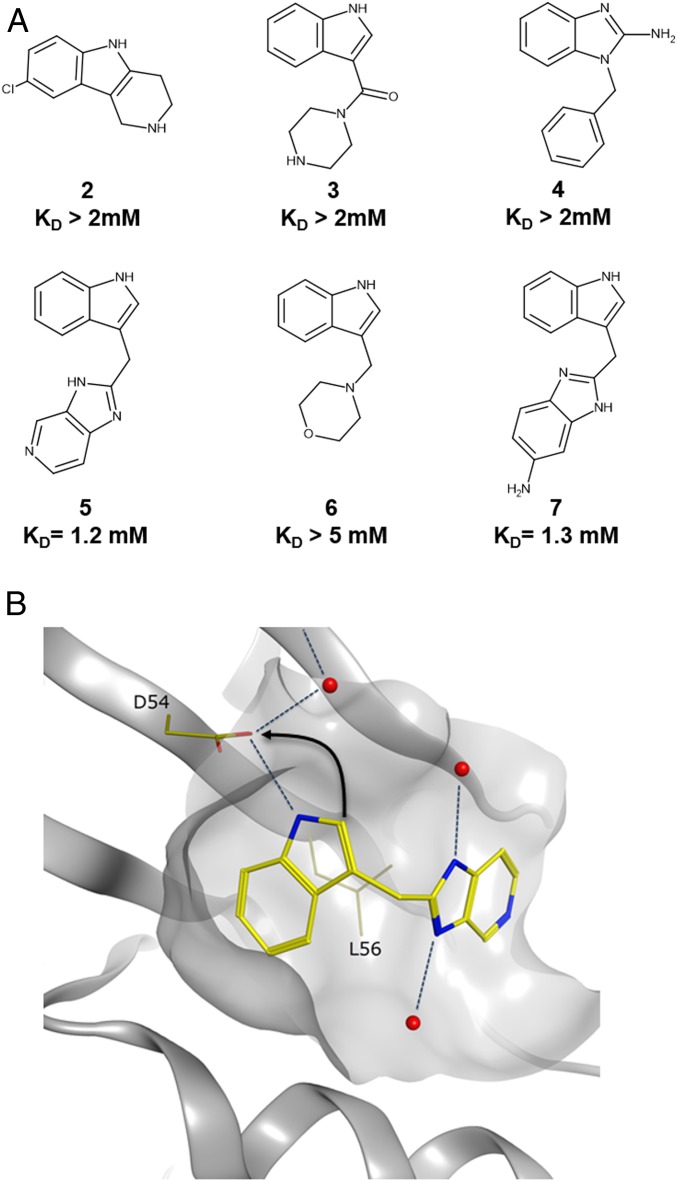
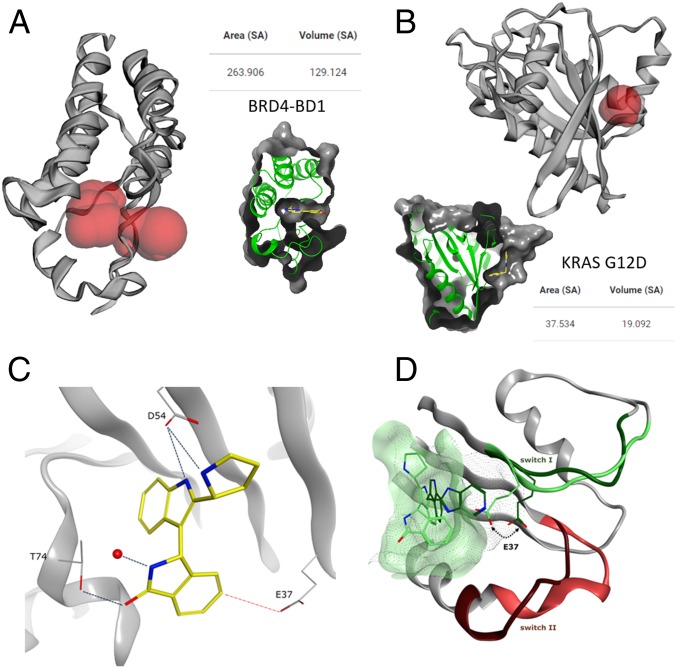
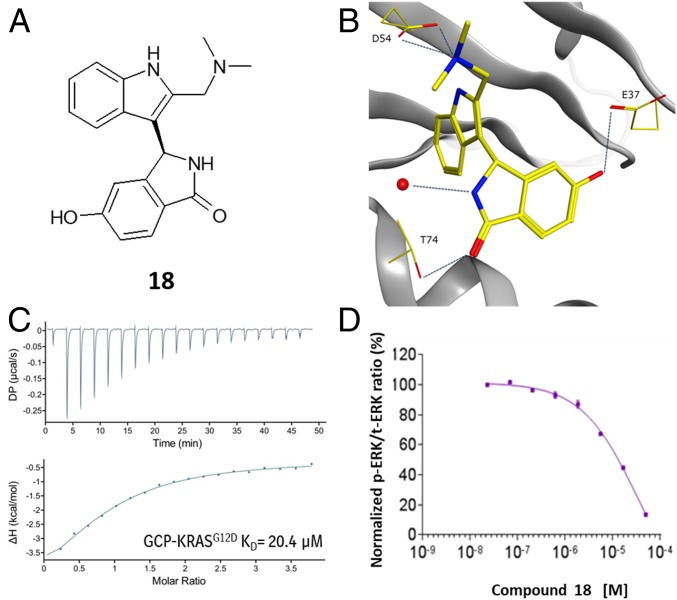
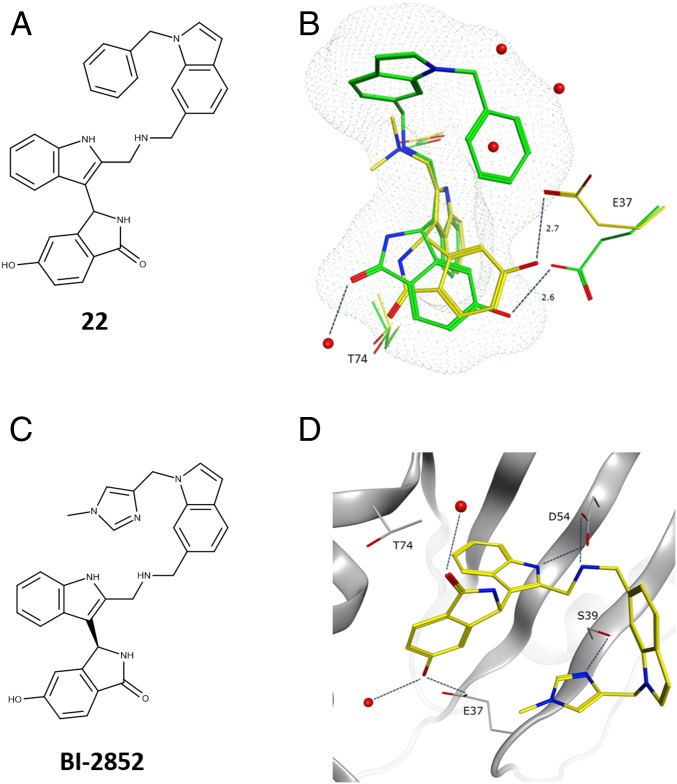
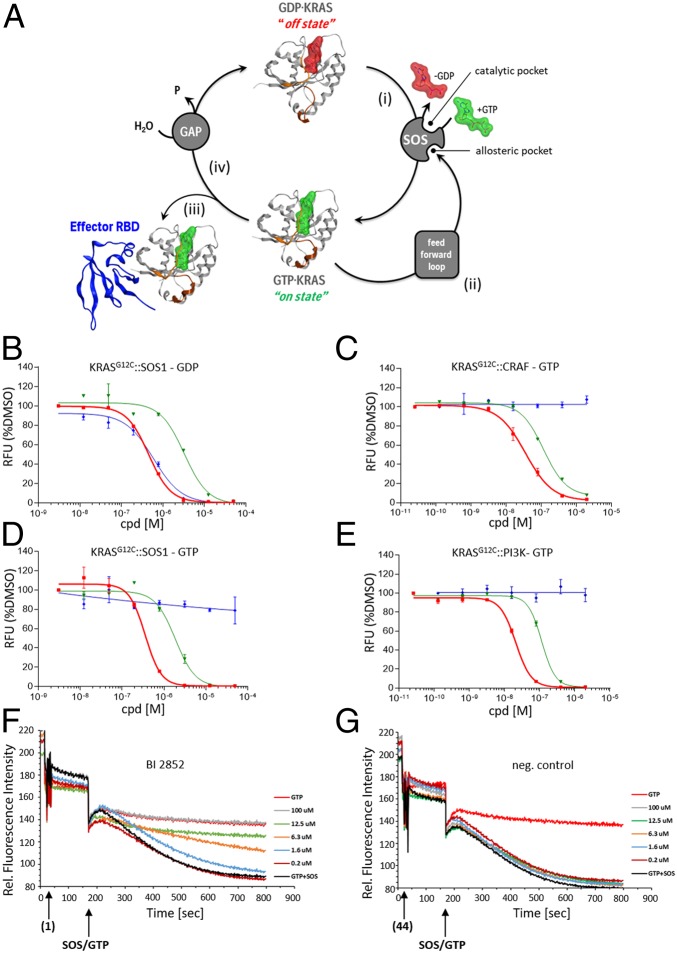
The 3 human RAS genes, KRAS, NRAS, and HRAS, encode 4 different RAS proteins which belong to the protein family of small GTPases that function as binary molecular switches involved in cell signaling. Activating mutations in RAS are among the most common oncogenic drivers in human cancers, with KRAS being the most frequently mutated oncogene. Although KRAS is an excellent drug discovery target for many cancers, and despite decades of research, no therapeutic agent directly targeting RAS has been clinically approved. Using structure-based drug design, we have discovered BI-2852 (1), a KRAS inhibitor that binds with nanomolar affinity to a pocket, thus far perceived to be “undruggable,” between switch I and II on RAS; 1 is mechanistically distinct from covalent KRAS G12C inhibitors because it binds to a different pocket present in both the active and inactive forms of KRAS. In doing so, it blocks all GEF, GAP, and effector interactions with KRAS, leading to inhibition of downstream signaling and an antiproliferative effect in the low micromolar range in KRAS mutant cells. These findings clearly demonstrate that this so-called switch I/II pocket is indeed druggable and provide the scientific community with a chemical probe that simultaneously targets the active and inactive forms of KRAS.
Overview
The claims and statistics of this paper haven’t been checked yet.
Run the check — free, no account needed. It reads the open-access text and checks the sources it cites.
Integrity signals
Registry
Cites
Statistics
Figures
Verification
Claims the paper makes
The claims and statistics of this paper haven’t been checked yet.
Run the check — free, no account needed. It reads the open-access text and checks the sources it cites.
Claims other papers make about this one
Each is checked against this paper’s own text: does it say what the citing paper says it does?
The source backs part of the claim, not all of it — or backs it for a different population, condition or comparison.
In the citing paper
“Other inhibitors, including RMC-9805, 6 TH-Z835, 7 and BI2852, 8 have also been identified.”
From Anti-tumor efficacy of HRS-4642 and its potential combination with proteasome inhibition in KRAS G12D-mutant cancer (2024) · cites this paper as [8]
Experimental — accuracy not yet measuredIn the citing paper
“This approach offers the advantage, shared by MRTX1133, of targeting both the GTP-bound and GDP-bound states of KRAS178,179.”
From The current state of the art and future trends in RAS-targeted cancer therapies (2022) · cites this paper as [178]
In the citing paper
“This pocket was initially described by Kessler et al.178,179 during the development of BI-2852, a small molecule that induces nonfunctional dimerization of KRAS.”
From The current state of the art and future trends in RAS-targeted cancer therapies (2022) · cites this paper as [178]
In the citing paper
“However, an alternative and unique approach of targeting a switch 1/2 pocket is currently being evaluated.”
From The current state of the art and future trends in RAS-targeted cancer therapies (2022) · cites this paper as [178]
In the citing paper
“This non-covalent inhibitor preferentially binds to and with high affinity to the inactive state of KRAS while preserving NRAS and HRAS HRAS [52]. It blocks nucleotide exchange to prevent the activation of wild-type KRAS as well as a wide range of KRAS mutations, including G12A/C/D/F/V/S, G13C/D, V14I, L19F, Q22K, D33E, Q61H, K117N, and A146V/T.”
From KRAS, a New Target for Precision Medicine in Colorectal Cancer? (2024) · cites this paper as [51]
In the citing paper
“Currently, Food and Drug Administration (FDA) has approved an allele-specific covalent inhibitor of KRAS (G12C), AMG510 (sotorasib) having marked clinical responses across multiple tumor types [21–24].”
From Targeting KRAS mutant cancers: from druggable therapy to drug resistance (2022) · cites this paper as [24]
Self-check
Percentages, sums and reported differences re-computed from the paper’s own numbers.
The self-check needs the paper’s full text.
Citations
Cites
Comprehensive molecular profiling of lung adenocarcinoma
The Cancer Genome Atlas Research Network (2014) · Nature · doi:10.1038/nature13385 · Cited by 5,732
CASTp 3.0: computed atlas of surface topography of proteins
Tian, W., Chen, C., Lei, X., Zhao, J., & Liang, J. (2018) · Nucleic Acids Research · doi:10.1093/nar/gky473 · Cited by 2,389
A Comprehensive Survey of Ras Mutations in Cancer
Prior, I. A., Lewis, P. D., & Mattos, C. (2012) · Cancer Research · doi:10.1158/0008-5472.can-11-2612 · Cited by 2,063 · cited 1×
“The most common mutations occur as single-point mutations at codons 12, 13, and 61 (13).”
Pancreatic cancer genomes reveal aberrations in axon guidance pathway genes
Initiative, A. P. C. G., Biankin, A. V., Waddell, N., Kassahn, K. S., Gingras, M.-C., Muthuswamy, L. B., Johns, A. L., Miller, D. K., Wilson, P. J., Patch, A.-M., et al. (2012) · Nature · doi:10.1038/nature11547 · Cited by 2,058
Discovering High-Affinity Ligands for Proteins: SAR by NMR
Shuker, S. B., Hajduk, P. J., Meadows, R. P., & Fesik, S. W. (1996) · Science · doi:10.1126/science.274.5292.1531 · Cited by 2,045
Self-citationThe Guanine Nucleotide-Binding Switch in Three Dimensions
Vetter, I. R., & Wittinghofer, A. (2001) · Science · doi:10.1126/science.1062023 · Cited by 1,875
CASTp: Computed Atlas of Surface Topography of proteins
Binkowski, T. A. (2003) · Nucleic Acids Research · doi:10.1093/nar/gkg512 · Cited by 1,693
The Ras-RasGAP Complex: Structural Basis for GTPase Activation and Its Loss in Oncogenic Ras Mutants
Scheffzek, K., Ahmadian, M. R., Kabsch, W., Wiesmüller, L., Lautwein, A., Schmitz, F., & Wittinghofer, A. (1997) · Science · doi:10.1126/science.277.5324.333 · Cited by 1,543
Mayer, M., & Meyer, B. (2001) · Journal of the American Chemical Society · doi:10.1021/ja0100120 · Cited by 1,201
Self-citationTargeting KRAS mutant cancers with a covalent G12C-specific inhibitor
Janes, M. R., Zhang, J., Li, L.-S., Hansen, R., Peters, U., Guo, X., Chen, Y., Babbar, A., Firdaus, S. J., Darjania, L., et al. (2018) · Cell · doi:10.1016/j.cell.2018.01.006 · Cited by 1,172 · cited 13×
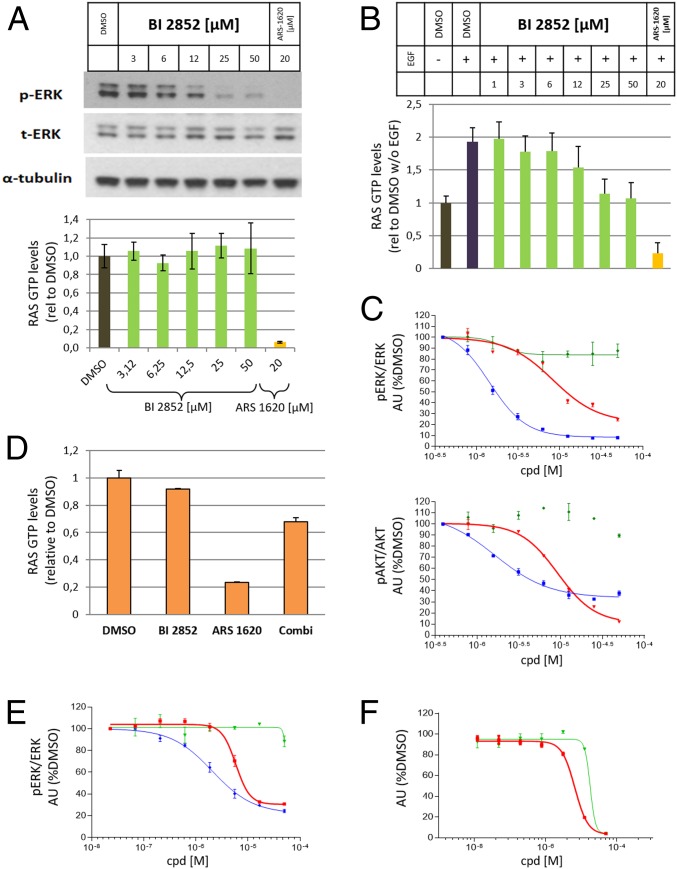
“NCI-H358 cells cultured under high growth factor conditions were treated with increasing concentrations of 1 and ARS-1620 for 2 h.”
Influential
Cited by
Sorted by citations
Items 401–459 of 459
The emergence of pan-KRAS drugs
McConnell, D. B., & Kraut, N. (2024) · Elsevier eBooks · doi:10.1016/b978-0-443-21861-3.00019-x
Self-citationIdentification of Novel Potent KRASG12D Inhibitors Through Target-Based Virtual Screening
Pandey, D., & Roy, K. K. (2024) · Springer eBooks · doi:10.1007/978-3-031-75457-9_14
Targeting RAS and associated proteins
Müller, M. P., Goody, R. S., & Rauh, D. (2025) · Elsevier eBooks · doi:10.1016/b978-0-443-29808-0.00008-x
Alshahrani, M., Parikh, V., Foley, B., Hu, G., & Verkhivker, G. M. (2025) · bioRxiv (Cold Spring Harbor Laboratory) · doi:10.1101/2025.03.11.642708
Unveiling KRAS Mutant Structures with AlphaFold 3: New Avenues for Targeted Cancer TherapyPreprint
Zhao, G., & Zhao, Y. (2025) · bioRxiv (Cold Spring Harbor Laboratory) · doi:10.1101/2025.05.16.654380
Unveiling KRAS G12D inhibition: from molecular dynamics to therapeutic strategies
Omotara, B. S., Solanki, P. R., Manica, A. K., Ajala, C. F., Junaid, I. O., Anifowose, L. O., Adeniran, T. R., Nwachukwu, F., Farayola, R. O., Abdulrasaq, I. T., et al. (2025) · Journal of Biomolecular Structure and Dynamics · doi:10.1080/07391102.2025.2563084 · Cited by 1
De novo protein design enables targeting of intractable oncogenic interfacesPreprint
Prakash, V. R., Najy, Y., Garrett, K., Edwards, B. F. P., & Kidder, B. L. (2025) · bioRxiv (Cold Spring Harbor Laboratory) · doi:10.1101/2025.10.22.683953
Rajitha Rajeshwar, T., Lagergren, J. H., Smith, J. C., & Demerdash, O. (2025) · Biophysical Journal · doi:10.1016/j.bpj.2025.12.011
FragmentScope - exploring the fragment space with learned surface representationsPreprint
Elizarova, E., Morozova, I., Igashov, I., Gampp, O., Iosub, D. R. P., Schneuing, A., Lau, K., Ferraris, D. M., Pojer, F., Riek, R., et al. (2025) · bioRxiv (Cold Spring Harbor Laboratory) · doi:10.64898/2025.12.16.694391
Target Hyperactive ERK Signaling for Cancer Therapy
Yap, J., & Hu, J. (2025) · Springer eBooks · doi:10.1007/978-3-032-00771-1_257
Varol, A. (2025) · Mugla Journal of Science and Technology · doi:10.22531/muglajsci.1826880
朱, 含. (2026) · Advances in Clinical Medicine · doi:10.12677/acm.2026.161317
Bernardo, S. (2019) · theses.fr (ABES) · doi:10.70675/df87afcbz5843z4c32z9d7cz074065a8acf1
A yeast-based assay to screen protein-protein interaction modulators
Sudevan, A. (2021) · theses.fr (ABES) · doi:10.70675/9ab04dcaz498fz43ebz8762z012f3f86154c
Innovative targeted therapies for mosaic RAS-related vascular malformations
Morin, G. (2024) · theses.fr (ABES) · doi:10.70675/88882e5fz1bf9z4dbezae13zba4200ee9598
Samudrala, R., Bruggemann, L., Falls, Z., & Mahajan, S. D. (2026) · Expert Opinion on Drug Discovery · doi:10.1080/17460441.2026.2654614
Pandey, D., Dwivedi, S., & Roy, K. K. (2026) · Molecular Diversity · doi:10.1007/s11030-026-11554-x
Zhu, J., Lu, D., Lin, X., Zhang, Y., Li, W., Li, M., Liu, C., Ma, H., Xie, Q., & Jiang, F. (2026) · Results in Chemistry · doi:10.1016/j.rechem.2026.103406
Zhou, C., Zhu, Y., Yang, C., Gao, Y. N., Lu, J., & Ming, D. (2026) · Pharmaceuticals · doi:10.3390/ph19050753
Mitcheltree, M. J., Boo, N., Boyer, N. C., Brown, Z. Z., Chai, X., Duggal, R., Garrigou, M., Hayes, R. P., Johnston, J. M., Josien, H. B., et al. (2026) · bioRxiv (Cold Spring Harbor Laboratory) · doi:10.64898/2026.05.20.726527
Pagba, C. V., Dilsha, K. M., Ojha, R., Jakubec, J. L., Liang, X., Sianoya, A. C., Medina, P. M. B., Gilbertson, S. R., & Gorfe, A. A. (2026) · ACS Medicinal Chemistry Letters · doi:10.1021/acsmedchemlett.6c00129
Accurate Identification of Functional Residues Across the Human Proteome with TAMALEPreprint
Riper, J. M. V., Corsaro, B. J., & Pillon, M. C. (2026) · bioRxiv (Cold Spring Harbor Laboratory) · doi:10.64898/2026.05.28.728550
Addis, A. G., Jakubec, J. L., Sanchez, J., Pagba, C. V., Sianoya, A. C., & Gorfe, A. A. (2026) · Journal of Chemical Information and Modeling · doi:10.1021/acs.jcim.6c01372
Benchmarking docking and ML re-scoring screening performance for KRAS G12D in pancreatic cancer
Elaraby, A. R., Shahin, M. I., Elaasser, M. M., Elsaady, M. T., Al-Ansary, G. H., Ella, D. A. A. E., & Ibrahim, T. M. (2026) · Molecular Diversity · doi:10.1007/s11030-026-11627-x
Targeting the Undruggable: Deep Learning-Driven Design of Peptide Therapeutics in Cancer
Nguyen, H. T. N., Le, B. H. N., Van, N. T. H., Tran, T. T. T., & Nguyen, T. M. (2026) · Pharmaceuticals · doi:10.3390/ph19070998
Unveiling the KRAS Relationship between Affinity and Dynamics: A Molecular Simulations Study
Grundschober, N., Dujmović, V., Oostenbrink, C., Petrov, D., Jandová, Z., Bergner, A., & Galicia‐Andrés, E. (2026) · Journal of Chemical Information and Modeling · doi:10.1021/acs.jcim.6c01239
Identifying Cryptic Binding Sites with Mixed Solvent MD Simulation and SiteMap
Shi, D., Lupyan, D., Jerome, S. V., Abel, R., & Zhang, Y. (2026) · Journal of Chemical Information and Modeling · doi:10.1021/acs.jcim.6c01288
Hruban, R. H., & Kern, S. E. (2026) · Modern Pathology · doi:10.1016/j.modpat.2026.101059
Aparana, K., Guruswaroop, C., M, K. K., J, D. N., & Krishnaveni, S. (2026) · In Silico Research in Biomedicine · doi:10.1016/j.insi.2026.100572
Mariano, M. P., Sgarilli, E., Mijnlieff, D., Visuvasam, B., Blesio, A., Digiacomo, G., Cavazzoni, A., Ferracin, M., & Giovannetti, E. (2026) · Cancer Drug Resistance · doi:10.20517/cdr.2026.52
Fuerst, T. R., Goldstein, M., Chu, B., Carillo, K. J., Orban, J. P., & Toth, E. (2026) · Research Square · doi:10.21203/rs.3.rs-10438702/v1
Multimodal allostery in a single-domain proteinPreprint
Ma, Y., Jin, Q., Lehner, B., & Weng, C. (2026) · bioRxiv (Cold Spring Harbor Laboratory) · doi:10.64898/2026.09.14.750605
Kalaskar, K., & Alavala, R. R. (2026) · Journal of Molecular Graphics and Modelling · doi:10.1016/j.jmgm.2026.109578
RAS/RAF/MAPK Alterations in Prostatic Adenocarcinoma: A Multi-Institutional Study
Chan, G. J., Zhu, X., Kwon, J. W., Tjota, M. Y., Wuori, D., Korentzelos, D. K., Mohebnasab, M., Greenland, N., Stohr, B. A., Simko, J., et al. (2026) · Human Pathology · doi:10.1016/j.humpath.2026.106270
Liang, H., Xu, X., Zhang, E., Liu, J., Wang, Y., Liu, X., Luo, S., & Duan, L. (2026) · Spectrochimica Acta Part A Molecular and Biomolecular Spectroscopy · doi:10.1016/j.saa.2026.128897
Gehringer, M., & Heppner, D. E. (2026) · Biochemistry · doi:10.1021/acs.biochem.6c00624
Advances in KRASG12D-targeted therapy: from small-molecule inhibitors to PROTACs and molecular glues
Hao, S., Niu, T., Wu, X., Mu, C., Wang, M., Liu, H., & 路海滨 (2026) · Bioorganic Chemistry · doi:10.1016/j.bioorg.2026.110633
Khattab, M. S., Mehtab, M. A., & Khan, R. (2026) · doi:10.3390/chemproc2026022007
Machine Learning-Guided Discovery of Potential Natural KRAS-G12D Inhibitors for Pancreatic Carcinoma
Alquraini, A., Alahmari, M., Alkholifi, F. K., Alghazwani, Y., Qadri, M., Alomar, F. A., Almarghalani, D. A., & Imran, M. (2026) · Journal of Pharmaceutical Innovation · doi:10.1007/s12247-026-11123-7
Poswal, J., Tejavath, K. K., Kushwaha, V., Vidya, R. S., Banavath, H. N., Dey, S. K., & Mandal, C. C. (2026) · Biochimica et Biophysica Acta (BBA) - Molecular and Cell Biology of Lipids · doi:10.1016/j.bbalip.2026.159779
BindingDB Entry 50013003: Drugging the undruggable: a computational chemist's view of KRAS
BindingDB (2022) · UC San Diego · doi:10.7270/q2db85kh
BindingDB (2024) · UC San Diego · doi:10.7270/q2gf0zrw
BindingDB (2026) · UC San Diego · doi:10.7270/q26w9gxr
BindingDB Entry 50015318: Identification of MRTX1133, a Noncovalent, Potent, and Selective KRAS
BindingDB (2023) · UC San Diego · doi:10.7270/q2tm7g15
BindingDB (2026) · UC San Diego · doi:10.7270/q2t4401d
BindingDB (2025) · UC San Diego · doi:10.7270/q2jd52f8
BindingDB Entry 50012178: Fragment-to-Lead Medicinal Chemistry Publications in 2019.
BindingDB (2022) · UC San Diego · doi:10.7270/q25d8wht
BindingDB Entry 50015183: Hydrophobic Tagging-Induced Degradation of PDEδ in Colon Cancer Cells.
BindingDB (2023) · UC San Diego · doi:10.7270/q2pc368t
BindingDB (2022) · UC San Diego · doi:10.7270/q2t1578s
Bokhari, B. T. (2026) · Journal of Pharmaceutical Innovation · doi:10.1007/s12247-026-11139-z
Metadata
- Authors
- Kessler, D., Gmachl, M., Mantoulidis, A., Martin, L. J., Zoephel, A., Mayer, M., Gollner, A., Covini, D., Fischer, S., Gerstberger, T., Gmaschitz, T., Goodwin, C., Greb, P., Häring, D., Hela, W., Hoffmann, J., Karolyi-Oezguer, J., Knesl, P., Kornigg, S., Koegl, M., Kousek, R., Lamarre, L., Moser, F., Munico-Martinez, S., Peinsipp, C., Phan, J., Rinnenthal, J., Sai, J., Salamon, C., Scherbantin, Y., Schipany, K., Schnitzer, R., Schrenk, A., Sharps, B., Siszler, G., Sun, Q., Waterson, A., Wolkerstorfer, B., Zeeb, M., Pearson, M., Fesik, S. W., & McConnell, D. B.
- Affiliations
- Boehringer Ingelheim (Austria) (AT)
- Vanderbilt University (US)
- Discovery Research, Boehringer Ingelheim Regional Center Vienna GmbH & Co KG, 1120 Vienna, Austria;
- Boehringer Ingelheim (Germany) (DE)
- Corresponding author
- McConnell, Darryl B.
- ORCID
- Venue
- Proceedings of the National Academy of Sciences
- Publisher
- National Academy of Sciences
- Published
- 2019-07-22
- Volume
- 116
- Issue
- 32
- Pages
- 15823-15829
- ISSN
- 0027-8424 (ISSN-L)
- 1091-6490
- PMC
- PMC6689897
- OpenAlex
- W2963086398
- Cited by
- 449
- References
- 51
- Citations by year
- 2026: 52 · 2025: 58 · 2024: 71 · 2023: 66 · 2022: 58 · 2021: 63 · 2020: 69 · 2019: 12
- FWCI
- 17.03
- Type
- journal article
- Language
- en
- Open access
- hybrid
- doi.org
- Licence
- Locations
- Proceedings of the National Academy of Sciences (publishedVersion, cc-by)
- Europe PMC (PubMed Central) (publishedVersion, cc-by)
- PubMed Central (publishedVersion, cc-by)
- PubMed (publishedVersion)
- DORA PSI (Paul Scherrer Institute) (submittedVersion, cc-by)
- OSTI OAI (U.S. Department of Energy Office of Scientific and Technical Information) (submittedVersion)
- Funders
- U.S. Department of Energy (DE‐ AC02‐06CH11357, AC02‐06CH11357, 06CH11357, DE-AC02-)
- Vanderbilt University
- Paul Scherrer Institut
- National Institutes of Health (DE-AC02–06CH11357)
- Office of Science (AC02‐06CH11357, DE-AC02, 06CH11357, DE-AC02-06CH11357)
- National Cancer Institute (P50A095103, DE-AC02-06CH11357, P50CA095103, RC2CA148375, P30CA068485)
- Vanderbilt Institute of Chemical Biology, School of Medicine, Vanderbilt University (P30CA68485)
- Argonne National Laboratory (DE- AC02-06-CH11357, DE-AC02, AC02–06CH11357, 06CH11357)
- Topics
- Life Sciences › Biochemistry, Genetics and Molecular Biology › Molecular Biology › Protein Kinase Regulation and GTPase Signaling
- Life Sciences › Biochemistry, Genetics and Molecular Biology › Molecular Biology › Protein Tyrosine Phosphatases
- Life Sciences › Pharmacology, Toxicology and Pharmaceutics › Drug Discovery › Computational Drug Discovery Methods
- Keywords
- KRAS, Ras GTPase, structure-based drug design, oncogenic Ras mutations, antiproliferative activity, chemical probes
- MeSH terms
- Pharmaceutical Preparations, Guanosine Triphosphate, Humans, Models, Molecular, Proto-Oncogene Proteins p21(ras), Nanoparticles, Drug Discovery
About these checks
Registry, retraction, Cites and statistics results are computed, not judged, with one exception: a printed reference that no index lists is read once by a model before it counts as a citation error. Claims are extracted by a model and kept only when their quote appears verbatim in the text; each cited source is then checked, with a model’s help, for whether it says what the claim relies on. Those verdicts can be wrong — read the claim’s quote and the cited source before relying on one.
Statistics and arithmetic are recomputed, not judged.
Confidence bands are shown only for fields calibrated on our annotated test set. None is calibrated yet, so no band is shown.
What counts as a claim ›How we measure confidence ›How we check this ›
Are you an author, or do you see a problem with this page? Request a review
