

The DOI matches its Crossref record; 51 of the 51 references it cites were found in a registry or an index.
Drugging an undruggable pocket on KRAS
Open accessAbstract
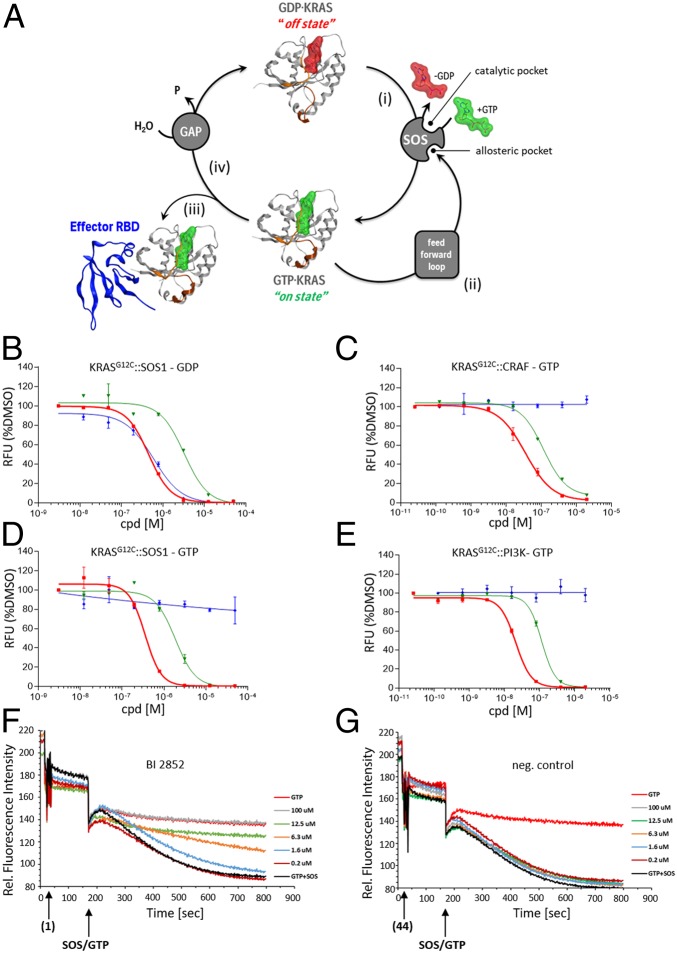
The 3 human RAS genes, KRAS, NRAS, and HRAS, encode 4 different RAS proteins which belong to the protein family of small GTPases that function as binary molecular switches involved in cell signaling. Activating mutations in RAS are among the most common oncogenic drivers in human cancers, with KRAS being the most frequently mutated oncogene. Although KRAS is an excellent drug discovery target for many cancers, and despite decades of research, no therapeutic agent directly targeting RAS has been clinically approved. Using structure-based drug design, we have discovered BI-2852 (1), a KRAS inhibitor that binds with nanomolar affinity to a pocket, thus far perceived to be “undruggable,” between switch I and II on RAS; 1 is mechanistically distinct from covalent KRAS G12C inhibitors because it binds to a different pocket present in both the active and inactive forms of KRAS. In doing so, it blocks all GEF, GAP, and effector interactions with KRAS, leading to inhibition of downstream signaling and an antiproliferative effect in the low micromolar range in KRAS mutant cells. These findings clearly demonstrate that this so-called switch I/II pocket is indeed druggable and provide the scientific community with a chemical probe that simultaneously targets the active and inactive forms of KRAS.
Overview
The claims and statistics of this paper haven’t been checked yet.
Run the check — free, no account needed. It reads the open-access text and checks the sources it cites.
Integrity signals
Registry
Cites
Statistics
Figures
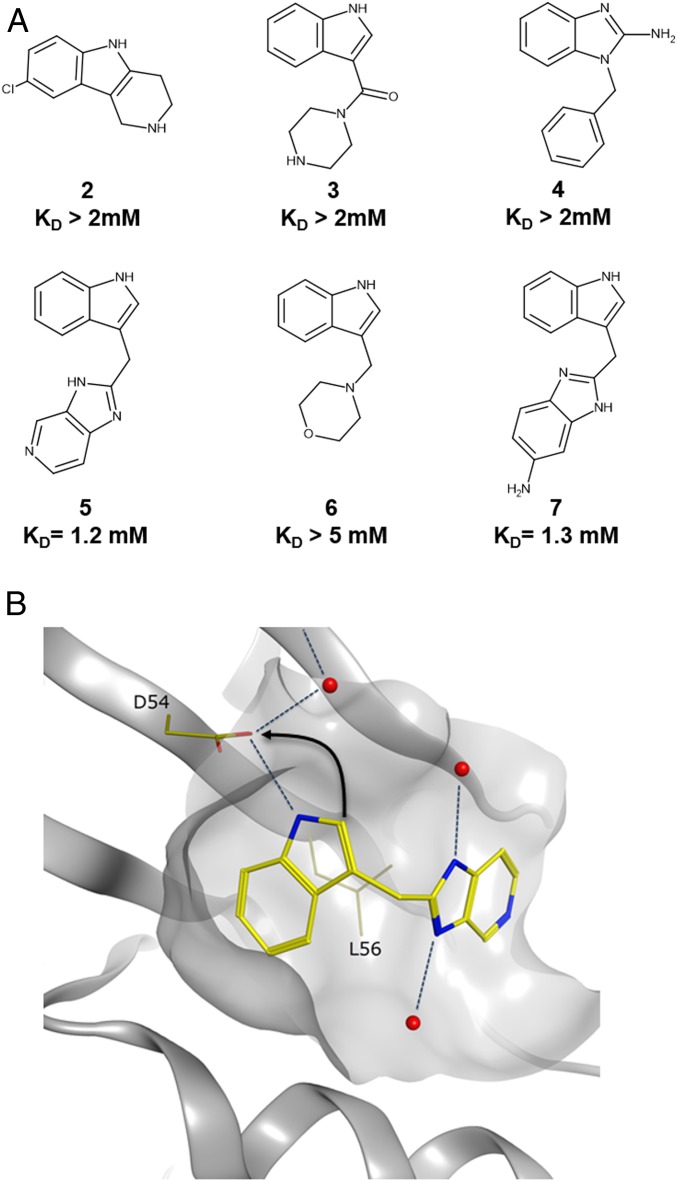
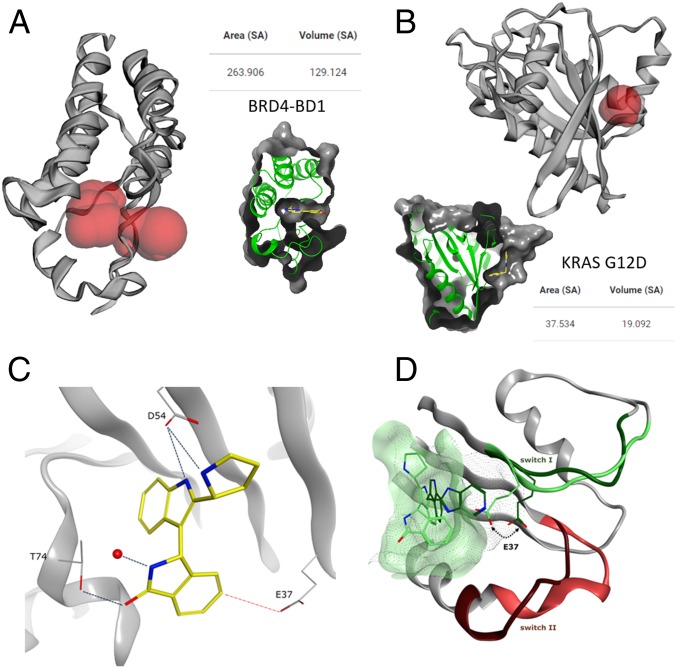
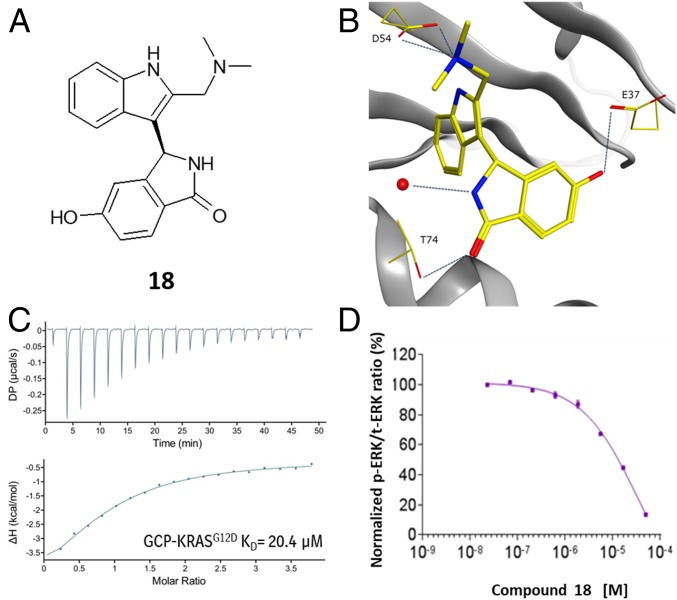
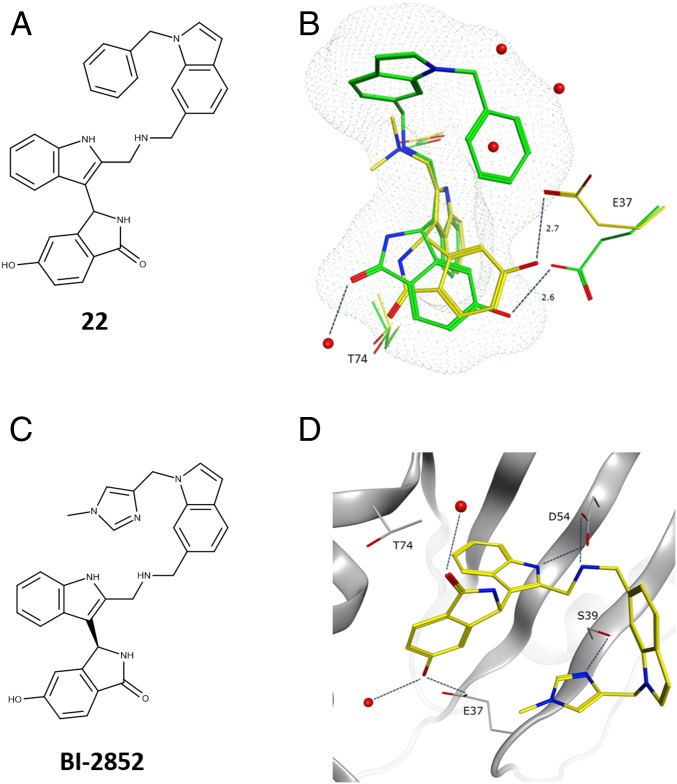
Verification
Claims the paper makes
The claims and statistics of this paper haven’t been checked yet.
Run the check — free, no account needed. It reads the open-access text and checks the sources it cites.
Claims other papers make about this one
Each is checked against this paper’s own text: does it say what the citing paper says it does?
The source backs part of the claim, not all of it — or backs it for a different population, condition or comparison.
In the citing paper
“Other inhibitors, including RMC-9805, 6 TH-Z835, 7 and BI2852, 8 have also been identified.”
From Anti-tumor efficacy of HRS-4642 and its potential combination with proteasome inhibition in KRAS G12D-mutant cancer (2024) · cites this paper as [8]
Experimental — accuracy not yet measuredIn the citing paper
“This approach offers the advantage, shared by MRTX1133, of targeting both the GTP-bound and GDP-bound states of KRAS178,179.”
From The current state of the art and future trends in RAS-targeted cancer therapies (2022) · cites this paper as [178]
In the citing paper
“This pocket was initially described by Kessler et al.178,179 during the development of BI-2852, a small molecule that induces nonfunctional dimerization of KRAS.”
From The current state of the art and future trends in RAS-targeted cancer therapies (2022) · cites this paper as [178]
In the citing paper
“However, an alternative and unique approach of targeting a switch 1/2 pocket is currently being evaluated.”
From The current state of the art and future trends in RAS-targeted cancer therapies (2022) · cites this paper as [178]
In the citing paper
“This non-covalent inhibitor preferentially binds to and with high affinity to the inactive state of KRAS while preserving NRAS and HRAS HRAS [52]. It blocks nucleotide exchange to prevent the activation of wild-type KRAS as well as a wide range of KRAS mutations, including G12A/C/D/F/V/S, G13C/D, V14I, L19F, Q22K, D33E, Q61H, K117N, and A146V/T.”
From KRAS, a New Target for Precision Medicine in Colorectal Cancer? (2024) · cites this paper as [51]
In the citing paper
“Currently, Food and Drug Administration (FDA) has approved an allele-specific covalent inhibitor of KRAS (G12C), AMG510 (sotorasib) having marked clinical responses across multiple tumor types [21–24].”
From Targeting KRAS mutant cancers: from druggable therapy to drug resistance (2022) · cites this paper as [24]
Self-check
Percentages, sums and reported differences re-computed from the paper’s own numbers.
The self-check needs the paper’s full text.
Citations
Cites
Comprehensive molecular profiling of lung adenocarcinoma
The Cancer Genome Atlas Research Network (2014) · Nature · doi:10.1038/nature13385 · Cited by 5,732
CASTp 3.0: computed atlas of surface topography of proteins
Tian, W., Chen, C., Lei, X., Zhao, J., & Liang, J. (2018) · Nucleic Acids Research · doi:10.1093/nar/gky473 · Cited by 2,389
A Comprehensive Survey of Ras Mutations in Cancer
Prior, I. A., Lewis, P. D., & Mattos, C. (2012) · Cancer Research · doi:10.1158/0008-5472.can-11-2612 · Cited by 2,063 · cited 1×
“The most common mutations occur as single-point mutations at codons 12, 13, and 61 (13).”
Pancreatic cancer genomes reveal aberrations in axon guidance pathway genes
Initiative, A. P. C. G., Biankin, A. V., Waddell, N., Kassahn, K. S., Gingras, M.-C., Muthuswamy, L. B., Johns, A. L., Miller, D. K., Wilson, P. J., Patch, A.-M., et al. (2012) · Nature · doi:10.1038/nature11547 · Cited by 2,058
Discovering High-Affinity Ligands for Proteins: SAR by NMR
Shuker, S. B., Hajduk, P. J., Meadows, R. P., & Fesik, S. W. (1996) · Science · doi:10.1126/science.274.5292.1531 · Cited by 2,045
Self-citationThe Guanine Nucleotide-Binding Switch in Three Dimensions
Vetter, I. R., & Wittinghofer, A. (2001) · Science · doi:10.1126/science.1062023 · Cited by 1,875
CASTp: Computed Atlas of Surface Topography of proteins
Binkowski, T. A. (2003) · Nucleic Acids Research · doi:10.1093/nar/gkg512 · Cited by 1,693
The Ras-RasGAP Complex: Structural Basis for GTPase Activation and Its Loss in Oncogenic Ras Mutants
Scheffzek, K., Ahmadian, M. R., Kabsch, W., Wiesmüller, L., Lautwein, A., Schmitz, F., & Wittinghofer, A. (1997) · Science · doi:10.1126/science.277.5324.333 · Cited by 1,543
Mayer, M., & Meyer, B. (2001) · Journal of the American Chemical Society · doi:10.1021/ja0100120 · Cited by 1,201
Self-citationTargeting KRAS mutant cancers with a covalent G12C-specific inhibitor
Janes, M. R., Zhang, J., Li, L.-S., Hansen, R., Peters, U., Guo, X., Chen, Y., Babbar, A., Firdaus, S. J., Darjania, L., et al. (2018) · Cell · doi:10.1016/j.cell.2018.01.006 · Cited by 1,172 · cited 13×
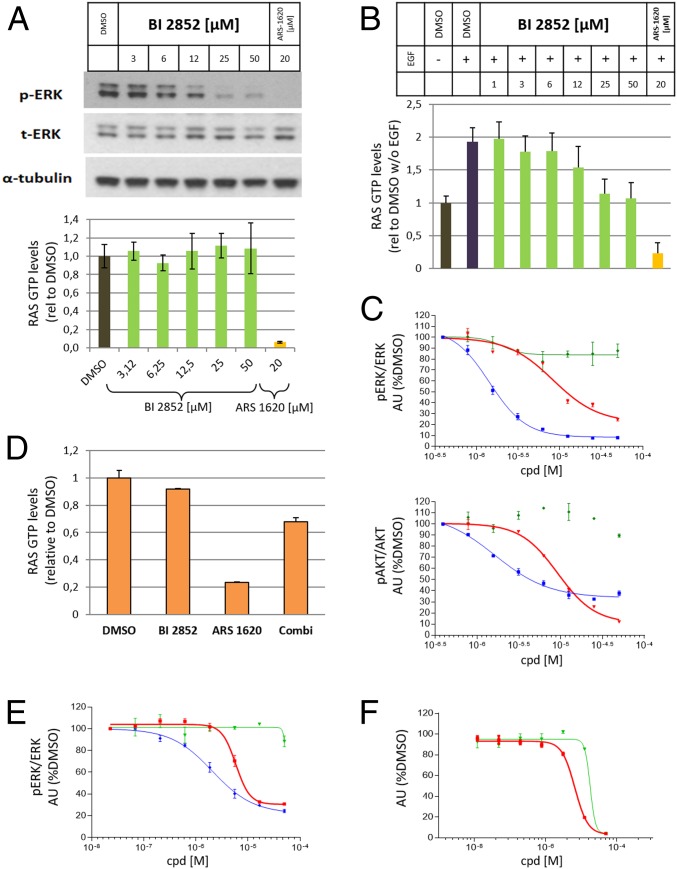
“NCI-H358 cells cultured under high growth factor conditions were treated with increasing concentrations of 1 and ARS-1620 for 2 h.”
Influential
Cited by
Sorted by citations
Items 301–400 of 459
Girard, É., Lopes, P., Spoerner, M., Dhaussy, A., Prangé, T., Kalbitzer, H. R., & Colloc’h, N. (2024) · Chemistry - A European Journal · doi:10.1002/chem.202400304 · Cited by 4
Franz, M., Mörchen, B., Degenhart, C., Gülden, D., Shkura, O., Wolters, D. A., Koch, U., Klebl, B., Stoll, R., Helfrich, I., et al. (2021) · ChemMedChem · doi:10.1002/cmdc.202100167 · Cited by 4
A biology-informed similarity metric for simulated patches of human cell membrane
Bhatia, H., Thiagarajan, J. J., Anirudh, R., Jayram, T. S., Oppelstrup, T., Ingólfsson, H. I., Lightstone, F. C., & Bremer, P. (2022) · Machine Learning Science and Technology · doi:10.1088/2632-2153/ac8523 · Cited by 4
Optimization of Covalent Warhead Trajectory for KRAS G12C Active-State Inhibition
Condakes, M. L., Civiello, R. L., Lakkaraju, S. K., Sloane, J. L., Chourb, L. S., Downes, D. P., Drexler, D. M., Dzhekieva, L., El-Samin, M., Levins, C. G., et al. (2026) · Journal of Medicinal Chemistry · doi:10.1021/acs.jmedchem.5c03306 · Cited by 4
Ali, Y., Khan, A. A., Alanazi, A. M., Fatima, S., & Kozmon, S. (2024) · International Journal of Biological Macromolecules · doi:10.1016/j.ijbiomac.2024.132477 · Cited by 3
AHAMED, T., RAMASAMY, K., & Ramya, S. (2024) · International Journal of Applied Pharmaceutics · doi:10.22159/ijap.2024v16i4.50855 · Cited by 3
Nadee, P., Prompat, N., Yamabhai, M., Sangkhathat, S., Benjakul, S., Tipmanee, V., & Saetang, J. (2024) · Advanced Theory and Simulations · doi:10.1002/adts.202400489 · Cited by 4
Kidane, M., Hoffman, R. M., Wolfe-Demarco, J. K., Huang, T.-Y., Teng, C.-L., Samanta, S., Lira, L. M. G., Lin‐Jones, J., Pallares, G., Lamerdin, J. E., et al. (2024) · ACS Pharmacology & Translational Science · doi:10.1021/acsptsci.4c00450 · Cited by 3
Mehmood, A., Hakami, M. A., Ogaly, H. A., Subramaniyan, V., Khalid, A., & Wadood, A. (2025) · Cancer Chemotherapy and Pharmacology · doi:10.1007/s00280-025-04767-8 · Cited by 4
NMR2-Based Drug Discovery Pipeline Presented on the Oncogenic Protein KRAS
Bütikofer, M., Torres, F., Kadavath, H., Gämperli, N., Saad, M. J. A., Zindel, D., Coudevylle, N., Riek, R., & Orts, J. (2025) · Journal of the American Chemical Society · doi:10.1021/jacs.4c16762 · Cited by 4
He, C., Zhang, J., Zhang, R., Liu, L., Luo, J., Zhang, W., & Fang, B. (2025) · Drug Design Development and Therapy · doi:10.2147/dddt.s518489 · Cited by 3
Sahu, N., Dubey, A., Singh, N. K., Arya, K. R., Yadav, P. D., Chaturvedi, P., Meena, S., Shukla, V., Datta, D. B., Narender, T., et al. (2025) · ACS Omega · doi:10.1021/acsomega.5c04143 · Cited by 3
Kirsten rat sarcoma inhibitors in clinical development against nonsmall cell lung cancer
Li, Y., Hu, L., & Xu, C. S. (2021) · Current Opinion in Oncology · doi:10.1097/cco.0000000000000808 · Cited by 3
Quah, S. Y., Tan, M. S., Ho, K. L., Manan, N. A., Gorfe, A. A., Deb, P. K., Sagineedu, S. R., & Stanslas, J. (2020) · Future Medicinal Chemistry · doi:10.4155/fmc-2020-0104 · Cited by 3
Junco, J. J., Chen, T. J., Rashid, R., Terrell, M., Gant, V. U., Miller, M., Rau, R. E., Lacorazza, H. D., & Rabin, K. R. (2020) · Leukemia · doi:10.1038/s41375-020-01036-w · Cited by 3
Synthesis, Biological Evaluation, and Binding Mode of a New Class of Oncogenic K‐Ras4b Inhibitors
Jeuken, S., Shkura, O., Röger, M., Brickau, V., Choidas, A., Degenhart, C., Gülden, D., Klebl, B., Koch, U., Stoll, R., et al. (2022) · ChemMedChem · doi:10.1002/cmdc.202200392 · Cited by 2
Switching It up with New KRAS Inhibitors
Waterson, A. G. (2025) · Journal of Medicinal Chemistry · doi:10.1021/acs.jmedchem.5c00998 · Cited by 4
Self-citationSorbara, M., & Béry, N. (2021) · Biochemical Society Transactions · doi:10.1042/bst20201059 · Cited by 2
SI/II Pocket of Ras: An Opportunity for a Once “Undruggable” Target
França, T. C. C., Maddalena, M., Kouidmi, I., Ayotte, Y., Islam, S. T., & LaPlante, S. R. (2025) · ACS Omega · doi:10.1021/acsomega.4c10493 · Cited by 2
Methods for Controlling Small GTPase Activity
Faulkner, B. M., He, Y., Sitrin, D., & Stains, C. I. (2025) · ChemBioChem · doi:10.1002/cbic.202500156 · Cited by 2
Yadav, V., Kashif, M., Sharma, S., & Subbarao, N. (2025) · In Silico Pharmacology · doi:10.1007/s40203-025-00415-4 · Cited by 2
The Two-Way Role of Jagged1 in Cancer: A Focus on CRC
Zema, S., Fazio, F. D., Palermo, R., Talora, C., & Bellavia, D. (2025) · Cells · doi:10.3390/cells14221815 · Cited by 2
Unlocking TRPM7 interactions: A database-driven quest
Jonckheere, N., Rodat‐Despoix, L., Duthille, I., Girault, A., Hague, F., & Gautier, M. (2025) · Computational and Structural Biotechnology Journal · doi:10.1016/j.csbj.2025.11.030 · Cited by 2
The current understanding of KRAS oligomerization on membranes
Lesgidou, N., Papadourakis, M., Mandal, N., Dehghani‐Ghahnaviyeh, S., Velez‐Vega, C., Duca, J. S., & Cournia, Z. (2025) · Current Opinion in Structural Biology · doi:10.1016/j.sbi.2025.103190 · Cited by 2
Development of Scalable Synthesis of RAS Inhibitor’s Indole Building Block via Flow Chemistry
Debnath, S., Wang, W., Xue, S., Mondal, S., & Zhu, X. (2025) · Organic Process Research & Development · doi:10.1021/acs.oprd.5c00350 · Cited by 2
Systematic cysteine scanning identifies a druggable pocket in oncogenic KRAS
van Tienen, L. M., Bayoumi, S., Muneeruddin, K., Leymarie, N., Popa, A., Shekhar, M., Mueller, M. A., Li, R., Żak, K. M., Chilukuri, H., et al. (2026) · Cell chemical biology · doi:10.1016/j.chembiol.2026.01.007 · Cited by 2
Self-citationXue, S., Xu, H., Ma, J., Wang, Y., Lu, W., Cui, J., & Wang, L. (2026) · Cancer Letters · doi:10.1016/j.canlet.2026.218684 · Cited by 2
Diffusion kernel-based predictive modeling of KRAS dependency in KRAS wild type cancer cell lines
Ulmer, B., Odenthal, M., Buettner, R., Roth, W., & Kloth, M. T. (2022) · npj Systems Biology and Applications · doi:10.1038/s41540-021-00211-8 · Cited by 2
Choi, S., Kim, H., Ryu, W., Choi, K., Kim, T., Song, D., & Han, G. (2022) · Bioorganic Chemistry · doi:10.1016/j.bioorg.2022.106234 · Cited by 2
Insights into direct KRAS inhibition strategies for cancer treatment
Li, T., Gu, C., Zhou, C., Mao, C., Yang, K., Xu, J., Lu, T., & Chen, J. (2024) · Future Medicinal Chemistry · doi:10.1080/17568919.2024.2424149 · Cited by 3
A Computationally Guided Approach to Improve Expression of VHH Binders
Özdemir, E. S., Tolley, J., Goncalves, F., Gomes, M. M., Wagnell, E., Branchaud, B. P., Dubrovskaya, V., & Ranganathan, S. V. (2024) · Biophysica · doi:10.3390/biophysica4040038 · Cited by 2
Tang, Z., Ye, J., & Chen, D. (2025) · Journal of Biochemical and Molecular Toxicology · doi:10.1002/jbt.70271 · Cited by 2
RASopathies. Part I: Genetics and therapeutic considerations
Jaeger, Z. J., Ramirez, N. M., Osborne, A. D., Staser, K. W., King, K. A., Bayliss, S. J., & Mann, C. M. (2025) · Journal of the American Academy of Dermatology · doi:10.1016/j.jaad.2025.05.1455 · Cited by 2
Targeting KRASG13C with cyclic linker based inhibitors to explore warhead orientation
Kirschner, T., Rodriguez, J., Moreira, E. G., Niggenaber, J., Warmuth, J. D., Verli, H., Müller, M. P., & Rauh, D. (2025) · Scientific Reports · doi:10.1038/s41598-025-22145-5 · Cited by 2
1 H, 15 N and 13 C resonance assignments of the Q61H mutant of human KRAS bound to GDP
Huang, Q., Ng, E. Y., Li, Q., & Kang, C. (2021) · Biomolecular NMR Assignments · doi:10.1007/s12104-021-10058-z · Cited by 2
Novel Small Molecules Capable of Blocking mtRAS-Signaling Pathway
Kim, N., Shin, I., Kim, Y., Jeon, E., Lee, J., Lee, C., Nam, Y., Lee, S., Ju, E., Kim, C., et al. (2021) · Frontiers in Oncology · doi:10.3389/fonc.2021.768022 · Cited by 2
Schmalhorst, P. S., & Bergner, A. (2020) · Journal of Chemical Information and Modeling · doi:10.1021/acs.jcim.0c00051 · Cited by 2
Design, synthesis and bioactivity evaluation of novel quinazoline based KRAS G12C inhibitors
Liu, Q., Li, Y., Zhi, Y., Liu, B., & Sun, J. (2022) · New Journal of Chemistry · doi:10.1039/d1nj06226c · Cited by 2
The structural basis of the oncogenic mutant K-Ras4B homodimersPreprint
Kosoglu, K., Omur, M. E., Jang, H., Nussinov, R., Keskin, Ö., & Gürsoy, A. (2020) · bioRxiv (Cold Spring Harbor Laboratory) · doi:10.1101/2020.09.07.285783 · Cited by 2
Discovering and targeting dynamic drugging pockets of the oncogene KRAS-G12DPreprint
Hu, Z., & Martı́, J. (2022) · bioRxiv (Cold Spring Harbor Laboratory) · doi:10.1101/2022.07.01.498403 · Cited by 2
Photoswitchable binders enable temporal dissection of endogenous protein functionPreprint
Westberg, M., Song, D., Duong, V. T., Fernández, D., Huang, P., & Lin, M. Z. (2023) · bioRxiv (Cold Spring Harbor Laboratory) · doi:10.1101/2023.09.14.557687 · Cited by 2
Site‐Identification by Ligand Competitive Saturation as a Paradigm of Co‐solvent MD Methods
Orr, A. A., & MacKerell, A. D. (2024) · Wiley eBooks · doi:10.1002/9783527840748.ch5 · Cited by 2
Monobodies and nanobodies: The era of diagnostic miniature antibodies
Dhar, R., Kumar, A., & Karmakar, S. (2023) · Asian Journal of Medical Sciences · doi:10.3126/ajms.v14i10.58169 · Cited by 1
Pagba, C. V., Gupta, A. K., Dilsha, K. M., Sadrpour, P., Jakubec, J. L., Prakash, P., van der Hoeven, D., Cho, K., Gilbertson, S. R., & Gorfe, A. A. (2024) · ChemBioChem · doi:10.1002/cbic.202300827 · Cited by 1
Carbene Footprinting Directs Design of Genetically Encoded Proximity-Reactive Protein Binders
Ye, H., Zhu, Y., Kong, Y., Wen, H., Lu, W., Wang, D., Tang, S., Zhan, M., Lu, G., Shao, C., et al. (2024) · Analytical Chemistry · doi:10.1021/acs.analchem.4c00424 · Cited by 1
Covalent inhibitors of K-Ras G12S, G12R, and G12D
Zhang, Z., & Shokat, K. M. (2024) · Elsevier eBooks · doi:10.1016/b978-0-443-21861-3.00024-3 · Cited by 1
Benary, G. E., Kilgenstein, F., Koller, S., & Scherkenbeck, J. (2025) · RSC Advances · doi:10.1039/d4ra08503e · Cited by 2
Small‐Molecule KRAS Inhibitors by Tyrosine Covalent Bond Formation
Landgraf, A. D., Brenner, R., Ghozayel, M. K., Bum‐Erdene, K., González-Gutiérrez, G., & Meroueh, S. O. (2025) · ChemMedChem · doi:10.1002/cmdc.202400624 · Cited by 1
Novel paradigms in KRAS targeting: Unveiling strategies to combat drug resistance
Luo, X., Zhou, F., Tang, Y., Liu, X., Xiao, R., Gu, M., Bai, J., Jiang, D., Yang, G., You, L., et al. (2025) · Chinese Medical Journal · doi:10.1097/cm9.0000000000003776 · Cited by 2
Patil, S. V., Bhanage, B. M., Verma, A., & Dawande, S. G. (2025) · Organic & Biomolecular Chemistry · doi:10.1039/d5ob01295c · Cited by 1
Zhou, J., Fang, Z., Zhang, W., Rao, G.-W., & Zheng, Q. (2025) · Mini-Reviews in Organic Chemistry · doi:10.2174/0118756298391640250731025705 · Cited by 1
The Human Omnibus of Targetable Pockets
Carpenter, K. A., & Altman, R. B. (2025) · Journal of Cheminformatics · doi:10.1186/s13321-025-01125-x · Cited by 1
Ryu, S., Baig, M. H., Panwar, U., Dong, J.-J., Jo, Y. S., Kim, C. J., Nale, S. D., Park, J., Ha, J., Moon, B., et al. (2026) · Computers in Biology and Medicine · doi:10.1016/j.compbiomed.2025.111437 · Cited by 1
De Novo Protein Design Enables Targeting of Intractable Oncogenic Protein–Protein Interfaces
Prakash, V., Najy, Y., Garrett, K., Edwards, B. F. P., & Kidder, B. L. (2026) · Biologics · doi:10.3390/biologics6010009 · Cited by 1
Zhang, P., Kong, L., Meng, X., Chen, Y., Jiao, Y., Su, Z., Song, X., Ding, K., & Xia, G. (2026) · European Journal of Medicinal Chemistry · doi:10.1016/j.ejmech.2026.118807 · Cited by 1
Disulfide tethering reveals cryptic pockets in oncogenic KRAS
Balius, T. E., Dyba, M. D., Kumari, V., Denson, J. L., Yi, M., Sharma, A. K., Prakash, P., Alberico, E. O., Messing, S. A. J., Wall, V. E., et al. (2026) · Communications Chemistry · doi:10.1038/s42004-026-01992-x · Cited by 1
Shkil, D. O., Eliseev, I. A., Ivanov, R. A., & Balakin, K. V. (2026) · Russian Chemical Bulletin · doi:10.1007/s11172-026-4863-z · Cited by 1
Pancreatic cancer: emerging small molecule pharmacotherapies
Pokora, B., Pokora, K., & Fichna, J. (2026) · Expert Opinion on Pharmacotherapy · doi:10.1080/14656566.2026.2657995 · Cited by 1
Jung, S., Zheng, Q., & Shokat, K. M. (2026) · IUBMB Life · doi:10.1002/iub.70108 · Cited by 1
Magnesium as a conformational gatekeeper of KRAS : Structural dynamics and therapeutic implications
Srinivasu, B. Y., Damerla, T. S., Stec, A., Zhou, Z., Engen, J. R., Westover, K. D., & Wales, T. E. (2026) · Protein Science · doi:10.1002/pro.70681 · Cited by 1
Brønsted-basic small molecules activate GTP hydrolysis in KRAS-Q61 mutants
Wang, Y., Chen, S., Cao, Y., Wu, Y., Shi, Z., Wang, C. D., Norinskiy, M. A., Celik, H., & Zhang, Z. (2026) · Nature Chemical Biology · doi:10.1038/s41589-026-02291-1 · Cited by 2
Avendaño, C., & Menéndez, J. C. (2023) · Elsevier eBooks · doi:10.1016/b978-0-12-818549-0.00011-x · Cited by 1
Shaikh, K., Iqbal, Y., Abdel-Maksoud, M. A., Murad, A., Badar, N., Alarjani, K. M., Siddiqui, K., Chandio, K., Almanaa, T. N., Jamil, M., et al. (2023) · PubMed Central · Cited by 1
Small-Molecule Inhibitors of Protein–Protein Interactions as Therapeutics
Poluri, K. M., Gulati, K., Tripathi, D. K., & Nagar, N. (2023) · Springer eBooks · doi:10.1007/978-981-99-2423-3_7 · Cited by 1
Small-Molecule Inhibition of KRAS through Conformational Selection
Pagba, C. V., Gupta, A. K., & Gorfe, A. A. (2023) · ACS Omega · doi:10.1021/acsomega.3c04013 · Cited by 1
Mutations influence the conformational dynamics of the GDP/KRAS complex
Shen, C., Yin, J., Wang, M., Yu, Z., Xu, X. Y., Zhou, Z.-S., Hu, Y., Xia, C., & Hu, G. (2024) · Journal of Biomolecular Structure and Dynamics · doi:10.1080/07391102.2024.2331627 · Cited by 1
KRAS-mutated non-small cell lung cancer: new therapy strategies
Лактионов, К. К., Саранцева, К. А., Александровна, Н. Л., Gamayunov, S. V., Kolesnikova, Е. А., & Gordiev, M. (2024) · Siberian Journal of Oncology · doi:10.21294/1814-4861-2024-23-2-72-81 · Cited by 2
Target‐Templated Construction of Functional Proteomimetics Using Photo‐Foldamer Libraries
Wéber, E., Ábrányi‐Balogh, P., Nagymihály, B., Menyhárd, D. K., Péczka, N., Gadanecz, M., Schlosser, G., Orgován, Z., Bogár, F., Bajusz, D., et al. (2024) · Angewandte Chemie · doi:10.1002/ange.202410435 · Cited by 1
Discovery and development of MRTX1133, a potent, selective, noncovalent inhibitor of KRASG12D
Gill, A. L., & Wang, X. (2024) · Elsevier eBooks · doi:10.1016/b978-0-443-21861-3.00016-4 · Cited by 1
The evolution of RAS structural biology
Simanshu, D. K., & Knox, J. E. (2024) · Elsevier eBooks · doi:10.1016/b978-0-443-21861-3.00012-7 · Cited by 1
Cregg, J., Edwards, A. V., Tomlinson, A. C. A., Gill, A. L., & Koltun, E. S. (2024) · Elsevier eBooks · doi:10.1016/b978-0-443-21861-3.00011-5 · Cited by 3
Wang, Y., Zhang, Y., Chen, H., Zhang, X., Wang, C., & Sun, F. (2025) · Journal of Chemical Information and Modeling · doi:10.1021/acs.jcim.5c00643 · Cited by 1
Leveraging Topological Events in Tracking Graphs for Understanding Particle Diffusion
McDonald, T., Shrestha, R., Yi, X., Bhatia, H., Chen, D., Goswami, D., Pascucci, V., Turbyville, T. J., & Bremer, P. (2021) · Computer Graphics Forum · doi:10.1111/cgf.14304 · Cited by 1
Grant, E. K., Fallon, D. J., Hann, M. M., Fantom, K. G. M., Quinn, C. J., Zappacosta, F., Annan, R. S., Chung, C., Bamborough, P., Dixon, D. P., et al. (2020) · ChemRxiv · doi:10.26434/chemrxiv.12053445.v1 · Cited by 1
On Numerical Modeling of Equal Channel Angular Extrusion of Ultra High Molecular Weight Polyethylene
Vasylevskyi, K., Miroshnichenko, K., Buklovskyi, S., Tsukrov, I. I., Grover, H., & Citters, D. W. V. (2021) · doi:10.1115/1.0004258v · Cited by 1
Data from Delineating the RAS Conformational Landscape
Parker, M. I., Meyer, J. E., Golemis, E. A., & Dunbrack (2023) · doi:10.1158/0008-5472.c.6513960.v1 · Cited by 1
Oh, G., Dhara, S., & Simeone, D. M. (2023) · Wiley eBooks · doi:10.1002/9781119876007.ch152 · Cited by 1
Brønsted-basic small molecules activate GTP hydrolysis in Ras Q61 mutantsPreprint
Wang, Y., Chen, S., Wu, Y., Cao, Y., Shi, Z., Norinskiy, M. A., Wang, C. D., Celik, H., & Zhang, Z. (2025) · bioRxiv (Cold Spring Harbor Laboratory) · doi:10.1101/2025.11.04.686643 · Cited by 1
Chu, B., He, Y., Chen, Y., Toth, E. A., & Orban, J. P. (2026) · bioRxiv (Cold Spring Harbor Laboratory) · doi:10.64898/2026.01.15.699477 · Cited by 1
Goldstein, M. E., Chu, B., Carillo, K. J., Orban, J. P., Toth, E. A., & Fuerst, T. R. (2026) · bioRxiv (Cold Spring Harbor Laboratory) · doi:10.64898/2026.03.04.709402 · Cited by 1
Defying the Odds – Drugging KRAS
Trauner, D. H., & Reynders, M. (2019) · Synfacts · doi:10.1055/s-0039-1690942
Ras and Ras Signaling as a Therapeutic Target in Cancer
Sliker, B. H., & Campbell, P. M. (2021) · Elsevier eBooks · doi:10.1016/b978-0-12-820472-6.00006-2
Bioinformatic analysis linking genomic defects to chemosensitivity and mechanism of action
Covell, D. G. (2021) · PLoS ONE · doi:10.1371/journal.pone.0243336
KRAS G12D can be targeted by potent salt-bridge forming inhibitorsPreprint
Mao, Z., Xiao, H., Shen, P., Yang, Y., Xue, J. W., Yang, Y., Shang, Y., Zhang, L., Li, X., Zhang, Y., et al. (2021) · bioRxiv (Cold Spring Harbor Laboratory) · doi:10.1101/2021.12.13.472365
Faculty Opinions recommendation of How We Think about Targeting RNA with Small Molecules.
Lowe, J. A., III (2020) · Faculty Opinions – Post-Publication Peer Review of the Biomedical Literature · doi:10.3410/f.737636298.793572902
Ge, J., Yuan, M., Lin, J., Ren, J., Dou, G., Yang, L., Zhou, Y., Xie, H., Wang, X., & Zhong, S. (2022) · Research Square · doi:10.21203/rs.3.rs-1391554/v1
Zanders, E. D. (2020) · Springer eBooks · doi:10.1007/978-3-030-57814-5_7
The structural basis of allosteric communication networks of Ras GTPases and their oncogenic mutants
Volmar, A. Y. (2020) · Digital Repository Service (Northeastern University) · doi:10.17760/d20398260
Guo, W., & Liu, D. (2020) · Faculty Opinions – Post-Publication Peer Review of the Biomedical Literature · doi:10.3410/f.738401155.793579726
Recent Developments, Challenges and Opportunities in Targeting the KRAS Pathway
Pothuganti, M. K., Mitra, S., Iyer, P. S., & Gowda, N. M. (2022) · Letters in Drug Design & Discovery · doi:10.2174/1570180819666220704104028
Evaluation of K-Ras4B dimer interfaces and the role of Raf effectorsPreprint
Chatzigoulas, A., Andreadelis, I., Doerr, S., Lamprakis, C., Theodoropoulou, A., Manchester, J. I., Velez‐Vega, C., Duca, J. S., & Cournia, Z. (2022) · bioRxiv (Cold Spring Harbor Laboratory) · doi:10.1101/2022.10.04.510804
Therapeutic peptidomimetics for cancer treatment
Avendaño, C., & Menéndez, J. C. (2022) · Elsevier eBooks · doi:10.1016/b978-0-12-820141-1.00010-8
Data from Delineating the RAS Conformational Landscape
Parker, M. I., Meyer, J. E., Golemis, E. A., & Dunbrack (2023) · doi:10.1158/0008-5472.c.6513960
Lu, H., Hu, Z., Faraudo, J., & Martí, J. (2023) · bioRxiv (Cold Spring Harbor Laboratory) · doi:10.1101/2023.04.05.535682 · Cited by 1
Targeting Rat Sarcoma Viral Oncogene Homolog for Treatment of Gastrointestinal Cancers
Robinson, H. R., Davis, S. L., & Lieu, C. H. (2023) · Advances in Oncology · doi:10.1016/j.yao.2023.01.011
Target Hyperactive ERK Signaling for Cancer Therapy
Yap, J., & Hu, J. (2023) · Springer eBooks · doi:10.1007/978-3-030-80962-1_257-1
Hu, Z., & Martı́, J. (2023) · bioRxiv (Cold Spring Harbor Laboratory) · doi:10.1101/2023.11.15.567238
Sequence-defined oligophosphoesters for selective inhibition of the KRAS G12D/RAF1 interactionPreprint
Claringbold, B., Vance, S., Paul, A. R., Garrett, M. D., & Serpell, C. J. (2024) · bioRxiv (Cold Spring Harbor Laboratory) · doi:10.1101/2024.03.12.584553
Kidane, M., Hoffman, R. M., Wolfe-Demarco, J. K., Huang, T.-Y., Teng, C.-L., Lira, L. M. G., Lin‐Jones, J., Pallares, G., Lamerdin, J. E., Servant, N. B., et al. (2024) · bioRxiv (Cold Spring Harbor Laboratory) · doi:10.1101/2024.07.20.604418
Protocol to perform fragment screening using NMR spectroscopy
Huang, Q., & Kang, C. (2024) · STAR Protocols · doi:10.1016/j.xpro.2024.103278
Metadata
- Authors
- Kessler, D., Gmachl, M., Mantoulidis, A., Martin, L. J., Zoephel, A., Mayer, M., Gollner, A., Covini, D., Fischer, S., Gerstberger, T., Gmaschitz, T., Goodwin, C., Greb, P., Häring, D., Hela, W., Hoffmann, J., Karolyi-Oezguer, J., Knesl, P., Kornigg, S., Koegl, M., Kousek, R., Lamarre, L., Moser, F., Munico-Martinez, S., Peinsipp, C., Phan, J., Rinnenthal, J., Sai, J., Salamon, C., Scherbantin, Y., Schipany, K., Schnitzer, R., Schrenk, A., Sharps, B., Siszler, G., Sun, Q., Waterson, A., Wolkerstorfer, B., Zeeb, M., Pearson, M., Fesik, S. W., & McConnell, D. B.
- Affiliations
- Boehringer Ingelheim (Austria) (AT)
- Vanderbilt University (US)
- Discovery Research, Boehringer Ingelheim Regional Center Vienna GmbH & Co KG, 1120 Vienna, Austria;
- Boehringer Ingelheim (Germany) (DE)
- Corresponding author
- McConnell, Darryl B.
- ORCID
- Venue
- Proceedings of the National Academy of Sciences
- Publisher
- National Academy of Sciences
- Published
- 2019-07-22
- Volume
- 116
- Issue
- 32
- Pages
- 15823-15829
- ISSN
- 0027-8424 (ISSN-L)
- 1091-6490
- PMC
- PMC6689897
- OpenAlex
- W2963086398
- Cited by
- 449
- References
- 51
- Citations by year
- 2026: 52 · 2025: 58 · 2024: 71 · 2023: 66 · 2022: 58 · 2021: 63 · 2020: 69 · 2019: 12
- FWCI
- 17.03
- Type
- journal article
- Language
- en
- Open access
- hybrid
- doi.org
- Licence
- Locations
- Proceedings of the National Academy of Sciences (publishedVersion, cc-by)
- Europe PMC (PubMed Central) (publishedVersion, cc-by)
- PubMed Central (publishedVersion, cc-by)
- PubMed (publishedVersion)
- DORA PSI (Paul Scherrer Institute) (submittedVersion, cc-by)
- OSTI OAI (U.S. Department of Energy Office of Scientific and Technical Information) (submittedVersion)
- Funders
- U.S. Department of Energy (DE‐ AC02‐06CH11357, AC02‐06CH11357, 06CH11357, DE-AC02-)
- Vanderbilt University
- Paul Scherrer Institut
- National Institutes of Health (DE-AC02–06CH11357)
- Office of Science (AC02‐06CH11357, DE-AC02, 06CH11357, DE-AC02-06CH11357)
- National Cancer Institute (P50A095103, DE-AC02-06CH11357, P50CA095103, RC2CA148375, P30CA068485)
- Vanderbilt Institute of Chemical Biology, School of Medicine, Vanderbilt University (P30CA68485)
- Argonne National Laboratory (DE- AC02-06-CH11357, DE-AC02, AC02–06CH11357, 06CH11357)
- Topics
- Life Sciences › Biochemistry, Genetics and Molecular Biology › Molecular Biology › Protein Kinase Regulation and GTPase Signaling
- Life Sciences › Biochemistry, Genetics and Molecular Biology › Molecular Biology › Protein Tyrosine Phosphatases
- Life Sciences › Pharmacology, Toxicology and Pharmaceutics › Drug Discovery › Computational Drug Discovery Methods
- Keywords
- KRAS, Ras GTPase, structure-based drug design, oncogenic Ras mutations, antiproliferative activity, chemical probes
- MeSH terms
- Pharmaceutical Preparations, Guanosine Triphosphate, Humans, Models, Molecular, Proto-Oncogene Proteins p21(ras), Nanoparticles, Drug Discovery
About these checks
Registry, retraction, Cites and statistics results are computed, not judged, with one exception: a printed reference that no index lists is read once by a model before it counts as a citation error. Claims are extracted by a model and kept only when their quote appears verbatim in the text; each cited source is then checked, with a model’s help, for whether it says what the claim relies on. Those verdicts can be wrong — read the claim’s quote and the cited source before relying on one.
Statistics and arithmetic are recomputed, not judged.
Confidence bands are shown only for fields calibrated on our annotated test set. None is calibrated yet, so no band is shown.
What counts as a claim ›How we measure confidence ›How we check this ›
Are you an author, or do you see a problem with this page? Request a review
