

Viral zoonotic risk is homogenous among taxonomic orders of mammalian and avian reservoir hosts
Open accessThe DOI matches its Crossref record; 59 of the 59 references it cites were found in a registry or an index.
Abstract
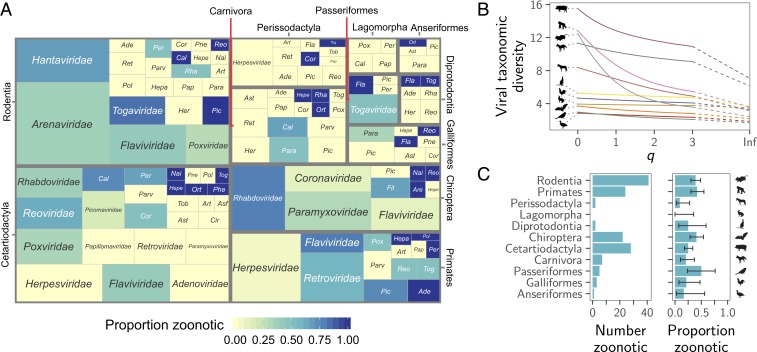
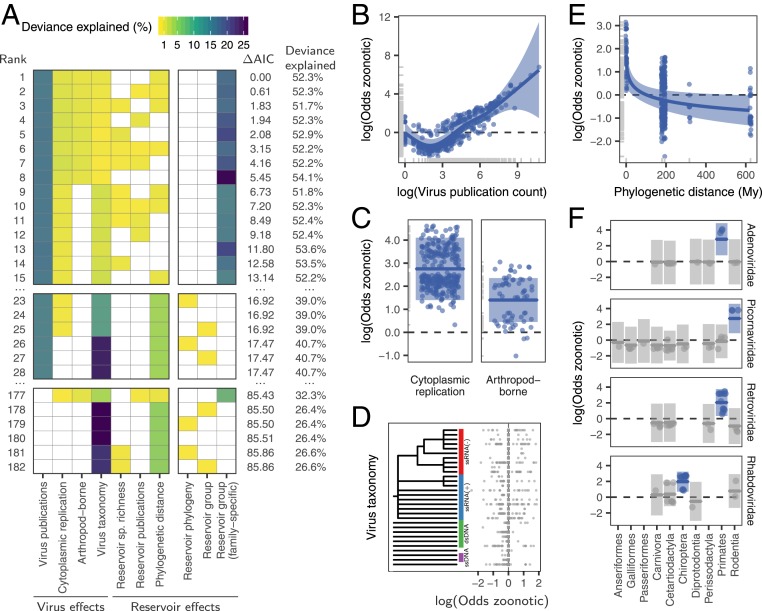
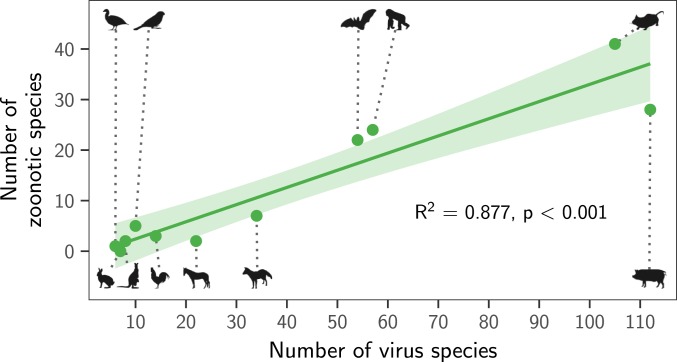
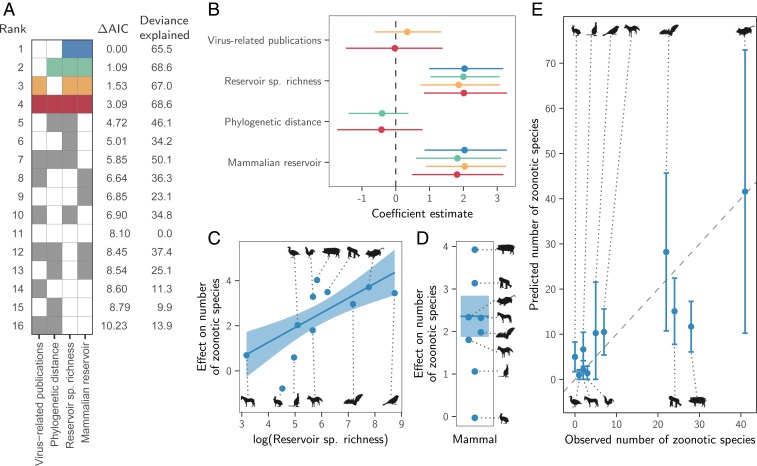
The notion that certain animal groups disproportionately maintain and transmit viruses to humans due to broad-scale differences in ecology, life history, and physiology currently influences global health surveillance and research in disease ecology, virology, and immunology. To directly test whether such “special reservoirs” of zoonoses exist, we used literature searches to construct the largest existing dataset of virus–reservoir relationships, consisting of the avian and mammalian reservoir hosts of 415 RNA and DNA viruses along with their histories of human infection. Reservoir host effects on the propensity of viruses to have been reported as infecting humans were rare and when present were restricted to one or two viral families. The data instead support a largely host-neutral explanation for the distribution of human-infecting viruses across the animal orders studied. After controlling for higher baseline viral richness in mammals versus birds, the observed number of zoonoses per animal order increased as a function of their species richness. Animal orders of established importance as zoonotic reservoirs including bats and rodents were unexceptional, maintaining numbers of zoonoses that closely matched expectations for mammalian groups of their size. Our findings show that variation in the frequency of zoonoses among animal orders can be explained without invoking special ecological or immunological relationships between hosts and viruses, pointing to a need to reconsider current approaches aimed at finding and predicting novel zoonoses.
Overview
The claims and statistics of this paper haven’t been checked yet.
Free: it reads the open-access text and checks the first 5 claims that cite a source we can check. Create a free account to check every claim.
Integrity signals
Registry
Cites
Statistics
Figures
Verification
Claims the paper makes
The claims and statistics of this paper haven’t been checked yet.
Free: it reads the open-access text and checks the first 5 claims that cite a source we can check. Create a free account to check every claim.
Claims other papers make about this one
Each is checked against this paper’s own text: does it say what the citing paper says it does?
The cited source says what the claim attributes to it.
In the citing paper
“They concluded that mammalian and avian Orders have the number of zoonotic viruses that would be expected based on each group’s share of diversity, and that no special characteristics of a group (e.g., immunological traits) need to be invoked to explain a group’s zoonotic contributions.”
From Impacts of biodiversity and biodiversity loss on zoonotic diseases (2021) · cites this paper as [28]
Experimental — accuracy not yet measured
Self-check
Percentages, sums and reported differences re-computed from the paper’s own numbers.
The self-check needs the paper’s full text.
Citations
Cites
R: A Language and Environment for Statistical Computing
R Core Team (2025) · doi:10.32614/r.manuals · Cited by 352,181
A new look at the statistical model identification
Akaike, H. (1974) · IEEE Transactions on Automatic Control · doi:10.1109/tac.1974.1100705 · Cited by 51,879
Modern Applied Statistics with S
Venables, W. N., & Ripley, B. D. (2002) · Statistics and Computing · doi:10.1007/978-0-387-21706-2 · Cited by 24,305
APE: analyses of phylogenetics and evolution in R language
Paradis, E., Claude, J., & Strimmer, K. (2004) · Bioinformatics · doi:10.1093/bioinformatics/btg412 · Cited by 11,335
Global trends in emerging infectious diseases
Jones, K. E., Patel, N. G., Levy, M. A., Storeygard, A., Balk, D., Gittleman, J. L., & Daszak, P. (2008) · Nature · doi:10.1038/nature06536 · Cited by 8,338 · cited 1×
“These results mirror—and potentially explain—observations that the risk of zoonotic emergence is elevated in regions with high species richness (3, 40), since more virus species and hence zoonoses would be expected in species-rich habitats.”
ResultWood, S. N. (2011) · Journal of the Royal Statistical Society Series B: Statistical Methodology · doi:10.1111/j.1467-9868.2010.00749.x · Cited by 7,537
Risk factors for human disease emergence
Taylor, L. H., Latham, S. M., & woolhouse, M. E. J. (2001) · Philosophical Transactions of the Royal Society of London. Series B: Biological Sciences · doi:10.1098/rstb.2001.0888 · Cited by 2,835
TimeTree: A Resource for Timelines, Timetrees, and Divergence Times
Kumar, S., Stecher, G., Suleski, M., & Hedges, S. B. (2017) · Molecular Biology and Evolution · doi:10.1093/molbev/msx116 · Cited by 2,721
Wood, S. N. (2003) · Journal of the Royal Statistical Society Series B: Statistical Methodology · doi:10.1111/1467-9868.00374 · Cited by 2,445
Origins of major human infectious diseases
Wolfe, N. D., Dunavan, C. P., & Diamond, J. (2007) · Nature · doi:10.1038/nature05775 · Cited by 1,867
Research works printed but not linked: 3
- Reeve R., How to partition diversity. arXiv:14046520v3 (8 December 2016).
- Knipe D. M., Howley P., Eds., Fields Virology (Lippincott Williams & Wilkins, ed. 6, 2013).
- Roskov Y., Eds., Species 2000 & ITIS Catalogue of Life, 2015 Annual Checklist (Naturalis, 2015).
Cited by
Items 101–200 of 389
Aminikhah, M., Forsman, J. T., Koskela, E., Mappes, T., Sane, J., Ollgren, J. P., Kivelä, S. M., & Kallio, E. R. K. (2021) · Scientific Reports · doi:10.1038/s41598-021-95000-y · Cited by 25
Reservoir host immunology and life history shape virulence evolution in zoonotic viruses
Brook, C. E., Rozins, C., Guth, S. E., & Boots, M. (2023) · PLoS Biology · doi:10.1371/journal.pbio.3002268 · Cited by 27
Global patterns of phylogenetic diversity and transmission of bat coronavirus
Wang, Z., Huang, G., Huang, M., Dai, Q., Hu, Y., Zhou, J., & Wei, F. (2022) · Science China Life Sciences · doi:10.1007/s11427-022-2221-5 · Cited by 21
“Bats harbor the most coronavirus (CoV) diversity among all mammals, and two major CoV genera, αand β-CoVs, have been widely detected in bats worldwide (Mollentze and Streicker, 2020).”
BackgroundNetwork embedding unveils the hidden interactions in the mammalian virome
Poisot, T., Ouellet, M.-A., Mollentze, N., Farrell, M. J., Becker, D. J., Brierley, L., Albery, G. F., Gibb, R., Seifert, S. N., & Carlson, C. J. (2023) · Patterns · doi:10.1016/j.patter.2023.100738 · Cited by 33
“However, these predictions are also difficult to disentangle from sampling bias, which can create spurious patterns that are undermined on closer analysis.(15)”
BackgroundResultInfluentialSelf-citationThe coevolutionary mosaic of bat betacoronavirus emergence risk
Forero, N., Muylaert, R. L., Seifert, S. N., Albery, G. F., Becker, D. J., Carlson, C. J., & Poisot, T. (2023) · Virus Evolution · doi:10.1093/ve/vead079 · Cited by 30
“There is empirical evidence that capacity for cross-species transmission even between divergent species is generally high (Mollentze and Streicker 2020), especially for beta-coronaviruses (Latinne et al. 2020).”
BackgroundMolecular detection and genomic characterization of diverse hepaciviruses in African rodents
Bletsa, M., Vrancken, B., Gryseels, S., Boonen, I., Fikatas, A., Li, Y., Laudisoit, A., Lequime, S., Bryja, J., Makundi, R. H., et al. (2021) · Virus Evolution · doi:10.1093/ve/veab036 · Cited by 23
“The number of virus lineages carried by vertebrate orders appears to be mainly correlated with the number of species present in these orders (Mollentze and Streicker 2020).”
BackgroundWildlife susceptibility to infectious diseases at global scales
Fernández, Á. L. R., Santiago‐Alarcón, D., & Lira‐Noriega, A. (2022) · Proceedings of the National Academy of Sciences · doi:10.1073/pnas.2122851119 · Cited by 24
Rodents Human Zoonotic Pathogens Transmission: Historical Background and Future Prospects
Akhtar, N., Hayee, S., Idnan, M., Nawaz, F., & Bibi, S. (2023) · IntechOpen eBooks · doi:10.5772/intechopen.1001283 · Cited by 30
Schneor, L., Kaltenbach, S., Friedman, S., Tussia-Cohen, D., Nissan, Y., Shuler, G., Fraimovitch, E., Kolodziejczyk, A. A., Weinberg, M., Donati, G., et al. (2023) · iScience · doi:10.1016/j.isci.2023.107435 · Cited by 23
“However, a recent survey of virusreservoir relationships challenged this notion, when controlling for the size of the bat clade.(26) Bats are the second largest mammalian order after rodents, comprising 22% of known mammalian species, and have adapted to diverse ecological niches across the planet.”
Lin, Y., Tufts, D. M., Combs, M. A., Dupuis, A. P., Marcinkiewicz, A. L., Hirsbrunner, A. D., Diaz, A. J., Stout, J. L., Blom, A. M., Strle, K., et al. (2022) · Proceedings of the Royal Society B Biological Sciences · doi:10.1098/rspb.2021.2087 · Cited by 17
Schmid‐Hempel, P. (2021) · Oxford University Press eBooks · doi:10.1093/oso/9780198832140.003.0005 · Cited by 19
Becker, D. J., Lei, G.-S., Janech, M. G., Bland, A. M., Fenton, M. B., Simmons, N. B., Relich, R. F., & Neely, B. A. (2022) · Frontiers in Virology · doi:10.3389/fviro.2022.862961 · Cited by 16
“Bats (Order: Chiroptera) are one of the most speciose mammalian clades (1, 2), and this diversity is matched by an equally high richness of viruses, many of which are zoonotic (3, 4).”
BackgroundEgeru, A., Dejene, S. W., & Siya, A. (2020) · Pastoralism Research Policy and Practice · doi:10.1186/s13570-020-00173-2 · Cited by 19
“Emergence and re-emergence of most infectious diseases affecting humans have been linked to viruses originating from zoonotic transmission through human-animal host contact (Mollentze and Streicker 2020).”
BackgroundA Potent Postentry Restriction to Primate Lentiviruses in a Yinpterochiropteran Bat
Morrison, J. H., Miller, C. M., Bankers, L., Crameri, G. S., Wang, L., & Poeschla, E. M. (2020) · mBio · doi:10.1128/mbio.01854-20 · Cited by 21
Diverse hosts, diverse immune systems: Evolutionary variation in bat immunology
Becker, D. J., Vicente‐Santos, A., Reers, A. B., Ansil, B. R., O'Shea, M., Cummings, C. A., Roistacher, A., Quintela‐Tizon, R. M., Pereira, M. M. T., Rosen, J., et al. (2025) · Annals of the New York Academy of Sciences · doi:10.1111/nyas.15395 · Cited by 21
Cross-sectional cycle threshold values reflect epidemic dynamics of COVID-19 in Madagascar
Andriamandimby, S. F., Brook, C. E., Razanajatovo, N. H., Randriambolamanantsoa, T. H., Rakotondramanga, J. M., Rasambainarivo, F., Raharimanga, V., Razanajatovo, I. M., Mangahasimbola, R. T., Razafindratsimandresy, R., et al. (2021) · Epidemics · doi:10.1016/j.epidem.2021.100533 · Cited by 20
An immediate way to lower pandemic risk: (not) seizing the low-hanging fruit (bat)
Osofsky, S. A., Lieberman, S., Walzer, C., Lee, H. L., & Neme, L. A. (2023) · The Lancet Planetary Health · doi:10.1016/s2542-5196(23)00077-3 · Cited by 20
Bats, Pathogens, and Species Richness
Dutheil, F., Clinchamps, M., & Bouillon‐Minois, J. (2021) · Pathogens · doi:10.3390/pathogens10020098 · Cited by 17
“Bats may not carry a higher number of zoonotic pathogens when normalized to account for species richness, compared to other mammalian and avian species [6].”
BackgroundInfluentialAssessing the extent of land-use change around important bat-inhabited caves
Pretorius, M., Markotter, W., & Keith, M. (2021) · BMC Zoology · doi:10.1186/s40850-021-00095-5 · Cited by 19
“Bats, along with domesticated species, primates and rodents, are a large and diverse order that host a variety of viruses with zoonotic potential [38, 57], with several bat species (including M.”
BackgroundSARS-COV-2/COVID-19: scenario, epidemiology, adaptive mutations, and environmental factors
Asghar, A., Imran, H. M., Bano, N., Maalik, S., Mushtaq, S., Hussain, A., Varjani, S., Aleya, L., Iqbal, H. M. N., & Bilal, M. (2022) · Environmental Science and Pollution Research · doi:10.1007/s11356-022-22333-0 · Cited by 21
“There is a link between greater viral transmission potential and more frequent interaction with animals, such as goats, pigs, and cattle, that humans keep (Mollentze and Streicker 2020).”
BackgroundRevealing the complexity of vampire bat rabies “spillover transmission”
Escobar, L. E., Velasco-Villa, A., Satheshkumar, P. S., Nakazawa, Y., & de Vuurst, P. V. (2023) · Infectious Diseases of Poverty · doi:10.1186/s40249-023-01062-7 · Cited by 18
Discovery of a novel bat lyssavirus in a Long-fingered bat (Myotis capaccinii) from Slovenia
Černe, D., Hostnik, P., Toplak, I., Presetnik, P., Wernig, J. M., & Kuhar, U. (2023) · PLoS neglected tropical diseases · doi:10.1371/journal.pntd.0011420 · Cited by 16
“The number of viral zoonoses in bats is comparable to the number of viral zoonoses in other mammal or bird orders since variation in the number of viral zoonoses among animal groups arises as a consequence of their species richness [5].”
BackgroundPereira, P. D. C., Diniz, D. G., da Costa, E. R., Magalhães, N. G. D. M., da Silva, A. D. J. F., Leite, J. G. S., Almeida, N. I. P., Cunha, K. D. N., de Melo, M. A. D., Vasconcelos, P. F. D. C., et al. (2023) · Frontiers in Immunology · doi:10.3389/fimmu.2023.1239572 · Cited by 19
“Thus, while it has been suggested that viral zoonotic risk seems to be homogeneous among mammalian and avian reservoirs hosts (66), it has been demonstrated that bats harbor significantly higher proportion of zoonotic viruses than all other mammalian orders (49, 67).”
BackgroundDu, Y., Wang, X., Ashraf, S., Tu, W., Xi, Y., Cui, R., Chen, S., Yu, J., Han, L., Gu, S., et al. (2024) · Global Change Biology · doi:10.1111/gcb.17137 · Cited by 19
“…with GAMMs were conducted using the approach by Mollentze and Streicker ( 2020 ): Each model was compared to sub - models in the absence of individual terms by fixing the values for the smoothing parameters of the remaining terms to those estimated in the full model (Mollentze & Streicker, 2020 ).”
MethodGilbert, A. T., Pelt, L. I. V., Hastings, L. A., Gigante, C. M., Orciari, L. A., Kelley, S., Fitzpatrick, K., Condori, R. E., Li, Y., Brunt, S. J., et al. (2024) · Vector-Borne and Zoonotic Diseases · doi:10.1089/vbz.2023.0126 · Cited by 17
“…of zoo-noses are often met through overlapping geographic distribution and spatial activity of reservoirs and novel hosts, whereas taxonomic diversity and relatedness are also strong modifying evolutionary factors impacting viral zoonotic risk (Mollentze and Streicker, 2020; Jacquot et al, 2022).”
Body size affects immune cell proportions in birds and non-volant mammals, but not bats
Ruhs, E. C., Becker, D. J., Oakey, S. J., Ogunsina, O., Fenton, M. B., Simmons, N. B., Martin, L. B., & Downs, C. J. (2021) · Journal of Experimental Biology · doi:10.1242/jeb.241109 · Cited by 16
Borzęcka, J., Piecuch, A., Kokurewicz, T., Lavoie, K. H., & Ogórek, R. (2021) · Biology · doi:10.3390/biology10070593 · Cited by 18
“Due to their high mobility and a complex social life, bats can easily spread diseases among themselves, as well as transfer them to humans, posing a potential threat to all of us [12,13].”
BackgroundLiu, Z., 100048,中国, 首., Qian, X.-K., Hong, M.-H., Zhang, J., Li, D., Wang, T.-H., Yang, Z.-M., Zhang, L.-Y., Wang, Z.-M., et al. (2021) · 动物学研究 · doi:10.24272/j.issn.2095-8137.2021.080 · Cited by 20
Virome landscape of wild rodents and shrews in Central China
Zhang, N., Hu, B., Zhang, L., Gan, M., Ding, Q., Pan, K., Wei, J., Xu, W., Chen, D., Zheng, S., et al. (2025) · Microbiome · doi:10.1186/s40168-025-02059-0 · Cited by 24
“Geographic factors such as climate, habitat type, and local biodiversity can also modulate viral diversity by affecting host population dynamics and interspecies interactions [8].”
Narat, V., Salmona, M., Kampo, M., Heyer, T., Rachik, A. S., Mercier‐Delarue, S., Ranger, N., Rupp, S., Ambata, P., Njouom, R., et al. (2023) · Nature Communications · doi:10.1038/s41467-023-39455-9 · Cited by 15
Romero‐Vidal, P., Blanco, G., Barbosa, J. M., Carrete, M., Hiraldo, F., Pacífico, E. C., Rojas, A., Bermúdez‐Cavero, A. O., Díaz‐Luque, J. A., Pérez, R. R. L., et al. (2024) · People and Nature · doi:10.1002/pan3.10625 · Cited by 21
Attitudes towards Bats in Swedish History
Eklöf, J., & Rydell, J. (2021) · Journal of Ethnobiology · doi:10.2993/0278-0771-41.1.35 · Cited by 15
Host genetic factors associated with the range limit of a European hantavirus
Saxenhofer, M., Labutin, A., White, T. A., & Heckel, G. (2021) · Molecular Ecology · doi:10.1111/mec.16211 · Cited by 19
“Cross- species transmission of viruses is related to ecological and evolutionary diversity in many mammalian and avian host taxa (Allen et al., 2017; Mollentze & Streicker, 2020), and intrinsic species barriers for viruses may arise mostly as a by- product of host diversification (Cuypers et al.,…”
BackgroundEarly-stage loss of ecological integrity drives the risk of zoonotic disease emergence
Marcolin, L., Tonelli, A., & Marco, M. D. (2024) · Journal of The Royal Society Interface · doi:10.1098/rsif.2023.0733 · Cited by 18
“Here, for simplicity, we assumed that the pool of pathogens with zoonotic potential increases with an increased number of mammal species richness [37], although we acknowledge the question of whether zoonotic pathogen richness is homogeneously distributed across mammalian taxonomy is still debated.”
BackgroundEjotre, I., Reeder, D. M., Matuschewski, K., Kityo, R., & Schaer, J. (2022) · Sustainability · doi:10.3390/su142416924 · Cited by 19
“…on bat biology and pointing out that the viral zoonotic risk among bat hosts is not higher than among other mammalian and avian reservoir hosts [52] might help the public to better understand the fascinating biology of bats and their vital roles in ecosystems on the one hand, and their disease…”
The pathogenesis of zoonotic viral infections: Lessons learned by studying reservoir hosts
Begeman, L., van Riel, D. A. J., Koopmans, M., & Kuiken, T. (2023) · Frontiers in Microbiology · doi:10.3389/fmicb.2023.1151524 · Cited by 18
“Bats and rodents being frequent original hosts of zoonotic viruses could well be due to the species richness of these mammalian orders (Mollentze and Streicker, 2020).”
BackgroundHotspots of zoonotic disease risk from wildlife hunting and trade in the tropics
Choo, J., Nghiem, L. T. P., Chng, S., Carrasco, L. R., & Benítez‐López, A. (2023) · Integrative Conservation · doi:10.1002/inc3.34 · Cited by 15
“Although orders Chiroptera and Rodentia had a relatively lower zoonotic disease risk from hunting, they are the largest mammalian orders with high species richness (Han et al., 2016; Mollentze & Streicker, 2020).”
BackgroundConservation epidemiology of predators and scavengers to reduce zoonotic risk
O’Bryan, C. J., Braczkowski, A. R., Magalhães, R. J. S., & McDonald‐Madden, E. (2020) · The Lancet Planetary Health · doi:10.1016/s2542-5196(20)30166-2 · Cited by 14
Zoonotic evolution and implications of microbiome in viral transmission and infection
Rajeev, R., Prathiviraj, R., Kiran, G. S., & Selvin, J. (2020) · Virus Research · doi:10.1016/j.virusres.2020.198175 · Cited by 18
“due to few factors such as phylogenetic similarity of the reservoir host to humans (Mollentze and Streicker, 2020; Olival et al., 2017), animal taxonomy and range overlap with human populations (Olival et al.”
InfluentialParasitism as a driver of host diversification
Hasik, A. Z., Ilvonen, J. J., Gobbin, T. P., Suhonen, J., Beaulieu, J. M., Poulin, R., & Siepielski, A. M. (2025) · Nature Reviews Biodiversity · doi:10.1038/s44358-025-00045-w · Cited by 18
Ribeiro, R., Matthiopoulos, J., Lindgren, F., Tello, C., Zariquiey, C. M., Valderrama, W., Rocke, T. E., & Streicker, D. G. (2023) · Proceedings of the Royal Society B Biological Sciences · doi:10.1098/rspb.2023.1739 · Cited by 14
“15 bat reservoir in Latin America, our study provides a transferrable statistical approach to infer 350 the spatial distribution of partially observed wildlife [7].”
BackgroundSelf-citationFernández, Á. L. R., Santiago‐Alarcón, D., & Lira‐Noriega, A. (2021) · Frontiers in Veterinary Science · doi:10.3389/fvets.2021.604560 · Cited by 14
“, (4, 16)], and the richness of both vectors and host vertebrates are important determinants of a pathogen host breadth (7).”
BackgroundCaraballo, D. A., Sabio, M. S., Colombo, V. C., Piccirilli, M. G., Vico, L., Riade, S. M. H., Campos, J., Martínez, G., Beltrán, F. J., Baumeister, E. G., et al. (2022) · Microbiology Spectrum · doi:10.1128/spectrum.03143-22 · Cited by 14
“Recent studies suggest that bat CoV diversity is correlated with host taxonomic diversity, with the highest viral diversity being found in areas with the highest levels of bat species richness (5, 6).”
BackgroundMaking sense of the virome in light of evolution and ecology
Wallace, M. A., Wille, M., Geoghegan, J. L., Imrie, R. M., Holmes, E. C., Harrison, X. A., & Longdon, B. (2025) · Proceedings of the Royal Society B Biological Sciences · doi:10.1098/rspb.2025.0389 · Cited by 21
“For example, large databases of host–virus associations [13,14] are biased towards mammalian viruses, and groups such as bats with high research interest.”
InfluentialBats and COVID-19: villains or victims?
Pereira, M. J. R., Bernard, E., & Aguiar, L. (2020) · Biota Neotropica · doi:10.1590/1676-0611-bn-2020-1055 · Cited by 14
The DAMA Protocol, an Introduction: Finding Pathogens before They Find Us
Hoberg, E. P. (2022) · MANTER Journal of Parasite Biodiversity · doi:10.32873/unl.dc.manter21 · Cited by 14
Mols, V. C., Lamers, M. M., Leijten, L. M. E., Breugem, T. I., van de Bildt, M. W. G., van den Doel, P. B., Lina, P. H. C., Koopmans, M., Haagmans, B. L., Kuiken, T., et al. (2023) · Journal of Virology · doi:10.1128/jvi.00099-23 · Cited by 15
“The number of zoonotic viruses originating from this large mammalian order is proportional to the number of different species it is comprised of (11).”
BackgroundBacterial zoonoses impacts to conservation of wildlife populations: a global synthesis
Hirst, K., & Halsey, S. J. (2023) · Frontiers in Conservation Science · doi:10.3389/fcosc.2023.1218153 · Cited by 12
Potential zoonotic spillover at the human–animal interface: A mini-review
Fauziah, I., Nugroho, H. A., Yanthi, N. D., Tiffarent, R., & Saputra, S. (2024) · Veterinary World · doi:10.14202/vetworld.2024.289-302 · Cited by 15
“…of CoVs (including SARS-CoV and MERS-CoV) due to the recent emergence of SARS-CoV-2 [92], studies have indicated that the zoonotic risk of viral transmission is relatively uniform among various bird and mammal species, with bats not posing a notably higher risk than other wildlife [92, 116].”
BackgroundIdentifying life-history patterns along the fast-slow continuum of mammalian viral carriers
Tonelli, A., Cáceres-Escobar, H., Blagrove, M. S. C., Wardeh, M., & Marco, M. D. (2024) · Royal Society Open Science · doi:10.1098/rsos.231512 · Cited by 12
“General and zoonotic carriers ’ profiles did not differ substantially in terms of life-histories, providing new evidence in support of the hypothesis that there are no intrinsic traits that disproportionately affect mammals ’ susceptibility to zoonotic viruses [66].”
BackgroundMao, W., Wang, J., Li, T., Wu, J., Wang, J., Wen, S., Huang, J., Shi, Y., Zheng, K. C., Zhai, Y., et al. (2025) · Pathogens · doi:10.3390/pathogens14030264 · Cited by 14
The zoonotic potential of bat-borne coronaviruses
Ravelomanantsoa, N. A. F., Guth, S. E., Andrianiaina, A. F., Andry, S., Gentles, A., Ranaivoson, H. C., & Brook, C. E. (2020) · Emerging Topics in Life Sciences · doi:10.1042/etls20200097 · Cited by 12
Large‐scale investigation of zoonotic viruses in the era of high‐throughput sequencing
Kawasaki, J., Tomonaga, K., & Horie, M. (2022) · Microbiology and Immunology · doi:10.1111/1348-0421.13033 · Cited by 15
Bat-Borne Coronaviruses in Jordan and Saudi Arabia: A Threat to Public Health?
AL-Eitan, L. N., Tarkhan, A. H., Alghamdi, M. A., Marston, D. A., Wu, G., McElhinney, L. M., Brown, I. H., & Fooks, A. R. (2020) · Viruses · doi:10.3390/v12121413 · Cited by 12
“New analyses reveal that the number of zoonotic viruses in avian and mammalian orders increases in proportion to the number of species, and, as a diverse mammalian order themselves, bats could potentially carry many zoonotic viruses [12].”
BackgroundEmerging infections and the integrative environment-health sciences: the road ahead
Fisher, M. C., & Murray, K. A. (2021) · Nature Reviews Microbiology · doi:10.1038/s41579-021-00510-1 · Cited by 13
Insights into longevity and virus-driven adaptation from Myotis bat genomesPreprint
Vázquez, J. M., Lauterbur, M. E., Mottaghinia, S., Gaucherand, L., Maesen, S., Singer, M. S., Villa, S., Bucci, M. E., Fraser, D. L., Gray-Sandoval, G., et al. (2024) · bioRxiv (Cold Spring Harbor Laboratory) · doi:10.1101/2024.10.10.617725 · Cited by 11
Testing bats in rehabilitation for SARS‐CoV ‐2 before release into the wild
Jones, S., Bell, T., Coleman, C. M., Harris, D., Woodward, G., Worledge, L., Roberts, H. C., McElhinney, L. M., Aegerter, J. N., Ransome, E. J., et al. (2022) · Conservation Science and Practice · doi:10.1111/csp2.12707 · Cited by 10
“Included in that number are viruses that have evolved to pose a risk to human health (Letko et al., 2020; Mollentze & Streicker, 2020), such as two other betacoronaviruses (Cui et al., 2018; Hu et al., 2015; Plowright et al., 2015): SARS-CoV-1 and Middle East respiratory syndrome coronavirus…”
BackgroundTwo Novel Iflaviruses Discovered in Bat Samples in Washington State
Juergens, K. B., Huckabee, J. R., & Greninger, A. L. (2022) · Viruses · doi:10.3390/v14050994 · Cited by 10
Huang, Z., Wang, Z., Liu, Y., Ke, C., Feng, J., He, B., & Jiang, T. (2024) · Microbiome · doi:10.1186/s40168-024-01950-6 · Cited by 11
Ancient evolutionary origins of hepatitis E virus in rodents
Jo, W. K., Cassiano, M. H. A., de Oliveira-Filho, E. F., Brünink, S., Adiya, Y., Yihune, M., Koshkina, A. I., Lukashev, A. N., Lavrenchenko, L. A., Lebedev, V. S., et al. (2024) · Proceedings of the National Academy of Sciences · doi:10.1073/pnas.2413665121 · Cited by 16
A framework to predict zoonotic hosts under data uncertainty: A case study on betacoronaviruses
Tonelli, A., Blagrove, M. S. C., Wardeh, M., & Marco, M. D. (2025) · Methods in Ecology and Evolution · doi:10.1111/2041-210x.14500 · Cited by 12
“In fact, discovery efforts have been preferentially directed towards certain vertebrate and viral taxa (Mollentze & Streicker, 2020).”
Assessment and sero-diagnosis for coronaviruses with risk of human spillover
Zheng, X.-S., Wang, Q., Xie, T., Si, H.-R., Zhang, W., Zhu, Y., Li, A., Su, J., Shi, Z., & Zhou, P. (2023) · Emerging Microbes & Infections · doi:10.1080/22221751.2023.2225932 · Cited by 12
High Body Temperature is an Unlikely Cause of High Viral Tolerance in Bats
Levesque, D. L., Boyles, J. G., Downs, C. J., & Breit, A. M. (2020) · Journal of Wildlife Diseases · doi:10.7589/jwd-d-20-00079 · Cited by 10
Novel Chaphamaparvovirus in Insectivorous Molossus molossus Bats, from the Brazilian Amazon Region
Ramos, E. D. S. F., Abreu, W. U., Rodrigues, L. R. R., Marinho, L. F., Morais, V. D. S., Villanova, F., Pandey, R. P., Araújo, E. L. L., Deng, X., Delwart, E., et al. (2023) · Viruses · doi:10.3390/v15030606 · Cited by 10
“In fact, about 75% of human infectious diseases are zoonoses [25–29], of which a considerable proportion are transmitted by either rodents or bats [30,31].”
BackgroundMahar, J. E., Wille, M., Harvey, E., Moritz, C. C., & Holmes, E. C. (2024) · Virus Evolution · doi:10.1093/ve/veae044 · Cited by 11
“Animal virology has traditionally focused on viruses of mammals and birds as they are the most likely natural reservoir hosts for viruses that may emerge in humans and animals of economic importance (Zhang et al. 2018; Mollentze and Streicker 2020).”
BackgroundAlphavirus Identification in Neotropical Bats
Marrero, L. M., Botto, G., Frabasile, S., & Delfraro, A. (2022) · Viruses · doi:10.3390/v14020269 · Cited by 18
“However, a recent study found no differences in the number of human-infecting viruses harbored by bats and other orders of mammals and birds, when controlling for species richness [21].”
BackgroundBrussel, K. V., Mahar, J. E., Hall, J., Bender, H. S., Ortiz-Báez, A. S., Chang, W.-S., Holmes, E. C., & Rose, K. A. (2023) · Virology · doi:10.1016/j.virol.2023.07.011 · Cited by 10
Inherent Virus Characteristics and Host Range Drive the Zoonotic and Emerging Potential of Viruses
Singh, B. B., Ward, M. P., & Dhand, N. K. (2019) · Transboundary and Emerging Diseases · doi:10.1111/tbed.14361 · Cited by 10
Paweska, J. T., van Vuren, P. J., Storm, N., Markotter, W., & Kemp, A. C. (2021) · Viruses · doi:10.3390/v13112226 · Cited by 9
Optimal immune specificity at the intersection of host life history and parasite epidemiology
Downie, A. E., Mayer, A., Metcalf, C. J. E., & Graham, A. L. (2021) · PLoS Computational Biology · doi:10.1371/journal.pcbi.1009714 · Cited by 13
Wood, M. R., de Vries, J. L., Epstein, J. H., & Markotter, W. (2023) · Frontiers in Zoology · doi:10.1186/s12983-023-00502-2 · Cited by 10
“Mollentze N, Streicker DG. Viral zoonotic risk is homogenous among taxonomic orders of mammalian and avian reservoir hosts.”
BackgroundDiversity and transmission and zoonotic potential of microbes in true insectivores
Li, H., Huang, Z. Y. X., Lan, J., Hu, L. Y., Wei, X., Wang, Y., Li, X., Li, Y., Becker, D. J., Wei, F., et al. (2025) · Nature Communications · doi:10.1038/s41467-025-61835-6 · Cited by 11
“This can only in part be explained by the greater species richness of these two orders 31 , given the likewise speciose nature of the Eulipotyphla.”
Heckley, A. M., Lock, L. R., & Becker, D. J. (2023) · Ecography · doi:10.1111/ecog.07041 · Cited by 8
“Indeed, bats harbour more virulent zoonotic viruses than birds and other mammals (Guth et al. 2022), although they do not necessarily host a greater proportion of zoonotic viruses than these other taxa (Mollentze and Streicker 2020).”
BackgroundTransmission of SARS-CoV-2 virus and ambient temperature: a critical review
Mu, Y., Shao, M., Zhong, B., Zhao, Y., Leung, K., Giesy, J. P., Ma, J., Wu, F., & Zeng, F. (2021) · Environmental Science and Pollution Research · doi:10.1007/s11356-021-14625-8 · Cited by 9
Differential Loss of OAS Genes Indicates Diversification of Antiviral Immunity in Mammals
Eckhart, L., & Sipos, W. (2023) · Vaccines · doi:10.3390/vaccines11020419 · Cited by 8
Arnaut, Z. A., Pinto, S. M. A., Aroso, R. T., Amorim, A. S., Lobo, C. S., Scháberle, F. A., Pereira, D., Núñez, J. G., Nunes, S. C. C., Pais, A. A. C. C., et al. (2023) · Photochemical & Photobiological Sciences · doi:10.1007/s43630-023-00476-4 · Cited by 11
“The quantity and diversity of viruses in mammalian and avian reservoirs cause zoonosis to be common and unpredictable [1, 2].”
BackgroundOn the Evolution of Virulent Zoonotic Viruses in Bats
Roes, F. L. (2020) · Biological Theory · doi:10.1007/s13752-020-00363-6 · Cited by 9
Rodents as Key Hosts of Zoonotic Pathogens and Parasites in the Neotropics
Ibarra-Cerdeña, C. N., Rodríguez-Luna, C. R., Palomo-Arjona, E. E., Ibarra‐López, M. P., Barber, M. F., & Dirzo, R. (2024) · Springer eBooks · doi:10.1007/978-3-031-50531-7_7 · Cited by 9
Juman, M. M., Gibson, L., Suu‐Ire, R., Languon, S., Quaye, O., Fleischer, G., Asumah, S., Jolma, E. R., Gautam, A., Sterling, S. L., et al. (2024) · Ecology and Evolution · doi:10.1002/ece3.70555 · Cited by 7
“Various bat species have either been identified or suspected as hosts of many emerging viruses (Letko et al. 2020), possibly due to the unique chiropteran immune system (Irving et al. 2021) or the high species richness of this order (Mollentze and Streicker 2020).”
Structural basis for hepatitis E virus neutralization by potent human antibodies
Molinos-Albert, L. M., Baquero, E., Planchais, C., Doceul, V., Costa, H. E., Mottez, E., Mallet, V. O., Pol, S., Albert, M. L., Pavio, N., et al. (2025) · Science Advances · doi:10.1126/sciadv.adu8811 · Cited by 10
“The spillover of pathogens from animal hosts to humans is a major contributor to the emergence of infectious diseases as illustrated for instance with HIV-1, Ebola virus, or SARS- CoV-2 ( 42 , 43 ).”
Mahanta, K., & Sulabh, S. (2025) · European Journal of Wildlife Research · doi:10.1007/s10344-025-01951-2 · Cited by 12
Viral epidemic potential is not uniformly distributed across the bat phylogeny
Cummings, C. A., Vicente‐Santos, A., Carlson, C. J., & Becker, D. J. (2025) · Communications Biology · doi:10.1038/s42003-025-08929-5 · Cited by 9
“Priorresearch statesbats hosthigh viral diversity and the greatest number of viruses with high virulence in humans 8,14,48 .”
Chacón, R. D., Sánchez-Llatas, C. J., Forero, A. J. D., Guimarães, M. B., Pajuelo, S. L., Astolfi-Ferreira, C. S., & Ferreira, A. J. P. (2023) · Animals · doi:10.3390/ani14010047 · Cited by 8
“The spread of emerging or reemerging pathogens can significantly impact conservation efforts for threatened species.”
BackgroundPrediction of viral spillover risk based on the mass action principle
Golchin, M., Marco, M. D., Horwood, P. F., Paini, D. R., Hoskins, A. J., & Hickson, R. I. (2024) · One Health · doi:10.1016/j.onehlt.2024.100737 · Cited by 8
“For example, the study conducted by Mollentze and Streicker [12] suggests there is no evidence that the taxonomic identity of reservoirs affects the probability that the viruses they harbour are zoonotic.”
InfluentialGenetic diversity and cross-species transmissibility of bat-associated picornaviruses from Spain
Carrascosa-Sàez, M., Buigues, J., Viñals, A., Andreu-Moreno, I., Martínez-Recio, R., Soriano-Tordera, C., Monrós, J. S., Cuevas, J. M., & Sanjuán, R. (2024) · Virology Journal · doi:10.1186/s12985-024-02456-1 · Cited by 6
Phylogenomic Characterization of Lopma Virus and Praja Virus, Two Novel Rodent-Borne Arteriviruses
Vanmechelen, B., Zisi, Z., Gryseels, S., de Bellocq, J. G., Vrancken, B., Lemey, P., Maes, P., & Bletsa, M. (2021) · Viruses · doi:10.3390/v13091842 · Cited by 8
“From large-scale surveillance efforts of wildlife, species-rich orders, such as bats and rodents, appear to be able to maintain and disseminate pathogens to a wide variety of other mammalian hosts [3].”
BackgroundEcology of bats and their role in emerging zoonotic diseases: a review
Biswas, R., Debnath, C., Samanta, I., Barua, R. S., & SINGH, A. D. (2020) · Scientific and Technical Review (World Organisation for Animal Health) · doi:10.20506/rst.39.3.3198 · Cited by 8
“These factors allow bats to play a pivotal role in the epidemiology of a number of viral pathogens responsible for a similar number of emerging and re-emerging infectious diseases of humans and other animals (13).”
BackgroundVerrett, T. B., Webala, P. W., Patterson, B. D., & Dick, C. W. (2022) · Parasites & Vectors · doi:10.1186/s13071-022-05516-z · Cited by 7
Hoberg, E. P., Trivellone, V., Cook, J. A., Dunnum, J. L., Boeger, W. A., Brooks, D. R., Agosta, S. J., & Colella, J. P. (2022) · MANTER Journal of Parasite Biodiversity · doi:10.32873/unl.dc.manter26 · Cited by 8
RNA virus diversity in rodents
Fan, Y., Hou, Y., Li, Q., Dian, Z., Wang, B., & Xia, X. (2023) · Archives of Microbiology · doi:10.1007/s00203-023-03732-4 · Cited by 7
“Furthermore, the number of viruses that infect humans increases in proportion to the number of animal species in each reservoir group (Mollentze and Streicker 2020).”
BackgroundMethodInfluentialGlitscher, M., Benz, N. I., Sabino, C., Murra, R. O., Hein, S., Zahn, T. R., Mhedhbi, I., Stefanova, D., Bender, D., Werner, S., et al. (2024) · Antiviral Research · doi:10.1016/j.antiviral.2024.105891 · Cited by 8
Hibecovirus (genus Betacoronavirus) infection linked to gut microbial dysbiosis in bats
Schmid, D. W., Meyer, M., Risely, A., Wilhelm, K., Baldwin, H., Badu, E. K., Nkrumah, E. E., Oppong, S. K., Schwensow, N., Tschapka, M., et al. (2024) · ISME Communications · doi:10.1093/ismeco/ycae154 · Cited by 11
Global approaches to infectious disease surveillance and modeling
Khurana, M. P., Tsui, J. L.-H., Gutierrez, B., Chopra, A., Scheidwasser, N., Zhu, H. B. H., Chang, S. Y., Duchêne, D. A., Mills, C. L., Inward, R. P. D., et al. (2026) · Nature Medicine · doi:10.1038/s41591-026-04351-4 · Cited by 14
Incidence of Viruses in Neotropical Bats
de Oliveira, M. B., & Bonvicino, C. R. (2020) · Acta Chiropterologica · doi:10.3161/15081109acc2020.22.2.018 · Cited by 8
“Morales et al. (1968), 80.”
Governance Principles for the Wildlife Trade to Reduce Spillover and Pandemic Risk
Biggs, D., Peel, A. J., Astaras, C., Braczkowski, A. R., Cheung, H., Choi, C., Orume, R. D., Cáceres-Escobar, H., Phelps, J., Plowright, R. K., et al. (2022) · CABI One Health · doi:10.1079/cabionehealth.2023.0013 · Cited by 8
Hamm, P. S., Gadek, C. R., Mann, M., Steinberg, M. I., Montoya, K. N., Behnia, M., Gyllenhaal, E. F., Brady, S. S., Takano, O. M., Williamson, J. L., et al. (2025) · Communications Biology · doi:10.1038/s42003-025-08041-8 · Cited by 6
“However, a recent study of host-virus relationships found that host diversity explained the frequency of zoonoses that threaten humans more strongly than ecological or immunological traits 22 .”
Fominka, N. T., Oliveira, H. F. M., Taboue, G. C. T., Ewome, F. L., Robinson, C. A. J., & Fokam, E. B. (2021) · Primates · doi:10.1007/s10329-021-00898-7 · Cited by 7
Halabi, K., & Mayrose, I. (2021) · Journal of Molecular Evolution · doi:10.1007/s00239-021-10013-5 · Cited by 9
“Several recent studies have utilized machine learning and explanatory models to predict virus-host associations based on traits of viruses and their respective hosts (Olival et al. 2017; Babayan et al. 2018; Pandit et al. 2018; Mollentze and Streicker 2020; Albery et al. 2020).”
BackgroundTschritter, C. M., de Groot, P. V. C., Branigan, M., Dyck, M. G., Sun, Z., & Lougheed, S. C. (2023) · Ecology and Evolution · doi:10.1002/ece3.10655 · Cited by 6
“…typically harbor more zoonotic pathogens than their wild and feral counter-parts (Haider et al., 2020), wildlife, particularly groups with high species diversity and abundance such as rodents and bats (Mollentze & Streicker, 2020), represent potential sources of rare but significant pathogens.”
BackgroundKlukowski, N., Eden, P. A., Uddin, M. J., & Sarker, S. (2023) · Microbiology Spectrum · doi:10.1128/spectrum.03052-23 · Cited by 6
“Many adenoviruses are patho genic, typically occupying the respiratory and gastrointestinal tracts in various verte brate hosts (humans, birds, and ungulates) (35).”
Background
Metadata
- Authors
- Mollentze, N., & Streicker, D. G.
- Affiliations
- MRC University of Glasgow Centre for Virus Research (GB)
- Corresponding author
- Mollentze, Nardus
- Streicker, Daniel G.
- Venue
- Proceedings of the National Academy of Sciences
- Publisher
- National Academy of Sciences
- Published
- 2020-04-13
- Volume
- 117
- Issue
- 17
- Pages
- 9423-9430
- ISSN
- 0027-8424 (ISSN-L)
- 1091-6490
- PMC
- PMC7196766
- OpenAlex
- W3016074853
- Cited by
- 387
- References
- 59
- Citations by year
- 2026: 35 · 2025: 51 · 2024: 53 · 2023: 59 · 2022: 49 · 2021: 95 · 2020: 44
- FWCI
- 46.18
- Type
- journal article
- Language
- en
- Open access
- hybrid
- doi.org
- Licence
- Locations
- Proceedings of the National Academy of Sciences (publishedVersion, cc-by)
- PubMed Central (publishedVersion, cc-by)
- PubMed (publishedVersion)
- ENLIGHTEN (Jurnal Bimbingan dan Konseling Islam) (acceptedVersion, cc-by-sa)
- Funders
- Wellcome (102507/Z/13/Z, 217221/Z/19/Z)
- RCUK | Medical Research Council (MC_UU_12014/12)
- Topics
- Health Sciences › Medicine › Public Health, Environmental and Occupational Health › Zoonotic diseases and public health
- Health Sciences › Medicine › Infectious Diseases › Viral Infections and Outbreaks Research
- Health Sciences › Medicine › Epidemiology › Virology and Viral Diseases
- Keywords
- zoonoses, mammalian reservoirs, avian reservoirs, animal orders, species richness, bats, rodents, RNA viruses, DNA viruses, human viral infections, host-virus interaction
- MeSH terms
- Animals, Birds, Disease Reservoirs, Humans, Mammals, Risk Factors, Species Specificity, Virus Diseases, Zoonoses, Communicable Diseases, Emerging
About these checks
Registry, retraction, Cites and statistics results are computed, not judged, with one exception: a printed reference that no index lists is read once by a model before it counts as a citation error. Claims are extracted by a model and kept only when their quote appears verbatim in the text; each cited source is then checked, with a model’s help, for whether it says what the claim relies on. Those verdicts can be wrong — read the claim’s quote and the cited source before relying on one.
Statistics and arithmetic are recomputed, not judged.
Confidence bands are shown only for fields calibrated on our annotated test set. None is calibrated yet, so no band is shown.
What counts as a claim ›How we measure confidence ›How we check this ›
Are you an author, or do you see a problem with this page? Request a review
Data sources
Bibliographic data: Semantic Scholar, OpenAlex, Crossref.
Contains information from the Semantic Scholar Academic Graph Datasets, made available under the ODC Attribution License (ODC-BY 1.0).
Semantic Scholar’s data is described in: Kinney, R., et al. (2023). The Semantic Scholar Open Data Platform. arXiv:2301.10140.
