

Viral zoonotic risk is homogenous among taxonomic orders of mammalian and avian reservoir hosts
Open accessThe DOI matches its Crossref record; 59 of the 59 references it cites were found in a registry or an index.
Abstract
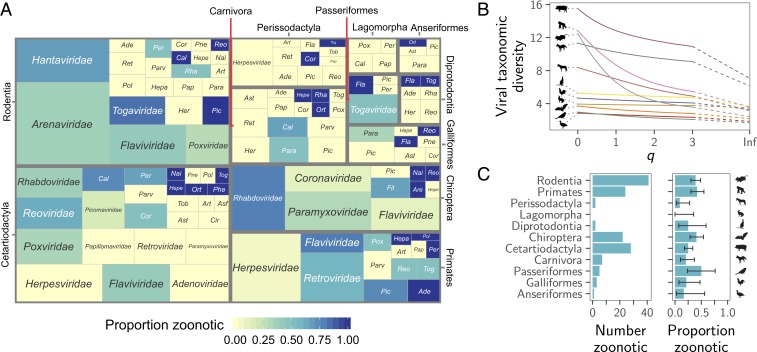
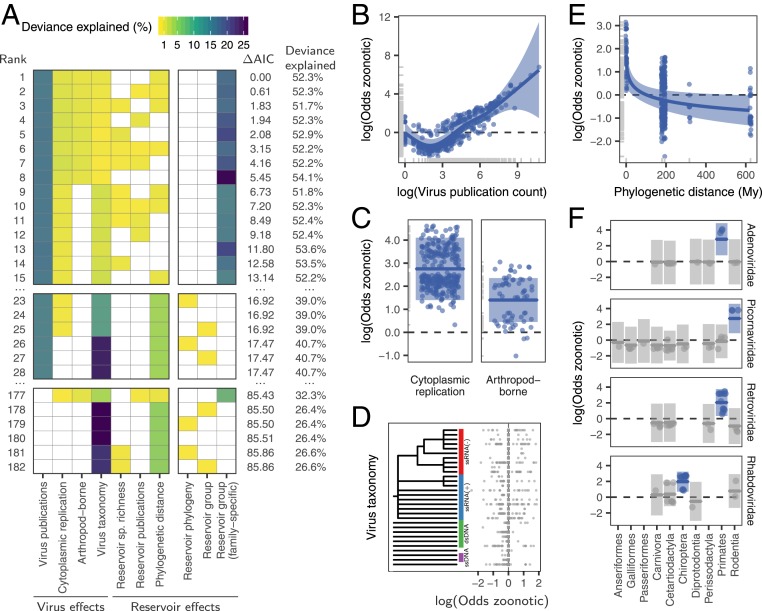
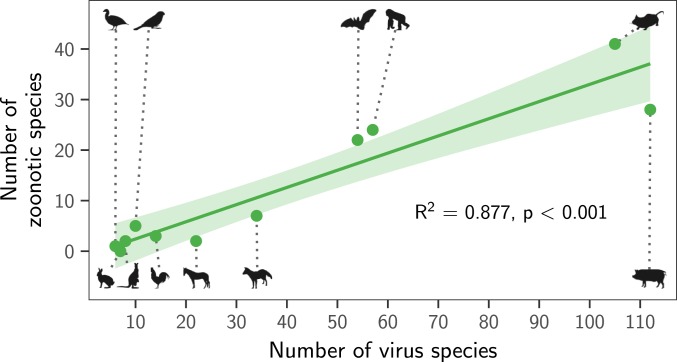
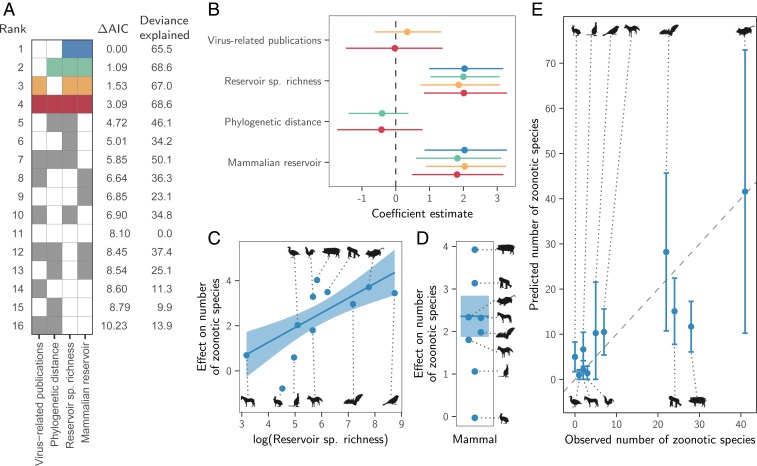
The notion that certain animal groups disproportionately maintain and transmit viruses to humans due to broad-scale differences in ecology, life history, and physiology currently influences global health surveillance and research in disease ecology, virology, and immunology. To directly test whether such “special reservoirs” of zoonoses exist, we used literature searches to construct the largest existing dataset of virus–reservoir relationships, consisting of the avian and mammalian reservoir hosts of 415 RNA and DNA viruses along with their histories of human infection. Reservoir host effects on the propensity of viruses to have been reported as infecting humans were rare and when present were restricted to one or two viral families. The data instead support a largely host-neutral explanation for the distribution of human-infecting viruses across the animal orders studied. After controlling for higher baseline viral richness in mammals versus birds, the observed number of zoonoses per animal order increased as a function of their species richness. Animal orders of established importance as zoonotic reservoirs including bats and rodents were unexceptional, maintaining numbers of zoonoses that closely matched expectations for mammalian groups of their size. Our findings show that variation in the frequency of zoonoses among animal orders can be explained without invoking special ecological or immunological relationships between hosts and viruses, pointing to a need to reconsider current approaches aimed at finding and predicting novel zoonoses.
Overview
The claims and statistics of this paper haven’t been checked yet.
Free: it reads the open-access text and checks the first 5 claims that cite a source we can check. Create a free account to check every claim.
Integrity signals
Registry
Cites
Statistics
Figures
Verification
Claims the paper makes
The claims and statistics of this paper haven’t been checked yet.
Free: it reads the open-access text and checks the first 5 claims that cite a source we can check. Create a free account to check every claim.
Claims other papers make about this one
Each is checked against this paper’s own text: does it say what the citing paper says it does?
The cited source says what the claim attributes to it.
In the citing paper
“They concluded that mammalian and avian Orders have the number of zoonotic viruses that would be expected based on each group’s share of diversity, and that no special characteristics of a group (e.g., immunological traits) need to be invoked to explain a group’s zoonotic contributions.”
From Impacts of biodiversity and biodiversity loss on zoonotic diseases (2021) · cites this paper as [28]
Experimental — accuracy not yet measured
Self-check
Percentages, sums and reported differences re-computed from the paper’s own numbers.
The self-check needs the paper’s full text.
Citations
Cites
R: A Language and Environment for Statistical Computing
R Core Team (2025) · doi:10.32614/r.manuals · Cited by 352,181
A new look at the statistical model identification
Akaike, H. (1974) · IEEE Transactions on Automatic Control · doi:10.1109/tac.1974.1100705 · Cited by 51,879
Modern Applied Statistics with S
Venables, W. N., & Ripley, B. D. (2002) · Statistics and Computing · doi:10.1007/978-0-387-21706-2 · Cited by 24,305
APE: analyses of phylogenetics and evolution in R language
Paradis, E., Claude, J., & Strimmer, K. (2004) · Bioinformatics · doi:10.1093/bioinformatics/btg412 · Cited by 11,335
Global trends in emerging infectious diseases
Jones, K. E., Patel, N. G., Levy, M. A., Storeygard, A., Balk, D., Gittleman, J. L., & Daszak, P. (2008) · Nature · doi:10.1038/nature06536 · Cited by 8,338 · cited 1×
“These results mirror—and potentially explain—observations that the risk of zoonotic emergence is elevated in regions with high species richness (3, 40), since more virus species and hence zoonoses would be expected in species-rich habitats.”
ResultWood, S. N. (2011) · Journal of the Royal Statistical Society Series B: Statistical Methodology · doi:10.1111/j.1467-9868.2010.00749.x · Cited by 7,537
Risk factors for human disease emergence
Taylor, L. H., Latham, S. M., & woolhouse, M. E. J. (2001) · Philosophical Transactions of the Royal Society of London. Series B: Biological Sciences · doi:10.1098/rstb.2001.0888 · Cited by 2,835
TimeTree: A Resource for Timelines, Timetrees, and Divergence Times
Kumar, S., Stecher, G., Suleski, M., & Hedges, S. B. (2017) · Molecular Biology and Evolution · doi:10.1093/molbev/msx116 · Cited by 2,721
Wood, S. N. (2003) · Journal of the Royal Statistical Society Series B: Statistical Methodology · doi:10.1111/1467-9868.00374 · Cited by 2,445
Origins of major human infectious diseases
Wolfe, N. D., Dunavan, C. P., & Diamond, J. (2007) · Nature · doi:10.1038/nature05775 · Cited by 1,867
Research works printed but not linked: 3
- Reeve R., How to partition diversity. arXiv:14046520v3 (8 December 2016).
- Knipe D. M., Howley P., Eds., Fields Virology (Lippincott Williams & Wilkins, ed. 6, 2013).
- Roskov Y., Eds., Species 2000 & ITIS Catalogue of Life, 2015 Annual Checklist (Naturalis, 2015).
Cited by
Climate change increases cross-species viral transmission risk
Carlson, C. J., Albery, G. F., Merow, C., Trisos, C. H., Zipfel, C. M., Eskew, E. A., Olival, K. J., Ross, N., & Bansal, S. (2022) · Nature · doi:10.1038/s41586-022-04788-w · Cited by 1,099
Bat-borne virus diversity, spillover and emergence
Letko, M., Seifert, S. N., Olival, K. J., Plowright, R. K., & Munster, V. J. (2020) · Nature Reviews Microbiology · doi:10.1038/s41579-020-0394-z · Cited by 553
Lessons from the host defences of bats, a unique viral reservoir
Irving, A. T., Ahn, M., Goh, G., Anderson, D. E., & Wang, L.-F. (2021) · Nature · doi:10.1038/s41586-020-03128-0 · Cited by 413
Impacts of biodiversity and biodiversity loss on zoonotic diseases
Keesing, F., & Ostfeld, R. S. (2021) · Proceedings of the National Academy of Sciences · doi:10.1073/pnas.2023540118 · Cited by 367
Ranking the risk of animal-to-human spillover for newly discovered viruses
Grange, Z. L., Goldstein, T., Johnson, C. K., Anthony, S., Gilardi, K., Daszak, P., Olival, K. J., O’Rourke, T., Murray, S., Olson, S. H., et al. (2021) · Proceedings of the National Academy of Sciences · doi:10.1073/pnas.2002324118 · Cited by 278
“Experts assigned a Spillover Risk (options = high [3], medium [2], low [1], or not relevant for spillover [0]) to each of the 50 identified risk factors and also characterized their own Level of Expertise (options = novice [1], competent [2], proficient [4], expert [8], or master [16]) for each risk factor (SI Appendi…”
BackgroundZoonotic spillover: Understanding basic aspects for better prevention
Ellwanger, J. H., & Chies, J. A. B. (2021) · Genetics and Molecular Biology · doi:10.1590/1678-4685-gmb-2020-0355 · Cited by 249
A prenylated dsRNA sensor protects against severe COVID-19
Wickenhagen, A., Sugrue, E., Lytras, S., Kuchi, S., Noerenberg, M., Turnbull, M. L., Loney, C., Herder, V., Allan, J., Jarmson, I., et al. (2021) · Science · doi:10.1126/science.abj3624 · Cited by 237
“Bats are an extraordinarily diverse order (>1400 species) (79), and individual bat species may not be any more likely to act as viral reservoirs than other species (80).”
BackgroundDilution effects in disease ecology
Keesing, F., & Ostfeld, R. S. (2021) · Ecology Letters · doi:10.1111/ele.13875 · Cited by 191
Olival, K. J., Cryan, P. M., Amman, B. R., Baric, R. S., Blehert, D. S., Brook, C. E., Calisher, C. H., Castle, K. T., Coleman, J. T. H., Daszak, P., et al. (2020) · PLOS Pathogens · doi:10.1371/journal.ppat.1008758 · Cited by 173
Self-citationDiversity and evolution of the animal virome
Harvey, E., & Holmes, E. C. (2022) · Nature Reviews Microbiology · doi:10.1038/s41579-021-00665-x · Cited by 161
Degradation of ecosystems and loss of ecosystem services
Kahrić, A., Kulijer, D., Neira, D., & Šnjegota, D. (2022) · Elsevier eBooks · doi:10.1016/b978-0-12-822794-7.00008-3 · Cited by 195
Guidelines for communicating about bats to prevent persecution in the time of COVID-19
MacFarlane, D., & Rocha, R. (2020) · Biological Conservation · doi:10.1016/j.biocon.2020.108650 · Cited by 158
“First, recent research indicates that the number of human-infecting viruses in bats is similar to other mammals, after controlling for the number of species within each order (Mollentze and Streicker, 2020; but see Olival et al., 2017).”
Sutela, S., Forgia, M., Vainio, E. J., Chiapello, M., Daghino, S., Vallino, M., Martino, E. M. D., Girlanda, M., Perotto, S., & Turina, M. (2020) · Virus Evolution · doi:10.1093/ve/veaa076 · Cited by 137
“In practice, virome studies may be used to identify host reservoirs involved in viral spillovers to new species, mostly among vertebrates (Mollentze and Streicker 2020), or to help assess the risk of using specific viruses as biological tools with respect to their host specificity or off-target effects.”
BackgroundIdentifying and prioritizing potential human-infecting viruses from their genome sequences
Mollentze, N., Babayan, S. A., & Streicker, D. G. (2021) · PLoS Biology · doi:10.1371/journal.pbio.3001390 · Cited by 156
“Consequently, predictions may be highly sensitive to substantial biases in current 5 knowledge of viral diversity (2, 7).”
BackgroundMethodSelf-citationEvolutionary Parasitology: The Integrated Study of Infections, Immunology, Ecology, and Genetics
Schmid‐Hempel, P. (2021) · doi:10.1093/oso/9780198832140.001.0001 · Cited by 166
Biological invasions facilitate zoonotic disease emergences
Zhang, L., Rohr, J. R., Cui, R., Xin, Y., Han, L., Yang, X., Gu, S., Du, Y., Liang, J. Y., Wang, X., et al. (2022) · Nature Communications · doi:10.1038/s41467-022-29378-2 · Cited by 170
Host traits shape virome composition and virus transmission in wild small mammals
Chen, Y., Hu, S.-J., Lin, X., Tian, J.-H., Lv, J.-X., Wang, M.-R., Luo, X.-Q., Pei, Y.-Y., Hu, R., Song, Z., et al. (2023) · Cell · doi:10.1016/j.cell.2023.08.029 · Cited by 152
Zoonotic disease and virome diversity in bats
Brussel, K. V., & Holmes, E. C. (2021) · Current Opinion in Virology · doi:10.1016/j.coviro.2021.12.008 · Cited by 135
“Obviously, the more a particular group of animals is sampled then, on average, the more novel viruses will be characterised, and some studies have suggested that bats carry no more virus than expected given their species richness [73].”
BackgroundMetavirome of 31 tick species provides a compendium of 1,801 RNA virus genomes
Ni, X.-B., Cui, X., Liu, J., Ye, R., Wu, Y., Jiang, J.-F., Sun, Y. E., Wang, Q., Shum, M. H.-H., Chang, Q., et al. (2023) · Nature Microbiology · doi:10.1038/s41564-022-01275-w · Cited by 133
Wang, J., Pan, Y., Yang, L., Yang, W., Lv, K., Luo, C., Wang, J., Kuang, G., Wu, W.-C., Gou, Q., et al. (2023) · Nature Communications · doi:10.1038/s41467-023-39835-1 · Cited by 130
“We then used Poisson regression to estimate the effects of (1) phylogenetic distance between hosts, and (2) geographic distance between sample locations on the number of shared virus species between pairs of hosts, including the time intervals between sampling dates to control for its confounding effect.”
BackgroundMethodInfluentialHow accurately can we assess zoonotic risk?
Wille, M., Geoghegan, J. L., & Holmes, E. C. (2021) · PLoS Biology · doi:10.1371/journal.pbio.3001135 · Cited by 114
The science of the host–virus network
Albery, G. F., Becker, D. J., Brierley, L., Brook, C. E., Christofferson, R. C., Cohen, L., Dallas, T., Eskew, E. A., Fagre, A. C., Farrell, M. J., et al. (2021) · Nature Microbiology · doi:10.1038/s41564-021-00999-5 · Cited by 109
“More often, the risk factors used in zoonotic risk models are quite coarse and describe thousands of candidate viruses, such as RNA viruses 46,47 with broad host range 44,45 , larger genomes 48 , vector-borne transmission 22 , replication in the cyto-plasm 22,33,49 or lipid envelopes 22,33 .”
BackgroundSelf-citationMammals, wildlife trade, and the next global pandemic
Shivaprakash, K. N., Sen, S., Paul, S., Kiesecker, J. M., & Bawa, K. S. (2021) · Current Biology · doi:10.1016/j.cub.2021.06.006 · Cited by 116
The future of zoonotic risk prediction
Carlson, C. J., Farrell, M. J., Grange, Z., Han, B. A., Mollentze, N., Phelan, A., Rasmussen, A. L., Albery, G. F., Bett, B., Brett‐Major, D. M., et al. (2021) · Philosophical Transactions of the Royal Society B Biological Sciences · doi:10.1098/rstb.2020.0358 · Cited by 125
“For example, genome size correlates positively with zoonotic risk [52] but has been reported as having contradictory effects on transmissibility [10,12]; replication in the cytoplasm similarly predicts zoonotic potential [11,53,54], but also predicts reduced transmissibility [10].”
BackgroundSelf-citationAssessing the risk of human‐to‐wildlife pathogen transmission for conservation and public health
Fagre, A. C., Cohen, L., Eskew, E. A., Farrell, M., Glennon, E. E., Joseph, M. B., Frank, H. K., Ryan, S. J., Carlson, C. J., & Albery, G. F. (2022) · Ecology Letters · doi:10.1111/ele.14003 · Cited by 111
“…have made enormous strides towards understanding host-pathogen ecology, allowing reservoir host identification (Albery et al., 2020; Babayan et al., 2018), zoonotic risk prediction (Mollentze & Streicker, 2020), geographic sampling prioritisation (Han et al., 2016; Olival et al., 2017), and more.”
Host Diversity and Origin of Zoonoses: The Ancient and the New
Recht, J., Schuenemann, V. J., & Sánchez-Villagra, M. R. (2020) · Animals · doi:10.3390/ani10091672 · Cited by 110
“A recent report on the largest dataset of the zoonotic virus—reservoir relationships built with avian and mammalian reservoir hosts of 415 viruses aimed at determining whether some animal species are special reservoirs of zoonotic pathogens [16].”
BackgroundLarge‐scale genome sampling reveals unique immunity and metabolic adaptations in bats
Moreno-Santillán, D. D., Lama, T. M., Gutiérrez‐Guerrero, Y. T., Brown, A. M., Donat, P., Zhao, H., Rossiter, S. J., Yohe, L. R., Potter, J. H. T., Teeling, E. C., et al. (2021) · Molecular Ecology · doi:10.1111/mec.16027 · Cited by 95
“There is still debate as to whether bats harbour a disproportionately large number of viruses, or whether viral load is simply a function of species richness (Mollentze & Streicker, 2020; Moratelli & Calisher, 2015; Olival et al., 2017).”
BackgroundCOVID-19: Time to exonerate the pangolin from the transmission of SARS-CoV-2 to humans
Frutos, R., Serra-Cobo, J., Chen, T., & Devaux, C. A. (2020) · Infection, Genetics and Evolution · doi:10.1016/j.meegid.2020.104493 · Cited by 87
Post COVID‐19 : a solution scan of options for preventing future zoonotic epidemics
Petrovan, S. O., Aldridge, D. C., Bartlett, H., Bladon, A. J., Booth, H. L., Broad, S., Broom, D. M., Burgess, N. D., Cleaveland, S., Cunningham, A. A., et al. (2021) · Biological reviews/Biological reviews of the Cambridge Philosophical Society · doi:10.1111/brv.12774 · Cited by 99
“…explanation is that both rodents and bats are also highly diverse vertebrate orders (2361 rodent species and 1420 bat species) and more species-rich reservoir groups host more virus species and therefore a larger number of zoonotic pathogens (Letko et al ., 2020; Mollentze & Streicker, 2020).”
Wegner, G., Murray, K. A., Springmann, M., Müller, A. W., Sokolow, S. H., Saylors, K. E., & Morens, D. M. (2022) · EClinicalMedicine · doi:10.1016/j.eclinm.2022.101386 · Cited by 109
“44 Many viruses make use of an ‘intermediate’ vertebrate host through which they can evolve and transit from the reservoir species to humans 45 (Figure 1).”
BackgroundPlague reservoir species throughout the world
Mahmoudi, A. R., Kryštufek, B., Sludsky, A. A., Schmid, B. V., de Almeida, A. M. P., Xu, L., Ramasindrazana, B., Bertherat, E., Yeszhanov, A., Stenseth, N. C., et al. (2020) · Integrative Zoology · doi:10.1111/1749-4877.12511 · Cited by 90
“Such a relationship with species richness appears to be a general feature of disease ecology (Mollentze & Streicker 2020), and highlights the value of good regional taxonomic profiles in estimating outbreak risks.”
Evolution of pathogen tolerance and emerging infections: A missing experimental paradigm
Seal, S., Dharmarajan, G., & Khan, I. (2021) · eLife · doi:10.7554/elife.68874 · Cited by 90
“68874 8 of 30 downstream processes can begin, potentially an important precondition can be the maintenance of a sufficiently large (Mollentze and Streicker, 2020) and diverse (Remien and Nuismer, 2020) zoonotic pathogen pool with the potential to overcome the species barrier.”
BackgroundDoes public fear that bats spread COVID-19 jeopardize bat conservation?
Lu, M., Wang, X., Ye, H., Wang, H., Qiu, S., Zhang, H., Liu, Y., Luo, J., & Feng, J. (2021) · Biological Conservation · doi:10.1016/j.biocon.2021.108952 · Cited by 99
Emergence of epidemic diseases: zoonoses and other origins
Weiss, R. A., & Sankaran, N. (2022) · Faculty Reviews · doi:10.12703/r/11-2 · Cited by 104
A better classification of wet markets is key to safeguarding human health and biodiversity
Lin, B., Dietrich, M. L., Senior, R. A., & Wilcove, D. S. (2021) · The Lancet Planetary Health · doi:10.1016/s2542-5196(21)00112-1 · Cited by 95
“42,43 This is not to say that zoonoses from domesticated animals should be overlooked, as such zoonoses can be deadly.”
BackgroundPathogens and planetary change
Carlson, C. J., Brookson, C. B., Becker, D. J., Cummings, C. A., Gibb, R., Halliday, F. W., Heckley, A. M., Huang, Z. Y. X., Lavelle, T. E., Robertson, H., et al. (2025) · Nature Reviews Biodiversity · doi:10.1038/s44358-024-00005-w · Cited by 94
“Over time, parasites also diversify through a mix of cospeciation and host-switching, both of which are facilitated by host diversification 22–24 .”
Keatts, L., Robards, M. D., Olson, S. H., Hueffer, K., Insley, S. J., Joly, D. O., Kutz, S. J., Lee, D. S., Chetkiewicz, C. B., Lair, S., et al. (2021) · Frontiers in Public Health · doi:10.3389/fpubh.2021.627654 · Cited by 91
“Certain mammalian groups (bats, rodents, primates) have been suggested as more likely to host zoonotic viruses (194, 215); though recent analysis suggest bats and rodents host high numbers of zoonoses simply due to the high degree of species richness within these orders, not as a result of intrinsic or ecological diff…”
BackgroundEmergence of bat-related betacoronaviruses: hazard and risks
Frutos, R., Serra-Cobo, J., Pinault, L., Lopez Roig, M., & Devaux, C. A. (2021) · Frontiers in Microbiology · doi:10.3389/fmicb.2021.591535 · Cited by 66
Bats host the most virulent—but not the most dangerous—zoonotic viruses
Guth, S. E., Mollentze, N., Renault, K., Streicker, D. G., Visher, E., Boots, M., & Brook, C. E. (2022) · Proceedings of the National Academy of Sciences · doi:10.1073/pnas.2113628119 · Cited by 79
“Phylogenetic distance dropped from all CFR models likely due to a lack of granularity 371 in our phylogenetic distance data, which described reservoir host cophenetic distance from 372 Primates on a time-scaled phylogeny (7), producing only six unique distance values across all of 373 the reservoir groups in our datab…”
BackgroundMethodInfluentialSelf-citationSudhakar, P., Machiels, K., Verstockt, B., Korcsmáros, T., & Vermeire, S. (2021) · Frontiers in Microbiology · doi:10.3389/fmicb.2021.618856 · Cited by 70
“…the door for impending risks of transmission (from animal hosts to human hosts or between various animal hosts) via the food chain of zoonotic species which have been selected for survival over many generations of persistence in the host (Farrell and Davies, 2019; Mollentze and Streicker, 2020).”
BackgroundThe Ecology of Viral Emergence
Holmes, E. C. (2022) · Annual Review of Virology · doi:10.1146/annurev-virology-100120-015057 · Cited by 69
Urban-adapted mammal species have more known pathogens
Albery, G. F., Carlson, C. J., Cohen, L., Eskew, E. A., Gibb, R., Ryan, S. J., Sweeny, A. R., & Becker, D. J. (2022) · Nature Ecology & Evolution · doi:10.1038/s41559-022-01723-0 · Cited by 73
“Such research effort is heterogeneously distributed in space (Allen et al. 2017; Olival et al. 2017; Jorge & Poulin 2018) and across mammal species, particularly with regards to life history (Albery & Becker 2021) and taxonomy (Olival et al. 2017; Mollentze & Streicker 2020).”
BackgroundMethodDecoding bat immunity: the need for a coordinated research approach
Wang, L., Gamage, A. M., Chan, W. O. Y., Hiller, M., & Teeling, E. C. (2021) · Nature reviews. Immunology · doi:10.1038/s41577-021-00523-0 · Cited by 70
Land-use change and rodent-borne diseases: hazards on the shared socioeconomic pathways
García‐Peña, G. E., Rubio, A. V., Mendoza, H., Fernández, M., Milholland, M. T., Aguirre, A. A., Suzán, G., & Zambrana‐Torrelio, C. (2021) · Philosophical Transactions of the Royal Society B Biological Sciences · doi:10.1098/rstb.2020.0362 · Cited by 71
Bats and birds as viral reservoirs: A physiological and ecological perspective
Nabi, G., Wang, Y., Lü, L., Jiang, C., Ahmad, S., Wu, Y., & Li, D. (2020) · The Science of The Total Environment · doi:10.1016/j.scitotenv.2020.142372 · Cited by 68
“Bats, primates, and rodents not only have the greatest viral richness among mammals but also harbor a higher proportion of zoonotic viruses than other mammalian taxa (Olival et al., 2017; Mollentze and Streicker, 2020).”
InfluentialFast-lived Hosts and Zoonotic Risk
Albery, G. F., & Becker, D. J. (2020) · Trends in Parasitology · doi:10.1016/j.pt.2020.10.012 · Cited by 67
Synthesizing the connections between environmental disturbances and zoonotic spillover
Ellwanger, J. H., Fearnside, P. M., Ziliotto, M., Valverde-Villegas, J. M., da Veiga, A. B. G., Vieira, G. F., Bach, E., Cardoso, J. D. C., Müller, N. F. D., Lopes, G., et al. (2022) · Anais da Academia Brasileira de Ciências · doi:10.1590/0001-3765202220211530 · Cited by 79
A One Health framework for exploring zoonotic interactions demonstrated through a case study
Desvars-Larrive, A., Vogl, A. E., Puspitarani, G. A., Yang, L., Joachim, A., & Käsbohrer, A. (2024) · Nature Communications · doi:10.1038/s41467-024-49967-7 · Cited by 85
Fixing our global agricultural system to prevent the next COVID-19
Baudron, F., & Liégeois, F. (2020) · Outlook on Agriculture · doi:10.1177/0030727020931122 · Cited by 71
“, 2018) while pathogen richness tends to correlate with host species richness (Mollentze and Streicker, 2020).”
BackgroundHardmeier, I., Aeberhard, N., Qi, W., Schönbächler, K., Krättli, H., Hatt, J., Fraefel, C., & Kubacki, J. (2021) · PLoS ONE · doi:10.1371/journal.pone.0252534 · Cited by 62
“The large number of different bat species may also contribute at least in part to the large number of different batassociated zoonotic viruses [26, 27].”
BackgroundTrends in Bacterial Pathogens of Bats: Global Distribution and Knowledge Gaps
Szentiványi, T., McKee, C., Jones, G., & Foster, J. T. (2023) · Transboundary and Emerging Diseases · doi:10.1155/2023/9285855 · Cited by 59
“Within bats, viral richness and the probability of viral spillover vary according to host and pathogen traits, including the geographic distribution of host species [8, 11, 12], virus taxa [10], the intersection of bat behavior and viral pathology [13], and host population genetic structure [14].”
Drivers and causes of zoonotic diseases: an overview
Ferreira, M. N., Ellio, W., Kroner, R. G., Kinnaird, M. F., Prist, P. R., Valdujo, P., & Vale, M. M. (2021) · PARKS · doi:10.2305/iucn.ch.2021.parks-27-simnf.en · Cited by 64
“The impact made by zoonoses from these mammal groups is all the greater because they contain many different species (Han et al., 2016; Johnson et al., 2020; Mollentze & Streicker, 2020).”
BackgroundDharmarajan, G., Li, R., Chanda, E., Dean, K. R., Dirzo, R., Jakobsen, K. S., Khan, I., Leirs, H., Shi, Z., WOLFE, N. D., et al. (2022) · Zoonoses · doi:10.15212/zoonoses-2021-0028 · Cited by 68
“A recent study has revealed that the zoonotic viral diversity of a particular taxonomic order is proportional to the total viral richness, which in turn depends on the species richness of the order [31].”
BackgroundDell, B., Souza, M. J., & Willcox, A. S. (2020) · PLoS ONE · doi:10.1371/journal.pone.0239599 · Cited by 55
“However, despite the established belief that bats and rodents hold a greater importance for spillover of zoonotic viral pathogens, recent research suggests a more host-neutral explanation for spillover than previously thought, which may have implications for handling precautions and practices based upon this belief [4…”
BackgroundWilliams, E. P., Spruill-Harrell, B., Taylor, M. K., Lee, J., Nywening, A. V., Yang, Z., Nichols, J. H., Camp, J. V., Owen, R. D., & Jonsson, C. B. (2021) · Viruses · doi:10.3390/v13081509 · Cited by 62
“Some viruses within the Arenaviridae and Hantaviridae persist for the lifetime of the reservoir host, with the viruses present at relatively low levels in the host [141–143].”
BackgroundInfluentialMammal virus diversity estimates are unstable due to accelerating discovery effort
Gibb, R., Albery, G. F., Mollentze, N., Eskew, E. A., Brierley, L., Ryan, S. J., Seifert, S. N., & Carlson, C. J. (2022) · Biology Letters · doi:10.1098/rsbl.2021.0427 · Cited by 45
“Multiple studies have found that correcting for undersampling undermines widespread assumptions about zoonotic risk [13,14], and we suggest that future studies should similarly attempt to reject the null hypothesis that downstream patterns of zoonotic risk are a neutral consequence of total observed viral diversity.”
BackgroundResultInfluentialSelf-citationCharacterizing and Evaluating the Zoonotic Potential of Novel Viruses Discovered in Vampire Bats
Bergner, L. M., Mollentze, N., Orton, R. J., Tello, C., Broos, A., Biek, R., & Streicker, D. G. (2021) · Viruses · doi:10.3390/v13020252 · Cited by 50
“Astroviruses (AstVs, family Astroviridae) are positive sense single stranded RNA viruses which cause gastroenteritis in humans, as well as in diverse mammals and birds [100].”
BackgroundResultInfluentialSelf-citationSituation analysis on the roles and risks of wildlife in the emergence of human infectious diseases
Kock, R. A., & Cáceres-Escobar, H. (2022) · doi:10.2305/iucn.ch.2022.01.en · Cited by 68
Walsh, M., Sawleshwarkar, S., Hossain, S., & Mor, S. M. (2020) · One Health · doi:10.1016/j.onehlt.2020.100177 · Cited by 57
Ramadori, G. P. (2023) · International Journal of Molecular Sciences · doi:10.3390/ijms24076658 · Cited by 63
Bonilla‐Aldana, D. K., Jiménez-Diaz, S. D., Arango-Duque, J. S., Flórez, M. A., Balbin-Ramon, G. J., Paniz‐Mondolfi, A., Suárez, J. A., Pachar, M. R., Perez‐Garcia, L. A., Noguera, L. A. D., et al. (2020) · International Journal of Infectious Diseases · doi:10.1016/j.ijid.2020.08.050 · Cited by 58
Land Use Change and Infectious Disease Emergence
Rulli, M. C., D’Odorico, P., Galli, N., John, R. S., Muylaert, R. L., Santini, M., & Hayman, D. T. S. (2025) · Reviews of Geophysics · doi:10.1029/2022rg000785 · Cited by 69
Emerging patterns in rodent-borne zoonotic diseases
Keesing, F., & Ostfeld, R. S. (2024) · Science · doi:10.1126/science.adq7993 · Cited by 55
Friant, S., Bonwitt, J. H., Ayambem, W. A., Ifebueme, N. M., Alobi, A. O., Otukpa, O. M., Bennett, A. J., Shea, C., Rothman, J. M., Goldberg, T. L., et al. (2022) · One Health Outlook · doi:10.1186/s42522-022-00060-3 · Cited by 47
“Although rodents, bats, and primates occupy most of the thinking surrounding spillover transmission, there is a need to examine human contact with other taxa that serve as reservoirs or facilitate transmission to humans [32, 77, 78].”
BackgroundA species-level trait dataset of bats in Europe and beyond
Froidevaux, J. S. P., Toshkova, N., Barbaro, L., Benítez‐López, A., Kerbiriou, C., Viol, I. L., Pacifici, M., Santini, L., Stawski, C., Russo, D., et al. (2023) · Scientific Data · doi:10.1038/s41597-023-02157-4 · Cited by 53
Viral emergence and pandemic preparedness in a One Health framework
Sikkema, R. S., & Koopmans, M. (2025) · Nature Reviews Microbiology · doi:10.1038/s41579-025-01243-1 · Cited by 58
“Bats are hypothesized to serve as important reservoirs for zoonotic viruses 96,97 , partly owing to the large species diversity of the taxonomic order Chiroptera, combined with their abundance and global distribution 98 .”
COVID-19 Pandemic and Agroecosystem Resilience: Early Insights for Building Better Futures
Duguma, L. A., van Noordwijk, M., Minang, P. A., & Muthee, K. (2021) · Sustainability · doi:10.3390/su13031278 · Cited by 41
“A pandemic like COVID-19 had been predicted [1,2], as the pool of potential zoonotic diseases (beyond MERS, SARS, and Ebola) remains large and is by no means restricted to bats or primates [3].”
BackgroundEvolution of the interferon response: lessons from ISGs of diverse mammals
McDougal, M. B., Boys, I. N., Cruz-Rivera, P. C. D. L., & Schoggins, J. W. (2022) · Current Opinion in Virology · doi:10.1016/j.coviro.2022.101202 · Cited by 44
Seasonal shedding patterns of diverse henipavirus-related paramyxoviruses in Egyptian rousette bats
Mortlock, M., Geldenhuys, M., Dietrich, M., Epstein, J. H., Weyer, J., Paweska, J. T., & Markotter, W. (2021) · Scientific Reports · doi:10.1038/s41598-021-03641-w · Cited by 38
Animal Models in Human Adenovirus Research
Bertzbach, L. D., Ip, W.-H., & Dobner, T. (2021) · Biology · doi:10.3390/biology10121253 · Cited by 47
Zoonotic Risk: One More Good Reason Why Cats Should Be Kept Away from Bats
Salinas‐Ramos, V. B., Mori, E., Bosso, L., Ancillotto, L., & Russo, D. (2021) · Pathogens · doi:10.3390/pathogens10030304 · Cited by 41
“Bats are often mentioned as species characterized by a high zoonotic potential ([6]; but see [7]) and natural reservoirs of pathogens (especially viruses) that may affect humans directly or after a more complex pathway involving other animal species.”
BackgroundContextualizing bats as viral reservoirs
Streicker, D. G., & Gilbert, A. T. (2020) · Science · doi:10.1126/science.abd4559 · Cited by 39
Self-citationData Proliferation, Reconciliation, and Synthesis in Viral Ecology
Gibb, R., Albery, G. F., Becker, D. J., Brierley, L., Connor, R. P., Dallas, T., Eskew, E. A., Farrell, M. J., Rasmussen, A. L., Ryan, S. J., et al. (2021) · BioScience · doi:10.1093/biosci/biab080 · Cited by 47
Weinberg, M., & Yovel, Y. (2022) · iScience · doi:10.1016/j.isci.2022.104782 · Cited by 49
“Fortunately, such understanding is now growing in the scientific community (Foley et al., 2018; Mollentze and Streicker, 2020; Cockrell and An, 2021; Irving et al., 2021).”
BackgroundDigby, Z., Tourlomousis, P., Rooney, J., Boyle, J. P., Bibo‐Verdugo, B., Pickering, R. J., Webster, S. J., Monie, T. P., Hopkins, L., Kayagaki, N., et al. (2021) · Cell Reports · doi:10.1016/j.celrep.2021.109614 · Cited by 37
Cardini, A., Elton, S., Kovarovic, K., Viðarsdóttir, U. S., & Polly, P. D. (2021) · Evolutionary Biology · doi:10.1007/s11692-021-09531-3 · Cited by 38
Chirohepevirus from Bats: Insights into Hepatitis E Virus Diversity and Evolution
Wang, B., & Yang, X. (2022) · Viruses · doi:10.3390/v14050905 · Cited by 34
“Most importantly, recent studies have predicted that the order Chiroptera host a high proportion of zoonotic viruses and significant viral diversity relative to other mammalian orders [72], which is reflective of the substantial number of bat species [73].”
BackgroundDisease tolerance as immune defense strategy in bats: One size fits all?
Pei, G., Balkema‐Buschmann, A., & Dorhoi, A. (2024) · PLoS Pathogens · doi:10.1371/journal.ppat.1012471 · Cited by 30
The Influence of Habitat on Viral Diversity in Neotropical Rodent Hosts
Tirera, S., de Thoisy, B., Donato, D., Bouchier, C., Lacoste, V., Franc, A., & Lavergne, A. (2021) · Viruses · doi:10.3390/v13091690 · Cited by 32
“Despite limited knowledge of the processes of zoonotic viral emergence, several groups of species, such as primates, birds, bats, and rodents, are described as major reservoirs due to their ability to host wide ranges of viruses [22,23].”
BackgroundLive animal markets: Identifying the origins of emerging infectious diseases
Galindo-González, J. R. (2021) · Current Opinion in Environmental Science & Health · doi:10.1016/j.coesh.2021.100310 · Cited by 35
Jacquet, S., Pontier, D., & Etienne, L. (2020) · Frontiers in Immunology · doi:10.3389/fimmu.2020.605270 · Cited by 34
“We analyzed the orthologous sequences of HERC5 and HERC6 from bats, rodents, primates, artiodactyls, and carnivores the top five mammalian orders in terms of zoonotic viral diversity they host (38, 39).”
MethodTang, K., Tao, L., Wang, Y., Wang, Q., Fu, C., Chen, B., Zhang, Z., & Fu, Y. (2023) · Applied and Environmental Microbiology · doi:10.1128/aem.00747-23 · Cited by 32
Bat-Associated Microbes: Opportunities and Perils, An Overview
Dhivahar, J., Parthasarathy, A., Krishnan, K., Kovi, B. S., & Pandian, G. N. (2022) · Heliyon · doi:10.1016/j.heliyon.2023.e22351 · Cited by 31
Bat species assemblage predicts coronavirus prevalence
Meyer, M., Schmid, D. W., Baldwin, H., Wilhelm, K., Nkrumah, E. E., Badu, E. K., Oppong, S. K., Schwensow, N., Stow, A., Vallo, P., et al. (2024) · Nature Communications · doi:10.1038/s41467-024-46979-1 · Cited by 29
Fenton, M. B., Mubareka, S., Tsang, S. M., Simmons, N. B., & Becker, D. J. (2020) · FACETS · doi:10.1139/facets-2020-0028 · Cited by 35
COVID‐19, media coverage of bats and related Web searches: a turning point for bat conservation?
Cerri, J., Mori, E., Ancillotto, L., Russo, D., & Bertolino, S. (2021) · Mammal Review · doi:10.1111/mam.12261 · Cited by 30
“…(e.g. Olival et al. 2015), recent research has shown that the proportion of viruses that may infect humans varies minimally across reservoirs in birds and mammals, and that the observed number of zoonoses at the order level increases in line with species richness (Mollentze & Streicker 2020).”
BackgroundCaraballo, D. A. (2022) · Microbiology Spectrum · doi:10.1128/spectrum.01411-22 · Cited by 28
“Bat-CoV diversity is correlated with host taxonomic diversity, with the highest CoV diversity found in areas with the highest levels of bat species richness (11, 12).”
BackgroundEcological determinants of rabies virus dynamics in vampire bats and spillover to livestock
Meza, D. K., Mollentze, N., Broos, A., Tello, C., Valderrama, W., Recuenco, S., Carrera, J. E., Shiva, C., Néstor Falcón, P., Viana, M., et al. (2022) · Proceedings of the Royal Society B Biological Sciences · doi:10.1098/rspb.2022.0860 · Cited by 31
“We calculated the relative deviance as a measure of goodness of fit as in [39].”
MethodSelf-citationBioinformatics approaches for unveiling virus-host interactions
Iuchi, H., Kawasaki, J., Kubo, K., Fukunaga, T., Hokao, K., Yokoyama, G., Ichinose, A., Suga, K., & Hamada, M. (2023) · Computational and Structural Biotechnology Journal · doi:10.1016/j.csbj.2023.02.044 · Cited by 33
COVID-19 and the Curse of Piecemeal Perspectives
Walzer, C. (2020) · Frontiers in Veterinary Science · doi:10.3389/fvets.2020.582983 · Cited by 25
“Numerically abundant orders such as rodents and bats harbor more viruses, but the notion of “special viral reservoirs” has recently been revoked (24).”
BackgroundA framework for testing the impact of co-infections on host gut microbiomes
Schmid, D. W., Fackelmann, G., Wasimuddin, Rakotondranary, J., Ratovonamana, Y. R., Montero, B. K., Ganzhorn, J. U., & Sommer, S. (2022) · Animal Microbiome · doi:10.1186/s42523-022-00198-5 · Cited by 29
“Since species richness predicts parasite diversity, highly diverse vector groups are targeted by a higher number of parasites than less diverse taxa [62].”
BackgroundNeely, B. A., Janech, M. G., Fenton, M. B., Simmons, N. B., Bland, A. M., & Becker, D. J. (2021) · Journal of Proteome Research · doi:10.1021/acs.jproteome.0c00995 · Cited by 28
Molecular identification and genetic diversity of Bartonella spp. in 24 bat species from Thailand
Poofery, J., Narapakdeesakul, D., Riana, E., Arnuphapprasert, A., Nugraheni, Y. R., Ngamprasertwong, T., Wangthongchaicharoen, M., Soisook, P., Bhodhibundit, P., & Kaewthamasorn, M. (2021) · Transboundary and Emerging Diseases · doi:10.1111/tbed.14389 · Cited by 30
The Virome of Bats Inhabiting Brazilian Biomes: Knowledge Gaps and Biases towards Zoonotic Viruses
Wallau, G. L., Barbier, E., Tomazatos, A., Schmidt‐Chanasit, J., & Bernard, E. (2023) · Microbiology Spectrum · doi:10.1128/spectrum.04077-22 · Cited by 28
“(16), Paramyxoviridae (8), and Hantaviridae (9), while the remaining RNA virus families”
BackgroundBuilding a pathway to One Health surveillance and response in Asian countries
MORRIS, R. S., & Wang, S. (2024) · Science in One Health · doi:10.1016/j.soh.2024.100067 · Cited by 26
“However conversely it has been argued that the importance of bats and rodents is because of the species richness of these taxa [10], not because they carry a disproportionate viral burden.”
BackgroundData proliferation, reconciliation, and synthesis in viral ecologyPreprint
Gibb, R., Albery, G. F., Becker, D. J., Brierley, L., Connor, R. P., Dallas, T., Eskew, E. A., Farrell, M. J., Rasmussen, A. L., Ryan, S. J., et al. (2021) · bioRxiv (Cold Spring Harbor Laboratory) · doi:10.1101/2021.01.14.426572 · Cited by 24
“…facilitating analyses that seek to account for host phylogenetic structure while testing hypotheses about viral ecology and evolution (e.g. Becker et al., Farrell et al., Olival et al. 2017, Washburne et al. 2018, Guth et al. 2019, Park 2019, Albery et al. 2020, Mollentze and Streicker 2020).”
BackgroundOptimizing predictive models to prioritize viral discovery in zoonotic reservoirsPreprint
Becker, D. J., Albery, G. F., Sjodin, A. R., Poisot, T., Bergner, L. M., Dallas, T., Eskew, E. A., Farrell, M. J., Guth, S. E., Han, B. A., et al. (2020) · bioRxiv (Cold Spring Harbor Laboratory) · doi:10.1101/2020.05.22.111344 · Cited by 24
Kerth, G. (2022) · Behavioral Ecology and Sociobiology · doi:10.1007/s00265-022-03180-y · Cited by 22
“2020; Mollentze and Streicker 2020), but little is known about virus transmission pathways within and between bat colonies (Zeus et al.”
BackgroundSmall mammals in a biodiversity hotspot harbor viruses of emergence risk
Feng, Y., Kuang, G., Pan, Y., Wang, J., Wei-hong, Y., Wu, W.-C., Pan, H., Wang, J., Han, X., Yang, L., et al. (2024) · National Science Review · doi:10.1093/nsr/nwae463 · Cited by 24
“The well-established correlation between virus diversity and zoonotic risk with the ecological factors of reservoir richness, population size and density [21 ,38 ,39 ] supports these findings.”
COVID‐19: emergence and mutational diversification of SARS‐CoV‐2
Brüssow, H. (2021) · Microbial Biotechnology · doi:10.1111/1751-7915.13800 · Cited by 27
“Many species of bats exist (they represent a fifth of all mammalian species), and they are the only flying mammals allowing – like air traffic in human societies – a quick geographical dispersal of viruses (Gibb et al., 2020; Mollentze and Streicker, 2020; Olival et al., 2020; Streicker and Gilbert, 2020).”
Background
Metadata
- Authors
- Mollentze, N., & Streicker, D. G.
- Affiliations
- MRC University of Glasgow Centre for Virus Research (GB)
- Corresponding author
- Mollentze, Nardus
- Streicker, Daniel G.
- Venue
- Proceedings of the National Academy of Sciences
- Publisher
- National Academy of Sciences
- Published
- 2020-04-13
- Volume
- 117
- Issue
- 17
- Pages
- 9423-9430
- ISSN
- 0027-8424 (ISSN-L)
- 1091-6490
- PMC
- PMC7196766
- OpenAlex
- W3016074853
- Cited by
- 387
- References
- 59
- Citations by year
- 2026: 35 · 2025: 51 · 2024: 53 · 2023: 59 · 2022: 49 · 2021: 95 · 2020: 44
- FWCI
- 46.18
- Type
- journal article
- Language
- en
- Open access
- hybrid
- doi.org
- Licence
- Locations
- Proceedings of the National Academy of Sciences (publishedVersion, cc-by)
- PubMed Central (publishedVersion, cc-by)
- PubMed (publishedVersion)
- ENLIGHTEN (Jurnal Bimbingan dan Konseling Islam) (acceptedVersion, cc-by-sa)
- Funders
- Wellcome (102507/Z/13/Z, 217221/Z/19/Z)
- RCUK | Medical Research Council (MC_UU_12014/12)
- Topics
- Health Sciences › Medicine › Public Health, Environmental and Occupational Health › Zoonotic diseases and public health
- Health Sciences › Medicine › Infectious Diseases › Viral Infections and Outbreaks Research
- Health Sciences › Medicine › Epidemiology › Virology and Viral Diseases
- Keywords
- zoonoses, mammalian reservoirs, avian reservoirs, animal orders, species richness, bats, rodents, RNA viruses, DNA viruses, human viral infections, host-virus interaction
- MeSH terms
- Animals, Birds, Disease Reservoirs, Humans, Mammals, Risk Factors, Species Specificity, Virus Diseases, Zoonoses, Communicable Diseases, Emerging
About these checks
Registry, retraction, Cites and statistics results are computed, not judged, with one exception: a printed reference that no index lists is read once by a model before it counts as a citation error. Claims are extracted by a model and kept only when their quote appears verbatim in the text; each cited source is then checked, with a model’s help, for whether it says what the claim relies on. Those verdicts can be wrong — read the claim’s quote and the cited source before relying on one.
Statistics and arithmetic are recomputed, not judged.
Confidence bands are shown only for fields calibrated on our annotated test set. None is calibrated yet, so no band is shown.
What counts as a claim ›How we measure confidence ›How we check this ›
Are you an author, or do you see a problem with this page? Request a review
Data sources
Bibliographic data: Semantic Scholar, OpenAlex, Crossref.
Contains information from the Semantic Scholar Academic Graph Datasets, made available under the ODC Attribution License (ODC-BY 1.0).
Semantic Scholar’s data is described in: Kinney, R., et al. (2023). The Semantic Scholar Open Data Platform. arXiv:2301.10140.
