

Viral zoonotic risk is homogenous among taxonomic orders of mammalian and avian reservoir hosts
Open accessThe DOI matches its Crossref record; 59 of the 59 references it cites were found in a registry or an index.
Abstract
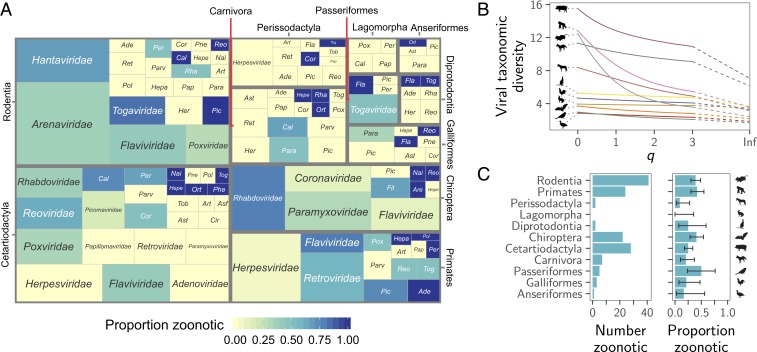
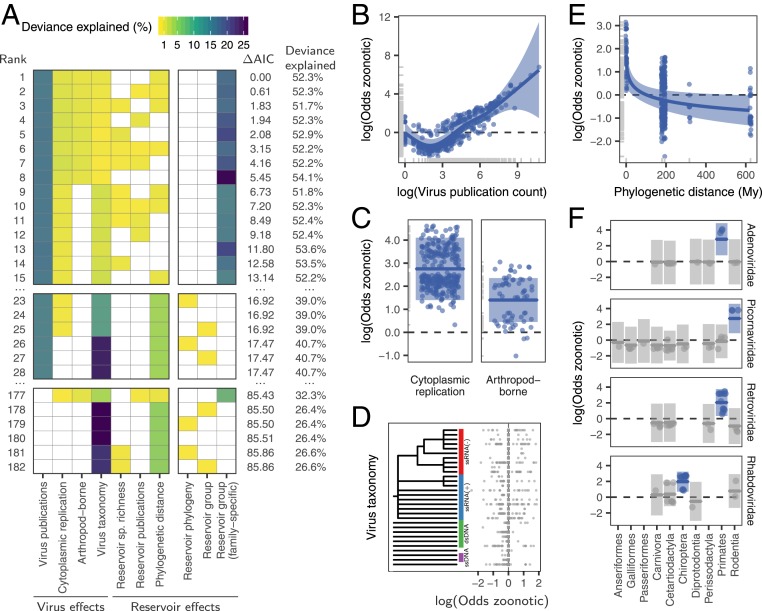
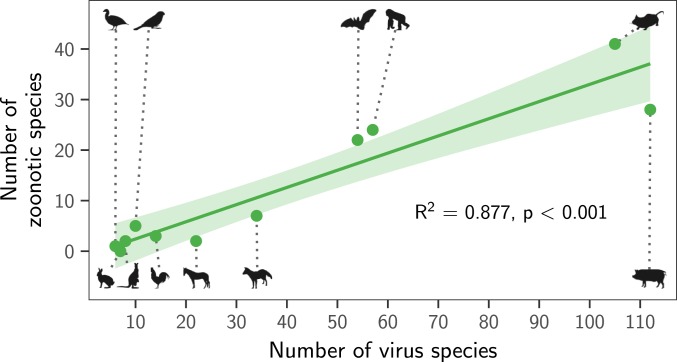
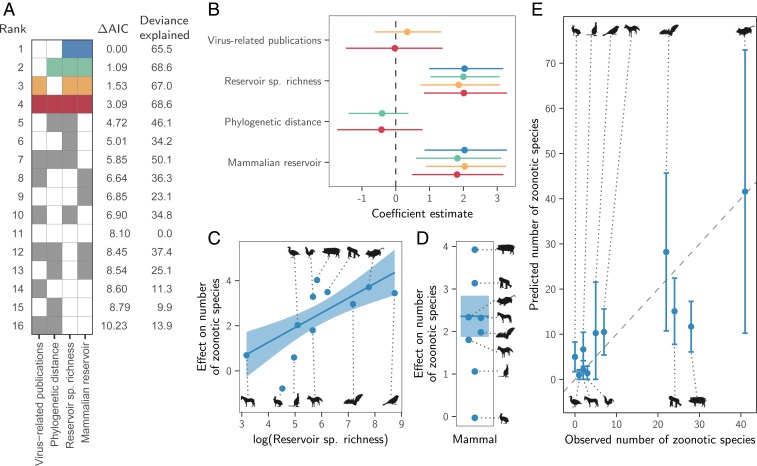
The notion that certain animal groups disproportionately maintain and transmit viruses to humans due to broad-scale differences in ecology, life history, and physiology currently influences global health surveillance and research in disease ecology, virology, and immunology. To directly test whether such “special reservoirs” of zoonoses exist, we used literature searches to construct the largest existing dataset of virus–reservoir relationships, consisting of the avian and mammalian reservoir hosts of 415 RNA and DNA viruses along with their histories of human infection. Reservoir host effects on the propensity of viruses to have been reported as infecting humans were rare and when present were restricted to one or two viral families. The data instead support a largely host-neutral explanation for the distribution of human-infecting viruses across the animal orders studied. After controlling for higher baseline viral richness in mammals versus birds, the observed number of zoonoses per animal order increased as a function of their species richness. Animal orders of established importance as zoonotic reservoirs including bats and rodents were unexceptional, maintaining numbers of zoonoses that closely matched expectations for mammalian groups of their size. Our findings show that variation in the frequency of zoonoses among animal orders can be explained without invoking special ecological or immunological relationships between hosts and viruses, pointing to a need to reconsider current approaches aimed at finding and predicting novel zoonoses.
Overview
The claims and statistics of this paper haven’t been checked yet.
Free: it reads the open-access text and checks the first 5 claims that cite a source we can check. Create a free account to check every claim.
Integrity signals
Registry
Cites
Statistics
Figures
Verification
Claims the paper makes
The claims and statistics of this paper haven’t been checked yet.
Free: it reads the open-access text and checks the first 5 claims that cite a source we can check. Create a free account to check every claim.
Claims other papers make about this one
Each is checked against this paper’s own text: does it say what the citing paper says it does?
The cited source says what the claim attributes to it.
In the citing paper
“They concluded that mammalian and avian Orders have the number of zoonotic viruses that would be expected based on each group’s share of diversity, and that no special characteristics of a group (e.g., immunological traits) need to be invoked to explain a group’s zoonotic contributions.”
From Impacts of biodiversity and biodiversity loss on zoonotic diseases (2021) · cites this paper as [28]
Experimental — accuracy not yet measured
Self-check
Percentages, sums and reported differences re-computed from the paper’s own numbers.
The self-check needs the paper’s full text.
Citations
Cites
R: A Language and Environment for Statistical Computing
R Core Team (2025) · doi:10.32614/r.manuals · Cited by 352,181
A new look at the statistical model identification
Akaike, H. (1974) · IEEE Transactions on Automatic Control · doi:10.1109/tac.1974.1100705 · Cited by 51,879
Modern Applied Statistics with S
Venables, W. N., & Ripley, B. D. (2002) · Statistics and Computing · doi:10.1007/978-0-387-21706-2 · Cited by 24,305
APE: analyses of phylogenetics and evolution in R language
Paradis, E., Claude, J., & Strimmer, K. (2004) · Bioinformatics · doi:10.1093/bioinformatics/btg412 · Cited by 11,335
Global trends in emerging infectious diseases
Jones, K. E., Patel, N. G., Levy, M. A., Storeygard, A., Balk, D., Gittleman, J. L., & Daszak, P. (2008) · Nature · doi:10.1038/nature06536 · Cited by 8,338 · cited 1×
“These results mirror—and potentially explain—observations that the risk of zoonotic emergence is elevated in regions with high species richness (3, 40), since more virus species and hence zoonoses would be expected in species-rich habitats.”
ResultWood, S. N. (2011) · Journal of the Royal Statistical Society Series B: Statistical Methodology · doi:10.1111/j.1467-9868.2010.00749.x · Cited by 7,537
Risk factors for human disease emergence
Taylor, L. H., Latham, S. M., & woolhouse, M. E. J. (2001) · Philosophical Transactions of the Royal Society of London. Series B: Biological Sciences · doi:10.1098/rstb.2001.0888 · Cited by 2,835
TimeTree: A Resource for Timelines, Timetrees, and Divergence Times
Kumar, S., Stecher, G., Suleski, M., & Hedges, S. B. (2017) · Molecular Biology and Evolution · doi:10.1093/molbev/msx116 · Cited by 2,721
Wood, S. N. (2003) · Journal of the Royal Statistical Society Series B: Statistical Methodology · doi:10.1111/1467-9868.00374 · Cited by 2,445
Origins of major human infectious diseases
Wolfe, N. D., Dunavan, C. P., & Diamond, J. (2007) · Nature · doi:10.1038/nature05775 · Cited by 1,867
Research works printed but not linked: 3
- Reeve R., How to partition diversity. arXiv:14046520v3 (8 December 2016).
- Knipe D. M., Howley P., Eds., Fields Virology (Lippincott Williams & Wilkins, ed. 6, 2013).
- Roskov Y., Eds., Species 2000 & ITIS Catalogue of Life, 2015 Annual Checklist (Naturalis, 2015).
Cited by
Items 201–300 of 389
Pervasive Positive Selection on Virus Receptors Driven by Host-Virus Conflicts in Mammals
Wang, W., & Han, G. (2021) · Journal of Virology · doi:10.1128/jvi.01029-21 · Cited by 7
“Virus richness has been thought to vary greatly among the taxonomic orders of mammals (15, 16).”
BackgroundBats are a key source of human viruses — but they’re not special
Watson, C. (2020) · Nature · doi:10.1038/d41586-020-01096-z · Cited by 6
How Do the COVID-19 Prevention Measures Interact With Sustainable Development Goals?Preprint
Beigi, S. (2020) · Preprints.org · doi:10.20944/preprints202010.0279.v1 · Cited by 6
Cruz-Rivera, P. C. D. L., Eitson, J. L., & Schoggins, J. W. (2024) · bioRxiv (Cold Spring Harbor Laboratory) · doi:10.1101/2024.05.02.592239 · Cited by 5
“Recent studies using broad analytical methods further indicate that the order Chiroptera has a particularly high richness of virulent zoonotic viruses (Gibb et al., 2020; Guth et al., 2022; Mollentze & Streicker, 2020; Olival et al., 2017).”
BackgroundIdentification and characterization of novel bat coronaviruses in Spain
Soriano-Tordera, C., Buigues, J., Viñals, A., Muscolino, E., Martínez-Recio, R., Díez, J., Monrós, J. S., Cuevas, J. M., Dufloo, J., & Sanjuán, R. (2025) · PLoS Pathogens · doi:10.1371/journal.ppat.1013371 · Cited by 5
“Their frequent association with viral emergence might simply reflect the diversity and abundance of bat species [8].”
Aatresh, A. V., & Lipsitch, M. (2025) · mBio · doi:10.1128/mbio.02033-25 · Cited by 5
Impact of anthropogenic activities on the ecosystem and emergence of bat-borne zoonotic diseases
Tsai, V., Lai, Y.-C., Contreras, G. P., & Yeh, T. (2026) · Virology · doi:10.1016/j.virol.2026.110811 · Cited by 6
Du, S., Xie, Y., Deng, X. N., Xia, Z., Wu, W., Huang, X., Chen, Z., Li, A., Li, C., Wang, Q., et al. (2023) · Frontiers in Microbiology · doi:10.3389/fmicb.2023.1225255 · Cited by 6
“The majority of the presently recognized viral species have been associated with a specific rodent species, but many of these have been shown to host multiple virus species (Mollentze and Streicker, 2020).”
BackgroundPurpose-driven approaches to age estimation in Australian flying-foxes (Pteropus)
Pietromonaco, C., Kerlin, D. H., Eby, P., McCallum, H. I., Mclean, J., Collins, L. M., & Peel, A. J. (2025) · Wildlife Research · doi:10.1071/wr24107 · Cited by 5
Virome diversity and potential sharing of wild mammals in a biodiversity hotspot, Yunnan, China
Guo, Y., Su, C., Liang, H., Jiang, X., Yang, R., Ye, J., Gillespie, T. R., Gao, Z., & Xu, L. (2025) · Virology Journal · doi:10.1186/s12985-025-02702-0 · Cited by 8
“Viruses with RNA genomes are overrepresented as zoonoses [7], in particular, are of major concern due to their high mutation rates and potential for rapid evolution, which enhances their ability to cross species barriers [8].”
Identification of viral RNA sequences in vampire bats (Desmodus rotundus) from central Mexico
Espinoza-Gómez, A., Moreno-Santillán, D. D., Juarez-Maldonado, R., Gutiérrez, E. G., Salazar, M. I., Alonso-Palomares, L. A., López‐Vidal, J. C., Elizalde‐Arellano, C., & Ortega, J. (2022) · Revista Mexicana de Biodiversidad · doi:10.22201/ib.20078706e.2022.93.4021 · Cited by 4
Isibor, P. O., Ogochukwu, O. O., Kayode-Edwards, I. I., Agbontaen, D. O., Ifebem-Ezima, I.-A. M., Bilewu, O. F., Onuselogu, C. C., Akinduti, P. A., Obafemi, Y. D., & Oniha, M. I. (2024) · Brazilian Journal of Biology · doi:10.1590/1519-6984.270857 · Cited by 5
Oxidative damage varies in response to bacterial, fungal and viral antigen challenges in bats
Costantini, D., Schad, J., Czirják, G. Á., & Voigt, C. C. (2023) · Journal of Experimental Biology · doi:10.1242/jeb.246332 · Cited by 7
Genomic and biological variation in bat IFNs: An antiviral treatment approach
AL-Eitan, L. N., Mihyar, A. H., Zhang, L., Bisht, P., & Jaenisch, R. (2023) · Reviews in Medical Virology · doi:10.1002/rmv.2488 · Cited by 6
“11 Bats vary from other mammals in various ways, like being the only mammals with the ability to fly, hosting of exogenic viruses, 12 and possessing a high degree of antiviral response to viral infections.”
BackgroundMacroecological approaches for the prediction of zoonotic disease risk
Marco, M. D., Marcolin, L., Tonelli, A., Skinner, E. B., & Catucci, E. (2026) · Nature Sustainability · doi:10.1038/s41893-025-01749-9 · Cited by 7
Mortlock, M., Geldenhuys, M., Keith, M., Rademan, R., Swanepoel, L. H., von Maltitz, E. F., Kearney, T., & Markotter, W. (2025) · Virus Evolution · doi:10.1093/ve/veaf041 · Cited by 4
“Bats and rodents,the most specious orders of mammals, have been among the wildlife hosts and reservoir species for these viruses (Mollentze and Streicker 2020).”
Sáez, D., Spina, F., Margalida, A., Serra, L., Volponi, S., & Nadal, J. (2023) · The Science of The Total Environment · doi:10.1016/j.scitotenv.2023.164913 · Cited by 4
“Such an analysis will allow us to fully understand the dynamics of the species, its role in European ecosystems and the resulting implications for the One Health approach (Mollentze and Streicker, 2020; Semmens et al., 2018), and to propose management and conservation guidelines.”
Chaves, A., Villalobos‐Segura, M. D. C., Ayala, J. R. S., Chaves, Ó. M., Bicca‐Marques, J. C., Solórzano‐García, B., de Almeida, M. A. B., & Gutiérrez‐Espeleta, G. A. (2024) · Springer eBooks · doi:10.1007/978-3-031-50531-7_9 · Cited by 4
Host–pathogen interactions of emerging zoonotic viruses: bats, humans and filoviruses
Hood, G., & Carroll, M. W. (2024) · Current Opinion in Virology · doi:10.1016/j.coviro.2024.101436 · Cited by 6
The Unique Immune System of Bats: An Evolutionary Analysis and Bibliometric Study
Li, R. Q., Zhao, W., Chen, A., Zhi-qiang, W., & De, G. (2024) · Ecology and Evolution · doi:10.1002/ece3.70614 · Cited by 6
Villalobos‐Segura, M. D. C., Rico‐Chávez, O., Suzán, G., & Chaves, A. (2024) · Veterinary Medicine and Science · doi:10.1002/vms3.70160 · Cited by 4
“On one side, it seems to be a positive relationship between their species richness and the number of zoonotic viruses they harbour (Mollentze and Streicker 2020).”
Sutanto, K., & Turcotte, M. (2021) · International Conference on Bioinformatics and Biomedical Technology (ICBBT) · doi:10.1145/3473258.3473271 · Cited by 5
“Due to the prevalence of zoonotic RNA viruses [32, 35, 45] (including SARS-CoV-2 [30] and HIV [15]) that can spread from non-human animals to humans, we have decided”
BackgroundDistinct Genotype of Hantavirus Infection in Rodents in Jiangxi Province, China, in 2020–2021
Deng, X., Xie, Y., Du, S., Huang, X., Wang, Q., Li, A., Li, C., Ding, S. L., Sun, L., Wu, W., et al. (2022) · Zoonoses · doi:10.15212/zoonoses-2022-0034 · Cited by 4
“Hantaviruses have long coevolved with their rodent hosts and undergone occasional host switches, thus potentially leading to local aggregation of specific variants of hantavirus [12,13].”
BackgroundSurveillance, Isolation, and Genetic Characterization of Bat Herpesviruses in Zambia
Harima, H., Qiu, Y., Yamagishi, J., Kajihara, M., Changula, K., Okuya, K., Isono, M., Yamaguchi, T., Ogawa, H., Nao, N., et al. (2023) · Viruses · doi:10.3390/v15061369 · Cited by 6
“The high viral diversity in bats relative to other mammals is reflective of the number of species [4].”
BackgroundEcological and Evolutionary Insights About Emerging Infectious Diseases from the COVID-19 Pandemic
Kilpatrick, A. M. (2023) · Annual Review of Ecology Evolution and Systematics · doi:10.1146/annurev-ecolsys-102320-101234 · Cited by 5
Viral disease outcomes are indistinguishable between experimentally infected bats and rodents
Farrell, M. J., Tucker, S. K., Mollentze, N., & Streicker, D. G. (2026) · PLoS Biology · doi:10.1101/2025.08.28.672855 · Cited by 2
“…dataset of 36 viruses for which the reservoir host group was known at least to the level of taxonomic order, and introduced a binary effect (“reservoir match”) using an existing dataset of virus-reservoir associations to assign the host provenance of viruses (Mollentze and Streicker, 2020; S2.”
Self-citationAn integrative approach for profiling antibody responses in bats to human pathogens
Toshkova, N., Zhelyazkova, V., Koseva, K., Dimitrova, K., Elshaer, F., Lacombe, R. V., Lecerf, M., Pashov, A. D., & Dimitrov, J. D. (2025) · EMI Animal & Environment · doi:10.1080/29986990.2025.2504048 · Cited by 3
Taxonomic bias towards charismatic and easy-to-find mammals shapes knowledge of parasites
Simoncini, A., Ficetola, G. F., & Lattanzi, M. (2025) · Biodiversity and Conservation · doi:10.1007/s10531-025-03147-1 · Cited by 7
“If research effort is not skewed towards mammal orders with more recorded zoonotic parasites, more support could be given to the conclu - sions of studies that investigated and predicted zoonotic parasites across mammals (e.g., Olival et al. 2017; Albery et al. 2020; Mollentze and Streicker 2020 ).”
Sumac Polyphenols as Pan-Herpesvirus Inhibitors
Salikhov, S. I., Ощепкова, Ю. И., Ziyavitdinov, J. F., Ashurov, J., Berdiev, N. S., Kolundin, M. S., Gaidarov, A. O., Turgiev, A. S., Иванович, Ю. К., Larichev, V. F., et al. (2025) · International Journal of Molecular Sciences · doi:10.3390/ijms262110398 · Cited by 3
“There are more than 250 zoonoses with pandemic potential [3], such as dengue virus, which has infected an estimated 400 million people in more than 128 countries, and the Venezuelan equine encephalomyelitis virus.”
Honce, R., & Botten, J. (2026) · Journal of Virology · doi:10.1128/jvi.01751-25 · Cited by 3
The Ecological Range and Principles of Wildlife Rabies Virus Perpetuation in the Americas
Gilbert, A. T. (2023) · Fascinating life sciences · doi:10.1007/978-3-031-25052-1_4 · Cited by 7
Distribution, morphology, and natural history observations of the Colombian weasel, Neogale felipei
Ramírez-Chaves, H. E., Cardona Giraldo, A., Henao-Osorio, J. J., Bueno-Cano, L., Marín Rojas, A. F., Tamayo-Zuluaga, A. F., Ospina-Pérez, E. M., Pisso-Flórez, G. A., Echeverry-Pérez, J. S., & Rivera-Páez, F. A. (2024) · Studies on Neotropical Fauna and Environment · doi:10.1080/01650521.2024.2375931 · Cited by 3
“There is extensive evidence that some wild mammals can function as amplifying reservoirs of various diseases (Jansen & Roque 2010; Han et al. 2015; Alcover et al. 2020; Mollentze & Streicker 2020).”
Morales-Martínez, D. M., Atuesta-Dimian, N., Martínez-Medina, D., Gutiérrez-Sanabria, D. R., & Rodríguez‐Posada, M. E. (2021) · Acta Amazonica · doi:10.1590/1809-4392202100741 · Cited by 3
“2018) and pathogen reservoirs (Mollentze and Streicker 2020), among other functions.”
BackgroundInvasive Parasites and Global Change
Bojko, J., Roy, H. E., Burgess, A. L., Butler, L., Pellie, F., & Dunn, A. M. (2023) · CABI eBooks · doi:10.1079/9781789248135.0008 · Cited by 3
Bats, Pathogen Diversity and Rabies in a Changing Neotropic Landscape
Rico‐Chávez, O., Flores-Pérez, N., Martínez-Pérez, K. U., Villalobos‐Segura, M. D. C., & Flores, R. Á. (2024) · Springer eBooks · doi:10.1007/978-3-031-50531-7_8 · Cited by 5
Host community structure can shape pathogen outbreak dynamics through a phylogenetic dilution effect
Toorians, M. E. M., Smallegange, I. M., & Davies, T. J. (2024) · Functional Ecology · doi:10.1111/1365-2435.14641 · Cited by 4
Makouloutou-Nzassi, P., Nze-Nkogue, C., Makanga, B. K., Longo-Pendy, N. M., Bourobou, J. A. B., Nso, B. C. B. B., Akomo-Okoue, E. F., Mbazoghe-Engo, C.-C., Bangueboussa, F., Sevidzem, S. L., et al. (2024) · Veterinary World · doi:10.14202/vetworld.2024.2506-2516 · Cited by 3
Griffiths, M. E., Broos, A., Morales, J. M., Tu, I.-T., Bergner, L. M., Behdenna, A., Valderrama, W., Tello, C., Carrera, J. E., Recuenco, S., et al. (2025) · Science Advances · doi:10.1126/sciadv.ads1267 · Cited by 3
Self-citationHuman-bat contacts in the Netherlands, and potential risks for virus exchange
Begeman, L., Geschiere, M. J. M., de Boer, W. F., van den Brand, J. M. A., Eblé, P. L., van der Kerkhof, J. H. T. C., Keur, I., Lina, P. H. C., Reusken, C. B. E. M., de Rosa, M., et al. (2025) · One Health Outlook · doi:10.1186/s42522-024-00132-6 · Cited by 3
A Novel Nobecovirus in an Epomophorus wahlbergi Bat from Nairobi, Kenya
VanAcker, M. C., Ergünay, K., Webala, P. W., Kamau, M. W., Mutura, J., Lebunge, R., Ochola, G. O., Bourke, B. P., McDermott, E. G., Achee, N. L., et al. (2025) · Viruses · doi:10.3390/v17040557 · Cited by 2
“…[4]; the life history strategies of taxonomic groups, such as rodents, that facilitate sympatry with humans [6]; and more recently, that the abundance of human-infecting viruses are linked to the number of viruses maintained by each reservoir group, predicted by a group’s species richness [5,13].”
Schmid‐Hempel, P. (2021) · Oxford University Press eBooks · doi:10.1093/oso/9780198832140.003.0013 · Cited by 3
Schloesing, E., Caron, A., Chambon, R., Courbin, N., Labadie, M., Nina, R., Mbadinga, F. M., Ngoubili, W., Sandiala, D., Tobi, N., et al. (2023) · Ecology and Evolution · doi:10.1002/ece3.10240 · Cited by 3
“Some animal orders have received considerable attention given their taxonomic diversity and higher propensity to be sources of zoonotic infections (e.g., rodents, primates, bats; Mollentze & Streicker, 2020 ).”
BackgroundZoonotic Risk Technology Enters the Viral Emergence ToolkitPreprint
Carlson, C. J., Farrell, M. J., Grange, Z., Han, B. A., Mollentze, N., Phelan, A., Rasmussen, A. L., Albery, G. F., Bett, B., Brett‐Major, D. M., et al. (2021) · Preprints.org · doi:10.20944/preprints202104.0200.v1 · Cited by 3
Self-citationPredicting the potential for zoonotic transmission and host associations for novel virusesPreprint
Pandit, P., Anthony, S. J., Goldstein, T., Olival, K. J., Doyle, M. M., Gardner, N. R., Bird, B. H., Smith, W. A., Wolking, D. J., Gilardi, K., et al. (2022) · Research Square · doi:10.21203/rs.3.rs-846253/v1 · Cited by 3
Evolutionary loss of inflammasomes in carnivores to facilitate carriage of zoonotic infectionsPreprint
Digby, Z., Rooney, J., Boyle, J. P., Bibo‐Verdugo, B., Pickering, R. J., Webster, S. J., Monie, T. P., Hopkins, L., Kayagaki, N., Salvesen, G. S., et al. (2020) · bioRxiv (Cold Spring Harbor Laboratory) · doi:10.1101/2020.12.07.398529 · Cited by 3
“Whether this is because Carnivora are a large group of animals harbouring many pathogens so carry proportionally more zoonoses (Mollentze and Streicker, 2020) or due to other factors such as differences in the immune system remains to be determined.”
BackgroundGlobal patterns of reported human-wildlife interactions in areas of land-use changePreprint
Jackson, R. T., Lunn, T. J., Mull, N., McClung, M. R., & Forbes, K. M. (2023) · Authorea · doi:10.22541/au.167410582.26348809/v1 · Cited by 3
Thinphovong, C., Nordstrom-Schuler, E., Soisook, P., Kritiyakan, A., Chakngean, R., Prapruti, S., Tanita, M., Paladsing, Y., Makaew, P., Pimsai, A., et al. (2024) · PLoS ONE · doi:10.1371/journal.pone.0294397 · Cited by 3
“The emergence of new zoonotic diseases begins with the spillover of a pathogen hosted in an animal reservoir [4], which is essential for maintaining the zoonotic agent [5].”
BackgroundEcologic Traits Analysis for Identifying Rodent Hosts for Arenavirus and Hepacivirus in the Americas
Villalobos‐Segura, M. D. C., Rico‐Chávez, O., Suzán, G., & Chaves, A. (2025) · Biotropica · doi:10.1111/btp.70125 · Cited by 2
“Mammals act as key hosts for zoonotic viruses, and the number of zoonotic viruses associated with them appears to be correlated with their species richness (Mollentze and Streicker 2020).”
The diversity of emerging tick-borne viruses globally: From discoveries to zoonotic risk assessment
Zhang, M., Li, J., Lv, X.-L., Chen, J.-J., Han, S., Qiu, Y., Han, X., Si, G., Hu, Z.-Y., Ge, H.-H., et al. (2026) · Med · doi:10.1016/j.medj.2025.100989 · Cited by 2
Protein language models enable accurate viral host range prediction
Beltrán, J. F., Belén, L. H., Contreras, F. P., & Yáñez, A. J. (2026) · Scientific Reports · doi:10.1038/s41598-026-37765-8 · Cited by 6
Schmid‐Hempel, P. (2021) · Oxford University Press eBooks · doi:10.1093/oso/9780198832140.003.0014 · Cited by 2
History and Diversity: Establishing a Context for Helminth Biology
Zarlenga, D. S., Hoberg, E. P., & Detwiler, J. T. (2022) · Springer eBooks · doi:10.1007/978-3-031-00303-5_2 · Cited by 2
Eltschkner, S., Mellinger, S., Buus, S., Nielsen, M., Paulsson, K. M., Lindkvist‐Petersson, K., & Westerdahl, H. (2023) · Frontiers in Immunology · doi:10.3389/fimmu.2023.1209059 · Cited by 4
Land use change and emerging infectious diseases
Salkeld, D., Hopkins, S. R., & Hayman, D. (2023) · Oxford University Press eBooks · doi:10.1093/oso/9780198825920.003.0011 · Cited by 2
The Link between Biodiversity Degradation and Zoonotic Diseases
Debnath, C., Barua, R., & Biswas, R. (2023) · Indian Journal of Veterinary Public Health · doi:10.62418/ijvph.9.2.2023.1-6 · Cited by 2
Genomic characterization of a novel Hepatovirus identified in Maranhão state, Brazil
Pires, W. M. D. M., Cruz, A. C. R., de Souza, A. J. S., da Silva, S. P., Coelho, T. F. S. B., Dias, D. D., Rosa, J. W., Mendes, S. B., Fraga, E. D. C., Barros, M. C., et al. (2024) · Scientific Reports · doi:10.1038/s41598-024-58171-y · Cited by 2
Sharma, D., Sophiarani, Y., & Chakraborty, S. (2024) · Journal of Applied Biology & Biotechnology · doi:10.7324/jabb.2024.187892 · Cited by 2
“A recent study has revealed that the number of viral variants is proportional to the number of virus species [5].”
BackgroundBats, objectivity, and viral spillover risk
Sterner, B., Elliott, S., Upham, N., & Franz, N. M. (2021) · History & Philosophy of the Life Sciences · doi:10.1007/s40656-021-00366-x · Cited by 2
Melles, G. B., Lodewyckx, S., & Hariharan, T. S. (2021) · World sustainability series · doi:10.1007/978-3-030-69284-1_16 · Cited by 4
The diversity and natural history of parasites
Schmid‐Hempel, P. (2021) · Oxford University Press eBooks · doi:10.1093/oso/9780198832140.003.0003 · Cited by 2
2. Mammal’s pathogens transmitted by mosquitoes
Paredes‐Esquivel, C., & Fuehrer, H. (2022) · Wageningen Academic Publishers eBooks · doi:10.3920/978-90-8686-931-2_2 · Cited by 3
Abreu, W. U., Rodrigues, L. R. R., da Costa, A. C., Morais, V. D. S., de Paula, A. C., & Barreiros, E. A. (2022) · Research Society and Development · doi:10.33448/rsd-v11i10.32993 · Cited by 2
Expanding host specificity and pathogen sharing beyond viruses
Becker, D. J., & Albery, G. F. (2020) · Molecular Ecology · doi:10.1111/mec.15573 · Cited by 2
“…RNA viruses and those transmitted by arthropod vectors are more likely to infect humans (Olival et al., 2017), and host taxa such as rodents and bats generally harbour more zoonotic viruses by nature of being more speciose than other orders of mammals or birds (Mollentze & Streicker, 2020).”
BackgroundSARS-CoV-2: ¿ qué pasa en animales domésticos y silvestres?
Fuentes-Mascorro, G., & Acevedo, L. M. R. (2020) · Ra rió guendaruyubi · doi:10.53331/rar.v3i9.6421 · Cited by 2
Hagen, E. H., Blackwell, A. D., Lightner, A. D., & Sullivan, R. J. (2021) · doi:10.31219/osf.io/76bka · Cited by 2
Surveillance, Isolation, and Genetic Characterization of Bat Herpesviruses in ZambiaPreprint
Harima, H., Qiu, Y., Yamagishi, J., Kajihara, M., Changula, K., Okuya, K., Isono, M., Yamaguchi, T., Ogawa, H., Nao, N., et al. (2023) · Preprints.org · doi:10.20944/preprints202305.1703.v1 · Cited by 2
The diverse viromes of Australian lizards are shaped by host taxonomy and habitatPreprint
Mahar, J. E., Wille, M., Harvey, E., Moritz, C. C., & Holmes, E. C. (2024) · bioRxiv (Cold Spring Harbor Laboratory) · doi:10.1101/2024.01.24.577151 · Cited by 2
“Animal virology has traditionally focused on viruses of mammals and birds as they are the most likely natural reservoir hosts for viruses that may emerge in humans and animals of economic importance (Mollentze and Streicker 2020; Zhang et al. 2018).”
BackgroundA chromosome-level genome assembly of an avivorous bat species (Nyctalus aviator)
Yang, G., Liu, Y., Zhang, Y., Gong, L., Han, Y., Huang, Z., Ke, C., Wu, H., Lin, A., Feng, J., et al. (2024) · Scientific Data · doi:10.1038/s41597-024-03322-z · Cited by 3
“Additionally, the direct interactions between avivorous bat species and birds contribute to the transmission of viruses 10,11 .”
BackgroundMolecular Ecology Approaches to Study Neotropical Bats
Miño, C. I., Sánchez, M. S., & Almeida, F. C. (2021) · Springer eBooks · doi:10.1007/978-3-030-65606-5_10 · Cited by 1
Avian Disease Ecology in the Neotropics
Álvarez‐Mendizábal, P., Tolsá-García, M. J., Rojas‐Soto, O., MacGregor‐Fors, I., & Santiago‐Alarcón, D. (2024) · Springer eBooks · doi:10.1007/978-3-031-50531-7_5
Zootherapeuticals of the three geo-political regions of Southern Nigeria
Oladepo, O. M., Adedeji, W. A., Oladejo, M., Ali, M. W., Abiodun, O. O., & Adeola, S. O. (2024) · Pharmacological Research - Natural Products · doi:10.1016/j.prenap.2024.100095 · Cited by 2
Larios‐Serrato, V., Vázquez-Manjarrez, N., Reséndis-Antonio, O., Ríos‐Sarabia, N., Meza-Marquez, B., Fiehn, O., & Torres, J. (2025) · Metabolites · doi:10.3390/metabo15030192 · Cited by 1
“Understanding the initial interactions between SARS-CoV-2 and naïve human populations provides critical insights into the immune response to novel zoonotic viruses, a risk that remains ever-present [4].”
Detection of avian, murine, bovine, shrew, and bat coronaviruses in wild mammals from Mexico
Medina-Gudiño, J., Verdugo-Rodríguez, A., Vidal, Y. L., Pardo-Tovar, J. A., Velázquez-Salinas, L., & Basurto-Alcántara, F. J. (2025) · Virology Journal · doi:10.1186/s12985-025-02724-8 · Cited by 1
Wang, D.-S., Zou, Y., Liu, Q., Huang, H., Han, P.-Y., Zhao, J.-Y., Zong, L.-D., Qiu, Y., Zhang, Y., & Ge, X. (2025) · Virus Evolution · doi:10.1093/ve/veaf060 · Cited by 2
“Notably, γ -CoVs may have also spread from the ancestors of marine mammals to the ancestors of partial Anseriformes in wild birds, with this transmission event occurring at a frequency of 25.”
InfluentialHigh Prevalence and Diversity of Alphacoronaviruses in Bats in Southern France
Rieu, O., Dufau, A., Meliani, J., Brazier, L., Vittecoq, M., Leray, C., Olivier, A., Cosson, E., Thomas, F., Leroy, E. M., et al. (2025) · EcoHealth · doi:10.1007/s10393-025-01746-6 · Cited by 1
“Moreover, bat mobility and connectivity between colonies contribute to viral spread and evolutionary dynamics over large geographic scales (Mollentze and Streicker 2020).”
Exploring Bat–Virus Interactions: Insights from a Study in the Gobi Desert
Canziani, S., Lelli, D., Agnelli, P., Augugliaro, C., Bazarragchaa, M., Bertolino, S., Carlomagno, M., Davaakhuu, G., Delledonne, M., Gili, F., et al. (2025) · Pathogens · doi:10.3390/pathogens14090870 · Cited by 1
“The number of potential viruses in bats that can infect humans is comparable to the number of viruses also present in other species of mammals [3,4], and since each species is different, the viruses present in the different bat species are also not always the same.”
Monitoring zoonoses to prevent future outbreaks and pandemics
Liu, H., Zhou, J., & Shi, W. (2025) · Cell Host & Microbe · doi:10.1016/j.chom.2025.10.015 · Cited by 1
Du, H., Zhang, L., Wang, W., Chang, Y., Zhang, C., Xiang, H., Men, Y., Sun, H., Wen, H., Yun, F., et al. (2026) · Microbiome · doi:10.1186/s40168-025-02285-6 · Cited by 2
“Viral diversity is widely acknowledged to be closely tied to the richness and population density of their host species [44, 45], with rodents, being the largest order of mammals, harboring correspondingly high levels of viral diversity and considerable zoonotic potential [46].”
Caparrós-Vallcorba, C., de Abreu, F. V. S., Azat, C., & Benavides, J. A. (2026) · People and Nature · doi:10.1002/pan3.70233 · Cited by 2
“In particular, non-human primates (NHPs) share several pathogens with humans due to their phylogenetic proximity (Mollentze & Streicker, 2020), ranging from viral haemorrhagic fevers (e.g. Ebola virus, yellow fever; de Abreu et al., 2020; WHO, 2023) to respiratory viruses (e.g. human respiratory…”
Paramyxoviruses in Bats in Poland—The First Detection
Orłowska, A., Stasiak, K., Rola, J., & Smreczak, M. (2026) · Pathogens · doi:10.3390/pathogens15020223 · Cited by 1
“Variation in the number of zoonoses among animal groups therefore arises as a consequence of their species richness; thus, the preponderance of rodent-or bat-associated zoonoses could reflect the large number of rodent and bat species relative to other mammalian groups [10].”
Citizen science for bat research and conservation: An international scoping review
Sheldrick, K., Steven, R., & Fleming, P. A. (2026) · Ecological Solutions and Evidence · doi:10.1002/2688-8319.70225 · Cited by 1
Drivers of Viral Diversity and Sharing in Marine Mammals
Arnold, M., Bergner, L. M., Malik, H., ten Doeschate, M., Davison, N. J., Brownlow, A. C., Mollentze, N., Babayan, S. A., & Streicker, D. G. (2026) · Molecular Ecology · doi:10.1111/mec.70294 · Cited by 1
“If this pattern holds, it may lend weight to the hypothesis that observed taxonomic effects on viral richness reflect uneven sampling effort across taxa with different life histories rather than a true biological effect (Mollentze and Streicker 2020).”
Self-citationGlobal status, bias risks, and ecological integration of wild bat and rodent virome research
Zhou-fu, X., Wang, X., Wan-hua, W., Han, W., Ting-sheng, H., Si-jun, C., Shu-liang, C., Liang-jun, C., & Wei, H. (2026) · One Health · doi:10.1016/j.onehlt.2026.101509 · Cited by 1
“…critical high-risk viruses from these regions, rendering them inherently incapable of capturing the full spectrum of global viral threats [57]; regarding model representativeness, overreliance on easily accessible species leads to model parameters overfitting the ecological traits of…”
Torgerson, E. G., Adams, M., Lock, L. R., Simonis, M. C., Dyer, K. E., Vicente‐Santos, A., Fenton, M. B., Simmons, N. B., Becker, D. J., & Achee, N. L. (2026) · PLoS neglected tropical diseases · doi:10.1371/journal.pntd.0013851 · Cited by 3
“While bats may not necessarily have a greater fraction of zoonotic viruses than other mammal or avian taxa [34], bats can serve as competent hosts for some virulent human-infecting pathogens, possess high antibody gene diversity, and have remarkable immune tolerance compared to other mammals…”
One Health in Mesoamerica: historical legacies, current challenges, and strategic directions
Cubillo-Cervantes, B., Losilla, M., Fernández, A., Ortiz-Gamboa, J., Ibarra-Cerdeña, C. N., Kabisch, N., Drexler, J. F., Suzán, G., & Chaves, A. (2026) · One Health Outlook · doi:10.1186/s42522-026-00236-1 · Cited by 1
“This exceptional richness makes Mesoamerica a global priority for biodiversity conservation and ecosystem-based health strategies which is also highly relevant to zoonotic disease risk because species-rich taxonomic orders are supposed to host a greater diversity of zoo-notic pathogens [3], Fig.”
Virome Diversity in Three Bat Species in Different Environments in Southern Spain
Méndez‐Rodríguez, A., Ledesma, J., López‐González, C., Zarza, H., López‐Wilchis, R., Labiod, N., Cuesta, I., Casas, I., Echevarría, J. E., Vázquez, A., et al. (2026) · Microorganisms · doi:10.3390/microorganisms14092025 · Cited by 1
The natural history of defences
Schmid‐Hempel, P. (2021) · Oxford University Press eBooks · doi:10.1093/oso/9780198832140.003.0004 · Cited by 1
Urban Bats and their Parasites
Warburton, E. M., Swerdfeger, E., & Coleman, J. L. (2022) · Fascinating life sciences · doi:10.1007/978-3-031-13173-8_4 · Cited by 1
Wijburg, S. R., Maas, M., Sprong, H., Gröne, A., van der Schrier, G., & Rijks, J. M. (2023) · Transboundary and Emerging Diseases · doi:10.1155/2023/7628262 · Cited by 3
Emergence failure of early epidemics: A mathematical modeling approach
Breban, R. (2024) · PLoS ONE · doi:10.1371/journal.pone.0301415 · Cited by 1
Cui, L., Li, X., Chen, Z., Liu, Z., Zhang, Y., Han, Z., Liu, S., & Li, H. (2024) · Microbiology Spectrum · doi:10.1128/spectrum.00309-24 · Cited by 1
“Animals play a critical role as vectors or hosts in the transmission of diseases, with over 60% of infectious diseases in humans being zoonotic in nature (16, 17).”
Background10 Understanding How and Where Pathogens Emerge: Preparedness and Response for Zoonotic Diseases
Clements, A. J., Mendenhall, I. H., & Schär, D. (2024) · Springer eBooks · doi:10.1007/978-3-031-48408-7_12 · Cited by 1
Huang, L., Zheng, Y., Feng, S., Wu, B., Chen, L., Xu, X., Wang, B., Li, W., Zhou, C., & Zhang, L. (2024) · Animals · doi:10.3390/ani14233418 · Cited by 2
Cassinelli, F., López, W., Coelho, R. M., Martínez, J. J., Kehl, S., Bellomo, C., Martínez, V. P., & Ferro, I. (2024) · Acta Tropica · doi:10.1016/j.actatropica.2024.107500 · Cited by 3
Translational lessons from the balanced immune system in bats
Ng, W. L., & Wang, L. (2025) · Disease Models & Mechanisms · doi:10.1242/dmm.050763 · Cited by 1
“Bats host a higher proportion of zoonotic viruses than other mammals (Olival et al., 2017; Luis et al., 2013; Brook and Dobson, 2015), although there have been contradicting findings (Mollentze and Streicker, 2020).”
Viral diversity and zoonotic risk in endangered species
Nikc, K., Albery, G. F., Becker, D. J., Eskew, E. A., Fagre, A. C., Ryan, S. J., & Carlson, C. J. (2025) · Ecosphere · doi:10.1002/ecs2.70462 · Cited by 1
Tick-borne rickettsioses in Brazil: what lessons can be learned from the COVID-19 pandemic
Faccini, J. L. H., Luz, H. R., McIntosh, D., & Labruna, M. B. (2020) · Revista Brasileira de Parasitologia Veterinária/Brazilian Journal of Veterinary Parasitology · doi:10.1590/s1984-29612020056 · Cited by 1
Agosta, S. J., & Brooks, D. R. (2020) · Evolutionary Biology/Evolutionary biology · doi:10.1007/978-3-030-52086-1_11 · Cited by 1
The Broad Range of Coronaviruses Co-existing in Chiropteran: Implications for One Health
Bonilla‐Aldana, D. K., Toro-Ortiz, C., Jimenez-Salazar, P., Guevara-Manso, V., Jiménez-Diaz, S. D., Bonilla-Aldana, J. L., Gutiérrez-Grajales, E. J., Pecho‐Silva, S., Paniz‐Mondolfi, A., Suárez, J. A., et al. (2021) · World s Veterinary Journal · doi:10.54203/scil.2021.wvj22
“Alpha-coronaviruses (alphaCoV) and beta-coronaviruses (betaCoV) can infect mammals, while gamma-coronaviruses and delta-coronaviruses mainly infect birds (Mollentze and Streicker, 2020; Rodriguez-Morales et al., 2020).”
BackgroundJayasinghe, S. (2020) · University of Colombo Review · doi:10.4038/ucr.v1i1.25 · Cited by 1
“However, recent studies indicate that this is not the case and that bats act as reservoirs in zoonosis in a manner expected of, and similar to, other mammals (Mollentze & Streicker, 2020).”
Background
Metadata
- Authors
- Mollentze, N., & Streicker, D. G.
- Affiliations
- MRC University of Glasgow Centre for Virus Research (GB)
- Corresponding author
- Mollentze, Nardus
- Streicker, Daniel G.
- Venue
- Proceedings of the National Academy of Sciences
- Publisher
- National Academy of Sciences
- Published
- 2020-04-13
- Volume
- 117
- Issue
- 17
- Pages
- 9423-9430
- ISSN
- 0027-8424 (ISSN-L)
- 1091-6490
- PMC
- PMC7196766
- OpenAlex
- W3016074853
- Cited by
- 387
- References
- 59
- Citations by year
- 2026: 35 · 2025: 51 · 2024: 53 · 2023: 59 · 2022: 49 · 2021: 95 · 2020: 44
- FWCI
- 46.18
- Type
- journal article
- Language
- en
- Open access
- hybrid
- doi.org
- Licence
- Locations
- Proceedings of the National Academy of Sciences (publishedVersion, cc-by)
- PubMed Central (publishedVersion, cc-by)
- PubMed (publishedVersion)
- ENLIGHTEN (Jurnal Bimbingan dan Konseling Islam) (acceptedVersion, cc-by-sa)
- Funders
- Wellcome (102507/Z/13/Z, 217221/Z/19/Z)
- RCUK | Medical Research Council (MC_UU_12014/12)
- Topics
- Health Sciences › Medicine › Public Health, Environmental and Occupational Health › Zoonotic diseases and public health
- Health Sciences › Medicine › Infectious Diseases › Viral Infections and Outbreaks Research
- Health Sciences › Medicine › Epidemiology › Virology and Viral Diseases
- Keywords
- zoonoses, mammalian reservoirs, avian reservoirs, animal orders, species richness, bats, rodents, RNA viruses, DNA viruses, human viral infections, host-virus interaction
- MeSH terms
- Animals, Birds, Disease Reservoirs, Humans, Mammals, Risk Factors, Species Specificity, Virus Diseases, Zoonoses, Communicable Diseases, Emerging
About these checks
Registry, retraction, Cites and statistics results are computed, not judged, with one exception: a printed reference that no index lists is read once by a model before it counts as a citation error. Claims are extracted by a model and kept only when their quote appears verbatim in the text; each cited source is then checked, with a model’s help, for whether it says what the claim relies on. Those verdicts can be wrong — read the claim’s quote and the cited source before relying on one.
Statistics and arithmetic are recomputed, not judged.
Confidence bands are shown only for fields calibrated on our annotated test set. None is calibrated yet, so no band is shown.
What counts as a claim ›How we measure confidence ›How we check this ›
Are you an author, or do you see a problem with this page? Request a review
Data sources
Bibliographic data: Semantic Scholar, OpenAlex, Crossref.
Contains information from the Semantic Scholar Academic Graph Datasets, made available under the ODC Attribution License (ODC-BY 1.0).
Semantic Scholar’s data is described in: Kinney, R., et al. (2023). The Semantic Scholar Open Data Platform. arXiv:2301.10140.
