

Viral zoonotic risk is homogenous among taxonomic orders of mammalian and avian reservoir hosts
Open accessThe DOI matches its Crossref record; 59 of the 59 references it cites were found in a registry or an index.
Abstract
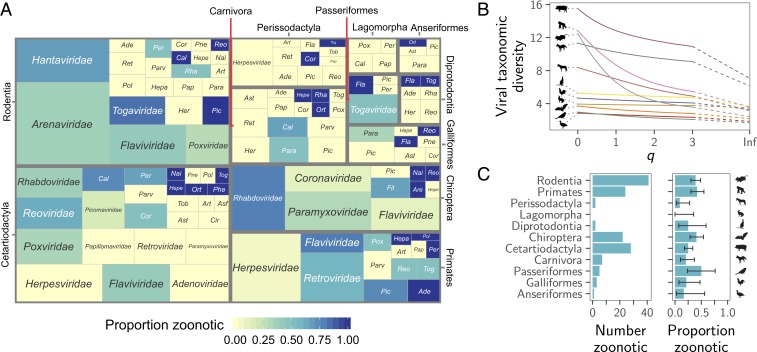
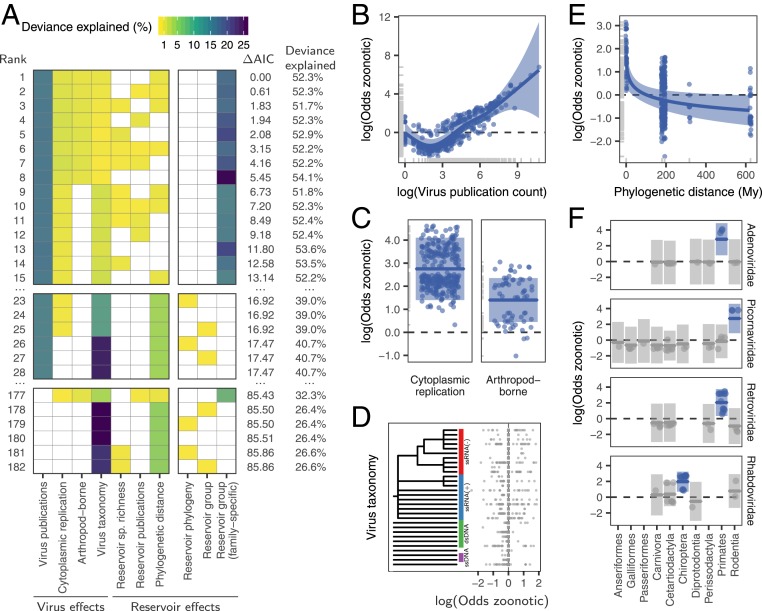
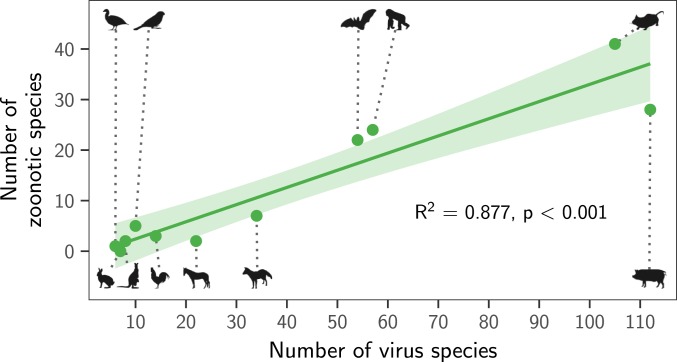
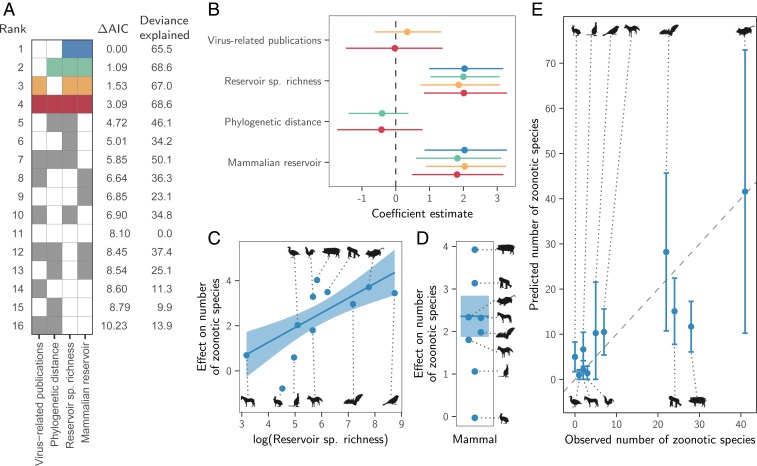
The notion that certain animal groups disproportionately maintain and transmit viruses to humans due to broad-scale differences in ecology, life history, and physiology currently influences global health surveillance and research in disease ecology, virology, and immunology. To directly test whether such “special reservoirs” of zoonoses exist, we used literature searches to construct the largest existing dataset of virus–reservoir relationships, consisting of the avian and mammalian reservoir hosts of 415 RNA and DNA viruses along with their histories of human infection. Reservoir host effects on the propensity of viruses to have been reported as infecting humans were rare and when present were restricted to one or two viral families. The data instead support a largely host-neutral explanation for the distribution of human-infecting viruses across the animal orders studied. After controlling for higher baseline viral richness in mammals versus birds, the observed number of zoonoses per animal order increased as a function of their species richness. Animal orders of established importance as zoonotic reservoirs including bats and rodents were unexceptional, maintaining numbers of zoonoses that closely matched expectations for mammalian groups of their size. Our findings show that variation in the frequency of zoonoses among animal orders can be explained without invoking special ecological or immunological relationships between hosts and viruses, pointing to a need to reconsider current approaches aimed at finding and predicting novel zoonoses.
Overview
The claims and statistics of this paper haven’t been checked yet.
Free: it reads the open-access text and checks the first 5 claims that cite a source we can check. Create a free account to check every claim.
Integrity signals
Registry
Cites
Statistics
Figures
Verification
Claims the paper makes
The claims and statistics of this paper haven’t been checked yet.
Free: it reads the open-access text and checks the first 5 claims that cite a source we can check. Create a free account to check every claim.
Claims other papers make about this one
Each is checked against this paper’s own text: does it say what the citing paper says it does?
The cited source says what the claim attributes to it.
In the citing paper
“They concluded that mammalian and avian Orders have the number of zoonotic viruses that would be expected based on each group’s share of diversity, and that no special characteristics of a group (e.g., immunological traits) need to be invoked to explain a group’s zoonotic contributions.”
From Impacts of biodiversity and biodiversity loss on zoonotic diseases (2021) · cites this paper as [28]
Experimental — accuracy not yet measured
Self-check
Percentages, sums and reported differences re-computed from the paper’s own numbers.
The self-check needs the paper’s full text.
Citations
Cites
R: A Language and Environment for Statistical Computing
R Core Team (2025) · doi:10.32614/r.manuals · Cited by 352,181
A new look at the statistical model identification
Akaike, H. (1974) · IEEE Transactions on Automatic Control · doi:10.1109/tac.1974.1100705 · Cited by 51,879
Modern Applied Statistics with S
Venables, W. N., & Ripley, B. D. (2002) · Statistics and Computing · doi:10.1007/978-0-387-21706-2 · Cited by 24,305
APE: analyses of phylogenetics and evolution in R language
Paradis, E., Claude, J., & Strimmer, K. (2004) · Bioinformatics · doi:10.1093/bioinformatics/btg412 · Cited by 11,335
Global trends in emerging infectious diseases
Jones, K. E., Patel, N. G., Levy, M. A., Storeygard, A., Balk, D., Gittleman, J. L., & Daszak, P. (2008) · Nature · doi:10.1038/nature06536 · Cited by 8,338 · cited 1×
“These results mirror—and potentially explain—observations that the risk of zoonotic emergence is elevated in regions with high species richness (3, 40), since more virus species and hence zoonoses would be expected in species-rich habitats.”
ResultWood, S. N. (2011) · Journal of the Royal Statistical Society Series B: Statistical Methodology · doi:10.1111/j.1467-9868.2010.00749.x · Cited by 7,537
Risk factors for human disease emergence
Taylor, L. H., Latham, S. M., & woolhouse, M. E. J. (2001) · Philosophical Transactions of the Royal Society of London. Series B: Biological Sciences · doi:10.1098/rstb.2001.0888 · Cited by 2,835
TimeTree: A Resource for Timelines, Timetrees, and Divergence Times
Kumar, S., Stecher, G., Suleski, M., & Hedges, S. B. (2017) · Molecular Biology and Evolution · doi:10.1093/molbev/msx116 · Cited by 2,721
Wood, S. N. (2003) · Journal of the Royal Statistical Society Series B: Statistical Methodology · doi:10.1111/1467-9868.00374 · Cited by 2,445
Origins of major human infectious diseases
Wolfe, N. D., Dunavan, C. P., & Diamond, J. (2007) · Nature · doi:10.1038/nature05775 · Cited by 1,867
Research works printed but not linked: 3
- Reeve R., How to partition diversity. arXiv:14046520v3 (8 December 2016).
- Knipe D. M., Howley P., Eds., Fields Virology (Lippincott Williams & Wilkins, ed. 6, 2013).
- Roskov Y., Eds., Species 2000 & ITIS Catalogue of Life, 2015 Annual Checklist (Naturalis, 2015).
Cited by
Items 301–389 of 389
Schmid‐Hempel, P. (2021) · Oxford University Press eBooks · doi:10.1093/oso/9780198832140.003.0007 · Cited by 1
Fernández, Á. L. R., Santiago‐Alarcón, D., & Lira‐Noriega, A. (2020) · bioRxiv (Cold Spring Harbor Laboratory) · doi:10.1101/2020.09.09.290031 · Cited by 1
“…places where land use change is directed toward agricultural systems and large urban areas, and in areas with higher mammal diversity (particularly rodents, bats, and non-human primates) (Allen et al. 2017; Olival et al. 2017; Gibb et al. 2020; Johnson et al. 2020; Mollentze and Streicker 2020).”
BackgroundReservoir host immunology and life history shape virulence evolution in zoonotic virusesPreprint
Brook, C. E., Rozins, C., Guth, S. E., & Boots, M. (2021) · bioRxiv (Cold Spring Harbor Laboratory) · doi:10.1101/2021.10.06.463372 · Cited by 1
Bioinspiration as a method of problem-based STEM education: a case study with the COVID-19 crisisPreprint
Snell‐Rood, E. C., Cantrell, H., Chapman, K., Kirscht, E., & Smirnoff, D. (2020) · OSF Preprints (OSF Preprints) · doi:10.31219/osf.io/fthbm · Cited by 1
Schneor, L., Kaltenbach, S., Fridman, S., Nissan, Y., Shuler, G., Fraimovitch, E., Kolodziejczyk, A. A., Weinberg, M., Donati, G., Teeling, E. C., et al. (2023) · bioRxiv (Cold Spring Harbor Laboratory) · doi:10.1101/2023.04.23.537989 · Cited by 1
“However, a recent survey of virus-reservoir relationships challenged this notion, when controlling for the size of the bat clade 26 .”
BackgroundKettenburg, G., Ranaivoson, H. C., Andrianiaina, A. F., Andry, S., Henry, A. R., Davis, R. L., Laboune, F., Longtine, E. R., Godbole, S., Horigan, S., et al. (2025) · bioRxiv (Cold Spring Harbor Laboratory) · doi:10.1101/2024.12.31.630946 · Cited by 1
Wang, D.-S., Zou, Y., Liu, Q., Huang, H., Han, P.-Y., Zhao, J.-Y., Zong, L.-D., Qiu, Y., Zhang, Y., & Ge, X. (2025) · bioRxiv (Cold Spring Harbor Laboratory) · doi:10.1101/2025.04.17.648926 · Cited by 1
Do ‘special’ viral reservoirs exist?
York, A. (2020) · Nature Reviews Microbiology · doi:10.1038/s41579-020-0376-1
Host-Pathongen Co-evolution Inspired Algorithm Enables Robust GAN TrainingPreprint
Kucharavy, A., Mhamdi, E. E. M., & Guerraoui, R. (2020) · arXiv (Cornell University) · doi:10.48550/arxiv.2006.04720 · Cited by 2
“t and can be particularly dangerous, given that new host populations have no immunity or crossimmunity to it, and their immune system would not be able to keep pace with the infection (Holmes (2009); Mollentze and Streicker (2020)). A significant proportion of most dangerous viruses in humans are specifically ssRNA zoon…”
BackgroundMertens, T., & Abecasis, A. B. (2020)
BATS - A PANDORA'S BOX FOR VIRUSES IN THE 21st CENTURY
Boštíková, V. (2020) · Military Medical Science Letters · doi:10.31482/mmsl.2020.012
Los murciélagos como “chivo expiatorio” de la pandemia COVID-19
Salas, C. I. S. (2020) · Bioagrociencias · doi:10.56369/bac.3590 · Cited by 1
Pathogen Transmission at the Expanding Bird–Human Interface
Hamer, S. A., & Hamer, G. L. (2021) · Oxford University Press eBooks · doi:10.1093/oso/9780198746249.003.0012
Between-host dynamics (Epidemiology)
Schmid‐Hempel, P. (2021) · Oxford University Press eBooks · doi:10.1093/oso/9780198832140.003.0011
Parasites and their significance
Schmid‐Hempel, P. (2021) · Oxford University Press eBooks · doi:10.1093/oso/9780198832140.003.0001
Within-host dynamics and evolution
Schmid‐Hempel, P. (2021) · Oxford University Press eBooks · doi:10.1093/oso/9780198832140.003.0012
Transmission, infection, and pathogenesis
Schmid‐Hempel, P. (2021) · Oxford University Press eBooks · doi:10.1093/oso/9780198832140.003.0009
COVID-19 Pandemic: Animal Cross Talk and Comparison Between nSARS-CoV-2 and Animal Coronaviruses
Anisuzzaman, A., Haque, Z. F., & Hossain, M. T. (2021) · Elsevier eBooks · doi:10.1016/b978-0-323-85844-1.00009-x · Cited by 1
Flying Foxes: Imperiled Island Taxa
Tsang, S. M. (2021) · Elsevier eBooks · doi:10.1016/b978-0-12-821139-7.00144-6
Bala, S., Ghosh, A., & Pradhan, S. (2021) · bioRxiv (Cold Spring Harbor Laboratory) · doi:10.1101/2021.12.01.470810
Schmid‐Hempel, P. (2021) · Oxford University Press eBooks · doi:10.1093/oso/9780198832140.003.0015
The study of evolutionary parasitology
Schmid‐Hempel, P. (2021) · Oxford University Press eBooks · doi:10.1093/oso/9780198832140.003.0002 · Cited by 1
Parasites, immunity, and sexual selection
Schmid‐Hempel, P. (2021) · Oxford University Press eBooks · doi:10.1093/oso/9780198832140.003.0006 · Cited by 1
Schmid‐Hempel, P. (2021) · Oxford University Press eBooks · doi:10.1093/oso/9780198832140.003.0010
Defying the normal: biopolitics and the rising bodies in the time of Covid-19
Liu, Y. (2021) · Electronic Green Journal · doi:10.5070/g314651432
“Although they have been identified as one of the major reservoirs for viruses (rodents being the other), researchers have argued that their virus-hosting ability is proportional to the number of species they have, not due to any traits unique to bats (Mollentze and Streicker, 2020).”
BackgroundParasite immune evasion and manipulation of host phenotype
Schmid‐Hempel, P. (2021) · Oxford University Press eBooks · doi:10.1093/oso/9780198832140.003.0008 · Cited by 2
animales como reservorios de enfermedades
Canestrari, D., & Fernández, A. O. (2021) · Ambiociencias · doi:10.18002/ambioc.i19.7328
Weniger Rauschen, mehr Mut zum Handeln
Kaatz-Dubberke, T., & Cornelius-Bundschuh, J. (2022) · Springer eBooks · doi:10.1007/978-3-662-64902-2_14
Orbivirus RNA in a Banana Serotine (Afronycteris nanus) Bat in the Republic of the Congo
Cameron, K. N., Mombouli, J.-V., Niama, F. R., Hayes, B., Olson, S. H., Smith, B. R., Pante, J., Roy, S. K., Laudisoit, A. M., Goldstein, T., et al. (2022) · EcoHealth · doi:10.1007/s10393-022-01619-2
“While it is debated whether or not bats actually host disproportionally many (zoonotic) viruses compared to other groups of animals, or if our data is leaning towards that conclusion due to a systematic sampling error, there is little doubt about their importance in that role (Guy et al. 2019; Luis et al. 2013; Olival…”
Background(2021) · Oxford University Press eBooks · doi:10.1093/oso/9780198832140.002.0006
(2021) · Oxford University Press eBooks · doi:10.1093/oso/9780198832140.002.0007
(2021) · Oxford University Press eBooks · doi:10.1093/oso/9780198832140.002.0004
(2021) · Oxford University Press eBooks · doi:10.1093/oso/9780198832140.002.0003
Eltschkner, S., Mellinger, S., Buus, S., Nielsen, M., Paulsson, K. M., Lindkvist‐Petersson, K., & Westerdahl, H. (2023) · bioRxiv (Cold Spring Harbor Laboratory) · doi:10.1101/2023.03.13.532050
“In recent time, the immune system in bats, forming the second largest order among mammals, has been scrutinised in detail since many bats carry a multitude of viruses (Ebola, Nipah, severe acute respiratory syndrome (SARS) and Middle East respiratory syndrome (MERS)) seemingly without any symptoms, whereas humans beco…”
BackgroundUnderstanding bacterial zoonotic disease infection and its severity on wildlife populations
Hirst, K. (2022) · MOspace Institutional Repository (University of Missouri) · doi:10.32469/10355/95202
Rodents and Their Role in Ecology, Medicine and Agriculture [Working Title]
Shah, M. M. (2023) · IntechOpen eBooks · doi:10.5772/intechopen.105295 · Cited by 1
Patterns of potential cross-species transmission in planktonic multihost-multiparasite communitiesPreprint
McIntire, K. M., Gowler, C. D., Rogalski, M. A., Shaw, C. L., Hunsberger, K. K., Eisenberg, M. C., & Duffy, M. A. (2023) · doi:10.22541/au.169406836.68892833/v1
MACHINE LEARNING METHODS FOR PREDICTION OF HUMAN INFECTIOUS VIRUS AND IMPUTATION OF HLA ALLELES
Gao, X. (2023) · Digital Commons - Michigan Tech (Michigan Technological University) · doi:10.37099/mtu.dc.etdr/1610
From Chimps to Bats: Human Social Evolution and Pandemic Potential over 15,000 Years
McNeill, J. R. (2021) · Radovi Zavoda za hrvatsku povijest Filozofskog fakulteta Sveučilišta u Zagrebu · doi:10.17234/radovizhp.53.9
Risk Assessment for Anthropogenic Socioecological Drivers of Zoonotic Diseases and Possible Controls
(2023) · International Journal of Agriculture and Biosciences · doi:10.47278/book.zoon/2023.005
Sizikova, T. E., Lebedev, V. N., & Borisevich, S. V. (2024) · Journal of NBC Protection Corps · doi:10.35825/2587-5728-2023-7-4-350-365
Sanjuán, R. (2024) · Elsevier eBooks · doi:10.1016/b978-0-443-28818-0.00031-8
Small mammals in biodiversity hotspot harbor viruses of epidemic potentialPreprint
Feng, Y., Kuang, G., Pan, Y., Wang, J., Wei-hong, Y., Wu, W.-C., Pan, H. C., Wang, J., Han, X., Yang, L., et al. (2024) · bioRxiv (Cold Spring Harbor Laboratory) · doi:10.1101/2024.09.10.612213
Larios-Serrato, V., Vázquez-Manjarrez, N., Reséndis-Antonio, O., Ríos‐Sarabia, N., Meza-Marquez, B., Fiehn, O., & Torres, J. (2024) · bioRxiv (Cold Spring Harbor Laboratory) · doi:10.1101/2024.10.24.620087
“Learning about the nature of the interaction human/SARS-CoV2 during the early periods of this encounter offers important information on the response of a naïve population to infection with an unknown virus of zoonotic origin, a threat that is forever latent (Mollentze and Streicker 2020).”
BackgroundUnveiling the diversity, transmission, and zoonotic potential of microbes in true insectivoresPreprint
Li, H., Huang, Z. Y. X., Lan, J., Hu, L. Y., Wei, X., Wang, Y., Li, X., Li, Y., Becker, D. J., Wei, F., et al. (2024) · bioRxiv (Cold Spring Harbor Laboratory) · doi:10.1101/2024.12.04.626791
Gomez-Puerta, L. A., Ampuero-Riega, J., Medrano-Uchuya, N., & Morales-Cauti, S. (2025) · Acta Tropica · doi:10.1016/j.actatropica.2025.107539 · Cited by 1
Perspective Chapter: Viral Zoonoses – Pathways and Mechanisms
Bhardwaj, K., Ranjith-Kumar, C. T., Guchhait, P., & Vrati, S. (2025) · Infectious diseases · doi:10.5772/intechopen.1009942
Li, H., Huang, Z. Y. X., Lan, J., Hu, L. Y., Wang, Z., Wang, Y., Santini, L., Becker, D. J., Wei, F., & Xu, Y. (2025) · bioRxiv (Cold Spring Harbor Laboratory) · doi:10.1101/2025.09.10.675328
Cruz, G. L. T., Winck, G. R., & de Andreazzi, C. S. (2025) · Perspectives in Ecology and Conservation · doi:10.1016/j.pecon.2025.10.003
Identification of Pandemic Risk for Avian Influenza Virus With Graph Cross Attention Networks
Shen, J., Qiang, X., Liu, Y., Ain, Q. T., & Kou, Z. (2025) · IEEE Journal of Biomedical and Health Informatics · doi:10.1109/jbhi.2025.3625980
“Highdetectionrateensuresthatpublichealthinterventions canbetimelyandaccuratelydirected,reducingtheriskof widespreadoutbreaks[38].”
Emanuel, J., Papies, J., Meiners, L., Veith, T., Corman, V. M., Binger, T., Lattwein, E., Kümmerer, B. M., Zweerink, S., Fechner, K., et al. (2025) · bioRxiv (Cold Spring Harbor Laboratory) · doi:10.1101/2025.10.28.684997
Sodré, I. C., Prist, P. R., Mancini, M. C. S., Bettoni-Rodríguez, G., de Andreazzi, C. S., Tambosi, L. R., Santos, A. F., D’arc, M., & Bueno, M. G. (2025) · Acta Tropica · doi:10.1016/j.actatropica.2025.107894
Network topology outweighs emergence probability in surveillance sentinel placementPreprint
Wang, X., Vilas, V. D. R., Li, Q., & Cheng, Q. (2025) · medRxiv · doi:10.1101/2025.11.10.25339713
The raphe nuclear organization and serotonergic system in the bat ( Artibeus planirostris )
Leite, M. D., Bandeira, A. S. M., de Lira-Bandeira, W. G., Lustosa, M. S. C., Gama, A. C. F., Barros, M. A. S., Morais, P. L. A. D. G., Cavalcante, J. S., de Santana, M. A. D., & do Nascimento, E. S. (2025) · Journal of Anatomy · doi:10.1111/joa.70076
“…richness, > 1460 species (Simmons & Cirranello, 2020 ), bats as a group tend to host a great diversity of parasites and, consequently, potentially zoonotic viruses (Mollentze & Streicker, 2020 ) such as SARS-like and other coronaviruses (Ge et al., 2016; Li et al., 2005; Zhou et al., 2020 ).”
Hard to jump: host shifts appear unlikely in a T4-like phage evolved in the lab
Ning, Y., González-Tortuero, E., Wagemans, J., & Arias-Sánchez, F. I. (2025) · Frontiers in Cellular and Infection Microbiology · doi:10.3389/fcimb.2025.1597805
Cronin, C. E., Juman, M. M., Richardson, A. J., Whittier, C. A., Becker, D. J., & Ferguson, A. W. (2025) · bioRxiv (Cold Spring Harbor Laboratory) · doi:10.1101/2025.11.28.691153 · Cited by 2
Molecular Evolution of the NLR Gene Family Reveals Diverse Innate Immune Strategies in Bats
Liu, G., Han, F., Guo, X., Yang, L., Du, N., Zhao, X., Zhang, C., Peng, J., Zhang, K., Jiang, F., et al. (2025) · Biomolecules · doi:10.3390/biom15121715
“Their unique biological, ecological, immunological, and genetic features enable them to harbor a greater diversity of viruses and bacteria than most other mammals [49–52].”
Torgerson, E. G., Adams, M., Lock, L. R., Simonis, M. C., Dyer, K. E., Vicente‐Santos, A., Fenton, M. B., Simmons, N. B., Becker, D. J., & Achee, N. L. (2025) · bioRxiv (Cold Spring Harbor Laboratory) · doi:10.64898/2025.12.10.693613
“While bats may not necessarily have a greater fraction of zoonotic viruses than other mammal or avian taxa [34], bats can serve as competent hosts for some virulent human-infecting pathogens, possess high antibody gene diversity, and have remarkable immune tolerance compared to other mammals…”
Wood, M. R., de Vries, J. L., Epstein, J. H., & Markotter, W. (2024) · Figshare · doi:10.6084/m9.figshare.26604781
Wood, M. R., de Vries, J. L., Epstein, J. H., & Markotter, W. (2024) · Figshare · doi:10.6084/m9.figshare.26604775
Wood, M. R., de Vries, J. L., Epstein, J. H., & Markotter, W. (2024) · Figshare · doi:10.6084/m9.figshare.26604778
Wood, M. R., de Vries, J. L., Epstein, J. H., & Markotter, W. (2024) · Figshare · doi:10.6084/m9.figshare.26604772
Wood, M. R., de Vries, J. L., Epstein, J. H., & Markotter, W. (2024) · Figshare · doi:10.6084/m9.figshare.26604769
Wood, M. R., de Vries, J. L., Epstein, J. H., & Markotter, W. (2024) · Figshare · doi:10.6084/m9.figshare.26604787
Wood, M. R., de Vries, J. L., Epstein, J. H., & Markotter, W. (2024) · Figshare · doi:10.6084/m9.figshare.26604784
Summing up: How Pandemics Begin, Spread Globally and End
Crombie, I. K. (2025) · Springer eBooks · doi:10.1007/978-981-95-2081-7_14
Doucet, J. A., Laurent, R., Phoeung, C. L., Михайловна, Д. Ч., Hegay, T., Chaix, R., Heyer, É., & Ségurel, L. (2026) · bioRxiv (Cold Spring Harbor Laboratory) · doi:10.64898/2026.01.12.699033 · Cited by 1
“One of these regions encompasses PTPRC , a gene involved in the recognition of viruses such as HIV-1 [60], hepatitis C [61] and HSV-1 [62].”
Kettenburg, G., Ranaivoson, H. C., Andrianiaina, A. F., Andry, S., Henry, A. R., Davis, R. L., Laboune, F., Longtine, E. R., Godbole, S., Horigan, S., et al. (2026) · Scientific Reports · doi:10.1038/s41598-025-34969-2 · Cited by 1
“Notably, viruses in two Picornavirales families, Picornaviridae and Caliciviridae , can infect some of the most common zoonotic hosts (bats, rodents, shrews) 2,3 , in addition to agriculturally significant hosts such as swine and cattle – both of which come into direct contact with humans 4–9 .”
Hail to thee, blithe spirit! A critical study of bird agency among bird owners in China
Wong, Z. (2026) · Frontiers in Communication · doi:10.3389/fcomm.2026.1771973
Drivers of bat researchers’ intent to adopt field hygiene practices
Coleman, J. L., Macdonald, E. A., Rutrough, A. L., Straka, T. M., Little, T. D., Stickley, Z. L., & Kingston, T. (2026) · Conservation Biology · doi:10.1111/cobi.70252
“However, bats do not host proportionately more numerous or deadlier pathogens than other taxa (Mollentze & Streicker, 2020), disease prevalence is low in many bat populations (e.g., Loh et al., 2022), and most bat-borne microbes are ill-adapted to infecting humans (Van Brussel & Holmes, 2022).”
An improved dataset for predicting mammal infecting viruses from genetic sequence information
Reddy, T. J., Schneider, A., Hall, A. R., Witmer, A., & Hengartner, N. (2026) · PLoS Computational Biology · doi:10.1371/journal.pcbi.1014125 · Cited by 1
“The original dataset classes include ‘Human-host’ vs ‘Not human-host’ labels for viral infection [4,25,26] indicating whether a certain virus is known to infect a human or not.”
Schloesing, E. (2022) · theses.fr (ABES) · doi:10.70675/e46c85d9zcd2ez4f29zb2f8zea044752e204
Rakotondramanga, J. M. (2023) · theses.fr (ABES) · doi:10.70675/aae0cc9az3b0fz4ccdzb05az583a89448b7d
Peng, J., Liu, Y., Zhang, C., Gu, H., 齐维浩, Li, Y., Han, F., Liu, G., Zhang, M., Yan, X., et al. (2026) · Biology · doi:10.3390/biology15080609
“Mollentze et al. (2020) further reported a significant positive relationship between zoonotic virus diversity and host diversity in mammals [49].”
ESPÉCIES DE MORCEGOS POSITIVOS PARA A RAIVA NO RIO GRANDE DO SUL
Pacheco, S. M., Rosa, J. C. D. A., & Ferreira, J. C. (2026) · Veterinária e Zootecnia · doi:10.35172/rvz.2026.v33.1688
Modeling climate-driven changes in potential zoonotic virus density across Australia
Golchin, M., Sexton, J., & Hickson, R. I. (2026) · iScience · doi:10.1016/j.isci.2026.117414
Do Bats Get Sick From the Viruses They Carry?
Betke, B. A., Juman, M. M., O’Shea, M., Fagre, A. C., Frank, H. K., Becker, D. J., & Poisot, T. (2026) · Frontiers for Young Minds · doi:10.3389/frym.2026.1591982
“Importantly, any given virus in a bat is not any more likely to infect humans than viruses found in other mammals or birds [4].”
Zhuang, T., Long, Y., Xu, Y., Li, Q., LIU, Z., Zhong, X., Wu, D., Ma, Y., Su, W., Li, X., et al. (2026) · ACS Sensors · doi:10.1021/acssensors.6c00452 · Cited by 1
Shen, L., Tong, Y., Chai, W., Sun, J., Zhao, J., Yin, L., Yang, Y., Wang, C. R., Tan, W., & Zhang, J. (2026) · One Health · doi:10.1016/j.onehlt.2026.101521 · Cited by 1
“Such integration would ultimately establish a closed-loop system linking animal viral circulation, agricultural environmental exposure, sporadic human infection, sentinel surveillance detection, and reverse tracing of animal sources [26,30] ( Fig.”
Bat–rodent–human interfaces in the Americas: a synthesis of zoonotic pathways
Arnathau, C., Garchitorena, A., Roche, B., García-Hernández, M.-E., Vigueras-Galván, A. L., Rodríguez‐Moreno, Á., Ibarra-Cerdeña, C. N., Zarza, H., Hernández-Villegas, E. N., Jacquet, S., et al. (2026) · Critical Reviews in Microbiology · doi:10.1080/1040841x.2026.2719579
Wang, K., Pagani‐Núñez, E., Wang, Z., Ren, R., Wei, X., Chen, Y., Li, B. V., Ling, C., & Xiao, L. (2026) · One Health · doi:10.1016/j.onehlt.2026.101565
“We incorporated 627,982 comparative tabulation records of bird and mammal trade to minimize double counting, as these taxa are strongly associated with zoonotic EIDs [16,17,32].”
Systematic Review and Meta‐Analysis of Emerging Viral Zoonotic Diseases, 2016–2026
Tao, P., Ying-an, Z., Wang, J., Cong, F., & Liao, M. (2026) · Transboundary and Emerging Diseases · doi:10.1155/tbed/9884191
“However, Mollentze and Streicker [53] demonstrated that this excess is explained by greater viral diversity in bats rather than intrinsic properties, making bat viruses more likely to be zoonotic; zoonotic risk was approximately uniformly distributed across mammalian orders after accounting for…”
Emanuel, J., Papies, J., Meiners, L., Veith, T., Corman, V. M., Binger, T., Lattwein, E., Kümmerer, B. M., Zweerink, S., Fechner, K., et al. (2026) · PLoS neglected tropical diseases · doi:10.1371/journal.pntd.0013689
Viral metagenomics reveals heterogeneity in mammalian virus hosting, sharing, and spillover
Yuhao, W. A. N. G., Qu, G., Huang, Z. Y. X., Zhang, X., Li, H., Wei, X., Hu, L., Xu, S., Becker, D. J., Wei, F., et al. (2026) · Proceedings of the National Academy of Sciences · doi:10.1073/pnas.2610672123
Pathogen-mediated selection and phylogeny shape MHC architecture in 33 bat genomes
Silver, L. W., Melville, D. W., Schraven, A. L., Meyer, M., Opoku, B. A., Belov, K., Sommer, S., & Hogg, C. J. (2026) · Frontiers in Immunology · doi:10.3389/fimmu.2026.1913384
“Their ecology and behaviour favour the exchange of viruses, fungi, parasites, and bacteria (31 – 35), contributing to the high diversity of pathogens they harbour (36, 37).”
Host life history traits as drivers of viral infection in European bats
Méndez‐Rodríguez, A., Rossetto, F., Zarza, H., López‐Wilchis, R., Liedtke, H. C., Echevarría, J. E., & Javier Juste, B. (2026) · Virus Research · doi:10.1016/j.virusres.2026.199821
Metadata
- Authors
- Mollentze, N., & Streicker, D. G.
- Affiliations
- MRC University of Glasgow Centre for Virus Research (GB)
- Corresponding author
- Mollentze, Nardus
- Streicker, Daniel G.
- Venue
- Proceedings of the National Academy of Sciences
- Publisher
- National Academy of Sciences
- Published
- 2020-04-13
- Volume
- 117
- Issue
- 17
- Pages
- 9423-9430
- ISSN
- 0027-8424 (ISSN-L)
- 1091-6490
- PMC
- PMC7196766
- OpenAlex
- W3016074853
- Cited by
- 387
- References
- 59
- Citations by year
- 2026: 35 · 2025: 51 · 2024: 53 · 2023: 59 · 2022: 49 · 2021: 95 · 2020: 44
- FWCI
- 46.18
- Type
- journal article
- Language
- en
- Open access
- hybrid
- doi.org
- Licence
- Locations
- Proceedings of the National Academy of Sciences (publishedVersion, cc-by)
- PubMed Central (publishedVersion, cc-by)
- PubMed (publishedVersion)
- ENLIGHTEN (Jurnal Bimbingan dan Konseling Islam) (acceptedVersion, cc-by-sa)
- Funders
- Wellcome (102507/Z/13/Z, 217221/Z/19/Z)
- RCUK | Medical Research Council (MC_UU_12014/12)
- Topics
- Health Sciences › Medicine › Public Health, Environmental and Occupational Health › Zoonotic diseases and public health
- Health Sciences › Medicine › Infectious Diseases › Viral Infections and Outbreaks Research
- Health Sciences › Medicine › Epidemiology › Virology and Viral Diseases
- Keywords
- zoonoses, mammalian reservoirs, avian reservoirs, animal orders, species richness, bats, rodents, RNA viruses, DNA viruses, human viral infections, host-virus interaction
- MeSH terms
- Animals, Birds, Disease Reservoirs, Humans, Mammals, Risk Factors, Species Specificity, Virus Diseases, Zoonoses, Communicable Diseases, Emerging
About these checks
Registry, retraction, Cites and statistics results are computed, not judged, with one exception: a printed reference that no index lists is read once by a model before it counts as a citation error. Claims are extracted by a model and kept only when their quote appears verbatim in the text; each cited source is then checked, with a model’s help, for whether it says what the claim relies on. Those verdicts can be wrong — read the claim’s quote and the cited source before relying on one.
Statistics and arithmetic are recomputed, not judged.
Confidence bands are shown only for fields calibrated on our annotated test set. None is calibrated yet, so no band is shown.
What counts as a claim ›How we measure confidence ›How we check this ›
Are you an author, or do you see a problem with this page? Request a review
Data sources
Bibliographic data: Semantic Scholar, OpenAlex, Crossref.
Contains information from the Semantic Scholar Academic Graph Datasets, made available under the ODC Attribution License (ODC-BY 1.0).
Semantic Scholar’s data is described in: Kinney, R., et al. (2023). The Semantic Scholar Open Data Platform. arXiv:2301.10140.
