

Noninvasive hippocampal blood-brain barrier opening in Alzheimer's disease with focused ultrasound.
Open accessThe DOI matches its Crossref record; 15 of the 16 references it cites were found in a registry or an index; 7 of the 16 sources its claims cite were checked for support.
Abstract
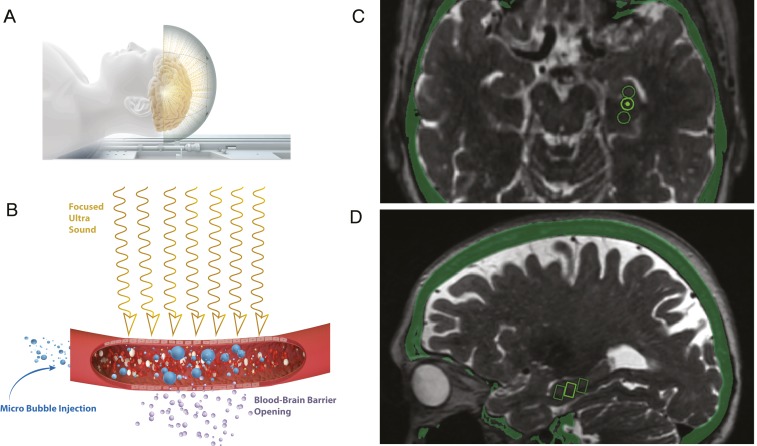
Initial clinical trial results showed safe, feasible, and reversible focused-ultrasound BBB opening in the hippocampus and entorhinal cortex of early AD patients.
Overview
CoChat Summary
## TL;DR
This open-label phase II trial reports that MR-guided low-intensity focused ultrasound (FUS) can safely, reversibly, and repeatedly open the blood-brain barrier (BBB) in the hippocampus/entorhinal cortex of patients with early Alzheimer’s disease. In 6 participants and 17 treatment sessions, BBB opening was immediate, sizable, and transient, with no treatment-related adverse effects or neurological worsening reported.
## Key findings
- Six participants (5 female, 1 male; ages 55–73) underwent a total of 17 FUS treatment sessions targeting the hippocampus/entorhinal cortex.
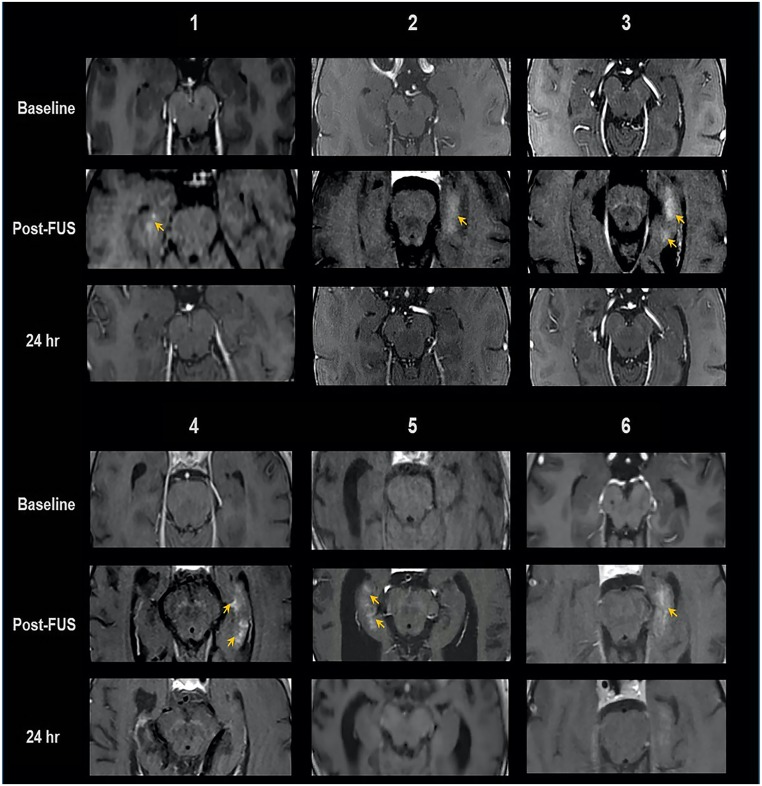
- All 17 sessions produced immediate hippocampal parenchymal enhancement on contrast MRI, indicating BBB opening, with no off-target enhancement.
- BBB opening resolved within 24 hours after treatment.
- MRI-based volumetric analysis found BBB opening covered 95 ± 4% of the FUS-targeted volume, ranging from 318 mm³ to 873 mm³, corresponding to 14% to 71% of the overall hippocampal volume, with an average of 29%.
- There were no treatment-related adverse effects or neurological changes up to 15 months post-FUS, and formal cognitive assessments at 30 days after the last treatment in the first five subjects showed no clinically meaningful changes.
## Methods
- Design: Open-label, prospective phase II clinical trial sponsored by INSIGHTEC, with repeated MR-guided low-intensity FUS to the hippocampus and entorhinal cortex.
- Sample/data: 6 patients with early AD enrolled at two sites (West Virginia University Rockefeller Neuroscience Institute, n=4; Weill Cornell Medical College, n=2), diagnosed by NIA-AA criteria and with 18F-florbetaben PET consistent with AD and amyloid-beta plaques in the target.
- Main analysis: FUS was delivered with simultaneous IV microbubbles; safety was assessed with neurological exams and T2* MRI for hemorrhage, and BBB opening was evaluated by post-FUS gadobutrol contrast MRI with manual segmentation and comparison to targeted and overall hippocampal volumes.
## Limitations
- The paper frames these as initial/early outcomes from an ongoing multicenter trial, so efficacy conclusions are not yet established.
- The study includes only 6 participants and 17 treatments, which limits generalizability; this limitation is evident from the text.
- The paper reports safety/feasibility and imaging-based BBB opening, but does not state clinical benefit on cognition or AD progression beyond “no clinically meaningful changes” in short-term assessments; this limitation is evident from the text.
Model-written summary. Check it against the paper before relying on it.
Integrity signals
Registry
Cites
Statistics
Figures
Verification
Claims the paper makes
6 Valid · 0 Not valid · 2 Not checked · 23 Own results and interpretations
The sources with a verdict support this claim; the rest weren’t checked yet, have no full text we could read, or their verdicts aren’t rated yet.
In the paper
“Animal studies have demonstrated safe and reversible BBB opening (4, 6, 7) as well as reduction of amyloid-beta plaque, neurogenesis, and improvement of memory.”
§ Noninvasive hippocampal blood−brain barrier opening in Alzheimer’s disease with focused ultrasound > Abstract
What the sources say
- Not checked — no full text of the sourcecites [4] Krishna V., Sammartino F., Rezai A., A review of the current therapies, challenges, and future directions of transcranial focused ultrasound technology: Advances in diagnosis and treatment. JAMA Neurol. 75, 246– 254 (2018). 29228074 source
- Supportedcites [6] Burgess A., Alzheimer disease in a mouse model: MR imaging-guided focused ultrasound targeted to the hippocampus opens the blood-brain barrier and improves pathologic abnormalities and behavior. Radiology 273, 736– 745 (2014). 25222068 PMC4314115 source
The Introduction describes focused-ultrasound BBB opening as temporary and says it can be achieved safely. The Discussion reports that repeated BBB opening in the study's mice caused no histologic signs of tissue damage. (LLM, conf=0.92)
- Not checked — no full text of the sourcecites [7] Hynynen K., McDannold N., Vykhodtseva N., Jolesz F. A., Non-invasive opening of BBB by focused ultrasound. Acta Neurochir. Suppl. 86, 555– 558 (2003). 14753505 source
boostedstates a cause- Asserted: passes — The authors put it forward as true.
- Checkable: passes — It can be checked against evidence.
- Load-bearing: passes — The paper’s conclusions depend on it.
- Based: passes — The paper gives a reason why it holds.
A result the paper reports from its own data — it cites no other source for it, so there is none to check. The quote shows it is in the paper.
In the paper
“MRI-based volumetric analysis of BBB opening in the hippocampus demonstrated parenchymal contrast enhancement of 95 ± 4% of the FUS targeted volume, ranging from 318 mm3 (two targets) to 873 mm3 (five targets).”
§ Noninvasive hippocampal blood−brain barrier opening in Alzheimer’s disease with focused ultrasound > Results
boostedn = 6- Asserted: passes — The authors put it forward as true.
- Checkable: passes — It can be checked against evidence.
- Load-bearing: passes — The paper’s conclusions depend on it.
- Based: passes — The paper gives a reason why it holds.
A result the paper reports from its own data — it cites no other source for it, so there is none to check. The quote shows it is in the paper.
In the paper
“This parenchymal contrast enhancement resolved within 24 h after FUS treatment.”
§ Noninvasive hippocampal blood−brain barrier opening in Alzheimer’s disease with focused ultrasound > Results
plainstates a cause- Asserted: passes — The authors put it forward as true.
- Checkable: passes — It can be checked against evidence.
- Load-bearing: passes — The paper’s conclusions depend on it.
- Based: passes — The paper gives a reason why it holds.
A result the paper reports from its own data — it cites no other source for it, so there is none to check. The quote shows it is in the paper.
In the paper
“Formal cognitive assessments at 30 d after the last treatment in the first five subjects showed no clinically meaningful changes (SI Appendix).”
§ Noninvasive hippocampal blood−brain barrier opening in Alzheimer’s disease with focused ultrasound > Results
plainn = 5- Asserted: passes — The authors put it forward as true.
- Checkable: passes — It can be checked against evidence.
- Load-bearing: unclear — It is unclear whether the paper’s conclusions depend on it.
- Based: passes — The paper gives a reason why it holds.
A result the paper reports from its own data — it cites no other source for it, so there is none to check. The quote shows it is in the paper.
In the paper
“MRI with gadobutrol IV contrast post-FUS treatment revealed immediate hippocampal parenchymal enhancement at the target region in all 17 treatment sessions, indicating enhanced BBB permeability, with no off-target enhancement (Fig. 2).”
§ Noninvasive hippocampal blood−brain barrier opening in Alzheimer’s disease with focused ultrasound > Results
plainstates a causen = 6- Asserted: passes — The authors put it forward as true.
- Checkable: passes — It can be checked against evidence.
- Load-bearing: passes — The paper’s conclusions depend on it.
- Based: passes — The paper gives a reason why it holds.
10 more claims
Create a free account to see all 31 claims and to verify the 3 references still open.
- It may state two separate claims as one. 9
- Probably not a substantial claim. 9
- The quote only partly states this claim. 1
Citations
Cites
McKhann, G. M., Knopman, D. S., Chertkow, H., Hyman, B. T., Jack, C. R., Kawas, C. H., Klunk, W. E., Koroshetz, W. J., Manly, J. J., Mayeux, R., et al. (2011) · Alzheimer's & Dementia · doi:10.1016/j.jalz.2011.03.005 · Cited by 18,657
Blood-brain barrier opening in Alzheimer’s disease using MR-guided focused ultrasound
Lipsman, N., Meng, Y., Bethune, A. J., Huang, Y., Lam, B., Masellis, M., Herrmann, N., Heyn, C., Aubert, I., Boutet, A., et al. (2018) · Nature Communications · doi:10.1038/s41467-018-04529-6 · Cited by 950 · cited 2×
“This study is the next step following a proof of concept phase I study in AD patients demonstrating safe BBB opening in a limited noneloquent white matter area of the superficial dorsolateral prefrontal cortex (11).”
BackgroundResultThe role of adult hippocampal neurogenesis in brain health and disease
Toda, T., Parylak, S. L., Linker, S. B., & Gage, F. H. (2019) · Molecular Psychiatry · doi:10.1038/s41380-018-0036-2 · Cited by 719 · cited 1×
“T hippocampus is critical in the pathogenesis of Alzheimer’s disease (AD), epilepsy, and depression (1).”
BackgroundScanning ultrasound removes amyloid-β and restores memory in an Alzheimer’s disease mouse model
Leinenga, G., & Götz, J. (2015) · Science Translational Medicine · doi:10.1126/scitranslmed.aaa2512 · Cited by 498 · cited 1×
“FUS-mediated BBB opening in preclinical models has been found to promote amyloid-beta clearance, delivery of endogenous antibodies, activation of microglia (8, 12), and potential modulation of the glymphatic system (13).”
BackgroundBlood-Brain Barrier and Delivery of Protein and Gene Therapeutics to Brain
Pardridge, W. M. (2020) · Frontiers in Aging Neuroscience · doi:10.3389/fnagi.2019.00373 · Cited by 405 · cited 1×
“To overcome the BBB, pharmaceuticals and biological treatments require systemic dose escalation or invasive, risky procedures like transarterial diuretic infusion and direct intracranial infusion (2, 3).”
BackgroundEvolving Drug Delivery Strategies to Overcome the Blood Brain Barrier
S. Hersh, D., S. Wadajkar, A., B. Roberts, N., G. Perez, J., P. Connolly, N., Frenkel, V., A. Winkles, J., F. Woodworth, G., & J. Kim, A. (2016) · Current Pharmaceutical Design · doi:10.2174/1381612822666151221150733 · Cited by 387 · cited 1×
“To overcome the BBB, pharmaceuticals and biological treatments require systemic dose escalation or invasive, risky procedures like transarterial diuretic infusion and direct intracranial infusion (2, 3).”
BackgroundJordão, J. F., Thévenot, E., Markham-Coultes, K., Scarcelli, T., Weng, Y.-Q., Xhima, K., O'Reilly, M., Huang, Y., McLaurin, J., Hynynen, K., et al. (2013) · Experimental Neurology · doi:10.1016/j.expneurol.2013.05.008 · Cited by 326 · cited 1×
“FUS-mediated BBB opening in preclinical models has been found to promote amyloid-beta clearance, delivery of endogenous antibodies, activation of microglia (8, 12), and potential modulation of the glymphatic system (13).”
BackgroundKrishna, V., Sammartino, F., & Rezai, A. (2018) · JAMA Neurology · doi:10.1001/jamaneurol.2017.3129 · Cited by 289
Self-citationBurgess, A., Dubey, S., Yeung, S., Hough, O., Eterman, N., Aubert, I., & Hynynen, K. (2014) · Radiology · doi:10.1148/radiol.14140245 · Cited by 286 · cited 1×
“Animal studies have demonstrated safe and reversible BBB opening (4, 6, 7) as well as reduction of amyloidbeta plaque, neurogenesis, and improvement of memory.”
BackgroundScarcelli, T., Jordão, J. F., O'Reilly, M. A., Ellens, N., Hynynen, K., & Aubert, I. (2014) · Brain Stimulation · doi:10.1016/j.brs.2013.12.012 · Cited by 156
Cited by
Items 201–300 of 353
Blood-cerebrospinal fluid barrier opening by modified single pulse transcranial focused shockwave
Kung, Y., Wu, C., Lin, M.-T., Liao, W., Chen, W., & Hsiao, M. (2022) · Drug Delivery · doi:10.1080/10717544.2022.2157068 · Cited by 8
Circular RNA aptamers ameliorate AD-relevant phenotypes by targeting PKRPreprint
Feng, X., Jiang, B., Zhai, S.-N., Liu, C., Wu, H., Zhu, B.-Q., Wei, M.-Y., Wei, J., Yang, L. C., & Chen, L. (2024) · bioRxiv (Cold Spring Harbor Laboratory) · doi:10.1101/2024.03.27.583257 · Cited by 8
“Moreover, microglial (CD11b + ) are the major contributors to neuroinflammation 29, 30 , secreting pro-2 inflammatory cytokines dozens of times higher than CD11b - samples in 5 ´ FAD mice (Extended Data Fig.8a).”
BackgroundFuture Directions of MR-guided Focused Ultrasound
Grogan, D. P., Abduhalikov, T., Kassell, N. F., & Moosa, S. (2024) · Magnetic Resonance Imaging Clinics of North America · doi:10.1016/j.mric.2024.02.004 · Cited by 7
Advancements in ultrasound-mediated drug delivery for central nervous system disorders
Chuang, C.-F., Phan, T.-N., Fan, C., Le, T.-T. V., & Yeh, C. (2024) · Expert Opinion on Drug Delivery · doi:10.1080/17425247.2024.2438188 · Cited by 10
“However, this technology can only be implemented where MRI systems are available, and its technical complexity and high costs can restrict its widespread adoption [40,41].”
Non-Drug and Non-Invasive Therapeutic Options in Alzheimer’s Disease
Şovrea, A. S., Boşca, A. B., Dronca, E., Constantin, A.-M., Crintea, A., Suflețel, R. T., Lupean, R.-A., Ștefan, P.-A., Onofrei, M. M., Tschall, C., et al. (2025) · Biomedicines · doi:10.3390/biomedicines13010084 · Cited by 10
“In human studies, the parameters of FUS included a central frequency of 220 kHz, sonication power of 4.5–4.6 W, 3.6–7.5 sonications for 300 ms (each spot with 2 ms on and 28 ms off), and Definity MB infusion (4 µ L/kg) [120–123].”
InfluentialAdvances in CNS drug delivery strategies to cross the blood-brain barrier
Li, G., Li, Z., Sun, Y., Bu, T., Chen, S., Yang, L., Li, Z., Mao, W., & Jia, Y. (2025) · Chinese Chemical Letters · doi:10.1016/j.cclet.2025.111524 · Cited by 15
Stress-induced regional characteristics of the blood-brain barrier
Zhou, M.-Y., Xie, F., Zhao, Y. F., Wang, X., Sun, Z., & Qian, L. (2025) · Brain Research Bulletin · doi:10.1016/j.brainresbull.2025.111548 · Cited by 9
Potential of sonobiopsy as a novel diagnosis tool for brain cancer
Li, Y., Fu, K., Li, L., Li, Q., & Zhou, X. (2024) · Molecular Therapy Oncology · doi:10.1016/j.omton.2024.200840 · Cited by 7
“Studies have shown that FUS can accurately trigger BBBO in the hippocampus and entorhinal cortex of patients with Alzheimer ’ s disease, 87 and the accuracy of the neuronavi-gational FUS for targeted brain tumor regions has been described above.”
BackgroundCai, Q., Meng, L., Quan, M., Wang, L., Ren, J., Zheng, C., Yang, J., & Ming, D. (2024) · Neural Regeneration Research · doi:10.4103/nrr.nrr-d-24-00539 · Cited by 9
Perrino, S., Vazana, U., Prager, O., Schori, L., Ben‐Arie, G., Minarik, A., Chen, Y. M., Haçarız, O., Hashimoto, M., Roth, Y., et al. (2024) · Pharmaceuticals · doi:10.3390/ph17121607 · Cited by 7
Characteristics of Pain During MRI-Guided Focused Ultrasound Thalamotomy
He, X., Oshino, S., Hosomi, K., Kanemoto, M., Tani, N., & Kishima, H. (2023) · Neurosurgery · doi:10.1227/neu.0000000000002420 · Cited by 7
Mathon, B., Navarro, V., Lecas, S., Roussel, D., Charpier, S., & Carpentier, A. C. (2023) · Ultrasound in Medicine & Biology · doi:10.1016/j.ultrasmedbio.2023.02.002 · Cited by 10
Guglielmi, G., Eschbach, K. L., & Alexander, A. (2021) · Seminars in Pediatric Neurology · doi:10.1016/j.spen.2021.100913 · Cited by 9
Bai, M., Lyv, H., Zhou, X., Zhang, Y., & Han, Z. (2025) · Journal of Alzheimer's Disease Reports · doi:10.1177/25424823251343789 · Cited by 7
“…the eight included studies likely increased inter-study variability — six studies used Magnetic Resonance-guided Focused Ultrasound (MRIgFUS), 19,20,22 – 25 one employed Neuronavigation-guided Focused Ultrasound (NgFUS), 21 and one utilized low-intensity transcranial focused ultrasound (tFUS).”
InfluentialImaging strategies to assess efficacy and safety of ultrasound-induced blood-brain barrier opening
Pagé, G., Novell, A., & Larrat, B. (2025) · npj Acoustics · doi:10.1038/s44384-025-00024-7 · Cited by 12
Batts, A. J., Tsitsos, F. N., Ingabire, J., Duret, G., Gorman, S. L., Tsakri, D., Noel, R. L., Ji, R., Kwon, N., Pham, Q.-K., et al. (2025) · Brain stimulation · doi:10.1016/j.brs.2025.10.006 · Cited by 9
Yu, Z., Sun, Z., Yuan, L., Wang, C., Li, W., Liu, J., Zhao, Q., Sun, Y., & Sun, C. (2025) · International Journal of Nanomedicine · doi:10.2147/ijn.s545696 · Cited by 9
Ultrasonic cavitation in medicine: Current status and applications
Zhang, T., Jin, Y., Yu, R., Li, Y., & Wu, H. (2025) · WFUMB Ultrasound Open · doi:10.1016/j.wfumbo.2025.100100 · Cited by 13
Arsiwala, T. A., Blethen, K. E., Wolford, C. P., Pecar, G. L., Panchal, D. M., Kielkowski, B. N., Wang, P., Ranjan, M., Carpenter, J., Finomore, V. S., et al. (2025) · Pharmaceutics · doi:10.3390/pharmaceutics17010075 · Cited by 7
“This work highlights a time-dependent change in the BBB microenvironment on the sonicated and contralateral sides post LiFUS.”
Self-citationCranial MR-Guided Focused Ultrasound: Clinical Challenges and Future Directions
Chazen, J. L., Stavarache, M. A., & Kaplitt, M. G. (2020) · World Neurosurgery · doi:10.1016/j.wneu.2020.08.050 · Cited by 7
Self-citationExploiting Focused Ultrasound to Aid Intranasal Drug Delivery for Brain Therapy
Barbato, G., Nisticò, R., & Triaca, V. (2022) · Frontiers in Pharmacology · doi:10.3389/fphar.2022.786475 · Cited by 6
“, 2019; Beisteiner and Lozano, 2020), one study targeted early AD patients (Rezai et al., 2020), another patient with PD (Nicodemus et al.”
BackgroundCrosstalk between peripheral immunity and central nervous system in Alzheimer’s disease
Yang, H.-C., Qin, Q., Wang, M., Yin, Y., Li, R., & Tang, Y. (2023) · Cellular Immunology · doi:10.1016/j.cellimm.2023.104743 · Cited by 12
Xu, J., Solban, N., Wang, Y., Ferguson, H. M., Perera, S. A., Lin, K. Y., Cai, M., Miller, P. L., Schutt, E. G., Larsen, C. T., et al. (2021) · Advanced Therapeutics · doi:10.1002/adtp.202100154 · Cited by 6
Editorial: Application of noninvasive neuromodulation in cognitive rehabilitation
Wei, P., Li, L., Lanza, G., Cantone, M., & Gu, P. (2023) · Frontiers in Neurology · doi:10.3389/fneur.2023.1333474 · Cited by 8
Ultrasound neuromodulation hypotheses on the directionality of effects and community resource
Caffaratti, H., Slater, B., Shaheen, N., Rhone, A. E., Calmus, R., Kritikos, M. E., Kumar, S., Dlouhy, B. J., Oya, H., Griffiths, T. D., et al. (2026) · eLife · doi:10.1101/2024.06.14.24308829 · Cited by 9
“Rezai et al. employed TUS to breach the BBB in a study involving six AD patients (Rezai et al., 2020).”
Effects of blood-brain barrier opening using ultrasound on tauopathies: A systematic review
Géraudie, A., Rossi, P. D., Canney, M. S., Carpentier, A. C., & Delatour, B. (2025) · Journal of Controlled Release · doi:10.1016/j.jconrel.2025.01.056 · Cited by 8
Luo, Y., Luo, K., Zhang, X., Feng, X., Lei, L., Cheng, S., Meng, F., Xuanxu, Chen, M.-X., & Ao, L. (2025) · Journal of Affective Disorders · doi:10.1016/j.jad.2025.119793 · Cited by 5
Su, W.-S., Wu, M.-T., Cheng, I. H.-J., & Yang, F. (2025) · Experimental Neurology · doi:10.1016/j.expneurol.2025.115420 · Cited by 5
Chen, Y., Sun, X., Xi, Y., Luo, Z., Lai, H., Zhu, D., Zhang, Y., Xu, F., Li, J., Zhou, J., et al. (2025) · Acta Pharmaceutica Sinica B · doi:10.1016/j.apsb.2025.10.016 · Cited by 10
“Several clinical trials have demonstrated that the features of FUS-mediated BBB opening are safe, instantaneous, reproducible, and reversible 134 — 136 .”
Chen, Y., Ding, Y., Lin, H., & Shi, J. (2026) · Chemical Society Reviews · doi:10.1039/d5cs01323b · Cited by 11
Focused Ultrasound for Brain Diseases: A Review of Current Applications and Future Perspectives
Gionso, M., Raspagliesi, L., Yuan, L., Bene, M. D., Corradino, N., Ciocca, R., Porto, E., D’Ammando, A., Durando, G., Meco, F. D., et al. (2023) · IRBM · doi:10.1016/j.irbm.2023.100790 · Cited by 6
McMahon, D., Jones, R. M., Ramdoyal, R., Zhuang, J. Y. X., Leavitt, D., & Hynynen, K. (2024) · Pharmaceutics · doi:10.3390/pharmaceutics16101289 · Cited by 9
Chen, X., Luo, J., Song, M., Pan, L., Qu, Z., Huang, B., Yu, S., & Shu, H. (2024) · Frontiers in Aging Neuroscience · doi:10.3389/fnagi.2024.1342366 · Cited by 7
Current trends in advanced imaging modalities for the early diagnosis of Alzheimer's disease
Zhang, X., & Xue, P. (2025) · Chinese Chemical Letters · doi:10.1016/j.cclet.2025.111628 · Cited by 6
de Souza, D. N., Seas, A., Blethen, K. E., Feigal, J. P., Shah, B., Grant, G. A., & Harward, S. C. (2025) · Psychiatry and Clinical Neurosciences · doi:10.1111/pcn.13799 · Cited by 6
Advances in ultrasound-mediated brain drug delivery
Wang, Y., Wen, Q., Hu, A., Chen, X., Liu, J., Lin, J., & Xie, Y. (2025) · Journal of Pharmacy and Pharmacology · doi:10.1093/jpp/rgaf090 · Cited by 4
Khaboushan, A. S., Zafari, R., Sabahi, M., Khorasanizadeh, M., Ohadi, M. A. D., Flouty, O. E., Ranjan, M., & Slavin, K. V. (2024) · Neurosurgical Review · doi:10.1007/s10143-024-03078-5 · Cited by 4
“Among the remaining 53 studies, 32 studies were excluded due to various reasons: not having data about seizure (n = 10) [33–42], not an in-vivo or clinical study (n = 4) [43–46], review article (n = 1) [47], not using FUS as a treatment (n = 2) [48, 49], conference or meeting abstracts (n = 14)…”
Self-citationBreaking Barriers in Huntington’s Disease Therapy: Focused Ultrasound for Targeted Drug Delivery
Helal, M. M., Ibrahim, A., Beddor, A., & Kashbour, M. O. (2025) · Neurochemical Research · doi:10.1007/s11064-024-04302-w · Cited by 8
Rahimi, S., Jones, R. M., & Hynynen, K. (2021) · IEEE Transactions on Biomedical Engineering · doi:10.1109/tbme.2021.3138352 · Cited by 5
Коваленко, Е. А., Makhnovich, E. V., Osinovskaya, N. A., & Bogolepova, A. N. (2022) · S S Korsakov Journal of Neurology and Psychiatry · doi:10.17116/jnevro202212210138 · Cited by 4
Li, D., Wang, Z., Kumari, B., Mei, X., & Wang, Z.-Y. (2022) · Materials Today Chemistry · doi:10.1016/j.mtchem.2022.101256 · Cited by 6
Lin, Y. (2024) · Stem cell biology and regenerative medicine · doi:10.1007/978-3-031-49744-5_6 · Cited by 6
Neuromodulation with Ultrasound: Hypotheses on the Directionality of Effects and Community ResourcePreprint
Caffaratti, H., Slater, B., Shaheen, N., Rhone, A. E., Calmus, R., Kritikos, M. E., Kumar, S., Dlouhy, B. J., Oya, H., Griffiths, T. D., et al. (2025) · eLife · doi:10.7554/elife.100827.3 · Cited by 11
Nanozymes in Parkinson's disease: strategic approaches, clinical considerations, and challenges
Huang, W., Ye, X., Huang, Z. J., Li, M., Yu, B., Ye, L., He, S., & Chen, C. (2025) · Journal of Materials Chemistry B · doi:10.1039/d5tb00295h · Cited by 4
Yan, Y., Su, J., Xie, M., Kong, Y., Wang, C., Yuan, G., Fang, Y., Hwang, K., Kim, C., Han, H. S., et al. (2025) · Brain stimulation · doi:10.1016/j.brs.2025.103015 · Cited by 6
Lee, S., & Chang, J. W. (2026) · Journal of Clinical Neurology · doi:10.3988/jcn.2025.0563 · Cited by 5
“139 In 2022, they reported long-term safety results from 10 AD patients who underwent up to three courses of BBB opening targeting the hippocampus and entorhinal cortex (30 total sessions).”
Transcranial steering of focused ultrasound vortex with binary acoustic metasurfaces
Hu, Z., & Chen, X. (2026) · Ultrasonics · doi:10.1016/j.ultras.2026.107967 · Cited by 3
Aljehani, N., Al‐Gunaid, S. T., Hobani, A. H., Alhinti, M. F., Khubrani, Y., Abu-Hamoud, L. M., Alrayes, A. A., Alharbi, L. B., Sultan, A. A., Turkistani, D. A., et al. (2024) · Cureus · doi:10.7759/cureus.68008 · Cited by 5
“This breakthrough allows for more efficient delivery of therapeutic agents, such as aducanumab, directly to affected brain regions in AD patients [4].”
BackgroundLuo, Q., Ye, X., Xu, J., Sun, Z., Wang, P., Chen, H., Gao, T., Deng, Q., Wang, Z., Wang, Q., et al. (2025) · Drug Delivery and Translational Research · doi:10.1007/s13346-025-01814-y · Cited by 3
Lu, H., Zhong, Y., Xiong, Y., Wang, X., Huang, J., Yan, L., & Lou, X. (2024) · Meta-Radiology · doi:10.1016/j.metrad.2024.100065 · Cited by 5
A review on brain-targeting nano-based drug delivery
Li, P., Chen, Y., Gao, X., & Jiang, G. (2025) · Chinese Science Bulletin (Chinese Version) · doi:10.1360/tb-2024-1147 · Cited by 3
Surgical advances in the treatment of Alzheimer's disease: A comprehensive review
Xie, F., Ye, Y., Hao, J., Liu, H., Richard, S. A., & Sen, H. (2025) · Journal of Alzheimer s Disease · doi:10.1177/13872877251364397 · Cited by 6
“66 By enhancing the delivery of A β -targeting therapies, this technique holds the potential to improve the overall ef fi - cacy of AD treatments.”
Chaves, J. C. S., Wasielewska, J. M., Cuní‐López, C., Rantanen, L. M., Lee, S., Koıstınaho, J., White, A. R., & Oikari, L. E. (2023) · Research Square · doi:10.21203/rs.3.rs-2605800/v1 · Cited by 3
Advances in Delivery Across the Blood-Brain Barrier: A Case-Study PerspectivePreprint
Niazi, S. K., & Magoola, M. (2023) · Preprints.org · doi:10.20944/preprints202309.1793.v1 · Cited by 2
Wasielewska, J. M., Bajracharya, R., Johnston, R. L., Chaves, J. C. S., Pébay, A., Oikari, L. E., Götz, J., Nisbet, R. M., & White, A. R. (2023) · bioRxiv (Cold Spring Harbor Laboratory) · doi:10.1101/2023.10.24.563706 · Cited by 2
Das, G., & Milner, T. E. (2024) · Frontiers in Photonics · doi:10.3389/fphot.2024.1389683 · Cited by 2
“A research area that has gained interest is the application of transcranial therapeutic ultrasound in AD patients for opening the BBB to accelerate A β clearance (Lustbader et al., 2004; Rezai et al., 2020).”
A figure of merit for transcranial ultrasound transmission based on coupled elastic-thermal analysis
Kilinc, M. S., Arvanitis, C., & Degertekin, F. L. (2025) · Physics in Medicine and Biology · doi:10.1088/1361-6560/ae1ee3 · Cited by 4
“…and it has been investigated for thermal ablation of tumors (McDannold et al 2010), and drug delivery in the brain through temporary opening of the blood-brain barrier (BBB) in tumors (McMahon et al 2019, Anastasiadis et al 2021) and neurological disorders (Lipsman et al 2018, Rezai et al 2020).”
Huang, Y., & Hynynen, K. (2025) · IEEE Reviews in Biomedical Engineering · doi:10.1109/rbme.2025.3636806 · Cited by 3
“Certain targets located within elo-quent brain regions - such as the hippocampus in Alzheimer’s disease [33], [42], [102], [103], [104], [105] or the putamen [32], [43], [106] and substantia nigra [107] in Parkinson’s disease - may have lower tolerance to potential adverse effects like hemorrhage,…”
Neuromodulation and cognition in late-life depression
Mirjalili, M., Blumberger, D. M., Brunoni, A. R., Mulsant, B. H., & Rajji, T. K. (2026) · Neuropsychopharmacology · doi:10.1038/s41386-026-02323-3 · Cited by 6
Gao, H., Ding, S., Liu, Z., Zhang, J., Li, B., An, Z., Wang, L., Jing, J., Liu, T., Fan, Y., et al. (2026) · Science China Physics Mechanics and Astronomy · doi:10.1007/s11433-025-2777-1 · Cited by 4
Kumar, S., Srivastava, S., Tan, C. S., Abohashrh, M., & Malviya, R. (2026) · Colloids and Surfaces B Biointerfaces · doi:10.1016/j.colsurfb.2026.115480 · Cited by 2
Ultrasound-mediated blood-brain barrier opening for targeted neurological drug delivery
Qin, Z., Wang, Z., Gao, C., Yong, X., Hua, Y., Zhou, Y., & Xie, J. (2026) · Biomaterials Advances · doi:10.1016/j.bioadv.2026.214754 · Cited by 3
Afkham, B. V., Shankayi, Z., Bahrami, F., Firoozabadi, S. M., Heydarheydari, S., & Mohammadi, M. T. (2022) · Electromagnetic Biology and Medicine · doi:10.1080/15368378.2022.2095644 · Cited by 3
“Although this method has reached the clinical trial phase (Abrahao et al. 2019; Rezai et al. 2020), it may cause injury to microvessels, leading to micro bleedings, even inflammation in the brain(Cho et al. 2011; Kovacs et al. 2017).”
MethodInnovative Discoveries in Neurosurgical Treatment of Neurodegenerative Diseases: A Narrative Review
Findlay, M. C., Khan, M., Kundu, M., Johansen, C. M., & Lucke-Wold, B. P. (2023) · Current Alzheimer Research · doi:10.2174/1567205020666230911125646 · Cited by 2
The future neurotrophic factor therapy in Parkinson's disease
Chu, Y., Boehringer, A. V., & Kordower, J. H. (2024) · International review of movement disorders · doi:10.1016/bs.irmvd.2024.08.005 · Cited by 2
Quinlan, J. A., Sabbineni, S., Robey, R. W., Lipsey, C. C., Inglut, C. T., Thomas, J. R., Walker, J. R., Zhou, W., Huang, H., & Gottesman, M. M. (2024) · Molecular Pharmacology · doi:10.1124/molpharm.123.000811 · Cited by 3
Xu, Y., On, T. J., & Preul, M. C. (2025) · Frontiers in Surgery · doi:10.3389/fsurg.2025.1559195 · Cited by 2
The Therapeutic Potential of Focused Ultrasound in Patients with Alzheimer’s Disease
Коваленко, Е. А., Makhnovich, E. V., Osinovskaya, N. A., & Bogolepova, A. N. (2023) · Neuroscience and Behavioral Physiology · doi:10.1007/s11055-023-01471-z · Cited by 3
Klibanov, A. L. (2021) · Radiology · doi:10.1148/radiol.2021204271 · Cited by 2
“NCT03671889) (5) was made in several patients: Mehta et al (6) report an additional delayed and unexpected effect of the focused ultrasound and microbubble BBB opening.”
BackgroundCaffaratti, H., Slater, B., Shaheen, N., Rhone, A. E., Calmus, R., Kritikos, M. E., Kumar, S., Dlouhy, B. J., Oya, H., Griffiths, T. D., et al. (2024) · eLife · doi:10.7554/elife.100827.1 · Cited by 4
Batts, A. J., Ji, R., Bae, S., Tsitsos, F. N., Jiménez-Gambín, S., Kwon, N., Gorman, S. L., Tsakri, D., Noel, R. L., Bendig, J., et al. (2025) · bioRxiv (Cold Spring Harbor Laboratory) · doi:10.1101/2025.03.02.639893 · Cited by 3
Neuromodulation with Ultrasound: Hypotheses on the Directionality of Effects and Community ResourcePreprint
Caffaratti, H., Slater, B., Shaheen, N., Rhone, A. E., Calmus, R., Kritikos, M. E., Kumar, S., Dlouhy, B. J., Oya, H., Griffiths, T. D., et al. (2025) · eLife · doi:10.7554/elife.100827.2 · Cited by 5
Focused Ultrasound in Parkinson’s Disease
Helmers, A., Stieglitz, L. H., & Werner, B. (2025) · Cambridge University Press eBooks · doi:10.1017/9781108989855.029 · Cited by 1
Role of P2 X7 receptor during focused ultrasound induced blood brain barrier modulation
Park, J., Na, Y. C., Lee, J., Seo, Y., Kim, H., Han, S., Song, B., & Chang, W. S. (2025) · Scientific Reports · doi:10.1038/s41598-024-83913-3 · Cited by 2
Review of Existing Method for Brain Delivery
Wang, Y., Li, Y., Li, W., & Yang, Y. (2025) · Theoretical and Natural Science · doi:10.54254/2753-8818/2024.19393 · Cited by 1
Tang, Z., Niu, H., Wu, Y., Zhang, Y., Zhang, F., Wang, C., Zhang, S., Song, X., Wang, Y., Du, L., et al. (2025) · International Journal of Pharmaceutics · doi:10.1016/j.ijpharm.2025.125430 · Cited by 1
Enhancing oxime efficacy into brain using ultrasound to counteract nerve agent exposure
Lucie, L., Leterrier, S., Jourdain, L., Louise, T., Belkebir, A., Knoertzer, J., Champault, A., Bel, R., Selingue, E., Mériaux, S., et al. (2025) · Biomedicine & Pharmacotherapy · doi:10.1016/j.biopha.2025.118120 · Cited by 1
Ultrasonic Selective Opening of Microcavities for Drug Delivery Microimplants
Iordanidis, T. N., Spyrou, A., Stemme, G., & Roxhed, N. (2025) · Journal of Microelectromechanical Systems · doi:10.1109/jmems.2025.3597789 · Cited by 1
“However, guided focused ultrasound has already been demonstrated for other applications [26], [48], supporting the feasibility of precise intracranial acoustic energy transfer in clinical settings.”
Site‐specific noninvasive delivery of retrograde viral vectors to the brain
Harb, M., Nouraein, S., & Szablowski, J. O. (2025) · Bioengineering & Translational Medicine · doi:10.1002/btm2.70062 · Cited by 1
Xu, M., Wang, H., Wang, C., Wang, C., Hu, S., & Weng, L. (2025) · International Journal of Pharmaceutics · doi:10.1016/j.ijpharm.2025.126221 · Cited by 2
Effects of focused ultrasound exposure parameters and microbubble concentration on cavitation dose
Sendek, K., Tymkiewicz, R., & Fura, Ł. (2025) · Biomedical Physics & Engineering Express · doi:10.1088/2057-1976/ae1f1f · Cited by 3
Epilepsy: Molecular Pathogenesis and Emerging Therapies
Huang, W., Zong, J., Zhang, Y., Li, M., Pan, S., & Xiao, Z. (2026) · MedComm · doi:10.1002/mco2.70735 · Cited by 6
Martini, L., Valori, C. F., Morrone, M., Brambilla, L., & Rossi, D. (2026) · Pharmaceutics · doi:10.3390/pharmaceutics18040484 · Cited by 2
Jin, S., Guo, B., Hao, W., Su, X., Zhang, T., & Liu, C. (2025) · Neural Regeneration Research · doi:10.4103/nrr.nrr-d-25-00582 · Cited by 1
Ea, K., Pinaud, M., Fouan, D., Presset, A., Tartu, J.-Y., Sasaki, N., Taulier, N., Urbach, W., Contino-Pepin, C., Desgranges, S., et al. (2026) · Molecular Pharmaceutics · doi:10.1021/acs.molpharmaceut.6c00168 · Cited by 1
Focused Ultrasound–Enhanced Delivery of Abraxane to Intramedullary Spinal Cord Tumors
Bhimreddy, M., Slika, H., Jillala, R., Kramer, P. J., Hao, C., Srivastava, J., Yadav, S., Najeed, M., Wang, X., Davidar, A. D., et al. (2026) · Neurosurgery · doi:10.1227/neu.0000000000004164 · Cited by 1
Neuromodulation via brain stimulation: A promising therapeutic perspective for Alzheimer's disease
Alam, J., Bhattacharjee, S., Chakraborty, S., et al. (2024) · Elsevier eBooks · doi:10.1016/b978-0-443-21870-5.00025-x · Cited by 1
Mechanosensitive apoptosis in Alzheimer’s disease
Sapozhnikov, G., Ranganathan, R., Wang, S., & Song, Y. (2025) · Ageing and Neurodegenerative Diseases · doi:10.20517/and.2025.02 · Cited by 1
Is There a Role for Focused Ultrasound in the Treatment of Refractory Epilepsy?
Agopyan-Miu, A., Simmons, G. B., & Baltuch, G. H. (2025) · Stereotactic and Functional Neurosurgery · doi:10.1159/000547265 · Cited by 1
“Beyond ablations, focused ultrasound could be used in conjunction with targeted delivery of anti-seizure medications or gene therapy via blood-brain barrier (BBB) opening [124, 125].”
Canney, M. S., Bouchoux, G., Carpentier, A. C., & Rossi, P. D. (2025) · Ultrasound in Medicine & Biology · doi:10.1016/j.ultrasmedbio.2025.10.008 · Cited by 3
Decoding Amyotrophic Lateral Sclerosis: A Systems Biology Approach
Lombard, J., & Hamper, M. (2022) · Journal of Restorative Medicine · doi:10.14200/jrm.2022.0001 · Cited by 2
Editorial: Current state and future directions of cranial focused ultrasound therapy
Chazen, J. L., Sammartino, F., & Krishna, V. (2022) · Frontiers in Neurology · doi:10.3389/fneur.2022.946634 · Cited by 1
Self-citationFocused ultrasound delivery of miR-142-3p for glioblastoma therapyPreprint
Zhang, Y., Saha, S., Dube, C., Sun, Y., Hudson, K., Klibanov, A. L., Hanes, J. S., Suk, J. S., Kwak, G., Mata, J. F., et al. (2024) · FocUS Archive (OSF Preprints) · doi:10.31225/osf.io/nakhd · Cited by 1
Ultrasound neuromodulation hypotheses on the directionality of effects and community resourcePreprint
Caffaratti, H., Slater, B., Shaheen, N., Rhone, A. E., Calmus, R., Kritikos, M. E., Kumar, S., Dlouhy, B. J., Oya, H., Griffiths, T. D., et al. (2026) · eLife · doi:10.7554/elife.100827 · Cited by 3
Carradori, D., Chen, H., Werner, B., Shah, A. S., Leonardi, C., Usuelli, M., Mezzenga, R., Platt, F. M., & Leroux, J. (2020) · bioRxiv (Cold Spring Harbor Laboratory) · doi:10.1101/2020.07.31.230136
Farace, P., & Tamburin, S. (2021) · Journal of Alzheimer s Disease · doi:10.3233/jad-215041
MRI-Guided Focused Ultrasound, an Emerging Minimally Invasive Technique in Neurology
Abbasi, M. H. (2022) · International Journal of Current Science Research and Review · doi:10.47191/ijcsrr/v5-i5-15
Brain-Focused Ultrasound Therapy: Current Applications and Future Prospects
Botero, F. V. (2022) · Open Access Journal of Surgery · doi:10.19080/oajs.2022.13.555875
MRI-guided Focused Ultrasound Neuromodulation, Review Article
Ahmadi, R., & Anvarinia, Y. (2022) · International Journal of Research Publication and Reviews · doi:10.55248/gengpi.2022.3.8.62
Multifunctional Polymeric Nanocarriers for Targeted Brain Delivery
Zhang, Z., & Lampe, K. J. (2022) · Springer eBooks · doi:10.1007/978-3-031-11409-0_7
Metadata
- Authors
- Rezai, A. R., Ranjan, M., D’Haese, P.-F., Haut, M. W., Carpenter, J., Najib, U., Mehta, R. I., Chazen, J. L., Zibly, Z., Yates, J. R., Hodder, S. L., & Kaplitt, M.
- Affiliations
- West Virginia University (US)
- Weill Cornell Medicine (US)
- Sheba Medical Center (IL)
- Corresponding author
- Rezai, Ali R.
- ORCID
- Venue
- Proceedings of the National Academy of Sciences
- Publisher
- National Academy of Sciences
- Published
- 2020-04-13
- Volume
- 117
- Issue
- 17
- Pages
- 9180-9182
- ISSN
- 0027-8424 (ISSN-L)
- 1091-6490
- PMC
- PMC7196825
- OpenAlex
- W3015813913
- Cited by
- 365
- References
- 16
- Citations by year
- 2026: 45 · 2025: 75 · 2024: 62 · 2023: 61 · 2022: 62 · 2021: 48 · 2020: 12
- FWCI
- 14.36
- Type
- journal article
- Language
- en
- Open access
- hybrid
- doi.org
- Licence
- Locations
- Proceedings of the National Academy of Sciences (publishedVersion, cc-by)
- PubMed Central (publishedVersion, cc-by)
- PubMed (publishedVersion)
- Funders
- West Virginia Clinical and Translational Science Institute
- Weill Cornell Medical College
- National Institute of General Medical Sciences (U54GM104942)
- Topics
- Physical Sciences › Engineering › Biomedical Engineering › Ultrasound and Hyperthermia Applications
- Life Sciences › Neuroscience › Neurology › Barrier Structure and Function Studies
- Health Sciences › Medicine › Radiology, Nuclear Medicine and Imaging › Advanced MRI Techniques and Applications
- Keywords
- blood-brain barrier opening, focused ultrasound, Alzheimer's disease, hippocampus, entorhinal cortex, MR-guided ultrasound, parenchymal enhancement, early Alzheimer's disease, treatment safety and feasibility
- MeSH terms
- Ultrasonic Waves, Aged, Alzheimer Disease, Biological Transport, Blood-Brain Barrier, Brain, Female, Hippocampus, Humans, Male, Middle Aged, Ultrasonography, Ultrasonic Therapy, Drug Delivery Systems, Microbubbles
About these checks
Registry, retraction, Cites and statistics results are computed, not judged, with one exception: a printed reference that no index lists is read once by a model before it counts as a citation error. Claims are extracted by a model and kept only when their quote appears verbatim in the text; each cited source is then checked, with a model’s help, for whether it says what the claim relies on. Those verdicts can be wrong — read the claim’s quote and the cited source before relying on one.
The claim verdicts this report counts are experimental: their accuracy is not yet measured.
A language model drew the claims from the paper on 2026-10-10, under version 3 of the claim definition (model deepseek-v4.1-flash, prompt extract-v3).
A second model labelled each claim on 2026-10-10 (model jev-1.13-20260917, definition revision gold-guideline-v0.2).
Cited sources are checked with a language model’s help (gpt-6-sol).
Statistics and arithmetic are recomputed, not judged.
Confidence bands are shown only for fields calibrated on our annotated test set. None is calibrated yet, so no band is shown.
What counts as a claim ›How we measure confidence ›How we check this ›
Are you an author, or do you see a problem with this page? Request a review
Data sources
Bibliographic data: Semantic Scholar, OpenAlex, Crossref.
Contains information from the Semantic Scholar Academic Graph Datasets, made available under the ODC Attribution License (ODC-BY 1.0).
Semantic Scholar’s data is described in: Kinney, R., et al. (2023). The Semantic Scholar Open Data Platform. arXiv:2301.10140.
