

Noninvasive hippocampal blood-brain barrier opening in Alzheimer's disease with focused ultrasound.
Open accessThe DOI matches its Crossref record; 15 of the 16 references it cites were found in a registry or an index; 7 of the 16 sources its claims cite were checked for support.
Abstract
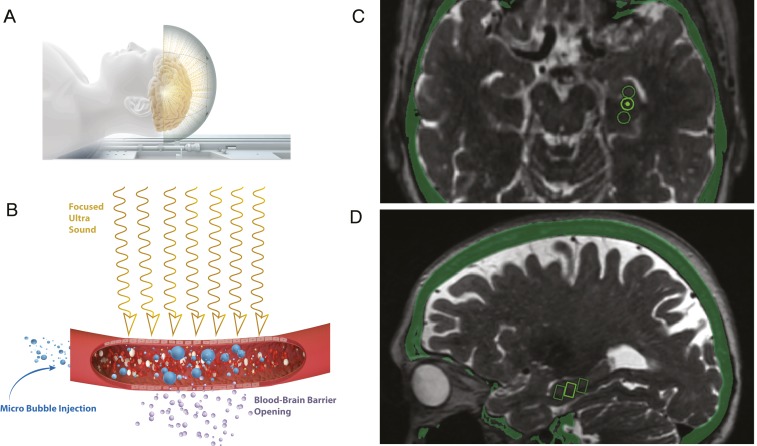
Initial clinical trial results showed safe, feasible, and reversible focused-ultrasound BBB opening in the hippocampus and entorhinal cortex of early AD patients.
Overview
CoChat Summary
## TL;DR
This open-label phase II trial reports that MR-guided low-intensity focused ultrasound (FUS) can safely, reversibly, and repeatedly open the blood-brain barrier (BBB) in the hippocampus/entorhinal cortex of patients with early Alzheimer’s disease. In 6 participants and 17 treatment sessions, BBB opening was immediate, sizable, and transient, with no treatment-related adverse effects or neurological worsening reported.
## Key findings
- Six participants (5 female, 1 male; ages 55–73) underwent a total of 17 FUS treatment sessions targeting the hippocampus/entorhinal cortex.
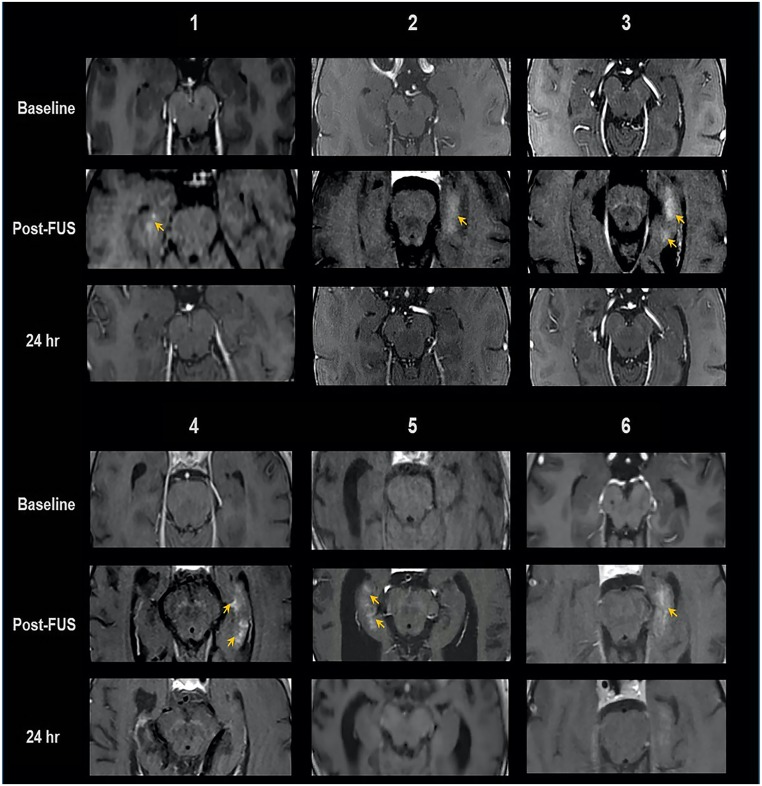
- All 17 sessions produced immediate hippocampal parenchymal enhancement on contrast MRI, indicating BBB opening, with no off-target enhancement.
- BBB opening resolved within 24 hours after treatment.
- MRI-based volumetric analysis found BBB opening covered 95 ± 4% of the FUS-targeted volume, ranging from 318 mm³ to 873 mm³, corresponding to 14% to 71% of the overall hippocampal volume, with an average of 29%.
- There were no treatment-related adverse effects or neurological changes up to 15 months post-FUS, and formal cognitive assessments at 30 days after the last treatment in the first five subjects showed no clinically meaningful changes.
## Methods
- Design: Open-label, prospective phase II clinical trial sponsored by INSIGHTEC, with repeated MR-guided low-intensity FUS to the hippocampus and entorhinal cortex.
- Sample/data: 6 patients with early AD enrolled at two sites (West Virginia University Rockefeller Neuroscience Institute, n=4; Weill Cornell Medical College, n=2), diagnosed by NIA-AA criteria and with 18F-florbetaben PET consistent with AD and amyloid-beta plaques in the target.
- Main analysis: FUS was delivered with simultaneous IV microbubbles; safety was assessed with neurological exams and T2* MRI for hemorrhage, and BBB opening was evaluated by post-FUS gadobutrol contrast MRI with manual segmentation and comparison to targeted and overall hippocampal volumes.
## Limitations
- The paper frames these as initial/early outcomes from an ongoing multicenter trial, so efficacy conclusions are not yet established.
- The study includes only 6 participants and 17 treatments, which limits generalizability; this limitation is evident from the text.
- The paper reports safety/feasibility and imaging-based BBB opening, but does not state clinical benefit on cognition or AD progression beyond “no clinically meaningful changes” in short-term assessments; this limitation is evident from the text.
Model-written summary. Check it against the paper before relying on it.
Integrity signals
Registry
Cites
Statistics
Figures
Verification
Claims the paper makes
6 Valid · 0 Not valid · 2 Not checked · 23 Own results and interpretations
The sources with a verdict support this claim; the rest weren’t checked yet, have no full text we could read, or their verdicts aren’t rated yet.
In the paper
“Animal studies have demonstrated safe and reversible BBB opening (4, 6, 7) as well as reduction of amyloid-beta plaque, neurogenesis, and improvement of memory.”
§ Noninvasive hippocampal blood−brain barrier opening in Alzheimer’s disease with focused ultrasound > Abstract
What the sources say
- Not checked — no full text of the sourcecites [4] Krishna V., Sammartino F., Rezai A., A review of the current therapies, challenges, and future directions of transcranial focused ultrasound technology: Advances in diagnosis and treatment. JAMA Neurol. 75, 246– 254 (2018). 29228074 source
- Supportedcites [6] Burgess A., Alzheimer disease in a mouse model: MR imaging-guided focused ultrasound targeted to the hippocampus opens the blood-brain barrier and improves pathologic abnormalities and behavior. Radiology 273, 736– 745 (2014). 25222068 PMC4314115 source
The Introduction describes focused-ultrasound BBB opening as temporary and says it can be achieved safely. The Discussion reports that repeated BBB opening in the study's mice caused no histologic signs of tissue damage. (LLM, conf=0.92)
- Not checked — no full text of the sourcecites [7] Hynynen K., McDannold N., Vykhodtseva N., Jolesz F. A., Non-invasive opening of BBB by focused ultrasound. Acta Neurochir. Suppl. 86, 555– 558 (2003). 14753505 source
boostedstates a cause- Asserted: passes — The authors put it forward as true.
- Checkable: passes — It can be checked against evidence.
- Load-bearing: passes — The paper’s conclusions depend on it.
- Based: passes — The paper gives a reason why it holds.
A result the paper reports from its own data — it cites no other source for it, so there is none to check. The quote shows it is in the paper.
In the paper
“MRI-based volumetric analysis of BBB opening in the hippocampus demonstrated parenchymal contrast enhancement of 95 ± 4% of the FUS targeted volume, ranging from 318 mm3 (two targets) to 873 mm3 (five targets).”
§ Noninvasive hippocampal blood−brain barrier opening in Alzheimer’s disease with focused ultrasound > Results
boostedn = 6- Asserted: passes — The authors put it forward as true.
- Checkable: passes — It can be checked against evidence.
- Load-bearing: passes — The paper’s conclusions depend on it.
- Based: passes — The paper gives a reason why it holds.
A result the paper reports from its own data — it cites no other source for it, so there is none to check. The quote shows it is in the paper.
In the paper
“This parenchymal contrast enhancement resolved within 24 h after FUS treatment.”
§ Noninvasive hippocampal blood−brain barrier opening in Alzheimer’s disease with focused ultrasound > Results
plainstates a cause- Asserted: passes — The authors put it forward as true.
- Checkable: passes — It can be checked against evidence.
- Load-bearing: passes — The paper’s conclusions depend on it.
- Based: passes — The paper gives a reason why it holds.
A result the paper reports from its own data — it cites no other source for it, so there is none to check. The quote shows it is in the paper.
In the paper
“Formal cognitive assessments at 30 d after the last treatment in the first five subjects showed no clinically meaningful changes (SI Appendix).”
§ Noninvasive hippocampal blood−brain barrier opening in Alzheimer’s disease with focused ultrasound > Results
plainn = 5- Asserted: passes — The authors put it forward as true.
- Checkable: passes — It can be checked against evidence.
- Load-bearing: unclear — It is unclear whether the paper’s conclusions depend on it.
- Based: passes — The paper gives a reason why it holds.
A result the paper reports from its own data — it cites no other source for it, so there is none to check. The quote shows it is in the paper.
In the paper
“MRI with gadobutrol IV contrast post-FUS treatment revealed immediate hippocampal parenchymal enhancement at the target region in all 17 treatment sessions, indicating enhanced BBB permeability, with no off-target enhancement (Fig. 2).”
§ Noninvasive hippocampal blood−brain barrier opening in Alzheimer’s disease with focused ultrasound > Results
plainstates a causen = 6- Asserted: passes — The authors put it forward as true.
- Checkable: passes — It can be checked against evidence.
- Load-bearing: passes — The paper’s conclusions depend on it.
- Based: passes — The paper gives a reason why it holds.
10 more claims
Create a free account to see all 31 claims and every source verdict.
- It may state two separate claims as one. 9
- Probably not a substantial claim. 9
- The quote only partly states this claim. 1
Citations
Cites
McKhann, G. M., Knopman, D. S., Chertkow, H., Hyman, B. T., Jack, C. R., Kawas, C. H., Klunk, W. E., Koroshetz, W. J., Manly, J. J., Mayeux, R., et al. (2011) · Alzheimer's & Dementia · doi:10.1016/j.jalz.2011.03.005 · Cited by 18,657
Blood-brain barrier opening in Alzheimer’s disease using MR-guided focused ultrasound
Lipsman, N., Meng, Y., Bethune, A. J., Huang, Y., Lam, B., Masellis, M., Herrmann, N., Heyn, C., Aubert, I., Boutet, A., et al. (2018) · Nature Communications · doi:10.1038/s41467-018-04529-6 · Cited by 950 · cited 2×
“This study is the next step following a proof of concept phase I study in AD patients demonstrating safe BBB opening in a limited noneloquent white matter area of the superficial dorsolateral prefrontal cortex (11).”
BackgroundResultThe role of adult hippocampal neurogenesis in brain health and disease
Toda, T., Parylak, S. L., Linker, S. B., & Gage, F. H. (2019) · Molecular Psychiatry · doi:10.1038/s41380-018-0036-2 · Cited by 719 · cited 1×
“T hippocampus is critical in the pathogenesis of Alzheimer’s disease (AD), epilepsy, and depression (1).”
BackgroundScanning ultrasound removes amyloid-β and restores memory in an Alzheimer’s disease mouse model
Leinenga, G., & Götz, J. (2015) · Science Translational Medicine · doi:10.1126/scitranslmed.aaa2512 · Cited by 498 · cited 1×
“FUS-mediated BBB opening in preclinical models has been found to promote amyloid-beta clearance, delivery of endogenous antibodies, activation of microglia (8, 12), and potential modulation of the glymphatic system (13).”
BackgroundBlood-Brain Barrier and Delivery of Protein and Gene Therapeutics to Brain
Pardridge, W. M. (2020) · Frontiers in Aging Neuroscience · doi:10.3389/fnagi.2019.00373 · Cited by 405 · cited 1×
“To overcome the BBB, pharmaceuticals and biological treatments require systemic dose escalation or invasive, risky procedures like transarterial diuretic infusion and direct intracranial infusion (2, 3).”
BackgroundEvolving Drug Delivery Strategies to Overcome the Blood Brain Barrier
S. Hersh, D., S. Wadajkar, A., B. Roberts, N., G. Perez, J., P. Connolly, N., Frenkel, V., A. Winkles, J., F. Woodworth, G., & J. Kim, A. (2016) · Current Pharmaceutical Design · doi:10.2174/1381612822666151221150733 · Cited by 387 · cited 1×
“To overcome the BBB, pharmaceuticals and biological treatments require systemic dose escalation or invasive, risky procedures like transarterial diuretic infusion and direct intracranial infusion (2, 3).”
BackgroundJordão, J. F., Thévenot, E., Markham-Coultes, K., Scarcelli, T., Weng, Y.-Q., Xhima, K., O'Reilly, M., Huang, Y., McLaurin, J., Hynynen, K., et al. (2013) · Experimental Neurology · doi:10.1016/j.expneurol.2013.05.008 · Cited by 326 · cited 1×
“FUS-mediated BBB opening in preclinical models has been found to promote amyloid-beta clearance, delivery of endogenous antibodies, activation of microglia (8, 12), and potential modulation of the glymphatic system (13).”
BackgroundKrishna, V., Sammartino, F., & Rezai, A. (2018) · JAMA Neurology · doi:10.1001/jamaneurol.2017.3129 · Cited by 289
Self-citationBurgess, A., Dubey, S., Yeung, S., Hough, O., Eterman, N., Aubert, I., & Hynynen, K. (2014) · Radiology · doi:10.1148/radiol.14140245 · Cited by 286 · cited 1×
“Animal studies have demonstrated safe and reversible BBB opening (4, 6, 7) as well as reduction of amyloidbeta plaque, neurogenesis, and improvement of memory.”
BackgroundScarcelli, T., Jordão, J. F., O'Reilly, M. A., Ellens, N., Hynynen, K., & Aubert, I. (2014) · Brain Stimulation · doi:10.1016/j.brs.2013.12.012 · Cited by 156
Cited by
Applications of focused ultrasound in the brain: from thermoablation to drug delivery
Meng, Y., Hynynen, K., & Lipsman, N. (2021) · Nature Reviews Neurology · doi:10.1038/s41582-020-00418-z · Cited by 505
Ultrasound Blood–Brain Barrier Opening and Aducanumab in Alzheimer’s Disease
Rezai, A. R., D’Haese, P.-F., Finomore, V., Carpenter, J., Ranjan, M., Wilhelmsen, K., Mehta, R. I., Wang, P., Najib, U., Vieira Ligo Teixeira, C., et al. (2024) · New England Journal of Medicine · doi:10.1056/nejmoa2308719 · Cited by 312
Self-citationChallenges and hopes for Alzheimer’s disease
Tatulian, S. A. (2022) · Drug Discovery Today · doi:10.1016/j.drudis.2022.01.016 · Cited by 291
Sonabend, A. M., Gould, A., Amidei, C., Ward, R., Schmidt, K. A., Zhang, D. Y., Gomez, C., Bebawy, J. F., Liu, B. P., Bouchoux, G., et al. (2023) · The Lancet Oncology · doi:10.1016/s1470-2045(23)00112-2 · Cited by 260
Controlled tough bioadhesion mediated by ultrasound
Ma, Z., Bourquard, C., Gao, Q., Jiang, S., De Iure-Grimmel, T., Huo, R., Li, X., He, Z., Yang, Z., Yang, G., et al. (2022) · Science · doi:10.1126/science.abn8699 · Cited by 244
Development of Novel Therapeutics Targeting the Blood–Brain Barrier: From Barrier to Carrier
Li, J., Zheng, M., Shimoni, O., Banks, W. A., Bush, A. I., Gamble, J. R., & Shi, B. (2021) · Advanced Science · doi:10.1002/advs.202101090 · Cited by 202
Li, B., Chen, X., Qiu, W., Zhao, R., Duan, J., Zhang, S., Pan, Z., Zhao, S., Guo, Q., Qi, Y., et al. (2022) · Advanced Science · doi:10.1002/advs.202105451 · Cited by 201
Achar, A., Myers, R., & Ghosh, C. (2021) · Biomedicines · doi:10.3390/biomedicines9121834 · Cited by 189
“In one recent study, human patients with early Alzheimer’s disorder underwent magnetic resonance-guided low-intensity focused ultrasound treatment of the hippocampus and entorhinal cortex (220 kHz) and microbubble injection, followed by magnetic resonance imaging with gadobutrol IV to evaluate BBB properties [39].”
BackgroundMethodInfluentialDysfunction of the blood–brain barrier in Alzheimer's disease: Evidence from human studies
Kurz, C., Walker, L., Rauchmann, B., & Perneczky, R. (2022) · Neuropathology and Applied Neurobiology · doi:10.1111/nan.12782 · Cited by 183
“on PET after sonication was also shown, but cognitive outcomes were not reported.(92,93,95)”
Anastasiadis, P., Gandhi, D., Guo, Y., Ahmed, A.-K., Bentzen, S. M., Arvanitis, C., & Woodworth, G. F. (2021) · Proceedings of the National Academy of Sciences · doi:10.1073/pnas.2103280118 · Cited by 175
Andjelkovic, A. V., Situ, M., Citalan-Madrid, A. F., Stamatovic, S. M., Xiang, J., & Keep, R. F. (2023) · Stroke · doi:10.1161/strokeaha.122.040578 · Cited by 164
Wang, J., Li, Z., Pan, M., Fiaz, M., Hao, Y., Yan, Y., Sun, L., & Yan, F. (2022) · Advanced Drug Delivery Reviews · doi:10.1016/j.addr.2022.114539 · Cited by 161
Biomarkers used in Alzheimer’s disease diagnosis, treatment, and prevention
Mahaman, Y. A. R., Embaye, K. S., Huang, F., Li, L., Zhu, F., Wang, J.-Z., Liu, R., Feng, J., & Wang, X. (2022) · Ageing Research Reviews · doi:10.1016/j.arr.2021.101544 · Cited by 149
Applications of focused ultrasound-mediated blood-brain barrier opening
Gorick, C. M., Breza, V. R., Nowak, K. M., Cheng, V. W. T., Fisher, D. G., Debski, A. C., Hoch, M. R., Demir, Z. E. F., Tran, N. M., Schwartz, M. R., et al. (2022) · Advanced Drug Delivery Reviews · doi:10.1016/j.addr.2022.114583 · Cited by 144
Sabbagh, A., Beccaria, K., Ling, X., Marisetty, A., Ott, M., Caruso, H., Barton, E., Kong, L.-Y., Fang, D., Latha, K., et al. (2021) · Clinical Cancer Research · doi:10.1158/1078-0432.ccr-20-3760 · Cited by 144
“The safety of the technique has been largely studied including microscopic, macroscopic, and clinical analysis of tissues in small and large preclinical animal models (12,30-33) and more recently in human clinical trials (34-38).”
BackgroundNon-Invasive Drug Delivery across the Blood–Brain Barrier: A Prospective Analysis
Niazi, S. K. (2023) · Pharmaceutics · doi:10.3390/pharmaceutics15112599 · Cited by 170
“For example, trials using FUS and a combination of FUS+MRI for AD trials saw the BBB in the hippocampus and entorhinal cortex open reversibly without adverse effects [121], and patients showed no adverse events and no cognitive or neurological deterioration [122].”
MethodCentral nervous system delivery of molecules across the blood-brain barrier
Gosselet, F., Loiola, R. A., Roig, A., Rosell, A., & Culot, M. (2021) · Neurochemistry International · doi:10.1016/j.neuint.2020.104952 · Cited by 137
“(MRI)-guided FUS shows a safe and focal opening of the BBB in the hippocampus and entorhinal cortex followed by a BBB closure within 24 h (Rezai et al., 2020).”
Carpentier, A. C., Stupp, R., Sonabend, A. M., Dufour, H., Chinot, O. L., Mathon, B., Ducray, F., Guyotat, J., Baize, N., Meneï, P., et al. (2024) · Nature Communications · doi:10.1038/s41467-024-45818-7 · Cited by 186
Towards controlled drug delivery in brain tumors with microbubble-enhanced focused ultrasound
Schoen, S. J., Kilinc, M. S., Lee, H., Guo, Y., Degertekin, F. L., Woodworth, G. F., & Arvanitis, C. (2021) · Advanced Drug Delivery Reviews · doi:10.1016/j.addr.2021.114043 · Cited by 126
Blesa, J., Pineda‐Pardo, J. A., Inoue, K., Gasca‐Salas, C., Balzano, T., del Rey, N. L., Reinares-Sebastián, A., Esteban-García, N., Rodríguez‐Rojas, R., Márquez, R., et al. (2023) · Science Advances · doi:10.1126/sciadv.adf4888 · Cited by 121
Rezai, A. R., Ranjan, M., Haut, M. W., Carpenter, J., D’Haese, P.-F., Mehta, R. I., Najib, U., Wang, P., Claassen, D. O., Chazen, J. L., et al. (2023) · Journal of Neurosurgery · doi:10.3171/2022.9.jns221565 · Cited by 111
“21,22,24 MR-guided FUS technology involves a transducer helmet array comprising more than 1000 ultrasound transducers precisely converging on a defined focal point in the brain.”
InfluentialSelf-citationLi, X., Vemireddy, V., Cai, Q., Xiong, H., Kang, P., Li, X., Giannotta, M., Hayenga, H. N., Pan, E., Sirsi, S. R., et al. (2021) · Nano Letters · doi:10.1021/acs.nanolett.1c02996 · Cited by 105
Alpha-Synuclein Targeting Therapeutics for Parkinson's Disease and Related Synucleinopathies
Menon, S. A., Armstrong, S. E. M., Hamzeh, A. M., Visanji, N. P., Sardi, S. P., & Tandon, A. (2022) · Frontiers in Neurology · doi:10.3389/fneur.2022.852003 · Cited by 115
Park, S. H., Baik, K., Jeon, S., Chang, W. S., Ye, B. S., & Chang, J. W. (2021) · Translational Neurodegeneration · doi:10.1186/s40035-021-00269-8 · Cited by 95
“targeting the hippocampus and entorhinal cortex [10].”
BackgroundD’Haese, P.-F., Ranjan, M., Song, A., Haut, M. W., Carpenter, J., Dieb, G., Najib, U., Wang, P., Mehta, R. I., Chazen, J. L., et al. (2020) · Frontiers in Human Neuroscience · doi:10.3389/fnhum.2020.593672 · Cited by 94
“Pre-treatment MRI was used to segment the hippocampi and EC using a non-linear atlas-based algorithm (Rohde et al., 2003; Lavely et al., 2004; Chakravorti et al., 2019).”
MethodSelf-citationDubey, S., Heinen, S., Krantic, S., McLaurin, J., Branch, D. R., Hynynen, K., & Aubert, I. (2020) · Proceedings of the National Academy of Sciences · doi:10.1073/pnas.1908658117 · Cited by 94
Pouliopoulos, A. N., Kwon, N., Jensen, G., Meaney, A., Niimi, Y., Burgess, M. T., Ji, R., McLuckie, A. J., Munoz, F. A., Kamimura, H. A. S., et al. (2021) · Scientific Reports · doi:10.1038/s41598-021-94188-3 · Cited by 85
Meng, Y., Pople, C. B., Huang, Y., Jones, R. M., Ottoy, J., Goubran, M., de Oliveira, L. M., Davidson, B., Lawrence, L., Lau, A. Z., et al. (2022) · Movement Disorders · doi:10.1002/mds.29190 · Cited by 97
Meng, Y., Goubran, M., Rabin, J. S., McSweeney, M., Ottoy, J., Pople, C. B., Huang, Y., Storace, A., Ozzoude, M., Bethune, A., et al. (2023) · Brain · doi:10.1093/brain/awac459 · Cited by 83
Therapeutic Agent Delivery Across the Blood–Brain Barrier Using Focused Ultrasound
McMahon, D., O’Reilly, M. A., & Hynynen, K. (2021) · Annual Review of Biomedical Engineering · doi:10.1146/annurev-bioeng-062117-121238 · Cited by 93
“Since this initial work, subsequent trials have sought to test the safety of transcranial FUS+MB exposure in participants with AD (144, 156) and amyotrophic lateral sclerosis (157).”
InfluentialMahoney, J. J., Haut, M. W., Carpenter, J., Ranjan, M., Thompson-Lake, D. G. Y., Marton, J. L., Zheng, W., Berry, J. H., Tirumalai, P. S., Mears, A., et al. (2023) · Frontiers in Psychiatry · doi:10.3389/fpsyt.2023.1211566 · Cited by 91
Self-citationÇiftçi, F., Özarslan, A. C., Kantarci, İ. C., Yelkenci, A., Tavukçuoğlu, Ö., & Ghorbanpour, M. (2025) · Pharmaceutics · doi:10.3390/pharmaceutics17010121 · Cited by 105
Striatal Blood–Brain Barrier Opening in Parkinson's Disease Dementia: A Pilot Exploratory Study
Pineda‐Pardo, J. A., Gasca‐Salas, C., Fernández‐Rodríguez, B., Rodríguez‐Rojas, R., del Álamo, M., Obeso, I., Hernández‐Fernández, F., Trompeta, C., Martínez‐Fernández, R., Matarazzo, M., et al. (2022) · Movement Disorders · doi:10.1002/mds.29134 · Cited by 75
Mehta, R. I., Carpenter, J. S., Mehta, R. I., Haut, M. W., Wang, P., Ranjan, M., Najib, U., D’Haese, P.-F., & Rezai, A. R. (2023) · Fluids and Barriers of the CNS · doi:10.1186/s12987-023-00447-y · Cited by 74
Self-citationEpelbaum, S., Burgos, N., Canney, M., Matthews, D., Houot, M., Santin, M. D., Desseaux, C., Bouchoux, G., Stroer, S., Martin, C., et al. (2022) · Alzheimer's Research & Therapy · doi:10.1186/s13195-022-00981-1 · Cited by 72
“Recently, the safe disruption of the BBB in six AD patients using a transcranial focused ultrasound system was demonstrated [27, 28].”
MethodBurks, S. R., Kersch, C. N., Witko, J. A., Pagel, M. A., Sundby, M., Muldoon, L. L., Neuwelt, E. A., & Frank, J. A. (2021) · Proceedings of the National Academy of Sciences · doi:10.1073/pnas.2021915118 · Cited by 77
Nanotherapeutic treatment of the invasive glioblastoma tumor microenvironment
Pandey, N., Anastasiadis, P., Carney, C. P., Kanvinde, P. P., Woodworth, G. F., Winkles, J. A., & Kim, A. J. (2022) · Advanced Drug Delivery Reviews · doi:10.1016/j.addr.2022.114415 · Cited by 76
Barrier-breaking effects of ultrasonic cavitation for drug delivery and biomarker release
Hu, Y., Wei, J., Shen, Y., Chen, S., & Chen, X. (2023) · Ultrasonics Sonochemistry · doi:10.1016/j.ultsonch.2023.106346 · Cited by 72
Fischell, J. M., & Fishman, P. S. (2021) · Frontiers in Neuroscience · doi:10.3389/fnins.2021.747726 · Cited by 67
Nanozyme enabled protective therapy for neurological diseases
Cheng, F., Kotha, S., Fu, M., Yang, Q., Wang, H., He, W., & Mao, X. (2024) · Nano Today · doi:10.1016/j.nantod.2023.102142 · Cited by 67
Application of Ultrasound Combined with Microbubbles for Cancer Therapy
Sharma, D., Leong, K. X., & Czarnota, G. J. (2022) · International Journal of Molecular Sciences · doi:10.3390/ijms23084393 · Cited by 72
Cyclic jetting enables microbubble-mediated drug delivery
Cattaneo, M., Guerriero, G., Shakya, G., Krattiger, L. A., Paganella, L. G., Narciso, M., & Supponen, O. (2025) · Nature Physics · doi:10.1038/s41567-025-02785-0 · Cited by 84
Roles of Non-Coding RNA in Alzheimer’s Disease Pathophysiology
Olufunmilayo, E. O., & Holsinger, R. M. D. (2023) · International Journal of Molecular Sciences · doi:10.3390/ijms241512498 · Cited by 74
Current clinical investigations of focused ultrasound blood-brain barrier disruption: A review
Durham, P. G., Butnariu, A., Alghorazi, R., Pinton, G., Krishna, V., & Dayton, P. A. (2024) · Neurotherapeutics · doi:10.1016/j.neurot.2024.e00352 · Cited by 62
Low intensity focused ultrasound: a new prospect for the treatment of Parkinson’s disease
Zhong, Y., Liao, J., Liu, X., Tian, H., Deng, L.-R., & Long, L. (2023) · Annals of Medicine · doi:10.1080/07853890.2023.2251145 · Cited by 75
Emerging Wearable Acoustic Sensing Technologies
Liu, T., Mao, Y., Dou, H., Zhang, W., Yang, J., Wu, P., Li, D., & Mu, X. (2025) · Advanced Science · doi:10.1002/advs.202408653 · Cited by 93
Jeong, H. S., Song, I., Chung, Y., Park, J., Na, S., Im, J. J., Bikson, M., Lee, W., & Yoo, S. (2022) · Journal of Personalized Medicine · doi:10.3390/jpm12020250 · Cited by 66
Non-Coding RNAs as Novel Regulators of Neuroinflammation in Alzheimer’s Disease
Liu, Y., Cheng, X. M., Li, H., Hui, S., Zhang, Z., Yang, X. J., & Peng, W. (2022) · Frontiers in Immunology · doi:10.3389/fimmu.2022.908076 · Cited by 71
“Focused ultrasound is another technique that has been found to temporarily block the BBB, promising the application of targeted therapy in brain tissue (25, 194).”
BackgroundMethodReconsidering the role of blood-brain barrier in Alzheimer’s disease: From delivery to target
Sousa, J. A., Bernardes, C., Bernardo-Castro, S., Lino, M. M., Albino, I., Ferreira, L., Brás, J., Guerreiro, R. J., Tábuas‐Pereira, M., Baldeiras, I., et al. (2023) · Frontiers in Aging Neuroscience · doi:10.3389/fnagi.2023.1102809 · Cited by 72
Ultrasound-mediated disruption of the blood tumor barrier for improved therapeutic delivery
Arsiwala, T. A., Sprowls, S. A., Blethen, K. E., Adkins, C. E., Saralkar, P. A., Fladeland, R. A., Pentz, W. H., Gabriele, A., Kielkowski, B. N., Mehta, R. I., et al. (2021) · Neoplasia · doi:10.1016/j.neo.2021.04.005 · Cited by 63
Self-citationWasielewska, J. M., & White, A. R. (2022) · Pharmaceutical Research · doi:10.1007/s11095-022-03185-2 · Cited by 69
Micro/nanosystems for controllable drug delivery to the brain
Tian, M., Ma, Z., & Yang, G. (2023) · The Innovation · doi:10.1016/j.xinn.2023.100548 · Cited by 83
“198 Recent clinical trials have further con fi rmed its safety and ef fi cacy in various neurological conditions, including glioma, 179,199 brain metastases, 200 AD, 201,185 PD, 202,203 and ALS.”
BackgroundMahoney, J. J., Thompson-Lake, D. G. Y., Ranjan, M., Marton, J. L., Carpenter, J., Zheng, W., Berry, J. H., Farmer, D. L., D’Haese, P. F., Finomore, V. S., et al. (2023) · Biological Psychiatry · doi:10.1016/j.biopsych.2023.06.031 · Cited by 63
Self-citationHuang, Y., Meng, Y., Pople, C. B., Bethune, A. J., Jones, R. M., Abrahão, A., Hamani, C., Kalia, S. K., Kalia, L. V., Lipsman, N., et al. (2022) · Pharmaceutics · doi:10.3390/pharmaceutics14122607 · Cited by 61
Wu, H., Zhou, Y., Xu, L., Tong, L., Wang, Y., Liu, B., Yan, H., & Sun, Z. (2021) · Frontiers in Neuroscience · doi:10.3389/fnins.2021.706105 · Cited by 71
“In a series of clinical trials of this technique for the treatment of patients involved with brain tumors, Alzheimer’s disease or epilepsy has been completed or ongoing worldwide (Alkins et al., 2016; Chen et al., 2019; Beccaria et al., 2020; D’Haese et al., 2020; Rezai et al., 2020).”
BackgroundEfficacy of gene delivery to the brain using AAV and ultrasound depends on serotypes and brain areas
Kofoed, R. H., Dibia, C. L., Noseworthy, K., Xhima, K., Vacaresse, N., Hynynen, K., & Aubert, I. (2022) · Journal of Controlled Release · doi:10.1016/j.jconrel.2022.09.048 · Cited by 67
ImmunoPET-informed sequence for focused ultrasound-targeted mCD47 blockade controls glioma
Sheybani, N., Breza, V. R., Paul, S., McCauley, K. S., Berr, S. S., Miller, G. W., Neumann, K. D., & Price, R. J. (2021) · Journal of Controlled Release · doi:10.1016/j.jconrel.2021.01.023 · Cited by 60
Transcranial Ultrasound Innovations Ready for Broad Clinical Application
Beisteiner, R., & Lozano, A. M. (2020) · Advanced Science · doi:10.1002/advs.202002026 · Cited by 53
Liu, X., Naomi, S. S. M., Sharon, W. L., & Russell, E. J. (2021) · Aging and disease · doi:10.14336/ad.2021.0510 · Cited by 52
“Rezai et al. (2020) Early AD patients (n=6) Type: MRIgFUS Frequency: 220kHz MB: Definity Three treatment sessions with 2 weeks interval Hippocampus and EC Enhancement appeared at the targeted site on Gadoliniumbasedcontrast MRI All patients tolerated well, no treatmentrelated adverse effects or…”
BackgroundBreaching the Blood–Brain Tumor Barrier for Tumor Therapy
Marcucci, F., Corti, A., & Ferreri, A. J. M. (2021) · Cancers · doi:10.3390/cancers13102391 · Cited by 53
“It has been successfully tested in several animal models and the results of two clinical studies published on this approach, performed in patients with non-neoplastic CNS diseases, have shown that the BBB was safely, reversibly and repeatedly opened in all patients [55,56].”
ResultZeng, F., Peng, K., Han, L., & Yang, J. (2021) · ACS Biomaterials Science & Engineering · doi:10.1021/acsbiomaterials.1c00605 · Cited by 58
Implementation of a Skull-Conformal Phased Array for Transcranial Focused Ultrasound Therapy
Adams, C., Jones, R. M., Yang, S. D., Kan, W. M., Leung, K., Zhou, Y., Lee, K. U., Huang, Y., & Hynynen, K. (2021) · IEEE Transactions on Biomedical Engineering · doi:10.1109/tbme.2021.3077802 · Cited by 52
Current state of clinical ultrasound neuromodulation
Matt, E., Radjenovic, S., Mitterwallner, M., & Beisteiner, R. (2024) · Frontiers in Neuroscience · doi:10.3389/fnins.2024.1420255 · Cited by 60
Kong, W., Li, X., Guo, X., Sun, Y., Chai, W., Chang, Y., Huang, Q., Wang, P., & Wang, X. (2024) · ACS Nano · doi:10.1021/acsnano.3c05864 · Cited by 54
Salvador, E., Kessler, A. F., Domröse, D., Hörmann, J., Schaeffer, C. M., Giniunaite, A., Burek, M., Tempel-Brami, C., Voloshin, T., Volodin, A., et al. (2022) · Biomolecules · doi:10.3390/biom12101348 · Cited by 57
The road ahead to successful BBB opening and drug-delivery with focused ultrasound
López‐Aguirre, M., Castillo-Ortiz, M., Viña-González, A., Blesa, J., & Pineda‐Pardo, J. A. (2024) · Journal of Controlled Release · doi:10.1016/j.jconrel.2024.07.006 · Cited by 59
Kline-Schoder, A. R., Chintamen, S., Willner, M. J., DiBenedetto, M. R., Noel, R. L., Batts, A. J., Kwon, N., Zacharoulis, S., Wu, C.-C., Menon, V., et al. (2023) · Nature Biomedical Engineering · doi:10.1038/s41551-023-01107-0 · Cited by 45
“The safety of this method has been well established in mice and non-human primates, and it is currently undergoing clinical trials 9–11 .”
Engineering viral vectors for acoustically targeted gene delivery
Li, H., Harb, M., Heath, J. E., Trippett, J. S., Shapiro, M. G., & Szablowski, J. O. (2024) · Nature Communications · doi:10.1038/s41467-024-48974-y · Cited by 55
Ultrasound delivery of a TrkA agonist confers neuroprotection to Alzheimer-associated pathologies
Xhima, K., Markham-Coultes, K., Hahn Kofoed, R., Saragovi, H. U., Hynynen, K., & Aubert, I. (2022) · Brain · doi:10.1093/brain/awab460 · Cited by 43
“Repeated MRIgFUS-BBB modulation is well-tolerated in Alzheimer’s disease patients, further supporting the safety of this drug delivery modality.(61,62) Our results show that MRIgFUS does not negatively impact cognitive outcomes when applied in a preclinical model with significant cognitive decline as a consequence of…”
ResultThe blood-brain barrier, a key bridge to treat neurodegenerative diseases
Hang, Z., Zhou, L., Xing, C., Wen, Y., & Du, H. (2023) · Ageing Research Reviews · doi:10.1016/j.arr.2023.102070 · Cited by 48
Crossing borders in Alzheimer’s disease: A T cell’s perspective
van Olst, L., Coenen, L., Nieuwland, J. M., Rodriguez-Mogeda, C., de Wit, N. M., Kamermans, A., Middeldorp, J., & de Vries, H. E. (2022) · Advanced Drug Delivery Reviews · doi:10.1016/j.addr.2022.114398 · Cited by 64
Ultrasound-assisted brain delivery of nanomedicines for brain tumor therapy: advance and prospect
Zhang, S., Zhang, S., Luo, S., Tang, P., Wan, M., Wu, D., & Gao, W. (2022) · Journal of Nanobiotechnology · doi:10.1186/s12951-022-01464-z · Cited by 48
“demonstrated that Magnetic Resonance (MR)-guided USCM can open the BBB in the hippocampus and entorhinal cortex of patients with AD safely, noninvasively, transiently, repeatably, and intensively [36].”
BackgroundChen, L., Sutharsan, R., Lee, J. L., Cruz, E., Asnicar, B., Palliyaguru, T., Wasielewska, J. M., Gaudin, A., Song, J. H., Leinenga, G., et al. (2022) · Theranostics · doi:10.7150/thno.65539 · Cited by 45
“The FUS+MB technology has been shown in multiple studies to deliver a wide range of different molecules in both small and large animal models, and several clinical trials targeting brain tumours or neurodegeneration have been conducted or launched [4-13].”
BackgroundSensitization of nerve cells to ultrasound stimulation through Piezo1-targeted microbubbles
Shen, X., Song, Z., Xu, E., Zhou, J., & Yan, F. (2021) · Ultrasonics Sonochemistry · doi:10.1016/j.ultsonch.2021.105494 · Cited by 44
Wasielewska, J. M., Chaves, J. C. S., Johnston, R. L., Milton, L. A., Hernández, D., Chen, L., Song, J., Lee, W., Leinenga, G., Nisbet, R. M., et al. (2022) · Theranostics · doi:10.7150/thno.72685 · Cited by 41
“Importantly, the safety of ultrasound-mediated BBB opening has been demonstrated in multiple animal and several small patient studies of neurodegenerative diseases [19-25].”
BackgroundKong, C., Ahn, J. W., Kim, S., Park, J. Y., Na, Y. C., Chang, J. W., Chung, S., & Chang, W. S. (2023) · Brain stimulation · doi:10.1016/j.brs.2023.05.014 · Cited by 47
Selective organ targeting nanoparticles: from design to clinical translation
Li, J., & Wang, H. (2023) · Nanoscale Horizons · doi:10.1039/d3nh00145h · Cited by 44
Zhu, M., Wu, P., Li, Y., Zhang, L., Zong, Y., & Wan, M. (2022) · Biomaterials Science · doi:10.1039/d2bm00562j · Cited by 43
Protein corona on brain targeted nanocarriers: Challenges and prospects
Jiang, K., Yu, Y., Qiu, W., Tian, K., Guo, Z., Qian, J., Lu, H., & Zhan, C. (2023) · Advanced Drug Delivery Reviews · doi:10.1016/j.addr.2023.115114 · Cited by 48
Wang, J., Xie, L., Shi, Y., Ao, L., Cai, F., & Yan, F. (2021) · ACS Nano · doi:10.1021/acsnano.1c04029 · Cited by 37
Sheybani, N., Witter, A. R., Garrison, W. J., Miller, G. W., Price, R. J., & Bullock, T. N. J. (2021) · Journal of Neuro-Oncology · doi:10.1007/s11060-021-03887-4 · Cited by 42
“Safety and feasibility have been confirmed across multiple pathologies including GB [33–35], ALS [36] and Alzheimer’s disease [37, 38].”
BackgroundFocused Ultrasound Mediated Opening of the Blood-Brain Barrier for Neurodegenerative Diseases
Fishman, P. S., & Fischell, J. M. (2021) · Frontiers in Neurology · doi:10.3389/fneur.2021.749047 · Cited by 42
“A subsequent study of six patients with AD targeting the hippocampus also supported the safety of FUS mediated BBBD (52).”
BackgroundDeciphering therapeutic options for neurodegenerative diseases: insights from SIRT1
Wang, R., Wu, Y., Liu, R., Liu, M., Li, Q., Ba, Y., & Huang, H. (2022) · Journal of Molecular Medicine · doi:10.1007/s00109-022-02187-2 · Cited by 39
“FUS + + + Hippocampus; entorhinal cortex FTLD-FUS [93, 122, 123]”
Hu, Y., Yang, G., Liang, X.-S., Ding, X.-S., Xu, D.-E., Li, Z. Y., Ma, Q., Chen, R., & Sun, Y. (2023) · Frontiers in Neurology · doi:10.3389/fneur.2023.1117188 · Cited by 41
Shen, Y., Zhang, J., Xu, Y., Sun, S., Chen, K., Chen, S., Yang, X., & Chen, X. (2023) · Brain stimulation · doi:10.1016/j.brs.2023.03.006 · Cited by 36
de Koning, L. A., Vazquez-Matias, D. A., Beaino, W., Vugts, D. J., van Dongen, G. A. M. S., van der Flier, W. M., Ries, M. G., van Vuurden, D. G., Vijverberg, E. G. B., & van de Giessen, E. (2025) · The Journal of Prevention of Alzheimer s Disease · doi:10.1016/j.tjpad.2025.100204 · Cited by 49
“The safety of MRgFUS targeting other brain regions has since then been replicated in other studies in both AD [ 47 , 48 ] and Parkinson’s disease dementia [ 49 , 50 ].”
Kung, Y., Chen, K., Liao, W., Hsu, Y.-H., Wu, C., Hsiao, M., Huang, A. P., & Chen, W. (2022) · Fluids and Barriers of the CNS · doi:10.1186/s12987-021-00303-x · Cited by 39
“Currently, drug delivery to CSF is primarily achieved in five ways: (i) intracerebroventricular (ICV) or intrathecal drug infusion, with direct drug injection/infusion into the CSF [6]; (ii) the use of an anti-transferrin receptor (TfR) antibody (OX-26 anti-rat TfR) to transport medication across the BCSFB into the CS…”
MethodNew RNA-Based Breakthroughs in Alzheimer’s Disease Diagnosis and Therapeutics
Riscado, M., Baptista, B., & de Sousa, F. P. (2021) · Pharmaceutics · doi:10.3390/pharmaceutics13091397 · Cited by 35
Perspective for Molecular Dynamics Simulation Studies of Amyloid-β Aggregates
Okumura, H. (2023) · The Journal of Physical Chemistry B · doi:10.1021/acs.jpcb.3c06051 · Cited by 38
Mirian, A., Moszczynski, A. J., Soleimani, S., Aubert, I., Zinman, L. H., & Abrahão, A. (2022) · Frontiers in Cellular Neuroscience · doi:10.3389/fncel.2022.851563 · Cited by 33
Ferroptosis is a new therapeutic target for spinal cord injury
Bai, X., Liu, X., Deng, Z.-Z., Wei, D.-M., Zhang, D., Xi, H.-L., Wang, Q.-Y., He, M.-Z., & Yang, Y.-L. (2023) · Frontiers in Neuroscience · doi:10.3389/fnins.2023.1136143 · Cited by 39
“(iv) Localized increase in brain penetration by ultrasound stimulation of microvesicles (Rezai et al., 2020).”
BackgroundZhao, P., Wu, T., Tian, Y., You, J. E., & Cui, X. (2024) · Advanced Drug Delivery Reviews · doi:10.1016/j.addr.2024.115323 · Cited by 48
Song, D., Chen, X., Zhou, N., Yuan, Y., Geng, S., Zhang, C., Zhao, Z., Wang, X., Bao, X., Lan, X., et al. (2023) · Journal of Translational Medicine · doi:10.1186/s12967-022-03824-7 · Cited by 35
Dong, R., Han, Y., Lv, P., Jiang, L., Wang, Z., Peng, L., Liu, S., Ma, Z., Xia, T., Zhang, B., et al. (2024) · Journal of Cerebral Blood Flow & Metabolism · doi:10.1177/0271678x241237073 · Cited by 36
Piper, K., Kumar, J. I., Domino, J. S., Tuchek, C. A., & Vogelbaum, M. A. (2024) · Neuro-Oncology · doi:10.1093/neuonc/noae087 · Cited by 37
Progress in Noninvasive Low-Intensity Focused Ultrasound Neuromodulation
Feng, J., & Li, Z. (2024) · Stroke · doi:10.1161/strokeaha.124.046679 · Cited by 33
Gene therapy for Parkinson's disease: trials and technical advances
Winston, G. M., Kharas, N., Svenningsson, P., Jha, A., & Kaplitt, M. G. (2025) · The Lancet Neurology · doi:10.1016/s1474-4422(25)00125-5 · Cited by 33
Self-citationBérard, C., Desgranges, S., Dumas, N., Novell, A., Larrat, B., Hamimed, M., Taulier, N., Estève, M., Corréard, F., & Contino-Pepin, C. (2022) · Pharmaceutics · doi:10.3390/pharmaceutics14071498 · Cited by 32
“MB is a drug delivery method of high potential, currently showing promising results in clinical trials [16,17,68,69].”
BackgroundXhima, K., & Aubert, I. (2021) · Neural Regeneration Research · doi:10.4103/1673-5374.306076 · Cited by 33
“We recently demonstrated the feasibility of MRIgFUS-mediated delivery of a selective TrkA ligand to the basal forebrain in a mouse model of AD, and the utility of a gadolinium-based contrast agent to predict drug concentration in the brain (Xhima et al., 2020).”
BackgroundInfluentialMR-guided focused ultrasound in movement disorders and beyond: Lessons learned and new frontiers
Natera‐Villalba, E., Ruiz-Yanzi, M.-A., Gasca‐Salas, C., Matarazzo, M., & Martínez‐Fernández, R. (2024) · Parkinsonism & Related Disorders · doi:10.1016/j.parkreldis.2024.106040 · Cited by 30
Metadata
- Authors
- Rezai, A. R., Ranjan, M., D’Haese, P.-F., Haut, M. W., Carpenter, J., Najib, U., Mehta, R. I., Chazen, J. L., Zibly, Z., Yates, J. R., Hodder, S. L., & Kaplitt, M.
- Affiliations
- West Virginia University (US)
- Weill Cornell Medicine (US)
- Sheba Medical Center (IL)
- Corresponding author
- Rezai, Ali R.
- ORCID
- Venue
- Proceedings of the National Academy of Sciences
- Publisher
- National Academy of Sciences
- Published
- 2020-04-13
- Volume
- 117
- Issue
- 17
- Pages
- 9180-9182
- ISSN
- 0027-8424 (ISSN-L)
- 1091-6490
- PMC
- PMC7196825
- OpenAlex
- W3015813913
- Cited by
- 365
- References
- 16
- Citations by year
- 2026: 45 · 2025: 75 · 2024: 62 · 2023: 61 · 2022: 62 · 2021: 48 · 2020: 12
- FWCI
- 14.36
- Type
- journal article
- Language
- en
- Open access
- hybrid
- doi.org
- Licence
- Locations
- Proceedings of the National Academy of Sciences (publishedVersion, cc-by)
- PubMed Central (publishedVersion, cc-by)
- PubMed (publishedVersion)
- Funders
- West Virginia Clinical and Translational Science Institute
- Weill Cornell Medical College
- National Institute of General Medical Sciences (U54GM104942)
- Topics
- Physical Sciences › Engineering › Biomedical Engineering › Ultrasound and Hyperthermia Applications
- Life Sciences › Neuroscience › Neurology › Barrier Structure and Function Studies
- Health Sciences › Medicine › Radiology, Nuclear Medicine and Imaging › Advanced MRI Techniques and Applications
- Keywords
- blood-brain barrier opening, focused ultrasound, Alzheimer's disease, hippocampus, entorhinal cortex, MR-guided ultrasound, parenchymal enhancement, early Alzheimer's disease, treatment safety and feasibility
- MeSH terms
- Ultrasonic Waves, Aged, Alzheimer Disease, Biological Transport, Blood-Brain Barrier, Brain, Female, Hippocampus, Humans, Male, Middle Aged, Ultrasonography, Ultrasonic Therapy, Drug Delivery Systems, Microbubbles
About these checks
Registry, retraction, Cites and statistics results are computed, not judged, with one exception: a printed reference that no index lists is read once by a model before it counts as a citation error. Claims are extracted by a model and kept only when their quote appears verbatim in the text; each cited source is then checked, with a model’s help, for whether it says what the claim relies on. Those verdicts can be wrong — read the claim’s quote and the cited source before relying on one.
The claim verdicts this report counts are experimental: their accuracy is not yet measured.
A language model drew the claims from the paper on 2026-10-10, under version 3 of the claim definition (model deepseek-v4.1-flash, prompt extract-v3).
A second model labelled each claim on 2026-10-10 (model jev-1.13-20260917, definition revision gold-guideline-v0.2).
Cited sources are checked with a language model’s help (gpt-6-sol).
Statistics and arithmetic are recomputed, not judged.
Confidence bands are shown only for fields calibrated on our annotated test set. None is calibrated yet, so no band is shown.
What counts as a claim ›How we measure confidence ›How we check this ›
Are you an author, or do you see a problem with this page? Request a review
Data sources
Bibliographic data: Semantic Scholar, OpenAlex, Crossref.
Contains information from the Semantic Scholar Academic Graph Datasets, made available under the ODC Attribution License (ODC-BY 1.0).
Semantic Scholar’s data is described in: Kinney, R., et al. (2023). The Semantic Scholar Open Data Platform. arXiv:2301.10140.
