

Noninvasive hippocampal blood-brain barrier opening in Alzheimer's disease with focused ultrasound.
Open accessThe DOI matches its Crossref record; 15 of the 16 references it cites were found in a registry or an index; 7 of the 16 sources its claims cite were checked for support.
Abstract
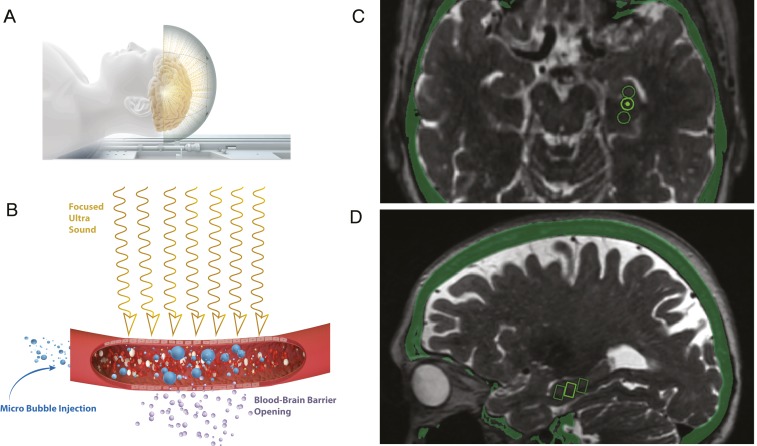
Initial clinical trial results showed safe, feasible, and reversible focused-ultrasound BBB opening in the hippocampus and entorhinal cortex of early AD patients.
Overview
CoChat Summary
## TL;DR
This open-label phase II trial reports that MR-guided low-intensity focused ultrasound (FUS) can safely, reversibly, and repeatedly open the blood-brain barrier (BBB) in the hippocampus/entorhinal cortex of patients with early Alzheimer’s disease. In 6 participants and 17 treatment sessions, BBB opening was immediate, sizable, and transient, with no treatment-related adverse effects or neurological worsening reported.
## Key findings
- Six participants (5 female, 1 male; ages 55–73) underwent a total of 17 FUS treatment sessions targeting the hippocampus/entorhinal cortex.
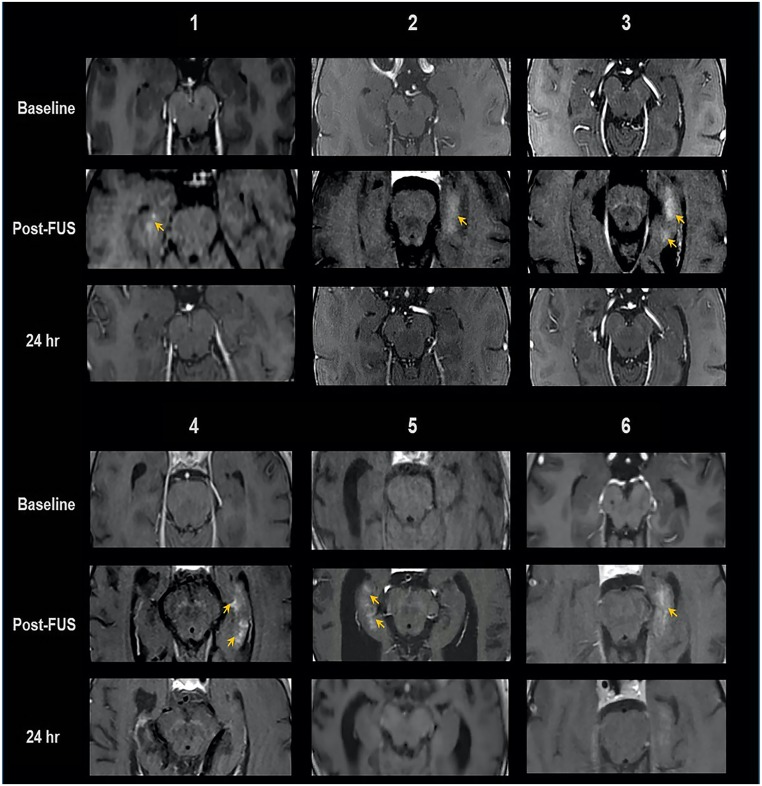
- All 17 sessions produced immediate hippocampal parenchymal enhancement on contrast MRI, indicating BBB opening, with no off-target enhancement.
- BBB opening resolved within 24 hours after treatment.
- MRI-based volumetric analysis found BBB opening covered 95 ± 4% of the FUS-targeted volume, ranging from 318 mm³ to 873 mm³, corresponding to 14% to 71% of the overall hippocampal volume, with an average of 29%.
- There were no treatment-related adverse effects or neurological changes up to 15 months post-FUS, and formal cognitive assessments at 30 days after the last treatment in the first five subjects showed no clinically meaningful changes.
## Methods
- Design: Open-label, prospective phase II clinical trial sponsored by INSIGHTEC, with repeated MR-guided low-intensity FUS to the hippocampus and entorhinal cortex.
- Sample/data: 6 patients with early AD enrolled at two sites (West Virginia University Rockefeller Neuroscience Institute, n=4; Weill Cornell Medical College, n=2), diagnosed by NIA-AA criteria and with 18F-florbetaben PET consistent with AD and amyloid-beta plaques in the target.
- Main analysis: FUS was delivered with simultaneous IV microbubbles; safety was assessed with neurological exams and T2* MRI for hemorrhage, and BBB opening was evaluated by post-FUS gadobutrol contrast MRI with manual segmentation and comparison to targeted and overall hippocampal volumes.
## Limitations
- The paper frames these as initial/early outcomes from an ongoing multicenter trial, so efficacy conclusions are not yet established.
- The study includes only 6 participants and 17 treatments, which limits generalizability; this limitation is evident from the text.
- The paper reports safety/feasibility and imaging-based BBB opening, but does not state clinical benefit on cognition or AD progression beyond “no clinically meaningful changes” in short-term assessments; this limitation is evident from the text.
Model-written summary. Check it against the paper before relying on it.
Integrity signals
Registry
Cites
Statistics
Figures
Verification
Claims the paper makes
6 Valid · 0 Not valid · 2 Not checked · 23 Own results and interpretations
The sources with a verdict support this claim; the rest weren’t checked yet, have no full text we could read, or their verdicts aren’t rated yet.
In the paper
“Animal studies have demonstrated safe and reversible BBB opening (4, 6, 7) as well as reduction of amyloid-beta plaque, neurogenesis, and improvement of memory.”
§ Noninvasive hippocampal blood−brain barrier opening in Alzheimer’s disease with focused ultrasound > Abstract
What the sources say
- Not checked — no full text of the sourcecites [4] Krishna V., Sammartino F., Rezai A., A review of the current therapies, challenges, and future directions of transcranial focused ultrasound technology: Advances in diagnosis and treatment. JAMA Neurol. 75, 246– 254 (2018). 29228074 source
- Supportedcites [6] Burgess A., Alzheimer disease in a mouse model: MR imaging-guided focused ultrasound targeted to the hippocampus opens the blood-brain barrier and improves pathologic abnormalities and behavior. Radiology 273, 736– 745 (2014). 25222068 PMC4314115 source
The Introduction describes focused-ultrasound BBB opening as temporary and says it can be achieved safely. The Discussion reports that repeated BBB opening in the study's mice caused no histologic signs of tissue damage. (LLM, conf=0.92)
- Not checked — no full text of the sourcecites [7] Hynynen K., McDannold N., Vykhodtseva N., Jolesz F. A., Non-invasive opening of BBB by focused ultrasound. Acta Neurochir. Suppl. 86, 555– 558 (2003). 14753505 source
boostedstates a cause- Asserted: passes — The authors put it forward as true.
- Checkable: passes — It can be checked against evidence.
- Load-bearing: passes — The paper’s conclusions depend on it.
- Based: passes — The paper gives a reason why it holds.
A result the paper reports from its own data — it cites no other source for it, so there is none to check. The quote shows it is in the paper.
In the paper
“MRI-based volumetric analysis of BBB opening in the hippocampus demonstrated parenchymal contrast enhancement of 95 ± 4% of the FUS targeted volume, ranging from 318 mm3 (two targets) to 873 mm3 (five targets).”
§ Noninvasive hippocampal blood−brain barrier opening in Alzheimer’s disease with focused ultrasound > Results
boostedn = 6- Asserted: passes — The authors put it forward as true.
- Checkable: passes — It can be checked against evidence.
- Load-bearing: passes — The paper’s conclusions depend on it.
- Based: passes — The paper gives a reason why it holds.
A result the paper reports from its own data — it cites no other source for it, so there is none to check. The quote shows it is in the paper.
In the paper
“This parenchymal contrast enhancement resolved within 24 h after FUS treatment.”
§ Noninvasive hippocampal blood−brain barrier opening in Alzheimer’s disease with focused ultrasound > Results
plainstates a cause- Asserted: passes — The authors put it forward as true.
- Checkable: passes — It can be checked against evidence.
- Load-bearing: passes — The paper’s conclusions depend on it.
- Based: passes — The paper gives a reason why it holds.
A result the paper reports from its own data — it cites no other source for it, so there is none to check. The quote shows it is in the paper.
In the paper
“Formal cognitive assessments at 30 d after the last treatment in the first five subjects showed no clinically meaningful changes (SI Appendix).”
§ Noninvasive hippocampal blood−brain barrier opening in Alzheimer’s disease with focused ultrasound > Results
plainn = 5- Asserted: passes — The authors put it forward as true.
- Checkable: passes — It can be checked against evidence.
- Load-bearing: unclear — It is unclear whether the paper’s conclusions depend on it.
- Based: passes — The paper gives a reason why it holds.
A result the paper reports from its own data — it cites no other source for it, so there is none to check. The quote shows it is in the paper.
In the paper
“MRI with gadobutrol IV contrast post-FUS treatment revealed immediate hippocampal parenchymal enhancement at the target region in all 17 treatment sessions, indicating enhanced BBB permeability, with no off-target enhancement (Fig. 2).”
§ Noninvasive hippocampal blood−brain barrier opening in Alzheimer’s disease with focused ultrasound > Results
plainstates a causen = 6- Asserted: passes — The authors put it forward as true.
- Checkable: passes — It can be checked against evidence.
- Load-bearing: passes — The paper’s conclusions depend on it.
- Based: passes — The paper gives a reason why it holds.
10 more claims
Create a free account to see all 31 claims and to verify the 3 references still open.
- It may state two separate claims as one. 9
- Probably not a substantial claim. 9
- The quote only partly states this claim. 1
Citations
Cites
McKhann, G. M., Knopman, D. S., Chertkow, H., Hyman, B. T., Jack, C. R., Kawas, C. H., Klunk, W. E., Koroshetz, W. J., Manly, J. J., Mayeux, R., et al. (2011) · Alzheimer's & Dementia · doi:10.1016/j.jalz.2011.03.005 · Cited by 18,657
Blood-brain barrier opening in Alzheimer’s disease using MR-guided focused ultrasound
Lipsman, N., Meng, Y., Bethune, A. J., Huang, Y., Lam, B., Masellis, M., Herrmann, N., Heyn, C., Aubert, I., Boutet, A., et al. (2018) · Nature Communications · doi:10.1038/s41467-018-04529-6 · Cited by 950 · cited 2×
“This study is the next step following a proof of concept phase I study in AD patients demonstrating safe BBB opening in a limited noneloquent white matter area of the superficial dorsolateral prefrontal cortex (11).”
BackgroundResultThe role of adult hippocampal neurogenesis in brain health and disease
Toda, T., Parylak, S. L., Linker, S. B., & Gage, F. H. (2019) · Molecular Psychiatry · doi:10.1038/s41380-018-0036-2 · Cited by 719 · cited 1×
“T hippocampus is critical in the pathogenesis of Alzheimer’s disease (AD), epilepsy, and depression (1).”
BackgroundScanning ultrasound removes amyloid-β and restores memory in an Alzheimer’s disease mouse model
Leinenga, G., & Götz, J. (2015) · Science Translational Medicine · doi:10.1126/scitranslmed.aaa2512 · Cited by 498 · cited 1×
“FUS-mediated BBB opening in preclinical models has been found to promote amyloid-beta clearance, delivery of endogenous antibodies, activation of microglia (8, 12), and potential modulation of the glymphatic system (13).”
BackgroundBlood-Brain Barrier and Delivery of Protein and Gene Therapeutics to Brain
Pardridge, W. M. (2020) · Frontiers in Aging Neuroscience · doi:10.3389/fnagi.2019.00373 · Cited by 405 · cited 1×
“To overcome the BBB, pharmaceuticals and biological treatments require systemic dose escalation or invasive, risky procedures like transarterial diuretic infusion and direct intracranial infusion (2, 3).”
BackgroundEvolving Drug Delivery Strategies to Overcome the Blood Brain Barrier
S. Hersh, D., S. Wadajkar, A., B. Roberts, N., G. Perez, J., P. Connolly, N., Frenkel, V., A. Winkles, J., F. Woodworth, G., & J. Kim, A. (2016) · Current Pharmaceutical Design · doi:10.2174/1381612822666151221150733 · Cited by 387 · cited 1×
“To overcome the BBB, pharmaceuticals and biological treatments require systemic dose escalation or invasive, risky procedures like transarterial diuretic infusion and direct intracranial infusion (2, 3).”
BackgroundJordão, J. F., Thévenot, E., Markham-Coultes, K., Scarcelli, T., Weng, Y.-Q., Xhima, K., O'Reilly, M., Huang, Y., McLaurin, J., Hynynen, K., et al. (2013) · Experimental Neurology · doi:10.1016/j.expneurol.2013.05.008 · Cited by 326 · cited 1×
“FUS-mediated BBB opening in preclinical models has been found to promote amyloid-beta clearance, delivery of endogenous antibodies, activation of microglia (8, 12), and potential modulation of the glymphatic system (13).”
BackgroundKrishna, V., Sammartino, F., & Rezai, A. (2018) · JAMA Neurology · doi:10.1001/jamaneurol.2017.3129 · Cited by 289
Self-citationBurgess, A., Dubey, S., Yeung, S., Hough, O., Eterman, N., Aubert, I., & Hynynen, K. (2014) · Radiology · doi:10.1148/radiol.14140245 · Cited by 286 · cited 1×
“Animal studies have demonstrated safe and reversible BBB opening (4, 6, 7) as well as reduction of amyloidbeta plaque, neurogenesis, and improvement of memory.”
BackgroundScarcelli, T., Jordão, J. F., O'Reilly, M. A., Ellens, N., Hynynen, K., & Aubert, I. (2014) · Brain Stimulation · doi:10.1016/j.brs.2013.12.012 · Cited by 156
Cited by
Items 101–200 of 353
Du, Z., Li, Y., Jiang, X., & Gao, J. (2025) · Small · doi:10.1002/smll.202410404 · Cited by 39
Feng, X., Jiang, B., Zhai, S.-N., Liu, C., Wu, H., Zhu, B.-Q., Wei, M.-Y., Wei, J., Yang, L. C., & Chen, L. (2025) · Nature Biotechnology · doi:10.1038/s41587-025-02624-w · Cited by 48
Singh, A., Kusunose, J., Phipps, M. A., Wang, F., Chen, L. M., & Caskey, C. F. (2022) · Scientific Reports · doi:10.1038/s41598-022-18328-z · Cited by 34
“(8) E(x) = 4π α(2)ρoc wD(x)Rs(x)D(x)w.”
The Role of Reactive Oxygen Species in Alzheimer's Disease: From Mechanism to Biomaterials Therapy
Yu, Z., & Luo, F. H. (2024) · Advanced Healthcare Materials · doi:10.1002/adhm.202304373 · Cited by 36
Arsiwala, T. A., Sprowls, S. A., Blethen, K. E., Fladeland, R. A., Wolford, C. P., Kielkowski, B. N., Glass, M. J., Wang, P., Wilson, O., Carpenter, J., et al. (2022) · Fluids and Barriers of the CNS · doi:10.1186/s12987-022-00369-1 · Cited by 26
Self-citationStatic Magnetic Fields Dampen Focused Ultrasound–mediated Blood-Brain Barrier Opening
Yang, Y., Pacia, C. P., Ye, D., Yue, Y., Chien, C.-Y., & Chen, H. (2021) · Radiology · doi:10.1148/radiol.2021204441 · Cited by 30
Mitra, S., Gera, R., Linderoth, B., Lind, G., Wahlberg, L. U., Almqvist, P. M., Behbahani, H., & Eriksdotter, M. (2021) · Advances in experimental medicine and biology · doi:10.1007/978-3-030-74046-7_11 · Cited by 30
Weber‐Adrian, D., Kofoed, R. H., Silburt, J., Noroozian, Z., Shah, K., Burgess, A., Rideout, S., Kügler, S., Hynynen, K., & Aubert, I. (2021) · Scientific Reports · doi:10.1038/s41598-021-81046-5 · Cited by 30
Wang, Y., Luo, K., Li, J., Liao, Y.-H., Liao, C., Chen, W., Chen, M.-X., & Ao, L. (2022) · Frontiers in Cellular Neuroscience · doi:10.3389/fncel.2022.884788 · Cited by 26
“In animal and clinical trials, researchers have demonstrated that the combination of FUS and microbubbles can safely as well as reversibly induce the opening of the BBB under specific parameters (Rezai et al., 2020; Wu et al., 2020; Pouliopoulos et al., 2021; Yang et al., 2021).”
BackgroundHuang, J., Zhang, L., Zheng, J., Lin, Y., Leng, X., Wang, C., Li, P., & Feng, L. (2023) · Biomaterials · doi:10.1016/j.biomaterials.2023.122181 · Cited by 28
Exploiting sound for emerging applications of extracellular vesicles
Wu, Z., Cai, H., Tian, C., Ao, Z., Jiang, L., & Guo, F. (2023) · Nano Research · doi:10.1007/s12274-023-5840-6 · Cited by 25
Advancements in strategies for overcoming the blood–brain barrier to deliver brain-targeted drugs
Qu, Z., Luo, J., Li, Z., Yang, R., Zhao, J., Chen, X., Yu, S., & Shu, H. (2024) · Frontiers in Aging Neuroscience · doi:10.3389/fnagi.2024.1353003 · Cited by 34
Carradori, D., Chen, H., Werner, B., Shah, A. S., Leonardi, C., Usuelli, M., Mezzenga, R., Platt, F. M., & Leroux, J. (2020) · Small · doi:10.1002/smll.202004735 · Cited by 25
Multi-mechanical waves against Alzheimer’s disease pathology: a systematic review
Monteiro, F., Sotiropoulos, I., Carvalho, Ó. S. N., Sousa, N., & Silva, F. S. (2021) · Translational Neurodegeneration · doi:10.1186/s40035-021-00256-z · Cited by 24
“Similarly, other studies have detected no significant changes in cognitive function in AD patients after two to five sessions of continuous ultrasonic waves (220-kHz center frequency) (2 weeks period), either at 30-day [82] or at 1-week follow-up [65], independent of alterations in Aβ burden.”
BackgroundResultNeurotrophins as Therapeutic Agents for Parkinson’s Disease; New Chances From Focused Ultrasound?
Stefani, A., Pierantozzi, M., Cardarelli, S., Stefani, L., Cerroni, R., Conti, M., Garasto, E., Mercuri, N. B., Marini, C., & Sucapane, P. (2022) · Frontiers in Neuroscience · doi:10.3389/fnins.2022.846681 · Cited by 26
Bok, J., Ha, J., Ahn, B. J., & Jang, Y. (2022) · International Journal of Molecular Sciences · doi:10.3390/ijms24010679 · Cited by 25
“Thereafter, another study further supported the safety, feasibility, and reversibility of BBB opening with focused ultrasound treatment of the hippocampus and entorhinal cortex in six patients with AD [124].”
MethodResultFocused Ultrasound–mediated Liquid Biopsy in a Tauopathy Mouse Model
Pacia, C. P., Yuan, J., Yue, Y., Leuthardt, E. C., Benzinger, T. L. S., Nazeri, A., & Chen, H. (2023) · Radiology · doi:10.1148/radiol.220869 · Cited by 22
Sharma, A., Fernandes, D. C., Reis, R. L., Gołubczyk, D., Neumann, S., Łukomska, B., Janowski, M., Kortylewski, M., Walczak, P., Oliveira, J. M., et al. (2023) · Cell & Bioscience · doi:10.1186/s13578-023-01079-3 · Cited by 27
Engineering advanced nanomedicines against central nervous system diseases
Shi, S., Ren, H., Xie, Y., Yu, M., Chen, Y., & Yang, L. (2023) · Materials Today · doi:10.1016/j.mattod.2023.08.005 · Cited by 26
Ye, B. S., Chang, K. W., Kang, S., Jeon, S., & Chang, J. W. (2025) · Journal of Neurosurgery · doi:10.3171/2024.8.jns24989 · Cited by 22
Hu, Z., Chen, S., Yang, Y., Gong, Y., & Chen, H. (2022) · IEEE Transactions on Biomedical Engineering · doi:10.1109/tbme.2022.3150781 · Cited by 30
Berselli, A., Benfenati, F., Maragliano, L., & Alberini, G. (2022) · Computational and Structural Biotechnology Journal · doi:10.1016/j.csbj.2022.10.038 · Cited by 22
Marson, F., Lasaponara, S., & Cavallo, M. (2021) · Medicina · doi:10.3390/medicina57030215 · Cited by 27
Zhu, Q., Xu, X., Chen, B., Liao, Y., Guan, X., He, Y., Cui, H., Rong, Y., Liu, Z., & Xu, Y. (2022) · Medical Physics · doi:10.1002/mp.15500 · Cited by 21
Librizzi, L., Uva, L., Raspagliesi, L., Gionso, M., Regondi, M. C., Durando, G., DiMeco, F., de Curtis, M., & Prada, F. U. (2022) · Scientific Reports · doi:10.1038/s41598-022-06791-7 · Cited by 22
Berselli, A., Alberini, G., Benfenati, F., & Maragliano, L. (2022) · ACS Chemical Neuroscience · doi:10.1021/acschemneuro.2c00139 · Cited by 24
Li, B., Lin, Y., Chen, G., Cai, M., Zhong, H., Xiao, Z., Lin, M., Li, T., Cai, Y., Shuai, X., et al. (2023) · Advanced Science · doi:10.1002/advs.202302134 · Cited by 23
Cellular junction dynamics and Alzheimer’s disease: a comprehensive review
Asghari, K., Niknam, Z., Mohammadpour-Asl, S., & Chodari, L. (2024) · Molecular Biology Reports · doi:10.1007/s11033-024-09242-w · Cited by 20
Meng, Y., Kalia, L. V., Kalia, S. K., Hamani, C., Huang, Y., Hynynen, K., Lipsman, N., & Davidson, B. (2024) · Pharmaceutics · doi:10.3390/pharmaceutics16060719 · Cited by 30
“Other studies then demonstrated the safety of opening the BBB in a larger volume and alternative anatomical targets [43,46].”
BackgroundMicrobubble-Enhanced Focused Ultrasound for Infiltrating Gliomas
Seas, A. A., Malla, A. P., Sharifai, N., Winkles, J. A., Woodworth, G. F., & Anastasiadis, P. (2024) · Biomedicines · doi:10.3390/biomedicines12061230 · Cited by 21
“…to the MB dose and FUS intensity—a higher dose was analogous to greater signal intensity. weeks after treatment, further indicating that FUS can achieve targeted Follow-up MRI scans in preclinical and clinical studies have shown that the BBB returns to its baseline within several hours[34,40,41].”
BackgroundRouhi, N., Chakeri, Z., Ghorbani Nejad, B., Rahimzadegan, M., Rafi Khezri, M., Kamali, H., & Nosrati, R. (2024) · Heliyon · doi:10.1016/j.heliyon.2024.e37533 · Cited by 20
“The result of the present study exhibited noninvasively, safely, transiently, focally, and reproducibly of FUS/MBs technique in the permeability of BBB in the hippocampus/EC in humans [157].”
ResultVazana, U., Schori, L., Monsonego, U., Swissa, E., Pell, G. S., Roth, Y., Brodt, P., Friedman, A., & Prager, O. (2020) · Pharmaceutics · doi:10.3390/pharmaceutics12100946 · Cited by 21
Leinenga, G., Bodea, L., Schröder, J., Sun, G., Zhou, Y., Song, J. H., Grubman, A., Polo, J. M., & Götz, J. (2022) · Bioengineering & Translational Medicine · doi:10.1002/btm2.10329 · Cited by 19
Li, Q., Wang, C., Hu, J., Jiao, W., Tang, Z., Song, X., Wu, Y., Dai, J., Gao, P., Du, L., et al. (2023) · International Journal of Pharmaceutics · doi:10.1016/j.ijpharm.2023.122872 · Cited by 20
Petrovskaya, A. V., Tverskoi, A. M., Medvedeva, A., & Nazarova, M. A. (2023) · Communications Biology · doi:10.1038/s42003-023-04717-1 · Cited by 21
The Role of Astrocytes and Blood–Brain Barrier Disruption in Alzheimer’s Disease
Cruz, J. V. R., Batista, C., Diniz, L. P., & Mendes, F. A. (2023) · Neuroglia · doi:10.3390/neuroglia4030015 · Cited by 20
Neurosurgical neuromodulation therapy for psychiatric disorders
Ranjan, M., Mahoney, J. J., & Rezai, A. R. (2024) · Neurotherapeutics · doi:10.1016/j.neurot.2024.e00366 · Cited by 22
Self-citation3-D Transcranial Microbubble Cavitation Localization by Four Sensors
Hu, Z., Xu, L., Chien, C.-Y., Yang, Y., Gong, Y., Ye, D., Pacia, C. P., & Chen, H. (2021) · IEEE Transactions on Ultrasonics Ferroelectrics and Frequency Control · doi:10.1109/tuffc.2021.3091950 · Cited by 23
Khan, H., Naseem, T., Kaushik, P., Narang, J., Khan, R., Panwar, S., & Parvez, S. (2024) · Ageing Research Reviews · doi:10.1016/j.arr.2024.102535 · Cited by 22
Hackett, E. P., Shah, B., Cheng, B., LaGue, E., Vemireddy, V., Mendoza, M., Bing, C., Bachoo, R. M., Billingsley, K. L., Chopra, R., et al. (2021) · ACS Chemical Neuroscience · doi:10.1021/acschemneuro.1c00197 · Cited by 20
Cationic Magnetic Nanoparticles Activate Natural Killer Cells for the Treatment of Glioblastoma
Rao, Z., Kuang, J., Pan, T. S., Qin, Y., Huang, Q., Sun, Y.-L., Zhao, K., Jin, X., Yang, C.-H., Zhang, S., et al. (2024) · ACS Nano · doi:10.1021/acsnano.4c11250 · Cited by 24
Cheyuo, C., Germann, J., Yamamoto, K., Vetkas, A., Loh, A., Sarica, C., Milano, V., Zemmar, A., Flouty, O. E., Harmsen, I. E., et al. (2022) · Translational Psychiatry · doi:10.1038/s41398-022-02246-9 · Cited by 22
Ahmed, M. H., Quissac, E., Lemaire, N., Hernández-Verdín, I., Zahr, N., Schmitt, C., Bouchoux, G., Canney, M., Santin, M. D., Petiet, A., et al. (2023) · Pharmaceutics · doi:10.3390/pharmaceutics15020455 · Cited by 22
“UMBO has shown a good safety profile for BBB opening in recurrent GBM patients [10,12] and is now being studied in dozens of clinical trials using a range of transcranial [13] or implantable ultrasound devices [10] for treating both primary and secondary brain tumors as well as neurodegenerative diseases [14].”
BackgroundCerasuolo, M., Papa, M., Colangelo, A. M., & Rizzo, M. R. (2023) · Biomedicines · doi:10.3390/biomedicines11030861 · Cited by 18
“It has also been shown that FUS can safely, noninvasively, transiently, reproducibly, and focally mediate BBB opening in the hippocampus/EC in humans [63].”
BackgroundAdvances in Blood-Brain Barrier Disruption to Facilitate Drug Delivery for Infiltrative Gliomas
Gould, A., Arrieta, V. A., Dmello, C., Saganty, R., Lukas, R. V., Zhang, D. Y., Heimberger, A. B., Canney, M. S., Carpentier, A. C., Desseaux, C., et al. (2023) · Advances in Oncology · doi:10.1016/j.yao.2023.01.017 · Cited by 18
Singh, R., & Yang, X. (2022) · AIP Advances · doi:10.1063/5.0082429 · Cited by 17
Overcoming the Blood-Brain Barrier for Drug Delivery to the Brain
Katz, J. S., Slika, H., Sattari, S. A., Malla, A. P., Xia, Y., Antar, A., Ran, K. R., & Tyler, B. (2025) · ACS Omega · doi:10.1021/acsomega.5c00364 · Cited by 22
Nanotherapeutics for Alleviating Anesthesia‐Associated Complications
Lu, B. F., Wei, L., Shi, G., & Du, J. (2024) · Advanced Science · doi:10.1002/advs.202308241 · Cited by 20
An Ultrasound-Guided Hemispherical Phased Array for Microbubble-Mediated Ultrasound Therapy
Deng, L., Yang, S. D., O’Reilly, M. A., Jones, R. M., & Hynynen, K. (2021) · IEEE Transactions on Biomedical Engineering · doi:10.1109/tbme.2021.3132014 · Cited by 19
Lechpammer, M., Rao, R., Shah, S., Mirheydari, M., Bhattacharya, D., Koehler, A., Toukam, D. K., Haworth, K. J., Krummel, D. P., & Sengupta, S. (2022) · Cancers · doi:10.3390/cancers14071627 · Cited by 19
“This approach has been used in clinical trials with the ExAblate Neuro system from Insightec [4,5,119,123,150].”
MethodHanumanthappa, R., Parthasarathy, A., Heggannavar, G. B., Kiran, P. C., Nanjaiah, H., Kumbhar, R., & Devaraju, K. S. (2024) · Neuroprotection/Neuroprotection (Chichester, England. Print) · doi:10.1002/nep3.60 · Cited by 17
“85 The main fi nal forms of A β , including the 40 ‐ amino ‐ acid A β 40 and 42 ‐ amino ‐ acid A β 42, are further broken down into endocytic compartments.”
Repeated neuromodulation with low-intensity focused ultrasound in patients with Alzheimer's disease
Jeong, H. S., Kim, D., Na, S., Kim, B. J., Oh, J. K., Choi, E. K., Yoon, S. J., Bikson, M., Chung, Y., & Song, I. (2025) · Journal of Alzheimer s Disease · doi:10.1177/13872877251333614 · Cited by 20
Blood–Brain Barrier: Structure, Function, Diseases, and Drug Delivery Systems
He, Y., Qu, M., Yu, L., He, L., Lu, Y., Hong, J., Sun, M., Yang, H., Mi, W., Guo, H., et al. (2026) · MedComm · doi:10.1002/mco2.70712 · Cited by 33
Chang, K. W., Hong, S. W., Chang, W. S., Jung, H. H., & Chang, J. W. (2023) · Journal of Korean Neurosurgical Society · doi:10.3340/jkns.2022.0236 · Cited by 15
New Insights into Alzheimer’s Disease: Novel Pathogenesis, Drug Target and Delivery
Chen, H., Xu, J., Xu, H., Luo, T., Li, Y., Jiang, K., Shentu, Y., & Tong, Z. (2023) · Pharmaceutics · doi:10.3390/pharmaceutics15041133 · Cited by 17
Kofoed, R. H., Noseworthy, K., Wu, K., Sivadas, S., Stanek, L. M., Elmer, B. M., Hynynen, K., Shihabuddin, L. S., & Aubert, I. (2022) · Molecular Therapy — Methods & Clinical Development · doi:10.1016/j.omtm.2022.09.011 · Cited by 18
A High-Frequency Phased Array System for Transcranial Ultrasound Delivery in Small Animals
Rahimi, S., Jones, R. M., & Hynynen, K. (2020) · IEEE Transactions on Ultrasonics Ferroelectrics and Frequency Control · doi:10.1109/tuffc.2020.3012868 · Cited by 16
“At present, early stage clinical testing of this noninvasive treatment approach is underway in patients with brain tumors [17], [18], early AD [19], [20], and amyotrophic lateral sclerosis [21].”
BackgroundPatwardhan, A., Wilkinson, T., Meng, Y., Alhashyan, I., Black, S. E., Lipsman, N., & Masellis, M. (2024) · The Journal of Prevention of Alzheimer's Disease · doi:10.14283/jpad.2024.85 · Cited by 15
“Four studies did not show any change in post-procedure psychometric testing during follow up assessments (16–18 , 20).”
Smart micro/nanorobots for drug delivery in the brain
Shi, D., Wang, X., Deng, Y., Zhou, H., Wang, Y., Chu, P. K.-H., & Li, J. (2025) · Progress in Materials Science · doi:10.1016/j.pmatsci.2025.101533 · Cited by 21
Serotonin Modulation of Dorsoventral Hippocampus in Physiology and Schizophrenia
Kandilakis, C. L., & Papatheodoropoulos, C. (2025) · International Journal of Molecular Sciences · doi:10.3390/ijms26157253 · Cited by 18
Ye, D., Luan, J., Pang, H., Yang, Y., Nazeri, A., Rubin, J. B., & Chen, H. (2020) · Journal of Controlled Release · doi:10.1016/j.jconrel.2020.08.053 · Cited by 17
Deveci, E., Akbaş, F., Ergun, A. S., Kurtulmuş, A., Koçak, A. B., Boyraz, R. K., Tok, O. E., Aydın, M. Ş., Kılıç, Ö., Bozkurt, A., et al. (2022) · Molecular Neurobiology · doi:10.1007/s12035-022-03130-9 · Cited by 16
Owusu-Yaw, B. S., Zhang, Y., Garrett, L., Yao, A., Shing, K., Batista, A. R., Sena‐Esteves, M., Upadhyay, J., Kegel-Gleason, K. B., & Todd, N. (2024) · Pharmaceutics · doi:10.3390/pharmaceutics16060710 · Cited by 18
“…with glioblastoma tumors, Alzheimer’s disease (AD), Parkinson’s disease (PD), and amyotrophic lateral sclerosis (ALS) in different brain regions, including the prefrontal cortex, entorhinal cortex, hippocampus, and parieto-occipito-temporal cortex, in the absence of adverse side effects [59–62].”
BackgroundEngineering extracellular vesicles to transiently permeabilize the blood–brain barrier
Tomatis, F., Rosa, S. C., Simões, S. M. N., Barão, M., Jesus, C., Novo, J. P., Barth, E., Marz, M., & Ferreira, L. (2024) · Journal of Nanobiotechnology · doi:10.1186/s12951-024-03019-w · Cited by 15
Innovative Applications of MR-Guided Focused Ultrasound for Neurological Disorders
Stavarache, M. A., Chazen, J. L., & Kaplitt, M. G. (2020) · World Neurosurgery · doi:10.1016/j.wneu.2020.08.052 · Cited by 14
Self-citationLeong, K. X., Sharma, D., & Czarnota, G. J. (2023) · Technology in Cancer Research & Treatment · doi:10.1177/15330338231176376 · Cited by 14
Noninvasive Neuromodulation in Parkinson’s Disease: Insights from Animal Models
Muksuris, K., Scarisbrick, D. M., Mahoney, J. J., & Cherkasova, M. V. (2023) · Journal of Clinical Medicine · doi:10.3390/jcm12175448 · Cited by 14
“On the other hand, FUS-MBs is the least studied (in humans) of the methods reviewed and has not yet been adopted into clinical practice, although the initial studies demonstrate that this technique is well-tolerated and can be safely used in humans [99,100] which is in agreement with the animal studies reporting no ti…”
ResultKe, J., Yu, C., Li, S., Hong, Y., Xu, Y., Wang, K., Meng, T., Yuan, P., Fu, Q., Yuan, H., et al. (2023) · Advanced Healthcare Materials · doi:10.1002/adhm.202302939 · Cited by 18
Diffuse Midline Gliomas: Challenges and New Strategies in a Changing Clinical Landscape
Tosi, U., & Souweidane, M. M. (2024) · Cancers · doi:10.3390/cancers16010219 · Cited by 15
“Locoregional disruption of tissue cytoarchitecture at lower ultrasound intensities can reversibly open the blood–brain barrier (BBB), with clinical trials showing the safety and efficacy of this mode of BBB opening for the purported goal of increasing drug delivery to the target tissue [63].”
BackgroundTargeted miRNA Delivery in Epilepsy: Mechanisms, Advances, and Therapeutic Potential
Shyam, M., Bm, O., Srirangan, P., Nivedita, N., & Prince, S. E. (2025) · Molecular Biology Reports · doi:10.1007/s11033-025-10436-z · Cited by 16
“In clinical evaluations of Alzheimer’s disease, FUS has demonstrated both safety and efficacy, with BBB disruptions resolving within 24 h without adverse effects [173].”
Keep, R. F., Jones, H. C., & Drewes, L. R. (2021) · Fluids and Barriers of the CNS · doi:10.1186/s12987-021-00258-z · Cited by 12
Biomarker changes associated with fornix deep brain stimulation in Alzheimer's disease
Germann, J., Amaral, R. S. C., Tomaszczyk, J. C., Yamamoto, K., Elias, G. J. B., Gouveia, F. V., Vasilevskaya, A., Taghdiri, F., Devenyi, G. A., Sankar, T., et al. (2025) · Alzheimer s & Dementia · doi:10.1002/alz.70394 · Cited by 14
Conway, G. E., Paranjape, A. N., Chen, X., & Villanueva, F. S. (2023) · Ultrasound in Medicine & Biology · doi:10.1016/j.ultrasmedbio.2023.12.005 · Cited by 16
Leiris, N. D., Perret, P., Lombardi, C., Gözel, B., Chierici, S., Millet, P., Debiossat, M., Bacot, S., Tournier, B. B., Chames, P., et al. (2024) · Journal of Translational Medicine · doi:10.1186/s12967-024-04987-1 · Cited by 12
“…focused ultrasound (FUS) coupled with the infusion of microbubbles has been studied in recent years and is regarded as a noninvasive approach to disrupt the BBB in a transient and reversible manner, efficient and well tolerated in animals but also in the first human clinical trials [64, 65].”
BackgroundPayne, C., Cressey, P., Talianu, A., Szychot, E., Hargrave, D. R., Thanou, M., & Pouliopoulos, A. N. (2024) · Heliyon · doi:10.1016/j.heliyon.2024.e39972 · Cited by 13
Herpes Simplex Oncolytic Viral Therapy for Malignant Glioma and Mechanisms of Delivery
Erickson, N. J., Stavarache, M. A., Tekedereli, İ., Kaplitt, M. G., & Markert, J. M. (2025) · World Neurosurgery · doi:10.1016/j.wneu.2024.123595 · Cited by 12
“83 This confirms that current human MRgFUS technology can safely and efficiently target complex brain structures repeatedly in the same subject, which could be a critical capability for treating tumors which may not have all cells capable of responding to OV therapy in a single session.”
Self-citationLabriji, W., Clauzel, J., Mestas, J., Lafond, M., Lafon, C., Salabert, A., Hirschler, L., Warnking, J. M., Barbier, E., Loubinoux, I., et al. (2023) · Magnetic Resonance in Medicine · doi:10.1002/mrm.29596 · Cited by 15
Zibly, Z., Averbuch, S., & Deogaonker, M. (2020) · Neurology India · doi:10.4103/0028-3886.302453 · Cited by 12
Self-citationJiang, Y., Zhang, J., Ye, J., Jin, X., Zhao, Y., Xu, H., Chu, B., He, Y., & Wang, H. (2025) · Analytical Chemistry · doi:10.1021/acs.analchem.5c01626 · Cited by 12
Guan, S., & Tang, M. X. (2023) · Journal of Applied Toxicology · doi:10.1002/jat.4568 · Cited by 14
“For instance, ultrasound can be used to employ to modulate the permeability of the BBB during the administration of nanomedicines (Campbell et al., 2021; Rezai et al., 2020).”
MethodHolman, R., & McDannold, N. J. (2025) · Frontiers in Oncology · doi:10.3389/fonc.2025.1507940 · Cited by 13
Nanomedicine approaches for medulloblastoma therapy
Lim, C., Koo, J., & Oh, K. T. (2022) · Journal of Pharmaceutical Investigation · doi:10.1007/s40005-022-00597-5 · Cited by 11
“Recently, low-intensity FUS has been reported as a safe and reversible technique for opening the BBB (Mainprize et al. 2019; Meng et al. 2018; Rezai et al. 2020).”
MethodHydrogel based lipid-oligonucleotides: a new route to self-delivery of therapeutic sequences
Benizri, S., Gaubert, A., Soulard, C., Gontier, É., Svahn, I., Rocchi, P., Vacher, G., & Barthélémy, P. (2021) · Biomaterials Science · doi:10.1039/d1bm00273b · Cited by 10
Ultrasound-enhanced gene transfection: vectors, methods, and biomedical applications
Wu, J., Gao, Y., Zhou, H., Yang, Z., Rodriguez, R. D. D., Xu, X., Ma, L., & Qiu, L. (2025) · Ultrasonics Sonochemistry · doi:10.1016/j.ultsonch.2025.107607 · Cited by 12
“LIFU has been reported to mediate safe, noninvasive, and transient BBB opening repetitively within the human hippocampus and entorhinal cortex (EC) [247 – 249].”
Chaves, J. C. S., Wasielewska, J. M., Cuní‐López, C., Rantanen, L. M., Lee, S., Koıstınaho, J., White, A. R., & Oikari, L. E. (2023) · Neurotherapeutics · doi:10.1016/j.neurot.2023.10.009 · Cited by 11
“As previously reported by our group [39,42] and others, BBB opening by FUS þ MB is a novel technology that is becoming a promising tool to increase drug delivery into the brain [87,88].”
BackgroundScott, K., & Klaus, S. P. (2024) · Frontiers in Neurology · doi:10.3389/fneur.2024.1426075 · Cited by 17
Zhou, M., Fu, X., Ma, B., Chen, Z., Cheng, Y., Liu, L., Kan, S., Zhao, X., Feng, S., Jiang, Z., et al. (2023) · Frontiers in Neurology · doi:10.3389/fneur.2023.1274642 · Cited by 9
Bao, Y., & Lu, W. (2023) · Expert Opinion on Drug Delivery · doi:10.1080/17425247.2023.2193390 · Cited by 10
Focused ultrasound widely broadens AAV-delivered Cas9 distribution and activity
Gumusgoz, E., Kasiri, S., Youssef, I., Verma, M., Chopra, R., Acha, D. V., Wu, J., Marriam, U., Alao, E. D., Chen, X., et al. (2025) · Gene Therapy · doi:10.1038/s41434-025-00517-w · Cited by 12
The Application of Ultrasound‐Induced Blood–Brain Barrier Opening in Neurology and Immunology
Jiang, A., Wang, Z., Song, D., Zhang, X., Guan, M., Li, X., Tan, J., He, Y., Han, W., Ding, X., et al. (2025) · Small · doi:10.1002/smll.202502699 · Cited by 12
Focused Ultrasound Enhances Glymphatic Transport Robustly Across Anesthesia Levels
Xiao, H., Sreejith, A., Howson, I., Cruz, A. A., Key, T., Iliff, J. J., & Aryal, M. (2025) · Ultrasound in Medicine & Biology · doi:10.1016/j.ultrasmedbio.2025.06.009 · Cited by 11
Intranasal delivery route for neurodegenerative diseases: recent insights and future directions
Correale, J. D., Mattera, V. S., & Pasquini, J. M. (2025) · Drug Delivery and Translational Research · doi:10.1007/s13346-025-01919-4 · Cited by 13
“Additionally, it has been used to facilitate the delivery of therapeutic agents into the CNS in AD [ 48].”
Focused transcranial ultrasound stimulation: a breakthrough approach to treating brain disorders
Vanneste, S., Reynolds, J. N. J., & Ridder, D. D. (2025) · Expert Review of Medical Devices · doi:10.1080/17434440.2025.2563618 · Cited by 10
Ma, X., Yang, T., Liu, L., Peng, X., Qian, F., & Tang, F.-R. (2023) · Biomolecules · doi:10.3390/biom13050754 · Cited by 13
“This strategy has been updated by the magnetic-resonance-guided low-intensity focused ultrasound because of the reversibility of its BBB opening effect [19].”
MethodFocused Ultrasound for Neurodegenerative Diseases
Mehta, R. I., Ranjan, M., Haut, M. W., Carpenter, J., & Rezai, A. R. (2024) · Magnetic Resonance Imaging Clinics of North America · doi:10.1016/j.mric.2024.03.001 · Cited by 8
Self-citationClinical Applications of Micro/Nanobubble Technology in Neurological Diseases
Patel, P. B., Latt, S., Ravi, K., & Razavi, M. (2024) · Biomimetics · doi:10.3390/biomimetics9100645 · Cited by 10
“Early-phase clinical trials have shown that MR-guided FUS can safely open the BBB, allowing for the delivery of therapeutic agents that may modify disease progression [6,94,95].”
Gagliardo, C., Cannella, R., Filorizzo, G., Toia, P., Salvaggio, G., Collura, G., Pignolo, A., Maugeri, R., Napoli, A., D’Amelio, M., et al. (2021) · Scientific Reports · doi:10.1038/s41598-021-82271-8 · Cited by 9
Emerging Therapeutic Strategies for Brain Tumors
Aryal, M., & Porter, T. M. (2021) · NeuroMolecular Medicine · doi:10.1007/s12017-021-08681-z · Cited by 10
Itoh, S., & Okumura, H. (2022) · Methods in molecular biology · doi:10.1007/978-1-0716-1546-1_10 · Cited by 9
Can epilepsy be cured? A review
Kumar, H., Debnath, S., & Sharma, A. (2022) · Health Sciences Review · doi:10.1016/j.hsr.2022.100062 · Cited by 12
Metadata
- Authors
- Rezai, A. R., Ranjan, M., D’Haese, P.-F., Haut, M. W., Carpenter, J., Najib, U., Mehta, R. I., Chazen, J. L., Zibly, Z., Yates, J. R., Hodder, S. L., & Kaplitt, M.
- Affiliations
- West Virginia University (US)
- Weill Cornell Medicine (US)
- Sheba Medical Center (IL)
- Corresponding author
- Rezai, Ali R.
- ORCID
- Venue
- Proceedings of the National Academy of Sciences
- Publisher
- National Academy of Sciences
- Published
- 2020-04-13
- Volume
- 117
- Issue
- 17
- Pages
- 9180-9182
- ISSN
- 0027-8424 (ISSN-L)
- 1091-6490
- PMC
- PMC7196825
- OpenAlex
- W3015813913
- Cited by
- 365
- References
- 16
- Citations by year
- 2026: 45 · 2025: 75 · 2024: 62 · 2023: 61 · 2022: 62 · 2021: 48 · 2020: 12
- FWCI
- 14.36
- Type
- journal article
- Language
- en
- Open access
- hybrid
- doi.org
- Licence
- Locations
- Proceedings of the National Academy of Sciences (publishedVersion, cc-by)
- PubMed Central (publishedVersion, cc-by)
- PubMed (publishedVersion)
- Funders
- West Virginia Clinical and Translational Science Institute
- Weill Cornell Medical College
- National Institute of General Medical Sciences (U54GM104942)
- Topics
- Physical Sciences › Engineering › Biomedical Engineering › Ultrasound and Hyperthermia Applications
- Life Sciences › Neuroscience › Neurology › Barrier Structure and Function Studies
- Health Sciences › Medicine › Radiology, Nuclear Medicine and Imaging › Advanced MRI Techniques and Applications
- Keywords
- blood-brain barrier opening, focused ultrasound, Alzheimer's disease, hippocampus, entorhinal cortex, MR-guided ultrasound, parenchymal enhancement, early Alzheimer's disease, treatment safety and feasibility
- MeSH terms
- Ultrasonic Waves, Aged, Alzheimer Disease, Biological Transport, Blood-Brain Barrier, Brain, Female, Hippocampus, Humans, Male, Middle Aged, Ultrasonography, Ultrasonic Therapy, Drug Delivery Systems, Microbubbles
About these checks
Registry, retraction, Cites and statistics results are computed, not judged, with one exception: a printed reference that no index lists is read once by a model before it counts as a citation error. Claims are extracted by a model and kept only when their quote appears verbatim in the text; each cited source is then checked, with a model’s help, for whether it says what the claim relies on. Those verdicts can be wrong — read the claim’s quote and the cited source before relying on one.
The claim verdicts this report counts are experimental: their accuracy is not yet measured.
A language model drew the claims from the paper on 2026-10-10, under version 3 of the claim definition (model deepseek-v4.1-flash, prompt extract-v3).
A second model labelled each claim on 2026-10-10 (model jev-1.13-20260917, definition revision gold-guideline-v0.2).
Cited sources are checked with a language model’s help (gpt-6-sol).
Statistics and arithmetic are recomputed, not judged.
Confidence bands are shown only for fields calibrated on our annotated test set. None is calibrated yet, so no band is shown.
What counts as a claim ›How we measure confidence ›How we check this ›
Are you an author, or do you see a problem with this page? Request a review
Data sources
Bibliographic data: Semantic Scholar, OpenAlex, Crossref.
Contains information from the Semantic Scholar Academic Graph Datasets, made available under the ODC Attribution License (ODC-BY 1.0).
Semantic Scholar’s data is described in: Kinney, R., et al. (2023). The Semantic Scholar Open Data Platform. arXiv:2301.10140.
