

A high-coverage Neandertal genome from Chagyrskaya Cave
Open accessPublished version of a preprint
The DOI matches its Crossref record; 41 of the 41 references it cites were found in a registry or an index.
Abstract
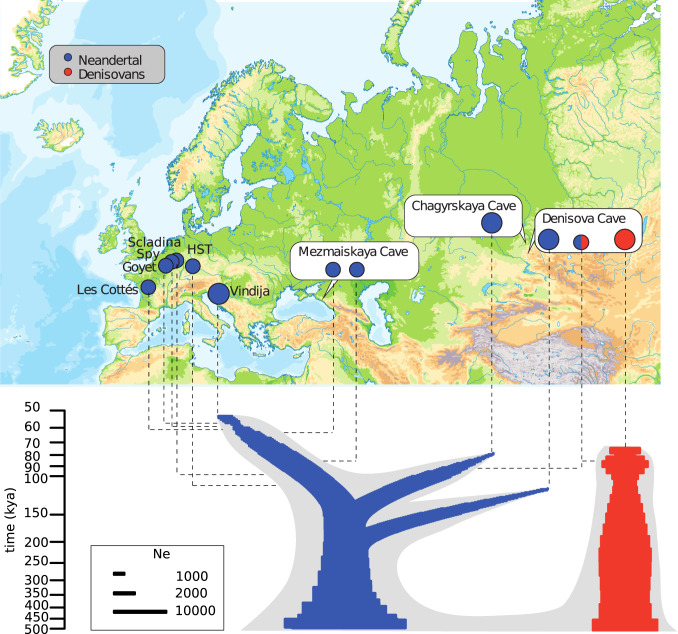
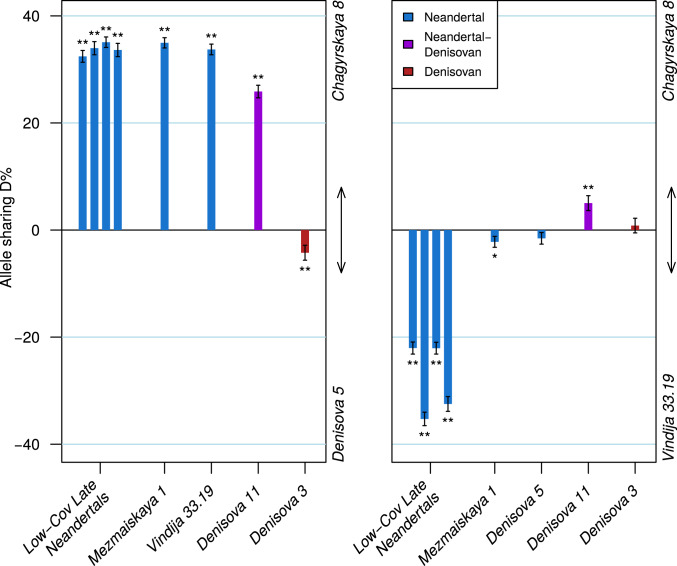
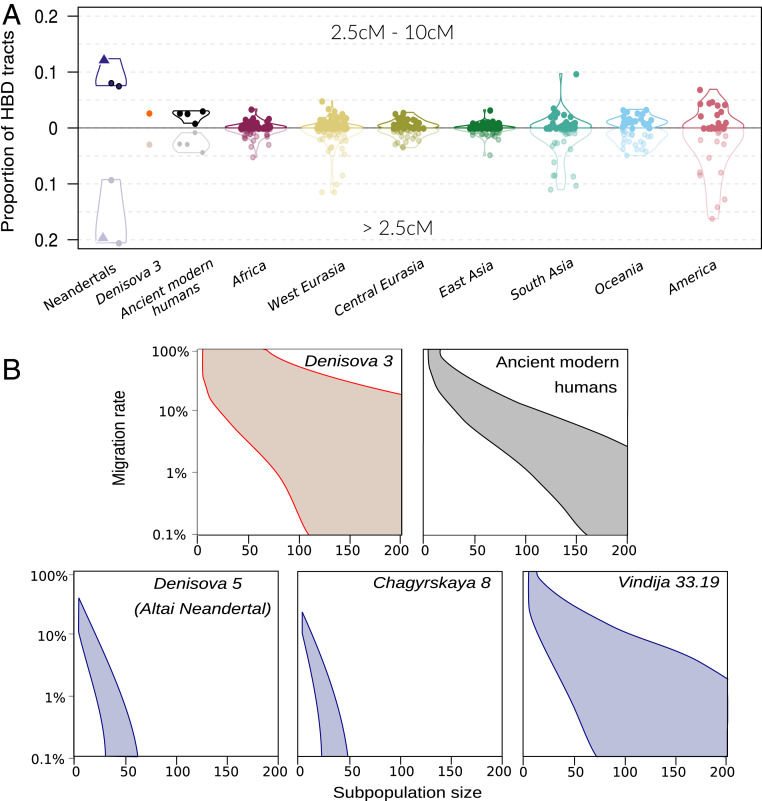
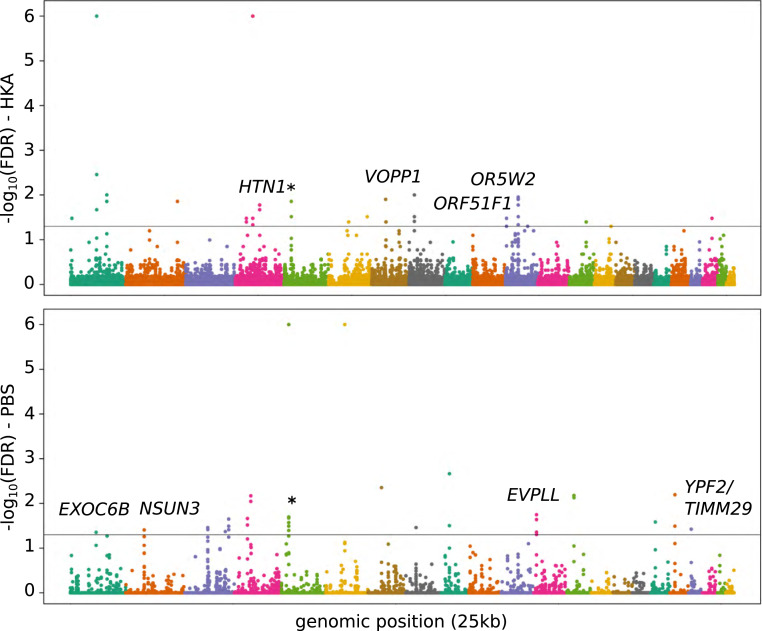
We sequenced the genome of a Neandertal from Chagyrskaya Cave in the Altai Mountains, Russia, to 27-fold genomic coverage. We show that this Neandertal was a female and that she was more related to Neandertals in western Eurasia [Prüfer et al., Science 358, 655–658 (2017); Hajdinjak et al., Nature 555, 652–656 (2018)] than to Neandertals who lived earlier in Denisova Cave [Prüfer et al., Nature 505, 43–49 (2014)], which is located about 100 km away. About 12.9% of the Chagyrskaya genome is spanned by homozygous regions that are between 2.5 and 10 centiMorgans (cM) long. This is consistent with the fact that Siberian Neandertals lived in relatively isolated populations of less than 60 individuals. In contrast, a Neandertal from Europe, a Denisovan from the Altai Mountains, and ancient modern humans seem to have lived in populations of larger sizes. The availability of three Neandertal genomes of high quality allows a view of genetic features that were unique to Neandertals and that are likely to have been at high frequency among them. We find that genes highly expressed in the striatum in the basal ganglia of the brain carry more amino-acid-changing substitutions than genes expressed elsewhere in the brain, suggesting that the striatum may have evolved unique functions in Neandertals.
Overview
The claims and statistics of this paper haven’t been checked yet.
Free: it reads the open-access text and checks the first 5 claims that cite a source we can check. Create a free account to check every claim.
Integrity signals
Registry
Cites
Statistics
Figures
Verification
Claims the paper makes
The claims and statistics of this paper haven’t been checked yet.
Free: it reads the open-access text and checks the first 5 claims that cite a source we can check. Create a free account to check every claim.
Claims other papers make about this one
Each is checked against this paper’s own text: does it say what the citing paper says it does?
The source backs part of the claim, not all of it — or backs it for a different population, condition or comparison.
In the citing paper
“The introgressing Neanderthal population diverged from the Altai Neanderthal population more than 100 kya, while the Vindija was much closer genetically and geographically1,53.”
From Quantifying the contribution of Neanderthal introgression to the heritability of complex traits (2021) · cites this paper as [53]
Experimental — accuracy not yet measuredThe source backs part of the claim, not all of it — or backs it for a different population, condition or comparison.
In the citing paper
“These observations suggest that the population-specific haplotype blocks may be the result of more recent population-specific Neanderthal admixture, as has recently been suggested (26–28, 30).”
From An ancestral recombination graph of human, Neanderthal, and Denisovan genomes (2021) · cites this paper as [28]
Experimental — accuracy not yet measuredThe source backs part of the claim, not all of it — or backs it for a different population, condition or comparison.
In the citing paper
“This value is consistent with published estimates of Neanderthal admixture times and the phylogenetic distance between the Vindija33.19 Neanderthal and the introgressing Neanderthal calculated by a recent study (28).”
From An ancestral recombination graph of human, Neanderthal, and Denisovan genomes (2021) · cites this paper as [28]
Experimental — accuracy not yet measuredThe source backs part of the claim, not all of it — or backs it for a different population, condition or comparison.
In the citing paper
“The Altai-matching set contains alleles that originated in the Neanderthal lineage and were likely common among diverse Neanderthal groups given the substantial genetic, geographical, and temporal divergence of the Altai Neanderthal from the introgressing population1,53.”
From Quantifying the contribution of Neanderthal introgression to the heritability of complex traits (2021) · cites this paper as [53]
Experimental — accuracy not yet measuredThe source backs part of the claim, not all of it — or backs it for a different population, condition or comparison.
In the citing paper
“This approach has revealed that archaic hominin populations survived extinction over long periods of time despite highly reduced effective population sizes [8][9][10] .”
From Ancient DNA analysis (2021) · cites this paper as [10]
Experimental — accuracy not yet measured
2 more claims about this paper
Create a free account to see every claim other papers make about this one.
Self-check
Percentages, sums and reported differences re-computed from the paper’s own numbers.
The self-check needs the paper’s full text.
Citations
Cites
A draft sequence of the Neandertal genome
Green, R. E., Krause, J., Briggs, A. W., Maricic, T., Stenzel, U., Kircher, M., Patterson, N., Li, H., Zhai, W., Fritz, M. H.-Y., et al. (2010) · Science · doi:10.1126/science.1188021 · Cited by 4,318 · cited 1×
“19 ) comes from an individual found in Vindija Cave in Croatia (3), whereas the other Neandertal genome ( Denisova 5 or the “ Altai Neandertal ” ) (4) and the Denisovan genome ( Denisova 3 ) (5) both come from specimens discovered in Denisova Cave, in the Altai mountains in Siberia.”
BackgroundSelf-citationAdaptive protein evolution at the Adh locus in Drosophila
McDonald, J. H., & Kreitman, M. (1991) · Nature · doi:10.1038/351652a0 · Cited by 3,283
An anatomically comprehensive atlas of the adult human brain transcriptome
Hawrylycz, M. J., Lein, E. S., Guillozet-Bongaarts, A. L., Shen, E. H., Ng, L., Miller, J. A., van de Lagemaat, L. N., Smith, K. A., Ebbert, A., Riley, Z. L., et al. (2012) · Nature · doi:10.1038/nature11405 · Cited by 3,083 · cited 1×
“However, when analyzing genes preferentially expressed in different brain regions according to the Allen Brain Atlas (29, 30), we find that genes expressed in the striatum in individuals 12 – 19 y of age show a higher MacDonald-Kreitman ratio (1.02, family-wise error rate = 0.029) than genes…”
BackgroundInfluentialInference of human population history from individual whole-genome sequences
Li, H., & Durbin, R. (2011) · Nature · doi:10.1038/nature10231 · Cited by 2,590
The complete genome sequence of a Neanderthal from the Altai Mountains
Prüfer, K., Racimo, F., Patterson, N., Jay, F., Sankararaman, S., Sawyer, S., Heinze, A., Renaud, G., Sudmant, P. H., de Filippo, C., et al. (2014) · Nature · doi:10.1038/nature12886 · Cited by 2,254 · cited 2×
“In this regard, it is interesting that the Chagyrskaya 8 and Denisova 5 Neandertals lived in smaller populations than the Vindija 33.19 Neandertal in Croatia, the Denisovan Denisova 3, and modern humans (24) (Fig.”
BackgroundInfluentialSelf-citationGenetic history of an archaic hominin group from Denisova Cave in Siberia
Reich, D., Green, R. E., Kircher, M., Krause, J., Patterson, N., Durand, E. Y., Viola, B., Briggs, A. W., Stenzel, U., Johnson, P. L. F., et al. (2010) · Nature · doi:10.1038/nature09710 · Cited by 1,991 · cited 1×
“19 ) comes from an individual found in Vindija Cave in Croatia (3), whereas the other Neandertal genome ( Denisova 5 or the “ Altai Neandertal ” ) (4) and the Denisovan genome ( Denisova 3 ) (5) both come from specimens discovered in Denisova Cave, in the Altai mountains in Siberia.”
BackgroundSelf-citationA high-coverage genome sequence from an archaic denisovan individual
Meyer, M., Kircher, M., Gansauge, M.-T., Li, H., Racimo, F., Mallick, S., Schraiber, J. G., Jay, F., Prüfer, K., de Filippo, C., et al. (2012) · Science · doi:10.1126/science.1224344 · Cited by 1,967 · cited 1×
“For example, genome sequences from five late Neandertals from Europe have shown that they carried little ge-netic variation (6, 7) and were more closely related to the Vindija 33.19 than to the Denisova 5 Neandertal.”
BackgroundInfluentialSelf-citationA Test of Neutral Molecular Evolution Based on Nucleotide Data
Hudson, R. R., Kreitman, M., & Aguadé, M. (1987) · Genetics · doi:10.1093/genetics/116.1.153 · Cited by 1,767
Sequencing of 50 Human Exomes Reveals Adaptation to High Altitude
Yi, X., Liang, Y., Huerta-Sanchez, E., Jin, X., Cuo, Z. X. P., Pool, J. E., Xu, X., Jiang, H., Vinckenbosch, N., Korneliussen, T. S., et al. (2010) · Science · doi:10.1126/science.1190371 · Cited by 1,611
The Simons Genome Diversity Project: 300 genomes from 142 diverse populations
Mallick, S., Li, H., Lipson, M., Mathieson, I., Gymrek, M., Racimo, F., Zhao, M., Chennagiri, N., Nordenfelt, S., Tandon, A., et al. (2016) · Nature · doi:10.1038/nature18964 · Cited by 1,584 · cited 2×
“Among 300 genomes from the Simons Genome Diversity Panel (19) and 89 Papuan genomes (20, 21), the proportions of alleles shared with Chagyrskaya 8 and with Vindija 33.19 are similar ( SI Appendix 7 ), giving no indication that Neandertals closer related to Chagyrskaya 8 than to Vindija 33.19 contributed to the populat…”
BackgroundInfluentialSelf-citation
Research works printed but not linked: 1
- Kolobova K. A.., The significance of bifacial technologies in Altai Middle Paleolithic. Anthropologie 123, 276– 288 (2019).
Cited by
Items 101–200 of 316
Xiong, Z., Li, Y., Liu, X., Lu, H., Hysi, P. G., Pardo, L. M., Uitterlinden, A. G., Rivadeneira, F., Ikram, M. A., Ghanbari, M., et al. (2025) · Nature Communications · doi:10.1038/s41467-025-61761-7 · Cited by 16
“Currently, three high-coverage Neanderthal genomes are available: Altai (110kya, 52x coverage, Siberia) 47 , Vindija (50kya, 30x coverage, Croatia) 67 , and Chagyrskaya (80kya, 27x coverage, Siberia) 68 .”
Archaeogenetic insights into the demographic history of Late Neanderthals
Fotiadou, C. M., Pedersen, J., Rougier, H., Roksandić, M., Spyrou, M. A., Nägele, K., Reiter, E., Bocherens, H., Kandel, A. W., Haidle, M. N., et al. (2026) · Proceedings of the National Academy of Sciences · doi:10.1073/pnas.2520565123 · Cited by 16
“In contrast, ancient genomic studies from the Altai moun-tains indicate a population replacement by western Neanderthal groups between 120 and 80 ka (18, 19).”
Life history and ancestry of the late Upper Palaeolithic infant from Grotta delle Mura, Italy
Higgins, O. A., Modi, A., Cannariato, C., Diroma, M. A., Lugli, F., Ricci, S., Zaro, V., Vai, S., Vazzana, A., Romandini, M., et al. (2024) · Nature Communications · doi:10.1038/s41467-024-51150-x · Cited by 16
“…in the form D(X, Yoruba; Archaic, Ancestral) where “ Archaic ” wasalternately the high-coverage NeanderthalVindija 33.19 or Denisova 3 genome 139,140 , X represents Le Mura 1, and more generally each of the samples/populations tested, chimp was used as ancestral reference, and “ Yoruba ”…”
InfluentialABO Genetic Variation in Neanderthals and Denisovans
Villanea, F. A., Huerta‐Sánchez, E., & Fox, K. (2021) · Molecular Biology and Evolution · doi:10.1093/molbev/msab109 · Cited by 16
Resurrecting the alternative splicing landscape of archaic hominins using machine learning
Brand, C. M., Colbran, L. L., & Capra, J. A. (2023) · Nature Ecology & Evolution · doi:10.1038/s41559-023-02053-5 · Cited by 16
“The output includes four SAPs (∆s) for (1) acceptor gain (AG), (2) acceptor loss (AL), (3) donor gain (DG) and (4) donor loss (DL) as well as the position changes for each of the four deltas.”
BackgroundInfluentialBokelmann, L., Glocke, I., & Meyer, M. (2020) · Genome Research · doi:10.1101/gr.263863.120 · Cited by 16
“…was chosen over hg38/GRCh38 because it is the version commonly used for reconstructing Neanderthal genomes (Prüfer et al. 2014, 2017; Hajdinjak et al. 2018; Mafessoni et al. 2020), and there are few differences between those reference genomes in regions where short reads can be confidently mapped.”
MethodSelf-citationA signature of Neanderthal introgression on molecular mechanisms of environmental responses
Findley, A. S., Zhang, X., Boye, C., Lin, Y. L., Kalita, C. A., Barreiro, L., Lohmueller, K. E., Pique-Regi, R., & Luca, F. (2021) · PLoS Genetics · doi:10.1371/journal.pgen.1009493 · Cited by 14
Recent evolution of the developing human intestine affects metabolic and barrier functions
Yu, Q., Kilik, U., Secchia, S., Adam, L., Tsai, Y.-H., Fauci, C., Janssens, J., Childs, C. J., Walton, K. D., López-Sandoval, R., et al. (2025) · Science · doi:10.1126/science.adr8628 · Cited by 15
Mora‐Bermúdez, F., Taverna, E., & Huttner, W. Β. (2021) · FEBS Journal · doi:10.1111/febs.15793 · Cited by 14
Jackson, A., Lin, S., Jones, E. A., Chandler, K., Orr, D., Moss, C., Haider, Z., Ryan, G., Holden, S. T., Harrison, M., et al. (2023) · Human Genetics and Genomics Advances · doi:10.1016/j.xhgg.2023.100186 · Cited by 15
Infectious disease in the Pleistocene: Old friends or old foes?
Houldcroft, C. J., & Underdown, S. (2023) · American Journal of Biological Anthropology · doi:10.1002/ajpa.24737 · Cited by 18
Flegontov, P., Işıldak, U., Maier, R., Yüncü, E., Changmai, P., & Reich, D. (2023) · PLoS Genetics · doi:10.1371/journal.pgen.1010931 · Cited by 17
Zhou, B., Arthur, J. G., Guo, H., Kim, T., Huang, Y., Pattni, R., Wang, T., Kundu, S., Luo, J. X. J., Lee, H., et al. (2024) · Cell · doi:10.1016/j.cell.2024.09.014 · Cited by 14
Beneker, O., Molinaro, L., Guellil, M., Sasso, S., Kabral, H., Bonucci, B., Gaens, N., D’Atanasio, E., Mezzavilla, M., Delbrassine, H., et al. (2025) · Genome biology · doi:10.1186/s13059-025-03580-z · Cited by 13
He, G., Sun, Y., Duan, S., Luo, L., Sun, Q., Li, B., Yun, L., Liu, C., & Wang, M. (2025) · Genome biology · doi:10.1186/s13059-025-03859-1 · Cited by 18
Reinscheid, R. K., Mafessoni, F., Lüttjohann, A., Jüngling, K., Pape, H., & Schulz, S. (2021) · Peptides · doi:10.1016/j.peptides.2021.170506 · Cited by 13
Self-citationDenisovan admixture facilitated environmental adaptation in Papua New Guinean populations
Yermakovich, D., André, M., Brucato, N., Kariwiga, J., Leavesley, M., Pankratov, V., Mondal, M., Ricaut, F.-X., & Dannemann, M. (2024) · Proceedings of the National Academy of Sciences · doi:10.1073/pnas.2405889121 · Cited by 12
Blood groups of Neandertals and Denisova decrypted
Condémi, S., Mazières, S., Faux, P., Costedoat, C., Ruiz‐Linares, A., Bailly, P., & Chiaroni, J. (2021) · PLoS ONE · doi:10.1371/journal.pone.0254175 · Cited by 13
Massilani, D., Peyrégne, S., Iasi, L. N. M., de Filippo, C., Mafessoni, F., Mesa, A. B., Sümer, A. P., Swiel, Y., Popli, D., Silverman, S., et al. (2026) · Proceedings of the National Academy of Sciences · doi:10.1073/pnas.2534576123 · Cited by 13
“It may also be surprising given that a first - generation offspring of a Denisovan father and Neandertal mother, whose age is comparable to that of Chag8 (3, 42), has been found in Denisova Cave.”
Self-citationRecovering signatures of archaic hominin introgression using ancestral recombination graphs
Zhang, Y., Biddanda, A., Johnson, S., O’Dushlaine, C., & Moorjani, P. (2026) · Science · doi:10.1126/science.aef8874 · Cited by 15
Genetic and functional odorant receptor variation in the Homo lineage
de March, C. A., Matsunami, H., Abe, M., Cobb, M. A., & Hoover, K. C. (2022) · iScience · doi:10.1016/j.isci.2022.105908 · Cited by 12
Methodological Changes in the Field of Paleogenetics
Danielewski, M., Żuraszek-Szymańska, J., Zielińska, A., Herzig, K., Słomski, R., Walkowiak, J., & Wielgus, K. (2023) · Genes · doi:10.3390/genes14010234 · Cited by 13
Kuzmin, Y. V., Slavinsky, V. S., Цыбанков, А. А., & Keates, S. G. (2021) · Journal of Archaeological Research · doi:10.1007/s10814-021-09164-2 · Cited by 14
Genetics of Human Character and Temperament
Cloninger, C. R., & Zwir, I. J. S. (2022) · Wiley eBooks · doi:10.1002/9780470015902.a0029415 · Cited by 14
Interbreeding between Neanderthals and modern humans was strongly sex biased
Platt, A., Harris, D., & Tishkoff, S. A. (2026) · Science · doi:10.1126/science.aea6774 · Cited by 11
Sun, W., Yang, T., Sun, F., Liu, P., Gao, J., Lan, X., Xu, W., Pang, Y., Li, T., Li, C., et al. (2024) · Nature Immunology · doi:10.1038/s41590-024-01944-4 · Cited by 11
“Extant Southeast Asian individuals clustered most closely with the Vindija and Chagyrskaya Neanderthal genomes (Fig.”
InfluentialCurrie, A., & Meneganzin, A. (2022) · Biology & Philosophy · doi:10.1007/s10539-022-09881-y · Cited by 11
Beringia and the Settlement of the Western Hemisphere
Hoffecker, J. F., Питулько, В. В., & Павлова, Е. А. (2022) · Вестник Санкт-Петербургского университета. Серия 2. История · doi:10.21638/spbu02.2022.313 · Cited by 14
Reappraisal of hominin group size in the Lower Paleolithic: An introduction to the special issue
Goren‐Inbar, N., & Belfer‐Cohen, A. (2020) · Journal of Human Evolution · doi:10.1016/j.jhevol.2020.102821 · Cited by 11
The MERS-CoV receptor gene is among COVID-19 risk factors inherited from NeandertalsPreprint
Zeberg, H., & Pääbo, S. (2020) · bioRxiv · doi:10.1101/2020.12.11.422139 · Cited by 6
Self-citationMa, X., Lü, Y., Stoneking, M., & Xu, S. (2025) · Proceedings of the National Academy of Sciences · doi:10.1073/pnas.2404393122 · Cited by 9
A global map for introgressed structural variation and selection in humans
Hsieh, P., Soisangwan, N., Gordon, D., Javidh, A., Harvey, W. T., Porubskỳ, D., Hoekzema, K., Baker, C. A., Munson, K. M., Kinipi, C., et al. (2026) · Science · doi:10.1126/science.adz7518 · Cited by 11
“Over a decade of genomic research has shown that interbreeding occurred between archaic hominins, such as Neanderthals and Denisovans, and the ancestors of modern humans through multiple contacts over the past 100,000 years (1–6).”
Candidate Denisovan fossils identified through gene regulatory phenotyping
Mishol, N., Herzlinger, G., Rak, Y., Smilanksy, U., Carmel, L., & Gokhman, D. (2025) · Proceedings of the National Academy of Sciences · doi:10.1073/pnas.2513968122 · Cited by 9
Oxytocin and vasotocin receptor variation sheds light into the evolution of human prosocialityPreprint
Theofanopoulou, C., Andirkó, A., Boeckx, C. A., & Jarvis, E. D. (2018) · bioRxiv (Cold Spring Harbor Laboratory) · doi:10.1101/460584 · Cited by 10
Liang, S.-A., Ren, T., Zhang, J., He, J., Wang, X., Jiang, X., He, Y., McCoy, R. C., Fu, Q., Akey, J. M., et al. (2025) · Genome Biology · doi:10.1186/s13059-025-03502-z · Cited by 8
Ma, X., Lü, Y., & Xu, S. (2024) · Molecular Biology and Evolution · doi:10.1093/molbev/msae147 · Cited by 8
“…(i.e. CDX), European (i.e. TSI), and African (i.e. YRI) populations together with Vindija Neanderthal (Prüfer et al. 2017), Chagyrskaya Neanderthal (Mafessoni et al. 2020), Altai Neanderthal, Altai Denisovan, and Chimpanzee haplotypes (Chimpanzee Sequencing and Analysis Consortium 2005) were…”
BackgroundInfluentialLeonardi, O., Lewerissa, E., Aprile, D., Barakat, T. S., Culotta, L., Deng, R., Haazen, L., Linda, K., Majoie, M., Mordelt, A., et al. (2025) · bioRxiv (Cold Spring Harbor Laboratory) · doi:10.1101/2025.01.21.634145 · Cited by 8
“Now that high-coverage genomes are available for extinct hominins 15–18 , it is possible to investigate the impact specific mutations may have had.”
Caporale, A. L., Cinalli, A. R., Rubinstein, M., & Franchini, L. F. (2024) · Molecular Biology and Evolution · doi:10.1093/molbev/msae186 · Cited by 7
“In order to date the appearance of the human - specific nucleotide substitutions in our lineage, we compared the modern human HAR202 sequence to those of archaic humans (Neanderthals/Denisovans) using publicly available data from three Neanderthal individuals from the Altai Mountains (Prüfer et al. 2014), Vindija Cave…”
MethodPetersen, J., Englmaier, L., Artemov, A. V., Poverennaya, I. V., Mahmoud, R., Bouderlique, T., Tesarova, M., Deviatiiarov, R. M., Szilvásy‐Szabó, A., Akkuratov, E. E., et al. (2023) · Nature Communications · doi:10.1038/s41467-023-38663-7 · Cited by 7
“…we compared the ratio of the number of non-synonymous substitutions per non-synonymous site (dN) to the number of synonymous substitutions per synonymous site (dS) (dN/dS signature) for 27, 16, and 28 pairs of genomes of birds, reptiles and mammals, respectively (Supplementary Data 1 and 2).”
InfluentialGlunčić, M., Vlahović, I., Rosandić, M., & Paar, V. (2023) · Scientific Reports · doi:10.1038/s41598-023-41517-3 · Cited by 8
Павленок, К. К., Kot, M. A., Moska, P., Leloch, M., Muhtarov, G., Kogai, S. A., Khudjanazarov, M., Holmatov, A., & Szymczak, K. (2022) · Antiquity · doi:10.15184/aqy.2022.99 · Cited by 7
“Within the last 10 years, intensive, multidisciplinary research in the Altai region and Central Asia has become a focal point for discussing human interactions during the Middle–Upper Palaeolithic transition (Derevianko 2015, 2017;Mafessoni et al. 2020).”
BackgroundGeometric morphometrics and paleoproteomics enlighten the paleodiversity of Pongo
Kubat, J., Paterson, R. S., Patramanis, I., Barker, G., Demeter, F., Filoux, A., Kullmer, O., Mackie, M., Marquès‐Bonet, T., Hương, N. T. M., et al. (2023) · PLoS ONE · doi:10.1371/journal.pone.0291308 · Cited by 11
“Since protein data for Pongo and other non-human great apes is scarce, we translated the proteins of interest from publicly available genomic data [17, 77–80].”
Resolving the source of branch length variation in the Y chromosome phylogeny
Swiel, Y., Kelso, J. F., & Peyrégne, S. (2025) · Genome biology · doi:10.1186/s13059-024-03468-4 · Cited by 8
“Our estimate of 76 ka (95% CI 59-93) is consistent with a Neandertal occupation of Chagyrskaya Cave between 92 ka and 49 ka, and close to the genetic age of Chagyrskaya 8 ( ∼ 80 ka), another individual from the same cave, whose age was estimated from a high-coverage genome [24].”
Self-citationThe Earliest Paleolithic Assemblages from Denisova Cave in the Altai
Shunkov, M. V., & Kozlikin, M. B. (2023) · Archaeology Ethnology and Anthropology of Eurasia · doi:10.17746/1563-0110.2023.51.1.018-032 · Cited by 9
The complex landscape of recent human evolution
Lahr, M. M. (2021) · Science · doi:10.1126/science.abj3077 · Cited by 7
Archaic adaptive introgression in modern human reproductive genes
Kendall, C., Nooranikhojasteh, A., Parra, E. J., Schillaci, M. A., & Viola, B. (2025) · Communications Biology · doi:10.1038/s42003-025-08682-9 · Cited by 6
“Because haplotypes require phased data, and the archaic samples are not phased, we took advantage of the fact that our Neanderthal and Denisovan samples have very long runs of homozygosity 38,39,131,132 .”
InfluentialSelf-citationGenetic diversity of late Neanderthals in northwestern Europe
Mesa, A. B., Essel, E., Peyrégne, S., Sümer, A. P., Iasi, L. N. M., Heide, C., Popli, D., de Filippo, C., Gansauge, M.-T., Gerullat, L., et al. (2026) · Nature · doi:10.1038/s41586-026-10625-1 · Cited by 9
“Using f ( A | B )-statistics 8,9,11 , we estimated that the populations represented by A = GN1 and B = Vindija 33.19 split around 54 kyr bp (95% CI 55–53 kyr bp) (Supplementary Information section 16) and nuclear branch shortening estimates suggest that they were probably of similar ages, with GN1…”
InfluentialSelf-citationBocherens, H., Jaouen, K., Rivals, F., Slon, V., Talamo, S., & Welker, F. (2022) · Elsevier eBooks · doi:10.1016/b978-0-12-821428-2.00002-0 · Cited by 6
Self-citationSandroni, V., & Chaumette, B. (2025) · Genes Brain & Behavior · doi:10.1111/gbb.70013 · Cited by 6
Planche, L., Il'ina, A. V., Ávila‐Arcos, M. C., Jay, F., Huerta‐Sánchez, E., & Shchur, V. (2026) · Molecular Biology and Evolution · doi:10.1093/molbev/msag235 · Cited by 6
Structure of a polymorphic repeat at the CACNA1C schizophrenia locus
Moya, R., Wang, X., Tsien, R. W., & Maurano, M. T. (2025) · Proceedings of the National Academy of Sciences · doi:10.1073/pnas.2415650122 · Cited by 6
Ancient regulatory evolution shapes individual language abilities in present-day humans
Casten, L. G., Koomar, T., Thomas, T., Koh, J., Hofammann, D., Thenuwara, S., Momany, A. M., O’Brien, M., Murray, J. C., Tomblin, J. B., et al. (2026) · Science Advances · doi:10.1126/sciadv.aed5260 · Cited by 7
Different species on the horizon: The Denisova hominins
Viola, B. (2022) · Elsevier eBooks · doi:10.1016/b978-0-12-821428-2.00015-9 · Cited by 7
Self-citationEvaluating the effects of archaic protein-altering variants in living human adults
Molz, B., Alberro, M. L., Eising, E., Schijven, D., Alagöz, G., Francks, C., & Fisher, S. E. (2025) · Science Advances · doi:10.1126/sciadv.ads5703 · Cited by 6
“Advances in high-throughput DNA sequencing and the availability of three high-quality Neanderthal genomes ( 7 – 9 ) enabled comparative genomic approaches, opening up ways to reconstruct aspects of the evolutionary history of H. sapiens .”
Le Moustérien du Zagros : une vision synthétique à partir de la grotte de Shanidar
Reynolds, T., Hunt, C. O., Hill, E. A., Tilby, E., Pomeroy, E., Burke, A. M., & Barker, G. (2022) · L Anthropologie · doi:10.1016/j.anthro.2022.103045 · Cited by 6
Fagernäs, Z., Villa-Islas, V., Troché, G., Buylaert, J., Khujageldiev, T., Kurbanov, R., Olsen, J. V., Pedersen, M. W., & Welker, F. (2025) · Journal of Archaeological Science · doi:10.1016/j.jas.2025.106228 · Cited by 9
Deconstructing Neanderthals’ Mobility from an Environmental Perspective
Picin, A. (2022) · Quantitative archaeology and archaeological modelling · doi:10.1007/978-3-030-94368-4_2 · Cited by 6
Archaic ancestry inference in imputed ancient human genomes
Capodiferro, M. R., Planche, L., Breslin, E. M., Ongaro, L., Ávila‐Arcos, M. C., Jay, F., Cassidy, L. M., & Huerta‐Sánchez, E. (2026) · Nature Communications · doi:10.1038/s41467-026-76204-0 · Cited by 5
Brain region-specific effects of nearly fixed sapiens-derived alleles
Andirkó, A., & Boeckx, C. A. (2022) · BMC Genomic Data · doi:10.1186/s12863-022-01048-8 · Cited by 5
A Case of Chronic Maxillary Sinusitis in a Late Neanderthal Population of the Altai Mountains
Zubova, A. V., Kulkov, A. M., Пихур, О. Л., Moiseyev, V. G., Колобова, К. А., & Маркин, С. В. (2022) · Archaeology Ethnology and Anthropology of Eurasia · doi:10.17746/1563-0110.2022.50.3.131-139 · Cited by 5
Genetic Evidence for Geographic Structure within the Neanderthal Population
Rogers, A. R. (2024) · Peer Community Journal · doi:10.24072/pcjournal.448 · Cited by 5
Coco, E., & Iovita, R. (2025) · PLOS One · doi:10.1371/journal.pone.0325693 · Cited by 5
“…corresponding to MIS 6–3 (available at http://doi.org/10.17605/OSF.IO/AH2MK), a time span which bookends the estimated date of divergence of the Neanderthal populations represented by individuals at Mezmaiskaya (Caucasus) and Chagyrskaya (Altai) and the occupation dates of Chagyrskaya [2,3,6].”
InfluentialIadarola, B., Lavezzari, D., Modi, A., Esposti, C. D., Beltrami, C., Rossato, M., Zaro, V., Napione, E., Latella, L., Lari, M., et al. (2021) · Scientific Reports · doi:10.1038/s41598-021-00559-1 · Cited by 6
“Only a few “high-quality” ancient human WGS studies have been reported, including a Denisovan[36] (30× mean coverage) and two Neanderthal individuals (52× and 27× mean coverage)[37][38] investigated mainly to discover gene flow events and admixtures of archaic hominins.”
BackgroundWroblewski, T. H., Witt, K. E., Lee, S., Malhi, R. S., Peede, D., Huerta‐Sánchez, E., Villanea, F. A., & Claw, K. G. (2023) · Genome Biology and Evolution · doi:10.1093/gbe/evad222 · Cited by 6
“Sequencing data for the three Neanderthal individuals and one Denisovan individual are publicly available with alignment and processing of the BAM files previously out-lined (Meyer et al. 2012; Prüfer et al. 2014, 2017; Mafessoni et al. 2020).”
BackgroundMethodInfluentialZubova, A. V., Moiseyev, V. G., Kulkov, A. M., Otcherednoy, A. K., Маркин, С. В., & Колобова, К. А. (2022) · Journal of Human Evolution · doi:10.1016/j.jhevol.2022.103209 · Cited by 6
Vicedomini, R., Righetti, N., Polit, L., Condémi, S., Longo, L., & Carbone, A. (2021) · bioRxiv (Cold Spring Harbor Laboratory) · doi:10.1101/2021.10.30.466563 · Cited by 6
Bon, C. (2025) · médecine/sciences · doi:10.1051/medsci/2025042 · Cited by 5
Illuminating the function of the orphan transporter, SLC22A10, in humans and other primates
Yee, S. W., Ferrández-Peral, L., Alentorn-Moron, P., Fontsere, C., Ceylan, M., Koleske, M. L., Handin, N., Artegoitia, V. M., Lara, G., Chien, H.-C., et al. (2024) · Nature Communications · doi:10.1038/s41467-024-48569-7 · Cited by 4
“All four high-coverage archaic hominin genomes, representing three Neanderthals and a Denisovan, harbor a cytosine atthis position, suggesting thatthis fi xed difference evolved before the common ancestor of archaic hominins and modern humans, ~500 to 700kya 15,20 .”
Zhang, Y., Wang, J., Yi, C., Su, Y., Yin, Z. C., Zhang, S., Li, J., Stoneking, M., Yang, J., Wang, K., et al. (2025) · Cell Genomics · doi:10.1016/j.xgen.2025.100855 · Cited by 6
“To obtain a narrower range for the age estimate of rs34590044-A, we then used Relate to infer the age of rs34590044-A based on the genealogies constructed using four high-coverage archaic humans (three Nean-derthals 40,47,48 and one Denisovan 46 ).”
InfluentialA new late Neanderthal from Crimea reveals long-distance connections across Eurasia
Pigott, E. M., Cheshmedzhieva, K., Zeller, E., van der Sluis, L., Chowdhury, M. P., Giannì, M., Végh, E. I., Uthmeier, T., Chabai, V. P., Patou‐Mathis, M., et al. (2025) · Proceedings of the National Academy of Sciences · doi:10.1073/pnas.2518974122 · Cited by 5
“This hypothesis is supported by genetic data which suggest that the Chagyrskaya and Okladnikov Neanderthals were more closely related to the Vindija Cave 33.19 individual ( 59 ), than to the earlier Altai Neanderthal.”
InfluentialComparing Neanderthal Introgression Maps Reveals Core Agreement But Substantial Heterogeneity
Chen, Y., Velázquez-Arcelay, K., & Capra, J. A. (2026) · Molecular Biology and Evolution · doi:10.1093/molbev/msag064 · Cited by 6
Filogeografía de los Neandertales de la península Ibérica. Estado de la cuestión
Rosas, A., García‐Tabernero, A., & Morales, J. I. (2023) · Cuaternario y geomorfología: Revista de la Sociedad Española de Geomorfología y Asociación Española para el Estudio del Cuaternario · doi:10.17735/cyg.v37i3-4.102641 · Cited by 4
Derevianko, A. P. (2024) · Archaeology Ethnology and Anthropology of Eurasia · doi:10.17746/1563-0110.2024.52.2.003-019 · Cited by 5
Self-citationTowards the genomic sequence code of DNA fragility for machine learning
Pflughaupt, P., Abdullah, A. A., Masuda, K., & Sahakyan, A. B. (2024) · Nucleic Acids Research · doi:10.1093/nar/gkae914 · Cited by 5
Muscle AMP deaminase activity was lower in Neandertals than in modern humans
Macak, D., Lee, S.-Y., Nyman, T., Ampah-Korsah, H., Strandback, E., Pääbo, S., & Zeberg, H. (2025) · Nature Communications · doi:10.1038/s41467-025-61605-4 · Cited by 4
“7) with the genomes of three high-coverage Neandertals 8 – 10 across 128 genes involved in purine metabolism, as annotated in the Kyoto Encyclopedia of Genes and Genomes 11 (KEGG pathway hsa00230; Supplementary Fig.”
Self-citationUttley, K., Juellig, H. J., Angelis, C. D., Auer, J. M. T., Ozga, E., Bengani, H., & Long, H. K. (2025) · Development · doi:10.1242/dev.204779 · Cited by 4
“1C,D) (Prüfer et al., 2014; Green et al., 2010; Mafessoni et al., 2020).”
The evolution of de novo human‐specific microRNA genes on chromosome 21
Johnson, H., Blandino, J. A., Mercado, B. C., Galván, J. A., Higgins, W. J., & Lents, N. H. (2022) · American Journal of Biological Anthropology · doi:10.1002/ajpa.24504 · Cited by 5
Lower promoter activity of the ST8SIA2 gene has been favored in evolving human collective brains
Hayakawa, T., Terahara, M., Fujito, N. T., Matsunaga, T., Teshima, K. M., Hane, M., Kitajima, K., Sato, C., Takahata, N., & Satta, Y. (2021) · PLoS ONE · doi:10.1371/journal.pone.0259897 · Cited by 4
“These AH samples came from Croatia (Vindija Neanderthal) and Siberia (Altai Neanderthal, Chagyrskaya Neanderthal, and Denisovan), and thus are from locations distant from each other [25, 26].”
Voinescu, C., Mozere, M., Genovese, G., Downie, M. L., Gupta, S., Gale, D. P., Böckenhauer, D., Kleta, R., Arcos‐Burgos, M., & Stanescu, H. C. (2024) · Kidney International · doi:10.1016/j.kint.2024.01.017 · Cited by 4
A genetic variant protective against severe COVID-19 is inherited from NeandertalsPreprint
Zeberg, H., & Pääbo, S. (2020) · bioRxiv (Cold Spring Harbor Laboratory) · doi:10.1101/2020.10.05.327197 · Cited by 4
“A 60,000 to 80,000-year-old Neandertal from Chayrskaya Cave in southern Siberia (Mafessoni et al. 2020) carries the protective alleles at 34 of these SNPs in a homozygous form, while an approximately 50,000-year-old Neandertal from Vindija in Croatia (Prüfer et al. 2017) carries the protective alleles in a homozygous…”
BackgroundSelf-citationThe Utility of Ancestral and Derived Allele Sharing for Genome-Wide Inferences of IntrogressionPreprint
Peede, D., Vecchyo, D. O., & Huerta‐Sánchez, E. (2022) · bioRxiv (Cold Spring Harbor Laboratory) · doi:10.1101/2022.12.02.518851 · Cited by 4
Recent advances in methods to characterize archaic introgression in modern humans
Peede, D., Bañuelos, M. M., Tretmanis, J. M., Miyagi, M., & Huerta‐Sánchez, E. (2026) · Genome Research · doi:10.1101/gr.278993.124 · Cited by 5
Genome-wide genealogies reveal deep admixtures forming modern humansPreprint
Loya, H., Hinch, A. G., Palamara, P. F., Speidel, L., & Myers, S. (2026) · bioRxiv (Cold Spring Harbor Laboratory) · doi:10.64898/2026.04.17.719197 · Cited by 7
Neanderthals’ recolonizations of marginal areas: An overview from Eastern Germany
Picin, A. (2024) · Quaternary Science Advances · doi:10.1016/j.qsa.2024.100260 · Cited by 3
Earliest evidence for invasive mitigation of dental caries by Neanderthals
Zubova, A. V., Zotkina, L. V., Olsen, J. W., Кulkov, А. М., Moiseyev, V. G., Malyutina, A. A., Вячеславович, Д. Р., Маркин, С. В., Maksimovskiy, E. A., Chistyakov, P. V., et al. (2026) · PLoS ONE · doi:10.1371/journal.pone.0347662 · Cited by 3
Self-citationLong-term isolation and archaic introgression shape functional genetic variation in Near Oceania
Reilly, P. F., Rong, S., Tejada-Martínez, D., Miller, S. L., Tjahjadi, A., Liu, C., Akers, J. F., Pomer, A., Prentice, M. E., Merriwether, D. A., et al. (2026) · Science · doi:10.1126/science.adr6749 · Cited by 3
Did variants in inborn errors of immunity genes contribute to the extinction of Neanderthals?
Zhou, Z., Swagemakers, S. M. A., Lourens, M. S., Suratannon, N., van der Spek, P. J., Dalm, V. A. S. H., Dik, W. A., IJspeert, H., & van Hagen, P. M. (2022) · Asian Pacific Journal of Allergy and Immunology · doi:10.12932/ap-251022-1489 · Cited by 3
Aneli, S., Berti, C. C., Gilea, A. I., Birolo, G., Mutti, G., Pavesi, A., Baruffini, E., Goffrini, P., & Capelli, C. (2024) · Human Molecular Genetics · doi:10.1093/hmg/ddae057 · Cited by 3
Baumann, M., Girya, E. Y., Crépin, L., Julien, M.-A., Rendu, W., Saifullaev, B., & Krivoshapkin, A. (2025) · Journal of Archaeological Science Reports · doi:10.1016/j.jasrep.2024.104961 · Cited by 3
Self-citationComputational Genomics and Its Applications to Anthropological Questions
Witt, K. E., & Villanea, F. A. (2024) · American Journal of Biological Anthropology · doi:10.1002/ajpa.70010 · Cited by 3
“…Neanderthal genomes and a single Denisovan genome have now been sequenced to high depth (Green et al. 2010; Meyer et al. 2012; Prufer et al. 2014; Mafessoni et al. 2020), and comparison between archaic and modern human genomes has confirmed that modern humans admixed with Neanderthals and…”
An early East Asian lineage with unexpectedly low Denisovan ancestry
Yang, J., Iasi, L. N. M., Fu, Q., Cooke, N. P., Kelso, J. F., Peyrégne, S., & Peter, B. M. (2025) · Current Biology · doi:10.1016/j.cub.2025.08.051 · Cited by 3
Self-citationSrivastava, K., Fratzscher, A.-S., Lan, B., & Flegel, W. A. (2021) · BMC Bioinformatics · doi:10.1186/s12859-021-04169-6 · Cited by 3
Neuroimaging genomics as a window into the evolution of human sulcal organization
Goltermann, O., Alagöz, G., Molz, B., & Fisher, S. E. (2024) · Cerebral Cortex · doi:10.1093/cercor/bhae078 · Cited by 3
Ancient DNA in Lycoptera Fossils: Key Discoveries for Evolution and Methodological ReassessmentPreprint
Zhao, W.-Q., Guo, Z., Tian, Z., Su, T.-F., Cao, G., Qi, Z., Qin, T.-C., Zhou, W., Yang, J., Chen, M., et al. (2023) · bioRxiv (Cold Spring Harbor Laboratory) · doi:10.1101/2023.06.18.545504 · Cited by 3
DCHS1 Modulates Forebrain Proportions in Modern Humans via a Glycosylation ChangePreprint
Pravatà, V. M., Forero, A., Martin, A. C. A., Berto, G., Heymann, T., Fast, L., Mann, M., Riesenberg, S., & Cappello, S. (2025) · bioRxiv (Cold Spring Harbor Laboratory) · doi:10.1101/2025.05.14.654031 · Cited by 3
G-quadruplex propensity in H. neanderthalensis, H. sapiens and Denisovans mitochondrial genomes
Brázda, V., Šislerová, L., Cucchiarini, A., & Mergny, J. (2024) · NAR Genomics and Bioinformatics · doi:10.1093/nargab/lqae060 · Cited by 3
“Its exceptionally well-preserved DNA allowed to obtain a high-coverage genome which appeared unique when compared to H. neanderthalen-sis and present-day humans ( 8 ).”
BackgroundResultHuman evolution: The lonely Neanderthal?
Stringer, C. B. (2025) · Current Biology · doi:10.1016/j.cub.2024.11.043 · Cited by 2
Palaeogenomics: A window into the genetic basis of derived traits in Homo sapiens
Moriano, J., Boeckx, C. A., & Kuhlwilm, M. (2025) · Oxford University Press eBooks · doi:10.1093/oxfordhb/9780192886491.013.12 · Cited by 2
Urciuoli, A., Diez‐Valero, J., Martínez, I., Quam, R., Keeling, B. A., Webb, N. M., & Conde‐Valverde, M. (2025) · The Anatomical Record · doi:10.1002/ar.70081 · Cited by 2
Fontani, F., Larocca, F., Cilli, E., Iacovera, R., Andrews, A. J., Latorre, A., Arena, F., Veneziano, R., Calcagnile, L., Quarta, G., et al. (2025) · Communications Biology · doi:10.1038/s42003-025-09194-2 · Cited by 2
“Archaeogenetic research has linked close-kin mating events to isolation and small population size among different human groups, including Neanderthals 46 , Upper Palaeolithic hunter-gatherers 47,48 , and Neolithic agriculturalists from insular contexts 31 ; others connected inbreeding to dynasticorroyalsystemsinsettle…”
Metadata
- Authors
- Mafessoni, F., Grote, S., de Filippo, C., Slon, V., Kolobova, K. A., Viola, B., Markin, S. V., Chintalapati, M., Peyrégne, S., Skov, L., Skoglund, P., Krivoshapkin, A. I., Derevianko, A. P., Meyer, M., Kelso, J., Peter, B., Prüfer, K., & Pääbo, S.
- Affiliations
- Max Planck Institute for Evolutionary Anthropology (DE)
- Department of Evolutionary Genetics, Max Planck Institute for Evolutionary Anthropology, D-04103 Leipzig, Germany;
- Institute of Archaeology and Ethnography, Russian Academy of Sciences, 630090 Novosibirsk, Russia;
- University of Toronto (CA)
- The Francis Crick Institute (GB)
- Russian Academy of Sciences (RU)
- Okinawa Institute of Science and Technology Graduate University (JP)
- Corresponding author
- Pääbo, Svante
- ORCID
- Venue
- Proceedings of the National Academy of Sciences
- Publisher
- National Academy of Sciences
- Published
- 2020-06-16
- Volume
- 117
- Issue
- 26
- Pages
- 15132-15136
- ISSN
- 0027-8424 (ISSN-L)
- 1091-6490
- PMC
- PMC7334501
- OpenAlex
- W3035248535
- Cited by
- 309
- References
- 40
- Citations by year
- 2026: 43 · 2025: 51 · 2024: 56 · 2023: 49 · 2022: 41 · 2021: 49 · 2020: 17
- FWCI
- 147.29
- Type
- journal article
- Language
- en
- Open access
- hybrid
- doi.org
- Licence
- Locations
- Proceedings of the National Academy of Sciences (publishedVersion, cc-by-nc-nd)
- bioRxiv (Cold Spring Harbor Laboratory) (acceptedVersion, cc-by-nc-nd)
- PubMed Central (publishedVersion, cc-by-nc-nd)
- PubMed (publishedVersion)
- ArTS Archivio della ricerca di Trieste (University of Trieste https://www.units.it/) (submittedVersion)
- Institutional Repositories DataBase (IRDB) (submittedVersion, cc-by-nc-nd)
- Digital Commons - University of South Florida (University of South Florida) (submittedVersion)
- Figshare (submittedVersion, cc-by-nc-nd)
- Okinawa Institute of Science and Technology Graduate University (Okinawa Institute of Science and Technology Graduate University) (submittedVersion, cc-by-nc-nd)
- MPG.PuRe (Max Planck Society) (submittedVersion)
- MPG.PuRe (Max Planck Society) (submittedVersion, other-oa)
- Funders
- Francis Crick Institute (10595)
- Max-Planck-Gesellschaft
- Russian Science Foundation (14-50-, 19-48-04107, 14-50-00036)
- H2020 European Research Council (694707)
- Topics
- Social Sciences › Anthropology › Pleistocene-Era Hominins and Archaeology
- Life Sciences › Biochemistry, Genetics and Molecular Biology › Genetics › Forensic and Genetic Research
- Life Sciences › Biochemistry, Genetics and Molecular Biology › Molecular Biology › Genomics and Phylogenetic Studies
- Keywords
- Chagyrskaya Cave, Altai Mountains, Denisovans, homozygosity, population size, brain gene expression, striatum, amino acid substitutions
- MeSH terms
- Animals, Biological Evolution, Female, Fossils, Gene Expression Regulation, Humans, Inbreeding, Population Density, Russia, Genetic Variation, Genome, Neanderthals
About these checks
Registry, retraction, Cites and statistics results are computed, not judged, with one exception: a printed reference that no index lists is read once by a model before it counts as a citation error. Claims are extracted by a model and kept only when their quote appears verbatim in the text; each cited source is then checked, with a model’s help, for whether it says what the claim relies on. Those verdicts can be wrong — read the claim’s quote and the cited source before relying on one.
Statistics and arithmetic are recomputed, not judged.
Confidence bands are shown only for fields calibrated on our annotated test set. None is calibrated yet, so no band is shown.
What counts as a claim ›How we measure confidence ›How we check this ›
Are you an author, or do you see a problem with this page? Request a review
Data sources
Bibliographic data: Semantic Scholar, OpenAlex, Crossref.
Contains information from the Semantic Scholar Academic Graph Datasets, made available under the ODC Attribution License (ODC-BY 1.0).
Semantic Scholar’s data is described in: Kinney, R., et al. (2023). The Semantic Scholar Open Data Platform. arXiv:2301.10140.
