

The DOI matches its Crossref record; 53 of the 54 references it cites were found in a registry or an index.
Deep learning for early warning signals of tipping points
Open accessAbstract
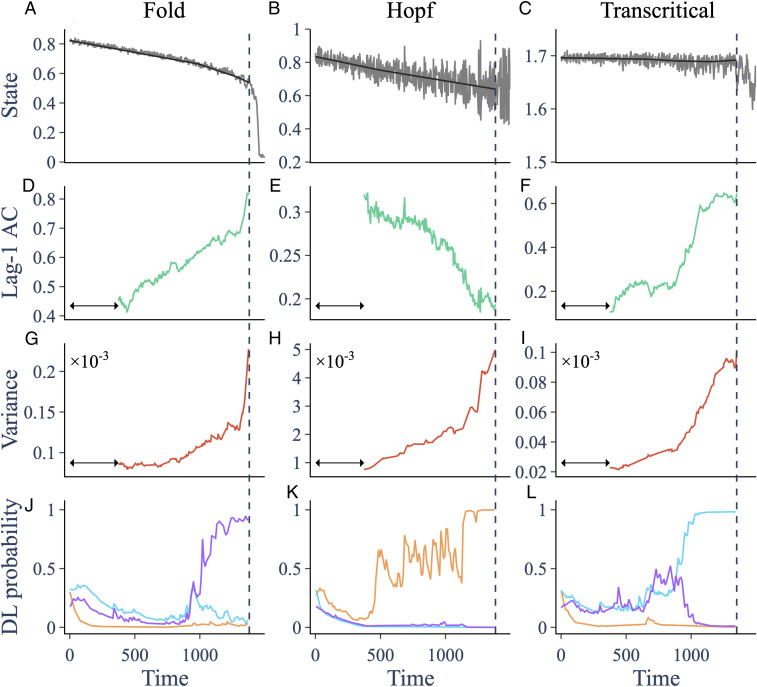
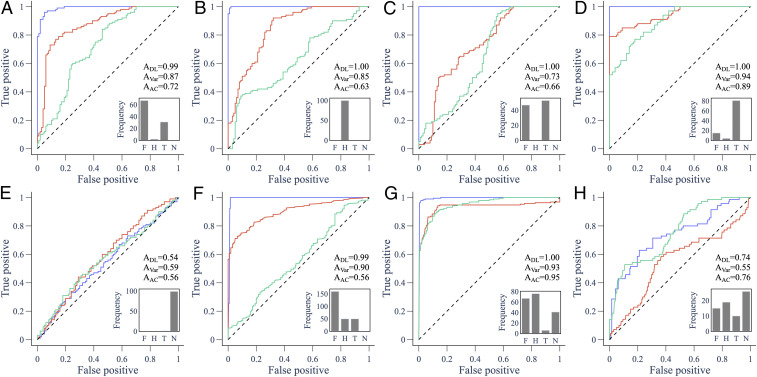
Significance: Early warning signals (EWS) of tipping points are vital to anticipate system collapse or other sudden shifts. However, existing generic early warning indicators designed to work across all systems do not provide information on the state that lies beyond the tipping point. Our results show how deep learning algorithms (artificial intelligence) can provide EWS of tipping points in real-world systems. The algorithm predicts certain qualitative aspects of the new state, and is also more sensitive and generates fewer false positives than generic indicators. We use theory about system behavior near tipping points so that the algorithm does not require data from the study system but instead learns from a universe of possible models.
Overview
The claims and statistics of this paper haven’t been checked yet.
Run the check — free, no account needed. It reads the open-access text and checks the sources it cites.
Integrity signals
Registry
Cites
Statistics
Figures
Verification
Claims the paper makes
The claims and statistics of this paper haven’t been checked yet.
Run the check — free, no account needed. It reads the open-access text and checks the sources it cites.
Claims other papers make about this one
Each is checked against this paper’s own text: does it say what the citing paper says it does?
In the citing paper
“Combine that with long-term soundscapes and mechanistic ecological models, and you get early-warning indicators that could outperform abundance-only monitoring (Bury et al. 2021; Rasmussen et al. 2024; Stowell and Sueur 2020).”
From Listening forward: emerging roles of bioacoustics in ecology, evolution, and conservation (2026) · cites this paper as Bury et al. 2021
Self-check
Percentages, sums and reported differences re-computed from the paper’s own numbers.
The self-check needs the paper’s full text.
Citations
Cites
SciPy 1.0: fundamental algorithms for scientific computing in Python
Virtanen, P., Gommers, R., Oliphant, T. E., Haberland, M., Reddy, T., Cournapeau, D., Burovski, E., Peterson, P., Weckesser, W., Bright, J., et al. (2020) · Nature Methods · doi:10.1038/s41592-019-0686-2 · Cited by 38,430 · cited 1×
“The simulation uses the odeint function from the Python package Scipy (42) with a step size of 0.01.”
MethodInfluentialRobust Locally Weighted Regression and Smoothing Scatterplots
Cleveland, W. S. (1979) · Journal of the American Statistical Association · doi:10.1080/01621459.1979.10481038 · Cited by 11,594 · cited 1×
“This is done using Lowess smoothing (52) with span 0.”
MethodSciPy 1.0: fundamental algorithms for scientific computing in Python
Virtanen, P., Gommers, R., Oliphant, T. E., Haberland, M., Reddy, T., Cournapeau, D., Burovski, E., Peterson, P., Weckesser, W., Bright, J., et al. (2019) · Apollo - University of Cambridge Repository · doi:10.17863/cam.64134 · Cited by 10,460
Elements of Applied Bifurcation Theory
Kuznetsov, Y. A. (2004) · Applied mathematical sciences · doi:10.1007/978-1-4757-3978-7 · Cited by 5,729
Nonlinear Dynamics and Chaos: With Applications to Physics, Biology, Chemistry, and Engineering
Strogatz, S. H., Friedman, M. J., Mallinckrodt, A. J., & McKay, S. R. (1994) · Computers in Physics · doi:10.1063/1.4823332 · Cited by 4,654
Deep learning for time series classification: a review
Ismail Fawaz, H., Forestier, G., Weber, J., Idoumghar, L., & Muller, P.-A. (2019) · Data Mining and Knowledge Discovery · doi:10.1007/s10618-019-00619-1 · Cited by 3,342 · cited 1×
“Supervised DL algorithms can also detect patterns (features) in time series, and have achieved state of the art in time series classification (23)—the ability to classify time series based on characteristic features in the data.”
BackgroundNonlinear Dynamics and Chaos: With Applications to Physics, Biology, Chemistry and Engineering
Strogatz, S. H., & Fox, R. F. (1995) · Physics Today · doi:10.1063/1.2807947 · Cited by 2,584
Anticipating Critical Transitions
Scheffer, M., Carpenter, S. R., Lenton, T. M., Bascompte, J., Brock, W., Dakos, V., van de Koppel, J., van de Leemput, I. A., Levin, S. A., van Nes, E. H., et al. (2012) · Science · doi:10.1126/science.1225244 · Cited by 2,208 · cited 1×
“This information is important to know for both theoretical and practical purposes, since tipping points in many systems can lead to undesirable collapse (14).”
BackgroundSelf-citationGraphical Representation and Stability Conditions of Predator-Prey Interactions
Rosenzweig, M. L., & MacArthur, R. H. (1963) · The American Naturalist · doi:10.1086/282272 · Cited by 2,057 · cited 2×
“To test the Hopf and transcritical bifurcations, we use the Rozenzweig−MacArthur consumer−resource model (29) with additive white noise.”
MethodThresholds and breakpoints in ecosystems with a multiplicity of stable states
May, R. M. (1977) · Nature · doi:10.1038/269471a0 · Cited by 1,743 · cited 2×
“The model systems included a simple harvesting model consisting of a single equation that exhibits a fold bifurcation (28); a system of two equations representing a consumer−resource (predator−prey) system exhibiting both Hopf and transcritical bifurcations (29); and a system of five equations representing the coupled…”
Method
Cited by
Sorted by citations
Items 101–200 of 279
Early warning indicators via latent stochastic dynamical systems
Feng, L., Gao, T., Wang, X., & Duan, J. (2024) · Chaos An Interdisciplinary Journal of Nonlinear Science · doi:10.1063/5.0195042 · Cited by 6
Early Warning Signals of the Tipping Point in Strongly Interacting Rydberg Atoms
Zhang, J., Zhang, L.-H., Liu, B., Zhang, Z., Shao, S.-Y., Li, Q., Chen, H.-C., Liu, Z.-K., Ma, Y., Han, T.-Y., et al. (2024) · Physical Review Letters · doi:10.1103/physrevlett.133.243601 · Cited by 6
Deb, S., & Dutta, P. S. (2024) · Proceedings of the Royal Society A Mathematical Physical and Engineering Sciences · doi:10.1098/rspa.2023.0594 · Cited by 6
“The generic indicators, both at temporal and spatial scales, exhibit mixed success, and thereby researchers across interdisciplinary fields are continually striving to overcome the limitations and develop new indicators [43,46,47].”
BackgroundDiversity loss in microbial ecosystems undergoing gradual environmental changes
Berger, A., Harari, M. G., Gross, A., & Erez, A. (2024) · Cell Reports Sustainability · doi:10.1016/j.crsus.2024.100242 · Cited by 5
Revealing unseen dynamical regimes of ecosystems from population time-series data
Medeiros, L. P., Sorenson, D. K., Johnson, B. J., et al. (2025) · Proceedings of the National Academy of Sciences · doi:10.1073/pnas.2416637122 · Cited by 5
Charakopoulos, A., & Karakasidis, T. E. (2022) · Physica A Statistical Mechanics and its Applications · doi:10.1016/j.physa.2022.127929 · Cited by 5
Yao, B., Shi, G., Zhou, H., Zhao, X., Peñuelas, J., Sardans, J., Wang, F., & Wang, Z. (2023) · The Science of The Total Environment · doi:10.1016/j.scitotenv.2023.168487 · Cited by 5
Reflections on the past and future of whole Earth system science
Rockström, J. (2024) · Global Sustainability · doi:10.1017/sus.2024.15 · Cited by 5
“…extreme events and non-linear changes in Earth system functioning, ranging from improved predictions of monsoon onset (Boers, 2021), to early warning assessment of critical transitions in the AMOC (Mitsui & Boers, 2021) and identifying early warning signals of tipping points (Bury et al., 2021).”
Zhang, X., Xu, Y., Liu, Q., et al. (2025) · Chaos An Interdisciplinary Journal of Nonlinear Science · doi:10.1063/5.0245575 · Cited by 4
Chaotic time series classification by means of reservoir-based convolutional neural networks
Jiang, K., Liu, Z., SMALL, M. P., & Zou, Y. (2025) · Chaos An Interdisciplinary Journal of Nonlinear Science · doi:10.1063/5.0255707 · Cited by 4
Human control mode enables accurate real-time risk warning in human–machine systems
Li, C., Pan, X., Yang, L., Jun, W., & Ma, H. (2025) · Computers & Industrial Engineering · doi:10.1016/j.cie.2025.111110 · Cited by 4
Assessing biodiversity trends in a quasi-permanent non-equilibrium state
Lalechère, E., Lenoir, J., Marrec, R., Essl, F., Kühn, I., & Ergon, T. (2025) · Trends in Ecology & Evolution · doi:10.1016/j.tree.2025.07.003 · Cited by 5
Jin, G., Li, X., Guan, S., Song, Y., Hao, X., & Zhang, J. (2025) · Physica A Statistical Mechanics and its Applications · doi:10.1016/j.physa.2025.131122 · Cited by 5
Integrating tipping point concepts across diverse systems
Abrams, J. F., Pereira, L. M., Spaiser, V., Wunderling, N., Villasante, S., Tàbara, J. D., Biggs, R., McKay, D. I. A., Zimm, C., Milkoreit, M., et al. (2026) · Communications Sustainability · doi:10.1038/s44458-026-00063-5 · Cited by 6
Self-citationAn Early Warning Approach for Pilots’ Cognitive Tipping Points Based Multi-Modal Signals
Wang, S., Liu, Y., & Hu, D. (2024) · IEEE Transactions on Automation Science and Engineering · doi:10.1109/tase.2024.3384504 · Cited by 4
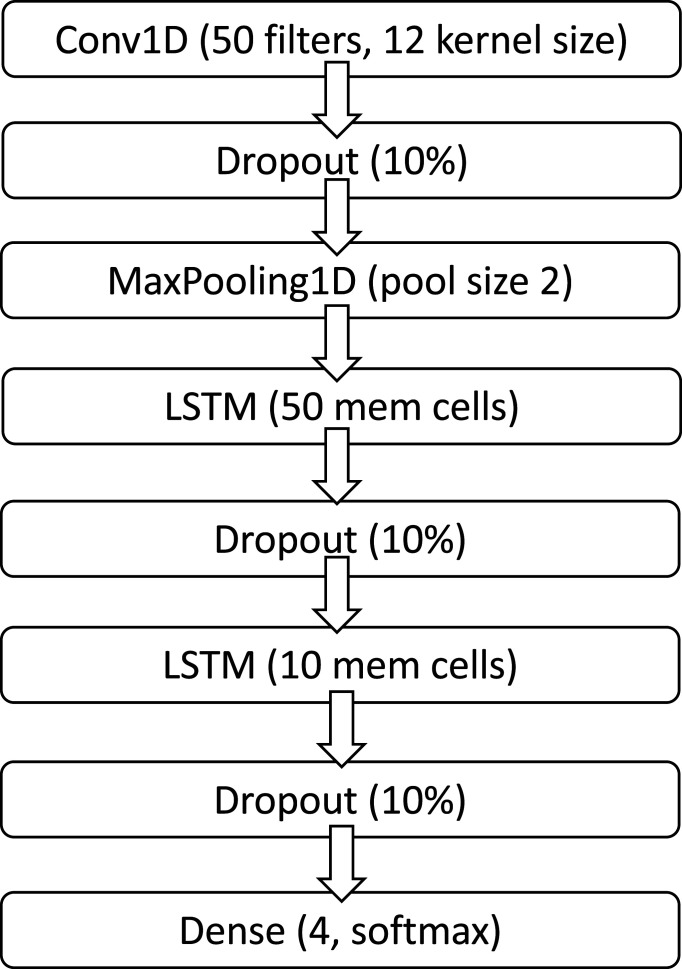
“Bury et al. [10] propose a CNN-LSTM network to predict tipping points, which obtains better performance than generic EWS in 268 simulated and real systems.”
McGranaghan, R. M. (2024) · Space Science Reviews · doi:10.1007/s11214-024-01081-2 · Cited by 6
Early warning skill, extrapolation and tipping for accelerating cascades
Ashwin, P., Bastiaansen, R., von der Heydt, A. S., & Ritchie, P. D. L. (2025) · Proceedings of the Royal Society A Mathematical Physical and Engineering Sciences · doi:10.1098/rspa.2025.0405 · Cited by 5
“We refer the interested reader to [10, 14, 13, 26, 17, 15, 32, 21, 8, 34, 44] and references therein for further discussion of EWS for tipping points.”
Prediction of depression onset and development based on network analysis
Weixia, Z., Min, X., Tiantian, Y., Cheng, W., & Shubin, S. (2023) · Advances in Psychological Science · doi:10.3724/sp.j.1042.2023.02129 · Cited by 4
A Decadal Survey Without Analogs: Earth Observation Needs for a Warming World
Miner, K. R., Braghiere, R. K., Miller, C. E., Schlegel, N., & SCHIMEL, D. S. (2024) · AGU Advances · doi:10.1029/2023av001148 · Cited by 4
“Driving questions for Earth observations in the DS28 era include identifying detectable signals of Earth System tipping points (Bury et al., 2021) and considering how these signals can be observed.”
BackgroundA data-driven approach to morphogenesis under structural instability
Zhao, Y., & Xu, Z. (2024) · Cell Reports Physical Science · doi:10.1016/j.xcrp.2024.101872 · Cited by 4
“Identifying the nature of bifurcation based on dimensionality reduction and LSTM can thus guide the diagnosis and structural health management (SHM) to minimize potential losses [48].”
BackgroundDeep learning at the forefront of detecting tipping points
Deb, S., & Dutta, P. S. (2024) · Nature Machine Intelligence · doi:10.1038/s42256-024-00957-w · Cited by 4
Cascades Towards Noise-Induced Transitions on Networks Revealed Using Information Flows
van Elteren, C., Quax, R., & Sloot, P. M. A. (2024) · Entropy · doi:10.3390/e26121050 · Cited by 5
Fold bifurcation identification through scientific machine learning
Habib, G., & Horváth, Á. (2024) · Physica D Nonlinear Phenomena · doi:10.1016/j.physd.2024.134490 · Cited by 5
“Both studies [66, 67] required using a large number of randomly generated models (in the order of tens of thousands).”
Spatiotemporal variability in Swedish lake ecosystems
Eason, T., Garmestani, A. S., & Angeler, D. G. (2022) · PLoS ONE · doi:10.1371/journal.pone.0265571 · Cited by 4
“, variance, autocorrelation, skewness) with limited success [20–26] due to a number of concerns over inconsistent results and detection accuracy [27–29], although artificial intelligence approaches may help overcome some of these problems [30].”
BackgroundAnalysis of Network Public Opinion in New Media Based on BP Neural Network Algorithm
Yang, S. (2022) · Mobile Information Systems · doi:10.1155/2022/3202099 · Cited by 5
“At the same time, in order to facilitate understanding, [0,1] is evenly divided into 4 intervals, which correspond to different early-warning level states from low to high [27].”
BackgroundEarly detection of Hopf bifurcation in a solid rocket motor via transfer learning
Xu, G., Wang, B., Guan, Y., et al. (2023) · Physics of Fluids · doi:10.1063/5.0174860 · Cited by 4
Deb, S., Mahendru, E., Goyal, P., Guttal, V., Dutta, P. S., & Krishnan, N. C. (2024) · Royal Society Open Science · doi:10.1098/rsos.231767 · Cited by 4
“However, thus far, there has been a limited application of ML methods in the context of EWS [14,15].”
BackgroundMethodInfluentialAtsumi, K., Nishida, Y., Ushio, M., Nishi, H., Genroku, T., & Fujiki, S. (2024) · eLife · doi:10.7554/elife.93694.3 · Cited by 4
Donovan, G. M. (2024) · Physica A Statistical Mechanics and its Applications · doi:10.1016/j.physa.2024.129868 · Cited by 3
FatePredictor: Cell fate decision-making prediction with an ensemble deep learning model
Shen, J., Chen, N., Niu, B., Zhong, J., & Liu, R. (2025) · The Innovation · doi:10.1016/j.xinn.2025.101010 · Cited by 4
“25 Nevertheless, these existing methods cannot be directly applied to predict cell fatebifurcationbasedonpseudotimeseriesfromsingle-celldatafortwokeyrea-sons:(1)single-celldataarehigh-dimensional,typicallyconsistingofthousands…”
Temperature as an early warning signal of honeybee colony failure
Colin, T., Dakos, V., Barron, A. B., et al. (2025) · Ecological Informatics · doi:10.1016/j.ecoinf.2025.103445 · Cited by 3
Ma, Z., Zeng, C., Gao, T., et al. (2026) · Chaos Solitons & Fractals · doi:10.1016/j.chaos.2026.118010 · Cited by 3
“Recent work integrating dynamical systems theory with machine learning o ff ers promising avenues for EWS refinement [6, 35, 36, 37, 38].”
Chattopadhyay, S. N., & Gupta, A. K. (2026) · Chaos An Interdisciplinary Journal of Nonlinear Science · doi:10.1063/5.0302960 · Cited by 3
Critical Slowing Down Reveals Hydrologic Resilience Loss Across Amazon Sub‐Basins
Poveda, G. (2026) · Water Resources Research · doi:10.1029/2025wr040039 · Cited by 3
Multi‐Stability of the Present‐Day Atlantic Meridional Overturning Circulation
Dijkstra, H. A., van Westen, R. M., Boot, A., Soons, J., Smolders, E., Vanderborght, E., Abe‐Ouchi, A., Arumí‐Planas, C., Ben‐Yami, M., Boers, N., et al. (2026) · Wiley Interdisciplinary Reviews Climate Change · doi:10.1002/wcc.70049 · Cited by 3
“Many other EWS have been developed, for example, those based on complex network theory (Feng and Dijkstra 2014) and neural networks (Bury et al. 2021).”
Evangelou, N., Cui, T., Bello‐Rivas, J. M., Makeev, A. G., & Kevrekidis, I. G. (2024) · Chaos An Interdisciplinary Journal of Nonlinear Science · doi:10.1063/5.0187511 · Cited by 5
Efficacy of dynamic eigenvalue in anticipating and distinguishing tipping points
Kulkarni, K., Deb, S., & Dutta, P. S. (2024) · Theoretical Ecology · doi:10.1007/s12080-024-00593-5 · Cited by 3
“Certain methods, such as machine learning-based EWSs, can distinguish catastrophic bifurcations from non-catastrophic bifurcations and make improved classifications as well (Bury et al. 2021; Deb et al. 2022; Bury et al. 2023).”
Local Predictors of Explosive Synchronization with Ordinal Methods
Leyva, I., Almendral, J. A., Christophe Letellier, A., & Sendiña–Nadal, I. (2025) · Entropy · doi:10.3390/e27020113 · Cited by 3
Pseudo transitions in the finite-size Blume-capel model
Liu, W., Shi, L., Zhang, X., et al. (2025) · Physics Letters A · doi:10.1016/j.physleta.2025.130626 · Cited by 3
Aarthi, R., & Vinayagasundaram, B. (2022) · Journal of Intelligent & Fuzzy Systems · doi:10.3233/jifs-210666 · Cited by 3
“The prediction of the type of tipping point offers par-ticularqualitativeinformationaboutthenewstatethatexistsbeyondthetippingpoint[5].”
Probabilistic Multivariate Early Warning Signals
Laitinen, V., & Lahti, L. (2022) · Lecture notes in computer science · doi:10.1007/978-3-031-15034-0_13 · Cited by 3
“Related approaches have been also proposed based on neural networks [4], network analysis [23], and epidemic models [24].”
BackgroundOptimal control of polar sea-ice near its tipping points
Kooloth, P., Lu, J., Bakker, C., DeSantis, D., & Rupe, A. (2024) · npj Climate and Atmospheric Science · doi:10.1038/s41612-024-00768-1 · Cited by 3
“Past research on climate tipping points has mainly focused on using early warning signals to anticipatetipping points 25 – 28 and estimating time of approach 5,29 .”
Entropy, Economics, and Criticality
Harré, M. (2022) · Entropy · doi:10.3390/e24020210 · Cited by 4
Transitions between peace and systemic war as bifurcations in a signed network dynamical system
Morrison, M., Kutz, J. N., & Gabbay, M. (2023) · Network Science · doi:10.1017/nws.2023.10 · Cited by 3
Anticipating the occurrence and type of critical transitionsPreprint
Grziwotz, F., Chang, C., Dakos, V., et al. (2022) · Research Square · doi:10.21203/rs.3.rs-1397318/v1 · Cited by 3
Wesselkamp, M., Moser, N., Kalweit, G., Boedecker, J., & Dormann, C. F. (2022) · bioRxiv (Cold Spring Harbor Laboratory) · doi:10.1101/2022.09.28.509877 · Cited by 3
Montes, R. M., & Quiñones, R. A. (2025) · Aquaculture · doi:10.1016/j.aquaculture.2025.742385 · Cited by 2
Navigating the Paradox: Climate Change, Cutting-Edge Technologies, and Groundwater Sustainability
Chavula, P., Kayusi, F., & Juma, L. (2023) · LatIA · doi:10.62486/latia202583 · Cited by 2
Global stability and tipping point prediction in a coral–algae model using landscape–flux theory
Xu, L., Patterson, D., Levin, S. A., et al. (2025) · Earth System Dynamics · doi:10.5194/esd-16-1503-2025 · Cited by 2
Vörösmarty, C. J., Trujillo, M., Casaccia, P., Cak, A. D., Gardner, K. H., Greenfield, D. I., Groffman, P. M., Reinmann, A. B., SOLECKI, W. D., Serreze, M. C., et al. (2025) · Cell Reports Sustainability · doi:10.1016/j.crsus.2025.100558 · Cited by 2
Alam, M. S., Ott, W., & Timofeyev, I. (2026) · Chaos An Interdisciplinary Journal of Nonlinear Science · doi:10.1063/5.0283121 · Cited by 2
Vettoretti, G., Hu, R.-J., Bethke, I., Krüger, K., Sigl, M., Outten, S., Lin, J., Nuterman, R. B., Svensson, A. M., Ditlevsen, P., et al. (2026) · Science Advances · doi:10.1126/sciadv.adx2124 · Cited by 2
“In the unstable regime (beyond a Hopf bifurcation), the AMOC should exhibit signs of critical slowing down or other early warning signals ( 93 , 94 ).”
Predicting instabilities in transient landforms and interconnected ecosystems
Smith, T., Morr, A., Bookhagen, B., et al. (2026) · Nature Communications · doi:10.1038/s41467-026-68944-w · Cited by 2
“…— lag-one autocorrelation (AC1) and variance — but can also be explored through other methods such as fl ickeringand skewness 13 , via direct, regression-based estimates of the recovery rate as a proxy of stability 4,7 , via spectral properties 14,15 , or using deep learning techniques 16,17 .”
A deep-learning-based approach for temporal transportation network dismantling
Hong, L., Zhu, Y., Liu, K., et al. (2026) · Reliability Engineering & System Safety · doi:10.1016/j.ress.2026.112588 · Cited by 2
Beyond Feature Selection: Interpretable Machine Learning for Mechanistic Insights in Metabolomics
Bai, H., Ren, Y., Wang, J., Wang, Y., & Yang, Y. (2026) · Biology · doi:10.3390/biology15070572 · Cited by 2
“Techniques such as stable isotope tracing distinguishes active flux from static accumulation [110,112], while genetic perturbations (CRISPR/Cas9) and proteomic analysis corroborate functional dependencies and enzyme status [119,120].”
TDA-PIDO: A topological data analysis approach for early warning of infectious disease outbreaks
Luo, X., Liu, Q.-H., Lu, X. B., Wang, Z., Jin, Z., Li, L., & Sun, G.-Q. (2026) · The Innovation · doi:10.1016/j.xinn.2026.101396 · Cited by 2
Pioneer: Dynamical Systems Biology for Spatiotemporal Omics Data
Chen, L. (2026) · Journal of Molecular Biology · doi:10.1016/j.jmb.2026.169864 · Cited by 2
Um Sistema Autônomo para a Predição de Ataques de DDoS em Redes Locais e Internet
Brito, D., de Neira, A. B., Borges, L. F., de Araújo, A. M., & Nogueira, M. (2023) · doi:10.5753/wgrs.2023.718 · Cited by 2
“O cálculo estatístico sobre séries temporais de atributos auxilia na identificação de sinais que antecedem transições críticas [Bury et al. 2021].”
Suppression of thermo-acoustic instabilities in horizontal Rijke tube using pulsating radial jets
Deshmukh, N. N., Ansari, A., Tajir, A. P., et al. (2023) · MethodsX · doi:10.1016/j.mex.2023.102325 · Cited by 2
“Due to adverse effect of thermo-acoustic instabilities on the performance of power producing devices, there is a need for developing early warning device and implement appropriate control strategies [17] .”
BackgroundA model free method of predicting transient dynamics in anaerobic digestion
Heggerud, C. M., & Hastings, A. (2024) · Journal of The Royal Society Interface · doi:10.1098/rsif.2024.0059 · Cited by 2
“Moreover, even deep learning methods have been established to predict tipping points and provide details regarding the dynamics beyond the transitions [39].”
BackgroundSwierczek-Jereczek, J., & Datseris, G. (2024) · The Journal of Open Source Software · doi:10.21105/joss.06464 · Cited by 2
“…language, (3) not parallelised, (4) not designed for convenient reproducibility and (5) not extensible. ewstools (Bury, 2023) is a Python/TensorFlow package offering similar functionalities as earlywarnings , as well as a deep-learning approach to predicting transitions (Bury et al., 2021).”
BackgroundForecasting Hypoxia Events in North Atlantic Ecosystems Using Chaotic Dynamics
Durand, G., Valdés, J. J., Guyondet, T., et al. (2024) · doi:10.1109/ijcnn60899.2024.10651143 · Cited by 2
“The properties P used for characterizing the process were a combination of classical and recently proposed early warning change and tipping points descriptors presented in [27], and implemented in [28].”
BackgroundDynamical systems-inspired machine learning methods for drought prediction
Watford, A., Bauch, C. T., & Anand, M. (2024) · Ecological Informatics · doi:10.1016/j.ecoinf.2024.102889 · Cited by 2
Self-citationSilva, A. P., Knecht, N., Thomas, R., et al. (2025) · Current Opinion in Environmental Sustainability · doi:10.1016/j.cosust.2025.101526 · Cited by 2
Online Course Model of Social and Political Education Using Deep Learning
Zhang, M., & Gao, Q. (2022) · Computational Intelligence and Neuroscience · doi:10.1155/2022/7653766 · Cited by 2
“,rough the development of social and political courses, colleges and universities shape the world outlook, outlook on life, and values of college students and promote the healthy growth of college students [1].”
BackgroundRetractedNetwork of compression networks to extract useful information from multivariate time series
Walker, D. M., & Corrêa, D. (2023) · Journal of Complex Networks · doi:10.1093/comnet/cnad018 · Cited by 2
Early warning signals are hampered by a lack of critical transitions in empirical lake dataPreprint
O’Brien, D. A., Deb, S., Gal, G., et al. (2023) · bioRxiv (Cold Spring Harbor Laboratory) · doi:10.1101/2023.05.11.540304 · Cited by 2
“…multiple time series to yield a community/system level assessment of CSD (Dakos 2018; Weinans et al. 2021), whereas machine learning exploit other unmeasured but learnt characteristics of the population level time series to report the probability of transition (Bury et al. 2021; Deb et al. 2022).”
BackgroundMethodInfluentialEmergence of tipping points and transient dynamics in finite observationsPreprint
Cobo-López, S., Carbajal, L. J., Witt, M., Rohwer, F. L., & Luque, A. (2023) · bioRxiv (Cold Spring Harbor Laboratory) · doi:10.1101/2023.12.27.573307 · Cited by 2
“Inference methods that rely on data would not be able to predict the drastic effects of a new process becoming relevant with a trajectory where its weights until that moment would be negligible within the observer’s tolerance (Boettiger & Hastings, 2012; Bury et al., 2021).”
Predicting Tipping Points in Complex Systems
Masuda, N. (2024) · Physics · doi:10.1103/physics.17.110 · Cited by 1
“For example, a machine-learning algorithm was able to identify the type of regime shift and to provide early warning signals when supplied data from a host of different complex systems [ 8 ].”
BackgroundInterpretable early warnings using machine learning in an online game-experiment
Falmagne, G., Stephenson, A. B., & Levin, S. A. (2026) · Proceedings of the National Academy of Sciences · doi:10.1073/pnas.2503493122 · Cited by 1
“Forecasting abilities using deep learning have been shown in some ecology (43, 44) and epidemiology (46) studies with training data simulated from simple models inspired by disciplinary tradition.”
Applicability of spatial early warning signals to complex network dynamics
MacLaren, N. G., Aihara, K., & Masuda, N. (2025) · Journal of The Royal Society Interface · doi:10.1098/rsif.2024.0696 · Cited by 1
Multiple tipping phenomena in a system with a time-dependent parameter excited by coloured noise
Zhang, X., Liu, Q., Nakao, H., et al. (2025) · Chaos Solitons & Fractals · doi:10.1016/j.chaos.2025.116853 · Cited by 1
Wang, L., Zhu, Y., Wan, X., Zhang, Y., Feng, S., Li, C., Hou, J., Wei, Y., Hu, B., & Zhang, F. (2025) · Tsinghua Science & Technology · doi:10.26599/tst.2025.9010076 · Cited by 2
Lin, X., Zhang, X., Wu, B., et al. (2025) · The Innovation Geoscience · doi:10.59717/j.xinn-geo.2025.100167 · Cited by 1
Xu, F., Cui, Y., & Weng, Y. (2025) · Sustainability · doi:10.3390/su17209271 · Cited by 1
Liu, C., Li, S., Wang, X., Dong, J., Wang, X., Zhu, J., Wen, H., Zhao, D., Zeng, Z., & Ding, H. (2025) · Chinese Science Bulletin (Chinese Version) · doi:10.1360/csb-2025-5337 · Cited by 1
Early predictor for the onset of chaotic critical transitions in logistic map systems
Yuan, S.-J., Bai, H.-M., Zhang, H., et al. (2025) · Nonlinear Dynamics · doi:10.1007/s11071-025-11919-1 · Cited by 1
Gaps in tipping points research across freshwater, marine, and terrestrial ecosystems
Harper, M., Carrier-Belleau, C., Rytwinski, T., Helmuth, B. S. T., Creed, I. F., Smol, J. P., Bennett, J., Hanna, D. E. L., Saravia, L. A., Rocha, J., et al. (2025) · Biological Conservation · doi:10.1016/j.biocon.2025.111622 · Cited by 2
Maghsoodlo, Y. B., Anand, M., & Bauch, C. T. (2025) · Proceedings of the Royal Society A Mathematical Physical and Engineering Sciences · doi:10.1098/rspa.2025.0376 · Cited by 1
“Additionally, studying the possibility and existence of tipping points in the climate system has received high attention in previous years and many papers have explored different facets [24] [25] [26] [27], including for climate tipping points [31].”
Self-citationCheng, F., Ma, Z., & Zeng, C. (2025) · Physica A Statistical Mechanics and its Applications · doi:10.1016/j.physa.2025.131170 · Cited by 1
Real-time critical transition discoveries with large language models
Ma, G., Wang, Z., Wang, Y., Zhang, Y., Song, H., Ding, H., & Yuan, Y. (2025) · National Science Open · doi:10.1360/nso/20250060 · Cited by 1
Wang, X. (2026) · Environmental Monitoring and Assessment · doi:10.1007/s10661-025-14917-3 · Cited by 1
Rinaldi, M., Conti, S. B., Ferraro, L., & (1560388), G. M. (2025) · World Journal of Environmental Biosciences · doi:10.51847/0jwir5ij2e · Cited by 1
Unsupervised Learning for Anticipating Critical Transitions
Panahi, S., Kong, L.-W., Glaz, B. J., Haile, M., & Lai, Y. (2026) · Physical Review Letters · doi:10.1103/2v76-dmg6 · Cited by 2
Distribution-based prediction of noise-induced tipping
Ma, J., Fan, X., Wang, R., et al. (2026) · Europhysics Letters (EPL) · doi:10.1209/0295-5075/ae51be · Cited by 1
Wang, P., Ganushchak, L. Y., Welie, C., & van Steensel, R. (2026) · Educational Psychology Review · doi:10.1007/s10648-026-10141-8 · Cited by 3
Transitions of the Atlantic Ocean circulation
Dijkstra, H., Krauskopf, B., Börner, R., & van Westen, R. V. (2026) · Nature Reviews Physics · doi:10.1038/s42254-026-00945-6 · Cited by 4
Predicting bifurcation-induced transitions in oscillatory systems with deep learning
Li, J. Q., Jia, Y., & Gu, H. (2026) · Chaos Solitons & Fractals · doi:10.1016/j.chaos.2026.118544 · Cited by 1
Intelligent Monitoring Technology for Bridge Structural Conditions Using Deep Learning
Lang, L., & Zhang, C. (2026) · International Journal of Ambient Computing and Intelligence · doi:10.4018/ijaci.411702 · Cited by 1
Eco-evolutionary decoupling drives silent ecosystem collapse in the Anthropocene
Mosoh, D. A. (2026) · Frontiers in Climate · doi:10.3389/fclim.2026.1765410 · Cited by 1
FlowSDE: a flow-matching-based SDE framework for predicting state transitions
Lou, K., Zhang, Y., Liang, Z., Barth, M., & Liu, Q. (2026) · Philosophical Transactions of the Royal Society A Mathematical Physical and Engineering Sciences · doi:10.1098/rsta.2024.0492 · Cited by 1
Neural models for prediction of spatially patterned phase transitions: methods and challenges
Dylewsky, D., Kéfi, S., Anand, M., et al. (2025) · Theoretical Ecology · doi:10.1007/s12080-025-00615-w · Cited by 1
“These models, which are known to offer state-of-the-art performance in other time series classification tasks [8], have been shown to produce more accurate and robust predictions of oncoming critical transitions than conventional EWS approaches (albeit at some cost of intepretability) [9–11].”
InfluentialSelf-citationMa, Z., Wang, C., Wang, G., et al. (2022) · Combustion Theory and Modelling · doi:10.1080/13647830.2022.2080122 · Cited by 1
Dogonasheva, O., Postnikov, E. B., & Lavrova, A. I. (2023) · The European Physical Journal Special Topics · doi:10.1140/epjs/s11734-023-00781-0 · Cited by 1
Deep Learning for Tipping Points: Preprocessing MattersPreprint
Dablander, F., & Bury, T. M. (2022) · doi:10.31234/osf.io/j7xug · Cited by 1
Self-citationTimeline to collapsePreprint
Cerini, F., Childs, D. Z., & Clements, C. F. (2022) · doi:10.22541/au.165789688.86551087/v1 · Cited by 1
O’Brien, D. A., Deb, S., Sidheekh, S., et al. (2022) · doi:10.22541/au.166801190.00303336/v1 · Cited by 1
O’Brien, D. A., Deb, S., Sidheekh, S., et al. (2022) · doi:10.22541/au.166801190.00303336/v2 · Cited by 1
O’Brien, D. A., Deb, S., Sidheekh, S., et al. (2022) · doi:10.22541/au.166801190.00303336/v3 · Cited by 1
Phylogenomic Early Warning Signals for SARS-CoV-2 Epidemic WavesPreprint
Drake, K. O., Boyd, O., Franceschi, V. B., Colquhoun, R., Ellaby, N. A. F., & Volz, E. (2023) · SSRN Electronic Journal · doi:10.2139/ssrn.4522412 · Cited by 1
Metadata
- Authors
- Bury, T. M., Sujith, R. I., Pavithran, I., Scheffer, M., Lenton, T. M., Anand, M., & Bauch, C. T.
- Affiliations
- University of Waterloo (CA)
- Indian Institute of Technology Madras (IN)
- Wageningen University & Research (NL)
- University of Exeter (GB)
- University of Guelph (CA)
- Corresponding author
- Bauch, Chris T.
- ORCID
- Venue
- Proceedings of the National Academy of Sciences
- Publisher
- National Academy of Sciences
- Published
- 2021-09-20
- Volume
- 118
- Issue
- 39
- ISSN
- 0027-8424 (ISSN-L)
- 1091-6490
- PMC
- PMC8488604
- OpenAlex
- W3200303296
- Semantic Scholar
- 91c6031240527a1cdba25aef61bdf5a3cf767498
- Cited by
- 284
- References
- 54
- Citations by year
- 2026: 61 · 2025: 59 · 2024: 67 · 2023: 51 · 2022: 44 · 2021: 2
- FWCI
- 16.80
- Type
- journal article
- Language
- en
- Open access
- hybrid
- doi.org
- Licence
- Locations
- Proceedings of the National Academy of Sciences (publishedVersion, cc-by-nc-nd)
- Europe PMC (PubMed Central) (publishedVersion, other-oa)
- PubMed Central (publishedVersion, cc-by-nc-nd)
- PubMed (publishedVersion)
- Socio-Environmental Systems Modeling (submittedVersion, cc-by-nc-nd)
- Data Archiving and Networked Services (DANS) (submittedVersion, cc-by-nc-nd)
- Funders
- Gouvernement du Canada | Natural Sciences and Engineering Research Council of Canada (RGPIN 2019, RGPIN 2020)
- Topics
- Physical Sciences › Environmental Science › Global and Planetary Change › Ecosystem dynamics and resilience
- Physical Sciences › Physics and Astronomy › Statistical and Nonlinear Physics › Chaos control and synchronization
- Physical Sciences › Mathematics › Applied Mathematics › Mathematical and Theoretical Epidemiology and Ecology Models
- Keywords
- tipping points, early warning indicators, normal forms, dynamical systems, deep learning, state transitions, lag-1 autocorrelation, variance, scaling behavior, model-free prediction, ecological tipping points, thermoacoustics, climate tipping points
About these checks
Registry, retraction, Cites and statistics results are computed, not judged, with one exception: a printed reference that no index lists is read once by a model before it counts as a citation error. Claims are extracted by a model and kept only when their quote appears verbatim in the text; each cited source is then checked, with a model’s help, for whether it says what the claim relies on. Those verdicts can be wrong — read the claim’s quote and the cited source before relying on one.
Statistics and arithmetic are recomputed, not judged.
Confidence bands are shown only for fields calibrated on our annotated test set. None is calibrated yet, so no band is shown.
What counts as a claim ›How we measure confidence ›How we check this ›
Are you an author, or do you see a problem with this page? Request a review
