

The DOI matches its Crossref record; 53 of the 54 references it cites were found in a registry or an index.
Deep learning for early warning signals of tipping points
Open accessAbstract
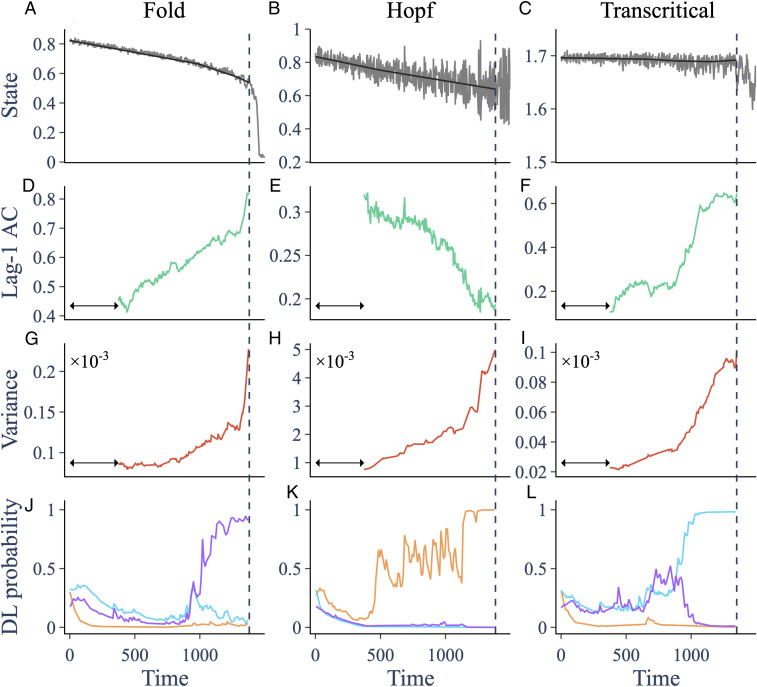
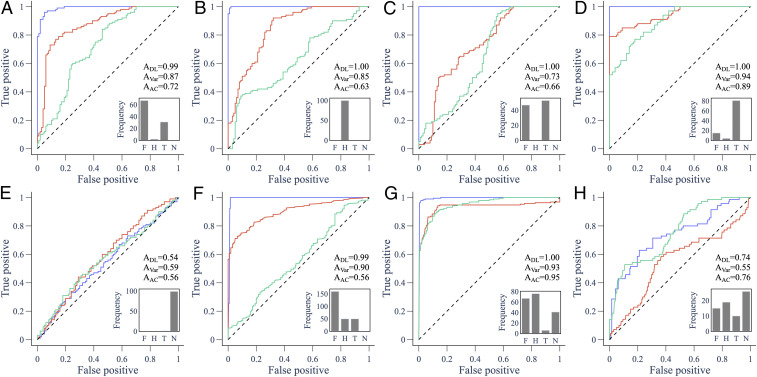
Significance: Early warning signals (EWS) of tipping points are vital to anticipate system collapse or other sudden shifts. However, existing generic early warning indicators designed to work across all systems do not provide information on the state that lies beyond the tipping point. Our results show how deep learning algorithms (artificial intelligence) can provide EWS of tipping points in real-world systems. The algorithm predicts certain qualitative aspects of the new state, and is also more sensitive and generates fewer false positives than generic indicators. We use theory about system behavior near tipping points so that the algorithm does not require data from the study system but instead learns from a universe of possible models.
Overview
The claims and statistics of this paper haven’t been checked yet.
Run the check — free, no account needed. It reads the open-access text and checks the sources it cites.
Integrity signals
Registry
Cites
Statistics
Figures
Verification
Claims the paper makes
The claims and statistics of this paper haven’t been checked yet.
Run the check — free, no account needed. It reads the open-access text and checks the sources it cites.
Claims other papers make about this one
Each is checked against this paper’s own text: does it say what the citing paper says it does?
In the citing paper
“Combine that with long-term soundscapes and mechanistic ecological models, and you get early-warning indicators that could outperform abundance-only monitoring (Bury et al. 2021; Rasmussen et al. 2024; Stowell and Sueur 2020).”
From Listening forward: emerging roles of bioacoustics in ecology, evolution, and conservation (2026) · cites this paper as Bury et al. 2021
Self-check
Percentages, sums and reported differences re-computed from the paper’s own numbers.
The self-check needs the paper’s full text.
Citations
Cites
SciPy 1.0: fundamental algorithms for scientific computing in Python
Virtanen, P., Gommers, R., Oliphant, T. E., Haberland, M., Reddy, T., Cournapeau, D., Burovski, E., Peterson, P., Weckesser, W., Bright, J., et al. (2020) · Nature Methods · doi:10.1038/s41592-019-0686-2 · Cited by 38,430 · cited 1×
“The simulation uses the odeint function from the Python package Scipy (42) with a step size of 0.01.”
MethodInfluentialRobust Locally Weighted Regression and Smoothing Scatterplots
Cleveland, W. S. (1979) · Journal of the American Statistical Association · doi:10.1080/01621459.1979.10481038 · Cited by 11,594 · cited 1×
“This is done using Lowess smoothing (52) with span 0.”
MethodSciPy 1.0: fundamental algorithms for scientific computing in Python
Virtanen, P., Gommers, R., Oliphant, T. E., Haberland, M., Reddy, T., Cournapeau, D., Burovski, E., Peterson, P., Weckesser, W., Bright, J., et al. (2019) · Apollo - University of Cambridge Repository · doi:10.17863/cam.64134 · Cited by 10,460
Elements of Applied Bifurcation Theory
Kuznetsov, Y. A. (2004) · Applied mathematical sciences · doi:10.1007/978-1-4757-3978-7 · Cited by 5,729
Nonlinear Dynamics and Chaos: With Applications to Physics, Biology, Chemistry, and Engineering
Strogatz, S. H., Friedman, M. J., Mallinckrodt, A. J., & McKay, S. R. (1994) · Computers in Physics · doi:10.1063/1.4823332 · Cited by 4,654
Deep learning for time series classification: a review
Ismail Fawaz, H., Forestier, G., Weber, J., Idoumghar, L., & Muller, P.-A. (2019) · Data Mining and Knowledge Discovery · doi:10.1007/s10618-019-00619-1 · Cited by 3,342 · cited 1×
“Supervised DL algorithms can also detect patterns (features) in time series, and have achieved state of the art in time series classification (23)—the ability to classify time series based on characteristic features in the data.”
BackgroundNonlinear Dynamics and Chaos: With Applications to Physics, Biology, Chemistry and Engineering
Strogatz, S. H., & Fox, R. F. (1995) · Physics Today · doi:10.1063/1.2807947 · Cited by 2,584
Anticipating Critical Transitions
Scheffer, M., Carpenter, S. R., Lenton, T. M., Bascompte, J., Brock, W., Dakos, V., van de Koppel, J., van de Leemput, I. A., Levin, S. A., van Nes, E. H., et al. (2012) · Science · doi:10.1126/science.1225244 · Cited by 2,208 · cited 1×
“This information is important to know for both theoretical and practical purposes, since tipping points in many systems can lead to undesirable collapse (14).”
BackgroundSelf-citationGraphical Representation and Stability Conditions of Predator-Prey Interactions
Rosenzweig, M. L., & MacArthur, R. H. (1963) · The American Naturalist · doi:10.1086/282272 · Cited by 2,057 · cited 2×
“To test the Hopf and transcritical bifurcations, we use the Rozenzweig−MacArthur consumer−resource model (29) with additive white noise.”
MethodThresholds and breakpoints in ecosystems with a multiplicity of stable states
May, R. M. (1977) · Nature · doi:10.1038/269471a0 · Cited by 1,743 · cited 2×
“The model systems included a simple harvesting model consisting of a single equation that exhibits a fold bifurcation (28); a system of two equations representing a consumer−resource (predator−prey) system exhibiting both Hopf and transcritical bifurcations (29); and a system of five equations representing the coupled…”
Method
Cited by
Sorted by citations
Items 201–279 of 279
Atsumi, K., Nishida, Y., Ushio, M., Nishi, H., Genroku, T., & Fujiki, S. (2024) · eLife · doi:10.7554/elife.93694.1 · Cited by 1
Atsumi, K., Nishida, Y., Ushio, M., Nishi, H., Genroku, T., & Fujiki, S. (2024) · eLife · doi:10.7554/elife.93694.2 · Cited by 1
Activity dynamics allow early discrimination of infection-related survival outcomesPreprint
Kutzer, M. A. M., Abdullateef, S., Cano, A. V., et al. (2025) · bioRxiv (Cold Spring Harbor Laboratory) · doi:10.1101/2025.04.21.649753 · Cited by 1
Listening forward: emerging roles of bioacoustics in ecology, evolution, and conservation
Zsebők, S. (2026) · Biologia Futura · doi:10.1007/s42977-026-00322-5
“Combine that with long-term soundscapes and mechanistic ecological models, and you get early-warning indicators that could outperform abundance-only monitoring (Bury et al. 2021; Rasmussen et al. 2024; Stowell and Sueur 2020).”
Shangguan, W. (2022) · Earth system science data · doi:10.5194/essd-2022-177-ac5
Shangguan, W. (2022) · Earth system science data · doi:10.5194/essd-2022-177-ac4
Li, Q., Shi, G., Shangguan, W., et al. (2022) · doi:10.5194/essd-2022-177-rc3
Li, Q., Shi, G., Shangguan, W., et al. (2022) · doi:10.5194/essd-2022-177-rc4
A survey on temporal network dynamics with incomplete data
Wu, D. D., Mao, S., Xiong, L., & Tang, Y. S. (2022) · Electronic Research Archive · doi:10.3934/era.2022193
Reply to Dablander and Bury: Dealing with the unknown unknowns of deep learning
Bauch, C. T., & Anand, M. (2022) · Proceedings of the National Academy of Sciences · doi:10.1073/pnas.2210407119
Self-citationSystematic analysis and optimization of early warning signals for critical transitionsPreprint
Proverbio, D., Skupin, A., & Gonçalves, J. M. (2022) · bioRxiv (Cold Spring Harbor Laboratory) · doi:10.1101/2022.11.04.515178
OECD (2022) · OECD eBooks · doi:10.1787/84899395-en
Climate tipping points and their cascading effects
OECD (2022) · OECD eBooks · doi:10.1787/8dd5e292-en
OECD (2022) · OECD eBooks · doi:10.1787/b2687465-en
Approaches to deal with the threat of crossing tipping points
OECD (2022) · OECD eBooks · doi:10.1787/680fd7a6-en
Prediction of Public Opinion through Real-Time Monitoring using Multimodal Recurrent Neural NetworkPreprint
Onyema1, E. M., Gupta, S. K., Limka, S., et al. (2023) · Research Square · doi:10.21203/rs.3.rs-2517625/v1
Predicting discrete-time bifurcations with deep learningPreprint
Bury, T. M., Dylewsky, D., Bauch, C. T., et al. (2023) · arXiv (Cornell University) · doi:10.48550/arxiv.2303.09669
Self-citationComment on egusphere-2023-1459
Laybourn‐Langton, L., Evans, J., & Dyke, J. G. (2023) · doi:10.5194/egusphere-2023-1459-rc1
Comment on egusphere-2023-1459
Laybourn, L., Evans, J., & Dyke, J. G. (2023) · doi:10.5194/egusphere-2023-1459-rc2
Laybourn‐Langton, L. (2023) · doi:10.5194/egusphere-2023-1459-ac1
Laybourn‐Langton, L. (2023) · doi:10.5194/egusphere-2023-1459-ac2
Atsumi, K., Nishida, Y., Ushio, M., Nishi, H., Genroku, T., & Fujiki, S. (2023) · bioRxiv (Cold Spring Harbor Laboratory) · doi:10.1101/2023.09.13.557657
“Such analytical approaches enable us to make informed predictions about changes in species distribution, population dynamics, and ecosystem stability in the face of climate change (Bury et al., 2021; Pennekamp et al., 2019; Urban et al., 2016).”
BackgroundEarly Warning Via Transitions in Latent Stochastic Dynamical SystemsPreprint
Feng, L., Gao, T., Xiao, W., & Duan, J. (2023) · SSRN Electronic Journal · doi:10.2139/ssrn.4578894
A safe space but not a soft landing: Observation needs for a warming worldPreprint
Miner, K. R., Braghiere, R. K., Miller, C. E., et al. (2023) · doi:10.22541/essoar.170224502.23986644/v1
Comment on egusphere-2023-1475
Spaiser, V., Juhola, S., Constantino, S. M., et al. (2024) · doi:10.5194/egusphere-2023-1475-rc1
Comment on egusphere-2023-1475
Spaiser, V., Juhola, S. K., Constantino, S. M., et al. (2024) · doi:10.5194/egusphere-2023-1475-rc2
Spaiser, V. (2024) · doi:10.5194/egusphere-2023-1475-ac1
Spaiser, V. (2024) · doi:10.5194/egusphere-2023-1475-ac2
Atsumi, K., Nishida, Y., Ushio, M., et al. (2024) · eLife · doi:10.7554/elife.93694.1.sa0
Phase transition prediction of dynamical systems based on deep learning
Si, Q., & Liu, Z. (2024) · Chinese Control and Decision Conference (CCDC) · doi:10.1109/ccdc62350.2024.10587789
“Burya et al. [5] utilize a supervised DL algorithm to extract features from data and identify impending critical points through early warning indicators.”
MethodValidating a Chaos Based Anoxic Event Prediction Method for Estuaries
Durand, G., Valdés, J. J., Guyondet, T., et al. (2024) · doi:10.1109/oceans55160.2024.10754209
“The properties P used for characterizing the process were a combination of classical and recently proposed early warning change and tipping points descriptors presented in [6], and implemented in [7].”
Image-Based Flashback Detection in a Hydrogen-Fired Gas Turbine Using a Convolutional Autoencoder
Porath, P., Yadav, V. K., Panek, Ł., et al. (2024) · Journal of Engineering for Gas Turbines and Power · doi:10.1115/1.4067298
Fluctuation-variable correlation as early warning signals of non-equilibrium critical transitions
Bian, J. G., Huang, T., Zhang, X., Wang, C., Zhang, Y., & Zeng, C. (2025) · Physica A Statistical Mechanics and its Applications · doi:10.1016/j.physa.2025.130401
Characterizing Nonlinear Dynamics by Contrastive Cartography
Romeo, N., Chi, C. C., Dinner, A. R., et al. (2025) · PRX Life · doi:10.1103/jc9p-m3rn
Machine learning stochastic dynamics
Ying, T. (2025) · Zhongguo kexue. Wulixue Lixue Tianwenxue · doi:10.1360/sspma-2024-0563 · Cited by 1
“比如 , 最近的一系列研究探索 了如何在无已知数学模型的前提下 , 利用机器学习方 法识别真实数据中的临界转变 [129–133] .”
Xing, D., Zeng, Z., & Xu, G. (2024) · doi:10.1109/ceii65291.2024.00023
Long-Term Analysis of Climatic Regime Shifts in Rostov-on-Don Using Statistical Approach
Кривогуз, Д., & Ioshpa, A. R. (2025) · Springer proceedings in earth and environmental sciences · doi:10.1007/978-3-031-90873-6_11
Slow passage through a saddle-node bifurcation in discrete dynamical systems
Tsai, J.-C., Chu, J., & Lin, J. (2025) · Chaos An Interdisciplinary Journal of Nonlinear Science · doi:10.1063/5.0242626
Maghsoodlo, Y. B., Dylewsky, D., Anand, M., & Bauch, C. T. (2025) · Mathematics · doi:10.3390/math13172782
Self-citationHe, Z., & Bauch, C. T. (2025) · Mathematical Biosciences & Engineering · doi:10.3934/mbe.2025101
“Research has demonstrated that deep learning models can predict di ff erent types of bifurcations in time series data for both continuous-and discrete-time models in physiology, economics, and ecology [32–34].”
Self-citationZhang, W., Huang, Y., Bathiany, S., Shin, Y., Ben‐Yami, M., Zhou, S., & Boers, N. (2026) · Chaos Solitons & Fractals · doi:10.1016/j.chaos.2026.118374
“Nonetheless, CSD-based indicators are ineffective in detecting rate-and noise-induced tipping [17], whereas deep learning approaches [17, 43, 46, 47] have shown enhanced predictive performance in predicting rate-induced and noise-induced tipping [17].”
Early warning signals do not predict a warming-induced experimental epidemic
Jarvis‐Cross, M., Kirk, D., Krichel, L., et al. (2025) · PLOS Global Public Health · doi:10.1371/journal.pgph.0005142
“However, robust and longer-term experimental epidemics in combination with the development of novel methods may still play a role in determining how data quality affects the predictability of epidemic emergence within a range of disease systems [36,81,82].”
Pseudo transitions in the finite-size six-state clock model
Shi, L., Liu, W., Qi, K., et al. (2025) · Communications in Theoretical Physics · doi:10.1088/1572-9494/ae1188
van Tegelen, E., van Voorn, G. A. K., Athanasiadis, I. N., & van Heijster, P. (2025) · Chaos An Interdisciplinary Journal of Nonlinear Science · doi:10.1063/5.0288264 · Cited by 4
“Deep learning methods, for instance, outperform classical early warning indicators in both sensitivity and specificity when detecting pre-bifurcation signals in time series data[11, 12, 13].”
Detecting nonlinearity in natural population time series with classical and proxy indicators
Gao, M., Yang, Y., Gao, H., & Wang, Y. (2026) · Ecological Indicators · doi:10.1016/j.ecolind.2025.114600
Multi-Modal AI Personal Health Risk Prediction and Early Alert System
Abraham, A. B., S, R. K. J., Babu, N. V., & Nancy, R. G. (2025) · International Conference on Automation, Computing and Renewable Systems (ICACRS) · doi:10.1109/icacrs67045.2025.11324147
Data-driven early warning of Gaussian white noise-induced critical transitions
Wang, R., Jia, M., Fan, X., et al. (2026) · Applied Mathematics and Mechanics · doi:10.1007/s10483-026-3346-9
“As a result, data-driven approaches for predicting noise-induced CTs have gained increasing attention in recent years [27] .”
Time irreversibility as an indicator of approaching tipping points in Earth subsystems
Kooloth, P., Lu, J., Rupe, A., et al. (2026) · Communications Earth & Environment · doi:10.1038/s43247-025-03165-5
“Some examples of non-CSD-based techniques include increased skewness that captures increasingly asymmetric changes in the neighborhood of the stationary system state 17 , deep learning methods 18 , and others (see 19 for a comprehensive summary).”
Generalized stochastic resilience for early warning signals based on Koopman operator
Miyauchi, Y., Ikeda, M., & Kawahara, Y. (2026) · Nonlinear Dynamics · doi:10.1007/s11071-025-12072-5
“As conventional EWSs, we select variance[13], lag-1 autocorrelation[7, 10], maximum eigenvalue of the DMD matrix[8], and deep learning method[3].”
Sun, Q., Pan, J., Zheng, X., et al. (2025) · doi:10.1109/ichbc68357.2025.11414462
“To achieve advance prediction, sampling points ε s are randomly selected within the interval [ ε 0 - 0.8, ε 0 - 0.1] before the critical strike intensity ε 0 , extracting time window data as input samples, and the corresponding ε s as labels[7].”
InfluentialCompeting feedback channels drive phase transitions in collective emotion
Wu, J., & Liu, Z. (2026) · Chaos Solitons & Fractals · doi:10.1016/j.chaos.2026.118303
Machine learning in ecology: Current status and future directions in the big data era
WU, J., Luo, Y., Liu, F., Liao, C., Wang, Y., He, H., Tong, D., Liu, Z., Zhao, Y., Meng, X., et al. (2026) · Geography and sustainability · doi:10.1016/j.geosus.2026.100533
Detecting and forecasting tipping points from sample variance alone
Masuda, N. (2026) · PNAS Nexus · doi:10.1093/pnasnexus/pgag126
“Some EWS methods and related approaches classify bifurcation types (32, 34, 51).”
InfluentialCritical state identification in complex biological systems: Concepts, methods, and applications
Nie, S., Tang, Z., Liu, Z., et al. (2026) · Journal of Data and Dynamic Systems · doi:10.1142/s3029286726300034
Park, J., Jeon, K. E., Yang, Z., et al. (2026) · Chaos An Interdisciplinary Journal of Nonlinear Science · doi:10.1063/5.0335558
Water ecological authigenesis: from the perspective of emission-accommodation synergy
Huang, H., Ma, R., Jin, L., & Ren, H. (2026) · ENGINEERING Environment · doi:10.1007/s11783-026-2230-9
“Both widely used early warning indicators and advanced technical solutions—such as deep learning model, have been shown to detect signs of imminent critical transitions with reasonable accuracy, providing actionable signals for management (Scheffer et al., 2009; Bury et al., 2021).”
Wei, Q., Tang, Z., LIU, Z., Zhong, J., & Liu, R. (2026) · Discrete and Continuous Dynamical Systems - I Intelligence · doi:10.3934/dcdsi.p260202
Wang, B., Li, Y., Liu, Y., & Han, D. (2026) · International Journal of Molecular Sciences · doi:10.3390/ijms27114820
“…that systems approaching a state shift exhibit increasing variance, diminished resilience, and network reorganization, features that have been validated as early warning signatures [10] across complex disorders, including cancer metastasis, diabetic kidney disease, epilepsy, and depression [11–13].”
Phase lag-driven indirect tipping in a seasonally forced coupled ecological system
Basak, A., Dana, S. K., & Bairagi, N. (2026) · Journal of Physics Complexity · doi:10.1088/2632-072x/ae76af
Early Warning Signals in Ecological Time-Series
Álvarez-Martínez, R., & Miramóntes, P. (2026) · Entropy · doi:10.3390/e28060628 · Cited by 2
“Combining multiple complementary indicators (e.g., autocorrelation, variance, skewness, and spatial metrics), assessing their consistency, and contextualizing trends within ecological theory can strengthen inference [30,37,64].”
InfluentialWang, C., Zhu, L., & Meng, J. (2026) · Sustainable Horizons · doi:10.1016/j.horiz.2026.100199
Early Detection of High-Frequency Combustion Instability Using Deep Learning Model
Han, G., & Kim, K. T. (2026) · Journal of the Korean Society of Combustion · doi:10.15231/jksc.2026.31.2.010
Jang, H., Park, C. B., Kim, J., & Kim, J. (2026) · Physical Chemistry Chemical Physics · doi:10.1039/d6cp01420h
Geometry-informed bifurcation type identification via Zernike moments
Lu, X., Xue, Z., Yang, J., et al. (2026) · Chaos Solitons & Fractals · doi:10.1016/j.chaos.2026.118795
Early warning signals for primary and secondary bifurcation to oscillatory instabilities
Radhakrishnan, R., Kumar, P., Pavithran, I., et al. (2026) · Chaos An Interdisciplinary Journal of Nonlinear Science · doi:10.1063/5.0337955
“…low-amplitude oscillations in the system) using various methods such as critical slowing down (10, 11), translational error (13, 14), symbolic time series analysis (15), fractal and multifractal characteristics of the time series (16), spectral measures (17), and deep learning algorithms (18–20).”
Self-citationCrépin, A., Lindahl, T., & de Zeeuw, A. J. (2026) · Annual Review of Resource Economics · doi:10.1146/annurev-resource-120524-040849
Data-driven early warning signals for epidemic transitions in Lévy jump models
Boutkhamouine, B., Sallah, A., & Moumni, M. (2026) · The European Physical Journal Plus · doi:10.1140/epjp/s13360-026-08100-x
“Bury et al. trained deep neural networks to classify bifurcation types [16].”
Multivariate measures of critical transitions in a bistable gene regulatory network
Chattopadhyay, S. N., & Gupta, A. K. (2026) · Chaos An Interdisciplinary Journal of Nonlinear Science · doi:10.1063/5.0337386
Hao Wang, A., Chakraborty, A. K., & Saha, E. (2026) · Mathematical Biosciences · doi:10.1016/j.mbs.2026.109801
Sofo, A., Crecchio, C., Addesso, R., & Khanghahi, M. Y. (2026) · Plants · doi:10.3390/plants15172572
“…these patterns align with early-warning theory, which suggests that critical transitions are often preceded by subtle changes in system dynamics, including increased variance, autocorrelation, and slower recovery rates, before any abrupt changes become apparent in state variables [38,39].”
Early warning signals for tipping points in complex climate systems
Qian-Ze, L. I. U., Chun-Hao, C. A. I., Jia-Yu, W. A. N. G., Xie, X., Wen-Ping, H. E., & Boers, N. (2026) · Advances in Climate Change Research · doi:10.1016/j.accre.2026.09.002
Residual driven reservoir computing for tipping point identification and parameter drift decoding
Sun, T., Gu, C., Song, Y., et al. (2026) · Chaos Solitons & Fractals · doi:10.1016/j.chaos.2026.119127
Interpretable early warning of misinformation cascades via latent-state response dynamics
Luo, J., & Hong, C. (2026) · Information Processing & Management · doi:10.1016/j.ipm.2026.105192
Granata, F. (2026) · Groundwater for Sustainable Development · doi:10.1016/j.gsd.2026.101689
Chattopadhyay, S. N., & Gupta, A. K. (2026) · Physica D Nonlinear Phenomena · doi:10.1016/j.physd.2026.135440
Fractal Dimension as a Spatial Early Warning Signal: from Models to Real-World Climate Data
Li, W., Fang, Y., Ma, Z., et al. (2026) · Chinese Journal of Physics · doi:10.1016/j.cjph.2026.09.007
Planetary foresight: envisioning an early warning system for climate tipping points
Bale, G. M., Bohndiek, S. E., Giles, D., et al. (2026) · Critical Insights in Climate Change · doi:10.1080/29931495.2026.2732804
Predicting bifurcations in Moore–Penrose continuation using a CNN–LSTM model
Thibodeau, J., & Léger, S. (2026) · Computers & Structures · doi:10.1016/j.compstruc.2026.108474
Metadata
- Authors
- Bury, T. M., Sujith, R. I., Pavithran, I., Scheffer, M., Lenton, T. M., Anand, M., & Bauch, C. T.
- Affiliations
- University of Waterloo (CA)
- Indian Institute of Technology Madras (IN)
- Wageningen University & Research (NL)
- University of Exeter (GB)
- University of Guelph (CA)
- Corresponding author
- Bauch, Chris T.
- ORCID
- Venue
- Proceedings of the National Academy of Sciences
- Publisher
- National Academy of Sciences
- Published
- 2021-09-20
- Volume
- 118
- Issue
- 39
- ISSN
- 0027-8424 (ISSN-L)
- 1091-6490
- PMC
- PMC8488604
- OpenAlex
- W3200303296
- Semantic Scholar
- 91c6031240527a1cdba25aef61bdf5a3cf767498
- Cited by
- 284
- References
- 54
- Citations by year
- 2026: 61 · 2025: 59 · 2024: 67 · 2023: 51 · 2022: 44 · 2021: 2
- FWCI
- 16.80
- Type
- journal article
- Language
- en
- Open access
- hybrid
- doi.org
- Licence
- Locations
- Proceedings of the National Academy of Sciences (publishedVersion, cc-by-nc-nd)
- Europe PMC (PubMed Central) (publishedVersion, other-oa)
- PubMed Central (publishedVersion, cc-by-nc-nd)
- PubMed (publishedVersion)
- Socio-Environmental Systems Modeling (submittedVersion, cc-by-nc-nd)
- Data Archiving and Networked Services (DANS) (submittedVersion, cc-by-nc-nd)
- Funders
- Gouvernement du Canada | Natural Sciences and Engineering Research Council of Canada (RGPIN 2019, RGPIN 2020)
- Topics
- Physical Sciences › Environmental Science › Global and Planetary Change › Ecosystem dynamics and resilience
- Physical Sciences › Physics and Astronomy › Statistical and Nonlinear Physics › Chaos control and synchronization
- Physical Sciences › Mathematics › Applied Mathematics › Mathematical and Theoretical Epidemiology and Ecology Models
- Keywords
- tipping points, early warning indicators, normal forms, dynamical systems, deep learning, state transitions, lag-1 autocorrelation, variance, scaling behavior, model-free prediction, ecological tipping points, thermoacoustics, climate tipping points
About these checks
Registry, retraction, Cites and statistics results are computed, not judged, with one exception: a printed reference that no index lists is read once by a model before it counts as a citation error. Claims are extracted by a model and kept only when their quote appears verbatim in the text; each cited source is then checked, with a model’s help, for whether it says what the claim relies on. Those verdicts can be wrong — read the claim’s quote and the cited source before relying on one.
Statistics and arithmetic are recomputed, not judged.
Confidence bands are shown only for fields calibrated on our annotated test set. None is calibrated yet, so no band is shown.
What counts as a claim ›How we measure confidence ›How we check this ›
Are you an author, or do you see a problem with this page? Request a review
