

Rapid interrogation of cancer cell of origin through CRISPR editing
Open accessThe DOI matches its Crossref record; 46 of the 46 references it cites were found in a registry or an index.
Abstract
Significance Modeling cancer formation requires introduction of relevant oncogenic perturbations into normal cells in a tissue/cell-type–specific manner. Genetically engineered mouse models are powerful but require significant time and cost to generate and maintain. The ability to edit primary epithelial cells ex vivo followed by orthotopic transplantation provides an alternative strategy for cancer modeling but requires efficient gene editing, typically in a multiplex fashion. Here we successfully engineer multigenic perturbations or chromosomal rearrangements in primary prostate organoids through single-step Cas9–sgRNA ribonucleoprotein electroporation. This approach can also address cell-of-origin questions by directly editing and transplanting freshly isolated subpopulations without the intermediate step of organoid culture, providing a rapid complement to traditional lineage tracing approaches.
Overview
The claims and statistics of this paper haven’t been checked yet.
Free: it reads the open-access text and checks the first 5 claims that cite a source we can check. Create a free account to check every claim.
Integrity signals
Registry
Cites
Statistics
Figures
Verification
Claims the paper makes
The claims and statistics of this paper haven’t been checked yet.
Free: it reads the open-access text and checks the first 5 claims that cite a source we can check. Create a free account to check every claim.
Claims other papers make about this one
Each is checked against this paper’s own text: does it say what the citing paper says it does?
In the citing paper
“Pten−/−;sgERG organoids previously generated by electroporation of Cas9-sgRNA ribonucleoprotein complexes against ERG (Feng et al., 2021) were transduced with an empty vector control, or an allelic series of WT and mutant ERG variants and selected with 2 μg/mL puromycin for 1 week.”
From Allosteric interactions prime androgen receptor dimerization and activation (2022) · cites this paper as Feng et al., 2021
Self-check
Percentages, sums and reported differences re-computed from the paper’s own numbers.
The self-check needs the paper’s full text.
Citations
Cites
In situ click chemistry generation of cyclooxygenase-2 inhibitors
Bhardwaj, A., Kaur, J., Wuest, M., & Wuest, F. (2017) · Nature Communications · doi:10.1038/s41467-016-0009-6 · Cited by 7,448
Improved vectors and genome-wide libraries for CRISPR screening
Sanjana, N. E., Shalem, O., & Zhang, F. (2014) · Nature Methods · doi:10.1038/nmeth.3047 · Cited by 5,239 · cited 5×
“NT-1 (human) (39): ACGGAGGCTAAGCGTCGCAA”
MethodInfluentialRecurrent Fusion of TMPRSS2 and ETS Transcription Factor Genes in Prostate Cancer
Tomlins, S. A., Rhodes, D. R., Perner, S., Dhanasekaran, S. M., Mehra, R., Sun, X.-W., Varambally, S., Cao, X., Tchinda, J., Kuefer, R., et al. (2005) · Science · doi:10.1126/science.1117679 · Cited by 3,846 · cited 1×
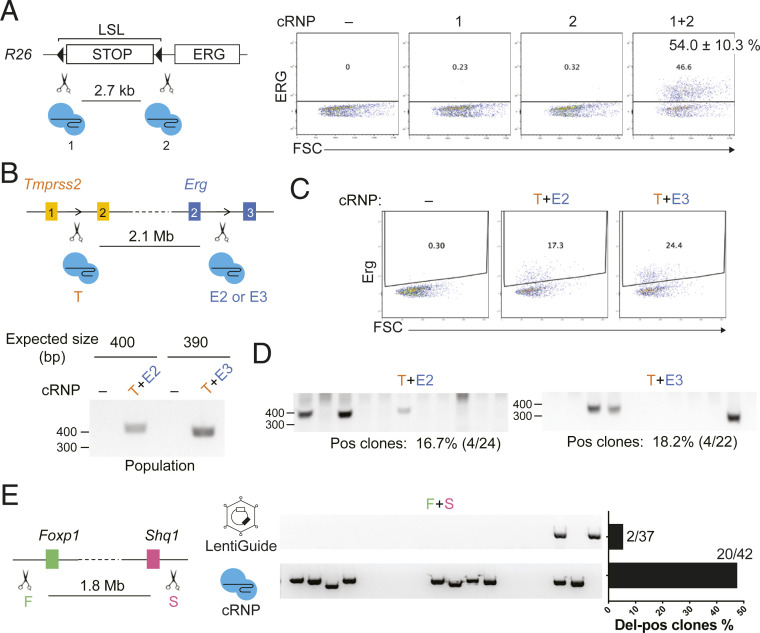
“1-Mb intrachromosomal deletion that results in aberrant expression of the ETS family transcription factor ERG in human prostate cancer (23).”
BackgroundIntegrative Genomic Profiling of Human Prostate Cancer
Taylor, B. S., Schultz, N., Hieronymus, H., Gopalan, A., Xiao, Y., Carver, B. S., Arora, V. K., Kaushik, P., Cerami, E., Reva, B., et al. (2010) · Cancer Cell · doi:10.1016/j.ccr.2010.05.026 · Cited by 3,701 · cited 2×
“Recurrent multigenic chromosomal deletions are among the most common alterations in cancer genomes, particularly in epithelial tumors such as prostate cancer (18, 19).”
BackgroundSelf-citationIntegrative Clinical Genomics of Advanced Prostate Cancer
Robinson, D., Van Allen, E. M., Wu, Y.-M., Schultz, N., Lonigro, R. J., Mosquera, J.-M., Montgomery, B., Taplin, M.-E., Pritchard, C. C., Attard, G., et al. (2015) · Cell · doi:10.1016/j.cell.2015.05.001 · Cited by 3,645
Self-citationThe Molecular Taxonomy of Primary Prostate Cancer
Abeshouse, A., Ahn, J., Akbani, R., Ally, A., Amin, S., Andry, C. D., Annala, M., Aprikian, A., Armenia, J., Arora, A., et al. (2015) · Cell · doi:10.1016/j.cell.2015.10.025 · Cited by 3,110 · cited 1×
“0Mb tumor suppressor locus at human 3p13-14, found in ∼15% of localized prostate cancers (18, 25).”
BackgroundSelf-citationEasy quantitative assessment of genome editing by sequence trace decomposition
Brinkman, E. K., Chen, T., Amendola, M., & van Steensel, B. (2014) · Nucleic Acids Research · doi:10.1093/nar/gku936 · Cited by 2,390
CRISPR-Cas9 Knockin Mice for Genome Editing and Cancer Modeling
Platt, R. J., Chen, S., Zhou, Y., Yim, M. J., Swiech, L., Kempton, H. R., Dahlman, J. E., Parnas, O., Eisenhaure, T. M., Jovanovic, M., et al. (2014) · Cell · doi:10.1016/j.cell.2014.09.014 · Cited by 2,001
Crucial role of p53-dependent cellular senescence in suppression of Pten-deficient tumorigenesis
Chen, Z., Trotman, L. C., Shaffer, D., Lin, H.-K., Dotan, Z. A., Niki, M., Koutcher, J. A., Scher, H. I., Ludwig, T., Gerald, W., et al. (2005) · Nature · doi:10.1038/nature03918 · Cited by 1,993 · cited 1×
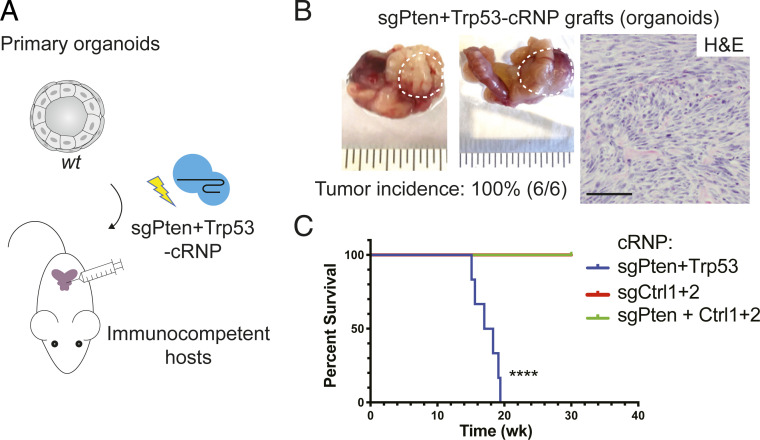
“Remarkably, 100% (six of six) B6 recipient mice developed locally invasive adenocarcinomas with median survival of ∼17 wk, comparable to that observed in Pb-Cre;Pten;Trp53 GEM models (16).”
BackgroundDynamic Imaging of Genomic Loci in Living Human Cells by an Optimized CRISPR/Cas System
Chen, B., Gilbert, L. A., Cimini, B. A., Schnitzbauer, J., Zhang, W., Li, G.-W., Park, J., Blackburn, E. H., Weissman, J. S., Qi, L. S., et al. (2013) · Cell · doi:10.1016/j.cell.2013.12.001 · Cited by 1,963 · cited 1×
“To create a lentiGuide-mCherry backbone, the sgRNA scaffold of LRG (Addgene plasmid #65656) (36) was first replaced with an enhanced scaffold (37) between BsmBI/EcoRI sites.”
MethodKosicki, M., Tomberg, K., & Bradley, A. (2018) · Nature Biotechnology · doi:10.1038/nbt.4192 · Cited by 1,883
Kim, S., Kim, D., Cho, S. W., Kim, J., & Kim, J.-S. (2014) · Genome Research · doi:10.1101/gr.171322.113 · Cited by 1,856 · cited 1×
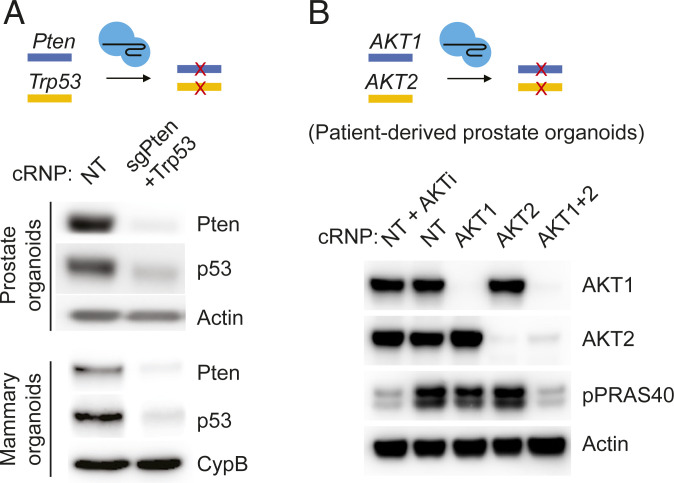
“In addition to its simplicity, the cRNP approach offers the advantage of transient Cas9 expression and potentially reduced off-target editing as a consequence (8, 12, 13).”
BackgroundOrganoid Cultures Derived from Patients with Advanced Prostate Cancer
Gao, D., Vela, I., Sboner, A., Iaquinta, P. J., Karthaus, W. R., Gopalan, A., Dowling, C., Wanjala, J. N., Undvall, E. A., Arora, V. K., et al. (2014) · Cell · doi:10.1016/j.cell.2014.08.016 · Cited by 1,559 · cited 1×
“Patient-derived organoids (MSK-PCa12) were generated and cultured as previously described (43).”
MethodSelf-citationZuris, J. A., Thompson, D. B., Shu, Y., Guilinger, J. P., Bessen, J. L., Hu, J. H., Maeder, M. L., Joung, J. K., Chen, Z.-Y., & Liu, D. R. (2015) · Nature Biotechnology · doi:10.1038/nbt.3081 · Cited by 1,460 · cited 1×
“In addition to its simplicity, the cRNP approach offers the advantage of transient Cas9 expression and potentially reduced off-target editing as a consequence (8, 12, 13).”
BackgroundEnhanced homology-directed human genome engineering by controlled timing of CRISPR/Cas9 delivery
Lin, S., Staahl, B. T., Alla, R. K., & Doudna, J. A. (2014) · eLife · doi:10.7554/elife.04766 · Cited by 1,189
Spontaneous mammary adenocarcinomas in transgenic mice that carry and express MTV/myc fusion genes
Stewart, T. A., Pattengale, P. K., & Leder, P. (1984) · Cell · doi:10.1016/0092-8674(84)90257-5 · Cited by 899 · cited 1×
“Mammary tumors from c-Myc–overexpressing mice (41) were dissected and cultured in the form of organoids as previously described (42).”
MethodDiscovery of cancer drug targets by CRISPR-Cas9 screening of protein domains
Shi, J., Wang, E., Milazzo, J. P., Wang, Z., Kinney, J. B., & Vakoc, C. R. (2015) · Nature Biotechnology · doi:10.1038/nbt.3235 · Cited by 761 · cited 1×
“To create a lentiGuide-mCherry backbone, the sgRNA scaffold of LRG (Addgene plasmid #65656) (36) was first replaced with an enhanced scaffold (37) between BsmBI/EcoRI sites.”
MethodA luminal epithelial stem cell that is a cell of origin for prostate cancer
Wang, X., Julio, M. K.-D., Economides, K. D., Walker, D., Yu, H., Halili, M. V., Hu, Y.-P., Price, S. M., Abate-Shen, C., & Shen, M. M. (2009) · Nature · doi:10.1038/nature08361 · Cited by 734 · cited 1×
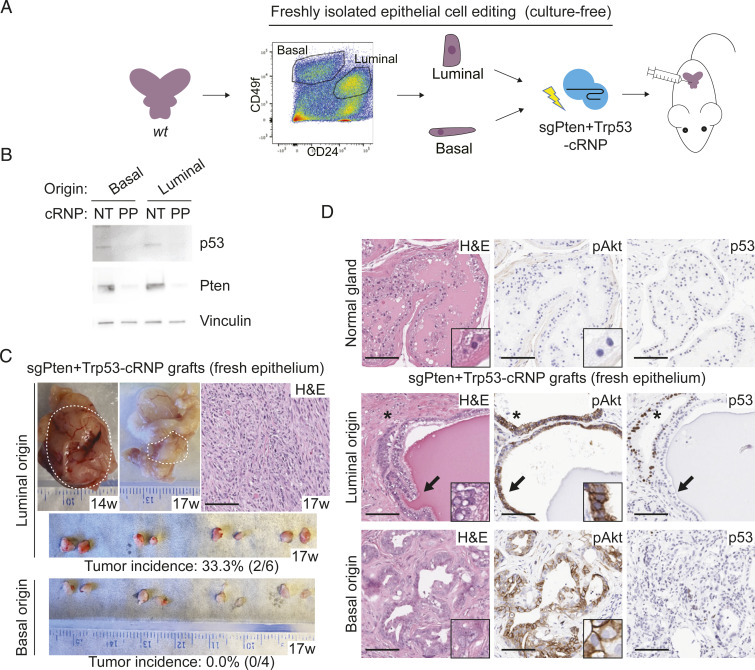
“The fact that tumors were observed only in mice engrafted with cRNP-edited luminal cells is consistent with prior evidence from GEM models implicating luminal cells as the cell of origin for prostate cancers initiated by Pten loss (31, 32).”
ResultIdentification of Multipotent Luminal Progenitor Cells in Human Prostate Organoid Cultures
Karthaus, W. R., Iaquinta, P. J., Drost, J., Gracanin, A., van Boxtel, R., Wongvipat, J., Dowling, C. M., Gao, D., Begthel, H., Sachs, N., et al. (2014) · Cell · doi:10.1016/j.cell.2014.08.017 · Cited by 727 · cited 3×
“Organoid culture was maintained under standard conditions as described previously (14).”
BackgroundMethodSelf-citationPten Dose Dictates Cancer Progression in the Prostate
Trotman, L. C., Niki, M., Dotan, Z. A., Koutcher, J. A., Di Cristofano, A., Xiao, A., Khoo, A. S., Roy-Burman, P., Greenberg, N. M., Dyke, T. V., et al. (2003) · PLoS Biology · doi:10.1371/journal.pbio.0000059 · Cited by 676 · cited 1×
“Pten genotyping primers have been previously described (40).”
MethodIn vivo engineering of oncogenic chromosomal rearrangements with the CRISPR/Cas9 system
Maddalo, D., Manchado, E., Concepcion, C. P., Bonetti, C., Vidigal, J. A., Han, Y.-C., Ogrodowski, P., Crippa, A., Rekhtman, N., de Stanchina, E., et al. (2014) · Nature · doi:10.1038/nature13902 · Cited by 640 · cited 1×
“, tumor formation) to be successful (3, 21, 22).”
BackgroundRapid modelling of cooperating genetic events in cancer through somatic genome editing
Sánchez-Rivera, F. J., Papagiannakopoulos, T., Romero, R., Tammela, T., Bauer, M. R., Bhutkar, A., Joshi, N. S., Subbaraj, L., Bronson, R. T., Xue, W., et al. (2014) · Nature · doi:10.1038/nature13906 · Cited by 407
Self-citationIsolation and functional characterization of murine prostate stem cells
Lawson, D. A., Xin, L., Lukacs, R. U., Cheng, D., & Witte, O. N. (2007) · Proceedings of the National Academy of Sciences · doi:10.1073/pnas.0609684104 · Cited by 399 · cited 1×
“Toward that end, we sorted freshly isolated mouse prostate epithelial cells into basal (Cd49f-high) and luminal (Cd24-high) subpopulations (30), electroporated each with sgPten–cRNP and sgTrp53–cRNP as described earlier for organoids, and separately injected each subpopulation orthotopically into the dorsal prostate l…”
MethodZou, M., Toivanen, R., Mitrofanova, A., Floch, N., Hayati, S., Sun, Y., Le Magnen, C., Chester, D., Mostaghel, E. A., Califano, A., et al. (2017) · Cancer Discovery · doi:10.1158/2159-8290.cd-16-1174 · Cited by 386
In vivo genome editing and organoid transplantation models of colorectal cancer and metastasis
Roper, J., Tammela, T., Cetinbas, N. M., Akkad, A., Roghanian, A., Rickelt, S., Almeqdadi, M., Wu, K., Oberli, M. A., Sánchez-Rivera, F. J., et al. (2017) · Nature Biotechnology · doi:10.1038/nbt.3836 · Cited by 348
Optimized base editors enable efficient editing in cells, organoids and mice
Zafra, M. P., Schatoff, E. M., Katti, A., Foronda, M., Breinig, M., Schweitzer, A. Y., Simon, A., Han, T., Goswami, S., Montgomery, E., et al. (2018) · Nature Biotechnology · doi:10.1038/nbt.4194 · Cited by 347 · cited 1×
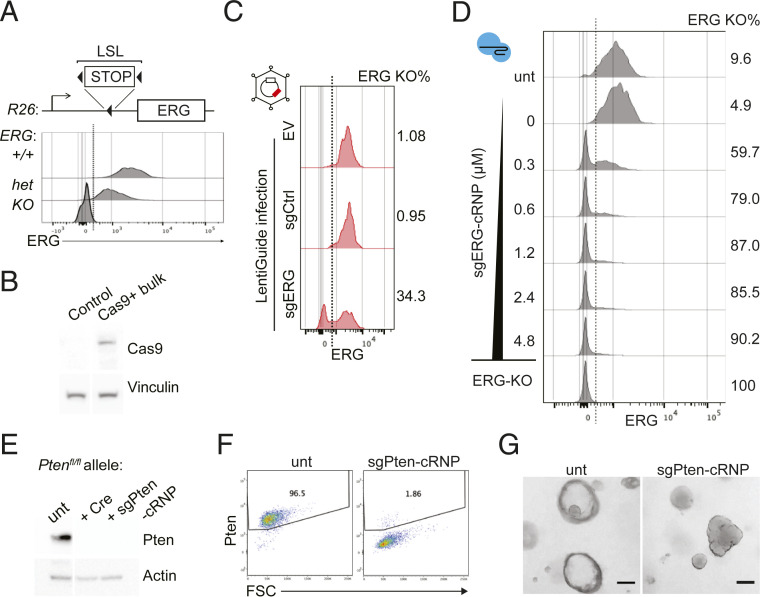
“Results and Discussion As a first step to optimize CRISPR editing in primary organoids, we compared the efficiency of a conventional virus-based approach, in which vectors expressing Cas9 and sgRNAs are stably introduced into cells (4), to the cRNP approach, in which Cas9 protein and sgRNAs are transiently electropora…”
MethodSelf-citationWang, D., Mou, H., Li, S., Li, Y., Hough, S., Tran, K., Li, J., Yin, H., Anderson, D. G., Sontheimer, E. J., et al. (2015) · Human Gene Therapy · doi:10.1089/hum.2015.087 · Cited by 345
Choi, N., Zhang, B., Zhang, L., Ittmann, M., & Xin, L. (2012) · Cancer Cell · doi:10.1016/j.ccr.2012.01.005 · Cited by 341 · cited 1×
“The fact that tumors were observed only in mice engrafted with cRNP-edited luminal cells is consistent with prior evidence from GEM models implicating luminal cells as the cell of origin for prostate cancers initiated by Pten loss (31, 32).”
ResultTargeted genomic rearrangements using CRISPR/Cas technology
Choi, P. S., & Meyerson, M. (2014) · Nature Communications · doi:10.1038/ncomms4728 · Cited by 309 · cited 1×
“, tumor formation) to be successful (3, 21, 22).”
BackgroundRegenerative potential of prostate luminal cells revealed by single-cell analysis
Karthaus, W. R., Hofree, M., Choi, D., Linton, E. L., Turkekul, M., Bejnood, A., Carver, B., Gopalan, A., Abida, W., Laudone, V., et al. (2020) · Science · doi:10.1126/science.aay0267 · Cited by 283
Self-citationChen, Y., Chi, P., Rockowitz, S., Iaquinta, P. J., Shamu, T., Shukla, S., Gao, D., Sirota, I., Carver, B. S., Wongvipat, J., et al. (2013) · Nature Medicine · doi:10.1038/nm.3216 · Cited by 282 · cited 7×
“Prostate organoids derived from a GEM model of ERGpositive human cancers (R26LSL-ERG/LSL-ERG;Ptenfl/fl;Pb-Cre, EPC) (11) were used as a model in which the ERG transgene is activated via a Cre-mediated removal of the preceding Lox-STOP-Lox (LSL) cassette.”
MethodSelf-citationHieronymus, H., Murali, R., Tin, A., Yadav, K., Abida, W., Moller, H., Berney, D., Scher, H., Carver, B., Scardino, P., et al. (2018) · eLife · doi:10.7554/elife.37294 · Cited by 282 · cited 1×
“Recurrent multigenic chromosomal deletions are among the most common alterations in cancer genomes, particularly in epithelial tumors such as prostate cancer (18, 19).”
BackgroundSelf-citationBRCA-deficient mouse mammary tumor organoids to study cancer-drug resistance
Duarte, A. A., Gogola, E., Sachs, N., Barazas, M., Annunziato, S., de Ruiter, J. R., Velds, A., Blatter, S., Houthuijzen, J. M., van de Ven, M., et al. (2017) · Nature Methods · doi:10.1038/nmeth.4535 · Cited by 158 · cited 1×
“Mammary tumors from c-Myc–overexpressing mice (41) were dissected and cultured in the form of organoids as previously described (42).”
MethodAnnunziato, S., Kas, S. M., Nethe, M., Yücel, H., Del Bravo, J., Pritchard, C., Bin Ali, R., van Gerwen, B., Siteur, B., Drenth, A. P., et al. (2016) · Genes & Development · doi:10.1101/gad.279190.116 · Cited by 144
Guo, W., Li, L., He, J., Liu, Z., Han, M., Li, F., Xia, X., Zhang, X., Zhu, Y., Wei, Y., et al. (2020) · Nature Genetics · doi:10.1038/s41588-020-0642-1 · Cited by 138
Crowley, L., Cambuli, F., Aparicio, L., Shibata, M., Robinson, B. D., Xuan, S., Li, W., Hibshoosh, H. H., Loda, M. F., Rabadán, R., et al. (2020) · eLife · doi:10.7554/elife.59465 · Cited by 138
Efficient delivery of nuclease proteins for genome editing in human stem cells and primary cells
Liu, J., Gaj, T., Yang, Y., Wang, N., Shui, S., Kim, S., Kanchiswamy, C. N., Kim, J., & Barbas, C. F. (2015) · Nature Protocols · doi:10.1038/nprot.2015.117 · Cited by 137 · cited 1×
“In addition to its simplicity, the cRNP approach offers the advantage of transient Cas9 expression and potentially reduced off-target editing as a consequence (8, 12, 13).”
BackgroundKawasaki, K., Fujii, M., Sugimoto, S., Ishikawa, K., Matano, M., Ohta, Y., Toshimitsu, K., Takahashi, S., Hosoe, N., Sekine, S., et al. (2020) · Gastroenterology · doi:10.1053/j.gastro.2019.10.009 · Cited by 75
A TFIID-SAGA Perturbation that Targets MYB and Suppresses Acute Myeloid Leukemia
Xu, Y., Milazzo, J. P., Somerville, T. D. D., Tarumoto, Y., Huang, Y.-H., Ostrander, E. L., Wilkinson, J. E., Challen, G. A., & Vakoc, C. R. (2018) · Cancer Cell · doi:10.1016/j.ccell.2017.12.002 · Cited by 74 · cited 1×
“For orthotopic transplantation of organoid cells, cells were transduced with Lenti-luciferase-P2A-Neo (Addgene plasmid #105621) (45) and selected with 500 μg/mL G418.”
MethodVanoli, F., Tomishima, M. J., Feng, W., Lamribet, K., Babin, L., Brunet, E., & Jasin, M. (2017) · Proceedings of the National Academy of Sciences · doi:10.1073/pnas.1700622114 · Cited by 62 · cited 1×
“, tumor formation) to be successful (3, 21, 22).”
BackgroundSelf-citationLeibold, J., Ruscetti, M. A., Cao, Z., Ho, Y.-J., Baslan, T., Zou, M., Abida, W. M., Feucht, J., Han, T., Barriga, F. M., et al. (2020) · Cancer Discovery · doi:10.1158/2159-8290.cd-19-1242 · Cited by 58
Self-citationImmunity to Cas9 as an Obstacle to Persistent Genome Editing
Gough, V., & Gersbach, C. A. (2020) · Molecular Therapy · doi:10.1016/j.ymthe.2020.05.007 · Cited by 45
CRISPR-Cas9 Ribonucleoprotein-Mediated Genomic Editing in Mature Primary Innate Immune Cells
Riggan, L., Hildreth, A. D., Rolot, M., Wong, Y.-Y., Satyadi, W., Sun, R., Huerta, C., & O’Sullivan, T. E. (2020) · Cell Reports · doi:10.1016/j.celrep.2020.107651 · Cited by 35
Deletion of 3p13-14 locus spanning FOXP1 to SHQ1 cooperates with PTEN loss in prostate oncogenesis
Hieronymus, H., Iaquinta, P. J., Wongvipat, J., Gopalan, A., Murali, R., Mao, N., Carver, B. S., & Sawyers, C. L. (2017) · Nature Communications · doi:10.1038/s41467-017-01198-9 · Cited by 30 · cited 1×
“Our group previously documented that this region is, indeed, tumor suppressive in a GEM model, but this approach required a generation of a complex array of LoxP sites and extensive breeding (26).”
BackgroundSelf-citationMao, N., Gao, D., Hu, W., Hieronymus, H., Wang, S., Lee, Y. S., Lee, C., Choi, D., Gopalan, A., Chen, Y., et al. (2019) · Molecular Cancer Therapeutics · doi:10.1158/1535-7163.mct-18-1386 · Cited by 20 · cited 1×
“EPC and WT (R26;Pten) have been previously described (38).”
MethodSelf-citationCRISPR-Induced TMPRSS2-ERG Gene Fusions in Mouse Prostate Organoids.
Driehuis, E., & Clevers, H. C. (2017) · PubMed · Cited by 10
Cited by
The neuroendocrine transition in prostate cancer is dynamic and dependent on ASCL1
Romero, R., Chu, T., González-Robles, T. J., Smith, P., Xie, Y., Kaur, H., Yoder, S., Zhao, H., Mao, C., Kang, W., et al. (2024) · Nature Cancer · doi:10.1038/s43018-024-00838-6 · Cited by 112
“Previously, we described a strategy to assess genetic drivers of prostate adenocarcinoma (PRAD), as well as cells of origin using mouse prostate organoids coupled with orthotopic transplantation 21 (OT).”
InfluentialSelf-citationUnderstanding Drug Sensitivity and Tackling Resistance in Cancer
Tyner, J. W., Haderk, F., Kumaraswamy, A., Baughn, L. B., Van Ness, B., Liu, S., Marathe, H., Alumkal, J. J., Bivona, T. G., Chan, K. S., et al. (2022) · Cancer Research · doi:10.1158/0008-5472.can-21-3695 · Cited by 78
“Lineage tracing methods have given deeper insights on tumor evolution, and work to date suggest selection of specific subpopulation with late-hybrid EMT states may occur during pancreatic cancer progression (108, 109).”
BackgroundSelf-citationAllosteric interactions prime androgen receptor dimerization and activation
Wasmuth, E. V., Broeck, A. V., LaClair, J. R., Hoover, E. A., Lawrence, K. E., Paknejad, N., Pappas, K., Matthies, D., Wang, B., Feng, W., et al. (2022) · Molecular Cell · doi:10.1016/j.molcel.2022.03.035 · Cited by 50
“Pten−/−;sgERG organoids previously generated by electroporation of Cas9-sgRNA ribonucleoprotein complexes against ERG (Feng et al., 2021) were transduced with an empty vector control, or an allelic series of WT and mutant ERG variants and selected with 2 μg/mL puromycin for 1 week.”
MethodSelf-citationTreatment of acute myeloid leukemia models by targeting a cell surface RNA-binding protein
George, B. M., Eleftheriou, M., Yankova, E., Perr, J., Chai, P., Nestola, G., Almahayni, K., Evans, S., Damaskou, A., Hemberger, H., et al. (2025) · Nature Biotechnology · doi:10.1038/s41587-025-02648-2 · Cited by 47
“Normal prostate tissue was derived from Rosa26 -LSL-Cas9 knockin mice on B6J (strain 26175, Jackson Laboratory), and Pten −/− ; Trp53 −/− prostate tumors were derived from a mouse model of prostate cancer of the same genetic background similar to Feng et al. 57 .”
Advancements in CRISPR/Cas systems for disease treatment
Xu, Y., Le, H., Wu, Q., Wang, N., & Gong, C. (2025) · Acta Pharmaceutica Sinica B · doi:10.1016/j.apsb.2025.05.007 · Cited by 35
“Furthermore, researchers have established a prostate cancer model by transplanting genetically modified prostate epithelial cells into mice’s prostate glands, a method that proves more efficient and cost-effective than conventional genetically engineered mouse models 95 .”
Metadata
- Authors
- Feng, W., Cao, Z., Lim, P. X., Zhao, H., Luo, H., Mao, N., Lee, Y. S., Rivera, A. A., Choi, D., Wu, C., Han, T., Romero, R., de Stanchina, E., Carver, B. S., Wang, Q., Jasin, M., & Sawyers, C. L.
- Affiliations
- Memorial Sloan Kettering Cancer Center (US)
- Human Oncology and Pathogenesis Program, Memorial Sloan Kettering Cancer Center, New York, NY 10065;
- Antitumor Assessment Core Facility, Memorial Sloan Kettering Cancer Center, New York, NY 10065;
- Shanghai Medical College of Fudan University (CN)
- Corresponding author
- Sawyers, Charles L.
- ORCID
- Venue
- Proceedings of the National Academy of Sciences
- Publisher
- National Academy of Sciences
- Published
- 2021-08-05
- Volume
- 118
- Issue
- 32
- ISSN
- 0027-8424 (ISSN-L)
- 1091-6490
- PMC
- PMC8364185
- OpenAlex
- W3192622360
- Cited by
- 25
- References
- 46
- Citations by year
- 2026: 4 · 2025: 9 · 2024: 2 · 2023: 3 · 2022: 7
- FWCI
- 0.94
- Type
- journal article
- Language
- en
- Open access
- hybrid
- doi.org
- Licence
- Locations
- Proceedings of the National Academy of Sciences (publishedVersion, cc-by-nc-nd)
- PubMed Central (publishedVersion, cc-by-nc-nd)
- PubMed (publishedVersion)
- Funders
- HHS | NIH | National Cancer Institute (CA193837, CA092629, CA224079, CA155169, CA008748)
- Starr Cancer Consortium (I12-0007)
- U.S. Department of Defense (W81XWH)
- Topics
- Life Sciences › Biochemistry, Genetics and Molecular Biology › Molecular Biology › CRISPR and Genetic Engineering
- Life Sciences › Biochemistry, Genetics and Molecular Biology › Molecular Biology › Chromatin Remodeling and Cancer
- Life Sciences › Biochemistry, Genetics and Molecular Biology › Cancer Research › Prostate Cancer Treatment and Research
- Keywords
- cell of origin, prostate cancer, CRISPR/Cas9, chromosomal rearrangements, organoids, orthotopic transplantation, cancer modeling, ex vivo gene editing
- MeSH terms
- Transcriptional Regulator ERG, Gene Editing, CRISPR-Associated Protein 9, RNA, Guide, CRISPR-Cas Systems, Animals, Chromosome Deletion, Epithelial Cells, Humans, Male, Mice, Inbred C57BL, Mice, Transgenic, Organoids, Prostate, Prostatic Neoplasms, Ribonucleoproteins, Genes, Tumor Suppressor, Xenograft Model Antitumor Assays, Adaptor Proteins, Signal Transducing, Mice, Clustered Regularly Interspaced Short Palindromic Repeats
About these checks
Registry, retraction, Cites and statistics results are computed, not judged, with one exception: a printed reference that no index lists is read once by a model before it counts as a citation error. Claims are extracted by a model and kept only when their quote appears verbatim in the text; each cited source is then checked, with a model’s help, for whether it says what the claim relies on. Those verdicts can be wrong — read the claim’s quote and the cited source before relying on one.
Statistics and arithmetic are recomputed, not judged.
Confidence bands are shown only for fields calibrated on our annotated test set. None is calibrated yet, so no band is shown.
What counts as a claim ›How we measure confidence ›How we check this ›
Are you an author, or do you see a problem with this page? Request a review
Data sources
Bibliographic data: Semantic Scholar, OpenAlex, Crossref.
Contains information from the Semantic Scholar Academic Graph Datasets, made available under the ODC Attribution License (ODC-BY 1.0).
Semantic Scholar’s data is described in: Kinney, R., et al. (2023). The Semantic Scholar Open Data Platform. arXiv:2301.10140.
