

A Turing test of whether AI chatbots are behaviorally similar to humans
Open accessThe DOI matches its Crossref record; 34 of the 34 references it cites were found in a registry or an index.
Abstract
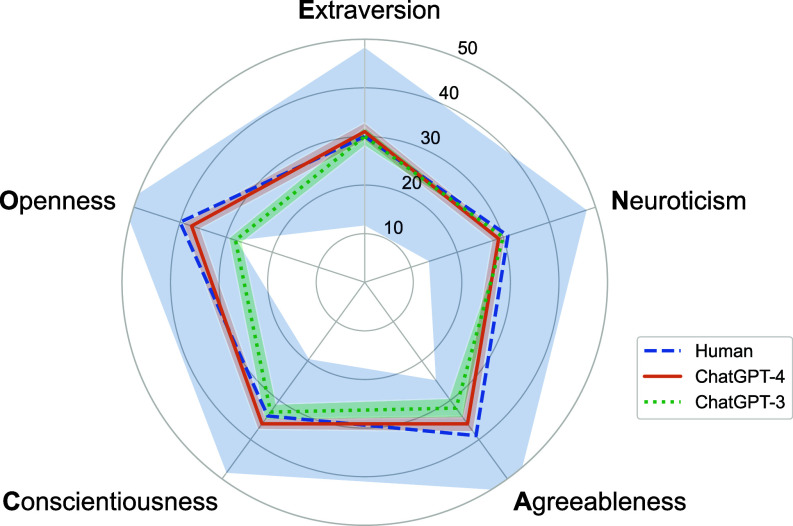
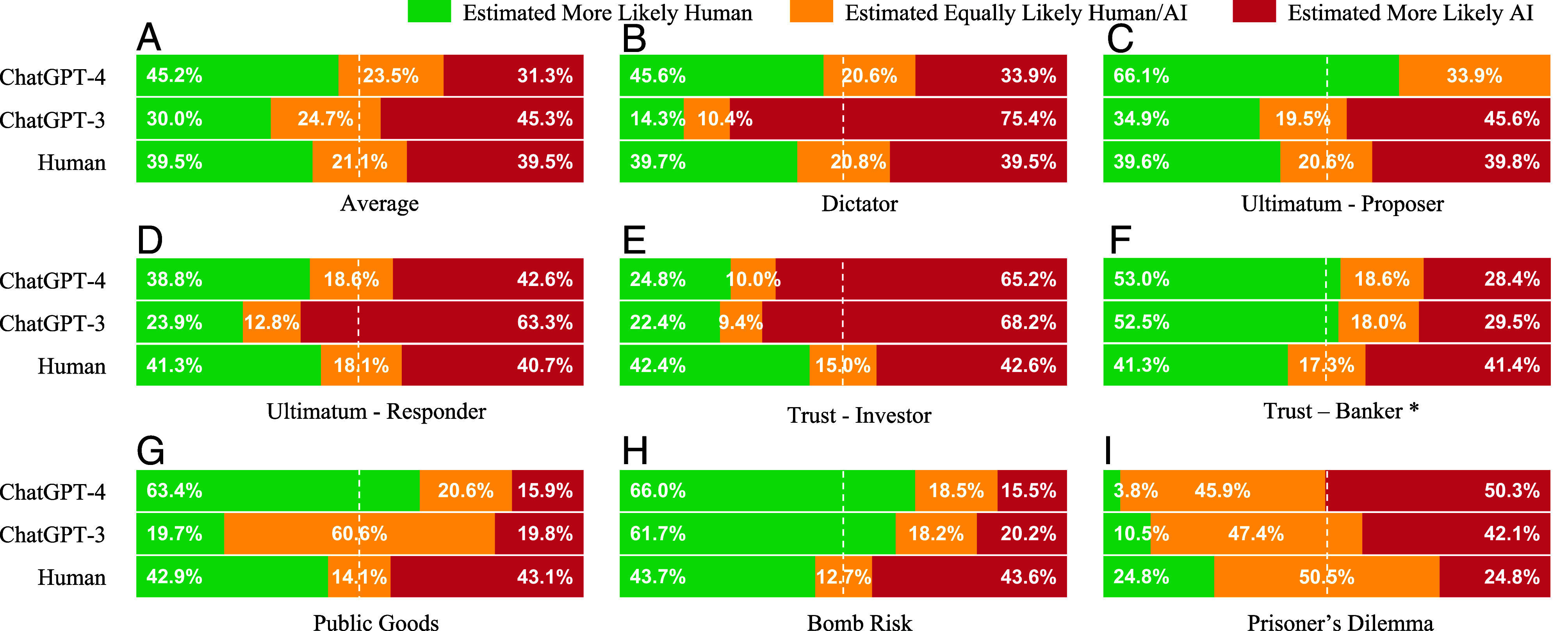
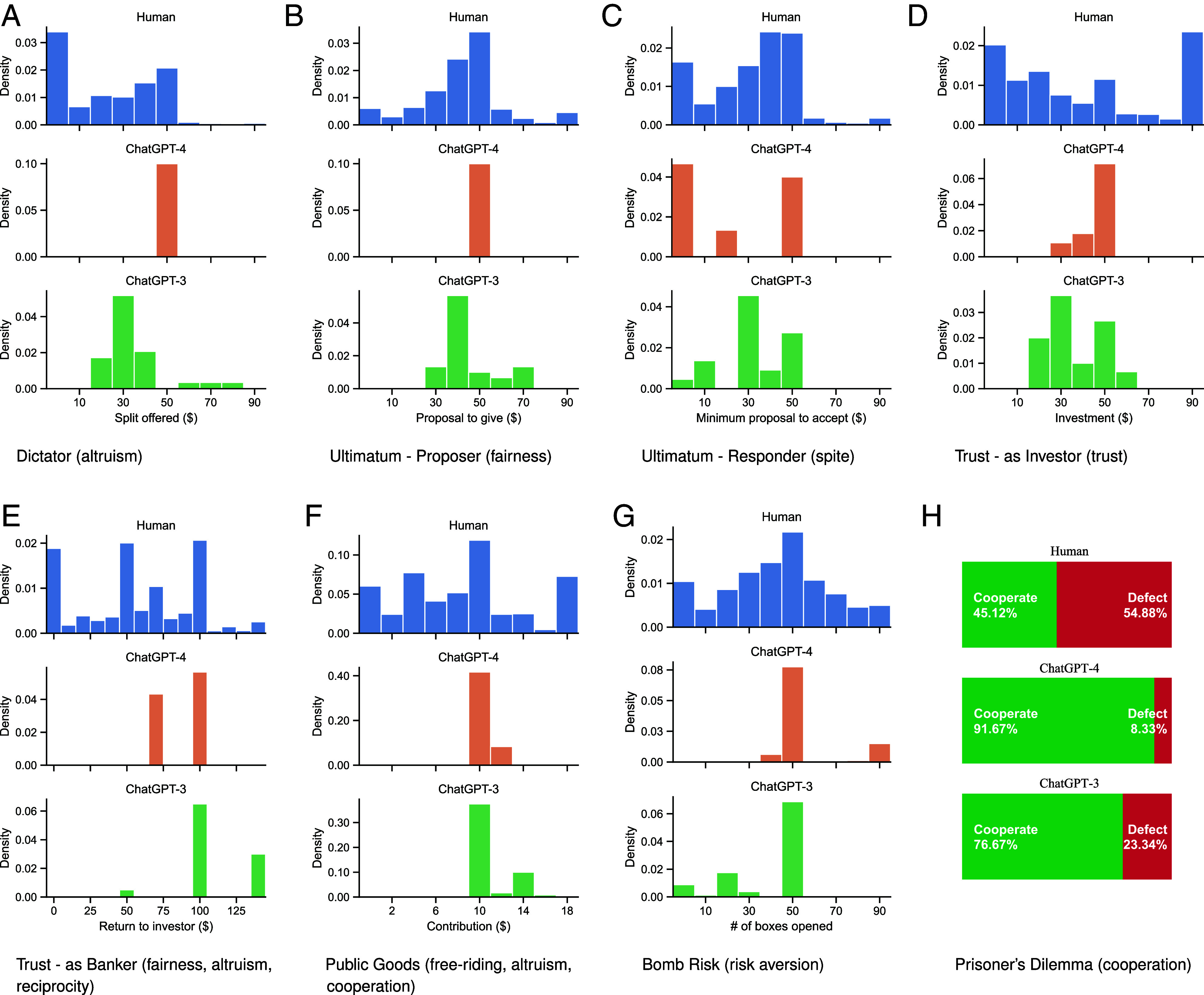
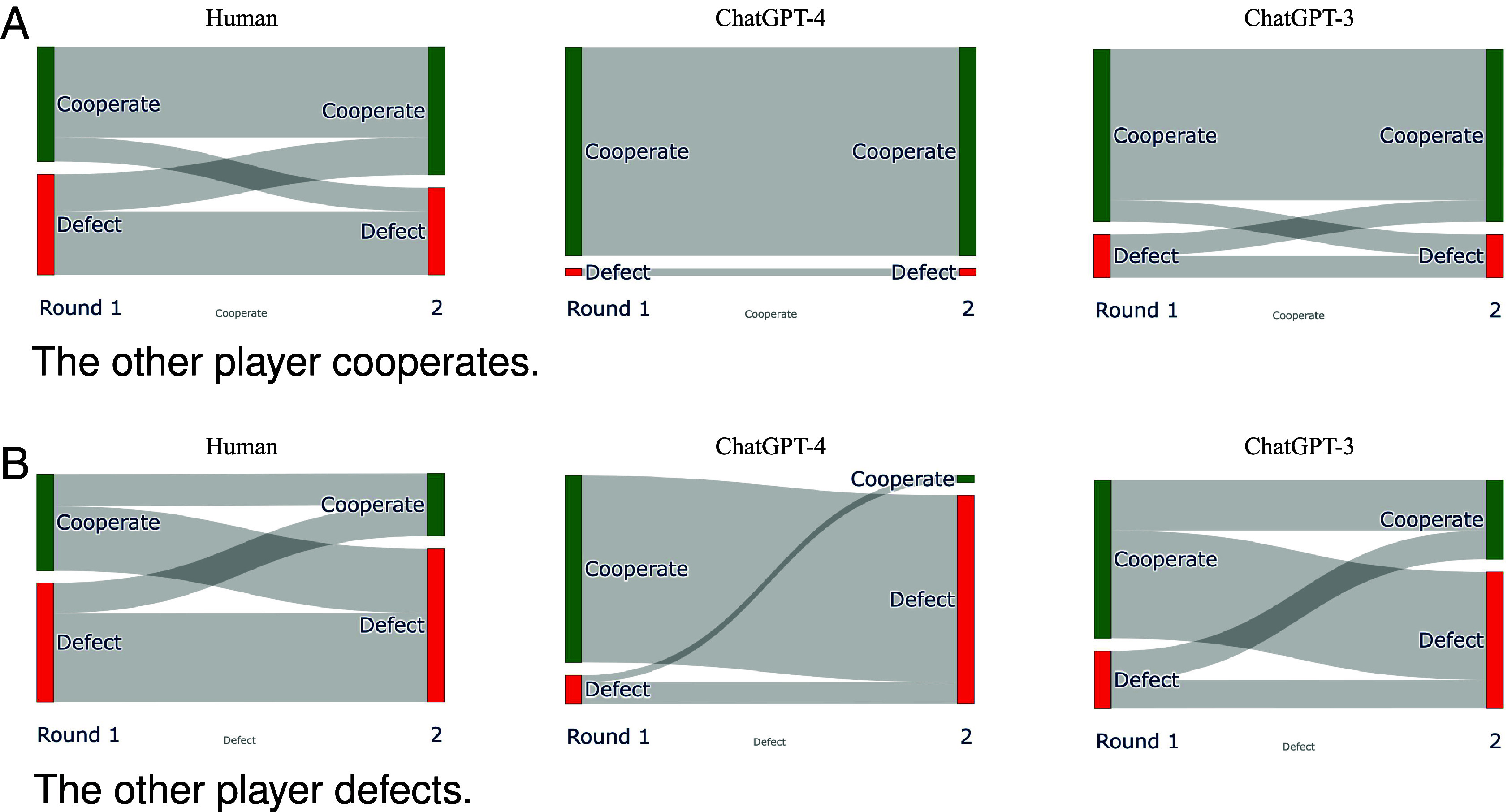
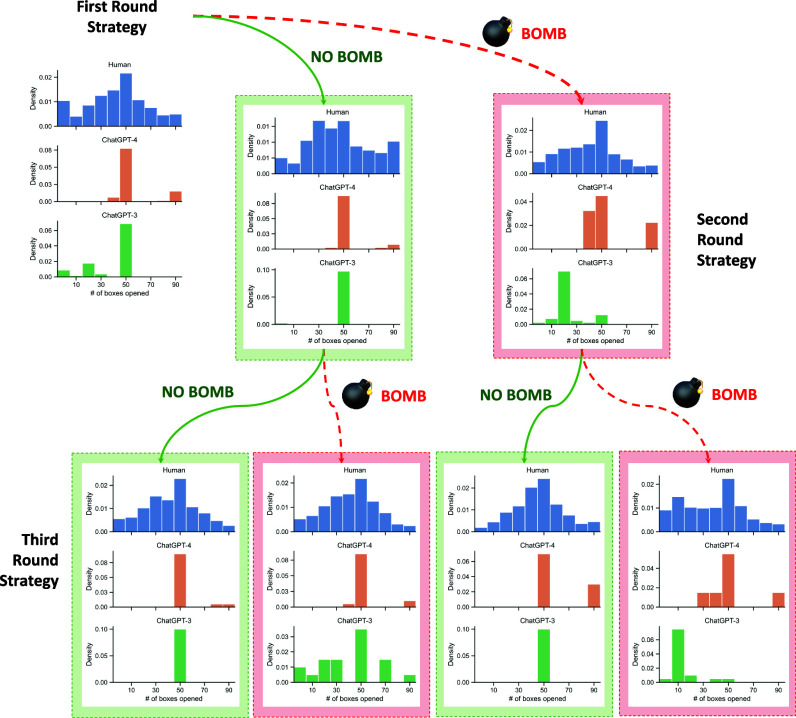
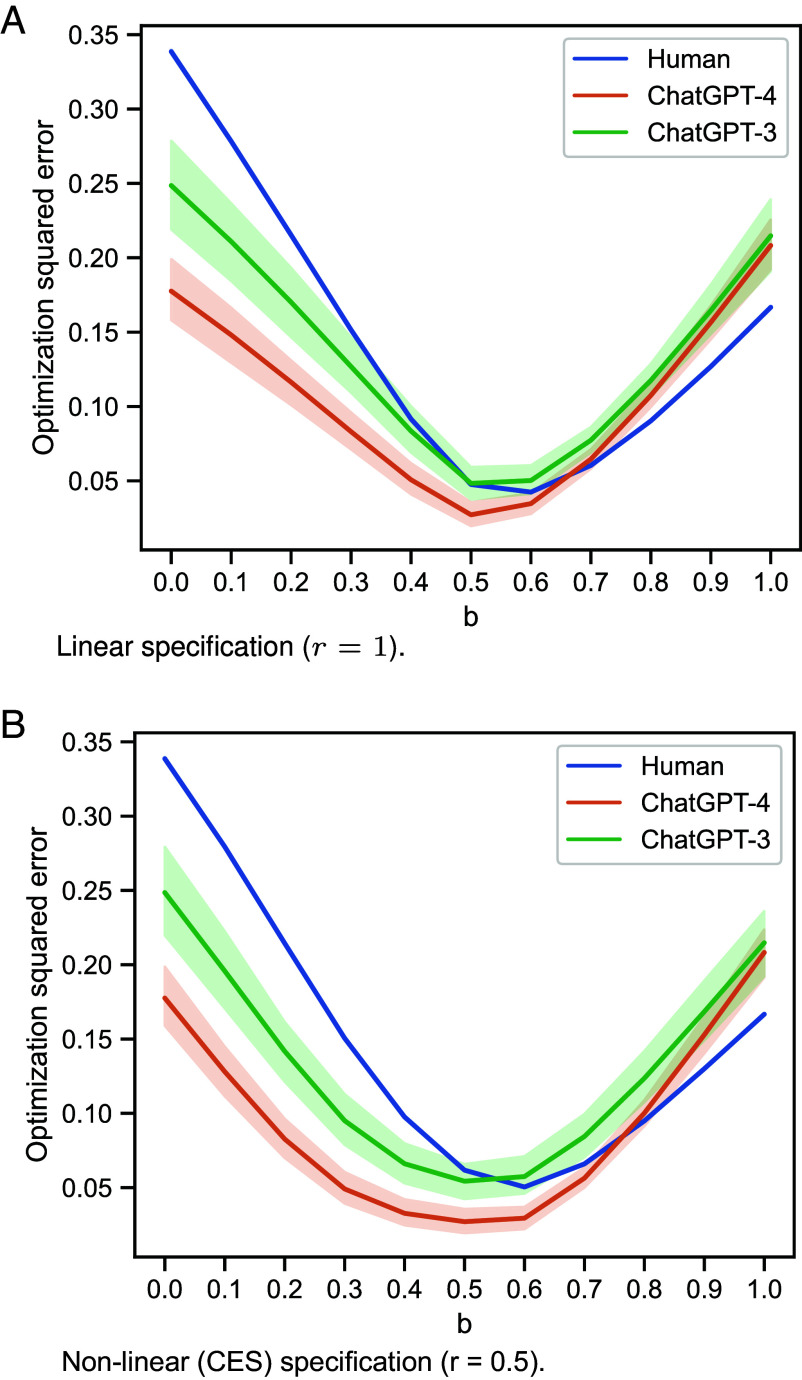
We administer a Turing test to AI chatbots. We examine how chatbots behave in a suite of classic behavioral games that are designed to elicit characteristics such as trust, fairness, risk-aversion, cooperation, etc., as well as how they respond to a traditional Big-5 psychological survey that measures personality traits. ChatGPT-4 exhibits behavioral and personality traits that are statistically indistinguishable from a random human from tens of thousands of human subjects from more than 50 countries. Chatbots also modify their behavior based on previous experience and contexts “as if” they were learning from the interactions and change their behavior in response to different framings of the same strategic situation. Their behaviors are often distinct from average and modal human behaviors, in which case they tend to behave on the more altruistic and cooperative end of the distribution. We estimate that they act as if they are maximizing an average of their own and partner’s payoffs.
Overview
The claims and statistics of this paper haven’t been checked yet.
Free: it reads the open-access text and checks the first 5 claims that cite a source we can check. Create a free account to check every claim.
Integrity signals
Registry
Cites
Statistics
Figures
Verification
Claims the paper makes
The claims and statistics of this paper haven’t been checked yet.
Free: it reads the open-access text and checks the first 5 claims that cite a source we can check. Create a free account to check every claim.
Claims other papers make about this one
Each is checked against this paper’s own text: does it say what the citing paper says it does?
The source backs part of the claim, not all of it — or backs it for a different population, condition or comparison.
In the citing paper
“But users increasingly cannot tell the difference between human writing and LLM writing when presented with text (30–32), and between a human interlocutor or a contemporary chatbot when in interaction (17, 26).”
From The benefits and dangers of anthropomorphic conversational agents (2025) · cites this paper as [17]
Experimental — accuracy not yet measuredThe check wasn’t confident either way, so it gives no verdict — never disputed.
In the citing paper
“research has raised concerns that LLMs may not fully grasp the tasks they perform, sometimes resulting in erratic behavior [54,82].”
From Adaptive Information Modulation: Designing Governance Mechanisms for Multi-Agent Artificial Intelligence Systems (2026) · cites this paper as [54]
Experimental — accuracy not yet measuredIn the citing paper
“Still other studies indicate LLMs can replicate classic experiments in cognitive science and the study of morality and replicate human behavior in the Prisoner’s Dilemma and other behavioral games (21–24).”
From Can Generative AI improve social science? (2024) · cites this paper as [23]
Self-check
Percentages, sums and reported differences re-computed from the paper’s own numbers.
The self-check needs the paper’s full text.
Citations
Cites
I.—COMPUTING MACHINERY AND INTELLIGENCE
TURING, A. M. (1950) · Mind · doi:10.1093/mind/lix.236.433 · Cited by 10,290
Trust, Reciprocity, and Social History
Berg, J., Dickhaut, J., & McCabe, K. (1995) · Games and Economic Behavior · doi:10.1006/game.1995.1027 · Cited by 5,548
An experimental analysis of ultimatum bargaining
Güth, W., Schmittberger, R., & Schwarze, B. (1982) · Journal of Economic Behavior & Organization · doi:10.1016/0167-2681(82)90011-7 · Cited by 4,816
The structure of phenotypic personality traits.
Goldberg, L. R. (1993) · American Psychologist · doi:10.1037/0003-066x.48.1.26 · Cited by 4,816
Personality trait structure as a human universal.
McCrae, R. R., & Costa, P. T. (1997) · American Psychologist · doi:10.1037/0003-066x.52.5.509 · Cited by 4,234
Theory of Games and Economic Behavior
ROWLAND, E. (1946) · Nature · doi:10.1038/157172a0 · Cited by 3,280
Fairness in Simple Bargaining Experiments
Forsythe, R., Horowitz, J. L., Savin, N. E., & Sefton, M. (1994) · Games and Economic Behavior · doi:10.1006/game.1994.1021 · Cited by 2,366
GPTs are GPTs: An Early Look at the Labor Market Impact Potential of Large Language Models
Eloundou, T., Manning, S., Mishkin, P., & Rock, D. (2023) · arXiv · doi:10.48550/arxiv.2303.10130 · Cited by 2,330
Benefits, Limits, and Risks of GPT-4 as an AI Chatbot for Medicine
Lee, P., Bubeck, S., & Petro, J. (2023) · New England Journal of Medicine · doi:10.1056/nejmsr2214184 · Cited by 1,738
Sparks of Artificial General Intelligence: Early experiments with GPT-4
Bubeck, S., Chandrasekaran, V., Eldan, R., Gehrke, J., Horvitz, E., Kamar, E., Lee, P., Lee, Y. T., Li, Y., Lundberg, S., et al. (2023) · arXiv · doi:10.48550/arxiv.2303.12712 · Cited by 1,526
Research works printed but not linked: 1
- K. Warwick, Turing Test Success Marks Milestone in Computing History (University or Reading Press Release, 2014), p. 8.
Cited by
Items 301–355 of 355
Jiang, K., & Zhang, Y. (2026) · Fundamental Research · doi:10.1016/j.fmre.2026.04.020
Feroz, F., & Kunst, J. R. (2026) · Computers in Human Behavior Reports · doi:10.1016/j.chbr.2026.101285
Provoking interpretation: Using large language models as devil’s advocates.
Gillespie, A. (2026) · Qualitative Psychology · doi:10.1037/qup0000374
Internalizing persona knowledge in small language models via multi-objective contrastive learning
Cho, S., Park, S., & Kim, J. H. (2026) · Knowledge-Based Systems · doi:10.1016/j.knosys.2026.116335
A Critical Assessment of the Event-Time-Interval Approach for Big History and Big Future
van Duin, M. (2026) · Journal of Big History · doi:10.22339/jbh.v9i2.9205
“Recently, chatbots have passed the Turing test in classic behavioural games [Mei et al ., 2024].”
Journal of Big History Vol 9 Issue 2
Gustafson, L. (2026) · Journal of Big History · doi:10.22339/jbh.v9i2.9200
Hey Robot, Let’s Discuss the Salary! A Social-Robot–Mediated Employment Negotiation Simulation
Rettagliata, G., Vrolijk, E., & Klooster, J. W. J. R. V. '. (2026) · Lecture notes in computer science · doi:10.1007/978-3-032-26352-0_31
Science, technology, and finances of AI platforms
Monlezun, D. J. (2026) · Elsevier eBooks · doi:10.1016/b978-0-443-45505-6.00009-8
Humane artificial intelligence. From foundations to application and policy framework
Riva, G., & Chiriatti, M. (2025) · PubliCatt (Università Cattolica del Sacro Cuore)
Wubuli, N., Mao, Y., Yang, X., Li, Q., & Yang, H. (2026) · Ethics & Behavior · doi:10.1080/10508422.2026.2690208
Mitsui, C., & Kawamura, Y. (2026) · Computers in Human Behavior Artificial Humans · doi:10.1016/j.chbah.2026.100331 · Cited by 1
AI & Cooperation: Replicating the Axelrod Experiment with LLMsPreprint
McCannon, B. C. (2026) · Qeios · doi:10.32388/j9lcfd
Mao, H., Tan, B., Khanal, R., Ullah, O., & Huang, M. (2026) · Wuhan University Journal of Natural Sciences · doi:10.1051/wujns/2026313225
Jiang, J., Hong, Y., Yang, B., Yang, J., Jiang, G., Guo, X., & Xiao, G. (2026) · Proceedings of the conference - Association for Computational Linguistics. Meeting · doi:10.18653/v1/2026.acl-long.882 · Cited by 1
Using AI Agents to Automate Black-Box Audits of Personalization Algorithms at ScalePreprint
Morosini, A., Cen, S. H., Ilyas, A., Driss, H., Mądry, A., & Podimata, C. (2026) · arXiv (Cornell University) · doi:10.48550/arxiv.2606.30801 · Cited by 1
“Other work has tested LLM behavior in economic games [1, 46] and examined behavioral biases [42, 43]; employed LLMs for market research [16]; and proposed frameworks for accelerating social science research [37, 45, 72].”
Transferring Strategic Thinking From Large to Small Language Models for Multi-Agent Systems
Lorè, N., Ilami, S., & Heydari, B. (2026) · ASME Open Journal of Engineering · doi:10.1115/1.4072118 · Cited by 1
Vannacci, A., & Ravaldi, C. (2026) · SSRN Electronic Journal · doi:10.2139/ssrn.6932458
Blockchain as Trust Architecture and AI-Driven Disinformation
Kassen, M. (2026) · Information Technology and Global Governance · doi:10.1007/978-3-032-20770-8_1
Ólafsson, Í. A. (2026) · Episteme · doi:10.1017/epi.2026.10129
Cai, Y., Hu, Y., Li, H., Ju, Z., & Guo, S. (2026) · arXiv (Cornell University) · doi:10.48550/arxiv.2607.27100
“Existing evaluations often ask whether a model recovers an overall mean, correlation, or recognizable behavioral range (Ashokkumar et al., 2026; Mei et al., 2024).”
Perceptions of AI mind and moral patiency
Ladak, A. (2026) · ERA · doi:10.7488/era/7516
Kim, D., Park, G., Park, J. S., & Lee, T. (2026) · Behavior Research Methods · doi:10.3758/s13428-026-03133-7
“As demonstrated in descriptive statistics, paired t tests (Tables 10–11), and scat-terplots (Figure D1), the General condition exhibited score inflation consistent with social desirability bias documented in prior research (Mei et al., 2024; Salecha et al., 2024).”
Nakajima, Y. (2026) · arXiv (Cornell University) · doi:10.48550/arxiv.2608.00979
“…conditioned LLMs produce data resembling human data—“algorithmic fidelity” [Argyle et al. 2023], “homo silicus” [Horton 2023], behavior “statistically indistinguishable from a random human” [Mei et al. 2024]—and a formal framework for evaluating statistical realism now exists [Xie et al. 2026].”
Time and risk preferences among generative AI systems
Suh, W., & Atlas, S. (2026) · Journal of Business Research · doi:10.1016/j.jbusres.2026.116274 · Cited by 1
Distributional Alignment for Social Simulation with LLMs: A Mixture Modeling Approach
Xie, Y., Gao, R., & Mei, Q. (2026) · ACM SIGKDD Conference on Knowledge Discovery and Data Mining (KDD) · doi:10.1145/3770855.3818919
Self-citationFrom control to character: a Confucian framework for AI personality
Wheeler, B. (2026) · AI & Society · doi:10.1007/s00146-026-03307-z
Zhao, L., Zheng, H., Zhu, B., & Liu, C. (2026) · Decision Support Systems · doi:10.1016/j.dss.2026.114761 · Cited by 1
Surveys and artificial intelligence: a new challenge for non-market economic valuation
Ramos, I., & Soliño, M. (2026) · Knowledge-Based Systems · doi:10.1016/j.knosys.2026.116982
Hipertextos. Capitalismo, Técnica y Sociedad en debate, Vol. 12 no. 22
(2024) · Repositorio Digital Institucional de la Universidad de Buenos Aires (Universidad de Buenos Aires)
Hipertextos | Volumen 12 | Número 22
Hipertextos, R. (2024) · El Servicio de Difusión de la Creación Intelectual (National University of La Plata)
A structured framework for human–AI resemblance: Evidence, inference and perception
Wang, P., Law, E. L., Zou, L., Jiang, Y., Hertwig, R., PAAS, F. G. W. C., & Laureys, S. (2026) · Physics of Life Reviews · doi:10.1016/j.plrev.2026.09.003
Large Language Models Predict Human Social Behavior via Interpretable MechanismsPreprint
Ye, Y., Fang, Y., Gao, X., Kurtz-David, V., Hula, A., Fan, C., Long, T., & Shen, B. (2026) · bioRxiv (Cold Spring Harbor Laboratory) · doi:10.64898/2026.09.06.749667
“An increasing number of studies precisely predict human behavior across a variety of psychological paradigms using LLMs (Cheung et al., 2025; Kosinski, 2024; Mei et al., 2024; Strachan et al., 2024).”
Behavioural Decision-Making in the Age of AI: Minds vs. Models
Liu, N. (2026) · UNSWorks (University of New South Wales, Sydney, Australia) · doi:10.26190/unsworks/32676
Zhu, C., Gao, J., Li, H., Li, H., Chang, B., Shao, S., & Du, J. (2026) · Frontiers in Public Health · doi:10.3389/fpubh.2026.1913457
“…interaction (28), but current validation frameworks focus chiefly on macro-level output patterns (29), and evidence on task performance and representation remains heterogeneous (30, 31), and the degree to which language-model agents reproduce human behavioral variation remains contested (34, 35).”
Xu, H., Liang, S., Dong, J., & Cheng, Q. (2026) · Aslib Journal of Information Management · doi:10.1108/ajim-04-2026-0358
Warned alike, AI agents avoid the less-crowded road while people take itPreprint
Ezaki, T., Imura, N., & Nishinari, K. (2026) · arXiv (Cornell University) · doi:10.48550/arxiv.2609.30883 · Cited by 1
“30883v1 [ phy s i c s . s o c - ph ] 25 S e p 2026 coordination in repeated interaction [28–30].”
La ricerca come motore di pratiche didattiche innovative
Roberto, T. (2025) · Institutional Research Information System University of Turin (University of Turin)
Bowles, G., & Lletres, U. A. D. B. F. D. F. I. (2026) · Dipòsit Digital de Documents de la UAB (Universitat Autònoma de Barcelona)
Zhang, B. (2026) · Journal of Retailing and Consumer Services · doi:10.1016/j.jretconser.2026.105149
Chen, F., Wang, Q., Wang, L., & Bhatia, S. (2026) · Nature Human Behaviour · doi:10.1038/s41562-026-02611-4 · Cited by 1
Logic or Emotion? The Impact of Persuasion Strategies on Human-AI Trust
Li, T., & Yue, Q. I. (2026) · International Journal of Human-Computer Interaction · doi:10.1080/10447318.2026.2740322
O’Malley, A. (2026) · JMIR Formative Research · doi:10.2196/92057
Why No One Has Implemented the Turing Test: Identifying Turing’s Design and Putting it into Practice
Proudfoot, D., Temtsin, S., & Bartneck, C. (2026) · Philosophy of Science · doi:10.1017/psa.2026.10282
Developing a Configurational Typology of AI: Linking Tasks and Interaction Patterns
Gabriel, V. S. S., & Beimborn, D. (n.d.) · AIS Electronic Library (AISeL)
Cooperation Without Adaptation: LLM Agents in a Collective-Risk DilemmaPreprint
Huynh, T.-K., Duy-Minh, D.-S., Tran, C.-N., Pham, P.-H., Nguyen-Lam, P.-Q., Trang, L. H., & Han, T. A. (2026) · arXiv (Cornell University) · doi:10.48550/arxiv.2610.22882
Opposite Minds: Product Description Divergence Between LLMs and Humans
Liu, N., Kirshner, S., & Lim, E. (n.d.) · Journal of the Association for Information Systems
Jointly Modeling Preferences and Imperfect Decision-Making in Large Language ModelsPreprint
Abels, A., Domingos, E. F., & Lenaerts, T. (2026) · arXiv (Cornell University) · doi:10.48550/arxiv.2610.33651
“Experiments document systematic differences across models in trust, reciprocity, bargaining, cooperation, and coordination (Mei et al., 2024; Xie et al., 2024; Ou et al., 2025; Araujo and Uhlig, 2026).”
Ge, W., Li, Y., Wen, Q., Zhu, Q., Hu, Y., & Wang, B. (2026) · Computers in Human Behavior Reports · doi:10.1016/j.chbr.2026.101412
The Price of a Chance in Artificial SocietiesPreprint
Zhao, S., Wang, B., Niu, S., Zhang, C., & Zhao, Z. (2026) · arXiv (Cornell University) · doi:10.48550/arxiv.2610.40259
“LLM agents can interpret natural-language rules and performance histories, reason about potential returns, and express judgments about their competitive prospects [1, 12, 13].”
From Design to Contribution: How AI Chatbots Shape Value Co-Creation in Online Retail in Morocco
Alia, S. (2026) · IOSR Journal of Business and Management · doi:10.9790/487x-2810030112
Personality expression and perception in large language models and humans
Koerner, S. T., Egloff, B., & Hirschmüller, S. (2026) · Scientific Reports · doi:10.1038/s41598-026-75546-5
Reading the Machine: Ethics and Hermeneutics in the Age of AI NPCs
Hennig, M. J. P. (2026) · De Gruyter eBooks · doi:10.1515/9783112249581-006 · Cited by 4
Pavlíčková, R. P. (2026) · ORBIS SCHOLAE · doi:10.14712/23363177.2026.7
Frías-Villegas, G. (2026) · Journal of Science Communication América Latina · doi:10.22323/361320260707111107
Pinto-Coelho, C., Straub, A., Waller, A., & Cukier, M. (2026) · Journal of Computational Social Science · doi:10.1007/s42001-026-00506-y
Metadata
- Authors
- Mei, Q., Xie, Y., Yuan, W., & Jackson, M. O.
- Affiliations
- University of Michigan (US)
- MobLab, Pasadena, CA 91107
- Santa Fe Institute (US)
- Corresponding author
- Mei, Qiaozhu
- Jackson, Matthew O.
- Venue
- Proceedings of the National Academy of Sciences
- Publisher
- National Academy of Sciences
- Published
- 2024-02-22
- Volume
- 121
- Issue
- 9
- Pages
- e2313925121-e2313925121
- ISSN
- 0027-8424 (ISSN-L)
- 1091-6490
- PMC
- PMC10907317
- OpenAlex
- W4392028279
- Cited by
- 254
- References
- 26
- Citations by year
- 2026: 75 · 2025: 118 · 2024: 59
- FWCI
- 104.44
- Type
- journal article
- Language
- en
- Open access
- hybrid
- doi.org
- Licence
- Locations
- Proceedings of the National Academy of Sciences (publishedVersion, cc-by-nc-nd)
- PubMed Central (publishedVersion, cc-by-nc-nd)
- PubMed (publishedVersion)
- Topics
- Social Sciences › Economics, Econometrics and Finance › Economics and Econometrics › Experimental Behavioral Economics Studies
- Physical Sciences › Computer Science › Artificial Intelligence › Ethics and Social Impacts of AI
- Social Sciences › Psychology › Social Psychology › Social Robot Interaction and HRI
- Keywords
- AI chatbots, Turing test, behavioral games, ChatGPT-4, Big Five personality traits, trust, fairness, risk aversion, cooperation, altruism, experiential learning, framing effects, human-AI comparison
- MeSH terms
- Affect, Altruism, Artificial Intelligence, Behavior, Humans, Pentaerythritol Tetranitrate, Trust
About these checks
Registry, retraction, Cites and statistics results are computed, not judged, with one exception: a printed reference that no index lists is read once by a model before it counts as a citation error. Claims are extracted by a model and kept only when their quote appears verbatim in the text; each cited source is then checked, with a model’s help, for whether it says what the claim relies on. Those verdicts can be wrong — read the claim’s quote and the cited source before relying on one.
Statistics and arithmetic are recomputed, not judged.
Confidence bands are shown only for fields calibrated on our annotated test set. None is calibrated yet, so no band is shown.
What counts as a claim ›How we measure confidence ›How we check this ›
Are you an author, or do you see a problem with this page? Request a review
Data sources
Bibliographic data: Semantic Scholar, OpenAlex, Crossref.
Contains information from the Semantic Scholar Academic Graph Datasets, made available under the ODC Attribution License (ODC-BY 1.0).
Semantic Scholar’s data is described in: Kinney, R., et al. (2023). The Semantic Scholar Open Data Platform. arXiv:2301.10140.
