

The DOI matches its Crossref record; 40 of the 40 references it cites were found in a registry or an index.
Reactive Oxygen Species Released from Mitochondria during Brief Hypoxia Induce Preconditioning in Cardiomyocytes
Open accessAbstract
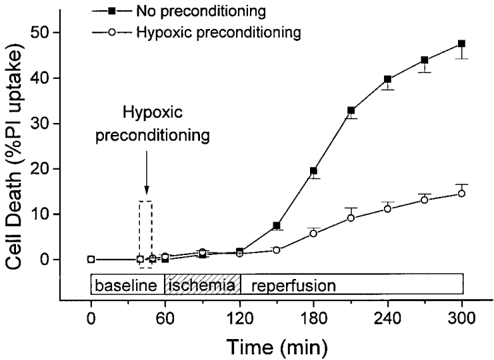
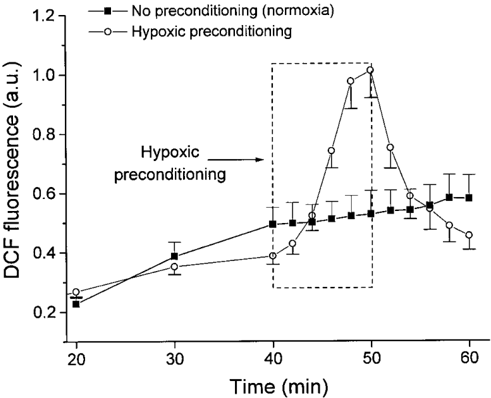
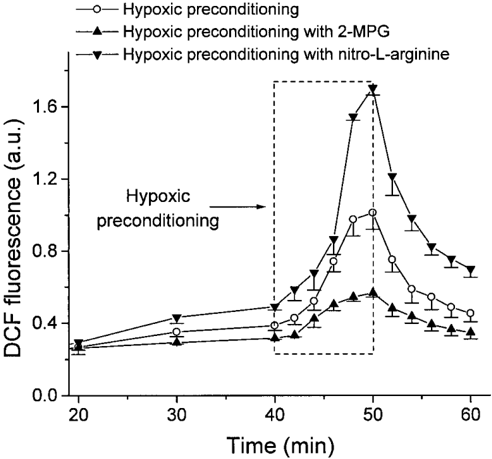
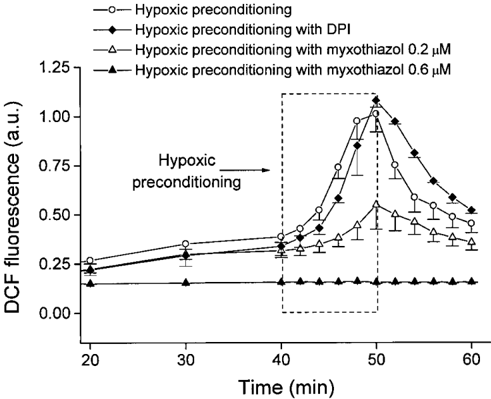
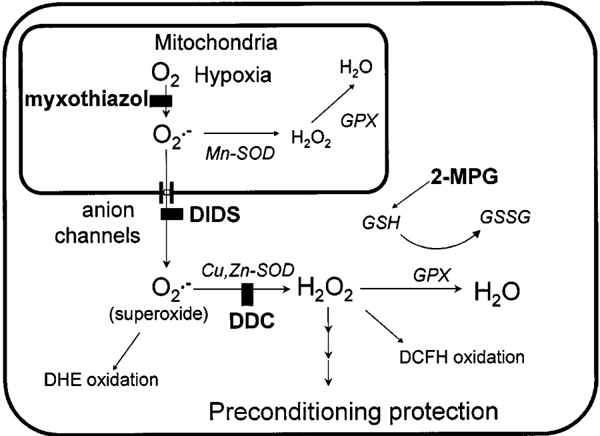
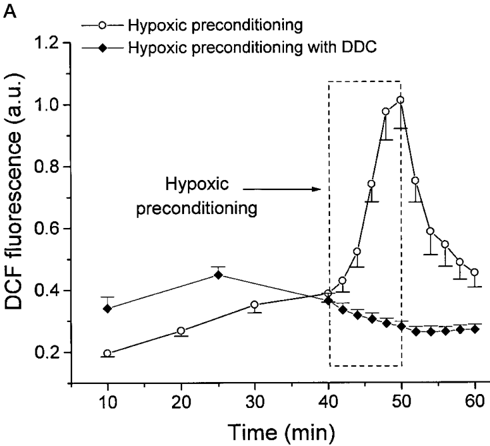
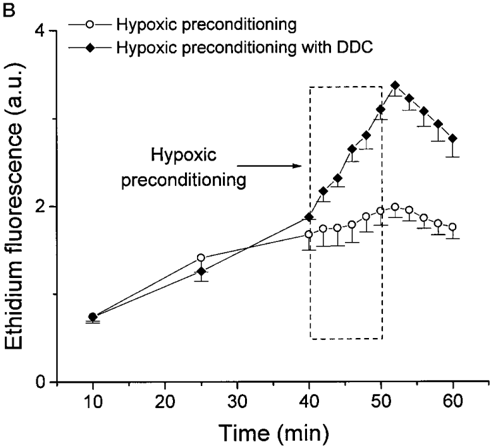
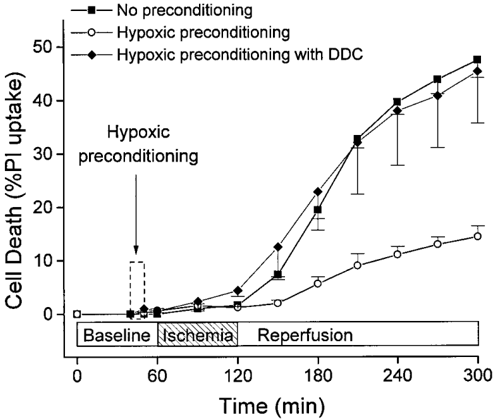
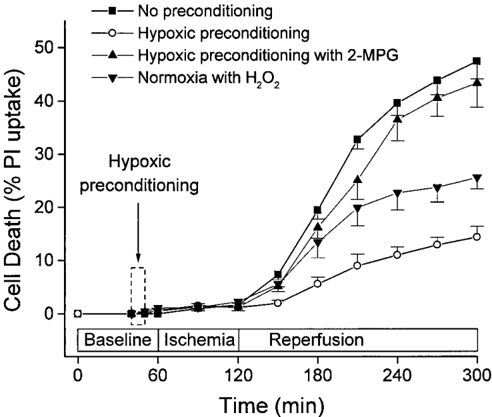
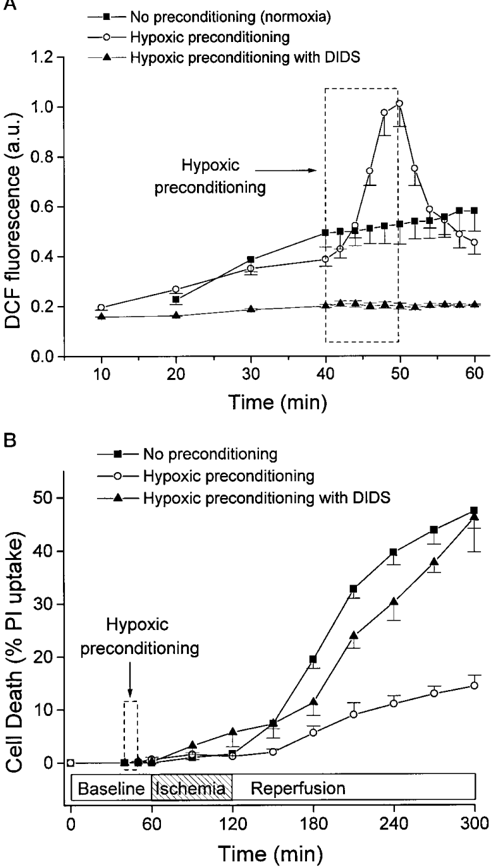
Reactive oxygen species (ROS) have been proposed to participate in the induction of cardiac preconditioning. However, their source and mechanism of induction are unclear. We tested whether brief hypoxia induces preconditioning by augmenting mitochondrial generation of ROS in chick cardiomyocytes. Cells were preconditioned with 10 min of hypoxia, followed by 1 h of simulated ischemia and 3 h of reperfusion. Preconditioning decreased cell death from 47 +/- 3% to 14 +/- 2%. Return of contraction was observed in 3/3 preconditioned versus 0/6 non-preconditioned experiments. During induction, ROS oxidation of the probe dichlorofluorescin (sensitive to H2O2) increased approximately 2.5-fold. As a substitute for hypoxia, the addition of H2O2 (15 micromol/liter) during normoxia also induced preconditioning-like protection. Conversely, the ROS signal during hypoxia was attenuated with the thiol reductant 2-mercaptopropionyl glycine, the cytosolic Cu,Zn-superoxide dismutase inhibitor diethyldithiocarbamic acid, and the anion channel inhibitor 4,4'-diisothiocyanato-stilbene-2,2'-disulfonate, all of which also abrogated protection. ROS generation during hypoxia was attenuated by myxothiazol, but not by diphenyleneiodonium or the nitric-oxide synthase inhibitor L-nitroarginine. We conclude that hypoxia increases mitochondrial superoxide generation which initiates preconditioning protection. Furthermore, mitochondrial anion channels and cytosolic dismutation to H2O2 may be important steps for oxidant induction of hypoxic preconditioning.
Overview
The claims and statistics of this paper haven’t been checked yet.
Run the check — free, no account needed. It reads the open-access text and checks the sources it cites.
Integrity signals
Registry
Cites
Statistics
Figures
Verification
Claims the paper makes
The claims and statistics of this paper haven’t been checked yet.
Run the check — free, no account needed. It reads the open-access text and checks the sources it cites.
Claims other papers make about this one
Each is checked against this paper’s own text: does it say what the citing paper says it does?
In the citing paper
“Importantly, diazoxide and ischemic preconditioning associated ROS production is attenuated by myxothiazol [132,134], which clearly indicates that the Q o site of complex III is the source.”
From Differential effects of complex II on mitochondrial ROS production and their relation to cardioprotective pre- and postconditioning (2013) · cites this paper as [134]
In the citing paper
“The rate of O2•− generation is chemically proportional by mass action to the O2 concentration times the rate of electron leak (310)”
From Mitochondrial reactive oxygen species production in excitable cells: Modulators of mitochondrial and cell function (2009) · cites this paper as [310]
Self-check
Percentages, sums and reported differences re-computed from the paper’s own numbers.
The self-check needs the paper’s full text.
Citations
Cites
Preconditioning with ischemia: a delay of lethal cell injury in ischemic myocardium.
Murry, C. E., Jennings, R. B., & Reimer, K. A. (1986) · Circulation · doi:10.1161/01.cir.74.5.1124 · Cited by 7,813
Angiotensin II stimulates NADH and NADPH oxidase activity in cultured vascular smooth muscle cells.
Griendling, K. K., Minieri, C. A., Ollerenshaw, J. D., & Alexander, R. W. (1994) · Circulation Research · doi:10.1161/01.res.74.6.1141 · Cited by 2,735
Generation of superoxide anion by the NADH dehydrogenase of bovine heart mitochondria
Turrens, J. F., & Boveris, A. (1980) · Biochemical Journal · doi:10.1042/bj1910421 · Cited by 1,601
Ubisemiquinone is the electron donor for superoxide formation by complex III of heart mitochondria
Turrens, J. F., Alexandre, A., & Lehninger, A. L. (1985) · Archives of Biochemistry and Biophysics · doi:10.1016/0003-9861(85)90293-0 · Cited by 1,214
Enzyme-independent formation of nitric oxide in biological tissues
Zweier, J. L., Wang, P., Samouilov, A., & Kuppusamy, P. (1995) · Nature Medicine · doi:10.1038/nm0895-804 · Cited by 788
Xia, Y., Dawson, V. L., Dawson, T. M., Snyder, S. H., & Zweier, J. L. (1996) · Proceedings of the National Academy of Sciences · doi:10.1073/pnas.93.13.6770 · Cited by 717
Nitric Oxide and Cardiac Function
Kelly, R. A., Balligand, J., & Smith, T. W. (1996) · Circulation Research · doi:10.1161/01.res.79.3.363 · Cited by 715
Intracellular Signaling by Reactive Oxygen Species during Hypoxia in Cardiomyocytes
Duranteau, J., Chandel, N. S., Kulisz, A., Shao, Z., & Schumacker, P. T. (1998) · Journal of Biological Chemistry · doi:10.1074/jbc.273.19.11619 · Cited by 679
Self-citationIntracellular hydrogen peroxide and superoxide anion detection in endothelial cells
Carter, W. O., Narayanan, P. K., & Robinson, J. P. (1994) · Journal of Leukocyte Biology · doi:10.1002/jlb.55.2.253 · Cited by 640
HESS, M., & Manson, N. H. (1984) · Journal of Molecular and Cellular Cardiology · doi:10.1016/s0022-2828(84)80011-5 · Cited by 542
Research works printed but not linked: 6
- Liang, 1996, Am. J. Physiol., 271, H1769
- Vanden Hoek, 1996, Am. J. Physiol., 270, H1334
- Bond, 1991, Res. Commun. Chem. Pathol. Pharm., 71, 195
- Murry, 1988, Circulation, 78, 77
- Pathak, 1995, Circulation, 92, I
- Larsson, 1989, Cancer Res., 49, 5627
Cited by
Sorted by citations
Mitochondrial Reactive Oxygen Species (ROS) and ROS-Induced ROS Release
Zorov, D. B., Juhaszova, M., & Sollott, S. J. (2014) · Physiological Reviews · doi:10.1152/physrev.00026.2013 · Cited by 5,383
Antioxidant enzymes and human diseases
MatÉs, J. M., Pérez-Gómez, C., & De Castro, I. N. (1999) · Clinical Biochemistry · doi:10.1016/s0009-9120(99)00075-2 · Cited by 2,099
Ionizing radiation-induced metabolic oxidative stress and prolonged cell injury
Azzam, E. I., Jay‐Gerin, J., & Pain, D. (2011) · Cancer Letters · doi:10.1016/j.canlet.2011.12.012 · Cited by 1,688
Mechanisms of Cell Death in Oxidative Stress
Ryter, S. W., Kim, H. P., Hoetzel, A., Park, J. W., Nakahira, K., Wang, X., & Choi, A. M. K. (2006) · Antioxidants and Redox Signaling · doi:10.1089/ars.2007.9.49 · Cited by 1,286
Halestrap, A. P. (2003) · Cardiovascular Research · doi:10.1016/s0008-6363(03)00533-9 · Cited by 1,244
Mitochondria and reactive oxygen species
Kowaltowski, A. J., de Souza-Pinto, N. C., Castilho, R. F., & Vercesi, A. E. (2009) · Free Radical Biology and Medicine · doi:10.1016/j.freeradbiomed.2009.05.004 · Cited by 1,162
Guzy, R. D., & Schumacker, P. T. (2006) · Experimental Physiology · doi:10.1113/expphysiol.2006.033506 · Cited by 881
Self-citationNew concepts in reactive oxygen species and cardiovascular reperfusion physiology
Becker, L. C. (2003) · Cardiovascular Research · doi:10.1016/j.cardiores.2003.10.025 · Cited by 703
Self-citationKoumenis, C., Naczki, C., Koritzinsky, M., Rastani, S., Diehl, J. A., Sonenberg, N., Koromilas, A. E., & Wouters, B. G. (2002) · Molecular and Cellular Biology · doi:10.1128/mcb.22.21.7405-7416.2002 · Cited by 713
Hypoxia Tolerance in Reptiles, Amphibians, and Fishes: Life with Variable Oxygen Availability
Bickler, P. E., & Buck, L. T. (2007) · Annual Review of Physiology · doi:10.1146/annurev.physiol.69.031905.162529 · Cited by 687
Reactive Oxygen Species in the Regulation of Synaptic Plasticity and Memory
Massaad, C. A., & Klann, E. (2011) · Antioxidants & Redox Signaling · doi:10.1089/ars.2010.3208 · Cited by 635
A novel protective effect of erythropoietin in the infarcted heart
Parsa, C. J., Matsumoto, A., Kim, J. H., Riel, R. U., Pascal, L. S., Walton, G. B., Thompson, R. B., Petrofski, J. A., Annex, B. H., Stamler, J. S., et al. (2003) · Journal of Clinical Investigation · doi:10.1172/jci18200 · Cited by 543
Molecular Mechanisms of Superoxide Production by the Mitochondrial Respiratory Chain
Dröse, S., & Brandt, U. (2012) · Advances in experimental medicine and biology · doi:10.1007/978-1-4614-3573-0_6 · Cited by 537
Aon, M. A., Cortassa, S., Marbán, E., & O'Rourke, B. (2003) · Journal of Biological Chemistry · doi:10.1074/jbc.m302673200 · Cited by 521
High glucose‐induced oxidative stress and mitochondrial dysfunction in neurons
Russell, J. W., Golovoy, D., Vincent, A. M., Mahendru, P., Olzmann, J. A., Mentzer, A., & Feldman, E. L. (2002) · The FASEB Journal · doi:10.1096/fj.01-1027com · Cited by 520
Tahara, E. B., Navarete, F. D. T., & Kowaltowski, A. J. (2009) · Free Radical Biology and Medicine · doi:10.1016/j.freeradbiomed.2009.02.008 · Cited by 479
Sarcolemmal Versus Mitochondrial ATP-Sensitive K+Channels and Myocardial Preconditioning
Gross, G. J., & Fryer, R. M. (1999) · Circulation Research · doi:10.1161/01.res.84.9.973 · Cited by 478
Stowe, D. F., & Camara, A. K. S. (2009) · Antioxidants & Redox Signaling · doi:10.1089/ars.2008.2331 · Cited by 471
Mitochondrial Function, Biology, and Role in Disease
Murphy, E., Ardehali, H., Balaban, R. S., Lisa, F. D., Dorn, G. W., Kitsis, R. N., Otsu, K., Ping, P., Rizzuto, R., Sack, M. N., et al. (2016) · Circulation Research · doi:10.1161/res.0000000000000104 · Cited by 476
Mammalian Oxygen Sensing, Signalling and Gene Regulation
Wenger, R. H. (2000) · Journal of Experimental Biology · doi:10.1242/jeb.203.8.1253 · Cited by 444
Hypoxic pulmonary vasoconstriction
Moudgil, R., Michelakis, E. D., & Archer, S. L. (2004) · Journal of Applied Physiology · doi:10.1152/japplphysiol.00733.2004 · Cited by 449
Evidence for Mitochondrial K + Channels and Their Role in Cardioprotection
O'Rourke, B. P. (2004) · Circulation Research · doi:10.1161/01.res.0000117583.66950.43 · Cited by 444
Induction of HIF–1α in response to hypoxia is instantaneous
Jewell, U. R., Kvietikova, I., Scheid, A., Bauer, C., Wenger, R. H., & Gassmann, M. (2001) · The FASEB Journal · doi:10.1096/fj.00-0732fje · Cited by 567
Chen, Z., Chua, C. C., Ho, Y., Hamdy, R. C., & Chua, B. H. L. (2001) · American Journal of Physiology-Heart and Circulatory Physiology · doi:10.1152/ajpheart.2001.280.5.h2313 · Cited by 421
Hypoxia induces severe right ventricular dilatation and infarction in heme oxygenase-1 null mice
Yet, S., Perrella, M. A., Layne, M. D., Hsieh, C.-M., Maemura, K., Kobzik, L., Wiesel, P., Christou, H. A., Kourembanas, S., & Lee, M.-E. (1999) · Journal of Clinical Investigation · doi:10.1172/jci6163 · Cited by 407
Ischemia/Reperfusion Injury Revisited: An Overview of the Latest Pharmacological Strategies
Soares, R. O. D. S., Losada, D. M., Jordani, M. C., Évora, P. R. B., & Castro-e-Silva, O. (2019) · International Journal of Molecular Sciences · doi:10.3390/ijms20205034 · Cited by 427
Hypoxia-induced reactive oxygen species formation in skeletal muscle
Clanton, T. L. (2007) · Journal of Applied Physiology · doi:10.1152/japplphysiol.01298.2006 · Cited by 401
Diazoxide-Induced Cardioprotection Requires Signaling Through a Redox-Sensitive Mechanism
Forbes, R. A., Steenbergen, C., & Murphy, E. (2001) · Circulation Research · doi:10.1161/hh0801.089342 · Cited by 395
Liu, J., Tian, J., Haas, M., Shapiro, J. I., Askari, A., & Xie, Z. (2000) · Journal of Biological Chemistry · doi:10.1074/jbc.m002950200 · Cited by 391
The role of mitochondria in protection of the heart by preconditioning
Halestrap, A. P., Clarke, S. J., & Khaliulin, I. (2007) · Biochimica et Biophysica Acta (BBA) - Bioenergetics · doi:10.1016/j.bbabio.2007.05.008 · Cited by 390
Raedschelders, K., Ansley, D. M., & Chen, D. D. Y. (2011) · Pharmacology & Therapeutics · doi:10.1016/j.pharmthera.2011.11.004 · Cited by 393
The mechanism of mitochondrial superoxide production by the cytochrome bc1 complex
Dröse, S., & Brandt, U. (2008) · Journal of Biological Chemistry · doi:10.1074/jbc.m803236200 · Cited by 386
Redox-optimized ROS balance: A unifying hypothesis
Aon, M. A., Cortassa, S. C., & O'Rourke, B. P. (2010) · Biochimica et Biophysica Acta (BBA) - Bioenergetics · doi:10.1016/j.bbabio.2010.02.016 · Cited by 381
Superoxide generation by complex III: From mechanistic rationales to functional consequences
Bleier, L., & Dröse, S. (2013) · Biochimica et Biophysica Acta (BBA) - Bioenergetics · doi:10.1016/j.bbabio.2012.12.002 · Cited by 369
Oxidative Stress and Programmed Cell Death in Diabetic Neuropathy
Vincent, A. M., Brownlee, M., & Russell, J. W. (2002) · Annals of the New York Academy of Sciences · doi:10.1111/j.1749-6632.2002.tb02108.x · Cited by 362
Hypoxia Triggers Subcellular Compartmental Redox Signaling in Vascular Smooth Muscle Cells
Waypa, G. B., Marks, J. D., Guzy, R. D., Mungai, P. T., Schriewer, J. M., Đokić, D., & Schumacker, P. T. (2009) · Circulation Research · doi:10.1161/circresaha.109.206334 · Cited by 356
Self-citationJavadov, S. A., Clarke, S. J., Das, M., Griffiths, E. J., Lim, K. H. H., & Halestrap, A. P. (2003) · The Journal of Physiology · doi:10.1113/jphysiol.2003.034231 · Cited by 350
Myocardial KATPChannels in Preconditioning
O'Rourke, B. P. (2000) · Circulation Research · doi:10.1161/01.res.87.10.845 · Cited by 349
Mitochondria and ischemia–reperfusion injury of the heart: Fixing a hole
Lisa, F. D., & Bernardi, P. (2006) · Cardiovascular Research · doi:10.1016/j.cardiores.2006.01.016 · Cited by 352
Manganese neurotoxicity and the role of reactive oxygen species
Martinez‐Finley, E. J., Gavin, C. E., Aschner, M., & Gunter, T. E. (2013) · Free Radical Biology and Medicine · doi:10.1016/j.freeradbiomed.2013.01.032 · Cited by 345
Garlid, K., Santos, P. D. D., Xie, Z., Costa, A. D. T., & Pauček, P. (2003) · Biochimica et Biophysica Acta (BBA) - Bioenergetics · doi:10.1016/s0005-2728(03)00109-9 · Cited by 333
Xie, Z., Kometiani, P. A., Liu, J., Li, J., Shapiro, J. I., & Askari, A. (1999) · Journal of Biological Chemistry · doi:10.1074/jbc.274.27.19323 · Cited by 332
Goncalves, R. L. S., Quinlan, C. L., Perevoshchikova, I. V., Hey-Mogensen, M., & Brand, M. D. (2015) · Journal of Biological Chemistry · doi:10.1074/jbc.m114.619072 · Cited by 329
Keeley, T. P., & Mann, G. E. (2019) · Physiological Reviews · doi:10.1152/physrev.00041.2017 · Cited by 329
Signal transduction of ischemic preconditioning
Schulz, R. (2001) · Cardiovascular Research · doi:10.1016/s0008-6363(01)00384-4 · Cited by 325
KATP channels and myocardial preconditioning: an update
Gross, G. J., & Peart, J. N. (2003) · American Journal of Physiology-Heart and Circulatory Physiology · doi:10.1152/ajpheart.00421.2003 · Cited by 326
KATP channel‐independent targets of diazoxide and 5‐hydroxydecanoate in the heart
Hanley, P. J., Mickel, M., Löffler, M., Brandt, U., & Daut, J. (2002) · The Journal of Physiology · doi:10.1113/jphysiol.2002.023960 · Cited by 320
Mitochondrial reactive oxygen species production and elimination
Nickel, A. G., Kohlhaas, M., & Maack, C. (2014) · Journal of Molecular and Cellular Cardiology · doi:10.1016/j.yjmcc.2014.03.011 · Cited by 334
Preconditioning in Cardiomyocytes Protects by Attenuating Oxidant Stress at Reperfusion
Hoek, T. L. V., Becker, L. B., Shao, Z., Li, C., & Schumacker, P. T. (2000) · Circulation Research · doi:10.1161/01.res.86.5.541 · Cited by 312
Self-citationKim, J.-S., Jin, Y., & Lemasters, J. J. (2006) · American Journal of Physiology-Heart and Circulatory Physiology · doi:10.1152/ajpheart.00683.2005 · Cited by 310
Batandier, C., Guigas, B., Detaille, D., El-Mir, M., Fontaine, E., Rigoulet, M., & Leverve, X. M. (2006) · Journal of Bioenergetics and Biomembranes · doi:10.1007/s10863-006-9003-8 · Cited by 279
Xiao, L., Pimentel, D. R., Wang, J., Singh, K., Colucci, W. S., & Sawyer, D. B. (2002) · American Journal of Physiology-Cell Physiology · doi:10.1152/ajpcell.00254.2001 · Cited by 300
Production and Actions of Superoxide in the Renal Medulla
Zou, A.-P., Li, N., & Cowley, A. W. (2001) · Hypertension · doi:10.1161/01.hyp.37.2.547 · Cited by 297
Mitochondrial ROS initiate phosphorylation of p38 MAP kinase during hypoxia in cardiomyocytes
Kulisz, A., Chen, N., Chandel, N. S., Shao, Z., & Schumacker, P. T. (2002) · American Journal of Physiology-Lung Cellular and Molecular Physiology · doi:10.1152/ajplung.00326.2001 · Cited by 287
Self-citationRole of hypoxia-inducible factor in cell survival during myocardial ischemia–reperfusion
Loor, G., & Schumacker, P. T. (2008) · Cell Death and Differentiation · doi:10.1038/cdd.2008.13 · Cited by 280
Self-citationMechanisms of Cardioprotection by Volatile Anesthetics
Tanaka, K., Ludwig, L. M., Kersten, J. R., Pagel, P. S., & Warltier, D. C. (2004) · Anesthesiology · doi:10.1097/00000542-200403000-00035 · Cited by 274
Kevin, L. G., Camara, A. K. S., Riess, M. L., Novalija, E., & Stowe, D. F. (2003) · American Journal of Physiology-Heart and Circulatory Physiology · doi:10.1152/ajpheart.00711.2002 · Cited by 272
Caspase 3 activation is essential for neuroprotection in preconditioning
McLaughlin, B., Hartnett, K. A., Erhardt, J. A., Legos, J. J., White, R. F., Barone, F. C., & Aizenman, E. (2003) · Proceedings of the National Academy of Sciences · doi:10.1073/pnas.0232966100 · Cited by 271
The mitochondrial permeability transition pore as a target for preconditioning and postconditioning
Hausenloy, D. J., Ong, S., & Yellon, D. M. (2009) · Basic Research in Cardiology · doi:10.1007/s00395-009-0010-x · Cited by 274
Reis, J. F., Monteiro, V. S., Gomes, R. D. S., do Carmo, M. M., da Costa, G. V., Ribera, P. C., & Monteiro, M. C. (2016) · Journal of Translational Medicine · doi:10.1186/s12967-016-1076-5 · Cited by 274
Mitochondrial Ion Channels: Gatekeepers of Life and Death
O'Rourke, B. P., Cortassa, S. C., & Aon, M. A. (2005) · Physiology · doi:10.1152/physiol.00020.2005 · Cited by 263
Biochemical dysfunction in heart mitochondria exposed to ischaemia and reperfusion
Solaini, G., & Harris, D. A. (2005) · Biochemical Journal · doi:10.1042/bj20042006 · Cited by 255
Low-Energy Laser Irradiation Promotes Cellular Redox Activity
Lubart, R., Eichler, M., Lavi, R., Friedman, H., & Shainberg, A. (2005) · Photomedicine and Laser Surgery · doi:10.1089/pho.2005.23.3 · Cited by 248
Cai, Z., Zhong, H., Bosch‐Marcé, M., Fox-Talbot, K., Wang, L., Wei, C., Trush, M. A., & Semenza, G. L. (2007) · Cardiovascular Research · doi:10.1093/cvr/cvm035 · Cited by 244
Oxidative pathways in cardiovascular disease: roles, mechanisms, and therapeutic implications
Wattanapitayakul, S. K. (2001) · Pharmacology & Therapeutics · doi:10.1016/s0163-7258(00)00114-5 · Cited by 239
Suzuki, Y., Jain, V., Park, A.-M., & Day, R. M. (2006) · Free Radical Biology and Medicine · doi:10.1016/j.freeradbiomed.2006.01.008 · Cited by 245
Hermes‐Lima, M., Moreira, D. C., Rivera‐Ingraham, G. A., Giraud‐Billoud, M., Genaro‐Mattos, T. C., & Campos, E. G. (2015) · Free Radical Biology and Medicine · doi:10.1016/j.freeradbiomed.2015.07.156 · Cited by 246
Lecour, S., Smith, R. M., Woodward, B. D., Opie, L. H., Rochette, L., & Sack, M. N. (2002) · Journal of Molecular and Cellular Cardiology · doi:10.1006/jmcc.2002.1533 · Cited by 235
Renal ischemia–reperfusion injury: Renal dendritic cells loudly sound the alarm
Nelson, P.-J. (2007) · Kidney International · doi:10.1038/sj.ki.5002121 · Cited by 232
The role of mitochondria in ischemia/reperfusion injury
Jassem, W., Fuggle, S. V., Rela, M., Koo, D. D. H., & Heaton, N. D. (2002) · Transplantation · doi:10.1097/00007890-200202270-00001 · Cited by 231
A novel mitochondriotoxic small molecule that selectively inhibits tumor cell growth
Fantin, V. R., Berardi, M. J., Scorrano, L., Korsmeyer, S. J., & Leder, P. (2002) · Cancer Cell · doi:10.1016/s1535-6108(02)00082-x · Cited by 228
ROS and NO trigger early preconditioning: relationship to mitochondrial KATP channel
Lebuffe, G., Schumacker, P. T., Shao, Z.-H., Anderson, T., Iwase, H., & Vanden Hoek, T. L. (2003) · American Journal of Physiology-Heart and Circulatory Physiology · doi:10.1152/ajpheart.00706.2002 · Cited by 227
Self-citationCell death during ischemia: relationship to mitochondrial depolarization and ROS generation
Levraut, J., Iwase, H., Shao, Z. H., Hoek, T. L. V., & Schumacker, P. T. (2003) · American Journal of Physiology-Heart and Circulatory Physiology · doi:10.1152/ajpheart.00708.2002 · Cited by 229
Self-citationProtein Oxidative Modifications: Beneficial Roles in Disease and Health.
Cai, Z., & Yan, L. (2013) · PubMed · Cited by 227
Endothelial permeability and IL-6 production during hypoxia: role of ROS in signal transduction
Ali, M. H., Schlidt, S. A., Chandel, N. S., Hynes, K. L., Schumacker, P. T., & Gewertz, B. L. (1999) · American Journal of Physiology-Lung Cellular and Molecular Physiology · doi:10.1152/ajplung.1999.277.5.l1057 · Cited by 221
Self-citationCardioprotection: A radical view
Penna, C. R. R., Mancardi, D., Rastaldo, R., & Pagliaro, P. (2009) · Biochimica et Biophysica Acta (BBA) - Bioenergetics · doi:10.1016/j.bbabio.2009.02.008 · Cited by 225
Lim, K. H. H., Javadov, S. A., Das, M., Clarke, S. J., Suleiman, M. S., & Halestrap, A. P. (2002) · The Journal of Physiology · doi:10.1113/jphysiol.2002.031484 · Cited by 219
HANLEY, P., & DAUT, J. (2005) · Journal of Molecular and Cellular Cardiology · doi:10.1016/j.yjmcc.2005.04.002 · Cited by 218
Opening mitoKATPincreases superoxide generation from complex I of the electron transport chain
Andrukhiv, A., Costa, A. D. T., West, I. C., & Garlid, K. (2006) · American Journal of Physiology-Heart and Circulatory Physiology · doi:10.1152/ajpheart.00272.2006 · Cited by 224
Role of redox metabolism for adaptation of aquatic animals to drastic changes in oxygen availability
Welker, A. F., Moreira, D. C., Campos, E. G., & Hermes‐Lima, M. (2013) · Comparative Biochemistry and Physiology Part A Molecular & Integrative Physiology · doi:10.1016/j.cbpa.2013.04.003 · Cited by 217
Acute oxidative stress and systemic Nrf2 activation by the ketogenic diet
Milder, J. B., Liang, L., & Patel, M. (2010) · Neurobiology of Disease · doi:10.1016/j.nbd.2010.05.030 · Cited by 214
Mitochondrial oxidant stress triggers cell death in simulated ischemia–reperfusion
Loor, G., Kondapalli, J., Iwase, H., Chandel, N. S., Waypa, G. B., Guzy, R. D., Hoek, T. L. V., & Schumacker, P. T. (2010) · Biochimica et Biophysica Acta (BBA) - Molecular Cell Research · doi:10.1016/j.bbamcr.2010.12.008 · Cited by 218
Self-citationMitochondrial K channels in cell survival and death
Ardehali, H., & O'Rourke, B. P. (2005) · Journal of Molecular and Cellular Cardiology · doi:10.1016/j.yjmcc.2004.12.003 · Cited by 211
Costa, A. D. T., Jakob, R., Costa, C. L., Andrukhiv, K., West, I. C., & Garlid, K. (2006) · Journal of Biological Chemistry · doi:10.1074/jbc.m600959200 · Cited by 213
Zhang, D. X., Chen, Y., Campbell, W. B., Zou, A.-P., Gross, G. J., & Li, P. (2001) · Circulation Research · doi:10.1161/hh2401.101752 · Cited by 200
Dröse, S. (2013) · Biochimica et Biophysica Acta (BBA) - Bioenergetics · doi:10.1016/j.bbabio.2013.01.004 · Cited by 201
Mechanism of Cardioprotection by Early Ischemic Preconditioning
Yang, X., Cohen, M. V., & Downey, J. M. (2010) · Cardiovascular Drugs and Therapy · doi:10.1007/s10557-010-6236-x · Cited by 201
Crosstalk Between Calcium and Redox Signaling: From Molecular Mechanisms to Health Implications
Hidalgo, C., & Donoso, P. (2008) · Antioxidants and Redox Signaling · doi:10.1089/ars.2007.1886 · Cited by 199
The direct physiological effects of mitoKATPopening on heart mitochondria
Costa, A. D. T., Quinlan, C. L., Andrukhiv, A., West, I. C., Jabůrek, M., & Garlid, K. (2005) · American Journal of Physiology-Heart and Circulatory Physiology · doi:10.1152/ajpheart.00794.2005 · Cited by 201
O 2 sensing, mitochondria and ROS signaling: The fog is lifting
Waypa, G. B., Smith, K. A., & Schumacker, P. T. (2016) · Molecular Aspects of Medicine · doi:10.1016/j.mam.2016.01.002 · Cited by 190
Self-citationLo, L., & Chu, C. (2003) · Chemical Communications · doi:10.1039/b309393j · Cited by 191
Mechanism of Superoxide Generation by Neuronal Nitric-oxide Synthase
Pou, S., Keaton, L., Surichamorn, W., & Rosen, G. M. (1999) · Journal of Biological Chemistry · doi:10.1074/jbc.274.14.9573 · Cited by 188
Heme Oxygenase-1: Molecular Mechanisms of Gene Expression in Oxygen-Related Stress
Ryter, S. W., & Choi, A. M. K. (2002) · Antioxidants and Redox Signaling · doi:10.1089/15230860260220120 · Cited by 189
Khan, S. A., Salloum, F. N., Das, A., Xi, L., Vetrovec, G. W., & Kukreja, R. C. (2006) · Journal of Molecular and Cellular Cardiology · doi:10.1016/j.yjmcc.2006.04.014 · Cited by 189
Lavi, R., Shainberg, A., Friedmann, H., Shneyvays, V., Rickover, O., Eichler, M., Kaplan, D., & Lubart, R. (2003) · Journal of Biological Chemistry · doi:10.1074/jbc.m303034200 · Cited by 187
Opening mitochondrial K ATP in the heart - what happens, and what does not happen
Garlid, K. D. (2000) · Basic Research in Cardiology · doi:10.1007/s003950070046 · Cited by 186
Salnikow, K., Su, W.-C., Blagosklonny, M. V., & Costa, M. (2000) · PubMed · Cited by 186
Iron Homeostasis in the Neonate
Collard, K. J. (2009) · PEDIATRICS · doi:10.1542/peds.2008-1047 · Cited by 183
Generator-specific targets of mitochondrial reactive oxygen species
Bleier, L., Wittig, I., Heide, H., Steger, M., Brandt, U., & Dröse, S. (2014) · Free Radical Biology and Medicine · doi:10.1016/j.freeradbiomed.2014.10.511 · Cited by 188
Use the Protonmotive Force: Mitochondrial Uncoupling and Reactive Oxygen Species
Berry, B. J., Trewin, A. J., Amitrano, A. M., Kim, M., & Wojtovich, A. P. (2018) · Journal of Molecular Biology · doi:10.1016/j.jmb.2018.03.025 · Cited by 180
Metadata
- Authors
- Vanden Hoek, T. L., Becker, L. B., Shao, Z., Li, C., & Schumacker, P. T.
- Affiliations
- University of Chicago (US)
- Corresponding author
- Schumacker, Paul T.
- Venue
- Journal of Biological Chemistry
- Publisher
- Elsevier BV
- Published
- 1998-07
- Volume
- 273
- Issue
- 29
- Pages
- 18092-18098
- ISSN
- 0021-9258 (ISSN-L)
- OpenAlex
- W2145047965
- Cited by
- 721
- References
- 40
- Citations by year
- 2026: 5 · 2025: 5 · 2024: 7 · 2023: 4 · 2022: 4 · 2021: 15 · 2020: 10 · 2019: 8 · 2018: 11 · 2017: 8 · 2016: 29 · 2015: 16 · 2014: 31 · 2013: 33 · 2012: 26
- FWCI
- 20.19
- Type
- journal article
- Language
- en
- Open access
- hybrid
- doi.org
- Licence
- Locations
- Journal of Biological Chemistry (publishedVersion, cc-by)
- PubMed (publishedVersion)
- Funders
- National Institutes of Health (5k08hl003779-02, HL35440)
- National Heart, Lung, and Blood Institute (HL 32646, HL-03779, R01HL035440, HL35440)
- Topics
- Health Sciences › Medicine › Cardiology and Cardiovascular Medicine › Cardiac Ischemia and Reperfusion
- Life Sciences › Biochemistry, Genetics and Molecular Biology › Molecular Biology › Cell death mechanisms and regulation
- Life Sciences › Biochemistry, Genetics and Molecular Biology › Molecular Biology › Mitochondrial Function and Pathology
- Keywords
- reactive oxygen species, mitochondrial superoxide, hypoxia, cardioprotection, preconditioning, cardiomyocytes, ischemia-reperfusion injury, hydrogen peroxide, superoxide dismutase, DIDS, myxothiazol, nitric oxide synthase, cell death
- MeSH terms
- Animals, Cells, Cultured, Chick Embryo, Cytosol, Ditiocarb, Enzyme Inhibitors, Hydrogen Peroxide, Tiopronin, Methacrylates, Mitochondria, Heart, Myocardial Contraction, Onium Compounds, Superoxide Dismutase, Thiazoles, Cell Hypoxia, Cell Death, Reactive Oxygen Species, Nitric Oxide Synthase, Ischemic Preconditioning, Myocardial
About these checks
Registry, retraction, Cites and statistics results are computed, not judged, with one exception: a printed reference that no index lists is read once by a model before it counts as a citation error. Claims are extracted by a model and kept only when their quote appears verbatim in the text; each cited source is then checked, with a model’s help, for whether it says what the claim relies on. Those verdicts can be wrong — read the claim’s quote and the cited source before relying on one.
Statistics and arithmetic are recomputed, not judged.
Confidence bands are shown only for fields calibrated on our annotated test set. None is calibrated yet, so no band is shown.
What counts as a claim ›How we measure confidence ›How we check this ›
Are you an author, or do you see a problem with this page? Request a review
