

Arginine Conversion to Nitroxide by Tetrahydrobiopterin-free Neuronal Nitric-oxide Synthase
Open accessThe DOI matches its Crossref record; 46 of the 46 references it cites were found in a registry or an index.
Abstract
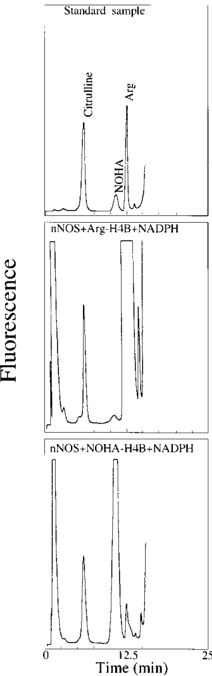
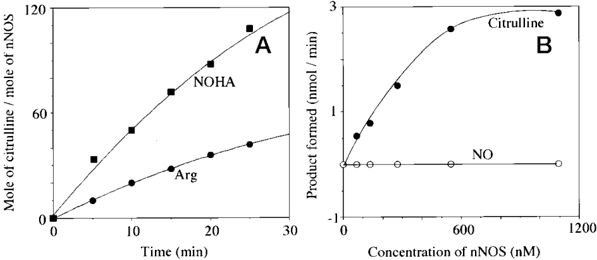
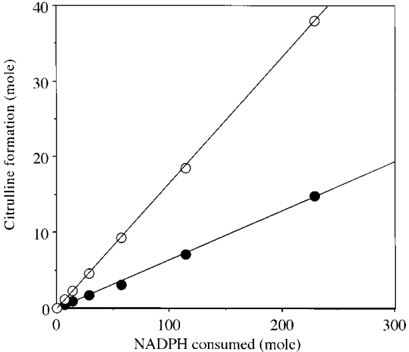
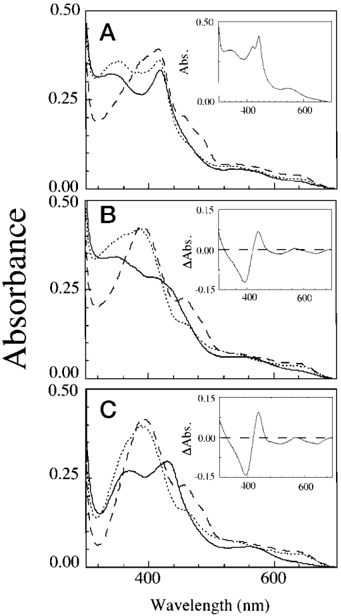
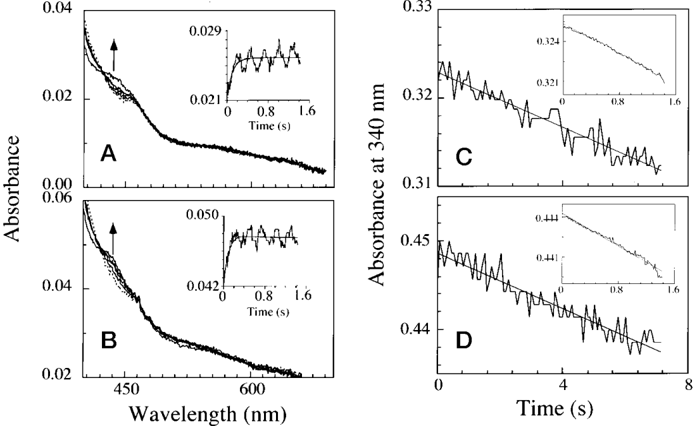
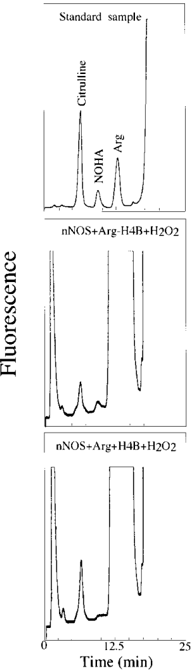
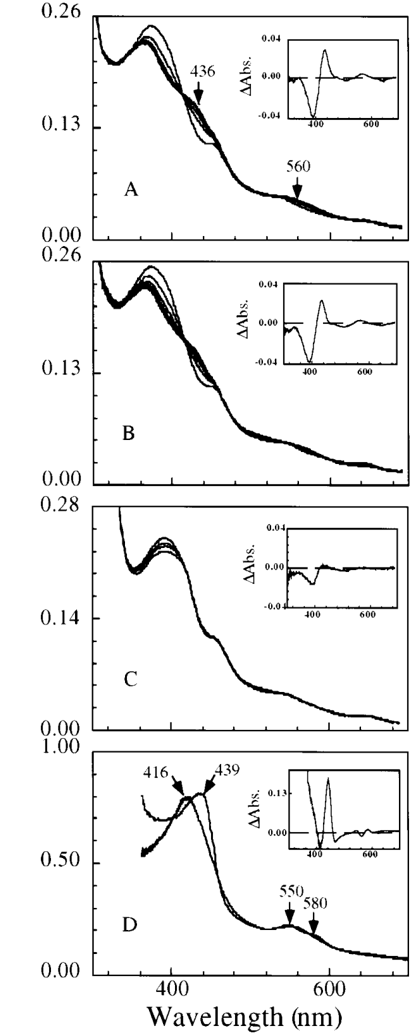
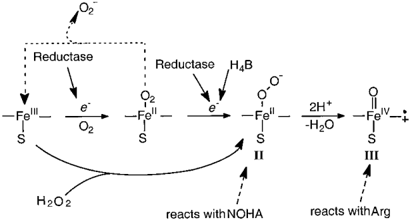
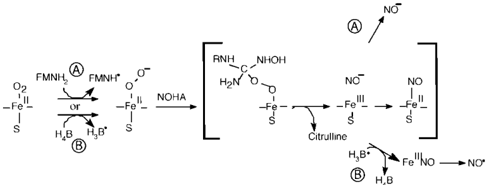
We studied catalysis by tetrahydrobiopterin (H4B)-free neuronal nitric-oxide synthase (nNOS) to understand how heme and H4B participate in nitric oxide (NO) synthesis. H4B-free nNOS catalyzed Arg oxidation to N(omega)-hydroxy-l-Arg (NOHA) and citrulline in both NADPH- and H(2)O(2)-driven reactions. Citrulline formation was time- and enzyme concentration-dependent but was uncoupled relative to NADPH oxidation, and generated nitrite and nitrate without forming NO. Similar results were observed when NOHA served as substrate. Steady-state and stopped-flow spectroscopy with the H4B-free enzyme revealed that a ferrous heme-NO complex built up after initiating catalysis in both NADPH- and H(2)O(2)-driven reactions, consistent with formation of nitroxyl as an immediate product. This differed from the H4B-replete enzyme, which formed a ferric heme-NO complex as an immediate product that could then release NO. We make the following conclusions. 1) H4B is not essential for Arg oxidation by nNOS, although it helps couple NADPH oxidation to product formation in both steps of NO synthesis. Thus, the NADPH- or H(2)O(2)-driven reactions form common heme-oxy species that can react with substrate in the presence or absence of H4B. 2) The sole essential role of H4B is to enable nNOS to generate NO instead of nitroxyl. On this basis we propose a new unified model for heme-dependent oxygen activation and H4B function in both steps of NO synthesis.
Overview
The claims and statistics of this paper haven’t been checked yet.
Free: it reads the open-access text and checks the first 5 claims that cite a source we can check. Create a free account to check every claim.
Integrity signals
Registry
Cites
Statistics
Figures
Verification
Claims the paper makes
The claims and statistics of this paper haven’t been checked yet.
Free: it reads the open-access text and checks the first 5 claims that cite a source we can check. Create a free account to check every claim.
Claims other papers make about this one
Each is checked against this paper’s own text: does it say what the citing paper says it does?
The cited source says what the claim attributes to it.
In the citing paper
“NOS itself has been suggested to produce HNO under hypoxic or low cofactor conditions or by oxidative degradation of the intermediate Nω-hydroxy-L-arginine [92, 93, 181-187].”
From Signaling and stress: The redox landscape in NOS2 biology (2015) · cites this paper as [93]
In the citing paper
“In addition, limited cofactor levels can lead to production of species other than NO (e.g., O2− or HNO) [92-94].”
From Signaling and stress: The redox landscape in NOS2 biology (2015) · cites this paper as [93]
Self-check
Percentages, sums and reported differences re-computed from the paper’s own numbers.
The self-check needs the paper’s full text.
Citations
Cites
NITRIC OXIDE AND MACROPHAGE FUNCTION
MacMicking, J., Xie, Q.-W., & Nathan, C. (1997) · Annual Review of Immunology · doi:10.1146/annurev.immunol.15.1.323 · Cited by 4,211
Cytochrome P-450: Structure, Mechanism, and Biochemistry
de Montellano, O., & Paul, R. (1986) · Medical Entomology and Zoology · Cited by 2,663
Cytochrome P450: Structure, mechanism, and biochemistry
Pryor, W. A. (1996) · Free Radical Biology and Medicine · doi:10.1016/0891-5849(96)83807-x · Cited by 1,598 · cited 1×
“occurs in the cytochrome P450 monooxygenases (14).”
Nitric Oxide Synthases: Properties and Catalytic Mechanism
Griffith, O. W., & Stuehr, D. J. (1995) · Annual Review of Physiology · doi:10.1146/annurev.ph.57.030195.003423 · Cited by 1,311
Self-citationNitric oxide synthases: which, where, how, and why?
Michel, T., & Feron, O. (1997) · Journal of Clinical Investigation · doi:10.1172/jci119750 · Cited by 1,011
Mammalian nitric oxide synthases
Stuehr, D. J. (1999) · Biochimica et Biophysica Acta (BBA) - Bioenergetics · doi:10.1016/s0005-2728(99)00016-x · Cited by 996
Self-citationInducible nitric oxide synthase: what difference does it make?
Nathan, C. (1997) · Journal of Clinical Investigation · doi:10.1172/jci119782 · Cited by 943
Methods in nitric oxide research
Feelisch, M., & Stamler, J. S. (1996) · ePrints Soton (University of Southampton) · Cited by 828
Structure of Nitric Oxide Synthase Oxygenase Dimer with Pterin and Substrate
Crane, B. R., Arvai, A. S., Ghosh, D. K., Wu, C., Getzoff, E. D., Stuehr, D. J., & Tainer, J. A. (1998) · Science · doi:10.1126/science.279.5359.2121 · Cited by 668
Self-citationCrystal Structure of Constitutive Endothelial Nitric Oxide Synthase
Raman, C. S., Li, H., Martásek, P., Král, V., Masters, B. S. S., & Poulos, T. L. (1998) · Cell · doi:10.1016/s0092-8674(00)81718-3 · Cited by 621
Research works printed but not linked: 1
- Kaufman, S. (1993) Adv. Enzymol. Relat. Areas Mol. Biol. 67, 77-264
Cited by
Nitric oxide signalling in cardiovascular health and disease
Farah, C., Michel, L. Y. M., & Balligand, J.-L. (2018) · Nature Reviews Cardiology · doi:10.1038/nrcardio.2017.224 · Cited by 779
Chronic Glutamate Toxicity in Neurodegenerative Diseases—What is the Evidence?
Lewerenz, J., & Maher, P. (2015) · Frontiers in Neuroscience · doi:10.3389/fnins.2015.00469 · Cited by 718
“Different mechanisms through which astrocytes can release L-glu have been proposed: vesicular L-glu release (Adak et al., 2000) and non-vesicular release via anion channels (Wang et al., 2013) and connexin hemichannels (Stehberg et al., 2012) as well as release via the cystine/glutamate antiporter…”
BackgroundChemical basis of inflammation-induced carcinogenesis
Ohshima, H., Tatemichi, M., & Sawa, T. (2003) · Archives of Biochemistry and Biophysics · doi:10.1016/s0003-9861(03)00283-2 · Cited by 620
Update on Mechanism and Catalytic Regulation in the NO Synthases
Stuehr, D. J., Santolini, J., Wang, Z.-Q., Wei, C.-C., & Adak, S. (2004) · Journal of Biological Chemistry · doi:10.1074/jbc.r400017200 · Cited by 518
Self-citationNitric Oxide and the Vascular Endothelium
Moncada, S., & Higgs, E. A. (2006) · Handbook of Experimental Pharmacology · doi:10.1007/3-540-32967-6_7 · Cited by 408
Oxygen Reduction by Nitric-oxide Synthases
Stuehr, D., Pou, S., & Rosen, G. M. (2001) · Journal of Biological Chemistry · doi:10.1074/jbc.r100011200 · Cited by 400
Self-citationZhao, M.-G., Tian, Q.-Y., & Zhang, W.-H. (2007) · Plant Physiology · doi:10.1104/pp.107.096842 · Cited by 398
“…citrulline production from Arg catalyzed by NOS was also determined by HPLC. Citrulline were derivatized by o-phthalaldehyde (OPA), as described by Adak et al. (2000), and separated by reverse-phase HPLC using a Varian 210 instrument with a Varian 363 scanning fluorescence detector and a 250- 3…”
MethodThe chemistry of nitroxyl (HNO) and implications in biology
Miranda, K. M. (2005) · Coordination Chemistry Reviews · doi:10.1016/j.ccr.2004.08.010 · Cited by 339
Structure–function studies on nitric oxide synthases
LI, H., & POULOS, T. (2005) · Journal of Inorganic Biochemistry · doi:10.1016/j.jinorgbio.2004.10.016 · Cited by 302
Paolocci, N., Saavedra, W. F., Miranda, K. M., Martignani, C., Isoda, T., Hare, J. M., Espey, M. G., Fukuto, J. M., Feelisch, M., Wink, D. A., et al. (2001) · Proceedings of the National Academy of Sciences · doi:10.1073/pnas.181191198 · Cited by 298
Miranda, K. M., Paolocci, N., Katori, T., Thomas, D. D., Ford, E., Bartberger, M. D., Espey, M. G., Kass, D. A., Feelisch, M., Fukuto, J. M., et al. (2003) · Proceedings of the National Academy of Sciences · doi:10.1073/pnas.1430507100 · Cited by 283
Bacterial Nitric Oxide Synthases
Crane, B. R., Sudhamsu, J., & Patel, B. A. (2010) · Annual Review of Biochemistry · doi:10.1146/annurev-biochem-062608-103436 · Cited by 237
Nitric oxide and cardiac function
Rastaldo, R., Pagliaro, P., Cappello, S., Penna, C., Mancardi, D., Westerhof, N., & Losano, G. (2007) · Life Sciences · doi:10.1016/j.lfs.2007.07.019 · Cited by 223
Tocchetti, C. G., Wang, W., Froehlich, J. P., Huke, S., Aon, M. A., Wilson, G. M., Di Benedetto, G., O’Rourke, B., Gao, W. D., Wink, D. A., et al. (2007) · Circulation Research · doi:10.1161/01.res.0000253904.53601.c9 · Cited by 216
Wrobel, A. T., Johnstone, T. C., Deliz Liang, A., Lippard, S. J., & Rivera-Fuentes, P. (2014) · Journal of the American Chemical Society · doi:10.1021/ja500315x · Cited by 211
Adak, S., Aulak, K. S., & Stuehr, D. J. (2002) · Journal of Biological Chemistry · doi:10.1074/jbc.m201136200 · Cited by 195
Self-citationNew features in the redox coordination chemistry of metal nitrosyls {M–NO+; M–NO; M–NO−(HNO)}
Roncaroli, F., Videla, M., Slep, L. D., & Olabe, J. A. (2007) · Coordination Chemistry Reviews · doi:10.1016/j.ccr.2007.04.012 · Cited by 177
Fukuto, J. M., Bartberger, M. D., Dutton, A. S., Paolocci, N., Wink, D. A., & Houk, K. N. (2005) · Chemical Research in Toxicology · doi:10.1021/tx0496800 · Cited by 177
Burwell, L. S., & Brookes, P. S. (2008) · Antioxidants & Redox Signaling · doi:10.1089/ars.2007.1845 · Cited by 172
Nitric oxide synthase enzymology in the 20 years after the Nobel Prize
Stuehr, D. J., & Haque, M. M. (2019) · British Journal of Pharmacology · doi:10.1111/bph.14533 · Cited by 170
“Because such a precisely timed redox chemistry cannot be performed by the attached NOS reductase domain, BH4-free NOS enzymes generate haem-bound nitroxyl instead of NO (Rusche et al., 1998; Adak et al., 2000).”
BackgroundSelf-citationPrevention of human cancer by modulation of chronic inflammatory processes
Ohshima, H., Tazawa, H., Sylla, B. S., & Sawa, T. (2005) · Mutation Research - Fundamental and Molecular Mechanisms of Mutagenesis · doi:10.1016/j.mrfmmm.2005.03.030 · Cited by 169
Mechanism of Free-Radical Generation by Nitric Oxide Synthase
Rosen, G. M., Tsai, P., & Pou, S. (2002) · Chemical Reviews · doi:10.1021/cr010187s · Cited by 166
Signaling and stress: The redox landscape in NOS2 biology
Thomas, D. D., Heinecke, J. L., Ridnour, L. A., Cheng, R. Y., Kesarwala, A. H., Switzer, C. H., McVicar, D. W., Roberts, D. D., Glynn, S., Fukuto, J. M., et al. (2015) · Free Radical Biology and Medicine · doi:10.1016/j.freeradbiomed.2015.06.002 · Cited by 150
“Although direct interconversion is suggested to be limited [180], NOS itself has been suggested to produce HNO under hypoxic or low cofactor conditions or by oxidative degradation of the intermediate Nωhydroxy-L-arginine [92, 93, 181-187].”
BackgroundNO − Activates Soluble Guanylate Cyclase and K v Channels to Vasodilate Resistance Arteries
Irvine, J. C., Favaloro, J. L., & Kemp-Harper, B. K. (2003) · Hypertension · doi:10.1161/01.hyp.0000072010.54901.de · Cited by 146
“In the presence of carboxy-PTIO (200 mol/L), responses to Angeli’s salt were also examined in the absence or presence of either (1) ODQ (3 and 10 mol/L), (2) high K (30 mmol/L), (3) ODQ (3 or 10 mol/L) 30 mmol/L K , (4) iberiotoxin (100 nmol/L), (5) charybdotoxin (100 nmol/L), (6) apamin (100 nmol/L), (7) 4-aminopyrid…”
BackgroundInteraction of Hydrogen Sulfide with Nitric Oxide in the Cardiovascular System
Nagpure, B. V., & Bian, J. (2015) · Oxidative Medicine and Cellular Longevity · doi:10.1155/2016/6904327 · Cited by 152
“HNO is produced endogenously in vascular tissue [124– 126].”
BackgroundTetrahydrobiopterin and Nitric Oxide: Mechanistic and Pharmacological Aspects
Werner, E. R., Gorren, A. C. F., Heller, R., Werner-Felmayer, G., & Mayer, B. (2003) · Experimental Biology and Medicine · doi:10.1177/153537020322801108 · Cited by 144
“The transformation of NHA into L-citrulline in the absence of H4-biopterin has also been reported (30, 32), although that reaction is most likely mediated by O2 − (33).”
BackgroundThe emergence of nitroxyl (HNO) as a pharmacological agent
Switzer, C., Flores‐Santana, W., Mancardi, D., Donzelli, S., Basudhar, D., Ridnour, L. A., Miranda, K. M., Fukuto, J. M., Paolocci, N., & Wink, D. A. (2009) · Biochimica et Biophysica Acta (BBA) - Bioenergetics · doi:10.1016/j.bbabio.2009.04.015 · Cited by 150
Structure of a Nitric Oxide Synthase Heme Protein from Bacillus subtilis,
Pant, K., Bilwes, A. M., Adak, S., Stuehr, D. J., & Crane, B. R. (2002) · Biochemistry · doi:10.1021/bi0263715 · Cited by 134
Self-citationReisz, J. A., Zink, C. N., & King, S. B. (2011) · Journal of the American Chemical Society · doi:10.1021/ja203652z · Cited by 131
NITROXYL (HNO): Chemistry, Biochemistry, and Pharmacology
Fukuto, J. M., Switzer, C. H., Miranda, K. M., & Wink, D. A. (2005) · Annual Review of Pharmacology and Toxicology · doi:10.1146/annurev.pharmtox.45.120403.095959 · Cited by 130
Adak, S., Bilwes, A. M., Panda, K., Hosfield, D., Aulak, K. S., McDonald, J. F., Tainer, J. A., Getzoff, E. D., Crane, B. R., & Stuehr, D. J. (2002) · Proceedings of the National Academy of Sciences · doi:10.1073/pnas.012470099 · Cited by 128
Self-citationWei, C.-C., Wang, Z.-Q., Wang, Q., Meade, A. L., Hemann, C., Hille, R., & Stuehr, D. J. (2001) · Journal of Biological Chemistry · doi:10.1074/jbc.m008441200 · Cited by 129
Self-citationSun, J., Druhan, L. J., & Zweier, J. L. (2010) · Archives of Biochemistry and Biophysics · doi:10.1016/j.abb.2009.11.019 · Cited by 117
Comparison of the reactivity of nitric oxide and nitroxyl with heme proteins
Miranda, K. M., Nims, R. W., Thomas, D. D., Espey, M. G., Citrin, D. E., Bartberger, M. D., Paolocci, N., Fukuto, J. M., Feelisch, M., & Wink, D. A. (2003) · Journal of Inorganic Biochemistry · doi:10.1016/s0162-0134(02)00498-1 · Cited by 131
Calmodulin Activates Intersubunit Electron Transfer in the Neuronal Nitric-oxide Synthase Dimer
Panda, K., Ghosh, S., & Stuehr, D. J. (2001) · Journal of Biological Chemistry · doi:10.1074/jbc.m100687200 · Cited by 127
Self-citationA Chemiluminescent Probe for HNO Quantification and Real‐Time Monitoring in Living Cells
An, W., Ryan, L. S., Reeves, A. G., Bruemmer, K. J., Mouhaffel, L., Gerberich, J., Winters, A., Mason, R. P., & Lippert, A. R. (2018) · Angewandte Chemie International Edition · doi:10.1002/anie.201811257 · Cited by 116
Andrews, K. L., Irvine, J. C., Tare, M., Apostolopoulos, J., Favaloro, J. L., Triggle, C. R., & Kemp‐Harper, B. K. (2009) · British Journal of Pharmacology · doi:10.1111/j.1476-5381.2009.00150.x · Cited by 121
Fukuto, J. M., Dutton, A. S., & Houk, K. N. (2005) · ChemBioChem · doi:10.1002/cbic.200400271 · Cited by 112
Vásquez-Vivar, J., Whitsett, J., Martásek, P., Hogg, N., & Kalyanaraman, B. (2001) · Free Radical Biology and Medicine · doi:10.1016/s0891-5849(01)00680-3 · Cited by 112
Discriminating formation of HNO from other reactive nitrogen oxide species
Donzelli, S., Espey, M. G., Thomas, D. D., Mancardi, D., Tocchetti, C. G., Ridnour, L. A., Paolocci, N., King, S. B., Miranda, K. M., Lazzarino, G., et al. (2006) · Free Radical Biology and Medicine · doi:10.1016/j.freeradbiomed.2005.10.058 · Cited by 112
“Several reports have indicated that under certain conditions, particularly low cofactor concentrations, HNO can be produced by the enzyme NO synthase (NOS) [13–18].”
BackgroundPlaying with Cardiac “Redox Switches”: The “HNO Way” to Modulate Cardiac Function
Tocchetti, C. G., Stanley, B. A., Murray, C. I., Sivakumaran, V., Donzelli, S., Mancardi, D., Pagliaro, P., Gao, W. D., van Eyk, J., Kass, D. A., et al. (2011) · Antioxidants & Redox Signaling · doi:10.1089/ars.2010.3859 · Cited by 111
“HNO can also be produced by the catalysis of arginine to citrulline in the absence of BH4 (1) (Fig.”
Wei, C.-C., Wang, Z.-Q., Hemann, C., Hille, R., & Stuehr, D. J. (2003) · Journal of Biological Chemistry · doi:10.1074/jbc.m307682200 · Cited by 106
Self-citationGlutathionylation of proteins by glutathione disulfide S-oxide
Huang, K., & Huang, F. L. (2002) · Biochemical Pharmacology · doi:10.1016/s0006-2952(02)01175-9 · Cited by 119
Nitrite Reduction Mediated by Heme Models. Routes to NO and HNO?
Heinecke, J. L., Khin, C., Pereira, J. C. M., Suárez, S., Iretskii, A. V., Doctorovich, F. A., & Ford, P. C. (2013) · Journal of the American Chemical Society · doi:10.1021/ja312092x · Cited by 118
Bacterial Flavodoxins Support Nitric Oxide Production by Bacillus subtilis Nitric-oxide Synthase
Wang, Z.-Q., Lawson, R. J., Buddha, M. R., Wei, C.-C., Crane, B. R., Munro, A. W., & Stuehr, D. J. (2007) · Journal of Biological Chemistry · doi:10.1074/jbc.m608206200 · Cited by 104
Self-citationThe nitroxyl anion (HNO) is a potent dilator of rat coronary vasculature
Favaloro, J. L., & Kemp‐Harper, B. K. (2006) · Cardiovascular Research · doi:10.1016/j.cardiores.2006.11.018 · Cited by 116
The solution chemistry of nitric oxide and other reactive nitrogen species
Ford, P. C., & Miranda, K. M. (2020) · Nitric Oxide · doi:10.1016/j.niox.2020.07.004 · Cited by 108
The Specificity of Nitroxyl Chemistry Is Unique Among Nitrogen Oxides in Biological Systems
Flores-Santana, W., Salmon, D. J., Donzelli, S., Switzer, C. H., Basudhar, D., Ridnour, L., Cheng, R., Glynn, S. A., Paolocci, N., Fukuto, J. M., et al. (2011) · Antioxidants & Redox Signaling · doi:10.1089/ars.2010.3841 · Cited by 99
“Coupled NOHA (135, 138) can also produce HNO under low BH4 conditions (2, 135, 138, 140).”
BackgroundCharacteristics and function of cardiac mitochondrial nitric oxide synthase
Dedkova, E. N., & Blatter, L. A. (2009) · The Journal of Physiology · doi:10.1113/jphysiol.2008.165423 · Cited by 110
“Moreover, it has been suggested that BH4 is not essential for L-arginine oxidation by nNOS, but rather enables nNOS to generate NO instead of nitroxyl (NO−) (Adak et al. 2000).”
BackgroundHlavica, P. (2004) · European Journal of Biochemistry · doi:10.1111/j.1432-1033.2004.04380.x · Cited by 98
Wink, D. A., Miranda, K. M., Katori, T., Mancardi, D., Thomas, D. D., Ridnour, L., Espey, M. G., Feelisch, M., Colton, C. A., Fukuto, J. M., et al. (2003) · American Journal of Physiology-Heart and Circulatory Physiology · doi:10.1152/ajpheart.00531.2003 · Cited by 98
“Under these conditions in vitro, neuronal NOS converts to an HNO synthase (1).”
BackgroundInfluentialSuárez, S., Neuman, N. I., Muñoz, M., Álvarez, L., Bikiel, D. E., Brondino, C. D., Ivanović‐Burmazović, I., Miljković, J. L., Filipović, M. R., Marti, M. A., et al. (2015) · Journal of the American Chemical Society · doi:10.1021/ja512343w · Cited by 101
Ingress and reactive chemistry of nitroxyl-derived species within human cells
Espey, M. G., Miranda, K. M., Thomas, D. D., & Wink, D. A. (2002) · Free Radical Biology and Medicine · doi:10.1016/s0891-5849(02)00978-4 · Cited by 102
Nitroxyl (azanone) trapping by metalloporphyrins
Doctorovich, F. A., Bikiel, D. E., Pellegrino, J., Suárez, S., Larsen, A., & Marti, M. A. (2011) · Coordination Chemistry Reviews · doi:10.1016/j.ccr.2011.04.012 · Cited by 99
Rosen, G. M., Tsai, P., Weaver, J., Porasuphatana, S., Roman, L. J., Starkov, A. A., Fiskum, G., & Pou, S. (2002) · Journal of Biological Chemistry · doi:10.1074/jbc.m200853200 · Cited by 94
Biological signaling by small inorganic molecules
Basudhar, D., Ridnour, L. A., Cheng, R. Y. S., Kesarwala, A. H., Heinecke, J. L., & Wink, D. A. (2015) · Coordination Chemistry Reviews · doi:10.1016/j.ccr.2015.06.001 · Cited by 97
Szacilowski, K. T., Chmura, A., & Stasicka, Z. (2005) · Coordination Chemistry Reviews · doi:10.1016/j.ccr.2005.03.021 · Cited by 97
Donzelli, S., Espey, M. G., Flores-Santana, W., Switzer, C. H., Yeh, G. C., Huang, J., Stuehr, D. J., King, S. B., Miranda, K. M., & Wink, D. A. (2008) · Free Radical Biology and Medicine · doi:10.1016/j.freeradbiomed.2008.04.036 · Cited by 91
“For instance HNO can be produced by the enzyme NO synthase (NOS) under conditions where cofactor concentrations are limited [19–24] or by association of an Snitrosothiol and a thiol [25–28].”
BackgroundSelf-citationThomas, D. D., Miranda, K. M., Colton, C. A., Citrin, D., Espey, M. G., & Wink, D. A. (2003) · Antioxidants & Redox Signaling · doi:10.1089/152308603322110887 · Cited by 89
Recent advances in the chemical biology of nitroxyl (HNO) detection and generation
Miao, Z., & King, S. B. (2016) · Nitric Oxide · doi:10.1016/j.niox.2016.04.006 · Cited by 97
Genetic and epigenetic damage induced by reactive nitrogen species: implications in carcinogenesis
Ohshima, H. (2003) · Toxicology Letters · doi:10.1016/s0378-4274(02)00506-4 · Cited by 101
“Recent studies suggest that NOS does not produce NO+, but produces nitroxyl anion (NO ) especially in the absence of the cofactor tetrahydrobiopterin (BH4) (Rusche et al., 1998; Adak et al., 2000) and NO is then converted to NO+ by superoxide dismutase (SOD) or other electron acceptors (Schmidt et al.”
BackgroundThe molecular mechanism of mammalian NO-synthases: A story of electrons and protons
Santolini, J. (2010) · Journal of Inorganic Biochemistry · doi:10.1016/j.jinorgbio.2010.10.011 · Cited by 94
Time-Resolved Electrochemical Quantification of Azanone (HNO) at Low Nanomolar Level
Suárez, S., Bikiel, D. E., Wetzler, D. E., Marti, M. A., & Doctorovich, F. A. (2013) · Analytical Chemistry · doi:10.1021/ac402134b · Cited by 87
Nitroxyl gets to the heart of the matter
Feelisch, M. (2003) · Proceedings of the National Academy of Sciences · doi:10.1073/pnas.1031571100 · Cited by 83
Bird, L. E., Ren, J., Zhang, J., Foxwell, N., Hawkins, A. R., Charles, I. G., & STAMMERS, D. K. (2002) · Structure · doi:10.1016/s0969-2126(02)00911-5 · Cited by 93
Theoretical analysis of biochemical pathways of nitric oxide release from vascular endothelial cells
Chen, K., & Popel, A. S. (2006) · Free Radical Biology and Medicine · doi:10.1016/j.freeradbiomed.2006.05.009 · Cited by 82
Mechanisms of the interaction of nitroxyl with mitochondria
SHIVA, S., CRAWFORD, J. H., RAMACHANDRAN, A., CEASER, E. K., HILLSON, T., BROOKES, P. S., PATEL, R. P., & DARLEY-USMAR, V. M. (2004) · Biochemical Journal · doi:10.1042/bj20031758 · Cited by 78
Antioxidant actions of nitroxyl (HNO)
Lopez, B. E., Shinyashiki, M., Han, T. H., & Fukuto, J. M. (2006) · Free Radical Biology and Medicine · doi:10.1016/j.freeradbiomed.2006.11.015 · Cited by 78
Tetrahydrobiopterin in nitric oxide synthase
Tejero, J., & Stuehr, D. (2013) · IUBMB Life · doi:10.1002/iub.1136 · Cited by 75
“Therefore, it was proposed that the H4B radical formed in the first steps of the reaction could actually be reduced by a Fe–NO intermediate to produce the observed Fe-NO species (24,46,47).”
BackgroundSelf-citationFavaloro, J. L., & Kemp‐Harper, B. K. (2009) · American Journal of Physiology-Heart and Circulatory Physiology · doi:10.1152/ajpheart.00008.2009 · Cited by 80
“Vasorelaxation to Angeli’s salt in methoxamine-precontracted rat small mesenteric arteries in the absence (control, n 13) and presence of 30 mM K (n 4), 1 mM 4-aminopyridine (4-AP; n 3) or 10 M 1H-[1,2,4]oxadiazolo[4,3-a]quinoxalin-1-one (ODQ; n 3).”
BackgroundInfluentialPatel, B. A., Moreau, M., Widom, J., Chen, H., Yin, L., Hua, Y., & Crane, B. R. (2009) · Proceedings of the National Academy of Sciences · doi:10.1073/pnas.0907262106 · Cited by 68
“However, unlike bacilli, Dr does not appear to contain the biosynthetic enzymes necessary to produce the mammalian NOS cofactor H4B (10, 38).”
BackgroundBuddha, M. R., Tao, T., Parry, R. J., & Crane, B. R. (2004) · Journal of Biological Chemistry · doi:10.1074/jbc.c400418200 · Cited by 66
Proton-Induced Reactivity of NO– from a {CoNO}8 Complex
Rhine, M. A., Rodrigues, A. V., Urbauer, R. J. B., Urbauer, J. L., Stemmler, T. L., & Harrop, T. C. (2014) · Journal of the American Chemical Society · doi:10.1021/ja5064444 · Cited by 74
A Surface Effect Allows HNO/NO Discrimination by a Cobalt Porphyrin Bound to Gold
Suárez, S., Fonticelli, M. H., Rubert, A. A., de la Llave, E., Scherlis, D. A., Salvarezza, R. C., Marti, M. A., & Doctorovich, F. A. (2010) · Inorganic Chemistry · doi:10.1021/ic1007022 · Cited by 71
Liochev, S. I., & Fridovich, I. (2001) · Journal of Biological Chemistry · doi:10.1074/jbc.m104237200 · Cited by 77
A recent history of nitroxyl chemistry, pharmacology and therapeutic potential
Fukuto, J. M. (2018) · British Journal of Pharmacology · doi:10.1111/bph.14384 · Cited by 67
Single-turnover of Nitric-oxide Synthase in the Presence of 4-Amino-tetrahydrobiopterin
Sørlie, M., Gorren, A. C. F., Marchal, S., Shimizu, T., Lange, R., Andersson, K. K., & Mayer, B. (2003) · Journal of Biological Chemistry · doi:10.1074/jbc.m305682200 · Cited by 62
Wei, C., Wang, Z., Durra, D., Hemann, C. F., Hille, R., Garcin, E. D., Getzoff, E. D., & Stuehr, D. J. (2005) · Journal of Biological Chemistry · doi:10.1074/jbc.m409737200 · Cited by 62
Self-citationEffect of nitroxyl on human platelets function
Bermejo, E., Alberto, F., Rosenstein, R. E., Bari, S. E., Lazzari, M. A., & Sáenz, D. A. (2005) · Thrombosis and Haemostasis · doi:10.1160/th05-01-0062 · Cited by 63
Palmieri, E. M., Holewinski, R. J., McGinity, C. L., Pierri, C. L., Maio, N., Weiss, J. M., Tragni, V., Miranda, K. M., Rouault, T. A., Andrésson, Þ., et al. (2023) · Nature Communications · doi:10.1038/s41467-023-40738-4 · Cited by 60
Nitroxyl (NO−): a substrate for superoxide dismutase
Liochev, S. I., & Fridovich, I. (2002) · Archives of Biochemistry and Biophysics · doi:10.1016/s0003-9861(02)00074-7 · Cited by 64
Hurshman, A. R., Krebs, C., Edmondson, D. E., & Marletta, M. A. (2003) · Biochemistry · doi:10.1021/bi035491p · Cited by 53
Xanthine oxidase converts nitric oxide to nitroxyl that inactivates the enzyme
Saleem, M., & Ohshima, H. (2004) · Biochemical and Biophysical Research Communications · doi:10.1016/j.bbrc.2004.01.081 · Cited by 60
Nitric Oxide, Nitric Oxide Formers and Their Physiological Impacts in Bacteria
Chen, J., Liu, L., Wang, W., & Gao, H. (2022) · International Journal of Molecular Sciences · doi:10.3390/ijms231810778 · Cited by 59
“Additionally, a conserved Isoleucine adjacent to the substrate Arg in bNOS substitutes for a conserved counterpart valine which is related to efficient NO release in mNOS [76,77].”
BackgroundNitric Oxide Homeostasis in Neurodegenerative Diseases
Hannibal, L. (2015) · Current Alzheimer Research · doi:10.2174/1567205012666150921101250 · Cited by 57
Exploring the redox reactions between heme and tetrahydrobiopterin in the nitric oxide synthases
Stuehr, D. J., Wei, C.-C., Wang, Z., & Hille, R. (2005) · Dalton Transactions · doi:10.1039/b506355h · Cited by 51
Self-citationUnderbakke, E. S., Sürmeli, N. B., Smith, B. C., Wynia‐Smith, S. L., & Marletta, M. A. (2013) · Elsevier eBooks · doi:10.1016/b978-0-08-097774-4.00320-x · Cited by 54
Sudhamsu, J., & Crane, B. R. (2006) · Journal of Biological Chemistry · doi:10.1074/jbc.m510062200 · Cited by 49
Comparing the chemical biology of NO and HNO
Flores-Santana, W., Switzer, C., Ridnour, L. A., Basudhar, D., Mancardi, D., Donzelli, S., Thomas, D. D., Miranda, K. M., Fukuto, J. M., & Wink, D. A. (2009) · Archives of Pharmacal Research · doi:10.1007/s12272-009-1805-x · Cited by 50
“In the absence of tetrahydro biopterin (THB), there is formation of Fe(II)NO in nNOS indicative of HNO as an intermediate (Adak et al., 2000).”
BackgroundSun, J., Druhan, L. J., & Zweier, J. L. (2008) · Archives of Biochemistry and Biophysics · doi:10.1016/j.abb.2008.01.003 · Cited by 50
Alternative nitric oxide-producing substrates for no synthases
Mansuy, D., & Boucher, J. (2004) · Free Radical Biology and Medicine · doi:10.1016/j.freeradbiomed.2004.06.031 · Cited by 51
Nitroxyl anion regulation of the NMDA receptor
Colton, C. A., Gbadegesin, M., Wink, D. A., Miranda, K. M., Espey, M. G., & Vicini, S. (2001) · Journal of Neurochemistry · doi:10.1046/j.1471-4159.2001.00509.x · Cited by 45
“…limiting concentrations of tetrahydrobiopterin, a critical cofactor for NOS, and indirectly by biochemical reactions such as the decomposition of S-nitrothiols (Rusche et al. 1998; Fukuto et al. 1993; Zamora et al. 1995; Schmidt et al. 1996; Wink et al. 1998; Wong et al. 1998; Adak et al. 2000).”
BackgroundInfluentialChartier, F. J.-M., & Couture, M. (2004) · Biophysical Journal · doi:10.1529/biophysj.104.042119 · Cited by 45
“Essential to the enzyme activity is a pterin cofactor, H4B, without which the enzyme does not produce NO (Adak et al., 2000; Cosentino and Luscher, 1999; Wei et al., 2003).”
BackgroundA mitochondria-targetable near-infrared fluorescent probe for imaging nitroxyl (HNO) in living cells
Gong, X., Yang, X., Zhong, Y., Chen, Y., & Li, Z. (2016) · Dyes and Pigments · doi:10.1016/j.dyepig.2016.03.046 · Cited by 44
Adak, S., Aulak, K. S., & Stuehr, D. J. (2001) · Journal of Biological Chemistry · doi:10.1074/jbc.m102509200 · Cited by 49
Self-citationCho, K., Carvajal, M. À., & Shaik, S. S. (2008) · The Journal of Physical Chemistry B · doi:10.1021/jp8073199 · Cited by 46
Cathepsin B is a differentiation-resistant target for nitroxyl (HNO) in THP-1 monocyte/macrophages
Väänänen, A. J., Salmenperä, P., Hukkanen, M., Rauhala, P. V., & Kankuri, E. M. (2006) · Free Radical Biology and Medicine · doi:10.1016/j.freeradbiomed.2006.03.016 · Cited by 44
“[8–11], for the generation of nitroxyl (HNO), the one-electron reduction product of NO.”
BackgroundWhy do nitric oxide synthases use tetrahydrobiopterin?
Wei, C., Wang, Z., Meade, A. L., McDonald, J. F., & Stuehr, D. J. (2002) · Journal of Inorganic Biochemistry · doi:10.1016/s0162-0134(02)00432-4 · Cited by 42
Self-citationDiscussing Endogenous NO•/HNO Interconversion Aided by Phenolic Drugs and Vitamins
Hamer, M., Suárez, S., Neuman, N. I., Álvarez, L., Muñoz, M., Marti, M. A., & Doctorovich, F. A. (2015) · Inorganic Chemistry · doi:10.1021/acs.inorgchem.5b01347 · Cited by 47
Fluorescent probes for the detection of nitroxyl (HNO)
Smulik-Izydorczyk, R., Dębowska, K., Pięta, J., Michalski, R., Marcinek, A., & Sikora, A. (2018) · Free Radical Biology and Medicine · doi:10.1016/j.freeradbiomed.2018.04.564 · Cited by 42
Metadata
- Authors
- Adak, S., Wang, Q., & Stuehr, D. J.
- Affiliations
- Cleveland Clinic (US)
- Venue
- Journal of Biological Chemistry
- Publisher
- Elsevier BV
- Published
- 2000-10
- Volume
- 275
- Issue
- 43
- Pages
- 33554-33561
- ISSN
- 0021-9258 (ISSN-L)
- OpenAlex
- W2052232788
- Cited by
- 229
- References
- 46
- Citations by year
- 2026: 2 · 2025: 2 · 2024: 3 · 2023: 5 · 2022: 1 · 2021: 5 · 2020: 6 · 2019: 4 · 2018: 8 · 2017: 2 · 2016: 15 · 2015: 12 · 2014: 4 · 2013: 7 · 2012: 10
- FWCI
- 9.79
- Type
- journal article
- Language
- en
- Open access
- hybrid
- doi.org
- Licence
- cc-by
- www.elsevier.com/tdm/userlicense/1.0/ (tdm)
- creativecommons.org/licenses/by/4.0/ (vor, 7306 d)
- Locations
- Journal of Biological Chemistry (publishedVersion, cc-by)
- PubMed (publishedVersion)
- Funders
- National Institutes of Health
- National Institute of General Medical Sciences (GM51491, R01GM051491)
- Topics
- Health Sciences › Medicine › Physiology (medical) › Nitric Oxide and Endothelin Effects
- Physical Sciences › Chemistry › Inorganic Chemistry › Metal-Catalyzed Oxygenation Mechanisms
- Life Sciences › Biochemistry, Genetics and Molecular Biology › Biochemistry › Hemoglobin structure and function
- Keywords
- neuronal nitric oxide synthase, tetrahydrobiopterin, nitric oxide production, arginine oxidation, citrulline, nitroxyl, nitrite and nitrate formation, enzyme mechanism
- MeSH terms
- Arginine, Biopterins, Catalysis, Citrulline, Heme, Hydrogen Peroxide, NADP, Nitric Oxide, Oxidation-Reduction, Nitric Oxide Synthase, Nitric Oxide Synthase Type I
About these checks
Registry, retraction, Cites and statistics results are computed, not judged, with one exception: a printed reference that no index lists is read once by a model before it counts as a citation error. Claims are extracted by a model and kept only when their quote appears verbatim in the text; each cited source is then checked, with a model’s help, for whether it says what the claim relies on. Those verdicts can be wrong — read the claim’s quote and the cited source before relying on one.
Statistics and arithmetic are recomputed, not judged.
Confidence bands are shown only for fields calibrated on our annotated test set. None is calibrated yet, so no band is shown.
What counts as a claim ›How we measure confidence ›How we check this ›
Are you an author, or do you see a problem with this page? Request a review
Data sources
Bibliographic data: Semantic Scholar, OpenAlex, Crossref.
Contains information from the Semantic Scholar Academic Graph Datasets, made available under the ODC Attribution License (ODC-BY 1.0).
Semantic Scholar’s data is described in: Kinney, R., et al. (2023). The Semantic Scholar Open Data Platform. arXiv:2301.10140.
