

The DOI matches its Crossref record; 2 of the 2 references it cites were found in a registry or an index.
Identification of the Low Density Lipoprotein (LDL) Receptor-related Protein-1 Interactome in Central Nervous System Myelin Suggests a Role in the Clearance of Necrotic Cell Debris
Overview
The claims and statistics of this paper haven’t been checked yet.
Run the check — free, no account needed. It reads the open-access text and checks the sources it cites.
Integrity signals
Registry
Cites
Statistics
Figures
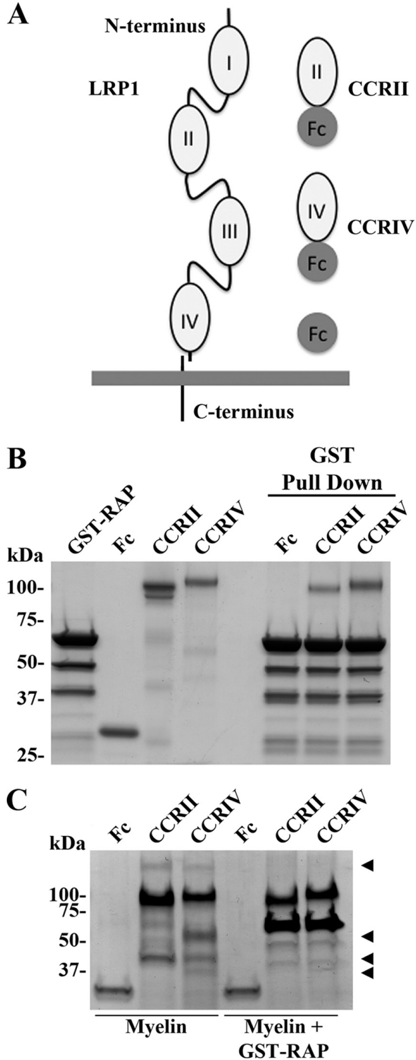
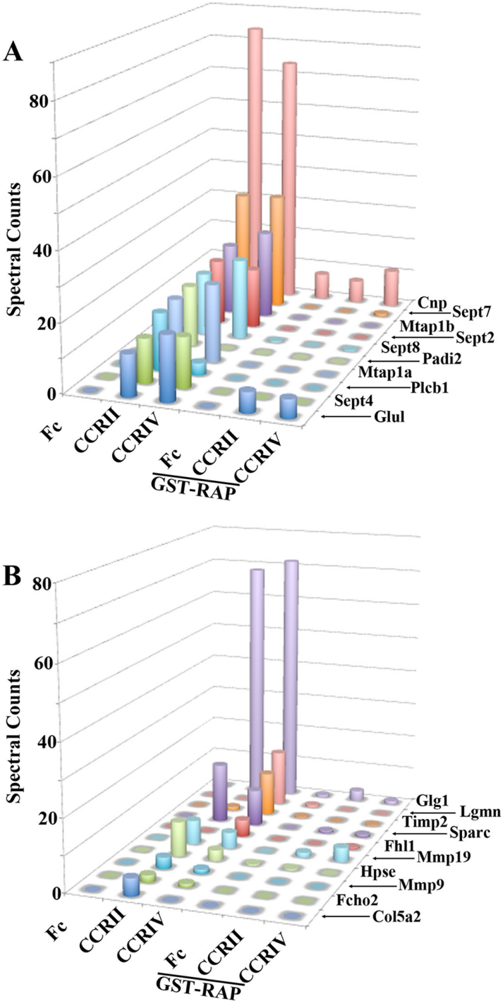
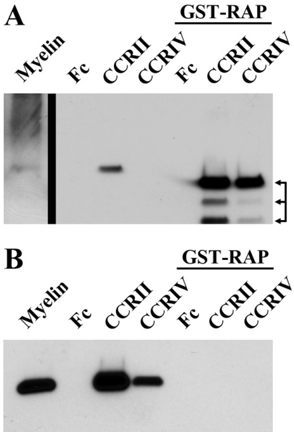
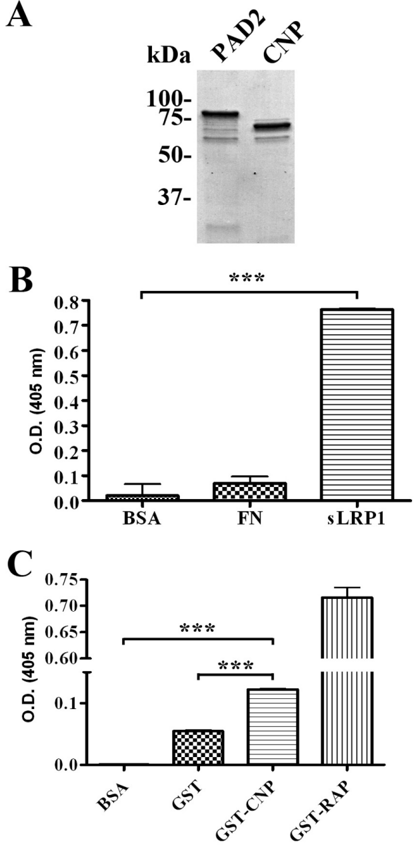
Verification
Claims the paper makes
The claims and statistics of this paper haven’t been checked yet.
Run the check — free, no account needed. It reads the open-access text and checks the sources it cites.
Claims other papers make about this one
Each is checked against this paper’s own text: does it say what the citing paper says it does?
In the citing paper
“Low density lipoprotein (LDL) receptor related protein 1 (LRP1) is a plasma membrane receptor mediating endocytosis, phagocytosis, chemotaxis and signaling for extracellular ligands, including apolipoprotein E (ApoE), lipoproteins, α2-macroglobulin, proteases, extracellular matrix proteins, growth factors, complement factors, heat shock proteins and dozens of other natural ligands (1–5).”
From LRPAP1 is released from activated microglia and inhibits microglial phagocytosis and amyloid beta aggregation (2023) · cites this paper as [4]
In the citing paper
“Outside the brain, LRP1 and related LDL family receptors regulate a wide range of cellular processes, including endocytosis, phagocytosis, chemotaxis and signaling in response to dozens of ligands (1–4).”
From LRPAP1 is released from activated microglia and inhibits microglial phagocytosis and amyloid beta aggregation (2023) · cites this paper as [4]
Self-check
Percentages, sums and reported differences re-computed from the paper’s own numbers.
The self-check needs the paper’s full text.
Citations
Cites
Disruption of Cnp1 uncouples oligodendroglial functions in axonal support and myelination
Lappe-Siefke, C., Goebbels, S., Gravel, M., Nicksch, E., Lee, J., Braun, P. E., Griffiths, I. R., & Nave, K.-A. (2003) · Nature Genetics · doi:10.1038/ng1095 · Cited by 1,036
Repeat-induced gene silencing in mammals
Garrick, D., Fiering, S., Martin, D. I. K., & Whitelaw, E. (1998) · Nature Genetics · doi:10.1038/ng0198-56 · Cited by 887
Research works printed but not linked: 49
- Compston, 2008, Multiple sclerosis, Lancet, 372, 1502, 10.1016/S0140-6736(08)61620-7 · DOI
- Barnett, 2004, Relapsing and remitting multiple sclerosis: pathology of the newly forming lesion, Ann. Neurol., 55, 458, 10.1002/ana.20016 · DOI
- Botto, 1998, Homozygous C1q deficiency causes glomerulonephritis associated with multiple apoptotic bodies, Nat. Genet., 19, 56, 10.1038/ng0598-56 · DOI · Paper page
- Gaultier, 2009, Low-density lipoprotein receptor-related protein 1 is an essential receptor for myelin phagocytosis, J. Cell Sci., 122, 1155, 10.1242/jcs.040717 · DOI · Paper page
- Gardai, 2005, Cell-surface calreticulin initiates clearance of viable or apoptotic cells through trans-activation of LRP on the phagocyte, Cell, 123, 321, 10.1016/j.cell.2005.08.032 · DOI · Paper page
- Ogden, 2001, C1q and mannose binding lectin engagement of cell surface calreticulin and CD91 initiates macropinocytosis and uptake of apoptotic cells, J. Exp. Med., 194, 781, 10.1084/jem.194.6.781 · DOI
- Herz, 1988, Surface location and high affinity for calcium of a 500-kd liver membrane protein closely related to the LDL-receptor suggest a physiological role as lipoprotein receptor, EMBO J., 7, 4119, 10.1002/j.1460-2075.1988.tb03306.x · DOI
- Strickland, 1990, Sequence identity between the α 2-macroglobulin receptor and low density lipoprotein receptor-related protein suggests that this molecule is a multifunctional receptor, J. Biol. Chem., 265, 17401, 10.1016/S0021-9258(18)38172-9 · DOI · Paper page
- Lillis, 2008, LDL receptor-related protein 1: unique tissue-specific functions revealed by selective gene knockout studies, Physiol. Rev., 88, 887, 10.1152/physrev.00033.2007 · DOI · Paper page
- Gonias, 2004, Low density lipoprotein receptor-related protein: regulation of the plasma membrane proteome, Thromb. Haemost., 91, 1056, 10.1160/TH04-01-0023 · DOI
- Gonias, 2011, Regulation of the urokinase receptor (uPAR) by LDL receptor-related protein-1 (LRP1), Curr. Pharm. Des., 17, 1962, 10.2174/138161211796718224 · DOI
- Gaultier, 2008, Regulation of tumor necrosis factor receptor-1 and the IKK-NF-κB pathway by LDL receptor-related protein explains the antiinflammatory activity of this receptor, Blood, 111, 5316, 10.1182/blood-2007-12-127613 · DOI
- Zurhove, 2008, γ-Secretase limits the inflammatory response through the processing of LRP1, Sci. Signal, 1, ra15, 10.1126/scisignal.1164263 · DOI
- Stiles, 2012, LDL Receptor-related Protein-1 is a sialic acid-independent receptor for myelin-associated glycoprotein (MAG) that functions in neurite outgrowth inhibition by MAG and CNS myelin, J. Cell Sci.
- Neels, 1999, The second and fourth cluster of class A cysteine-rich repeats of the low density lipoprotein receptor-related protein share ligand-binding properties, J. Biol. Chem., 274, 31305, 10.1074/jbc.274.44.31305 · DOI · Paper page
- Herz, 1991, 39-kDa protein modulates binding of ligands to low density lipoprotein receptor-related protein/α 2-macroglobulin receptor, J. Biol. Chem., 266, 21232, 10.1016/S0021-9258(18)54845-6 · DOI · Paper page
- Lee, 2005, Process outgrowth in oligodendrocytes is mediated by CNP, a novel microtubule assembly myelin protein, J. Cell Biol, 170, 661, 10.1083/jcb.200411047 · DOI
- Kozlov, 2003, Structural evidence that brain cyclic nucleotide phosphodiesterase is a member of the 2H phosphodiesterase superfamily, J. Biol. Chem., 278, 46021, 10.1074/jbc.M305176200 · DOI
- Muraro, 2002, T cell response to 2′,3′-cyclic nucleotide 3′-phosphodiesterase (CNPase) in multiple sclerosis patients, J. Neuroimmunol., 130, 233, 10.1016/S0165-5728(02)00229-1 · DOI
- Rösener, 1997, 2′,3′-cyclic nucleotide 3′-phosphodiesterase: a novel candidate autoantigen in demyelinating diseases, J. Neuroimmunol., 75, 28, 10.1016/S0165-5728(96)00230-5 · DOI
- Lamensa, 1993, Deimination of human myelin basic protein by a peptidylarginine deiminase from bovine brain, J. Neurochem., 61, 987, 10.1111/j.1471-4159.1993.tb03612.x · DOI
- Vossenaar, 2003, PAD, a growing family of citrullinating enzymes: genes, features and involvement in disease, BioEssays, 25, 1106, 10.1002/bies.10357 · DOI
- Wood, 2008, Myelin localization of peptidylarginine deiminases 2 and 4: comparison of PAD2 and PAD4 activities, Lab. Invest., 88, 354, 10.1038/labinvest.3700748 · DOI
- Moscarello, 1994, Myelin in multiple sclerosis is developmentally immature, J. Clin. Invest., 94, 146, 10.1172/JCI117300 · DOI
- Wood, 1996, Acute multiple sclerosis (Marburg type) is associated with developmentally immature myelin basic protein, Ann. Neurol., 40, 18, 10.1002/ana.410400106 · DOI
- Kim, 2003, Multiple sclerosis: an important role for post-translational modifications of myelin basic protein in pathogenesis, Mol. Cell Proteomics, 2, 453, 10.1074/mcp.M200050-MCP200 · DOI
- Musse, 2007, Molecular “negativity” may underlie multiple sclerosis: Role of the myelin basic protein family in the pathogenesis of MS, Neurobiology of Multiple Sclerosis, 79, 149, 10.1016/S0074-7742(07)79007-4 · DOI
- Mastronardi, 2007, Peptidyl argininedeiminase 2 CpG island in multiple sclerosis white matter is hypomethylated, J. Neurosci. Res., 85, 2006, 10.1002/jnr.21329 · DOI
- Musse, 2008, Peptidylarginine deiminase 2 (PAD2) overexpression in transgenic mice leads to myelin loss in the central nervous system, Dis. Model Mech., 1, 229, 10.1242/dmm.000729 · DOI
- Savill, 2000, Corpse clearance defines the meaning of cell death, Nature, 407, 784, 10.1038/35037722 · DOI
- Stern, 1996, Human monocyte-derived macrophage phagocytosis of senescent eosinophils undergoing apoptosis. Mediation by α v β 3/CD36/thrombospondin recognition mechanism and lack of phlogistic response, Am. J. Pathol., 149, 911
- Gorovoy, 2010, Inflammatory mediators promote production of shed LRP1/CD91, which regulates cell signaling and cytokine expression by macrophages, J. Leukoc. Biol., 88, 769, 10.1189/jlb.0410220 · DOI
- Studzinski, 2003, Regulation of CNS glial phenotypes in N20.1 cells, J. Neurosci. Res., 73, 31, 10.1002/jnr.10642 · DOI
- Norton, 1973, Myelination in rat brain: method of myelin isolation, J. Neurochem., 21, 749, 10.1111/j.1471-4159.1973.tb07519.x · DOI · Paper page
- Gaultier, 2010, LDL receptor-related protein 1 regulates the abundance of diverse cell-signaling proteins in the plasma membrane proteome, J. Proteome Res., 9, 6689, 10.1021/pr1008288 · DOI
- Emonard, 2004, Low density lipoprotein receptor-related protein mediates endocytic clearance of pro-MMP-2.TIMP-2 complex through a thrombospondin-independent mechanism, J. Biol. Chem., 279, 54944, 10.1074/jbc.M406792200 · DOI
- Hahn-Dantona, 2001, The low density lipoprotein receptor-related protein modulates levels of matrix metalloproteinase 9 (MMP-9) by mediating its cellular catabolism, J. Biol. Chem., 276, 15498, 10.1074/jbc.M100121200 · DOI
- Gravel, 1996, Overexpression of 2′,3′-cyclic nucleotide 3′-phosphodiesterase in transgenic mice alters oligodendrocyte development and produces aberrant myelination, Mol. Cell Neurosci., 7, 453, 10.1006/mcne.1996.0033 · DOI
- Bifulco, 2002, 2′,3′-Cyclic nucleotide 3′-phosphodiesterase: a membrane-bound, microtubule-associated protein and membrane anchor for tubulin, Proc. Natl. Acad. Sci. U.S.A., 99, 1807, 10.1073/pnas.042678799 · DOI
- Adie, 2003, CypHer 5: a generic approach for measuring the activation and trafficking of G protein-coupled receptors in live cells, Assay Drug Dev. Technol., 1, 251, 10.1089/15406580360545062 · DOI
- Henn, 2009, The suitability of BV2 cells as alternative model system for primary microglia cultures or animal experiments of brain inflammation, ALTEX, 26, 83, 10.14573/altex.2009.2.83 · DOI · Paper page
- Elliott, 2010, Clearance of apoptotic cells: implications in health and disease, J. Cell Biol., 189, 1059, 10.1083/jcb.201004096 · DOI
- Mantuano, 2008, The hemopexin domain of matrix metalloproteinase-9 activates cell signaling and promotes migration of schwann cells by binding to low-density lipoprotein receptor-related protein, J. Neurosci., 28, 11571, 10.1523/JNEUROSCI.3053-08.2008 · DOI
- Miyaoka, 2010, A novel regulatory mechanism for Fgf18 signaling involving cysteine-rich FGF receptor (Cfr) and δ-like protein (Dlk), Development, 137, 159, 10.1242/dev.041574 · DOI
- Hidalgo, 2007, Complete identification of E-selectin ligands on neutrophils reveals distinct functions of PSGL-1, ESL-1, and CD44, Immunity, 26, 477, 10.1016/j.immuni.2007.03.011 · DOI
- Garner, 1990, Molecular cloning of microtubule-associated protein 1 (MAP1A) and microtubule-associated protein 5 (MAP1B): identification of distinct genes and their differential expression in developing brain, J. Neurochem., 55, 146, 10.1111/j.1471-4159.1990.tb08832.x · DOI
- Buser, 2009, The septin cytoskeleton in myelinating glia, Mol. Cell Neurosci., 40, 156, 10.1016/j.mcn.2008.10.002 · DOI
- Hall, 2012, Mammalian septins: dynamic heteromers with roles in cellular morphogenesis and compartmentalization, The Journal of pathology, 226, 287, 10.1002/path.3024 · DOI
- Bauer, 2009, Role of the oligodendroglial cytoskeleton in differentiation and myelination, Glia, 57, 1691, 10.1002/glia.20885 · DOI
Cited by
Sorted by citations
Inflammation: the link between comorbidities, genetics, and Alzheimer’s disease
Newcombe, E. A., Camats-Perna, J., Silva, M. L., Valmas, N., Huat, T. J., & Medeiros, R. (2018) · Journal of Neuroinflammation · doi:10.1186/s12974-018-1313-3 · Cited by 532
What are lipoproteins doing in the brain?
Wang, H., & Eckel, R. H. (2014) · Trends in Endocrinology & Metabolism · doi:10.1016/j.tem.2013.10.003 · Cited by 234
Protein-protein interaction networks: probing disease mechanisms using model systems
Kuzmanov, U., & Emili, A. (2013) · Genome Medicine · doi:10.1186/gm441 · Cited by 197
Bruce, K. D., Gorkhali, S., Given, K., Coates, A. M., Boyle, K. E., Macklin, W. B., & Eckel, R. H. (2018) · Frontiers in Molecular Neuroscience · doi:10.3389/fnmol.2018.00057 · Cited by 94
Lin, J.-P., Mironova, Y. A., Shrager, P., & Giger, R. J. (2017) · eLife · doi:10.7554/elife.30498 · Cited by 64
Metadata
- Authors
- Fernandez-Castaneda, A., Arandjelovic, S., Stiles, T. L., Schlobach, R. K., Mowen, K. A., Gonias, S. L., & Gaultier, A.
- Venue
- Journal of Biological Chemistry
- Publisher
- Elsevier BV
- Published
- 2013-02
- Volume
- 288
- Issue
- 7
- Pages
- 4538-4548
- ISSN
- 0021-9258
- Cited by
- 55
- References
- 2
- Language
- en
About these checks
Registry, retraction, Cites and statistics results are computed, not judged, with one exception: a printed reference that no index lists is read once by a model before it counts as a citation error. Claims are extracted by a model and kept only when their quote appears verbatim in the text; each cited source is then checked, with a model’s help, for whether it says what the claim relies on. Those verdicts can be wrong — read the claim’s quote and the cited source before relying on one.
Statistics and arithmetic are recomputed, not judged.
Confidence bands are shown only for fields calibrated on our annotated test set. None is calibrated yet, so no band is shown.
What counts as a claim ›How we measure confidence ›How we check this ›
Are you an author, or do you see a problem with this page? Request a review
How to cite
Cite CoChat for the checks on this page, and the paper for its own findings.
- This page
- CoChat. (2026). Citation check: Identification of the Low Density Lipoprotein (LDL) Receptor-related Protein-1 Interactome in Central Nervous System Myelin Suggests a Role in the Clearance of Necrotic Cell Debris. https://app.cochat.ai/papers/10.1074/jbc.m112.384693
- The paper
- Fernandez-Castaneda, A., Arandjelovic, S., Stiles, T. L., Schlobach, R. K., Mowen, K. A., Gonias, S. L., & Gaultier, A. (2013). Identification of the Low Density Lipoprotein (LDL) Receptor-related Protein-1 Interactome in Central Nervous System Myelin Suggests a Role in the Clearance of Necrotic Cell Debris. Journal of Biological Chemistry. https://doi.org/10.1074/jbc.m112.384693
