

The DOI matches its Crossref record; 71 of the 71 references it cites were found in a registry or an index.
Structural Basis for Cul3 Protein Assembly with the BTB-Kelch Family of E3 Ubiquitin Ligases
Open accessAbstract
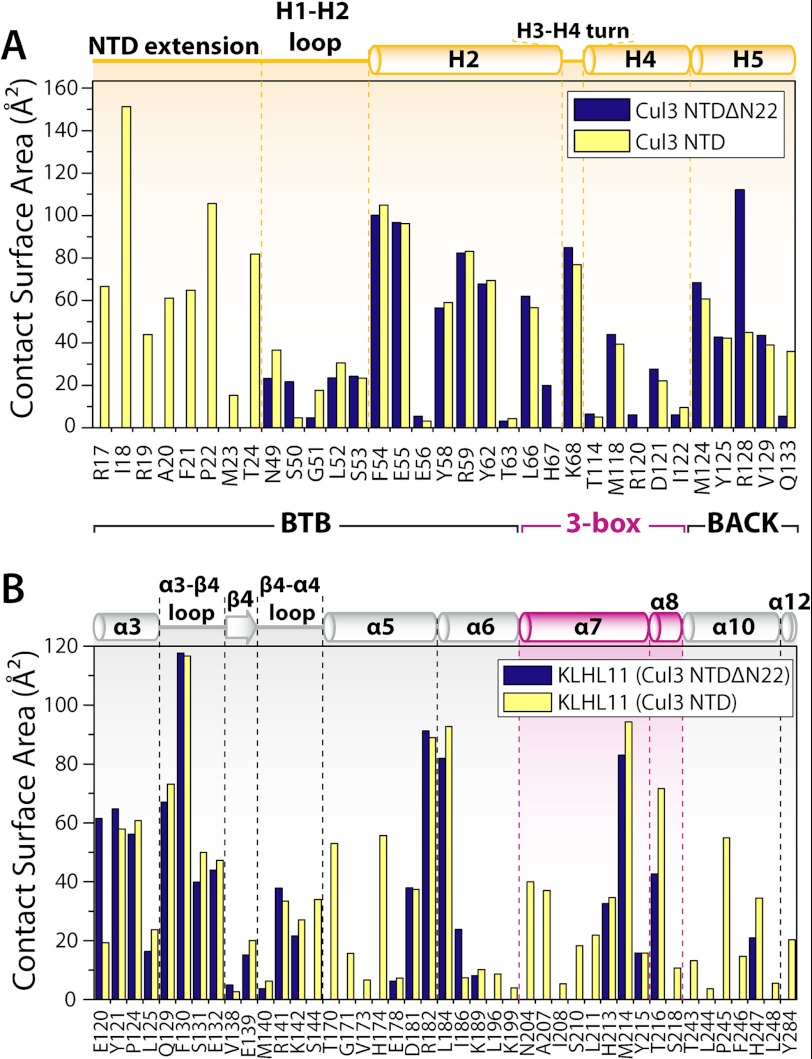
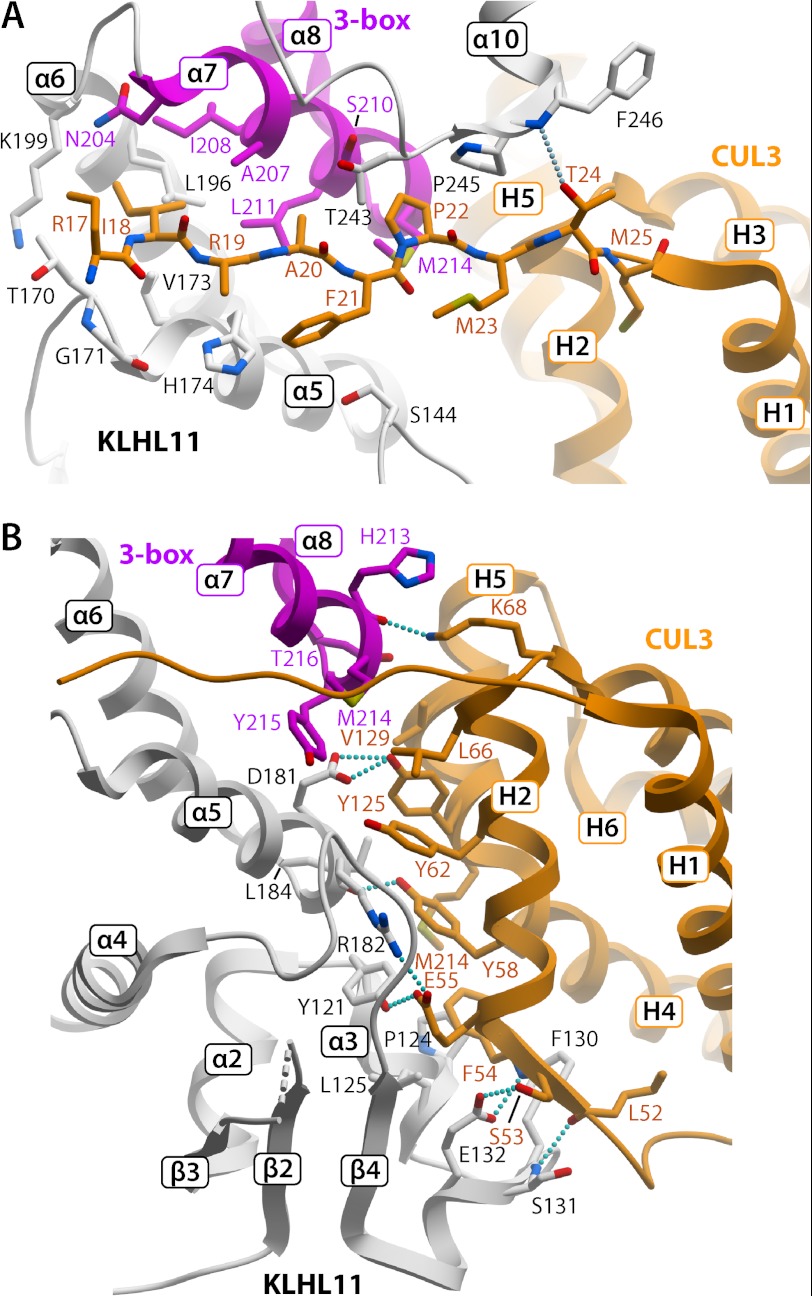
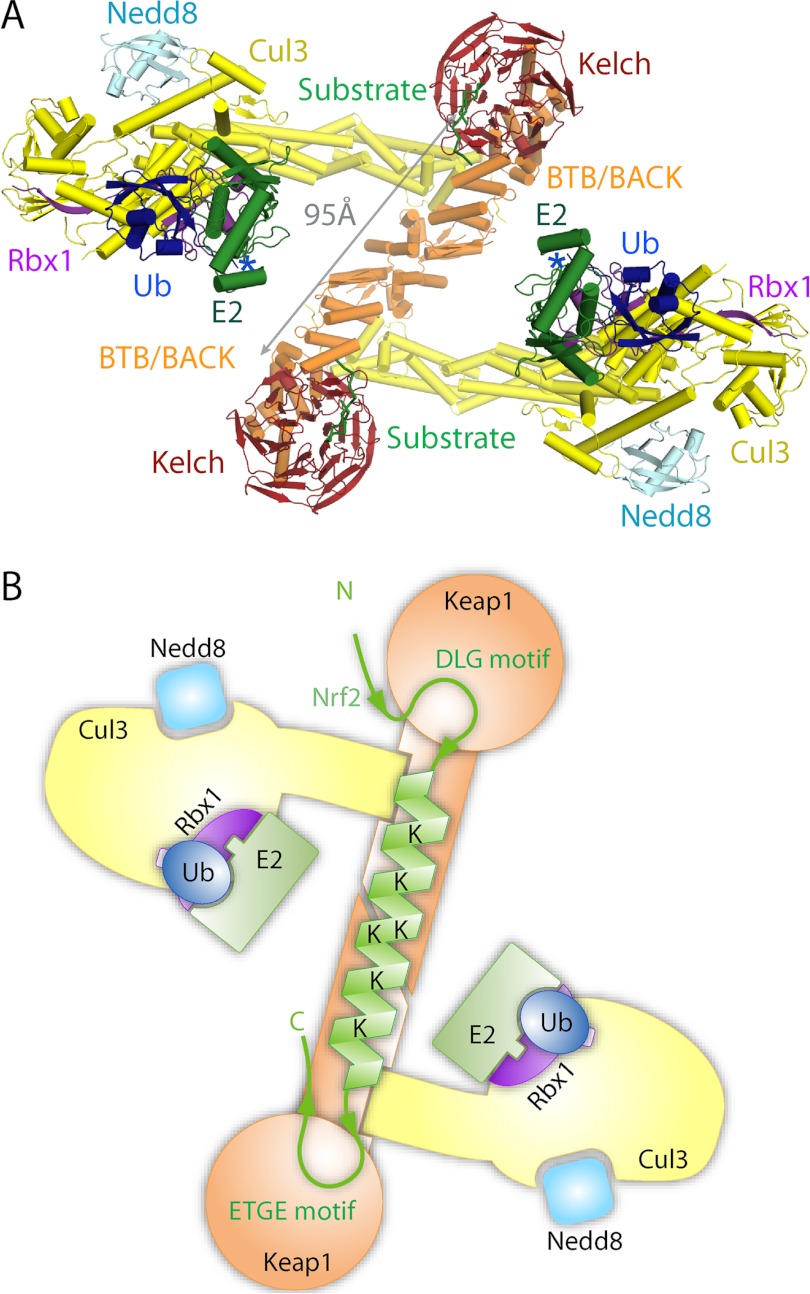
Cullin-RING ligases are multisubunit E3 ubiquitin ligases that recruit substrate-specific adaptors to catalyze protein ubiquitylation. Cul3-based Cullin-RING ligases are uniquely associated with BTB adaptors that incorporate homodimerization, Cul3 assembly, and substrate recognition into a single multidomain protein, of which the best known are BTB-BACK-Kelch domain proteins, including KEAP1. Cul3 assembly requires a BTB protein "3-box" motif, analogous to the F-box and SOCS box motifs of other Cullin-based E3s. To define the molecular basis for this assembly and the overall architecture of the E3, we determined the crystal structures of the BTB-BACK domains of KLHL11 both alone and in complex with Cul3, along with the Kelch domain structures of KLHL2 (Mayven), KLHL7, KLHL12, and KBTBD5. We show that Cul3 interaction is dependent on a unique N-terminal extension sequence that packs against the 3-box in a hydrophobic groove centrally located between the BTB and BACK domains. Deletion of this N-terminal region results in a 30-fold loss in affinity. The presented data offer a model for the quaternary assembly of this E3 class that supports the bivalent capture of Nrf2 and reveals potential new sites for E3 inhibitor design.
Overview
The claims and statistics of this paper haven’t been checked yet.
Run the check — free, no account needed. It reads the open-access text and checks the sources it cites.
Integrity signals
Registry
Cites
Statistics
Figures
Verification
Claims the paper makes
The claims and statistics of this paper haven’t been checked yet.
Run the check — free, no account needed. It reads the open-access text and checks the sources it cites.
Claims other papers make about this one
Each is checked against this paper’s own text: does it say what the citing paper says it does?
In the citing paper
“Accordingly, Keap1 contains three functional domains (Figure 5). The N-terminal BTB (broad complex, tramtrack, and bric à brac) domain mediates Keap1 homodimerization and contributes to its interaction with Cul3 [68]. Additional Cul3 interaction is provided by a 3-box motif found within the proximal part of the intervening region (IVR) [67]. The IVR contains key reactive cysteine residues through”
From Nrf2 and Oxidative Stress: A General Overview of Mechanisms and Implications in Human Disease (2022) · cites this paper as [67]
In the citing paper
“BTB-containing E3 ligases are typically distinguished by the presence of a 3-box motif that enables high-affinity binding of Cullin 3 (refs 74,75 ).”
From Targeted protein degradation: expanding the toolbox (2019) · cites this paper as [74]
Self-check
Percentages, sums and reported differences re-computed from the paper’s own numbers.
The self-check needs the paper’s full text.
Citations
Cites
Features and development of Coot
Emsley, P., Lohkamp, B., Scott, W. G., & Cowtan, K. (2010) · Acta Crystallographica Section D Biological Crystallography · doi:10.1107/s0907444910007493 · Cited by 29,915 · cited 1×
“Manual model building was performed with COOT (42) and the models refined with CNS (43, 44), REFMAC (45, 46), or BUSTER (47) using TLS and NCS restraints as appropriate.”
PHENIX : a comprehensive Python-based system for macromolecular structure solution
Adams, P. D., Afonine, P. V., Bunkóczi, G., Chen, V. B., Davis, I. W., Echols, N., Headd, J. J., Hung, L.-W., Kapral, G. J., Grosse-Kunstleve, R. W., et al. (2010) · Acta Crystallographica Section D Biological Crystallography · doi:10.1107/s0907444909052925 · Cited by 23,716 · cited 2×
“Automated model building tasks were conducted with BUCCANEER (39, 40) or PHENIX.”
Phaser crystallographic software
McCoy, A. J., Grosse-Kunstleve, R. W., Adams, P. D., Winn, M. D., Storoni, L. C., & Read, R. J. (2007) · Journal of Applied Crystallography · doi:10.1107/s0021889807021206 · Cited by 20,612
The CCP4 suite: programs for protein crystallography
Number Collaborative Computational Project (1994) · Acta Crystallographica Section D Biological Crystallography · doi:10.1107/s0907444994003112 · Cited by 17,317
Kabsch, W. (2010) · Acta Crystallographica Section D Biological Crystallography · doi:10.1107/s0907444909047337 · Cited by 16,463
Crystallography & NMR System: A New Software Suite for Macromolecular Structure Determination
Brünger, A. T., Adams, P. D., Clore, G. M., DeLano, W. L., Gros, P., Grosse‐Kunstleve, R. W., Jiang, J., Kuszewski, J. J., Nilges, M., Pannu, N., et al. (1998) · Acta Crystallographica Section D Biological Crystallography · doi:10.1107/s0907444998003254 · Cited by 15,723
Refinement of Macromolecular Structures by the Maximum-Likelihood Method
Murshudov, G. N., Vagin, A. A., & Dodson, E. J. (1997) · Acta Crystallographica Section D Biological Crystallography · doi:10.1107/s0907444996012255 · Cited by 14,796 · cited 1×
“Manual model building was performed with COOT (42) and the models refined with CNS (43, 44), REFMAC (45, 46), or BUSTER (47) using TLS and NCS restraints as appropriate.”
MolProbity : all-atom structure validation for macromolecular crystallography
Chen, V. B., Arendall, W. B., Headd, J. J., Keedy, D. A., Immormino, R. M., Kapral, G. J., Murray, L. W., Richardson, J. S., & Richardson, D. C. (2010) · Acta Crystallographica Section D Biological Crystallography · doi:10.1107/s0907444909042073 · Cited by 14,115
Inference of Macromolecular Assemblies from Crystalline State
Krissinel, E., & Henrick, K. (2007) · Journal of Molecular Biology · doi:10.1016/j.jmb.2007.05.022 · Cited by 10,007 · cited 1×
“Values were calculated using the protein interfaces, surfaces, and assemblies service at the European Bioinformatics Institute (68).”
Hershko, A., & Ciechanover, A. (1998) · Annual Review of Biochemistry · doi:10.1146/annurev.biochem.67.1.425 · Cited by 8,840
Cited by
Sorted by citations
The KEAP1-NRF2 system: a thiol-based sensor-effector apparatus for maintaining redox homeostasis
Yamamoto, M., Kensler, T. W., & Motohashi, H. (2018) · Physiological Reviews · doi:10.1152/physrev.00023.2017 · Cited by 1,968
The Molecular Mechanisms Regulating the KEAP1-NRF2 Pathway
Baird, L., & Yamamoto, M. P. (2020) · Molecular and Cellular Biology · doi:10.1128/mcb.00099-20 · Cited by 1,671
The whole-genome landscape of medulloblastoma subtypes
Northcott, P. A., Buchhalter, I., Morrissy, A. S., Hovestadt, V., Weischenfeldt, J., Ehrenberger, T., Gröbner, S., Segura-Wang, M., Zichner, T., Rudneva, V. A., et al. (2017) · Nature · doi:10.1038/nature22973 · Cited by 1,112
Nrf2 and Oxidative Stress: A General Overview of Mechanisms and Implications in Human Disease
Ngo, V., & Duennwald, M. L. (2022) · Antioxidants · doi:10.3390/antiox11122345 · Cited by 1,130
“Cul3 assembly requires a “3-box” motif that is characteristic of BTB-Kelch proteins [67].”
BackgroundInfluentialTargeted protein degradation: expanding the toolbox
Schapira, M., Calabrese, M. F., Bullock, A. N., & Crews, C. M. (2019) · Nature Reviews Drug Discovery · doi:10.1038/s41573-019-0047-y · Cited by 960
Self-citationTebay, L. E., Robertson, H., Durant, S. T., Vitale, S. R., Penning, T. M., Dinkova-Kostova, A. T., & Hayes, J. D. (2015) · Free Radical Biology and Medicine · doi:10.1016/j.freeradbiomed.2015.06.021 · Cited by 837
“A uthor M anuscript A uthor M anuscript A uthor M anuscript A uthor M anuscript protein-protein interaction domain; an intervening region (IVR); a C-terminal doubleglycine repeat (DGR) domain (that consists of six subdomains, each of which contains a distinctive Gly-Gly motif, and is sometimes called the Kelch-repeat…”
InfluentialStructural basis of Keap1 interactions with Nrf2
Canning, P., Sorrell, F. J., & Bullock, A. N. (2015) · Free Radical Biology and Medicine · doi:10.1016/j.freeradbiomed.2015.05.034 · Cited by 620
Self-citationThe integrated landscape of driver genomic alterations in glioblastoma
Frattini, V., Trifonov, V., Chan, J. M., Castano, A., Lia, M., Abate, F., Keir, S. T., Ji, A. X., Zoppoli, P., Niola, F., et al. (2013) · Nature Genetics · doi:10.1038/ng.2734 · Cited by 524
Haldar, K., Bhattacharjee, S., & Safeukui, I. (2018) · Nature Reviews Microbiology · doi:10.1038/nrmicro.2017.161 · Cited by 454
Suzuki, T., & Yamamoto, M. P. (2017) · Journal of Biological Chemistry · doi:10.1074/jbc.r117.800169 · Cited by 412
“Although one study reports that one Cul3 protein binds to a homodimer of Keap1 (37), another report shows that two Cul3 proteins bind to a Keap1 homodimer (38).”
BackgroundDeshmukh, P. H., Unni, S., Krishnappa, G., & Padmanabhan, B. (2016) · Biophysical Reviews · doi:10.1007/s12551-016-0244-4 · Cited by 405
Keap1, the cysteine-based mammalian intracellular sensor for electrophiles and oxidants
Dinkova‐Kostova, A. T., Kostov, R. V., & Canning, P. (2016) · Archives of Biochemistry and Biophysics · doi:10.1016/j.abb.2016.08.005 · Cited by 340
Self-citationDavies, T. G., Wixted, W. E., Coyle, J. E., Griffiths-Jones, C., Hearn, K., McMenamin, R., Norton, D., Rich, S. J., Richardson, C., Saxty, G., et al. (2016) · Journal of Medicinal Chemistry · doi:10.1021/acs.jmedchem.6b00228 · Cited by 322
Piotrowski, A., Xie, J., Liu, Y. F., Poplawski, A. B., Gomes, A., Madanecki, P., Fu, C., Crowley, M. R., Crossman, D. K., Armstrong, L., et al. (2013) · Nature Genetics · doi:10.1038/ng.2855 · Cited by 326
The KEAP1-NRF2 pathway: Targets for therapy and role in cancer
Adinolfi, S., Patinen, T., Deen, A. J., Pitkänen, S., Härkönen, J., Kansanen, E., Küblbeck, J., & Levonen, A. (2023) · Redox Biology · doi:10.1016/j.redox.2023.102726 · Cited by 326
Characterizations of Three Major Cysteine Sensors of Keap1 in Stress Response
Saito, R., Suzuki, T., Hiramoto, K., Asami, S., Naganuma, E., Suda, H., Iso, T., Yamamoto, H., Morita, M., Baird, L., et al. (2016) · Molecular and Cellular Biology · doi:10.1128/mcb.00868-15 · Cited by 294
Medulloblastomics revisited: biological and clinical insights from thousands of patients
Hovestadt, V., Ayrault, O., Swartling, F. J., Robinson, G. W., Pfister, S. M., & Northcott, P. A. (2020) · Nature Reviews Cancer · doi:10.1038/s41568-019-0223-8 · Cited by 271
Molecular Mechanism of Cellular Oxidative Stress Sensing by Keap1
Suzuki, T., Muramatsu, A., Saito, R., Iso, T., Shibata, T., Kuwata, K., Kawaguchi, S.-I., Iwawaki, T., Adachi, S., Suda, H., et al. (2019) · Cell Reports · doi:10.1016/j.celrep.2019.06.047 · Cited by 297
Genschik, P., Sumara, I., & Lechner, E. (2013) · The EMBO Journal · doi:10.1038/emboj.2013.173 · Cited by 278
Crisman, E., Duarte, P., Daudén, E., Cuadrado, A., Rodríguez-Franco, M. I., López, M. G., & Leon, R. M. (2022) · Medicinal Research Reviews · doi:10.1002/med.21925 · Cited by 289
“To date, the KEAP1 and NRF2 full‐length structures have not been described, although a complete structural model of the CRL complex can be assembled from its different crystallized subunits (Figure 2A).(36,58) Nevertheless, KEAP1‐ Kelch domain complexed with NRF2 peptides containing the ETGE or DLG motifs have been re…”
BackgroundStructure of the BTB Domain of Keap1 and Its Interaction with the Triterpenoid Antagonist CDDO
Cleasby, A., Yon, J. R., Day, P. J., Richardson, C. J., Tickle, I. J., Williams, P. A., Callahan, J. F., Carr, R. A. E., Concha, N. O., Kerns, J. K., et al. (2014) · PLoS ONE · doi:10.1371/journal.pone.0098896 · Cited by 271
“Further experimental evidence is clearly required to distinguish between these and other possibilities, and a more complete understanding of the effects of Cys 151 perturbation might benefit from structural information for a construct containing at least the first ,50 residues of the BACK domain (the ‘‘3-box’’ motif),…”
BackgroundMethodInfluentialNrf2: a dark horse in Alzheimer's disease treatment
Osama, A., Zhang, J., Yao, J., Yao, X., & Fang, J. (2020) · Ageing Research Reviews · doi:10.1016/j.arr.2020.101206 · Cited by 264
Bulatov, E., & Ciulli, A. (2015) · Biochemical Journal · doi:10.1042/bj20141450 · Cited by 237
Mutations in KLHL40 Are a Frequent Cause of Severe Autosomal-Recessive Nemaline Myopathy
Ravenscroft, G., Miyatake, S., Lehtokari, V., Todd, E. J., Vornanen, P., Yau, K. S., Hayashi, Y. K., Miyake, N., Tsurusaki, Y., Doi, H., et al. (2013) · The American Journal of Human Genetics · doi:10.1016/j.ajhg.2013.05.004 · Cited by 226
LZTR1 is a regulator of RAS ubiquitination and signaling
Bigenzahn, J. W., Collu, G. M., Kartnig, F., Pieraks, M., Vladimer, G. I., Heinz, L. X., Sedlyarov, V., Schischlik, F., Fauster, A., Rebsamen, M., et al. (2018) · Science · doi:10.1126/science.aap8210 · Cited by 224
Structural basis of NPR1 in activating plant immunity
Kumar, S., Zavaliev, R., Wu, Q., Zhou, Y., Cheng, J., Dillard, L. B., Powers, J. J., Withers, J., Zhao, J., Guan, Z., et al. (2022) · Nature · doi:10.1038/s41586-022-04699-w · Cited by 201
Redox toxicology of environmental chemicals causing oxidative stress
Zheng, F., Gonçalves, F. M., Abiko, Y., Li, H., Kumagai, Y., & Aschner, M. (2020) · Redox Biology · doi:10.1016/j.redox.2020.101475 · Cited by 198
Dysregulation of Nrf2 in Hepatocellular Carcinoma: Role in Cancer Progression and Chemoresistance
Raghunath, A., Sundarraj, K., Arfuso, F., Sethi, G., & Perumal, E. (2018) · Cancers · doi:10.3390/cancers10120481 · Cited by 187
“The IVR domain (aka BACK domain) mediates the interaction of Cul3 with Keap1 through the 3-box bihelical motif in the proximal part in the N-terminal end called the ‘3-box’ [72].”
BackgroundE3 ligase ligand chemistries: from building blocks to protein degraders
Sosič, I., Bricelj, A., & Steinebach, C. (2022) · Chemical Society Reviews · doi:10.1039/d2cs00148a · Cited by 176
Keap Calm, and Carry on Covalently
Wilson, A. J., Kerns, J. K., Callahan, J. F., & Moody, C. J. (2013) · Journal of Medicinal Chemistry · doi:10.1021/jm400224q · Cited by 171
Nrf2 as regulator of innate immunity: A molecular Swiss army knife!
Battino, M. A., Giampieri, F., Pistollato, F., Sureda, A., de Oliveira, M. R., Pittalà, V., Fallarino, F., Nabavi, S. F., Atanasov, A. G., & Nabavi, S. M. (2017) · Biotechnology Advances · doi:10.1016/j.biotechadv.2017.12.012 · Cited by 170
Gupta, V. A., Ravenscroft, G., Shaheen, R., Todd, E. J., Swanson, L. C., Shiina, M., Ogata, K., Hsu, C., Clarke, N. F., Darras, B. T., et al. (2013) · The American Journal of Human Genetics · doi:10.1016/j.ajhg.2013.10.020 · Cited by 168
Organoselenium compounds as mimics of selenoproteins and thiol modifier agents
Barbosa, N. V., Nogueira, C. W., Nogara, P. A., Bem, A. F. D., Aschner, M., & Rocha, J. B. T. (2017) · Metallomics · doi:10.1039/c7mt00083a · Cited by 171
Potential Applications of NRF2 Modulators in Cancer Therapy
Panieri, E., Djordjević, A. B., Telkoparan‐Akillilar, P., Cevik, D., Kouretas, D., Veskoukis, A. S., Skaperda, Z., Tsatsakis, A. M., Wallace, D., Süzen, S., et al. (2020) · Antioxidants · doi:10.3390/antiox9030193 · Cited by 167
“All the members of this family assemble with Cullin-RING ligases that catalyze general protein ubiquitylation [39].”
BackgroundKelch proteins: emerging roles in skeletal muscle development and diseases
Gupta, V., & Beggs, A. H. (2014) · Skeletal Muscle · doi:10.1186/2044-5040-4-11 · Cited by 160
“In humans, dominant CUL3 mutations are associated with pseudohypoaldosteronism type II, a genetic disorder causing hypertension, hyperkalemia, and metabolic acidosis [92].”
BackgroundInfluentialCrystal Structure of the Cul2-Rbx1-EloBC-VHL Ubiquitin Ligase Complex
Cardote, T. A. F., Gadd, M. S., & Ciulli, A. (2017) · Structure · doi:10.1016/j.str.2017.04.009 · Cited by 150
“The CRL2VHL Complex Is Dynamic and Flexible (A) Crystal structures of the full NTD of Cul1 (PDB: 1U6G), Cul2 (PDB: 5N4W), Cul3 (PDB: 4HXI), Cul4A (PDB: 4A0K), Cul4B (PDB: 4A64), and Cul5 (PDB: 4JGH), illustrating the existence of hinge points in the linkers between Cullin repeats.”
BackgroundBardoxolone conjugation enables targeted protein degradation of BRD4
Tong, B., Luo, M., Xie, Y., Spradlin, J. N., Tallarico, J. A., McKenna, J. M., Schirle, M., Maimone, T. J., & Nomura, D. K. (2020) · Scientific Reports · doi:10.1038/s41598-020-72491-9 · Cited by 152
COPII‐mediated trafficking at the ER/ERGIC interface
Peotter, J. L., Kasberg, W., Pustova, I., & Audhya, A. (2019) · Traffic · doi:10.1111/tra.12654 · Cited by 143
Wang, X., An, J., Liu, X., Su, L., You, C., & Hao, Y. (2018) · PLANT PHYSIOLOGY · doi:10.1104/pp.18.00244 · Cited by 141
“For BTB-BACK containing proteins SPOP (speckle-type POZ protein), however, the C-terminal BACK-like domain together with the adjacent BTB domian are essential for interaction with CUL3 (Canning et al., 2013).”
BackgroundHyperkalemic hypertension–associated cullin 3 promotes WNK signaling by degrading KLHL3
McCormick, J. A., Yang, C., Zhang, C., Davidge, B., Blankenstein, K. I., Terker, A. S., Yarbrough, B., Meermeier, N. P., Park, H. J., McCully, B. H., et al. (2014) · Journal of Clinical Investigation · doi:10.1172/jci76126 · Cited by 139
Stabilizing mutations of KLHL24 ubiquitin ligase cause loss of keratin 14 and human skin fragility
Lin, Z., Li, S., Feng, C., Yang, S., Wang, H., Ma, D., Zhang, J., Gou, M., Bu, D., Zhang, T., et al. (2016) · Nature Genetics · doi:10.1038/ng.3701 · Cited by 134
Adelusi, T. I., Du, L., Meng, H., Zhou, X., Qian, X., Chowdhury, A., Sun, Y., Lü, Q., & Yin, X. (2020) · Biomedicine & Pharmacotherapy · doi:10.1016/j.biopha.2019.109732 · Cited by 133
Absolute Amounts and Status of the Nrf2-Keap1-Cul3 Complex within Cells
Iso, T., Suzuki, T., Baird, L., & Yamamoto, M. P. (2016) · Molecular and Cellular Biology · doi:10.1128/mcb.00389-16 · Cited by 130
“shows that two Cul3 proteins bind to the Keap1 homodimer (19).”
BackgroundMethodInfluentialKLHL40 deficiency destabilizes thin filament proteins and promotes nemaline myopathy
Garg, A., O’Rourke, J., Long, C., Doering, J., Ravenscroft, G., Bezprozvannaya, S., Nelson, B. R., Beetz, N., Li, L., Chen, S., et al. (2014) · Journal of Clinical Investigation · doi:10.1172/jci74994 · Cited by 127
Methylmercury's chemistry: From the environment to the mammalian brain
Nogara, P. A., Oliveira, C. S., Schmitz, G. L., Piquini, P. C., Farina, M., Aschner, M., & da Rocha, J. B. T. (2019) · Biochimica et Biophysica Acta (BBA) - General Subjects · doi:10.1016/j.bbagen.2019.01.006 · Cited by 134
Lymphoma Driver Mutations in the Pathogenic Evolution of an Iconic Human Autoantibody
Singh, M., Jackson, K., Wang, J. J., Schofield, P., Field, M. A., Koppstein, D., Peters, T. J., Burnett, D. L., Rizzetto, S., Névoltris, D., et al. (2020) · Cell · doi:10.1016/j.cell.2020.01.029 · Cited by 125
The role of natural products in revealing NRF2 function
Zhang, D. D., & Chapman, E. (2020) · Natural Product Reports · doi:10.1039/c9np00061e · Cited by 123
Li, B. K., Vasiljevic, A., Dufour, C., Yao, F., Ho, B., Lu, M., Hwang, E. I., Gururangan, S., Hansford, J. R., Fouladi, M., et al. (2019) · Acta Neuropathologica · doi:10.1007/s00401-019-02111-y · Cited by 113
Tran, K. T., Pallesen, J. S., Solbak, S. M. Ø., Narayanan, D., Baig, A., Zang, J., Aguayo‐Orozco, A., Carmona, R. M., Garcia, A. D., & Bach, A. (2019) · Journal of Medicinal Chemistry · doi:10.1021/acs.jmedchem.9b00723 · Cited by 108
Heightman, T. D., Callahan, J. F., Chiarparin, E., Coyle, J. E., Griffiths-Jones, C., Lakdawala, A. S., McMenamin, R. L., Mortenson, P. N., Norton, D., Peakman, T. M., et al. (2019) · Journal of Medicinal Chemistry · doi:10.1021/acs.jmedchem.9b00279 · Cited by 104
Chagraoui, J., Girard, S., Spinella, J.-F., Simon, L., Bonneil, E., Mayotte, N., MacRae, T., Coulombe-Huntington, J., Bertomeu, T., Moison, C., et al. (2021) · Cell Stem Cell · doi:10.1016/j.stem.2020.12.002 · Cited by 93
Cullin-RING E3 Ubiquitin Ligases: Bridges to Destruction
Nguyen, H. C., Wang, W., & Xiong, Y. (2017) · Sub-cellular biochemistry/Subcellular biochemistry · doi:10.1007/978-3-319-46503-6_12 · Cited by 102
Structural complexity in the KCTD family of Cullin3-dependent E3 ubiquitin ligases
Pinkas, D. M., Sanvitale, C., Bufton, J. C., Sorrell, F. J., Solcan, N., Chalk, R., Doutch, J., & Bullock, A. N. (2017) · Biochemical Journal · doi:10.1042/bcj20170527 · Cited by 93
Self-citationGenau, H. M., Huber, J., Baschieri, F., Akutsu, M., Dötsch, V., Farhan, H., Rogov, V. V., & Behrends, C. (2015) · Molecular Cell · doi:10.1016/j.molcel.2014.12.040 · Cited by 92
“Besides substrate binding, CRL3 dimerization positions substrates between two E2 binding sites, possibly affecting efficiency and processivity of ubiquitin transfer (Canning et al., 2013).”
BackgroundRavenscroft, G., Laing, N. G., & Bönnemann, C. G. (2014) · Brain · doi:10.1093/brain/awu368 · Cited by 94
“bind cullin 3 to form E3 ubiquitin ligases (Sambuughin et al., 2012; Canning et al., 2013), has been shown to cause nemaline myopathies [KBTBD13 (Sambuughin et al.”
BackgroundInsights into Cullin-RING E3 Ubiquitin Ligase Recruitment: Structure of the VHL-EloBC-Cul2 Complex
Nguyen, H. C., Yang, H., Fribourgh, J. L., Wolfe, L. S., & Xiong, Y. (2015) · Structure · doi:10.1016/j.str.2014.12.014 · Cited by 91
Kelch-like proteins: Physiological functions and relationships with diseases
Shi, X., Xiang, S., Cao, J., Zhu, H., Yang, B., He, Q., & Ying, M. (2019) · Pharmacological Research · doi:10.1016/j.phrs.2019.104404 · Cited by 92
Clinical and molecular heterogeneity of pineal parenchymal tumors: a consensus study
Liu, A. P. Y., Li, B. K., Pfaff, E., Gudenas, B. L., Vasiljevic, A., Orr, B. A., Dufour, C., Snuderl, M., Karajannis, M. A., Rosenblum, M. K., et al. (2021) · Acta Neuropathologica · doi:10.1007/s00401-021-02284-5 · Cited by 88
Keap1-Nrf2 pathway: a key mechanism in the occurrence and development of cancer
Chen, F., Xiao, M., Hu, S., & Wang, M. (2024) · Frontiers in Oncology · doi:10.3389/fonc.2024.1381467 · Cited by 94
Bono, S., Feligioni, M., & Corbo, M. (2021) · Molecular Neurodegeneration · doi:10.1186/s13024-021-00479-8 · Cited by 86
The ubiquitin–proteasome system as a transcriptional regulator of plant immunity
Adams, E. H. G., & Spoel, S. H. (2018) · Journal of Experimental Botany · doi:10.1093/jxb/ery216 · Cited by 81
Non-electrophilic modulators of the canonical Keap1/Nrf2 pathway
Richardson, B. G., Jain, A. D., Speltz, T. E., & Moore, T. W. (2015) · Bioorganic & Medicinal Chemistry Letters · doi:10.1016/j.bmcl.2015.04.019 · Cited by 79
Schumacher, F.-R., Sorrell, F. J., Alessi, D. R., Bullock, A. N., & Kurz, T. (2014) · Biochemical Journal · doi:10.1042/bj20140153 · Cited by 76
Self-citationCullin 3-Based Ubiquitin Ligases as Master Regulators of Mammalian Cell Differentiation
Dubiel, W., Dubiel, D., Wolf, D. A., & Naumann, M. (2017) · Trends in Biochemical Sciences · doi:10.1016/j.tibs.2017.11.010 · Cited by 73
“dimerizing, BTB proteins are able to recruit two CUL3 subunits into CRL3 complexes [9, 19, 20].”
BackgroundCrystal Structure of KLHL3 in Complex with Cullin3
Ji, A. X., & Privé, G. G. (2013) · PLoS ONE · doi:10.1371/journal.pone.0060445 · Cited by 78
Structural Insights into KCTD Protein Assembly and Cullin3 Recognition
Ji, A. X., Chu, A., Nielsen, T. K., Benlekbir, S., Rubinstein, J. L., & Privé, G. G. (2015) · Journal of Molecular Biology · doi:10.1016/j.jmb.2015.08.019 · Cited by 73
Medulloblastoma genomics in the modern molecular era
Kumar, R., Liu, A. P. Y., & Northcott, P. A. (2019) · Brain Pathology · doi:10.1111/bpa.12804 · Cited by 72
“KBTBD4 is a poorly characterized member of the Kelch–BTB–BACK family, which consists of proteins involved in the ubiquitin–proteasome pathway (7).”
BackgroundLee, J. C., Mazor, T., Lao, R., Wan, E., Diallo, A. B., Hill, N. S., Thangaraj, N., Wendelsdorf, K., Samuel, D., Kline, C. N., et al. (2019) · Acta Neuropathologica · doi:10.1007/s00401-019-01990-5 · Cited by 71
Straub, J., Konrad, E. D. H., Grüner, J., Toutain, A., Bok, L. A., Cho, M. T., Crawford, H. P., Dubbs, H. A., Douglas, G., Jobling, R. K., et al. (2017) · The American Journal of Human Genetics · doi:10.1016/j.ajhg.2017.11.008 · Cited by 76
Xu, G., Xia, Z., Deng, F., Liu, L., Wang, Q., Yu, Y., Wang, F., Zhu, C., Liu, W., Cheng, Z., et al. (2019) · PLoS Pathogens · doi:10.1371/journal.ppat.1008002 · Cited by 72
Heyninck, K., Sabbe, L., Chirumamilla, C. S., Szic, K. S. V., der Veken, P. V., Lemmens, K. J. A., Lahtela-Kakkonen, M. K., Naulaerts, S., de Beeck, K. O., Laukens, K., et al. (2016) · Biochemical Pharmacology · doi:10.1016/j.bcp.2016.03.026 · Cited by 69
Cullin3-KLHL15 ubiquitin ligase mediates CtIP protein turnover to fine-tune DNA-end resection
Ferretti, L. P., Himmels, S.-F., Trenner, A., Walker, C., von Aesch, C., Eggenschwiler, A., Murina, O., Enchev, R. I., Peter, M., Freire, R., et al. (2016) · Nature Communications · doi:10.1038/ncomms12628 · Cited by 70
“1c), which is the closest ortholog of KLHL15 (refs 18,21).”
Zhang, Y., Shi, Z., Zhou, Y., Xiao, Q., Wang, H., & Peng, Y. (2020) · Journal of Medicinal Chemistry · doi:10.1021/acs.jmedchem.9b01865 · Cited by 67
Pallesen, J. S., Narayanan, D., Tran, K. T., Solbak, S. M. Ø., Marseglia, G., Sørensen, L. M. E., Høj, L. J., Munafò, F., Carmona, R. M., Garcia, A. D., et al. (2021) · Journal of Medicinal Chemistry · doi:10.1021/acs.jmedchem.0c02094 · Cited by 66
Cullin 3 as a novel target in diverse pathologies
Andérica‐Romero, A. C., González-Herrera, I. G., Santamarı́a, A., & Pedraza‐Chaverrí, J. (2013) · Redox Biology · doi:10.1016/j.redox.2013.07.003 · Cited by 66
“Received 24 June 2013 Received in revised form 28 June 2013 Accepted 9 July 2013”
BackgroundBTB domains: A structural view of evolution, multimerization, and protein–protein interactions
Bonchuk, A. N., Balagurov, K., & Georgiev, P. G. (2022) · BioEssays · doi:10.1002/bies.202200179 · Cited by 66
“found to interact with the Cullin3 protein.[16,34] The available structures suggest that Cullins interact with both KLHL and Skp1/Elongin C BTB-proteins via two contact surfaces (Figure 4A).”
BackgroundMethodInfluentialStructural and mechanistic insights into the Keap1-Nrf2 system as a route to drug discovery
Madden, S. K., & Itzhaki, L. S. (2020) · Biochimica et Biophysica Acta (BBA) - Proteins and Proteomics · doi:10.1016/j.bbapap.2020.140405 · Cited by 62
UM171 glues asymmetric CRL3–HDAC1/2 assembly to degrade CoREST corepressors
Yeo, M. J. R., Zhang, O., Xie, X., Nam, E., Payne, N. C., Gosavi, P. M., Kwok, H. S., Iram, I., Lee, C., Li, J., et al. (2025) · Nature · doi:10.1038/s41586-024-08532-4 · Cited by 58
Protein Degradation Systems as Antimalarial Therapeutic Targets
Ng, C. L., Fidock, D. A., & Bogyo, M. S. (2017) · Trends in Parasitology · doi:10.1016/j.pt.2017.05.009 · Cited by 56
Li, J., Su, X., Wang, Y., Yang, W. C., Pan, Y., Su, C., & Zhang, X. (2017) · Genes & Genomics · doi:10.1007/s13258-017-0604-x · Cited by 57
“The BACK constitutes a novel conserved domain, which is an adaptor and/or a chaperone in the ubiquitin–proteasome proteindegradation pathway and functions during the assembly of Cullin3-based E3 ligase complexes (Canning et al. 2013; Friedman et al. 2009).”
BackgroundWang, L., Cai, X., Shi, M., Xue, L., Kuang, S., Xu, R., Qi, W., Li, Y., Ma, X., Zhang, R., et al. (2020) · European Journal of Medicinal Chemistry · doi:10.1016/j.ejmech.2020.112385 · Cited by 57
Hundley, F. V., Sanvisens, N., Marin, H. C., Carr, K. L., Tian, R., & Toczyski, D. P. (2021) · Molecular Cell · doi:10.1016/j.molcel.2021.01.014 · Cited by 56
“For CUL3 substrate receptors, which interact with CUL3 via BTB domains and in particular the 3-box motif within the BTB, sgRNAs targeting the BTB domain were designed (Canning et al., 2013).”
BackgroundWong, M. H. L., Bryan, H. K., Copple, I. M., Jenkins, R. E., Chiu, P. H., Bibby, J., Berry, N. G., Kitteringham, N. R., Goldring, C. E., O’Neill, P. M., et al. (2016) · Journal of Medicinal Chemistry · doi:10.1021/acs.jmedchem.5b01292 · Cited by 56
Nrf2 and Notch Signaling in Lung Cancer: Near the Crossroad
Sparaneo, A., Fabrizio, F. P., & Muscarella, L. A. (2016) · Oxidative Medicine and Cellular Longevity · doi:10.1155/2016/7316492 · Cited by 54
Cullin 3 Recognition Is Not a Universal Property among KCTD Proteins
Smaldone, G., Pirone, L., Balasco, N., Gaetano, S. D., Pedone, E. M., & Vitagliano, L. (2015) · PLoS ONE · doi:10.1371/journal.pone.0126808 · Cited by 52
Hu, Y., Wang, Y., Wang, F., Dong, Y., Jiang, W., Wang, Y., Zhong, X., & Ma, L. (2020) · Cellular and Molecular Immunology · doi:10.1038/s41423-020-0411-1 · Cited by 54
Cullin-RING ubiquitin ligases in salicylic acid-mediated plant immune signaling
Furniss, J. J., & Spoel, S. H. (2015) · Frontiers in Plant Science · doi:10.3389/fpls.2015.00154 · Cited by 51
Coppée, R., Jeffares, D. C., Miteva, M. A., Sabbagh, A., & Clain, J. (2019) · Scientific Reports · doi:10.1038/s41598-019-47034-6 · Cited by 53
Proximity labeling reveals novel interactomes in live Drosophila tissue
Mannix, K. M., Starble, R. M., Kaufman, R. S., & Cooley, L. (2019) · Development · doi:10.1242/dev.176644 · Cited by 49
“APEX fused to the Kelch N-terminus, which is the site of Kelch homodimerization through its BTB domain (Errington et al., 2012; Canning et al., 2013; Ji and Prive, 2013) labeled distinct proteins compared to APEX::KREP, which contains just the substrate-binding domain of Kelch.”
BackgroundRevisiting the NaCl cotransporter regulation by with-no-lysine kinases
Bazúa‐Valenti, S., & Gamba, G. (2015) · American Journal of Physiology-Cell Physiology · doi:10.1152/ajpcell.00065.2015 · Cited by 46
Panieri, E., & Saso, L. (2021) · Antioxidants and Redox Signaling · doi:10.1089/ars.2020.8146 · Cited by 46
GCL and CUL3 Control the Switch between Cell Lineages by Mediating Localized Degradation of an RTK
Pae, J., Cinalli, R. M., Marzio, A., Pagano, M., & Lehmann, R. (2017) · Developmental Cell · doi:10.1016/j.devcel.2017.06.022 · Cited by 47
“S1A) (Canning et al., 2013).”
McMahon, M. J., Swift, S., & Hayes, J. D. (2018) · Toxicology and Applied Pharmacology · doi:10.1016/j.taap.2018.09.033 · Cited by 46
MYC induces CDK4/6 inhibitors resistance by promoting pRB1 degradation
Ma, J., Li, L., Ma, B., Liu, T., Wang, Z., Ye, Q., Peng, Y., Wang, B., Chen, Y., Xu, S., et al. (2024) · Nature Communications · doi:10.1038/s41467-024-45796-w · Cited by 48
The Keap1–Nrf2 protein–protein interaction: A suitable target for small molecules
Schmoll, D., Engel, C. K., & Glombik, H. (2017) · Drug Discovery Today Technologies · doi:10.1016/j.ddtec.2017.10.001 · Cited by 43
Quality control of protein complex composition
Padovani, C., Jevtić, P., & Rapé, M. (2022) · Molecular Cell · doi:10.1016/j.molcel.2022.02.029 · Cited by 46
Chen, Z., Ioris, R. M., Richardson, S., Van Ess, A. N., Vendrell, I., Kessler, B. M., Buffa, F. M., Busino, L., Clifford, S. C., Bullock, A. N., et al. (2022) · Cell Death & Differentiation · doi:10.1038/s41418-022-00983-4 · Cited by 41
Self-citationIslam, S. S., Qassem, K., Islam, S., Parag, R. R., Rahman, M. Z., Farhat, W. A., Yeger, H., Aboussekhra, A., Karakas, B., & Noman, A. S. M. (2022) · Cell Death and Disease · doi:10.1038/s41419-022-05126-8 · Cited by 41
“1766A > G) of Keap1, which are responsible for the ubiquitination and binding of Nrf2 [46, 47].”
BackgroundDesign and characterization of a heterobifunctional degrader of KEAP1
Chen, H., Nguyen, N. H., Magtoto, C. M., Cobbold, S. A., Bidgood, G. M., Guzman, L. G. M., Richardson, L. W., Corbin, J. E., Au, A. E., Lechtenberg, B. C., et al. (2022) · Redox Biology · doi:10.1016/j.redox.2022.102552 · Cited by 42
“KEAP1-kelch molecules in the homodimeric degradative E3 complex [8, 9].”
BackgroundDeficiency in Kelch protein Klhl31 causes congenital myopathy in mice
Papizan, J. B., Garry, G. A., Brezprozvannaya, S., McAnally, J., Bassel‐Duby, R., Liu, N., & Olson, E. N. (2017) · Journal of Clinical Investigation · doi:10.1172/jci93445 · Cited by 41
Metadata
- Authors
- Canning, P., Cooper, C. D. O., Krojer, T., Murray, J. W., Pike, A. C. W., Chaikuad, A., Keates, T., Thangaratnarajah, C., Hojzan, V., Marsden, B. D., Gileadi, O., Knapp, S., von Delft, F., & Bullock, A. N.
- Affiliations
- University of Oxford (GB)
- Corresponding author
- Bullock, Alex N.
- ORCID
- Venue
- Journal of Biological Chemistry
- Publisher
- Elsevier BV
- Published
- 2013-03
- Volume
- 288
- Issue
- 11
- Pages
- 7803-7814
- ISSN
- 0021-9258 (ISSN-L)
- PMC
- PMC3597819
- OpenAlex
- W2029330932
- Cited by
- 284
- References
- 71
- Citations by year
- 2026: 16 · 2025: 22 · 2024: 22 · 2023: 18 · 2022: 25 · 2021: 28 · 2020: 32 · 2019: 22 · 2018: 13 · 2017: 23 · 2016: 15 · 2015: 20 · 2014: 15 · 2013: 13
- FWCI
- 9.41
- Type
- journal article
- Language
- en
- Open access
- hybrid
- doi.org
- Licence
- Locations
- Journal of Biological Chemistry (publishedVersion, cc-by)
- Europe PMC (PubMed Central) (publishedVersion, cc-by-nc)
- PubMed Central (publishedVersion, cc-by-nc)
- PubMed (publishedVersion)
- University of Huddersfield Repository (University of Huddersfield) (acceptedVersion)
- DORA PSI (Paul Scherrer Institute) (submittedVersion, cc-by)
- Funders
- Eli Lilly and Company
- Pfizer (1097737)
- GlaxoSmithKline
- Genome Canada (1097737)
- Wellcome Trust (092809, 092809/Z/10/Z, 1097737, 092809/Z/10)
- Diamond Light Source (1097737)
- Ontario Ministry of Economic Development and Innovation (092809/Z/10/Z, 1097737)
- Ministero dello Sviluppo Economico
- Topics
- Life Sciences › Biochemistry, Genetics and Molecular Biology › Molecular Biology › Ubiquitin and proteasome pathways
- Life Sciences › Biochemistry, Genetics and Molecular Biology › Structural Biology › Enzyme Structure and Function
- Life Sciences › Biochemistry, Genetics and Molecular Biology › Molecular Biology › Protein Degradation and Inhibitors
- Keywords
- CUL3, cullin-RING ligases, protein assembly, Kelch domain, N-terminal extension, Keap1, E3 ubiquitin ligase inhibitors, crystal structure
- MeSH terms
- Binding Sites, Calorimetry, Carrier Proteins, Humans, Models, Molecular, Molecular Conformation, Phylogeny, Protein Binding, Protein Conformation, Substrate Specificity, Protein Structure, Secondary, Protein Structure, Tertiary, Crystallography, X-Ray, Dimerization, Ubiquitin, Protein Interaction Mapping, Ubiquitin-Protein Ligases, Cullin Proteins, Proteasome Endopeptidase Complex
About these checks
Registry, retraction, Cites and statistics results are computed, not judged, with one exception: a printed reference that no index lists is read once by a model before it counts as a citation error. Claims are extracted by a model and kept only when their quote appears verbatim in the text; each cited source is then checked, with a model’s help, for whether it says what the claim relies on. Those verdicts can be wrong — read the claim’s quote and the cited source before relying on one.
Statistics and arithmetic are recomputed, not judged.
Confidence bands are shown only for fields calibrated on our annotated test set. None is calibrated yet, so no band is shown.
What counts as a claim ›How we measure confidence ›How we check this ›
Are you an author, or do you see a problem with this page? Request a review
