

The DOI matches its Crossref record; 71 of the 71 references it cites were found in a registry or an index.
Structural Basis for Cul3 Protein Assembly with the BTB-Kelch Family of E3 Ubiquitin Ligases
Open accessAbstract
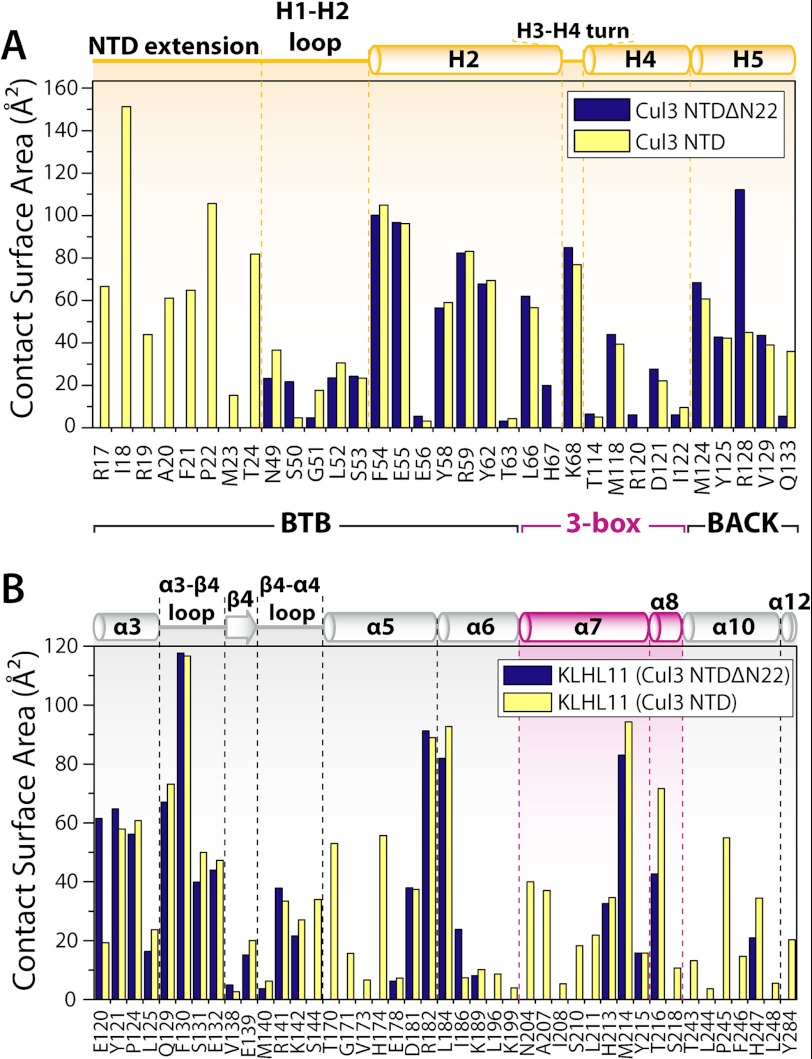
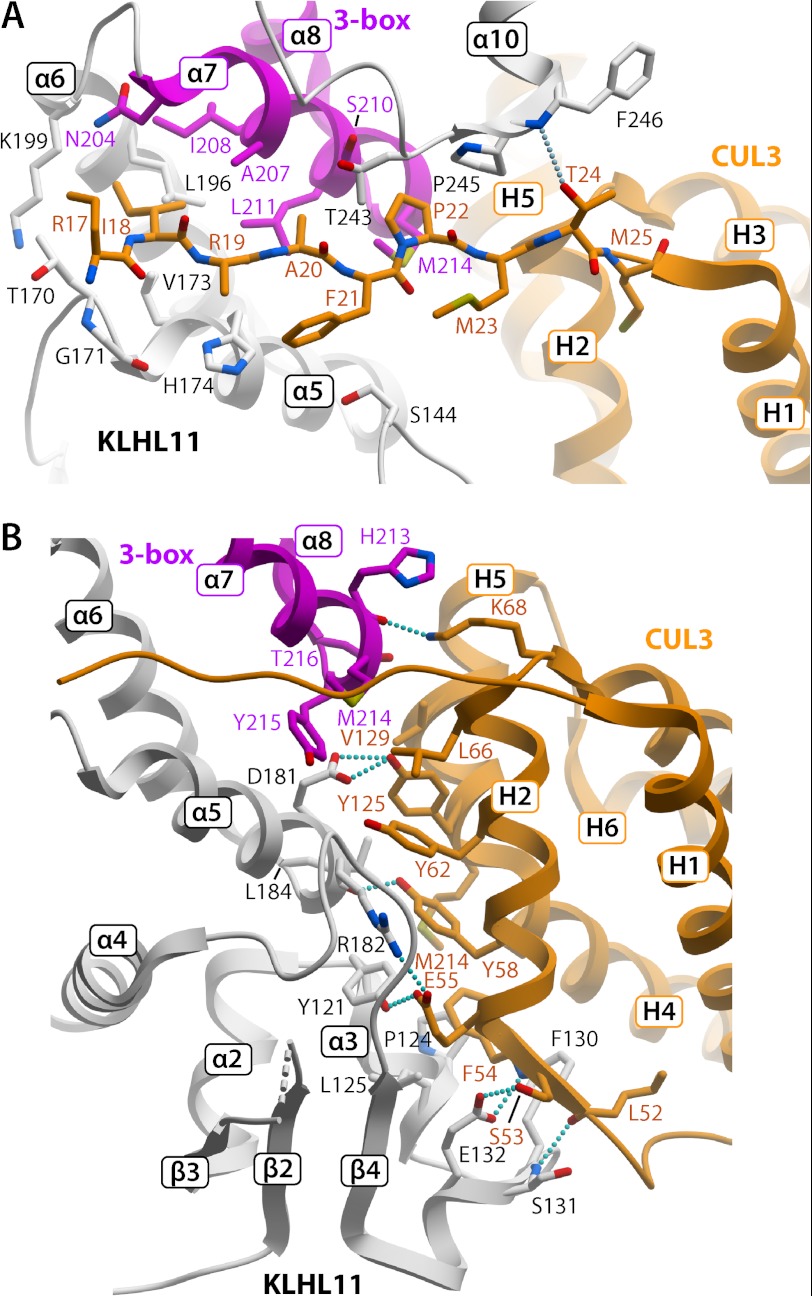
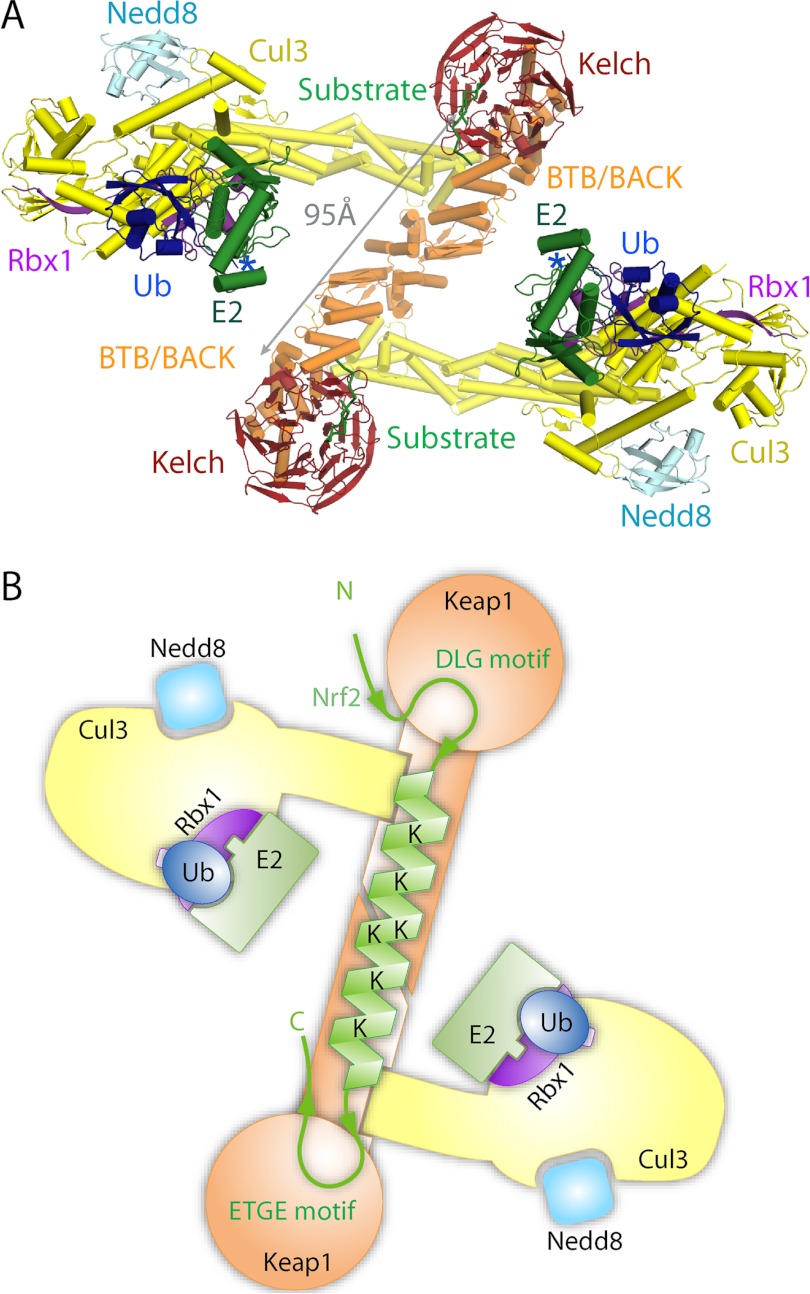
Cullin-RING ligases are multisubunit E3 ubiquitin ligases that recruit substrate-specific adaptors to catalyze protein ubiquitylation. Cul3-based Cullin-RING ligases are uniquely associated with BTB adaptors that incorporate homodimerization, Cul3 assembly, and substrate recognition into a single multidomain protein, of which the best known are BTB-BACK-Kelch domain proteins, including KEAP1. Cul3 assembly requires a BTB protein "3-box" motif, analogous to the F-box and SOCS box motifs of other Cullin-based E3s. To define the molecular basis for this assembly and the overall architecture of the E3, we determined the crystal structures of the BTB-BACK domains of KLHL11 both alone and in complex with Cul3, along with the Kelch domain structures of KLHL2 (Mayven), KLHL7, KLHL12, and KBTBD5. We show that Cul3 interaction is dependent on a unique N-terminal extension sequence that packs against the 3-box in a hydrophobic groove centrally located between the BTB and BACK domains. Deletion of this N-terminal region results in a 30-fold loss in affinity. The presented data offer a model for the quaternary assembly of this E3 class that supports the bivalent capture of Nrf2 and reveals potential new sites for E3 inhibitor design.
Overview
The claims and statistics of this paper haven’t been checked yet.
Run the check — free, no account needed. It reads the open-access text and checks the sources it cites.
Integrity signals
Registry
Cites
Statistics
Figures
Verification
Claims the paper makes
The claims and statistics of this paper haven’t been checked yet.
Run the check — free, no account needed. It reads the open-access text and checks the sources it cites.
Claims other papers make about this one
Each is checked against this paper’s own text: does it say what the citing paper says it does?
In the citing paper
“Accordingly, Keap1 contains three functional domains (Figure 5). The N-terminal BTB (broad complex, tramtrack, and bric à brac) domain mediates Keap1 homodimerization and contributes to its interaction with Cul3 [68]. Additional Cul3 interaction is provided by a 3-box motif found within the proximal part of the intervening region (IVR) [67]. The IVR contains key reactive cysteine residues through”
From Nrf2 and Oxidative Stress: A General Overview of Mechanisms and Implications in Human Disease (2022) · cites this paper as [67]
In the citing paper
“BTB-containing E3 ligases are typically distinguished by the presence of a 3-box motif that enables high-affinity binding of Cullin 3 (refs 74,75 ).”
From Targeted protein degradation: expanding the toolbox (2019) · cites this paper as [74]
Self-check
Percentages, sums and reported differences re-computed from the paper’s own numbers.
The self-check needs the paper’s full text.
Citations
Cites
Features and development of Coot
Emsley, P., Lohkamp, B., Scott, W. G., & Cowtan, K. (2010) · Acta Crystallographica Section D Biological Crystallography · doi:10.1107/s0907444910007493 · Cited by 29,915 · cited 1×
“Manual model building was performed with COOT (42) and the models refined with CNS (43, 44), REFMAC (45, 46), or BUSTER (47) using TLS and NCS restraints as appropriate.”
PHENIX : a comprehensive Python-based system for macromolecular structure solution
Adams, P. D., Afonine, P. V., Bunkóczi, G., Chen, V. B., Davis, I. W., Echols, N., Headd, J. J., Hung, L.-W., Kapral, G. J., Grosse-Kunstleve, R. W., et al. (2010) · Acta Crystallographica Section D Biological Crystallography · doi:10.1107/s0907444909052925 · Cited by 23,716 · cited 2×
“Automated model building tasks were conducted with BUCCANEER (39, 40) or PHENIX.”
Phaser crystallographic software
McCoy, A. J., Grosse-Kunstleve, R. W., Adams, P. D., Winn, M. D., Storoni, L. C., & Read, R. J. (2007) · Journal of Applied Crystallography · doi:10.1107/s0021889807021206 · Cited by 20,612
The CCP4 suite: programs for protein crystallography
Number Collaborative Computational Project (1994) · Acta Crystallographica Section D Biological Crystallography · doi:10.1107/s0907444994003112 · Cited by 17,317
Kabsch, W. (2010) · Acta Crystallographica Section D Biological Crystallography · doi:10.1107/s0907444909047337 · Cited by 16,463
Crystallography & NMR System: A New Software Suite for Macromolecular Structure Determination
Brünger, A. T., Adams, P. D., Clore, G. M., DeLano, W. L., Gros, P., Grosse‐Kunstleve, R. W., Jiang, J., Kuszewski, J. J., Nilges, M., Pannu, N., et al. (1998) · Acta Crystallographica Section D Biological Crystallography · doi:10.1107/s0907444998003254 · Cited by 15,723
Refinement of Macromolecular Structures by the Maximum-Likelihood Method
Murshudov, G. N., Vagin, A. A., & Dodson, E. J. (1997) · Acta Crystallographica Section D Biological Crystallography · doi:10.1107/s0907444996012255 · Cited by 14,796 · cited 1×
“Manual model building was performed with COOT (42) and the models refined with CNS (43, 44), REFMAC (45, 46), or BUSTER (47) using TLS and NCS restraints as appropriate.”
MolProbity : all-atom structure validation for macromolecular crystallography
Chen, V. B., Arendall, W. B., Headd, J. J., Keedy, D. A., Immormino, R. M., Kapral, G. J., Murray, L. W., Richardson, J. S., & Richardson, D. C. (2010) · Acta Crystallographica Section D Biological Crystallography · doi:10.1107/s0907444909042073 · Cited by 14,115
Inference of Macromolecular Assemblies from Crystalline State
Krissinel, E., & Henrick, K. (2007) · Journal of Molecular Biology · doi:10.1016/j.jmb.2007.05.022 · Cited by 10,007 · cited 1×
“Values were calculated using the protein interfaces, surfaces, and assemblies service at the European Bioinformatics Institute (68).”
Hershko, A., & Ciechanover, A. (1998) · Annual Review of Biochemistry · doi:10.1146/annurev.biochem.67.1.425 · Cited by 8,840
REFMAC 5 for the refinement of macromolecular crystal structures
Murshudov, G. N., Skubák, P., Lebedev, A. A., Pannu, N. S., Steiner, R. A., Nicholls, R. A., Winn, M., Long, F., & Vagin, A. A. (2011) · Acta Crystallographica Section D Biological Crystallography · doi:10.1107/s0907444911001314 · Cited by 8,415
PHENIX: a comprehensive Python-based system for macromolecular structure solution
Adams, P. D., Afonine, P. V., Bunkòczi, G., Chen, V. B., Davis, I., Echols, N., Headd, J. J., Hung, L., Kapral, G. J., Grosse‐Kunstleve, R. W., et al. (2012) · International Tables for Crystallography · doi:10.1107/97809553602060000865 · Cited by 7,334
Multiple sequence alignment with the Clustal series of programs
Chenna, R. (2003) · Nucleic Acids Research · doi:10.1093/nar/gkg500 · Cited by 4,905 · cited 1×
“83) (65) and manually refined with reference to publicly available structures.”
In Vivo Activation of the p53 Pathway by Small-Molecule Antagonists of MDM2
Vassilev, L. T., Vu, B. T., Graves, B., Carvajal, D., Podlaski, F., Filipovic, Z., Kong, N., Kammlott, U., Lukacs, C., Klein, C., et al. (2004) · Science · doi:10.1126/science.1092472 · Cited by 4,661 · cited 1×
“Promisingly, small molecules have been identified previously that target the corepressor binding groove of the BCL6 BTB domain (61) as well as the substrate binding grooves of E3 ligases, including MDM2 (62), VHL (63), and Skp2 (64).”
Scaling and assessment of data quality
Evans, P. (2005) · Acta Crystallographica Section D Biological Crystallography · doi:10.1107/s0907444905036693 · Cited by 4,391 · cited 2×
“To calculate experimental phases, datasets were collected from crystals of selenomethionine-substituted KLHL11 at a wavelength of 0.9794 Å and from crystals of the KLHL11-Cul3NTD N22 complex soaked with 2 mM thimerosal at a wavelength of 0.9686 Å. Structure Determination—Data were integrated using Mosflm (32) or XDS (…”
InfluentialKobayashi, A., Kang, M.-I., Okawa, H., Ohtsuji, M., Zenke, Y., Chiba, T., Igarashi, K., & Yamamoto, M. (2004) · Molecular and Cellular Biology · doi:10.1128/mcb.24.16.7130-7139.2004 · Cited by 2,224
Function and regulation of cullin–RING ubiquitin ligases
Petroski, M. D., & Deshaies, R. J. (2005) · Nature Reviews Molecular Cell Biology · doi:10.1038/nrm1547 · Cited by 2,148 · cited 1×
“The Cullin subunit (Cul1–5 or Cul7) forms a central stalk-like scaffold that orients and constrains the substrate binding and catalytic centers (3, 4).”
The Buccaneer software for automated model building. 1. Tracing protein chains
Cowtan, K. D. (2006) · Acta Crystallographica Section D Biological Crystallography · doi:10.1107/s0907444906022116 · Cited by 1,834
Structure of the Cul1–Rbx1–Skp1–F boxSkp2 SCF ubiquitin ligase complex
Zheng, N., Schulman, B. A., Song, L., Miller, J. J., Jeffrey, P. D., Wang, P., Chu, C., Koepp, D. M., Elledge, S. J., Pagano, M., et al. (2002) · Nature · doi:10.1038/416703a · Cited by 1,507
Version 1.2 of the Crystallography and NMR system
Brünger, A. T. (2007) · Nature Protocols · doi:10.1038/nprot.2007.406 · Cited by 1,325
McMahon, M., Itoh, K., Yamamoto, M., & Hayes, J. D. (2003) · Journal of Biological Chemistry · doi:10.1074/jbc.m300931200 · Cited by 1,141
Dysfunctional KEAP1–NRF2 Interaction in Non-Small-Cell Lung Cancer
Singh, A., Misra, V., Thimmulappa, R. K., Lee, H., Ames, S., Hoque, M. O., Herman, J. G., Baylin, S. B., Sidransky, D., Gabrielson, E., et al. (2006) · PLoS Medicine · doi:10.1371/journal.pmed.0030420 · Cited by 1,060
Ubiquitin-like protein activation by E1 enzymes: the apex for downstream signalling pathways
Schulman, B. A., & Harper, J. W. (2009) · Nature Reviews Molecular Cell Biology · doi:10.1038/nrm2673 · Cited by 981
Automated Structure Solution With autoSHARP
Vonrhein, C., Blanc, E., Roversi, P., & Bricogne, G. (2006) · Humana Press eBooks · doi:10.1385/1-59745-266-1:215 · Cited by 963
Structure of the VHL-ElonginC-ElonginB Complex: Implications for VHL Tumor Suppressor Function
Stebbins, C. E., Kaelin, W. G., & Pavletich, N. P. (1999) · Science · doi:10.1126/science.284.5413.455 · Cited by 852 · cited 2×
“Cul3 must therefore assemblewith a large number of distinct BTB adaptor domains, whereas other Cullins bind a common adaptor protein such as Skp1 or ElonginC.”
Structure of a c-Cbl–UbcH7 Complex
Zheng, N., Wang, P., Jeffrey, P. D., & Pavletich, N. P. (2000) · Cell · doi:10.1016/s0092-8674(00)00057-x · Cited by 839 · cited 1×
“An E2-ubiquitin intermediate was modeled from the UbcH5A-ubiquitin structure (PDB 4AP4) (54) and docked onto Rbx1 by its homology to the Cbl-UbcH7 complex (PDB 1FBV) (55).”
Duda, D. M., Borg, L. A., Scott, D. C., Hunt, H. W., Hammel, M., & Schulman, B. A. (2008) · Cell · doi:10.1016/j.cell.2008.07.022 · Cited by 767 · cited 2×
“Neddylation of the CTD is additionally required to induce conformational changes in the CRL that bring the substrate and E2-ubiquitin into juxtaposition (5, 6).”
Tong, K. I., Katoh, Y., Kusunoki, H., Itoh, K., Tanaka, T., & Yamamoto, M. (2006) · Molecular and Cellular Biology · doi:10.1128/mcb.26.8.2887-2900.2006 · Cited by 759
Structural basis for defects of Keap1 activity provoked by its point mutations in lung cancer
Padmanabhan, B., Tong, K. I., Ohta, T., Nakamura, Y., Scharlock, M., Ohtsuji, M., Kang, M.-I., Kobayashi, A., Yokoyama, S., & Yamamoto, M. (2006) · Molecular Cell · doi:10.1016/j.molcel.2006.01.013 · Cited by 735
Sequence and structural analysis of BTB domain proteins
Stogios, P. J., Downs, G. S., Jauhal, J. J., Nandra, S. K., & Privé, G. G. (2005) · Genome Biology · doi:10.1186/gb-2005-6-10-r82 · Cited by 694
Molecular architecture and assembly of the DDB1–CUL4A ubiquitin ligase machinery
Angers, S., Li, T., Yi, X., MacCoss, M. J., Moon, R. T., & Zheng, N. (2006) · Nature · doi:10.1038/nature05175 · Cited by 674 · cited 1×
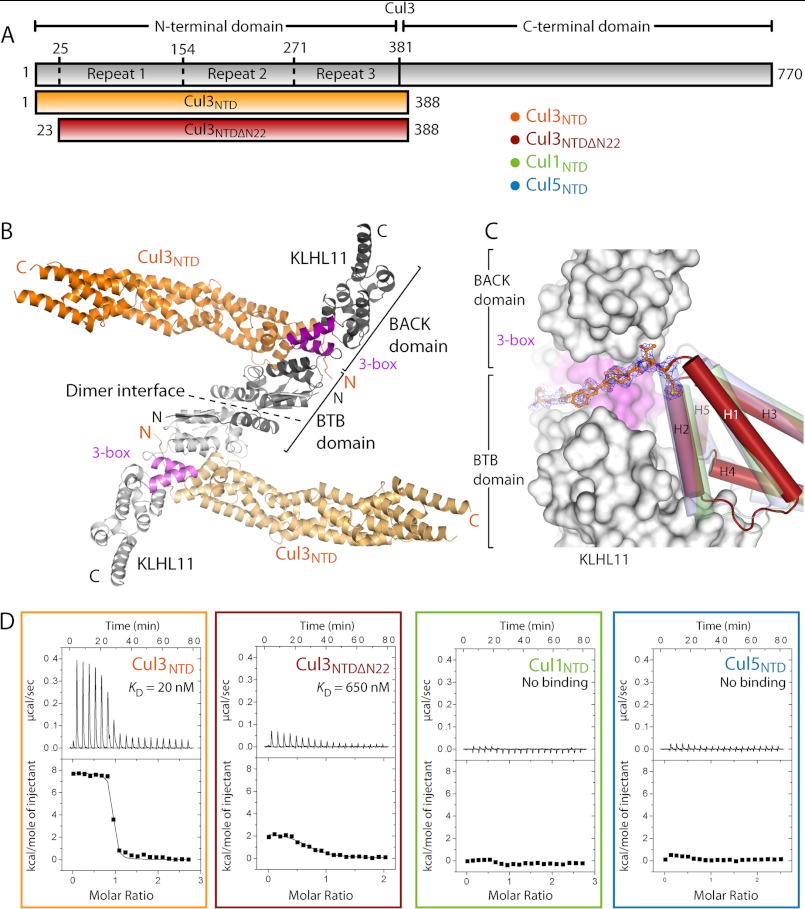
“Previously, the interaction of an N-terminal extension sequence was considered unique to Cul4 (56, 57).”
Mutations in kelch-like 3 and cullin 3 cause hypertension and electrolyte abnormalities
Boyden, L. M., Choi, M., Choate, K. A., Nelson-Williams, C. J., Farhi, A., Toka, H. R., Tikhonova, I. R., Bjornson, R. D., Mane, S., Colussi, G., et al. (2012) · Nature · doi:10.1038/nature10814 · Cited by 651 · cited 1×
“Mutations in the BTB-Kelch proteins KLHL3, KLHL7, and KLHL9 are additionally associated with hypertension (24), retinitis pigmentosa (25), and distal myopathy (26), respectively, although their corresponding substrates have yet to be identified.”
Structure of a β-TrCP1-Skp1-β-Catenin Complex
Wu, G., Xu, G., Schulman, B. A., Jeffrey, P. D., Harper, J. W., & Pavletich, N. P. (2003) · Molecular Cell · doi:10.1016/s1097-2765(03)00234-x · Cited by 612
Insights into SCF ubiquitin ligases from the structure of the Skp1–Skp2 complex
Schulman, B. A., Carrano, A. C., Jeffrey, P. D., Bowen, Z., Kinnucan, E., Finnin, M. S., Elledge, S. J., Harper, J. W., Pagano, M., & Pavletich, N. P. (2000) · Nature · doi:10.1038/35042620 · Cited by 610
Structure of the Keap1:Nrf2 interface provides mechanistic insight into Nrf2 signaling
Lo, S., Li, X., Henzl, M. T., Beamer, L. J., & Hannink, M. (2006) · The EMBO Journal · doi:10.1038/sj.emboj.7601243 · Cited by 604 · cited 4×
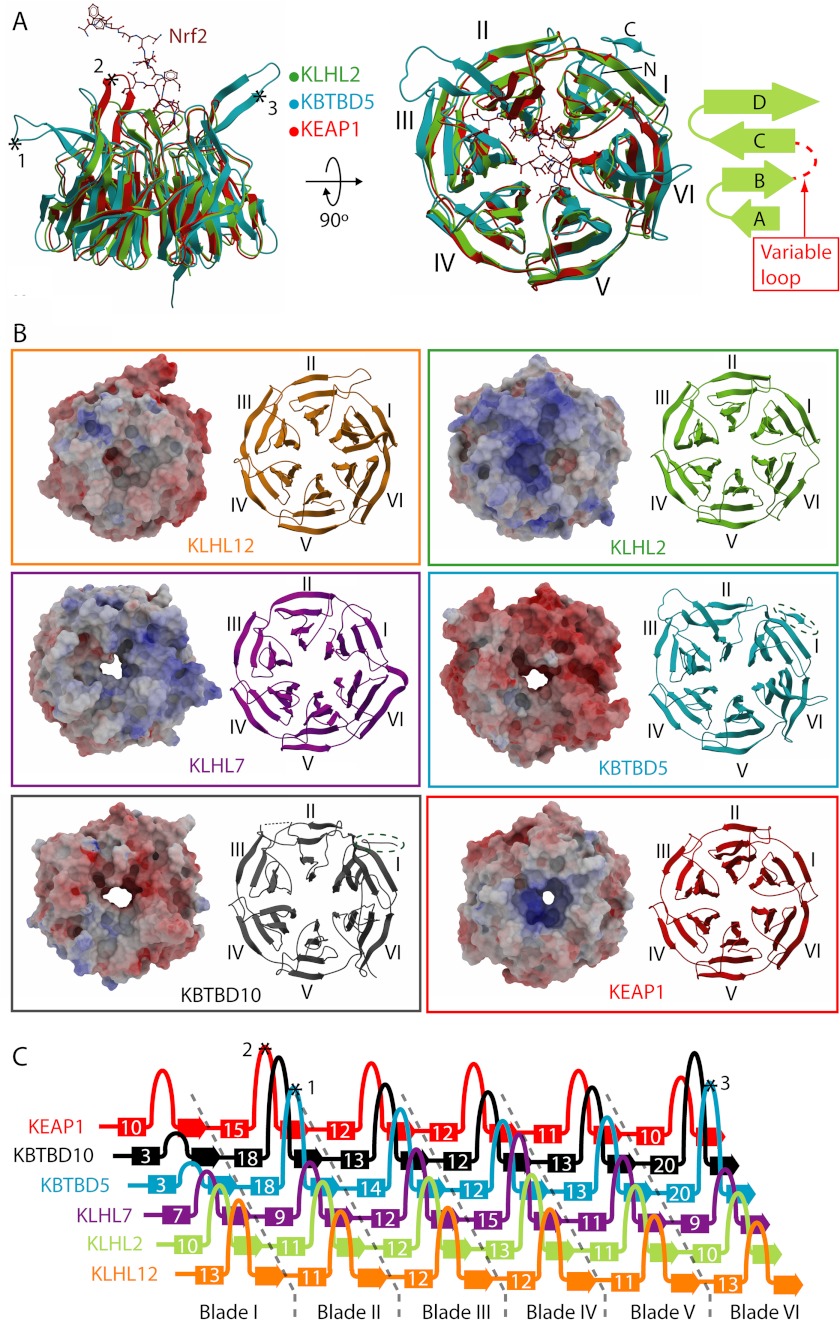
“Finally, the Kelch domain and substrate from the KEAP1-Nrf2 complex (PDB 2FLU) (51) were modeled atop helix 14 of the BACK domain of KLHL11.”
BackgroundMethodInfluentialStructure of a RING E3 ligase and ubiquitin-loaded E2 primed for catalysis
Plechanovová, A., Jaffray, E. G., Tatham, M. H., Naismith, J. H., & Hay, R. T. (2012) · Nature · doi:10.1038/nature11376 · Cited by 521
McMahon, M. J., Thomas, N., Itoh, K., Yamamoto, M. P., & Hayes, J. D. (2006) · Journal of Biological Chemistry · doi:10.1074/jbc.m601119200 · Cited by 495
Zhuang, M., Calabrese, M. F., Liu, J., Waddell, M. B., Nourse, A., Hammel, M., Miller, D. J., Walden, H., Duda, D. M., Seyedin, S. N., et al. (2009) · Molecular Cell · doi:10.1016/j.molcel.2009.09.022 · Cited by 486
The Molecular Basis of CRL4DDB2/CSA Ubiquitin Ligase Architecture, Targeting, and Activation
Fischer, E. S., Scrima, A., Böhm, K., Matsumoto, S., Lingaraju, G. M., Faty, M., Yasuda, T., Cavadini, S., Wakasugi, M., Hanaoka, F., et al. (2011) · Cell · doi:10.1016/j.cell.2011.10.035 · Cited by 460 · cited 1×
“Previously, the interaction of an N-terminal extension sequence was considered unique to Cul4 (56, 57).”
Tong, K. I., Padmanabhan, B., Kobayashi, A., Shang, C., Hirotsu, Y., Yokoyama, S., & Yamamoto, M. P. (2007) · Molecular and Cellular Biology · doi:10.1128/mcb.00753-07 · Cited by 459
Recent developments in classical density modification
Cowtan, K. D. (2010) · Acta Crystallographica Section D Biological Crystallography · doi:10.1107/s090744490903947x · Cited by 428 · cited 1×
“Alternatively, phases were calculated using molecular replacement with PHASER (37) and density modification conducted with PARROT (38).”
Cullin‐based ubiquitin ligases: Cul3–BTB complexes join the family
Pintard, L., Willems, A. R., & Peter, M. (2004) · The EMBO Journal · doi:10.1038/sj.emboj.7600186 · Cited by 422 · cited 1×
“TheCRL3 subclass utilizes Cul3, which combines exclusively with BTB-containing proteins as substrate-specific adaptors (8).”
Multimodal Activation of the Ubiquitin Ligase SCF by Nedd8 Conjugation
Saha, A., & Deshaies, R. J. (2008) · Molecular Cell · doi:10.1016/j.molcel.2008.08.021 · Cited by 401
Angers, S., Thorpe, C. J., Biechele, T. L., Goldenberg, S. J., Zheng, N., MacCoss, M. J., & Moon, R. T. (2006) · Nature Cell Biology · doi:10.1038/ncb1381 · Cited by 364
High-throughput production of human proteins for crystallization: The SGC experience
Savitsky, P. A., Bray, J. E., Cooper, C. D. O., Marsden, B. D., Mahajan, P., Burgess-Brown, N., & Gileadi, O. (2010) · Journal of Structural Biology · doi:10.1016/j.jsb.2010.06.008 · Cited by 336 · cited 1×
“Human Cul1NTD (Q13616, residues 1–412), Cul3NTD (Q13618, residues 1–390), Cul3NTD N22 (residues 23–390), Cul5NTD (Q93034, residues 1–386), and KBTBD5 (Q2TBA0, residues 314–621) were subcloned into the vector pNIC-CTHF using ligation-independent cloning, as described previously (31).”
Self-citationWu, G., Xu, G., Schulman, B. A., Jeffrey, P. D., Harper, J. W., & Pavletich, N. P. (2003) · Molecules and Cells · Cited by 333
Structure of an E3:E2∼Ub Complex Reveals an Allosteric Mechanism Shared among RING/U-box Ligases
Pruneda, J. N., Littlefield, P. J., Soss, S. E., Nordquist, K. A., Chazin, W. J., Brzovic, P. S., & Klevit, R. E. (2012) · Molecular Cell · doi:10.1016/j.molcel.2012.07.001 · Cited by 333
Ubiquitin-dependent regulation of COPII coat size and function
Jin, L., Pahuja, K. B., Wickliffe, K. E., Gorur, A., Baumgärtel, C., Schekman, R., & Rape, M. (2012) · Nature · doi:10.1038/nature10822 · Cited by 330 · cited 1×
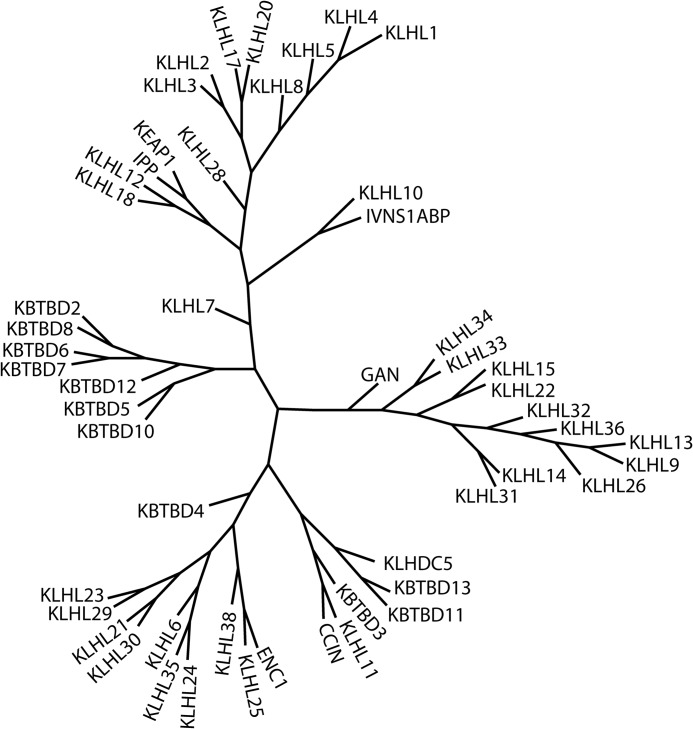
“After KEAP1, the best characterized protein is KLHL12, which modulates COPII assembly for collagen export (27) and also ubiquitylates both the dopamine D4 receptor (28) and dishevelled (29).”
Evolving Methods for Macromolecular Crystallography
Read, R. J., & Sussman, J. L. (2007) · NATO science series. Series II, Mathematics, physics and chemistry · doi:10.1007/978-1-4020-6316-9 · Cited by 319
BIRC7–E2 ubiquitin conjugate structure reveals the mechanism of ubiquitin transfer by a RING dimer
Dou, H., Buetow, L., Sibbet, G. J., Cameron, K., & Huang, D. T. (2012) · Nature Structural & Molecular Biology · doi:10.1038/nsmb.2379 · Cited by 319
The Buccaneer software for automated model building
Cowtan, K. D. (2006) · White Rose Research Online (University of Leeds, The University of Sheffield, University of York) · Cited by 309
Small‐Molecule Inhibitors of the Interaction between the E3 Ligase VHL and HIF1α
Buckley, D. L., Gustafson, J. L., Van Molle, I., Roth, A. G., Tae, H. S., Gareiss, P. C., Jorgensen, W. L., Ciulli, A., & Crews, C. M. (2012) · Angewandte Chemie International Edition · doi:10.1002/anie.201206231 · Cited by 302
Crystal structure of the BTB domain from PLZF
Ahmad, K. F., Engel, C. K., & Privé, G. G. (1998) · Proceedings of the National Academy of Sciences · doi:10.1073/pnas.95.21.12123 · Cited by 298 · cited 2×
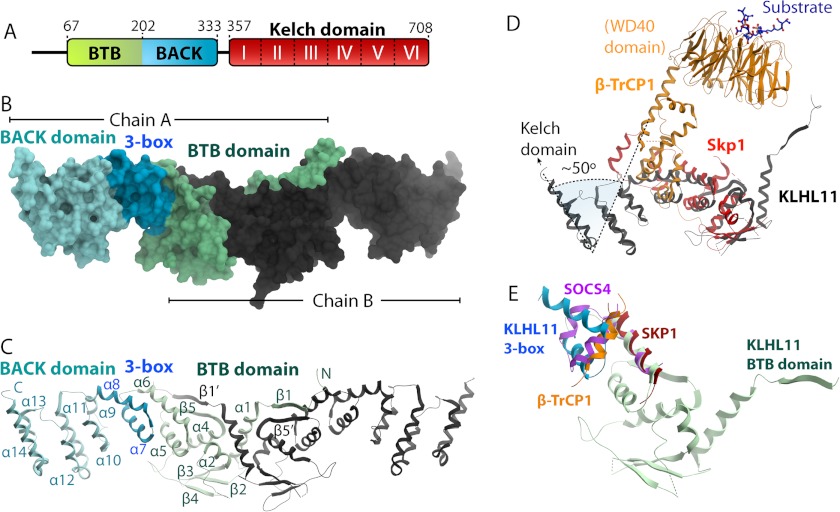
“C, ribbon diagram of the of KLHL11 structure colored as in B and labeled by the convention of promyelocytic leukemia zinc finger protein (9).”
A Small-Molecule Inhibitor of BCL6 Kills DLBCL Cells In Vitro and In Vivo
Cerchietti, L. C., Ghetu, A. F., Zhu, X., Da Silva, G. F., Zhong, S., Matthews, M., Bunting, K. L., Polo, J. M., Farès, C., Arrowsmith, C. H., et al. (2010) · Cancer Cell · doi:10.1016/j.ccr.2009.12.050 · Cited by 288 · cited 1×
“Promisingly, small molecules have been identified previously that target the corepressor binding groove of the BCL6 BTB domain (61) as well as the substrate binding grooves of E3 ligases, including MDM2 (62), VHL (63), and Skp2 (64).”
Crystal Structure of the Kelch Domain of Human Keap1
Li, X., Zhang, D., Hannink, M., & Beamer, L. J. (2004) · Journal of Biological Chemistry · doi:10.1074/jbc.m410073200 · Cited by 256
Scrima, A., Fischer, E. S., Iwai, S., Gut, H., & Thomä, N. H. (2011) · Worldwide Protein Data Bank · doi:10.2210/pdb4a08/pdb · Cited by 233
Ogura, T., Tong, K. I., Mio, K., Maruyama, Y., Kurokawa, H., Sato, C., & Yamamoto, M. P. (2010) · Proceedings of the National Academy of Sciences · doi:10.1073/pnas.0914036107 · Cited by 232 · cited 2×
“In the EM reconstruction, the positions of the two substrate-binding sites were somewhat flexible with an average separation of 80 Å (20).”
Structural assembly of cullin-RING ubiquitin ligase complexes
Zimmerman, E. S., Schulman, B. A., & Zheng, N. (2010) · Current Opinion in Structural Biology · doi:10.1016/j.sbi.2010.08.010 · Cited by 227 · cited 1×
“The Cullin subunit (Cul1–5 or Cul7) forms a central stalk-like scaffold that orients and constrains the substrate binding and catalytic centers (3, 4).”
Specific Small Molecule Inhibitors of Skp2-Mediated p27 Degradation
Wu, L. I., Grigoryan, A. V., Li, Y., Hao, B., Pagano, M., & Cardozo, T. J. (2012) · Chemistry & Biology · doi:10.1016/j.chembiol.2012.09.015 · Cited by 223
Tang, X., Orlicky, S., Lin, Z., Willems, A., Neculai, D., Ceccarelli, D., Mercurio, F., Shilton, B. H., Sicheri, F., & Tyers, M. (2007) · Cell · doi:10.1016/j.cell.2007.04.042 · Cited by 209 · cited 2×
“In contrast to the BTB adaptors, these CRL1 complexes dimerize through the D domain of the substrate-recognition module (58).”
Fitting molecular fragments into electron density
Cowtan, K. D. (2007) · Acta Crystallographica Section D Biological Crystallography · doi:10.1107/s0907444907033938 · Cited by 185 · cited 1×
“Automated model building tasks were conducted with BUCCANEER (39, 40) or PHENIX.”
The BACK domain in BTB-kelch proteins
Stogios, P. J., & Privé, G. G. (2004) · Trends in Biochemical Sciences · doi:10.1016/j.tibs.2004.10.003 · Cited by 179 · cited 2×
“Because the BTB-Kelch proteins are single chain analogs of other CRL substrate adaptors, such as Skp1/ -TrCP1, the BACK domain was expected to fold similarly to the F-box and helical linker regions of -TrCP1 (15, 49).”
Prag, S., & Adams, J. C. (2003) · BMC Bioinformatics · doi:10.1186/1471-2105-4-42 · Cited by 158 · cited 1×
“The most common substrate-recognition domain in the CRL3 subclass is the Kelch -propeller domain (14), which occurs C-terminal to BTB and BACK (for BTB and C-terminal Kelch”) domains (15).”
Adaptor Protein Self-Assembly Drives the Control of a Cullin-RING Ubiquitin Ligase
Errington, W. J., Khan, M. Q., Bueler, S. A., Rubinstein, J. L., Chakrabartty, A., & Privé, G. G. (2012) · Structure · doi:10.1016/j.str.2012.04.009 · Cited by 140 · cited 11×
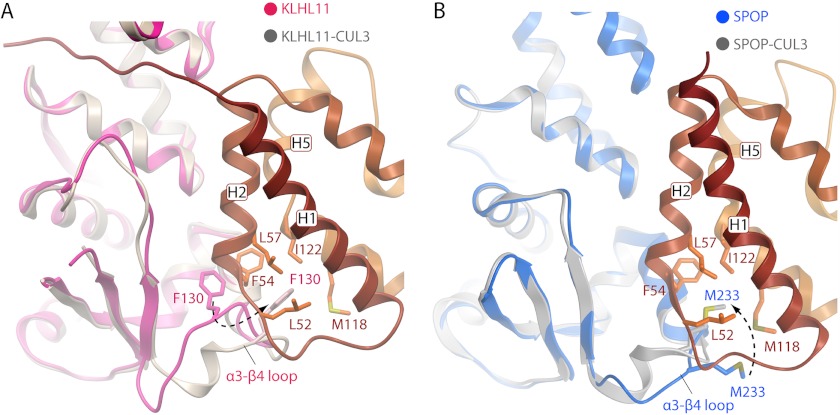
“By comparison, the SPOP-Cul3 structure (12), which lacks both the N-terminal FIGURE 4.”
InfluentialBullock, A. N., Rodríguez, M. C., Debreczeni, J. E., Songyang, Z., & Knapp, S. (2007) · Structure · doi:10.1016/j.str.2007.09.016 · Cited by 131
Self-citationPhyloDraw: a phylogenetic tree drawing system
Choi, J.-H., Jung, H.-Y., Kim, H.-S., & Cho, H.-G. (2000) · Bioinformatics · doi:10.1093/bioinformatics/16.11.1056 · Cited by 126
Mutations in a BTB-Kelch Protein, KLHL7, Cause Autosomal-Dominant Retinitis Pigmentosa
Friedman, J. S., Ray, J. W., Waseem, N. H., Johnson, K. R., Brooks, M. J., Hugosson, T., Breuer, D. K., Branham, K. E. H., Krauth, D. S., Bowne, S. J., et al. (2009) · The American Journal of Human Genetics · doi:10.1016/j.ajhg.2009.05.007 · Cited by 103 · cited 1×
“Mutations in the BTB-Kelch proteins KLHL3, KLHL7, and KLHL9 are additionally associated with hypertension (24), retinitis pigmentosa (25), and distal myopathy (26), respectively, although their corresponding substrates have yet to be identified.”
BTB Protein KLHL12 Targets the Dopamine D4 Receptor for Ubiquitination by a Cul3-based E3 Ligase
Rondou, P., Haegeman, G., Vanhoenacker, P., & Craenenbroeck, K. V. (2008) · Journal of Biological Chemistry · doi:10.1074/jbc.m708473200 · Cited by 80 · cited 1×
“After KEAP1, the best characterized protein is KLHL12, which modulates COPII assembly for collagen export (27) and also ubiquitylates both the dopamine D4 receptor (28) and dishevelled (29).”
Kelch-like homologue 9 mutation is associated with an early onset autosomal dominant distal myopathy
Çırak, S., von Deimling, F., Sachdev, S., Errington, W. J., Herrmann, R., Bönnemann, C. G., Brockmann, K., Hinderlich, S., Lindner, T. H., Steinbrecher, A., et al. (2010) · Brain · doi:10.1093/brain/awq108 · Cited by 79 · cited 1×
“Mutations in the BTB-Kelch proteins KLHL3, KLHL7, and KLHL9 are additionally associated with hypertension (24), retinitis pigmentosa (25), and distal myopathy (26), respectively, although their corresponding substrates have yet to be identified.”
High‐Level Expression and Purification of Recombinant SCF Ubiquitin Ligases
Li, T., Pavletich, N. P., Schulman, B. A., & Zheng, N. (2005) · Methods in enzymology on CD-ROM/Methods in enzymology · doi:10.1016/s0076-6879(05)98012-9 · Cited by 53 · cited 1×
“To establish the molecular basis for Cul3 interaction, we adopted a split and express strategy for soluble protein expression (53).”
Gray, C. H., McGarry, L., Spence, H. J., Riboldi‐Tunnicliffe, A., & Ozanne, B. W. (2009) · Journal of Biological Chemistry · doi:10.1074/jbc.m109.023259 · Cited by 30
Cited by
Sorted by citations
The KEAP1-NRF2 system: a thiol-based sensor-effector apparatus for maintaining redox homeostasis
Yamamoto, M., Kensler, T. W., & Motohashi, H. (2018) · Physiological Reviews · doi:10.1152/physrev.00023.2017 · Cited by 1,968
The Molecular Mechanisms Regulating the KEAP1-NRF2 Pathway
Baird, L., & Yamamoto, M. P. (2020) · Molecular and Cellular Biology · doi:10.1128/mcb.00099-20 · Cited by 1,671
The whole-genome landscape of medulloblastoma subtypes
Northcott, P. A., Buchhalter, I., Morrissy, A. S., Hovestadt, V., Weischenfeldt, J., Ehrenberger, T., Gröbner, S., Segura-Wang, M., Zichner, T., Rudneva, V. A., et al. (2017) · Nature · doi:10.1038/nature22973 · Cited by 1,112
Nrf2 and Oxidative Stress: A General Overview of Mechanisms and Implications in Human Disease
Ngo, V., & Duennwald, M. L. (2022) · Antioxidants · doi:10.3390/antiox11122345 · Cited by 1,130
“Cul3 assembly requires a “3-box” motif that is characteristic of BTB-Kelch proteins [67].”
BackgroundInfluentialTargeted protein degradation: expanding the toolbox
Schapira, M., Calabrese, M. F., Bullock, A. N., & Crews, C. M. (2019) · Nature Reviews Drug Discovery · doi:10.1038/s41573-019-0047-y · Cited by 960
Self-citation
Metadata
- Authors
- Canning, P., Cooper, C. D. O., Krojer, T., Murray, J. W., Pike, A. C. W., Chaikuad, A., Keates, T., Thangaratnarajah, C., Hojzan, V., Marsden, B. D., Gileadi, O., Knapp, S., von Delft, F., & Bullock, A. N.
- Affiliations
- University of Oxford (GB)
- Corresponding author
- Bullock, Alex N.
- ORCID
- Venue
- Journal of Biological Chemistry
- Publisher
- Elsevier BV
- Published
- 2013-03
- Volume
- 288
- Issue
- 11
- Pages
- 7803-7814
- ISSN
- 0021-9258 (ISSN-L)
- PMC
- PMC3597819
- OpenAlex
- W2029330932
- Cited by
- 284
- References
- 71
- Citations by year
- 2026: 16 · 2025: 22 · 2024: 22 · 2023: 18 · 2022: 25 · 2021: 28 · 2020: 32 · 2019: 22 · 2018: 13 · 2017: 23 · 2016: 15 · 2015: 20 · 2014: 15 · 2013: 13
- FWCI
- 9.41
- Type
- journal article
- Language
- en
- Open access
- hybrid
- doi.org
- Licence
- Locations
- Journal of Biological Chemistry (publishedVersion, cc-by)
- Europe PMC (PubMed Central) (publishedVersion, cc-by-nc)
- PubMed Central (publishedVersion, cc-by-nc)
- PubMed (publishedVersion)
- University of Huddersfield Repository (University of Huddersfield) (acceptedVersion)
- DORA PSI (Paul Scherrer Institute) (submittedVersion, cc-by)
- Funders
- Eli Lilly and Company
- Pfizer (1097737)
- GlaxoSmithKline
- Genome Canada (1097737)
- Wellcome Trust (092809, 092809/Z/10/Z, 1097737, 092809/Z/10)
- Diamond Light Source (1097737)
- Ontario Ministry of Economic Development and Innovation (092809/Z/10/Z, 1097737)
- Ministero dello Sviluppo Economico
- Topics
- Life Sciences › Biochemistry, Genetics and Molecular Biology › Molecular Biology › Ubiquitin and proteasome pathways
- Life Sciences › Biochemistry, Genetics and Molecular Biology › Structural Biology › Enzyme Structure and Function
- Life Sciences › Biochemistry, Genetics and Molecular Biology › Molecular Biology › Protein Degradation and Inhibitors
- Keywords
- CUL3, cullin-RING ligases, protein assembly, Kelch domain, N-terminal extension, Keap1, E3 ubiquitin ligase inhibitors, crystal structure
- MeSH terms
- Binding Sites, Calorimetry, Carrier Proteins, Humans, Models, Molecular, Molecular Conformation, Phylogeny, Protein Binding, Protein Conformation, Substrate Specificity, Protein Structure, Secondary, Protein Structure, Tertiary, Crystallography, X-Ray, Dimerization, Ubiquitin, Protein Interaction Mapping, Ubiquitin-Protein Ligases, Cullin Proteins, Proteasome Endopeptidase Complex
About these checks
Registry, retraction, Cites and statistics results are computed, not judged, with one exception: a printed reference that no index lists is read once by a model before it counts as a citation error. Claims are extracted by a model and kept only when their quote appears verbatim in the text; each cited source is then checked, with a model’s help, for whether it says what the claim relies on. Those verdicts can be wrong — read the claim’s quote and the cited source before relying on one.
Statistics and arithmetic are recomputed, not judged.
Confidence bands are shown only for fields calibrated on our annotated test set. None is calibrated yet, so no band is shown.
What counts as a claim ›How we measure confidence ›How we check this ›
Are you an author, or do you see a problem with this page? Request a review
