

Hsp90-binding Immunophilins Link p53 to Dynein During p53 Transport to the Nucleus
Open accessThe DOI matches its Crossref record; 52 of the 52 references it cites were found in a registry or an index.
Abstract
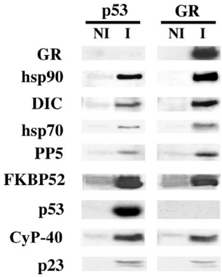
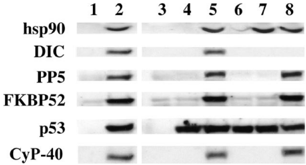
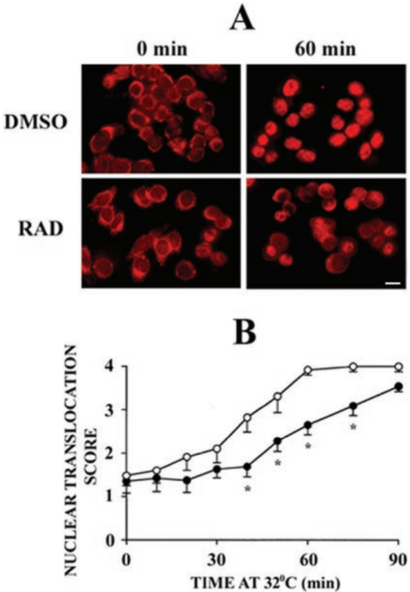
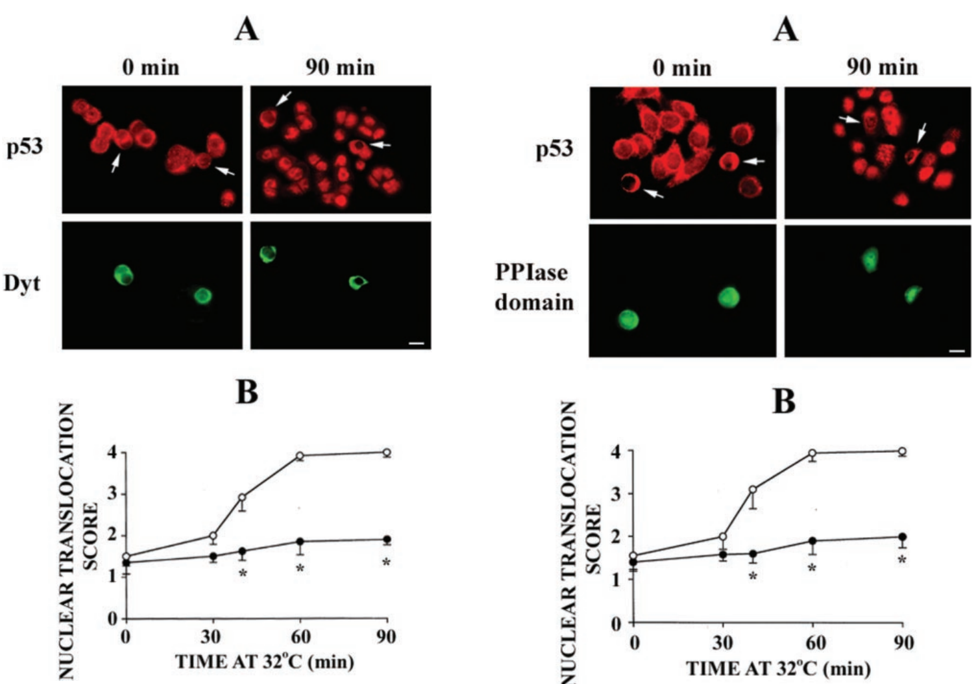
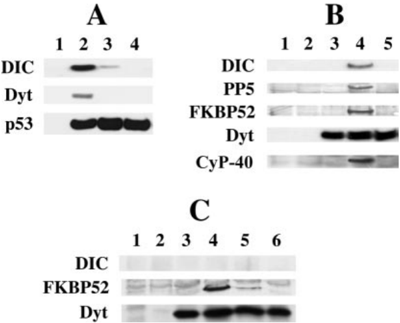
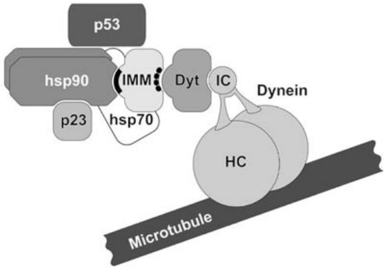
The tumor suppressor protein p53 is known to be transported to the nucleus along microtubular tracks by cytoplasmic dynein. However, the connection between p53 and the dynein motor protein complex has not been established. Here, we show that hsp90.binding immunophilins link p53.hsp90 complexes to dynein and that prevention of that linkage in vivo inhibits the nuclear movement of p53. First, we show that p53.hsp90 heterocomplexes from DLD-1 human colon cancer cells contain an immunophilin (FKBP52, CyP-40, or PP5) as well as dynein. p53.hsp90.immunophilin.dynein complexes can be formed by incubating immunopurified p53 with rabbit reticulocyte lysate, and we show by peptide competition that the immunophilins link via their tetratricopeptide repeat domains to p53-bound hsp90 and by means of their PPIase domains to the dynein complex. The linkage of immunophilins to the dynein motor is indirect by means of the dynamitin component of the dynein-associated dynactin complex, and we show that purified FKBP52 binds directly by means of its PPIase domain to purified dynamitin. By using a temperature-sensitive mutant of p53 where cytoplasmic-nuclear movement occurs by shift to permissive temperature, we show that p53 movement is impeded when p53 binding to hsp90 is inhibited by the hsp90 inhibitor radicicol. Also, nuclear movement of p53 is inhibited when immunophilin binding to dynein is competed for by expression of a PPIase domain fragment in the same manner as when dynein linkage to cargo is dissociated by expression of dynamitin. This is the first demonstration of the linkage between an hsp90-chaperoned transcription factor and the system for its retrograde movement to the nucleus both in vitro and in vivo.
Overview
The claims and statistics of this paper haven’t been checked yet.
Free: it reads the open-access text and checks the first 5 claims that cite a source we can check. Create a free account to check every claim.
Integrity signals
Registry
Cites
Statistics
Figures
Verification
Claims the paper makes
The claims and statistics of this paper haven’t been checked yet.
Free: it reads the open-access text and checks the first 5 claims that cite a source we can check. Create a free account to check every claim.
Claims other papers make about this one
Each is checked against this paper’s own text: does it say what the citing paper says it does?
The cited source says what the claim attributes to it.
In the citing paper
“The same heterocomplex described for steroid receptors is also responsible for the cytoplasmic retrotransport of the proapototic factor p53 [27], suggesting that the hsp90-based complex may play a general role in the retrotransport of a number of hsp90-associated factors towards the nuclear surface.”
From FKBP51 and FKBP52 in signaling and disease (2011) · cites this paper as [27]
Self-check
Percentages, sums and reported differences re-computed from the paper’s own numbers.
The self-check needs the paper’s full text.
Citations
Cites
p53 Mutations in Human Cancers
Hollstein, M., Sidransky, D., Vogelstein, B., & Harris, C. C. (1991) · Science · doi:10.1126/science.1905840 · Cited by 8,018
Vogelstein, B., Lane, D., & Levine, A. J. (2000) · Nature · doi:10.1038/35042675 · Cited by 6,607
The p53 tumour suppressor gene
Levine, A. J., Momand, J., & Finlay, C. A. (1991) · Nature · doi:10.1038/351453a0 · Cited by 3,788
Steroid Receptor Interactions with Heat Shock Protein and Immunophilin Chaperones*
Pratt, W. B., & Toft, D. O. (1997) · Endocrine Reviews · doi:10.1210/edrv.18.3.0303 · Cited by 1,791
Self-citationKinesin and Dynein Superfamily Proteins and the Mechanism of Organelle Transport
Hirokawa, N. (1998) · Science · doi:10.1126/science.279.5350.519 · Cited by 1,686
Pratt, W. B., & Toft, D. O. (2003) · Experimental Biology and Medicine · doi:10.1177/153537020322800201 · Cited by 1,483
Roe, S. M., Prodromou, C., O'Brien, R., Ladbury, J. E., Piper, P. W., & Pearl, L. H. (1999) · Journal of Medicinal Chemistry · doi:10.1021/jm980403y · Cited by 1,004
p53 mutations in colorectal cancer.
Rodrigues, N. R., Rowan, A., Smith, M. E., Kerr, I. B., Bodmer, W. F., Gannon, J. V., & Lane, D. P. (1990) · Proceedings of the National Academy of Sciences · doi:10.1073/pnas.87.19.7555 · Cited by 1,003
Stommel, J. M., Marchenko, N. D., Jimenez, G. S., Moll, U. M., Hope, T. J., & Wahl, G. M. (1999) · The EMBO Journal · doi:10.1093/emboj/18.6.1660 · Cited by 738
Burkhardt, J. K., Echeverri, C. J., Nilsson, T., & Vallee, R. B. (1997) · The Journal of Cell Biology · doi:10.1083/jcb.139.2.469 · Cited by 656
Research works printed but not linked: 7
- David-Pfeuty, T., Chakrani, F., Ory, K., and Nouviandooghe, Y. (1996) Cell Growth Differ. 7, 1211-1225
- Komarova, E. A., Zelnick, C. R., Chin, D., Zeremeski, M., Gleiberman, A. S., Bacus, S. S., and Gudkor, A. V. (1997) Cancer Res. 57, 5217-5220
- Galigniana, M. D., Scruggs, J. L., Herrington, J., Welsh, M. J., Carter-Su, C., Housley, P. R., and Pratt, W. B. (1998) Mol. Endocrinol. 12, 1903-1913 · doi:10.1210/mend.12.12.0204 · Paper page
- Merchant, A. K., Loney, T. L., and Maybaum, J. (1996) Oncogene 13, 2631-2637
- Ginsberg, D., Michael-Michalovitz, D., Ginsberg, D., and Oren, M. (1991) Mol. Cell Biol. 11, 582-585
- Schulte, T. W., Akinaga, S., Murakata, T., Agatsuma, T., Sugimoto, S., Na- kano, H., Lee, Y. S., Simen, B. B., Argon, Y., Felts, S., Toft, D. O., Neckers, L. M., and Sharma, S. (1999) Mol. Endocrinol. 13, 1435-1448 · doi:10.1210/mend.13.9.0339 · Paper page
- Pratt, W. B., and Toft, D. O. (1997) Endocr. Rev. 18, 306 -360
Cited by
Items 101–150 of 150
Nguyen, C. H., Lang, B. J., Chai, R. C. C., Vieusseux, J. L., Kouspou, M. M., & Price, J. T. (2013) · Biochemical Journal · doi:10.1042/bj20130098 · Cited by 15
Ortsäter, H., Sjöholm, Å., & Rafacho, A. (2012) · InTech eBooks · doi:10.5772/51759 · Cited by 21
“Susceptibility to diet-induced hepatic steatosis and glucocorticoid resistance in FK506binding protein 52-deficient mice.”
BackgroundInfluentialHaas, J., Weber, J., Gonzalez, O., Zimmer, R., & Griffiths, S. J. (2018) · Scientific Reports · doi:10.1038/s41598-018-34241-w · Cited by 18
Daghestani, H. N., Zhu, G., Johnston, P. A., Shinde, S. N., Brodsky, J. L., & Day, B. W. (2011) · Assay and Drug Development Technologies · doi:10.1089/adt.2010.0367 · Cited by 14
Functional analysis of the cyclophilin PpiB role in bacterial cell division
Skagia, A., Zografou, C., Venieraki, A., Fasseas, C., Katinakis, P. K., & Dimou, M. (2017) · Genes to Cells · doi:10.1111/gtc.12514 · Cited by 14
“Furthermore, mammalian FKBP52 is associated with the cytoskeleton during mitosis (Galigniana et al. 2001, 2004) and it inhibits tubulin polymerization (Chambraud et al. 2007).”
BackgroundBransfield, K., Askham, J. M., Leek, J. P., Robinson, P. A., & Mighell, A. J. (2005) · Molecular Carcinogenesis · doi:10.1002/mc.20151 · Cited by 13
Molecular Basis for the Protein Recognition Specificity of the Dynein Light Chain DYNLT1/Tctex1
Merino, J., Zamora‐Carreras, H., Bruix, M., & Rodríguez‐Crespo, I. (2016) · Journal of Biological Chemistry · doi:10.1074/jbc.m116.736884 · Cited by 13
“Although other cargo adapters beyond DYNLT1 have been reported such as intermediate chain itself upon binding to circovirus proteins (37) or the Hsp90-immunophilin complex that is associated to dynactin necessary for p53 binding (38), our data put forward novel ways of cargo attachment through DYNLT1.”
BackgroundThe Emerging Role of TPR-Domain Immunophilins in the Mechanism of Action of Steroid Receptors
Mazaira, G. I., Lagadari, M., Erlejman, A. G., & Galigniana, M. D. (2014) · Nuclear Receptor Research · doi:10.11131/2014/101094 · Cited by 12
“The same Hsp90•FKBP52•dynein complex constitutes the molecular machinery responsible for the retrotransport of the proapototic factor p53 [65], suggesting that it may play a general role in the retrotransport mechanism of a number of Hsp90-associated factors.”
BackgroundMethodWalker, C. W., Low, B., & Böttger, S. A. (2012) · Springer eBooks · doi:10.1007/978-94-007-3027-4_6 · Cited by 15
“In normal human cells, cytoplasmic mortalin binds to p53 by its protein-binding domain and may participate with a number of other proteins in a protein complex based on Hsp90 that delivers p53 to the nucleus along microtubules (Galigniana et al. 2004).”
BackgroundCyclophilin A Is Involved in Functional Expression of the Na+−Ca2+Exchanger NCX1
Elbaz, B., Valitsky, M., Davidov, G., & Rahamimoff, H. (2010) · Biochemistry · doi:10.1021/bi1008722 · Cited by 9
Malavazi, I., Lima, J. F., Kress, M. R. V. Z., Efimov, V. P., Goldman, M. H. S., & Goldman, G. H. (2005) · Molecular Microbiology · doi:10.1111/j.1365-2958.2005.04671.x · Cited by 10
“Galigniana et al. (2004) have shown that hsp90/immunophilin complex might act as an adaptor to link p53 to a subunit of dynactin within the dynein motor complex in human colon cancer cells.”
BackgroundThe Leber Congenital Amaurosis Protein AIPL1 and EB Proteins Co-Localize at the Photoreceptor Cilium
Hidalgo-de-Quintana, J., Schwarz, N., Meschede, I. P., Stern-Schneider, G., Powner, M. B., Morrison, E. E., Futter, C. E., Wolfrum, U., Cheetham, M. E., & van der Spuy, J. (2015) · PLoS ONE · doi:10.1371/journal.pone.0121440 · Cited by 11
The Life Cycle of P53: A Key Target in Drug Development
Finlan, L. E., & Hupp, T. R. (2006) · Springer eBooks · doi:10.1007/0-387-23695-3_7 · Cited by 8
Maki, C. G. (2010) · Molecular biology intelligence unit · doi:10.1007/978-1-4419-8231-5_8 · Cited by 11
Xiang, Q.-M., Chang, L., Zhu, J., Mu, C., Wang, C., & Hou, C.-C. (2024) · Biology of Reproduction · doi:10.1093/biolre/ioae098 · Cited by 6
Xiang, Q.-M., Wei, C., Gao, X., Chen, Y., Tang, D., Zhu, J., & Hou, C.-C. (2021) · Animals · doi:10.3390/ani11123582 · Cited by 6
“The following question remains: why does apoptosis not occur in testis when dynein function is impaired? Previous studies have proven that P53 is transported by dynein [40–42] (P53 is connected to dynein light chain LC8 by HSP90, and then transported to the nucleus by dynein to regulate the expression of related genes…”
BackgroundElevated FKBP52 expression indicates a poor outcome in patients with breast cancer
Hong, C., Li, T., Zhang, F., Wu, X., Chen, X., Cui, X., Zhang, G., & Cui, Y. (2017) · Oncology Letters · doi:10.3892/ol.2017.6828 · Cited by 6
“FKBP52 is proposed to inhibit the nuclear movement of the tumor suppressor protein p53 by forming p53-hsp90-immunophilin-dynein complexes, resulting in the inactivation of p53 (8).”
Hsp90: From Dispensable Heat Shock Protein to Global Player
Richter, K., Meinlschmidt, B., & Büchner, J. (2005) · Wiley eBooks · doi:10.1002/9783527619498.ch56 · Cited by 8
UBE2D1 promotes glioblastoma proliferation by modulating p21 ubiquitination
Wang, Y., Ma, Q., Li, H., Huang, W., You, J., & Liu, D. (2024) · Molecular Carcinogenesis · doi:10.1002/mc.23786 · Cited by 5
Yang, X., He, H., Yang, W., Song, T., Guo, C., Zheng, X. M., & Liu, Q. (2010) · Journal of Huazhong University of Science and Technology [Medical Sciences] · doi:10.1007/s11596-010-0353-4 · Cited by 4
“Xue YANG, E-mail: 361yangxue@163.com # Correspondence author, E-mail: liuqingguang@vip.sina.com proteins by interacting with various oncogenic products (c-myc, p53, scr, c-fos, Rb), and in the end promote the growth and proliferation of tumor cells [ 7 , 8] . In addition, HSP70 has been demonstrated to be a potent inh…”
BackgroundRole of the Hsp90-Immunophilin Heterocomplex in Cancer Biology
Leo, S. A. D., Zgajnar, N. R., Mazaira, G. I., Erlejman, A. G., & Galigniana, M. D. (2019) · Current Cancer Therapy Reviews · doi:10.2174/1573394715666190102120801 · Cited by 4
Role of Mitochondrial Heat-shock Proteins and Immunophilins in Neuro Degenerative Diseases
Daneri-Becerra, C., Ciucci, S. M., Mazaira, G. I., & Galigniana, M. D. (2021) · Current Drug Targets · doi:10.2174/1389450121999201230204320 · Cited by 5
FKBP4 correlates with CD8 + T cells and lymphatic metastases in oral squamous cell carcinoma
Zhang, Y., Wang, J., Yu, J., & Zhu, H. (2022) · Oral Diseases · doi:10.1111/odi.14371 · Cited by 4
Functions of the Hsp90-Binding FKBP Immunophilins
Ortiz, N. R., Guy, N. C., Garcia, Y. A., Sivils, J. C., Galigniana, M. D., & Cox, M. B. (2022) · Sub-cellular biochemistry/Subcellular biochemistry · doi:10.1007/978-3-031-14740-1_2 · Cited by 3
The transportosome system as a model for the retrotransport of soluble proteins
Mazaira, G. I., Erlejman, A. G., Zgajnar, N. R., Piwien‐Pilipuk, G., & Galigniana, M. D. (2023) · Molecular and Cellular Endocrinology · doi:10.1016/j.mce.2023.112047 · Cited by 3
NFAT activation by FKBP52 promotes cancer cell proliferation by suppressing p53
Hanaki, S., Habara, M., Tomiyasu, H., Sato, Y., Miki, Y., Masaki, T., Shibutani, S., & Shimada, M. (2024) · Life Science Alliance · doi:10.26508/lsa.202302426 · Cited by 7
“…et al, 2014), and hTERT (Jeong et al, 2016) by binding to dynein. p53 is also known to bind to dynein for nuclear translocation (Giannakakou et al, 2000), and it has been reported that FKBP52-containing immunophilins are important for the binding of p53 and dynein (Galigniana et al, 2004).”
Immunosuppressive Drugs, Immunophilins, and Functional Expression of NCX Isoforms
Rahamimoff, H., Elbaz, B., Valitsky, M., Khatib, M., Eskin‐Schwartz, M., & Elmaz, D. (2012) · Advances in experimental medicine and biology · doi:10.1007/978-1-4614-4756-6_23 · Cited by 3
Role of FKBP51 and FKBP52 in glucocorticoid receptor regulated metabolism
Warrier, M. (2008) · OhioLink ETD Center (Ohio Library and Information Network) · Cited by 4
FKBP Co-Chaperones in Steroid Receptor Complexes
Cheung‐Flynn, J., Place, S. P., Cox, M. B., Prapapanich, V., & Smith, D. F. (2007) · Springer eBooks · doi:10.1007/978-0-387-39717-7_12 · Cited by 3
A decrease in Fkbp52 alters autophagosome maturation and A152T-tau clearance in vivo
Lesport, E., Commeau, L., Genet, M., Baulieu, É.-É., Tawk, M., & Giustiniani, J. (2024) · Frontiers in Cellular Neuroscience · doi:10.3389/fncel.2024.1425222 · Cited by 1
“…through its interaction with the dynein complex, is required for the nuclear translocation of glucocorticoid receptor (GR) (Wochnik et al., 2005), and can drive the retrograde transport of different cargos along microtubules (Silverstein et al., 1999; Galigniana et al., 2004; Jeong et al., 2016).”
BackgroundJianguo, H., Lü, L., Bin, Q., Rong, L., Wang, J., Hong-bao, P., Qing-zhang, L., & Xue-jun, G. (2013) · Journal of Northeast Agricultural University (English edition) · doi:10.1016/s1006-8104(14)60006-4 · Cited by 1
Galigniana, M. D., Ciucci, S. M., & Mazaira, G. I. (2022) · Current Clinical Pharmacology · doi:10.2174/2772432817666220428135138 · Cited by 3
Pratt, W. B., Morishima, Y., & Osawa, Y. (2007) · Springer eBooks · doi:10.1007/978-1-4020-6401-2_1 · Cited by 4
The Hsp 90 Family of Molecular Chaperones
Richter, K., Meinlschmidt, B., & Büchner, J. (2008) · Wiley eBooks · doi:10.1002/9783527610754.sf22
Du, Y. (2012) · Digital Commons-TMC (Texas Medical Center)
The Hsp90-Based Protein Trafficking System and Linkage to Protein Quality Control
Osawa, Y., Pratt, W. B., Morishima, Y., & Lieberman, A. P. (2012) · Heat shock proteins · doi:10.1007/978-94-007-4740-1_9
Galigniana, M. D. (2005) · Americanae (AECID Library)
Reclamation of Proteins from the Cellular Scrap Heap
Gestwicki, J. E. (2006) · ACS Chemical Biology · doi:10.1021/cb6001784
Transcriptional Regulation of The Porcine GnRH Receptor Gene by Glucocorticoids
Lee, C. (2013) · Lincoln (University of Nebraska)
The role of Hsp90 in PC-12 cell survival.
Clark, C. (2008) · ThinkIR: The University of Louisville's Institutional Repository (University of Louisville) · doi:10.18297/etd/257 · Cited by 1
“The motor transport protein, cytosolic dynein heavy chain (Dynein) has previously been reported to interact with Hsp90 complexes [164-166] and was identified only in SH samples (Figure 35A).”
BackgroundBanerjee, A. T. (2007) · OhioLink ETD Center (Ohio Library and Information Network)
FKBP52-Progesterone Receptor Signaling During Pregnancy
Tranguch, S. L. (2007)
FKBP52 and Its Role of in the DNA Damage Repair
Wallace, N. C. (2017) · Queensland University of Technology · doi:10.5204/thesis.eprints.112769
HSP90-Based Heterocomplex as Essential Regulator for Cancer Disease
Galigniana, M. D. (2019) · Heat shock proteins · doi:10.1007/978-3-030-23158-3_2
Abba, M. C., Sun, H., Hawkins, K. A., Drake, J. A., Hu, Y., Nunez, M. I., Gaddis, S., Shi, T., Horvath, S., Şahin, A. A., et al. (2023) · doi:10.1158/1541-7786.c.6542758
Abba, M. C., Sun, H., Hawkins, K. A., Drake, J. A., Hu, Y., Nunez, M. I., Gaddis, S., Shi, T., Horvath, S., Şahin, A. A., et al. (2023) · doi:10.1158/1541-7786.22520764
Novel concepts in MDM2 protein regulation
Worrall, E. G. (2009) · ERA · Cited by 1
Mallinger, A. (2019) · theses.fr (ABES) · doi:10.70675/8904ae0cz6f0dz40e7z90a0zafaecd1a0523
Rossi, M. C. D., Lareu, A. V., Presman, D. M., & Levi, V. (2026) · International Journal of Biological Macromolecules · doi:10.64898/2026.06.05.730430
Nguyen, B. (2008) · VCU Scholars Compass (Virginia Commonwealth University) · doi:10.25772/mr9j-ny03
Metadata
- Authors
- Galigniana, M. D., Harrell, J. M., O'Hagen, H. M., Ljungman, M., & Pratt, W. B.
- Affiliations
- Consejo Nacional de Investigaciones Científicas y Técnicas (AR)
- University of Michigan (US)
- Corresponding author
- Pratt, William B.
- Venue
- Journal of Biological Chemistry
- Publisher
- Elsevier BV
- Published
- 2004-05
- Volume
- 279
- Issue
- 21
- Pages
- 22483-22489
- ISSN
- 0021-9258 (ISSN-L)
- OpenAlex
- W2171230661
- Cited by
- 150
- References
- 52
- Citations by year
- 2026: 1 · 2024: 4 · 2023: 3 · 2022: 5 · 2021: 6 · 2019: 8 · 2018: 5 · 2017: 5 · 2016: 4 · 2015: 8 · 2014: 7 · 2013: 5 · 2012: 10
- FWCI
- 4.63
- Type
- journal article
- Language
- en
- Open access
- hybrid
- doi.org
- Licence
- cc-by
- www.elsevier.com/tdm/userlicense/1.0/ (tdm)
- creativecommons.org/licenses/by/4.0/ (vor, 5988 d)
- Locations
- Journal of Biological Chemistry (publishedVersion, cc-by)
- PubMed (publishedVersion)
- Repositorio Digital Institucional de la Universidad de Buenos Aires (Universidad de Buenos Aires) (publishedVersion, other-oa)
- LA Referencia (Red Federada de Repositorios Institucionales de Publicaciones Científicas) (publishedVersion, other-oa)
- Americanae (AECID Library) (submittedVersion, cc-by-nc-sa)
- Greater South Information System
- Funders
- National Institutes of Health (5r01ca082376-04, P60DK20572, CA28010)
- National Cancer Institute (R01CA028010, CA-82376, CA 28010)
- National Institute of Diabetes and Digestive and Kidney Diseases (P60DK020572, P60 DK 20572)
- Fondo para la Investigación Científica y Tecnológica
- Topics
- Life Sciences › Biochemistry, Genetics and Molecular Biology › Molecular Biology › Heat shock proteins research
- Health Sciences › Medicine › Oncology › Cancer-related Molecular Pathways
- Life Sciences › Biochemistry, Genetics and Molecular Biology › Cell Biology › Microtubule and mitosis dynamics
- Keywords
- p53, HSP90, immunophilins, cytoplasmic dynein, nuclear transport, FKBP52, protein phosphatase 5, dynamitin, dynactin, tetratricopeptide repeat domain, PPIase domain, radicicol, microtubule motor proteins, tumor suppressor proteins
- MeSH terms
- Adsorption, Binding, Competitive, Cell Line, Cell Nucleus, Cells, Cultured, Cytoplasm, Cytosol, Humans, Lactones, Microscopy, Fluorescence, Microtubules, Models, Biological, Mutation, Peptides, Protein Binding, Quinones, Temperature, Time Factors, Transfection, Tumor Suppressor Protein p53, Benzoquinones, Protein Structure, Tertiary, HSP90 Heat-Shock Proteins, Macrolides, Immunophilins, Active Transport, Cell Nucleus, Tacrolimus Binding Proteins, Cell Line, Tumor, Lactams, Macrocyclic
About these checks
Registry, retraction, Cites and statistics results are computed, not judged, with one exception: a printed reference that no index lists is read once by a model before it counts as a citation error. Claims are extracted by a model and kept only when their quote appears verbatim in the text; each cited source is then checked, with a model’s help, for whether it says what the claim relies on. Those verdicts can be wrong — read the claim’s quote and the cited source before relying on one.
Statistics and arithmetic are recomputed, not judged.
Confidence bands are shown only for fields calibrated on our annotated test set. None is calibrated yet, so no band is shown.
What counts as a claim ›How we measure confidence ›How we check this ›
Are you an author, or do you see a problem with this page? Request a review
Data sources
Bibliographic data: Semantic Scholar, OpenAlex, Crossref.
Contains information from the Semantic Scholar Academic Graph Datasets, made available under the ODC Attribution License (ODC-BY 1.0).
Semantic Scholar’s data is described in: Kinney, R., et al. (2023). The Semantic Scholar Open Data Platform. arXiv:2301.10140.
