

Tracking and Elucidating Alphavirus-Host Protein Interactions
Open accessThe DOI matches its Crossref record; 45 of the 45 references it cites were found in a registry or an index.
Abstract
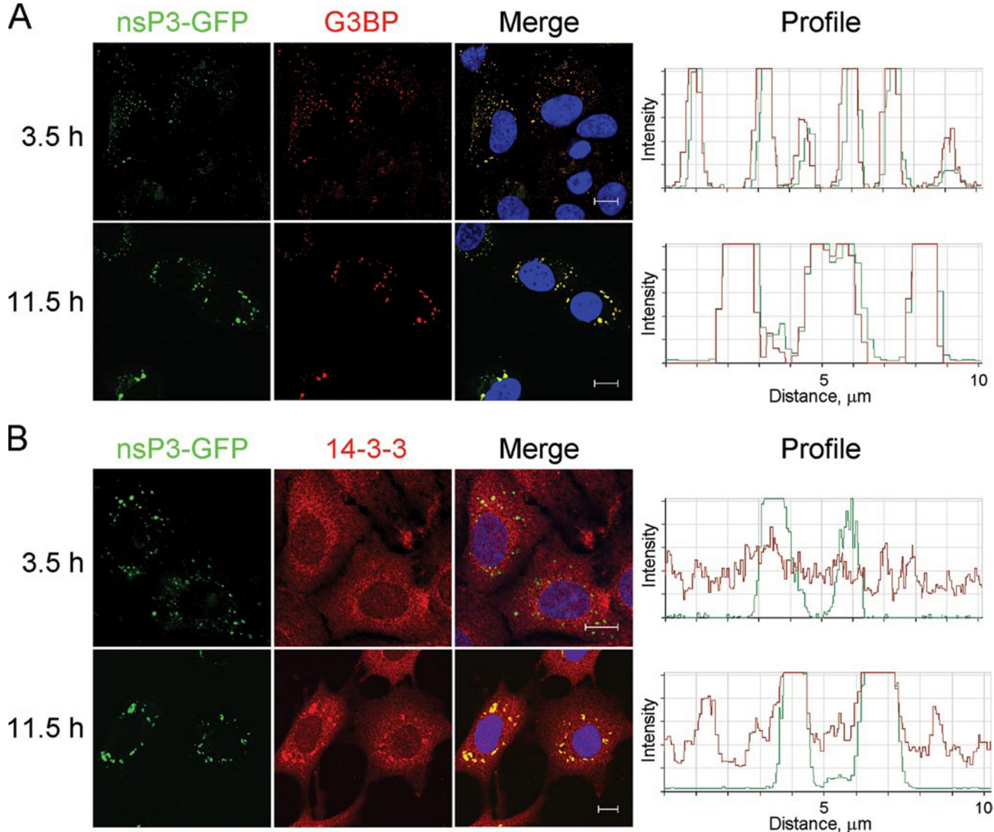
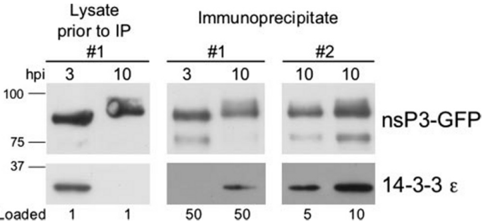
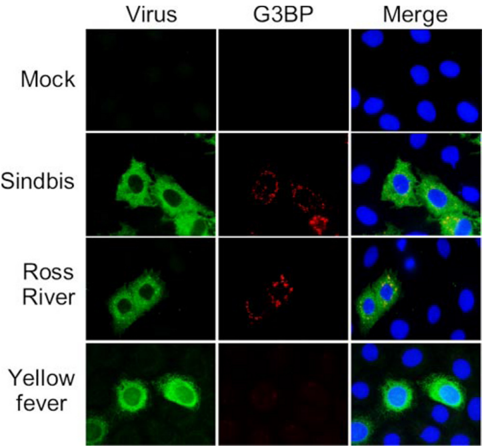
Viral infections cause profound alterations in host cells. Here, we explore the interactions between proteins of the Alphavirus Sindbis and host factors during the course of mammalian cell infection. Using a mutant virus expressing the viral nsP3 protein tagged with green fluorescent protein (GFP) we directly observed nsP3 localization and isolated nsP3-interacting proteins at various times after infection. These results revealed that host factor recruitment to nsP3-containing complexes was time dependent, with a specific early and persistent recruitment of G3BP and a later recruitment of 14-3-3 proteins. Expression of GFP-tagged G3BP allowed reciprocal isolation of nsP3 in Sindbis infected cells, as well as the identification of novel G3BP-interacting proteins in both uninfected and infected cells. Note-worthy interactions include nuclear pore complex components whose interactions with G3BP were reduced upon Sindbis infection. This suggests that G3BP is a nuclear transport factor, as hypothesized previously, and that viral infection may alter RNA transport. Immunoelectron microscopy showed that a portion of Sindbis nsP3 is localized at the nuclear envelope, suggesting a possible site of G3BP recruitment to nsP3-containing complexes. Our results demonstrate the utility of using a standard GFP tag to both track viral protein localization and elucidate specific viral-host interactions over time in infected mammalian cells.
Overview
The claims and statistics of this paper haven’t been checked yet.
Free: it reads the open-access text and checks the first 5 claims that cite a source we can check. Create a free account to check every claim.
Integrity signals
Registry
Cites
Statistics
Figures






Verification
Claims the paper makes
The claims and statistics of this paper haven’t been checked yet.
Free: it reads the open-access text and checks the first 5 claims that cite a source we can check. Create a free account to check every claim.
Claims other papers make about this one
Each is checked against this paper’s own text: does it say what the citing paper says it does?
The source backs part of the claim, not all of it — or backs it for a different population, condition or comparison.
In the citing paper
“Further advancements introduced through this AP-MS strategy were cryogenic cell lysis of infected cells and fast isolations on magnetic beads, which helped preserve complexes close to their original state in the cell, maximized viral bait isolation, and reduced nonspecific interactions (38).”
From The Impact of Mass Spectrometry–Based Proteomics on Fundamental Discoveries in Virology (2014) · cites this paper as [38]
Experimental — accuracy not yet measuredThe source backs part of the claim, not all of it — or backs it for a different population, condition or comparison.
In the citing paper
“this strategy was shown to help preserve protein complexes and weak protein interactions [24,25].”
From Proteomic approaches to uncovering virus–host protein interactions during the progression of viral infection (2016) · cites this paper as [24]
Experimental — accuracy not yet measuredIn the citing paper
“it was not until the use of fluorescent probes for AP by Cristea and coworkers (37) that the applicability of AP-MS was demonstrated for the isolation of protein complexes at different stages of a viral infection (38).”
From The Impact of Mass Spectrometry–Based Proteomics on Fundamental Discoveries in Virology (2014) · cites this paper as [38]
In the citing paper
“This study led to the discovery of time-specific interactions, with the early and stable recruitment of an endoribonuclease (G3BP), identified at all time points assessed, and the later recruitment of signaling proteins (14-3-3), identified only at the late 6, 8, and 10 hpi time points in the SINV life cycle.”
From Proteomic approaches to uncovering virus–host protein interactions during the progression of viral infection (2016) · cites this paper as [24]
In the citing paper
“While some viral proteins can be tagged at their C- or N-termini (e.g. [86]), others may require the inclusion of the tag within an internal loop (e.g. [24]).”
From Proteomic approaches to uncovering virus–host protein interactions during the progression of viral infection (2016) · cites this paper as [24]
Self-check
Percentages, sums and reported differences re-computed from the paper’s own numbers.
The self-check needs the paper’s full text.
Citations
Cites
1 retracted
RETRACTED: The RasGAP-associated endoribonuclease G3BP assembles stress granules
Tourrière, H., Chebli, K., Zekri, L., Courselaud, B., Blanchard, J. M., Bertrand, E., & Tazi, J. (2003) · The Journal of Cell Biology · doi:10.1083/jcb.200212128 · Cited by 834
RetractedAntibodies, a laboratory manual
(1989) · Biomedicine & Pharmacotherapy · doi:10.1016/0753-3322(89)90130-3 · Cited by 12,366
Antibodies: A laboratory manual
J.L. (1989) · Trends in Biochemical Sciences · doi:10.1016/0968-0004(89)90307-1 · Cited by 5,089
A monomeric red fluorescent protein
Campbell, R. E., Tour, O., Palmer, A. E., Steinbach, P. A., Baird, G. S., Zacharias, D. A., & Tsien, R. Y. (2002) · Proceedings of the National Academy of Sciences · doi:10.1073/pnas.082243699 · Cited by 2,365
The alphaviruses: gene expression, replication, and evolution.
Strauss, J. H., & Strauss, E. G. (1994) · Microbiological Reviews · doi:10.1128/mmbr.58.3.491-562.1994 · Cited by 2,221
Proteomic analysis of the mammalian nuclear pore complex
Cronshaw, J. M., Krutchinsky, A. N., Zhang, W., Chait, B. T., & Matunis, M. J. (2002) · The Journal of Cell Biology · doi:10.1083/jcb.200206106 · Cited by 966
Self-citationDynamic interactions between 14-3-3 proteins and phosphoproteins regulate diverse cellular processes
MACKINTOSH, C. (2004) · Biochemical Journal · doi:10.1042/bj20031332 · Cited by 526
Application of cryoultramicrotomy to immunocytochemistry
Tokuyasu, K. T. (1986) · Journal of Microscopy · doi:10.1111/j.1365-2818.1986.tb02772.x · Cited by 512
Rice, C. M., Levis, R., Strauss, J. H., & Huang, H. V. (1987) · Journal of Virology · doi:10.1128/jvi.61.12.3809-3819.1987 · Cited by 474
Self-citationMK2‐induced tristetraprolin:14‐3‐3 complexes prevent stress granule association and ARE‐mRNA decay
Stoecklin, G., Stubbs, T., Kedersha, N., Wax, S., Rigby, W. F., Blackwell, T. K., & Anderson, P. (2004) · The EMBO Journal · doi:10.1038/sj.emboj.7600163 · Cited by 448
Research works printed but not linked: 4
- Knipe, D. M., and Howley, P. M., eds) Fourth Ed., pp. 917-962, Lippincott Williams & Wilkins, Philadelphia
- Knipe, D. M., and Howley, P. M. eds) Fourth Ed., pp. 895-916, Lippincott Wil- liams & Wilkins, Philadelphia
- Liang, Z., and Li, G. (2005) Gene Ther. Mol. Biol. 9, 317-324
- Kennedy, D., Wood, S. A., Ramsdale, T., Tam, P. P., Steiner, K. A., and Mattick, J. S. (1997) Biomed. Pept. Proteins Nucleic Acids 2, 93-99
Cited by
Items 101–196 of 196
Identification and Characterization of Sindbis Virus RNA-Host Protein Interactions
LaPointe, A. T., Gebhart, N. N., Meller, M. E., Hardy, R. W., & Sokoloski, K. J. (2018) · Journal of Virology · doi:10.1128/jvi.02171-17 · Cited by 39
Park, E., & Griffin, D. E. (2009) · Journal of General Virology · doi:10.1099/vir.0.012682-0 · Cited by 44
“nsP3 interacts with a variety of cellular proteins that are likely to play essential roles in the formation or function of virus replication complexes (Cristea et al., 2006; Despres et al., 1995; Frolova et al., 2006; Gorchakov et al., 2008), and a primary function for nsP3 may be to recruit the required cellular prot…”
BackgroundResultInfluentialAffinity Purification of Protein Complexes
Cristea, I. M., & Chait, B. T. (2011) · Cold Spring Harbor Protocols · doi:10.1101/pdb.prot5611 · Cited by 38
“We prefer the cryogenic cell disruption because it significantly increases the extraction efficiency and it has proven to be absolutely critical in most of our studies (Cristea et al. 2005, 2006; Wang et al. 2006).”
Self-citationA little less aggregation a little more replication: Viral manipulation of stress granules
Brownsword, M. J., & Locker, N. (2022) · Wiley Interdisciplinary Reviews - RNA · doi:10.1002/wrna.1741 · Cited by 41
“This allows inhibition of SG formation via G3BP1 sequestration as this domain is originally found in CAPRIN-1 and is important for SG nucleation (Cristea et al., 2006; Fros et al., 2012; Gorchakov et al., 2008; Kim et al., 2016; Panas et al., 2012, 2014, 2015).”
BackgroundLin, A. E., Greco, T. M., Döhner, K., Sodeik, B., & Cristea, I. M. (2013) · Molecular & Cellular Proteomics · doi:10.1074/mcp.m113.030866 · Cited by 38
“(24), human cytomegalovirus (HCMV) (25–27), and pseudora-”
Self-citationResolving the composition of protein complexes using a MALDI LTQ orbitrap
Luo, Y., Li, T., Yu, F., Kramer, T., & Cristea, I. M. (2010) · Journal of the American Society for Mass Spectrometry · doi:10.1016/j.jasms.2009.08.026 · Cited by 38
“noaffinity purifications [28] and two-step isolations”
Self-citationReplication Cycle of Astroviruses
Méndez, E., Murillo, A., Velázquez‐Moctezuma, R., Burnham, A. J., & Arias, C. F. (2012) · Springer eBooks · doi:10.1007/978-1-4614-4735-1_2 · Cited by 54
“Very little information is available regarding speci fi c host proteins involved in replication of the astrovirus genome, although this process could require several RNA binding proteins, as reported for other plus-strand RNA viruses [ 1, 8, 11 ] .”
BackgroundImaging of the Alphavirus Capsid Protein during Virus Replication
Zheng, Y., & Kielian, M. C. (2013) · Journal of Virology · doi:10.1128/jvi.01299-13 · Cited by 38
“Antibodies used for immunofluorescence included mouse anti-capsid monoclonal antibody (MAb) C12-1 (kindly provided by Irene GreiserWilke) (37), rabbit antibodies to SINV nsP1 and nsP3 (kindly provided by Margaret MacDonald and Charles Rice) (38), rabbit anti-LC3 (PM036; MBL International Corporation), rabbit anti-G3BP…”
BackgroundCilia, M., Peter, K. A., Bereman, M. S., Howe, K., Fish, T., Smith, D., Gildow, F., MacCoss, M. J., Thannhauser, T. W., & Gray, S. M. (2012) · PLoS ONE · doi:10.1371/journal.pone.0048177 · Cited by 35
“There is a paucity of tools to study vector biology and vectorvirus-host interactions at the molecular level; however, mass spectrometry technologies are emerging as one of the most powerful tools to develop a comprehensive understanding of virusvector-host interactions [9,18,22,77,78,79,80,81,82,83].”
Shah, P. S., Beesabathuni, N. S., Fishburn, A. T., Kenaston, M. W., Minami, S. A., Pham, O., & Tucker, I. (2022) · Annual Review of Virology · doi:10.1146/annurev-virology-100520-011851 · Cited by 41
DNA methyltransferase DNMT3A associates with viral proteins and impacts HSV‐1 infection
Rowles, D. L., Tsai, Y., Greco, T. M., Lin, A. E., Li, M., Yeh, J., & Cristea, I. M. (2015) · PROTEOMICS · doi:10.1002/pmic.201500035 · Cited by 35
“To study VP26 protein interactions during infection in HFFs, we used a proteomic approach that we previously reported for studying other viral proteins tagged with GFP [22,27,32].”
MethodSelf-citationCrow, M. S., & Cristea, I. M. (2017) · Molecular & Cellular Proteomics · doi:10.1074/mcp.m116.064741 · Cited by 36
“4), and flash-frozen as cell pellets in liquid nitrogen, as described previously (27).”
MethodSelf-citationWang, S., Mahalingam, S., & Merits, A. (2025) · Reviews in Medical Virology · doi:10.1002/rmv.70030 · Cited by 31
Biomolecular phase separation in stress granule assembly and virus infection
Liu, Y., Yao, Z., Lian, G., & Yang, P. (2023) · Acta Biochimica et Biophysica Sinica · doi:10.3724/abbs.2023117 · Cited by 31
Bozzacco, L., Yi, Z., Andréo, U., Conklin, C. R., Li, M. M. H., Rice, C. M., & MacDonald, M. R. (2016) · Journal of Virology · doi:10.1128/jvi.03077-15 · Cited by 31
“scribed previously (28) and utilized at a 1:20,000 dilution for Western”
MethodSelf-citationRana, J., Rajasekharan, S., Gulati, S., Dudha, N., Gupta, A., Chaudhary, V. K., & Gupta, S. (2014) · Proteins Structure Function and Bioinformatics · doi:10.1002/prot.24602 · Cited by 30
A single vertebrate DNA virus protein disarms invertebrate immunity to RNA virus infection
Gammon, D. B., Duraffour, S., Rozelle, D., Hehnly, H., Sharma, R., Sparks, M. E., West, C. C., Chen, Y., Moresco, J. J., Andreï, G., et al. (2014) · eLife · doi:10.7554/elife.02910 · Cited by 29
“SINV-GFP (TE/5’2J/GFP-3XFlag; Cristea et al., 2006 ) was obtained from Dr Margaret MacDonald (Rockefeller University) and SINV-LUC [TRNSVluc; Cook and Griffin, 2003 ] was obtained from Dr Dianne Griffin (Johns Hopkins University).”
BackgroundMethodInfluentialGui, H., Lu, C.-W., Adams, S. D., Stollar, V., & Li, M.-L. (2010) · Journal of Biomedical Science · doi:10.1186/1423-0127-17-59 · Cited by 33
“Several reports [17,28,29] have identified other cellular proteins associated with the SV replicase/transcriptase.”
BackgroundRemenyi, R., Roberts, G. C., Zothner, C., Merits, A., & Harris, M. (2017) · Scientific Reports · doi:10.1038/s41598-017-05820-0 · Cited by 28
Host factors in the replication of positive-strand RNA viruses
Wang, R., & Li, K. (2012) · Biomedical Journal · doi:10.4103/2319-4170.106160 · Cited by 33
“To identify host proteins associated with the Sindbis virus (SIN) nsP3 protein, a component of the alphavirus RC, a mutant virus was used to express the viral nsP3 protein tagged with green fluorescent protein (GFP), followed by immunoaffinity purification with anti-GFP antibody and massspectrometry identification of…”
MethodAlam, U., & Kennedy, D. D. (2019) · Molecular and Cellular Biochemistry · doi:10.1007/s11010-019-03562-3 · Cited by 28
Proteomic elucidation of the targets and primary functions of the picornavirus 2A protease
Serganov, A. A., Udi, Y., Stein, M. E., Patel, V., Fridy, P. C., Rice, C. M., Saeed, M., Jacobs, E. Y., Chait, B. T., & Rout, M. P. (2022) · Journal of Biological Chemistry · doi:10.1016/j.jbc.2022.101882 · Cited by 28
Self-citationGuo, L., Hu, C., Liu, Y., Chen, X., Song, D., Shen, R., Liu, Z., Jia, X., Zhang, Q., Gao, Y., et al. (2023) · Nature Communications · doi:10.1038/s41467-023-39156-3 · Cited by 26
“…the well-studied proteins that interact with nsP3 of other alphaviruses, including Ras GTPase-activating protein-binding protein 1 (G3BP-1), G3BP-2, and SH3 domain-containing kinase-binding protein 1 (SH3KBP1) 25 – 28 , were also found in our analysis, supporting the reliability of this experiment.”
Immunoelectron Microscopy of Viral Antigens
Gulati, N. M., Torian, U., Gallagher, J. R., & Harris, A. K. (2019) · Current Protocols in Microbiology · doi:10.1002/cpmc.86 · Cited by 31
“Immunogold labeling has played a key role in localizing antigens and understanding certain viral-host interactions (Cristea et al., 2006; Hopley & Doane, 1985).”
BackgroundViral proteomics: The emerging cutting-edge of virus research
Zhou, S. T., Liu, R., Zhao, X., Huang, C., & Wei, Y. (2011) · Science China Life Sciences · doi:10.1007/s11427-011-4177-7 · Cited by 28
“One group constructed a modified immunoprecipitation protocol to unravel the dynamic viral protein interaction using a green fluorescent protein (GFP)-tagged virus [44] .”
BackgroundIdentifying Host Factors That Regulate Viral Infection
Hsu, T.-H., & Spindler, K. R. (2012) · PLoS Pathogens · doi:10.1371/journal.ppat.1002772 · Cited by 25
“using a GFP-tagged viral protein, further demonstrating the usefulness of imaging approaches [20].”
Elongated and Shortened Peptidomimetic Inhibitors of the Proprotein Convertase Furin
Hardes, K., Ivanova, T., Thaa, B., McInerney, G. M., Klokk, T. I., Sandvig, K., Künzel, S., Lindberg, I., & Steinmetzer, T. (2017) · ChemMedChem · doi:10.1002/cmdc.201700108 · Cited by 24
FGDF Motif Regulation of Stress Granule Formation
McInerney, G. M. (2015) · DNA and Cell Biology · doi:10.1089/dna.2015.2957 · Cited by 22
“Cristea et al. (2006) showed that G3BP-1 interacts with Phe-Gly (FG)- repeat containing nuclear pore proteins and later, Vogensen et al. (2013) reported a crystal structure of G3BP in complex with a Nup62-derived FxFG motif-containing peptide.”
Treffers, E. E., Taş, A., Scholte, F. E. M., de Ru, A. H., Snijder, E. J., van Veelen, P. A., & van Hemert, M. J. (2023) · PLoS Pathogens · doi:10.1371/journal.ppat.1011179 · Cited by 21
“eEF2 was also identified as an interaction partner of CHIKV nsP3 in a yeast two-hybrid assay [48] and as an interaction partner of SINV nsP3 during infection with a nsP3-GFP expressing SINV mutant [78].”
BackgroundCharacterization of host proteins interacting with the lymphocytic choriomeningitis virus L protein
Khamina, K., Lercher, A., Caldera, M., Schliehe, C., Vilagos, B., Sahin, M., Kosack, L., Bhattacharya, A., Májek, P., Stukalov, A., et al. (2017) · PLoS Pathogens · doi:10.1371/journal.ppat.1006758 · Cited by 21
Immunoisolation of Protein Complexes from Xenopus
Conlon, F. L., Miteva, Y., Kaltenbrun, E., Wasson, L. K., Greco, T. M., & Cristea, I. M. (2012) · Methods in molecular biology · doi:10.1007/978-1-61779-992-1_21 · Cited by 20
Self-citationIsomer-specific effect of microRNA miR-29b on nuclear morphology
Kriegel, A. J., Terhune, S. S., Greene, A. S., Noon, K. R., Pereckas, M., & Liang, M. (2018) · Journal of Biological Chemistry · doi:10.1074/jbc.ra117.001705 · Cited by 21
“The supernatant was frozen immediately in liquid nitrogen, whereas the pelleted fraction was resuspended, frozen in liquid nitrogen as spherical pellets (26, 27), and pulverized by six cycles of cryogenic grinding on a TissueLyser (Qiagen) at 30 Hz for 1 min.”
MethodAbdullah, N., Ahemad, N., Aliazis, K., Khairat, J. E., Lee, T. C., Ahmad, S. A. A., Adnan, N. A. A., Macha, N. O., & Hassan, S. S. (2021) · Viruses · doi:10.3390/v13061021 · Cited by 18
“These motifs have been demonstrated to bind to the nuclear transport factor 2 (NTF2)like domain of G3BP family protein [83,129] in vertebrates, and also to the G3BP homolog in mosquito Rasputin [10].”
BackgroundGebhart, N. N., Hardy, R. W., & Sokoloski, K. J. (2020) · PLoS ONE · doi:10.1371/journal.pone.0238254 · Cited by 16
Replication strategies and applications of Semliki Forest virus
Lulla, V. (2007) · DSpace repository (University of Tartu) · Cited by 16
Discovery of Host–Viral Protein Complexes During Infection
Rowles, D. L., Terhune, S. S., & Cristea, I. M. (2013) · Methods in Molecular Biology · doi:10.1007/978-1-62703-601-6_4 · Cited by 15
“These recombinant viruses were evaluated for their ability to replicate with wild-type kinetics (2, 5, 6, 8, 11).”
BackgroundMethodSelf-citationStructural host-virus interactome profiling of intact infected cells
(2025) · doi:10.1038/s41467-025-61618-z · Cited by 15
“First, af fi nity puri fi cation mass spectrometry (AP-MS), the most widely used approach for systematic virus-host PPI pro fi ling 23 – 33 , is not applicable to intact infected cells, cannot discriminate between direct and indirect interactors, and does not provide informationon…”
Greco, T. M., Guise, A. J., & Cristea, I. M. (2016) · Methods in molecular biology · doi:10.1007/978-1-4939-3524-6_3 · Cited by 15
Self-citationHoward, T. R., Crow, M. S., Greco, T. M., Lum, K. K., Li, T., & Cristea, I. M. (2021) · mSystems · doi:10.1128/msystems.00397-21 · Cited by 14
Self-citationElkhaligy, H., Balbin, C. A., Gonzalez, J. L., Liberatore, T., & Siltberg-Liberles, J. (2021) · Viruses · doi:10.3390/v13122369 · Cited by 14
“Human herpesvirus [67], Sindbis virus [68,69], Semliki Forest virus [70], and Chikungunya virus [70,71] include FGDF motifs capable of interacting with G3BP and altering its function.”
BackgroundModel System-Guided Protein Interaction Mapping for Virus Isolated from Phloem Tissue
DeBlasio, S. L., Johnson, R. S., MacCoss, M. J., Gray, S. M., & Cilia, M. (2016) · Journal of Proteome Research · doi:10.1021/acs.jproteome.6b00715 · Cited by 14
Mahajan, S., Kumar, R., Singh, A., Dhaka, P., Pareek, A., Kumar, P., & Tomar, S. (2025) · Virology · doi:10.1016/j.virol.2025.110551 · Cited by 12
Sheehan, C. T., Hampton, T. H., & Madden, D. R. (2022) · Journal of Biological Chemistry · doi:10.1016/j.jbc.2022.102552 · Cited by 13
“A crystal structure of G3BP1 NTF2 (1-139) TripleW was determined to a resolution of 2.”
BackgroundVlaicu, O., Şelescu, T., Pastrama, F., Munteanu, C. V. A., Riva, L., Dubuisson, J., Rouillé, Y., & Popescu, C.-I. (2017) · Journal of Virological Methods · doi:10.1016/j.jviromet.2017.04.009 · Cited by 12
Getah virus Nsp3 binds G3BP to block formation of bona fide stress granules
Qi, X., Zhao, R., Yao, X., Liu, Q., Liu, P., Zhu, Z., Tu, C., Gong, W., & Li, X. (2024) · International Journal of Biological Macromolecules · doi:10.1016/j.ijbiomac.2024.135274 · Cited by 11
Takacs, C. N., Andreo, U., Belote, R. L., Pulupa, J., Scull, M. A., Gleason, C. E., Rice, C. M., & Simon, S. M. (2017) · Traffic · doi:10.1111/tra.12467 · Cited by 10
Self-citationIdentification of a non-canonical G3BP-binding sequence in a Mayaro virus nsP3 hypervariable domain
Neyret, A., Bernard, É., Aïqui-Reboul-Paviet, O., Bakhache, W., Eldin, P., Chaloin, L., & Briant, L. (2022) · Frontiers in Cellular and Infection Microbiology · doi:10.3389/fcimb.2022.958176 · Cited by 10
“nsP3-HVD also contains a conserved duplicated FGxF motif that mediates binding to a hydrophobic pocket in the G3BP NTF2-like domain (Cristea et al., 2006; Panas et al., 2014; Panas et al., 2015; Schulte et al., 2016; Götte et al., 2019).”
BackgroundMeckes, D. G. (2014) · Methods in molecular biology · doi:10.1007/978-1-4939-0428-0_14 · Cited by 9
Proteomics methods for discovering viral–host interactions
Georges, A. A., & Frappier, L. (2015) · Methods · doi:10.1016/j.ymeth.2015.05.001 · Cited by 10
DeBlasio, S. L., Bereman, M. S., Mahoney, J. E., Thannhauser, T. W., Gray, S. M., MacCoss, M. J., & Heck, M. L. (2017) · Journal of Biomolecular Techniques JBT · doi:10.7171/jbt.17-2803-002 · Cited by 8
Westcott, C. E., Isom, C. M., Karki, D., & Sokoloski, K. J. (2023) · Viruses · doi:10.3390/v15010164 · Cited by 9
“This specific approach was used by the Frolova/Frolov and MacDonald groups to probe the P:P interactions of the nsP3 protein via a series of contemporary efforts [64,65].”
BackgroundMethodThiruvaiyaru, A., Mattila, S., Sadeghi, M., Naumenko, K., Merits, A., Varjosalo, M. T., & Ahola, T. (2025) · PLoS Pathogens · doi:10.1371/journal.ppat.1013050 · Cited by 8
“Early studies of proteins binding to nsP3 identified the stress granule core protein G3BP (ras-GTPase-activating protein SH3-domain binding protein) as a major interacting protein [21,22].”
Identifying Protein Interactions with Viral DNA Genomes during Virus Infection
Packard, J. E., Kumar, N., Weitzman, M. D., & Dembowski, J. A. (2024) · Viruses · doi:10.3390/v16060845 · Cited by 7
Fu, J. Y. L., Chua, C. L., Vythilingam, I., Sulaiman, W. Y. W., Wong, H. V., Chan, Y. F., & Sam, I. (2019) · Journal of General Virology · doi:10.1099/jgv.0.001338 · Cited by 8
Alphavirus nsP3 ADP-ribosylhydrolase Activity Disrupts Stress Granule FormationPreprint
Jayabalan, A. K., Griffin, D. E., & Leung, A. K. L. (2019) · bioRxiv (Cold Spring Harbor Laboratory) · doi:10.1101/629881 · Cited by 7
“However, it is unclear whether the mechanism for sequestration of G3BP by the HVD is sufficient to cause the disappearance of SGs because the domain binds multiple cellular proteins [39,50,53] and cellular G3BP1/2 are highly abundant (Table S1).”
BackgroundLiu, Y., Yao, Z., Zhang, Y., Zhu, Z., Wang, Z., Chen, Q., Yang, Z., He, Y., Chen, X., Tian, L., et al. (2026) · Molecular Cell · doi:10.1016/j.molcel.2026.04.022 · Cited by 6
Dansana, J., Purohit, P., Panda, M., & Meher, B. R. (2024) · Phytomedicine · doi:10.1016/j.phymed.2024.156359 · Cited by 6
Prediction of motif-mediated viral mimicry through the integration of host–pathogen interactions
Idrees, S., Paudel, K. R., & Hansbro, P. M. (2024) · Archives of Microbiology · doi:10.1007/s00203-024-03832-9 · Cited by 6
“Interaction between Sindbis virus (SINV) polyprotein and G3BP2 was also identified, which has previously been identified in different studies (Cristea et al. 2006; Cristea et al. 2010).”
Westcott, C. E., Qazi, S., Maiocco, A. M., Mukhopadhyay, S., & Sokoloski, K. J. (2022) · Viruses · doi:10.3390/v14071423 · Cited by 6
Host Factors Promoting Viral RNA Replication
Nagy, P. D., & Pogany, J. (2009) · Springer eBooks · doi:10.1007/b135974_14 · Cited by 6
“…replication protein of Sindbis virus (SIN), an alphavirus, a green fluorescent protein (GFP)-tagged nsP3 was expressed from the viral genome, followed by immunoaffinity purification with anti-GFP antibody on magnetic beads and mass-spectrometry of the isolated proteins (Cristea et al., 2006).”
BackgroundMethodInfluentialOmler, A., Mutso, M., Vaher, M., Freitas, J. R., Taylor, A., David, C. T., Moseley, G. W., Liu, X., Merits, A., & Mahalingam, S. (2024) · mBio · doi:10.1128/mbio.00993-24 · Cited by 5
“Interestingly, many proteins shown to interact with alphavirus nsP3 or be present in virus replicase organelles are nuclear proteins (25, 66).”
BackgroundDevelopment of EGFP/GLUC-tagged Sindbis-like virus XJ-160
Wuyang, Z., Li, J., Wang, H., He, Y., & Liang, G. (2013) · Journal of Virological Methods · doi:10.1016/j.jviromet.2013.01.015 · Cited by 5
Pieterse, L., McDonald, M. R., Abraham, R., & Griffin, D. E. (2024) · Viruses · doi:10.3390/v16121918 · Cited by 4
Wang, S., Naumenko, K., Sarvandani, M. M., Lello, L. S., Makhotina, A., Claesson, H. C., Žusinaite, E., & Merits, A. (2025) · PLoS Pathogens · doi:10.1371/journal.ppat.1013838 · Cited by 4
The sticky business of Alphavirus capsid–host interactions
Martin, C. K., Yin, P., & Kielian, M. C. (2024) · Trends in Microbiology · doi:10.1016/j.tim.2024.11.003 · Cited by 3
Wang, R., Cao, X., Lu, K., Chang, Z., Dong, X., Guo, H., Wei, X. W., Dang, R., Wang, J., Wang, X., et al. (2024) · Frontiers in Veterinary Science · doi:10.3389/fvets.2024.1418760 · Cited by 2
Recent advances in host–virus interactomics during entry and infection
Bhattacharjee, S. (2015) · Virus Adaptation and Treatment · doi:10.2147/vaat.s60265 · Cited by 3
“The interactions between Sindbis virus and host proteins were explored by using a mutant virus expressing the viral nsP3 protein tagged with green fluorescent protein.(81) Direct observation of nsP3 localization and isolated nsP3-interacting proteins at various times after infection was recorded via FM.”
InfluentialErber, L. N., & Chen, Y. (2021) · ACS in focus · doi:10.1021/acsinfocus.7e5010 · Cited by 2
Contu, L., Balistreri, G., Domanski, M., Uldry, A., & Mühlemann, O. (2020) · bioRxiv (Cold Spring Harbor Laboratory) · doi:10.1101/2020.10.12.335497 · Cited by 2
Unraveling the role of non-structural proteins in the life cycle of chikungunya virus
Chhikara, K., Verma, D. K., Kanta, P., Goyal, K., Ghosh, A., & Singh, M. P. (2026) · VirusDisease · doi:10.1007/s13337-026-00973-x · Cited by 1
“CHIKV nsP3-HVD interacts with G3BP1 and G3BP2, inhibiting stress granule formation and thereby suppressing a cellular antiviral mechanism [55, 70, 103].”
Deng, C., & Krutchinsky, A. N. (2014) · Methods in molecular biology · doi:10.1007/978-1-4939-0799-1_6 · Cited by 1
Omics Approaches for Infectious Diseases
Pathak, A. N., Singh, L. K., & Dwivedi, E. (2021) · Springer eBooks · doi:10.1007/978-981-16-0691-5_27 · Cited by 2
Functions of Alphavirus Macrodomain-containing protein nsP3
Neuvonen, M. (2011) · Työväentutkimus Vuosikirja · Cited by 1
Functional analysis of viral and host components of alphavirus replicase complexes
Varjak, M. (2013) · DSpace repository (University of Tartu) · Cited by 53
Molecular pathogenesis of the Sindbis-group virus strain AR86
Suthar, M. S. (2007) · Carolina Digital Repository (University of North Carolina at Chapel Hill) · doi:10.17615/c7r6-4v97 · Cited by 1
Dissection of virus-host cell interactions in the early response to infection
Panas, M. D. (2014) · Figshare
Mai, J. (2009) · OhioLink ETD Center (Ohio Library and Information Network)
Yost, S. A. (2016) · doi:10.7282/t38c9zf6
“antibodies [WU136; (111)] were used at 1:1000 dilution.”
MethodAlphavirus-host interactions : how to unravel the proviral activity of G3BP
Götte, B. (2019) · Figshare
赵, 霞., 周, 圣., 黄, 灿., 魏, 于., & 刘, 锐. (2010) · Scientia Sinica Vitae · doi:10.1360/zc2010-40-9-767 · Cited by 1
Stress & Granules : regulation of Cauliflower mosaic virus disease in Arabidopsis thaliana
Hoffmann, G. (2023) · Acta universitatis agriculturae Sueciae · doi:10.54612/a.7ueb4obng1
Westcott, C. (2022) · ThinkIR: The University of Louisville's Institutional Repository (University of Louisville) · doi:10.18297/etd/3977
Inhibition of potassium ion channels reduces Semliki Forest virus genome replicationPreprint
Russell, T., O’Brien, C. E., Gangotia, D., Fulford, S., Kenny, R., Alkhamees, A. F., Premchand-Branker, S., Fragkoudis, R., & Barry, G. (2023) · bioRxiv (Cold Spring Harbor Laboratory) · doi:10.1101/2023.05.24.541985
Recomposition de l’interactome du ribosome au cours des infections virales
Sohier, T. J. M. (2021) · theses.fr (ABES) · doi:10.70675/760a883fz5a61z48cfz99f4z262cb28f29c2
Structure and function of the chikungunya virus nsP3 protein and implication in alphavirus biology
Kril, V. (2023) · theses.fr (ABES) · doi:10.70675/f20031f4z19e1z4a48z9fe3zee94acef3316 · Cited by 1
Girard, J. (2022) · theses.fr (ABES) · doi:10.70675/f83fdbb1zf632z4e48z8d7dzc5eea9503192
Alphaviral nsP2 protease: from requirements for functionality to inhibition
Rausalu, K. (2023) · DSpace repository (University of Tartu) · Cited by 16
Matkovic, R. (2016) · theses.fr (ABES) · doi:10.70675/4027611dz722cz425eza5d5zd0615cba95e6
Bakhache, W. (2020) · theses.fr (ABES) · doi:10.70675/5604db3fza96cz4e1ezae1ez74062a12b87f
Inhibitors of the mRNA capping machinery and structural studies on macro domains from alphaviruses
Ramos, A. S. F. (2019) · theses.fr (ABES) · doi:10.70675/4cfb4e55zcee1z400az819ezc32e9d48c4c4
Structural characterisation of the interaction between the nsP3 protein of CHIKV and FHL1
Ferrino-Iriarte, A. (2022) · theses.fr (ABES) · doi:10.70675/75c91464z8478z4f4dz8161z101645cc36fd
Alphavirus nsP3 as a multifunctional orchestrator of virus-host interplay
Pimenta-Pereira, A. A., Lubinski, B., & Campos, R. K. (2026) · Journal of Virology · doi:10.1128/jvi.01779-25
Brown, E. K., Stegmann, C., Biermann, H., Pittl, V., Duven, M., de Bruin, A. C. M., Neumann, E., & Gerold, G. (2026) · Cell Reports · doi:10.1016/j.celrep.2026.118058
Metadata
- Authors
- Cristea, I. M., Carroll, J.-W. N., Rout, M. P., Rice, C. M., Chait, B. T., & MacDonald, M. R.
- Affiliations
- Rockefeller University (US)
- Corresponding author
- Chait, Brian T.
- MacDonald, Margaret R.
- Venue
- Journal of Biological Chemistry
- Publisher
- Elsevier BV
- Published
- 2006-10
- Volume
- 281
- Issue
- 40
- Pages
- 30269-30278
- ISSN
- 0021-9258 (ISSN-L)
- OpenAlex
- W2100002560
- Cited by
- 192
- References
- 45
- Citations by year
- 2026: 4 · 2025: 5 · 2024: 8 · 2023: 7 · 2022: 11 · 2021: 11 · 2020: 5 · 2019: 9 · 2018: 13 · 2017: 12 · 2016: 12 · 2015: 15 · 2014: 13 · 2013: 13 · 2012: 14
- FWCI
- 8.02
- Type
- journal article
- Language
- en
- Open access
- hybrid
- doi.org
- Licence
- cc-by
- www.elsevier.com/tdm/userlicense/1.0/ (tdm)
- creativecommons.org/licenses/by/4.0/ (vor, 5115 d)
- Locations
- Journal of Biological Chemistry (publishedVersion, cc-by)
- PubMed (publishedVersion)
- Funders
- Greenberg Medical Research Institute
- National Institutes of Health (RR00862, RR022220)
- National Institute of General Medical Sciences (R01GM062427, GM062427)
- National Institute of Allergy and Infectious Diseases (AI063233, R01AI063233, AI 24134)
- National Center for Research Resources (RR00862, P41RR000862, RR 022220, U54RR022220)
- Topics
- Health Sciences › Medicine › Public Health, Environmental and Occupational Health › Mosquito-borne diseases and control
- Health Sciences › Medicine › Epidemiology › Virology and Viral Diseases
- Health Sciences › Medicine › Infectious Diseases › Viral Infections and Vectors
- Keywords
- Sindbis virus, alphavirus, host-virus protein interaction, NSP3, G3BP, 14-3-3 proteins, nuclear pore complex, nuclear transport, RNA transport, viral protein localization, GFP tagging, nuclear envelope
- MeSH terms
- Animals, Cell Line, Fibroblasts, Humans, Sindbis Virus, Viral Nonstructural Proteins, Protein Interaction Mapping, Rats
About these checks
Registry, retraction, Cites and statistics results are computed, not judged, with one exception: a printed reference that no index lists is read once by a model before it counts as a citation error. Claims are extracted by a model and kept only when their quote appears verbatim in the text; each cited source is then checked, with a model’s help, for whether it says what the claim relies on. Those verdicts can be wrong — read the claim’s quote and the cited source before relying on one.
Statistics and arithmetic are recomputed, not judged.
Confidence bands are shown only for fields calibrated on our annotated test set. None is calibrated yet, so no band is shown.
What counts as a claim ›How we measure confidence ›How we check this ›
Are you an author, or do you see a problem with this page? Request a review
Data sources
Bibliographic data: Semantic Scholar, OpenAlex, Crossref.
Contains information from the Semantic Scholar Academic Graph Datasets, made available under the ODC Attribution License (ODC-BY 1.0).
Semantic Scholar’s data is described in: Kinney, R., et al. (2023). The Semantic Scholar Open Data Platform. arXiv:2301.10140.
