

Tracking and Elucidating Alphavirus-Host Protein Interactions
Open accessThe DOI matches its Crossref record; 45 of the 45 references it cites were found in a registry or an index.
Abstract
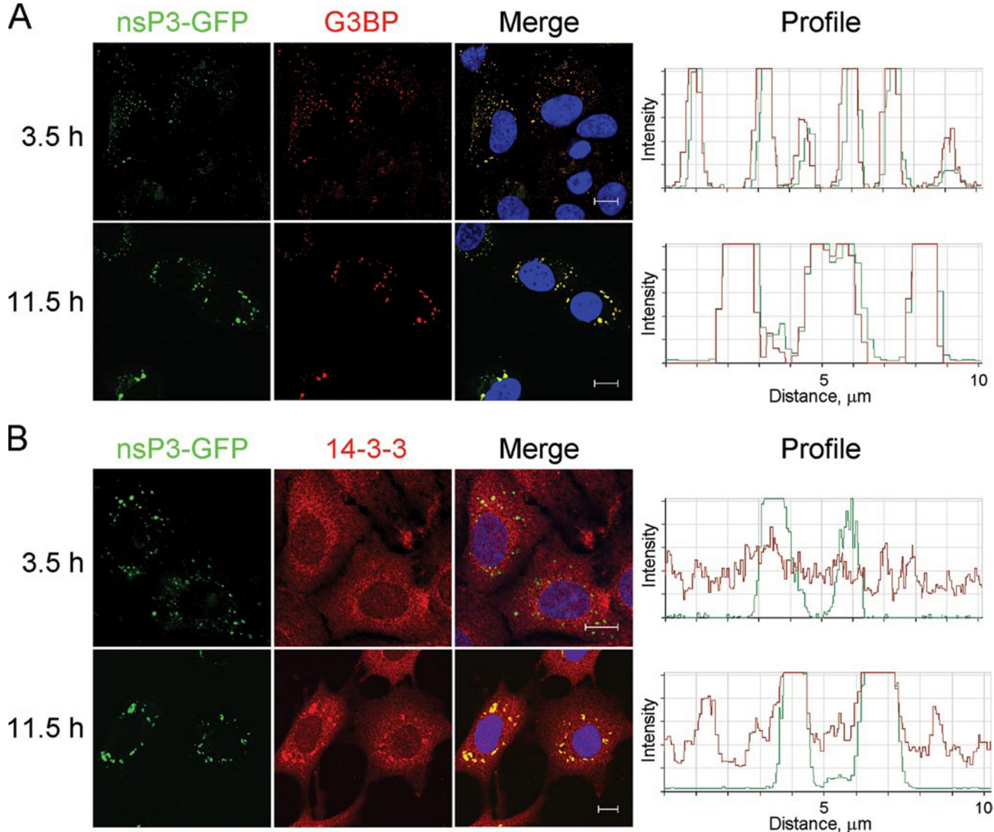
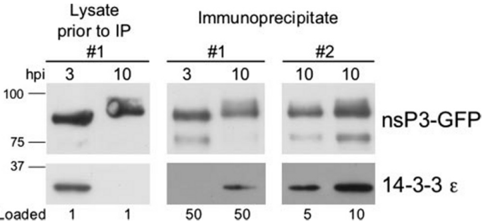
Viral infections cause profound alterations in host cells. Here, we explore the interactions between proteins of the Alphavirus Sindbis and host factors during the course of mammalian cell infection. Using a mutant virus expressing the viral nsP3 protein tagged with green fluorescent protein (GFP) we directly observed nsP3 localization and isolated nsP3-interacting proteins at various times after infection. These results revealed that host factor recruitment to nsP3-containing complexes was time dependent, with a specific early and persistent recruitment of G3BP and a later recruitment of 14-3-3 proteins. Expression of GFP-tagged G3BP allowed reciprocal isolation of nsP3 in Sindbis infected cells, as well as the identification of novel G3BP-interacting proteins in both uninfected and infected cells. Note-worthy interactions include nuclear pore complex components whose interactions with G3BP were reduced upon Sindbis infection. This suggests that G3BP is a nuclear transport factor, as hypothesized previously, and that viral infection may alter RNA transport. Immunoelectron microscopy showed that a portion of Sindbis nsP3 is localized at the nuclear envelope, suggesting a possible site of G3BP recruitment to nsP3-containing complexes. Our results demonstrate the utility of using a standard GFP tag to both track viral protein localization and elucidate specific viral-host interactions over time in infected mammalian cells.
Overview
The claims and statistics of this paper haven’t been checked yet.
Free: it reads the open-access text and checks the first 5 claims that cite a source we can check. Create a free account to check every claim.
Integrity signals
Registry
Cites
Statistics
Figures






Verification
Claims the paper makes
The claims and statistics of this paper haven’t been checked yet.
Free: it reads the open-access text and checks the first 5 claims that cite a source we can check. Create a free account to check every claim.
Claims other papers make about this one
Each is checked against this paper’s own text: does it say what the citing paper says it does?
The source backs part of the claim, not all of it — or backs it for a different population, condition or comparison.
In the citing paper
“Further advancements introduced through this AP-MS strategy were cryogenic cell lysis of infected cells and fast isolations on magnetic beads, which helped preserve complexes close to their original state in the cell, maximized viral bait isolation, and reduced nonspecific interactions (38).”
From The Impact of Mass Spectrometry–Based Proteomics on Fundamental Discoveries in Virology (2014) · cites this paper as [38]
Experimental — accuracy not yet measuredThe source backs part of the claim, not all of it — or backs it for a different population, condition or comparison.
In the citing paper
“this strategy was shown to help preserve protein complexes and weak protein interactions [24,25].”
From Proteomic approaches to uncovering virus–host protein interactions during the progression of viral infection (2016) · cites this paper as [24]
Experimental — accuracy not yet measuredIn the citing paper
“it was not until the use of fluorescent probes for AP by Cristea and coworkers (37) that the applicability of AP-MS was demonstrated for the isolation of protein complexes at different stages of a viral infection (38).”
From The Impact of Mass Spectrometry–Based Proteomics on Fundamental Discoveries in Virology (2014) · cites this paper as [38]
In the citing paper
“This study led to the discovery of time-specific interactions, with the early and stable recruitment of an endoribonuclease (G3BP), identified at all time points assessed, and the later recruitment of signaling proteins (14-3-3), identified only at the late 6, 8, and 10 hpi time points in the SINV life cycle.”
From Proteomic approaches to uncovering virus–host protein interactions during the progression of viral infection (2016) · cites this paper as [24]
In the citing paper
“While some viral proteins can be tagged at their C- or N-termini (e.g. [86]), others may require the inclusion of the tag within an internal loop (e.g. [24]).”
From Proteomic approaches to uncovering virus–host protein interactions during the progression of viral infection (2016) · cites this paper as [24]
Self-check
Percentages, sums and reported differences re-computed from the paper’s own numbers.
The self-check needs the paper’s full text.
Citations
Cites
1 retracted
RETRACTED: The RasGAP-associated endoribonuclease G3BP assembles stress granules
Tourrière, H., Chebli, K., Zekri, L., Courselaud, B., Blanchard, J. M., Bertrand, E., & Tazi, J. (2003) · The Journal of Cell Biology · doi:10.1083/jcb.200212128 · Cited by 834
RetractedAntibodies, a laboratory manual
(1989) · Biomedicine & Pharmacotherapy · doi:10.1016/0753-3322(89)90130-3 · Cited by 12,366
Antibodies: A laboratory manual
J.L. (1989) · Trends in Biochemical Sciences · doi:10.1016/0968-0004(89)90307-1 · Cited by 5,089
A monomeric red fluorescent protein
Campbell, R. E., Tour, O., Palmer, A. E., Steinbach, P. A., Baird, G. S., Zacharias, D. A., & Tsien, R. Y. (2002) · Proceedings of the National Academy of Sciences · doi:10.1073/pnas.082243699 · Cited by 2,365
The alphaviruses: gene expression, replication, and evolution.
Strauss, J. H., & Strauss, E. G. (1994) · Microbiological Reviews · doi:10.1128/mmbr.58.3.491-562.1994 · Cited by 2,221
Proteomic analysis of the mammalian nuclear pore complex
Cronshaw, J. M., Krutchinsky, A. N., Zhang, W., Chait, B. T., & Matunis, M. J. (2002) · The Journal of Cell Biology · doi:10.1083/jcb.200206106 · Cited by 966
Self-citationDynamic interactions between 14-3-3 proteins and phosphoproteins regulate diverse cellular processes
MACKINTOSH, C. (2004) · Biochemical Journal · doi:10.1042/bj20031332 · Cited by 526
Application of cryoultramicrotomy to immunocytochemistry
Tokuyasu, K. T. (1986) · Journal of Microscopy · doi:10.1111/j.1365-2818.1986.tb02772.x · Cited by 512
Rice, C. M., Levis, R., Strauss, J. H., & Huang, H. V. (1987) · Journal of Virology · doi:10.1128/jvi.61.12.3809-3819.1987 · Cited by 474
Self-citationMK2‐induced tristetraprolin:14‐3‐3 complexes prevent stress granule association and ARE‐mRNA decay
Stoecklin, G., Stubbs, T., Kedersha, N., Wax, S., Rigby, W. F., Blackwell, T. K., & Anderson, P. (2004) · The EMBO Journal · doi:10.1038/sj.emboj.7600163 · Cited by 448
Research works printed but not linked: 4
- Knipe, D. M., and Howley, P. M., eds) Fourth Ed., pp. 917-962, Lippincott Williams & Wilkins, Philadelphia
- Knipe, D. M., and Howley, P. M. eds) Fourth Ed., pp. 895-916, Lippincott Wil- liams & Wilkins, Philadelphia
- Liang, Z., and Li, G. (2005) Gene Ther. Mol. Biol. 9, 317-324
- Kennedy, D., Wood, S. A., Ramsdale, T., Tam, P. P., Steiner, K. A., and Mattick, J. S. (1997) Biomed. Pept. Proteins Nucleic Acids 2, 93-99
Cited by
Determining the architectures of macromolecular assemblies
Alber, F., Dokudovskaya, S., Veenhoff, L. M., Zhang, W., Kipper, J., Devos, D., Suprapto, A., Karni-Schmidt, O., Williams, R., Chait, B. T., et al. (2007) · Nature · doi:10.1038/nature06404 · Cited by 524
Self-citationAlphavirus RNA synthesis and non-structural protein functions
Rupp, J. C., Sokoloski, K. J., Gebhart, N. N., & Hardy, R. W. (2015) · Journal of General Virology · doi:10.1099/jgv.0.000249 · Cited by 285
“Immunoprecipitation of SINV nsP3 from infected cells has revealed numerous interactions with host factors, most notably perhaps with the cellular G3BP proteins (Cristea et al., 2006, 2010; Frolova et al., 2006; Scholte et al., 2015).”
BackgroundToward the dynamic interactome: it's about time
Przytycka, T. M., Singh, M., & Slonim, D. K. (2010) · Briefings in Bioinformatics · doi:10.1093/bib/bbp057 · Cited by 254
Magnetic separations in biotechnology
Borlido, L., Azevedo, A. M., Roque, A. C. A., & Aires-Barros, M. R. (2013) · Biotechnology Advances · doi:10.1016/j.biotechadv.2013.05.009 · Cited by 235
Jean Beltran, P. M., Federspiel, J. D., Sheng, X., & Cristea, I. M. (2017) · Molecular Systems Biology · doi:10.15252/msb.20167062 · Cited by 212
“Initially demonstrated for studying the RNA virus Sindbis (Cristea et al , 2006), this approach was later applied to other viruses, such as the RNA virus respiratory syncytial virus (Wu et al , 2012) and the DNA viruses human cyto-megalovirus (HCMV) and pseudorabies virus (PRV) (Moorman et al ,…”
Self-citationMorris, J. H., Knudsen, G. M., Verschueren, E., Johnson, J. R., Cimermancic, P., Greninger, A. L., & Pico, A. R. (2014) · Nature Protocols · doi:10.1038/nprot.2014.164 · Cited by 198
Integrating diverse data for structure determination of macromolecular assemblies
Alber, F., Förster, F., Korkin, D., Topf, M., & Sali, A. (2008) · Annual Review of Biochemistry · doi:10.1146/annurev.biochem.77.060407.135530 · Cited by 206
Chikungunya Virus nsP3 Blocks Stress Granule Assembly by Recruitment of G3BP into Cytoplasmic Foci
Fros, J. J., Domeradzka, N. E., Baggen, J., Geertsema, C., Flipse, J., Vlak, J. M., & Pijlman, G. P. (2012) · Journal of Virology · doi:10.1128/jvi.01506-12 · Cited by 193
“To investigate the interaction between G3BP and the viral protein nsP3, an mCherry reporter protein was incorporated into nsP3 within the CHIKV replicon in a way similar to that described for Sindbis virus (3, 13), creating CHIKrep-nsP3mC-FlucEGFP (where FlucEGFP is firefly luciferase-enhanced green fluorescent protei…”
MethodYoun, S., Li, T., McCune, B. T., Edeling, M. A., Fremont, D. H., Cristea, I. M., & Diamond, M. S. (2012) · Journal of Virology · doi:10.1128/jvi.00157-12 · Cited by 188
“described previously (12, 27), with some modifications.”
Self-citationTRIM25 Enhances the Antiviral Action of Zinc-Finger Antiviral Protein (ZAP)
Li, M. M. H., Lau, Z., Cheung, P., Aguilar, E. G., Schneider, W. M., Bozzacco, L., Molina, H., Buehler, E., Takaoka, A., Rice, C. M., et al. (2017) · PLOS Pathogens · doi:10.1371/journal.ppat.1006145 · Cited by 197
Self-citationMoorman, N. J., Cristea, I. M., Terhune, S. S., Rout, M. P., Chait, B. T., & Shenk, T. (2008) · Cell Host & Microbe · doi:10.1016/j.chom.2008.03.002 · Cited by 194
“Cell lysates were prepared at 48 hr after mock or BADWT infection and subjected to immunoprecipitation (IP) using rabbit polyclonal antibody to TSC2 (a-TSC2), control preimmune rabbit IgG (C Ab), or beads with no antibody (No Ab), and precipitated proteins were analyzed by western blot (WB) using the indicated antibod…”
InfluentialSelf-citationKim, D. Y., Reynaud, J. M., Rasalouskaya, A., Akhrymuk, I., Mobley, J. A., Frolov, I., & Frolova, E. I. (2016) · PLOS Pathogens · doi:10.1371/journal.ppat.1005810 · Cited by 188
“G3BP1, G3BP2 and BIN1 proteins have been previously co-immunoprecipitated with nsP3 from SINV-infected cells [2, 3, 5, 21].”
BackgroundFunctional Sindbis Virus Replicative Complexes Are Formed at the Plasma Membrane
Frolova, E. I., Gorchakov, R., Pereboeva, L., Atasheva, S., & Frolov, I. (2010) · Journal of Virology · doi:10.1128/jvi.01441-10 · Cited by 186
“These recombinant viruses demonstrated replication rates almost identical to those of the wild-type (wt) SINV (13) and provided an opportunity to isolate virus-specific protein complexes by using GFP-specific antibodies (5, 13).”
BackgroundMethodInfluentialLin, J.-Y., Shih, S.-R., Pan, M., Li, C., Lue, C.-F., Stollar, V., & Li, M.-L. (2009) · Journal of Virology · doi:10.1128/jvi.02476-08 · Cited by 175
“Recent studies from several groups have identified cellular proteins associated with the SV RNA replication complex by isolating nonstructural protein-containing complexes from infected cells (1, 6, 12, 14).”
BackgroundPanas, M. D., Varjak, M., Lulla, A., Er Eng, K., Merits, A., Karlsson Hedestam, G. B., & McInerney, G. M. (2012) · Molecular Biology of the Cell · doi:10.1091/mbc.e12-08-0619 · Cited by 175
“Several reports have shown colocalization and coprecipitation of G3BP proteins with alphavirus nsP3 (Cristea et al., 2006; Frolova et al., 2006; Gorchakov et al., 2008; Fros et al., 2012).”
BackgroundAlphavirus polymerase and RNA replication
Pietilä, M. K., Hellström, K., & Ahola, T. (2017) · Virus Research · doi:10.1016/j.virusres.2017.01.007 · Cited by 162
Scholte, F. E. M., Tas, A., Albulescu, I. C., Žusinaite, E., Merits, A., Snijder, E. J., & van Hemert, M. J. (2015) · Journal of Virology · doi:10.1128/jvi.03612-14 · Cited by 169
“The interaction of nsP3 with G3BP1 has been studied extensively (18, 20, 21, 23, 24), and the induction of SGs by SFV has also been characterized in detail (17, 19, 23).”
BackgroundRespiratory Syncytial Virus Induces Host RNA Stress Granules To Facilitate Viral Replication
Lindquist, M. E., Lifland, A. W., Utley, T. J., Santangelo, P. J., & Crowe, J. E. (2010) · Journal of Virology · doi:10.1128/jvi.00260-10 · Cited by 164
“Sindbis virus and vaccinia virus recruit the stress granule protein G3BP to viral structures (4, 13), while West Nile virus interacts with the host stress granule proteins TIA-1 and TIAR (6).”
BackgroundViral and Cellular Proteins Containing FGDF Motifs Bind G3BP to Block Stress Granule Formation
Panas, M. D., Schulte, T., Thaa, B., Sandalova, T., Kedersha, N., Achour, A., & McInerney, G. M. (2015) · PLoS Pathogens · doi:10.1371/journal.ppat.1004659 · Cited by 165
“We wondered whether this interaction displaces USP10, a cellular binding partner of G3BP that also binds to the NTF2-like domain [8,25].”
BackgroundAlphavirus Infection: Host Cell Shut-Off and Inhibition of Antiviral Responses
Fros, J., & Pijlman, G. (2016) · Viruses · doi:10.3390/v8060166 · Cited by 155
“Similarly, SINV replication was also negatively affected by the simultaneous depletion of G3BP1/2 [102–104].”
BackgroundCristea, I. M., Moorman, N. J., Terhune, S. S., Cuevas, C. D., O'Keefe, E. S., Rout, M. P., Chait, B. T., & Shenk, T. (2010) · Journal of Virology · doi:10.1128/jvi.00139-10 · Cited by 155
“We have used both of these tags in the past to identify interacting proteins (24, 56), and we arbitrarily chose to use viruses carrying the two different tags in this experiment.”
MethodSelf-citationNeuvonen, M., Kazlauskas, A., Martikainen, M., Hinkkanen, A., Ahola, T., & Saksela, K. (2011) · PLoS Pathogens · doi:10.1371/journal.ppat.1002383 · Cited by 159
“Multiple host proteins associated with nsP3 have been identified via immunoprecipitation and mass spectrometry [13,14], but the significance of these interactions as well as the relevant protein binding sites involved have remained uncharacterized.”
BackgroundDifferent Types of nsP3-Containing Protein Complexes in Sindbis Virus-Infected Cells
Gorchakov, R. V., Garmashova, N., Frolova, E. I., & Frolov, I. V. (2008) · Journal of Virology · doi:10.1128/jvi.01011-08 · Cited by 158
“The last two proteins were also isolated from the nsP3/GFP-containing complexes affinity purified from the cytoplasmic fraction of BHK-21 cells (9, 14) and in the experiments presented in Fig.”
BackgroundMethodInfluentialAbraham, R., Hauer, D., McPherson, R. L., Utt, A., Kirby, I. T., Cohen, M. S., Merits, A., Leung, A. K. L., & Griffin, D. E. (2018) · Proceedings of the National Academy of Sciences · doi:10.1073/pnas.1812130115 · Cited by 154
“G3BP1 and 2 are RNA-binding proteins that interact with the FGDF motif in the nsP3 HVD through a NTF2like motif in G3BP (89, 90), that are essential for early steps in replication of Old World alphaviruses (91), and that are consistently associated with nsP3 both early and late in the replication cycle (85, 86, 92).”
BackgroundThe Enigmatic Alphavirus Non-Structural Protein 3 (nsP3) Revealing Its Secrets at Last
Götte, B., Liu, L., & McInerney, G. (2018) · Viruses · doi:10.3390/v10030105 · Cited by 133
“DDX6—DEAD box polypeptide 6 NIH 3T3 SINV [66] DDX17—DEAD box polypeptide 17 Rat2 SINV [46] NIH 3T3 SINV [66] Desmin BHK-21 SINV [60] DHX9—DEAD/H Box Polypeptide 9/ATP-dependent RNA helicase A Rat2 SINV [46] DNAJC9—DnaJ heat shock protein family (Hsp40) member C9 NIH 3T3 CHIKV, SINV [66] Dnmt1—DNA (cytosine-5-)-methylt…”
BackgroundInfluentialLi, Z., Pogany, J., Panavas, T., Xu, K., Esposito, A. M., Kinzy, T. G., & Nagy, P. D. (2009) · Virology · doi:10.1016/j.virol.2008.11.041 · Cited by 134
“recruitment of the viral RNA for replication, (iv) RNA synthesis, and/or (v) RNA stability (Ahlquist et al., 2003; Brinton, 2001; Cristea et al., 2006; Nagy, 2008; Nagy and Pogany, 2006; Shi and Lai, 2005).”
Niepel, M., Molloy, K. R., Williams, R., Farr, J. C., Meinema, A. C., Vecchietti, N., Cristea, I. M., Chait, B. T., Rout, M. P., & Strambio-De-Castillia, C. (2013) · Molecular Biology of the Cell · doi:10.1091/mbc.e13-07-0412 · Cited by 130
Self-citationBouraï, M., Lucas‐Hourani, M., Gad, H. H., Drosten, C., Jacob, Y., Tafforeau, L., Cassonnet, P., Jones, L. M., Judith, D., Couderc, T., et al. (2012) · Journal of Virology · doi:10.1128/jvi.06390-11 · Cited by 133
“Several groups have already identified cellular interactors of nsP2, nsP3, and nsP4 for SINV, in particular, by using recombinant viruses expressing tagged viral proteins that allowed the affinity purification and mass spectrometry-based identification of cellular partners (3, 7, 10, 11, 15, 22, 37).”
BackgroundMaxwell, K. L., & Frappier, L. (2007) · Microbiology and Molecular Biology Reviews · doi:10.1128/mmbr.00042-06 · Cited by 120
Park, E., & Griffin, D. E. (2009) · Virology · doi:10.1016/j.virol.2009.03.031 · Cited by 131
Thaa, B., Biasiotto, R., Eng, K. E., Neuvonen, M., Götte, B., Rheinemann, L., Mutso, M., Utt, A., Varghese, F. S., Balistreri, G., et al. (2015) · Journal of Virology · doi:10.1128/jvi.01579-15 · Cited by 129
Cristea, I. M., Rozjabek, H., Molloy, K. R., Karki, S., White, L. L., Rice, C. M., Rout, M. P., Chait, B. T., & MacDonald, M. R. (2010) · Journal of Virology · doi:10.1128/jvi.01983-09 · Cited by 110
“MS/MS (vMALDI LTQ XL; Thermo), as previously described (3, 6).”
BackgroundMethodResultInfluentialSelf-citationLum, K. K., & Cristea, I. M. (2016) · Expert Review of Proteomics · doi:10.1586/14789450.2016.1147353 · Cited by 113
“For example, Terhune et al. generated primary human fibroblast cell lines stably expressing the cellular histone deacetylase HDAC1 tagged with GFP, and infected the cells with HCMV for 24 h [38].”
BackgroundInfluentialSelf-citationThe C-Terminal Repeat Domains of nsP3 from the Old World Alphaviruses Bind Directly to G3BP
Panas, M. D., Ahola, T., & McInerney, G. M. (2014) · Journal of Virology · doi:10.1128/jvi.00439-14 · Cited by 113
Virus-host interactomics: new insights and opportunities for antiviral drug discovery
de Chassey, B., Meyniel‐Schicklin, L., Vonderscher, J., André, P., & Lotteau, V. (2014) · Genome Medicine · doi:10.1186/s13073-014-0115-1 · Cited by 115
“For instance, if Y2H has been the most popular strategy so far to construct VH interactomes, technological variations of this generic approach are very important at different essential steps, such as the reporter genes, yeast strains, plasmid copy number, fusion proteins, stringency conditions and libraries, that have…”
BackgroundMiteva, Y. V., Budayeva, H. G., & Cristea, I. M. (2013) · Analytical Chemistry · doi:10.1021/ac3033257 · Cited by 105
Self-citationHashimoto, Y., Sheng, X., Murray-Nerger, L. A., & Cristea, I. M. (2020) · Nature Communications · doi:10.1038/s41467-020-14586-5 · Cited by 100
Self-citationSeeking Membranes: Positive-Strand RNA Virus Replication Complexes
Denison, M. R. (2008) · PLoS Biology · doi:10.1371/journal.pbio.0060270 · Cited by 97
“Engineered viruses expressing GFP-fusions with viral replicase proteins have been used for direct fluorescent studies of replicase protein targeting, and will allow real-time analysis of protein expression, interactions, and movement [8] .”
BackgroundMoorman, N. J., Sharon-Friling, R., Shenk, T., & Cristea, I. M. (2010) · Molecular & Cellular Proteomics · doi:10.1074/mcp.m900485-mcp200 · Cited by 97
Self-citationSpatial and Temporal Analysis of Alphavirus Replication and Assembly in Mammalian and Mosquito Cells
Jose, J., Taylor, A. B., & Kuhn, R. J. (2017) · mBio · doi:10.1128/mbio.02294-16 · Cited by 100
“We generated dually labeled FP-tagged viruses with eYFP tagged to either nsP2 or nsP3 (11, 12) and mCherry fused to the N terminus of the E2 glycoprotein, which is known to tolerate insertions of immunoglobulin-binding domains of protein L (18) and fluorescent proteins (13–15, 17, 19).”
MethodNagy, P. D., & Pogany, J. (2010) · Advances in Virus Research · doi:10.1016/s0065-3527(10)76004-8 · Cited by 91
“For example, the RNA-binding host proteins might affect (i) translation of the viral (þ)RNA, (ii) selection and recruitment of the viral (þ)RNA template for replication, (iii) the quality or efficiency of RNA synthesis, and/or (iv) stability of the viral RNA (Ahlquist et al., 2003; Brinton, 2001; Cristea et al., 2006;…”
Jayabalan, A. K., Adivarahan, S., Koppula, A., Abraham, R., Batish, M., Zenklusen, D., Griffin, D. E., & Leung, A. K. L. (2021) · Proceedings of the National Academy of Sciences · doi:10.1073/pnas.2021719118 · Cited by 92
“However, it is unclear whether G3BP sequestration by the HVD is sufficient to suppress SGs because other host cell factors also bind the nsP3 HVD (30, 41, 44).”
BackgroundMacDonald, M. R., Machlin, E. S., Albin, O. R., & Levy, D. E. (2007) · Journal of Virology · doi:10.1128/jvi.00402-07 · Cited by 88
“indirect immunofluorescence as previously described (4) using a Nikon Eclipse”
MethodSelf-citationUtt, A., Quirin, T., Saul, S., Hellström, K., Ahola, T., & Merits, A. (2016) · PLoS ONE · doi:10.1371/journal.pone.0151616 · Cited by 97
“Recombinant alphaviruses carrying immunological, affinity, luciferase or fluorescent tags in their ns proteins have been used to study various aspects of the viral life cycle [20,37,38,58,59].”
BackgroundMethodNew Insights into Chikungunya Virus Infection and Pathogenesis
Kril, V., Aïqui-Reboul-Paviet, O., Briant, L., & Amara, A. (2021) · Annual Review of Virology · doi:10.1146/annurev-virology-091919-102021 · Cited by 98
“For instance, the contribution of nsP1-interacting cellular factors in membrane reshaping during spherule biogenesis awaits investigation (90, 91).”
BackgroundBurnham, A. J., Gong, L., & Hardy, R. W. (2007) · Virology · doi:10.1016/j.virol.2007.05.008 · Cited by 95
Atasheva, S., Gorchakov, R. V., English, R., Frolov, I. V., & Frolova, E. I. (2007) · Journal of Virology · doi:10.1128/jvi.02746-06 · Cited by 101
“The nsP2-specific protein complexes, formed in the cytoplasm of cells infected with nsP2GFP/472-encoding viruses and replicons, contained nsP1, nsP3, and a combination of cellular proteins similar to ones we (14) and another group (8) previously reported in nsP3-related studies.”
ResultInfluentialA New Role for ns Polyprotein Cleavage in Sindbis Virus Replication
Gorchakov, R., Frolova, E., Sawicki, S., Atasheva, S., Sawicki, D., & Frolov, I. (2008) · Journal of Virology · doi:10.1128/jvi.02624-07 · Cited by 80
“The GFP insertion did not affect the replication efficiency of the recombinant, cleavage-competent viruses (3, 8) and provided an opportunity to analyze the formation of the nsP complexes in live cells at different times p.”
BackgroundProteomics in Non-model Organisms: A New Analytical Frontier
Heck, M. L., & Neely, B. A. (2020) · Journal of Proteome Research · doi:10.1021/acs.jproteome.0c00448 · Cited by 91
Foy, N. J., Akhrymuk, M., Akhrymuk, I. V., Atasheva, S., Waffo, A. B., Frolov, I. V., & Frolova, E. I. (2012) · Journal of Virology · doi:10.1128/jvi.02853-12 · Cited by 94
“The hallmark of these complexes is accumulation of cellular G3BP1 and G3BP2 (or their homolog Rasputin in mosquito cells), which are the major components of cellular stress granules formed in response to a variety of abnormal conditions (9, 10, 23).”
BackgroundBarnhart, M. D., Moon, S. L., Emch, A. W., Wilusz, C. J., & Wilusz, J. (2013) · Cell Reports · doi:10.1016/j.celrep.2013.10.012 · Cited by 89
“Pull-downs with tagged non-structural proteins have isolated a number of host factors (Atasheva et al 2007; Frolova et al 2006, Cristea et al 2006).”
BackgroundNuclear proteins hijacked by mammalian cytoplasmic plus strand RNA viruses
Lloyd, R. E. (2015) · Virology · doi:10.1016/j.virol.2015.03.001 · Cited by 83
“Several reports indicate that SINV nonstructural proteins interact with stress granule nucleating proteins G3BP1 and G3BP2, including nsP4 polymerase (Cristea et al., 2010) , nsP3 and nsP2 (Cristea et al., 2006) (Gorchakov et al., 2008) .”
BackgroundGötte, B., Panas, M. D., Hellström, K., Liu, L., Samreen, B., Larsson, O. S., Ahola, T., & McInerney, G. M. (2019) · PLoS Pathogens · doi:10.1371/journal.ppat.1007842 · Cited by 85
Nicod, C., Banaei‐Esfahani, A., & Collins, B. C. (2017) · Current Opinion in Microbiology · doi:10.1016/j.mib.2017.07.005 · Cited by 86
“Although expressing single virulent genes in host environments is informative, it is believed that during the course of infections, the host–pathogen interactomes undergo infection stage-dependent dynamic changes [48], influenced by the hosts’ responses and by the other co-expressed virulent proteins.”
BackgroundInfluentialWu, W., Tran, K. C., Teng, M. N., Heesom, K. J., Matthews, D. A., Barr, J. N., & Hiscox, J. A. (2012) · Journal of Virology · doi:10.1128/jvi.00460-12 · Cited by 75
“Several other groups have used EGFP-fusion proteins to study the interaction of virus proteins with the host cell (14, 26, 34).”
BackgroundSchulte, T., Liu, L., Panas, M. D., Thaa, B., Dickson, N. M., Götte, B., Achour, A., & McInerney, G. M. (2016) · Open Biology · doi:10.1098/rsob.160078 · Cited by 80
The structural dynamics of macromolecular processes
Russel, D., Lasker, K., Phillips, J. L., Schneidman‐Duhovny, D., Velázquez-Muriel, J. A., & Šali, A. (2009) · Current Opinion in Cell Biology · doi:10.1016/j.ceb.2009.01.022 · Cited by 79
“It has been used to localize specific interactions of viral proteins with host–cell interaction partners at different stages during a viral infection [32].”
BackgroundUtt, A., Das, P. K., Varjak, M., Lulla, V., Lulla, A., & Merits, A. (2015) · Journal of Virology · doi:10.1128/jvi.03213-14 · Cited by 86
“Alphavirus nonstructural proteins interact with each other (17) and with multiple host proteins (18, 19).”
BackgroundRasputin a decade on and more promiscuous than ever? A review of G3BPs
Alam, U., & Kennedy, D. D. (2018) · Biochimica et Biophysica Acta (BBA) - Molecular Cell Research · doi:10.1016/j.bbamcr.2018.09.001 · Cited by 74
“G3BPs' NTF2-like domain has been reported to interact with the nsP3 protein of many viruses, including Semliki Forest virus (SFV), SINV, CHIKV and Herpes Simplex virus [107, [110] [111] [112] [113] .”
Terhune, S. S., Moorman, N. J., Cristea, I. M., Savaryn, J. P., Cuevas-Bennett, C., Rout, M. P., Chait, B. T., & Shenk, T. (2010) · PLoS Pathogens · doi:10.1371/journal.ppat.1000965 · Cited by 70
“At 24 hpi, pHDAC1gfp and associated proteins were isolated from cell extracts by using one-step immunoaffinity purification on magnetic beads coated with antibodies to GFP [36,46,47].”
MethodSelf-citationMatkovic, R., Bernard, É., Fontanel, S., Eldin, P., Chazal, N., Hersi, D. H., Merits, A., Péloponèse, J., & Briant, L. (2018) · Journal of Virology · doi:10.1128/jvi.01764-18 · Cited by 70
The Impact of Mass Spectrometry–Based Proteomics on Fundamental Discoveries in Virology
Greco, T. M., Diner, B. A., & Cristea, I. M. (2014) · Annual Review of Virology · doi:10.1146/annurev-virology-031413-085527 · Cited by 67
Self-citationAlphavirus RNA replication in vertebrate cells
Ahola, T., McInerney, G. M., & Merits, A. (2021) · Advances in virus research · doi:10.1016/bs.aivir.2021.07.003 · Cited by 72
Varjak, M., Saul, S., Arike, L., Lulla, A., Peil, L., & Merits, A. (2013) · Journal of Virology · doi:10.1128/jvi.01105-13 · Cited by 71
“Therefore, the list of host proteins identified in the study of FLAGtagged SINV nsP4 was similar to the panel of proteins obtained from the immunoprecipitation experiments with viruses expressing tagged nsP3 (35).”
BackgroundEbola virus VP35 blocks stress granule assembly
Sage, V. L., Cinti, A., McCarthy, S. D. S., Amorim, R., Rao, S., Daino, G. L., Tramontano, E., Branch, D. R., & Mouland, A. J. (2016) · Virology · doi:10.1016/j.virol.2016.12.012 · Cited by 63
Alphavirus Nucleocapsid Packaging and Assembly
Mendes, A., & Kuhn, R. (2018) · Viruses · doi:10.3390/v10030138 · Cited by 66
“Interestingly, pull down experiments have shown that G3BP is consistently found with replication complexes of alphaviruses [76,77].”
BackgroundZhang, L., Zhang, Z.-P., Zhang, X.-E., Lin, F.-S., & Ge, F. (2010) · Journal of Virology · doi:10.1128/jvi.00213-10 · Cited by 60
“Interesting evidence has been reported indicating that 14-3-3 might be important for host translational shutoff, the shutoff of minus strand synthesis, or other processes that are time dependent in virus-infected cells (12).”
BackgroundCarpp, L. N., Rogers, R. S., Moritz, R. L., & Aitchison, J. D. (2014) · Molecular & Cellular Proteomics · doi:10.1074/mcp.m114.038984 · Cited by 64
Cava, F., de Pedro, M. A., Blas‐Galindo, E., Waldo, G. S., Westblade, L. F., & Berenguer, J. (2008) · Environmental Microbiology · doi:10.1111/j.1462-2920.2007.01482.x · Cited by 59
Miteva, Y., & Cristea, I. M. (2013) · Molecular & Cellular Proteomics · doi:10.1074/mcp.m113.032847 · Cited by 59
“Sample preparations and ultrathin cryosections were prepared as described elsewhere (41), and SIRT6-EGFP was visualized using inhouse-generated anti-GFP antibodies and secondary antibodies conjugated to 10-nm gold particles.”
BackgroundMethodInfluentialSelf-citationLaw, L. M. J., Razooky, B. S., Li, M. M. H., You, S., Jurado, A., Rice, C. M., & MacDonald, M. R. (2019) · PLoS Pathogens · doi:10.1371/journal.ppat.1007798 · Cited by 61
“During SINV infection, the viral nsP3 protein has been shown to interact with another SG localized protein, G3BP, and this interaction is important for its replication [30,40,41].”
BackgroundSelf-citationFunctions of Chikungunya Virus Nonstructural Proteins
Ahola, T., & Merits, A. (2016) · Springer eBooks · doi:10.1007/978-3-319-42958-8_6 · Cited by 61
Fros, J. J., Geertsema, C., Zouache, K., Baggen, J., Domeradzka, N. E., van Leeuwen, D., Flipse, J., Vlak, J. M., Failloux, A., & Pijlman, G. P. (2015) · Parasites & Vectors · doi:10.1186/s13071-015-1070-4 · Cited by 57
Foy, N. J., Akhrymuk, M., Shustov, A. V., Frolova, E. I., & Frolov, I. V. (2013) · Journal of Virology · doi:10.1128/jvi.00720-13 · Cited by 63
“In contrast to the SINV HVD, the VEEV-specific HVD demonstrated no binding to either G3BP1 or G3BP2, which is a hallmark of the Old World alphavirus interaction with vertebrate cells and is believed to facilitate competition with stress granule formation (10, 12, 14, 41, 63, 67).”
BackgroundProteomics Tracing the Footsteps of Infectious Disease
Greco, T. M., & Cristea, I. M. (2017) · Molecular & Cellular Proteomics · doi:10.1074/mcp.o116.066001 · Cited by 62
“For example, one early implementation of MS involved the use of fluorescently-labeled viruses as both visualization and affinity tools to define virus-host protein interactions in space and time during Sindbis virus infection (32).”
BackgroundMethodSelf-citationCarabetta, V. J., Silhavy, T. J., & Cristea, I. M. (2010) · Journal of Bacteriology · doi:10.1128/jb.00300-10 · Cited by 54
“We have previously utilized these harsh lysis conditions only when accessing virally induced vesicles in mammalian cells (17).”
MethodSelf-citationMutso, M., Moliner-Morro, A., Smedberg, C., Kasvandik, S., Aquilimeba, M., Teppor, M., Tarve, L., Lulla, A., Lulla, V., Saul, S., et al. (2018) · Viruses · doi:10.3390/v10050226 · Cited by 58
“We were also able to identify several proteins interacting with CHIKV nsP3 HVD, for example, PARP1, previously shown to bind nsP3 HVD of SINV [56], also G3BP1 and G3BP2 [7,47].”
BackgroundMethodThe Virus-Host Interplay: Biogenesis of +RNA Replication Complexes
Reid, C. R., Airo, A. M., & Hobman, T. C. (2015) · Viruses · doi:10.3390/v7082825 · Cited by 56
“Several studies have identified interactions between G3BP proteins and alphavirus nsP2 and nsP3 [115,129,130,146].”
BackgroundInfluentialNovel Functions of the Alphavirus Nonstructural Protein nsP3 C-Terminal Region
Varjak, M., Žusinaite, E., & Merits, A. (2009) · Journal of Virology · doi:10.1128/jvi.01540-09 · Cited by 62
“The dots of nsP3 and nsP3del10 as well as stretches of nsP3del30, however, did colocalize with G3BP (data not shown), which is a protein previously found in complexes formed by nsP3 from SIN (3, 9, 17).”
BackgroundBiological function through network topology: a survey of the human diseasome
Janjić, V., & Pržulj, N. (2012) · Briefings in Functional Genomics · doi:10.1093/bfgp/els037 · Cited by 59
“Hence, our data and methods should be extended to capture this systems-wide dynamics of biological processes [134] [135] [136] [137] [138] [139] .”
MethodNowee, G., Bakker, J. W., Geertsema, C., Ros, V. I. D., Göertz, G. P., Fros, J. J., & Pijlman, G. P. (2021) · Frontiers in Cell and Developmental Biology · doi:10.3389/fcell.2021.625711 · Cited by 56
“Several alphaviruses have mimicked G3BP-binding domains such as FGxF motifs in their HVDs which makes it possible to sequester G3BP and block SG assembly (Cristea et al., 2006; Gorchakov et al., 2008; Fros et al., 2012; Panas et al., 2012, 2014, 2015; Kim et al., 2016).”
BackgroundMethods for the characterization of stress granules in virus infected cells
Panas, M. D., Kedersha, N., & McInerney, G. M. (2015) · Methods · doi:10.1016/j.ymeth.2015.04.009 · Cited by 49
Conjugation of Magnetic Beads for Immunopurification of Protein Complexes
Cristea, I. M., & Chait, B. T. (2011) · Cold Spring Harbor Protocols · doi:10.1101/pdb.prot5610 · Cited by 51
“This methodology has been used successfully to look for interactions in both yeast and mammalian systems, such as studies of the dynamic virus–host protein interactions during the course of a viral infection (Cristea et al. 2006).”
Self-citationRemenyi, R., Gao, Y., Hughes, R., Curd, A., Zothner, C., Peckham, M., Merits, A., & Harris, M. (2018) · Journal of Virology · doi:10.1128/jvi.00477-18 · Cited by 51
“Intriguingly, a role for G3BP1 as a nuclear transport factor has been proposed, and SINV nsP3 has been identified at the nuclear membrane (21).”
Unifying Fluorescence Microscopy and Mass Spectrometry for Studying Protein Complexes in Cells
Deng, C., Xiong, X., & Krutchinsky, A. N. (2009) · Molecular & Cellular Proteomics · doi:10.1074/mcp.m800397-mcp200 · Cited by 48
“Ymr086GFP3xFLAG-His6 Pil1 [1-225]aa Pil1GFP3xFLAG-His6”
Target Discovery for Host-Directed Antiviral Therapies: Application of Proteomics Approaches
Çakır, M., Obernier, K., Forget, A., & Krogan, N. J. (2021) · mSystems · doi:10.1128/msystems.00388-21 · Cited by 50
DeBlasio, S. L., Johnson, R. S., Mahoney, J. E., Karasev, A. V., Gray, S. M., MacCoss, M. J., & Cilia, M. (2014) · Molecular Plant-Microbe Interactions · doi:10.1094/mpmi-11-14-0363-r · Cited by 52
A molecular tug-of-war: Global plant proteome changes during viral infection
Alexander, M., & Cilia, M. (2015) · Current Plant Biology · doi:10.1016/j.cpb.2015.10.003 · Cited by 53
Pro-Viral and Anti-Viral Roles of the RNA-Binding Protein G3BP1
Jayabalan, A. K., Griffin, D. E., & Leung, A. K. L. (2023) · Viruses · doi:10.3390/v15020449 · Cited by 47
Too, I. H. K., Tan, E. L., & Chu, J. J. H. (2014) · Journal of Proteomics · doi:10.1016/j.jprot.2014.06.003 · Cited by 45
Lenarcic, E. M., Landry, D. M., Greco, T. M., Cristea, I. M., & Thompson, S. R. (2013) · Journal of Virology · doi:10.1128/jvi.00950-13 · Cited by 45
Self-citationElucidation of TRIM25 ubiquitination targets involved in diverse cellular and antiviral processes
Yang, E. C., Huang, S., Jami‐Alahmadi, Y., McInerney, G. M., Wohlschlegel, J. A., & Li, M. M. H. (2022) · PLoS Pathogens · doi:10.1371/journal.ppat.1010743 · Cited by 44
Molecular Virology of Chikungunya Virus
Frolov, I. V., & Frolova, E. I. (2018) · Current topics in microbiology and immunology · doi:10.1007/82_2018_146 · Cited by 47
Histone Deacetylases in Herpesvirus Replication and Virus-Stimulated Host Defense
Guise, A., Budayeva, H., Diner, B., & Cristea, I. (2013) · Viruses · doi:10.3390/v5071607 · Cited by 43
“regarding protein interactions and localizations, thereby providing a spatial-temporal view of infection [119,128].”
BackgroundSelf-citationViral proteomics: global evaluation of viruses and their interaction with the host
Viswanathan, K., & Früh, K. (2007) · Expert Review of Proteomics · doi:10.1586/14789450.4.6.815 · Cited by 47
Comparative mapping of host–pathogen protein–protein interactions
Shah, P. S., Wojcechowskyj, J. A., Eckhardt, M., & Krogan, N. J. (2015) · Current Opinion in Microbiology · doi:10.1016/j.mib.2015.07.008 · Cited by 43
Interactions of Alphavirus nsP3 Protein with Host Proteins
Lark, T., Keck, F., & Narayanan, A. (2018) · Frontiers in Microbiology · doi:10.3389/fmicb.2017.02652 · Cited by 45
“…detectable level of the two proteins associated with the viral replication complex at the cell membrane and was noted to be involved in the switch from translation to minusstrand RNA synthesis (Cristea et al., 2006; Fros et al., 2012; Scholte et al., 2015; Fros and Pijlman, 2016; Kim et al., 2016).”
BackgroundLocation is everything: protein translocations as a viral infection strategy
Cook, K. C., & Cristea, I. M. (2018) · Current Opinion in Chemical Biology · doi:10.1016/j.cbpa.2018.09.021 · Cited by 45
“Use of fluorescent tags for IP-MS in conjunction with isolations at multiple time points during infection helps provide spatial and temporal information of virus-host interactions [51 ] .”
MethodSelf-citationA Mass Spectrometry View of Stable and Transient Protein Interactions
Budayeva, H. G., & Cristea, I. M. (2014) · Advances in experimental medicine and biology · doi:10.1007/978-3-319-06068-2_11 · Cited by 47
“interactions.[17, 18] Tandem affinity purification (TAP) strategies, which use multiple isolation steps via different tags, are useful for achieving cleaner purifications, leading to the isolation of fewer non-specific interactions, however, at the expense of weaker interacting partners.”
BackgroundSelf-citationContu, L., Balistreri, G., Domanski, M., Uldry, A., & Mühlemann, O. (2021) · PLoS Pathogens · doi:10.1371/journal.ppat.1009603 · Cited by 41
Metadata
- Authors
- Cristea, I. M., Carroll, J.-W. N., Rout, M. P., Rice, C. M., Chait, B. T., & MacDonald, M. R.
- Affiliations
- Rockefeller University (US)
- Corresponding author
- Chait, Brian T.
- MacDonald, Margaret R.
- Venue
- Journal of Biological Chemistry
- Publisher
- Elsevier BV
- Published
- 2006-10
- Volume
- 281
- Issue
- 40
- Pages
- 30269-30278
- ISSN
- 0021-9258 (ISSN-L)
- OpenAlex
- W2100002560
- Cited by
- 192
- References
- 45
- Citations by year
- 2026: 4 · 2025: 5 · 2024: 8 · 2023: 7 · 2022: 11 · 2021: 11 · 2020: 5 · 2019: 9 · 2018: 13 · 2017: 12 · 2016: 12 · 2015: 15 · 2014: 13 · 2013: 13 · 2012: 14
- FWCI
- 8.02
- Type
- journal article
- Language
- en
- Open access
- hybrid
- doi.org
- Licence
- cc-by
- www.elsevier.com/tdm/userlicense/1.0/ (tdm)
- creativecommons.org/licenses/by/4.0/ (vor, 5115 d)
- Locations
- Journal of Biological Chemistry (publishedVersion, cc-by)
- PubMed (publishedVersion)
- Funders
- Greenberg Medical Research Institute
- National Institutes of Health (RR00862, RR022220)
- National Institute of General Medical Sciences (R01GM062427, GM062427)
- National Institute of Allergy and Infectious Diseases (AI063233, R01AI063233, AI 24134)
- National Center for Research Resources (RR00862, P41RR000862, RR 022220, U54RR022220)
- Topics
- Health Sciences › Medicine › Public Health, Environmental and Occupational Health › Mosquito-borne diseases and control
- Health Sciences › Medicine › Epidemiology › Virology and Viral Diseases
- Health Sciences › Medicine › Infectious Diseases › Viral Infections and Vectors
- Keywords
- Sindbis virus, alphavirus, host-virus protein interaction, NSP3, G3BP, 14-3-3 proteins, nuclear pore complex, nuclear transport, RNA transport, viral protein localization, GFP tagging, nuclear envelope
- MeSH terms
- Animals, Cell Line, Fibroblasts, Humans, Sindbis Virus, Viral Nonstructural Proteins, Protein Interaction Mapping, Rats
About these checks
Registry, retraction, Cites and statistics results are computed, not judged, with one exception: a printed reference that no index lists is read once by a model before it counts as a citation error. Claims are extracted by a model and kept only when their quote appears verbatim in the text; each cited source is then checked, with a model’s help, for whether it says what the claim relies on. Those verdicts can be wrong — read the claim’s quote and the cited source before relying on one.
Statistics and arithmetic are recomputed, not judged.
Confidence bands are shown only for fields calibrated on our annotated test set. None is calibrated yet, so no band is shown.
What counts as a claim ›How we measure confidence ›How we check this ›
Are you an author, or do you see a problem with this page? Request a review
Data sources
Bibliographic data: Semantic Scholar, OpenAlex, Crossref.
Contains information from the Semantic Scholar Academic Graph Datasets, made available under the ODC Attribution License (ODC-BY 1.0).
Semantic Scholar’s data is described in: Kinney, R., et al. (2023). The Semantic Scholar Open Data Platform. arXiv:2301.10140.
