

Retinal Pigment Epithelium Lipofuscin Proteomics
Open accessThe DOI matches its Crossref record; 51 of the 56 references it cites were found in a registry or an index.
Abstract
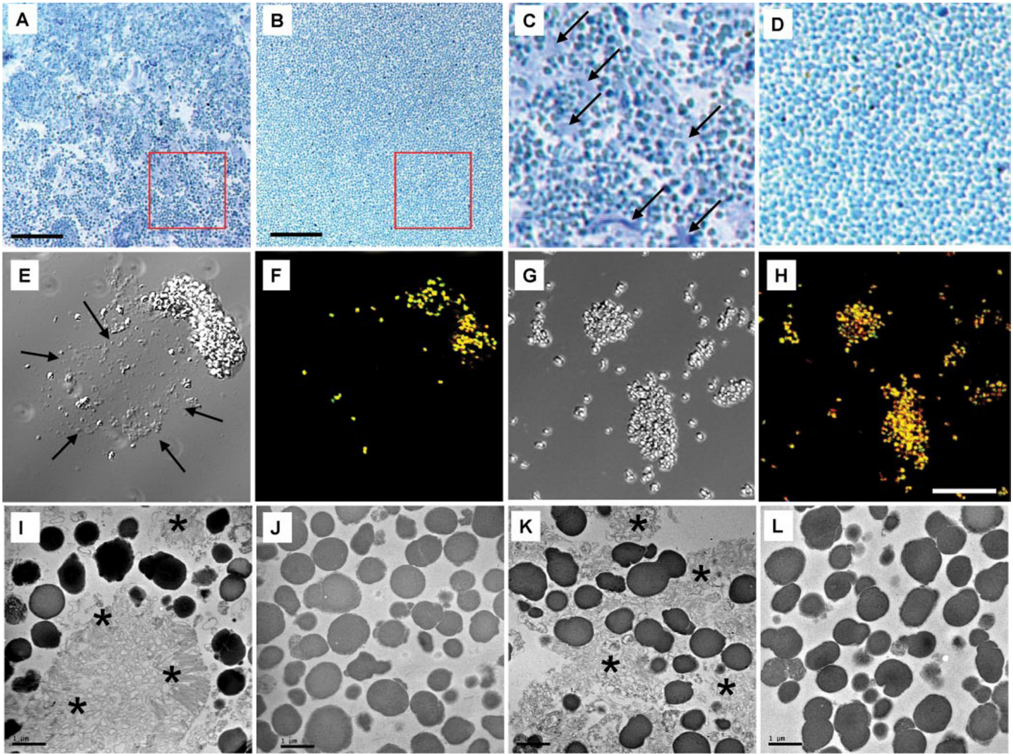
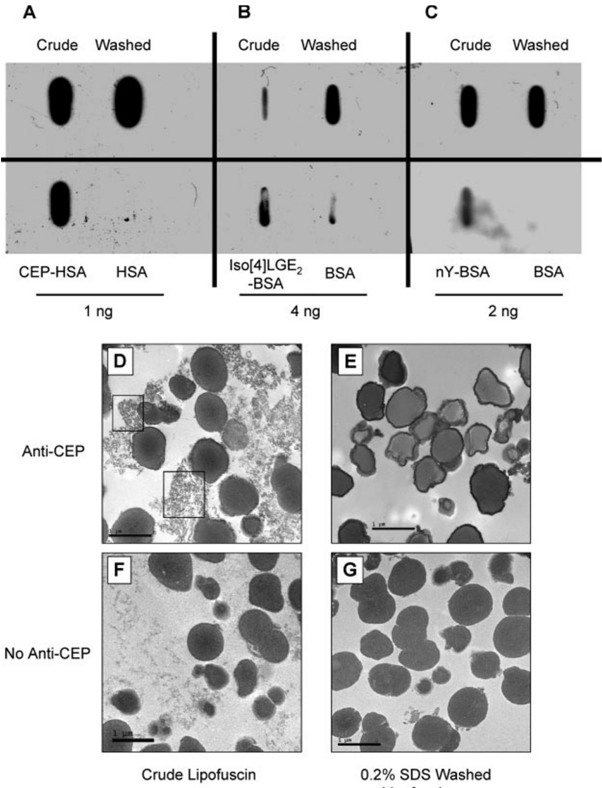
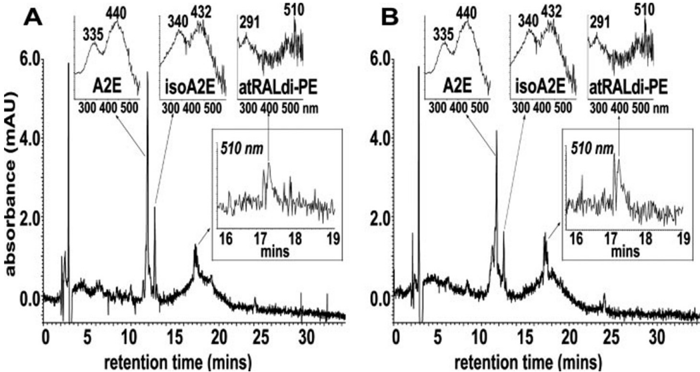
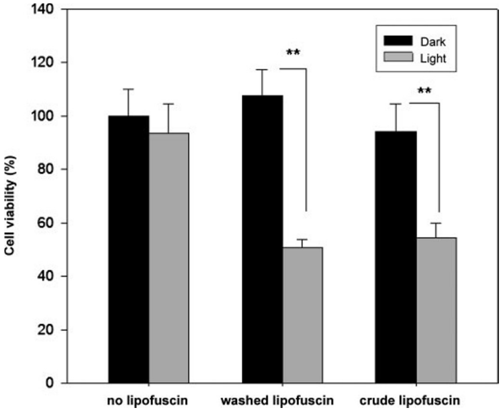
Lipofuscin accumulates with age in the retinal pigment epithelium (RPE) in discrete granular organelles and may contribute to age-related macular degeneration. Because previous studies suggest that lipofuscin contains protein that may impact pathogenic mechanisms, we pursued proteomics analysis of lipofuscin. The composition of RPE lipofuscin and its mechanisms of pathogenesis are poorly understood in part because of the heterogeneity of isolated preparations. We purified RPE lipofuscin granules by treatment with proteinase K or SDS and showed by light, confocal, and transmission electron microscopy that the purified granules are free of extragranular material and associated membranes. Crude and purified lipofuscin preparations were quantitatively compared by (i) LC MS/MS proteomics analyses, (ii) immunoanalyses of oxidative protein modifications, (iii) amino acid analysis, (iv) HPLC of bisretinoids, and (v) assaying phototoxicity to RPE cells. From crude lipofuscin preparations 186 proteins were identified, many of which appeared to be modified. In contrast, very little protein ( approximately 2% (w/w) by amino acid analysis) and no identifiable protein were found in the purified granules, which retained full phototoxicity to cultured RPE cells. Our analyses showed that granules in purified and crude lipofuscin preparations exhibit no statistically significant differences in diameter or circularity or in the content of the bisretinoids A2E, isoA2E, and all-trans-retinal dimer-phosphatidylethanolamine. The finding that the purified granules contain minimal protein yet retain phototoxic activity suggests that RPE lipofuscin pathogenesis is largely independent of associated protein. The purified granules also exhibited oxidative protein modifications, including nitrotyrosine generated from reactive nitrogen oxide species and carboxyethylpyrrole and iso[4]levuglandin E(2) adducts generated from reactive lipid fragments. This finding is consistent with previous studies demonstrating RPE lipofuscin to be a potent generator of reactive oxygen species and supports the hypothesis that such species, including reactive fragments from lipids and retinoids, contribute to the mechanisms of RPE lipofuscin pathogenesis.
Overview
The claims and statistics of this paper haven’t been checked yet.
Free: it reads the open-access text and checks the first 5 claims that cite a source we can check. Create a free account to check every claim.
Integrity signals
Registry
Cites
Statistics
Figures
Verification
Claims the paper makes
The claims and statistics of this paper haven’t been checked yet.
Free: it reads the open-access text and checks the first 5 claims that cite a source we can check. Create a free account to check every claim.
Claims other papers make about this one
Each is checked against this paper’s own text: does it say what the citing paper says it does?
The source backs part of the claim, not all of it — or backs it for a different population, condition or comparison.
In the citing paper
“Indeed, the primary fluorescent components of lipofuscin are all-trans-retinal conjugates such as A2E and RALdi.542”
From Chemistry of the Retinoid (Visual) Cycle (2014) · cites this paper as [542]
Experimental — accuracy not yet measured
Self-check
Percentages, sums and reported differences re-computed from the paper’s own numbers.
The self-check needs the paper’s full text.
Citations
Cites
Drusen proteome analysis: an approach to the etiology of age-related macular degeneration
Crabb, J. W., Miyagi, M., Gu, X., Shadrach, K., West, K. A., Sakaguchi, H., Kamei, M., Hasan, A., Yan, L., Rayborn, M. E., et al. (2002) · Proceedings of the National Academy of Sciences · doi:10.1073/pnas.222551899 · Cited by 1,208
Self-citationBrunk, U. T., & Terman, A. (2002) · Free Radical Biology and Medicine · doi:10.1016/s0891-5849(02)00959-0 · Cited by 919
Oxidative damage-induced inflammation initiates age-related macular degeneration
Hollyfield, J. G., Bonilha, V. L., Rayborn, M. E., Yang, X., Shadrach, K. G., Lu, L., Ufret, R. L., Salomon, R. G., & Perez, V. L. (2008) · Nature Medicine · doi:10.1038/nm1709 · Cited by 710
Self-citationGarin, J., Diez, R., Kieffer, S., Dermine, J.-F., Duclos, S., Gagnon, E., Sadoul, R., Rondeau, C., & Desjardins, M. (2001) · The Journal of Cell Biology · doi:10.1083/jcb.152.1.165 · Cited by 684
Sparrow, J. R., Nakanishi, K., & Parish, C. A. (2000) · PubMed · Cited by 662
Self-citationRPE lipofuscin and its role in retinal pathobiology
Sparrow, J. R., & Boulton, M. (2005) · Experimental Eye Research · doi:10.1016/j.exer.2005.01.007 · Cited by 644
Self-citation(2011) · SpringerReference · doi:10.1007/springerreference_36603 · Cited by 486
Parish, C. A., Hashimoto, M., Nakanishi, K., Dillon, J., & Sparrow, J. (1998) · Proceedings of the National Academy of Sciences · doi:10.1073/pnas.95.25.14609 · Cited by 474
Self-citationCurrent protocols in protein science
Howland, J. L. (1996) · Biochemical Education · doi:10.1016/s0307-4412(96)80025-2 · Cited by 462
Retinal age pigments generated by self-assembling lysosomotropic detergents
Eldred, G. E., & Lasky, M. R. (1993) · Nature · doi:10.1038/361724a0 · Cited by 457
Blue Light Induces Mitochondrial DNA Damage and Free Radical Production in Epithelial Cells
Godley, B. F., Shamsi, F. A., Liang, F.-Q., Jarrett, S. G., Davies, S., & Boulton, M. (2005) · Journal of Biological Chemistry · doi:10.1074/jbc.m502194200 · Cited by 444
Self-citationBlue Light-induced Reactivity of Retinal Age Pigment
Rózanowska, M., Jarvis-Evans, J., Korytowski, W., Boulton, M. E., Burke, J. M., & Sarna, T. (1995) · Journal of Biological Chemistry · doi:10.1074/jbc.270.32.18825 · Cited by 427
Self-citationZhou, J., Jang, Y. P., Kim, S. R., & Sparrow, J. R. (2006) · Proceedings of the National Academy of Sciences · doi:10.1073/pnas.0604255103 · Cited by 358
Self-citationPhotodamage to human RPE cells by A2-E, a retinoid component of lipofuscin.
Schütt, F., Davies, S., Kopitz, J., Holz, F. G., & Boulton, M. (2000) · Investigative Ophthalmology & Visual Science · Cited by 329
Self-citationGu, X., Meer, S. G., Miyagi, M., Rayborn, M. E., Hollyfield, J. G., Crabb, J. W., & Salomon, R. G. (2003) · Journal of Biological Chemistry · doi:10.1074/jbc.m305460200 · Cited by 325
Self-citationSparrow, J. R., & Cai, B. (2001) · PubMed · Cited by 304
Self-citationHalliwell, B., Zhao, K., & Whiteman, M. (1999) · Free Radical Research · doi:10.1080/10715769900301221 · Cited by 275
Schutt, F., Bergmann, M., Holz, F. G., & Kopitz, J. (2003) · Investigative Opthalmology & Visual Science · doi:10.1167/iovs.03-0172 · Cited by 240
Radu, R. A., Mata, N. L., Nusinowitz, S., Liu, X., Sieving, P. A., & Travis, G. H. (2003) · Proceedings of the National Academy of Sciences · doi:10.1073/pnas.0737855100 · Cited by 227
Radu, R. A., Han, Y., Bui, T. V., Nusinowitz, S., Bok, D., Lichter, J., Widder, K., Travis, G. H., & Mata, N. L. (2005) · Investigative Opthalmology & Visual Science · doi:10.1167/iovs.05-0820 · Cited by 225
Lipofuscin is a photoinducible free radical generator
Boulton, M., Dontsov, A., Jarvis-Evans, J., Ostrovsky, M., & Svistunenko, D. (1993) · Journal of Photochemistry and Photobiology B: Biology · doi:10.1016/1011-1344(93)87085-2 · Cited by 222
Self-citationPeroxidation of Subcellular Organelles: Formation of Lipofuscinlike Fluorescent Pigments
Chio, K. S., Reiss, U., Fletcher, B., & Tappel, A. L. (1969) · Science · doi:10.1126/science.166.3912.1535 · Cited by 210
Ocular Age Pigment “A2-E”: An Unprecedented Pyridinium Bisretinoid
Sakai, N., Decatur, J., Nakanishi, K., & Eldred, G. E. (1996) · Journal of the American Chemical Society · doi:10.1021/ja953480g · Cited by 206
PHOTOPHYSICAL STUDIES ON HUMAN RETINAL LIPOFUSCIN
Gaillard, E. R., Atherton, S. J., Eldred, G., & Dillon, J. (1995) · Photochemistry and Photobiology · doi:10.1111/j.1751-1097.1995.tb02343.x · Cited by 203
Photocytotoxicity of lipofuscin in human retinal pigment epithelial cells
Davies, S., Elliott, M. H., Floor, E., Truscott, T. G., Zareba, M., Sarna, T., Shamsi, F. A., & Boulton, M. E. (2001) · Free Radical Biology and Medicine · doi:10.1016/s0891-5849(01)00582-2 · Cited by 198
Self-citationAgrawal, G. K., Rakwal, R., Yonekura, M., Kubo, A., & Saji, H. (2002) · PROTEOMICS · doi:10.1002/1615-9861(200208)2:8<947::aid-prot947>3.0.co;2-j · Cited by 198
The Photoreactivity of the Retinal Age Pigment Lipofuscin
Wassell, J., Davies, S., Bardsley, W., & Boulton, M. (1999) · Journal of Biological Chemistry · doi:10.1074/jbc.274.34.23828 · Cited by 173
Self-citationThe lipofuscin fluorophore A2E perturbs cholesterol metabolism in retinal pigment epithelial cells
Lakkaraju, A., Finnemann, S. C., & Rodriguez-Boulan, E. (2007) · Proceedings of the National Academy of Sciences · doi:10.1073/pnas.0702504104 · Cited by 162
Sieving, P. A. (2001) · Proceedings of the National Academy of Sciences · doi:10.1073/pnas.041606498 · Cited by 152
Kim, S. R., Jang, Y. P., Jockusch, S., Fishkin, N. E., Turro, N. J., & Sparrow, J. R. (2007) · Proceedings of the National Academy of Sciences · doi:10.1073/pnas.0708714104 · Cited by 145
Self-citation(2001) · PubMed · Cited by 136
Ebrahem, Q., Renganathan, K., Sears, J., Vasanji, A., Gu, X., Lu, L., Salomon, R. G., Crabb, J. W., & Anand-Apte, B. (2006) · Proceedings of the National Academy of Sciences · doi:10.1073/pnas.0601552103 · Cited by 117
Self-citationNitric oxide and peroxynitrite
Beckman, J. S. (1993) · Free Radical Biology and Medicine · doi:10.1016/0891-5849(93)90271-u · Cited by 115
Small Molecule RPE65 Antagonists Limit the Visual Cycle and Prevent Lipofuscin Formation
Maiti, P., Kong, J., Kim, S. R., Sparrow, J. R., Allikmets, R., & Rando, R. R. (2006) · Biochemistry · doi:10.1021/bi0518545 · Cited by 106
Self-citationHydroxynonenal inactivates cathepsin B by forming Michael adducts with active site residues
Crabb, J. W., O'Neil, J., Miyagi, M., West, K., & Hoff, H. F. (2002) · Protein Science · doi:10.1110/ps.4400102 · Cited by 105
Self-citationSpectroscopic and morphological studies of human retinal lipofuscin granules
Haralampus-Grynaviski, N. M., Lamb, L. E., Clancy, C. M. R., Skumatz, C., Burke, J. M., Sarna, T., & Simon, J. D. (2003) · Proceedings of the National Academy of Sciences · doi:10.1073/pnas.0630280100 · Cited by 104
Proteome analysis of lipofuscin in human retinal pigment epithelial cells
Schutt, F., Ueberle, B., Schnölzer, M., Holz, F. G., & Kopitz, J. (2002) · FEBS Letters · doi:10.1016/s0014-5793(02)03312-4 · Cited by 102
The photoreactivity of ocular lipofuscin
Boulton, M. E., Rôżanowska, M., Różanowski, B., & Wess, T. J. (2004) · Photochemical & Photobiological Sciences · doi:10.1039/b400108g · Cited by 85
Self-citationWarburton, S., Davis, W. E., Southwick, K., Xin, H., Woolley, A. T., Burton, G. F., & Thulin, C. D. (2007) · PubMed Central · Cited by 84
Bazán, H. E. P., Bazan, N. G., Feeney-Burns, L., & Berman, E. R. (1990) · PubMed · Cited by 82
Salomon, R. G., Batyreva, E., Kaur, K., Sprecher, D. L., Schreiber, M. J., Crabb, J. W., Penn, M. S., DiCorleto, A. M., Hazen, S. L., & Podrez, E. A. (2000) · Biochimica et Biophysica Acta (BBA) - Molecular and Cell Biology of Lipids · doi:10.1016/s1388-1981(00)00038-x · Cited by 78
Self-citationLevuglandin E2 crosslinks proteins
Iyer, R. S., Ghosh, S. K., & Salomon, R. G. (1989) · Prostaglandins · doi:10.1016/0090-6980(89)90096-8 · Cited by 78
Self-citationKlimanskaya, I. V. (2006) · Methods in enzymology on CD-ROM/Methods in enzymology · doi:10.1016/s0076-6879(06)18011-8 · Cited by 72
Warburton, S., Southwick, K., Hardman, R. M., Secrest, A. M., Grow, R. K., Xin, H., Woolley, A. T., Burton, G. F., & Thulin, C. D. (2005) · PubMed · Cited by 70
Salomon, R. G., Sha, W., Brame, C. J., Kaur, K., Subbanagounder, G., O'NEIL, J. A., Hoff, H. F., & Roberts, L. J. (1999) · Journal of Biological Chemistry · doi:10.1074/jbc.274.29.20271 · Cited by 62
Self-citationFormation of DNA-protein cross-links in mammalian cells by levuglandin E2
Murthi, K. K., Friedman, L. R., Oleinick, N. L., & Salomon, R. G. (1993) · Biochemistry · doi:10.1021/bi00066a034 · Cited by 56
Self-citationRetinal Degenerations: Biology, Diagnostics and Therapeutics
(2008) · Clinical and Experimental Optometry · doi:10.1111/j.1444-0938.2008.00307.x · Cited by 39
Proteomic analysis of mature melanosomes from the retinal pigmented epithelium
Azarian, S. M., McLeod, I., Lillo, C., Gibbs, D., Yates, J. R., & Williams, D. S. (2006) · Journal of Proteome Research · doi:10.1021/pr0502323 · Cited by 35
Levuglandin E2 inhibits mitosis and microtubule assembly
Murthi, K. K., Salomon, R. G., & Sternlicht, H. (1990) · Prostaglandins · doi:10.1016/0090-6980(90)90022-n · Cited by 33
Self-citationCrabb, J. W., West, K. A., Dodson, W. S., & Hulmes, J. D. (1997) · Current Protocols in Protein Science · doi:10.1002/0471140864.ps1109s07 · Cited by 31
Self-citationVisual Transduction and Age-Related Changes in Lipofuscin
RóŻanowski, M., & Różanowski, B. (2008) · Humana Press eBooks · doi:10.1007/978-1-59745-374-5_20 · Cited by 13
Research works printed but not linked: 1
- Journet, A., Chapel, A., Kieffer, S., Roux, F., and Garin, J. (2002) Proteomic analysis of human lysosomes: application to monocytic and breast can- cer cells. Proteomics 2, 1026 -1040 · DOI · Paper page
Cited by
The Retinal Pigment Epithelium in Health and Disease
R. Sparrrow, J., Hicks, D., & P. Hamel, C. (2010) · Current Molecular Medicine · doi:10.2174/156652410793937813 · Cited by 618
Abundant Lipid and Protein Components of Drusen
Wang, L., Clark, M. E., Crossman, D. K., Kojima, K., Messinger, J. D., Mobley, J. A., & Curcio, C. A. (2010) · PLoS ONE · doi:10.1371/journal.pone.0010329 · Cited by 383
The bisretinoids of retinal pigment epithelium
Sparrow, J. R., Gregory-Roberts, E., Yamamoto, K., Blonska, A., Ghosh, S. K., Ueda, K., & Zhou, J. (2012) · Progress in Retinal and Eye Research · doi:10.1016/j.preteyeres.2011.12.001 · Cited by 392
Self-citationThe susceptibility of the retina to photochemical damage from visible light
Hunter, J. J., Morgan, J. I. W., Merigan, W. H., Sliney, D. H., Sparrow, J. R., & Williams, D. R. (2012) · Progress in Retinal and Eye Research · doi:10.1016/j.preteyeres.2011.11.001 · Cited by 355
Self-citationChemistry of the Retinoid (Visual) Cycle
Kiser, P. D., Golczak, M., & Palczewski, K. (2014) · Chemical Reviews · doi:10.1021/cr400107q · Cited by 353
Metadata
- Authors
- Ng, K.-P., Gugiu, B., Renganathan, K., Davies, M. W., Gu, X., Crabb, J. S., Kim, S. R., Różanowska, M. B., Bonilha, V. L., Rayborn, M. E., Salomon, R. G., Sparrow, J. R., Boulton, M. E., Hollyfield, J. G., & Crabb, J. W.
- Affiliations
- Cleveland Clinic (US)
- Cardiff University (GB)
- Columbia University (US)
- Case Western Reserve University (US)
- The University of Texas Medical Branch at Galveston (US)
- Corresponding author
- Crabb, John W.
- ORCID
- Venue
- Molecular & Cellular Proteomics
- Publisher
- Elsevier BV
- Published
- 2008-07
- Volume
- 7
- Issue
- 7
- Pages
- 1397-1405
- ISSN
- 1535-9476 (ISSN-L)
- PMC
- PMC2493379
- OpenAlex
- W2130071340
- Cited by
- 162
- References
- 56
- Citations by year
- 2026: 4 · 2025: 3 · 2024: 12 · 2023: 5 · 2022: 9 · 2021: 12 · 2020: 8 · 2019: 7 · 2018: 6 · 2017: 6 · 2016: 7 · 2015: 9 · 2014: 15 · 2013: 10 · 2012: 16
- FWCI
- 11.14
- Type
- journal article
- Language
- en
- Open access
- hybrid
- doi.org
- Licence
- cc-by
- www.elsevier.com/tdm/userlicense/1.0/ (tdm)
- www.elsevier.com/legal/tdmrep-license (tdm)
- creativecommons.org/licenses/by/4.0/ (vor, 4437 d)
- Locations
- Molecular & Cellular Proteomics (publishedVersion, cc-by)
- Europe PMC (PubMed Central) (publishedVersion)
- PubMed Central (publishedVersion)
- PubMed (publishedVersion)
- Funders
- Foundation Fighting Blindness
- Research to Prevent Blindness (EY015638)
- Cleveland Clinic
- Cleveland Clinic Foundation
- National Institutes of Health (EY015638, EY017153)
- Lerner Research Institute, Cleveland Clinic
- National Eye Institute (R21EY017153, R56EY014240, EY014239, R01EY012951, EY 015638, EY-016813, EY 014240, EY012951, EY017153, R24EY015638, R01EY014239, R01EY016813, R01EY014240)
- National Institute of General Medical Sciences (R01GM021249, GM021249)
- Topics
- Health Sciences › Medicine › Ophthalmology › Retinal Diseases and Treatments
- Health Sciences › Medicine › Ophthalmology › Retinal Development and Disorders
- Health Sciences › Medicine › Biochemistry (medical) › Antioxidant Activity and Oxidative Stress
- Keywords
- lipofuscin, retinal pigment epithelium, age-related macular degeneration, lipofuscin granules, protein oxidation, nitrotyrosine, reactive oxygen species, phototoxicity, bisretinoids, A2E, protein purification
- MeSH terms
- Aged, Amino Acid Sequence, Cell Survival, Eye Proteins, Humans, Light, Lipofuscin, Oxidation-Reduction, Pigment Epithelium of Eye, Protein Processing, Post-Translational, Retinoids, Proteomics
About these checks
Registry, retraction, Cites and statistics results are computed, not judged, with one exception: a printed reference that no index lists is read once by a model before it counts as a citation error. Claims are extracted by a model and kept only when their quote appears verbatim in the text; each cited source is then checked, with a model’s help, for whether it says what the claim relies on. Those verdicts can be wrong — read the claim’s quote and the cited source before relying on one.
Statistics and arithmetic are recomputed, not judged.
Confidence bands are shown only for fields calibrated on our annotated test set. None is calibrated yet, so no band is shown.
What counts as a claim ›How we measure confidence ›How we check this ›
Are you an author, or do you see a problem with this page? Request a review
Data sources
Bibliographic data: Semantic Scholar, OpenAlex, Crossref.
Contains information from the Semantic Scholar Academic Graph Datasets, made available under the ODC Attribution License (ODC-BY 1.0).
Semantic Scholar’s data is described in: Kinney, R., et al. (2023). The Semantic Scholar Open Data Platform. arXiv:2301.10140.
