

Hypoxic Tumor Cell Modulates Its Microenvironment to Enhance Angiogenic and Metastatic Potential by Secretion of Proteins and Exosomes
Open accessThe DOI matches its Crossref record; 72 of the 72 references it cites were found in a registry or an index.
Abstract
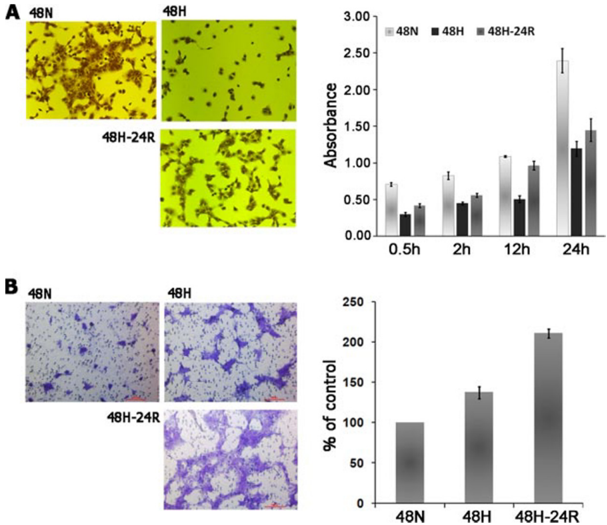
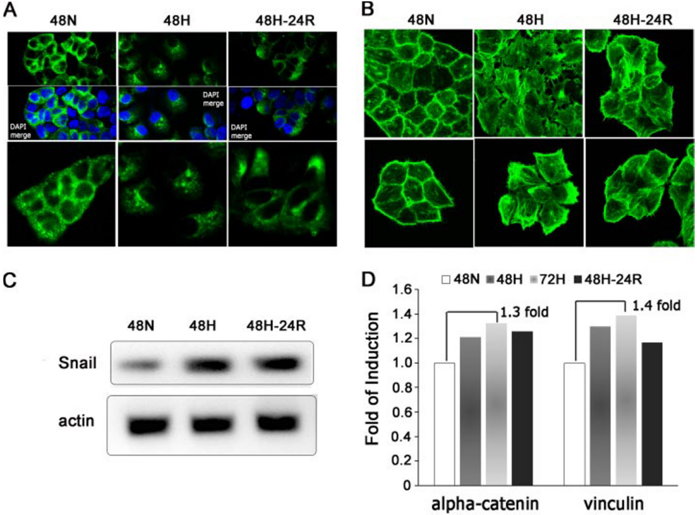
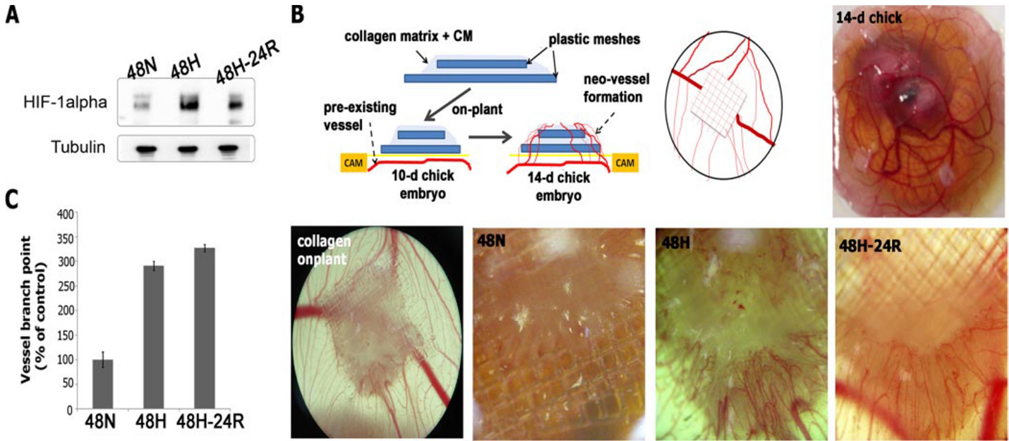
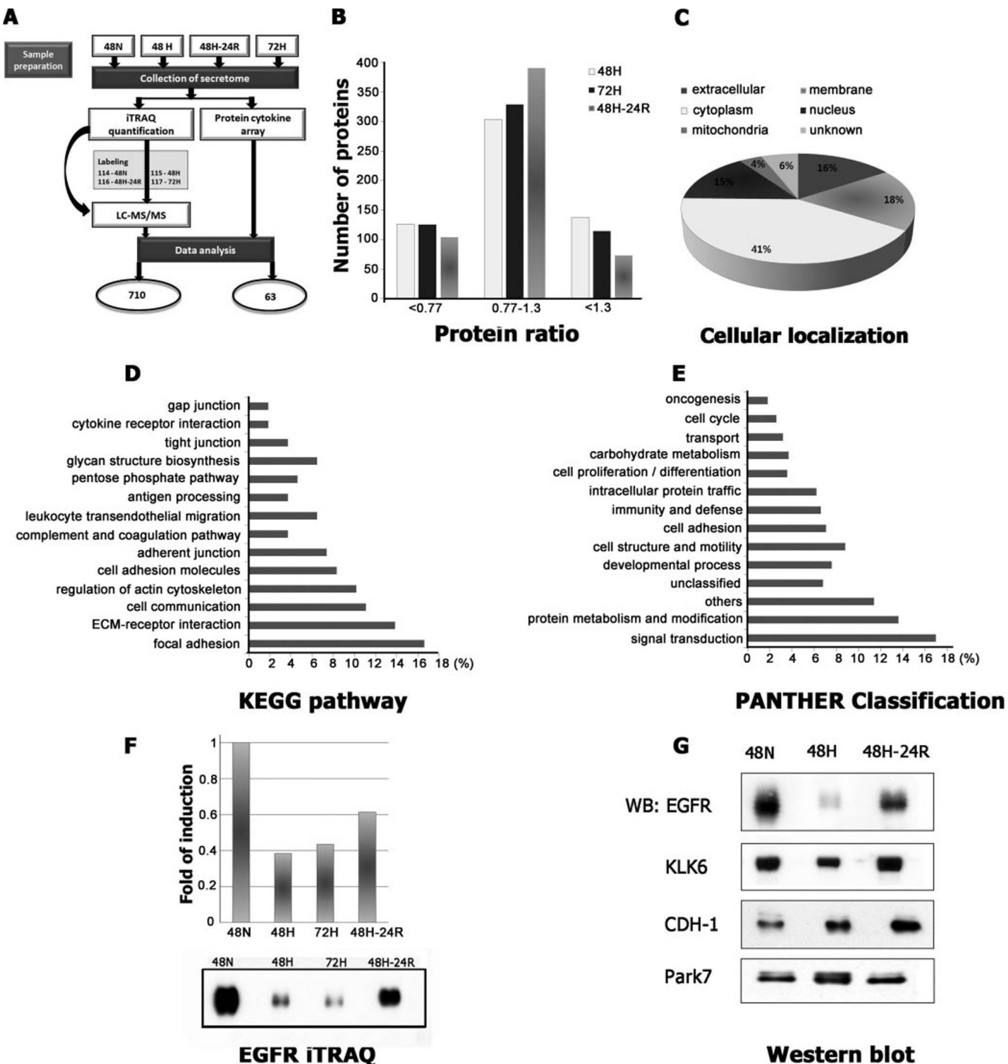
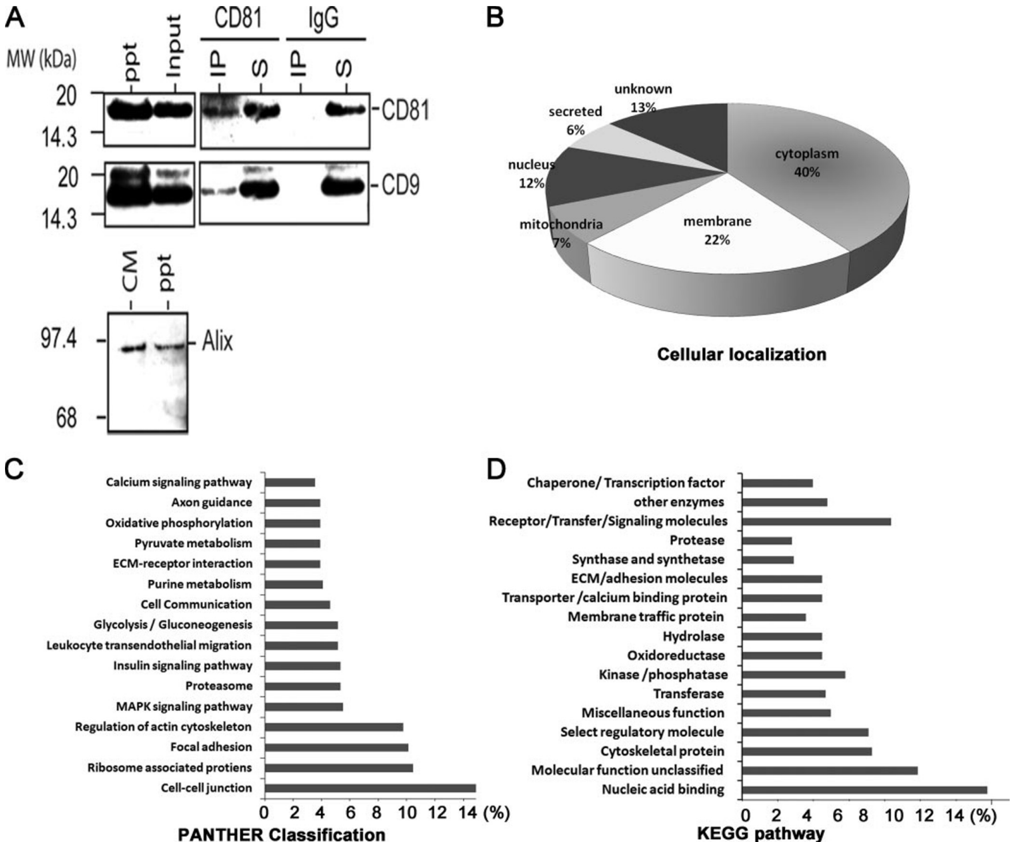
Under hypoxia, tumor cells produce a secretion that modulates their microenvironment to facilitate tumor angiogenesis and metastasis. Here, we observed that hypoxic or reoxygenated A431 carcinoma cells exhibited enhanced angiogenic and metastatic potential such as reduced cell-cell and cell-extracellular matrix adhesion, increased invasiveness, and production of a secretion with increased chorioallantoic membrane angiogenic activity. Consistent with these observations, quantitative proteomics revealed that under hypoxia the tumor cells secreted proteins involved in angiogenesis, focal adhesion, extracellular matrix-receptor interaction, and immune cell recruitment. Unexpectedly, the secreted proteins were predominantly cytoplasmic and membrane proteins. Ultracentrifugation at 100,000 x g precipitated 54% of the secreted proteins and enriched for many exosome-associated proteins such as the tetraspanins and Alix and also proteins with the potential to facilitate angiogenesis and metastasis. Two tetraspanins, CD9 and CD81, co-immunoprecipitated. Together, these data suggested that tumor cells secrete proteins and exosomes with the potential to modulate their microenvironment and facilitate angiogenesis and metastasis.
Overview
The claims and statistics of this paper haven’t been checked yet.
Free: it reads the open-access text and checks the first 5 claims that cite a source we can check. Create a free account to check every claim.
Integrity signals
Registry
Cites
Statistics
Figures
Verification
Claims the paper makes
The claims and statistics of this paper haven’t been checked yet.
Free: it reads the open-access text and checks the first 5 claims that cite a source we can check. Create a free account to check every claim.
Claims other papers make about this one
Each is checked against this paper’s own text: does it say what the citing paper says it does?
The source backs part of the claim, not all of it — or backs it for a different population, condition or comparison.
In the citing paper
“Hypoxia stimulates the release of extracellular vesicles that promote angiogenesis [93–97] and increased exosome formation by hypoxic cancer cells requires HIF activity [96, 98], but the relevant HIF target genes have not been identified.”
From The hypoxic tumor microenvironment: A driving force for breast cancer progression (2016) · cites this paper as [94]
Experimental — accuracy not yet measuredThe source backs part of the claim, not all of it — or backs it for a different population, condition or comparison.
In the citing paper
“Previous studies implicated hypoxia-induced extracellular vesicle formation as a means by which cancer cells influence the phenotype of vascular and other stromal cells [93–96], whereas HIF- and RAB22A-dependent microvesicle formation increases the invasive and metastatic properties of a primary breast tumor by transferring the phenotype of hypoxic BCCs to non-hypoxic BCCs [100].”
From The hypoxic tumor microenvironment: A driving force for breast cancer progression (2016) · cites this paper as [94]
Experimental — accuracy not yet measured
Self-check
Percentages, sums and reported differences re-computed from the paper’s own numbers.
The self-check needs the paper’s full text.
Citations
Cites
Hanahan, D., & Weinberg, R. A. (2000) · Cell · doi:10.1016/s0092-8674(00)81683-9 · Cited by 29,219
Skog, J., Würdinger, T., van Rijn, S., Meijer, D. H., Gainche, L., Curry, W. T., Carter, B. S., Krichevsky, A. M., & Breakefield, X. O. (2008) · Nature Cell Biology · doi:10.1038/ncb1800 · Cited by 5,001
Membrane vesicles as conveyors of immune responses
Théry, C., Ostrowski, M., & Segura, E. (2009) · Nature Reviews Immunology · doi:10.1038/nri2567 · Cited by 3,882 · cited 3×
“nase, EEF1A1, HSP70, HSP90, actin, tubulin, Rab proteins, annexins, and MHC class 1 (46) were clearly detected in the ultracentrifuged pellet by LC-MS/MS.”
BackgroundMethodInfluentialMicroenvironmental regulation of metastasis
Joyce, J. A., & Pollard, J. W. (2009) · Nature Reviews Cancer · doi:10.1038/nrc2618 · Cited by 3,684 · cited 2×
“Because emerging evidence implicates Hx as a key inducer of angiogenesis and metastasis in tumors (6) and because extracellular signals emanating from the tumor cells will be necessary in modulating the extracellular matrix (ECM) to facilitate the cell migration during tumor development (7), we focused on elucidating…”
BackgroundModes of resistance to anti-angiogenic therapy
Bergers, G., & Hanahan, D. (2008) · Nature Reviews Cancer · doi:10.1038/nrc2442 · Cited by 2,953 · cited 1×
“For example, prolonged antiVEGF treatment on tumors is known to select for the tumor cells that recruit alternative angiogenesis signaling pathways involving fibroblast growth factor, platelet-derived growth factor (PDGF), and angiopoietins (5).”
BackgroundPANTHER: A Library of Protein Families and Subfamilies Indexed by Function
Thomas, P. D., Campbell, M. J., Kejariwal, A., Mi, H., Karlak, B., Daverman, R., Diemer, K., Muruganujan, A., & Narechania, A. (2003) · Genome Research · doi:10.1101/gr.772403 · Cited by 2,944 · cited 1×
“tional segregation of the secretome subset was performed utilizing the KEGG pathway or PANTHER database (27, 28).”
MethodMatrix metalloproteinases and the regulation of tissue remodelling
Page-McCaw, A., Ewald, A. J., & Werb, Z. (2007) · Nature Reviews Molecular Cell Biology · doi:10.1038/nrm2125 · Cited by 2,630
Intercellular transfer of the oncogenic receptor EGFRvIII by microvesicles derived from tumour cells
Al-Nedawi, K., Meehan, B., Micallef, J., Lhotak, V., May, L., Guha, A., & Rak, J. (2008) · Nature Cell Biology · doi:10.1038/ncb1725 · Cited by 2,034
Molecular requirements for epithelial–mesenchymal transition during tumor progression
Huber, M. A., Kraut, N., & Beug, H. (2005) · Current Opinion in Cell Biology · doi:10.1016/j.ceb.2005.08.001 · Cited by 1,821 · cited 1×
“2A), possibly for gain of cell motility (64).”
BackgroundWebGestalt: an integrated system for exploring gene sets in various biological contexts
Zhang, B., Kirov, S., & Snoddy, J. (2005) · Nucleic Acids Research · doi:10.1093/nar/gki475 · Cited by 1,796 · cited 1×
“tional segregation of the secretome subset was performed utilizing the KEGG pathway or PANTHER database (27, 28).”
Method
Cited by
Items 401–500 of 591
Luhtala, N., & Hunter, T. R. (2018) · PLoS ONE · doi:10.1371/journal.pone.0203290 · Cited by 14
The Development of Extracellular Vesicle-Integrated Biomaterials for Bone Regeneration
Zhou, Y., & Xiao, Y. (2020) · Advances in experimental medicine and biology · doi:10.1007/978-981-15-3262-7_7 · Cited by 14
Wen, B., Tao, R., Liu, Y., & Zhang, Z. (2024) · CytoJournal · doi:10.25259/cytojournal_99_2024 · Cited by 11
“[13] Most cells release exosomes, whereas tumor cells may produce more exosomes to promote their own survival and invasion under hypoxic conditions.”
Sundaramurthi, H., Tonelotto, V., Wynne, K. J., O’Connell, F., O’Reilly, E., Costa-García, M., Kovácsházi, C., Pendino, M., Kittel, Á., Marcone, S., et al. (2023) · Open Research Europe · doi:10.12688/openreseurope.15973.1 · Cited by 13
Chen, Y.-P., Twu, O., & Johnson, P. J. (2018) · mBio · doi:10.1128/mbio.00910-18 · Cited by 13
Xu, N., Li, X., Watanabe, M., Ueki, H., Hu, H., Li, N., Araki, M., Wada, K., Xu, A., Liu, C., et al. (2018) · Europe PMC (PubMed Central) · Cited by 11
Guglielmi, L., Nardella, M., Musa, C., Cifola, I., Porru, M., Cardinali, B., Iannetti, I., Pietro, C. D., Bolasco, G., Palmieri, V., et al. (2020) · Cancers · doi:10.3390/cancers12061635 · Cited by 13
“Indeed, proteomic data are present in the literature, which report the presence of these two molecules in the EVs [54,55] The presence of ZONAB on the surface of sEVs could be involved in their docking onto the membrane of recipient cells.”
BackgroundDai, Y., Chen, Y., Hu, Y., & Zhang, L. (2022) · Regenerative Medicine · doi:10.2217/rme-2022-0141 · Cited by 11
The Functional Importance of Tetraspanins in Exosomes
Rana, S., & Zöller, M. (2012) · Springer eBooks · doi:10.1007/978-1-4614-3697-3_4 · Cited by 20
HLA-G as predisposing for metastasis
Zidi, I., & Amor, N. B. (2011) · Medical Hypotheses · doi:10.1016/j.mehy.2011.03.046 · Cited by 11
“exosomes contain proteins including soluble types but mostly membrane-bound ones [58].”
BackgroundImpact of hypoxia on the molecular content of glioblastoma-derived exosomes
Giulio, S. D., Carata, E., Muci, M., Mariano, S., & Panzarini, E. (2024) · Extracellular Vesicles and Circulating Nucleic Acids · doi:10.20517/evcna.2023.52 · Cited by 11
Charbit, H., & Lavon, I. (2024) · International Journal of Molecular Sciences · doi:10.3390/ijms25147984 · Cited by 12
“These results align with studies demonstrating that cancer cells produce more exosomes under hypoxic conditions, thereby facilitating tumor intercellular communication at a distance, indicating the role of exosomes as vital regulators in hypoxic tumors [54,55].”
ResultExtracellular Vesicle-Based Strategies for Tumor Immunotherapy
Jiramonai, L., Liang, X.-J., & Zhu, M. (2025) · Pharmaceutics · doi:10.3390/pharmaceutics17020257 · Cited by 9
“The secretion of EVs is notably higher under hypoxic conditions in the TME, further facilitating tumor progression [43].”
Chatterjee, M., Gupta, S., Kumar, U., Parashar, D., Maitra, A., & Das, K. (2025) · Critical Reviews in Oncology/Hematology · doi:10.1016/j.critrevonc.2025.104743 · Cited by 12
Oltra, M. R., Martínez-Santos, M., Ybarra, M., Rowland, H., Muriach, M., Romero, F. J., Sancho-Pellúz, J., & Barcia, J. M. (2022) · Antioxidants · doi:10.3390/antiox11050818 · Cited by 10
“Additi nally, under hypoxia A431 cells release more tha 50% f cytosolic proteins related to ngiogenesis as art of the sEVs ca go [38].”
BackgroundAdvances in Exosomal microRNAs and Proteins in Ovarian Cancer Diagnosis, Prognosis, and Treatment
Qin, T., Chen, F., Zhu, J., Ding, Y., & Zhang, Q. (2022) · Current Molecular Medicine · doi:10.2174/1566524022666220628160009 · Cited by 10
Orozco-García, E., van Meurs, D. J., Calderón, J. C., Narváez-Sánchez, R., & Harmsen, M. C. (2023) · Translational Oncology · doi:10.1016/j.tranon.2023.101633 · Cited by 10
Extracellular Vesicle MicroRNA in the Kidney
Oh, S., Lee, C. M., & Kwon, S. (2023) · Comprehensive physiology · doi:10.1002/cphy.c220023 · Cited by 10
Inal, J. M., Fairbrother, U. L., & Heugh, S. (2013) · Biochemical Society Transactions · doi:10.1042/bst20120258 · Cited by 12
A novel immunotoxin reveals a new role for CD321 in endothelial cells
Fukuhara, T., Kim, J., Hokaiwado, S., Nawa, M., Okamoto, H., Kogiso, T., Watabe, T., & Hattori, N. (2017) · PLoS ONE · doi:10.1371/journal.pone.0181502 · Cited by 10
Extracellular Vesicles in Cancer Progression: Are They Part of The Problem or Part of The Solution?
Scholl, J. N., Dias, C. K., Müller, L., Battastini, A. M. O., & Figueiró, F. (2020) · Nanomedicine · doi:10.2217/nnm-2020-0256 · Cited by 12
Ren, Y., Yeoh, K. W., Hao, P., Kon, O. L., & Sze, S. K. (2016) · Journal of Proteome Research · doi:10.1021/acs.jproteome.6b00340 · Cited by 10
Self-citationExosomes, microvesicles, and their friends in solid tumors
Corbeil, D., & Lorico, A. (2019) · Elsevier eBooks · doi:10.1016/b978-0-12-816053-4.00003-1 · Cited by 10
Exploring the Interaction of Tumor-Derived Exosomes and Mesenchymal Stem Cells in Tumor Biology
Papadopoulos, K., Korkolopoulou, P. A., & Piperi, C. (2025) · International Journal of Molecular Sciences · doi:10.3390/ijms26073095 · Cited by 9
“Although the majority of these secreted proteins were of cytoplasmic or membrane origin [35], the hypoxic environment acts as the trigger for malignant cells to produce hypoxia-induced exosomes with miR-210, a process possibly mediated by HIF-1a [36].”
Proteomics in decoding cancer: A review
Gheybi, E., Hosseinzadeh, P., Tayebi-Khorrami, V., Rostami, M., & Soukhtanloo, M. (2025) · Clinica Chimica Acta · doi:10.1016/j.cca.2025.120302 · Cited by 10
Feng, L., Wang, Y., Wang, X., Li, B., Liu, Y., Zhang, W., Ji, J., Shao, L., & Guo, X. (2025) · International Immunopharmacology · doi:10.1016/j.intimp.2025.115416 · Cited by 11
Xu, Y., Miller, C. P., Xue, J., Zheng, Y. Y., Warren, E. H., Tykodi, S. S., & Akilesh, S. (2024) · BJC Reports · doi:10.1038/s44276-024-00047-9 · Cited by 10
“We applied fl uorescently labeled leukocytes to autologous labeled TECs or NECs and studied their interaction in the IncuCyte imaging platform (Fig.”
MethodNeuronal p60TRP expression modulates cardiac capacity
Mishra, M., Manavalan, A., Sze, S. K., & Heese, K. (2011) · Journal of Proteomics · doi:10.1016/j.jprot.2011.11.034 · Cited by 9
Self-citationTonry, C. L., Armstrong, J., & Pennington, S. R. (2017) · Oncotarget · doi:10.18632/oncotarget.14574 · Cited by 10
Mirzaei, H., Rahimian, N., Mirzaei, H. R., Nahand, J. S., & Hamblin, M. R. (2022) · Synthesis lectures on biomedical engineering · doi:10.1007/978-3-031-79177-2_6 · Cited by 10
Toraskar, J., Magnussen, S. N., Hagen, L., Sharma, A., Hoang, L., Bjørkøy, G., Svineng, G., & Steigedal, T. S. (2019) · Journal of Proteome Research · doi:10.1021/acs.jproteome.8b00859 · Cited by 11
Mikoda, N., Sonoda, H., Oshikawa, S., Hoshino, Y., Matsuzaki, T., & Ikeda, M. (2019) · Physiological Reports · doi:10.14814/phy2.14092 · Cited by 9
“Park et al. (2010) have found that hypoxia facilitated the release of EVs from tumor cells.”
BackgroundProtein content of the Oenococcus oeni extracellular vesicles-enriched fraction
Mencher-Beltrán, A., Mejias‐Ortiz, M., Morales, P., Tronchoni, J., & Gonzalez, R. (2022) · Food Microbiology · doi:10.1016/j.fm.2022.104038 · Cited by 8
Exosome-based cancer vaccine: a cell-free approach
Sonar, S., Das, A., Kalele, K., & Subramaniyan, V. (2025) · Molecular Biology Reports · doi:10.1007/s11033-025-10519-x · Cited by 9
“Hypoxia also triggers the release of tumor-derived exosomes (TEXs), nano-sized vesicles that mediate communication within the TME [49, 50].”
The Pleiotropic Effects of miRNAs on Tumor Angiogenesis
Yin, R., Guo, L., Zhang, W., & Zheng, J. (2015) · Journal of Cellular Biochemistry · doi:10.1002/jcb.24679 · Cited by 8
Idiosyncratic Adverse Drug Reactions
Mak, A., & Uetrecht, J. (2017) · Elsevier eBooks · doi:10.1016/b978-0-12-801238-3.64242-3 · Cited by 8
Peiris, H. N., Vaswani, K., Holland, O. J., Koh, Y. Q., Almughlliq, F. B., Reed, S., & Mitchell, M. D. (2020) · Prostaglandins Leukotrienes and Essential Fatty Acids · doi:10.1016/j.plefa.2020.102059 · Cited by 8
Matas‐Nadal, C., Bech‐Serra, J. J., Gatius, S., Gómez, X., Ribes-Santolaria, M., Guasch‐Vallés, M., Pedraza, N., Casanova, J. M., de la Torre, C., Garí, E., et al. (2023) · Molecular & Cellular Proteomics · doi:10.1016/j.mcpro.2023.100547 · Cited by 9
“Significantly, this protein is secreted by normal keratinocytes and A431 cells derived from a skin SCC (40, 41), and it has been proposed that exosomes containing SFN have MMP-1 stimulatory activity in fibroblasts (41).”
BackgroundSaadeldin, I. M., Pavani, K. C., Gnagnarelli, J., Ehab, S., Assiri, A. M., & Soom, A. V. (2025) · Stem Cell Reviews and Reports · doi:10.1007/s12015-025-10844-5 · Cited by 7
Role of exosomes and microvesicles in carcinogenesis
Никитина, И. Г., Sabirova, E. Y., Карпов, В. Л., Lisitsyn, N. A., & Beresten, S. F. (2013) · Molecular Biology · doi:10.1134/s0026893313050166 · Cited by 7
“It was demonstrated that the migration of endothe lial cells to regions of tumor hypoxia is considerably enhanced upon changes in content of cellular adhe sion protein [52, 53] and the inhibition of Notch sig naling [54] induced by fusion with TEMs.”
Macrophage subtypes in recurrent nodular basal cell carcinoma after Mohs micrographic surgery
Padoveze, E. H., Chiacchio, N. G. D., Ocampo-Garza, J. A., Cernea, S. S., Belda, W., & Sotto, M. N. (2017) · International Journal of Dermatology · doi:10.1111/ijd.13790 · Cited by 10
DEVELOPMENT OF CANCER DIAGNOSTICS AND MONITORING METHODS BASED ON ANALYSIS OF TUMOR-DERIVED EXOSOMES
Malek, A. V., Samsonov, R. B., & Chiesi, A. (2015) · Russian Journal of Biotherapy · doi:10.17650/1726-9784-2015-14-4-9-18 · Cited by 7
EV-Mediated Chemoresistance in the Tumor Microenvironment: Is NF-κB a Player?
Nolfi, M. D. V., Vecchiotti, D., Flati, I., Verzella, D., Padova, M. D., Alesse, E., Capece, D., & Zazzeroni, F. (2022) · Frontiers in Oncology · doi:10.3389/fonc.2022.933922 · Cited by 8
Exosomes: New Biomarkers for Targeted Cancer Therapy
Martinelli, C. (2017) · Springer eBooks · doi:10.1007/978-3-319-53082-6_6 · Cited by 12
Pérez-Ruiz, E., Gutiérrez, V., Muñoz, M., Oliver, J., Sánchez, M. Á., Gálvez, L., Rueda‐Domínguez, A., & Barragán, I. (2021) · Biomedicines · doi:10.3390/biomedicines9101478 · Cited by 7
“Exosomes secreted by tumour cells are involved in angiogenesis and the development of metastasis under hypoxic conditions [48].”
BackgroundTumor-Derived Exosome and Immune Modulation
Chauhan, D. S., Mudaliar, P., Basu, S., Aich, J., & Paul, M. K. (2022) · Physiology · doi:10.5772/intechopen.103718 · Cited by 8
Damodaran, S., Weeramange, C. E., Kenny, L., Vasani, S. S., Hughes, B. G. M., Breik, O., & Punyadeera, C. (2025) · Cancer and Metastasis Reviews · doi:10.1007/s10555-025-10305-y · Cited by 6
“Cellular stressors—including hypoxia, acidosis, and exposure to chemotherapy—significantly upregulate EV production, potentially enhancing the abundance of tumour-derived EV-DNA in circulation [149, 150].”
Metastatic organotropism in peritoneal metastasis: Paget’s hypothesis revisited
Kim, D., Kaushal, D., & Wilson, R. B. (2026) · Clinical and Experimental Medicine · doi:10.1007/s10238-025-01868-9 · Cited by 7
“…shear stress, extracellular acidosis, basement membrane detachment, mitochondrial oxidative stress, nicotinamide adenine dinucleotide phosphate oxidase (NOX) activation, inflammation, loss of ATP production, generation of reactive oxygen species, the Warburg effect, and hyperthermia [50, 53–61].”
Gila, F., Khoddam, S., Jamali, Z., Ghasemian, M., Shakeri, S., Dehghan, Z., & Fallahi, J. (2025) · Personalized Medicine · doi:10.1080/17410541.2025.2459050 · Cited by 9
Advances in the treatment of brain metastases in EGFR-mutant non-small cell lung cancer
Wang, H., Wang, L., Gao, N., Li, H., Yang, F., Liu, Z., Li, H., & Li, X. (2025) · Lung Cancer · doi:10.1016/j.lungcan.2025.108641 · Cited by 9
Carrasco, A. G. M., Otake, A. H., Macedo-da-Silva, J., Santiago, V. F., Palmisano, G., Andrade, L. N. D. S., & Chammas, R. J. (2023) · International Journal of Molecular Sciences · doi:10.3390/ijms241613022 · Cited by 6
“EVs also participate in cancer progression processes such as tumor invasion, growth, and metastasis [12,13].”
BackgroundEmerging Roles of Small Extracellular Vesicles in Gastrointestinal Cancer Research and Therapy
Schneider, N., Hermann, P. C., Eiseler, T., & Seufferlein, T. T. W. (2024) · Cancers · doi:10.3390/cancers16030567 · Cited by 7
“Inducible secretion of sEVs is also dependent on several exogenous factors, like cellular stresses, including low pH, DNA damage, hypoxia, or increased intracellular Ca 2+ concentration [13,32–35].”
BackgroundPeixoto, A., Cotton, S., Santos, L. L., & Ferreira, J. A. (2021) · Advances in experimental medicine and biology · doi:10.1007/978-3-030-73119-9_1 · Cited by 6
Extracellular Vesicles in Haematological Disorders: A Friend or a Foe?
Λαζανά, Ι. (2022) · International Journal of Molecular Sciences · doi:10.3390/ijms231710118 · Cited by 7
“Finally, EVs play an important role in leukaemia cell survival by promoting angiogenesis, either directly, by delivering IL-8 and vascular endothelial growth factor (VEGF) changing the proliferative capacity of endothelial cells [66] and delivering miR-17-192, which stimulates angiogenesis [16], or indirectly by induc…”
BackgroundExtracellular Vesicle Biogenesis in Cancer
Hurwitz, S. N., & Meckes, D. G. (2018) · Elsevier eBooks · doi:10.1016/b978-0-12-812774-2.00002-x · Cited by 6
Properties of Heparinoids Premixed with Tumor-Derived Extracellular Vesicles
Manandhar, S., Park, J., Kothandan, V. K., Lee, J., Alam, F., Jee, J., Hwang, J., Byun, Y., & Hwang, S. R. (2018) · Bioconjugate Chemistry · doi:10.1021/acs.bioconjchem.8b00637 · Cited by 8
Self-citationHuang, M., Brena, D., Wu, J. Y., Roth, W. W., Owusu, S., & Bond, V. C. (2022) · Scientific Reports · doi:10.1038/s41598-022-17534-z · Cited by 6
Antibody Engineering and Therapeutics: December 8-12, 2013, Huntington Beach, CA
Almagro, J. C., Gilliland, G. L., Breden, F. J., Scott, J. K., Sok, D., Pauthner, M. G., Reichert, J. M., Helguera, G. F., Andrabi, R., Mabry, R., et al. (2014) · mAbs · doi:10.4161/mabs.28421 · Cited by 7
Whitehead, T., Nemanich, S. T., Dence, C. S., & Shoghi, K. I. (2013) · Journal of Nuclear Medicine · doi:10.2967/jnumed.113.119776 · Cited by 6
“Moreover, several lines of evidence suggest that hypoxic tumors can modulate the microenvironment to secrete proteins and exosomes designed to enhance its angiogenic and metastatic potential (32).”
BackgroundZhang, L., Xu, Y., Dai, Q., Jiang, X., Zhu, M., Liu, B., Zou, X., Yang, M., Han, X., Zhang, Y., et al. (2025) · Nano Letters · doi:10.1021/acs.nanolett.5c01413 · Cited by 5
Ashman, L. K., & Zöller, M. (2013) · Springer eBooks · doi:10.1007/978-94-007-6070-7_11 · Cited by 6
Fiore, R. D., Drago‐Ferrante, R., D’Anneo, A., Blasio, A. D., Santulli, A., Messina, C. M., Carlisi, D., Tesoriere, G., & Vento, R. (2013) · Stem Cell Discovery · doi:10.4236/scd.2013.33024 · Cited by 5
“It is well known that to sustain growth and survival in their hostile microenvironment, rapidly growing tumors have to overcome hypoxia and a lack of nutrients through angiogenesis [37].”
BackgroundThe roles of exosomes in esophageal cancer
Sun, S., Shao, Y., & Gu, W. (2024) · Discover Oncology · doi:10.1007/s12672-024-01259-8 · Cited by 5
“In addition, hypoxia-induced tumor cells accumulate more exosomes and modulate angiogenesis by acting on the microenvironment, establishing a new vascular network [40].”
BackgroundWater as a reactant in the differential expression of proteins in cancer
Dick, J. M. (2021) · Computational and Systems Oncology · doi:10.1002/cso2.1007 · Cited by 5
Banerjee, M., & Rajeswari, V. D. (2023) · Medical Oncology · doi:10.1007/s12032-023-02112-8 · Cited by 5
From drosophila to humans: a journey through macrophage development
Doyle, E. H., Vaughan, H. J., & Mariani, S. A. (2024) · Experimental Hematology · doi:10.1016/j.exphem.2024.104272 · Cited by 6
The Distinct Role of Extracellular Vesicles Derived from Normal and Cancer Stem Cells
Grange, C., Tapparo, M., Kholia, S., Bussolati, B., & Camussi, G. (2017) · Current Stem Cell Reports · doi:10.1007/s40778-017-0092-6 · Cited by 5
Gene expression profiling of tumor stroma interactions in retinoblastoma
Raguraman, R., Parameswaran, S., Kanwar, J. R., Vasudevan, M., Chitipothu, S., Kanwar, R. K., & Krishnakumar, S. (2020) · Experimental Eye Research · doi:10.1016/j.exer.2020.108067 · Cited by 5
Extracellular vesicles in the pathogenesis and future diagnostics of oral squamous cell carcinoma
Batur, A., Novak, R., Salai, G., Hrkač, S., Ćosić, V., & Grgurević, L. (2025) · Future Science OA · doi:10.1080/20565623.2025.2461940 · Cited by 4
“…this communication initiates the migration, proliferation, and tubular formation of endothelial cells [24,25]. exosome release is increased in hypoxic conditions, and besides stimulating angiogenesis, they modify vascular structure, making it more permeable to molecules and malignant cells [25].”
Hypoxic Signaling Is Modulated by Calcium Channel, CaV1.3, in Androgen-Resistant Prostate Cancer
O’Reilly, D., & Buchanan, P. (2022) · Bioelectricity · doi:10.1089/bioe.2022.0007 · Cited by 4
“4,5 11–13 In PCa, hypoxia-related pathways mediated through HIF-1 a induction are known to promote the development of CRPC by driving tumorigenesis and treatment resistance.”
Exosomes-based immunotherapy for cancer: Effective components in the naïve and engineered forms
Bao, H., Chen, Y., Zhang, Y.-N., Lan, H., & Jin, K. (2024) · International Immunopharmacology · doi:10.1016/j.intimp.2024.112656 · Cited by 4
Yan, H., Abdulla, A., Wang, A., Ding, S., Zhang, M., Zhang, Y., Zhuang, T. Y., Wu, L., Wang, Y., Ren, R., et al. (2024) · Advanced Science · doi:10.1002/advs.202406509 · Cited by 6
Štaflová, K., Clarová, K., Doležal, M., Hubálek, M., Křenková, A., Hodek, J., Pichová, I., & Zábranský, A. (2025) · Journal of General Virology · doi:10.1099/jgv.0.002170 · Cited by 5
“Alternatively, these proteins could be released as part of extracellular vesicles, and indeed, previous studies have reported their detection in extracellular vesicle proteomes [67–69].”
90 K increased delivery efficiency of extracellular vesicles through mediating internalization
Zhu, G., Yang, F., Wei, H., Meng, W., Gan, J., Wang, L., He, C., Lu, S., Cao, B., Luo, H., et al. (2022) · Journal of Controlled Release · doi:10.1016/j.jconrel.2022.12.034 · Cited by 4
Self-citationThe Effects of Exosomes and Related Vesicles on Cancer Development, Progression, and Dissemination
Grizzle, W. E., & Zhang, H. (2012) · Springer eBooks · doi:10.1007/978-1-4614-3697-3_5 · Cited by 4
Self-citationAdav, S. S., & Sze, S. K. (2016) · InTech eBooks · doi:10.5772/64693 · Cited by 4
“investigators [53–57] have yielded a good progress in understanding how protein DPMs, and protein aggregation induced by hypoxic-ischemic brain injury can promote neurodegenera‐ tion in dementia.”
BackgroundSelf-citationBiological Cargo: Exosomes and their Role in Cancer Progression and Metastasis
Tripathi, S., Sharma, Y., & Kumar, D. (2024) · Current Topics in Medicinal Chemistry · doi:10.2174/0115680266304636240626055711 · Cited by 4
Prognostic and Predictive Biomarkers for Colorectal Cancer
Manne, U., Putcha, B. K., Samuel, T., & Srivastava, S. (2017) · Wiley eBooks · doi:10.1002/9781118468869.ch13 · Cited by 3
Nanoscopic characterization of hepatocytes treated with normoxic and hypoxic tumor-derived exosomes
Ju, T., Yang, F., Wang, S., Wang, J., Song, Z., Xu, H., Wang, Z., & Chen, Y. (2022) · Micron · doi:10.1016/j.micron.2022.103283 · Cited by 3
Gupta, S., Deb, A., Mazumder, P. B., & Shekhawat, G. S. (2024) · Journal of Drug Delivery Science and Technology · doi:10.1016/j.jddst.2024.106259 · Cited by 3
Microfluidic Devices for Angiogenesis
Vickerman, V., Kim, C., & Kamm, R. D. (2012) · Studies in mechanobiology, tissue engineering and biomaterials · doi:10.1007/978-3-642-30856-7_5 · Cited by 4
Relation between tumor micro-environment and epigenetic alterations in hematological malignancies
Torres, X., & Cómbita, A. L. (2021) · Advances in Cancer Biology - Metastasis · doi:10.1016/j.adcanc.2021.100024 · Cited by 3
Effect of hypoxia on extracellular vesicles in malignant and non-malignant conditions
Niazi, V., & Ghafouri‐Fard, S. (2025) · Cancer Treatment and Research Communications · doi:10.1016/j.ctarc.2025.100924 · Cited by 2
Extracellular Vesicles in Sarcoma: Implications for Tumor Progression and Therapy
Wang, Y., Gao, S., Zhang, G., Xiao, W. L., Xu, B., & Li, W. (2025) · International Journal of Nanomedicine · doi:10.2147/ijn.s557436 · Cited by 3
Extracellular Vesicles (EVs); Basic Science, Clinical Relevance and Applications
Nassar, W., El-Ansary, M., & Aziz, M. A. (2014) · Cell Biology · doi:10.11648/j.cb.20140206.12 · Cited by 2
“[118] Park JE, Tan HS, Datta A, Lai RC, Zhang H, Meng W, Lim SK, and Sze SK (2010) Hypoxic tumor cell modulates its microenvironment to enhance angiogenic and metastatic potential by secretion of proteins and exosomes.”
BackgroundLi, J., Wang, H., Lü, Q., Han, J., Xu, H., Sun, P., Xu, Q., Huang, J., & Ji, J. (2024) · Clinical and Translational Gastroenterology · doi:10.14309/ctg.0000000000000701 · Cited by 6
“AP1M2 facilitates clathrin transfer to membranes, recognizes transmembrane cargo molecules, and promotes angiogenesis in multiple cancer cell lines under hypoxia (40).”
BackgroundThe Colorectal Cancer Initiating Cell: Markers and Their Role in Liver Metastasis
Zöller, M., & Jung, T. (2011) · Cancer metastasis · doi:10.1007/978-94-007-0292-9_4 · Cited by 2
Liu, J., Yellon, D. M., & Davidson, S. M. (2015) · Bioscience Horizons The International Journal of Student Research · doi:10.1093/biohorizons/hzv001 · Cited by 2
“Previously characterized as unimportant cell debris, extracellular vesicles have attracted waves of renewed interest as emerging studies unravel their roles in transporting mRNA, miRNA, plasma membrane receptors and signalling ligands across cells as well as their involvement in angiogenesis, inflammation and cytopro…”
BackgroundProgress in mass spectrometry-based proteomic research of tumor hypoxia
Gao, Z., Luo, G., & Ni, B. (2017) · Oncology Reports · doi:10.3892/or.2017.5748 · Cited by 3
Exosomes and Supported Lipid Layers as Advanced Naturally Derived Drug Delivery Systems
Elnaggar, M. A., & Joung, Y. K. (2020) · Springer eBooks · doi:10.1007/978-981-15-6599-1_18 · Cited by 2
Cancer Metastasis: Dynamic Hetero-cellular Communications Between Cancer Cells and Host Tissues
Saliba, J. L., El-Sabban, M., Shaito, A. A., El-Harakeh, M., Obeid, J., Hajj, H. E., & El-Sabban, M. E. (2023) · Springer eBooks · doi:10.1007/978-3-030-80962-1_57-1 · Cited by 3
Cancer Exosome-derived Integrin α6 and Integrin β4 Promote Lung Metastasis of Colorectal CancerPreprint
Luo, T., Huang, J., Wu, C., Huang, Q., Zhong, H., Qiu, G., Liu, Y., Liu, J., & Tang, W. (2020) · doi:10.21203/rs.3.rs-91600/v1 · Cited by 2
Idiosyncratic Adverse Drug Reactions
Mak, A., & Uetrecht, J. (2024) · Elsevier eBooks · doi:10.1016/b978-0-323-95488-4.00003-6 · Cited by 2
Release of FUS into the extracellular space is regulated by its amino‐terminal prion‐like domain
Nakaya, T. (2024) · FEBS Letters · doi:10.1002/1873-3468.15086 · Cited by 1
Chu, X. (2025) · Theoretical and Natural Science · doi:10.54254/2753-8818/2025.20029 · Cited by 1
Molecular markers and technique used for detection of liquid biopsy: Brief overview
Satpathy, A., Sarangi, R., Jhajharia, S., & Pradhan, T. (2025) · Journal of Integrative Medicine and Research · doi:10.4103/jimr.jimr_8_25 · Cited by 1
Exploring the Role of Exosomes in Modern Medicine
Dafe, V. N., Hatwar, P. R., Bakal, R. L., & Bindod, H. V. (2025) · International Journal of Pharmaceutical Sciences Review and Research · doi:10.47583/ijpsrr.2025.v85i3.001 · Cited by 1
Exosomes: messengers and mediators of tumor–stromal interactions
Shkarina, K., Cherednyk, O. V., Voloschenko, I. I., Trembach, O. M., Trembach, I. O., & Хоруженко, А. І. (2014) · Biopolymers and Cell · doi:10.7124/bc.0008bc · Cited by 2
“mulate the pro-angiogenic response inside surrounding tissue [67].”
BackgroundTumor- and Immune Cell-Derived Exosomes
Seo, N., & Shiku, H. (2014) · Drug Delivery System · doi:10.2745/dds.29.152 · Cited by 1
Metadata
- Authors
- Park, J. E., Tan, H. S., Datta, A., Lai, R. C., Zhang, H., Meng, W., Lim, S. K., & Sze, S. K.
- Affiliations
- Nanyang Technological University (SG)
- Institute of Medical Biology (SG)
- Corresponding author
- Sze, Siu Kwan
- Venue
- Molecular & Cellular Proteomics
- Publisher
- Elsevier BV
- Published
- 2010-06
- Volume
- 9
- Issue
- 6
- Pages
- 1085-1099
- ISSN
- 1535-9476 (ISSN-L)
- PMC
- PMC2877972
- OpenAlex
- W2079174568
- Cited by
- 582
- References
- 71
- Citations by year
- 2026: 9 · 2025: 33 · 2024: 43 · 2023: 24 · 2022: 55 · 2021: 34 · 2020: 43 · 2019: 39 · 2018: 51 · 2017: 51 · 2016: 45 · 2015: 26 · 2014: 47 · 2013: 39 · 2012: 28
- FWCI
- 10.69
- Type
- journal article
- Language
- en
- Open access
- hybrid
- doi.org
- Licence
- cc-by
- www.elsevier.com/tdm/userlicense/1.0/ (tdm)
- www.elsevier.com/legal/tdmrep-license (tdm)
- creativecommons.org/licenses/by/4.0/ (vor, 3768 d)
- Locations
- Molecular & Cellular Proteomics (publishedVersion, cc-by)
- PubMed Central (publishedVersion)
- PubMed (publishedVersion)
- Funders
- Agency for Science, Technology and Research
- Biomedical Research Council (08/1/22/19/575)
- Topics
- Life Sciences › Biochemistry, Genetics and Molecular Biology › Molecular Biology › Angiogenesis and VEGF in Cancer
- Life Sciences › Biochemistry, Genetics and Molecular Biology › Cancer Research › Cancer, Hypoxia, and Metabolism
- Life Sciences › Biochemistry, Genetics and Molecular Biology › Molecular Biology › Extracellular vesicles in disease
- Keywords
- tumor hypoxia, tumor microenvironment, tumor angiogenesis, metastasis, exosomes, secreted proteins, tetraspanins, CD9, CD81, Alix, focal adhesions, extracellular matrix, cell adhesion, tumor invasion, chorioallantoic membrane angiogenesis, immune cell recruitment
- MeSH terms
- Cell Adhesion, Chromatography, Liquid, Cytoplasm, Extracellular Matrix, Humans, Neoplasm Invasiveness, Neoplasm Metastasis, Neoplasm Proteins, Neoplasms, Neovascularization, Pathologic, Oxygen, Mass Spectrometry, Signal Transduction, Cell Hypoxia, Cluster Analysis, Cytokines, Culture Media, Conditioned, Protein Array Analysis, Cell Line, Tumor, Hypoxia-Inducible Factor 1, alpha Subunit, Exosomes
About these checks
Registry, retraction, Cites and statistics results are computed, not judged, with one exception: a printed reference that no index lists is read once by a model before it counts as a citation error. Claims are extracted by a model and kept only when their quote appears verbatim in the text; each cited source is then checked, with a model’s help, for whether it says what the claim relies on. Those verdicts can be wrong — read the claim’s quote and the cited source before relying on one.
Statistics and arithmetic are recomputed, not judged.
Confidence bands are shown only for fields calibrated on our annotated test set. None is calibrated yet, so no band is shown.
What counts as a claim ›How we measure confidence ›How we check this ›
Are you an author, or do you see a problem with this page? Request a review
Data sources
Bibliographic data: Semantic Scholar, OpenAlex, Crossref.
Contains information from the Semantic Scholar Academic Graph Datasets, made available under the ODC Attribution License (ODC-BY 1.0).
Semantic Scholar’s data is described in: Kinney, R., et al. (2023). The Semantic Scholar Open Data Platform. arXiv:2301.10140.
