

Hypoxic Tumor Cell Modulates Its Microenvironment to Enhance Angiogenic and Metastatic Potential by Secretion of Proteins and Exosomes
Open accessThe DOI matches its Crossref record; 72 of the 72 references it cites were found in a registry or an index.
Abstract
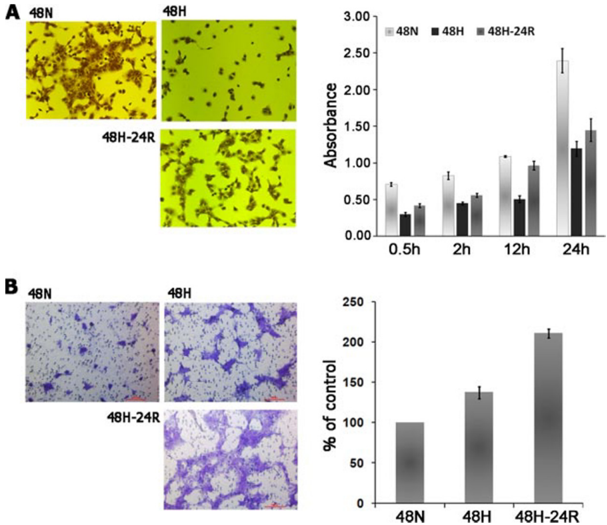
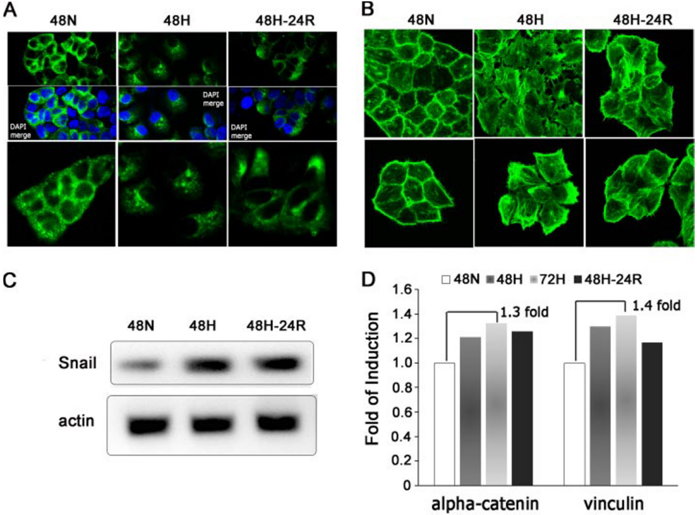
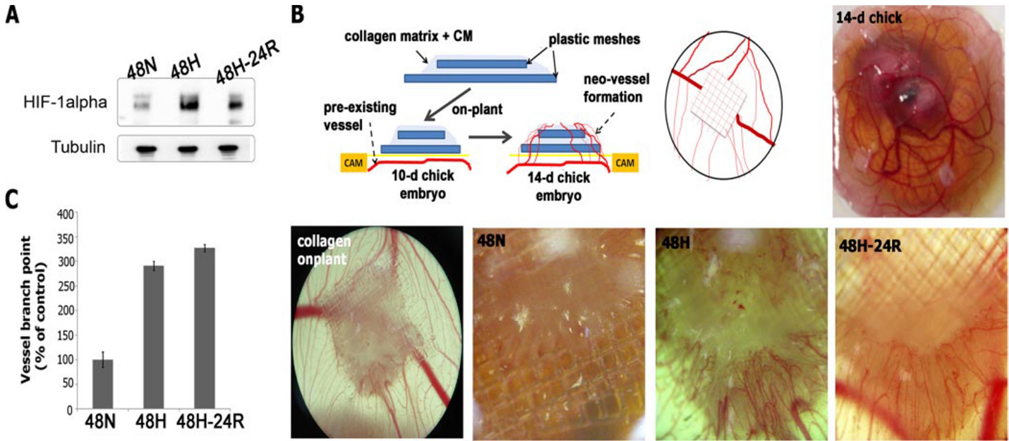
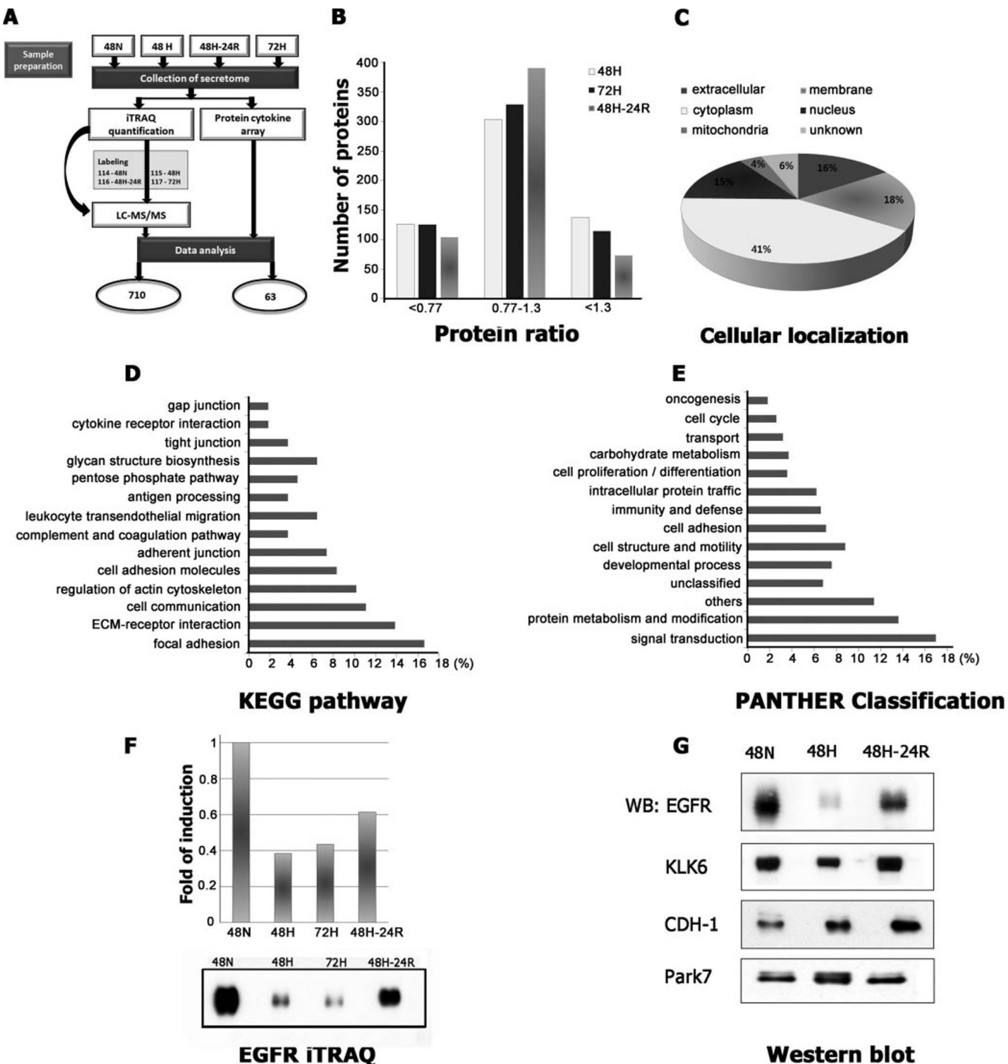
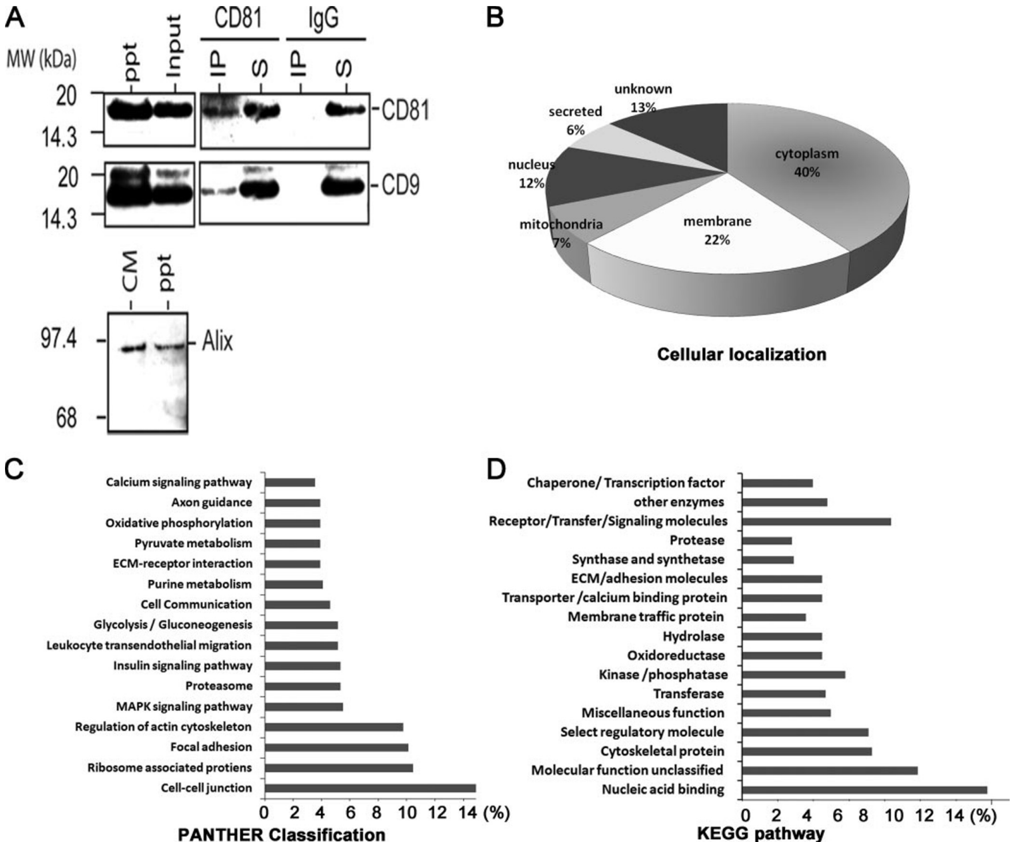
Under hypoxia, tumor cells produce a secretion that modulates their microenvironment to facilitate tumor angiogenesis and metastasis. Here, we observed that hypoxic or reoxygenated A431 carcinoma cells exhibited enhanced angiogenic and metastatic potential such as reduced cell-cell and cell-extracellular matrix adhesion, increased invasiveness, and production of a secretion with increased chorioallantoic membrane angiogenic activity. Consistent with these observations, quantitative proteomics revealed that under hypoxia the tumor cells secreted proteins involved in angiogenesis, focal adhesion, extracellular matrix-receptor interaction, and immune cell recruitment. Unexpectedly, the secreted proteins were predominantly cytoplasmic and membrane proteins. Ultracentrifugation at 100,000 x g precipitated 54% of the secreted proteins and enriched for many exosome-associated proteins such as the tetraspanins and Alix and also proteins with the potential to facilitate angiogenesis and metastasis. Two tetraspanins, CD9 and CD81, co-immunoprecipitated. Together, these data suggested that tumor cells secrete proteins and exosomes with the potential to modulate their microenvironment and facilitate angiogenesis and metastasis.
Overview
The claims and statistics of this paper haven’t been checked yet.
Free: it reads the open-access text and checks the first 5 claims that cite a source we can check. Create a free account to check every claim.
Integrity signals
Registry
Cites
Statistics
Figures
Verification
Claims the paper makes
The claims and statistics of this paper haven’t been checked yet.
Free: it reads the open-access text and checks the first 5 claims that cite a source we can check. Create a free account to check every claim.
Claims other papers make about this one
Each is checked against this paper’s own text: does it say what the citing paper says it does?
The source backs part of the claim, not all of it — or backs it for a different population, condition or comparison.
In the citing paper
“Hypoxia stimulates the release of extracellular vesicles that promote angiogenesis [93–97] and increased exosome formation by hypoxic cancer cells requires HIF activity [96, 98], but the relevant HIF target genes have not been identified.”
From The hypoxic tumor microenvironment: A driving force for breast cancer progression (2016) · cites this paper as [94]
Experimental — accuracy not yet measuredThe source backs part of the claim, not all of it — or backs it for a different population, condition or comparison.
In the citing paper
“Previous studies implicated hypoxia-induced extracellular vesicle formation as a means by which cancer cells influence the phenotype of vascular and other stromal cells [93–96], whereas HIF- and RAB22A-dependent microvesicle formation increases the invasive and metastatic properties of a primary breast tumor by transferring the phenotype of hypoxic BCCs to non-hypoxic BCCs [100].”
From The hypoxic tumor microenvironment: A driving force for breast cancer progression (2016) · cites this paper as [94]
Experimental — accuracy not yet measured
Self-check
Percentages, sums and reported differences re-computed from the paper’s own numbers.
The self-check needs the paper’s full text.
Citations
Cites
Hanahan, D., & Weinberg, R. A. (2000) · Cell · doi:10.1016/s0092-8674(00)81683-9 · Cited by 29,219
Skog, J., Würdinger, T., van Rijn, S., Meijer, D. H., Gainche, L., Curry, W. T., Carter, B. S., Krichevsky, A. M., & Breakefield, X. O. (2008) · Nature Cell Biology · doi:10.1038/ncb1800 · Cited by 5,001
Membrane vesicles as conveyors of immune responses
Théry, C., Ostrowski, M., & Segura, E. (2009) · Nature Reviews Immunology · doi:10.1038/nri2567 · Cited by 3,882 · cited 3×
“nase, EEF1A1, HSP70, HSP90, actin, tubulin, Rab proteins, annexins, and MHC class 1 (46) were clearly detected in the ultracentrifuged pellet by LC-MS/MS.”
BackgroundMethodInfluentialMicroenvironmental regulation of metastasis
Joyce, J. A., & Pollard, J. W. (2009) · Nature Reviews Cancer · doi:10.1038/nrc2618 · Cited by 3,684 · cited 2×
“Because emerging evidence implicates Hx as a key inducer of angiogenesis and metastasis in tumors (6) and because extracellular signals emanating from the tumor cells will be necessary in modulating the extracellular matrix (ECM) to facilitate the cell migration during tumor development (7), we focused on elucidating…”
BackgroundModes of resistance to anti-angiogenic therapy
Bergers, G., & Hanahan, D. (2008) · Nature Reviews Cancer · doi:10.1038/nrc2442 · Cited by 2,953 · cited 1×
“For example, prolonged antiVEGF treatment on tumors is known to select for the tumor cells that recruit alternative angiogenesis signaling pathways involving fibroblast growth factor, platelet-derived growth factor (PDGF), and angiopoietins (5).”
BackgroundPANTHER: A Library of Protein Families and Subfamilies Indexed by Function
Thomas, P. D., Campbell, M. J., Kejariwal, A., Mi, H., Karlak, B., Daverman, R., Diemer, K., Muruganujan, A., & Narechania, A. (2003) · Genome Research · doi:10.1101/gr.772403 · Cited by 2,944 · cited 1×
“tional segregation of the secretome subset was performed utilizing the KEGG pathway or PANTHER database (27, 28).”
MethodMatrix metalloproteinases and the regulation of tissue remodelling
Page-McCaw, A., Ewald, A. J., & Werb, Z. (2007) · Nature Reviews Molecular Cell Biology · doi:10.1038/nrm2125 · Cited by 2,630
Intercellular transfer of the oncogenic receptor EGFRvIII by microvesicles derived from tumour cells
Al-Nedawi, K., Meehan, B., Micallef, J., Lhotak, V., May, L., Guha, A., & Rak, J. (2008) · Nature Cell Biology · doi:10.1038/ncb1725 · Cited by 2,034
Molecular requirements for epithelial–mesenchymal transition during tumor progression
Huber, M. A., Kraut, N., & Beug, H. (2005) · Current Opinion in Cell Biology · doi:10.1016/j.ceb.2005.08.001 · Cited by 1,821 · cited 1×
“2A), possibly for gain of cell motility (64).”
BackgroundWebGestalt: an integrated system for exploring gene sets in various biological contexts
Zhang, B., Kirov, S., & Snoddy, J. (2005) · Nucleic Acids Research · doi:10.1093/nar/gki475 · Cited by 1,796 · cited 1×
“tional segregation of the secretome subset was performed utilizing the KEGG pathway or PANTHER database (27, 28).”
Method
Cited by
Items 501–591 of 591
Stratifying Cancer Therapies by Molecular Interactions and Imaging
Galazi, M., Weitsman, G. E., Monypenny, J., Coban, O., Milewicz, H., Gómez, V., Ciccarelli, F. D., & Ng, T. (2017) · Springer eBooks · doi:10.1007/978-3-319-53661-3_15 · Cited by 1
All-trans retinoic acid influences viability, migration and adhesion of U251 glioblastoma cells
Vićentić, J. M., Schwirtlich, M., Kovačević‐Grujičić, N., Stevanović, M. J., & Drakulić, D. (2017) · Archives of Biological Sciences · doi:10.2298/abs170327016m · Cited by 1
Extra-Cellular Vesicles: A Promising Approach for Translating Cell-Based Therapy
Buller, B., Chopp, M., & Zhang, Z. G. (2017) · Springer series in translational stroke research · doi:10.1007/978-3-319-66679-2_16 · Cited by 2
Proteome Analysis of Colorectal Cancer Cell Line SW480 Released Extracellular Vesicles
Nakurte, I., Jēkabsons, K., Zandberga, E., Ābols, A., Linē, A., & Muceniece, R. (2018) · Key engineering materials · doi:10.4028/www.scientific.net/kem.762.3 · Cited by 1
Intercellular communication via exosomes
Wahlgren, J. (2014) · Gothenburg University Publications Electronic Archive (Gothenburg University) · Cited by 2
Cancer exosomes harbor diverse hypoxia-targeted mRNAs and contribute toward tumor angiogenesisPreprint
Zhang, P., Lim, S. B., Jiang, K., Chew, T. W., Low, B. C., & Lim, C. T. (2020) · bioRxiv (Cold Spring Harbor Laboratory) · doi:10.1101/2020.06.12.147850 · Cited by 1
Self-citationSlonecki, T. J. (2020) · TigerPrints (Clemson University) · Cited by 1
Investigating the Role of Exosomal Communication in the Glioma Microenvironment
Figueroa, J. M. (2014) · Digital Commons-TMC (Texas Medical Center)
A Potent Target for Cancer Treatment – Tumor Hypoxia Necrosis: An Overview
Patil, P. B., & Tayade, R. (2014) · Pharmatutor
Elucidating the mechanism of cardiac ischemia and reperfusion by proteomics approach
Xin, L. (2011) · DR-NTU (Nanyang Technological University) · doi:10.32657/10356/48669
Cancer‐Initiating Cells, Exosomes, and the Premetastatic Niche
Zöller, M. (2014) · Wiley eBooks · doi:10.1002/9781118356203.ch29
Exosomes - the future of vaccination?
Gehrmann, U. (2011) · Figshare
Extracellular Pyruvate Kinase M2 regulates tumor angiogenesis
Li, L. (2014) · Digital Archive @ GSU · doi:10.57709/5612342
Propriétés mécaniques locales de cellules cancéreuses de la vessie mesurées par AFM
Abidine, Y. (2015) · theses.fr (ABES) · doi:10.70675/70d1f3adzf8c5z4cdfzaf81z6be330611ef0 · Cited by 5
Exosomal regulation of TGF-β signalling
Liu, L. (2015) · Minerva Access (University of Melbourne) · Cited by 1
Lavoie, J. R. (2013) · uO Research (University of Ottawa) · doi:10.20381/ruor-3044
Estudo do macrófago no carcinoma basocelular sólido recidivado após Cirurgia Micrográfica de Mohs
Padoveze, E. H. (2016) · Digital Library of Theses and Dissertations (Universidade de São Paulo) · doi:10.11606/t.5.2016.tde-08042016-144733
The glycosylation signature of human urinary extracellular vesicles
Krueger, A. (2015) · Arrow@dit (Dublin Institute of Technology) · doi:10.13025/16721
Bamaprasad, D. (2014) · DR-NTU (Nanyang Technological University) · doi:10.32657/10356/59912
Extracellular Vesicles From Mesenchymal Stem Cells and Their Potential in Tumor Therapy
Gudbergsson, J. M., & Duroux, M. C. (2016) · Elsevier eBooks · doi:10.1016/b978-0-12-803102-5.00021-5 · Cited by 1
Mechanical Modeling and Characterization of Cancer Cells Using Optical Tweezers
Khakshour, S. (2016) · Summit (Simon Fraser University)
Cross‐Talk Between Hypoxia and the Tumour via Exosomes
Sharma, S., Alharbi, M. G., Lai, A., Kobayashi, M., KLINE, R. C., Wade, K., Rice, G. E., & Salomón, C. (2017) · InTech eBooks · doi:10.5772/65688
“leukaemia cell line, K562; human microvascular endothelial cells (HMEC‐1); A431 squamous carcinoma; A549 non‐small‐cell lung (NSCL); H1299 NSCL and HFF‐1 foreskin fibroblast cells) to investigate the level of exosomes released under hypoxia and normoxia [57].”
BackgroundImmune modulation in serous epithelial ovarian cancer : focus on the role of tumor-derived exosomes
Labani-Motlagh, A. (2017)
Rumantir, R. A. (2013) · TSpace (University of Toronto)
Exosomes Potentiate NF-κB Signaling, Tumor Progression, and Metastasis in Hepatocellular Carcinoma
Jella, K. K., & Li, Z. (2017) · Springer eBooks · doi:10.1007/978-981-10-6728-0_34
Alshehri, M. M. (2018) · Libraries and Cultural Resources (University of Calgary) · doi:10.11575/prism/31874
Rahman, R. M. (2019) · Doria (University of Helsinki)
Scholl, J. N. (2019) · LA Referencia (Red Federada de Repositorios Institucionales de Publicaciones Científicas)
Tan, C. F. (2019) · DR-NTU (Nanyang Technological University) · doi:10.32657/10356/137126
Papel do secretoma de linhagens de câncer de mama em modelo de angiogênese experimental
Ribeiro, M. F. D. P. (2020) · Digital Library of Theses and Dissertations (Universidade de São Paulo) · doi:10.11606/d.10.2020.tde-11022020-120605
Naseer, M., Hadi, S., Syed, A., Safdari, A., & Tahan, V. (2021) · World Journal of Meta-Analysis · doi:10.13105/wjma.v9.i1.12
Sorlí, A. R. (2020) · Gredos (University of Salamanca) · doi:10.14201/gredos.145461
Роль экзосом в развитии опухолей
Киселевская, А. К., & Ефременко, Е. С. (2021) · ТЕНДЕНЦИИ РАЗВИТИЯ НАУКИ И ОБРАЗОВАНИЯ · doi:10.18411/lj-04-2021-46
The Tumor-Suppressive Role Of Secreted Maspin Via The Exosomes
Dean, I. S. (2014) · Human Biology
Intra and extracellular responses to DNA damage
Fisher, M. (2021) · Queensland University of Technology · doi:10.5204/thesis.eprints.214106
Zhang, Z., Yuan, J., Qu, B., Liu, S., Zhang, X., & Lu, L. (2022) · SSRN Electronic Journal · doi:10.2139/ssrn.3990737
The Role of Plectin in Pancreatic Cancer
Shin, S. (2013) · doi:10.18130/v3p22z
Китаева, Р. Р., Горячева, Е. В., & Каримов, Н. А. (2021) · ТЕНДЕНЦИИ РАЗВИТИЯ НАУКИ И ОБРАЗОВАНИЯ · doi:10.18411/lj-04-2021-47
(2021) · Letters in Applied NanoBioScience · doi:10.33263/lianbs111.32323248
Multiple roles of circulating tumor cells and exosomes in cancer metastasis
Martinelli, C. (2022) · Elsevier eBooks · doi:10.1016/b978-0-12-821789-4.00012-6
Postnatal Exposure to Brief Hypoxia Alters Brain VEGF Expression and Capillary Density in Adult Mice
Komarovsky, M. B., Tsipis, C. P., Almotah, K., Boron, W. F., Xu, K., & LaManna, J. C. (2022) · Advances in experimental medicine and biology · doi:10.1007/978-3-031-14190-4_11
Tătăranu, L. G. (2025) · Current Issues in Molecular Biology · doi:10.3390/cimb47050310 · Cited by 1
“Moreover, in some cases, these elements and mechanisms not only induce angiogenesis but also facilitate metastasis [41].”
Extracellular RNAs (exRNAs): Functions, Crosstalks, and Therapeutic Potential
Saw, P. E., & Song, E. (2025) · Springer eBooks · doi:10.1007/978-981-96-3041-7_13
Lee, J. (2025) · Journal of Clinical Research and Reports · doi:10.31579/2690-1919/523
New Insights into the Sialyl-Tn Antigen-Mediated Remodeling of Cancer Microenvironment
Nagao, K., Hisanabe, N., Hashimoto, K., & Ohtsubo, K. (2025) · Trends in Glycoscience and Glycotechnology · doi:10.4052/tigg.2513.1j
New Insights into the Sialyl-Tn Antigen-Mediated Remodeling of Cancer Microenvironment
Nagao, K., Hisanabe, N., Hashimoto, K., & Ohtsubo, K. (2025) · Trends in Glycoscience and Glycotechnology · doi:10.4052/tigg.2513.1e
Cancer Metastasis: Dynamic Hetero-cellular Communications Between Cancer Cells and Host Tissues
Saliba, J. L., El-Sabban, M., Shaito, A. A., El-Harakeh, M., Obeid, J., Hajj, H. E., & El-Sabban, M. E. (2025) · Springer eBooks · doi:10.1007/978-3-032-00759-9_57
Exosomes neuronaux : rôle dans le passage intercellulaire de protéines et d'ARN
Chivet, M. (2013) · theses.fr (ABES) · doi:10.70675/aa3099eczff16z4ae4za81ez37798621deca
Lee, P.-J., Sui, Y.-H., Liu, T.-T., Tsang, N.-M., Huang, C.-H., Lin, T.-Y., Chang, K.-P., & Liu, S.-C. (2022) · Figshare · doi:10.6084/m9.figshare.20521703
Castellani, G., Buccarelli, M., D’Alessandris, Q. G., Ilari, R., Cappannini, A., Pedini, F., Boe, A., Lulli, V., Parolini, I., Giannetti, S., et al. (2024) · Figshare · doi:10.6084/m9.figshare.26680139
Lee, P.-J., Sui, Y.-H., Liu, T.-T., Tsang, N.-M., Huang, C.-H., Lin, T.-Y., Chang, K.-P., & Liu, S.-C. (2022) · Figshare · doi:10.6084/m9.figshare.20521709
Castellani, G., Buccarelli, M., D’Alessandris, Q. G., Ilari, R., Cappannini, A., Pedini, F., Boe, A., Lulli, V., Parolini, I., Giannetti, S., et al. (2024) · Figshare · doi:10.6084/m9.figshare.26680130
Chen, X.-J., Guo, C.-H., Wang, Z.-C., Yang, Y., Pan, Y., Liang, J.-Y., Sun, M., Fan, L.-S., Liang, L., & Wang, W. (2024) · Figshare · doi:10.6084/m9.figshare.26663005
Chen, X.-J., Guo, C.-H., Wang, Z.-C., Yang, Y., Pan, Y., Liang, J.-Y., Sun, M., Fan, L.-S., Liang, L., & Wang, W. (2024) · Figshare · doi:10.6084/m9.figshare.26663011
Lee, P.-J., Sui, Y.-H., Liu, T.-T., Tsang, N.-M., Huang, C.-H., Lin, T.-Y., Chang, K.-P., & Liu, S.-C. (2022) · Figshare · doi:10.6084/m9.figshare.20521697
Lee, P.-J., Sui, Y.-H., Liu, T.-T., Tsang, N.-M., Huang, C.-H., Lin, T.-Y., Chang, K.-P., & Liu, S.-C. (2022) · Figshare · doi:10.6084/m9.figshare.20521691
Chen, X.-J., Guo, C.-H., Wang, Z.-C., Yang, Y., Pan, Y., Liang, J.-Y., Sun, M., Fan, L.-S., Liang, L., & Wang, W. (2024) · Figshare · doi:10.6084/m9.figshare.26662996
Lee, P.-J., Sui, Y.-H., Liu, T.-T., Tsang, N.-M., Huang, C.-H., Lin, T.-Y., Chang, K.-P., & Liu, S.-C. (2022) · Figshare · doi:10.6084/m9.figshare.20521718
Chen, X.-J., Guo, C.-H., Wang, Z.-C., Yang, Y., Pan, Y., Liang, J.-Y., Sun, M., Fan, L.-S., Liang, L., & Wang, W. (2024) · Figshare · doi:10.6084/m9.figshare.26663014
Lee, P.-J., Sui, Y.-H., Liu, T.-T., Tsang, N.-M., Huang, C.-H., Lin, T.-Y., Chang, K.-P., & Liu, S.-C. (2022) · Figshare · doi:10.6084/m9.figshare.20521694
Chen, X.-J., Guo, C.-H., Wang, Z.-C., Yang, Y., Pan, Y., Liang, J.-Y., Sun, M., Fan, L.-S., Liang, L., & Wang, W. (2024) · Figshare · doi:10.6084/m9.figshare.26662993
Lee, P.-J., Sui, Y.-H., Liu, T.-T., Tsang, N.-M., Huang, C.-H., Lin, T.-Y., Chang, K.-P., & Liu, S.-C. (2022) · Figshare · doi:10.6084/m9.figshare.20521700
Lee, P.-J., Sui, Y.-H., Liu, T.-T., Tsang, N.-M., Huang, C.-H., Lin, T.-Y., Chang, K.-P., & Liu, S.-C. (2022) · Figshare · doi:10.6084/m9.figshare.20521721
Castellani, G., Buccarelli, M., D’Alessandris, Q. G., Ilari, R., Cappannini, A., Pedini, F., Boe, A., Lulli, V., Parolini, I., Giannetti, S., et al. (2024) · Figshare · doi:10.6084/m9.figshare.26680142
Venturella, M. (2024) · Use Siena air (University of Siena) · doi:10.25434/venturella-marta_phd2024-05-30
Chen, X.-J., Guo, C.-H., Wang, Z.-C., Yang, Y., Pan, Y., Liang, J.-Y., Sun, M., Fan, L.-S., Liang, L., & Wang, W. (2024) · Figshare · doi:10.6084/m9.figshare.26663017
Castellani, G., Buccarelli, M., D’Alessandris, Q. G., Ilari, R., Cappannini, A., Pedini, F., Boe, A., Lulli, V., Parolini, I., Giannetti, S., et al. (2024) · Figshare · doi:10.6084/m9.figshare.26680136
Castellani, G., Buccarelli, M., D’Alessandris, Q. G., Ilari, R., Cappannini, A., Pedini, F., Boe, A., Lulli, V., Parolini, I., Giannetti, S., et al. (2024) · Figshare · doi:10.6084/m9.figshare.26680133
Chen, X.-J., Guo, C.-H., Wang, Z.-C., Yang, Y., Pan, Y., Liang, J.-Y., Sun, M., Fan, L.-S., Liang, L., & Wang, W. (2024) · Figshare · doi:10.6084/m9.figshare.26662999
Lee, P.-J., Sui, Y.-H., Liu, T.-T., Tsang, N.-M., Huang, C.-H., Lin, T.-Y., Chang, K.-P., & Liu, S.-C. (2022) · Figshare · doi:10.6084/m9.figshare.20521706
Chen, X.-J., Guo, C.-H., Wang, Z.-C., Yang, Y., Pan, Y., Liang, J.-Y., Sun, M., Fan, L.-S., Liang, L., & Wang, W. (2024) · Figshare · doi:10.6084/m9.figshare.26663002
Lee, P.-J., Sui, Y.-H., Liu, T.-T., Tsang, N.-M., Huang, C.-H., Lin, T.-Y., Chang, K.-P., & Liu, S.-C. (2022) · Figshare · doi:10.6084/m9.figshare.20521715
Lee, P.-J., Sui, Y.-H., Liu, T.-T., Tsang, N.-M., Huang, C.-H., Lin, T.-Y., Chang, K.-P., & Liu, S.-C. (2022) · Figshare · doi:10.6084/m9.figshare.20521712
Chen, X.-J., Guo, C.-H., Wang, Z.-C., Yang, Y., Pan, Y., Liang, J.-Y., Sun, M., Fan, L.-S., Liang, L., & Wang, W. (2024) · Figshare · doi:10.6084/m9.figshare.26663008
Chen, X.-J., Guo, C.-H., Wang, Z.-C., Yang, Y., Pan, Y., Liang, J.-Y., Sun, M., Fan, L.-S., Liang, L., & Wang, W. (2024) · Figshare · doi:10.6084/m9.figshare.26662990
Rab27A ja Rab35 -proteiinit munasarjasyöpäsolujen eksosomierityksessä
Toivanen, K. (2019) · UTUPub (University of Turku)
Identificación de biomarcadores asociados a la progresión del cáncer de próstata
Cascardo, F. (2023) · Repositorio Digital Institucional de la Universidad de Buenos Aires (Universidad de Buenos Aires)
Investigating the production and secretion of PEPITEM, a regulator of leukocyte trafficking
Nathan, P. (2024) · University of Birmingham Institutional Research Archive (University of Birmingham) · Cited by 1
Li, F., Huang, Z., Zhou, J., Wu, Z., Deng, X.-H., Weng, H., Peng, W., Li, J., Lin, Y., So, K., et al. (2026) · Nano Research · doi:10.26599/nr.2026.94908424
Gomaa, M. N., Abdelmaguid, A. M., Samier, B. E., Ashour, S. E., El-Demardash, M. M., Metwally, T. M., Hammam, M. S., Hussein, M. M., Mekkawy, S. A., & Moneim, A. A. (2026) · Science and Technology Nexus · doi:10.25259/stn_26_2025
Bagińska, J. (2013) · theses.fr (ABES) · doi:10.70675/12816298zca23z458bz867bzda3d6f357a92 · Cited by 1
エクソソーム内GRP78タンパク質の超高感度測定および腫瘍進行作用解明
Iha, K., & 伊波, 伽. (2022) · Institutional Repositories DataBase (IRDB)
Microparticles and malignant pleurisy
Roca, E. (2017) · theses.fr (ABES) · doi:10.70675/d299922bz618dz4d4bz8e17z1d8f63493d9a
Pinet, S. (2016) · theses.fr (ABES) · doi:10.70675/77e2ea50z4b5az4f9eza5b4z3dadffbbc040
“Since exosome-derived from cancer cells can promote angiogenesis and tumor growth [16, 39], the effect of pLKO and sh YKL-40 exosomes on glioma cell proliferation and HBMEC migration were analyzed.”
BackgroundHarane, N. E. (2018) · theses.fr (ABES) · doi:10.70675/77a82219z9a7fz448bzaa34z92eecbd3dfa9
Yunusova, N. V., Svarovsky, D. A., Panfilova, P., Ryabova, A., Викторовна, К. Е., Александровна, С. Е., Анатольевна, Г. П., Юрьевич, М. А., & Кондакова, И. В. (2026) · Biomedicines · doi:10.3390/biomedicines14051116
刘, 维. (2026) · Advances in Clinical Medicine · doi:10.12677/acm.2026.1652054
Functional Analysis of Extracellular Vesicles
Asl, S. S., Aziziyan, F., Poordad, Z., & Sheykhhasan, M. (2026) · Molecular and translational medicine · doi:10.1007/978-3-032-23810-8_3
Ghafghazi, D. M., Klentrou, P., Sze, S. K., & Tsiani, E. (2026) · Antioxidants · doi:10.3390/antiox15101286
Self-citationCirculating Cell-derived Vesicles Mediate Tumor Progression
Taylor, D. D., & Gerçel-Taylor, Ç. (2012) · Springer eBooks · doi:10.1007/978-1-4614-3697-3_6
Metadata
- Authors
- Park, J. E., Tan, H. S., Datta, A., Lai, R. C., Zhang, H., Meng, W., Lim, S. K., & Sze, S. K.
- Affiliations
- Nanyang Technological University (SG)
- Institute of Medical Biology (SG)
- Corresponding author
- Sze, Siu Kwan
- Venue
- Molecular & Cellular Proteomics
- Publisher
- Elsevier BV
- Published
- 2010-06
- Volume
- 9
- Issue
- 6
- Pages
- 1085-1099
- ISSN
- 1535-9476 (ISSN-L)
- PMC
- PMC2877972
- OpenAlex
- W2079174568
- Cited by
- 582
- References
- 71
- Citations by year
- 2026: 9 · 2025: 33 · 2024: 43 · 2023: 24 · 2022: 55 · 2021: 34 · 2020: 43 · 2019: 39 · 2018: 51 · 2017: 51 · 2016: 45 · 2015: 26 · 2014: 47 · 2013: 39 · 2012: 28
- FWCI
- 10.69
- Type
- journal article
- Language
- en
- Open access
- hybrid
- doi.org
- Licence
- cc-by
- www.elsevier.com/tdm/userlicense/1.0/ (tdm)
- www.elsevier.com/legal/tdmrep-license (tdm)
- creativecommons.org/licenses/by/4.0/ (vor, 3768 d)
- Locations
- Molecular & Cellular Proteomics (publishedVersion, cc-by)
- PubMed Central (publishedVersion)
- PubMed (publishedVersion)
- Funders
- Agency for Science, Technology and Research
- Biomedical Research Council (08/1/22/19/575)
- Topics
- Life Sciences › Biochemistry, Genetics and Molecular Biology › Molecular Biology › Angiogenesis and VEGF in Cancer
- Life Sciences › Biochemistry, Genetics and Molecular Biology › Cancer Research › Cancer, Hypoxia, and Metabolism
- Life Sciences › Biochemistry, Genetics and Molecular Biology › Molecular Biology › Extracellular vesicles in disease
- Keywords
- tumor hypoxia, tumor microenvironment, tumor angiogenesis, metastasis, exosomes, secreted proteins, tetraspanins, CD9, CD81, Alix, focal adhesions, extracellular matrix, cell adhesion, tumor invasion, chorioallantoic membrane angiogenesis, immune cell recruitment
- MeSH terms
- Cell Adhesion, Chromatography, Liquid, Cytoplasm, Extracellular Matrix, Humans, Neoplasm Invasiveness, Neoplasm Metastasis, Neoplasm Proteins, Neoplasms, Neovascularization, Pathologic, Oxygen, Mass Spectrometry, Signal Transduction, Cell Hypoxia, Cluster Analysis, Cytokines, Culture Media, Conditioned, Protein Array Analysis, Cell Line, Tumor, Hypoxia-Inducible Factor 1, alpha Subunit, Exosomes
About these checks
Registry, retraction, Cites and statistics results are computed, not judged, with one exception: a printed reference that no index lists is read once by a model before it counts as a citation error. Claims are extracted by a model and kept only when their quote appears verbatim in the text; each cited source is then checked, with a model’s help, for whether it says what the claim relies on. Those verdicts can be wrong — read the claim’s quote and the cited source before relying on one.
Statistics and arithmetic are recomputed, not judged.
Confidence bands are shown only for fields calibrated on our annotated test set. None is calibrated yet, so no band is shown.
What counts as a claim ›How we measure confidence ›How we check this ›
Are you an author, or do you see a problem with this page? Request a review
Data sources
Bibliographic data: Semantic Scholar, OpenAlex, Crossref.
Contains information from the Semantic Scholar Academic Graph Datasets, made available under the ODC Attribution License (ODC-BY 1.0).
Semantic Scholar’s data is described in: Kinney, R., et al. (2023). The Semantic Scholar Open Data Platform. arXiv:2301.10140.
