

Norwalk Virus Assembly and Stability Monitored by Mass Spectrometry
Open accessThe DOI matches its Crossref record; 46 of the 46 references it cites were found in a registry or an index.
Abstract
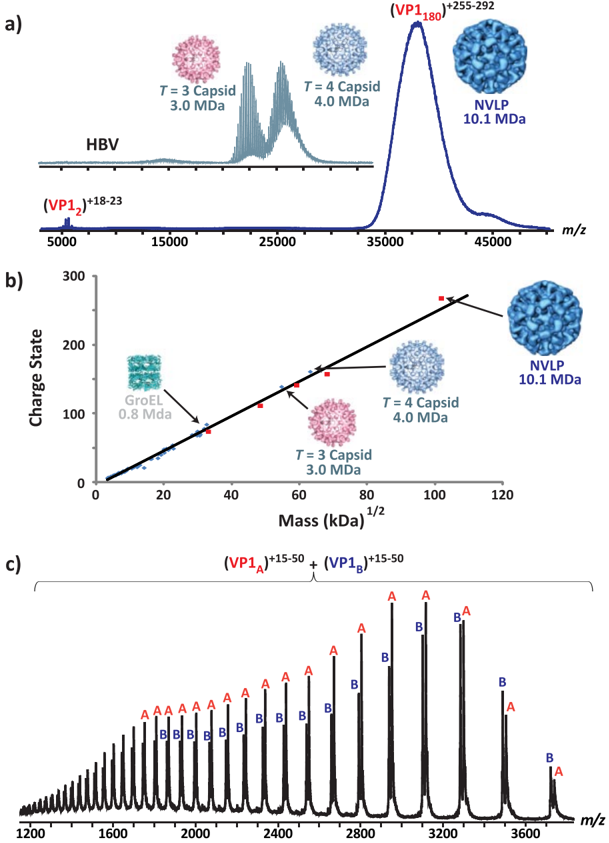
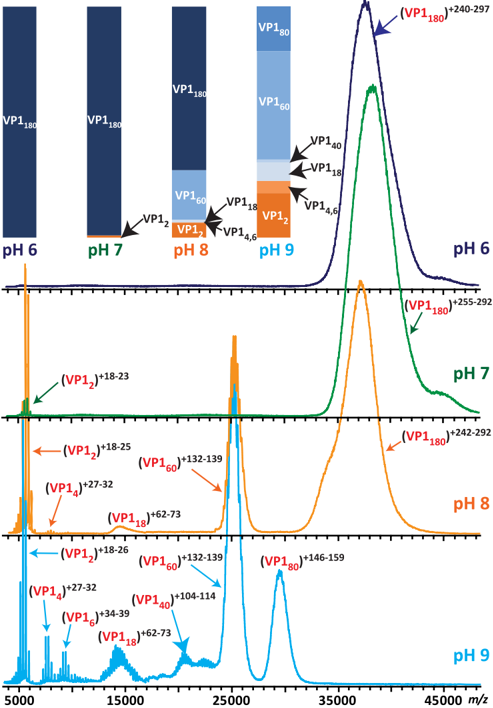
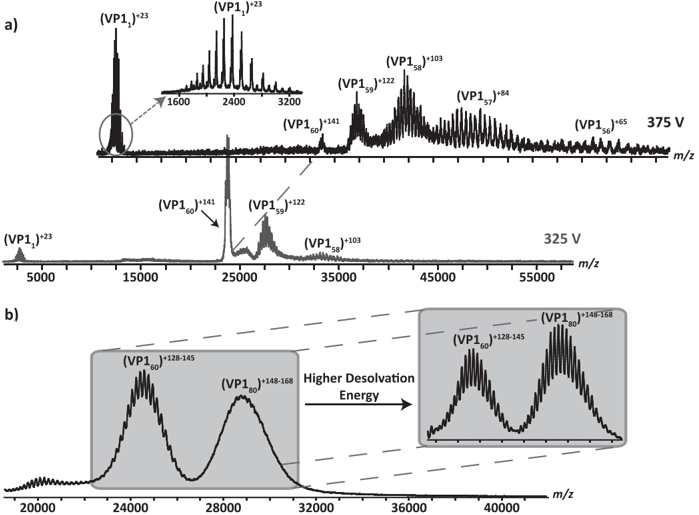
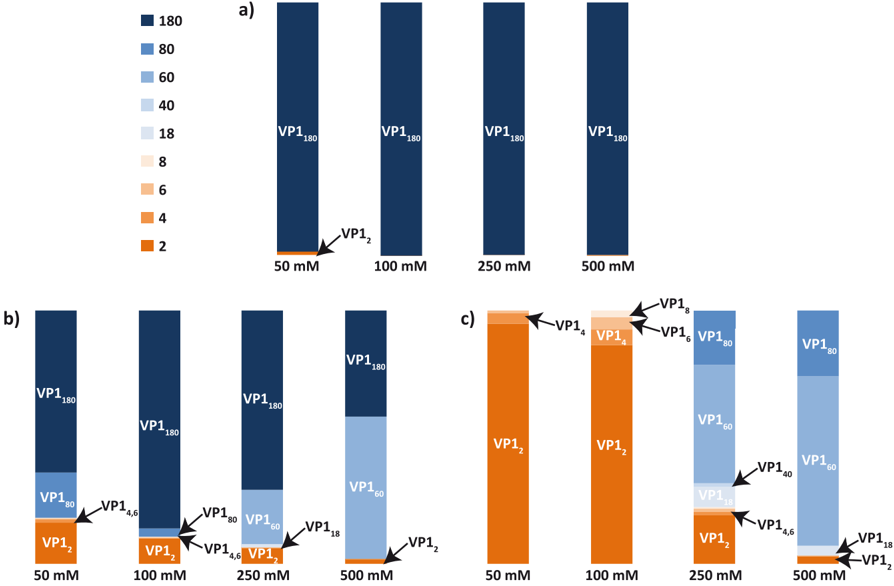
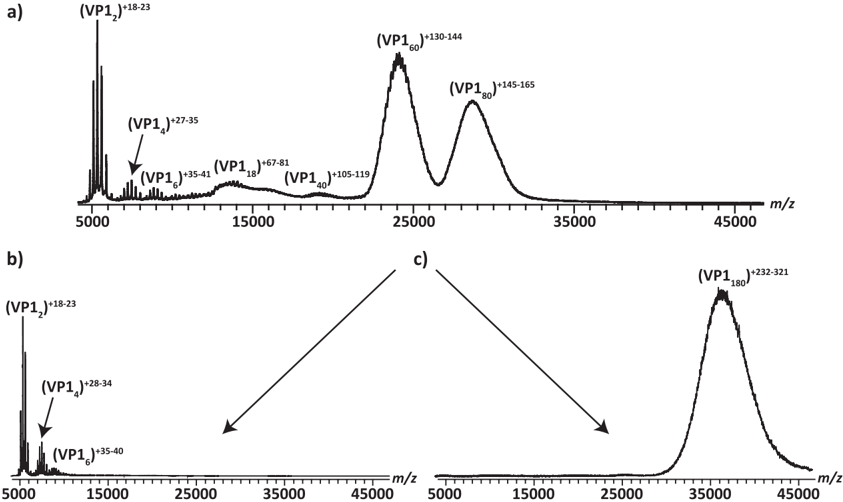
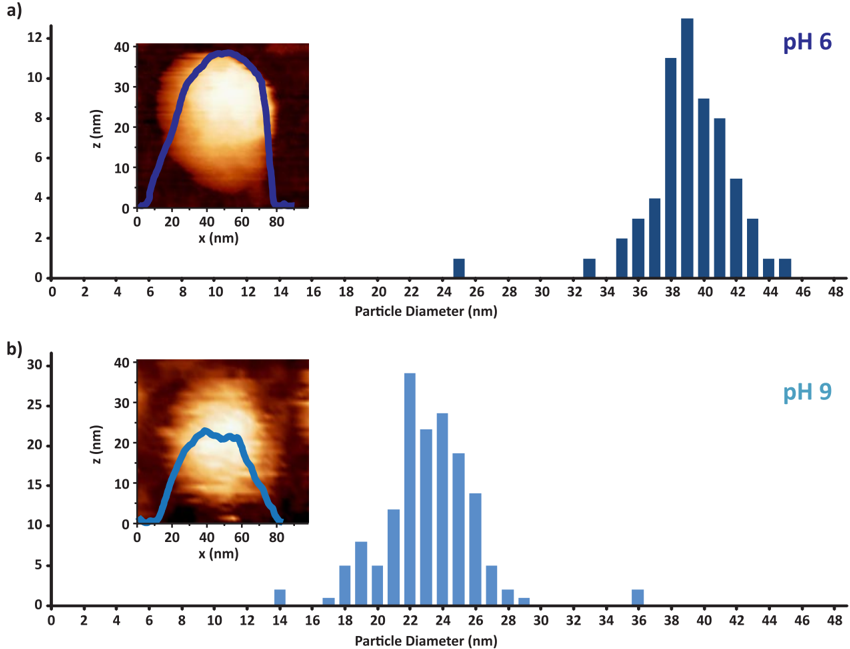
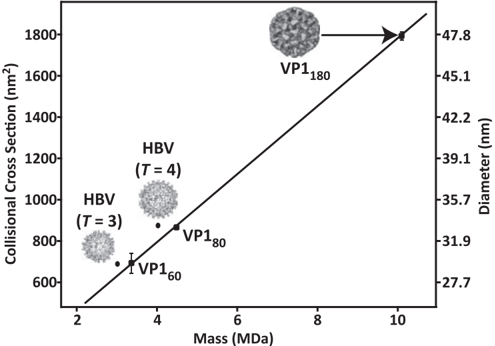
Viral capsid assembly, in which viral proteins self-assemble into complexes of well defined architecture, is a fascinating biological process. Although viral structure and assembly processes have been the subject of many excellent structural biology studies in the past, questions still remain regarding the intricate mechanisms that underlie viral structure, stability, and assembly. Here we used native mass spectrometry-based techniques to study the structure, stability, and assembly of Norwalk virus-like particles. Although detailed structural information on the fully assembled capsid exists, less information is available on potential capsid (dis)assembly intermediates, largely because of the inherent heterogeneity and complexity of the disassembly pathways. We used native mass spectrometry and atomic force microscopy to investigate the (dis)assembly of the Norwalk virus-like particles as a function of solution pH, ionic strength, and VP1 protein concentration. Native MS analysis at physiological pH revealed the presence of the complete capsid (T = 3) consisting of 180 copies of VP1. The mass of these capsid particles extends over 10 million Da, ranking them among the largest protein complexes ever analyzed by native MS. Although very stable under acidic conditions, the capsid was found to be sensitive to alkaline treatment. At elevated pH, intermediate structures consisting of 2, 4, 6, 18, 40, 60, and 80 copies of VP1 were observed with the VP1(60) (3.36-MDa) and VP1(80) (4.48-MDa) species being most abundant. Atomic force microscopy imaging and ion mobility mass spectrometry confirmed the formation of these latter midsize spherical particles at elevated pH. All these VP1 oligomers could be reversely assembled into the original capsid (VP1(180)). From the MS data collected over a range of experimental conditions, we suggest a disassembly model in which the T = 3 VP1(180) particles dissociate into smaller oligomers, predominantly dimers, upon alkaline treatment prior to reassembly into VP1(60) and VP1(80) species.
Overview
The claims and statistics of this paper haven’t been checked yet.
Free: it reads the open-access text and checks the first 5 claims that cite a source we can check. Create a free account to check every claim.
Integrity signals
Registry
Cites
Statistics
Figures
Verification
Claims the paper makes
The claims and statistics of this paper haven’t been checked yet.
Free: it reads the open-access text and checks the first 5 claims that cite a source we can check. Create a free account to check every claim.
Claims other papers make about this one
Each is checked against this paper’s own text: does it say what the citing paper says it does?
In the citing paper
“As many capsid proteins self-assemble in vitro, native ion mobility MS can monitor the dynamics of capsid morphology and stability as a function of pH and ionic strength (28, 29).”
From The Impact of Mass Spectrometry–Based Proteomics on Fundamental Discoveries in Virology (2014) · cites this paper as [28]
Self-check
Percentages, sums and reported differences re-computed from the paper’s own numbers.
The self-check needs the paper’s full text.
Citations
Cites
Calibration of rectangular atomic force microscope cantilevers
Sader, J. E., Chon, J. W. M., & Mulvaney, P. (1999) · Review of Scientific Instruments · doi:10.1063/1.1150021 · Cited by 2,145 · cited 1×
“The cantilevers were calibrated as described previously (35) and were found to have a spring constant of 0.”
MethodIon mobility–mass spectrometry analysis of large protein complexes
Ruotolo, B. T., Benesch, J. L. P., Sandercock, A. M., Hyung, S.-J., & Robinson, C. V. (2008) · Nature Protocols · doi:10.1038/nprot.2008.78 · Cited by 1,092 · cited 1×
“Collision crosssections (ccs) were determined from the measured drift times through calibration using proteins of known cross-sections as described previously (17, 32, 33).”
MethodX-ray Crystallographic Structure of the Norwalk Virus Capsid
Prasad, B. V. V., Hardy, M. E., Dokland, T., Bella, J., Rossmann, M. G., & Estes, M. K. (1999) · Science · doi:10.1126/science.286.5438.287 · Cited by 946
Self-citationExpression, self-assembly, and antigenicity of the Norwalk virus capsid protein
Jiang, X., Wang, M., Graham, D. Y., & Estes, M. K. (1992) · Journal of Virology · doi:10.1128/jvi.66.11.6527-6532.1992 · Cited by 860 · cited 3×
“ESI-MS Analysis of rNVLPs—To first investigate whether the intact capsid can be detected using ESI-MS, the rNVLPs were analyzed at neutral pH, a condition that is known from previous EM studies to be favorable for the formation of intact capsid (7, 9).”
BackgroundMethodSelf-citationPringle, S. D., Giles, K., Wildgoose, J. L., Williams, J. P., Slade, S. E., Thalassinos, K., Bateman, R. H., Bowers, M. T., & Scrivens, J. H. (2007) · International Journal of Mass Spectrometry · doi:10.1016/j.ijms.2006.07.021 · Cited by 808 · cited 1×
“Ion mobility measurements were performed on a Synapt HDMS (Waters) (31).”
MethodNative mass spectrometry: a bridge between interactomics and structural biology
Heck, A. J. R. (2008) · Nature Methods · doi:10.1038/nmeth.1265 · Cited by 766
Self-citationSequence and Genomic Organization of Norwalk Virus
Jiang, X., Wang, M., Wang, K., & Estes, M. K. (1993) · Virology · doi:10.1006/viro.1993.1345 · Cited by 632 · cited 1×
“Its genome contains three open reading frames, encoding for the major capsid protein (VP1), the minor capsid protein (VP2), and a non-structural polyprotein (4, 5).”
BackgroundSelf-citationEvidence for Macromolecular Protein Rings in the Absence of Bulk Water
Ruotolo, B. T., Giles, K., Campuzano, I., Sandercock, A. M., Bateman, R. H., & Robinson, C. V. (2005) · Science · doi:10.1126/science.1120177 · Cited by 596 · cited 1×
“rated based on their size and shape (13, 24).”
BackgroundInvestigation of intact protein complexes by mass spectrometry
Heck, A. J. R., & van den Heuvel, R. H. H. (2004) · Mass Spectrometry Reviews · doi:10.1002/mas.10081 · Cited by 583
Self-citationNorwalk Virus Genome Cloning and Characterization
Jiang, X., Graham, D. Y., Wang, K., & Estes, M. K. (1990) · Science · doi:10.1126/science.2177224 · Cited by 581 · cited 2×
“Its genome contains three open reading frames, encoding for the major capsid protein (VP1), the minor capsid protein (VP2), and a non-structural polyprotein (4, 5).”
BackgroundSelf-citation
Cited by
Items 101–142 of 142
Fluorescence, Circular Dichroism and Mass Spectrometry as Tools to Study Virus Structure
Neira, J. L. (2013) · Sub-cellular biochemistry/Subcellular biochemistry · doi:10.1007/978-94-007-6552-8_6 · Cited by 8
Sample refreshment schemes for high repetition rate FEL experiments
Schulz, J., Bari, S., Buck, J., & Uetrecht, C. (2013) · Proceedings of SPIE, the International Society for Optical Engineering/Proceedings of SPIE · doi:10.1117/12.2019754 · Cited by 10
Self-citationStructural Biology of Noroviruses
Prasad, B. V. V., Shanker, S., Muhaxhiri, Z., Choi, J.-M., Atmar, R. L., & Estes, M. K. (2016) · Elsevier eBooks · doi:10.1016/b978-0-12-802241-2.00016-x · Cited by 11
“…(Chen et al., 2006) and mass spectrometric analysis of rNV capsid and its pH-induced dissociation/association intermediates (Baclayon et al., 2011; Shoemaker et al., 2010), it is plausible that capsid assembly proceeds through 336 Viral Gastroenteritis the formation of trimers of dimers that are…”
BackgroundSelf-citationAbou-Hamad, N., Estienney, M., Chassagnon, R., Bon, M., Daval-Frérot, P., de Rougemont, A., Guyot, S., Bouyer, F., & Belliot, G. (2023) · Colloids and Surfaces B Biointerfaces · doi:10.1016/j.colsurfb.2023.113545 · Cited by 7
Disinfection efficacy and mechanism of olanexidine gluconate against norovirus
Imai, K., Tanaka, M., Miyoshi, S., Murakami, R., Hagi, A., Yamagawa, S., & Sano, D. (2021) · American Journal of Infection Control · doi:10.1016/j.ajic.2021.11.020 · Cited by 6
Yates, M. V. (2013) · Elsevier eBooks · doi:10.1016/b978-0-12-415846-7.00027-5 · Cited by 8
Untersuchung von 18 MDa großen Viruspartikeln mit nativer Massenspektrometrie
Snijder, J., Rose, R., Veesler, D., Johnson, J. E., & Heck, A. J. R. (2013) · Angewandte Chemie · doi:10.1002/ange.201210197 · Cited by 6
Self-citationStaying Alive: Measuring Intact Viable Microbes with Electrospray Ionization Mass Spectrometry
Forsberg, E. M., Fang, M., & Siuzdak, G. E. (2016) · Journal of the American Society for Mass Spectrometry · doi:10.1007/s13361-016-1440-y · Cited by 6
“For example, analysis of an 18 MDa intact capsid from bacteriophage HK97 was performed on a QTOF with xenon collision gas at higher pressures and voltages.”
BackgroundInfluentialTheory of density waves and organization of proteins in icosahedral virus capsids
Konevtsova, O. V., Chalin, D. V., & Rochal, S. B. (2024) · Physical Chemistry Chemical Physics · doi:10.1039/d3cp05384a · Cited by 5
Virus inactivation in groundwater in a postglacial lava field in arctic climate
Benediktsdóttir, E., Gunnarsdóttir, M. J., Ómarsdóttir, B. D., Sigurjónsson, V. Í., & Gardarsson, S. M. (2020) · Letters in Applied Microbiology · doi:10.1111/lam.13271 · Cited by 5
“The present results indicate that its instability in alkaline conditions would reflect norovirus instability in high pH environments; Shoemaker et al. (2010), working with recombinant Norwalk virus-like particles, showed that the capsids are sensitive to alkaline treatment, and even at pH 8…”
BackgroundNorovirus—A Viral Capsid in Perpetual Flux
Thiede, L., Pogan, R., & Uetrecht, C. (2023) · Springer series in biophysics · doi:10.1007/978-3-031-36815-8_8 · Cited by 4
Self-citationAtomic force microscopy at the forefront: unveiling foodborne viruses with biophysical tools
Natividade, R. D. S., Danzer, B., Somoza, V., & Koehler, M. (2025) · npj Viruses · doi:10.1038/s44298-025-00107-y · Cited by 4
Impact of Nanoparticle-Based TiO2 Surfaces on Norovirus Capsids and Genome Integrity
Raymond, P., St-Germain, F., Paul, S., Chabot, D., & Deschênes, L. (2024) · Foods · doi:10.3390/foods13101527 · Cited by 4
“Exploring alternative extraction processes, or further analysing virus degradation byproducts, for instance, by mass spectrometry, might also provide additional insights into the antiviral mechanisms of the TiO 2 NP surfaces [54].”
BackgroundRuggeri, F. M., & Fiore, L. (2013) · Elsevier eBooks · doi:10.1533/9780857098870.4.362 · Cited by 8
Allen, D. J., Iturriza‐Gómara, M., & Brown, D. (2013) · Elsevier eBooks · doi:10.1533/9780857098870.4.319 · Cited by 4
Integrative Approaches to Study Virus Structures
Stuart, D. I., Oksanen, H. M., & Abrescia, N. G. A. (2024) · Sub-cellular biochemistry/Subcellular biochemistry · doi:10.1007/978-3-031-65187-8_7 · Cited by 3
Schamoni-Kast, K., & Uetrecht, C. (2025) · Journal of Molecular Biology · doi:10.1016/j.jmb.2025.169370 · Cited by 4
Self-citationKinetic Description of Viral Capsid Self-Assembly Using Mesoscopic Non-Equilibrium Thermodynamics
Peña, J., Dagdug, L., & Reguera, D. (2025) · Entropy · doi:10.3390/e27030281 · Cited by 3
“Under appropriate conditions, a collection of CPs can aggregate to form a capsid with a structure identical to or very similar to that of native viruses, even in vitro and in the absence of genetic material [62–70].”
Combined Approaches to Study Virus Structures
Badia-Martinez, D., Oksanen, H. M., Stuart, D. I., & Abrescia, N. G. A. (2013) · Sub-cellular biochemistry/Subcellular biochemistry · doi:10.1007/978-94-007-6552-8_7 · Cited by 3
Rapid Nanoparticle Characterization
Anumolu, R., & Pease, L. F. (2012) · InTech eBooks · doi:10.5772/35031 · Cited by 2
“…[Attri & Minton, 2005; Bondos, 2006; Casper & Clug, 1962; Chang et al., 1992; Colter & Ellem, 1961; Dai et al., 2008; Kim et al., 2010; Knapman et al., 2010; Pease et al., 2009; Russel et al., 1989; Shoemaker et al., 2010; Siuzdak et al., 1996; Swann et al., 2004; Umbach et al., 1998; Wang, 2005].”
MethodFluorescence, Circular Dichroism and Mass Spectrometry as Tools to Study Virus Structure
Neira, J. L. (2024) · Sub-cellular biochemistry/Subcellular biochemistry · doi:10.1007/978-3-031-65187-8_6 · Cited by 2
Native mass spectrometry meets X-rays for the elucidation of protein structures
Kierspel, T., Santis, E. D., Schamoni-Kast, K., Blanchet, C. E., Marklund, E. G., Caleman, C., & Uetrecht, C. (2026) · Biochemical Society Transactions · doi:10.1042/bst20250111 · Cited by 1
Self-citationSprangers, R. (2015) · Journal of Molecular Biology · doi:10.1016/j.jmb.2014.12.021 · Cited by 1
Ma, X., Lai, L. B., Lai, S. M., Tanimoto, A., Foster, M. P., Wysocki, V. H., & Gopalan, V. (2014) · Angewandte Chemie · doi:10.1002/ange.201405362 · Cited by 1
Weiss, V. U., Szymanski, W. W., & Marchetti‐Deschmann, M. (2025) · Journal of Mass Spectrometry · doi:10.1002/jms.5183 · Cited by 1
Omics Approaches for Infectious Diseases
Pathak, A. N., Singh, L. K., & Dwivedi, E. (2021) · Springer eBooks · doi:10.1007/978-981-16-0691-5_27 · Cited by 2
Dülfer, J., Yan, H., Brodmerkel, M. N., Creutznacher, R., Mallagaray, Á., Peters, T., Caleman, C., Marklund, E. G., & Uetrecht, C. (2020) · bioRxiv (Cold Spring Harbor Laboratory) · doi:10.1101/2020.10.07.329623 · Cited by 1
Self-citationde Rougemont, A. (2011) · theses.fr (ABES) · doi:10.70675/6d0cb989z1d6az41c7za009z3e17c5bb5497 · Cited by 3
“7 nm, which suggests that they might have been subunit particles and might have been composed of 60 monomers (also called VP160) (3, 37).”
BackgroundCorrera, T. C. (2013) · Digital Library of Theses and Dissertations (Universidade de São Paulo) · doi:10.11606/t.46.2013.tde-22042013-113614
Heath, B. L. (2012) · TSpace (University of Toronto) · Cited by 1
pH-Dependence of RNA Extraction for Norovirus by TRIzol Method
Jhon, D.-Y. (2018) · Journal of Food Hygiene and Safety · doi:10.13103/jfhs.2018.33.1.71
Development of a Linear Ion Trap Mass Spectrometer Capable of Analyzing Megadalton MALDI IonsPreprint
Patil, A. A., Liu, Z.-X., Chiu, Y.-P., Lại, T. K. L., Chou, S.-W., Cheng, C.-Y., Su, W., Liao, H.-T., Agcaoili, J. B. A., & Peng, W. (2023) · SSRN Electronic Journal · doi:10.2139/ssrn.4350316
Studying self-assembly of norovirus capsid by a combination of in silico methodsPreprint
Carvaillo, J.-C., Tubiana, T., Detchanamourtty, S., Bressanelli, S., da Silva, F. L. B., & Boulard, Y. (2024) · bioRxiv (Cold Spring Harbor Laboratory) · doi:10.1101/2024.01.21.575142 · Cited by 1
“…such as magic angle spinning nuclear magnetic resonance [6], time-resolved small-angle-X-ray scattering (TR-SAXS) [7,8], size exclusion chromatography [9], light scattering experiments [10] or native mass spectrometry [11 – 13] have been used to study assembly mechanisms of viral capsids.”
BackgroundMethodOssio, A., Merino-Mascorro, J. Á., León, J. S., Heredia, N. L., & García, S. (2025) · Food and Environmental Virology · doi:10.1007/s12560-025-09651-5
“…to be stable under different conditions used in the food industry such as high and low temperatures, extreme pH, pressure conditions, and chemical disinfectants; this stability also contributes to its transmission (Ausar et al., 2006; Butot et al., 2008; Park et al., 2010a; Shoemaker et al., 2010).”
Molecular dynamics simulation of the self-assembly of icosahedral virus
Chen, J. (2019) · theses.fr (ABES) · doi:10.70675/c3f4fc6fzeeb5z46c1za467zb53540fdde71
Carvaillo, J.-C. (2021) · theses.fr (ABES) · doi:10.70675/c82f496fzfc68z4f2dzbc90zd3289c923762 · Cited by 2
Exploration of high-resolution ion mobility-mass spectrometry for structural glycosciences
Ollivier, S. (2022) · theses.fr (ABES) · doi:10.70675/ce508de7zdd17z4b2dz8489zafc730166f9f
Abou-Hamad, N. (2023) · theses.fr (ABES) · doi:10.70675/15981830zbcc6z4c43z981czc1f68484b939
Applying distinct CDMS strategies to observe non-classical virus capsid assemblyPreprint
Thiede, L., Haris, A., Damjanović, T., Kung, J. C. K., Müller-Guhl, J., Pogan, R., Rothe, J., Schultze, W., Ugelstad, S., Eatough, D., et al. (2026) · bioRxiv (Cold Spring Harbor Laboratory) · doi:10.64898/2026.04.29.721378
“A T = 3 capsid as the main species is in agreement with conventional nMS 39,40 , atomic force microscopy data 54 and our own EM data (Fig.”
Self-citationWastewater Surveillance of Aichi Virus in Baltimore
Nwaubani, D. A., Baral, R., Solomon, T. B., Ali, M., Moharrery, T., & Sherchan, S. P. (2026) · Pathogens · doi:10.3390/pathogens15070728
“Viral persistence can be influenced by pH, where alkaline conditions (high pH) promote capsid disassembly or destabilization in many non-enveloped viruses, thereby reducing their environmental survivability [13,14].”
Metadata
- Authors
- Shoemaker, G. K., van Duijn, E., Crawford, S. E., Uetrecht, C., Baclayon, M., Roos, W. H., Wuite, G. J. L., Estes, M. K., Prasad, B. V. V., & Heck, A. J. R.
- Affiliations
- Baylor College of Medicine (US)
- Vrije Universiteit Amsterdam (NL)
- Corresponding author
- Heck, Albert J.R.
- ORCID
- Venue
- Molecular & Cellular Proteomics
- Publisher
- Elsevier BV
- Published
- 2010-08
- Volume
- 9
- Issue
- 8
- Pages
- 1742-1751
- ISSN
- 1535-9476 (ISSN-L)
- PMC
- PMC2938053
- OpenAlex
- W2170064548
- Cited by
- 140
- References
- 46
- Citations by year
- 2026: 3 · 2025: 7 · 2024: 6 · 2023: 7 · 2022: 6 · 2021: 11 · 2020: 13 · 2019: 10 · 2018: 4 · 2017: 4 · 2016: 7 · 2015: 7 · 2014: 10 · 2013: 20 · 2012: 11
- FWCI
- 6.61
- Type
- journal article
- Language
- en
- Open access
- hybrid
- doi.org
- Licence
- cc-by
- www.elsevier.com/tdm/userlicense/1.0/ (tdm)
- www.elsevier.com/legal/tdmrep-license (tdm)
- creativecommons.org/licenses/by/4.0/ (vor, 3683 d)
- Locations
- Molecular & Cellular Proteomics (publishedVersion, cc-by)
- PubMed Central (publishedVersion)
- PubMed (publishedVersion)
- University of Groningen research database (University of Groningen / Centre for Information Technology) (publishedVersion, other-oa)
- VU Research Portal (publishedVersion, other-oa)
- University of Groningen research database (University of Groningen / Centre for Information Technology) (submittedVersion, other-oa)
- Data Archiving and Networked Services (DANS) (submittedVersion, other-oa)
- Funders
- Nederlandse Organisatie voor Wetenschappelijk Onderzoek (700.58.402, 819.02.10)
- National Institute of Allergy and Infectious Diseases (P01AI057788)
- Topics
- Physical Sciences › Chemistry › Spectroscopy › Mass Spectrometry Techniques and Applications
- Health Sciences › Medicine › Infectious Diseases › Viral gastroenteritis research and epidemiology
- Life Sciences › Biochemistry, Genetics and Molecular Biology › Structural Biology › Enzyme Structure and Function
- Keywords
- Norwalk virus, virus-like particles, capsid assembly, capsid disassembly, VP1, pH-dependent stability, ionic strength, reassembly, native mass spectrometry, ion mobility mass spectrometry, atomic force microscopy
- MeSH terms
- Capsid, Norwalk virus, Osmolar Concentration, Particle Size, Microscopy, Atomic Force, Virus Assembly, Spectrometry, Mass, Electrospray Ionization
About these checks
Registry, retraction, Cites and statistics results are computed, not judged, with one exception: a printed reference that no index lists is read once by a model before it counts as a citation error. Claims are extracted by a model and kept only when their quote appears verbatim in the text; each cited source is then checked, with a model’s help, for whether it says what the claim relies on. Those verdicts can be wrong — read the claim’s quote and the cited source before relying on one.
Statistics and arithmetic are recomputed, not judged.
Confidence bands are shown only for fields calibrated on our annotated test set. None is calibrated yet, so no band is shown.
What counts as a claim ›How we measure confidence ›How we check this ›
Are you an author, or do you see a problem with this page? Request a review
Data sources
Bibliographic data: Semantic Scholar, OpenAlex, Crossref.
Contains information from the Semantic Scholar Academic Graph Datasets, made available under the ODC Attribution License (ODC-BY 1.0).
Semantic Scholar’s data is described in: Kinney, R., et al. (2023). The Semantic Scholar Open Data Platform. arXiv:2301.10140.
