

The relationships between school belonging and students’ motivational, social-emotional, behavioural, and academic outcomes in secondary education: a meta-analytic review
Open accessThe DOI matches its Crossref record; 182 of the 185 references it cites were found in a registry or an index, and 1 are not checked yet; none of the 57 sources its claims cite is checked for support yet.
Abstract
This meta-analytic review examines the relationships between students’ sense of school belonging and students’ motivational, social-emotional, behavioural, and academic functioning in secondary education. Moreover, it examines to what extent these relationships differ between different student groups (grade level, SES), measurement instruments, and region. The meta-analysis included 82 correlational studies, published in peer-reviewed journals between 2000 and 2018. Results revealed, on average, a small positive correlation with academic achievement, and small to moderate positive correlations with motivational outcomes such as mastery goal orientations; with social-emotional outcomes such as self-concept and self-efficacy; and with behavioural outcomes such as behavioural, cognitive, and agentic engagement. A small negative correlation is observed with absence and dropout rates. Similar results are found across different student groups (grade level, SES). Although the results vary to some extent across measurement instruments and region, generally, the results reveal that school belonging plays an important role in students’ school life.
Checked 2026-11-25 · 1 reference not checked yet
Overview
CoChat Summary
TL;DR
This meta-analysis synthesizes 82 studies (208,796 secondary students) on school belonging and finds consistent positive associations with motivational, social-emotional, behavioural, and academic outcomes, and a negative association with absence/dropout. Associations are generally small to moderate, with some variation by measurement instrument and region but not by grade level or SES.
Key findings
- Across 82 studies (208,796 students), school belonging was positively related to most outcomes: academic achievement averaged r = .18, absence/dropout averaged r = -.16, and other motivational, social-emotional, and behavioural outcomes averaged r = .30 to .39.
- Specific outcomes included school grades r = .18 (67 tests), standardised test scores r = .12 (19 tests), perceived classroom climate r = .40, and mastery-oriented classroom goal structure r = .44; performance approach goals, extrinsic motivation, and social motivation were small and non-significant.
- Moderator analyses found differences by measurement instrument for academic achievement, motivational outcomes, behavioural engagement, and self-perceptions, and by region for perceived learning environment and behavioural engagement; no significant differences were found for grade level or SES.
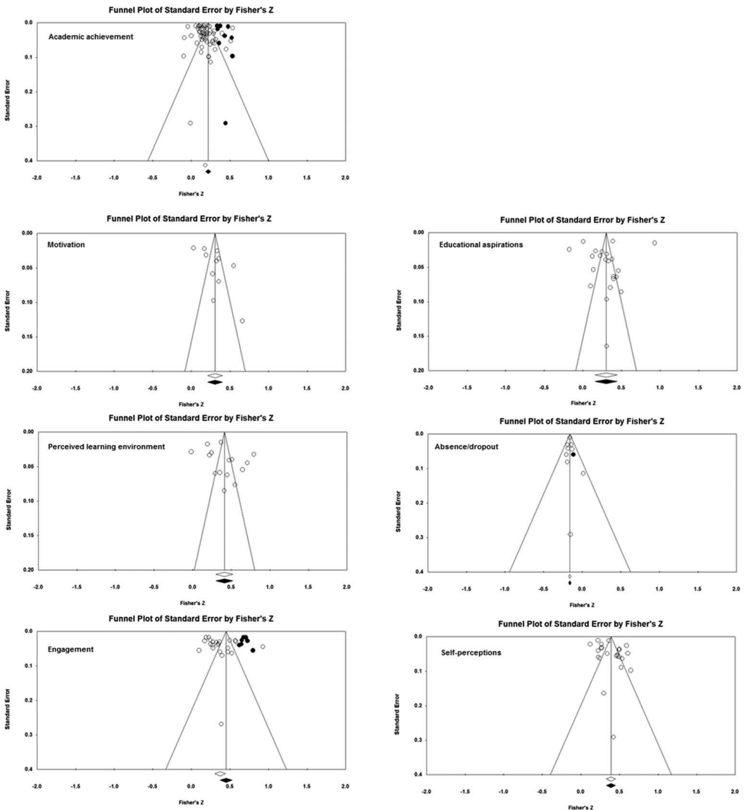
- Publication bias was indicated for academic outcomes and engagement: adjusted summary effects were r = .22 instead of .18 and r = .42 instead of .36, respectively.
Methods
- Meta-analysis of peer-reviewed English-language journal studies published January 2000–December 2018, identified through ERIC and PsycINFO plus reference screening; inclusion required regular secondary education, quantitative methods, samples of at least 30 students, and dependent/independent variables not from the same measurement instrument.
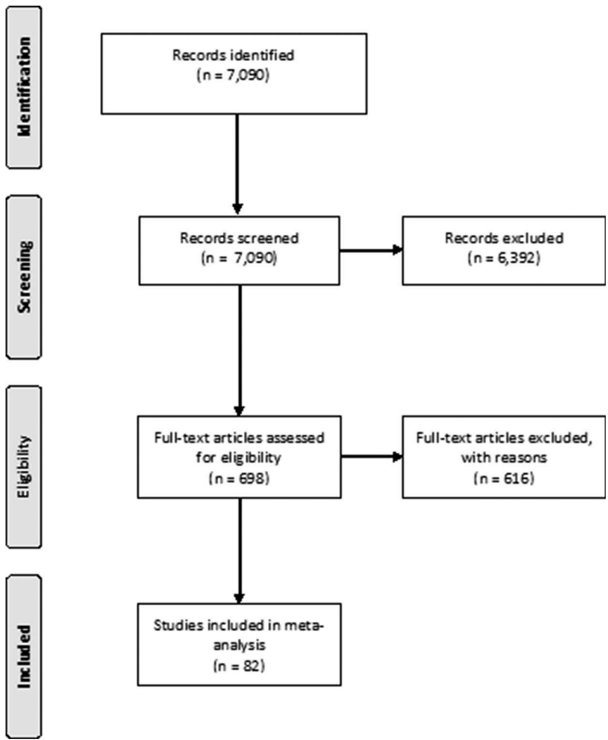
- The final sample comprised 82 studies and 208,796 students; correlations between school belonging and seven outcome domains were transformed into Fisher’s Z, weighted by inverse variance, and converted back to correlations, with multiple similar outcomes averaged within studies.
- Analyses used Comprehensive Meta-Analysis software; meta-ANOVA tests examined group differences by measurement instrument, region, grade level, and SES.
Limitations
- The paper states that findings are based on a relatively small number of primary studies for some specific outcomes and relatively few studies from Europe or Asia; construct validity of school belonging instruments was often unclear; publication bias was found for academic outcomes and engagement; and cross-sectional designs prevent causal conclusions, with reciprocal and cumulative effects likely.
- The paper also notes that students who already dropped out may not have been included in cross-sectional studies, and that samples of Asian, European, and Australian studies were small, so region-specific results need cautious interpretation.
Model-written summary. Check it against the paper before relying on it.
Integrity signals
Registry
Cites
Statistics
Figures


Verification
Claims the paper makes
0 Valid · 1 Not valid · 38 Not checked · 91 Own results and interpretations
A result the paper reports from its own data — it cites no other source for it, so there is none to check. The quote shows it is in the paper.
In the paper
“However, we did find some publication bias for the other outcome types.”
§ The relationships between school belonging and students' motivational, social-emotional, behavioural, and academic outcomes in secondary education: a meta-analytic review > Results for research question 1
plain- Asserted: passes — The authors put it forward as true.
- Checkable: passes — It can be checked against evidence.
- Load-bearing: unclear — It is unclear whether the paper’s conclusions depend on it.
- Based: passes — The paper gives a reason why it holds.
A result the paper reports from its own data — it cites no other source for it, so there is none to check. The quote shows it is in the paper.
In the paper
“The correlations between school belonging and academic achievement and school belonging and absence/dropout rates were small 3 (r = .18and r = -.16,respectively)”
§ The relationships between school belonging and students' motivational, social-emotional, behavioural, and academic outcomes in secondary education: a meta-analytic review > Results for research question 1
plainstates an association- Asserted: passes — The authors put it forward as true.
- Checkable: passes — It can be checked against evidence.
- Load-bearing: unclear — It is unclear whether the paper’s conclusions depend on it.
- Based: passes — The paper gives a reason why it holds.
A result the paper reports from its own data — it cites no other source for it, so there is none to check. The quote shows it is in the paper.
In the paper
“In summary, Table 4 shows that the reported correlations differed per measurement instrument for several student outcomes, namely for academic achievement, motivational outcomes, behavioural engagement, and self-perceptions.”
§ The relationships between school belonging and students' motivational, social-emotional, behavioural, and academic outcomes in secondary education: a meta-analytic review > Results for research question 2
plainstates an association- Asserted: passes — The authors put it forward as true.
- Checkable: passes — It can be checked against evidence.
- Load-bearing: unclear — It is unclear whether the paper’s conclusions depend on it.
- Based: passes — The paper gives a reason why it holds.
A result the paper reports from its own data — it cites no other source for it, so there is none to check. The quote shows it is in the paper.
In the paper
“Additionally, students' sense of school belonging was positively related to their perceived learning environment, such as the perceived classroom climate (r = .40)and a more mastery-oriented classroom goal structure (r = .44),indicating that students with high levels of school belonging perceived their learning environment as more mastery oriented and generally as a more favourable classroom clima”
§ The relationships between school belonging and students' motivational, social-emotional, behavioural, and academic outcomes in secondary education: a meta-analytic review > Results for research question 1
plainstates an association- Asserted: passes — The authors put it forward as true.
- Checkable: passes — It can be checked against evidence.
- Load-bearing: unclear — It is unclear whether the paper’s conclusions depend on it.
- Based: passes — The paper gives a reason why it holds.
A result the paper reports from its own data — it cites no other source for it, so there is none to check. The quote shows it is in the paper.
In the paper
“whereas the correlations with the other motivational, social-emotional, and behavioural outcomes were medium to moderately large (varying between r = .30and .39).”
§ The relationships between school belonging and students' motivational, social-emotional, behavioural, and academic outcomes in secondary education: a meta-analytic review > Results for research question 1
plainstates an association- Asserted: passes — The authors put it forward as true.
- Checkable: passes — It can be checked against evidence.
- Load-bearing: passes — The paper’s conclusions depend on it.
- Based: passes — The paper gives a reason why it holds.
42 more claims
Create a free account to see all 130 claims and to verify the 6 references still open.
- It may state two separate claims as one. 52
- Probably not a substantial claim. 51
Self-check
Percentages, sums and reported differences re-computed from the paper’s own numbers.
Each contradiction between two passages listed here was confirmed by an independent check.
Rated minor: it would not touch a result — a value no result rests on, a p-value that stays on the same side of the significance level, or a conflict that is clerical, resolved elsewhere in the paper, or outside its own findings.
In the paper
§ The relationships between school belonging and students' motivational, social-emotional, behavioural, and academic outcomes in secondary education: a meta-analytic review > Limitations and directions for future research
“Another issue is that we found indicators of publication bias for two of our outcome categories.”
§ The relationships between school belonging and students' motivational, social-emotional, behavioural, and academic outcomes in secondary education: a meta-analytic review > Results for research question 1
“However, we did find some publication bias for the other outcome types.The estimated adjusted effect sizes for these outcomes are: academic outcomes r = 0.215 (LL = 0.182; UL = 0.247), engagement r = 0.421 (LL = 0.353; UL = 0.485), and absence/dropout r = -0.158(LL = -0.174;UL = -0.141).”
Citations
Cites
The "what" and "why" of goal pursuits: Human needs and the self-determination of behavior
Deci, E. L., & Ryan, R. M. (2000) · Psychological Inquiry · doi:10.1207/s15327965pli1104_01 · Cited by 34,210 · cited 2×
“The need for relatedness is not necessarily a prerequisite for intrinsic motivation, but a ‘needed backdrop’ that makes expression of the innate growth tendency of intrinsic motivation more likely (Deci and Ryan 2000, 235).”
BackgroundIntrinsic Motivation and Self-Determination in Human Behavior
Deci, E. L., & Ryan, R. M. (1985) · doi:10.1007/978-1-4899-2271-7 · Cited by 26,772
The need to belong: Desire for interpersonal attachments as a fundamental human motivation.
Baumeister, R. F., & Leary, M. R. (1995) · Psychological Bulletin · doi:10.1037//0033-2909.117.3.497 · Cited by 23,245
(2010) · Intellectum (Universidad de La Sabana) · doi:10.1111/j.1467- · Cited by 16,131
Intrinsic Motivation and Self-Determination in Human Behavior
Miller, K. A., Deci, E. L., & Ryan, R. M. (1988) · Contemporary Sociology · doi:10.2307/2070638 · Cited by 15,312
Borenstein, M., Hedges, L. V., Higgins, J. P. T., & Rothstein, H. R. (2009) · doi:10.1002/9780470743386 · Cited by 14,225 · cited 2×
“ComprehensiveMeta-Analysis software of Biostat was used to carry out all statistical analyses (Borenstein et al. 2009).”
MethodSchool Engagement: Potential of the Concept, State of the Evidence
Fredricks, J. A., Blumenfeld, P. C., & Paris, A. H. (2004) · Review of Educational Research · doi:10.3102/00346543074001059 · Cited by 12,581 · cited 8×
“In addition to the three types of engagement used by Fredricks et al. (2004), other scholars have also studied disengagement, mainly to characterise students who ‘do not feel they belong at school and have withdrawn from school activities in a significant way’ (Willms 2003, 8).”
BackgroundInfluentialBorenstein, M., Hedges, L. V., Higgins, J. P. T., & Rothstein, H. R. (2021) · doi:10.1002/9781119558378 · Cited by 9,799
(2000) · Cited by 9,198
Maslow, A. (1962) · D Van Nostrand eBooks · doi:10.1037/10793-000 · Cited by 7,192
Research works printed but not linked: 9
- 28. Corno, L., and E. B. Mandinach. 2004. "What We Have Learned about Student Engagement in the past Twenty Years." In Big Theories Revisited, edited by D. M. McInerney and S. Van Etten, 299-328. Greenwich, CT: Information Age.
- 34. Deci, E. L., and R. M. Ryan, Eds. 2002. Handbook of Self-Determination Theory Research. Rochester, NY: University of Rochester Press.
- 41. Finn, J. D., and K. A. Kasza. 2009. "Disengagement from School" In Engaging Young People in Learning: Why Does It Matter and What Can We Do? edited by J. Morton, 4-35. Wellington, New Zealand: New Zealand Council for Educational Research.
- 45. Fokkens-Bruinsma, M., E. T. C. Canrinus, M. Ten Hove, and L. Rietveld. 2018. "The Relationship between Teacher's Work Motivation and Classroom Goal Orientation." Pedagogische Studiën 95: 86-100.
- 55. Gottfredson, G. 1984. Effective School Battery. Odessa, FL: Psychological Assessment Resources.
- 97. Li, Y. B., and R. M. Lerner. 2013. "Interrelations of Behavioral, Emotional, and Cognitive School Engagement in High School Students." Journal of Youth and Adolescence 42: 20-32. doi:10.1007/s10964-012-9857-5. · DOI · Paper page
- 10.1007/s10964-005-8950-4 · DOI · Paper page
- 148. Udry, J. R. 1998. The National Longitudinal Study of Adolescent Health (Add Health), Waves I & II, 1994-1996. Chapel Hill, NC: Carolina Population Center, University of North Carolina at Chapel Hill (Producer).Los Altos, CA: Sociometrics Corporation, American Family Data Archive (Producer & Distributor)
- 166. WestEd. 2008. California Healthy Kids Survey: California School District Secondary School Survey Results Fall 07/Spring 08. Los Alamitos, CA: Author.
Cited by
Allen, K.-A., Gray, D. L., Baumeister, R. F., & Leary, M. R. (2022) · Educational Psychology Review · doi:10.1007/s10648-021-09633-6 · Cited by 311
Cents-Boonstra, M., Lichtwarck-Aschoff, A., Denessen, E., Aelterman, N., & Haerens, L. (2021) · Research Papers in Education · doi:10.1080/02671522.2020.1767184 · Cited by 216
El Zaatari, W., & Maalouf, I. (2022) · Sage Open · doi:10.1177/21582440221134089 · Cited by 182
“Several studies consistently underline the key role that various school climate factors play in enhancing students’ sense of belonging (Bakır-Ayğar & Kaya, 2017; Günalan, 2018; Huang et al., 2013; Kalkan & Dağlı, 2021; Korpershoek et al., 2020).”
BackgroundInfluentialBang, H., Won, D., & Park, S. (2020) · Children and Youth Services Review · doi:10.1016/j.childyouth.2020.105012 · Cited by 189
Allen, K., Jamshidi, N., Berger, E., Reupert, A., Wurf, G., & May, F. (2021) · Educational Psychology Review · doi:10.1007/s10648-021-09621-w · Cited by 212
“As a result, it has been unclear as to what interventions are available to schools for increasing students’ sense of school belonging (Korpershoek et al., 2020).”
BackgroundInfluentialSchool Absenteeism and Academic Achievement: Does the Reason for Absence Matter?
Klein, M., Sosu, E. M., & Dare, S. (2022) · AERA Open · doi:10.1177/23328584211071115 · Cited by 108
Monteiro, V., Carvalho, C., & Santos, N. N. (2021) · Frontiers in Education · doi:10.3389/feduc.2021.661736 · Cited by 211
“Students who develop a sense of identification with the school are more involved in classroom work, actively participating in their learning and autonomously developing new activities, improving their academic achievement (Korpershoek et al., 2019).”
BackgroundInfluentialRose, I. D., Lesesne, C. A., Sun, J., Johns, M. M., Zhang, X., & Hertz, M. F. (2022) · The Journal of School Nursing · doi:10.1177/10598405221096802 · Cited by 132
“…of school connectedness that explicitly included examination of three subconstructs of school connectedness (i.e., social af fi liation, school belonging, and attitudes about school importance), whereas past analyses have focused on one construct (Allen et al., 2018; Korpershoek et al., 2020).”
BackgroundAllen, K., Greenwood, C. J., Berger, E., Patlamazoglou, L., Reupert, A., Wurf, G., May, F., O’Connor, M., Sanson, A. V., Olsson, C. A., et al. (2024) · School Mental Health · doi:10.1007/s12310-023-09626-6 · Cited by 127
“Together, these dimensions relate to the overarching construct of school belonging, considered a crucial component of emotional or affective engagement with learning and the school environment (Korpershoek, et al., 2020).”
A multi-stakeholder perspective of relationship marketing in higher education institutions
Jain, V., Mogaji, E., Sharma, H., & Babbili, A. (2022) · Journal of Marketing for HIGHER EDUCATION · doi:10.1080/08841241.2022.2034201 · Cited by 128
Student- and school-level factors related to school belongingness among high school students
Ahmadı, S., Hassani, M., & Ahmadi, F. (2020) · International Journal of Adolescence and Youth · doi:10.1080/02673843.2020.1730200 · Cited by 97
Do I Fit In: Race/Ethnicity and Feelings of Belonging in School
Graham, S., Kogachi, K., & Morales‐Chicas, J. (2022) · Educational Psychology Review · doi:10.1007/s10648-022-09709-x · Cited by 91
“…has documented that middle school and high school students have more positive attitudes about school, are more motivated, and achieve better academic and health outcomes as feelings of belonging increase (see reviews in Allen et al., 2018, 2022; Korpershoek et al., 2020; Rose et al., 2022).”
BackgroundThe Influence of Student Engagement on Mathematical Achievement among Secondary School Students
Maamin, M., Maat, S. M., & Iksan, Z. H. (2021) · Mathematics · doi:10.3390/math10010041 · Cited by 140
“Students’ dependence on teachers has also been identified as relevant [51,61,62].”
BackgroundFabris, M. A., Settanni, M., Longobardi, C., & Marengo, D. (2023) · Child Psychiatry & Human Development · doi:10.1007/s10578-023-01516-x · Cited by 110
“School is an important developmental context for children [1, 2], and a sense of belonging at school (SOBAS) appears to be a crucial factor in promoting more positive academic and developmental outcomes [3, 4].”
BackgroundInfluentialBao, C., Zhang, L. J., & Dixon, H. R. (2021) · Frontiers in Psychology · doi:10.3389/fpsyg.2021.710736 · Cited by 78
“Once students feel personally accepted and have a sense of belonging, positive teacher-student relationships can be developed and relatedness will be attained simultaneously (Korpershoek et al., 2019; Cents-Boonstra et al., 2020).”
BackgroundFong, C. J., Adelugba, S. F., Garza, M., Pinto, G. L., Gonzales, C., Zarei, P., & Rozek, C. S. (2024) · Educational Psychology Review · doi:10.1007/s10648-024-09974-y · Cited by 77
“Prior syntheses have documented differences in the magnitude of the associations between belonging and various outcomes in K–12 settings (Allen et al., 2018; Korpershoek et al., 2020), but similar patterns have not been examined in college settings by research synthesists.”
Skinner, E. A. (2023) · Educational Psychology Review · doi:10.1007/s10648-023-09790-w · Cited by 86
The Relationship Between Student Voice and Student Engagement in Urban High Schools
Conner, J., Posner, M., & Nsowaa, B. (2022) · The Urban Review · doi:10.1007/s11256-022-00637-2 · Cited by 48
Examining predictors of school belonging using a socio-ecological perspective
Allen, K., Cordoba, B. G., Ryan, T., Arslan, G., Slaten, C. D., Ferguson, J. K., Bozoğlan, B., Abdollahi, A., & Vella‐Brodrick, D. (2022) · Journal of Child and Family Studies · doi:10.1007/s10826-022-02305-1 · Cited by 82
Mittmann, G., Barnard, A., Krammer, I., Martins, D., & Dias, J. (2022) · Proceedings of the ACM on Human-Computer Interaction · doi:10.1145/3549505 · Cited by 72
“There are for example consistent positive relations between a sense of belonging and academic performance, self-concept, behavioural engagement, and a general sense of wellbeing [4-7].”
BackgroundSantos, A. C., Simões, C., Melo, M. H. D. S., Santos, M. F., Freitas, I. D. S., Branquinho, C., Cefai, C., & Arriaga, P. (2023) · Educational Research Review · doi:10.1016/j.edurev.2023.100535 · Cited by 82
Why do East Asian students do so well in mathematics? A machine learning study
Wang, F., King, R. B., & Leung, S. O. (2022) · International Journal of Science and Mathematics Education · doi:10.1007/s10763-022-10262-w · Cited by 53
“Furthermore, it was also reported that students who have a higher sense of school belonging (i.e., student’s sense of being accepted, valued, included toward school) and were exposed to fewer bullying behaviors tend to have a better academic achievement (Huang, 2020; Korpershoek et al., 2020).”
BackgroundSaleem, F. T., Legette, K. B., & Byrd, C. M. (2022) · Journal of School Psychology · doi:10.1016/j.jsp.2022.01.001 · Cited by 50
“School belonging is important for several academic outcomes such as achievement, academic competence, and school withdrawal (Gillen-O’Neel & Fuligni, 2013; Korpershoek et al., 2020).”
BackgroundSchool adjustment in adolescence explained by social support, resilience and positive affect
Azpiazu, L., Antonio-Aguirre, I., Izar-de-la-Fuente, I., & Fernández-Lasarte, O. (2024) · European Journal of Psychology of Education · doi:10.1007/s10212-023-00785-3 · Cited by 93
“…vital to adjusted performance (Martins et al., 2022; Rodríguez-Fernández et al., 2018) and a significant predictor of school integration problems (Korpershoek et al., 2020), since being a variable closely linked to the social context and the integration needs of adolescent students (Demirci,…”
Wang, Y., Wang, L., Yang, L., & Wang, W. (2024) · Scientific Reports · doi:10.1038/s41598-024-78402-6 · Cited by 92
Santos, A. C., Arriaga, P., Daniel, J. R., Cefai, C., Melo, M. H. D. S., Psyllou, A., Shieh, J., Schutte, N. S., Furtado, C., David, C., et al. (2022) · Studies in Higher Education · doi:10.1080/03075079.2022.2099370 · Cited by 55
Social connection as a key target for youth mental health
Birrell, L., Werner‐Seidler, A., Davidson, L., Andrews, J. L., & Slade, T. N. (2025) · Mental Health & Prevention · doi:10.1016/j.mhp.2025.200395 · Cited by 73
Bernardo, A. B. I., Cordel, M. O., Lucas, R. I. G., Teves, J. M. M., Yap, S. A., & Chua, U. C. (2021) · Education Sciences · doi:10.3390/educsci11100628 · Cited by 66
“For example, the students’ SES is sometimes characterized as an important factor in understanding social disconnectedness in school [62], while these feelings of disconnectedness might contribute to lower motivations and values for schooling, as well [63].”
BackgroundStark, L., Seff, I., Yu, G., Salama, M., Wessells, M., Allaf, C., & Bennouna, C. (2021) · Journal of Adolescent Health · doi:10.1016/j.jadohealth.2021.07.012 · Cited by 47
Exploring the importance of a sense of belonging for a sense of ownership in learning
du Toit-Brits, C. (2022) · South African Journal of Higher Education · doi:10.20853/36-5-4345 · Cited by 58
Ergenlerde Okul Aidiyeti, Okul İşlevleri ve Psikolojik Uyum Arasındaki İlişkinin İncelenmesi
Arslan, G., & Tanhan, A. (2019) · Yaşadıkça Eğitim · doi:10.33308/26674874.2019332127 · Cited by 37
Beating the odds: Identifying the top predictors of resilience among Hong Kong students
Wang, F., King, R. B., & Leung, S. O. (2022) · Child Indicators Research · doi:10.1007/s12187-022-09939-z · Cited by 46
“Korpershoek et al. (2020) found that a sense of belonging to school was positively associated with greater motivation, better socioemotional functioning, and higher academic achievement.”
BackgroundShen, S., Tang, T., Pu, L., Mao, Y., Wang, Z., & Wang, S. (2024) · SAGE Open · doi:10.1177/21582440241245369 · Cited by 85
“However, many college students are not engaged in their learning, resulting in low levels of motivation (Korpershoek et al., 2020), academic outcomes (e.g., Alhadabi & Karpinski, 2020; Kim et al., 2019), and even high dropout (e.g., Ba¨ulke, et al., 2018; Kehm et al., 2019).”
Kalkan, F., & Dağlı, E. (2022) · International Journal of Contemporary Educational Research · doi:10.33200/ijcer.878682 · Cited by 58
St‐Amand, J., Smith, J., & Goulet, M. (2023) · Current Psychology · doi:10.1007/s12144-023-04481-9 · Cited by 60
“…belonging is a fundamental component of student engagement and is generally stronger for females than for males, while varying from one grade to another (Faircloth & Hamm, 2005; Finn, 1989 ; Goodenow & Grady, 1993; Korpershoek et al., 2020; Sari, 2013; Smith et al., 2020 ; St-Amand et al., 2020a).”
Addressing the Sense of School Belonging Among All Students? A Systematic Literature Review
Štremfel, U., Ivančič, K. Š., & Peras, I. (2024) · European Journal of Investigation in Health Psychology and Education · doi:10.3390/ejihpe14110190 · Cited by 103
“Considerable amounts of research, including some meta-studies [23] and systematic reviews [24,25], have examined the sense of school belonging as an independent variable predicting specific positive and negative academic, behavioural, and psychological (socio-emotional) outcomes among students.”
Corcoran, S., & Kelly, C. (2023) · Journal of Research in Special Educational Needs · doi:10.1111/1471-3802.12577 · Cited by 33
Okolie, U. C., Ochinanwata, C., Ochinanwata, N., Igwe, P. A., & Okorie, G. O. (2021) · Higher Education Skills and Work-based Learning · doi:10.1108/heswbl-09-2020-0207 · Cited by 48
Antecedents and consequences of teachers’ goal profiles in Australia and Israel
Watt, H. M. G., Butler, R., & Richardson, P. (2021) · Learning and Instruction · doi:10.1016/j.learninstruc.2021.101491 · Cited by 44
Dräger, J., Klein, M., & Sosu, E. (2024) · British Educational Research Journal · doi:10.1002/berj.3992 · Cited by 60
“In addition, students who are frequently absent from school may feel less connected to their classmates and struggle to participate in classroom activities and interactions with teachers and peers, indirectly influencing their academic development (Korpershoek et al., 2020).”
BackgroundSocial media engagement and Fear of Missing Out (FOMO) in primary school children
D'Lima, P., & Higgins, A. R. (2021) · Educational Psychology in Practice · doi:10.1080/02667363.2021.1947200 · Cited by 42
Kunyu, D. K., Juang, L. P., Schachner, M. K., & Schwarzenthal, M. (2020) · Zeitschrift für Entwicklungspsychologie und Pädagogische Psychologie · doi:10.1026/0049-8637/a000231 · Cited by 40
Overcoming adversity: exploring the key predictors of academic resilience in science
Wang, F., King, R. B., Fu, L., Chai, C. S., & Leung, S. O. (2023) · International Journal of Science Education · doi:10.1080/09500693.2023.2231117 · Cited by 41
“The existing research indicated that students who feel respected and accepted in schools tended to display higher levels of science con fi dence, intrinsic motivation, and achievement (Korpershoek et al., 2019).”
BackgroundResultPolmear, M., Hunsu, N. J., Simmons, D. R., Olaogun, O. P., & Lu, L. (2024) · Journal of Engineering Education · doi:10.1002/jee.20599 · Cited by 38
“While belonging has been studied as a predictor of educational outcomes in the empirical literature (Gutiérrez et al., 2022; Korpershoek et al., 2020; Salles et al., 2019; Won et al., 2018), theoretical or conceptual frameworks of the mechanisms that lead to belonging are scarce.”
How hope measures up: Hope predicts school variables beyond growth mindset and school belonging
Dixson, D. D. (2020) · Current Psychology · doi:10.1007/s12144-020-00975-y · Cited by 33
“…the recent studies that have cast doubt on the efficacy of growth mindset and school belonging within the school context (e.g., Dixson et al. 2017a; Korpershoek et al. 2019; Li and Bates 2017; Moallem 2013; Sisk et al. 2018), this finding is surprising given the high regard these variables are…”
BackgroundResultMiddle Grades Teacher Practices during the COVID-19 Pandemic
Bishop, P. A. (2021) · RMLE Online · doi:10.1080/19404476.2021.1959832 · Cited by 43
Allen, K., & Boyle, C. (2022) · Springer eBooks · doi:10.1007/978-3-031-07853-8_7 · Cited by 44
Sattar, T., Ullah, M. I., & Ahmad, B. (2022) · Frontiers in Psychology · doi:10.3389/fpsyg.2022.875174 · Cited by 48
A meme-based approach for enhancing student engagement and learning in renal physiology
Subbiramaniyan, V., Apte, C., & Mohammed, C. A. (2021) · AJP Advances in Physiology Education · doi:10.1152/advan.00092.2021 · Cited by 27
Davies, C. A., Cordier, R., Graham, P., Littlefair, D., Speyer, R., & Melo, D. (2025) · Education Sciences · doi:10.3390/educsci15050582 · Cited by 50
The university campus and a sense of belonging: what do students think?
Mulrooney, H. M., & Kelly, A. F. (2020) · New Directions in the Teaching of Physical Sciences · doi:10.29311/ndtps.v0i15.3590 · Cited by 39
“…important, given the links between a sense of belonging and improved attainment and retention in both university (Strayhorn, 2012; Hausman et al, 2009; Freeman et al, 2007; Thomas et al, 2017) and school students (Dwyer 2017; Korpershoek et al, 2019; Oldfield et al, 2019; Rivera Munoz et al, 2019).”
BackgroundSchool Belonging and Reading Literacy: A Multilevel Moderated Mediation Model
Tan, Y., Fan, Z., Xiaoman, W., & Yang, T. (2022) · Frontiers in Psychology · doi:10.3389/fpsyg.2022.816128 · Cited by 36
“a basic psychological need of individuals (Korpershoek et al., 2019).”
BackgroundInfluentialLazarides, R., Watt, H. M. G., & Richardson, P. (2022) · Contemporary Educational Psychology · doi:10.1016/j.cedpsych.2022.102136 · Cited by 35
Liu, Y., Hou, X., & Chen, B. (2022) · Frontiers in Psychology · doi:10.3389/fpsyg.2022.952001 · Cited by 35
“Some studies focused on the direct impact of students’ school belonging on their academic performance (Korpershoek et al., 2020; Tan et al., 2022), and other research has further explored the mediating role of school belonging on the relationships between family and school factors and students’ academic performance.”
BackgroundLazarides, R., & Schiefele, U. (2023) · Learning and Instruction · doi:10.1016/j.learninstruc.2023.101862 · Cited by 39
López, V., Torres‐Vallejos, J., Ascorra, P., González, L., Ortíz, S., & Bilbao, M. (2021) · Frontiers in Psychology · doi:10.3389/fpsyg.2021.620895 · Cited by 38
“, 2005), and academic performance and success (Barber and Olsen, 1997; Blum, 2005; Boston and Warren, 2017; Korpershoek et al., 2019), measured as grade point average (GPA) (Roeser et al.”
BackgroundStenseng, F., Tingstad, E. B., Wichstrøm, L., & Skalická, V. (2022) · British Journal of Educational Psychology · doi:10.1111/bjep.12504 · Cited by 33
Ha, C., McCarthy, M. F., Strambler, M. J., & Cipriano, C. (2025) · Review of Educational Research · doi:10.3102/00346543251367769 · Cited by 64
“For example, research has shown that students who feel a sense of belonging within the school community are more successful academically (Korpershoek et al., 2019), yet absenteeism data suggest students are becoming less connected to and engaged in school (Dee, 2024).”
Liu, X., Yang, Y., & Ho, J. W. (2022) · International Journal of Environmental Research and Public Health · doi:10.3390/ijerph19031495 · Cited by 22
“It is generally believed that classrooms are social environments in which social interactions with teachers and classmates shape students’ learning processes [15].”
BackgroundBenneker, I. M. B., Lee, N. C., & van Atteveldt, N. (2023) · npj Science of Learning · doi:10.1038/s41539-023-00153-2 · Cited by 33
Self-determination and perceived learning in online learning communities
Yuerong, L., Na, M., Xiaolu, Y., & Alam, S. S. (2024) · Scientific Reports · doi:10.1038/s41598-024-74878-4 · Cited by 37
“On the other hand, the lack of a statistically significant relationship between RELA and PL (H3b) presents an unexpected result, particularly when contrasted with literature that has often highlighted the positive influence of relatedness on learning outcomes 52–54 .”
BackgroundResultSchool Belonging: Evidence, Experts, and Everyday Gaps
Allen, K. (2025) · Educational Psychology Review · doi:10.1007/s10648-025-10055-x · Cited by 52
Zhao, M., Mathews, C. J., Mulvey, K. L., Hartstone‐Rose, A., McGuire, L., Hoffman, A. J., Winterbottom, M., Joy, A., Law, F., Balkwill, F. R., et al. (2022) · Journal of Youth and Adolescence · doi:10.1007/s10964-022-01694-2 · Cited by 32
Chen, Y., He, H., & Yang, Y. (2023) · Sustainability · doi:10.3390/su15065134 · Cited by 34
Herrera, L. J. P., & Byndas, O. (2023) · Cogent Education · doi:10.1080/2331186x.2023.2264009 · Cited by 28
“…a myriad of definitions of belonging exists; however, for the purpose of this manuscript, we draw on the work of Baumeister and Leary (1995) and Korpershoek et al. (2020) to define it as the extent to which individuals feel personally accepted, respected, included, and supported by others in…”
Curricular Tracking, Students’ Academic Identity, and School Belonging
Legette, K. B., & Kurtz‐Costes, B. (2020) · The Journal of Early Adolescence · doi:10.1177/0272431620977659 · Cited by 33
The effect of family support on student engagement: Towards the prevention of dropouts
Gil, A. J., Lanzat, A. M. A., González, M. L. C., & Navío, E. P. (2021) · Psychology in the Schools · doi:10.1002/pits.22490 · Cited by 40
McNamara, L. (2021) · FACETS · doi:10.1139/facets-2021-0081 · Cited by 28
Gamala, J. J., & Marpa, E. P. (2022) · International Journal on Social and Education Sciences · doi:10.46328/ijonses.285 · Cited by 60
Wong, D., Allen, K., & Cordoba, B. G. (2022) · Contemporary Educational Psychology · doi:10.1016/j.cedpsych.2022.102113 · Cited by 28
Belonging in Australian primary schools: how students from refugee backgrounds gain membership
Amina, F., Barnes, M., & Saito, E. (2022) · Journal of Multilingual and Multicultural Development · doi:10.1080/01434632.2022.2026367 · Cited by 28
“Many scholars have explored school belonging by attempting to understand their schooling experiences in order for schools and teachers to foster school belonging (Allen, Reupert, and Oades 2021; Greenwood and Kelly 2019; Korpershoek et al. 2020; Windle and Miller 2013).”
Allen, K., Berger, E., Reupert, A., Grové, C., May, F., Patlamazoglou, L., Gamble, N., Wurf, G., & Warton, W. (2023) · School Mental Health · doi:10.1007/s12310-023-09596-9 · Cited by 33
“…2019; Wyman et al., 2019), psychological wellbeing (Allen et al., 2016a, b; Arslan et al., 2020; Tian et al., 2016), positive school experiences (Korpershoek et al., 2020), and reduced instances of bullying, violence and substance use (Allen et al., 2021a, b; Arslan, 2022; Demanet & Van Houtte,…”
BackgroundChen, J., Lin, C., & Chen, G. (2023) · Computers & Education · doi:10.1016/j.compedu.2023.104883 · Cited by 37
Pastore, O. L., & Fortier, M. (2023) · Health Promotion International · doi:10.1093/heapro/daad107 · Cited by 24
Kunyu, D. K., Schachner, M. K., Juang, L. P., Schwarzenthal, M., & Aral, T. (2021) · New Directions for Child and Adolescent Development · doi:10.1002/cad.20408 · Cited by 25
Chen, E., Lam, P. H., Yu, T., & Brody, G. H. (2022) · Archives of Pediatrics and Adolescent Medicine · doi:10.1001/jamapediatrics.2022.3856 · Cited by 22
Student engagement profiles and the role of support in general upper secondary education
Söderholm, F., Viljaranta, J., Tuominen, H., Lappalainen, K., & Holopainen, L. K. (2023) · Learning and Individual Differences · doi:10.1016/j.lindif.2023.102289 · Cited by 41
Sivananthajothy, P., Adel, A., Afhami, S., Castrogiovanni, N., Osei-Tutu, K. B., & Brown, A. D. (2023) · Advances in Health Sciences Education · doi:10.1007/s10459-023-10265-4 · Cited by 34
“In higher education, belonging has been associated with academic success, motivation, satisfaction, and reduced stress among students (Ahn & Davis, 2023; Korpershoek et al., 2020; Moallem, 2013 ; Pedler et al., 2022; Strayhorn, 2018).”
Editorial: Social Belongingness and Well-Being: International Perspectives
Oyanedel, J. C., & Páez, D. (2021) · Frontiers in Psychology · doi:10.3389/fpsyg.2021.735507 · Cited by 25
Shaheed, J., & Kiang, L. (2021) · Social Psychology of Education · doi:10.1007/s11218-021-09643-w · Cited by 26
Arslan, G., Burke, J., & Albertova, S. M. (2022) · The Educational and Developmental Psychologist · doi:10.1080/20590776.2021.2023494 · Cited by 22
Santamaría, J. S., Cervantes, B. I. B., López-Garrido, F.-M., & Alcalá, D. H. (2021) · Sustainability · doi:10.3390/su13074047 · Cited by 25
“Korpershoek, H.; Canrinus, E.T.; Fokkens-Bruinsma, M.; de Boer, H.”
BackgroundInfluentialZhao, M., Maat, S. M., Azman, N., & Zheng, E. (2024) · SAGE Open · doi:10.1177/21582440241304928 · Cited by 32
“…the negative impact of negative academic emotions (e.g., anxiety) on learning performance has been overemphasized in previous studies (Li, 2020; Korpershoek et al., 2020; Kryza-Lacombe et al., 2019), while the impact of positive academic emotions on learning performance has been relatively…”
Burger, K. (2023) · Developmental Psychology · doi:10.1037/dev0001448 · Cited by 21
Huda, N., & Rohaeti, E. (2023) · Journal of Baltic Science Education · doi:10.33225/jbse/23.22.615 · Cited by 30
Ubago-Jiménez, J. L., Ortega, F. Z., Ortega-Martín, J. L., & Melguizo-Ibáñez, E. (2024) · Heliyon · doi:10.1016/j.heliyon.2024.e29476 · Cited by 56
“In this regard, there are meta-analytic studies such as that of Korpershoek et al. [24], who examined the impact of belonging on motivational, psychosocial and academic performance factors.”
BackgroundWang, J., Kaufman, T. M. L., Mastrotheodoros, S., & Branje, S. (2024) · Journal of School Psychology · doi:10.1016/j.jsp.2024.101326 · Cited by 28
Erentaitė, R., Vosylis, R., Sevalneva, D., Melnikė, E., Raižienė, S., & Daukantaité, D. (2022) · Frontiers in Psychology · doi:10.3389/fpsyg.2022.820247 · Cited by 22
Du, W., Hernandez, P. R., Adams, A. S., Clinton, S. M., Barnes, R. T., Burt, M., Pollack, I. B., & Fischer, E. V. (2023) · Mentoring & Tutoring Partnership in Learning · doi:10.1080/13611267.2023.2225395 · Cited by 17
Xue, M. (2024) · International Journal of Educational Research · doi:10.1016/j.ijer.2023.102310 · Cited by 24
Page, A., Anderson, J., & Charteris, J. (2024) · Cambridge Journal of Education · doi:10.1080/0305764x.2024.2397398 · Cited by 38
“This is critical, as a sense of belonging at school predicates a sense of belonging outside of school (Korpershoek et al., 2020), something students with disability generally experience at lower rates than their peers without a disability (Pesonen et al., 2016).”
Racialized Perceptions of Anticipated School Belonging
Hailey, C. A. (2022) · Educational Policy · doi:10.1177/08959048221087211 · Cited by 19
“Scholars define school inclusion as students’ sense of acceptance, valuation, and encouragement in schools’ social life and activities (Goodenow, 1993) and often interchangeably reference school belonging, connectedness, inclusion, and attachment (Korpershoek et al., 2020).”
BackgroundEnderle, C., Kreitz-Sandberg, S., Backlund, Å., Isaksson, J., Fredriksson, U., & Ricking, H. (2024) · Frontiers in Education · doi:10.3389/feduc.2024.1405395 · Cited by 14
School belonging and math attitudes among high school students in advanced math
Smith, T. J., Walker, D. A., Chen, H., Hong, Z., & Lin, H. (2020) · International Journal of Educational Development · doi:10.1016/j.ijedudev.2020.102297 · Cited by 18
Greenall, R. F., & Bailey, E. G. (2022) · CBE—Life Sciences Education · doi:10.1187/cbe.21-12-0340 · Cited by 14
“It is well known that belonging is important for success in education (Osterman, 2000; Korpershoek et al., 2020; Chen et al., 2021), and students’ belonging and achievement increase when they identify with the material and values being taught (Davison and Miller, 1998).”
BackgroundParizad, N., Pourteimour, S., & Jamshidi, H. (2021) · Nursing and Midwifery Studies · doi:10.4103/nms.nms_34_20 · Cited by 13
Predictors for Growth Mindset and Sense of Belonging in College Students
Murray, J. M., Komissarov, S., Cook, S. L., & Murray, B. L. (2017) · Journal of Pedagogical Sociology and Psychology · doi:10.33902/jpsp.202213791 · Cited by 22
Dearth‐Wesley, T., Herman, A. N., & Whitaker, R. C. (2023) · International Journal of Adolescence and Youth · doi:10.1080/02673843.2023.2254136 · Cited by 21
“…of engagement; less absenteeism and dropout), are at lower risk for violence and substance abuse, and perceive their classrooms as being more fair and focused on mastery (rather than performance oriented) (Allen et al., 2018; Korpershoek et al., 2020; Rose et al., 2022; Shochet et al., 2006).”
BackgroundWang, G., Chen, G., & Li, B. (2024) · Frontiers in Education · doi:10.3389/feduc.2023.1284177 · Cited by 24
Against the odds: predictors of academic success and excellence in majority-minority schools
Ağırdağ, O., & Leersnyder, J. D. (2024) · School Effectiveness and School Improvement · doi:10.1080/09243453.2024.2385938 · Cited by 23
“First, research has shown that a sense of belonging in the school environment is crucial for the academic success and well-being of all students (see e.g., Korpershoek et al., 2020, for a meta-analysis).”
Metadata
- Authors
- Korpershoek, H., Canrinus, E. T., Fokkens-Bruinsma, M., & de Boer, H.
- Affiliations
- University of Groningen (NL)
- University of Agder (NO)
- GION Education/Research, University of Groningen, Groningen, the Netherlands
- Corresponding author
- Korpershoek, H.
- Venue
- Research Papers in Education
- Publisher
- Informa UK Limited
- Published
- 2019-05-27
- Volume
- 35
- Issue
- 6
- Pages
- 641-680
- ISSN
- 0267-1522 (ISSN-L)
- 1470-1146
- OpenAlex
- W2947655140
- Semantic Scholar
- 35ecbf9488c93b1b390c210affb07d3204d06aad
- Cited by
- 648
- References
- 182
- Citations by year
- 2026: 228 · 2025: 119 · 2024: 100 · 2023: 78 · 2022: 70 · 2021: 42 · 2020: 10 · 2019: 1
- FWCI
- 82.86
- Type
- journal article
- Language
- en
- Open access
- hybrid
- doi.org
- Licence
- Locations
- Research Papers in Education (publishedVersion, cc-by-nc-nd)
- University of Groningen research database (University of Groningen / Centre for Information Technology) (acceptedVersion, cc-by-nc-nd)
- NORA - Norwegian Open Research Archives (submittedVersion, cc-by-nc-nd)
- University of Groningen research database (University of Groningen / Centre for Information Technology) (submittedVersion, cc-by-nc-nd)
- Topics
- Social Sciences › Education › Early Childhood Education and Development
- Social Sciences › Psychology › Developmental and Educational Psychology › Education, Achievement, and Giftedness
- Social Sciences › Education › Educational Environments and Student Outcomes
- Keywords
- school belonging, secondary education, academic performance, student motivation, mastery orientation, self-concept, self-efficacy, student engagement, school absenteeism, school dropout, social-emotional outcomes, behavioural outcomes, socioeconomic status, grade level differences
About these checks
Registry, retraction, Cites and statistics results are computed, not judged, with one exception: a printed reference that no index lists is read once by a model before it counts as a citation error. Claims are extracted by a model and kept only when their quote appears verbatim in the text; each cited source is then checked, with a model’s help, for whether it says what the claim relies on. Those verdicts can be wrong — read the claim’s quote and the cited source before relying on one.
A language model drew the claims from the paper on 2026-09-28, under version 3 of the claim definition (model deepseek-v4.1-flash, prompt extract-v3).
A second model labelled each claim on 2026-09-28 (model jev-1.13-20260917, definition revision gold-guideline-v0.2).
Statistics and arithmetic are recomputed, not judged.
Confidence bands are shown only for fields calibrated on our annotated test set. None is calibrated yet, so no band is shown.
What counts as a claim ›How we measure confidence ›How we check this ›
Are you an author, or do you see a problem with this page? Request a review
Data sources
Bibliographic data: Semantic Scholar, OpenAlex, Crossref.
Contains information from the Semantic Scholar Academic Graph Datasets, made available under the ODC Attribution License (ODC-BY 1.0).
Semantic Scholar’s data is described in: Kinney, R., et al. (2023). The Semantic Scholar Open Data Platform. arXiv:2301.10140.
