

The relationships between school belonging and students’ motivational, social-emotional, behavioural, and academic outcomes in secondary education: a meta-analytic review
Open accessThe DOI matches its Crossref record; 182 of the 185 references it cites were found in a registry or an index, and 1 are not checked yet; none of the 57 sources its claims cite is checked for support yet.
Abstract
This meta-analytic review examines the relationships between students’ sense of school belonging and students’ motivational, social-emotional, behavioural, and academic functioning in secondary education. Moreover, it examines to what extent these relationships differ between different student groups (grade level, SES), measurement instruments, and region. The meta-analysis included 82 correlational studies, published in peer-reviewed journals between 2000 and 2018. Results revealed, on average, a small positive correlation with academic achievement, and small to moderate positive correlations with motivational outcomes such as mastery goal orientations; with social-emotional outcomes such as self-concept and self-efficacy; and with behavioural outcomes such as behavioural, cognitive, and agentic engagement. A small negative correlation is observed with absence and dropout rates. Similar results are found across different student groups (grade level, SES). Although the results vary to some extent across measurement instruments and region, generally, the results reveal that school belonging plays an important role in students’ school life.
Checked 2026-11-25 · 1 reference not checked yet
Overview
CoChat Summary
TL;DR
This meta-analysis synthesizes 82 studies (208,796 secondary students) on school belonging and finds consistent positive associations with motivational, social-emotional, behavioural, and academic outcomes, and a negative association with absence/dropout. Associations are generally small to moderate, with some variation by measurement instrument and region but not by grade level or SES.
Key findings
- Across 82 studies (208,796 students), school belonging was positively related to most outcomes: academic achievement averaged r = .18, absence/dropout averaged r = -.16, and other motivational, social-emotional, and behavioural outcomes averaged r = .30 to .39.
- Specific outcomes included school grades r = .18 (67 tests), standardised test scores r = .12 (19 tests), perceived classroom climate r = .40, and mastery-oriented classroom goal structure r = .44; performance approach goals, extrinsic motivation, and social motivation were small and non-significant.
- Moderator analyses found differences by measurement instrument for academic achievement, motivational outcomes, behavioural engagement, and self-perceptions, and by region for perceived learning environment and behavioural engagement; no significant differences were found for grade level or SES.
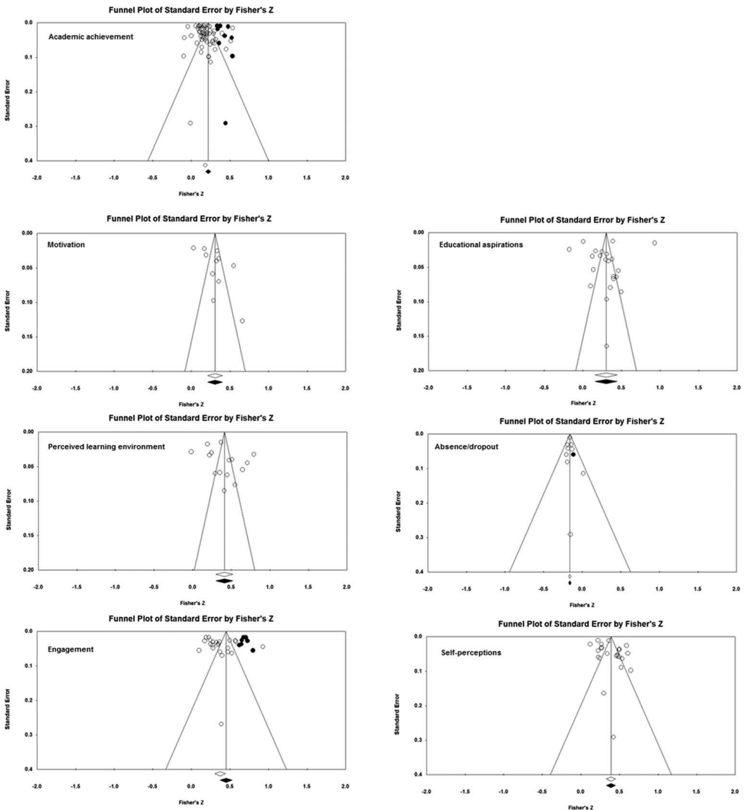
- Publication bias was indicated for academic outcomes and engagement: adjusted summary effects were r = .22 instead of .18 and r = .42 instead of .36, respectively.
Methods
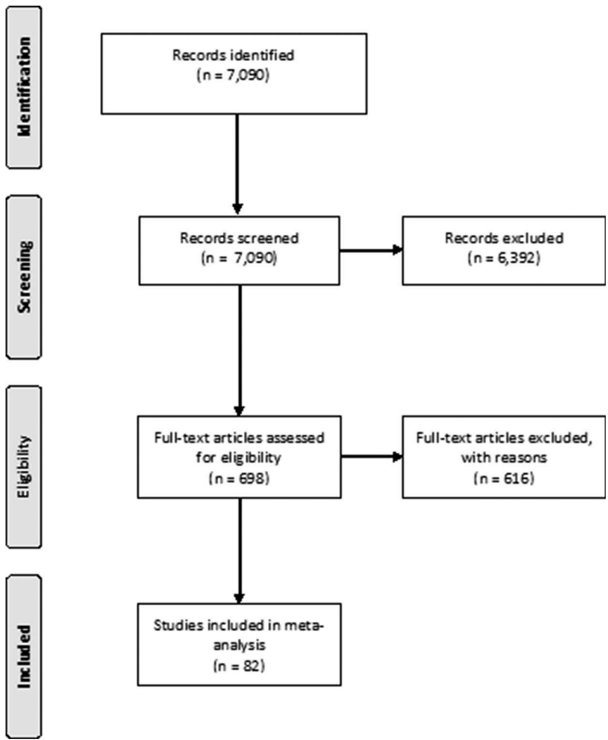
- Meta-analysis of peer-reviewed English-language journal studies published January 2000–December 2018, identified through ERIC and PsycINFO plus reference screening; inclusion required regular secondary education, quantitative methods, samples of at least 30 students, and dependent/independent variables not from the same measurement instrument.
- The final sample comprised 82 studies and 208,796 students; correlations between school belonging and seven outcome domains were transformed into Fisher’s Z, weighted by inverse variance, and converted back to correlations, with multiple similar outcomes averaged within studies.
- Analyses used Comprehensive Meta-Analysis software; meta-ANOVA tests examined group differences by measurement instrument, region, grade level, and SES.
Limitations
- The paper states that findings are based on a relatively small number of primary studies for some specific outcomes and relatively few studies from Europe or Asia; construct validity of school belonging instruments was often unclear; publication bias was found for academic outcomes and engagement; and cross-sectional designs prevent causal conclusions, with reciprocal and cumulative effects likely.
- The paper also notes that students who already dropped out may not have been included in cross-sectional studies, and that samples of Asian, European, and Australian studies were small, so region-specific results need cautious interpretation.
Model-written summary. Check it against the paper before relying on it.
Integrity signals
Registry
Cites
Statistics
Figures


Verification
Claims the paper makes
0 Valid · 1 Not valid · 38 Not checked · 91 Own results and interpretations
A result the paper reports from its own data — it cites no other source for it, so there is none to check. The quote shows it is in the paper.
In the paper
“However, we did find some publication bias for the other outcome types.”
§ The relationships between school belonging and students' motivational, social-emotional, behavioural, and academic outcomes in secondary education: a meta-analytic review > Results for research question 1
plain- Asserted: passes — The authors put it forward as true.
- Checkable: passes — It can be checked against evidence.
- Load-bearing: unclear — It is unclear whether the paper’s conclusions depend on it.
- Based: passes — The paper gives a reason why it holds.
A result the paper reports from its own data — it cites no other source for it, so there is none to check. The quote shows it is in the paper.
In the paper
“The correlations between school belonging and academic achievement and school belonging and absence/dropout rates were small 3 (r = .18and r = -.16,respectively)”
§ The relationships between school belonging and students' motivational, social-emotional, behavioural, and academic outcomes in secondary education: a meta-analytic review > Results for research question 1
plainstates an association- Asserted: passes — The authors put it forward as true.
- Checkable: passes — It can be checked against evidence.
- Load-bearing: unclear — It is unclear whether the paper’s conclusions depend on it.
- Based: passes — The paper gives a reason why it holds.
A result the paper reports from its own data — it cites no other source for it, so there is none to check. The quote shows it is in the paper.
In the paper
“In summary, Table 4 shows that the reported correlations differed per measurement instrument for several student outcomes, namely for academic achievement, motivational outcomes, behavioural engagement, and self-perceptions.”
§ The relationships between school belonging and students' motivational, social-emotional, behavioural, and academic outcomes in secondary education: a meta-analytic review > Results for research question 2
plainstates an association- Asserted: passes — The authors put it forward as true.
- Checkable: passes — It can be checked against evidence.
- Load-bearing: unclear — It is unclear whether the paper’s conclusions depend on it.
- Based: passes — The paper gives a reason why it holds.
A result the paper reports from its own data — it cites no other source for it, so there is none to check. The quote shows it is in the paper.
In the paper
“Additionally, students' sense of school belonging was positively related to their perceived learning environment, such as the perceived classroom climate (r = .40)and a more mastery-oriented classroom goal structure (r = .44),indicating that students with high levels of school belonging perceived their learning environment as more mastery oriented and generally as a more favourable classroom clima”
§ The relationships between school belonging and students' motivational, social-emotional, behavioural, and academic outcomes in secondary education: a meta-analytic review > Results for research question 1
plainstates an association- Asserted: passes — The authors put it forward as true.
- Checkable: passes — It can be checked against evidence.
- Load-bearing: unclear — It is unclear whether the paper’s conclusions depend on it.
- Based: passes — The paper gives a reason why it holds.
A result the paper reports from its own data — it cites no other source for it, so there is none to check. The quote shows it is in the paper.
In the paper
“whereas the correlations with the other motivational, social-emotional, and behavioural outcomes were medium to moderately large (varying between r = .30and .39).”
§ The relationships between school belonging and students' motivational, social-emotional, behavioural, and academic outcomes in secondary education: a meta-analytic review > Results for research question 1
plainstates an association- Asserted: passes — The authors put it forward as true.
- Checkable: passes — It can be checked against evidence.
- Load-bearing: passes — The paper’s conclusions depend on it.
- Based: passes — The paper gives a reason why it holds.
42 more claims
Create a free account to see all 130 claims and to verify the 6 references still open.
- It may state two separate claims as one. 52
- Probably not a substantial claim. 51
Self-check
Percentages, sums and reported differences re-computed from the paper’s own numbers.
Each contradiction between two passages listed here was confirmed by an independent check.
Rated minor: it would not touch a result — a value no result rests on, a p-value that stays on the same side of the significance level, or a conflict that is clerical, resolved elsewhere in the paper, or outside its own findings.
In the paper
§ The relationships between school belonging and students' motivational, social-emotional, behavioural, and academic outcomes in secondary education: a meta-analytic review > Limitations and directions for future research
“Another issue is that we found indicators of publication bias for two of our outcome categories.”
§ The relationships between school belonging and students' motivational, social-emotional, behavioural, and academic outcomes in secondary education: a meta-analytic review > Results for research question 1
“However, we did find some publication bias for the other outcome types.The estimated adjusted effect sizes for these outcomes are: academic outcomes r = 0.215 (LL = 0.182; UL = 0.247), engagement r = 0.421 (LL = 0.353; UL = 0.485), and absence/dropout r = -0.158(LL = -0.174;UL = -0.141).”
Citations
Cites
The "what" and "why" of goal pursuits: Human needs and the self-determination of behavior
Deci, E. L., & Ryan, R. M. (2000) · Psychological Inquiry · doi:10.1207/s15327965pli1104_01 · Cited by 34,210 · cited 2×
“The need for relatedness is not necessarily a prerequisite for intrinsic motivation, but a ‘needed backdrop’ that makes expression of the innate growth tendency of intrinsic motivation more likely (Deci and Ryan 2000, 235).”
BackgroundIntrinsic Motivation and Self-Determination in Human Behavior
Deci, E. L., & Ryan, R. M. (1985) · doi:10.1007/978-1-4899-2271-7 · Cited by 26,772
The need to belong: Desire for interpersonal attachments as a fundamental human motivation.
Baumeister, R. F., & Leary, M. R. (1995) · Psychological Bulletin · doi:10.1037//0033-2909.117.3.497 · Cited by 23,245
(2010) · Intellectum (Universidad de La Sabana) · doi:10.1111/j.1467- · Cited by 16,131
Intrinsic Motivation and Self-Determination in Human Behavior
Miller, K. A., Deci, E. L., & Ryan, R. M. (1988) · Contemporary Sociology · doi:10.2307/2070638 · Cited by 15,312
Borenstein, M., Hedges, L. V., Higgins, J. P. T., & Rothstein, H. R. (2009) · doi:10.1002/9780470743386 · Cited by 14,225 · cited 2×
“ComprehensiveMeta-Analysis software of Biostat was used to carry out all statistical analyses (Borenstein et al. 2009).”
MethodSchool Engagement: Potential of the Concept, State of the Evidence
Fredricks, J. A., Blumenfeld, P. C., & Paris, A. H. (2004) · Review of Educational Research · doi:10.3102/00346543074001059 · Cited by 12,581 · cited 8×
“In addition to the three types of engagement used by Fredricks et al. (2004), other scholars have also studied disengagement, mainly to characterise students who ‘do not feel they belong at school and have withdrawn from school activities in a significant way’ (Willms 2003, 8).”
BackgroundInfluentialBorenstein, M., Hedges, L. V., Higgins, J. P. T., & Rothstein, H. R. (2021) · doi:10.1002/9781119558378 · Cited by 9,799
(2000) · Cited by 9,198
Maslow, A. (1962) · D Van Nostrand eBooks · doi:10.1037/10793-000 · Cited by 7,192
Research works printed but not linked: 9
- 28. Corno, L., and E. B. Mandinach. 2004. "What We Have Learned about Student Engagement in the past Twenty Years." In Big Theories Revisited, edited by D. M. McInerney and S. Van Etten, 299-328. Greenwich, CT: Information Age.
- 34. Deci, E. L., and R. M. Ryan, Eds. 2002. Handbook of Self-Determination Theory Research. Rochester, NY: University of Rochester Press.
- 41. Finn, J. D., and K. A. Kasza. 2009. "Disengagement from School" In Engaging Young People in Learning: Why Does It Matter and What Can We Do? edited by J. Morton, 4-35. Wellington, New Zealand: New Zealand Council for Educational Research.
- 45. Fokkens-Bruinsma, M., E. T. C. Canrinus, M. Ten Hove, and L. Rietveld. 2018. "The Relationship between Teacher's Work Motivation and Classroom Goal Orientation." Pedagogische Studiën 95: 86-100.
- 55. Gottfredson, G. 1984. Effective School Battery. Odessa, FL: Psychological Assessment Resources.
- 97. Li, Y. B., and R. M. Lerner. 2013. "Interrelations of Behavioral, Emotional, and Cognitive School Engagement in High School Students." Journal of Youth and Adolescence 42: 20-32. doi:10.1007/s10964-012-9857-5. · DOI · Paper page
- 10.1007/s10964-005-8950-4 · DOI · Paper page
- 148. Udry, J. R. 1998. The National Longitudinal Study of Adolescent Health (Add Health), Waves I & II, 1994-1996. Chapel Hill, NC: Carolina Population Center, University of North Carolina at Chapel Hill (Producer).Los Altos, CA: Sociometrics Corporation, American Family Data Archive (Producer & Distributor)
- 166. WestEd. 2008. California Healthy Kids Survey: California School District Secondary School Survey Results Fall 07/Spring 08. Los Alamitos, CA: Author.
Cited by
Items 101–200 of 637
McDiarmid, S., Osman, F., Sarkadi, A., & Durbeej, N. (2023) · PLoS ONE · doi:10.1371/journal.pone.0280244 · Cited by 23
“A recent meta-analysis of 82 studies affirmed the importance of school belonging by demonstrating positive correlations between school belonging and academic achievement, academic engagement and effort, and positive self-perceptions as well as a negative correlation between school belonging and school leaving, even wh…”
BackgroundMethodInfluentialJang, S. T. (2023) · Teachers College Record The Voice of Scholarship in Education · doi:10.1177/01614681231173019 · Cited by 19
“The basic psychological need for relatedness must be met if students are to have a greater sense of belonging in their classrooms or schools (Korpershoek et al., 2020; Niemiec & Ryan, 2009).”
BackgroundAn Exploration Of Icebreakers And Their Impact On Student Engagement In The Classroom
Sasan, J. M., Tugbong, G. M., & Alistre, K. L. C. (2023) · International Journal of Social Service and Research · doi:10.46799/ijssr.v3i11.566 · Cited by 40
“Research has shown that students who feel connected to their peers and their school are more likely to have positive academic and social outcomes (Ansari & Khan, 2020; Korpershoek et al. 2020).”
BackgroundAbdulhamed, R., & Beattie, M. M. (2024) · Journal of Community & Applied Social Psychology · doi:10.1002/casp.2892 · Cited by 21
López, F., Rivas‐Drake, D., Serrano, E., & Delcid, G. (2025) · Educational Psychology Review · doi:10.1007/s10648-025-09992-4 · Cited by 16
“It is also predictive of students’ motivation, social-emotional functioning, and classroom behavior (Korpershoek et al., 2020), as well as higher levels of academic self-efficacy, happiness, psychological functioning, adjustment, self-esteem, and self-identity (Allen et al., 2018).”
Porter, J., & Ingram, J. (2021) · Emotional and Behavioural Difficulties · doi:10.1080/13632752.2021.1900999 · Cited by 24
“Feeling unsafe at school impacts on girls’ attendance as well as mental health (Korpershoek et al. 2020; Hughes, Gaines and Prior 2015).”
BackgroundDoes socioeconomic status impact the relationship between school absence and outcomes?
Mooney, A., Redmond, G., & Kaambwa, B. (2022) · The Australian Educational Researcher · doi:10.1007/s13384-022-00535-2 · Cited by 21
Archambault, I., Pascal, S., Olivier, É., Tardif‐Grenier, K., Dupéré, V., & Janosz, M. (2024) · Learning and Instruction · doi:10.1016/j.learninstruc.2024.101930 · Cited by 18
O’Donoghue, J. (2020) · Journal of Chemical Education · doi:10.1021/acs.jchemed.0c00636 · Cited by 16
What facilitates a sense of belonging amongst Australian teachers?
Allen, K., Longmuir, F., Thorn, M. G., Melzak, E., Berger, E., Cordoba, B. G., Phillips, M., & Reupert, A. (2025) · Australian Journal of Psychology · doi:10.1080/00049530.2025.2459190 · Cited by 24
“The majority of belonging research in educational settings has centred on high school students (e.g., Allen et al., 2018; Korpershoek et al., 2019), with significant attention also given to post-secondary students (e.g., Allen et al., 2024; Crawford et al., 2023; Solanki et al., 2020; Tice et al.,…”
Dräger, J., Klein, M., & Sosu, E. (2024) · PLoS ONE · doi:10.1371/journal.pone.0306716 · Cited by 33
Palikara, O., Bonneville‐Roussy, A., & Allen, K. (2025) · School Mental Health · doi:10.1007/s12310-024-09725-y · Cited by 21
“These factors were chosen because of their empirical or theoretical links to SB (Allen et al., 2018a, b; Korpershoek et al., 2020).”
Learning and teaching during Covid-19 and beyond: educational psychology perspectives
King, R. B., Chai, C. S., & Korpershoek, H. (2022) · Educational Psychology · doi:10.1080/01443410.2022.2159684 · Cited by 17
Self-citationTrajković, M., & Popović-Ćitić, B. (2022) · Nastava i vaspitanje · doi:10.5937/nasvas2203403s · Cited by 16
Tvedt, M. S., & Bru, E. (2023) · Learning and Instruction · doi:10.1016/j.learninstruc.2023.101824 · Cited by 21
Turan, H., & Altun, S. A. (2025) · Journal of Intelligence · doi:10.3390/jintelligence13090112 · Cited by 31
Donaldson, C., Morgan, K., Page, N., Angel, L., & Moore, G. F. (2024) · British Educational Research Journal · doi:10.1002/berj.3985 · Cited by 16
“For children with low SES, attending a secondary school appears to increase the probability of being bullied compared with attending an all-age school.”
BackgroundInfluentialThe impact of EFL teachers’ emotioncy level on their motivation and academic engagement
Zhao, Y. (2024) · Learning and Motivation · doi:10.1016/j.lmot.2024.101990 · Cited by 27
Chian, J., Holliman, A., Pinto, C., & Waldeck, D. (2024) · Educational and Child Psychology · doi:10.53841/bpsecp.2024.41.1.55 · Cited by 10
Kong, H., Wang, G., Cheng, D., & Li, T. (2023) · Frontiers in Psychology · doi:10.3389/fpsyg.2023.1095498 · Cited by 17
“Korpershoek et al. (2020) showed that students who “feel personally accepted, respected, included, and supported by others in the school social environment” are more likely to perform better in school (e.g., academic achievement) and show more favorable motivational (e.g., mastery goal…”
BackgroundSmith, T. J., Hong, Z., Hsu, W., & Lu, Y. (2022) · Science Education · doi:10.1002/sce.21725 · Cited by 17
Rodríguez, M. D. P. G., Vélez, S. C., García, M. D., & Carmona, J. (2023) · Learning Environments Research · doi:10.1007/s10984-023-09464-y · Cited by 17
“…perceptions (either through qualitative or quantitative procedures), is one of the strategies that researchers such as Gençoglu et al. (2022), Goulet and Morizot (2022), or Korpershoek et al. (2020) have found helpful for assessing the different dimensions that make up learning environments.”
Carter, E., Kwok, P. K. P., Shima, L., & Singal, N. (2023) · International Journal of Adolescence and Youth · doi:10.1080/02673843.2023.2261545 · Cited by 20
“In a meta-analytical review, the sense of school belonging was also found to be positively correlated with academic achievement and motivational, social-emotional, and behavioral outcomes (Korpershoek et al., 2020).”
BackgroundAkram, S., Hameed, U. R., & Pervaiz, Z. (2023) · Review of Education · doi:10.1002/rev3.3438 · Cited by 14
Fisher, A. E., Johnson, L. R., Minnes, S., Miller, E. K., Riccardi, J. S., & Dimitropoulos, A. (2023) · Psychology in the Schools · doi:10.1002/pits.23113 · Cited by 12
“Students' positive perception of belonging is often associated with improvement in student social awareness skills and is also linked to improvements in self ‐ management and self ‐ efficacy across both elementary and secondary ASP (Korpershoek et al., 2020; Naftzger & Terry, 2018).”
BackgroundFactors Associated With Suicide Risk Behavior Outcomes Among Black Middle School Adolescents
Richardson, S. C., & Gunn, L. H. (2024) · Journal of the American Academy of Child & Adolescent Psychiatry · doi:10.1016/j.jaac.2024.03.019 · Cited by 10
“35 Eighth-grade students had significantly increased odds of suicidality compared to sixth-grade students across 4 suicidality outcomes.”
Song, S., Martin, M. J., & Wang, Z. (2024) · Journal of School Psychology · doi:10.1016/j.jsp.2024.101330 · Cited by 15
Poteat, V. P., Marx, R. A., Richburg, A., Calzo, J. P., Bliss, C. C., Yoshikawa, H., & Lipkin, A. (2024) · Journal of Youth and Adolescence · doi:10.1007/s10964-024-02060-0 · Cited by 18
“These negative experiences, which contribute to LGBTQ + youth ’ s lower school belonging than their heterosexual, cisgender peers (Collier et al., 2013), run counter to the ideals of respect and inclusion that are fundamental for growth and learning (Allen et al., 2018; Korpershoek et al., 2020).”
Baş, G. (2024) · Psychology in the Schools · doi:10.1002/pits.23326 · Cited by 16
Adinata, R. S., Srisayekti, W., & Jatnika, R. (2025) · International Journal of Adolescence and Youth · doi:10.1080/02673843.2025.2526459 · Cited by 17
“As a result, individuals will take better care of their behaviour and make the learning process carried out outside of school optimal (K.-A. Allen & Bowles, 2012; Korpershoek et al., 2020).”
InfluentialDoolaard, F. T., Lelieveld, G., Noordewier, M. K., van Beest, I., & van Dijk, E. (2021) · European Journal of Social Psychology · doi:10.1002/ejsp.2825 · Cited by 12
“Indeed, belonging (Korpershoek et al., 2019), control (Fisher, 1978), self-esteem (Bénabou & Tirole, 2002), and purpose in life (Martela & Steger, 2016) have individually all been documented as important prerequisites for motivation.”
BackgroundThe Reciprocity of Peer-Mediated Interventions: Examining Outcomes for Peers
Owen‐DeSchryver, J., Ziegler, M., Matthews, A., et al. (2022) · School Psychology Review · doi:10.1080/2372966x.2022.2039959 · Cited by 9
“Although we did not include measures of school belonging in this study, prior research suggests that students who feel more accepted, respected and included in the school social environment, are more likely to have positive academic and behavioral outcomes (Korpershoek et al., 2020 ).”
Santos, N. N., Monteiro, V., & Carvalho, C. (2022) · European Journal of Education · doi:10.1111/ejed.12535 · Cited by 14
Jimerson, S. R., & Chen, C. (2022) · Springer eBooks · doi:10.1007/978-3-031-07853-8_31 · Cited by 14
Machado, S. S., Schillinger, D., Avina, L., Cortez, G. A., Daniels, R., & Thompson, H. R. (2021) · Journal of Health Communication · doi:10.1080/10810730.2021.1998845 · Cited by 12
LaFromboise, T. D., Rosales, O., & Hosseini, Z. (2023) · Contemporary Educational Psychology · doi:10.1016/j.cedpsych.2023.102203 · Cited by 10
Tian, X., Liu, X., Xiao, Z., & Lin, Q. (2023) · Psychology Research and Behavior Management · doi:10.2147/prbm.s413738 · Cited by 25
How (do) school experiences contribute to students’ sense of belonging?
Baek, C. (2023) · Asia Pacific Journal of Education · doi:10.1080/02188791.2023.2206552 · Cited by 17
Kovačević, M., Trajković, M., Mijatović, L., Popović-Ćitić, B., Bukvić, L., Kovačević, M., Paraušić, A., & Radulović, M. (2024) · PLoS ONE · doi:10.1371/journal.pone.0303466 · Cited by 17
Habilidades Blandas como Factor Clave para la Mejora de la Convivencia Escolar
Pinedo-Castro, A. (2024) · Revista Docentes 2 0 · doi:10.37843/rted.v17i2.550 · Cited by 8
Maratia, F., Bobba, B., Cohen, A., Kwanele, B., Norris, A., Lizárraga, J. R., Elsinbawi, M., & Crocetti, E. (2025) · International Journal of Intercultural Relations · doi:10.1016/j.ijintrel.2025.102215 · Cited by 24
Zaman, R. A., Sharma, U., & Round, P. (2025) · International Journal of Inclusive Education · doi:10.1080/13603116.2025.2556000 · Cited by 10
“…a small positive association between SB and achievement (i.e. school grades) and a negative association with absence and dropout rates, confirming that those who do not feel attached to their school are more likely to skip classes or even become early school leavers (Korpershoek et al. 2019).”
Hagenauer, G., Wallner-Paschon, C., & Kühn, C. (2021) · Zeitschrift für Bildungsforschung · doi:10.1007/s35834-021-00300-y · Cited by 14
Rickert, N. P., & Skinner, E. A. (2022) · Journal of Adolescence · doi:10.1002/jad.12019 · Cited by 15
Sense of belonging during a global pandemic: a case of accounting students
Luong, H., Man, Y., Botafogo, F., & Beatson, N. J. (2022) · Accounting Education · doi:10.1080/09639284.2022.2134732 · Cited by 11
Smith, J., Nadeau, M., Archambault, I., Guimond, F., St‐Amand, J., Fitzpatrick, C., & Gagnon, M. (2022) · Frontiers in Education · doi:10.3389/feduc.2022.762766 · Cited by 12
Sense of School Belonging: The Illusion of a School-Size Effect
Petrucci, F., Marcionetti, J., & Castelli, L. (2022) · Youth · doi:10.3390/youth2040033 · Cited by 12
“Furthermore, a strong sense of school belonging reduces the risk of engaging in dangerous or antisocial behaviors [5,6], of dropping out of school [4], and of using psychoactive substances [7,8].”
BackgroundInfluentialKošir, S., Aslan, M., & Lakshminarayanan, R. (2023) · Children and Youth Services Review · doi:10.1016/j.childyouth.2023.107085 · Cited by 12
Neuenschwander, M. P., Ramseier, L., & Hofmann, J. (2024) · Journal of Adolescence · doi:10.1002/jad.12293 · Cited by 8
Tabak, B. Y., & Karip, E. (2021) · Leadership and Policy in Schools · doi:10.1080/15700763.2020.1866019 · Cited by 13
Whelan, M., McGillivray, J., & Rinehart, N. (2023) · Journal of Autism and Developmental Disorders · doi:10.1007/s10803-022-05845-z · Cited by 12
Liu, Y., & Huang, J. (2024) · Psychology in the Schools · doi:10.1002/pits.23316 · Cited by 8
Şenler, B. (2022) · Journal on Efficiency and Responsibility in Education and Science · doi:10.7160/eriesj.2022.150202 · Cited by 8
Sousa, M., Moreira, C. S., Cruz, O., & Cruz, S. (2023) · The Educational and Developmental Psychologist · doi:10.1080/20590776.2023.2210761 · Cited by 14
Qi, J. (2024) · The Asia-Pacific Education Researcher · doi:10.1007/s40299-023-00812-3 · Cited by 7
“…the work including emotions and web-based learning looks at internet learning, with an emphasis on self-guideline and accomplishment motivation-related emotions, such as fatigue, dissatisfaction, and enjoyment (Gao et al., 2021; Korpershoek et al., 2020; Mendzheritskaya & Hansen, 2019; Sung, 2023).”
InfluentialFreire, S., Roçadas, C. V. R. L. D. M., Pipa, J., & Aguiar, C. (2024) · British Educational Research Journal · doi:10.1002/berj.3989 · Cited by 14
Marrone, R. L., Lam, B., Barthakur, A., Brinkman, S. A., Dawson, S., & Gabriel, F. C. (2024) · Journal of Learning Analytics · doi:10.18608/jla.2024.8357 · Cited by 21
“When students feel that their school promotes active participation and involvement, they are more likely to be engaged (Korpershoek et al., 2020; Wentzel, 2022).”
St‐Amand, J., Smith, J., & Rasmy, A. (2021) · International Journal of Learning Teaching and Educational Research · doi:10.26803/ijlter.20.12.5 · Cited by 10
“Many other researchers suggested that school belonging constitutes the basis of school engagement (Korpershoek et al., 2020; Singh et al., 2010, 2008).”
BackgroundThe role of high school student engagement in postsecondary enrollment
Fraysier, K., & Reschly, A. L. (2022) · Psychology in the Schools · doi:10.1002/pits.22754 · Cited by 13
Dumitru, O. D., Thorson, K. R., & West, T. V. (2022) · Contemporary Educational Psychology · doi:10.1016/j.cedpsych.2022.102088 · Cited by 13
Booker, K. C. (2023) · Teachers and Teaching · doi:10.1080/13540602.2023.2225434 · Cited by 15
“Korpershoek et al. (2020) noted, ‘students generally have a pervasive drive to form and maintain significant interpersonal relationships (e.g. with their teachers and peers) and a psychological need to create ties to the school as an institution’ (p. 645).”
BackgroundDaley, S. G., Heckman, M. E., Rosen, R. L., & Sarı, H. İ. (2024) · The Journal of Early Adolescence · doi:10.1177/02724316241230517 · Cited by 13
“…school belonging is shaped by both student characteristics and the school ’ s social context, with teacher-student relationships and peer, teacher, and parent support consistently shown to play critical roles (Allen et al., 2018; Korpershoek et al., 2020; Roeser et al., 1996; Wang & Eccles, 2012).”
Sasson, I., & Rimon, R. (2025) · Learning Environments Research · doi:10.1007/s10984-025-09554-z · Cited by 8
Wu, L., O’Mara-Eves, A., & Dickson, K. (2025) · International Journal of Educational Research · doi:10.1016/j.ijer.2025.102761 · Cited by 8
Multilevel determinants of school belonging: the moderating role of national safety climate
Elizondo-González, J. F., Malla, S., & Bustos, S. B. (2025) · Frontiers in Education · doi:10.3389/feduc.2025.1697010 · Cited by 11
Chowdhury, S. K., Keary, A., & Saito, E. (2024) · Teaching and Teacher Education · doi:10.1016/j.tate.2024.104615 · Cited by 9
Lucas‐Molina, B., Pérez‐Albéniz, A., Díez-Gómez, A., & Fonseca‐Pedrero, E. (2025) · School Mental Health · doi:10.1007/s12310-025-09743-4 · Cited by 10
“Prior research has yielded similar findings (e.g., Allen et al., 2018; Arslan & Allen, 2021; Arslan et al., 2020; Korpershoek et al., 2020; Marraccini & Brier, 2017).”
InfluentialAllison‐Burbank, J. D., Ingalls, A., Rebman, P., Chambers, R. A., Begay, R., Grass, R., Tsosie, A., Archuleta, S., Barlow, A., Larzelere, F., et al. (2022) · BMC Public Health · doi:10.1186/s12889-022-13208-7 · Cited by 7
Anderson, P. J., England, D. E., & Barber, L. D. (2022) · Education Sciences · doi:10.3390/educsci12120911 · Cited by 9
(2023) · The Journal of Educators Online · doi:10.9743/jeo.2023.20.1.2 · Cited by 13
Renick, J., & Reich, S. M. (2023) · Journal of Adolescent Research · doi:10.1177/07435584231215448 · Cited by 9
“…in turn can increase their sense of school belonging—generally considered to be students’ feelings of attachment to school and acceptance by others in the school community (Allen & Bowles, 2012; Slaten et al., 2016), and is associated with a number of positive outcomes (Korpershoek et al., 2020).”
Teaching the mana model—a Māori framework for reconceptualising student success and thriving
Webber, M. (2024) · set Research Information for Teachers · doi:10.18296/set.1545 · Cited by 13
Dou, K., Wang, M.-L., Li, Y.-Y., Yuan, X., & Wang, L. (2024) · International Journal of Mental Health and Addiction · doi:10.1007/s11469-024-01304-1 · Cited by 11
“Previous studies showed that students with a higher level of sense of belonging at school are more likely to have positive psychological outcomes (Korpershoek et al., 2020), for example experiencing higher levels of self-esteem (Perry & Lavins-Merillat, 2018), lower anxiety and depression (Benner…”
McLure, F. I., Won, M., & Treagust, D. F. (2020) · Disciplinary and Interdisciplinary Science Education Research · doi:10.1186/s43031-020-00027-2 · Cited by 12
Hudd, T., & Moscovitch, D. A. (2023) · Behaviour Research and Therapy · doi:10.1016/j.brat.2023.104270 · Cited by 9
Parker, P. D., Allen, K., Parker, R. B., et al. (2021) · doi:10.31234/osf.io/cbwph · Cited by 6
Enderle, C., Kotschy, L., Ricking, H., & Kreitz-Sandberg, S. (2025) · Frontiers in Education · doi:10.3389/feduc.2025.1627098 · Cited by 5
Turan, H., SEHERYELİ, M. Y., & Altun, S. A. (2023) · Current Psychology · doi:10.1007/s12144-023-05123-w · Cited by 11
“Some studies have suggested that school dropout, which is an outstanding disciplinary problem, is a result of a lack of school belonging and highlighted that school belonging can prevent school dropout (Hallinan, 2008; Korpershoek et al., 2020; MoNE, 2013; Osterman, 2000; Yorğun, 2014).”
Zhang, Y., & Wang, Y. (2024) · Journal of Research on Adolescence · doi:10.1111/jora.12927 · Cited by 10
Cetinkaya, A. B., & Avcı, Ö. H. (2025) · Psychology in the Schools · doi:10.1002/pits.23526 · Cited by 8
Does the impact of pupil absences on achievement depend on their timing?
Dräger, J., Klein, M., & Sosu, E. (2025) · American Educational Research Journal · doi:10.3102/00028312251347666 · Cited by 10
Chang, Y., Yang, Y., Cai, X., Zhou, L., Li, J., & Liu, S. (2025) · Land · doi:10.3390/land14091712 · Cited by 11
Leach, T., Le, L., Barton, G. M., Delaney, N., Larsen, E., Pillay, Y., & Bromdal, A. (2025) · Journal of Rural Studies · doi:10.1016/j.jrurstud.2025.103930 · Cited by 7
Gao, H., Evans, T., & Brown, G. (2026) · ZDM · doi:10.1007/s11858-026-01773-9 · Cited by 10
“Nonetheless, meta-analyses have reported relatively weak average associations between motivation and academic achievement (Bauer et al., 2016; Korpershoek et al., 2020).”
Pedagogical Principles in Learning and Its Impact on Enhancing Motivation of Students
Hayath, T. M., & Gupta, S. K. (2022) · Technoarete Transactions on Application of Information and Communication Technology(ICT) in Education · doi:10.36647/ttaicte/01.04.a004 · Cited by 13
“When motivation comes intrinsically it always has a purpose to perform the activity and that builds a sense of purpose and leads students to their future [10].”
BackgroundPoteat, V. P., Calzo, J. P., Richburg, A., Marx, R. A., & Yoshikawa, H. (2024) · Journal of School Psychology · doi:10.1016/j.jsp.2024.101329 · Cited by 6
Awoniyi, F. C., & Butakor, P. K. (2021) · Cogent Education · doi:10.1080/2331186x.2021.1908690 · Cited by 7
“In fact, the teacher-student interaction is an important element to the students in the context of teaching, learning and assessment (Douglas et al., 2015; Korpershoek et al., 2020).”
BackgroundThe Role of Peer Relationships on Academic and Extracurricular Engagement in School
Knifsend, C. A., Espinoza, G., & Juvonen, J. (2022) · Springer eBooks · doi:10.1007/978-3-031-07853-8_21 · Cited by 13
Supportive School Workplaces for Beginning Teachers' Motivations and Career Satisfaction *
Watt, H. M. G., & Richardson, P. (2023) · Advances in motivation and achievement · doi:10.1108/s0749-742320230000022009 · Cited by 12
Cengiz, S., Yağan, F., Fatih, K. A. R. A., & DÖRTYOL, Z. (2023) · Mavi Atlas · doi:10.18795/gumusmaviatlas.1227441 · Cited by 9
Robinson, D. V., Suhr, J. A., Buelow, M. T., & Beasley, C. (2023) · Social Psychology of Education · doi:10.1007/s11218-023-09798-8 · Cited by 9
Situational belonging in high school band ensembles and high schools
Siegal, C. R. (2023) · Psychology of Music · doi:10.1177/03057356231214499 · Cited by 10
“Korpershoek et al. (2020) conducted a meta-analysis of 82 studies on school belonging and student outcomes.”
Azpiazu, L., Fernández-Lasarte, O., Mateos, N. E., & Izar-de-la-Fuente, I. (2023) · Educational Psychology · doi:10.1080/01443410.2023.2298799 · Cited by 9
“Within this paradigm, school engagement, understood as students’ behaviours, feelings and thoughts regarding their school (Fredricks et al., 2004), is viewed as a crucial factor for sociopersonal development and academic success (Korpershoek et al., 2020; Wang et al., 2019).”
BackgroundArpacı, T., & Altay, N. (2024) · Seminars in Oncology Nursing · doi:10.1016/j.soncn.2024.151613 · Cited by 8
Motivación y autorregulación en el desempeño en matemáticas en estudiantes de Educación Secundaria
Trías, D., Abreu, H. S., & Cuadros, O. (2024) · Revista Colombiana de Educación · doi:10.17227/rce.num92-17121 · Cited by 22
“Se trata de una variable que tiene un papel importante en la vida escolar (Korpershoek et al. , 2020) y reviste particular interés en el periodo de la adolescencia, dada la relevancia del relacionamiento social en esta etapa (Allen et al. , 2018).”
BackgroundA new application of TMR: A study on implicit self-esteem
Chen, L., Wang, Y., Zhang, Y., & Wang, Y. (2021) · Current Psychology · doi:10.1007/s12144-021-01883-5 · Cited by 6
Nilsen, T., & Teig, N. (2022) · Springer international handbooks of education · doi:10.1007/978-3-030-38298-8_34-1 · Cited by 16
ÖZDOĞAN, A. Ç. (2023) · Journal of Happiness and Health · doi:10.47602/johah.v3i2.64 · Cited by 6
“For example, a meta-analysis study conducted by Korpershoek et al. (2020) shows positive and significant relationships between the variables of school belonging and academic achievement, reflecting academic grit.”
BackgroundNational Association of School Nurses Position Statement: Addressing Chronic Absenteeism
National Association of School Nurses (2024) · The Journal of School Nursing · doi:10.1177/10598405241284976 · Cited by 10
Erdoğdu, F., & Erdoğdu, E. (2025) · Educational Review · doi:10.1080/00131911.2025.2506807 · Cited by 13
“Meta-analyses such as Hattie (2008) and Korpershoek et al. (2020) provide a comprehensive and globally relevant perspective on the teacher-student relationship and school belonging.”
Metadata
- Authors
- Korpershoek, H., Canrinus, E. T., Fokkens-Bruinsma, M., & de Boer, H.
- Affiliations
- University of Groningen (NL)
- University of Agder (NO)
- GION Education/Research, University of Groningen, Groningen, the Netherlands
- Corresponding author
- Korpershoek, H.
- Venue
- Research Papers in Education
- Publisher
- Informa UK Limited
- Published
- 2019-05-27
- Volume
- 35
- Issue
- 6
- Pages
- 641-680
- ISSN
- 0267-1522 (ISSN-L)
- 1470-1146
- OpenAlex
- W2947655140
- Semantic Scholar
- 35ecbf9488c93b1b390c210affb07d3204d06aad
- Cited by
- 648
- References
- 182
- Citations by year
- 2026: 228 · 2025: 119 · 2024: 100 · 2023: 78 · 2022: 70 · 2021: 42 · 2020: 10 · 2019: 1
- FWCI
- 82.86
- Type
- journal article
- Language
- en
- Open access
- hybrid
- doi.org
- Licence
- Locations
- Research Papers in Education (publishedVersion, cc-by-nc-nd)
- University of Groningen research database (University of Groningen / Centre for Information Technology) (acceptedVersion, cc-by-nc-nd)
- NORA - Norwegian Open Research Archives (submittedVersion, cc-by-nc-nd)
- University of Groningen research database (University of Groningen / Centre for Information Technology) (submittedVersion, cc-by-nc-nd)
- Topics
- Social Sciences › Education › Early Childhood Education and Development
- Social Sciences › Psychology › Developmental and Educational Psychology › Education, Achievement, and Giftedness
- Social Sciences › Education › Educational Environments and Student Outcomes
- Keywords
- school belonging, secondary education, academic performance, student motivation, mastery orientation, self-concept, self-efficacy, student engagement, school absenteeism, school dropout, social-emotional outcomes, behavioural outcomes, socioeconomic status, grade level differences
About these checks
Registry, retraction, Cites and statistics results are computed, not judged, with one exception: a printed reference that no index lists is read once by a model before it counts as a citation error. Claims are extracted by a model and kept only when their quote appears verbatim in the text; each cited source is then checked, with a model’s help, for whether it says what the claim relies on. Those verdicts can be wrong — read the claim’s quote and the cited source before relying on one.
A language model drew the claims from the paper on 2026-09-28, under version 3 of the claim definition (model deepseek-v4.1-flash, prompt extract-v3).
A second model labelled each claim on 2026-09-28 (model jev-1.13-20260917, definition revision gold-guideline-v0.2).
Statistics and arithmetic are recomputed, not judged.
Confidence bands are shown only for fields calibrated on our annotated test set. None is calibrated yet, so no band is shown.
What counts as a claim ›How we measure confidence ›How we check this ›
Are you an author, or do you see a problem with this page? Request a review
Data sources
Bibliographic data: Semantic Scholar, OpenAlex, Crossref.
Contains information from the Semantic Scholar Academic Graph Datasets, made available under the ODC Attribution License (ODC-BY 1.0).
Semantic Scholar’s data is described in: Kinney, R., et al. (2023). The Semantic Scholar Open Data Platform. arXiv:2301.10140.
