

The relationships between school belonging and students’ motivational, social-emotional, behavioural, and academic outcomes in secondary education: a meta-analytic review
Open accessThe DOI matches its Crossref record; 182 of the 185 references it cites were found in a registry or an index, and 1 are not checked yet; none of the 57 sources its claims cite is checked for support yet.
Abstract
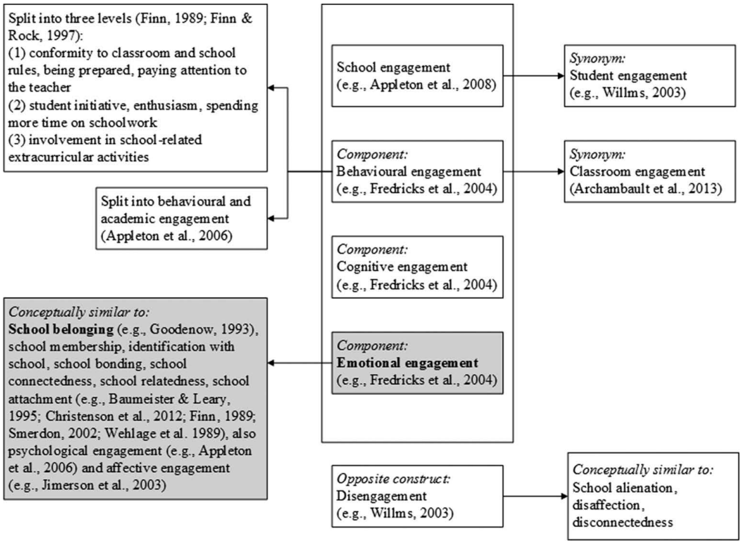
This meta-analytic review examines the relationships between students’ sense of school belonging and students’ motivational, social-emotional, behavioural, and academic functioning in secondary education. Moreover, it examines to what extent these relationships differ between different student groups (grade level, SES), measurement instruments, and region. The meta-analysis included 82 correlational studies, published in peer-reviewed journals between 2000 and 2018. Results revealed, on average, a small positive correlation with academic achievement, and small to moderate positive correlations with motivational outcomes such as mastery goal orientations; with social-emotional outcomes such as self-concept and self-efficacy; and with behavioural outcomes such as behavioural, cognitive, and agentic engagement. A small negative correlation is observed with absence and dropout rates. Similar results are found across different student groups (grade level, SES). Although the results vary to some extent across measurement instruments and region, generally, the results reveal that school belonging plays an important role in students’ school life.
Checked 2026-11-25 · 1 reference not checked yet
Overview
CoChat Summary
TL;DR
This meta-analysis synthesizes 82 studies (208,796 secondary students) on school belonging and finds consistent positive associations with motivational, social-emotional, behavioural, and academic outcomes, and a negative association with absence/dropout. Associations are generally small to moderate, with some variation by measurement instrument and region but not by grade level or SES.
Key findings
- Across 82 studies (208,796 students), school belonging was positively related to most outcomes: academic achievement averaged r = .18, absence/dropout averaged r = -.16, and other motivational, social-emotional, and behavioural outcomes averaged r = .30 to .39.
- Specific outcomes included school grades r = .18 (67 tests), standardised test scores r = .12 (19 tests), perceived classroom climate r = .40, and mastery-oriented classroom goal structure r = .44; performance approach goals, extrinsic motivation, and social motivation were small and non-significant.
- Moderator analyses found differences by measurement instrument for academic achievement, motivational outcomes, behavioural engagement, and self-perceptions, and by region for perceived learning environment and behavioural engagement; no significant differences were found for grade level or SES.
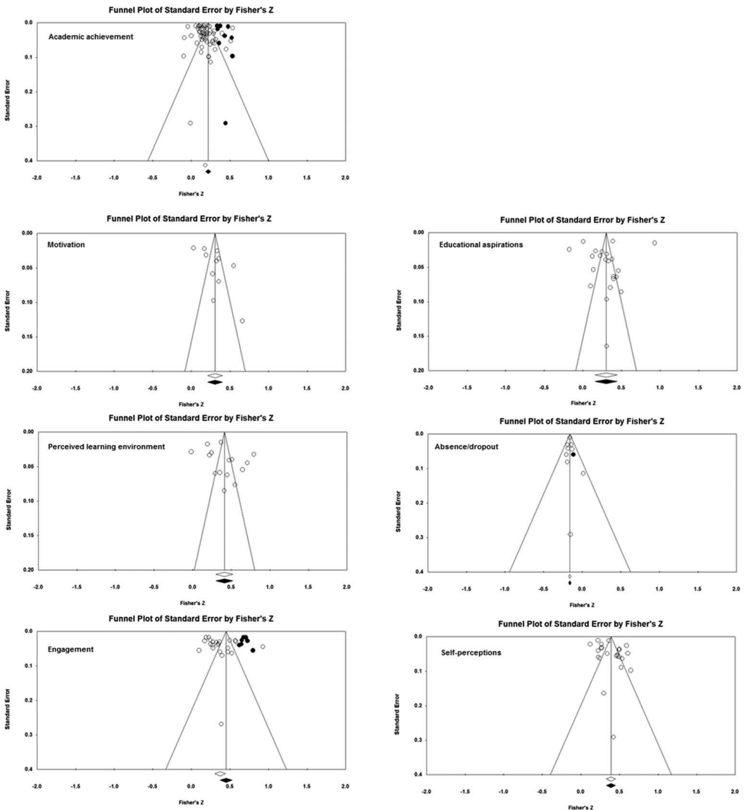
- Publication bias was indicated for academic outcomes and engagement: adjusted summary effects were r = .22 instead of .18 and r = .42 instead of .36, respectively.
Methods
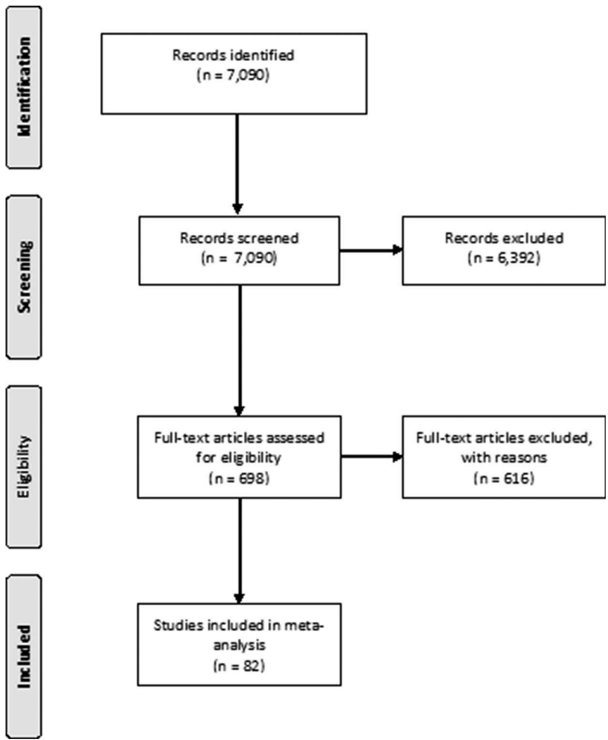
- Meta-analysis of peer-reviewed English-language journal studies published January 2000–December 2018, identified through ERIC and PsycINFO plus reference screening; inclusion required regular secondary education, quantitative methods, samples of at least 30 students, and dependent/independent variables not from the same measurement instrument.
- The final sample comprised 82 studies and 208,796 students; correlations between school belonging and seven outcome domains were transformed into Fisher’s Z, weighted by inverse variance, and converted back to correlations, with multiple similar outcomes averaged within studies.
- Analyses used Comprehensive Meta-Analysis software; meta-ANOVA tests examined group differences by measurement instrument, region, grade level, and SES.
Limitations
- The paper states that findings are based on a relatively small number of primary studies for some specific outcomes and relatively few studies from Europe or Asia; construct validity of school belonging instruments was often unclear; publication bias was found for academic outcomes and engagement; and cross-sectional designs prevent causal conclusions, with reciprocal and cumulative effects likely.
- The paper also notes that students who already dropped out may not have been included in cross-sectional studies, and that samples of Asian, European, and Australian studies were small, so region-specific results need cautious interpretation.
Model-written summary. Check it against the paper before relying on it.
Integrity signals
Registry
Cites
Statistics
Figures


Verification
Claims the paper makes
0 Valid · 1 Not valid · 38 Not checked · 91 Own results and interpretations
A result the paper reports from its own data — it cites no other source for it, so there is none to check. The quote shows it is in the paper.
In the paper
“However, we did find some publication bias for the other outcome types.”
§ The relationships between school belonging and students' motivational, social-emotional, behavioural, and academic outcomes in secondary education: a meta-analytic review > Results for research question 1
plain- Asserted: passes — The authors put it forward as true.
- Checkable: passes — It can be checked against evidence.
- Load-bearing: unclear — It is unclear whether the paper’s conclusions depend on it.
- Based: passes — The paper gives a reason why it holds.
A result the paper reports from its own data — it cites no other source for it, so there is none to check. The quote shows it is in the paper.
In the paper
“The correlations between school belonging and academic achievement and school belonging and absence/dropout rates were small 3 (r = .18and r = -.16,respectively)”
§ The relationships between school belonging and students' motivational, social-emotional, behavioural, and academic outcomes in secondary education: a meta-analytic review > Results for research question 1
plainstates an association- Asserted: passes — The authors put it forward as true.
- Checkable: passes — It can be checked against evidence.
- Load-bearing: unclear — It is unclear whether the paper’s conclusions depend on it.
- Based: passes — The paper gives a reason why it holds.
A result the paper reports from its own data — it cites no other source for it, so there is none to check. The quote shows it is in the paper.
In the paper
“In summary, Table 4 shows that the reported correlations differed per measurement instrument for several student outcomes, namely for academic achievement, motivational outcomes, behavioural engagement, and self-perceptions.”
§ The relationships between school belonging and students' motivational, social-emotional, behavioural, and academic outcomes in secondary education: a meta-analytic review > Results for research question 2
plainstates an association- Asserted: passes — The authors put it forward as true.
- Checkable: passes — It can be checked against evidence.
- Load-bearing: unclear — It is unclear whether the paper’s conclusions depend on it.
- Based: passes — The paper gives a reason why it holds.
A result the paper reports from its own data — it cites no other source for it, so there is none to check. The quote shows it is in the paper.
In the paper
“Additionally, students' sense of school belonging was positively related to their perceived learning environment, such as the perceived classroom climate (r = .40)and a more mastery-oriented classroom goal structure (r = .44),indicating that students with high levels of school belonging perceived their learning environment as more mastery oriented and generally as a more favourable classroom clima”
§ The relationships between school belonging and students' motivational, social-emotional, behavioural, and academic outcomes in secondary education: a meta-analytic review > Results for research question 1
plainstates an association- Asserted: passes — The authors put it forward as true.
- Checkable: passes — It can be checked against evidence.
- Load-bearing: unclear — It is unclear whether the paper’s conclusions depend on it.
- Based: passes — The paper gives a reason why it holds.
A result the paper reports from its own data — it cites no other source for it, so there is none to check. The quote shows it is in the paper.
In the paper
“whereas the correlations with the other motivational, social-emotional, and behavioural outcomes were medium to moderately large (varying between r = .30and .39).”
§ The relationships between school belonging and students' motivational, social-emotional, behavioural, and academic outcomes in secondary education: a meta-analytic review > Results for research question 1
plainstates an association- Asserted: passes — The authors put it forward as true.
- Checkable: passes — It can be checked against evidence.
- Load-bearing: passes — The paper’s conclusions depend on it.
- Based: passes — The paper gives a reason why it holds.
42 more claims
Create a free account to see all 130 claims and to verify the 6 references still open.
- It may state two separate claims as one. 52
- Probably not a substantial claim. 51
Self-check
Percentages, sums and reported differences re-computed from the paper’s own numbers.
Each contradiction between two passages listed here was confirmed by an independent check.
Rated minor: it would not touch a result — a value no result rests on, a p-value that stays on the same side of the significance level, or a conflict that is clerical, resolved elsewhere in the paper, or outside its own findings.
In the paper
§ The relationships between school belonging and students' motivational, social-emotional, behavioural, and academic outcomes in secondary education: a meta-analytic review > Limitations and directions for future research
“Another issue is that we found indicators of publication bias for two of our outcome categories.”
§ The relationships between school belonging and students' motivational, social-emotional, behavioural, and academic outcomes in secondary education: a meta-analytic review > Results for research question 1
“However, we did find some publication bias for the other outcome types.The estimated adjusted effect sizes for these outcomes are: academic outcomes r = 0.215 (LL = 0.182; UL = 0.247), engagement r = 0.421 (LL = 0.353; UL = 0.485), and absence/dropout r = -0.158(LL = -0.174;UL = -0.141).”
Citations
Cites
The "what" and "why" of goal pursuits: Human needs and the self-determination of behavior
Deci, E. L., & Ryan, R. M. (2000) · Psychological Inquiry · doi:10.1207/s15327965pli1104_01 · Cited by 34,210 · cited 2×
“The need for relatedness is not necessarily a prerequisite for intrinsic motivation, but a ‘needed backdrop’ that makes expression of the innate growth tendency of intrinsic motivation more likely (Deci and Ryan 2000, 235).”
BackgroundIntrinsic Motivation and Self-Determination in Human Behavior
Deci, E. L., & Ryan, R. M. (1985) · doi:10.1007/978-1-4899-2271-7 · Cited by 26,772
The need to belong: Desire for interpersonal attachments as a fundamental human motivation.
Baumeister, R. F., & Leary, M. R. (1995) · Psychological Bulletin · doi:10.1037//0033-2909.117.3.497 · Cited by 23,245
(2010) · Intellectum (Universidad de La Sabana) · doi:10.1111/j.1467- · Cited by 16,131
Intrinsic Motivation and Self-Determination in Human Behavior
Miller, K. A., Deci, E. L., & Ryan, R. M. (1988) · Contemporary Sociology · doi:10.2307/2070638 · Cited by 15,312
Borenstein, M., Hedges, L. V., Higgins, J. P. T., & Rothstein, H. R. (2009) · doi:10.1002/9780470743386 · Cited by 14,225 · cited 2×
“ComprehensiveMeta-Analysis software of Biostat was used to carry out all statistical analyses (Borenstein et al. 2009).”
MethodSchool Engagement: Potential of the Concept, State of the Evidence
Fredricks, J. A., Blumenfeld, P. C., & Paris, A. H. (2004) · Review of Educational Research · doi:10.3102/00346543074001059 · Cited by 12,581 · cited 8×
“In addition to the three types of engagement used by Fredricks et al. (2004), other scholars have also studied disengagement, mainly to characterise students who ‘do not feel they belong at school and have withdrawn from school activities in a significant way’ (Willms 2003, 8).”
BackgroundInfluentialBorenstein, M., Hedges, L. V., Higgins, J. P. T., & Rothstein, H. R. (2021) · doi:10.1002/9781119558378 · Cited by 9,799
(2000) · Cited by 9,198
Maslow, A. (1962) · D Van Nostrand eBooks · doi:10.1037/10793-000 · Cited by 7,192
Research works printed but not linked: 9
- 28. Corno, L., and E. B. Mandinach. 2004. "What We Have Learned about Student Engagement in the past Twenty Years." In Big Theories Revisited, edited by D. M. McInerney and S. Van Etten, 299-328. Greenwich, CT: Information Age.
- 34. Deci, E. L., and R. M. Ryan, Eds. 2002. Handbook of Self-Determination Theory Research. Rochester, NY: University of Rochester Press.
- 41. Finn, J. D., and K. A. Kasza. 2009. "Disengagement from School" In Engaging Young People in Learning: Why Does It Matter and What Can We Do? edited by J. Morton, 4-35. Wellington, New Zealand: New Zealand Council for Educational Research.
- 45. Fokkens-Bruinsma, M., E. T. C. Canrinus, M. Ten Hove, and L. Rietveld. 2018. "The Relationship between Teacher's Work Motivation and Classroom Goal Orientation." Pedagogische Studiën 95: 86-100.
- 55. Gottfredson, G. 1984. Effective School Battery. Odessa, FL: Psychological Assessment Resources.
- 97. Li, Y. B., and R. M. Lerner. 2013. "Interrelations of Behavioral, Emotional, and Cognitive School Engagement in High School Students." Journal of Youth and Adolescence 42: 20-32. doi:10.1007/s10964-012-9857-5. · DOI · Paper page
- 10.1007/s10964-005-8950-4 · DOI · Paper page
- 148. Udry, J. R. 1998. The National Longitudinal Study of Adolescent Health (Add Health), Waves I & II, 1994-1996. Chapel Hill, NC: Carolina Population Center, University of North Carolina at Chapel Hill (Producer).Los Altos, CA: Sociometrics Corporation, American Family Data Archive (Producer & Distributor)
- 166. WestEd. 2008. California Healthy Kids Survey: California School District Secondary School Survey Results Fall 07/Spring 08. Los Alamitos, CA: Author.
Cited by
Items 401–500 of 637
Watson, K. J., Mahatmya, D., Ali, S. R., Foley‐Nicpon, M., & Assouline, S. G. (2024) · The Career Development Quarterly · doi:10.1002/cdq.12368 · Cited by 4
Opaas, M., Wentzel‐Larsen, T., Nissen, A., Hilden, P. K., Punamäki, R., Spaas, C., Jervelund, S. S., Kankaanpää, R., Skovdal, M., Peltonen, K., et al. (2024) · European Journal of Psychotraumatology · doi:10.1080/20008066.2024.2430923 · Cited by 1
“…male migrant students, resonates with Dixson and Scalcucci’s (2021) finding that school belonging predicted EF positively among high school students, and may resonate with the finding of a relationship between students’ sense of school-belong-ing and academic achievement (Korpershoek et al., 2020).”
van Loon-Dikkers, L., Luijk, M. P. C. M., de Haan, A. D., & Steketee, M. (2024) · Children and Youth Services Review · doi:10.1016/j.childyouth.2024.108089 · Cited by 3
Thomas, J. (2024) · Cambridge University Press eBooks · doi:10.1017/9781009289771.001
Aguilar, G., Wantchekon, K. A., Sladek, M. R., McDermott, E. R., Castrillón, S. B., Tirado, L. M. U., Vega, L. M. T., Safa, M. D., & Umaña‐Taylor, A. J. (2024) · Comparative Education Review · doi:10.1086/733483 · Cited by 2
Yhteenkuuluvuus ja mielenterveys maahanmuuttajataustaisilla ja Suomessa syntyneillä nuorilla
Autio, K., Liukkonen, N., Kankaanpää, R., Vänskä, M., Aalto, S., Punamäki, R., & Peltonen, K. (2025) · Psykologia · doi:10.62443/psykologia.v57i3.112575 · Cited by 5
College Experiential Program Through the Eyes of Students with Disabilities
Tiwari, A. (2025) · International Journal of Educational Reform · doi:10.1177/10567879241309358
Neighborhood Disadvantage, Peer Acceptance, and Sense of Belonging among Middle School StudentsPreprint
Duran, N. S., & Lleras, C. (2025) · Research Square · doi:10.21203/rs.3.rs-5921024/v1
Social and Academic Sources of Science Classroom Belonging in Middle School
Adeoye, T., & Rogat, T. K. (2025) · The Elementary School Journal · doi:10.1086/734339
Culnane, R., Piggott, B., Clayden, M., & Boxsell, A. (2025) · Curriculum Studies in Health and Physical Education · doi:10.1080/25742981.2025.2474105 · Cited by 2
“Measuring educational outcomes beyond academic results is crucial as academic measures only reflect a small portion of students’ educational experiences at school (Allen et al., 2023; Korpershoek et al., 2020; Motti-Stefanidi & Masten, 2013).”
Cabrestante, A. (2025) · Psychology and Education A Multidisciplinary Journal · doi:10.70838/pemj.340109
Sokol, R. L., Toro, V., Esposti, M. D., Kernsmith, P. D., Victor, B. G., Hsieh, H.-F., & Heinze, J. E. (2025) · Journal of School Violence · doi:10.1080/15388220.2025.2491812 · Cited by 1
“School-wide attendance rates may capture these overlapping, multi-dimensional, and difficult to measure school conditions (Daily et al., 2020; Hamlin, 2021; Korpershoek et al., 2020; Van Eck et al., 2017).”
Keyvan, K., Marashian, F. S., & Bozorgi, Z. D. (2025) · Educational research in medical sciences · doi:10.5812/ermsj-160658
“Korpershoek et al. (14) have demonstrated the positive effects of school belonging on academic achievement and increased engagement in school activities.”
Ming, Y., Lv, C., Wang, Z., Cui, H., Zhang, K., & Zhi, X. (2025) · Behavioral Sciences · doi:10.3390/bs15050645 · Cited by 2
“School identification and school belonging are positively related to students’ final academic performance (Korpershoek et al., 2019), and students’ psychological identification with school mediates the relationship between perceptions of school climate and writing and arithmetic performance…”
Iskolai demokrácia és részvételiség
Siegler, A. (2025) · Iskolakultúra · doi:10.14232/iskkult.2025.4.3 · Cited by 1
Caleon, I. S., Chen, S., & Chan, M. C. Y. (2025) · Learning Research and Practice · doi:10.1080/23735082.2025.2494569
“For adolescents, sense of belonging was found to be positively associated with motivation (Korpershoek et al., 2019), engagement, resilience (Aghasaleh et al., 2024), and well-being (Korpershoek et al., 2019; Martina & Petra, 2024).”
Emotion Socialization, Peer Relations, and School Belonging During the High School Transition
Miller‐Slough, R. L., Zhu, D., & Dunsmore, J. C. (2025) · The Journal of Early Adolescence · doi:10.1177/02724316251343103 · Cited by 1
“School belonging, or the perception of being accepted and included at school, is related to better academic and behavioral engagement, motivation, and self-ef fi cacy in high school students (Korpershoek et al., 2020).”
Ohl, S., Decristan, J., Fauth, B., & Dumont, H. (2025) · Zeitschrift für Erziehungswissenschaft · doi:10.1007/s11618-025-01310-6
“In der Tat konnten zahlreiche Studien einen Zusammenhang zwischen sozialer Eingebundenheit, Lernmotivation und Leistung K feststellen (Allen et al. 2018; Korpershoek et al. 2019; Osterman 2000; Wentzel et al. 2021).”
Al‐Mahdy, Y. F. H., & Elwakil, F. R. (2025) · Education Sciences · doi:10.3390/educsci15050636 · Cited by 1
“…benefits stemming from a sense of belonging—such as self-efficacy (King-Sears & Strogilos, 2018), persistence (Murphy & Zirkel, 2015), motivation (Korpershoek et al., 2019), and confidence (Karabacak-Çelik & A¸santu˘grul, 2023), all of which are linked to knowledge-sharing behaviors—it can be…”
Gao, D., & Zheng, Y. (2025) · SSRN Electronic Journal · doi:10.2139/ssrn.5261370
Buagas, J., & Cabrera, M. L. (2025) · Psychology and Education A Multidisciplinary Journal · doi:10.70838/pemj.390308 · Cited by 1
Baleke, C., Mugenyi, L., Nelson, K. A., Thomas, K. A., Ndekezi, D., Enomut, J. R., Alezuyo, C., Jerrim, J., & Weiss, H. A. (2025) · medRxiv · doi:10.1101/2025.06.03.25328933
Hansen, K. Y., & Čaprić, G. (2025) · IEA research for education · doi:10.1007/978-3-031-88002-5_5 · Cited by 1
Josol, J., Almerez, Q. L., Ynion, L., et al. (2025) · Journal of interdisciplinary perspectives · doi:10.69569/jip.2025.274
Musenga-Grant, L., MacFarland, K., & White, A. (2025) · Educational and Child Psychology · doi:10.53841/bpsecp.2025.42.2.5 · Cited by 2
Phạm, T. T. H., & Nguyễn, L. T. (2025) · SSRN Electronic Journal · doi:10.2139/ssrn.5366201
Neak, P., Ke, S., & Lam, L. Y. (2025) · SSRN Electronic Journal · doi:10.2139/ssrn.5371201
Factors Influencing Science Achievement in Turkey in TIMSS 2015 and 2019
Yaşar, M. S., Yılmaz, A., & Ceylan, E. (2025) · Journal of Education and Future · doi:10.30786/jef.1637491
Zhu, P., & Wang, T. (2025) · Frontiers in Psychology · doi:10.3389/fpsyg.2025.1501328 · Cited by 1
Jayman, M., & Rodden, S. (2025) · Youth · doi:10.3390/youth5030084 · Cited by 1
A Cross-Classified Hierarchical Linear Model of School Belonging and Marijuana Use Among Black Youth
Morris, K. S., Johnson, S. L., & Pardini, D. A. (2025) · Substance Use & Misuse · doi:10.1080/10826084.2025.2533982
“…where it is used interchangeably with constructs, such as school attachment, school connectedness, and school identification (Allen et al., 2018; Korpershoek et al., 2020; Slaten et al., 2016), and considered to consist of dimensions ranging from commitment, to engagement and involvement.”
Our kids’ recess at school is essential to well-being and learning — and shouldn’t be scaled back
McNamara, L., & Vaillancourt, T. (2025) · doi:10.64628/aam.ds7hqj3jv
Exploring the Lived Experiences of Senior High School Graduates on Values Formation
Alistado, A. N. E., Prima, S., Beling, J., & Arpilleda, A. J. (2025) · European Journal of Contemporary Education and E-Learning · doi:10.59324/ejceel.2025.3(5).01
Aksoy, N. C., İlter, İ., & Kaygas, Y. (2025) · Research Square · doi:10.21203/rs.3.rs-6939520/v1
Sharma, A., & Desplaces, D. E. (2025) · Journal of Education for Business · doi:10.1080/08832323.2025.2552668
Hamid, H. A., & Ahmad, N. (2025) · ASEAN Journal of Open and Distance Learning · doi:10.64233/syio437
Xiao, L., & MacLean, A. (2025) · Research in Higher Education · doi:10.1007/s11162-025-09864-4
Determinant Factors of the Subjective Perception of Educational Projects with European Funding
Grigoroiu, M. C., Țurcanu, C., Constantin, C., Tecău, A. S., & Tache, I. (2025) · Sustainability · doi:10.3390/su17198637 · Cited by 1
Public Perceptions of Universities as Public Entities During the COVID-19 Pandemic Era
Jung, J., Barrett, L., Widmar, N. O., & Ortez, M. A. (2025) · SAGE Open · doi:10.1177/21582440251379923
Contemporary Classrooms: The Role of Motivation and Teachers' Beliefs
Sheehy, K., & Holliman, A. J. (2025) · IGI Global eBooks · doi:10.4018/979-8-3693-1293-3.ch004
George, J., & Babu, N. R. S. (2025) · Support for Learning · doi:10.1111/1467-9604.70024
Daas, G., & Aydın, O. (2025) · Turkish Journal of Special Education Research and Practice · doi:10.37233/trsped.drr.1791447
Chan, M. M., Srisarajivakul, E., & Renshaw, T. L. (2025) · Journal of Adolescence · doi:10.1002/jad.70080 · Cited by 2
Family and Community Engagement in Diverse-By-Design Charter Schools
Wohlstetter, P., & Kim, E. (2024) · Emerald Group Publishing Limited eBooks · doi:10.1108/979-8-88730-678-020251005
Xavier, A., & Baker, S. (2025) · Journal of Immigrant & Refugee Studies · doi:10.1080/15562948.2025.2581847
How do Students Conceptualise a Sense of Belonging at Primary Schools in Bangladesh?
Habib, M. A., & Hossain, S. (2025) · Belonging. · doi:10.1177/30290805251404801 · Cited by 1
“Conversely, students with a strong sense of belonging are motivated, engaged, participatory, and more likely to learn (Barron et al., 2024; Firouzjah et al., 2024; Korpershoek et al., 2020).”
Reflective intelligence: A neuroscience-informed framework for purpose and belonging
Liang, B., Klein, T., Ting, Z., & Orona, G. A. (2026) · Trends in Neuroscience and Education · doi:10.1016/j.tine.2026.100292
Ly, N. T. (2025) · rEFLections · doi:10.61508/refl.v32i3.285743 · Cited by 1
Tan, Y., Mendoza, N. B., & Yeung, S. S.-S. (2026) · Large-scale Assessments in Education · doi:10.1186/s40536-026-00314-w
“The effect sizes we observed ( β = 0.05 to 0.16) align with those found for academic and motivational outcomes in previous meta-analyses (Korpershoek et al., 2019), confirming belonging’s meaningful role in student development.”
InfluentialHousehold Food Insecurity, School Connectedness, and Psychosocial Adjustment in Early Adolescence
Orihuela, C. A., Pyle, A., Evans, R. R., Dotson, B., & Mrug, S. (2025) · Journal of School Health · doi:10.1111/josh.70102 · Cited by 1
Borch, A. (2025) · Childhood · doi:10.1177/09075682251321606 · Cited by 1
“Korpershoek et al. (2020), signi fi cant risk factors of poor school belonging are high absentee and dropout rates.”
An IRTree approach to investigating examinee-level predictors of disengagement on the PISA
MEHOU, J., Leventhal, B. C., Hunsberger, J., & Bao, Y. (2026) · International Journal of Testing · doi:10.1080/15305058.2025.2609068
“Meta-analyses on school sense of belonging (Allen et al., 2018; Korpershoek et al., 2020) have shown that it is linked to a wide range of educational outcomes, including academic motivation, engagement, and achievement.”
Walker, K. J., Perez‐Brena, N. J., Duncan, J. C., & Perez, R. (2026) · Journal of Research on Adolescence · doi:10.1111/jora.70133
“For example, past literature indicates that school belonging is a predictor of academic outcomes (Korpershoek et al., 2020); therefore, it is important to assess if experiences of stigma inform one's sense of school belonging and subsequent school aspirations and expectations.”
Flourishing Amidst Distress: Exploring Risk and Protective Factors in University Student Well-Being
Dubovi, A. S.-Y., Edwards, J. R., Hecht, J. D., Stephenson, E. V., & Armitage, A. (2026) · NASPA Journal · doi:10.1080/19496591.2025.2584857 · Cited by 2
Li, S., Sarazin, M. A. C., Tarnanen, M., Lund, A., Palonen, T., Pantić, N., & Hökkä, P. K. (2026) · European Educational Research Journal · doi:10.1177/14749041251409843
Study Engagement in Higher Education: Conceptual Diversities, Theoretical Models, and Current Trends
GÜÇLÜ, C. H. (2026) · Psikiyatride Guncel Yaklasimlar - Current Approaches in Psychiatry · doi:10.18863/pgy.1822536
Martinez‐Fuentes, S., Umaña‐Taylor, A. J., Updegraff, K. A., Rivas‐Drake, D., Schaefer, D. R., Ryan, A. M., & Zeiders, K. H. (2026) · Journal of Youth and Adolescence · doi:10.1007/s10964-026-02328-7
“Furthermore, school belonging is indicative of students’ perceptions that they are being treated fairly in school, which may in turn facilitate their learning (Korpershoek et al., 2020).”
Soares, A., Suciati, E., & Moreira, T. F. (2025) · Oriental Journal · doi:10.63347/oj.v1i4.33
Reducing mental distress and promoting positive mental well‐being in autistic girls who camouflage
Makri, E., & Soni, A. (2026) · Support for Learning · doi:10.1111/1467-9604.70034
Şenol, M. D. B., Özmen, K., & Özdemir, Ö. F. (2026) · Science & Education · doi:10.1007/s11191-026-00724-w · Cited by 1
Smith, T. J., & Lu, Y. (2026) · International Journal of Science and Mathematics Education · doi:10.1007/s10763-026-10651-5
Aditama, M. H. R., Atmoko, A., Muslihati, M., Akbar, S., Selfiardy, S., & Kumaat, T. D. (2026) · Geopsychiatry · doi:10.1016/j.geopsy.2026.100061 · Cited by 2
MEYDAN, S., CEBECİ, F., ARICI, A., ARSLANKOÇ, S., Altıok, Ş. K., Lotfi, S., Artan, T., Gelener, G., & Kırcı, N. (2026) · Frontiers in Psychology · doi:10.3389/fpsyg.2026.1745661
“A positive school climate has been significantly associated with favorable educational outcomes such as adaptive motivation, school engagement, and academic achievement (Korpershoek et al., 2020).”
Embedding Wellbeing and Ethics in Educational AI: The AI-CARE Framework for MENA Contexts
Uygun, E. (2026) · Advances in computational intelligence and robotics book series · doi:10.4018/979-8-3373-6776-7.ch004
Belonging: A Systematic Literature Review
Dockan, D. (2026) · Update Applications of Research in Music Education · doi:10.1177/87551233261429434 · Cited by 3
Social-emotional growth as a protective factor against chronic absenteeism
Johnson, E. S., Taylor, E., & Robitaille, J. L. (2026) · Social and Emotional Learning Research Practice and Policy · doi:10.1016/j.sel.2026.100188 · Cited by 1
Sense of Belonging in Science: A Focus on the Construct
Morell, L., Xue, M., Nielsen, K. M., Jeske, S., Harris, R., Phillips, M., & Wilson, M. R. (2026) · Journal of Educational Measurement · doi:10.1111/jedm.70038
“…of belonging in science as an important factor in academic achievement, most research has been done at the college level (Hurtoda & Carter, 1997; Korpershoek et al., 2020) or about school or school science (Penuel et al., 2024; Parker et al., 2021; Anderman, 1999; Arslan, 2018; Zhang et al.,…”
Lamime, A., & Essardi, O. (2026) · Middle East Development Journal · doi:10.1080/17938120.2026.2652208
“Korpershoek et al. (2020) demonstrated that belonging exerts a significant positive effect on students’ academic achievement through several mechanisms.”
Student Role Identity and Educational Expectations of Students with Disability
Riquelme, P., Davis, J., & Edwards, B. (2026) · Frontiers in sociology and social research · doi:10.1007/978-3-032-12082-3_6
Zhang, X., Xun, H., & 王小梦 (2026) · System · doi:10.1016/j.system.2026.104050 · Cited by 4
The Titans Learning Centre: Developing Social and Emotional Learning
Whatman, S. L., & Main, K. (2026) · Emerald Group Publishing Limited eBooks · doi:10.1108/978-1-80686-351-820261007
Identifying Diverse Cultures of Belonging Within Management Education
Fischer, I., & Stenner, P. H. D. (2026) · Belonging. · doi:10.1177/30290805261443777
Raslan, Y. H., Bilal, B. M., Almansour, E., Abuhelou, N., Nemt-allah, M. A., & Elsayed, M. F. (2026) · Sustainability · doi:10.3390/su18094269
Jiang, Y., Konorova, E., & King, R. B. (2026) · European Journal of Psychology of Education · doi:10.1007/s10212-026-01122-0
“Conversely, in an environment that provides support and acceptance, students may feel safer, be more willing to participate in classroom activities, and take on challenges (Korpershoek et al., 2020; Muenks et al., 2020).”
The Associations Between Temperament and Learning: A Meta-Analysis from an Integrative Perspective
Mascheretti, S., Stereva, N., Stagnitto, S. M., Lecce, S., & Lampis, V. (2026) · Educational Psychology Review · doi:10.1007/s10648-026-10159-y
Kan, W. S., Guo, S., & Cui, J. (2026) · Child Indicators Research · doi:10.1007/s12187-026-10377-4
Bardach, L., Aldrup, K., Göllner, R., Nagengast, B., & Trautwein, U. (2026) · Journal of School Psychology · doi:10.1016/j.jsp.2026.101570
Lessons from primary school students' perceptions of the factors that influence school connectedness
Hoenig, J. F., & Cumming, T. M. (2026) · British Educational Research Journal · doi:10.1002/berj.70205
Grasmeijer, A. J., Berjano, R. M., & Gómez‐Baya, D. (2026) · European Journal of Psychology of Education · doi:10.1007/s10212-026-01129-7
“…connectedness for improving the social and emotional well-being of adolescents (Raniti et al., 2022; Yuen & Wu, 2024), their academic adjustment (Korpershoek et al., 2019; Niehaus et al., 2012), and its capacity to serve as a protective factor against health risk behaviors (Rose et al., 2022;…”
InfluentialImran, A., Malik, T. A., Masood, S., & Haider, A. (2026) · Current Psychology · doi:10.1007/s12144-026-09492-w · Cited by 1
“Furthermore, a positive leadership culture, typified by supportive and transformative practices, fosters mutual respect and trust among staff, correlating with reduced burnout rates (Korpershoek et al., 2019 ).”
Gabriel, J. (2026) · International Journal of Sociology and Anthropology · doi:10.5897/ijsa2026.1036
Kostenius, C., Pettersson, A., Ivarsson, A., Ryk, C., & Mangrio, E. (2026) · Cogent Psychology · doi:10.1080/23311908.2026.2671532
Towns, M., Sortheix, F. M., Upadyaya, K., & Abdulhamed, R. (2026) · European Journal of Psychology of Education · doi:10.1007/s10212-026-01135-9 · Cited by 1
“Despite growing evidence linking social supports and academic outcomes (Aldrup et al., 2022; Allen et al., 2018; Korpershoek et al., 2020), and their particular importance for minority students (Ialuna et al., 2024a, 2024b; Suárez-Orozco et al., 2009), in Finnish samples, research has rarely…”
InfluentialHuang, M.-Y. (2026) · British Educational Research Journal · doi:10.1002/berj.70210
Raufelder, D., & Hoferichter, F. (2026) · Frontiers in Human Neuroscience · doi:10.3389/fnhum.2026.1830571 · Cited by 1
Toy, B. Y., & Hunter, D. (2026) · Studies In Educational Evaluation · doi:10.1016/j.stueduc.2026.101614
Molyneux, T. M., Kassan, A., Shapka, J. D., & Oberle, E. (2026) · International Journal of Educational Research · doi:10.1016/j.ijer.2026.103022
Valencia-Arias, A., Montoya, E. O. S., Silva, L. G. P., López, G. A. M., García, S. A., Rodríguez-Correa, P. A., & Londoño-Celis, W. (2026) · Online Journal of Communication and Media Technologies · doi:10.30935/ojcmt/18593
Beyond the Break: Lived Experiences of Irregular Students on Academic Resilience
Biore, J., Nisnisan, M. A., Sumabong, J., Alboroto, H. M., Esteron, T. M., & Calacar, C. J. (2026) · Psychology and Education A Multidisciplinary Journal · doi:10.70838/pemj.560704
Mainake, E., Dai, S., Hsiao, Y., Ardasheva, Y., Calderone, S. M., & Newcomer, S. N. (2026) · Learning Culture and Social Interaction · doi:10.1016/j.lcsi.2026.101027 · Cited by 1
Palomin, A., Dawkins, M., Chen, P.-Y., & Mercado, A. (2026) · Preventing School Failure Alternative Education for Children and Youth · doi:10.1080/1045988x.2026.2681188 · Cited by 1
Guo, Z., Wang, A., Li, K., Gao, Q., & Xie, Y. (2026) · Frontiers in Psychology · doi:10.3389/fpsyg.2026.1846732 · Cited by 1
Aslan, K., & Kudrnáč, A. (2026) · International Journal of Adolescence and Youth · doi:10.1080/02673843.2026.2681932 · Cited by 2
Nalbandyan, R., Padgett, R. N., Hinton, C., Cerit, M., Johnson, B. R., & VanderWeele, T. J. (2026) · Research Square · doi:10.21203/rs.3.rs-9974333/v1
Buenconsejo, J. U., & Montano, R. L. T. (2026) · International Journal of School & Educational Psychology · doi:10.1080/21683603.2026.2689309
“Connection may provide emotional security and support that may protect students from isolation and unhealthy comparisons (Korpershoek et al., 2020).”
InfluentialCuadros, O., & del Barco, B. L. (2026) · Revista de Investigación Educativa · doi:10.6018/rie.678921 · Cited by 1
Men make up less than 18% of Australian primary school teachers. Is this a problem?
Cruickshank, V. J., & Hookway, N. S. (2026) · doi:10.64628/aa.vpfhq5hvs
Huang, G., & Hai, L. (2026) · Behavioral Sciences · doi:10.3390/bs16061023 · Cited by 2
“In China, the stability of secondary vocational education is shaped not only by school-based factors, but also by family decision-making, social perceptions of vocational tracks, expectations for further education, and the pull of local labor markets (Korpershoek et al., 2020).”
InfluentialChronic Absence as a Public Health Priority: A Framework for Coordinated Action
Falconer, C., Shankar, M., Marshall, B. D., Johnson, S. B., Tschudy, M. M., Attisha, E., & Sharfstein, J. (2026) · Milbank Quarterly · doi:10.1111/1468-0009.70102
“40,51 Local tailoring is essential.”
Goagoses, N., Brosig, K., von Düring, U., & Wilke, J. (2026) · Discover Psychology · doi:10.1007/s44202-026-00758-9 · Cited by 2
Metadata
- Authors
- Korpershoek, H., Canrinus, E. T., Fokkens-Bruinsma, M., & de Boer, H.
- Affiliations
- University of Groningen (NL)
- University of Agder (NO)
- GION Education/Research, University of Groningen, Groningen, the Netherlands
- Corresponding author
- Korpershoek, H.
- Venue
- Research Papers in Education
- Publisher
- Informa UK Limited
- Published
- 2019-05-27
- Volume
- 35
- Issue
- 6
- Pages
- 641-680
- ISSN
- 0267-1522 (ISSN-L)
- 1470-1146
- OpenAlex
- W2947655140
- Semantic Scholar
- 35ecbf9488c93b1b390c210affb07d3204d06aad
- Cited by
- 648
- References
- 182
- Citations by year
- 2026: 228 · 2025: 119 · 2024: 100 · 2023: 78 · 2022: 70 · 2021: 42 · 2020: 10 · 2019: 1
- FWCI
- 82.86
- Type
- journal article
- Language
- en
- Open access
- hybrid
- doi.org
- Licence
- Locations
- Research Papers in Education (publishedVersion, cc-by-nc-nd)
- University of Groningen research database (University of Groningen / Centre for Information Technology) (acceptedVersion, cc-by-nc-nd)
- NORA - Norwegian Open Research Archives (submittedVersion, cc-by-nc-nd)
- University of Groningen research database (University of Groningen / Centre for Information Technology) (submittedVersion, cc-by-nc-nd)
- Topics
- Social Sciences › Education › Early Childhood Education and Development
- Social Sciences › Psychology › Developmental and Educational Psychology › Education, Achievement, and Giftedness
- Social Sciences › Education › Educational Environments and Student Outcomes
- Keywords
- school belonging, secondary education, academic performance, student motivation, mastery orientation, self-concept, self-efficacy, student engagement, school absenteeism, school dropout, social-emotional outcomes, behavioural outcomes, socioeconomic status, grade level differences
About these checks
Registry, retraction, Cites and statistics results are computed, not judged, with one exception: a printed reference that no index lists is read once by a model before it counts as a citation error. Claims are extracted by a model and kept only when their quote appears verbatim in the text; each cited source is then checked, with a model’s help, for whether it says what the claim relies on. Those verdicts can be wrong — read the claim’s quote and the cited source before relying on one.
A language model drew the claims from the paper on 2026-09-28, under version 3 of the claim definition (model deepseek-v4.1-flash, prompt extract-v3).
A second model labelled each claim on 2026-09-28 (model jev-1.13-20260917, definition revision gold-guideline-v0.2).
Statistics and arithmetic are recomputed, not judged.
Confidence bands are shown only for fields calibrated on our annotated test set. None is calibrated yet, so no band is shown.
What counts as a claim ›How we measure confidence ›How we check this ›
Are you an author, or do you see a problem with this page? Request a review
Data sources
Bibliographic data: Semantic Scholar, OpenAlex, Crossref.
Contains information from the Semantic Scholar Academic Graph Datasets, made available under the ODC Attribution License (ODC-BY 1.0).
Semantic Scholar’s data is described in: Kinney, R., et al. (2023). The Semantic Scholar Open Data Platform. arXiv:2301.10140.
