

The relationships between school belonging and students’ motivational, social-emotional, behavioural, and academic outcomes in secondary education: a meta-analytic review
Open accessThe DOI matches its Crossref record; 182 of the 185 references it cites were found in a registry or an index, and 1 are not checked yet; none of the 57 sources its claims cite is checked for support yet.
Abstract
This meta-analytic review examines the relationships between students’ sense of school belonging and students’ motivational, social-emotional, behavioural, and academic functioning in secondary education. Moreover, it examines to what extent these relationships differ between different student groups (grade level, SES), measurement instruments, and region. The meta-analysis included 82 correlational studies, published in peer-reviewed journals between 2000 and 2018. Results revealed, on average, a small positive correlation with academic achievement, and small to moderate positive correlations with motivational outcomes such as mastery goal orientations; with social-emotional outcomes such as self-concept and self-efficacy; and with behavioural outcomes such as behavioural, cognitive, and agentic engagement. A small negative correlation is observed with absence and dropout rates. Similar results are found across different student groups (grade level, SES). Although the results vary to some extent across measurement instruments and region, generally, the results reveal that school belonging plays an important role in students’ school life.
Checked 2026-11-25 · 1 reference not checked yet
Overview
CoChat Summary
TL;DR
This meta-analysis synthesizes 82 studies (208,796 secondary students) on school belonging and finds consistent positive associations with motivational, social-emotional, behavioural, and academic outcomes, and a negative association with absence/dropout. Associations are generally small to moderate, with some variation by measurement instrument and region but not by grade level or SES.
Key findings
- Across 82 studies (208,796 students), school belonging was positively related to most outcomes: academic achievement averaged r = .18, absence/dropout averaged r = -.16, and other motivational, social-emotional, and behavioural outcomes averaged r = .30 to .39.
- Specific outcomes included school grades r = .18 (67 tests), standardised test scores r = .12 (19 tests), perceived classroom climate r = .40, and mastery-oriented classroom goal structure r = .44; performance approach goals, extrinsic motivation, and social motivation were small and non-significant.
- Moderator analyses found differences by measurement instrument for academic achievement, motivational outcomes, behavioural engagement, and self-perceptions, and by region for perceived learning environment and behavioural engagement; no significant differences were found for grade level or SES.
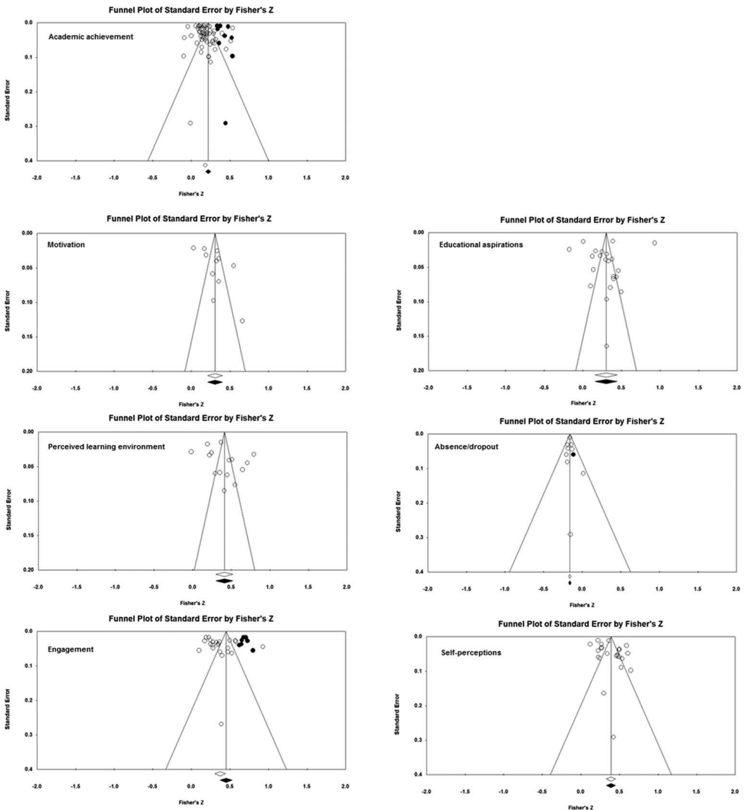
- Publication bias was indicated for academic outcomes and engagement: adjusted summary effects were r = .22 instead of .18 and r = .42 instead of .36, respectively.
Methods
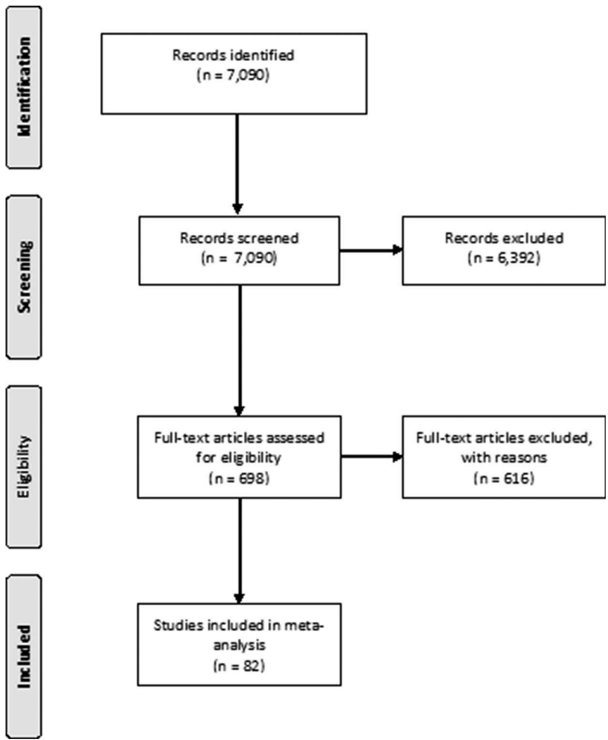
- Meta-analysis of peer-reviewed English-language journal studies published January 2000–December 2018, identified through ERIC and PsycINFO plus reference screening; inclusion required regular secondary education, quantitative methods, samples of at least 30 students, and dependent/independent variables not from the same measurement instrument.
- The final sample comprised 82 studies and 208,796 students; correlations between school belonging and seven outcome domains were transformed into Fisher’s Z, weighted by inverse variance, and converted back to correlations, with multiple similar outcomes averaged within studies.
- Analyses used Comprehensive Meta-Analysis software; meta-ANOVA tests examined group differences by measurement instrument, region, grade level, and SES.
Limitations
- The paper states that findings are based on a relatively small number of primary studies for some specific outcomes and relatively few studies from Europe or Asia; construct validity of school belonging instruments was often unclear; publication bias was found for academic outcomes and engagement; and cross-sectional designs prevent causal conclusions, with reciprocal and cumulative effects likely.
- The paper also notes that students who already dropped out may not have been included in cross-sectional studies, and that samples of Asian, European, and Australian studies were small, so region-specific results need cautious interpretation.
Model-written summary. Check it against the paper before relying on it.
Integrity signals
Registry
Cites
Statistics
Figures


Verification
Claims the paper makes
0 Valid · 1 Not valid · 38 Not checked · 91 Own results and interpretations
A result the paper reports from its own data — it cites no other source for it, so there is none to check. The quote shows it is in the paper.
In the paper
“However, we did find some publication bias for the other outcome types.”
§ The relationships between school belonging and students' motivational, social-emotional, behavioural, and academic outcomes in secondary education: a meta-analytic review > Results for research question 1
plain- Asserted: passes — The authors put it forward as true.
- Checkable: passes — It can be checked against evidence.
- Load-bearing: unclear — It is unclear whether the paper’s conclusions depend on it.
- Based: passes — The paper gives a reason why it holds.
A result the paper reports from its own data — it cites no other source for it, so there is none to check. The quote shows it is in the paper.
In the paper
“The correlations between school belonging and academic achievement and school belonging and absence/dropout rates were small 3 (r = .18and r = -.16,respectively)”
§ The relationships between school belonging and students' motivational, social-emotional, behavioural, and academic outcomes in secondary education: a meta-analytic review > Results for research question 1
plainstates an association- Asserted: passes — The authors put it forward as true.
- Checkable: passes — It can be checked against evidence.
- Load-bearing: unclear — It is unclear whether the paper’s conclusions depend on it.
- Based: passes — The paper gives a reason why it holds.
A result the paper reports from its own data — it cites no other source for it, so there is none to check. The quote shows it is in the paper.
In the paper
“In summary, Table 4 shows that the reported correlations differed per measurement instrument for several student outcomes, namely for academic achievement, motivational outcomes, behavioural engagement, and self-perceptions.”
§ The relationships between school belonging and students' motivational, social-emotional, behavioural, and academic outcomes in secondary education: a meta-analytic review > Results for research question 2
plainstates an association- Asserted: passes — The authors put it forward as true.
- Checkable: passes — It can be checked against evidence.
- Load-bearing: unclear — It is unclear whether the paper’s conclusions depend on it.
- Based: passes — The paper gives a reason why it holds.
A result the paper reports from its own data — it cites no other source for it, so there is none to check. The quote shows it is in the paper.
In the paper
“Additionally, students' sense of school belonging was positively related to their perceived learning environment, such as the perceived classroom climate (r = .40)and a more mastery-oriented classroom goal structure (r = .44),indicating that students with high levels of school belonging perceived their learning environment as more mastery oriented and generally as a more favourable classroom clima”
§ The relationships between school belonging and students' motivational, social-emotional, behavioural, and academic outcomes in secondary education: a meta-analytic review > Results for research question 1
plainstates an association- Asserted: passes — The authors put it forward as true.
- Checkable: passes — It can be checked against evidence.
- Load-bearing: unclear — It is unclear whether the paper’s conclusions depend on it.
- Based: passes — The paper gives a reason why it holds.
A result the paper reports from its own data — it cites no other source for it, so there is none to check. The quote shows it is in the paper.
In the paper
“whereas the correlations with the other motivational, social-emotional, and behavioural outcomes were medium to moderately large (varying between r = .30and .39).”
§ The relationships between school belonging and students' motivational, social-emotional, behavioural, and academic outcomes in secondary education: a meta-analytic review > Results for research question 1
plainstates an association- Asserted: passes — The authors put it forward as true.
- Checkable: passes — It can be checked against evidence.
- Load-bearing: passes — The paper’s conclusions depend on it.
- Based: passes — The paper gives a reason why it holds.
42 more claims
Create a free account to see all 130 claims and to verify the 6 references still open.
- It may state two separate claims as one. 52
- Probably not a substantial claim. 51
Self-check
Percentages, sums and reported differences re-computed from the paper’s own numbers.
Each contradiction between two passages listed here was confirmed by an independent check.
Rated minor: it would not touch a result — a value no result rests on, a p-value that stays on the same side of the significance level, or a conflict that is clerical, resolved elsewhere in the paper, or outside its own findings.
In the paper
§ The relationships between school belonging and students' motivational, social-emotional, behavioural, and academic outcomes in secondary education: a meta-analytic review > Limitations and directions for future research
“Another issue is that we found indicators of publication bias for two of our outcome categories.”
§ The relationships between school belonging and students' motivational, social-emotional, behavioural, and academic outcomes in secondary education: a meta-analytic review > Results for research question 1
“However, we did find some publication bias for the other outcome types.The estimated adjusted effect sizes for these outcomes are: academic outcomes r = 0.215 (LL = 0.182; UL = 0.247), engagement r = 0.421 (LL = 0.353; UL = 0.485), and absence/dropout r = -0.158(LL = -0.174;UL = -0.141).”
Citations
Cites
The "what" and "why" of goal pursuits: Human needs and the self-determination of behavior
Deci, E. L., & Ryan, R. M. (2000) · Psychological Inquiry · doi:10.1207/s15327965pli1104_01 · Cited by 34,210 · cited 2×
“The need for relatedness is not necessarily a prerequisite for intrinsic motivation, but a ‘needed backdrop’ that makes expression of the innate growth tendency of intrinsic motivation more likely (Deci and Ryan 2000, 235).”
BackgroundIntrinsic Motivation and Self-Determination in Human Behavior
Deci, E. L., & Ryan, R. M. (1985) · doi:10.1007/978-1-4899-2271-7 · Cited by 26,772
The need to belong: Desire for interpersonal attachments as a fundamental human motivation.
Baumeister, R. F., & Leary, M. R. (1995) · Psychological Bulletin · doi:10.1037//0033-2909.117.3.497 · Cited by 23,245
(2010) · Intellectum (Universidad de La Sabana) · doi:10.1111/j.1467- · Cited by 16,131
Intrinsic Motivation and Self-Determination in Human Behavior
Miller, K. A., Deci, E. L., & Ryan, R. M. (1988) · Contemporary Sociology · doi:10.2307/2070638 · Cited by 15,312
Borenstein, M., Hedges, L. V., Higgins, J. P. T., & Rothstein, H. R. (2009) · doi:10.1002/9780470743386 · Cited by 14,225 · cited 2×
“ComprehensiveMeta-Analysis software of Biostat was used to carry out all statistical analyses (Borenstein et al. 2009).”
MethodSchool Engagement: Potential of the Concept, State of the Evidence
Fredricks, J. A., Blumenfeld, P. C., & Paris, A. H. (2004) · Review of Educational Research · doi:10.3102/00346543074001059 · Cited by 12,581 · cited 8×
“In addition to the three types of engagement used by Fredricks et al. (2004), other scholars have also studied disengagement, mainly to characterise students who ‘do not feel they belong at school and have withdrawn from school activities in a significant way’ (Willms 2003, 8).”
BackgroundInfluentialBorenstein, M., Hedges, L. V., Higgins, J. P. T., & Rothstein, H. R. (2021) · doi:10.1002/9781119558378 · Cited by 9,799
(2000) · Cited by 9,198
Maslow, A. (1962) · D Van Nostrand eBooks · doi:10.1037/10793-000 · Cited by 7,192
Research works printed but not linked: 9
- 28. Corno, L., and E. B. Mandinach. 2004. "What We Have Learned about Student Engagement in the past Twenty Years." In Big Theories Revisited, edited by D. M. McInerney and S. Van Etten, 299-328. Greenwich, CT: Information Age.
- 34. Deci, E. L., and R. M. Ryan, Eds. 2002. Handbook of Self-Determination Theory Research. Rochester, NY: University of Rochester Press.
- 41. Finn, J. D., and K. A. Kasza. 2009. "Disengagement from School" In Engaging Young People in Learning: Why Does It Matter and What Can We Do? edited by J. Morton, 4-35. Wellington, New Zealand: New Zealand Council for Educational Research.
- 45. Fokkens-Bruinsma, M., E. T. C. Canrinus, M. Ten Hove, and L. Rietveld. 2018. "The Relationship between Teacher's Work Motivation and Classroom Goal Orientation." Pedagogische Studiën 95: 86-100.
- 55. Gottfredson, G. 1984. Effective School Battery. Odessa, FL: Psychological Assessment Resources.
- 97. Li, Y. B., and R. M. Lerner. 2013. "Interrelations of Behavioral, Emotional, and Cognitive School Engagement in High School Students." Journal of Youth and Adolescence 42: 20-32. doi:10.1007/s10964-012-9857-5. · DOI · Paper page
- 10.1007/s10964-005-8950-4 · DOI · Paper page
- 148. Udry, J. R. 1998. The National Longitudinal Study of Adolescent Health (Add Health), Waves I & II, 1994-1996. Chapel Hill, NC: Carolina Population Center, University of North Carolina at Chapel Hill (Producer).Los Altos, CA: Sociometrics Corporation, American Family Data Archive (Producer & Distributor)
- 166. WestEd. 2008. California Healthy Kids Survey: California School District Secondary School Survey Results Fall 07/Spring 08. Los Alamitos, CA: Author.
Cited by
Items 301–400 of 637
Together but Alone: Belonging at Return back to School in the Post-Crisis
Güder, S. Y., Aydos, E. H., Aydın, E., & Türk, E. D. (2023) · Theory and Practice in Child Development · doi:10.46303/tpicd.2023.10 · Cited by 1
The Influence of a Compulsory Attendance Policy on Students’ Sustainable Education
Radhwan, M. G. (2024) · Springer eBooks · doi:10.1007/978-3-031-65215-8_9 · Cited by 2
Zakiyah, S., Suwarma, I. R., & Rusdiana, D. (2024) · Jurnal Penelitian Pendidikan IPA · doi:10.29303/jppipa.v10i8.8332 · Cited by 9
“Nevertheless, a robust positive correlation between the results of the measuring instrument is a sign of reliability (Feng et al., 2021; Korpershoek et al., 2020).”
BackgroundBurnett, A., & Wood‐Downie, H. (2024) · Educational and Child Psychology · doi:10.53841/bpsecp.2024.41.2.17 · Cited by 2
Sercu, L., Maes, S., & Flamez, E. (2025) · Journal of Multilingual and Multicultural Development · doi:10.1080/01434632.2025.2471009 · Cited by 3
“Gradually introducing systematic translanguaging in classrooms may contribute substantially to students’ sense of belonging (Korpershoek et al. 2020), their mastery of the language of instruction and ultimately their study results.”
White, R. (2025) · International Journal for Leadership in Learning · doi:10.29173/ijll60 · Cited by 4
The Development of the Student Belonging Scale: A Measure of School Belonging
Haugen, J. S., Frawley, C., & Bledsoe, K. G. (2025) · Professional School Counseling · doi:10.1177/2156759x251340045 · Cited by 5
Benavente, M., Chuecas, M. J., Alfaro, J., Galdames, A., & Ditzel, A. L. (2025) · Journal of Psychoeducational Assessment · doi:10.1177/07342829251345975 · Cited by 2
“Positive correlations have been observed with higher class attendance (Korpershoek et al., 2019), increased academic motivation, and self-esteem (OECD, 2013), among others.”
Belonging matters: a scoping review of survey instruments—prevalent measures and omissions
Borch, A., Løvgren, M., & Hyggen, C. (2025) · Social Psychology of Education · doi:10.1007/s11218-025-10062-4 · Cited by 4
“Research shows that low or no sense of school belonging are linked to absenteeism and dropout from school (Korpershoek et al., 2020).”
Basharat, S., & Steinmann, I. (2025) · Equity in Education & Society · doi:10.1177/27526461251348603 · Cited by 3
Leersnyder, J. D., & Meeussen, L. (2025) · Journal of Community & Applied Social Psychology · doi:10.1002/casp.70122 · Cited by 4
Beyond Behavior: Understanding ADHD Burnout and the Need for Belonging in UAE Schools
Hossain, M. Z., & Bain, J. (2025) · Psychology in the Schools · doi:10.1002/pits.70000 · Cited by 2
Identifying Strategies Teachers Apply to Establish Positive Relationships with Students
Ødegård, M., Pesonen, H. V., & Solberg, S. (2025) · Human Arenas · doi:10.1007/s42087-025-00514-w · Cited by 4
“Despite the growing amount of research documenting student-teacher relationships as a key factor in several variables, Korpershoek et al. ( 2020) argue that the activities used to create and sustain these relationships are an under-researched topic.”
DIY or institutionalised: Does it matter when it comes to belonging in BMX?
Camilleri, D., & Katz, S. (2025) · DIY Alternative Cultures & Society · doi:10.1177/27538702251378553 · Cited by 1
“Interestingly, the group that does not ride jumps/trails reported higher School Connectedness, which speaks to previous fi ndings on the importance of school engagement and positive ties to educational institutions, especially for adolescents (Finn and Rock, 1997; Korpershoek et al., 2020).”
Aslan, K., Bocskor, Á., & Kudrnáč, A. (2025) · Young · doi:10.1177/11033088251379973 · Cited by 2
“The impact of school belonging extends to academic indicators, with strong correlations found between students’ sense of belonging and academic achievement at both individual and school levels (Korpershoek et al., 2020).”
The Dehesa as Landscape Heritage from the Perspective of the New Generation
Peñafiel, R. G., Carretero, A. M. H., & Martín, J. M. S. (2025) · Land · doi:10.3390/land14112111 · Cited by 2
“This reflects a functional and everyday relationship with the landscape, based on direct experience with agricultural and livestock practices [108], which is common in areas where agriculture and livestock farming are the livelihood of many families.”
Relative Sense of Belonging and the Academic Achievement of Chinese Adolescents
Zhao, Y., Gee, K. A., & Yuan, C. W. (2025) · Journal of Youth and Adolescence · doi:10.1007/s10964-025-02287-5 · Cited by 4
“…on the belonging hypothesis and self-determination theories, individuals who feel a sense of belonging to their learning environment are more likely to engage with the peers and teacher, see the values of education, and develop intrinsic motivation in the study context (Korpershoek et al., 2020).”
InfluentialA systematic review of the relationship between school design projects and sense of belonging
Phua, C. Y., Mohidin, H. H. B., Abdul-Samad, Z., Bong, W. K., & Alwi, N. M. (2025) · International Journal of Inclusive Education · doi:10.1080/13603116.2025.2584618 · Cited by 2
“These include better academic performance, improved mental health, increased school motivation, fewer behavioural issues and lower dropout rates (Korpershoek et al 2020).”
Reis, M., Noronha, C., Tomé, G., Carvalho, M., Rodrigues, N. N., & de Matos, M. G. (2025) · Adolescents · doi:10.3390/adolescents5040078 · Cited by 3
“When students feel that they belong, they are more likely to demonstrate motivation, persistence, and prosocial behaviour [4,5].”
Primary school students’ perceptions of school connectedness: "You’re all in it together"
Hoenig, J. F., & Cumming, T. M. (2025) · The Australian Educational Researcher · doi:10.1007/s13384-025-00930-5 · Cited by 2
“…is nurtured, school connectedness can combat school disengagement (Goodenow, 1993), student burnout (Lo Cricchio et al., 2023), absence and dropout (Korpershoek et al., 2020), emotional distress (Resnick et al., 1997), depression (Shochet & Smith, 2014) and other physical and mental health…”
Anggito, A., Ismail, P. R., Lubis, A., & Marpaung, C. T. A. (2025) · Priviet Social Sciences Journal · doi:10.55942/pssj.v5i12.1059 · Cited by 1
“The empirical model developed in this study refers to the important reality that social learning has been shown to influence achievement motivation both directly and through social support as a mediating mechanism (Calafell et al., 2024; Korpershoek et al., 2020).”
Beyond competence: reimagining nursing education through the capability approach
Castellano, C. (2025) · Teaching and learning in nursing · doi:10.1016/j.teln.2025.12.005 · Cited by 6
Konings, R., Leersnyder, J. D., & Ağırdağ, O. (2026) · International Journal of Intercultural Relations · doi:10.1016/j.ijintrel.2025.102357 · Cited by 2
Atri, A., & Allen, K. (2026) · Advances in mental health and addiction · doi:10.1007/978-3-032-06581-0_7 · Cited by 1
Elementary school discipline lowers students’ sense of belonging
Kim, H. E., Liu, A. G., Davison, M., Bi, S. Z., & Penner, A. M. (2026) · Social Science Research · doi:10.1016/j.ssresearch.2025.103296 · Cited by 5
“…students’ academic wellbeing, including engagement, motivation, and resilience (Wang and Holcombe, 2010; Pittman and Richmond, 2007; Booker, 2004; Korpershoek et al., 2020), as well as non-academic student outcomes like stronger peer and student-teacher relationships, greater extracurricular…”
Cain, N., & Sukhawathanakul, P. (2026) · Educational Review · doi:10.1080/00131911.2026.2613881 · Cited by 1
Master, A., Patel, K. S., Weltzien, K., & Sharmin, S. (2026) · Educational Psychology Review · doi:10.1007/s10648-025-10093-5 · Cited by 2
“However, academic belonging has attracted growing attention from researchers and practitioners in recent years due to its contribution to a variety of educational and developmental outcomes (Allen & Bowles, 2012; Fong et al., 2024; Korpershoek et al., 2020).”
Baleke, C., Mugenyi, L., Nelson, K. A., Thomas, K. A., Ndekezi, D., Enomut, J. R., Alezuyo, C., Jerrim, J., & Weiss, H. A. (2026) · PLoS ONE · doi:10.1371/journal.pone.0326549 · Cited by 5
“Persistent school absenteeism increases the risk of school dropout, lowers girls’ self-esteem, and compromises future productivity [27].”
Sotardi, V. A., Fang, J., & Ren, X. (2026) · Child Indicators Research · doi:10.1007/s12187-026-10345-y · Cited by 5
“Adolescents who experience school as supportive, respectful, and safe report higher life satisfaction and lower emotional distress and psychosomatic complaints (Korpershoek et al., 2020; Palikara et al., 2025; Suldo et al., 2012 ; Wang & Degol, 2016).”
Sabic‐El‐Rayess, A., Joshi, V., & Li, S. (2026) · International Journal of Educational Development · doi:10.1016/j.ijedudev.2026.103559 · Cited by 2
Buenconsejo, J. U. (2026) · Journal of Psychoeducational Assessment · doi:10.1177/07342829261440811 · Cited by 1
“Academic connection was also found to be negatively associated with anxiety and depression, aligning with past research that shows how students who feel socially integrated and supported in school tend to experience lower psychological distress (Guay et al., 2017; Korpershoek et al., 2020).”
Sui, T., Yeung, J. W. K., & Ma, M. (2026) · Child Abuse & Neglect · doi:10.1016/j.chiabu.2026.108027 · Cited by 1
Exploring the prevalence of reasons adolescents feel unwelcome at school
Lucibello, K. M., Zheng, L., Leatherdale, S. T., & Patte, K. A. (2026) · PLoS ONE · doi:10.1371/journal.pone.0346290 · Cited by 1
“While school belonging has been associated with higher academic achievement [6], better short and long term mental health [7,8], higher physical activity [9], and less substance use, violence, and poor sexual health [10], declines in school belonging have also been noted among adolescents over time…”
A Systematic Review of School Connectedness in Middle School Students
Gilbertson, M. L., & Sanchez, A. (2026) · Psychology in the Schools · doi:10.1002/pits.70173 · Cited by 3
O’Brien, S., Taibi, H., Pennycook, C., & Conyngham, G. (2026) · Pastoral Care in Education · doi:10.1080/02643944.2026.2672628 · Cited by 1
Harris-Thomas, B., Nicolai, K. D., Chen, X., & Barbieri, C. (2026) · Educational Psychology Review · doi:10.1007/s10648-026-10181-0 · Cited by 1
“Numerous empirical studies have demonstrated the benefits of students feeling a sense of belonging in learn - ing contexts (see Allen et al., 2021 ; Korpershoek et al., 2020 , for reviews).”
Chang, T., Ma, H., Chen, H., Yan, Z., & Cao, M. (2026) · Journal of Human Sport and Exercise · doi:10.55860/9b157f33 · Cited by 1
“Another important finding concerns the role of SCS as a mechanism for interpreting the increased 34.4% variance in Model 3, suggesting it a primary role and an alternative in promoting school belongingness (Allen et al., 2018; Korpershoek et al., 2020, Yan g, 2024).”
InfluentialSchool climate and student achievement: Evidence from TIMSS longitudinal
Nilsen, T., Johansson, S., Strietholt, R., Eryılmaz, N., Kennedy, A., & Atasever, U. (2026) · Studies In Educational Evaluation · doi:10.1016/j.stueduc.2026.101641 · Cited by 1
Sense of belonging and academic outcomes among postsecondary students: a meta-analysis
Yang, X., Zhang, D., Wang, X., & Samsudin, S. (2026) · Frontiers in Psychology · doi:10.3389/fpsyg.2026.1841185 · Cited by 3
“…linked students’ sense of belonging to positive academic and psychosocial outcomes, and prior evidence from K– 12 settings suggests that stronger belonging is associated with better academic achievement, persistence, and adjustment (Akar Vural et al., 2020; Arslan, 2021; Korpershoek et al., 2020).”
Feng, Q., & Chen, H. (2026) · Frontiers in Psychology · doi:10.3389/fpsyg.2026.1894510 · Cited by 1
Owen, C. (2022) · Research on Education and Media · doi:10.2478/rem-2022-0012 · Cited by 1
Wiramarta, K., & Dewi, N. P. D. U. (2022) · Mimbar Ilmu · doi:10.23887/mi.v27i3.55375 · Cited by 1
Marquez, L. V., Faria, B. M., Rodrigues, I. M., Raimondi, G. A., & Paulino, D. B. (2023) · Revista Brasileira de Educação Médica · doi:10.1590/1981-5271v47.2-20220247 · Cited by 1
Hancock, C. H. H. (2023) · Pastoral Care in Education · doi:10.1080/02643944.2023.2231968 · Cited by 2
“Previous studies have documented the significance of student ‒ student relationships for experiencing belonging in adolescence (Allen & Kern, 2020; Hamm & Faircloth, 2005; Korpershoek et al., 2020).”
BackgroundRheinberger, S. J., Staley, B., & Nutton, G. (2023) · Australasian Journal of Special and Inclusive Education · doi:10.1017/jsi.2023.9 · Cited by 1
“For children and their caregivers, belonging within the school community is recognised as being important for positive outcomes (Bond et al., 2007; Korpershoek et al., 2020) and is reflected in General Comment No. 4 ’ s features of inclusive education (Cologan, 2019; United Nations, 2016).”
BackgroundRamoutar, L., & Hampton, L. (2024) · Educational Psychology in Practice · doi:10.1080/02667363.2024.2329143 · Cited by 4
“Conversely, reduced SB has been associated with lower academic success (L. Anderman, 2003; Korpershoek et al., 2019) with a predictive link between SB and future mental health problems (Shochet et al., 2006).”
Evangelinou, A., Negka, E., & Manesis, N. (2024) · European Journal of Education Studies · doi:10.46827/ejes.v11i3.5218 · Cited by 1
Muta, H. (2024) · International Journal of Human Culture Studies · doi:10.9748/hcs.2024.115 · Cited by 1
“…et al. (2020), in a meta-analysis of 82 studies from 2000 to 2018, found that students' sense of belonging to their school played an A study on factors affecting the academic achievements of fifth-grade students in the Republic of the Union of Myanmar 117 important role in their performance [14].”
Zhang, A., Kazazi, F., Tang, K., & Howell, P. (2024) · PLOS mental health. · doi:10.1371/journal.pmen.0000019 · Cited by 2
Lara, L., Miranda‐Zapata, E., Saracostti, M., & de-Toro, X. (2024) · Revista de Psicodidáctica (English ed ) · doi:10.1016/j.psicoe.2024.500159 · Cited by 8
Sun, H., Ma, M., Tao, Y., Tang, X., & Li, W. (2025) · International Journal of High Speed Electronics and Systems · doi:10.1142/s0129156425403018 · Cited by 2
Pavešić, B. J., Ivančič, K. Š., & Cankar, G. (2025) · Studia paedagogica · doi:10.5817/sp2024-3-1 · Cited by 2
“Students who feel connected to their school community exhibit higher levels of motivation, engagement, and academic performance (Korpershoek et al., 2020).”
Perezhivanie and Multilingual Adolescents’ Development of School Belonging in Northern Ireland
Kelly, R., Hou, H., Skinner, B., et al. (2025) · Journal of Language Identity & Education · doi:10.1080/15348458.2025.2457143 · Cited by 1
“Alongside the increased cultural and linguistic diversity in schools, there is growing recognition that having a sense of belonging at school is critical for students’ academic achievement and socio-emotional wellbeing (Allen et al., 2018; Korpershoek et al., 2020).”
O’Keefe, P. A., Ramya, S. M., & Horberg, E. J. (2025) · Contemporary Educational Psychology · doi:10.1016/j.cedpsych.2025.102371 · Cited by 3
Ishaac, M., Hidayat, M. F., & Mubarak, M. Z. (2024) · Al-ATHFAL Jurnal Pendidikan Anak · doi:10.46773/alathfal.v5i2.1409 · Cited by 1
“Dalam penelitian terbaru, ditemukan bahwa guru yang memiliki pemahaman mendalam tentang psikologi anak cenderung lebih efektif dalam menciptakan lingkungan pembelajaran yang mendukung perkembangan emosional siswa (Korpershoek et al., 2020).”
Lenkeit, J., Bosse, S., & Juang, L. P. (2025) · Zeitschrift für Bildungsforschung · doi:10.1007/s35834-025-00488-3 · Cited by 1
“Dieses Verständnis von sozialer Teilhabe als Gefühl der Anerkennung und des Dazu-gehörens ist von zentraler Bedeutung für den individuellen Lernerfolg (Korpershoek et al. 2019).”
La relevancia de la identidad institucional en el rendimiento académico
Tapia, M. P. G., Fuentes‐Balderrama, J., & Espinosa, A. D. C. D. (2022) · RECIE Revista Electrónica Científica de Investigación Educativa · doi:10.33010/recie.v6i0.1702 · Cited by 3
Ivančič, K. Š., Štremfel, U., Peras, I., & Pavešić, B. J. (2023) · Pedagoški inštitut eBooks · doi:10.32320/978-961-270-355-4 · Cited by 3
VIETNAMESE EFL TERTIARY TEACHERS’ ENGLISH COMMUNICATION IN NON-ENGLISH MAJOR CLASSES: A CASE STUDY
Tran, L. M. (2021) · Open Access Victoria University of Wellington | Te Herenga Waka (Figshare) · doi:10.26686/wgtn.14386136.v2 · Cited by 1
Does the impact of pupil absences on achievement depend on their timing?Preprint
Dräger, J., Klein, M., & Sosu, E. (2024) · doi:10.35542/osf.io/nwzqh · Cited by 1
Raising the Compulsory Age of Attendance in Manitoba Schools: Uneven Results
Plant, A. M., & Donlevy, J. K. (2021) · Interchange · doi:10.1007/s10780-020-09414-0
Uğurlu, N. B. (2021) · Participatory Educational Research · doi:10.17275/per.22.9.9.1
Sense of school belongingness as a predictor to student academic motivation
Palomo, S., & Chagas, M. L. (2022) · International Journal of Research Studies in Education · doi:10.5861/ijrse.2022.191 · Cited by 5
Keppens, G. (2022) · SSRN Electronic Journal · doi:10.2139/ssrn.4166353
The Education Combination Toolkit
Socol, A. R., Amerikaner, A., Chang, B. C., Nichols, B. N., Richards, C. R., Adams, D. A., McQueen, D. M., Sullivan, E. S., Bacon, H. B., Rieman, H. R., et al. (2020) · Issue Lab (Candid) · doi:10.15868/socialsector.40738 · Cited by 1
Coburn, A. N. (2021) · Digital Repository Service (Northeastern University) · doi:10.17760/d20412888 · Cited by 2
As, A. J. V., Excell, L. A., & Shaik, N. (2022) · The Journal for Transdisciplinary Research in Southern Africa · doi:10.4102/td.v18i1.1225
Die strewe na ’n sin van verbintenis: ervaringe van ’n Generasie 1.5-student in hoër onderwys
Groenewald, E. (2022) · Litnet Akademies : 'n Joernaal vir die Geesteswetenskappe, Natuurwetenskappe, Regte en Godsdienswetenskappe · doi:10.56273/1995-5928/2022/j19n3d1
Charta media influence on integrated science learning difficulties of coastal students
Batmang, B., Arham, Z., Nurma, N., & Amir, B. (2022) · Cypriot Journal of Educational Sciences · doi:10.18844/cjes.v17i12.7564
“4740 in Integrated Science learning, learning motivation plays an private role in improving outcomes of learning in social science (Alhadi & Saputra, 2017; Korpershoek et al., 2020).”
BackgroundSelf-Efficacy on School Counselors in Delivering Middle School Student’s Majoring Assistance
Naqiyah, N., & Sholeha, E. (2023) · Proceedings of the Unima International Conference on Social Sciences and Humanities (UNICSSH 2022) · doi:10.2991/978-2-494069-35-0_105 · Cited by 2
Muflihah, L. W., & KISMIANTINI, K. (2023) · AIP conference proceedings · doi:10.1063/5.0111152
A Meeting of the Minds: A Needed Transformation in Teacher Education
Daly, J. K., & Richardson, S. (2023) · The Teacher Educator · doi:10.1080/08878730.2023.2223586
Şengül, M., & Selim, H. Ş. (2023) · The Anatolian Journal of General Medical Research · doi:10.4274/terh.galenos.2023.43926
Connectedness in Adolescence: A Concept Analysis
Hudson, K. (2023) · Issues in Mental Health Nursing · doi:10.1080/01612840.2022.2141388 · Cited by 2
“School connectedness is the belonging, respect, inclusion, and acceptance that students feel in the school environment as learners and individuals with adults and peers (Korpershoek et al., 2020).”
BackgroundEngaging and Interacting at a Distance: A Systematic Review of K–12 Online Instructional Approaches
Altantsetseg, S. (2023) · American Educational Research Association Annual Meeting (AERA) · doi:10.3102/ip.23.2008729
Resisting policing in higher education: wilful White ignorance in the campus safety debate
Taylor, R. M., & Perez‐Mugg, M. (2023) · Journal of Philosophy of Education · doi:10.1093/jopedu/qhad062 · Cited by 2
Keppens, G. (2023) · Environmental Education Research · doi:10.1080/13504622.2023.2267798 · Cited by 3
“…One possible explanation is that students who chose to skip school for climate strikes might be more motivated to catch up on missed lessons and dedicate more effort to engage with the content they missed due to a heightened sense of school belonging (Keppens 2023; Korpershoek et al. 2020).”
Putting the “We” in Wellbeing Through Belonging Research
Allen, K., Walsh, L., Chan, T., McGlinchey, C., Wong, D., Lu, Y., & Keller, M. (2023) · Springer eBooks · doi:10.1007/978-981-99-5609-8_16 · Cited by 1
Sense of School Belonging and Kindness Among Hong Kong Primary Students: A Latent Profile Analysis
Lee, J. C., & Huang, J. (2023) · Positive education · doi:10.1007/978-981-99-5571-8_3 · Cited by 2
Zawawi, W. A. N. W. A., Othman, Z. S., & Hamid, N. H. A. (2023) · International Journal of Academic Research in Business and Social Sciences · doi:10.6007/ijarbss/v13-i10/18964 · Cited by 1
“Research has consistently shown that students with a stronger sense of belonging tend to achieve better academic grades, as supported by a considerable body of evidence encompassing at least 67 tests reported in primary studies (Korpershoek et al., 2020).”
Sakellariou, C. N. (2023) · Research Square · doi:10.21203/rs.3.rs-3505931/v1
Farzana Carisa, R., & Hastuti, R. (2023) · AL-IRSYAD · doi:10.30829/al-irsyad.v13i2.18198 · Cited by 2
Aslam, N., Shahzad, M., Ahmad, N., Akhtar, M. N., & Batool, S. (2023) · Qlantic Journal of Social Sciences and Humanities · doi:10.55737/qjssh.152288122
Javadi, S. V., Ghanifar, M. H., & Zadeh, F. S. (2023) · doi:10.61838/kman.jayps.4.10.1
Shahzad, M., Akhtar, M. N., & Sajid, S. M. (2024) · Pakistan Social Sciences Review · doi:10.35484/pssr.2024(8-i)18
6. Skolemiljø – leseprestasjon på elev- og skolenivå
Strand, O., & Knudsen, K. (2024) · Universitetsforlaget eBooks · doi:10.18261/9788215053257-24-06
12. Mulige drivkrefter bak nedgangen i leseforståelse hos norske tiåringer
Knudsen, K., Strand, O., Wagner, Å. K. H., & Støle, H. (2024) · Universitetsforlaget eBooks · doi:10.18261/9788215053257-24-12
Bildung und sozialer Zusammenhalt. Gutachten
Anders, Y., Hannover, B., Jungbauer-Gans, M., Lenzen, D., McElvany, N., Seidel, T., Tippelt, R., Wilbers, K., & Woessmann, L. (2024) · Waxmann Verlag GmbH eBooks · doi:10.31244/9783830998709 · Cited by 6
Jain, V., Bijlani, A., Gupta, R., & Bagaria, O. (2024) · Multidisciplinary Reviews · doi:10.31893/multirev.2023ss037 · Cited by 1
“…were found and combined into an illustration structure that represents the essential elements of TPD for OBL using a meta-aggregative technique (Korpershoek et al 2020) investigated the connections between secondary school students' motivation, social-emotional learning, behavioral patterns,…”
BackgroundChen, R. (2024) · SSRN Electronic Journal · doi:10.2139/ssrn.4836526
Anisa, A., & Nugraha, M. S. (2024) · Al-DYAS · doi:10.58578/aldyas.v3i2.3225
“…keterlibatan, adalah konsep "meta" yang mewakili interaksi antara individu dan lingkungannya, bukan sebagai sifat individu yang menyerupai sifat (Korpershoek et al, 2020): Perwujudan dari partisipasi masyarakat dalam pendidikan terdiri dari beberapa bentuk yaitu partisipasi finansial, material,…”
BackgroundJuan, R. N. J. S., Arca, J. A. C., Fontanilla, J. S., et al. (2024) · International Journal of Research Publications · doi:10.47119/ijrp1001501620246751
Learning Environment as an Influencer of Students’ Performance in A University in China
Su, C. (2024) · Journal of Education and Educational Research · doi:10.54097/53wwyp21 · Cited by 1
‘Hear My Voice’: Children and Young People in Schools and Research
Jayman, M., & Quickfall, A. (2024) · Emerald Group Publishing Limited eBooks · doi:10.1108/978-1-83797-242-520241004
Mejía, G. S. R. (2024) · Región Científica · doi:10.58763/rc2024325 · Cited by 3
Bardach, L., Aldrup, K., Göllner, R., Nagengast, B., & Trautwein, U. (2024) · doi:10.31219/osf.io/kw62y
Mehr, R. S., Karimian, A., Abdullahzadeh, M., & Bakhshian, F. (2024) · Journal of School Health · doi:10.1111/josh.13501 · Cited by 3
Boujaoude, S. B., & Faour, M. (2024) · Springer eBooks · doi:10.1007/978-3-031-72203-5_6
First-Year College Students’ Meaning Making of the Pandemic’s Impacts on Their Academics
Vélez, G., Herteen, M., Rainey, E. A., Nemanich, S. T., & Jessup‐Anger, J. E. (2024) · Journal of Adolescent Research · doi:10.1177/07435584241291584
“When adolescents feel a sense of connection to others in their school environment, they are more likely to learn and excel academically (Korpershoek et al., 2020).”
Loneliness among first-year university students: Evaluating a peer support intervention
Bathelt, J. (2024) · Psychology Teaching Review · doi:10.53841/bpsptr.2024.30.2.7 · Cited by 2
Metadata
- Authors
- Korpershoek, H., Canrinus, E. T., Fokkens-Bruinsma, M., & de Boer, H.
- Affiliations
- University of Groningen (NL)
- University of Agder (NO)
- GION Education/Research, University of Groningen, Groningen, the Netherlands
- Corresponding author
- Korpershoek, H.
- Venue
- Research Papers in Education
- Publisher
- Informa UK Limited
- Published
- 2019-05-27
- Volume
- 35
- Issue
- 6
- Pages
- 641-680
- ISSN
- 0267-1522 (ISSN-L)
- 1470-1146
- OpenAlex
- W2947655140
- Semantic Scholar
- 35ecbf9488c93b1b390c210affb07d3204d06aad
- Cited by
- 648
- References
- 182
- Citations by year
- 2026: 228 · 2025: 119 · 2024: 100 · 2023: 78 · 2022: 70 · 2021: 42 · 2020: 10 · 2019: 1
- FWCI
- 82.86
- Type
- journal article
- Language
- en
- Open access
- hybrid
- doi.org
- Licence
- Locations
- Research Papers in Education (publishedVersion, cc-by-nc-nd)
- University of Groningen research database (University of Groningen / Centre for Information Technology) (acceptedVersion, cc-by-nc-nd)
- NORA - Norwegian Open Research Archives (submittedVersion, cc-by-nc-nd)
- University of Groningen research database (University of Groningen / Centre for Information Technology) (submittedVersion, cc-by-nc-nd)
- Topics
- Social Sciences › Education › Early Childhood Education and Development
- Social Sciences › Psychology › Developmental and Educational Psychology › Education, Achievement, and Giftedness
- Social Sciences › Education › Educational Environments and Student Outcomes
- Keywords
- school belonging, secondary education, academic performance, student motivation, mastery orientation, self-concept, self-efficacy, student engagement, school absenteeism, school dropout, social-emotional outcomes, behavioural outcomes, socioeconomic status, grade level differences
About these checks
Registry, retraction, Cites and statistics results are computed, not judged, with one exception: a printed reference that no index lists is read once by a model before it counts as a citation error. Claims are extracted by a model and kept only when their quote appears verbatim in the text; each cited source is then checked, with a model’s help, for whether it says what the claim relies on. Those verdicts can be wrong — read the claim’s quote and the cited source before relying on one.
A language model drew the claims from the paper on 2026-09-28, under version 3 of the claim definition (model deepseek-v4.1-flash, prompt extract-v3).
A second model labelled each claim on 2026-09-28 (model jev-1.13-20260917, definition revision gold-guideline-v0.2).
Statistics and arithmetic are recomputed, not judged.
Confidence bands are shown only for fields calibrated on our annotated test set. None is calibrated yet, so no band is shown.
What counts as a claim ›How we measure confidence ›How we check this ›
Are you an author, or do you see a problem with this page? Request a review
Data sources
Bibliographic data: Semantic Scholar, OpenAlex, Crossref.
Contains information from the Semantic Scholar Academic Graph Datasets, made available under the ODC Attribution License (ODC-BY 1.0).
Semantic Scholar’s data is described in: Kinney, R., et al. (2023). The Semantic Scholar Open Data Platform. arXiv:2301.10140.
