

The relationships between school belonging and students’ motivational, social-emotional, behavioural, and academic outcomes in secondary education: a meta-analytic review
Open accessThe DOI matches its Crossref record; 182 of the 185 references it cites were found in a registry or an index, and 1 are not checked yet; none of the 57 sources its claims cite is checked for support yet.
Abstract
This meta-analytic review examines the relationships between students’ sense of school belonging and students’ motivational, social-emotional, behavioural, and academic functioning in secondary education. Moreover, it examines to what extent these relationships differ between different student groups (grade level, SES), measurement instruments, and region. The meta-analysis included 82 correlational studies, published in peer-reviewed journals between 2000 and 2018. Results revealed, on average, a small positive correlation with academic achievement, and small to moderate positive correlations with motivational outcomes such as mastery goal orientations; with social-emotional outcomes such as self-concept and self-efficacy; and with behavioural outcomes such as behavioural, cognitive, and agentic engagement. A small negative correlation is observed with absence and dropout rates. Similar results are found across different student groups (grade level, SES). Although the results vary to some extent across measurement instruments and region, generally, the results reveal that school belonging plays an important role in students’ school life.
Checked 2026-11-25 · 1 reference not checked yet
Overview
CoChat Summary
TL;DR
This meta-analysis synthesizes 82 studies (208,796 secondary students) on school belonging and finds consistent positive associations with motivational, social-emotional, behavioural, and academic outcomes, and a negative association with absence/dropout. Associations are generally small to moderate, with some variation by measurement instrument and region but not by grade level or SES.
Key findings
- Across 82 studies (208,796 students), school belonging was positively related to most outcomes: academic achievement averaged r = .18, absence/dropout averaged r = -.16, and other motivational, social-emotional, and behavioural outcomes averaged r = .30 to .39.
- Specific outcomes included school grades r = .18 (67 tests), standardised test scores r = .12 (19 tests), perceived classroom climate r = .40, and mastery-oriented classroom goal structure r = .44; performance approach goals, extrinsic motivation, and social motivation were small and non-significant.
- Moderator analyses found differences by measurement instrument for academic achievement, motivational outcomes, behavioural engagement, and self-perceptions, and by region for perceived learning environment and behavioural engagement; no significant differences were found for grade level or SES.
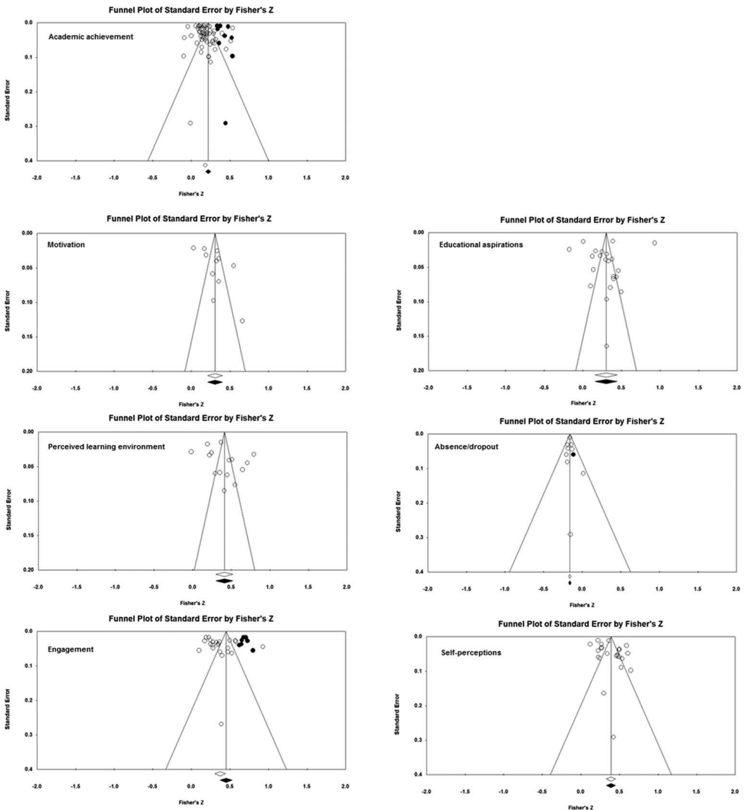
- Publication bias was indicated for academic outcomes and engagement: adjusted summary effects were r = .22 instead of .18 and r = .42 instead of .36, respectively.
Methods
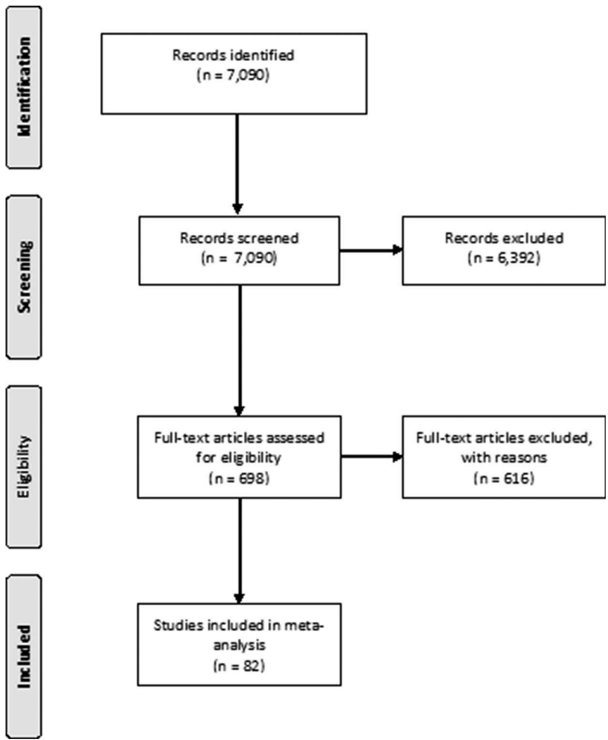
- Meta-analysis of peer-reviewed English-language journal studies published January 2000–December 2018, identified through ERIC and PsycINFO plus reference screening; inclusion required regular secondary education, quantitative methods, samples of at least 30 students, and dependent/independent variables not from the same measurement instrument.
- The final sample comprised 82 studies and 208,796 students; correlations between school belonging and seven outcome domains were transformed into Fisher’s Z, weighted by inverse variance, and converted back to correlations, with multiple similar outcomes averaged within studies.
- Analyses used Comprehensive Meta-Analysis software; meta-ANOVA tests examined group differences by measurement instrument, region, grade level, and SES.
Limitations
- The paper states that findings are based on a relatively small number of primary studies for some specific outcomes and relatively few studies from Europe or Asia; construct validity of school belonging instruments was often unclear; publication bias was found for academic outcomes and engagement; and cross-sectional designs prevent causal conclusions, with reciprocal and cumulative effects likely.
- The paper also notes that students who already dropped out may not have been included in cross-sectional studies, and that samples of Asian, European, and Australian studies were small, so region-specific results need cautious interpretation.
Model-written summary. Check it against the paper before relying on it.
Integrity signals
Registry
Cites
Statistics
Figures


Verification
Claims the paper makes
0 Valid · 1 Not valid · 38 Not checked · 91 Own results and interpretations
A result the paper reports from its own data — it cites no other source for it, so there is none to check. The quote shows it is in the paper.
In the paper
“However, we did find some publication bias for the other outcome types.”
§ The relationships between school belonging and students' motivational, social-emotional, behavioural, and academic outcomes in secondary education: a meta-analytic review > Results for research question 1
plain- Asserted: passes — The authors put it forward as true.
- Checkable: passes — It can be checked against evidence.
- Load-bearing: unclear — It is unclear whether the paper’s conclusions depend on it.
- Based: passes — The paper gives a reason why it holds.
A result the paper reports from its own data — it cites no other source for it, so there is none to check. The quote shows it is in the paper.
In the paper
“The correlations between school belonging and academic achievement and school belonging and absence/dropout rates were small 3 (r = .18and r = -.16,respectively)”
§ The relationships between school belonging and students' motivational, social-emotional, behavioural, and academic outcomes in secondary education: a meta-analytic review > Results for research question 1
plainstates an association- Asserted: passes — The authors put it forward as true.
- Checkable: passes — It can be checked against evidence.
- Load-bearing: unclear — It is unclear whether the paper’s conclusions depend on it.
- Based: passes — The paper gives a reason why it holds.
A result the paper reports from its own data — it cites no other source for it, so there is none to check. The quote shows it is in the paper.
In the paper
“In summary, Table 4 shows that the reported correlations differed per measurement instrument for several student outcomes, namely for academic achievement, motivational outcomes, behavioural engagement, and self-perceptions.”
§ The relationships between school belonging and students' motivational, social-emotional, behavioural, and academic outcomes in secondary education: a meta-analytic review > Results for research question 2
plainstates an association- Asserted: passes — The authors put it forward as true.
- Checkable: passes — It can be checked against evidence.
- Load-bearing: unclear — It is unclear whether the paper’s conclusions depend on it.
- Based: passes — The paper gives a reason why it holds.
A result the paper reports from its own data — it cites no other source for it, so there is none to check. The quote shows it is in the paper.
In the paper
“Additionally, students' sense of school belonging was positively related to their perceived learning environment, such as the perceived classroom climate (r = .40)and a more mastery-oriented classroom goal structure (r = .44),indicating that students with high levels of school belonging perceived their learning environment as more mastery oriented and generally as a more favourable classroom clima”
§ The relationships between school belonging and students' motivational, social-emotional, behavioural, and academic outcomes in secondary education: a meta-analytic review > Results for research question 1
plainstates an association- Asserted: passes — The authors put it forward as true.
- Checkable: passes — It can be checked against evidence.
- Load-bearing: unclear — It is unclear whether the paper’s conclusions depend on it.
- Based: passes — The paper gives a reason why it holds.
A result the paper reports from its own data — it cites no other source for it, so there is none to check. The quote shows it is in the paper.
In the paper
“whereas the correlations with the other motivational, social-emotional, and behavioural outcomes were medium to moderately large (varying between r = .30and .39).”
§ The relationships between school belonging and students' motivational, social-emotional, behavioural, and academic outcomes in secondary education: a meta-analytic review > Results for research question 1
plainstates an association- Asserted: passes — The authors put it forward as true.
- Checkable: passes — It can be checked against evidence.
- Load-bearing: passes — The paper’s conclusions depend on it.
- Based: passes — The paper gives a reason why it holds.
42 more claims
Create a free account to see all 130 claims and to verify the 6 references still open.
- It may state two separate claims as one. 52
- Probably not a substantial claim. 51
Self-check
Percentages, sums and reported differences re-computed from the paper’s own numbers.
Each contradiction between two passages listed here was confirmed by an independent check.
Rated minor: it would not touch a result — a value no result rests on, a p-value that stays on the same side of the significance level, or a conflict that is clerical, resolved elsewhere in the paper, or outside its own findings.
In the paper
§ The relationships between school belonging and students' motivational, social-emotional, behavioural, and academic outcomes in secondary education: a meta-analytic review > Limitations and directions for future research
“Another issue is that we found indicators of publication bias for two of our outcome categories.”
§ The relationships between school belonging and students' motivational, social-emotional, behavioural, and academic outcomes in secondary education: a meta-analytic review > Results for research question 1
“However, we did find some publication bias for the other outcome types.The estimated adjusted effect sizes for these outcomes are: academic outcomes r = 0.215 (LL = 0.182; UL = 0.247), engagement r = 0.421 (LL = 0.353; UL = 0.485), and absence/dropout r = -0.158(LL = -0.174;UL = -0.141).”
Citations
Cites
The "what" and "why" of goal pursuits: Human needs and the self-determination of behavior
Deci, E. L., & Ryan, R. M. (2000) · Psychological Inquiry · doi:10.1207/s15327965pli1104_01 · Cited by 34,210 · cited 2×
“The need for relatedness is not necessarily a prerequisite for intrinsic motivation, but a ‘needed backdrop’ that makes expression of the innate growth tendency of intrinsic motivation more likely (Deci and Ryan 2000, 235).”
BackgroundIntrinsic Motivation and Self-Determination in Human Behavior
Deci, E. L., & Ryan, R. M. (1985) · doi:10.1007/978-1-4899-2271-7 · Cited by 26,772
The need to belong: Desire for interpersonal attachments as a fundamental human motivation.
Baumeister, R. F., & Leary, M. R. (1995) · Psychological Bulletin · doi:10.1037//0033-2909.117.3.497 · Cited by 23,245
(2010) · Intellectum (Universidad de La Sabana) · doi:10.1111/j.1467- · Cited by 16,131
Intrinsic Motivation and Self-Determination in Human Behavior
Miller, K. A., Deci, E. L., & Ryan, R. M. (1988) · Contemporary Sociology · doi:10.2307/2070638 · Cited by 15,312
Borenstein, M., Hedges, L. V., Higgins, J. P. T., & Rothstein, H. R. (2009) · doi:10.1002/9780470743386 · Cited by 14,225 · cited 2×
“ComprehensiveMeta-Analysis software of Biostat was used to carry out all statistical analyses (Borenstein et al. 2009).”
MethodSchool Engagement: Potential of the Concept, State of the Evidence
Fredricks, J. A., Blumenfeld, P. C., & Paris, A. H. (2004) · Review of Educational Research · doi:10.3102/00346543074001059 · Cited by 12,581 · cited 8×
“In addition to the three types of engagement used by Fredricks et al. (2004), other scholars have also studied disengagement, mainly to characterise students who ‘do not feel they belong at school and have withdrawn from school activities in a significant way’ (Willms 2003, 8).”
BackgroundInfluentialBorenstein, M., Hedges, L. V., Higgins, J. P. T., & Rothstein, H. R. (2021) · doi:10.1002/9781119558378 · Cited by 9,799
(2000) · Cited by 9,198
Maslow, A. (1962) · D Van Nostrand eBooks · doi:10.1037/10793-000 · Cited by 7,192
Research works printed but not linked: 9
- 28. Corno, L., and E. B. Mandinach. 2004. "What We Have Learned about Student Engagement in the past Twenty Years." In Big Theories Revisited, edited by D. M. McInerney and S. Van Etten, 299-328. Greenwich, CT: Information Age.
- 34. Deci, E. L., and R. M. Ryan, Eds. 2002. Handbook of Self-Determination Theory Research. Rochester, NY: University of Rochester Press.
- 41. Finn, J. D., and K. A. Kasza. 2009. "Disengagement from School" In Engaging Young People in Learning: Why Does It Matter and What Can We Do? edited by J. Morton, 4-35. Wellington, New Zealand: New Zealand Council for Educational Research.
- 45. Fokkens-Bruinsma, M., E. T. C. Canrinus, M. Ten Hove, and L. Rietveld. 2018. "The Relationship between Teacher's Work Motivation and Classroom Goal Orientation." Pedagogische Studiën 95: 86-100.
- 55. Gottfredson, G. 1984. Effective School Battery. Odessa, FL: Psychological Assessment Resources.
- 97. Li, Y. B., and R. M. Lerner. 2013. "Interrelations of Behavioral, Emotional, and Cognitive School Engagement in High School Students." Journal of Youth and Adolescence 42: 20-32. doi:10.1007/s10964-012-9857-5. · DOI · Paper page
- 10.1007/s10964-005-8950-4 · DOI · Paper page
- 148. Udry, J. R. 1998. The National Longitudinal Study of Adolescent Health (Add Health), Waves I & II, 1994-1996. Chapel Hill, NC: Carolina Population Center, University of North Carolina at Chapel Hill (Producer).Los Altos, CA: Sociometrics Corporation, American Family Data Archive (Producer & Distributor)
- 166. WestEd. 2008. California Healthy Kids Survey: California School District Secondary School Survey Results Fall 07/Spring 08. Los Alamitos, CA: Author.
Cited by
Items 201–300 of 637
Neighborhood Disadvantage, Peer Acceptance, and Sense of Belonging among Middle School Students
Durán, N., & Lleras, C. (2025) · Child Indicators Research · doi:10.1007/s12187-025-10264-4 · Cited by 9
“School engagement refers to the interaction between students and their educational environment and can be conceptualized by three interrelated dimensions: cognitive, behavioral, and emotional (Korpershoek et al., 2020; Wang & Eccles, 2012).”
O'Donnell, A. W., Redmond, G., Zhou, H., Skattebol, J., Wang, J. J. J., Reynolds, K. J., & MacDougall, C. (2025) · Social Psychology of Education · doi:10.1007/s11218-025-10099-5 · Cited by 8
“Indeed, across studies, positive feelings towards school are consistently associated with improved wellbeing, academic engagement, and educational outcomes (Allen, Jamshidi et al., 2022 ; Korpershoek et al., 2020 ; O’Donnell et al., 2024).”
Sakız, H., & Denktaş, Z. (2026) · European Journal of Psychology of Education · doi:10.1007/s10212-026-01070-9 · Cited by 10
“A strong sense of school belonging is vital for adolescents’ academic engagement and motivation (Korpershoek et al., 2020).”
Dietz, S., Prilleltensky, I., McMahon, A., Zopluoglu, C., & Lipsky, M. G. (2023) · NASPA Journal · doi:10.1080/19496591.2023.2221210 · Cited by 7
“The more belonging students feel, the higher their institutional commitment (Hausmann et al., 209), psychological health (Fink, 2014; Pittman & Richmond, 2008), academic achievement, social engagement, motivation, and persistence (Korpershoek et al., 2019).”
Backgroundvan Heerden, M., & Bharuthram, S. (2023) · Perspectives in Education · doi:10.38140/pie.v41i3.6780 · Cited by 4
Navigating school belonging in Qatari schools: A mixed‐methods study of student perspectives
Allen, K., McCarthy, S., Sawalhi, R., Berger, E., May, F., Patlamazoglou, L., Gamble, N., Grové, C., Wurf, G., Arango, E. J., et al. (2024) · European Journal of Education · doi:10.1111/ejed.12704 · Cited by 10
Perceived School Belonging Among Youth with Chronic Physical Illness
Ferro, M. A., Abbruzzese, S., Leatherdale, S. T., & Patte, K. A. (2024) · Journal of Psychoeducational Assessment · doi:10.1177/07342829241276564 · Cited by 6
“With regards to the latter, there is ample robust evidence describing the association between peer victimization and poorer mental, social, and academic outcomes, including constructs of school belonging or connectedness (Baek, 2023; Korpershoek et al., 2020).”
BackgroundImproving sense of school belonging in Indian schools: Student perspectives
Gunathilake, T. J., Allen, K., Berger, E., May, F., Grové, C., Patlamazoglou, L., Wurf, G., Gamble, N., Warton, W., & Reupert, A. (2024) · Psychology in the Schools · doi:10.1002/pits.23338 · Cited by 5
Students' Perspectives on Fostering a Sense of School Belonging in Greece: Moving Beyond COVID ‐19
Tate, L., Allen, K., Berger, E., Grové, C., May, F., Patlamazoglou, L., Gamble, N., Wurf, G., Warton, W., & Reupert, A. (2024) · Journal of School Health · doi:10.1111/josh.13529 · Cited by 13
Kleemola, K., Toom, A., Hyytinen, H., Tuononen, T., Karaçay, İ., Kroezen, T., Kogan, I., & Alieva, A. (2025) · Frontiers in Education · doi:10.3389/feduc.2025.1502115 · Cited by 9
Youth Work in Schools: Pathways to Sustainability, Well-Being and Democratic Communities
Pantazidis, S., & Pechtelidis, Y. (2025) · Youth · doi:10.3390/youth5020052 · Cited by 10
“Literature supports these findings: students’ sense of belonging—feeling accepted, supported, and included—has been consistently linked to improved academic and emotional outcomes (see Korpershoek et al., 2020).”
SÖYLEMEZ, N. H., & Söylemez, Ö. F. (2025) · Psychology in the Schools · doi:10.1002/pits.70063 · Cited by 14
“Similarly, Korpershoek et al. (2019) demonstrated that school belonging is positively associated with motivational and academic outcomes, although the effect size is generally small.”
Teachers’ support and students’ perceptions of school connectedness: A multilevel study
Ninković, S., Knežević-Florić, O. Č., & Đorđić, D. (2022) · Zbornik Instituta za pedagoska istrazivanja · doi:10.2298/zipi2201041n · Cited by 6
Clements, J., & Birch, S. (2023) · Educational Psychology in Practice · doi:10.1080/02667363.2023.2243212 · Cited by 20
“As it is known that a sense of school belonging is related to students’ motivational, social-emotional, behavioural, and academic functioning (Korpershoek et al., 2020), supporting children in kinship care to feel they belong at school seems especially important.”
BackgroundHood, M., Sukhawathanakul, P., Hadwin, A. F., & Rostampour, R. (2023) · Youth · doi:10.3390/youth3040086 · Cited by 9
Wong, M., Al-saqqar, S., Nash, J., Al-Humuzi, A., Dottori, M., & Secord, M. (2024) · Collected Essays on Learning and Teaching · doi:10.22329/celt.v15i1.8105 · Cited by 5
Sense of Belonging in a Majority-Minority Hispanic Serving Institution
Donoghue, C., Reinschmidt, R. S., & Chow, L. (2024) · Journal of Latinos and Education · doi:10.1080/15348431.2024.2370851 · Cited by 5
Cuadros, O., & del Barco, B. L. (2024) · Educación XX1 · doi:10.5944/educxx1.38653 · Cited by 6
Jang, S. T., & Lee, M. (2024) · AERA Open · doi:10.1177/23328584241304699 · Cited by 11
“Students have a greater sense of belonging at school when their schools or classrooms meet their basic psychological needs, such as those for relatedness and autonomy (Korpershoek et al., 2020; Niemiec & Ryan, 2009).”
Kerr, N. A. (2021) · Teaching of Psychology · doi:10.1177/00986283211043787 · Cited by 6
“Students who feel lonely or disconnected from others are less motivated, earn lower grades, and are more likely to drop out of school than other students (Korpershoek et al., 2020; Rotenberg & Morrison, 1993; Suhlmann et al., 2018).”
BackgroundKaya, M. (2022) · Science education international · doi:10.33828/sei.v33.i4.3 · Cited by 4
Denfeld, A., Canrinus, E. T., & Dalehefte, I. M. (2023) · Psychology in the Schools · doi:10.1002/pits.23001 · Cited by 7
Self-citationStudent Wellbeing at School, Neurobiology, and the Actualization of Values
Clement, N. (2023) · Springer international handbooks of education · doi:10.1007/978-3-031-24420-9_3 · Cited by 5
Solberg, S., & Laundal, Ø. (2024) · Scandinavian Journal of Educational Research · doi:10.1080/00313831.2024.2317718 · Cited by 6
“The need and right of students to belong in school has gained great traction in education (Slaten et al., 2016) and is said to play an important role in students’ lives (Korpershoek et al., 2020).”
Altun, S. A., & Turan, H. (2024) · Child Indicators Research · doi:10.1007/s12187-024-10130-9 · Cited by 5
“Korpershoek et al. (2020) conducted a meta-analysis study which revealed a positive relationship between school belonging and academic achievement, behavioral commitment, motivation, self-esteem, positive perception of school, and self-efficacy.”
Low school belongingness and non-prescription opioid use among students in Ontario, Canada
Syed, S., Sampasa‐Kanyinga, H., Hamilton, H. A., Kingsbury, M. K., & Colman, I. (2021) · Canadian Journal of Public Health · doi:10.17269/s41997-020-00460-w · Cited by 8
“…including academic performance, school attendance, involvement in classroom activities and extracurricular activities, relationships with peers and teachers, mental and physical health, drug and alcohol use, and gang-related activities (Finn 1989; Goodenow and Grady 1993; Korpershoek et al. 2019).”
BackgroundFavoriser l’engagement à l’école en misant sur les relations entre pairs
Robert-Mazaye, C., Salvas, M., & Belleau, É. (2021) · Formation et profession · doi:10.18162/fp.2021.a222 · Cited by 6
Social emotional model for coping with learning among adolescent secondary school students
Sospeter, M., Shavega, T. J., & Mnyanyi, C. (2021) · Global Journal of Educational Research · doi:10.4314/gjedr.v19i2.6 · Cited by 4
Radišić, J., & Jensen, F. (2021) · Universitetsforlaget eBooks · doi:10.18261/9788215045108-2021-05 · Cited by 7
Webber, M., & Madden-Smith, A. (2022) · Elsevier eBooks · doi:10.1016/b978-0-12-818630-5.14052-7 · Cited by 6
Poteat, V. P., Calzo, J. P., Yoshikawa, H., Kellogg, D., Marx, R. A., Richburg, A., & Lipkin, A. (2025) · Child Development · doi:10.1111/cdev.14209 · Cited by 4
“School belonging represents a sense of inclusion, respect, and support from peers and adults at school, and it underlies various academic outcomes (Goodenow, 1993; Korpershoek et al., 2020).”
Malik, S. I. (2025) · Environment and Social Psychology · doi:10.59429/esp.v10i3.3550 · Cited by 8
School staffs' views on student non-attendance: a systematic literature review
Alaimo, G., & Kelly, C. (2025) · Frontiers in Education · doi:10.3389/feduc.2025.1599065 · Cited by 10
Extending the Benefits of Culturally Responsive Pedagogy from K-12 to Undergraduate CS
Wallace, B., & Uchidiuno, J. (2025) · Research on Equity and Sustained Participation in Engineering, Computing, and Technology (RESPECT) · doi:10.1145/3704637.3734734 · Cited by 4
“…lack of representation [35, 37], competitive enrollment policies [56], gender-inequitable pedagogical practices [37], lack of sense of community [35, 66], lack of sense of belonging [32, 35, 66], and CS identity [35] as some of the challenges that impact the recruitment and retention issue.”
Gao, X., Wang, C., & Liu, Y. (2025) · Child Indicators Research · doi:10.1007/s12187-025-10282-2 · Cited by 3
“Beyond emotional benefits, a supportive and inclusive school climate also strengthens students’ sense of life purpose and resilience in the face of challenges (Arslan et al., 2020; Korpershoek et al., 2020).”
Chung, Y. J., Lim, Q. P., Goh, C. P., Chong, S., & Hor, K. K. L. (2025) · Youth · doi:10.3390/youth5040109 · Cited by 3
Defining School Belonging: A Cross‐Cultural Investigation of Student‐Led Conceptualisations
Allen, K., Mullholand, N., Berger, E., Warton, W., & Reupert, A. (2025) · European Journal of Education · doi:10.1111/ejed.70290 · Cited by 4
Paizan, M. A., Aumann, L., & Titzmann, P. F. (2025) · Journal of Community Psychology · doi:10.1002/jcop.70066 · Cited by 6
Whitley, J., Pegg, S., & Ozturk, M. (2026) · Frontiers in Education · doi:10.3389/feduc.2025.1738861 · Cited by 5
Jerrim, J., & Kaye, N. (2026) · Comparative Education · doi:10.1080/03050068.2026.2681383 · Cited by 3
“Findings from international large-scale assessments such as TIMSS and PISA consistently indicate a small to moderate positive correlation between school belonging and academic achievement, along with strong links to motivational and socio-emotional outcomes (Korpershoek et al., 2020).”
Quintana, R. (2021) · The Quantitative Methods for Psychology · doi:10.20982/tqmp.17.3.p312 · Cited by 3
“For example, prior research suggests that a variety of factors can influence school belonging, from individual-level characteristics to peer, family or school-level influences (see, e.g. Allen et al., 2018; Korpershoek et al., 2019).”
Backgroundvan de Sande, M. C., Fekkes, M., Diekstra, R. F. W., Gravesteijn, C., Kocken, P., & Reis, R. (2023) · Children and Youth Services Review · doi:10.1016/j.childyouth.2023.107263 · Cited by 7
Kan, W. F. R., Munniksma, A., & Volman, M. L. L. (2023) · Journal of Applied Youth Studies · doi:10.1007/s43151-023-00105-y · Cited by 5
“To get more insight in students’ sense of school membership generally (a part of) the “Sense of School Membership” scale (Goodenow 1993) is used (see for a review: Korpershoek et al. 2020).”
Burger, K., & Brack, N. (2024) · Social Forces · doi:10.1093/sf/soae113 · Cited by 4
Kılıçoğlu, G., & Kılıçoğlu, D. Y. (2024) · Turkish Studies · doi:10.1080/14683849.2024.2419387 · Cited by 3
Lara, L., Miranda‐Zapata, E., Saracostti, M., & de-Toro, X. (2024) · Revista de Psicodidáctica · doi:10.1016/j.psicod.2024.500159 · Cited by 9
Rodríguez, P. J. O. (2024) · Revista Española de Pedagogía · doi:10.22550/2174-0909.4100 · Cited by 3
“El trabajo de Kiuru et al. (2020) concluye que el bienestar escolar incide sobre el rendimien-to académico del alumnado, hecho que se explica por el sentido de integración y la buena relación con sus iguales en el centro (Craggs y Kelly, 2018; Korpershoek et al. , 2020).”
Allen, K., Osborne, E., D’Argenio, E., Berger, E., Warton, W., Pitehnoee, M. R., Wurf, G., Pahlevansharif, S., & Reupert, A. E. (2024) · European Journal of Psychology of Education · doi:10.1007/s10212-024-00931-5 · Cited by 5
“…people’s development and wellbeing has been increasingly recognised, with recent research highlighting the links between a greater sense of school belonging and improved physical and mental health outcomes across the lifespan (Korpershoek et al., 2020; Oberlea et al., 2018; Pikulski et al., 2020).”
Sakellariou, C. N. (2025) · Frontiers in Psychology · doi:10.3389/fpsyg.2024.1478320 · Cited by 10
School Experiences of Gifted Adolescents and Their Peers
Carter, S. S., Avci, A. H., & Mammadov, S. (2025) · Psychology in the Schools · doi:10.1002/pits.23537 · Cited by 6
“The scale has demonstrated strong psychometric properties and is widely recognized as a reliable measure across diverse student populations (Korpershoek et al. 2020).”
Grammarly as a Computer-Mediated Tool for Enhancing Writing Instruction
Magadan, C. T., & Tulud, D. M. (2025) · Indonesian Journal of Education Research (IJoER) · doi:10.37251/ijoer.v6i2.1477 · Cited by 4
“However, despite this diversity, the average performance level across the sections remains consistent, indicating a well-balanced educational environment for all students [28].”
Ward-Seidel, A. R., Rimm‐Kaufman, S. E., Bell, B. A., & Sandilos, L. E. (2025) · Journal of Applied Developmental Psychology · doi:10.1016/j.appdev.2025.101834 · Cited by 4
Steenwegen, J., Brummer, E. C., Clycq, N., & Vanhoof, J. (2025) · Children s Geographies · doi:10.1080/14733285.2025.2532719 · Cited by 3
“Within the educational field, belonging has been linked to children’s emotional well-being, identity and other academic outcomes (for an overview, see Allen et al. 2018; Korpershoek et al. 2020).”
St‐Amand, J., Smith, J., & Rasmy, A. (2022) · International Journal of Educational Psychology · doi:10.17583/ijep.7508 · Cited by 9
Çelik, A. K., & Aşantuğrul, N. (2023) · Child Indicators Research · doi:10.1007/s12187-023-10101-6 · Cited by 7
“A meta-analytic review examined the relationships between students’ sense of school belonging and students’ motivational, social-emotional, behavioural, and academic functioning in secondary education (Korpershoek et al., 2020 ).”
Avery, J. C., Galvin, E., Deppeler, J., Skouteris, H., Roberts, J., & Morris, H. (2023) · Trauma Care · doi:10.3390/traumacare3040028 · Cited by 3
“A transference of outcomes from this small specialist school to mainstream schools cannot be assumed, given several important distinctions, such as the high teacher–student ratio and resourcing to serve students with high-levels of social–emotional and learning and support needs.”
BackgroundKaarstein, H., Nilsen, T., Teig, N., Bergem, O. K., Senden, B., Lehre, A.-C. W. G., Frønes, T. S., Radišić, J., Jensen, F., Frøyland, M., et al. (2021) · Universitetsforlaget eBooks · doi:10.18261/9788215045108-2021 · Cited by 6
Wilson, K., Ramella, K. J., & Poulos, A. (2022) · Journal of School Health · doi:10.1111/josh.13222 · Cited by 5
Ali, F., Lim, S. K., Moffa, G., Kuipers, J., & Ang, R. P.-H. (2023) · EdArXiv (OSF Preprints) · doi:10.35542/osf.io/3e7za · Cited by 3
National Association of School Nurses (2024) · The Journal of School Nursing · doi:10.1177/10598405241283722 · Cited by 4
Trajković, M., Popović-Ćitić, B., & Mijatović, L. (2023) · TEME · doi:10.22190/teme220805024t · Cited by 4
“Students who perceive the school climate positively also report a greater sense of school belonging (Korpershoek et al., 2020).”
BackgroundTracking and social inequalities in school belonging - A difference-in-differences approach
Brinkmann, M., Huth-Stöckle, N., Schunck, R., & Teltemann, J. (2024) · Social Science Research · doi:10.1016/j.ssresearch.2024.103075 · Cited by 10
Michikyan, M. (2024) · Journal of Adolescent Research · doi:10.1177/07435584241295768 · Cited by 2
Campos, M., & Peixoto, F. (2025) · British Journal of Educational Psychology · doi:10.1111/bjep.12774 · Cited by 4
Aşantuğrul, N., & Çelik, A. K. (2025) · Journal of Psychologists and Counsellors in Schools · doi:10.1177/20556365251336215 · Cited by 4
“On the other hand, low school belonging is associated with risky behaviours such as absenteeism and dropping out of school (Korpershoek et al., 2020; Yılmaz et al., 2024).”
Thomsen, P. N., Krøjgaard, F., Sunde, P. B., & Andrews, P. (2025) · Learning in Context · doi:10.1016/j.lecon.2025.100008 · Cited by 9
Academic Engagement as a Mediator Between the Sense of School Belonging and Academic Achievement
Yazdi, H., Abdollahi, A., & Mohsenpour, M. (2025) · The Journal of Genetic Psychology · doi:10.1080/00221325.2025.2544580 · Cited by 3
Wasif, F., Smith, J. A., & Browne, D. T. (2025) · Clinical Child Psychology and Psychiatry · doi:10.1177/13591045251380305 · Cited by 4
“Across youth, the presence of high levels of psychological distress manifested as depressive symptoms, negative affect, and socio-emotional outcomes (e.g., self-esteem) are linked to low belonging (Korpershoek et al., 2020; Shochet et al., 2011).”
Bjugstad, A., Cardoso, J. B., Báez, J. C., Fan, W., & Borja, S. G. (2025) · School Mental Health · doi:10.1007/s12310-025-09811-9 · Cited by 5
“…research that highlights the effects of school belongingness on positive academic and life outcomes, including more successful school experiences (Korpershoek et al., 2020), better health (Steiner et al., 2019), mental health (Arslan et al., 2020), and life satisfaction (Allen et al., 2018;…”
Starting School in Australia: What Gives Young Children a Sense of School Belonging?
Hudson, C., Allen, K., & Bozorg, B. (2025) · Early Childhood Education Journal · doi:10.1007/s10643-025-01979-8 · Cited by 2
Jackson, C., & Houtte, M. V. (2025) · British Educational Research Journal · doi:10.1002/berj.70043 · Cited by 5
Azagba, S., Ebling, T., & de Silva, G. S. R. (2026) · Journal of Racial and Ethnic Health Disparities · doi:10.1007/s40615-025-02830-x · Cited by 2
Interest, Self-efficacy, and Belonging in Classroom Learning
Renninger, K. A., Barton, L. K., Bautista, G., Garcia-Barrios, M., Ogunyinka, I., & Riley, K. (2026) · Educational Psychology Review · doi:10.1007/s10648-025-10102-7 · Cited by 9
“Korpershoek et al. (2020) in their 1 3 meta-analysis of secondary school students found that self-efficacy and belonging were correlated.”
InfluentialGrecu, A. L., Ghosh, S., & McElvany, N. (2026) · Social Psychology of Education · doi:10.1007/s11218-026-10182-5 · Cited by 3
“Studies consistently highlight the complex nature of school enjoyment among secondary school students, with findings varying by context and demographics (Davies et al., 2025; Korpershoek et al., 2020; Saracostti et al., 2024).”
Di, Y., Liu, L., & Zhang, Y. (2026) · Frontiers in Psychology · doi:10.3389/fpsyg.2026.1773948 · Cited by 5
“Group identification in school settings has been widely used to explain students’ sense of belonging to the school, cooperative behaviors, and psychological adaptation (Gummadam et al., 2016; Korpershoek et al., 2020).”
Tangut, E., & Toprak, E. (2026) · Öğretmen Eğitimi ve Öğretim · doi:10.55661/jnate.1691340 · Cited by 2
Neufeld, A. (2026) · Teaching and Learning in Medicine · doi:10.1080/10401334.2026.2636185 · Cited by 5
Sotardi, V. A., & Rudolf, R. (2026) · Contemporary Educational Psychology · doi:10.1016/j.cedpsych.2026.102469 · Cited by 3
International Research on the Foci and Effectiveness of Classroom Management Programs and Strategies
Korpershoek, H., Mouw, J. M., & de Boer, H. (2022) · Routledge eBooks · doi:10.4324/9781003275312-22 · Cited by 4
Self-citationRecognizing the Importance of Educator Behavior in SDL
du Toit-Brits, C., & Blignaut, J. H. (2023) · Advances in higher education and professional development book series · doi:10.4018/978-1-6684-6772-5.ch006 · Cited by 2
As, A. J. V., Excell, L. A., & Shaik, N. (2023) · The Journal for Transdisciplinary Research in Southern Africa · doi:10.4102/td.v19i1.1225 · Cited by 3
Students’ descriptions of belonging experiences in post-secondary settings
Ménard, A. D., Pitre, A., Milidrag, L., & Chittle, L. (2024) · Learning Environments Research · doi:10.1007/s10984-024-09495-z · Cited by 4
“The roles of personal strengths and accomplishments as contributors to belonging have not been emphasized in other studies, despite the connection found between grade performance and belonging with younger student populations (Korpershoek et al., 2020; Visser & Arends, 2019).”
Exploring Predictors of School Belonging in Senior High School Students
Adinata, R. S., & Hanami, Y. (2024) · Tazkiya Journal of Psychology · doi:10.15408/tazkiya.v12i1.33958 · Cited by 4
“A sense of belonging to school in adolescence is very important to develop because it can predict a variety of positive school outcomes (Korpershoek et al., 2020).”
BackgroundRosario, R. J., & Destin, M. (2024) · Self and Identity · doi:10.1080/15298868.2024.2393582 · Cited by 2
“Belonging is crucial for health, well-being, and academic outcomes (Korpershoek et al., 2020), and it generally refers to a person’s sense of alignment between their identities and experiences with a given environment, context, or domain (K. A. Allen et al., 2022; Baumeister & Leary, 1995;…”
Cunningham, M. C., McDermott, L., & Cruz, R. A. (2024) · Remedial and Special Education · doi:10.1177/07419325241277884 · Cited by 4
“School belonging and engagement are multidimensional constructs, with low levels of both indicating a gradual process of disconnection from school (Korpershoek et al., 2020) with which exclusionary discipline experiences are intertwined (Bottiani et al., 2017; Pyne, 2019).”
The Career Development and Social Determinants Framework: An Integrative Approach
Brookover, D. L. (2024) · Professional School Counseling · doi:10.1177/2156759x241290494 · Cited by 5
“We see the bene fi ts of feelings of belongingness in students ’ academic outcomes (Korpershoek et al., 2020), which in turn impact career and postsecondary readiness.”
Tsujimoto, K. C., Anagnostou, E. A., Birken, C. S., Charach, A., Cost, K. T., Kelley, E. A., Monga, S., Nicolson, R., Georgiades, S., Lee, N., et al. (2024) · Research on Child and Adolescent Psychopathology · doi:10.1007/s10802-024-01252-3 · Cited by 6
“Research that examines dynamic associations between sev - eral school factors and MH are needed given the complexity of how individual characteristics (e.g., motivation) are interconnected with the school climate (Green et al., 2023; Korpershoek et al., 2020).”
Renick, J., & Schaefer, D. R. (2025) · The Journal of Early Adolescence · doi:10.1177/02724316251330907 · Cited by 3
“Hence, we utilize a unidimensional measure of belonging, as has been done in prior studies (Korpershoek et al., 2020).”
Using transformative mixed methods to develop a measure of school belonging for Indigenous students
Bowman, M. L., & McCrudden, M. T. (2025) · Methods in Psychology · doi:10.1016/j.metip.2025.100185 · Cited by 3
Sağın, A. E., Yücekaya, M. A., Uğraş, S., Mergan, B., Temel, C., Duran, M., & Duarte‐Mendes, P. (2025) · Frontiers in Psychology · doi:10.3389/fpsyg.2025.1675108 · Cited by 9
Comawas, J. K. (2025) · Psychology and Education A Multidisciplinary Journal · doi:10.70838/pemj.480607 · Cited by 5
Avramidis, E., Kampadeli, I. K., & Woodcock, S. (2026) · Journal of Research in Special Educational Needs · doi:10.1111/1471-3802.70059 · Cited by 4
Using self-affirmations to improve achievement in fourth-grade students
Kim, J. S., Kehle, T. J., Bray, M. A., Trudel, S. M., Fitzmaurice, B., Bray, A. M., del Campo, M. A., & DeMaio, E. (2022) · Current Psychology · doi:10.1007/s12144-022-02697-9 · Cited by 3
“, 2020; Walton & Cohen, 2007); a metaanalysis of current literature on school belonging and student functioning found that higher school belonging relates to lower dropout rates in secondary students (Korpershoek et al., 2020).”
BackgroundCodes and control: explicating pedagogic communication in classroom practice
Nolan, U., & Ruairc, G. M. (2022) · Irish Educational Studies · doi:10.1080/03323315.2022.2093522 · Cited by 7
Nilsen, T., & Teig, N. (2022) · Springer international handbooks of education · doi:10.1007/978-3-030-88178-8_34 · Cited by 6
Robinson, D. V., Suhr, J. A., & Buelow, M. T. (2024) · Journal of American College Health · doi:10.1080/07448481.2024.2351409 · Cited by 4
“…given that a student’s sense of belonging is tied to their concerns about imposterism 55 and sense of self-efficacy, mastery, and self-concept, 56,57 interventions should facilitate a sense of belonging for students and devise strategies that help students feel welcome and empowered to…”
Vietnamese Efl Tertiary Teachers’ English Communication In Non-English Major Classes: A Case Study
Tran, L. B. (2021) · Open Access Victoria University of Wellington | Te Herenga Waka (Figshare) · doi:10.26686/wgtn.14386136 · Cited by 1
TIMSS 2023 Australia. Volume II: Student and school characteristics
Wernert, N., Rodrigues, S., Schmid, M., & Underwood, C. (2025) · ACEReSearch Repository (Australian Council for Educational Research) · doi:10.37517/978-1-74286-756-4 · Cited by 2
Yang, F., & Xia, Z. (2023) · Children and Youth Services Review · doi:10.1016/j.childyouth.2023.107294 · Cited by 4
“Korpershoek et al. (2020) confirmed the positive predictive effected of school belonging on academic self-concept.”
Background
Metadata
- Authors
- Korpershoek, H., Canrinus, E. T., Fokkens-Bruinsma, M., & de Boer, H.
- Affiliations
- University of Groningen (NL)
- University of Agder (NO)
- GION Education/Research, University of Groningen, Groningen, the Netherlands
- Corresponding author
- Korpershoek, H.
- Venue
- Research Papers in Education
- Publisher
- Informa UK Limited
- Published
- 2019-05-27
- Volume
- 35
- Issue
- 6
- Pages
- 641-680
- ISSN
- 0267-1522 (ISSN-L)
- 1470-1146
- OpenAlex
- W2947655140
- Semantic Scholar
- 35ecbf9488c93b1b390c210affb07d3204d06aad
- Cited by
- 648
- References
- 182
- Citations by year
- 2026: 228 · 2025: 119 · 2024: 100 · 2023: 78 · 2022: 70 · 2021: 42 · 2020: 10 · 2019: 1
- FWCI
- 82.86
- Type
- journal article
- Language
- en
- Open access
- hybrid
- doi.org
- Licence
- Locations
- Research Papers in Education (publishedVersion, cc-by-nc-nd)
- University of Groningen research database (University of Groningen / Centre for Information Technology) (acceptedVersion, cc-by-nc-nd)
- NORA - Norwegian Open Research Archives (submittedVersion, cc-by-nc-nd)
- University of Groningen research database (University of Groningen / Centre for Information Technology) (submittedVersion, cc-by-nc-nd)
- Topics
- Social Sciences › Education › Early Childhood Education and Development
- Social Sciences › Psychology › Developmental and Educational Psychology › Education, Achievement, and Giftedness
- Social Sciences › Education › Educational Environments and Student Outcomes
- Keywords
- school belonging, secondary education, academic performance, student motivation, mastery orientation, self-concept, self-efficacy, student engagement, school absenteeism, school dropout, social-emotional outcomes, behavioural outcomes, socioeconomic status, grade level differences
About these checks
Registry, retraction, Cites and statistics results are computed, not judged, with one exception: a printed reference that no index lists is read once by a model before it counts as a citation error. Claims are extracted by a model and kept only when their quote appears verbatim in the text; each cited source is then checked, with a model’s help, for whether it says what the claim relies on. Those verdicts can be wrong — read the claim’s quote and the cited source before relying on one.
A language model drew the claims from the paper on 2026-09-28, under version 3 of the claim definition (model deepseek-v4.1-flash, prompt extract-v3).
A second model labelled each claim on 2026-09-28 (model jev-1.13-20260917, definition revision gold-guideline-v0.2).
Statistics and arithmetic are recomputed, not judged.
Confidence bands are shown only for fields calibrated on our annotated test set. None is calibrated yet, so no band is shown.
What counts as a claim ›How we measure confidence ›How we check this ›
Are you an author, or do you see a problem with this page? Request a review
Data sources
Bibliographic data: Semantic Scholar, OpenAlex, Crossref.
Contains information from the Semantic Scholar Academic Graph Datasets, made available under the ODC Attribution License (ODC-BY 1.0).
Semantic Scholar’s data is described in: Kinney, R., et al. (2023). The Semantic Scholar Open Data Platform. arXiv:2301.10140.
