

The Gendered, Epistemic Injustices of Generative AI
The DOI matches its Crossref record, with a small difference in title or year; 15 of the 15 references it cites were found in a registry or an index.
Abstract
The rise of generative artificial intelligence (GenAI) brings optimism for productivity, economic, and social progress, but also raises concerns about algorithmic bias and discrimination. Regulators and theorists face the urgent task of identifying potential harms and mitigating risks. This article applies Miranda Fricker’s concepts of testimonial and hermeneutical injustice to explore how GenAI exacerbates or creates epistemic injustice from a feminist, epistemic perspective.Through three case studies, we reveal how gender-biased GenAI responses in leadership and workplace contexts reinforce stereotypes, leading to offline injustices. Moreover, we highlight how gender data gaps within the GenAI ecosystem contribute to hermeneutical injustice, marginalizing women’s experiences within collective knowledge resources. These findings demonstrate how GenAI technologies perpetuate both testimonial and hermeneutical injustices.By integrating existing work on epistemology, AI ethics, and feminist theory, we propose a novel framework for understanding the risks and harms of GenAI. We argue that meta-blindness further obscures these gendered issues and their potential solutions. Our analysis not only sheds light on these critical challenges but also offers a pathway toward achieving gender equity within the GenAI landscape.
Overview
The claims and statistics of this paper haven’t been checked yet.
Free: it reads the open-access text and checks the first 5 claims that cite a source we can check. Create a free account to check every claim.
Integrity signals
Registry
Cites
Statistics
Figures



Verification
Claims the paper makes
The claims and statistics of this paper haven’t been checked yet.
Free: it reads the open-access text and checks the first 5 claims that cite a source we can check. Create a free account to check every claim.
Claims other papers make about this one
Each is checked against this paper’s own text: does it say what the citing paper says it does?
In the citing paper
“Aparallel concern in the industry-wide adoption of genAI is that it can be exclusionary in multiple ways [2, 3, 11, 29], often failing to equitably support diverse users [7, 41].”
From What Needs Attention? Prioritizing Drivers of Developers' Trust and Adoption of Generative AI (2025) · cites this paper as [11]
Self-check
Percentages, sums and reported differences re-computed from the paper’s own numbers.
The self-check needs the paper’s full text.
Citations
Cites
Epistemic Injustice: Power and the Ethics of Knowing
Fricker, M. (2007) · doi:10.1093/acprof:oso/9780198237907.001.0001 · Cited by 9,198
Stereotype Susceptibility: Identity Salience and Shifts in Quantitative Performance
Shih, M., Pittinsky, T. L., & Ambady, N. (1999) · Psychological Science · doi:10.1111/1467-9280.00111 · Cited by 1,366
Ferrara, E. (2023) · Sci · doi:10.3390/sci6010003 · Cited by 875
Discourses of artificial intelligence in higher education: a critical literature review
Bearman, M., Ryan, J., & Ajjawi, R. (2023) · Higher Education · doi:10.1007/s10734-022-00937-2 · Cited by 545
Better Liked than Right: Trustworthiness and Expertise as Factors in Credibility
McGinnies, E., & Ward, C. D. (1980) · Personality and Social Psychology Bulletin · doi:10.1177/014616728063023 · Cited by 462
Brescoll, V. L. (2016) · The Leadership Quarterly · doi:10.1016/j.leaqua.2016.02.005 · Cited by 426 · cited 1×
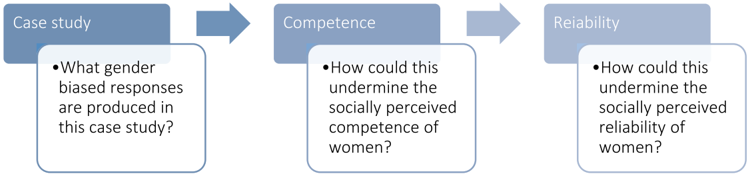
“Further, there is a strong body of existing literature (see: Brescoll 2016; Prime, Carter, and Welbourne 2009; Tremmel and Wahl 2020) that emphasises that men are perceived as more competent and reliable than women in the field of leadership.”
What ChatGPT Tells Us about Gender: A Cautionary Tale about Performativity and Gender Biases in AI
Gross, N. (2023) · Social Sciences · doi:10.3390/socsci12080435 · Cited by 162 · cited 1×
“Additionally, non-binary individuals are frequently depicted as one-dimensional figures focused solely on personal identity issues – or are entirely omitted from representation (Gross 2023).”
Sun, L., Wei, M., Sun, Y., Suh, Y. J., Shen, L., & Yang, S. (2023) · Journal of Computer-Mediated Communication · doi:10.1093/jcmc/zmad045 · Cited by 146
Alvarado, R. (2023) · Science and Engineering Ethics · doi:10.1007/s11948-023-00451-3 · Cited by 137
Generative AI and the politics of visibility
Gillespie, T. (2024) · Big Data & Society · doi:10.1177/20539517241252131 · Cited by 122
Research works printed but not linked: 44
- Adam, A. 1995a. "Artificial Intelligence and Women's Knowledge: What Can Feminist Epistemologies Tell Us?" Women's Studies International Forum 18 (4): 407-415. · doi:10.1016/0277-5395(95)00042-b
- Adam, A. 1995b. "A Feminist Critique of Artificial Intelligence." European Journal of Women's Studies 2 (3), 355-377. https://doi.org/10.1177/135050689500200305. · DOI
- Ashley, W. 2014. "The Angry Black Woman: The Impact of Pejorative Stereotypes on Psychotheraphy with Black Women." Social Work Public Health 29 (1): 27-34. https://doi.org/10.1080/19371918. 2011.619449. · DOI · Paper page
- Bacevic, J. 2021. "Epistemic Injustice and Epistemic Positioning: Towards an Intersectional Political Economy." Current Sociology 71 (6): 1122-1140. https://doi.org/10.1177/00113921211057609. · DOI
- Byskov, M. F. 2021. "What Makes Epistemic Injustice an 'Injustice'." Journal of Social Philosophy 52 (1): 114-131. https://doi.org/10.1111/josp.12348. · DOI · Paper page
- Carpan, C. 2022. "The Adultification of Black Girls as Identity-Prejudicial Credibility Excess." Theory and Moral Practice 25 (5): 793-807. https://doi.org/10.1007/s10677-022-10324-6. · DOI
- Connell, R. 2021. Gender: In World Perspective. Cambridge: Polity Press.
- Criado-Perez, C. 2019. Invisible Women. New York: Abrams Books.
- Currie, G., J. Currie, J. Hewis, and S. Anderson. 2024. "Gender Bias in Generative Artificial Intelligence Text-to-Image Depiction of Medical Students." Health Education Journal 83 (7): 732-746. https:// doi.org/10.1177/00178969241274621. · DOI
- Davis, E. 2016. "Typecasts, Tokens, and Spokespersons: A Case for Credibility Excess as Testimonial Injustice." Hypatia 31 (3): 485-501. https://doi.org/10.1111/hypa.12251. · DOI · Paper page
- Defranza, D., and H. Mishra. 2020. "How Language Shapes Prejudice Against Women: An Examination Across 45 World Languages." Journal of Personality and Social Psychology 119 (1): 7-22. https://doi.org/10.1037/pspa0000188. · DOI · Paper page
- Eagly, A. H., and L. L. Carli. 2007. Through the Labyrinth: The Truth About How Women Become Leaders. New York: Harvard Business School Press.
- Eagly, A., and S. Karau. 2002. "Role Congruity Theory of Prejudice Toward Female Leaders." Psychological Review 109 (3): 573-598. https://doi.org/10.1037/0033-295X.109.3.573. · doi:10.1037/0033-295x.109.3.573 · Paper page
- Europol Innovation Lab. 2022. Facing Reality? Law Enforcement and the Challenge of Deepfakes. Publications Office of the European Union, Luxembourg: European Agency for Law Enforcement Cooperation.
- Fleischmann, A., M. Sierverding, U. Hespenheide, M. Weib, and S. Koch. 2016. "See Feminine -Think Incompetent? The Effects of a Feminine Outfit on the Evaluation of Women's Computer Competence." Computers & Education 95:63-74. https://doi.org/10.1016/j.compedu.2015.12.007. · DOI
- Fricker, M. 2006. "Powerlessness and Social Interpretation." Episteme: A Journal of Social Epistemology 3 (1): 96-108. https://doi.org/10.1353/epi.0.0004. · doi:10.1353/epi.0.0004 · Paper page
- Fürst, M. 2024. "Closing the Conceptual Gap in Epistemic Injustice." The Philosophical Quarterly 74 (1): 235.
- Ghosh, S., and A. Caliskan. 2023. "ChatGPT Perpetuates Gender Bias in Machine Translation and Ignores Non-Gendered Pronouns: Findings Across Bengali and Five Other Low-Resource Languages." In AIES '23: Proceedings of the 2023 AAAI/ACM Conference on AI, Ethics, and Society, 901-912. New York: Association for Computing Machinery. https://arxiv.org/pdf/2305.10510. · DOI · Paper page
- Gutiérrez y Muhs, G., Y. F. Niemann, A. P. Harris, and C. G. González. 2012. Presumed Incompetent: The Intersections of Race and Class for Women in Academia. Boulder: University Press of Colorado.
- hooks, b. 2016. "Black Women Intellectuals." In Breaking Bread, edited by b. hooks, 153. New York: Routledge. · doi:10.4324/9781315437095
- Kang, J.-A., G. Hubbard, and S. Hong. 2019. "Gender and Credibility in Branded Storytelling." Gender in Management 34 (8): 702-714. https://doi.org/10.1108/GM-02-2019-0015. · DOI
- Lamensch, M. 2024. Digital Authoritarianism: The Role of Legislation and Regulation. Waterloo, Canada: Centre for International Governance Innovation.
- Lobel, O. 2023. The Equality Machine: Harnessing Digital Technology for a Brighter, More Inclusive Future. New York: PublicAffairs.
- Locke, L. G., and G. Hodgdon. 2024. "Gender Bias in Visual Generative Artificial Intelligence Systems and the Socialization of AI." AI & Society. http://dx.doi.org/10.1007/s00146-024-02129-1. · DOI
- Medina, J. 2011. "The Relevance of Credibility Excess in a Proportional View of Epistemic Injustice: Differential Epistemic Authority and the Social Imaginary." Social Epistemology 25 (1): 15-35. https://doi.org/10.1080/02691728.2010.534568. · DOI · Paper page
- Newstead, T., B. Eager, and S. Wilson. 2023. "How AI Can Perpetuate -Or Help Mitigate -Gender Bias in Leadership." Organisational Dynamics 52 (4): 100998. https://doi.org/10.1016/j.orgdyn.2023. 100998. · DOI
- O'Connor, S., and H. Liu. 2023. "Gender Bias Perpetuation and Mitigation in AI Technologies: Challenges and Opportunities." AI & SOCIETY 39:2045-2057. https://doi.org/10.1007/s00146- 023-01675-4. · DOI · Paper page
- Oliveira, L. R. 2022. "Hermeneutic Injustices: Practical and Epistemic." In Interpretation und Geltung, edited by A. Mauz and C. Tietz, 107-123. Paderborn: Brill Schoningh. · doi:10.30965/9783657703227_008
- Pettit, B., and J. Hook. 2009. Gendered Tradeoffs: Family, Social Policy, and Economic Inequality in Twenty-One Countries. New York: Russel Sage Foundation.
- Prime, J., N. Carter, and T. Welbourne. 2009. "Women "Take Care," Men "Take Charge": Managers' Stereotypic Perceptions of Women and Men Leaders." The Psychologist-Manager Journal 12 (1): 25-49. https://doi.org/10.1080/10887150802371799. · DOI
- Ratto, M. 2012. "CSE as Epistemic Technologies: Computer Modeling and Disciplinary Difference in the Humanities." In Handbook of Research on Computational Science and Engineering: Theory and Practice, edited by J. Leng and W. Sharrock, 20. Hershey: IGI Global. · DOI
- Rollock, N. 2019. Staying Power, the Career Experiences and Strategies of UK Black Female Professors. London: University and College Union.
- Ryan, M. 2023. "Addressing Workplace Gender Inequality: Using the Evidence to Avoid Common Pitfalls." British Journal of Social Psychology 62 (1): 1-11. https://doi.org/10.1111/bjso.12606. · DOI
- Sczesny, S., S. Spreemann, and D. Stahlberg. 2006. "Masculine = Competent? Physical Appearance and Sex as Sources of Gender-Stereotypic Attributions." European Journal of Psychology 65 (1): 15-23.https://doi.org/10.1024/1421-0185.65.1. · doi:10.1024/1421-0185.65.1
- Shen, Y., J. Webster, Y. Shoda, and I. Fine. 2018. Persistent Underrepresentation of Women's Science in High Profile Journals. bioRxiv 275362. https://doi.org/10.1101/275362. · DOI
- Tabassum, N., and B. Nayak. 2021. "Gender Stereotypes and Their Impact on Women's Career Progressions from a Managerial Perspective." IIM Kozhikode Society & Management Review 10 (2): 192-208. https://doi.org/10.1177/2277975220975513. · DOI · Paper page
- Thomas, M., and M. Veit. 2024. The Impact of AI on LGBTIQ+ People. Brussels: Forbidden Colours.
- Tremmel, M., and I. Wahl. 2020. "Leadership Perceptions, Gender, and Dominant Personality: The Role of Normality Evaluations." Journal of Research in Personality 87:103984. https://doi.org/10. 1016/j.jrp.2020.103984. · DOI
- UNESCO. 2024. Challenging Systematic Prejudices: An Investigation Into Bias Against Women and Girls in Large Language Models. Paris: International Research Centre on Artificial Intelligence.
- Vassel, F.-M., E. Shieh, C. Sugimoto, and T. Monroe-White. 2024. "The Psychosocial Impacts of Generative AI Harms." In Proceedings of the 2024 AAAI Spring Symposium Series 3(1), 440-447. Ithaca: PKP Publishing Services. · DOI
- Vijeyarasa, R. 2023. "Gendered Harms and the Regulation of Artificial Intelligence: A Comparative Assessment of Emerging Legislative Practice." Notre Dame Journal on Emerging Technologies 5 (1): 514-161. https://ssrn.com/abstract=4708877.
- Wang, L. 2020. "The Three Harms of Gendered Technology." Australasian Journal of Information Systems 24: 1-9. https://doi.org/10.3127/ajis.v24i0.2799. · DOI
- Wiener, J., and J. Mowen. 1986. "Source Credibility: On the Independent Effects of Trust and Expertise." Advances in Consumer Research 13 (1): 306-310.
- Young, E., J. Wajcman, and L. Sprejer. 2023. "Mind the Gender Gap: Inequalities in the Emergent Professions of Artificial Intelligence (AI) and Data Science." New Technology, Work and Employment 38 (3): 391-414. https://doi.org/10.1111/ntwe.12278. · DOI
Cited by
What Needs Attention? Prioritizing Drivers of Developers' Trust and Adoption of Generative AI
Choudhuri, R., Trinkenreich, B., Pandita, R., Kalliamvakou, E., Steinmacher, I., Gerosa, M., Sanchez, C., & Sarma, A. (2025) · arXiv · doi:10.48550/arxiv.2505.17418 · Cited by 14
Aydeniz, M. (2026) · Sociology Compass · doi:10.1111/soc4.70230 · Cited by 1
Metadata
- Authors
- Barry, I., & Stephenson, E.
- Affiliations
- Global Institute for Women's Leadership, Australian National University
- Venue
- Australian Feminist Studies
- Publisher
- Informa UK Limited
- Published
- 2025-01-02
- Volume
- 40
- Issue
- 123
- Pages
- 1-21
- ISSN
- 0816-4649
- 1465-3303
- Cited by
- 31
- References
- 15
- Language
- en
About these checks
Registry, retraction, Cites and statistics results are computed, not judged, with one exception: a printed reference that no index lists is read once by a model before it counts as a citation error. Claims are extracted by a model and kept only when their quote appears verbatim in the text; each cited source is then checked, with a model’s help, for whether it says what the claim relies on. Those verdicts can be wrong — read the claim’s quote and the cited source before relying on one.
Statistics and arithmetic are recomputed, not judged.
Confidence bands are shown only for fields calibrated on our annotated test set. None is calibrated yet, so no band is shown.
What counts as a claim ›How we measure confidence ›How we check this ›
Are you an author, or do you see a problem with this page? Request a review
Data sources
Bibliographic data: Semantic Scholar, OpenAlex, Crossref.
Contains information from the Semantic Scholar Academic Graph Datasets, made available under the ODC Attribution License (ODC-BY 1.0).
Semantic Scholar’s data is described in: Kinney, R., et al. (2023). The Semantic Scholar Open Data Platform. arXiv:2301.10140.
