

GABA and l -theanine mixture decreases sleep latency and improves NREM sleep
Open accessThe DOI matches its Crossref record; 46 of the 46 references it cites were found in a registry or an index.
Abstract
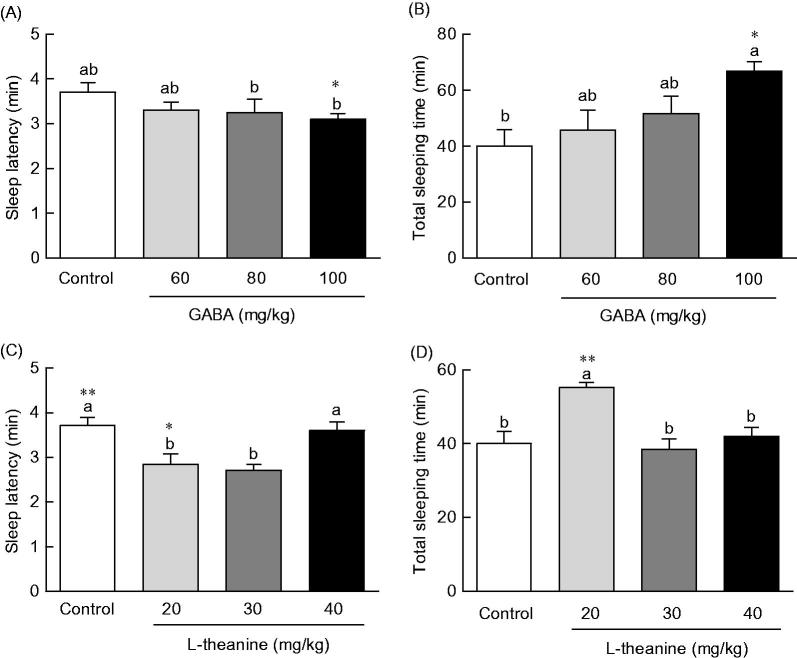
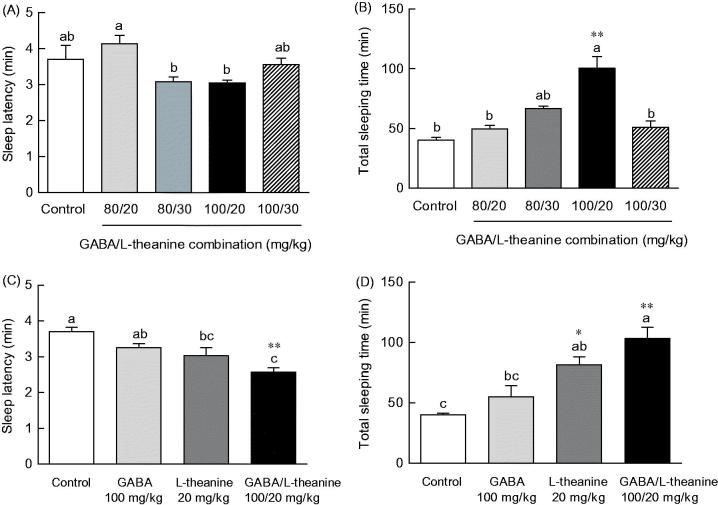
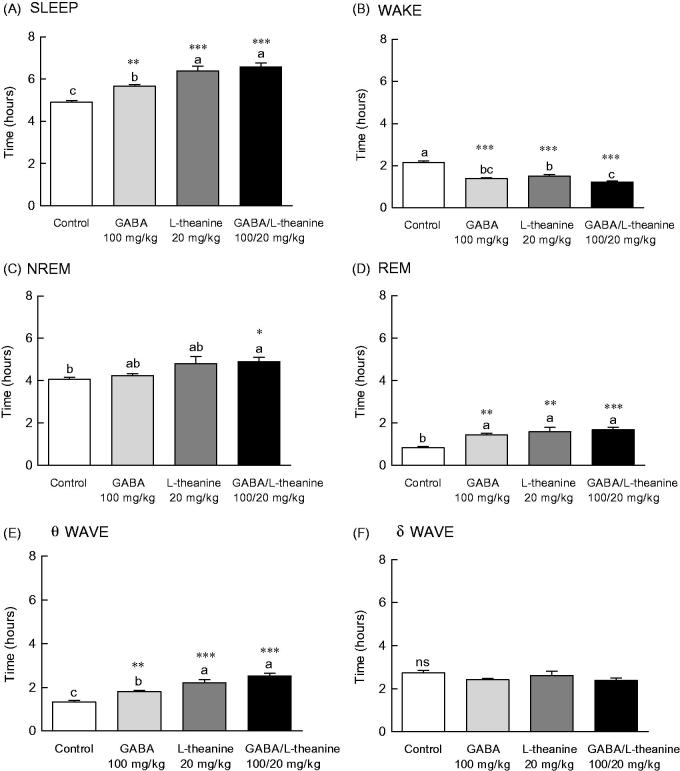
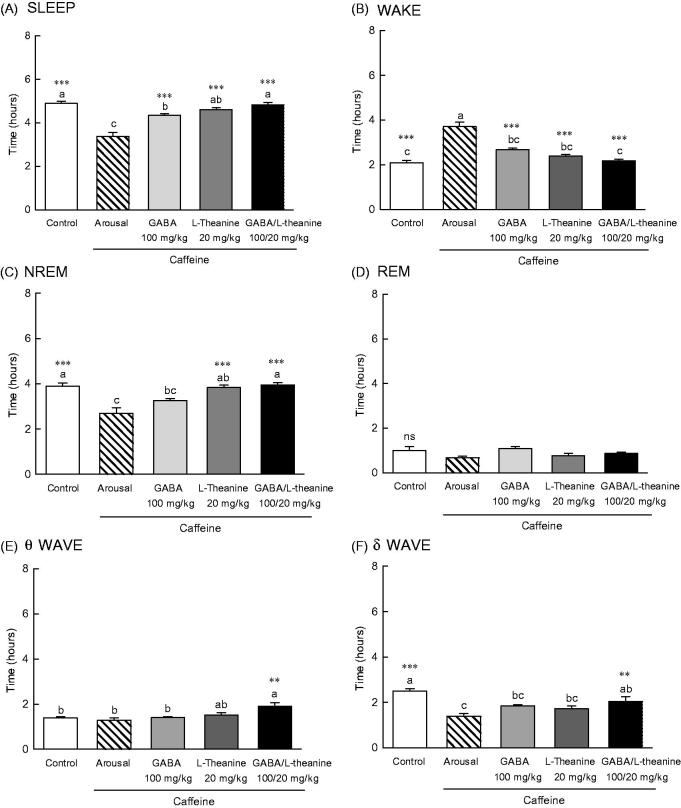
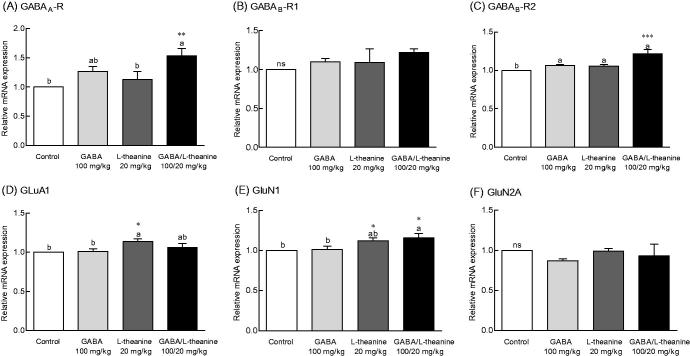
CONTEXT: receptors favours sleep. l-Theanine, a naturally occurring amino acid first discovered in green tea, is a well-known anti-anxiety supplement with proven relaxation benefits. OBJECTIVE: This study investigated the potential synergistic sleep enhancement effect of GABA/l-theanine mixture. MATERIALS AND METHODS: Pentobarbital-induced sleep test was applied to find proper concentration for sleep-promoting effect in ICR mice. Electroencephalogram (EEG) analysis was performed to investigate total sleeping time and sleep quality in normal SD rats and caffeine-induced awareness model. Real-time polymerase chain reaction (RT-PCR) was applied to investigate whether the sleep-promoting mechanism of GABA/l-theanine mixture involved transcriptional processes. RESULTS: GABA/l-theanine mixture (100/20 mg/kg) showed a decrease in sleep latency (20.7 and 14.9%) and an increase in sleep duration (87.3 and 26.8%) compared to GABA or theanine alone. GABA/l-theanine mixture led to a significant increase in rapid eye movement (REM) (99.6%) and non-REM (NREM) (20.6%) compared to controls. The use of GABA/l-theanine mixture rather than GABA or l-theanine alone restored to normal levels sleep time and quality in the arousal animal model. The administration of GABA/l-theanine led to increased expression of GABA and the glutamate GluN1 receptor subunit. CONCLUSIONS: GABA/l-theanine mixture has a positive synergistic effect on sleep quality and duration as compared to the GABA or l-theanine alone. The increase in GABA receptor and GluN1 expression is attributed to the potential neuromodulatory properties of GABA/l-theanine combination, which seems to affect sleep behaviour.
Overview
The claims and statistics of this paper haven’t been checked yet.
Free: it reads the open-access text and checks the first 5 claims that cite a source we can check. Create a free account to check every claim.
Integrity signals
Registry
Cites
Statistics
Figures
Verification
Claims the paper makes
The claims and statistics of this paper haven’t been checked yet.
Free: it reads the open-access text and checks the first 5 claims that cite a source we can check. Create a free account to check every claim.
Claims other papers make about this one
Each is checked against this paper’s own text: does it say what the citing paper says it does?
The source backs part of the claim, not all of it — or backs it for a different population, condition or comparison.
In the citing paper
“In addition, there is evidence that L-theanine may be able to buffer some of the adverse effects that can occur as a result of caffeine consumption, such as sleep disturbance and increases in anxiety (26, 55), consistent with findings reported in pre-clinical studies (56–58).”
From Effects of L-theanine on cognition, mood and sleep: evidence from human trials (2026) · cites this paper as [58]
Experimental — accuracy not yet measuredThe source backs part of the claim, not all of it — or backs it for a different population, condition or comparison.
In the citing paper
“Corroborating such findings, studies employing animal models have found that the administration of L-theanine seems to increase GABA levels in the brain [43,49].”
From Psychotropic effects of L-theanine and its clinical properties: from the management of anxiety and stress to a potential use in schizophrenia (2019) · cites this paper as [43]
Experimental — accuracy not yet measuredIn the citing paper
“In that sense, Kim and colleagues showed that there is a synergistic sleep enhancement effect of orally administered GABA/L-theanine mixture, whose combination has led to decreased sleep latency and improved NREM sleep in mice, when compared to their individual administration [43].”
From Psychotropic effects of L-theanine and its clinical properties: from the management of anxiety and stress to a potential use in schizophrenia (2019) · cites this paper as [43]
Self-check
Percentages, sums and reported differences re-computed from the paper’s own numbers.
The self-check needs the paper’s full text.
Citations
Cites
Macdonald, R. L., & Olsen, R. W. (1994) · Annual Review of Neuroscience · doi:10.1146/annurev.ne.17.030194.003033 · Cited by 1,975 · cited 1×
“The GABAA receptor complex is a chloride ionophore, which consists primarily of GABA, barbiturate, benzodiazepine, steroid and picrotoxin binding sites (MacDonald and Olsen 1994).”
Green tea composition, consumption, and polyphenol chemistry
Graham, H. N. (1992) · Preventive Medicine · doi:10.1016/0091-7435(92)90041-f · Cited by 1,881
Ray, W. J., & Cole, H. W. (1985) · Science · doi:10.1126/science.3992243 · Cited by 1,140 · cited 1×
“Delta and theta occur in the early stages of deep sleep and sleep, respectively (Ray and Cole 1985).”
Influence of aging on peripheral nerve function and regeneration
Verdu, E., Ceballos, D., Vilches, J. J., & Navarro, X. (2000) · Journal of the Peripheral Nervous System · doi:10.1046/j.1529-8027.2000.00026.x · Cited by 855
Circadian misalignment and health
Baron, K. G., & Reid, K. J. (2014) · International Review of Psychiatry · doi:10.3109/09540261.2014.911149 · Cited by 645 · cited 1×
“Sleep deprivation is known to cause serious illnesses such as cardiovascular disease, diabetes, and cancer (Davis and Mirick 2006; Laposky et al. 2008; Baron and Reid 2014).”
Glutamate and GABA systems as targets for novel antidepressant and mood-stabilizing treatments
Krystal, J. H., Sanacora, G., Blumberg, H., Anand, A., Charney, D. S., Marek, G., Epperson, C. N., Goddard, A., & Mason, G. F. (2002) · Molecular Psychiatry · doi:10.1038/sj.mp.4001021 · Cited by 553 · cited 1×
“They are fast-acting, inducing responses within milliseconds and play an important role in physiological brain function and neurological diseases (Krystal et al. 2002).”
Production of gaba (γ - aminobutyric acid) by microorganisms: a review
Dhakal, R., Bajpai, V. K., & Baek, K.-H. (2012) · Brazilian Journal of Microbiology · doi:10.1590/s1517-83822012000400001 · Cited by 545 · cited 2×
“…for biosynthesis and their efficacy as metabolites of plants and microorganisms produced by the decarboxylation of glutamic acid (Coda et al. 2010; Dhakal et al. 2012; Yang et al. 2018) L-Theanine, an amino acid exclusively found in tea leaves, composes only 1–2% (w/w) of the weight of dried tea…”
BackgroundPharmacognostic and pharmacological profile of Humulus lupulus L.
Zanoli, P., & Zavatti, M. (2008) · Journal of Ethnopharmacology · doi:10.1016/j.jep.2008.01.011 · Cited by 540 · cited 1×
“These components act as modulating receptors of the neurotransmitter GABA, which is the main inhibitory neurotransmitter in the CNS, and therefore, one of the main molecules responsible for sleeping behaviour (Zanoli and Zavatti 2008).”
GABA, ?-hydroxybutyric acid, and neurological disease
Ting Wong, C. G., Bottiglieri, T., & Snead, O. C. (2003) · Annals of Neurology · doi:10.1002/ana.10696 · Cited by 488 · cited 1×
“There is an increasing interest in investigating the effect of GABA-mediated inhibitory neurotransmission, in respect to its potential benefit on counteracting sleep disruption caused by various conditions, such as stress, diseases and caffeine intake, etc. (Wong et al. 2003).”
Gottesmann, C. (2002) · Neuroscience · doi:10.1016/s0306-4522(02)00034-9 · Cited by 439 · cited 1×
“The most important receptor, with respect to sleep is the GABAA receptor (Gottesmann 2002).”
Addiction: Part I. Benzodiazepines--side effects, abuse risk and alternatives.
Longo, L. P., & Johnson, B. (2000) · PubMed · Cited by 428
Relaxation and immunity enhancement effects of γ‐Aminobutyric acid (GABA) administration in humans
Abdou, A. M., Higashiguchi, S., Horie, K., Kim, M., Hatta, H., & Yokogoshi, H. (2006) · BioFactors · doi:10.1002/biof.5520260305 · Cited by 407 · cited 2×
“Brain waves can be classified into four types: a (less than 8–13Hz), b (more than 13Hz), h (less than 4–8Hz), and d waves (less than 4Hz) (Abdou et al. 2006).”
PDF Cells Are a GABA-Responsive Wake-Promoting Component of the Drosophila Sleep Circuit
Parisky, K. M., Agosto, J., Pulver, S. R., Shang, Y., Kuklin, E., Hodge, J. J. L., Kang, K., Liu, X., Garrity, P. A., Rosbash, M., et al. (2008) · Neuron · doi:10.1016/j.neuron.2008.10.042 · Cited by 407 · cited 1×
“Parisky et al. (2008) demonstrated that GABAA receptor over expression increases total sleep time, while down-regulation of the receptor decreases sleep duration.”
L-Theanine—a unique amino acid of green tea and its relaxation effect in humans
Juneja, L. (1999) · Trends in Food Science & Technology · doi:10.1016/s0924-2244(99)00044-8 · Cited by 363 · cited 2×
“…al. 2012; Yang et al. 2018) L-Theanine, an amino acid exclusively found in tea leaves, composes only 1–2% (w/w) of the weight of dried tea leaves (Graham 1992) and is chemically or biologically synthesized for use as an active ingredient that induces sedation (Juneja et al. 1999; Yan et al. 2003).”
Sleep and circadian rhythms: key components in the regulation of energy metabolism
Laposky, A. D., Bass, J., Kohsaka, A., & Turek, F. W. (2008) · FEBS Letters · doi:10.1016/j.febslet.2007.06.079 · Cited by 351 · cited 1×
“Sleep deprivation is known to cause serious illnesses such as cardiovascular disease, diabetes, and cancer (Davis and Mirick 2006; Laposky et al. 2008; Baron and Reid 2014).”
Chu, D. C. M., Albin, R. L., Young, A. B., & Penney, J. B. (1990) · Neuroscience · doi:10.1016/0306-4522(90)90144-s · Cited by 351 · cited 1×
“The affinity of GABA to GABAB receptors is lower than that for GABAA receptors (Chu et al. 1990).”
l-theanine reduces psychological and physiological stress responses
Kimura, K., Ozeki, M., Juneja, L. R., & Ohira, H. (2007) · Biological Psychology · doi:10.1016/j.biopsycho.2006.06.006 · Cited by 349 · cited 2×
“modulates neurotransmitter activity (Kakuda 2011) and reduces psychological stress (Kimura et al. 2007) and sleep disturbances (Jang et al.”
Davis, S., & Mirick, D. K. (2006) · Cancer Causes & Control · doi:10.1007/s10552-005-9010-9 · Cited by 302 · cited 1×
“Sleep deprivation is known to cause serious illnesses such as cardiovascular disease, diabetes, and cancer (Davis and Mirick 2006; Laposky et al. 2008; Baron and Reid 2014).”
Coda, R., Rizzello, C. G., & Gobbetti, M. (2010) · International Journal of Food Microbiology · doi:10.1016/j.ijfoodmicro.2009.12.010 · Cited by 246 · cited 2×
“Therefore, GABA is widely used in functional food and pharmaceutical industries, and various researches have been investigated for biosynthesis and their efficacy as metabolites of plants and microorganisms produced by the decarboxylation of glutamic acid (Coda et al. 2010; Dhakal et al. 2012; Yang et al. 2018) L-Thea…”
BackgroundVictorri‐Vigneau, C., Dailly, E., Veyrac, G., & Jolliet, P. (2007) · British Journal of Clinical Pharmacology · doi:10.1111/j.1365-2125.2007.02861.x · Cited by 201 · cited 1×
“Hypnotic drugs, such as benzodiazepine analogues, zolpidem and doxepin, can cause unexpected side effects and can lead to drug resistance and dependence (Longo and Johnson 2000; Victorri-Vigneau et al. 2007; Lichstein et al. 2013).”
Kim, T. I., Lee, Y. K., Park, S. G., Choi, I. S., Ban, J. O., Park, H. K., Nam, S.-Y., Yun, Y. W., Han, S. B., Oh, K. W., et al. (2009) · Free Radical Biology and Medicine · doi:10.1016/j.freeradbiomed.2009.09.008 · Cited by 192 · cited 2×
“There are several reports indicating that L-theanine exerts neuroprotective effects (Kim et al. 2009),”
BackgroundSelf-citationMedicinal plants for insomnia: a review of their pharmacology, efficacy and tolerability
Wheatley, D. (2005) · Journal of Psychopharmacology · doi:10.1177/0269881105053309 · Cited by 177 · cited 1×
“However, herbal remedies have been reported as effective and with a relatively low side effect risk for the treatment of insomnia (Wheatley 2005).”
Valerenic acid potentiates and inhibits GABAA receptors: Molecular mechanism and subunit specificity
Khom, S., Baburin, I., Timin, E., Hohaus, A., Trauner, G., Kopp, B., & Hering, S. (2007) · Neuropharmacology · doi:10.1016/j.neuropharm.2007.04.018 · Cited by 158 · cited 1×
“Hence GABAA receptors are a primary target in the search for natural anxiolytic compounds or sedatives (Khom et al. 2007; Trauner et al. 2008).”
KAKUDA, T., NOZAWA, A., SUGIMOTO, A., & NIINO, H. (2002) · Bioscience, Biotechnology, and Biochemistry · doi:10.1271/bbb.66.2683 · Cited by 131 · cited 1×
“L-Theanine has a similar chemical structure to glutamate and L-theanine has micromolar affinities for kainate, a-amino-3-hydroxy-5-methyl-4isoxazolepropionic acid (AMPA), and N-methyl-D-aspartate (NMDA) glutamate receptors (Kakuda et al. 2002).”
BackgroundNeuroprotective effects of theanine and its preventive effects on cognitive dysfunction
Kakuda, T. (2011) · Pharmacological Research · doi:10.1016/j.phrs.2011.03.010 · Cited by 124 · cited 2×
“…which permits unrestricted use, distribution, and reproduction in any medium, provided the original work is properly cited. modulates neurotransmitter activity (Kakuda 2011) and reduces psychological stress (Kimura et al. 2007) and sleep disturbances (Jang et al. 2012).”
Khan, S., Duan, P., Yao, L., & Hou, H. (2018) · International Journal of Genomics · doi:10.1155/2018/8576890 · Cited by 107 · cited 2×
“c-Glutamylethylamine, also known as L-theanine, and c-aminobutyric acid (GABA) are known agents for improving sleep disturbances (Khan et al. 2018).”
KIMURA, R., & MURATA, T. (1971) · Chemical and Pharmaceutical Bulletin · doi:10.1248/cpb.19.1257 · Cited by 98
Protective effect of γ-glutamylethylamide (theanine) on ischemic delayed neuronal death in gerbils
Kakuda, T., Yanase, H., Utsunomiya, K., Nozawa, A., Unno, T., & Kataoka, K. (2000) · Neuroscience Letters · doi:10.1016/s0304-3940(00)01286-6 · Cited by 91 · cited 1×
“Furthermore, the neuroprotective effect of theanine has been shown to be mediated via glutamate receptors, as theanine acts as a glutamate receptor antagonist (Kakuda et al. 2000).”
Theanine-induced reduction of brain serotonin concentration in rats
YOKOGOSHI, H., MOCHIZUKI, M., & SAITOH, K. (1998) · Bioscience, Biotechnology, and Biochemistry · doi:10.1271/bbb.62.816 · Cited by 83 · cited 1×
“L-Theanine rapidly induces changes in serotonergic and dopaminergic transmission (Yokogoshi et al. 1998).”
Modulation of GABAA Receptors by Valerian Extracts is Related to the Content of Valerenic Acid
Trauner, G., Khom, S., Baburin, I., Benedek, B., Hering, S., & Kopp, B. (2008) · Planta Medica · doi:10.1055/s-2007-993761 · Cited by 81 · cited 1×
“Hence GABAA receptors are a primary target in the search for natural anxiolytic compounds or sedatives (Khom et al. 2007; Trauner et al. 2008).”
Mapping Slow Waves by EEG Topography and Source Localization: Effects of Sleep Deprivation
Bersagliere, A., Pascual-Marqui, R. D., Tarokh, L., & Achermann, P. (2017) · Brain Topography · doi:10.1007/s10548-017-0595-6 · Cited by 65 · cited 1×
“As characterized by EEG recordings, sleep is broadly divided into REM and NREM (Bersagliere et al. 2018).”
In Search of a Safe Natural Sleep Aid
Rao, T. P., Ozeki, M., & Juneja, L. R. (2015) · Journal of the American College of Nutrition · doi:10.1080/07315724.2014.926153 · Cited by 59 · cited 1×
“Rapid neurotransmitter regulation and nerve function, facilitation of relaxation without drowsiness, stress relief (including physical stress), and L-theanine-mediated excitement are known strategies used for the improvement of sleep quality and for exhaustion recovery (Rao et al. 2015).”
Psychological Treatment of Hypnotic-Dependent Insomnia in a Primarily Older Adult Sample
Lichstein, K. L., Nau, S. D., Wilson, N. M., Aguillard, R. N., Lester, K. W., Bush, A. J., & McCrae, C. S. (2013) · Behaviour Research and Therapy · doi:10.1016/j.brat.2013.09.006 · Cited by 54 · cited 1×
“Hypnotic drugs, such as benzodiazepine analogues, zolpidem and doxepin, can cause unexpected side effects and can lead to drug resistance and dependence (Longo and Johnson 2000; Victorri-Vigneau et al. 2007; Lichstein et al. 2013).”
Effect of theanine on norepinephrine and serotonin levels in rat brain
KIMURA, R., & MURATA, T. (1986) · Chemical and Pharmaceutical Bulletin · doi:10.1248/cpb.34.3053 · Cited by 51 · cited 1×
“L-Theanine is known to decrease norepinephrine levels in the rat brain and suppress caffeine-induced serotonin and 5-hydroxyindoleacetic acid increases in rats (Kimura and Murata 1986).”
L-theanine partially counteracts caffeine-induced sleep disturbances in rats
Jang, H.-S., Jung, J. Y., Jang, I.-S., Jang, K.-H., Kim, S.-H., Ha, J.-H., Suk, K., & Lee, M.-G. (2012) · Pharmacology Biochemistry and Behavior · doi:10.1016/j.pbb.2012.01.011 · Cited by 50 · cited 1×
“…which permits unrestricted use, distribution, and reproduction in any medium, provided the original work is properly cited. modulates neurotransmitter activity (Kakuda 2011) and reduces psychological stress (Kimura et al. 2007) and sleep disturbances (Jang et al. 2012).”
Self-citationEffect of taurine and caffeine on sleep–wake activity in Drosophila melanogaster
Lin, F. J., Pierce, M. M., Sehgal, A., Wu, T., Skipper, D. C., & Chabba, R. (2010) · Nature and Science of Sleep · doi:10.2147/nss.s13034 · Cited by 47 · cited 1×
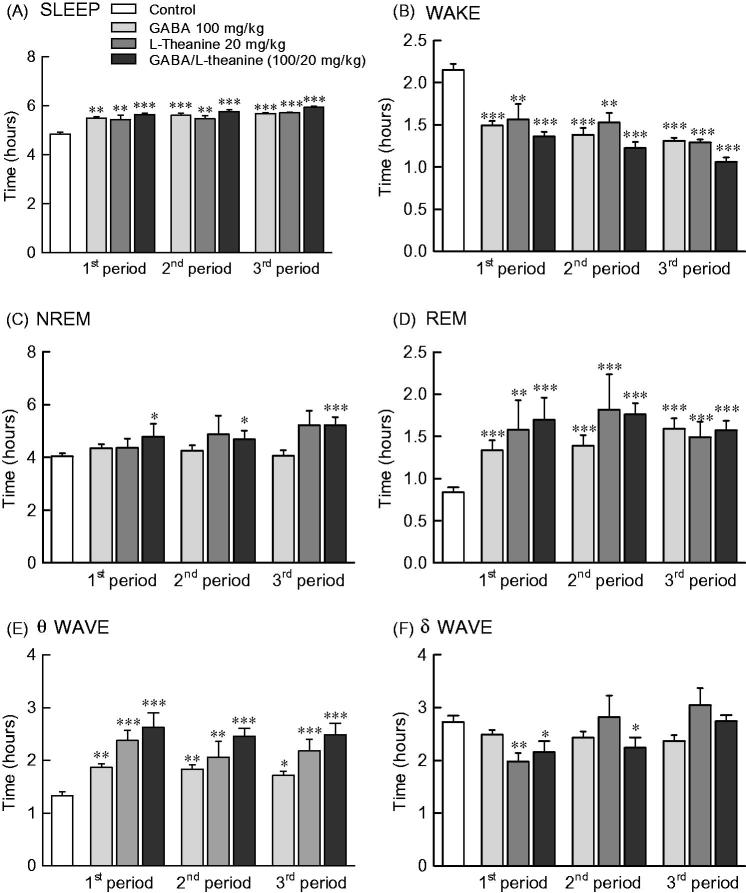
“Lin et al. (2010) reported that the synergistic effects were different depending on the ratio of taurine and caffeine, and it is 0 2 4 6 8 1st period 2nd period 3rd period ∗∗ ∗∗∗ ∗∗∗∗∗ ∗∗ ∗∗∗∗∗∗ ∗∗∗ ∗∗∗ Control GABA 100 mg/kg L-Theanine 20 mg/kg GABA/L-theanine (100/20 mg/kg) T im e (h ou…”
Yang, H., Lee, Y., Han, K., Singh, H., Yoon, M., Park, J.-H., Cho, C., & Cho, S. (2012) · Food Chemistry · doi:10.1016/j.foodchem.2012.07.111 · Cited by 45 · cited 1×
“Pentobarbital-induced sleep was performed according to previously established methods with slight modifications (Yang et al. 2013).”
MethodJeon, S. J., Park, H. J., Gao, Q., Peña, I. J. D., Park, S. J., Lee, H. E., Woo, H., Kim, H. J., Cheong, J. H., Hong, E., et al. (2015) · European Journal of Pharmacology · doi:10.1016/j.ejphar.2015.06.037 · Cited by 32 · cited 1×
“The pentobarbital-induced sleep test and the EEG measurement that have been performed usually in a study of sleep enhancement were used to confirm the synergy effect of GABA/L-theanine mixture in sleep enhancement (Jeon et al. 2015).”
MethodSleep-promoting effects of the GABA/5-HTP mixture in vertebrate models
Hong, K., Park, Y., & Suh, H. J. (2016) · Behavioural Brain Research · doi:10.1016/j.bbr.2016.04.049 · Cited by 29 · cited 2×
“For the EEG recording, EEG screw electrodes were implanted into the cortex, striatum and hippocampus, as previously described (Hong et al. 2016).”
MethodSelf-citationTheanine as a glutamate antagonist at a crayfish neuromuscular junction
Shinozaki, H., & Ishida, M. (1978) · Brain Research · doi:10.1016/0006-8993(78)90967-8 · Cited by 27 · cited 2×
“The structural similarity of L-theanine to the neurotransmitter glutamic acid has prompted researchers to study its potential competition binding on glutamate receptors in the nervous system (Shinozaki and Ishida 1978).”
Yang, X., Ke, C., Zhu, J., Wang, Y., Zeng, W., & Huang, J. (2018) · Applied Microbiology and Biotechnology · doi:10.1007/s00253-018-8881-0 · Cited by 21
Adenosinergic psychopharmaceuticals?
Deckkert, J., & Gleiter, C. H. (1989) · Trends in Pharmacological Sciences · doi:10.1016/0165-6147(89)90203-4 · Cited by 15 · cited 1×
“Caffeine causes a variety of sleep disturbances, including total sleep time reduction, prolonged sleep onset latency and increased arousal in humans and rats through adenosine receptor blockade (Deckert and Gleiter 1989).”
BackgroundSynthesis and characterization of highly pure theanine
Yan, S.-H., Dufour, J. P., & Meurens, M. (2003) · Chaye kexue · Cited by 10
Oh, S., Oh, K., Jo, H.-K., et al. (2010) · Cited by 4
오석흥, 오기완, 조형권, & 은재순 (2010) · 동의생리병리학회지 · Cited by 4
Nathan, P. J., Lu, K., Gray, M., & Oliver, C. (2006) · Journal of Herbal Pharmacotherapy · doi:10.1080/j157v06n02_02 · cited 1×
“Nathan et al. (2006) also reported that L-theanine intake increases serotonin, dopamine and GABA levels in the brain.”
Background
Research works printed but not linked: 1
- 10.1016/0165-6147(89)90203-4 · DOI
Cited by
An Updated Review on Pharmaceutical Properties of Gamma-Aminobutyric Acid
Ngo, D.-H., & Vo, T. S. (2019) · Molecules · doi:10.3390/molecules24152678 · Cited by 403
“(Ansan, Korea), respectively Gaba/L-theanine mixture (100/20 mg/kg)/day, mice and rat 9 days Decreasing sleep latency and increasing sleep duration [22]”
BackgroundInfluentialMechanisms Underlying the Anti-Depressive Effects of Regular Tea Consumption
Rothenberg, D. O., & Zhang, L. (2019) · Nutrients · doi:10.3390/nu11061361 · Cited by 149
“This finding corroborates with other research reporting the ability of L-theanine to improve sleep duration and sleep quality, particularly when ingested together with GABA, an amino acid found in high quantities in teas processed under certain conditions [67,68].”
ResultUnited States Pharmacopeia (USP) Safety Review of Gamma-Aminobutyric Acid (GABA)
Oketch-Rabah, H. A., Madden, E. F., Roe, A. L., & Betz, J. M. (2021) · Nutrients · doi:10.3390/nu13082742 · Cited by 140
“The authors concluded that GABA and L-theanine had a synergistic effect on the sleep behavior of mice [118].”
BackgroundLi, M.-Y., Liu, H.-Y., Wu, D.-T., Kenaan, A., Geng, F., Li, H.-B., Gunaratne, A., Li, H., & Gan, R.-Y. (2022) · Frontiers in Nutrition · doi:10.3389/fnut.2022.853846 · Cited by 128
“In addition, since L-theanine was shown to have a relaxing effect and gamma-aminobutyric acid (GABA) was an important inhibitory neurotransmitter, the mixture of L-theanine and GABA had a positive synergistic effect on sleep behavior, including sleep quality and duration in caffeineinduced awake rats, and the mechanis…”
BackgroundWang, M., Yang, J., Li, J., Zhou, X., Xiao, Y., Liao, Y., Tang, J., Dong, F., & Zeng, L. (2022) · Food Research International · doi:10.1016/j.foodres.2022.111882 · Cited by 99
Metadata
- Authors
- Kim, S., Jo, K., Hong, K.-B., Han, S. H., & Suh, H. J.
- Affiliations
- Korea University (KR)
- Southern Illinois University Edwardsville (US)
- Department of Public Health Sciences, Graduate School
- Corresponding author
- Suh, Hyung Joo
- Venue
- Pharmaceutical Biology
- Publisher
- Informa UK Limited
- Published
- 2019-01-01
- Volume
- 57
- Issue
- 1
- Pages
- 64-72
- ISSN
- 0925-1618 (ISSN-L)
- 1388-0209
- 1744-5116
- PMC
- PMC6366437
- OpenAlex
- W2913532466
- Cited by
- 163
- References
- 45
- Citations by year
- 2026: 27 · 2025: 29 · 2024: 35 · 2023: 20 · 2022: 16 · 2021: 20 · 2020: 11 · 2019: 5
- FWCI
- 7.56
- Type
- journal article
- Language
- en
- Open access
- gold
- doi.org
- Licence
- cc-by
- doi.org/10.1080/policies-text-data-mining (tdm)
- Locations
- Pharmaceutical Biology (publishedVersion, cc-by)
- Europe PMC (PubMed Central) (publishedVersion, cc-by)
- PubMed Central (publishedVersion, cc-by)
- PubMed (publishedVersion)
- DOAJ (DOAJ: Directory of Open Access Journals) (submittedVersion, cc-by-sa)
- Funders
- Ministry of Trade, Industry and Energy
- Korea Institute for Advancement of Technology
- Topics
- Life Sciences › Neuroscience › Cognitive Neuroscience › Sleep and Wakefulness Research
- Social Sciences › Psychology › Experimental and Cognitive Psychology › Sleep and related disorders
- Health Sciences › Medicine › Complementary and alternative medicine › Medicinal Plant Extracts Effects
- Keywords
- GABA, theanine, sleep latency, NREM sleep, REM sleep, sleep quality, sleep duration, GABA receptors, GluN1 subunit, glutamate receptors, pentobarbital-induced sleep, neuromodulation
- MeSH terms
- Sleep Latency, Sleep, Slow-Wave, Animals, Drug Synergism, Drug Therapy, Combination, gamma-Aminobutyric Acid, Glutamates, Mice, Inbred ICR, Random Allocation, Rats, Sprague-Dawley, Receptors, Glutamate, Mice, Rats
About these checks
Registry, retraction, Cites and statistics results are computed, not judged, with one exception: a printed reference that no index lists is read once by a model before it counts as a citation error. Claims are extracted by a model and kept only when their quote appears verbatim in the text; each cited source is then checked, with a model’s help, for whether it says what the claim relies on. Those verdicts can be wrong — read the claim’s quote and the cited source before relying on one.
Statistics and arithmetic are recomputed, not judged.
Confidence bands are shown only for fields calibrated on our annotated test set. None is calibrated yet, so no band is shown.
What counts as a claim ›How we measure confidence ›How we check this ›
Are you an author, or do you see a problem with this page? Request a review
Data sources
Bibliographic data: Semantic Scholar, OpenAlex, Crossref.
Contains information from the Semantic Scholar Academic Graph Datasets, made available under the ODC Attribution License (ODC-BY 1.0).
Semantic Scholar’s data is described in: Kinney, R., et al. (2023). The Semantic Scholar Open Data Platform. arXiv:2301.10140.
