

Acute effects of commercial energy drink consumption on exercise performance and cardiovascular safety: a randomized, double-blind, placebo-controlled, crossover trial
Open accessThe DOI matches its Crossref record; 55 of the 56 references it cites were found in a registry or an index; 13 of the 38 sources its claims cite were checked for support.
Abstract
The aim of this study was to examine the acute effects of a non-caloric energy drink (C4E) compared to a traditional sugar-containing energy drink (MED) and non-caloric placebo (PLA) on exercise performance and cardiovascular safety. Thirty healthy, physically active males (25 ± 4 y) completed three experimental visits under semi-fasted conditions (5–10 h) and in randomized order, during which they consumed C4E, MED, or PLA matched for volume, appearance, taste, and mouthfeel. One hour after drink consumption, participants completed a maximal, graded exercise test (GXT) with measurement of pulmonary gases, an isometric leg extension fatigue test (ISOFTG), and had their cardiac electrical activity (ECG), leg blood flow (LBF), and blood pressure (BP) measured throughout the visit. Neither MED nor C4E had an ergogenic effect on maximal oxygen consumption, time to exhaustion, or peak power during the GXT (p > 0.05). Compared to PLA, MED reduced fat oxidation (respiratory exchange ratio (RER) +0.030 ± 0.01; p = 0.026) during the GXT and did not influence ISOFTG performance. Compared to PLA, C4E did not alter RER (p = 0.94) and improved impulse during the ISOFTG (+0.658 ± 0.25 V·s; p = 0.032). Relative to MED, C4E did not significantly improve gas exchange threshold (p = 0.05–0.07). Both MED and C4E increased systolic BP at rest (+7.1 ± 1.2 mmHg; p < 0.001 and + 5.7 ± 1.0 mmHg; p < 0.001, respectively), C4E increased SBP post-GXT (+13.3 ± 3.8 mmHg; p < 0.001), and MED increased SBP during recovery (+3.2 ± 1.1 mmHg; p < 0.001). Neither MED nor C4E influenced ECG measures (p ≥ 0.08) or LBF (p = 0.37) compared to PLA. C4E may be more efficacious for improving performance in resistance-type tasks without altering fat oxidation under semi-fasted conditions during fatiguing exercise bouts, but promotes similar changes in BP and HR to MED.
Overview
CoChat Summary
TL;DR
In a randomized, double-blind, placebo-controlled crossover trial in 30 healthy, physically active young adult men, acute sugar-free C4 Energy™ (C4E) improved impulse during a fatiguing isometric leg-extension task versus placebo, while traditional high-sugar Monster Energy™ (MED) increased exercise RER and lowered maximal fat oxidation without improving maximal exercise performance. Both energy drinks raised resting and some post-exercise blood pressure/heart-rate measures, but neither altered QTc interval versus placebo.
Key findings
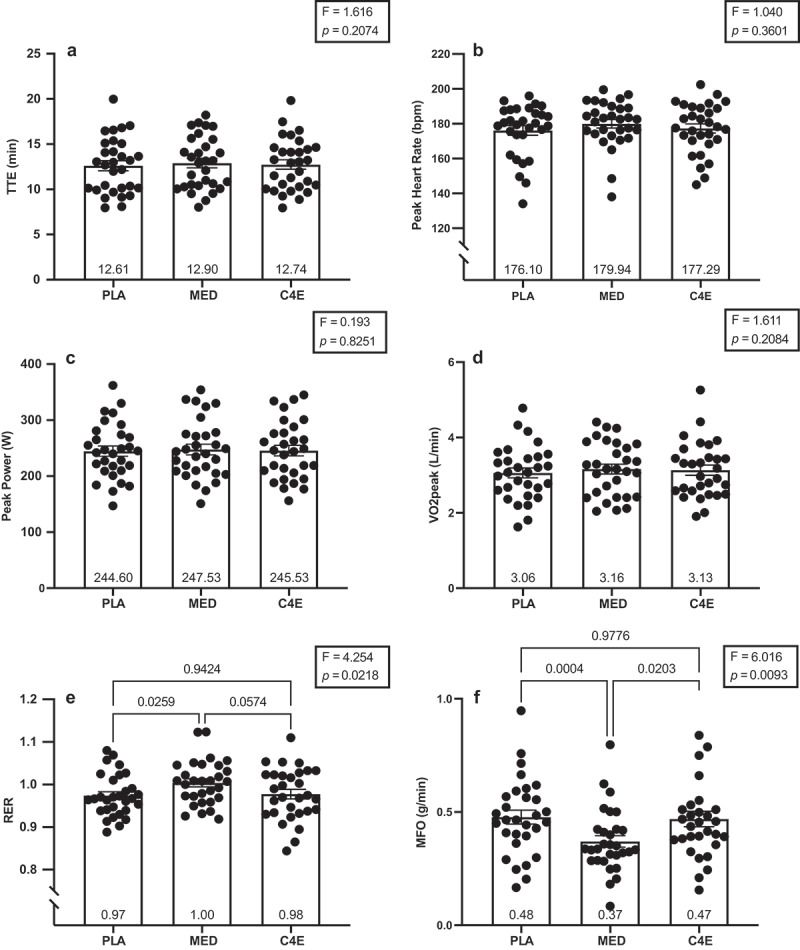
- Maximal graded exercise outcomes did not differ among C4E, MED, and placebo for V̇O₂peak (p = 0.21), time to exhaustion (p = 0.21), peak heart rate (p = 0.36), or peak power (p = 0.83).
- MED increased average RER versus placebo (+0.030 ± 0.01; p = 0.026) and lowered maximal fat oxidation versus both placebo (−0.108 ± 0.02 g/min; p < 0.001) and C4E (−0.099 ± 0.04 g/min; p = 0.020); C4E did not differ from placebo for RER (+0.004 ± 0.01; p = 0.94).
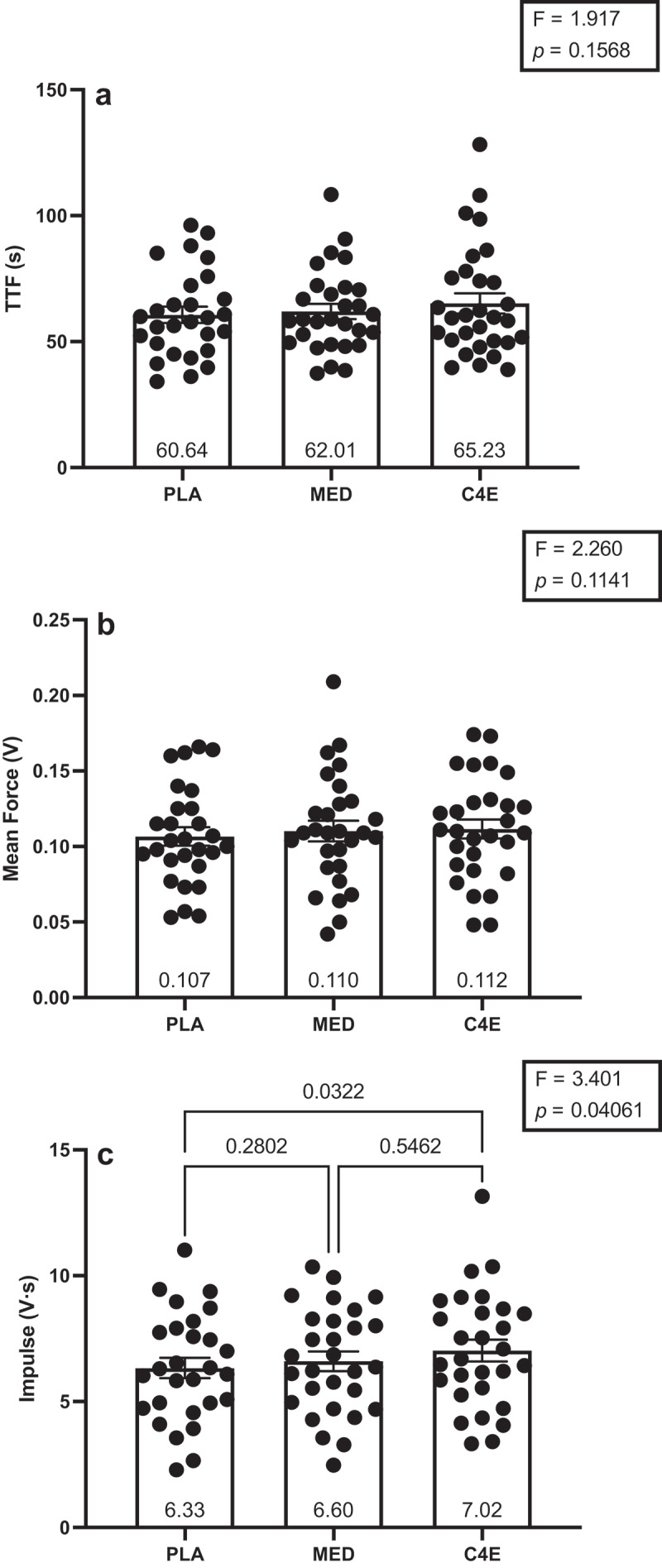
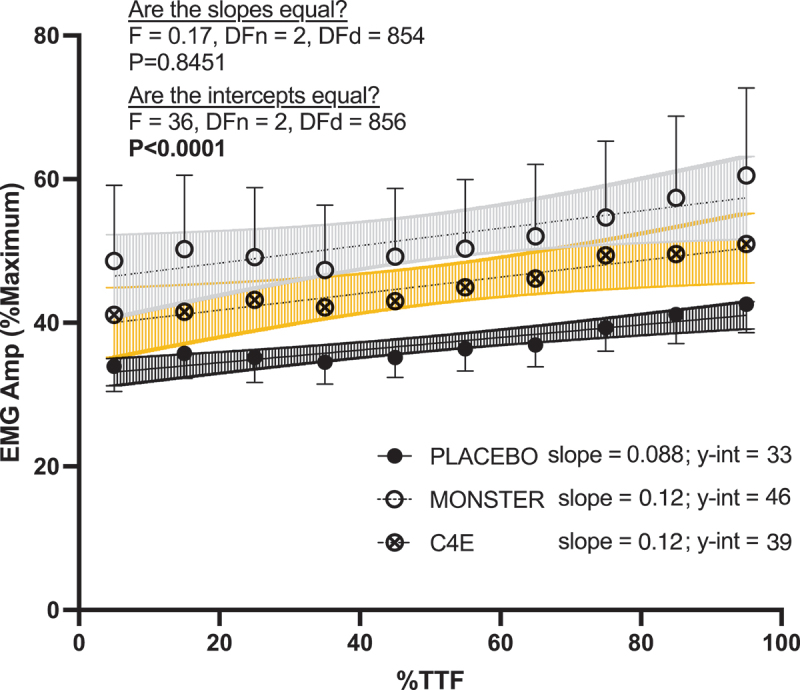
- During the isometric fatigue test, impulse was greater for C4E than placebo (+0.658 ± 0.25 V·s; p = 0.032), while time to fatigue (p = 0.16) and mean force (p = 0.11) did not differ among conditions; EMG amplitude was greater in C4E (39 ± 5%) and MED (46 ± 6%) than placebo (33 ± 2%) independent of time.
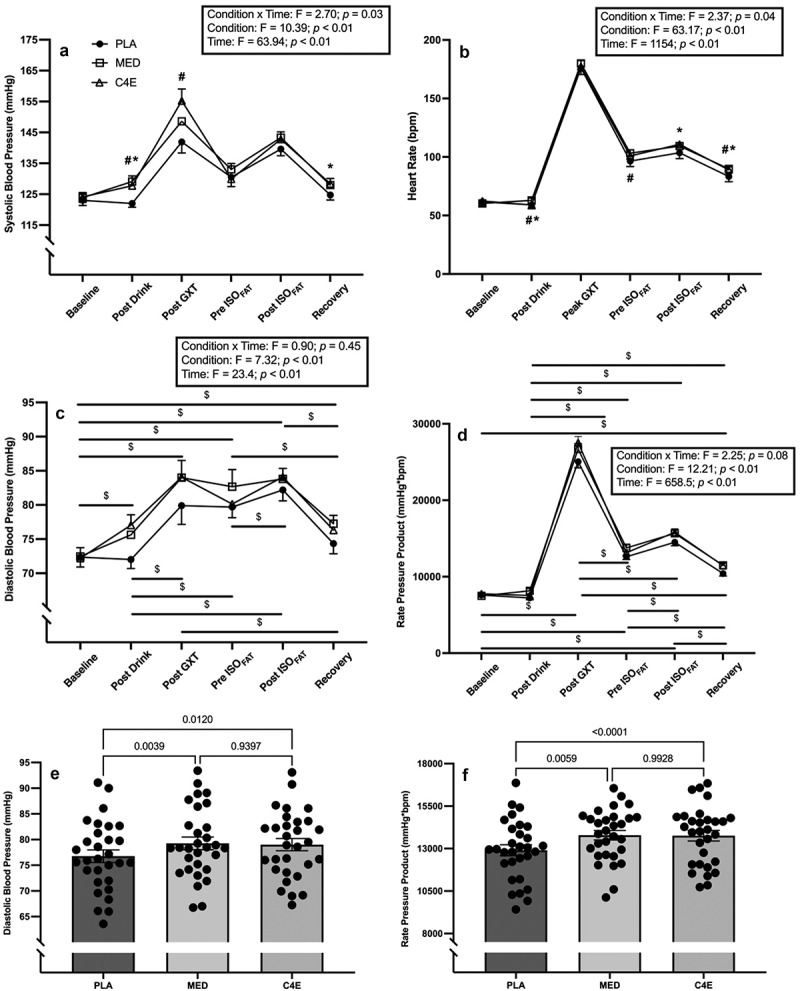
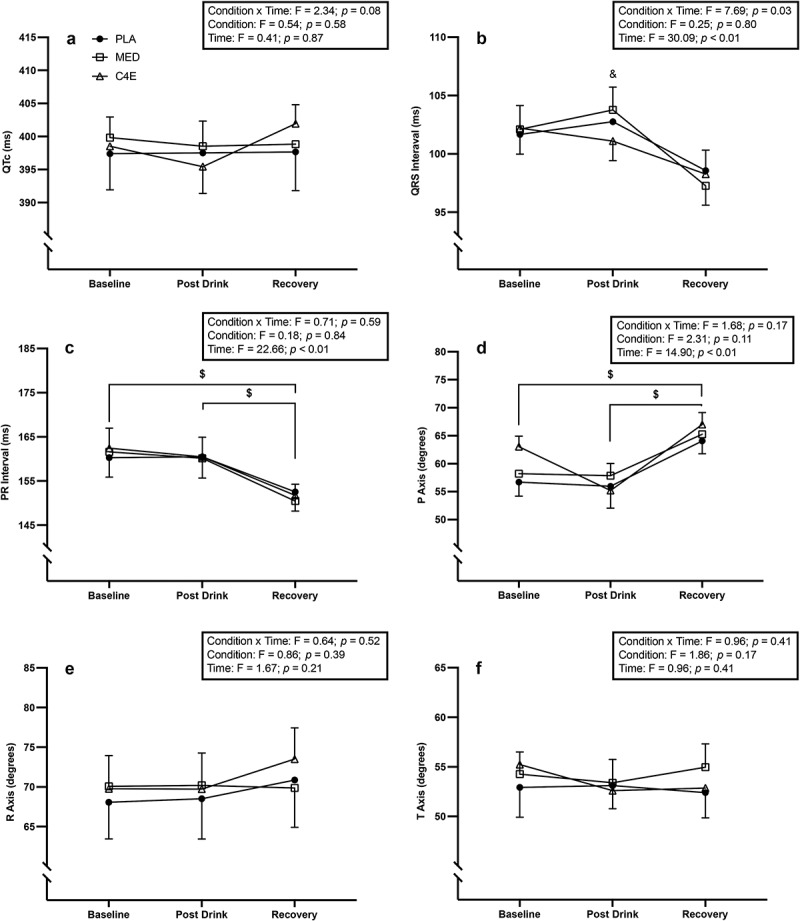
- Both drinks raised cardiovascular measures: post-drink SBP was greater for MED (+7.1 ± 1.2 mmHg; p < 0.001) and C4E (+5.7 ± 1.0 mmHg; p < 0.001) versus placebo; DBP was higher for MED (+2.50 ± 0.71 mmHg; p = 0.004) and C4E (+2.24 ± 0.73 mmHg; p = 0.012) versus placebo; RPP was higher for MED (+882.9 ± 262.1 mmHg·bpm; p = 0.006) and C4E (+857.0 ± 159.6 mmHg·bpm; p < 0.0001) versus placebo. QTc did not differ among conditions (all p ≥ 0.08), though QRS duration was longer in MED than C4E post-drink (+2.67 ± 1.06 ms; p = 0.03).
Methods
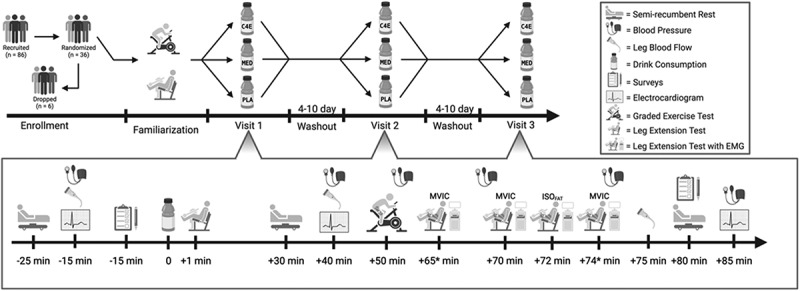
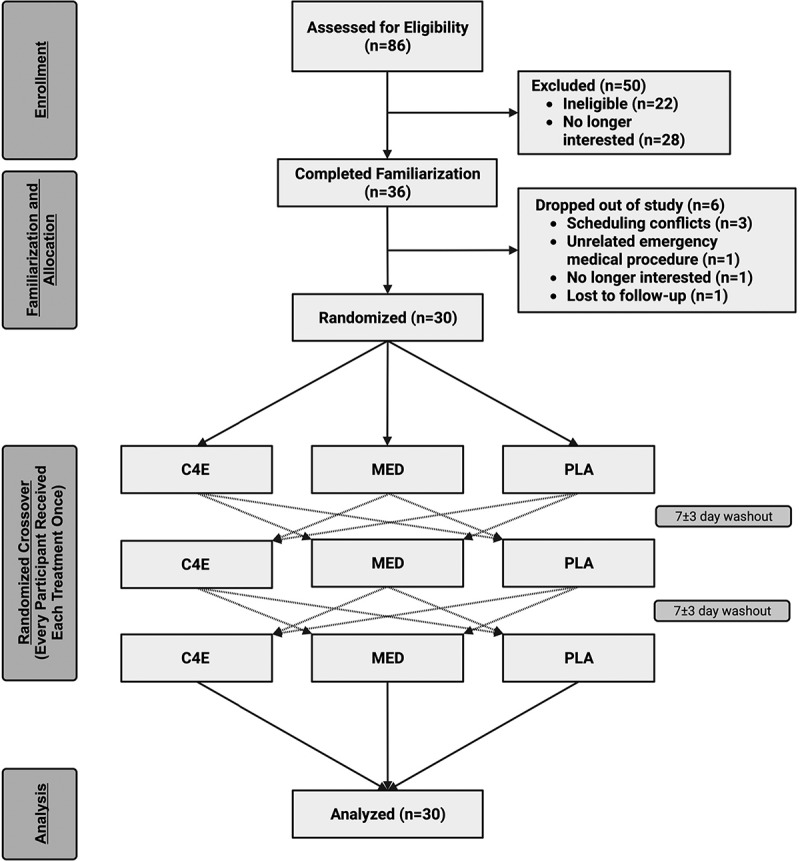
- Randomized, double-blind, placebo-controlled, crossover design: 30 healthy, physically active young adult males completed three identical 2.5-hour visits separated by 7 ± 3 days, consuming 16 fl oz of C4E, MED, or placebo; participants abstained from exercise, caffeine, and alcohol for 24 h and arrived after a 5–10 h fast.
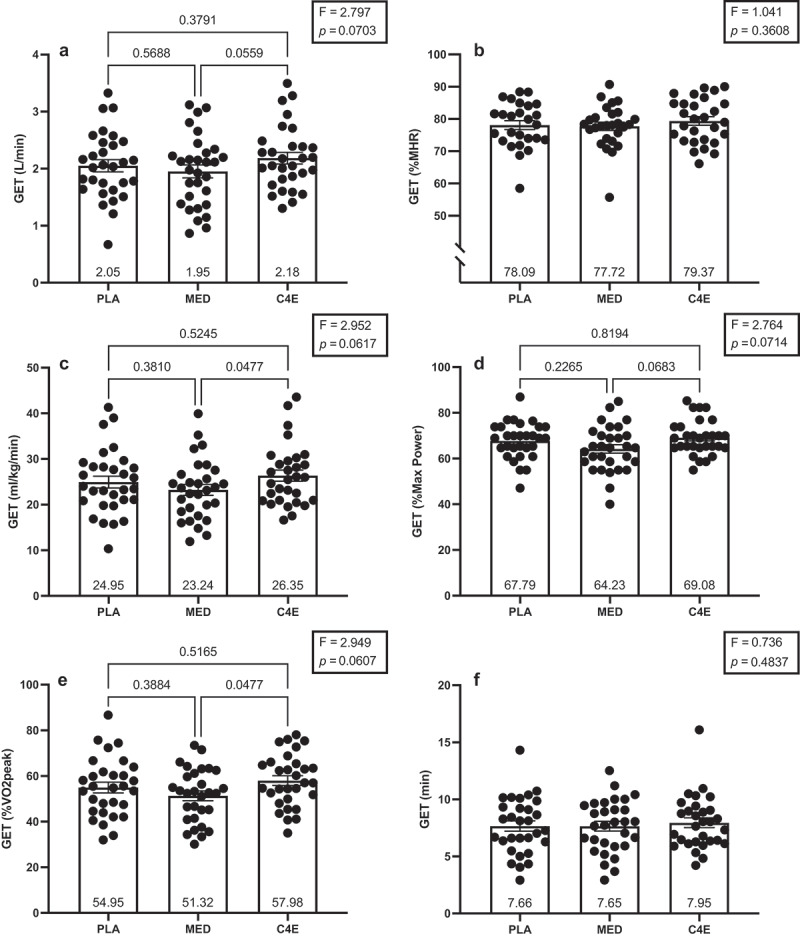
- Outcomes included graded maximal cycle exercise to volitional exhaustion with gas exchange for V̇O₂peak, RER, maximal fat oxidation, and GET; maximal voluntary isometric contractions and an isometric fatigue test at 40% MVF with EMG; leg blood flow by duplex ultrasound; blood pressure, heart rate, and rate-pressure product; 12-lead ECG for QTc and other intervals; mood (POMS-SF), session RPE, adverse events, and blinding efficacy.
- Analyses used one-way repeated-measures ANOVAs or repeated-measures mixed-effects models where data were missing, with Greenhouse–Geisser correction when sphericity was violated; significance was set at p ≤ 0.05, and data are reported as mean difference ± SE unless noted.
Limitations
- The paper states that the study included men alone, so results are not generalizable to women; this was due to evidence that caffeine metabolism is affected by menstrual cycle phase, and controlling for cycle phase in a crossover design would have required prolonged washout periods and different relative ingredient dosing for men versus women.
- The paper states that several primary C4E ingredients (e.g., L-citrulline, beta-alanine) exert greatest effects with short- to longer-term supplementation, so acute findings may not reflect habitual use; chronic cardiovascular and cardiometabolic effects of energy drink consumption remain unclear.
- Evident from the text: the sample was small (n = 30) and limited to young, physically active men under semi-fasted conditions; technical issues caused missing data for 4 isometric fatigue tests, 1 MVIC test, and 3 blood pressure tests; blinding was imperfect, with participants correctly identifying placebo, MED, and C4E 67%, 47%, and 50% of the time, respectively.
Model-written summary. Check it against the paper before relying on it.
Integrity signals
Registry
Cites
Statistics
Figures
Verification
Claims the paper makes
12 Valid · 0 Not valid · 11 Not checked · 85 Own results and interpretations
The cited sources support only part of this claim — read each source’s verdict below.
In the paper
“Prolongation of the QTc interval is an important safety concern because small perturbations can trigger malignant arrhythmias [22].”
- Also stated in: § Introduction · plain
“Prolongation of the QTc interval is an important safety concern because small perturbations can trigger malignant arrhythmias [ 22 ].”
§ Acute effects of commercial energy drink consumption on exercise performance and cardiovascular safety: a randomized, double-blind, placebo-controlled, crossover trial > Introduction
What the sources say
- Partly supportedcites [22] Monitillo, F, Leone, M, Rizzo, C, et al. Ventricular repolarization measures for arrhythmic risk stratification. World J Cardiol. 2016 Jan 26; 8(1): 57– 73. doi: 10.4330/wjc.v8.i1.57 26839657 PMC4728107 sourceExperimental — accuracy not yet measured
The Acquired long QT syndrome section says drug-induced QTc prolongation increases the risk of torsade de pointes and other ventricular arrhythmias, supporting the safety concern. The Clinical implications section specifically describes *marked* QT prolongation as an established proarrhythmic risk factor; the paper does not establish that small perturbations can trigger malignant arrhythmias. (LLM, conf=0.84)
plainstates a cause- Asserted: passes — The authors put it forward as true.
- Checkable: passes — It can be checked against evidence.
- Load-bearing: passes — The paper’s conclusions depend on it.
- Based: passes — The paper gives a reason why it holds.
- Also stated in: § Introduction · plain
The sources with a verdict support this claim; the rest weren’t checked yet, have no full text we could read, or their verdicts aren’t rated yet.
In the paper
“Multiple studies have now indicated that consumption of traditional caffeine-based energy drinks may cause prolongation of the QTc interval [ 20 , 21 ]”
What the sources say
- Supportedcites [20] Shah, SA, Szeto, AH, Farewell, R, et al. Impact of high volume energy drink consumption on electrocardiographic and blood pressure parameters: a randomized trial. J Am Heart Assoc. 2019 Jun 4; 8(11): e011318. doi: 10.1161/JAHA.118.011318 31137991 PMC6585360 source
The Discussion reports that acute consumption of 32 oz of a caffeinated energy drink significantly prolonged the QTc interval compared with placebo. The Conclusions likewise state that caffeinated energy drinks prolong QTc after acute exposure, supporting the citing sentence’s cautious wording. (LLM, conf=0.94)
- Not checked — no full text of the sourcecites [21] Basrai, M, Schweinlin, A, Menzel, J, et al. Energy drinks induce acute cardiovascular and metabolic changes pointing to potential risks for young adults: a randomized controlled trial. J Nutr. 2019 Mar 1; 149(3): 441– 450. doi: 10.1093/jn/nxy303 30805607 source
hedgedstates a possible cause- Asserted: passes — The authors put it forward as true.
- Checkable: passes — It can be checked against evidence.
- Load-bearing: passes — The paper’s conclusions depend on it.
- Based: passes — The paper gives a reason why it holds.
- Supported
The sources with a verdict support this claim; the rest weren’t checked yet, have no full text we could read, or their verdicts aren’t rated yet.
In the paper
“Further, traditional caffeine-based energy drink consumption has been consistently shown to cause elevations in resting systolic and diastolic blood pressure (SBP and DBP) [ 20 , 21 , 23 , 24 ]”
What the sources say
- Supportedcites [20] Shah, SA, Szeto, AH, Farewell, R, et al. Impact of high volume energy drink consumption on electrocardiographic and blood pressure parameters: a randomized trial. J Am Heart Assoc. 2019 Jun 4; 8(11): e011318. doi: 10.1161/JAHA.118.011318 31137991 PMC6585360 source
The Methods describe seated blood-pressure measurements after an eight-minute rest. The Discussion reports that caffeinated energy drinks raised SBP by about 5 mm Hg and DBP by about 4 mm Hg relative to placebo, and notes a similar finding in a prior meta-analysis. These findings support the attributed claim for acute consumption. (LLM, conf=0.92)
- Not checked — no full text of the sourcecites [21] Basrai, M, Schweinlin, A, Menzel, J, et al. Energy drinks induce acute cardiovascular and metabolic changes pointing to potential risks for young adults: a randomized controlled trial. J Nutr. 2019 Mar 1; 149(3): 441– 450. doi: 10.1093/jn/nxy303 30805607 source
- Not checked — no full text of the sourcecites [23] Gray, B, Ingles, J, Medi, C, et al. Cardiovascular effects of energy drinks in familial long QT syndrome: a randomized cross-over study. Int J Cardiol. 2017 Mar 15; 231: 150– 154. doi: 10.1016/j.ijcard.2016.12.019 28189188 source
- Not checked — no full text of the sourcecites [24] Garcia, A, Romero, C, Arroyave, C, et al. Acute effects of energy drinks in medical students. Eur J Nutr. 2017 Sep; 56(6): 2081– 2091. 27312565 source
boostedstates a cause- Asserted: passes — The authors put it forward as true.
- Checkable: passes — It can be checked against evidence.
- Load-bearing: passes — The paper’s conclusions depend on it.
- Based: passes — The paper gives a reason why it holds.
- Supported
The cited sources support only part of this claim — read each source’s verdict below.
In the paper
“Caffeine alone has also been shown to interfere with post-exercise autonomic recovery via increased sympathetic activity [ 25 ]”
What the sources say
- Partly supportedcites [25] Bunsawat, K, White, DW, Kappus, RM, et al. Caffeine delays autonomic recovery following acute exercise. Eur J Prev Cardiol. 2015 Nov; 22(11): 1473– 9. 25297344 sourceExperimental — accuracy not yet measured
The Abstract reports disrupted post-exercise autonomic recovery with caffeine and attributes it to increased sympathetic nerve activity. The Limitations section qualifies that mechanism: sympathetic nerve activity was not measured, and its increase in this study is speculative. Thus the recovery effect is supported, but the claim presents the proposed mechanism as demonstrated. (LLM, conf=0.86)
plainstates a cause- Asserted: passes — The authors put it forward as true.
- Checkable: passes — It can be checked against evidence.
- Load-bearing: passes — The paper’s conclusions depend on it.
- Based: passes — The paper gives a reason why it holds.
- Partly supported
A result the paper reports from its own data — it cites no other source for it, so there is none to check. The quote shows it is in the paper.
In the paper
“There was also no difference in session RPE observed among conditions ( p = 0.09).”
plain- Asserted: passes — The authors put it forward as true.
- Checkable: passes — It can be checked against evidence.
- Load-bearing: unclear — It is unclear whether the paper’s conclusions depend on it.
- Based: passes — The paper gives a reason why it holds.
30 more claims
Create a free account to see all 108 claims and every source verdict.
- Probably not a substantial claim. 33
- It may state two separate claims as one. 49
Statistics recomputed
Every reported test result, recomputed from its test statistic and degrees of freedom. A result shows as not adding up only once an independent check has confirmed it.
- ConsistentF(2, 58) = 4.25reported p = .019 · recomputed p = .019
“F (2, 58) = 4.25, p = .019”
- ConsistentF(1.499, 43.48) = 6.02reported p = .009 · recomputed p = .009
“F (1.499, 43.48) = 6.02, p = .009”
- ConsistentF(2, 54) = 3.4reported p = .041 · recomputed p = .041
“F (2, 54) = 3.4, p = .041”
- ConsistentF(3, 87) = 23.5reported p < .0001 · recomputed p < .001
“F (3, 87) = 23.5, p < .0001”
- ConsistentF(1.908, 55.34) = 19.22reported p < .0001 · recomputed p < .001
“F (1.908, 55.34) = 19.22, p < .0001”
13 more recomputed tests
Create a free account to see every test the Stats check recomputed.
Self-check
Percentages, sums and reported differences re-computed from the paper’s own numbers.
Each contradiction between two passages listed here was confirmed by an independent check.
Rated minor: it would not touch a result — a value no result rests on, a p-value that stays on the same side of the significance level, or a conflict that is clerical, resolved elsewhere in the paper, or outside its own findings.
In the paper
§ Acute effects of commercial energy drink consumption on exercise performance and cardiovascular safety: a randomized, double-blind, placebo-controlled, crossover trial > Discussion
“Finally, both C4E and MED caused resting SBP, DBP, and HR to increase”
§ Acute effects of commercial energy drink consumption on exercise performance and cardiovascular safety: a randomized, double-blind, placebo-controlled, crossover trial > Results > Blood pressure and heart rate
“post-drink HR was significantly higher in the MED versus both the PLA (+3.9 ± 1.5 bpm; p = 0.035) and the C4E (+4.0 ± 1.2 bpm; p = 0.010) conditions.”
Rated minor: it would not touch a result — a value no result rests on, a p-value that stays on the same side of the significance level, or a conflict that is clerical, resolved elsewhere in the paper, or outside its own findings.
In the paper
“the difference in HR between MED and PLA was not significant (+5.8 ± 2.4 bpm; p = 0.05)”
“the significance was set at p ≤ 0.05”
Citations
Cites
A new method for detecting anaerobic threshold by gas exchange
Beaver, W. L., Wasserman, K., & Whipp, B. J. (1986) · Journal of Applied Physiology · doi:10.1152/jappl.1986.60.6.2020 · Cited by 4,103 · cited 1×
“…addition, the gas exchange threshold (GET) was determined using the parametric global optimization method that determined the GET as the average threshold using the excess CO 2 [30] and V-slope [31] methods to enhance optimize GET determination and subsequently the validity and reliability [32,33].”
MethodMeasurement of Blood Pressure in Humans: A Scientific Statement From the American Heart Association
Muntner, P., Shimbo, D., Carey, R. M., Charleston, J. B., Gaillard, T., Misra, S., Myers, M. G., Ogedegbe, G., Schwartz, J. E., Townsend, R. R., et al. (2019) · Hypertension · doi:10.1161/hyp.0000000000000087 · Cited by 1,512 · cited 1×
“Wherever possible, blood pressure was collected in accordance with the American Heart Association guidelines [37].”
MethodBalance of carbohydrate and lipid utilization during exercise: the "crossover" concept
Brooks, G. A., & Mercier, J. (1994) · Journal of Applied Physiology · doi:10.1152/jappl.1994.76.6.2253 · Cited by 862 · cited 1×
“However, as the exercise intensity increases, the contribution from lipids decreases while the contributions from carbohydrate increase [44].”
BackgroundHaddad, M., Stylianides, G., Djaoui, L., Dellal, A., & Chamari, K. (2017) · Frontiers in Neuroscience · doi:10.3389/fnins.2017.00612 · Cited by 530 · cited 1×
“Specifically, following each visit, participants were asked to report how hard they felt each visit was on a 0–10 scale, with 0 representing rest and 10 representing maximal effort [39].”
BackgroundValidity and reliability of combining three methods to determine ventilatory threshold
GASKILL, S. E., RUBY, B. C., WALKER, A. J., SANCHEZ, O. A., SERFASS, R. C., & LEON, A. S. (2001) · Medicine and Science in Sports and Exercise · doi:10.1097/00005768-200111000-00007 · Cited by 444 · cited 1×
“…addition, the gas exchange threshold (GET) was determined using the parametric global optimization method that determined the GET as the average threshold using the excess CO 2 [30] and V-slope [31] methods to enhance optimize GET determination and subsequently the validity and reliability [32,33].”
MethodThe effects of red bull energy drink on human performance and mood
Alford, C., Cox, H., & Wescott, R. (2001) · Amino Acids · doi:10.1007/s007260170021 · Cited by 403 · cited 2×
“It has been reported that traditional caffeine-based energy drinks improve time trial performance [3,4], submaximal aerobic performance [5], and potentially muscular strength and endurance [6–8], but not maximal exhaustive exercise [9].”
BackgroundInternational society of sports nutrition position stand: Beta-Alanine
Trexler, E. T., Smith-Ryan, A. E., Stout, J. R., Hoffman, J. R., Wilborn, C. D., Sale, C., Kreider, R. B., Jäger, R., Earnest, C. P., Bannock, L., et al. (2015) · Journal of the International Society of Sports Nutrition · doi:10.1186/s12970-015-0090-y · Cited by 315 · cited 1×
“…such as beta-alanine and L-citrulline require habitual supplementation due to their primary mechanism(s) of action (e.g. augmenting carnosine [14] and endothelial nitric oxide bioavailability [15,16]), there is also some evidence that acute dosing of these ingredients may promote exercise…”
BackgroundA POMS short form for cancer patients: psychometric and structural evaluation
Baker, F., Denniston, M., Zabora, J., Polland, A., & Dudley, W. N. (2002) · Psycho-Oncology · doi:10.1002/pon.564 · Cited by 304 · cited 1×
“Mood was assessed using the POMS-SF, a 35-item 5-point Likert scale survey which assesses Total Mood Disturbance and the following six sub-scales: Fatigue-Inertia, Vigor-60 Activity, Tension-Anxiety, Depression-Dejection, Anger-Hostility, and Confusion-Bewilderment [38].”
MethodGreater neural adaptations following high- vs. low-load resistance training
Jenkins, N. D. M., Miramonti, A. A., Hill, E. C., Smith, C. M., Cochrane-Snyman, K. C., Housh, T. J., & Cramer, J. T. (2017) · Frontiers in Physiology · doi:10.3389/fphys.2017.00331 · Cited by 197 · cited 1×
“EMG sensors were placed as we have previously described [34,35].”
MethodSelf-citationSouza, D. B., Del Coso, J., Casonatto, J., & Polito, M. D. (2017) · European Journal of Nutrition · doi:10.1007/s00394-016-1331-9 · Cited by 169 · cited 2×
“Few studies have examined the effects of low-calorie, caffeine-containing energy drinks on GXT performance [13,42].”
BackgroundImproved Cycling Time-Trial Performance after Ingestion of a Caffeine Energy Drink
Ivy, J. L., Kammer, L., Ding, Z., Wang, B., Bernard, J. R., Liao, Y.-H., & Hwang, J. (2009) · International Journal of Sport Nutrition and Exercise Metabolism · doi:10.1123/ijsnem.19.1.61 · Cited by 165 · cited 2×
“It has been reported that traditional caffeine-based energy drinks improve time trial performance [3,4], submaximal aerobic performance [5], and potentially muscular strength and endurance [6–8], but not maximal exhaustive exercise [9].”
BackgroundEffects of a Caffeine-Containing Energy Drink on Simulated Soccer Performance
Del Coso, J., Muñoz-Fernández, V. E., Muñoz, G., Fernández-Elías, V. E., Ortega, J. F., Hamouti, N., Barbero, J. C., & Muñoz-Guerra, J. (2012) · PLoS ONE · doi:10.1371/journal.pone.0031380 · Cited by 148 · cited 2×
“…enough to improve total impulse, which is the product of MVF and TTF. Prior studies examining the efficacy of energy drink consumption on muscular strength and endurance have been inconsistent, with some reporting energy drink-related improvements [6–8], and others reporting no effects [11,12,55].”
BackgroundFigueroa, A., Wong, A., Jaime, S. J., & Gonzales, J. U. (2017) · Current Opinion in Clinical Nutrition & Metabolic Care · doi:10.1097/mco.0000000000000340 · Cited by 147 · cited 1×
“…as beta-alanine and L-citrulline require habitual supplementation due to their primary mechanism(s) of action (e.g. augmenting carnosine [14] and endothelial nitric oxide bioavailability [15,16]), there is also some evidence that acute dosing of these ingredients may promote exercise performance.”
BackgroundForbes, S. C., Candow, D. G., Little, J. P., Magnus, C., & Chilibeck, P. D. (2007) · International Journal of Sport Nutrition and Exercise Metabolism · doi:10.1123/ijsnem.17.5.433 · Cited by 145
Muscle activation during three sets to failure at 80 vs. 30 % 1RM resistance exercise
Jenkins, N. D. M., Housh, T. J., Bergstrom, H. C., Cochrane, K. C., Hill, E. C., Smith, C. M., Johnson, G. O., Schmidt, R. J., & Cramer, J. T. (2015) · European Journal of Applied Physiology · doi:10.1007/s00421-015-3214-9 · Cited by 140 · cited 1×
“EMG sensors were placed as we have previously described [34,35].”
MethodSelf-citationEffects of fat adaptation and carbohydrate restoration on prolonged endurance exercise
Carey, A. L., Staudacher, H. M., Cummings, N. K., Stepto, N. K., Nikolopoulos, V., Burke, L. M., & Hawley, J. A. (2001) · Journal of Applied Physiology · doi:10.1152/jappl.2001.91.1.115 · Cited by 136 · cited 1×
“To determine MFO, fat oxidation rate was calculated using the stoichiometric equation [26– 28] ; 1 : 695 � _ V O2 ð L = min ÞÞ (cid:0) ð 1 : 701 � _ V CO2 ð L = min Þ , and then a 3 rd degree polynomial curve was fit to the relationship between fat oxidation rate (g/min) and percentage of maximal…”
MethodBailey, S. J., Blackwell, J. R., Lord, T., Vanhatalo, A., Winyard, P. G., & Jones, A. M. (2015) · Journal of Applied Physiology · doi:10.1152/japplphysiol.00192.2014 · Cited by 136 · cited 1×
“…as beta-alanine and L-citrulline require habitual supplementation due to their primary mechanism(s) of action (e.g. augmenting carnosine [14] and endothelial nitric oxide bioavailability [15,16]), there is also some evidence that acute dosing of these ingredients may promote exercise performance.”
BackgroundGrasser, E. K., Yepuri, G., Dulloo, A. G., & Montani, J.-P. (2014) · European Journal of Nutrition · doi:10.1007/s00394-014-0661-8 · Cited by 135 · cited 1×
“Energy drinks are often marketed toward young adults who may be most interested in these benefits [2].”
BackgroundShah, S. A., Szeto, A. H., Farewell, R., Shek, A., Fan, D., Quach, K. N., Bhattacharyya, M., Elmiari, J., Chan, W., O'Dell, K., et al. (2019) · Journal of the American Heart Association · doi:10.1161/jaha.118.011318 · Cited by 111 · cited 3×
“…for these cardiovascular effects with the most pronounced effects occurring with high volume consumption (e.g. ≥750 mL with ≥240 mg caffeine) [20,21], it appears that there is a synergistic effect of common energy drink ingredients on parameters such as the QTc interval, SBP, and DBP [21].”
BackgroundThe effects of caffeine on graded exercise performance in caffeine naive versus habituated subjects
Dodd, S. L., Brooks, E., Powers, S. K., & Tulley, R. (1991) · European Journal of Applied Physiology and Occupational Physiology · doi:10.1007/bf00626615 · Cited by 105 · cited 2×
“It has been reported that traditional caffeine-based energy drinks improve time trial performance [3,4], submaximal aerobic performance [5], and potentially muscular strength and endurance [6–8], but not maximal exhaustive exercise [9].”
BackgroundCandow, D. G., Kleisinger, A. K., Grenier, S., & Dorsch, K. D. (2009) · Journal of Strength and Conditioning Research · doi:10.1519/jsc.0b013e3181a026c2 · Cited by 94 · cited 1×
“The limited data on the effects of non-caloric energy drink consumption on exercise performance suggest that these drinks may be less effective than high-sugar containing energy drinks [10–12].”
BackgroundAlteration in the Lactate Threshold with Changes in Substrate Availability*
Ivy, J., Costill, D., Van Handel, P., Essig, D., & Lower, R. (1981) · International Journal of Sports Medicine · doi:10.1055/s-2008-1034600 · Cited by 87 · cited 1×
“It has also been shown that when free fatty acid concentrations are elevated, lactate threshold is increased [51].”
BackgroundEstimating caffeine intake from energy drinks and dietary supplements in the United States
Bailey, R. L., Saldanha, L. G., Gahche, J. J., & Dwyer, J. T. (2014) · Nutrition Reviews · doi:10.1111/nure.12138 · Cited by 82 · cited 1×
“Caffeine-based energy drink consumption has increased dramatically over the last two decades, partially driven by new marketing strategies highlighting their claimed ergo-genicity related to exercise performance [1].”
BackgroundYoshida, T. (1984) · European Journal of Applied Physiology and Occupational Physiology · doi:10.1007/bf00776590 · Cited by 75 · cited 1×
“A 3-day high-carbohydrate diet has been shown to reduce the _ V O2 at the onset of blood lactate accumulation [50].”
BackgroundBasrai, M., Schweinlin, A., Menzel, J., Mielke, H., Weikert, C., Dusemund, B., Putze, K., Watzl, B., Lampen, A., & Bischoff, S. C. (2019) · The Journal of Nutrition · doi:10.1093/jn/nxy303 · Cited by 71 · cited 4×
“…for these cardiovascular effects with the most pronounced effects occurring with high volume consumption (e.g. ≥750 mL with ≥240 mg caffeine) [20,21], it appears that there is a synergistic effect of common energy drink ingredients on parameters such as the QTc interval, SBP, and DBP [21].”
BackgroundInfluentialThe effect of pre-exercise carbohydrate feedings on the intensity that elicits maximal fat oxidation
Achten, J., & Jeukendrup, A. E. (2003) · Journal of Sports Sciences · doi:10.1080/02640410310001641403 · Cited by 69 · cited 2×
“Only data between the start of exercise at 50 W and when participants reached 80% of their _ V O 2peak were used in the construction of the fat oxidation curve [29].”
MethodInfluentialAssessment of aerobic and anaerobic capacity of athletes in treadmill running tests
Volkov, N. I., Shirkovets, E. A., & Borilkevich, V. E. (1975) · European Journal of Applied Physiology and Occupational Physiology · doi:10.1007/bf00999924 · Cited by 68 · cited 1×
“…addition, the gas exchange threshold (GET) was determined using the parametric global optimization method that determined the GET as the average threshold using the excess CO 2 [30] and V-slope [31] methods to enhance optimize GET determination and subsequently the validity and reliability [32,33].”
MethodVentricular repolarization measures for arrhythmic risk stratification
Monitillo, F. (2016) · World Journal of Cardiology · doi:10.4330/wjc.v8.i1.57 · Cited by 66 · cited 1×
“Prolongation of the QTc interval is an important safety concern because small perturbations can trigger malignant arrhythmias [22].”
BackgroundCaffeine delays autonomic recovery following acute exercise
Bunsawat, K., White, D. W., Kappus, R. M., & Baynard, T. (2015) · European Journal of Preventive Cardiology · doi:10.1177/2047487314554867 · Cited by 61 · cited 2×
“Caffeine alone has also been shown to interfere with post-exercise autonomic recovery via increased sympathetic activity [25], and thus energy drink consumption may impede cardiovascular recovery following exhaustive exercise.”
BackgroundResultCardiovascular Effects of Energy Drinks in Familial Long QT Syndrome: A Randomized Cross-Over Study
Gray, B., Ingles, J., Medi, C., Driscoll, T., & Semsarian, C. (2017) · International Journal of Cardiology · doi:10.1016/j.ijcard.2016.12.019 · Cited by 57 · cited 1×
“…energy drink consumption has been consistently shown to cause elevations in resting systolic and diastolic blood pressure (SBP and DBP) [20,21,23,24], although it is unclear if energy drink consumption amplifies exercise-associated increases in blood pressure, heart rate (HR), or myocardial…”
BackgroundEffect of Caffeine on LT, VT and HRVT
Karapetian, G., Engels, H., Gretebeck, K., & Gretebeck, R. (2012) · International Journal of Sports Medicine · doi:10.1055/s-0032-1301904 · Cited by 56 · cited 1×
“While there is a paucity of data regarding the acute effects of energy drinks on anaerobic thresholds, caffeine consumption alone reportedly does not have a strong influence [9,48,49].”
BackgroundImpact of Acute Energy Drink Consumption on Blood Pressure Parameters: A Meta-analysis
Shah, S. A., Chu, B. W., Lacey, C. S., Riddock, I. C., Lee, M., & Dargush, A. E. (2016) · Annals of Pharmacotherapy · doi:10.1177/1060028016656433 · Cited by 54
Bradley, N. S., Snook, L. A., Jain, S. S., Heigenhauser, G. J. F., Bonen, A., & Spriet, L. L. (2012) · American Journal of Physiology-Endocrinology and Metabolism · doi:10.1152/ajpendo.00254.2011 · Cited by 51
Chtourou, H., Trabelsi, K., Ammar, A., Shephard, R. J., & Bragazzi, N. L. (2019) · Nutrients · doi:10.3390/nu11050992 · Cited by 48 · cited 1×
“Chtourou et al . reported a significantly greater handgrip force (58.2 vs. 55.5 kg) following consumption of Red Bull in 19 physically active young men [56].”
MethodInfluentialAcute effects of energy drinks in medical students
García, A., Romero, C., Arroyave, C., Giraldo, F., Sánchez, L., & Sánchez, J. (2017) · European Journal of Nutrition · doi:10.1007/s00394-016-1246-5 · Cited by 45 · cited 1×
“…energy drink consumption has been consistently shown to cause elevations in resting systolic and diastolic blood pressure (SBP and DBP) [20,21,23,24], although it is unclear if energy drink consumption amplifies exercise-associated increases in blood pressure, heart rate (HR), or myocardial…”
BackgroundEnergy Drinks Improve Five-Kilometer Running Performance in Recreational Endurance Runners
Prins, P. J., Goss, F. L., Nagle, E. F., Beals, K., Robertson, R. J., Lovalekar, M. T., & Welton, G. L. (2016) · Journal of Strength and Conditioning Research · doi:10.1519/jsc.0000000000001391 · Cited by 43 · cited 1×
“It has been reported that traditional caffeine-based energy drinks improve time trial performance [3,4], submaximal aerobic performance [5], and potentially muscular strength and endurance [6–8], but not maximal exhaustive exercise [9].”
BackgroundEffects of Acute Beta-Alanine Supplementation on Anaerobic Performance in Trained Female Cyclists
GLENN, J. M., SMITH, K., MOYEN, N. E., BINNS, A., & GRAY, M. (2015) · Journal of Nutritional Science and Vitaminology · doi:10.3177/jnsv.61.161 · Cited by 41 · cited 1×
“For example, acute beta-alanine consumption has been shown to reduce perceived exertion during repeated Wingate cycling tests [17], and the limit time at maximum aerobic velocity [18] and the distance run during 6-min run tests in endurance athletes [19].”
BackgroundEckerson, J. M., Bull, A. J., Baechle, T. R., Fischer, C. A., O’Brien, D. C., Moore, G. A., Yee, J. C., & Pulverenti, T. S. (2012) · Journal of Strength and Conditioning Research · doi:10.1519/jsc.0b013e31827e14f2 · Cited by 41
Kammerer, M., Jaramillo, J. A., García, A., Calderín, J. C., & Valbuena, L. H. (2014) · Journal of the International Society of Sports Nutrition · doi:10.1186/s12970-014-0044-9 · Cited by 41 · cited 1×
“Few studies have examined the effects of low-calorie, caffeine-containing energy drinks on GXT performance [13,42].”
BackgroundCardiovascular and Ride Time-to-exhaustion Effects of an Energy Drink
Nelson, M. T., Biltz, G. R., & Dengel, D. R. (2014) · Journal of the International Society of Sports Nutrition · doi:10.1186/1550-2783-11-2 · Cited by 41 · cited 1×
“Nelson et al . provided a MED at the volume necessary to provide 2 mg/kg of caffeine to 15 healthy recreationally active male and female participants 30-min prior to a maximal exercise test at 100% ventilatory threshold, and also reported higher RERs compared to placebo [45].”
MethodMartin, J. S., Mumford, P. W., Haun, C. T., Luera, M. J., Muddle, T. W. D., Colquhoun, R. J., Feeney, M. P., Mackey, C. S., Roberson, P. A., Young, K. C., et al. (2017) · Journal of the International Society of Sports Nutrition · doi:10.1186/s12970-017-0195-6 · Cited by 25 · cited 1×
“Blood velocity was measured by selecting a region of the Doppler waveform and the trace of the velocity-time integral was then used to calculate mean blood velocity [36].”
MethodSelf-citationRotstein, A., Dotan, R., Zigel, L., Greenberg, T., Benyamini, Y., & Falk, B. (2007) · Applied Physiology, Nutrition, and Metabolism · doi:10.1139/h07-066 · Cited by 17 · cited 1×
“Yet, acute pre-exercise carbohydrate consumption has been shown to have no effect on lactate threshold [52,53].”
BackgroundKim, K. J., Rivas, E., Prejean, B., Frisco, D., Young, M., & Downs, M. (2021) · Frontiers in Physiology · doi:10.3389/fphys.2021.782167 · Cited by 17 · cited 2×
“…addition, the gas exchange threshold (GET) was determined using the parametric global optimization method that determined the GET as the average threshold using the excess CO 2 [30] and V-slope [31] methods to enhance optimize GET determination and subsequently the validity and reliability [32,33].”
BackgroundMethodNienhueser, J., Brown, G., Shaw, B. S., & Shaw, I. (2011) · International journal of exercise science · doi:10.70252/kvtg6279 · Cited by 15 · cited 1×
“Nienhueser et al . provided three different commercial energy drinks containing 27–31 g of sugar to 10 healthy male participants 45 min before a 15-min treadmill run at 50% _ V O2 and reported a 10–15% increase in RER compared to placebo [46].”
MethodAl-Fares, M. N., Alsunni, A. A., Majeed, F., & Badar, A. (2015) · Saudi Medical Journal · doi:10.15537/smj.2015.5.11141 · Cited by 14
Effects of a pre-workout energy drink supplement on upper body muscular endurance performance
Magrini, M. A., Colquhoun, R. J., Dawes, J. J., & Smith, D. B. (2016) · International Journal of Exercise Science · doi:10.70252/jjzr6040 · Cited by 14 · cited 1×
“…enough to improve total impulse, which is the product of MVF and TTF. Prior studies examining the efficacy of energy drink consumption on muscular strength and endurance have been inconsistent, with some reporting energy drink-related improvements [6–8], and others reporting no effects [11,12,55].”
BackgroundAstley, C., Souza, D., & Polito, M. (2018) · International Journal of Exercise Science · doi:10.70252/kqvq5193 · Cited by 14 · cited 4×
“…enough to improve total impulse, which is the product of MVF and TTF. Prior studies examining the efficacy of energy drink consumption on muscular strength and endurance have been inconsistent, with some reporting energy drink-related improvements [6–8], and others reporting no effects [11,12,55].”
BackgroundInfluentialHuerta Ojeda, Á., Contreras-Montilla, O., Galdames-Maliqueo, S., Jorquera-Aguilera, C., Fuentes-Kloss, R., & Guisado-Barrilao, R. (2019) · Nutrición Hospitalaria · doi:10.20960/nh.02310 · Cited by 12 · cited 1×
“For example, acute beta-alanine consumption has been shown to reduce perceived exertion during repeated Wingate cycling tests [17], and the limit time at maximum aerobic velocity [18] and the distance run during 6-min run tests in endurance athletes [19].”
BackgroundComparison of aspartame- and sugar-sweetened soft drinks on postprandial metabolism
Pearson, R. C., Green, E. S., Olenick, A. A., & Jenkins, N. T. (2023) · Nutrition and Health · doi:10.1177/02601060211057415 · Cited by 12 · cited 1×
“In the current study, unlike PLA and C4E, MED contained 58 g of carbohydrates, which likely impacted fuel utilization by promoting a greater contribution of carbohydrates to meet energy demands [47], thus driving RER up and attenuating MFO.”
BackgroundSelf-citationCampbell, B. I., Richmond, J. L., & Dawes, J. J. (2016) · International Journal of Exercise Science · doi:10.70252/lhfd6764 · Cited by 10 · cited 2×
“The limited data on the effects of non-caloric energy drink consumption on exercise performance suggest that these drinks may be less effective than high-sugar containing energy drinks [10–12].”
BackgroundAandahl, M. H., Noordhof, D. A., Tjønna, A. E., & Sandbakk, Ø. (2021) · Frontiers in Sports and Active Living · doi:10.3389/fspor.2021.664270 · Cited by 9 · cited 1×
“Yet, acute pre-exercise carbohydrate consumption has been shown to have no effect on lactate threshold [52,53].”
BackgroundKAGAYA, A. (1990) · The Annals of physiological anthropology · doi:10.2114/ahs1983.9.219 · Cited by 8 · cited 1×
“This is further supported by our data indicating that neither C4E nor MED augmented leg blood flow, and thus were not likely to have influenced blood supply and oxygen delivery [54].”
ResultOjeda, Á. H., Barahona-Fuentes, G., Galdames Maliqueo, S., Guzmán Solis, M., Cabrera, M. M. Y., & Jorquera-Aguilera, C. (2023) · Journal of the American Nutrition Association · doi:10.1080/07315724.2021.2020183 · Cited by 7 · cited 1×
“For example, acute beta-alanine consumption has been shown to reduce perceived exertion during repeated Wingate cycling tests [17], and the limit time at maximum aerobic velocity [18] and the distance run during 6-min run tests in endurance athletes [19].”
BackgroundCorrection: Effect of caffeine ingestion on anaerobic capacity quantified by different methods
Arcoverde, L., Silveira, R., Tomazini, F., Sansonio, A., Bertuzzi, R., Lima‐Silva, A. E., & Andrade‐Souza, V. A. (2017) · PLoS ONE · doi:10.1371/journal.pone.0183599 · Cited by 3 · cited 1×
“While there is a paucity of data regarding the acute effects of energy drinks on anaerobic thresholds, caffeine consumption alone reportedly does not have a strong influence [9,48,49].”
Background(1991) · PubMed
Cited by
The Effects of Energy Drinks on the Cardiovascular System: A Systematic Review
Mandato, J., Kola, R., Tyson, T., Laffin, L. J., & Bales, R. W. (2025) · Current Cardiology Reports · doi:10.1007/s11886-025-02293-w · Cited by 29
“A study found a significant increase in the QRS interval length (+ 2.67 ms, p = 0.03), indicating potential alterations in ventricular conduction [30].”
InfluentialAntónio, J., Antonio, B. B., Arent, S. M., Candow, D. G., Escalante, G., Evans, C., Forbes, S. C., Fukuda, D. H., Gibbons, M., Harty, P. S., et al. (2024) · Nutrients · doi:10.3390/nu17010067 · Cited by 22
Clinical and psychological parameters in the consumption of energy drinks in teenagers
Nilca, Ş.-D. (2024) · Medic ro · doi:10.26416/med.161.5.2024.10238
Conlon, E. G., Nelson, B. M., Balogun, R., Scott, J. M., & Yurgil, J. L. (2026) · Current Sports Medicine Reports · doi:10.1249/jsr.0000000000001370
Metadata
- Authors
- Banks, N. F., Rogers, E. M., Helwig, N. J., Schwager, L. E., Alpers, J. P., Schulte, S. L., Trachta, E. R., Lockwood, C. M., & Jenkins, N. D. M.
- Affiliations
- University of Iowa (US)
- Dr. Chris Lockwood, LLC, Casper, WY, USA
- Corresponding author
- Jenkins, Nathaniel D.M.
- Venue
- Journal of the International Society of Sports Nutrition
- Publisher
- Informa UK Limited
- Published
- 2024-01-10
- Volume
- 21
- Issue
- 1
- Pages
- 2297988-2297988
- ISSN
- 1550-2783 (ISSN-L)
- PMC
- PMC10783828
- OpenAlex
- W4390694924
- Cited by
- 4
- References
- 56
- Citations by year
- 2026: 1 · 2025: 1 · 2024: 2
- FWCI
- 1.13
- Type
- journal article
- Language
- en
- Open access
- gold
- doi.org
- Licence
- Locations
- Journal of the International Society of Sports Nutrition (publishedVersion, cc-by)
- PubMed Central (publishedVersion, cc-by)
- PubMed (publishedVersion)
- Maynooth University ePrints and eTheses Archive (Maynooth University) (acceptedVersion)
- DOAJ (DOAJ: Directory of Open Access Journals) (submittedVersion)
- Funders
- Woodbolt Distribution, LLC
- Topics
- Health Sciences › Medicine › Pharmacology (medical) › Coffee research and impacts
- Health Sciences › Medicine › Physiology (medical) › Cardiovascular and exercise physiology
- Health Sciences › Nursing › Nutrition and Dietetics › Muscle metabolism and nutrition
- Keywords
- energy drinks, exercise performance, cardiovascular safety, fat oxidation, respiratory exchange ratio, blood pressure, heart rate, leg blood flow, VO2max, time to exhaustion, caffeine, ergogenic aids, healthy men, resistance training, endurance exercise, ECG
- MeSH terms
- Adult, Blood Pressure, Exercise Test, Fatigue, Humans, Male, Polyesters, Cross-Over Studies, Young Adult, Energy Drinks
About these checks
Registry, retraction, Cites and statistics results are computed, not judged, with one exception: a printed reference that no index lists is read once by a model before it counts as a citation error. Claims are extracted by a model and kept only when their quote appears verbatim in the text; each cited source is then checked, with a model’s help, for whether it says what the claim relies on. Those verdicts can be wrong — read the claim’s quote and the cited source before relying on one.
The claim verdicts this report counts are experimental: their accuracy is not yet measured.
A language model drew the claims from the paper on 2026-09-28, under version 3 of the claim definition (prompt extract-v3).
A second model labelled each claim on 2026-09-28 (model jev-1.13-20260917, definition revision gold-guideline-v0.2).
Cited sources are checked with a language model’s help (gpt-6-sol).
Statistics and arithmetic are recomputed, not judged.
Confidence bands are shown only for fields calibrated on our annotated test set. None is calibrated yet, so no band is shown.
What counts as a claim ›How we measure confidence ›How we check this ›
Are you an author, or do you see a problem with this page? Request a review
Data sources
Bibliographic data: Semantic Scholar, OpenAlex, Crossref.
Contains information from the Semantic Scholar Academic Graph Datasets, made available under the ODC Attribution License (ODC-BY 1.0).
Semantic Scholar’s data is described in: Kinney, R., et al. (2023). The Semantic Scholar Open Data Platform. arXiv:2301.10140.
