

Defective recognition of LC3B by mutant SQSTM1/p62 implicates impairment of autophagy as a pathogenic mechanism in ALS-FTLD
Open accessThe DOI matches its Crossref record; 48 of the 48 references it cites were found in a registry or an index.
Abstract
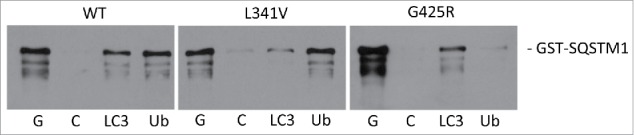
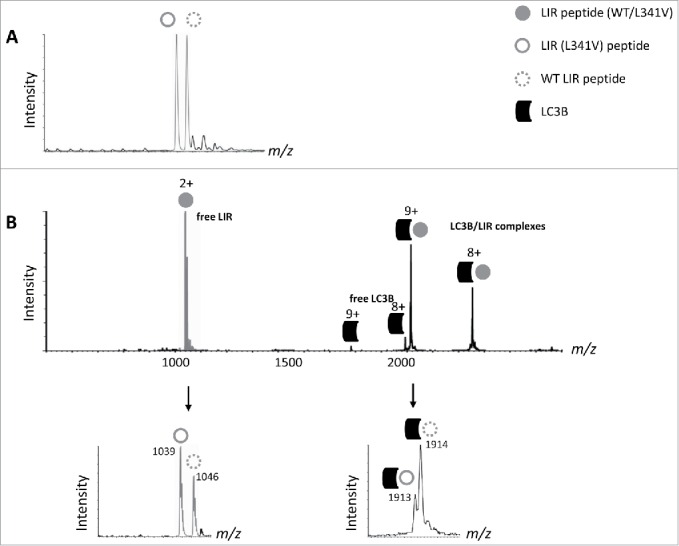
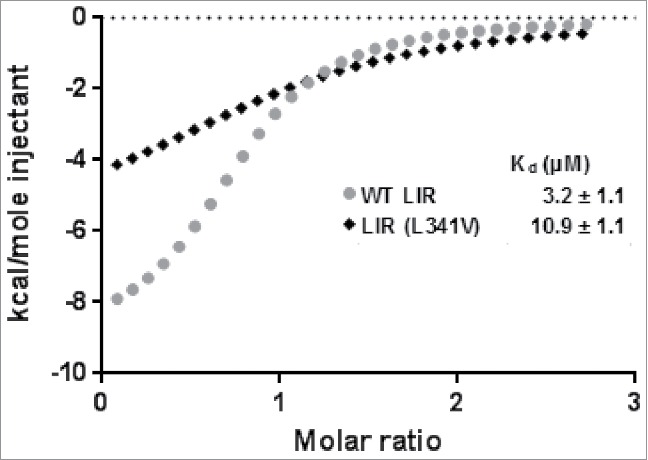
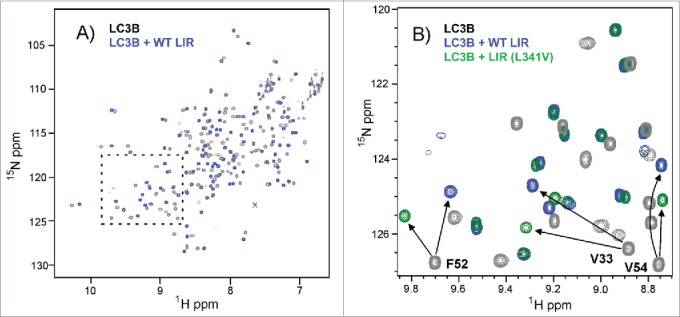
Growing evidence implicates impairment of autophagy as a candidate pathogenic mechanism in the spectrum of neurodegenerative disorders which includes amyotrophic lateral sclerosis and frontotemporal lobar degeneration (ALS-FTLD). SQSTM1, which encodes the autophagy receptor SQSTM1/p62, is genetically associated with ALS-FTLD, although to date autophagy-relevant functional defects in disease-associated variants have not been described. A key protein-protein interaction in autophagy is the recognition of a lipid-anchored form of LC3 (LC3-II) within the phagophore membrane by SQSTM1, mediated through its LC3-interacting region (LIR), and notably some ALS-FTLD mutations map to this region. Here we show that although representing a conservative substitution and predicted to be benign, the ALS-associated L341V mutation of SQSTM1 is defective in recognition of LC3B. We place our observations on a firm quantitative footing by showing the L341V-mutant LIR is associated with a ∼3-fold reduction in LC3B binding affinity and using protein NMR we rationalize the structural basis for the effect. This functional deficit is realized in motor neuron-like cells, with the L341V mutant EGFP-mCherry-SQSTM1 less readily incorporated into acidic autophagic vesicles than the wild type. Our data supports a model in which the L341V mutation limits the critical step of SQSTM1 recruitment to the phagophore. The oligomeric nature of SQSTM1, which presents multiple LIRs to template growth of the phagophore, potentially gives rise to avidity effects which amplify the relatively modest impact of any single mutation on LC3B binding. Over the lifetime of a neuron, impaired autophagy could expose a vulnerability, which ultimately tips the balance from cell survival toward cell death.
Overview
The claims and statistics of this paper haven’t been checked yet.
Free: it reads the open-access text and checks the first 5 claims that cite a source we can check. Create a free account to check every claim.
Integrity signals
Registry
Cites
Statistics
Figures
Verification
Claims the paper makes
The claims and statistics of this paper haven’t been checked yet.
Free: it reads the open-access text and checks the first 5 claims that cite a source we can check. Create a free account to check every claim.
Claims other papers make about this one
Each is checked against this paper’s own text: does it say what the citing paper says it does?
In the citing paper
“As an example, SQSTM1/p62 mutants fail to dispose of aggregation‐prone SOD1 and TARDBP (Gal et al, 2009; Brady et al, 2011; Goode et al, 2016; Deng et al, 2020).”
From Autophagy in major human diseases (2021) · cites this paper as Goode et al, 2016
Self-check
Percentages, sums and reported differences re-computed from the paper’s own numbers.
The self-check needs the paper’s full text.
Citations
Cites
Repertoires of Autophagy in the Pathogenesis of Ocular Diseases
Li, Y.-J., Jiang, Q., Cao, G.-F., Yao, J., & Yan, B. (2015) · Cellular Physiology and Biochemistry · doi:10.1159/000373980 · Cited by 16,304
Cui, C., Cui, J., Jin, F., Cui, Y., Li, R., Jiang, X., Tian, Y., Wang, K., Jiang, P., & Gao, J. (2017) · Cellular Physiology and Biochemistry · doi:10.1159/000479571 · Cited by 5,203
Pankiv, S., Clausen, T. H., Lamark, T., Brech, A., Bruun, J.-A., Outzen, H., Øvervatn, A., Bjørkøy, G., & Johansen, T. (2007) · Journal of Biological Chemistry · doi:10.1074/jbc.m702824200 · Cited by 4,578 · cited 4×
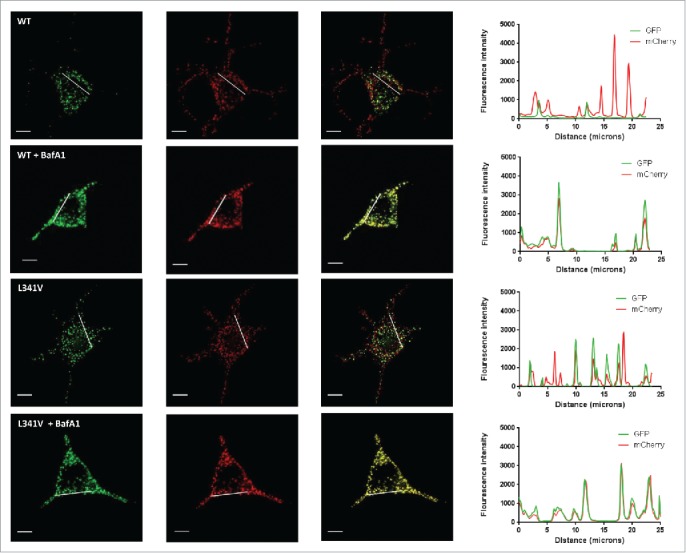
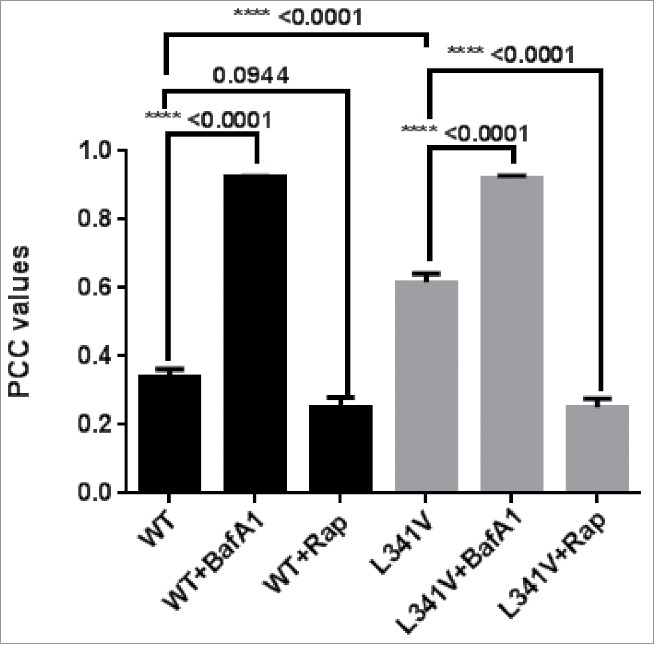
“Previous studies demonstrate that deletion of the LIR strongly reduces the ability of SQSTM1 to be recruited into phagophores and subsequently acidic vesicles.(15) To assess the impact of the more subtle L341V missense mutation, we introduced this change in to the mCherry-EGFP-SQSTM1 construct and transiently expresse…”
BackgroundInfluentialSelf-citationSuppression of basal autophagy in neural cells causes neurodegenerative disease in mice
Hara, T., Nakamura, K., Matsui, M., Yamamoto, A., Nakahara, Y., Suzuki-Migishima, R., Yokoyama, M., Mishima, K., Saito, I., Okano, H., et al. (2006) · Nature · doi:10.1038/nature04724 · Cited by 3,882
Loss of autophagy in the central nervous system causes neurodegeneration in mice
Komatsu, M., Waguri, S., Chiba, T., Murata, S., Iwata, J.-I., Tanida, I., Ueno, T., Koike, M., Uchiyama, Y., Kominami, E., et al. (2006) · Nature · doi:10.1038/nature04723 · Cited by 3,500 · cited 1×
“Autophagy is a critical pathway for the removal of damaged and aggregation-prone proteins and organelles; for example, in the ALS context mediating the turnover of aggregated forms of the major pathological protein TARDBP (TAR DNA binding protein),(6) and is essential for neuronal survival.(7,8)”
BackgroundBjørkøy, G., Lamark, T., Brech, A., Outzen, H., Perander, M., Øvervatn, A., Stenmark, H., & Johansen, T. (2005) · The Journal of Cell Biology · doi:10.1083/jcb.200507002 · Cited by 3,276 · cited 1×
“When ectopically expressed in cells SQSTM1 can incorporate into cytoplasmic bodies with a similar phenotype to those observed when cells are stained for the endogenous protein.(24) The inclusion bodies represent nonmembrane enclosed structures whereas the autophagosomes are membrane-limited; upon live cell imaging of…”
BackgroundSelf-citationThe CCPN data model for NMR spectroscopy: Development of a software pipeline
Vranken, W. F., Boucher, W., Stevens, T. J., Fogh, R. H., Pajon, A., Llinas, M., Ulrich, E. L., Markley, J. L., Ionides, J., & Laue, E. D. (2005) · Proteins: Structure, Function, and Bioinformatics · doi:10.1002/prot.20449 · Cited by 3,209
Automatic and Quantitative Measurement of Protein-Protein Colocalization in Live Cells
Costes, S. V., Daelemans, D., Cho, E. H., Dobbin, Z., Pavlakis, G., & Lockett, S. (2004) · Biophysical Journal · doi:10.1529/biophysj.103.038422 · Cited by 1,424
Nix is a selective autophagy receptor for mitochondrial clearance
Novak, I., Kirkin, V., McEwan, D. G., Zhang, J., Wild, P., Rozenknop, A., Rogov, V., Löhr, F., Popovic, D., Occhipinti, A., et al. (2010) · The EMBO Reports · doi:10.1038/embor.2009.256 · Cited by 1,309 · cited 2×
“These binding affinities are within the same order of magnitude as previously published affinities from Novak et al.23 which use a similar-length peptide but covering a different set of residues around the LIR (residues 321 to 342).”
ResultPhosphorylation of p62 Activates the Keap1-Nrf2 Pathway during Selective Autophagy
Ichimura, Y., Waguri, S., Sou, Y.-S., Kageyama, S., Hasegawa, J., Ishimura, R., Saito, T., Yang, Y., Kouno, T., Fukutomi, T., et al. (2013) · Molecular Cell · doi:10.1016/j.molcel.2013.08.003 · Cited by 1,205
Chapter 12 Monitoring Autophagic Degradation of p62/SQSTM1
Bjørkøy, G., Lamark, T., Pankiv, S., Øvervatn, A., Brech, A., & Johansen, T. (2009) · Methods in Enzymology · doi:10.1016/s0076-6879(08)03612-4 · Cited by 1,069
Self-citationExome sequencing in amyotrophic lateral sclerosis identifies risk genes and pathways
Cirulli, E. T., Lasseigne, B. N., Petrovski, S., Sapp, P. C., Dion, P. A., Leblond, C. S., Couthouis, J., Lu, Y.-F., Wang, Q., Krueger, B. J., et al. (2015) · Science · doi:10.1126/science.aaa3650 · Cited by 966 · cited 4×
“Our data supports a model in which certain SQSTM1mutations limit a critical step in autophagy and provides important functional evidence for a role of the autophagic pathway in ALS-FTLD.”
BackgroundInfluentialWong, Y. C., & Holzbaur, E. L. F. (2014) · Proceedings of the National Academy of Sciences · doi:10.1073/pnas.1405752111 · Cited by 812
Structural Basis for Sorting Mechanism of p62 in Selective Autophagy
Ichimura, Y., Kumanomidou, T., Sou, Y.-S., Mizushima, T., Ezaki, J., Ueno, T., Kominami, E., Yamane, T., Tanaka, K., & Komatsu, M. (2008) · Journal of Biological Chemistry · doi:10.1074/jbc.m802182200 · Cited by 803 · cited 2×
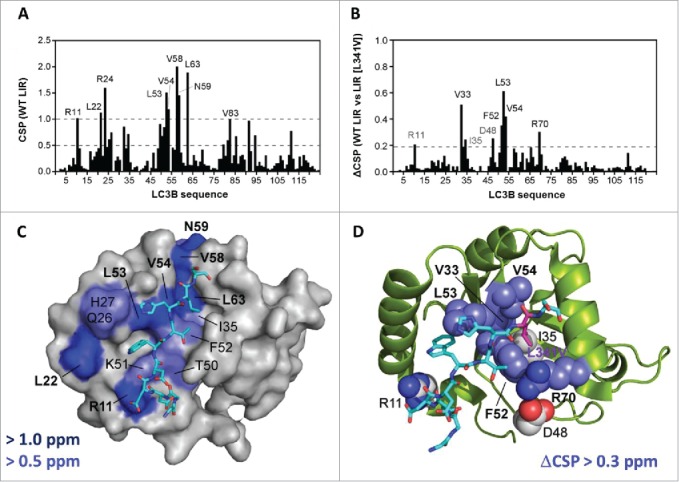
“5C) and correspond very clearly with those identified as LIR contact residues in the X-ray structure of the LC3BLIR (332 to 342) complex.(19) Of particular note was the use of a shorter LIR-containing peptide in the X-ray studies (SGGDDDWTHLSS versus SGGDDDWTHLSSKEVDPSTG used here).”
BackgroundAutophagy and aging: The importance of maintaining "clean" cells
Cuervo, A. M., Bergamini, E., Brunk, U. T., Dröge, W., Ffrench, M., & Terman, A. (2005) · Autophagy · doi:10.4161/auto.1.3.2017 · Cited by 792
Haploinsufficiency of TBK1 causes familial ALS and fronto-temporal dementia
Freischmidt, A., Wieland, T., Richter, B., Ruf, W., Schaeffer, V., Müller, K., Marroquin, N., Nordin, F., Hübers, A., Weydt, P., et al. (2015) · Nature Neuroscience · doi:10.1038/nn.4000 · Cited by 786 · cited 4×
“Our data supports a model in which certain SQSTM1mutations limit a critical step in autophagy and provides important functional evidence for a role of the autophagic pathway in ALS-FTLD.”
BackgroundInfluentialNeuroblastoma × spinal cord (NSC) hybrid cell lines resemble developing motor neurons
Cashman, N. R., Durham, H. D., Blusztajn, J. K., Oda, K., Tabira, T., Shaw, I. T., Dahrouge, S., & Antel, J. P. (1992) · Developmental Dynamics · doi:10.1002/aja.1001940306 · Cited by 722
<emph type="ital">SQSTM1</emph> Mutations in Familial and Sporadic Amyotrophic Lateral Sclerosis
Fecto, F. (2011) · Archives of Neurology · doi:10.1001/archneurol.2011.250 · Cited by 650
Mechanisms of cross‐talk between the ubiquitin‐proteasome and autophagy‐lysosome systems
Korolchuk, V. I., Menzies, F. M., & Rubinsztein, D. C. (2010) · FEBS Letters · doi:10.1016/j.febslet.2009.12.047 · Cited by 568
Protein quality control during aging involves recruitment of the macroautophagy pathway by BAG3
Gamerdinger, M., Hajieva, P., Kaya, A. M., Wolfrum, U., Hartl, F. U., & Behl, C. (2009) · The EMBO Journal · doi:10.1038/emboj.2009.29 · Cited by 522
Autophagy induction enhances TDP43 turnover and survival in neuronal ALS models
Barmada, S. J., Serio, A., Arjun, A., Bilican, B., Daub, A., Ando, D. M., Tsvetkov, A., Pleiss, M., Li, X., Peisach, D., et al. (2014) · Nature Chemical Biology · doi:10.1038/nchembio.1563 · Cited by 431 · cited 1×
“If the model is found to be viable, therapies directed at clearing excess TARDBP would likely involve targeting a combination of these pathways.(38)”
BackgroundStructural basis of target recognition by Atg8/LC3 during selective autophagy
Noda, N. N., Kumeta, H., Nakatogawa, H., Satoo, K., Adachi, W., Ishii, J., Fujioka, Y., Ohsumi, Y., & Inagaki, F. (2008) · Genes to Cells · doi:10.1111/j.1365-2443.2008.01238.x · Cited by 426
Frontotemporal dementia and its subtypes: a genome-wide association study
Ferrari, R., Hernandez, D. G., Nalls, M. A., Rohrer, J. D., Ramasamy, A., Kwok, J. B. J., Dobson-Stone, C., Brooks, W. S., Schofield, P. R., Halliday, G. M., et al. (2014) · The Lancet Neurology · doi:10.1016/s1474-4422(14)70065-1 · Cited by 383 · cited 1×
“common FTLD syndrome), supported from recent genomewide association study (GWAS) analyses.(32,33)”
ResultUbiquitin-independent function of optineurin in autophagic clearance of protein aggregates
Korac, J., Schaeffer, V., Kovacevic, I., Clement, A. M., Jungblut, B., Behl, C., Terzic, J., & Dikic, I. (2013) · Journal of Cell Science · doi:10.1242/jcs.114926 · Cited by 336 · cited 2×
“which is phenotypically similar to a model of ALS expressing mutant SOD1.(12) Similarly, numerous missense and truncating mutations affecting the SQSTM1 gene, which encodes the”
ResultScotter, E. L., Vance, C., Nishimura, A. L., Lee, Y.-B., Chen, H.-J., Urwin, H., Sardone, V., Mitchell, J. C., Rogelj, B., Rubinsztein, D. C., et al. (2014) · Journal of Cell Science · doi:10.1242/jcs.140087 · Cited by 268
Autophagy in Spinal Cord Motor Neurons in Sporadic Amyotrophic Lateral Sclerosis
Sasaki, S. (2011) · Journal of Neuropathology & Experimental Neurology · doi:10.1097/nen.0b013e3182160690 · Cited by 249
The Selective Autophagy Receptor p62 Forms a Flexible Filamentous Helical Scaffold
Ciuffa, R., Lamark, T., Tarafder, A. K., Guesdon, A., Rybina, S., Hagen, W. J. H., Johansen, T., & Sachse, C. (2015) · Cell Reports · doi:10.1016/j.celrep.2015.03.062 · Cited by 221
Self-citationGal, J., Ström, A.-L., Kilty, R., Zhang, F., & Zhu, H. (2007) · Journal of Biological Chemistry · doi:10.1074/jbc.m608787200 · Cited by 177
Shen, W.-C., Li, H.-Y., Chen, G.-C., Chern, Y., & Tu, P.-H. (2015) · Autophagy · doi:10.4161/auto.36098 · Cited by 169
Long, J., Gallagher, T. R. A., Cavey, J. R., Sheppard, P. W., Ralston, S. H., Layfield, R., & Searle, M. S. (2008) · Journal of Biological Chemistry · doi:10.1074/jbc.m704973200 · Cited by 157
Self-citationSQSTM1 mutations – Bridging Paget disease of bone and ALS/FTLD
Rea, S. L., Majcher, V., Searle, M. S., & Layfield, R. (2014) · Experimental Cell Research · doi:10.1016/j.yexcr.2014.01.020 · Cited by 152 · cited 6×
“12 Similarly, numerous missense and truncating mutations affecting the SQSTM1 gene, which encodes the SQSTM1 protein, have over the past 4 years been identified in patients with ALS and FTLD.13 Curiously SQSTM1 mutations are also found in patients with the skeletal disorder Paget disease of bone (PDB), including some…”
BackgroundSelf-citationDaroszewska, A., van 't Hof, R. J., Rojas, J. A., Layfield, R., Landao-Basonga, E., Rose, L., Rose, K., & Ralston, S. H. (2011) · Human Molecular Genetics · doi:10.1093/hmg/ddr172 · Cited by 131 · cited 1×
“At least in osteoclasts derived from mice expressing the equivalent of a PDB and ALS-associated mutant SQSTM1, markers indicative of dysregulation of autophagy are evident.(16) In zebrafish, knockdown of Sqstm1 is associated with a locomotor phenotype that can be rescued by the autophagy activator rapamycin, as well a…”
BackgroundSelf-citationMilan, E., Perini, T., Resnati, M., Orfanelli, U., Oliva, L., Raimondi, A., Cascio, P., Bachi, A., Marcatti, M., Ciceri, F., et al. (2015) · Autophagy · doi:10.1080/15548627.2015.1052928 · Cited by 117
Loss of Ubiquitin-Binding Associated With Paget's Disease of Bone p62 (SQSTM1) Mutations
Cavey, J. R., Ralston, S. H., Hocking, L. J., Sheppard, P. W., Ciani, B., Searle, M. S., & Layfield, R. (2005) · Journal of Bone and Mineral Research · doi:10.1359/jbmr.041205 · Cited by 116
Self-citationWong, Y. C., & Holzbaur, E. L. F. (2015) · Autophagy · doi:10.1080/15548627.2015.1009792 · Cited by 111
Dimerisation of the UBA Domain of p62 Inhibits Ubiquitin Binding and Regulates NF-κB Signalling
Long, J., Garner, T. P., Pandya, M. J., Craven, C. J., Chen, P., Shaw, B., Williamson, M. P., Layfield, R., & Searle, M. S. (2010) · Journal of Molecular Biology · doi:10.1016/j.jmb.2009.11.032 · Cited by 102
Self-citationAutophagy receptor defects and ALS-FTLD
Majcher, V., Goode, A., James, V., & Layfield, R. (2015) · Molecular and Cellular Neuroscience · doi:10.1016/j.mcn.2015.01.002 · Cited by 92
Self-citationLattante, S., de Calbiac, H., Le Ber, I., Brice, A., Ciura, S., & Kabashi, E. (2015) · Human Molecular Genetics · doi:10.1093/hmg/ddu580 · Cited by 90 · cited 1×
“In zebrafish, knockdown of Sqstm1 is associated with a locomotor phenotype that can be rescued by the autophagy activator rapamycin, as well as wild-type human SQSTM1 but not the P392L mutant, suggesting that changes in SQSTM1-mediated autophagy are linked to the phenotype.(17)”
BackgroundRole of autophagy in the pathogenesis of amyotrophic lateral sclerosis
Lee, J. K., Shin, J. H., Lee, J. E., & Choi, E.-J. (2015) · Biochimica et Biophysica Acta (BBA) - Molecular Basis of Disease · doi:10.1016/j.bbadis.2015.08.005 · Cited by 86
Cavey, J. R., Ralston, S. H., Sheppard, P. W., Ciani, B., Gallagher, T. R. A., Long, J., Searle, M. S., & Layfield, R. (2006) · Calcified Tissue International · doi:10.1007/s00223-005-1299-6 · Cited by 82
Self-citationFecto, F., & Siddique, T. (2011) · Journal of Molecular Neuroscience · doi:10.1007/s12031-011-9637-9 · Cited by 82
SQSTM1 mutations in Han Chinese populations with sporadic amyotrophic lateral sclerosis
Chen, Y., Zheng, Z., Chen, X., Huang, R., Yang, Y., Yuan, L., Pan, L., Hadano, S., & Shang, H. (2013) · Neurobiology of Aging · doi:10.1016/j.neurobiolaging.2013.09.008 · Cited by 66
Polymorphisms in Autophagy Genes Are Associated with Paget Disease of Bone
Usategui‐Martín, R., García‐Aparicio, J., Corral-Gudino, L., Calero‐Paniagua, I., del Pino‐Montes, J., & González‐Sarmiento, R. (2015) · PLoS ONE · doi:10.1371/journal.pone.0128984 · Cited by 61
Guerreiro, R., Bras, J., Hardy, J., & Singleton, A. (2014) · Human Molecular Genetics · doi:10.1093/hmg/ddu203 · Cited by 55
Najat, D., Garner, T., Hagen, T., Shaw, B., Sheppard, P. W., Falchetti, A., Marini, F., Brandi, M. L., Long, J. E., Cavey, J. R., et al. (2009) · Journal of Bone and Mineral Research · doi:10.1359/jbmr.081204 · Cited by 50
Self-citationGoode, A., Long, J., Shaw, B., Ralston, S. H., Visconti, M. R., Gianfrancesco, F., Esposito, T., Gennari, L., Merlotti, D., Rendina, D., et al. (2014) · Biochimica et Biophysica Acta (BBA) - Molecular Basis of Disease · doi:10.1016/j.bbadis.2014.03.006 · Cited by 37
Self-citationImpact of p62/SQSTM1 UBA Domain Mutations Linked to Paget’s Disease of Bone on Ubiquitin Recognition
Garner, T. P., Long, J., Layfield, R., & Searle, M. S. (2011) · Biochemistry · doi:10.1021/bi200079n · Cited by 32
Self-citationCompensated pathogenic deviations
Barešić, A., & Martin, A. C. R. (2011) · BioMolecular Concepts · doi:10.1515/bmc.2011.025 · Cited by 15
Cited by
Autophagy in major human diseases
Klionsky, D. J., Petroni, G., Amaravadi, R. K., Baehrecke, E. H., Ballabio, A., Boya, P., Bravo‐San Pedro, J. M., Cadwell, K., Cecconi, F., Choi, A. M. K., et al. (2021) · The EMBO Journal · doi:10.15252/embj.2021108863 · Cited by 1,585
Self-citationHardiman, O., Al-Chalabi, A., Chio, A., Corr, E. M., Logroscino, G., Robberecht, W., Shaw, P. J., Simmons, Z., & van den Berg, L. H. (2017) · Nature Reviews Disease Primers · doi:10.1038/nrdp.2017.71 · Cited by 1,414
Proteasomal and Autophagic Degradation Systems
Dikic, I. (2017) · Annual Review of Biochemistry · doi:10.1146/annurev-biochem-061516-044908 · Cited by 1,169
Autophagy and Neurodegeneration: Pathogenic Mechanisms and Therapeutic Opportunities
Menzies, F. M., Fleming, A., Caricasole, A., Bento, C. F., Andrews, S. P., Ashkenazi, A., Füllgrabe, J., Jackson, A., Jimenez Sanchez, M., Karabiyik, C., et al. (2017) · Neuron · doi:10.1016/j.neuron.2017.01.022 · Cited by 1,134
The role of mitochondria in amyotrophic lateral sclerosis
Smith, E. F., Shaw, P. J., & De Vos, K. J. (2019) · Neuroscience Letters · doi:10.1016/j.neulet.2017.06.052 · Cited by 559
Metadata
- Authors
- Goode, A., Butler, K., Long, J., Cavey, J., Scott, D., Shaw, B., Sollenberger, J., Gell, C., Johansen, T., Oldham, N. J., Searle, M. S., & Layfield, R.
- Affiliations
- University of Nottingham (GB)
- School of Life Sciences, University of Nottingham, Nottingham, UK
- UiT The Arctic University of Norway (NO)
- Corresponding author
- Layfield, Robert
- ORCID
- Venue
- Autophagy
- Publisher
- Informa UK Limited
- Published
- 2016-05-09
- Volume
- 12
- Issue
- 7
- Pages
- 1094-1104
- ISSN
- 1554-8627 (ISSN-L)
- 1554-8635
- PMC
- PMC4990988
- OpenAlex
- W2308890935
- Cited by
- 153
- References
- 48
- Citations by year
- 2026: 6 · 2025: 12 · 2024: 7 · 2023: 14 · 2022: 16 · 2021: 17 · 2020: 23 · 2019: 16 · 2018: 22 · 2017: 13 · 2016: 7
- FWCI
- 14.52
- Type
- journal article
- Language
- en
- Open access
- hybrid
- doi.org
- Licence
- Locations
- Autophagy (publishedVersion, cc-by-nc)
- PubMed Central (publishedVersion, cc-by)
- PubMed (publishedVersion)
- Repository@Nottingham (University of Nottingham) (acceptedVersion, other-oa)
- Nottingham ePrints (University of Nottingham) (submittedVersion, cc-by)
- Repository@Nottingham (University of Nottingham) (submittedVersion, cc-by)
- NORA - Norwegian Open Research Archives (submittedVersion, other-oa)
- Funders
- Wellcome Trust (094233/Z/10/Z)
- Motor Neurone Disease Association (LAYFIELD/APR13/821-791)
- Biotechnology and Biological Sciences Research Council (BB/I011420/1, BB/F019297/1)
- Topics
- Health Sciences › Medicine › Clinical Neurology › Amyotrophic Lateral Sclerosis Research
- Life Sciences › Biochemistry, Genetics and Molecular Biology › Cell Biology › Autophagy in Disease and Therapy
- Life Sciences › Neuroscience › Cellular and Molecular Neuroscience › Alzheimer's disease research and treatments
- Keywords
- p62, LC3B, LC3-interacting region, autophagy dysfunction, amyotrophic lateral sclerosis, frontotemporal lobar degeneration, protein-protein binding, motor neuron-like cells, neurodegeneration
- MeSH terms
- Sequestosome-1 Protein, Amyotrophic Lateral Sclerosis, Autophagy, Humans, Microtubule-Associated Proteins, Motor Neurons, Mutation, Frontotemporal Lobar Degeneration
About these checks
Registry, retraction, Cites and statistics results are computed, not judged, with one exception: a printed reference that no index lists is read once by a model before it counts as a citation error. Claims are extracted by a model and kept only when their quote appears verbatim in the text; each cited source is then checked, with a model’s help, for whether it says what the claim relies on. Those verdicts can be wrong — read the claim’s quote and the cited source before relying on one.
Statistics and arithmetic are recomputed, not judged.
Confidence bands are shown only for fields calibrated on our annotated test set. None is calibrated yet, so no band is shown.
What counts as a claim ›How we measure confidence ›How we check this ›
Are you an author, or do you see a problem with this page? Request a review
Data sources
Bibliographic data: Semantic Scholar, OpenAlex, Crossref.
Contains information from the Semantic Scholar Academic Graph Datasets, made available under the ODC Attribution License (ODC-BY 1.0).
Semantic Scholar’s data is described in: Kinney, R., et al. (2023). The Semantic Scholar Open Data Platform. arXiv:2301.10140.
